Divine Decks: A Visual History of Tarot: The First Comprehensive Survey of Tarot Gets Published by Taschen

The cards of the tarot, first cre­at­ed for play around 600 years ago and used in recent cen­turies for occult div­ina­tion of truths about life, the uni­verse, and every­thing, should by all rights be noth­ing more than a his­tor­i­cal curios­i­ty today. Yet some­thing about the tarot still com­pels, even to many of us in the ever more dig­i­tal, ever more data-dri­ven 21st cen­tu­ry. Taschen, pub­lish­er of lav­ish art and pho­to books, know this: hence, as we fea­tured last year here on Open Cul­ture, prod­ucts like their box-set reis­sue of the tarot deck designed by Sal­vador Dalí. (There must be a mean­ing­ful over­lap between Taschen’s demo­graph­ic and Dalí’s fans, giv­en that the pub­lish­er more recent­ly put out the most com­plete col­lec­tion of his paint­ings between two cov­ers.)

Dalí isn’t the only artist whose inter­pre­ta­tions of the Fool, the Hiero­phant, the Lovers, the Hanged One, and the oth­er arcana have graced a tarot deck. H.R. Giger, the artist respon­si­ble for the bio­me­chan­i­cal creepi­ness of Alien, designed one in the 1990s; more recent­ly, we’ve fea­tured decks illus­trat­ed with visions inspired by the nov­els of Philip K. Dick and David Lynch’s Twin Peaks.

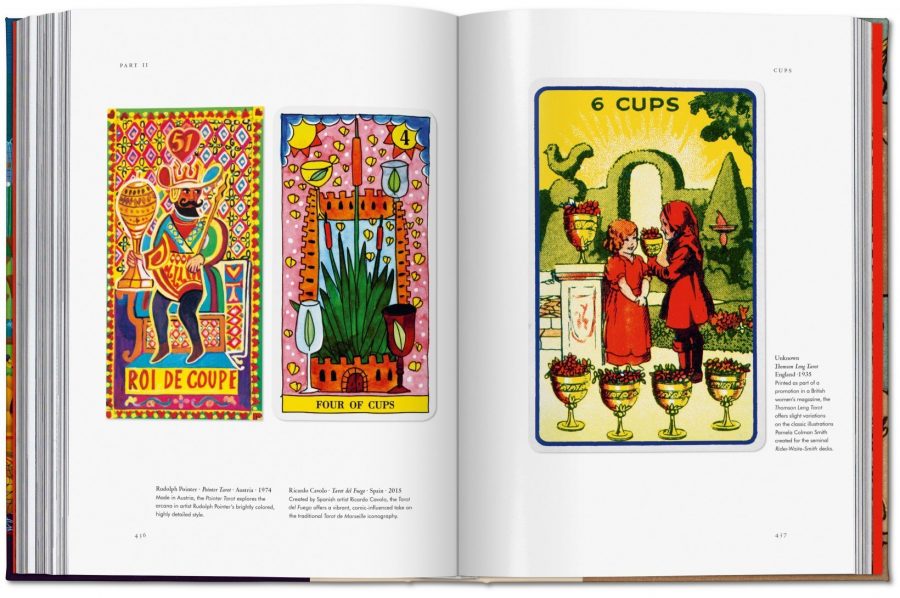
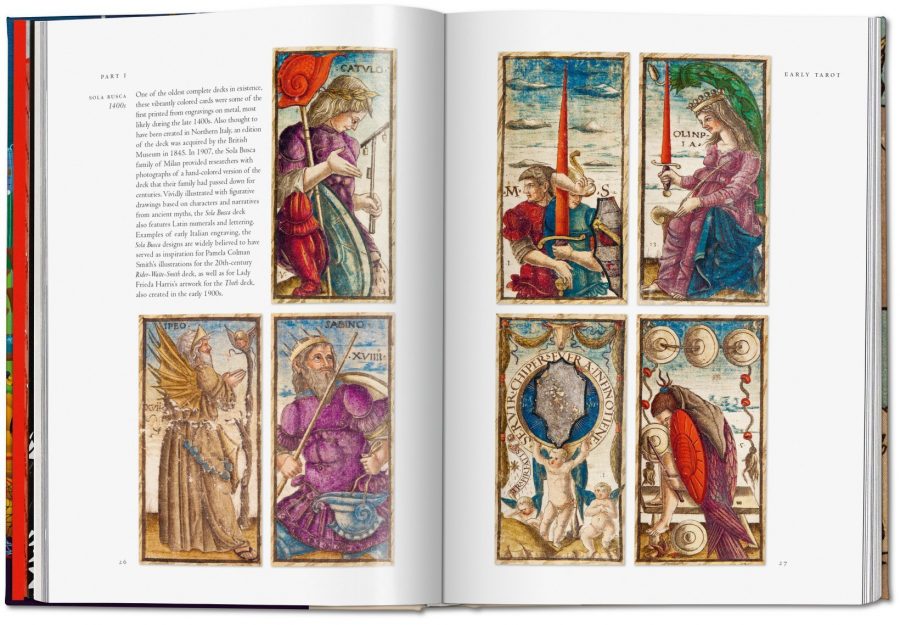
But all these togeth­er — even includ­ing the “Thoth deck” designed by occultist Aleis­ter Crow­ley and the Sola-Bus­ca deck, the ear­li­est known com­plete set of tarot cards — rep­re­sent only a small frac­tion of the sto­ry of tarot’s place in the past six cen­turies of civ­i­liza­tion. That sto­ry is told, and more impor­tant­ly shown, in Taschen’s new book Divine Decks: A Visu­al His­to­ry of Tarot.

The first vol­ume in Taschen’s “Library of Eso­ter­i­ca,” the book “gath­ers more than 500 cards and works of orig­i­nal art from around the world in the ulti­mate explo­ration of a cen­turies-old art form.” An image gallery on Taschen’s web site gives a small sam­pling of the range of tarot decks found with­in, includ­ing ones cre­at­ed in 1930s Eng­land, 1970s Italy, and 2010s Brook­lyn. One was intend­ed as a pro­mo­tion­al item for an Amer­i­can paper com­pa­ny in the 1960s; anoth­er, with dif­fer­ent pur­pos­es, announces itself as the “Black Pow­er Tarot.” This in addi­tion to such well-known exam­ples as Crow­ley’s Thoth deck and the ven­er­a­ble Sola-Bus­ca, both lush­ly repro­duced in its pages. And the tarot lives on, as I’m remind­ed when­ev­er I pass one of the many store­fronts here in Seoul offer­ing tarot read­ings. In any case, it’s cer­tain­ly come a long way from 15th-cen­tu­ry Europe. You can get a copy of Divine Decks: A Visu­al His­to­ry of Tarot on Taschen’s web­site.

Relat­ed Con­tent:

Behold the Sola-Bus­ca Tarot Deck, the Ear­li­est Com­plete Set of Tarot Cards (1490)

H.R. Giger’s Tarot Cards: The Swiss Artist, Famous for His Design Work on Alien, Takes a Jour­ney into the Occult

The Tarot Card Deck Designed by Sal­vador Dalí

The Thoth Tarot Deck Designed by Famed Occultist Aleis­ter Crow­ley

Twin Peaks Tarot Cards Now Avail­able as 78-Card Deck

Philip K. Dick Tarot Cards: A Tarot Deck Mod­eled After the Vision­ary Sci-Fi Writer’s Inner World

Based in Seoul, Col­in Mar­shall writes and broad­casts on cities, lan­guage, and cul­ture. His projects include the book The State­less City: a Walk through 21st-Cen­tu­ry Los Ange­les and the video series The City in Cin­e­ma. Fol­low him on Twit­ter at @colinmarshall, on Face­book, or on Insta­gram.

View 250,000 British Paintings & Sculptures Free Online

A lit­tle over four years ago, dis­crim­i­na­to­ry and arbi­trar­i­ly con­fus­ing trav­el bans descend­ed on the U.S., tear­ing refugee fam­i­lies apart and leav­ing thou­sands in diplo­mat­ic lim­bo. This seemed night­mar­ish enough at the time. But it took a viral pan­dem­ic to bring trav­el bans and restric­tions down on the entire world, more or less, with coun­tries appear­ing on bul­letins that vague­ly look like lists of ene­mies on gov­ern­ing bod­ies’ web­sites, includ­ing the CDC’s.

Like­wise, almost all 27 coun­tries that com­prise the Euro­pean Union are cur­rent­ly dis­al­low­ing U.S. trav­el­ers, with the excep­tion of Croa­t­ia,” Mary Claire Pat­ton reports. The UK has also kept its ban on U.S. cit­i­zens in place. All this is to say, to fel­low cit­i­zens and res­i­dents of any gen­der, that the days of traips­ing around the world for Insta­gram impres­sions, or sav­ing and scrap­ing for that vaca­tion hon­ey­moon, or mak­ing even more impor­tant jour­neys, may be on hold indef­i­nite­ly.

For­tu­nate­ly, art gal­leries world­wide have been prepar­ing their col­lec­tions for inde­pen­dent lives online, with ultra-high-res­o­lu­tion pho­tog­ra­phy; mate­ri­als that rarely appear on view in any form; and more con­text than vis­i­tors typ­i­cal­ly get on a guid­ed tour.

Would-be vis­i­tors keen on pub­lic art col­lec­tions will find their niche online at Art UK, a char­i­ty project that is dig­i­tiz­ing “more than 150,000 pub­licly owned sculp­tures in Great Britain by the end of 2020,” writes Men­tal Floss, includ­ing many sculp­tures liv­ing their lives out in pub­lic spaces.

Art UK seem to be lag­ging a bit behind on the sculp­ture posts, and they are light on the con­text, but a few big things have hap­pened since they made the announce­ment in Feb­ru­ary 2019. In any case, you will not have to trav­el to a Nando’s eatery in Har­low to see Rodin’s Eve, orig­i­nal­ly cre­at­ed for his Gates of Hell in Paris. (Not that one wouldn’t want to go to Har­low, which “also dis­plays works by acclaimed artists such as Hen­ry Moore, Elis­a­beth Frink, Bar­bara Hep­worth and Lynn Chad­wick,” Mark Brown points out at The Guardian.)

The over twen­ty-five thou­sand pub­lic UK sculp­tures doc­u­ment­ed in the data­base so far are already impres­sive enough. Oh, and did we men­tion that the foun­da­tion had already pre­vi­ous­ly dig­i­tized over two-hun­dred thou­sand oil paint­ings between 2003 and 2012? These are also all paint­ings owned by the UK pub­lic “from over 3,000 loca­tions,” Katey Good­win writes for Art UK. “This is the only project of its kind in the world to cre­ate a com­plete online cat­a­logue of every oil paint­ing in a nation­al col­lec­tion.”

These include the req­ui­site dot­ing and reveal­ing por­traits of lords, ladies, mer­chants, wor­thies, and bureau­crats. They also include bril­liant oil paint­ings like David Hep­her’s Night Flats, whose title and far­away lone­some­ness evoke Edward Hop­per. Fur­ther­more, not all por­traits of British wor­thies fit the stereo­type, as Col­in Cola­han’s 1933 arrest­ing like­ness of Eng­lish actress Marie Ney demon­strates.

You can read more about the process of bring­ing this work online in Goodwin’s essay, which also lists the nation­al orga­ni­za­tions and muse­ums from which the col­lec­tion draws. These are “locat­ed through­out Eng­land, Scot­land, Wales and North­ern Ire­land, and the crown depen­den­cies of the Isle of Man and the Chan­nel Islands.” Vis­it Art UK them­selves here to see their pho­to­graph­ic archive of pub­licly-owned paint­ing, sculp­ture, and oth­er visu­al media in the UK—now pub­licly avail­able online around the world to peo­ple indef­i­nite­ly banned from vis­it­ing the art in per­son.

For a wealth of oth­er free art, vis­it this page on our site: Vis­it 2+ Mil­lion Free Works of Art from 20 World-Class Muse­ums Free Online.

Relat­ed Con­tent:

Down­load 569 Free Art Books from The Met­ro­pol­i­tan Muse­um of Art

The Tate Dig­i­tizes 70,000 Works of Art: Pho­tos, Sketch­books, Let­ters & More

The British Muse­um Puts 1.9 Mil­lion Works of Art Online

Josh Jones is a writer and musi­cian based in Durham, NC. Fol­low him at @jdmagness

Get the Ancient Roman Look: A Hair & Makeup Video Tutorial

Remem­ber ear­ly April, when we threw our­selves into the Get­ty Chal­lenge, turn­ing our­selves into his­toric art recre­ations in lieu of climb­ing the walls?

Seems like ages ago, doesn’t it, that you wrapped a show­er cur­tain around your head and rifled through the but­ton box, rabid to make your­self into a mas­ter­piece.

While it’s not accu­rate to say we’ve col­lec­tive­ly set­tled into a new nor­mal, many of us have accept­ed that cer­tain alter­ations to our every­day lives will be pro­longed if our every­day lives are to pro­ceed.

First it was depress­ing.

Now it’s just bor­ing (with the occa­sion­al thrum of anx­i­ety).

Per­haps it’s time to shake things up a bit, and Crows Eye Pro­duc­tions’ tuto­r­i­al on achiev­ing an Ancient Roman look using mod­ern hair and beau­ty prod­ucts, above, is an excel­lent place to start.

While Crows Eye spe­cial­izes in build­ing his­tor­i­cal­ly accu­rate peri­od dress from the unmen­tion­able out, it’s worth not­ing that styl­ist Liv Free takes a few lib­er­ties, adding a bit of mas­cara and lip­stick despite a dearth of evi­dence that Roman women enhanced their lips or lash­es.

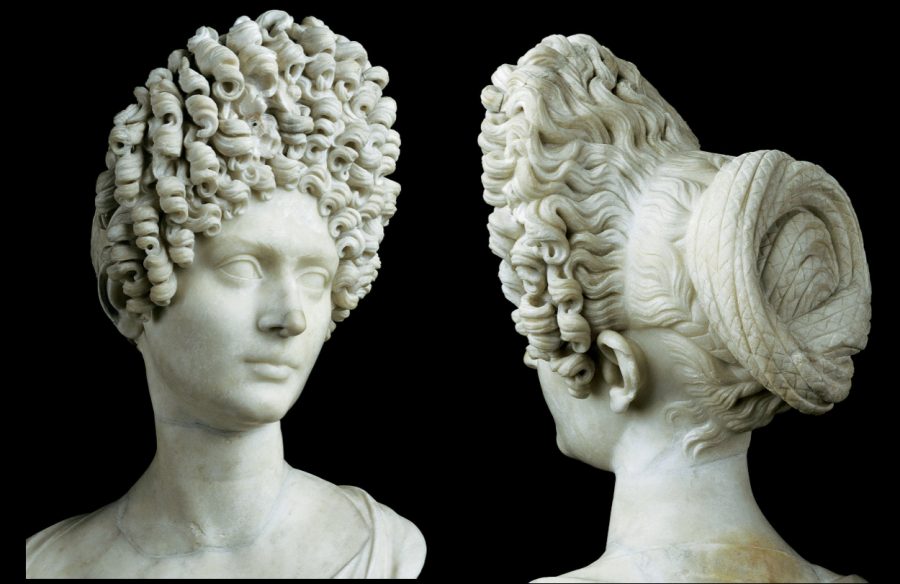
She also uses curl­ing irons, pony­tail hold­ers, and a hair donut to cre­ate a crown of ringlets and braids.

If you’re a stick­ler for authen­tic­i­ty who won’t be able to live with your­self if you’re not sewn into your hair style with a bone nee­dle, you may be bet­ter off con­sult­ing the YouTube chan­nel of hair arche­ol­o­gist Janet Stephens.

But, if your goal is mere­ly to wow your co-work­ers with a full-on Fla­vian Dynasty look dur­ing your next Zoom call, by all means grab some pale lead-free foun­da­tion, some expend­able Hot Buns, and some light blush.

Don’t wor­ry that you’ll appear too done up. Free notes that Roman women of both high and low birth were devot­ed to make­up, but in def­er­ence to their men, lim­it­ed them­selves to the nat­ur­al look.

That’s a tad anachro­nis­tic, huh?

These days, any­one who wants to remake them­selves in the image of Empress Domi­tia Long­i­na should feel free to take a crack at it, irre­spec­tive of gen­der, race, or extra hands to help with the parts of the hair­style you can can’t see in the mir­ror (or a Zoom win­dow).

Once we have mas­tered our new look, we can see about anoth­er muse­um chal­lenge. Here’s some inspi­ra­tion to get us start­ed.

Relat­ed Con­tent:

How a Bal­ti­more Hair­dress­er Became a World-Renowned “Hair Archae­ol­o­gist” of Ancient Rome

Roman Stat­ues Weren’t White; They Were Once Paint­ed in Vivid, Bright Col­ors

How to Bake Ancient Roman Bread Dat­ing Back to 79 AD: A Video Primer

Ayun Hal­l­i­day is an author, illus­tra­tor, the­ater mak­er and Chief Pri­ma­tol­o­gist of the East Vil­lage Inky zine. Fol­low her @AyunHalliday.

Professor Who Picked Every Election Winner Since Ronald Reagan Reveals His Prediction for the 2020 Election

The New York Times writes: “Right now, polls say Joe Biden has a healthy lead over Pres­i­dent Trump. But we’ve been here before (cue 2016), and the polls were, frankly, wrong. One man, how­ev­er, was not. The his­to­ri­an Allan Licht­man was the lone­ly fore­cast­er who pre­dict­ed Mr. Trump’s vic­to­ry in 2016 — and also proph­e­sied the pres­i­dent would be impeached. That’s two for two. But Pro­fes­sor Lichtman’s record goes much deep­er. In 1980, he devel­oped a pres­i­den­tial pre­dic­tion mod­el that ret­ro­spec­tive­ly account­ed for 120 years of U.S. elec­tion his­to­ry. Over the past four decades, his sys­tem has accu­rate­ly called pres­i­den­tial vic­tors, from Ronald Rea­gan in ’84 to, well, Mr. Trump in 2016.

In the video Op-Ed above, Pro­fes­sor Licht­man walks us through his sys­tem, which iden­ti­fies 13 “keys” to win­ning the White House. Each key is a bina­ry state­ment: true or false. And if six or more keys are false, the par­ty in the White House is on its way out”

No spoil­ers from us. You have to watch until the end.

If you would like to sign up for Open Culture’s free email newslet­ter, please find it here. It’s a great way to see our new posts, all bun­dled in one email, each day.

If you would like to sup­port the mis­sion of Open Cul­ture, con­sid­er mak­ing a dona­tion to our site. It’s hard to rely 100% on ads, and your con­tri­bu­tions will help us con­tin­ue pro­vid­ing the best free cul­tur­al and edu­ca­tion­al mate­ri­als to learn­ers every­where. You can con­tribute through Pay­Pal, Patre­on, and Ven­mo (@openculture). Thanks!

by | Permalink | Make a Comment ( 32 ) |

Roald Dahl Gives a Tour of the Small Backyard Hut Where He Wrote All of His Beloved Children’s Books

Char­lie and the Choco­late Fac­to­ryThe BFGThe Witch­esMatil­da: Roald Dahl wrote these and all his oth­er beloved chil­dren’s books in a hut. Just fif­teen feet long and ten feet wide, it served him for 35 years as an office in which no meet­ings were held and no calls tak­en. For four hours a day, bro­ken into two-hour morn­ing and after­noon ses­sions, it was just Dahl in there — Dahl and his paper, his pen­cils, his sharp­en­er, his cof­fee, his cig­a­rettes, his increas­ing­ly eccen­tric col­lec­tion of arti­facts from his own life, and here and there the occa­sion­al spi­der web and goat drop­ping. It was all part of an effort, explains Dahl’s biog­ra­ph­er Jere­my Tre­glown, “not only to recre­ate his own ear­ly child­hood but to improve on it.”

“As a boy in the 1920s,” Tre­glown writes, “Roald used to hide up in a tree in order to write his diary.” But the hut, con­struct­ed right behind his Buck­ing­hamshire home, “was a more sub­stan­tial place to work, where he could com­mem­o­rate, and fan­ta­size about, his past.”

On his side were items like “his father’s sil­ver and tor­toise­shell paper knife,” a “tablet frag­ment with a cuneiform inscrip­tion found in Baby­lon” — a sou­venir from his time in the King’s African Rifles — and, “saved from oper­a­tions,” pieces of his own femur and spine. In his hut, Dahl wrote “sur­round­ed by these fetish­es, snug­ly wrapped in a sleep­ing bag, sit­ting in an old arm­chair, his feet on a trunk which was filled with blocks and tied to a leg of the chair, to pre­vent it from slip­ping.”

“I could­n’t pos­si­bly work in the house, espe­cial­ly when there used to be a lot of chil­dren around,” says Dahl in the 1982 clip at the top of the post as he approach­es his hut. “Even when there aren’t chil­dren, there are vac­u­um clean­ers and peo­ple bustling about.” He then goes in to demon­strate his writ­ing rou­tine, which involves the pour­ing of cof­fee, sharp­en­ing of pre­cise­ly six pen­cils “to a fierce point” (a step that had its own pro­cras­ti­na­tion val­ue), the brush­ing away of the pre­vi­ous day’s eras­er dust (onto the floor, where it has remained ever since), and the sit­u­a­tion with the arm­chair and sleep­ing bag. “Final­ly you get set­tled, you get into a sort of nest, you get real­ly com­fort­able,” Dahl says. “And then you’re away.”

The footage also includes views of Dahl’s much more tra­di­tion­al­ly well-appoint­ed main house, includ­ing its bil­liards table around which he and his local friends would gath­er for a twice-week­ly ses­sion. The game had its influ­ence on Dahl’s writ­ing life, and indeed his writ­ing hut. Among his “snook­er pals” was builder Wal­ly Saun­ders, whom Dahl hired to put it up in the first place (and whose for­mi­da­ble stature and ear size would, near­ly thir­ty lat­er, inspire the title char­ac­ter of The BFG). As he explains on the British Chil­dren’s pro­gram Going Live, he even cov­ered his hand­made wood­en writ­ing sur­faces, which he placed across the arm­rests of his chair, with green baize, a mate­r­i­al he found easy on the eyes.

When Dahl died in 1990, his writ­ing hut went untouched for two decades. But even­tu­al­ly, as explained in this ITV News clip, the sim­ple build­ing could­n’t with­stand fur­ther expo­sure to the ele­ments. So began the project to move the inte­ri­or of the hut, eras­er dust and all, to the Roald Dahl Muse­um and Sto­ry Cen­tre in Buck­ing­hamshire. Luck­i­ly for Wes Ander­son, this hap­pened after he came to Dahl’s home to seek per­mis­sion to adapt The Fan­tas­tic Mr. Fox from the writer’s wid­ow Felic­i­ty. So com­pelling did she find Ander­son­’s vision that she even allowed him into the “hal­lowed writ­ing hut,” the ide­al space in which to com­mune with Dahl’s spir­it. The hut may now no longer be whole, but that same spir­it con­tin­ues to course through the imag­i­na­tions of gen­er­a­tion after gen­er­a­tion of young read­ers.

Relat­ed Con­tent:

Read a Nev­er Pub­lished, “Sub­ver­sive” Chap­ter from Roald Dahl’s Char­lie and the Choco­late Fac­to­ry

When Roald Dahl Host­ed His Own Creepy TV Show Way Out, a Com­pan­ion to Rod Serling’s Twi­light Zone (1961)

The Recipes of Icon­ic Authors: Jane Austen, Sylvia Plath, Roald Dahl, the Mar­quis de Sade & More

Roald Dahl, Who Lost His Daugh­ter to Measles, Writes a Heart­break­ing Let­ter about Vac­ci­na­tions: “It Is Almost a Crime to Allow Your Child to Go Unim­mu­nised”

The Dai­ly Habits of Famous Writ­ers: Franz Kaf­ka, Haru­ki Muraka­mi, Stephen King & More

Based in Seoul, Col­in Mar­shall writes and broad­casts on cities, lan­guage, and cul­ture. His projects include the book The State­less City: a Walk through 21st-Cen­tu­ry Los Ange­les and the video series The City in Cin­e­ma. Fol­low him on Twit­ter at @colinmarshall, on Face­book, or on Insta­gram.

A Physicist Examines the Scientific Accuracy of Physics Shown in Major Movies: Batman, Gravity, Contact, Interstellar, Star Trek & More

Ever had a friend who can­not bring them­selves sus­pend dis­be­lief? It’s not a moral fail­ing, but it can be a tedious qual­i­ty in sit­u­a­tions like, say, the movies, or the cin­e­ma, or what­ev­er you call it when you’ve paid your day’s wages for a giant tub of car­cino­genic pop­corn and a three-hour dis­trac­tion. (These days, maybe, an over­priced stream­ing new release and Grub­hub.) Who doesn’t love a big-screen sci­ence fic­tion epic—science be damned? Who wants to lis­ten to the seat­mate who mut­ters “oh, come on!,” “no way!,” “well, actu­al­ly, that’s sci­en­tif­i­cal­ly impos­si­ble”? You know they nev­er passed intro to physics….

Dominic Wal­li­man, on the oth­er hand, is a physi­cist. And he is not the kind of per­son to ruin a movie by going on about how goofy its sci­en­tif­ic ideas sound, though he’s like­ly to express appre­ci­a­tion for films that get it right. He doesn’t get bent out of shape by artis­tic license and can appre­ci­ate, for exam­ple, the cre­ative use of visu­al effects in Inter­stel­lar to rep­re­sent a black hole, which would oth­er­wise appear onscreen as, well, a black hole. “I’m okay with bad physics in movies,” he says, “because the job of a movie isn’t to be a sci­ence doc­u­men­tary, the goal of a movie is to tell an inter­est­ing sto­ry.”

Even so, if you sit him down and ask him to talk specif­i­cal­ly about sci­ence in movies, as a friend does in the video above, he’ll tell you what he thinks, and you’ll want to lis­ten to him (after the movie’s over) because he actu­al­ly knows what he’s talk­ing about. Over the years, Wal­li­man has mapped var­i­ous domains of sci­ence, like chem­istry, com­put­er sci­ence, biol­o­gy, math­e­mat­ics, physics, and his own field, quan­tum physics. His visu­al expla­na­tions make the rela­tion­ships between dif­fi­cult con­cepts clear and easy to fol­low. In this video, he com­ments on some of your favorite sci­ence fic­tion and fan­ta­sy films (stand­outs include the first Bat­man and Ron Howard’s Angels & Demons) in ways that are equal­ly illu­mi­nat­ing.

Big win­ners for rel­a­tive accu­ra­cy, in Walliman’s opin­ion, are no sur­prise. They include Grav­i­ty, Con­tact (writ­ten by Carl Sagan), even a clip from the incred­i­bly smart Futu­ra­ma. It is soon appar­ent that the use of a fold­ed piece of paper to rep­re­sent space­time through a worm­hole has “become a bit of a cliché,” although a help­ful-enough visu­al aid. Kubrick’s 2001: A Space Odyssey is “bor­ing” (with apolo­gies), a judg­ment that might dis­qual­i­fy Wal­li­man as a film crit­ic, in many people’s opin­ion, but does not tar­nish his sci­en­tif­ic rep­u­ta­tion.

One of the biggest sci­ence-in-film fails: 2009’s Star Trek, whose vil­lains have dis­cov­ered a sub­stance called “red mat­ter.” A sin­gle drop can destroy an entire plan­et, and the idiots seem to have enough onboard their ship to take out the uni­verse with one care­less oop­sie. Wal­li­man is maybe not qual­i­fied to weigh in on the pale­o­bi­ol­o­gy of Juras­sic Park, but Jeff Goldblum’s expla­na­tion of chaos the­o­ry fits with­in his purview. “So, this is not a good descrip­tion of chaos the­o­ry,” he says, “at all.” It is, how­ev­er, a fab­u­lous plot device.

If you’re inter­est­ed in more engag­ing­ly acces­si­ble, non-cin­e­ma-relat­ed, sur­veys of sci­en­tif­ic ideas, vis­it any one of Walliman’s many Domain of Sci­ence videos here.

Relat­ed Con­tent:

Math­e­mat­ics in Movies: Har­vard Prof Curates 150+ Scenes

Arthur C. Clarke Cre­ates a List of His 12 Favorite Sci­ence-Fic­tion Movies (1984)

Info­graph­ics Show How the Dif­fer­ent Fields of Biol­o­gy, Chem­istry, Math­e­mat­ics, Physics & Com­put­er Sci­ence Fit Togeth­er

The Map of Quan­tum Physics: A Col­or­ful Ani­ma­tion Explains the Often Mis­un­der­stood Branch of Sci­ence

Josh Jones is a writer and musi­cian based in Durham, NC. Fol­low him at @jdmagness

Seriously Awesome Ukulele Covers of “Sultans of Swing,” “Sweet Child O’ Mine,” “Thunderstruck,” and “Smells Like Teen Spirit”

The ukulele has got­ten a bad rap, thanks to some well-mean­ing musi­cians who turned the small, gui­tar-like Hawai­ian lute into a nov­el­ty instru­ment. Chief among the offend­ers is Tiny Tim. Explod­ing into fame in the ear­ly six­ties with his ukulele ver­sion of the ‘20s dit­ty “Tip­toe Thru’ the Tulips,” he became so famous, wrote Roger Ebert, “The Bea­t­les asked him to sing ‘Nowhere Man’ on a boot­leg Christ­mas record­ing. He did a night at Roy­al Albert Hall.” His mar­riage to Vic­ki Budinger on John­ny Carson’s Tonight Show is “still one of the top-rat­ed TV shows of all time.”

Tiny Tim played the guile­less man­child, the Pee Wee Her­man of his day. He was not a seri­ous spokesper­son for the instru­ment he pop­u­lar­ized. He died in 1996, doing what he loved, play­ing his hit to a Women’s Club in Min­neapo­lis. “The last thing he heard was the applause,” his wid­ow said.

Tiny Tim had a good run, but it may not be mere coin­ci­dence that since he tip­toed thru’ his last tulip, the ukulele has seen a major pop cul­ture revival, from indie folk singer/songwriters to TV theme songs, an orches­tra, and Jake Shimabukuro, “a genre-demol­ish­ing artist,” writes NPR, “who plays jazz, blues, funk, clas­si­cal, blue­grass, fla­men­co and rock” on his four-string axe.

Join­ing the ranks of seri­ous ukulele artists are Over­driv­er Duo, who inter­pret songs with some very chal­leng­ing gui­tar riffs and solos, like Guns ‘n’ Ros­es’ “Sweet Child O’ Mine,” Dire Straits’ “Sul­tans of Swing,” and AC/DC’s “Thun­der­struck.” One thing these songs all have in com­mon is their melodies in the upper reg­is­ter, where the ukulele, and their vocals, real­ly shine. Nirvana’s “Smells Like Teen Spir­it,” on the oth­er hand, depends on pow­er chords and pound­ing drums for its impact. Leave it to these accom­plished play­ers to turn their tiny-bod­ied instru­ments into a con­vinc­ing alt-rock rhythm sec­tion.

Con­tem­po­rary play­ers have more than earned the ukulele the respect it deserves. That’s not to say ukulele lovers of the past, like devot­ed life-long play­er George Har­ri­son, did not appre­ci­ate the instru­ment. Har­ri­son played a mean jazz uke, and took it seri­ous­ly. But even he declared “you can’t play and not laugh!” Play­ers like Shimabukuro and Over­driv­er Duo tend to inspire more awe than com­e­dy.

Relat­ed Con­tent:  

Jimi Hendrix’s “Voodoo Child” Shred­ded on the Ukulele

George Har­ri­son Explains Why Every­one Should Play the Ukulele

The Ukulele Orches­tra of Great Britain Per­forms Stun­ning Cov­ers of Nirvana’s “Smells Like Teen Spir­it,” Talk­ing Heads’ “Psy­cho Killer” & More

Josh Jones is a writer and musi­cian based in Durham, NC. Fol­low him at @jdmagness

Food As Pop with Prof. C. Thi Nguyen (Pretty Much Pop: A Culture Podcast #55)

Your hosts Mark Lin­sen­may­er, Eri­ca Spyres, and Bri­an Hirt are joined by Utah phi­los­o­phy prof and for­mer food writer C. Thi Nguyen to talk food as art, food­ies, elit­ism, food TV, cook­ing vs. eat­ing, and how ana­lyz­ing food is like ana­lyz­ing games.

Read Thi’s work at objectionable.net, includ­ing the arti­cle on “out­rage porn” we talk about that he co-wrote with Bek­ka Williams, and his gen­er­al account of “the arts of action.” Also, check out his blog posts about cook­books and his new book. Pur­chase Games: Agency As Art. Fol­low Thi @add_hawk.

Oth­er sources we looked at include:

Learn more at prettymuchpop.com. This episode includes bonus dis­cus­sion that you can only hear by sup­port­ing the pod­cast at patreon.com/prettymuchpop. This pod­cast is part of the Par­tial­ly Exam­ined Life pod­cast net­work.

Pret­ty Much Pop: A Cul­ture Pod­cast is the first pod­cast curat­ed by Open Cul­ture. Browse all Pret­ty Much Pop posts.

« Go BackMore in this category... »
Quantcast