How Quentin Tarantino Shoots a Film at 3 Different Budget Levels: Reservoir Dogs ($1 Million), Pulp Fiction ($8 Million), and Once Upon a Time in Hollywood ($95 Million)

Quentin Taran­ti­no has nev­er shied away from talk­ing, at length and at a rapid clip, about his process. “In anoth­er life,” Col­in Mar­shall writes in a pre­vi­ous post on the sub­ject, he might have become a “fore­most prac­ti­tion­er” of the video essay on cin­e­ma. His metic­u­lous analy­ses of not only his own films but also the hun­dreds he references–or out­right steals from–can be dizzy­ing, the rav­ings of an over­ac­tive cre­ative mind that seems impos­si­ble to rein in.

Taran­ti­no has also giv­en us sig­nif­i­cant insight into his screen­writ­ing process, say­ing “I was put on Earth to face the blank page” and claim­ing that he watch­es the entire film in his mind’s eye before putting pen to paper. He wrote Pulp Fic­tion “off and on,” Mark Seal notes at Van­i­ty Fair, “in a one-room apart­ment with no phone or fax” in Ams­ter­dam. Then he sought out vet­er­an Hol­ly­wood typ­ist Lin­da Chen, who agreed to type, and edit, the man­u­script for free.

“His hand­writ­ing is atro­cious,” says Chen. “He’s a func­tion­al illit­er­ate. I was aver­ag­ing about 9,000 gram­mat­i­cal errors per page. After I would cor­rect them, he would try to put back the errors, because he liked them.”

As a writer, Tarantino’s quirks don’t actu­al­ly seem out of place. As a direc­tor, his process would not seem to lend itself to the most dis­ci­plined pro­duc­tion. The final prod­uct of that error-rid­den script, how­ev­er, became what Roger Ebert called “the most influ­en­tial” movie of the 90s, “so well writ­ten in a scruffy, fanzine way that you want to rub noses in it—the noses of those zom­bie writ­ers who take ‘screen­writ­ing’ class­es that teach them the for­mu­las for ‘hit films.’” Of course, great writ­ing is an indis­pens­able part of mak­ing a great film, but so too is great film­mak­ing.…

How did Taran­ti­no go from fever­ish­ly hand-scrib­bled script to a “most influ­en­tial” film as a direc­tor? He has worked with­in strict lim­i­ta­tions, as on his direc­to­r­i­al debut, Reser­voir Dogs, with larg­er bud­gets and bet­ter sets, as on Pulp Fic­tion, and on his most recent film, the $95 mil­lion Once Upon a Time in Hol­ly­wood. But he has always main­tained a con­sis­tent visu­al style eas­i­ly rec­og­niz­able across all nine of his films.

In the video essay above from In Depth Cine, you can learn more of the sto­ry of how Taran­ti­no accom­plished his direc­to­r­i­al visions, and how that style fol­lowed him from film to film. The video gets into tech­ni­cal details like the choice of 35mm cam­eras and the light­ing place­ment. It also tells the sto­ry of how three films—Reser­voir DogsPulp Fic­tion, and Once Upon a Time in Hol­ly­wood—used their vast­ly dif­fer­ent bud­get lev­els, while all remain­ing true to each oth­er and to their writer and direc­tor’s inten­tions.

Relat­ed Con­tent:

An Analy­sis of Quentin Tarantino’s Films Nar­rat­ed (Most­ly) by Quentin Taran­ti­no

Quentin Tarantino’s Copy­cat Cin­e­ma: How the Post­mod­ern Film­mak­er Per­fect­ed the Art of the Steal

Quentin Taran­ti­no Explains How to Write & Direct Movies

Josh Jones is a writer and musi­cian based in Durham, NC. Fol­low him at @jdmagness

When the Grateful Dead Performed on Hugh Hefner’s Playboy After Dark & Secretly Dosed Everyone With LSD (1969)

At one time, what­ev­er else peo­ple did with it, they real­ly did read Play­boy for the arti­cles. And what­ev­er oth­er vic­ar­i­ous thrills they might obtain from Hugh Hefner’s Playboy’s Pent­house vari­ety show or its fol­low-up, Play­boy After Dark, they def­i­nite­ly tuned in for the music. Guests includ­ed Ike & Tina Turn­er, The Byrds, Bud­dy Rich, Cher, Deep Pur­ple, Fleet­wood Mac, Step­pen­wolf, James Brown, and many more. On Jan­u­ary 18, 1969, the Grate­ful Dead per­formed, and it went exact­ly as one might expect, mean­ing “things got total­ly out-of-hand,” Dave Melamed writes at Live for Live Music, “but every­thing wound up work­ing out just fine.

Things worked out more than fine, despite, or because of, the fact that the band’s leg­endary sound-man Owsley “Bear” Stan­ley (at that time the largest sup­pli­er of LSD in the coun­try) dosed the cof­fee pot on set. Dead drum­mer Bill Kreutz­mann tells the sto­ry in the Conan clip below. It all start­ed, he says, dur­ing sound­check, when he noticed that the crew was act­ing “kin­da loose.” Know­ing Stan­ley as he did, he imme­di­ate­ly sus­pect­ed the cause: “the whole crew, all of you” he says point­ing toward the Conan cam­era oper­a­tors, “was high on acid.”

There’s not much evi­dence of it in the footage. There don’t seem to be any tech­ni­cal prob­lems in the clip at the top. In their brief, jovial inter­view, Hefn­er and Gar­cia seem plen­ty relaxed. Jer­ry tells the Play­boy founder why the band has two drum­mers. (They “chase each oth­er around, sort of like the ser­pent that eats its own tail” and “make a fig­ure in your mind” if you stand between them.) Then he takes the stage and the band plays “Moun­tains of the Moon” and “St. Stephen.”

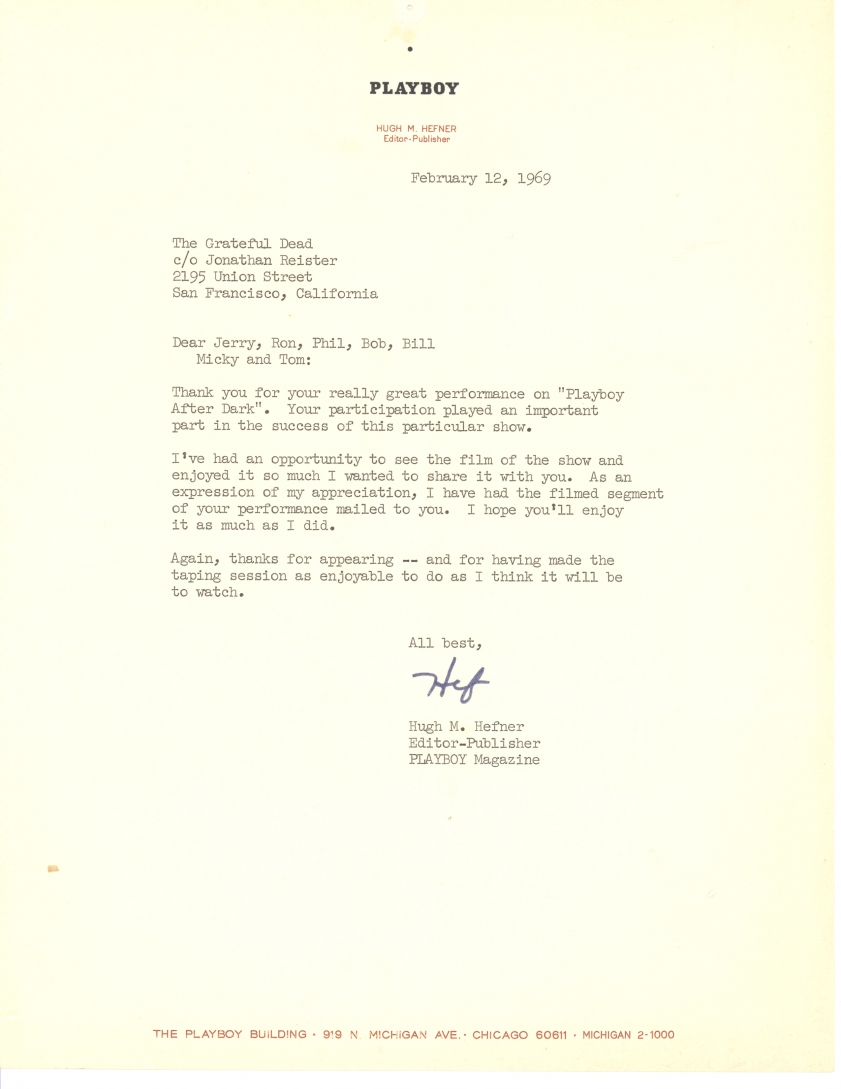
Hefn­er was so appre­cia­tive of what­ev­er hap­pened on set that he sent a per­son­al let­ter of thanks the fol­low­ing month (below), addressed to each mem­ber of the band. “Your par­tic­i­pa­tion played an impor­tant part in the suc­cess of this par­tic­u­lar show.” He enclosed a film of the per­for­mances and expressed his grat­i­tude “for hav­ing made the tap­ing ses­sion as enjoy­able to do as I think it will be to watch.”

Kreutz­mann relates some oth­er anec­dotes in his 2015 Conan inter­view, includ­ing a fun­ny bit about how the band got its name. But the best part of the appear­ance is watch­ing him imi­tate Hefn­er, who was appar­ent­ly plas­tered to the wall by the end of the set, the cof­fee real­ly start­ing to kick in.

This strange chap­ter of Grate­ful Dead his­to­ry is one of many memo­ri­al­ized in the new graph­ic nov­el, Grate­ful Dead Ori­gins.

via Laugh­ing Squid

Relat­ed Con­tent: 

How the Grate­ful Dead’s “Wall of Sound”–a Mon­ster, 600-Speak­er Sound System–Changed Rock Con­certs & Live Music For­ev­er

Watch the Grate­ful Dead Slip Past Secu­ri­ty & Play a Gig at Colum­bia University’s Anti-Viet­nam Protest (1968)

Take a Long, Strange Trip and Stream a 346-Hour Chrono­log­i­cal Playlist of Live Grate­ful Dead Per­for­mances (1966–1995)

Josh Jones is a writer and musi­cian based in Durham, NC. Fol­low him at @jdmagness

How to Make a Savile Row Suit: A Short Documentary from the Museum of Modern Art

Sav­ile Row is unfash­ion­able. This, of course, is its great strength: not for noth­ing does that Lon­don street stand as the last word in time­less tai­lor­ing. Since at least the ear­ly 19th cen­tu­ry, men have gone to Sav­ile Row not just to com­mis­sion hand­made suits from their favorite shops, but to par­tic­i­pate in as many fit­tings as nec­es­sary through­out the process of bring­ing those suits ever clos­er to per­fec­tion. The result, over decades and indeed gen­er­a­tions of reg­u­lar patron­age, is the cul­ti­va­tion of not fash­ion but style. Even so, Sav­ile Row fig­ures in the Muse­um of Mod­ern Art’s online course Fash­ion as Design, whose videos on the mak­ing of a bespoke three-piece suit you can see here.

It all hap­pens at Ander­son & Shep­pard, a fix­ture on the Row since 1906. In the first video, “behind a drawn cur­tain, a mas­ter cut­ter” — whose job includes not just cut­ting the cloth but inter­act­ing with the client — “takes an ini­tial series of 27 mea­sure­ments: 20 for the jack­et, 7 for the trousers. From these mea­sure­ments, the cut­ter fash­ions a pat­tern in heavy brown paper.”

We then see the cloth cut to this pat­tern, “and the many pieces of fab­ric are rolled for each gar­ment into tiny pack­ages, which await the tai­lors.” The sec­ond, which begins in the back of the house, shows how these tai­lors “receive their bun­dles of fab­ric and set about deci­pher­ing the cutter’s notes. Three weeks after a client’s mea­sure­ments have been tak­en, his suit will be ready for a first fit­ting.”

Empha­sis on “first”: though the young man being fit­ted here only appears for one ses­sion, some bespoke suits can require two, three, or more, worn each time as a wear­able rough draft held togeth­er with bright white thread and marked up for lat­er cor­rec­tion. This reflects not the tai­lor’s inabil­i­ty to get it right the first time, but the rig­or­ous desire of the Sav­ile Row habitué for an ide­al fit. (Ander­son & Shep­pard’s list of for­mer clients include such noto­ri­ous­ly per­fec­tion­ist dressers as Fred Astaire, Bryan Fer­ry, and Prince Charles.) Watch­ing this process from start fin­ish under­scores the truth of those famous words, “The dif­fer­ence between style and fash­ion is qual­i­ty” — famous words spo­ken by no less a detrac­tor of Sav­ile Row than Gior­gio Armani, but true ones nonethe­less.

Relat­ed Con­tent:

Dress Like an Intel­lec­tu­al Icon with Japan­ese Coats Inspired by the Wardrobes of Camus, Sartre, Duchamp, Le Cor­busier & Oth­ers

Recall­ing Albert Camus’ Fash­ion Advice, Noam Chom­sky Pans Glenn Greenwald’s Shiny Pur­ple Tie

Fash­ion Design­ers in 1939 Pre­dict How Peo­ple Would Dress in the Year 2000

Browse a Col­lec­tion of Over 83,500 Vin­tage Sewing Pat­terns

How Ladies & Gen­tle­men Got Dressed in the 18th Cen­tu­ry: It Was a Pret­ty Involved Process

Based in Seoul, Col­in Mar­shall writes and broad­casts on cities, lan­guage, and cul­ture. His projects include the Sub­stack newslet­terBooks on Cities, the book The State­less City: a Walk through 21st-Cen­tu­ry Los Ange­les and the video series The City in Cin­e­ma. Fol­low him on Twit­ter at @colinmarshall, on Face­book, or on Insta­gram.

Innovative Pinscreen Animations of Kafka’s “Before the Law”, Gogol’s “The Nose” & Mussorgsky’s “Night on Bald Mountain” (1932–1972)

What do Franz Kaf­ka, Niko­lai Gogol, and Mod­est Mus­sorgsky have in com­mon? They stand alone among their peers for their dark­ly humor­ous sen­si­bil­i­ties, fas­ci­na­tion with the grotesque, imag­i­na­tive takes on cul­tur­al tra­di­tions, and a pre­dis­po­si­tion for the pro­to-sur­re­al. Like the odd fig­ure lurch­ing through the first move­ment of Mussorgsky’s Pic­tures at an Exhi­bi­tion, they are gnom­ic artists: enig­mat­ic and ambigu­ous, giv­en to the apho­ris­tic in sto­ries and tone poems of mon­strous and mar­velous beings. It’s easy to imag­ine the three of them, or their works at least, in cryp­tic con­ver­sa­tion with each oth­er.

We might imag­ine that con­ver­sa­tion as we watch three works by these major Euro­pean artists—all of which we’ve fea­tured on the site before—animated via the painstak­ing pin­screen method pio­neered by hus­band-and-wife, Russ­ian-and-French duo Alexan­der Alex­eieff and Claire Park­er.

The two invent­ed the tech­nique in the 1930s. Ded­i­cat­ed to this extreme­ly labor-inten­sive process, they made 6 short films over a peri­od of 50 years, includ­ing adap­ta­tions of Kafka’s “Before the Law,” nar­rat­ed by Orson Welles, Gogol’s “The Nose,” and Mussorgsky’s Night on Bald Moun­tain.

We know the Mus­sorgsky piece as a ter­ri­fy­ing vignette from Walt Disney’s Fan­ta­sia. Sev­en years before that mar­riage of clas­si­cal music and ani­ma­tion came out in 1940, Alex­eieff and Park­er released their ver­sion, at the top. Steve Stanch­field at Car­toon Research calls it “one of the most unusu­al and unique look­ing ani­mat­ed films ever cre­at­ed.” Its “delight­ful and at times hor­ri­fy­ing imagery… chal­lenge the view­er to com­pre­hend both their mean­ing and the mys­tery of how they were cre­at­ed.” The same could be said of “The Nose” (1963), whose impro­vised sound­track by Hai-Minh adds dra­mat­ic ten­sion to the eerie ani­ma­tion.

Each of these films uses the same method, a hand­made pin­screen device in which thou­sands of pins are pushed by hand out­ward and inward for each frame to cre­ate areas of light or dark. The pair intend­ed to move beyond the flat­ness of con­ven­tion­al cel ani­ma­tion tech­niques and cap­ture the depth and con­trast of chiaroscuro. They achieved this through the most aching­ly slow process imag­in­able, yet “the illu­sion of dimen­sion­al draw­ing in ani­ma­tion has rarely been cre­at­ed bet­ter,” Stanch­field writes, not even in the most sophis­ti­cat­ed com­put­er-gen­er­at­ed imagery.

Alex­eieff and Parker’s “Before the Law,” from a para­ble in Kafka’s The Tri­al, takes a pic­ture-book approach to the ani­ma­tion that would reward younger view­ers. Welles’ nar­ra­tion anchors the pro­duc­tion with even more than his usu­al grav­i­tas. In 1972, they returned to Mus­sorgsky, in the short Pic­tures at an Exhi­bi­tion, above. Here, after a pro­logue in French and the styl­iza­tions of the open­ing Pre­lude, the fig­ure of the “The Gnome” appears, a translu­cent homuncu­lus hatch­ing from an egg and danc­ing across the piano keys. I like to think Mus­sorgsky, Kaf­ka, and Gogol would find this imagery irre­sistible.

Relat­ed Con­tent: 

Kafka’s Para­ble “Before the Law” Nar­rat­ed by Orson Welles & Illus­trat­ed with Pin­screen Art

Night on Bald Moun­tain: An Eery, Avant-Garde Pin­screen Ani­ma­tion Based on Mussorgsky’s Mas­ter­piece

Niko­lai Gogol’s Clas­sic Sto­ry, “The Nose,” Ani­mat­ed With the Aston­ish­ing Pin­screen Tech­nique (1963)

Josh Jones is a writer and musi­cian based in Durham, NC. Fol­low him at @jdmagness.

The Renewed Popularity of Chess and The Queen’s Gambit: Pretty Much Pop Culture Podcast Discussion #78 with Chess Expert J.J. Lang

The high lev­el of inter­est in Net­flix’s adap­ta­tion of the 1984 Wal­ter Tevis nov­el, The Queen’s Gam­bit has brought this most pop­u­lar game back to the fore­front of pop cul­ture. Chess expert/teacher J.J. (who’s also a grad stu­dent in phi­los­o­phy) joins your hosts Mark Lin­sen­may­er, Eri­ca Spyres, and Bri­an Hirt to con­sid­er chess cul­ture, what gives this game its edge on oth­er con­tenders (why not Ter­ra Mys­ti­ca?), play­er per­son­al­i­ty char­ac­ter­is­tics, and the effect of chess media.

We con­sid­er gen­der, genius, and oth­er issues in Gam­bit, plus Pawn Sac­ri­ficeSearch­ing for Bob­by Fish­erThe Luzhin Defense, and The Cold­est Game.

A few arti­cles and lists:

Watch J.J. on stream on Twitch. Oth­er inter­views he’s done: Per­pet­u­al ChessFriends and Ene­miesAakaash

Hear more of this pod­cast at prettymuchpop.com. This episode includes bonus dis­cus­sion about more chess films and oth­er top­ics that you can access by sup­port­ing the pod­cast at patreon.com/prettymuchpop. This pod­cast is part of the Par­tial­ly Exam­ined Life pod­cast net­work.

Pret­ty Much Pop: A Cul­ture Pod­cast is the first pod­cast curat­ed by Open Cul­ture. Browse all Pret­ty Much Pop posts.

Prince’s First Television Interview (1985)

By 1985, Prince had made appear­ances on Amer­i­can Band­stand and Sat­ur­day Night Live, toured the world sev­er­al times, and released sev­en stu­dio albums, includ­ing the ground­break­ing Pur­ple Rain and less-than-ground­break­ing accom­pa­ny­ing film, for which he won an Oscar. He had inad­ver­tent­ly helped launch Tip­per Gore’s Par­ents Music Resource Coun­cil after she caught her daugh­ter lis­ten­ing to “Dar­ling Nik­ki.” He was a bona fide glob­al super­star and one of the biggest-sell­ing artists of the decade. And he had yet to give a sin­gle inter­view.

Well, this isn’t entire­ly true. Dur­ing his Amer­i­can Band­stand appear­ance in 1979, the 19-year-old funk wun­derkind respond­ed to ques­tions from Dick Clark with a few guard­ed, one-word answers. He also gave an inter­view to his high school news­pa­per, telling them “I think it is very hard for a band to make it in [Min­neapo­lis], even if they’re good. Main­ly because there aren’t any big record com­pa­nies or stu­dios in this state. I real­ly feel that if we would have lived in Los Ange­les or New York or some oth­er big city, we would have got­ten over by now.”

Prince got over soon enough, but he didn’t seem at all eager to talk about him­self, one of the pri­ma­ry respon­si­bil­i­ties of a pop star. It was as though he knew he was so good he didn’t have to adver­tise. Soon after the release of his sev­enth album, Around the World in a Day—the source of such hits as “Rasp­ber­ry Beret” and “Pais­ley Park”—he gave an inter­view to Rolling Stone (who described the “Kung Fu Grasshop­per voice with which Prince whis­pers when meet­ing strangers or accept­ing Acad­e­my Awards.”)

He also agreed to appear on a new cable tele­vi­sion sta­tion called MTV. The inter­view, above, begins with the expect­ed ques­tion, “Why were you so secre­tive pri­or to this?” Prince, sur­round­ed by a cohort of young audi­ence mem­bers, says he was “home­sick” and pouts. Then we imme­di­ate­ly get a bet­ter answer to the ques­tion when the inter­view­er asks whether Prince’s need for con­trol came from a trou­bled child­hood. He sneers, calls the ques­tion “hor­ri­ble,” and answers a bet­ter one about how he found his musi­cal direc­tion and han­dled dis­agree­ments with his band­mates.

The tone remains strange­ly com­bat­ive and Prince remains eeri­ly calm, but his expres­sive face reg­is­ters irri­ta­tion and amuse­ment. “I strive for orig­i­nal­i­ty in my music,” he says. He also “remem­bers how he was influ­enced by James Brown after danc­ing on stage with him at just 10 years old, touch­es on com­par­isons to musi­cians like Jimi Hen­drix and answers provoca­tive ques­tions about ‘sell­ing out to white audi­ences’ with Pur­ple Rain,” writes the Vinyl Fac­to­ry. Watch the full inter­view above and see if you can bet­ter under­stand why Prince avoid­ed inter­views, or why inter­view­ers tried so hard to box him into stereo­typ­i­cal roles.

via Messy Nessy

Relat­ed Con­tent: 

Read Prince’s First Inter­view, Print­ed in His High School News­pa­per (1976)

Aca­d­e­m­ic Jour­nal Devotes an Entire Issue to Prince’s Life & Music: Read and Down­load It for Free

Four Clas­sic Prince Songs Re-Imag­ined as Pulp Fic­tion Cov­ers: When Doves Cry, Lit­tle Red Corvette & More

The Prince Online Muse­um Archives 16 of Prince’s Offi­cial Web Sites, Span­ning 20 Years

Josh Jones is a writer and musi­cian based in Durham, NC. Fol­low him at @jdmagness

Rarely-Seen Illustrations of Dante’s Divine Comedy Are Now Free Online, Courtesy of the Uffizi Gallery

We know Dante’s Divine Com­e­dy—espe­cial­ly its famous first third, Infer­no—as an extend­ed the­o­log­i­cal trea­tise, epic love poem, and vicious satire of church hypocrisy and the Flo­ren­tine polit­i­cal fac­tion that exiled Dante from the city of his birth in 1302. Most of us don’t know it the way its first read­ers did (and as Dante schol­ars do): a com­pendi­um in which “a num­ber of medieval lit­er­ary gen­res are digest­ed and com­bined,” as Robert M. Durl­ing writes in his trans­la­tion of the Infer­no.

These lit­er­ary gen­res include ver­nac­u­lar tra­di­tions of romance poet­ry from Provence, pop­u­lar long before Dante turned his Tus­can dialect into a lit­er­ary lan­guage to rival Latin. They include “the dream-vision (exem­pli­fied by the Old French Romance of the Rose)”; “accounts of jour­neys to the Oth­er­world (such as the Visio Pauli, Saint Patrick’s Pur­ga­to­ry, the Nav­i­ga­tio Sanc­ti Bren­dani)”; and Scholas­tic philo­soph­i­cal alle­go­ry, among oth­er well-known forms of writ­ing at the time.

By the time the Divine Com­e­dy cap­tured imag­i­na­tions in the peri­od of incunab­u­la, or the infan­cy of the print­ed book, many of these asso­ci­a­tions and influ­ences had reced­ed. And by the time of the Counter-Ref­or­ma­tion, the poem most impressed read­ers and illus­tra­tors of the text as a divine plan for a tor­ture cham­ber and an ency­clo­pe­dia of the tor­tures there­in. What­ev­er oth­er asso­ci­a­tions we have with Dante’s poem, we all know the nine cir­cles of hell and have an omi­nous sense of what goes on there.

No doubt we also have in our mind’s eye some of the hun­dreds of illus­tra­tions made of the text’s grue­some depic­tions of hell, from San­dro Bot­ti­cel­li to Robert Rauschen­berg. Illus­trat­ed edi­tions of Dante’s poem began appear­ing in 1472, and the first ful­ly illus­trat­ed edi­tion in 1491. By the late 16th cen­tu­ry, the poem had become a lit­er­ary clas­sic (the word Divine joined Com­e­dy in the title in 1555). By this time, the tra­di­tion of depict­ing a lit­er­al, rather than a lit­er­ary, hell was firm­ly estab­lished.

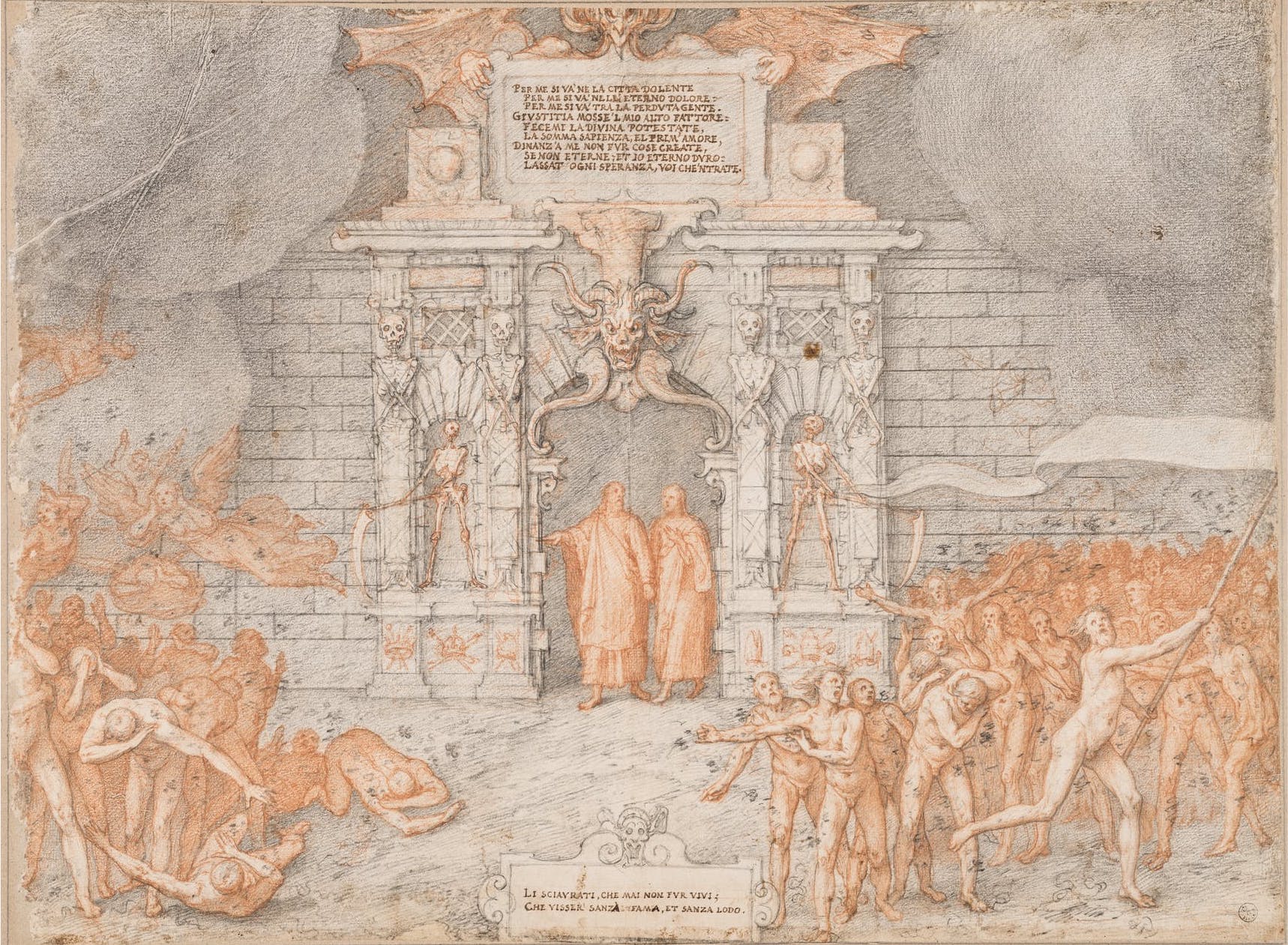
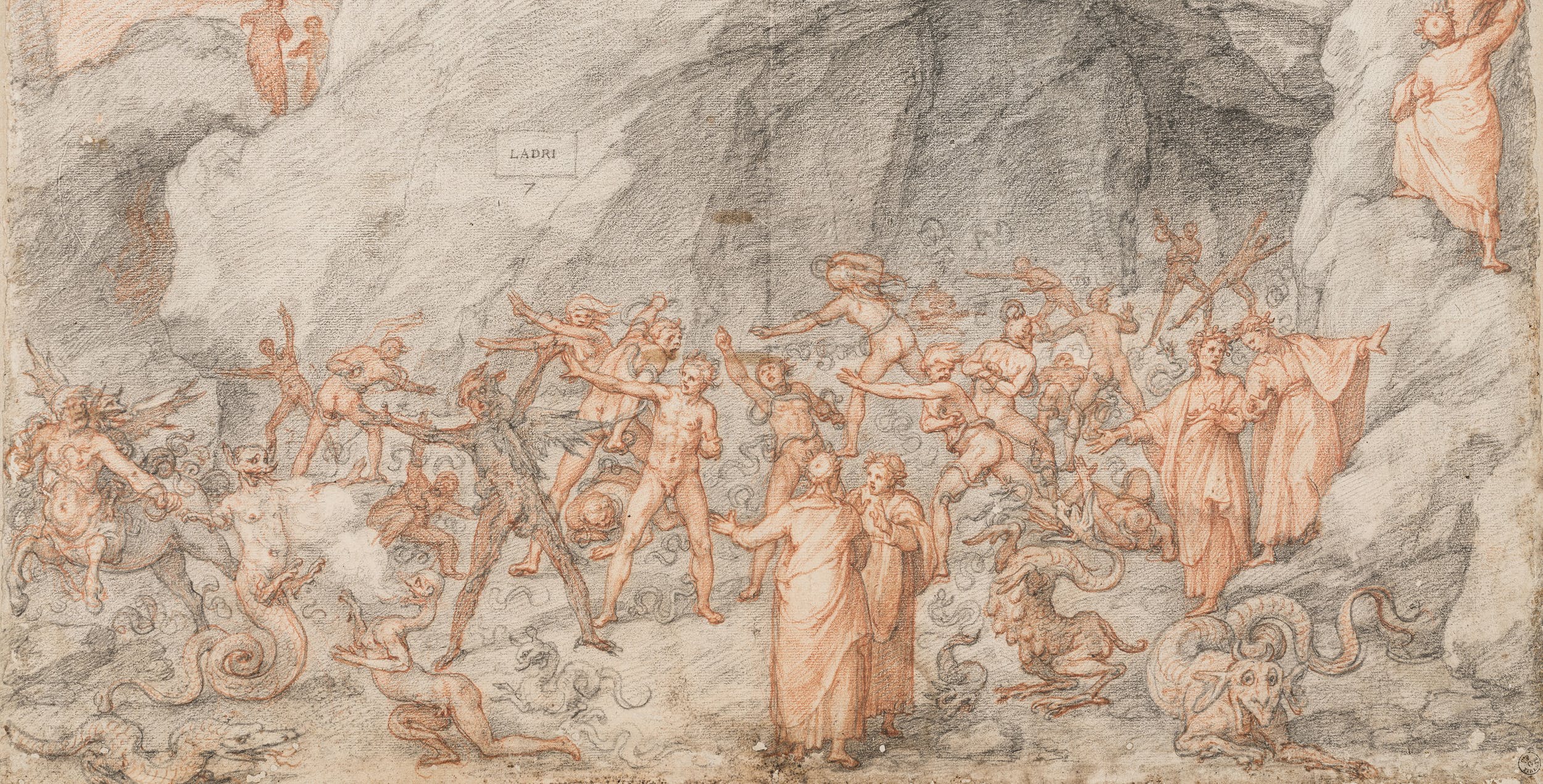
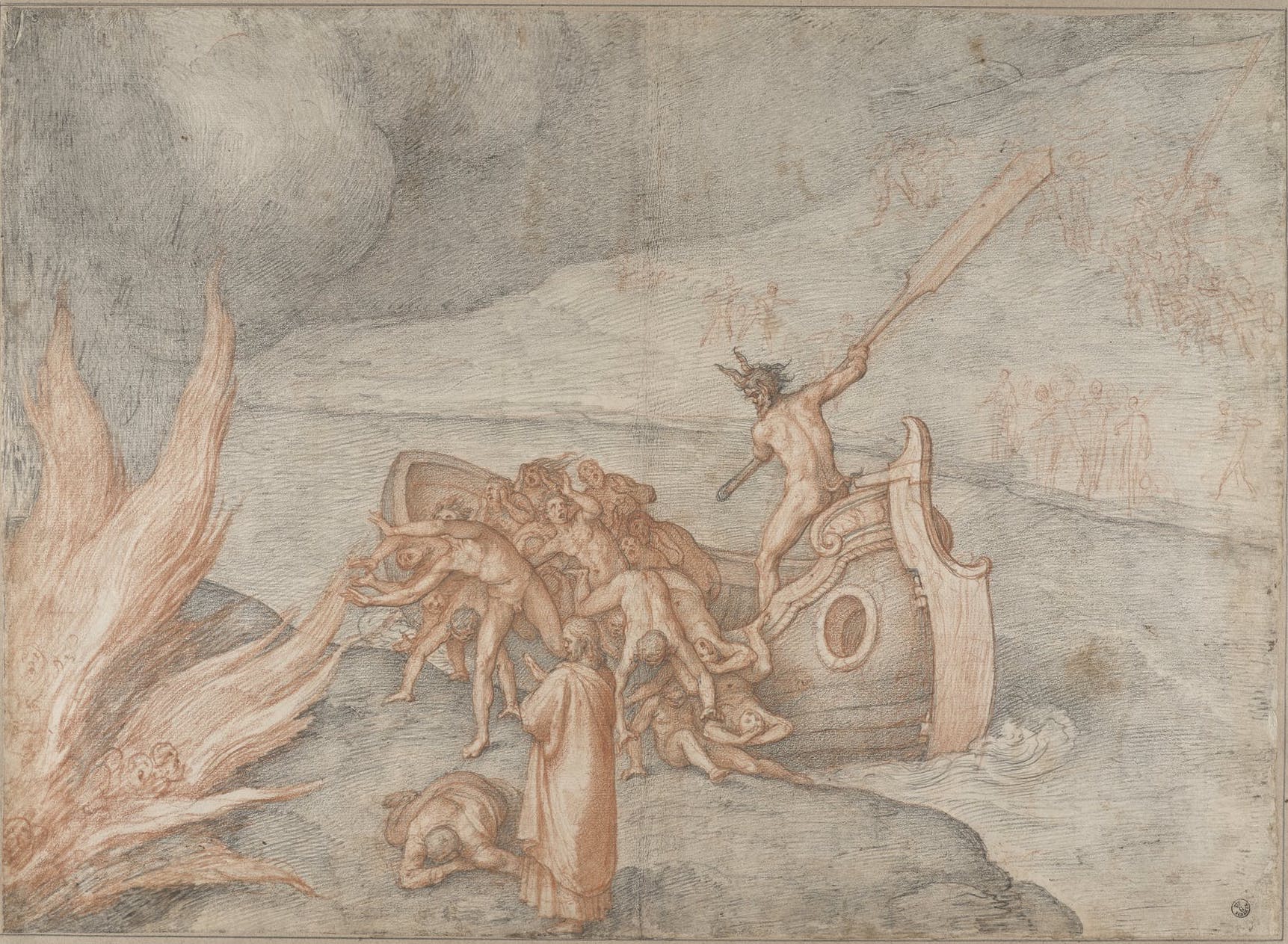
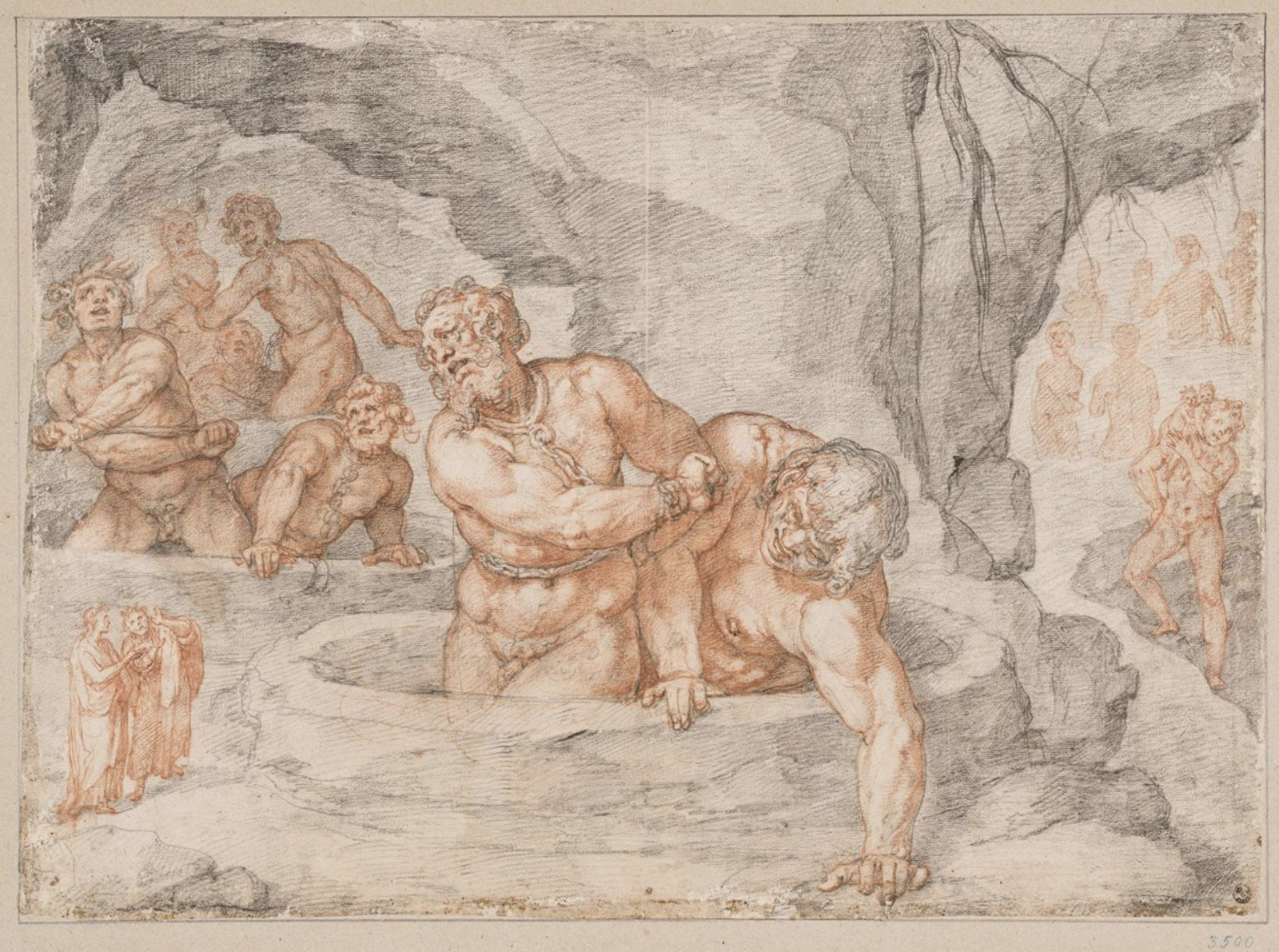
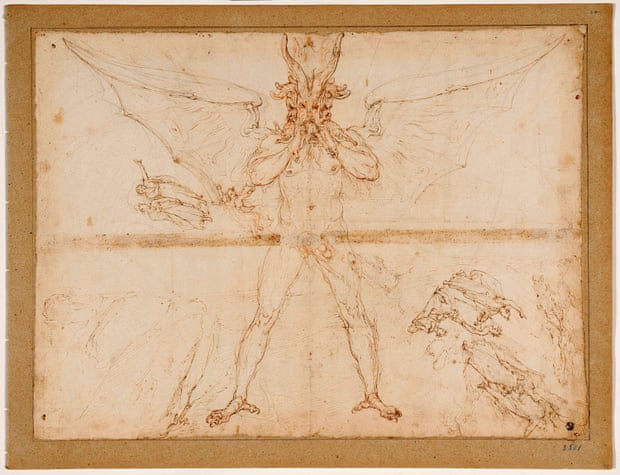
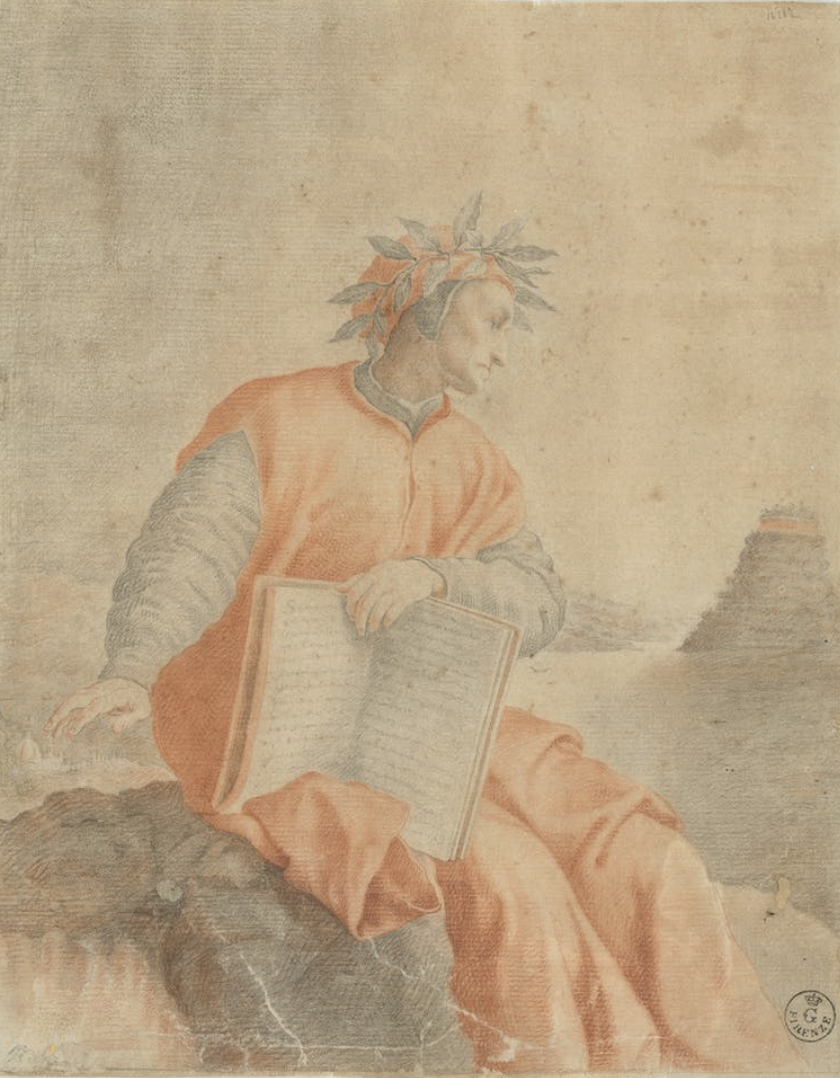
It was in this peri­od that Fred­eri­co Zuc­cari made the beau­ti­ful illus­tra­tions you see here, com­plet­ed, Angela Giuf­fri­da writes at The Guardian, “dur­ing a stay in Spain between 1586 and 1588. Of the 88 illus­tra­tions, 28 are depic­tions of hell, 49 of pur­ga­to­ry and 11 of heav­en. After Zuccari’s death in 1609, the draw­ings were held by the noble Orsi­ni fam­i­ly, for whom the artist had worked, and lat­er by the Medici fam­i­ly before becom­ing part of the Uffizi col­lec­tion in 1738.”

The pen­cil-and-ink draw­ings have rarely been seen before because of their frag­ile con­di­tion. They were only exhib­it­ed pub­licly for the first time in 1865 for the 600th anniver­sary of Dante’s birth and of Ital­ian uni­fi­ca­tion. Now, they are on dis­play, vir­tu­al­ly, for free, as part of a “year-long cal­en­dar of events to mark the 700th anniver­sary of the poet’s death.” This is an extra­or­di­nary oppor­tu­ni­ty to see these illus­tra­tions, which have until now “only been seen by a few schol­ars and dis­played to the pub­lic only twice, and only in part,” says Uffizi direc­tor Eike Schmidt.

Much of the promised “didac­tic-sci­en­tif­ic com­ment” to accom­pa­ny each draw­ing is marked as “upcom­ing” on the Eng­lish ver­sion of the Uffizi site, but you can see high res­o­lu­tion scans of each draw­ing and zoom in to exam­ine the many tor­tures of the damned and the grotesque demons who tor­ment them. Learn much more at Khan Acad­e­my about how Dante’s lit­er­ary epic in terza rima left “a last­ing impres­sion on the West­ern imag­i­na­tion for more than half a mil­len­ni­um,” solid­i­fy­ing and reshap­ing images of hell “into new guis­es that would become famil­iar to count­less gen­er­a­tions that fol­lowed.” If you like, you can also take a free course on Dan­te’s Divine Com­e­dy from Yale Uni­ver­si­ty.

via MyMod­ern­Met/The Guardian

Relat­ed Con­tent: 

Why Should We Read Dante’s Divine Com­e­dy? An Ani­mat­ed Video Makes the Case

A Dig­i­tal Archive of the Ear­li­est Illus­trat­ed Edi­tions of Dante’s Divine Com­e­dy (1487–1568)

Artists Illus­trate Dante’s Divine Com­e­dy Through the Ages: Doré, Blake, Bot­ti­cel­li, Mœbius & More

Josh Jones is a writer and musi­cian based in Durham, NC. Fol­low him at @jdmagness

Brâncuși Captures His Sculpture & Life on Film: Watch Rare Footage Shot Between 1923–1939

Here in the ear­ly 21st cen­tu­ry, even the non-artists among us car­ry dig­i­tal video cam­eras in our pock­ets. Back in the ear­ly 20th cen­tu­ry, the abil­i­ty to film your own life and work, or that of your coterie, was­n’t so close at hand — unless, of course, you ran with the avant-garde. Con­stan­tin Brân­cuși did, hav­ing been brought into the artis­tic and intel­lec­tu­al scene of the Paris of the 1910s, to which he’d made his way from his native Roma­nia. He even­tu­al­ly count­ed among his friends the likes of Pablo Picas­so, Ezra Pound, Mar­cel Duchamp, Guil­laume Apol­li­naire, Tris­tan Tzara, and Man Ray, who got the inno­v­a­tive, hard­work­ing and famous­ly low-tech sculp­tor prac­tic­ing cin­e­ma.

“In the ear­ly 1920s, Man Ray, who had pre­vi­ous­ly taught Con­stan­tin Brân­cuși how to han­dle a still cam­era, intro­duced him to the movie cam­era,” says Ubuweb in a descrip­tion of “fifty min­utes of film, shot between 1923 and 1939,” that rep­re­sents “the sum total of all the images ever filmed by Brân­cuși.”

The artist “makes use of fram­ing, shad­ows, inci­den­tal light and refrac­tion in order to acti­vate the plas­tic prop­er­ties of his sculp­tures, and opens up this visu­al analy­sis to move­ment and to time.” Pieces such as Leda and the scan­dalous Princess X become the sub­jects of their own sequences; lat­er, we wit­ness “Bran­cusi’s jour­ney to Roma­nia and the con­struc­tion of the End­less Col­umn in Târ­gu Jiu.”

These End­less Col­umn pas­sages, as art crit­ic Blake Gop­nik sees them, show “Brân­cuși obsessed with how his soar­ing sculp­ture comes to life in the open air.” From all this footage Gop­nik gets the sense that Brân­cuși was “less inter­est­ed in mak­ing fan­cy muse­um objects than in putting new kinds of almost-liv­ing things into the world,” and indeed draw­ing inspi­ra­tion from the liv­ing things of the world: “In one of the clips, Brân­cuși turns his cam­era on a pac­ing hawk, which comes across as a close, nat­ur­al ana­log to the many ‘birds’ he cre­at­ed as sculp­tures.” Anoth­er “shows one of his stone pedestals, which meant as much to him as the sculp­tures set on them, sup­port­ing a live flap­per doing an ecsta­t­ic dance” — cap­ti­vat­ing evi­dence of his inter­est in forms of life beyond the avian.

Relat­ed Con­tent:

Rare Film of Sculp­tor Auguste Rodin Work­ing at His Stu­dio in Paris (1915)

Man Ray’s Por­traits of Ernest Hem­ing­way, Ezra Pound, Mar­cel Duchamp & Many Oth­er 1920s Icons

Watch Dreams That Mon­ey Can Buy, a Sur­re­al­ist Film by Man Ray, Mar­cel Duchamp, Alexan­der Calder, Fer­nand Léger & Hans Richter

Based in Seoul, Col­in Mar­shall writes and broad­casts on cities, lan­guage, and cul­ture. His projects include the Sub­stack newslet­terBooks on Cities, the book The State­less City: a Walk through 21st-Cen­tu­ry Los Ange­les and the video series The City in Cin­e­ma. Fol­low him on Twit­ter at @colinmarshall, on Face­book, or on Insta­gram.

« Go BackMore in this category... »
Quantcast