How the Internet Archive Has Digitized More than 250,000 78 R.P.M. Records: See the Painstaking Process Up-Close

In the his­to­ry of record­ed music, no medi­um has demon­strat­ed quite the stay­ing pow­er of the phono­graph record. Hear­ing those words, most of us envi­sion a twelve-inch disc designed to play at 33 13 rev­o­lu­tions per minute, the kind still man­u­fac­tured today. But like every oth­er form of tech­nol­o­gy, that famil­iar vinyl LP did­n’t appear ex nihi­lo: on its intro­duc­tion in 1948, it was the lat­est in a series of phono­graph records of dif­fer­ent sizes and speeds. The first dom­i­nant record for­mat spun at 78 r.p.m., a speed stan­dard­ized in the mid-1920s, though the discs them­selves (made of rub­ber, shel­lac, or oth­er pre-vinyl mate­ri­als) had been in pro­duc­tion since the end of the 19th cen­tu­ry and remained in pro­duc­tion until the 1950s.

The half-cen­tu­ry of the “78” adds up to quite a lot of music, most of which has long been inac­ces­si­ble to non-anti­quar­i­ans. Enter the his­tor­i­cal­ly mind­ed tech­nol­o­gists of the Inter­net Archive, who since 2016 have been work­ing with media preser­va­tion com­pa­ny George Blood LP to dig­i­tize, pre­serve, and make avail­able, as of this writ­ing, more than 250,000 such records.

The process involves much more than play­ing them all into a com­put­er, due not least to the toll the past cen­tu­ry or so has tak­en on the discs’ sur­faces. “Each record is cleaned on a machine that sprays dis­tilled water onto its sur­face,” writes The Verge’s Kait Sanchez. “A lit­tle vac­u­um arm then sucks up the water, along with what­ev­er dirt and nas­ti­ness has built up in the record’s grooves.”
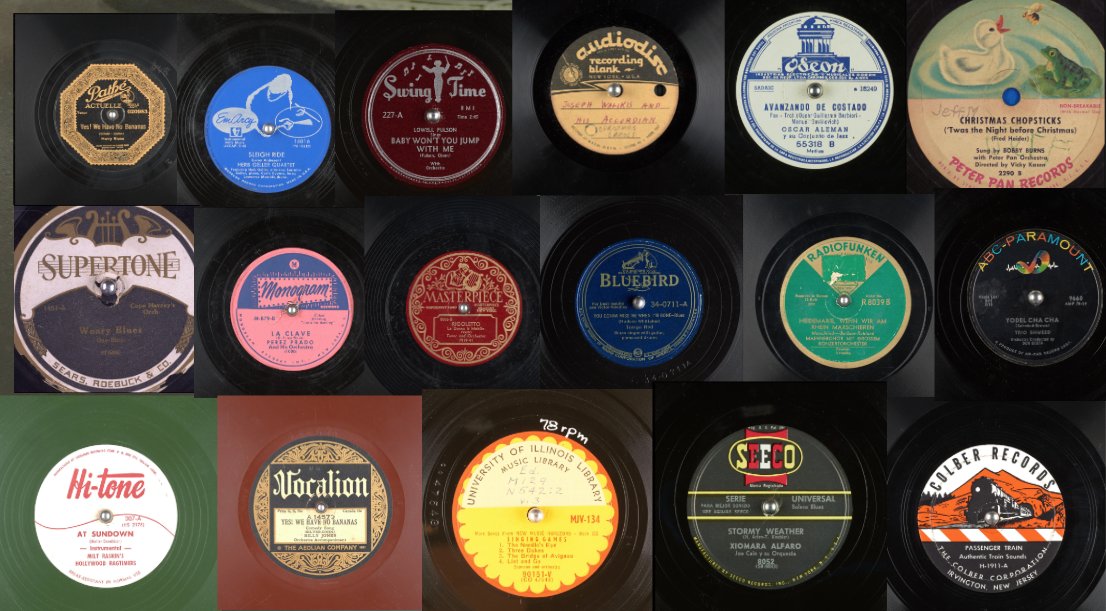
“The discs are then pho­tographed, and the pho­tos are ref­er­enced to pull info from the discs’ labels and add it to the archive’s data­base by hand.” There fol­lows the actu­al dig­i­ti­za­tion, which records each disc with four styli at once: since 78s nev­er had stan­dard­ized groove sizes, “record­ings tak­en with var­i­ous sty­lus tips will each sound slight­ly dif­fer­ent,” but for any record in the George Blood Col­lec­tion the lis­ten­er can choose which of the four they’d pre­fer to lis­ten through. You can see each step of the process in the video at the top of the post, part of a Twit­ter thread recent­ly post­ed by the Inter­net Archive. There the Archive notes that, “after scan­ning 250,000 sides, we’ve found 80% of these 78s were pro­duced by the ‘Big Five’ labels” — Colum­bia, RCA Vic­tor, Dec­ca, Capi­tol and Mer­cury — “but along the way, we’ve uncov­ered 1700 oth­er music labels and some pret­ty beau­ti­ful pic­ture discs.”

You can look at — and more to the point, lis­ten to — every­thing in the the George Blood Col­lec­tion here, which is a sub­set of the Inter­net Archive’s larg­er col­lec­tion of dig­i­tized 78 records as well as the cylin­ders that 78s whol­ly dis­placed as a con­sumer for­mat. As the Inter­net Archive’s Twit­ter thread reminds us, “from 1898–1950, this was THE way music was record­ed & shared.” In oth­er words, if your par­ents were lis­ten­ing to music in that peri­od — or maybe your grand­par­ents, great-grand­par­ents, or great-great grand­par­ents — 78s were their MP3s, their Spo­ti­fy, their Youtube. We descend as lis­ten­ers from enthu­si­as­tic buy­ers of 78s, and now, thanks to the Inter­net Archive and its col­lab­o­ra­tors, we can enjoy a large and ever-increas­ing pro­por­tion of their entire world of record­ed music for free.

via The Verge

Relat­ed Con­tent:

Mas­sive Archive of 78RPM Records Now Dig­i­tized & Put Online: Stream 78,000 Ear­ly 20th Cen­tu­ry Records from Around the World

25,000+ 78RPM Records Now Pro­fes­sion­al­ly Dig­i­tized & Stream­ing Online: A Trea­sure Trove of Ear­ly 20th Cen­tu­ry Music

The Inter­net Archive Is Dig­i­tiz­ing & Pre­serv­ing Over 100,000 Vinyl Records: Hear 750 Full Albums Now

The Boston Pub­lic Library Will Dig­i­tize & Put Online 200,000+ Vin­tage Records

The Ground­break­ing Art of Alex Stein­weiss, Father of Record Cov­er Design

How the Inter­net Archive Dig­i­tizes 3,500 Books a Day–the Hard Way, One Page at a Time

Based in Seoul, Col­in Mar­shall writes and broad­casts on cities, lan­guage, and cul­ture. His projects include the Sub­stack newslet­ter Books on Cities, the book The State­less City: a Walk through 21st-Cen­tu­ry Los Ange­les and the video series The City in Cin­e­ma. Fol­low him on Twit­ter at @colinmarshall or on Face­book.

Hear the First Japanese Visitor to the United States & Europe Describe Life in the West (1860–1862)

“Oh, would some Pow­er give us the gift / To see our­selves as oth­ers see us!” wrote poet Robert Burns. “It would from many a blun­der free us, And fool­ish notion.” I can­not vouch for a being blun­der-free, but read­ing his­tor­i­cal accounts of our nation from for­eign vis­i­tors does help to increase our world­ly per­spec­tive, and hope­ful­ly ques­tion what often we take for grant­ed. The 19th cen­tu­ry was a par­tic­u­lar­ly ripe time for the nar­ra­tives, as ocean­ic com­merce (and on its tail tourism) was mak­ing the world small­er than ever before.

The YouTube chan­nel Voic­es of the Past has been bring­ing a lot of these sto­ries to life over the last few years, with new trans­la­tions of for­eign texts, dra­mat­ic read­ings, and thought­ful image pre­sen­ta­tions to reveal the world to us as new and won­drous as it was to the orig­i­nal writ­ers. The video above and the one below take us on trips to the Unit­ed States and Great Britain by some of the first ever Japan­ese trav­el­ers to step onto West­ern soil.

For over 200 years, 1600 — 1868, Japan had remained iso­lat­ed from much of the world, a time known as the Edo Peri­od (named after the capi­tol) or the Toku­gawa Peri­od (named after the shogu­nate). With­in this hot­house, it devel­oped much of the tra­di­tion­al cul­ture that we know today—the tea cer­e­mo­ny, haiku, wood­block prints—and the cap­i­tal Edo (now Tokyo) grew from a fish­ing vil­lage to a major city. When Com­modore Matthew C. Per­ry land­ed in 1853 to get Japan to open up to trad­ing, the coun­try knew its time in iso­la­tion was at an end. The tech­nol­o­gy they saw on the Amer­i­can ships was advanced enough they knew they’d have to catch up or be dom­i­nat­ed.

Both videos con­cern Fukuza­wa Yukichi, one of the founders of mod­ern Japan. An author, jour­nal­ist, founder of Keio Uni­ver­si­ty, and cre­ator of the first Eng­lish-Japan­ese dic­tio­nary, he was also a main pro­po­nent of mod­ern reform. (He’s also the face on Japan’s 10,000 yen note).

In Fukuzawa’s retelling, you can hear how his encoun­ters with Dutch and Eng­lish trades­men made him insa­tiably curi­ous to learn the lan­guage he could not under­stand. After the Japan­ese gov­ern­ment bought a ship from the Dutch, nam­ing it the Kan­rin Maru, Fukuza­wa and a crew of 96 men (a minor­i­ty being Amer­i­can), land­ed in San Fran­cis­co in 1860, the first Japan­ese diplo­mat­ic mis­sion to Amer­i­ca. Tech­ni­cal­ly they did not stay in San Fran­cis­co, but in a naval hotel on Mare Island, 23 miles north east of the city. Fukuza­wa takes note of the abun­dance of car­pet and rugs in many of the offi­cial buildings—such fab­ric was so expen­sive in Japan that he had only seen it used as hand­bags and such—and the Amer­i­can desire to walk on it with their street shoes. Even more amaz­ing: ice cubes. He also notes some­thing that hasn’t changed since his time: the amount of waste in the streets, and the high cost of goods in Cal­i­for­nia.

Fukuza­wa likens his experience—warm hos­pi­tal­i­ty mixed with his own embar­rass­ment of an unfa­mil­iar­i­ty with for­eign mores—with the “shy, self-con­scious blush­ing bride.”

The most impor­tant pur­chase Fukuza­wa made on his trip was a Webster’s Dic­tio­nary, which would help him write his own Eng­lish-Japan­ese ver­sion when he returned. Two years after his Amer­i­can trip, he once again set out on a diplo­mat­ic mis­sion, this time to Europe. He and his co-patri­ots would be away from Japan for a whole year, tak­ing in France, the Unit­ed King­dom, the Nether­lands, Prus­sia, Rus­sia, and Por­tu­gal. This trip is dif­fer­ent in its aware­ness of pol­i­tics. Men­tion is made of Napoleon III (well admired) and the rise of Prus­sia. He is suit­ably baf­fled by Britain’s Par­lia­ment (as are most Amer­i­cans these days watch­ing it on CSPAN), but comes away with a strong con­vic­tion in inde­pen­dent thought and democ­ra­cy that would begin to change Japan through his influ­ence.

We have men­tioned Voic­es of the Past pre­vi­ous­ly, and you can find all sort of accounts of ear­ly inter­na­tion­al trav­el­ers. Fukuzawa’s accounts are some of the best, as his down-to-earth voice feels less for­eign than the Eng­lish speak­ers he meets.

Relat­ed Posts:

A Beau­ti­ful New Book of Japan­ese Wood­block Prints: A Visu­al His­to­ry of 200 Japan­ese Mas­ter­pieces Cre­at­ed Between 1680 and 1938

A Japan­ese Illus­trat­ed His­to­ry of Amer­i­ca (1861): Fea­tures George Wash­ing­ton Punch­ing Tigers, John

Adams Slay­ing Snakes & Oth­er Fan­tas­tic Scenes

The Entire His­to­ry of Japan in 9 Quirky Min­utes

Ted Mills is a free­lance writer on the arts who cur­rent­ly hosts the Notes from the Shed pod­cast and is the pro­duc­er of KCR­W’s Curi­ous Coast. You can also fol­low him on Twit­ter at @tedmills, and/or watch his films here.

The Isolator: A 1925 Helmet Designed to Eliminate Distractions & Increase Productivity (Created by SciFi Pioneer Hugo Gernsback)

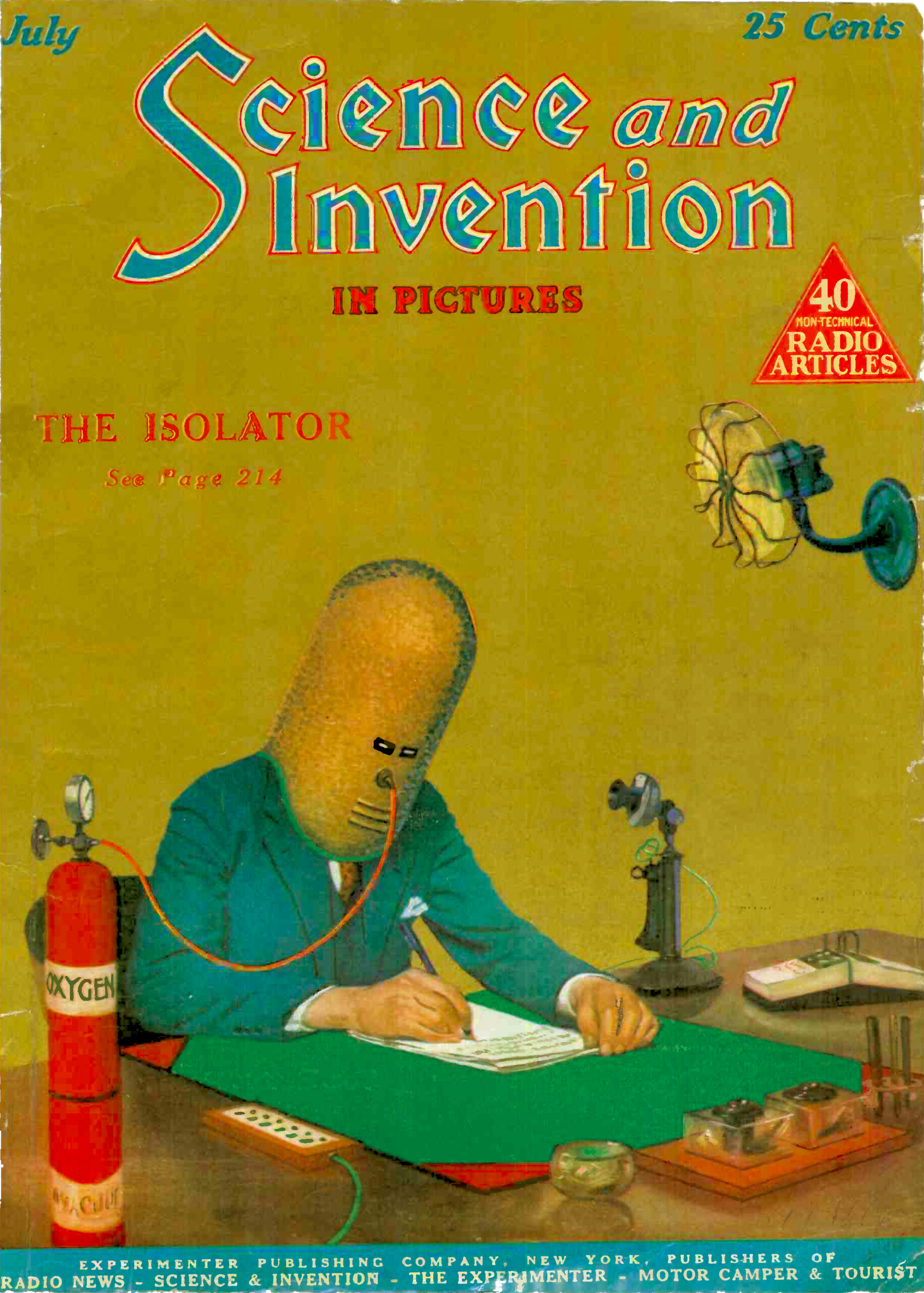
The anti-dis­trac­tion device is the mod­ern mouse­trap: build a bet­ter one, and the world will beat a path to your door. Or so, at least, will the part of the world engaged in the pur­suits we’ve broad­ly labeled “knowl­edge work.” Even among the knowl­edge work­ers who’ve spent most of the past year in pan­dem­ic-prompt­ed iso­la­tion, many still feel besieged by unend­ing claims on their atten­tion. Laments at hav­ing been ren­dered unpro­duc­tive by con­stant dis­trac­tion go back at least to medieval times, but the pro­posed solu­tions to this long-stand­ing prob­lem change with — and reflect — the times. Take the “Iso­la­tor,” the for­mi­da­ble-look­ing wear­able machine above that debuted on the cov­er of July 1925’s Sci­ence and Inven­tion mag­a­zine.

“Per­haps the most dif­fi­cult thing that a human being is called upon to face is long, con­cen­trat­ed think­ing,” writes inven­tor Hugo Gerns­back in the accom­pa­ny­ing arti­cle. “Most peo­ple who desire thus to con­cen­trate find it nec­es­sary to shut them­selves up in an almost sound­proof room in order to go ahead with their work, but even here there are many things that dis­tract their atten­tion.”

Even absent such nui­sances as “street nois­es” and the “tele­phone bell,” the mind seeks out its own dis­trac­tions as if nat­u­ral­ly com­pelled: “You will lean back in your chair and begin to study the pat­tern of the wall­pa­per, or you will see a fly crawl along the wall, or a win­dow cur­tain will be mov­ing back and forth, all of which is often suf­fi­cient to turn your mind away from the imme­di­ate task to be per­formed.”

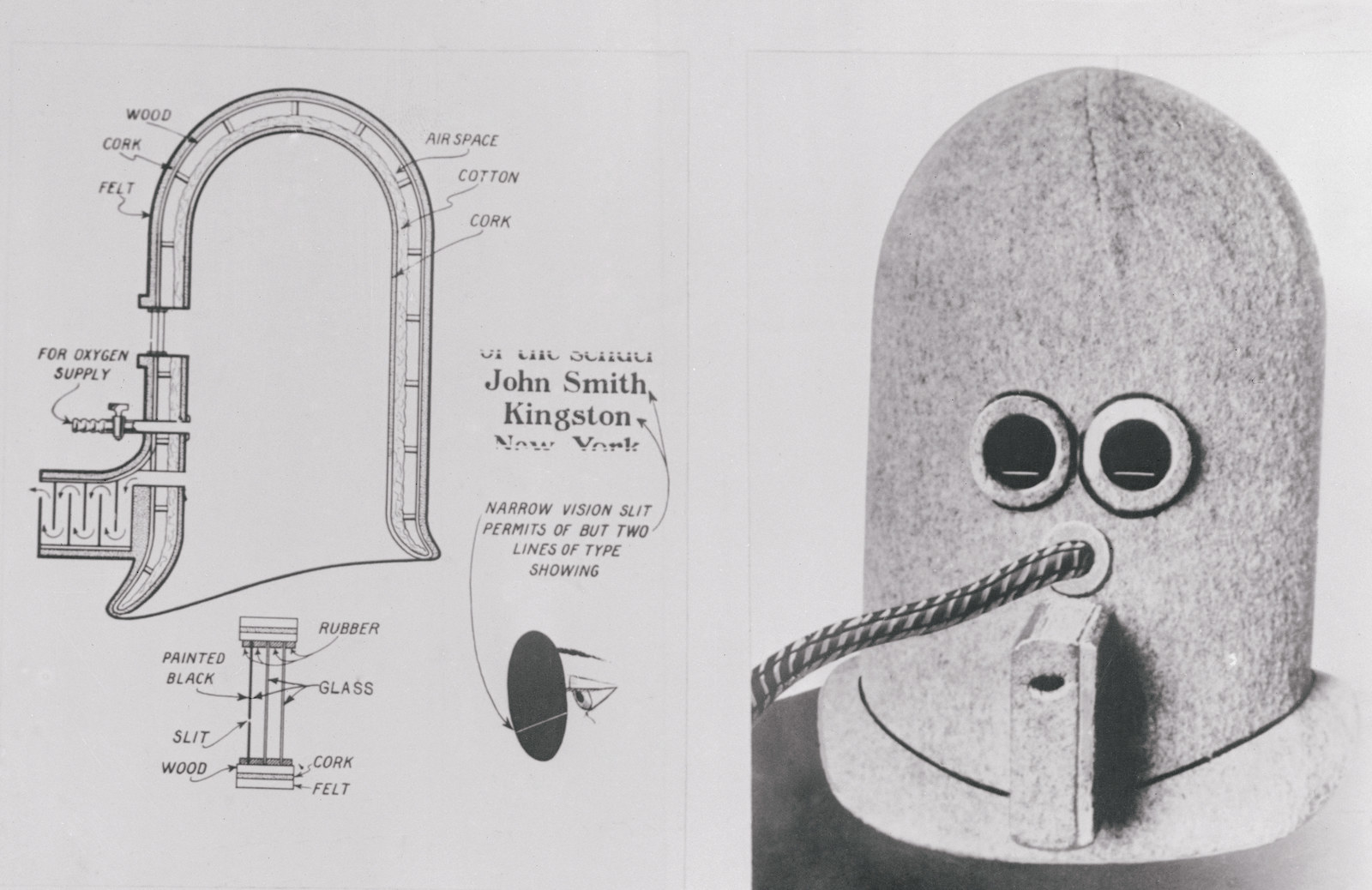
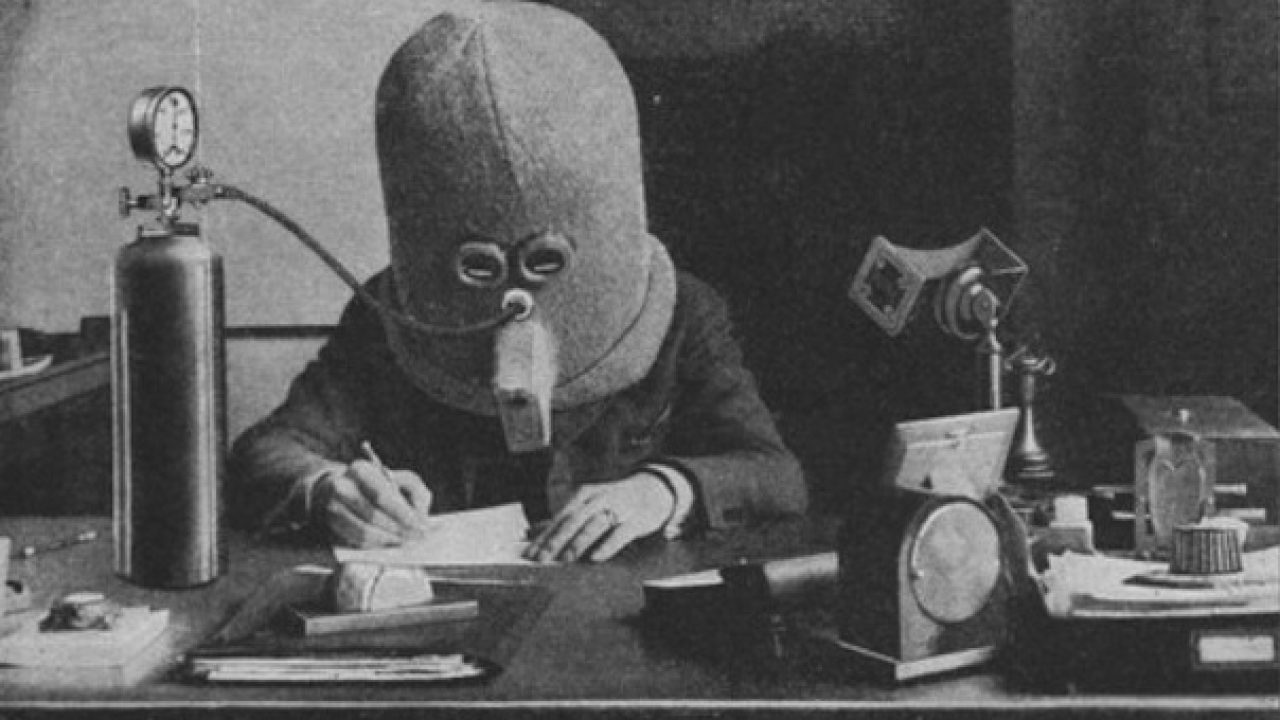
Gerns­back­’s solu­tion involves a large hel­met, lined with cork and cov­ered in felt, with a baf­fle for breath­ing and glass eye­holes to see through. Paint­ed black but for two thin bands, the eye­holes make it “almost impos­si­ble to see any­thing except a sheet of paper in front of the wear­er. There is, there­fore, no opti­cal dis­trac­tion here.” To pre­vent drowsi­ness, “the writer intro­duced a small oxy­gen tank, attached to the hel­met. This increas­es the res­pi­ra­tion and livens the sub­ject con­sid­er­ably.” And so we arrive at the set­up pic­tured below, orig­i­nal­ly cap­tioned, “The author at work in his pri­vate study aid­ed by the Iso­la­tor. Out­side nois­es being elim­i­nat­ed, the work­er can con­cen­trate with ease upon the sub­ject at hand.” The Iso­la­tor’s patent appears just above, one of 80 for var­i­ous inven­tions that Gerns­back held in his life­time.

What­ev­er the device con­tributed to Gerns­back­’s pro­duc­tiv­i­ty, there can be no ques­tion that the man got a lot done. Not just a con­trib­u­tor to Sci­ence and Inven­tion but also its pub­lish­er, he over­saw a small media empire whose oth­er peri­od­i­cals includ­ed Every­day Sci­ence and Mechan­ics, Sci­en­tif­ic Detec­tive Month­ly, the sin­is­ter-sound­ing Tech­noc­ra­cy Review, and Amaz­ing Sto­ries, which launched in 1926 as the first mag­a­zine devot­ed entire­ly to sci­ence fic­tion (or “sci­en­tific­tion,” as Gerns­back called it). For his advance­ment of the genre he was hon­ored by the World Sci­ence Fic­tion Society’s Annu­al Achieve­ment Awards, bet­ter known as the “Hugos.” Pulp-fic­tion­al though the Iso­la­tor may have looked in 1925 (as indeed it looks now), it rep­re­sents a gen­uine effort to alle­vi­ate with tech­nol­o­gy a both­er­some aspect of the human con­di­tion — and a prece­dent for the new-and-improved iso­la­tion hel­mets engi­neered for the even more dis­tract­ing world in which we live a cen­tu­ry on.

Relat­ed Con­tent:

How to Focus: Five Talks Reveal the Secrets of Con­cen­tra­tion

The Ben­e­fits of Bore­dom: How to Stop Dis­tract­ing Your­self and Get Cre­ative Ideas Again

The Case for Delet­ing Your Social Media Accounts & Doing Valu­able “Deep Work” Instead, Accord­ing to Com­put­er Sci­en­tist Cal New­port

Pico Iyer on “the Art of Still­ness”: How to Enrich Your Busy, Dis­tract­ed Life by Unplug­ging and Stay­ing Put

Medieval Monks Com­plained About Con­stant Dis­trac­tions: Learn How They Worked to Over­come Them

What Hap­pens When You Spend Weeks, Months, or Years in Soli­tary Con­fine­ment

Based in Seoul, Col­in Mar­shall writes and broad­casts on cities, lan­guage, and cul­ture. His projects include the Sub­stack newslet­ter Books on Cities, the book The State­less City: a Walk through 21st-Cen­tu­ry Los Ange­les and the video series The City in Cin­e­ma. Fol­low him on Twit­ter at @colinmarshall or on Face­book.

The Story of the Rolling Stones: A Selection of Documentaries on the Quintessential Rock-and-Roll Band

The Rolling Stones define the rock-and-roll band, as they have for near­ly six decades now. Exact­ly how they’ve done so is thor­ough­ly doc­u­ment­ed, not least by the band’s own expan­sive and still-grow­ing cat­a­log of songs and albums (all of which I hap­pen to have spent the last few months lis­ten­ing through). But the sto­ry of the Stones con­tin­ues to com­pel, told and re-told as it is in every form of media pro­duced by each era through which the band has passed: books, arti­cles, pod­casts, and also the sort of doc­u­men­taries we’ve col­lect­ed here today. Some were orig­i­nal­ly pro­duced for tele­vi­sion; oth­ers, like Watch­Mo­jo’s “The Rolling Stones: The Sto­ry & the Songs” above, for the inter­net. Each of them address­es the same ques­tion: how did a cou­ple of blues-obsessed lads from Kent come to run the biggest rock group in the world?

Even when straight­for­ward­ly pre­sent­ed, as in the Biog­ra­phy broad­cast above, the his­to­ry of the Rolling Stones con­sti­tutes a pop-cul­tur­al thrill ride. It begins, by most accounts, with for­mer class­mates Mick Jag­ger and Kei­th Richards bump­ing into each oth­er at a train sta­tion in 1961. Their shared inter­est in music, and espe­cial­ly Amer­i­can blues, inspired them to put a band togeth­er.

Before long, Jag­ger and Richards’ Blues Boys made the acquain­tance of anoth­er band, Blues Incor­po­rat­ed, whose mem­bers includ­ed Bri­an Jones, Ian Stew­art and Char­lie Watts. Though Watts would­n’t join up until lat­er, the oth­er four con­sti­tut­ed most of the first line­up of the Rolling Stones, who made their debut at Lon­don’s Mar­quee Club in July 1962.

You can see a great deal of archive footage depict­ing the Stones in their ear­ly years in the doc­u­men­tary above, Rolling Stones: Rock of Ages. The title implies an obvi­ous and much-repeat­ed joke about the once-rebel­lious young­sters’ insis­tence on rock­ing into rel­a­tive­ly advanced age. But onstage — and the live per­for­mance has always been essen­tial to their appeal, more so even than their albums — they remain very much the same band once pro­mot­ed with the ques­tion “Would you let your sis­ter go with a Rolling Stone?” That line was only one of the strate­gies used by its author, the Stones’ first man­ag­er Andrew Loog Old­ham, to launch his boys into world­wide pop­u­lar­i­ty by fram­ing them as the brash oppo­site of the Bea­t­les — to whom, despite their con­sid­er­able musi­cal dif­fer­ences, one can hard­ly avoid mak­ing ref­er­ence in the sto­ry of the Stones.

Though the bands became fast friends in real life, the press of the 1960s could­n’t resist craft­ing a rival­ry, as recount­ed in The Bea­t­les vs. The Rolling Stones, the Canal+ doc­u­men­tary above. What­ev­er com­pe­ti­tion exist­ed between them (or with Amer­i­can bands like the Beach Boys) only encour­aged them to make their music more pow­er­ful and dis­tinc­tive. This they did in the face of count­less per­son­al and pro­fes­sion­al set­backs, which for the Stones includ­ed the loss of found­ing mem­ber Bri­an Jones and the vio­lent Alta­mont Free Con­cert, wide­ly inter­pret­ed as the end of the utopi­an 1960s. As prod­ucts and sur­vivors of that era, the Stones also remain embod­i­ments of its insou­ciant ambi­tion. “For my gen­er­a­tion, what was hap­pen­ing and the feel­ing in the air was: it’s time to push lim­its, says no less a sur­vivor than the sub­ject of Kei­th Richards: The Ori­gin Of The Species. “The world is ours now, and you can rise or fall on it.”

Relat­ed Con­tent:

A Visu­al His­to­ry of The Rolling Stones Doc­u­ment­ed in a Beau­ti­ful, 450-Page Pho­to Book by Taschen

Watch the Rolling Stones Write “Sym­pa­thy for the Dev­il”: Scenes from Jean-Luc Godard’s ’68 Film One Plus One

Revis­it the Infa­mous Rolling Stones Free Fes­ti­val at Alta­mont: The Ill-Fat­ed Con­cert Took Place 50 Years Ago

The Rolling Stones at 50: Mick, Kei­th, Char­lie & Ron­nie Revis­it Their Favorite Songs

Watch the Rolling Stones Play “You Can’t Always Get What You Want” While Social Dis­tanc­ing in Quar­an­tine

Based in Seoul, Col­in Mar­shall writes and broad­casts on cities, lan­guage, and cul­ture. His projects include the Sub­stack newslet­ter Books on Cities, the book The State­less City: a Walk through 21st-Cen­tu­ry Los Ange­les and the video series The City in Cin­e­ma. Fol­low him on Twit­ter at @colinmarshall or on Face­book.

Magnus Carlsen’s Mind-Blowing Memory of Historic Chess Matches

How many his­toric chess games can Mag­nus Carlsen rec­og­nize just by look­ing at the place­ment of chess pieces on the board? It turns out a lot. And that’s part­ly what makes him the reign­ing World Chess Cham­pi­on.

If you would like to sign up for Open Culture’s free email newslet­ter, please find it here. It’s a great way to see our new posts, all bun­dled in one email, each day.

If you would like to sup­port the mis­sion of Open Cul­ture, con­sid­er mak­ing a dona­tion to our site. It’s hard to rely 100% on ads, and your con­tri­bu­tions will help us con­tin­ue pro­vid­ing the best free cul­tur­al and edu­ca­tion­al mate­ri­als to learn­ers every­where. You can con­tribute through Pay­Pal, Patre­on, and Ven­mo (@openculture). Thanks!

via Kot­tke

Relat­ed Con­tent

Learn How to Play Chess Online: Free Chess Lessons for Begin­ners, Inter­me­di­ate Play­ers & Beyond

A Free 700-Page Chess Man­u­al Explains 1,000 Chess Tac­tics in Straight­for­ward Eng­lish

A Beau­ti­ful Short Doc­u­men­tary Takes You Inside New York City’s Last Great Chess Store

A Brief His­to­ry of Chess: An Ani­mat­ed Intro­duc­tion to the 1,500-Year-Old Game

Vladimir Nabokov’s Hand-Drawn Sketch­es of Mind-Bend­ing Chess Prob­lems

The Mag­ic of Chess: Kids Share Their Unin­hib­it­ed, Philo­soph­i­cal Insights about the Ben­e­fits of Chess

Gar­ry Kas­parov Now Teach­ing an Online Course on Chess

« Go Back
Quantcast