How German Expressionism Gave Rise to the “Dutch” Angle, the Camera Shot That Defined Classic Films by Welles, Hitchcock, Tarantino & More

Expres­sion­ism was an art move­ment that set out to take the internal—emotions, the human con­di­tion itself—and make it exter­nal, with paint­ings that made no attempt to recre­ate real­i­ty. It was a break with the clas­si­cal schools of art that had come before. It was mod­ern, very mod­ern, very col­or­ful, and excit­ing as hell. And it was soon to run head­long into that most mod­ern of art forms, film­mak­ing, in the 1920s.

In the above mini-doc on the Dutch Angle, that cant­ed fram­ing so beloved of film noir, and appar­ent­ly every shot in the first Thor movie, Vox traces its roots back to Expres­sion­ism, and par­tic­u­lar­ly back to Ger­many of the 1910s where schools like Die Brücke and Der Blaue Reit­er were assault­ing real­ism with bru­tal paint­ings. They sensed some­thing was chang­ing in the sub­con­scious of peo­ple and in the coun­try itself. And the movie The Cab­i­net of Dr. Cali­gari was the cul­mi­na­tion of that hor­rif­ic vibe.

Three expres­sion­ist painters, Her­mann Warm, Wal­ter Reimann, and Wal­ter Rohrig designed the crooked, bizarre, and night­mar­ish sets for that film. They look like the paint­ings of Ernst Lud­wig Kirch­n­er or Fritz Bleyl, but denud­ed of col­or. Expres­sion­ism had entered film. (Warm, Reimann, and Rohring had worked on, and con­tin­ued to work as set designers/art direc­tors for many films at that time, but most are lost or destroyed.) Ger­many being cut off from the Hol­ly­wood film indus­try at the time had led to this strange new direc­tion, but once Hitler rose to pow­er, many artists came to Hol­ly­wood, and expres­sion­ist tech­niques infect­ed Hol­ly­wood.

The Dutch Angle (real­ly, the Deutsche Angle, before being Ger­man became prob­lem­at­ic) was a way of turn­ing ver­ti­cal and hor­i­zon­tal lines in a scene into diag­o­nals. They sug­gest some­thing had gone wrong, that real­i­ty has been knocked off its axis. It became part of the vocab­u­lary of film noir, which was also filled with expres­sion­is­tic light­ing, high con­trast black and white, light and shad­ows.

Those direct emo­tion­al par­al­lels have been leached from the Dutch angle from its overuse. It’s been used in many a film as a way to jazz up a scene, or some­times just as a way to get sev­er­al ele­ments into a tight frame. It’s ubiq­ui­ty in music videos and com­mer­cials has made it almost invis­i­ble.

But when the Dutch angle is used the right way by tal­ent­ed direc­tors, from Hitch­cock to Spike Lee and Quentin Taran­ti­no, the effect still works. The angle makes a shot stand out, it can jar us, it can show inte­ri­or con­fu­sion and moral may­hem. And when that hap­pens it can take us back to the Expressionist’s orig­i­nal goal. It can reveal our inner truths, and remind us of the times when we have felt off cen­ter, when the world was not on the lev­el.

Relat­ed Con­tent:

60 Free Film Noir Movies

10 Great Ger­man Expres­sion­ist Films: From Nos­fer­atu to The Cab­i­net of Dr. Cali­gari

From Cali­gari to Hitler: A Look at How Cin­e­ma Laid the Foun­da­tion for Tyran­ny in Weimar Ger­many

How Ger­man Expres­sion­ism Influ­enced Tim Bur­ton: A Video Essay

Watch The Cab­i­net of Dr. Cali­gari, the Influ­en­tial Ger­man Expres­sion­ist Film (1920)

Ted Mills is a free­lance writer on the arts who cur­rent­ly hosts the Notes from the Shed pod­cast and is the pro­duc­er of KCR­W’s Curi­ous Coast. You can also fol­low him on Twit­ter at @tedmills, and/or watch his films here.
Bach on a Möbius Strip: Marcus du Sautoy Visualizes How Bach Used Math to Compose His Music

“A math­e­mati­cian’s favorite com­pos­er? Top of the list prob­a­bly comes Bach.” Thus speaks a reli­able source on the mat­ter: Oxford math­e­mati­cian Mar­cus du Sautoy in the Num­ber­phile video above. “Bach uses a lot of math­e­mat­i­cal tricks as a way of gen­er­at­ing music, so his music is high­ly com­plex,” but at its heart is “the use of math­e­mat­ics as a kind of short­cut to gen­er­ate extra­or­di­nar­i­ly com­plex music.” As a first exam­ple du Sautoy takes up the “Musi­cal Offer­ing,” and in par­tic­u­lar its “crab canon,” the genius of which has pre­vi­ous­ly been fea­tured here on Open Cul­ture.

Writ­ten out, Bach’s crab canon “looks like just one line of music.” But “what’s curi­ous is that when you get to the end of the music, there’s the lit­tle sym­bol you usu­al­ly begin a piece of music with.” This means that Bach wants the play­er of the piece to “play this for­wards and back­wards; he’s ask­ing you to start at the end and play it back­wards at the same time.” His com­po­si­tion thus becomes a two-voice piece made out of just one line of music going in both direc­tions. It’s the under­ly­ing math­e­mat­ics that make this, when played, more than just a trick but “some­thing beau­ti­ful­ly har­mon­ic and com­plex.”

To under­stand the crab canon or Bach’s oth­er math­e­mat­i­cal­ly shaped pieces, it helps to visu­al­ize them in uncon­ven­tion­al ways such as on a twist­ing Möbius strip, whose ends con­nect direct­ly to one anoth­er. “You can make a Möbius strip out of any piece of music,” says du Sautoy as he does so in the video. “The stun­ning thing is that when you then look at this piece of music” — that is the fifth canon from Bach’s Gold­berg Vari­a­tions — “the notes that are on one side are exact­ly the same notes as if this thing were see-through.” (Nat­u­ral­ly, he’s also pre­pared a see-through Bach Möbius strip for his view­ing audi­ence.)

In 2017 du Sautoy gave an Oxford Math­e­mat­ics Pub­lic Lec­ture on “the Sound of Sym­me­try and the Sym­me­try of Sound.” In it he dis­cuss­es sym­me­try as present in not just the Gold­berg Vari­a­tions but the twelve-tone rows com­posed in the 20th cen­tu­ry by Arnold Schoen­berg and even the very sound waves made by musi­cal instru­ments them­selves. Just this year, he col­lab­o­rat­ed with the Oxford Phil­har­mon­ic Orches­tra to deliv­er “Music & Maths: Baroque & Beyond,” a pre­sen­ta­tion that draws math­e­mat­i­cal con­nec­tions between the music, art, archi­tec­ture, and sci­ence going on in the 17th and 18th cen­turies. Bach has been dead for more than a quar­ter of a mil­len­ni­um, but the con­nec­tions embod­ied in his music still hold rev­e­la­tions for lis­ten­ers will­ing to hear them — or see them.

Relat­ed Con­tent:

Take an Intel­lec­tu­al Odyssey with a Free MIT Course on Dou­glas Hofstadter’s Pulitzer Prize-Win­ning Book Gödel, Esch­er, Bach: An Eter­nal Gold­en Braid

The Genius of J.S. Bach’s “Crab Canon” Visu­al­ized on a Möbius Strip

Visu­al­iz­ing Bach: Alexan­der Chen’s Impos­si­ble Harp

How a Bach Canon Works. Bril­liant

The Math Behind Beethoven’s Music

Based in Seoul, Col­in Mar­shall writes and broad­casts on cities, lan­guage, and cul­ture. His projects include the Sub­stack newslet­ter Books on Cities, the book The State­less City: a Walk through 21st-Cen­tu­ry Los Ange­les and the video series The City in Cin­e­ma. Fol­low him on Twit­ter at @colinmarshall or on Face­book.

Carl Sagan Warns Congress about Climate Change (1985)

With­out cli­mate change, we could­n’t inhab­it the Earth as we do today. The green­house effect, by which gas­es in a plan­et’s atmos­phere increase the heat of that plan­et’s sur­face, “makes life on Earth pos­si­ble.” So says Carl Sagan in the video above. He adds that with­out it, the tem­per­a­ture would be about 30 degrees centi­grade cool­er: “That’s well below the freez­ing point of water every­where on the plan­et. The oceans would be sol­id.” A lit­tle of the cli­mate change induced by the green­house effect, then, is a good thing, but “here we are pour­ing enor­mous quan­ti­ties of CO2 and these oth­er gas­es into the atmos­phere every year, with hard­ly any con­cern about its long-term and glob­al con­se­quences.”

It’s fair to say that the lev­el of con­cern has increased since Sagan spoke these words in 1985, when “cli­mate change” was­n’t yet a house­hold term. But even then, his audi­ence was Con­gress, and his fif­teen-minute address, pre­served by C‑SPAN, remains a suc­cinct and per­sua­sive case for more research into the phe­nom­e­non as well as strate­gies and action to mit­i­gate it.

What audi­ence would expect less from Sagan, who just five years ear­li­er had host­ed the hit PBS tele­vi­sion series Cos­mos, based on his book of the same name. Its broad­cast made con­ta­gious his enthu­si­asm for sci­en­tif­ic inquiry in gen­er­al and the nature of the plan­ets in par­tic­u­lar. Who could for­get, for exam­ple, his intro­duc­tion to the “thor­ough­ly nasty place” that is Venus, research into whose atmos­phere Sagan had con­duct­ed in the ear­ly 1960s?

Venus is “the near­est plan­et — a plan­et of about the same mass, radius, den­si­ty, as the Earth,” Sagan tells Con­gress, but it has a “sur­face tem­per­a­ture about 470 degrees centi­grade, 900 Fahren­heit.” The rea­son? “A mas­sive green­house effect in which car­bon diox­ide plays the major role.” As for our plan­et, esti­mates then held that, with­out changes in the rates of fos­sil fuel-burn­ing and “infrared-absorb­ing” gas­es released into the atmos­phere, there will be “a sev­er­al-centi­grade-degree tem­per­a­ture increase” on aver­age “by the mid­dle to the end of the next cen­tu­ry.” Giv­en the poten­tial effects of such a rise, “if we don’t do the right thing now, there are very seri­ous prob­lems that our chil­dren and grand­chil­dren will have to face.” It’s impos­si­ble to know how many lis­ten­ers these words con­vinced at the time, though they cer­tain­ly seem to have stuck with a young sen­a­tor in the room by the name of Al Gore.

Relat­ed Con­tent:

A Cen­tu­ry of Glob­al Warm­ing Visu­al­ized in a 35 Sec­ond Video

Watch “Degrees of Uncer­tain­ty,” an Ani­mat­ed Doc­u­men­tary about Cli­mate Sci­ence, Uncer­tain­ty & Know­ing When to Trust the Experts

Bill Gates Lets Col­lege Stu­dents Down­load a Free Dig­i­tal Copy of His Book, How to Avoid a Cli­mate Dis­as­ter

Carl Sagan Pre­dicts the Decline of Amer­i­ca: Unable to Know “What’s True,” We Will Slide, “With­out Notic­ing, Back into Super­sti­tion & Dark­ness” (1995)

Based in Seoul, Col­in Mar­shall writes and broad­casts on cities, lan­guage, and cul­ture. His projects include the Sub­stack newslet­ter Books on Cities, the book The State­less City: a Walk through 21st-Cen­tu­ry Los Ange­les and the video series The City in Cin­e­ma. Fol­low him on Twit­ter at @colinmarshall or on Face­book.

How Led Zeppelin Stole Their Way to Fame and Fortune

When Bob Dylan released his 2001 album Love and Theft, he lift­ed the title from a book of the same name by Eric Lott, who stud­ied 19th cen­tu­ry Amer­i­can pop­u­lar music’s musi­cal thefts and con­temp­tu­ous imper­son­ations. The ambiva­lence in the title was there, too: musi­cians of all col­ors rou­tine­ly and lov­ing­ly stole from each oth­er while devel­op­ing the jazz and blues tra­di­tions that grew into rock and roll. When British inva­sion bands intro­duced their ver­sion of the blues, it only seemed nat­ur­al that they would con­tin­ue the tra­di­tion, pick­ing up riffs, licks, and lyrics where they found them, and get­ting a lit­tle slip­pery about the ori­gins of songs. This was, after all, the music’s his­to­ry.

In truth, most UK blues rock­ers who picked up oth­er people’s songs changed them com­plete­ly or cred­it­ed their authors when it came time to make records. This may not have been tra­di­tion but it was eth­i­cal busi­ness prac­tice. Fans of Led Zep­pelin, on the oth­er hand, now lis­ten to their music with aster­isks next to many of their hits — foot­notes sum­ma­riz­ing court cas­es, mis­at­tri­bu­tions, and down­right thefts from which they prof­it­ed. In many cas­es, the band would only admit to steal­ing under duress. At oth­er times, they freely con­fessed in inter­views to tak­ing songs, tweak­ing them a bit, and giv­ing them­selves sole cred­it for com­pos­ing and/or arrang­ing.

A list of ten “rip offs” in Rolling Stone piece on Led Zeppelin’s pen­chant for theft is hard­ly exhaus­tive. It does not include “Stair­way to Heav­en,” for which the band was recent­ly sued for lift­ing a melody from Spirit’s “Tau­rus.” (An inter­net user saved the band’s case by find­ing that both songs used an ear­li­er melody from the 1600s.)

Dur­ing those recent court pro­ceed­ings, the pros­e­cu­tion quot­ed from a 1993 inter­view Jim­my Page gave Gui­tar World:

“[A]s far as my end of it goes, I always tried to bring some­thing fresh to any­thing that I used. I always made sure to come up with some vari­a­tion. In fact, I think in most cas­es, you would nev­er know what the orig­i­nal source could be. Maybe not in every case – but in most cas­es. So most of the com­par­isons rest on the lyrics. And Robert was sup­posed to change the lyrics, and he didn’t always do that – which is what brought on most of the grief. They couldn’t get us on the gui­tar parts of the music, but they nailed us on the lyrics.”

The blame shift­ing was “not quite fair to Plant,” the court found, “as Page repeat­ed­ly took entire musi­cal com­po­si­tions with­out attri­bu­tion.” He stood accused of doing so, for exam­ple, in “The Lemon Song,” lift­ed from Howl­in’ Wolf’s “Killing Floor.” After a law­suit, the song is now co-cred­it­ed to Chester Bur­nett (Howl­in’ Wolf’s real name). For his part, Plant read­i­ly blamed Page when giv­en the chance. In his book Led Zep­pelin IV, Bar­ney Hoskyns quotes the singer’s thoughts on the “Whole Lot­ta Love” con­tro­ver­sy:

I think when Willie Dixon turned on the radio in Chica­go twen­ty years after he wrote his blues, he thought, ‘That’s my song.’ … When we ripped it off, I said to Jim­my, ‘Hey, that’s not our song.’ And he said, ‘Shut up and keep walk­ing.’

Led Zeppelin’s musi­cal thiev­ery does not make them less tal­ent­ed or inge­nious as musi­cians. They took oth­ers’ mate­r­i­al, some of it whole­sale, but no one can claim they didn’t make it their own, meld­ing Amer­i­can blues and British folk into a tru­ly strange brew. The Poly­phon­ic video above on their use of oth­ers’ music begins with a quote from “poet and famous anti-semi­te” T.S. Eliot, express­ing a sen­ti­ment also attrib­uted to Picas­so, Faulkn­er, and Stravin­sky:

Imma­ture poets imi­tate, mature poets steal; bad poets deface what they take, and good poets make it into some­thing bet­ter, or at least some­thing dif­fer­ent.

As far as copy­right goes, Zep­pelin didn’t always cross legal lines. But as Jacqui McShee said when Page reworked a com­po­si­tion by her Pen­tan­gle band­mate, Bert Jan­sch, “It’s a very rude thing to do. Pinch some­body else’s thing and cred­it it to your­self.” Maybe so. Still, nobody ever won any awards for polite­ness in rock and roll, most espe­cial­ly the band that helped invent the sound of heavy met­al. See a score­board show­ing the num­ber of orig­i­nals, cred­it­ed cov­ers and uncred­it­ed thefts on the band’s first four albums here.’

Relat­ed Con­tent:  

Zep­pelin Took My Blues Away: An Illus­trat­ed His­to­ry of Zeppelin’s “Copy­right Indis­cre­tions”

How Led Zeppelin’s “Stair­way to Heav­en” Recre­ates the Epic Hero’s Jour­ney Described by Joseph Camp­bell

When Led Zep­pelin Reunit­ed and Crashed and Burned at Live Aid (1985)

Josh Jones is a writer and musi­cian based in Durham, NC. Fol­low him at @jdmagness

How the World’s First Anti-Vax Movement Started with the First Vaccine for Smallpox in 1796, and Spread Fears of People Getting Turned into Half-Cow Babies

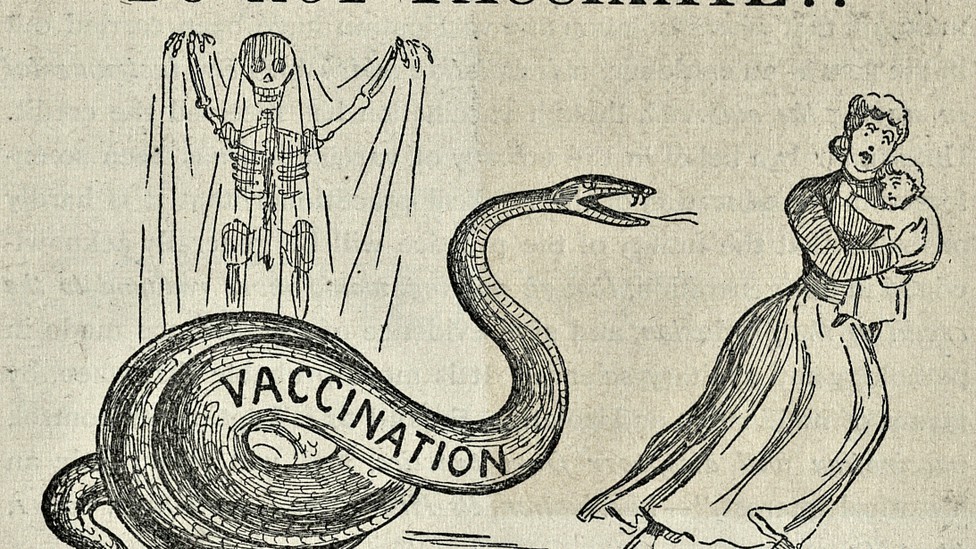
A car­toon from a Decem­ber 1894 anti-vac­ci­na­tion pub­li­ca­tion (Cour­tesy of The His­tor­i­cal Med­ical Library of The Col­lege of Physi­cians of Philadel­phia)

For well over a cen­tu­ry peo­ple have queued up to get vac­ci­nat­ed against polio, small­pox, measles, mumps, rubel­la, the flu or oth­er epi­dem­ic dis­eases. And they have done so because they were man­dat­ed by schools, work­places, armed forces, and oth­er insti­tu­tions com­mit­ted to using sci­ence to fight dis­ease. As a result, dead­ly viral epi­demics began to dis­ap­pear in the devel­oped world. Indeed, the vast major­i­ty of peo­ple now protest­ing manda­to­ry vac­ci­na­tions were them­selves vac­ci­nat­ed (by man­date) against polio, small­pox, measles, mumps, rubel­la, etc., and hard­ly any of them have con­tract­ed those once-com­mon dis­eases. The his­tor­i­cal argu­ment for vac­cines may not be the most sci­en­tif­ic (the sci­ence is read­i­ly avail­able online). But his­to­ry can act as a reli­able guide for under­stand­ing pat­terns of human behav­ior.

In 1796, Scot­tish physi­cian Edward Jen­ner dis­cov­ered how an injec­tion of cow­pox-infect­ed human bio­log­i­cal mate­r­i­al could make humans immune to small­pox. For the next 100 years after this break­through, resis­tance to inoc­u­la­tion grew into “an enor­mous mass move­ment,” says Yale his­to­ri­an of med­i­cine Frank Snow­den. “There was a rejec­tion of vac­ci­na­tion on polit­i­cal grounds that it was wide­ly con­sid­ered as anoth­er form of tyran­ny.”

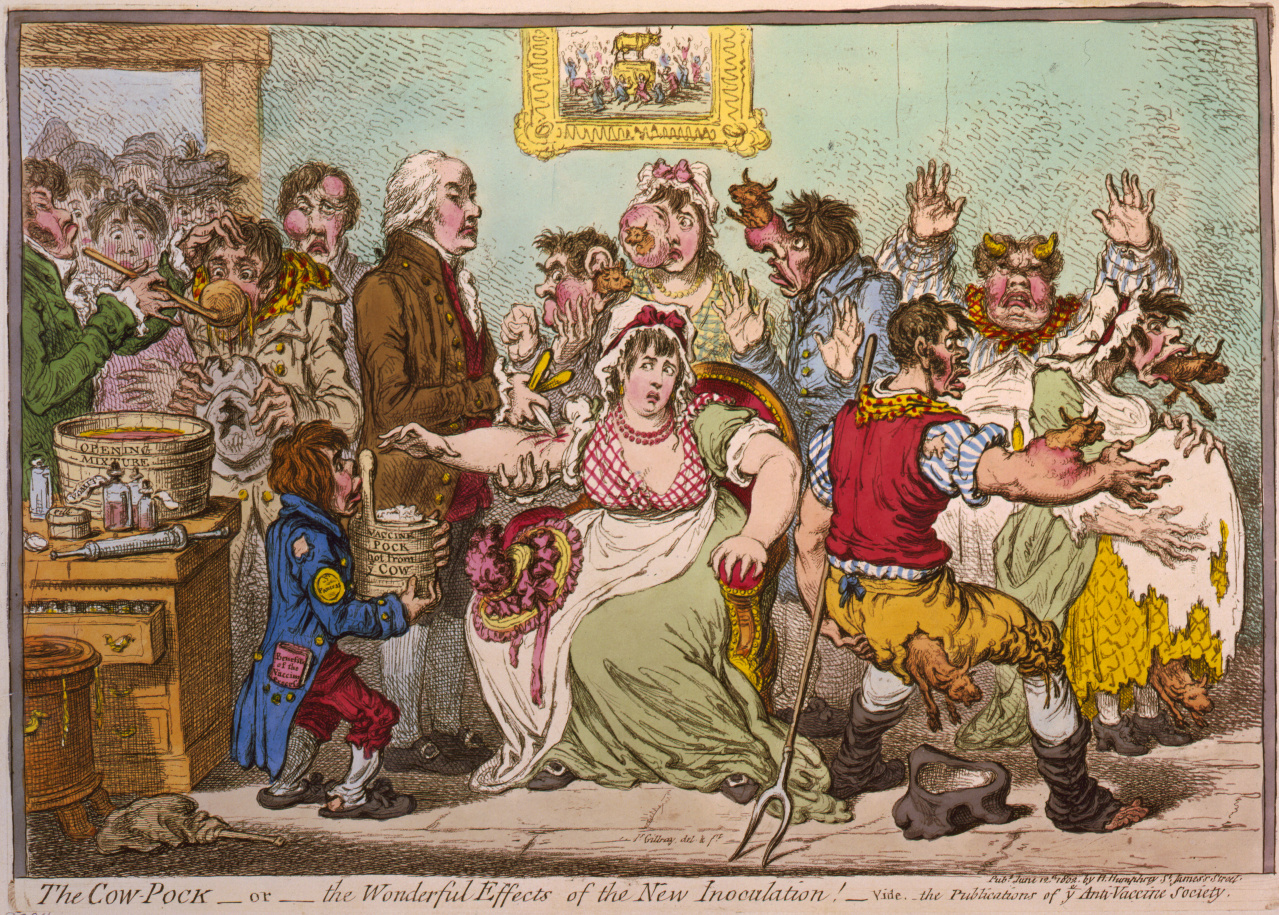
Fears that injec­tions of cow­pox would turn peo­ple into mutants with cow-like growths were sat­i­rized as ear­ly as 1802 by car­toon­ist James Gilray (below). While the anti-vac­ci­na­tion move­ment may seem rel­a­tive­ly new, the resis­tance, refusal, and denial­ism are as old as vac­ci­na­tions to infec­tious dis­ease in the West.

Image via Wiki­me­dia Com­mons

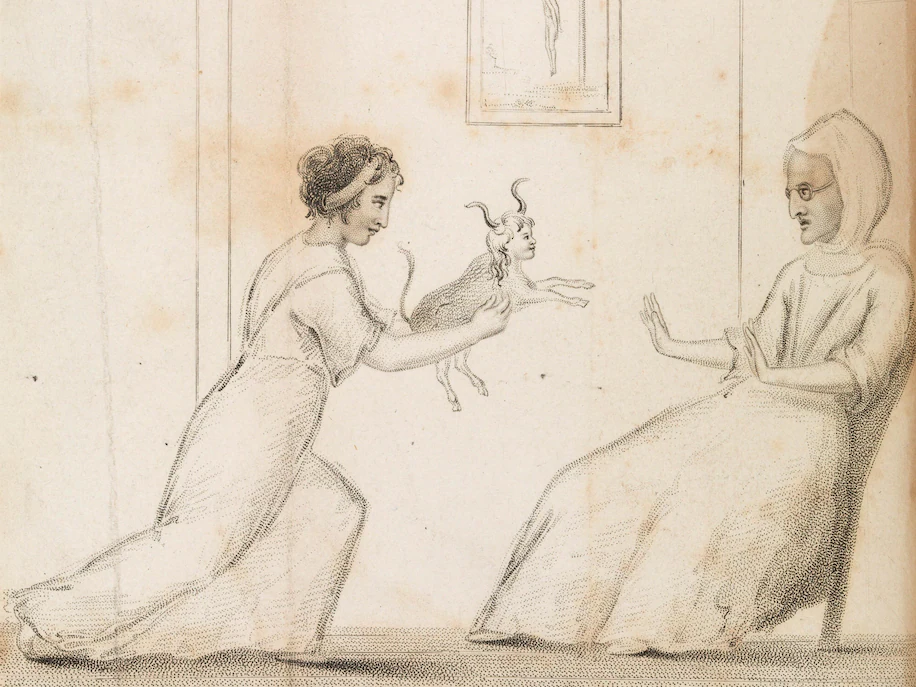
“In the ear­ly 19th cen­tu­ry, British peo­ple final­ly had access to the first vac­cine in his­to­ry, one that promised to pro­tect them from small­pox, among the dead­liest dis­eases in the era,” writes Jess McHugh at The Wash­ing­ton Post. Small­pox killed around 4,000 peo­ple a year in the UK and left hun­dreds more dis­fig­ured or blind­ed. Nonethe­less, “many Britons were skep­ti­cal of the vac­cine.… The side effects they dread­ed were far more ter­ri­fy­ing: blind­ness, deaf­ness, ulcers, a grue­some skin con­di­tion called ‘cow­pox mange’ — even sprout­ing hoofs and horns.” Giv­ing a per­son one dis­ease to fright­en off anoth­er one prob­a­bly seemed just as absurd a notion as turn­ing into a human/cow hybrid.

Jen­ner’s method, called var­i­o­la­tion, was out­lawed in 1840 as safer vac­ci­na­tions replaced it. By 1867, all British chil­dren up to age 14 were required by law to be vac­ci­nat­ed against small­pox. Wide­spread out­rage result­ed, even among promi­nent physi­cians and sci­en­tists, and con­tin­ued for decades. “Every day the vac­ci­na­tion laws remain in force,” wrote sci­en­tist Alfred Rus­sel Wal­lace in 1898, “par­ents are being pun­ished, infants are being killed.” In fact, it was small­pox claim­ing lives, “more than 400,000 lives per year through­out the 19th cen­tu­ry, accord­ing to the World Health Orga­ni­za­tion,” writes Eliz­a­beth Earl at The Atlantic“Epi­dem­ic dis­ease was a fact of life at the time.” And so it is again. Covid has killed almost 800,000 peo­ple in the U.S. alone over the past two years.


Then as now, med­ical quack­ery played its part in vac­cine refusal — in this case a much larg­er part. “Nev­er was the lie of ‘the good old days’ more clear than in med­i­cine,” Greig Wat­son writes at BBC News. “The 1841 UK cen­sus sug­gest­ed a third of doc­tors were unqual­i­fied.” Com­mon caus­es of ill­ness in an 1848 med­ical text­book includ­ed “wet feet,” “pas­sion­ate fear or rage,” and “dis­eased par­ents.” Among the many fiery lec­tures, car­i­ca­tures, and pam­phlets issued by oppo­nents of vac­ci­na­tion, one 1805 tract by William Row­ley, a mem­ber of the Roy­al Col­lege of Physi­cians, alleged that the injec­tion of cow­pox could mar an entire blood­line. “Who would mar­ry into any fam­i­ly, at the risk of their off­spring hav­ing filthy beast­ly dis­eases?” it asked hys­ter­i­cal­ly.

Then, as now, reli­gion was a moti­vat­ing fac­tor. “One can see it in bib­li­cal terms as human beings cre­at­ed in the image of God,” says Snow­den. “The vac­ci­na­tion move­ment inject­ing into human bod­ies this mate­r­i­al from an infe­ri­or ani­mal was seen as irre­li­gious, blas­phe­mous and med­ical­ly wrong.” Grant­ed, those who vol­un­teered to get vac­ci­nat­ed had to place their faith in the insti­tu­tions of sci­ence and gov­ern­ment. After med­ical scan­dals of the recent past like the Tuskegee exper­i­ments or Thalido­mide, that can be a big ask. In the 19th cen­tu­ry, says med­ical his­to­ri­an Kristin Hussey, “peo­ple were ask­ing ques­tions about rights, espe­cial­ly work­ing-class rights. There was a sense the upper class were try­ing to take advan­tage, a feel­ing of dis­trust.”

The deep dis­trust of insti­tu­tions now seems intractable and ful­ly endem­ic in our cur­rent polit­i­cal cli­mate, and much of it may be ful­ly war­rant­ed. But no virus has evolved — since the time of the Jen­ner’s first small­pox inoc­u­la­tion — to care about our pol­i­tics, reli­gious beliefs, or feel­ings about author­i­ty or indi­vid­ual rights. With­out wide­spread vac­ci­na­tion, virus­es are more than hap­py to exploit our lack of immu­ni­ty, and they do so with­out pity or com­punc­tion.

via Wash­ing­ton Post

Relat­ed Con­tent: 

Dying in the Name of Vac­cine Free­dom

How Vac­cines Improved Our World In One Graph­ic

How Do Vac­cines (Includ­ing the COVID-19 Vac­cines) Work?: Watch Ani­mat­ed Intro­duc­tions

Elvis Pres­ley Gets the Polio Vac­cine on The Ed Sul­li­van Show, Per­suad­ing Mil­lions to Get Vac­ci­nat­ed (1956)

Josh Jones is a writer and musi­cian based in Durham, NC. Fol­low him at @jdmagness

Meet the Oud, the “King of All Instruments” Whose Origins Stretch Back 3500 Years Ago to Ancient Persia

The word oud might make some peo­ple think of fra­grances. Tom Ford’s Oud Wood cur­rent­ly sets fash­ion­istas back between $263 and $360 a bot­tle: oud can refer to “agar­wood,” a very rare ingre­di­ent in per­fumes. But reg­u­lar Open Cul­ture read­ers may be more famil­iar with the bowl-shaped instru­ment that made its way to Europe from North Africa dur­ing the Mid­dle Ages, giv­ing rise to the lute (al-oud… The word oud, or ud, in Ara­bic sim­ply means “wood.”) The oud is, after all, a direct, if dis­tant, ances­tor of the mod­ern gui­tar, a sub­ject we like to cov­er here quite a bit.

Some of the videos we’ve fea­tured on the his­to­ry of the gui­tar have starred clas­si­cal gui­tarist and stringed instru­ment spe­cial­ist Bran­don Ack­er. Just above, he intro­duces view­ers to the tun­ing, tim­bre, and play­ing tech­niques of the oud, “one of the most pop­u­lar instru­ments in Ara­bic music,” writes the site Maqam World. It is also one of the old­est. Ack­er leaves his “com­fort zone of West­ern Clas­si­cal music” in this video because of his fas­ci­na­tion with the oud as an ances­tor of the lute, “one of the most impor­tant instru­ments of the musi­cal peri­od we call the Renais­sance.”

The oud, whose own ances­tor dates back some 3500 years to ancient Per­sia, first arrived with the Moors dur­ing their 711 AD inva­sion of Spain. Although new to Europe, it was known in the Ara­bic world as “the king or sul­tan of all instru­ments” and had evolved from a four string instru­ment to one with (typ­i­cal­ly) eleven strings: “that’s five dou­bled strings tuned in unisons and then one low string, which is sin­gle.” Ack­er goes on to demon­strate the tun­ing of the sin­gle string and dou­bled “cours­es,” as they’re called. The strings are plucked and strummed with a long pick called a “risha” (or “feath­er”), also called a “mizrap” when play­ing a Turk­ish oud, or a “zakhme” in Per­sian.…

Wher­ev­er it comes from, each oud fea­tures the famil­iar bowed back, made of strips of wood (hence, “oud”), the flat­top sound­board with one to three sound­holes,  and the fret­less neck. “The oud has a warm tim­bre and a wide tonal range (about 3 octaves),” notes Maqam World. The instru­ment is tuned to play music writ­ten in the Ara­bic maqam, “a sys­tem of scales, habit­u­al melod­ic phras­es, mod­u­la­tion pos­si­bil­i­ties, etc.,” but it has tak­en root in many musi­cal cul­tures in North Africa, the Mid­dle East, and Europe. Ack­er may come to the oud as a fan of the Euro­pean lute, but the old­er instru­ment is much more than an evo­lu­tion­ary ances­tor of the Euro­pean Renais­sance; it is the “sul­tan” of a rich musi­cal tra­di­tion that con­tin­ues to thrive around the Mediter­ranean world and beyond.

Famous mod­ern oud play­ers come from Egypt, Syr­ia, Pales­tine, and Iraq, where Rahim AlHaj was born. The musi­cian “learned to play the oud at age 9,” NPR writes, “and lat­er grad­u­at­ed with hon­ors and a degree in music com­po­si­tion from the Insti­tute of Bagh­dad,” while also earn­ing a degree in Ara­bic lit­er­a­ture. AlHaj used his tal­ents in the under­ground move­ment against Sad­dam Hus­sain’s rule, and after impris­on­ments and beat­ings, was exiled in 1991. Now based in New Mex­i­co, “he per­forms around the world, and has even col­lab­o­rat­ed with Kro­nos Quar­tet and R.E.M.” See him per­form for Tiny Desk Con­cert above and hear more oud in con­tem­po­rary con­cert set­tings here.

Relat­ed Con­tent: 

The His­to­ry of the Gui­tar: See the Evo­lu­tion of the Gui­tar in 7 Instru­ments

What Gui­tars Were Like 400 Years Ago: An Intro­duc­tion to the 9 String Baroque Gui­tar

Hear Clas­sic Rock Songs Played on a Baroque Lute: “A Whiter Shade of Pale,” “While My Gui­tar Gen­tly Weeps,” “White Room” & More

Josh Jones is a writer and musi­cian based in Durham, NC. Fol­low him at @jdmagness

How Stanley Kubrick Made 2001: A Space Odyssey: A Seven-Part Video Essay

Andrei Tarkovsky had a rather low opin­ion of Stan­ley Kubrick­’s 2001: A Space Odyssey. “Pho­ny on many points,” he once called it, built on “a life­less schema with only pre­ten­sions to truth.” His pro­fes­sion­al response was 1972’s Solaris, by most esti­mates anoth­er high point in the sci­ence-fic­tion cin­e­ma of that peri­od. Yet today it isn’t wide­ly regard­ed as Tarkovsky’s best work; cer­tain­ly it has­n’t become as much of an object of wor­ship as, say, Stalk­er. That pic­ture — arguably anoth­er work of sci-fi, though one sui gener­is in prac­ti­cal­ly its every facet — con­tin­ues to inspire such trib­utes and exege­ses as the video essay on its mak­ing we fea­tured ear­li­er this year here on Open Cul­ture.

That video essay came from the chan­nel of Youtu­ber Cin­e­maTyler, who like many auteur-ori­ent­ed cinephiles exhibits appre­ci­a­tion for Tarkovsky and Kubrick alike. He’s cre­at­ed numer­ous exam­i­na­tions on the work that went into Kubrick­’s pic­tures, includ­ing A Clock­work Orange, Bar­ry Lyn­don, and Full Met­al Jack­et.

The ambi­tion of 2001, out­sized even by Kubrick­’s stan­dard, is reflect­ed in what it spurred Cin­e­maTyler on to cre­ate: a sev­en-part series of video essays on its pro­duc­tion, with three-hour total run­time that far exceeds that of the film itself. It takes at least that long to explain the achieve­ments Kubrick pulled off, espe­cial­ly with mid-1960s film­mak­ing tech­nol­o­gy, which gave us the rare vision of the future that has held up for more than half a cen­tu­ry.

Some of the qual­i­ties that have made 2001 endure came into being almost by acci­dent. Take the use of Strauss’ “The Blue Danube” to intro­duce the space sta­tion, a stroke of scor­ing genius inspired by the records Kubrick and com­pa­ny hap­pened to be lis­ten­ing to while view­ing their footage. That and oth­er clas­si­cal pieces replaced an orig­i­nal score by the com­pos­er who’d worked on Kubrick­’s Spar­ta­cus, which would have struck a dif­fer­ent mood alto­geth­er. So would the por­ten­tous nar­ra­tion includ­ed in ear­li­er ver­sions of the script, hard­ly imag­in­able in the con­text of such pow­er­ful­ly word­less scenes as the famous four-mil­lion-year cut from tossed bone to space­craft, which turns out to have been orig­i­nal­ly con­ceived an Earth-orbit­ing nuclear-weapon plat­form. That’s one of the many lit­tle-known facts Cin­e­maTyler fits into this series, and a view­ing of which even the biggest Kubrick buffs will have rea­son to admire 2001 more intense­ly than ever.

Relat­ed Con­tent:

1966 Film Explores the Mak­ing of Kubrick’s 2001: A Space Odyssey (and Our High-Tech Future)

James Cameron Revis­its the Mak­ing of Kubrick’s 2001: A Space Odyssey

Stan­ley Kubrick Explains the Mys­te­ri­ous End­ing of 2001: A Space Odyssey in a New­ly Unearthed Inter­view

What’s the Dif­fer­ence Between Stan­ley Kubrick’s & Arthur C. Clarke’s 2001: A Space Odyssey (A Side-by-Side Com­par­i­son)

The Sto­ry of Stalk­er, Andrei Tarkovsky’s Trou­bled (and Even Dead­ly) Sci-Fi Mas­ter­piece

Based in Seoul, Col­in Mar­shall writes and broad­casts on cities, lan­guage, and cul­ture. His projects include the Sub­stack newslet­ter Books on Cities, the book The State­less City: a Walk through 21st-Cen­tu­ry Los Ange­les and the video series The City in Cin­e­ma. Fol­low him on Twit­ter at @colinmarshall or on Face­book.

Albert Einstein in Color Films

We all think we know just what Albert Ein­stein looked like — and broad­ly speak­ing, we’ve got it right. At least since his death in 1955, since which time gen­er­a­tion after gen­er­a­tion of chil­dren around the world have grown up close­ly asso­ci­at­ing his bristly mus­tache and semi-tamed gray hair with the very con­cept of sci­en­tif­ic genius. His sar­to­r­i­al rum­pled­ness and Teu­ton­i­cal­ly hang­dog look have long been the stuff of not just car­i­ca­ture, but (as in Nico­las Roeg’s Insignif­i­cance) earnest trib­ute as well. Yet how many of us can say we’ve real­ly tak­en a good look at Ein­stein?

These three pieces of film get us a lit­tle clos­er to that expe­ri­ence. At the top of the post we have a col­orized news­reel clip (you can see the orig­i­nal here) show­ing Ein­stein in his office at Prince­ton’s Insti­tute for Advanced Study, where he took up a post in 1933.

Even ear­li­er col­orized news­reel footage appears in the video just above, tak­en from an episode of the Smith­son­ian Chan­nel series Amer­i­ca in Col­or. It depicts Ein­stein arriv­ing in the Unit­ed States in 1930, by which time he was already “the world’s most famous physi­cist” — a posi­tion then mer­it­ing a wel­come not unlike that which the Bea­t­les would receive 34 years lat­er.

Ein­stein returned to his native Ger­many after that vis­it. The Amer­i­ca in Col­or clip also shows him back at his cot­tage out­side Berlin (and in his paja­mas), but his time back in his home­land amount­ed only to a few years. The rea­son: Hitler. Dur­ing Ein­stein’s vis­it­ing pro­fes­sor­ship at Cal Tech in 1933, the Gestapo raid­ed his cot­tage and Berlin apart­ment, as well as con­fis­cat­ed his sail­boat. Lat­er the Nazi gov­ern­ment banned Jews from hold­ing offi­cial posi­tions, includ­ing at uni­ver­si­ties, effec­tive­ly cut­ting off his pro­fes­sion­al prospects and those of no few oth­er Ger­man cit­i­zens besides. The 1943 col­or footage above offers a glimpse of Ein­stein a decade into his Amer­i­can life.

A cou­ple of years there­after, the end of the Sec­ond World War made Ein­stein even more famous. He became, in the minds of many Amer­i­cans, the bril­liant physi­cist who “helped dis­cov­er the atom bomb.” So declares the announc­er in that first news­reel, but in the decades since, the pub­lic has come to asso­ciate Ein­stein more instinc­tive­ly with his the­o­ry of rel­a­tiv­i­ty — an achieve­ment less imme­di­ate­ly com­pre­hen­si­ble than the apoc­a­lyp­tic explo­sion of the atom­ic bomb, but one whose sci­en­tif­ic impli­ca­tions run much deep­er. Many clear and lucid pré­cis of Ein­stein’s the­o­ry exist, but why not first see it explained by the man him­self, and in col­or at that?

Relat­ed Con­tent:

New­ly Unearthed Footage Shows Albert Ein­stein Dri­ving a Fly­ing Car (1931)

Hear Albert Ein­stein Read “The Com­mon Lan­guage of Sci­ence” (1941)

Mar­i­lyn Mon­roe Explains Rel­a­tiv­i­ty to Albert Ein­stein (in a Nico­las Roeg Movie)

When Albert Ein­stein & Char­lie Chap­lin Met and Became Fast Famous Friends (1930)

Einstein’s The­o­ry of Rel­a­tiv­i­ty Explained in One of the Ear­li­est Sci­ence Films Ever Made (1923)

Based in Seoul, Col­in Mar­shall writes and broad­casts on cities, lan­guage, and cul­ture. His projects include the Sub­stack newslet­ter Books on Cities, the book The State­less City: a Walk through 21st-Cen­tu­ry Los Ange­les and the video series The City in Cin­e­ma. Fol­low him on Twit­ter at @colinmarshall or on Face­book.

« Go BackMore in this category... »
Quantcast