When the US Government Commissioned 7,497 Watercolor Paintings of Every Known Fruit in the World (1886)

A pic­ture is worth 1000 words, espe­cial­ly when you are a late-19th or ear­ly-20th cen­tu­ry hor­ti­cul­tur­ist eager to pro­tect intel­lec­tu­al prop­er­ty rights to new­ly cul­ti­vat­ed vari­eties of fruit.

Or an artis­ti­cal­ly gift­ed woman of the same era, look­ing for a steady, respectable source of income.

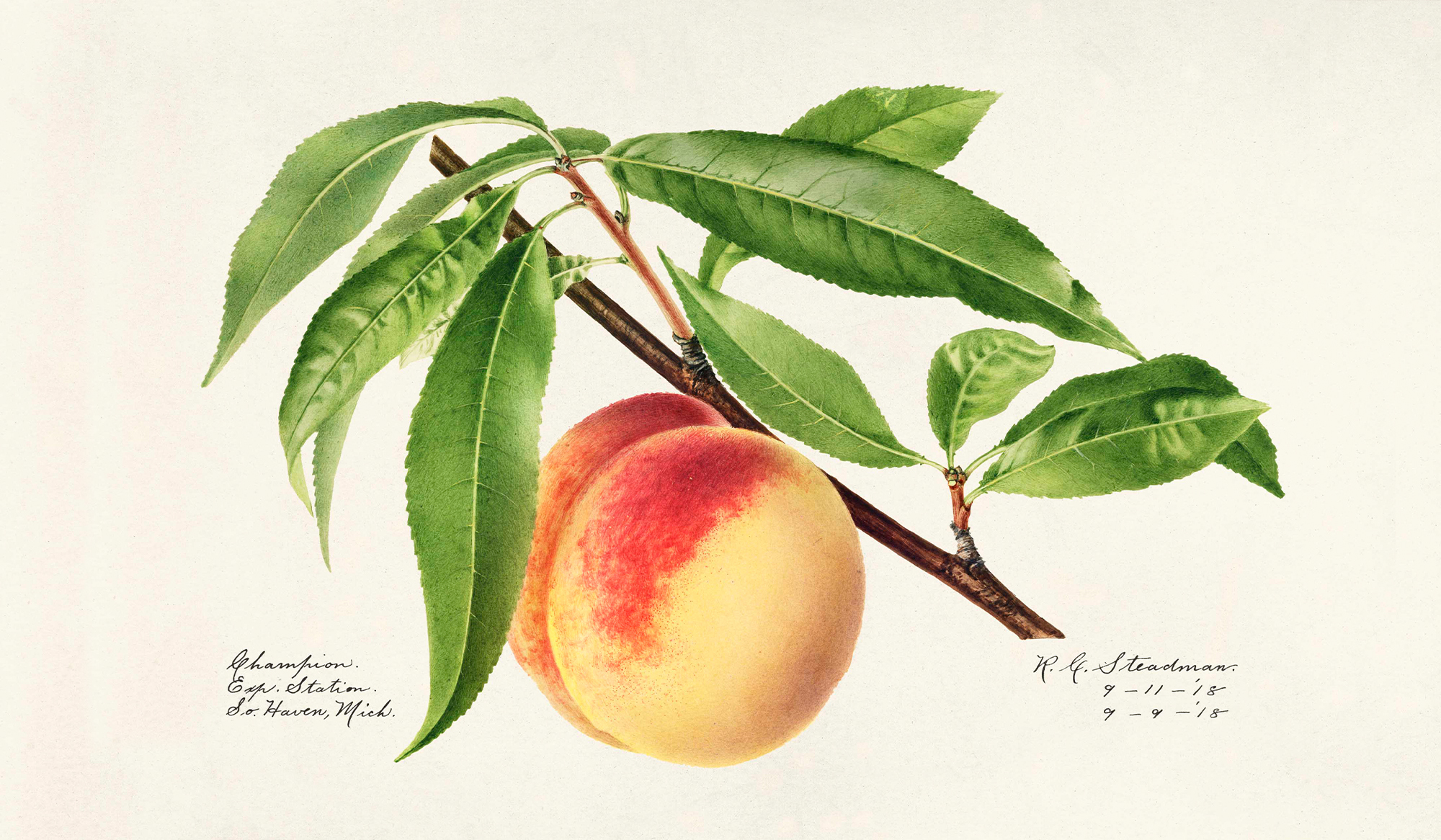
In 1886, long before col­or pho­tog­ra­phy was a viable option, the US Depart­ment of Agri­cul­ture engaged approx­i­mate­ly 21, most­ly female illus­tra­tors to cre­ate real­is­tic ren­der­ings of hun­dreds of fruit vari­eties for lith­o­graph­ic repro­duc­tion in USDA arti­cles, reports, and bul­letins.

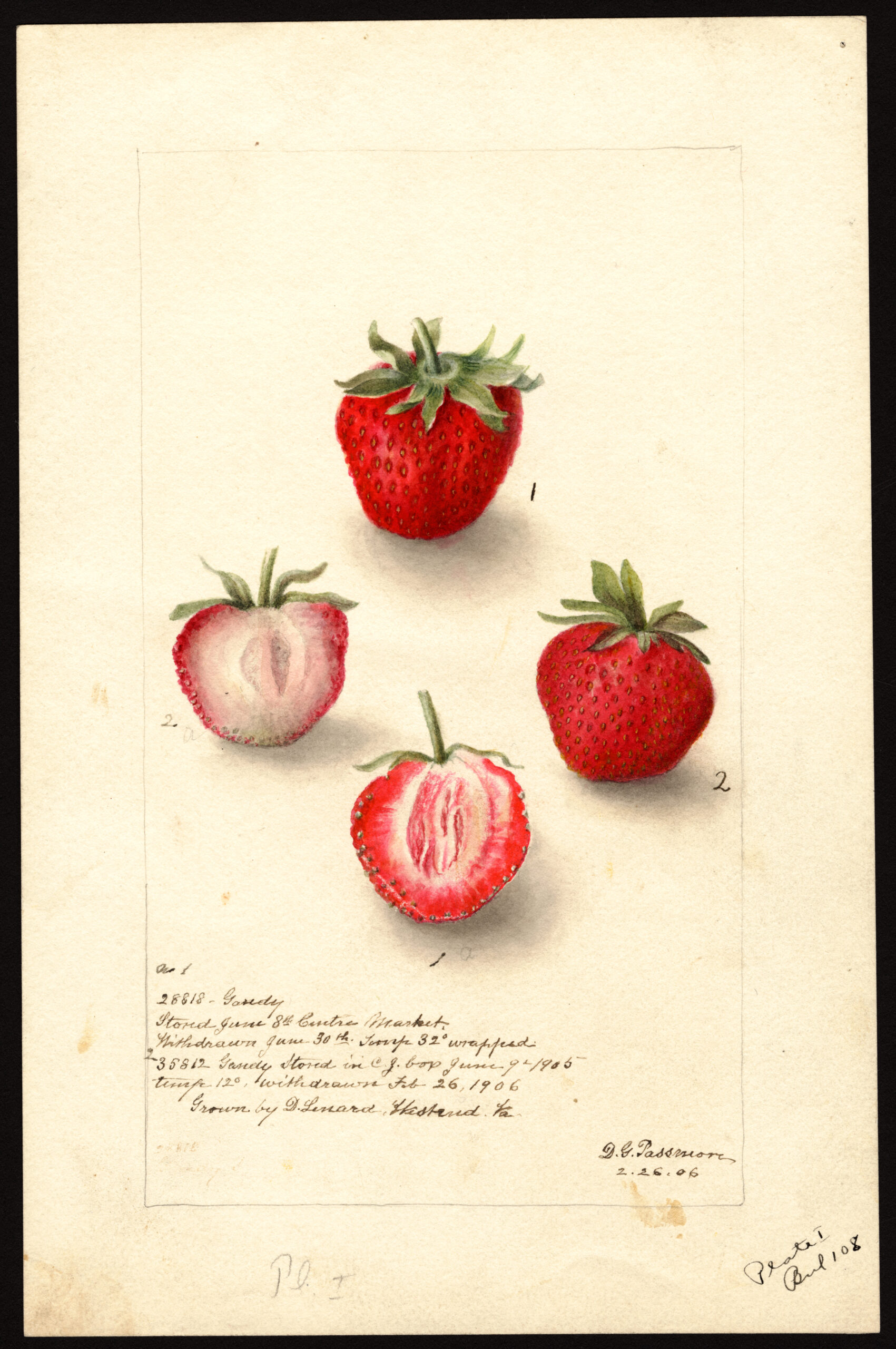
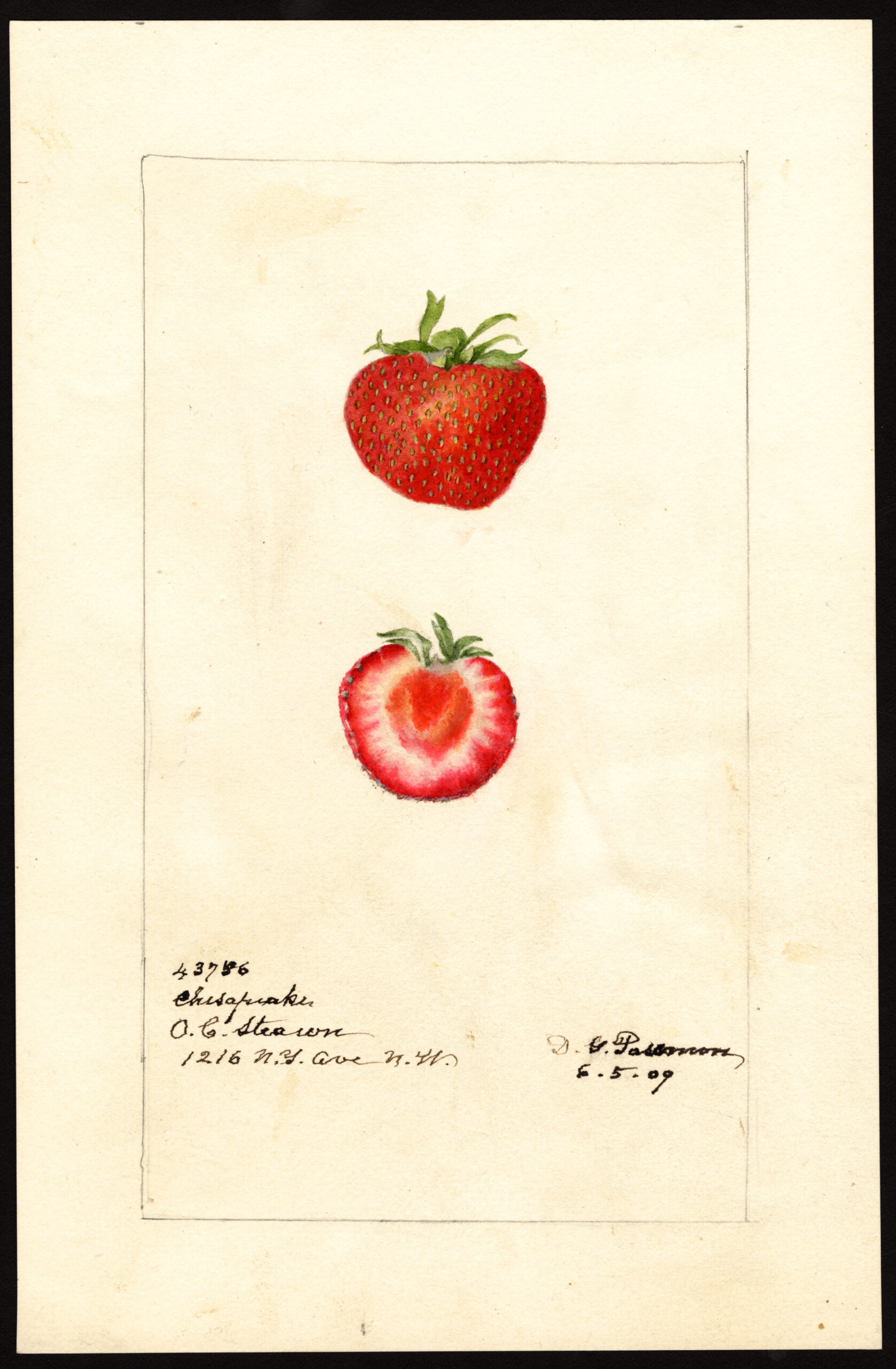
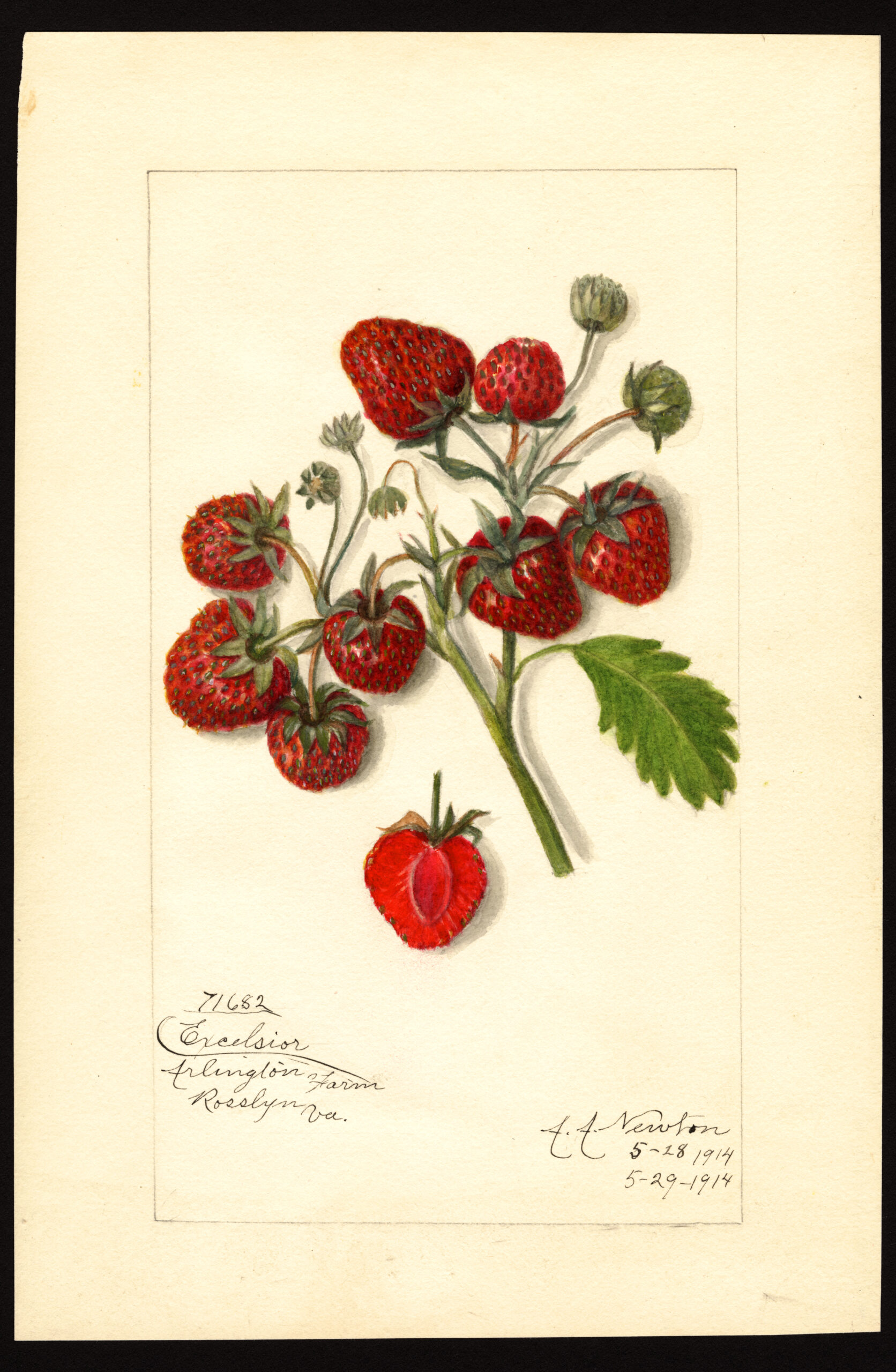
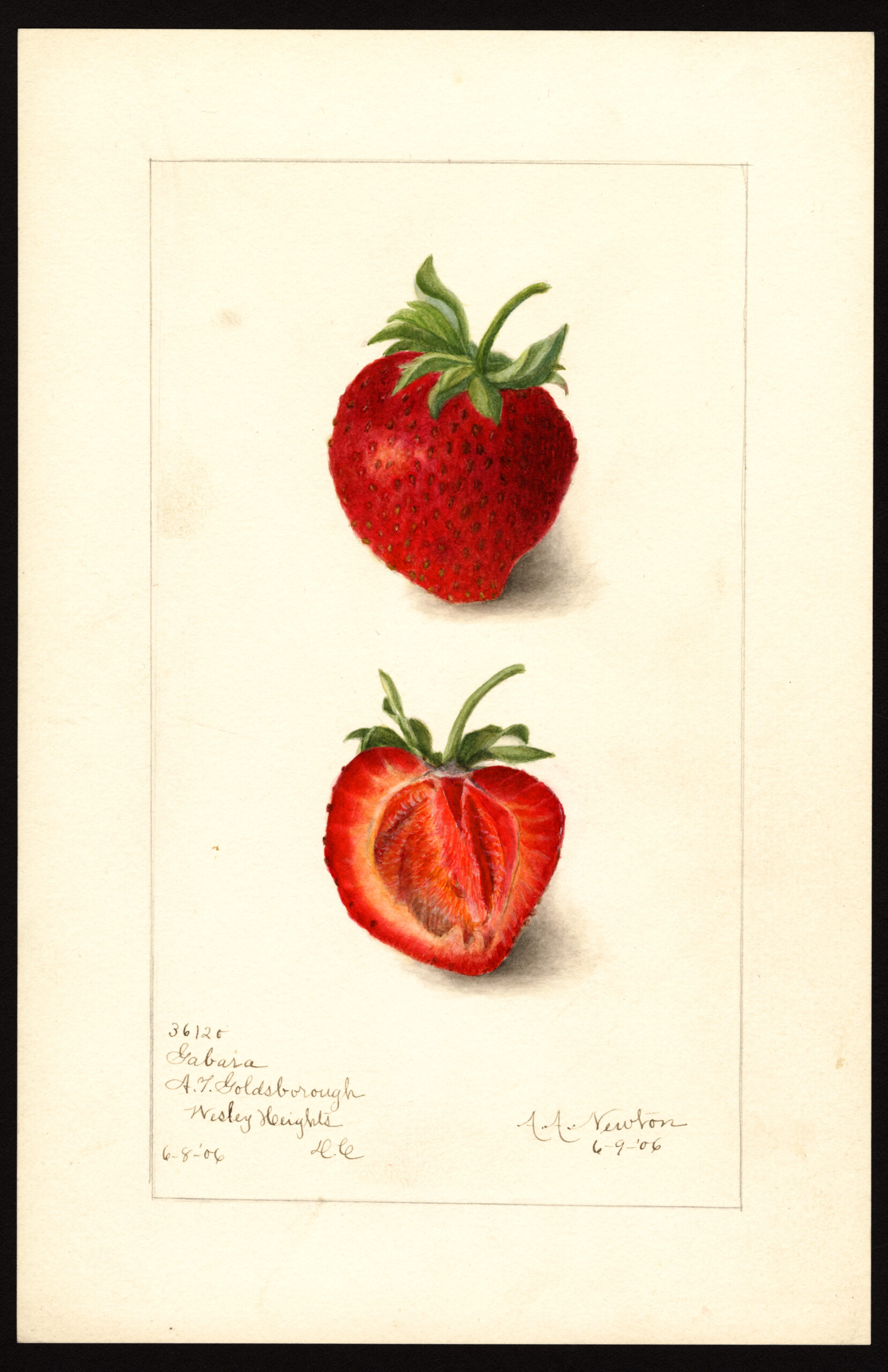
Accord­ing to the Divi­sion of Pomol­o­gy’s first chief, Hen­ry E. Van Deman, the artists’ man­date was to cap­ture “the nat­ur­al size, shape, and col­or of both the exte­ri­or and inte­ri­or of the fruit, with the leaves and twigs char­ac­ter­is­tic of each.”

If a spec­i­men was going bad, the artist was under strict orders to rep­re­sent the dam­age faith­ful­ly — no pret­ty­ing things up.

As Alice Tan­geri­ni, staff illus­tra­tor and cura­tor for botan­i­cal art in the Smithsonian’s Nation­al Muse­um of Nat­ur­al His­to­ry writes, “botan­i­cal illus­tra­tors and their works serve the sci­en­tist, depict(ing) what a botanist describes, act­ing as the proof­read­er for the sci­en­tif­ic descrip­tion:”

Dig­i­tal pho­tog­ra­phy, although increas­ing­ly used, can­not make judge­ments about the intri­ca­cies of por­tray­ing the plant parts a sci­en­tist may wish to empha­size and a cam­era can­not recon­struct a life­like botan­i­cal spec­i­men from dried, pressed mate­r­i­al… the thought process medi­at­ing that deci­sion of every aspect of the illus­tra­tion lives in the head of the illus­tra­tor.

 …the illus­tra­tor also has an eye for the aes­thet­ics of botan­i­cal illus­tra­tion, know­ing that a draw­ing must cap­ture the inter­est of the view­er to be a viable form of com­mu­ni­ca­tion. Atten­tion to accu­ra­cy is impor­tant, but excel­lence of style and tech­nique used is also pri­ma­ry for an illus­tra­tion to endure as a work of art and sci­ence.

Pri­ma­ry con­trib­u­tors Deb­o­rah Griscom Pass­more, Mary Daisy Arnold, Aman­da Almi­ra New­ton and their col­leagues estab­lished norms for botan­i­cal illus­tra­tion with their paint­ings for the USDA’s Pomo­log­i­cal Water­col­or Col­lec­tion, simul­ta­ne­ous­ly pro­vid­ing much-need­ed visu­al evi­dence for cul­ti­va­tors wish­ing to estab­lish claims to their vari­etals.

(Fruit breed­ers’ rights were for­mal­ly pro­tect­ed with the estab­lish­ment of the Plant Patent Act of 1930, which decreed that any­one who “invent­ed or dis­cov­ered and asex­u­al­ly repro­duced any dis­tinct and new vari­ety of plant” could receive a patent.)

The collection’s 7,497 water­col­ors of real­is­ti­cal­ly-ren­dered fruits cap­ture both the com­mon­place and the exot­ic in mouth­wa­ter­ing detail.

Both aes­thet­i­cal­ly and as a sci­en­tif­ic data­base, the Pomo­log­i­cal Water­col­or Col­lec­tion is the berries — specif­i­cal­ly, Gandy, Chesa­peake, Excel­sior, Man­hat­tan, and Gabara to namecheck but a few types of Fra­garia, aka straw­ber­ries, pre­served there­in.

Oth­er fruits remain less­er known on our shores. The USDA spon­sored glob­al expe­di­tions specif­i­cal­ly to gath­er spec­i­mens such as the ones below.

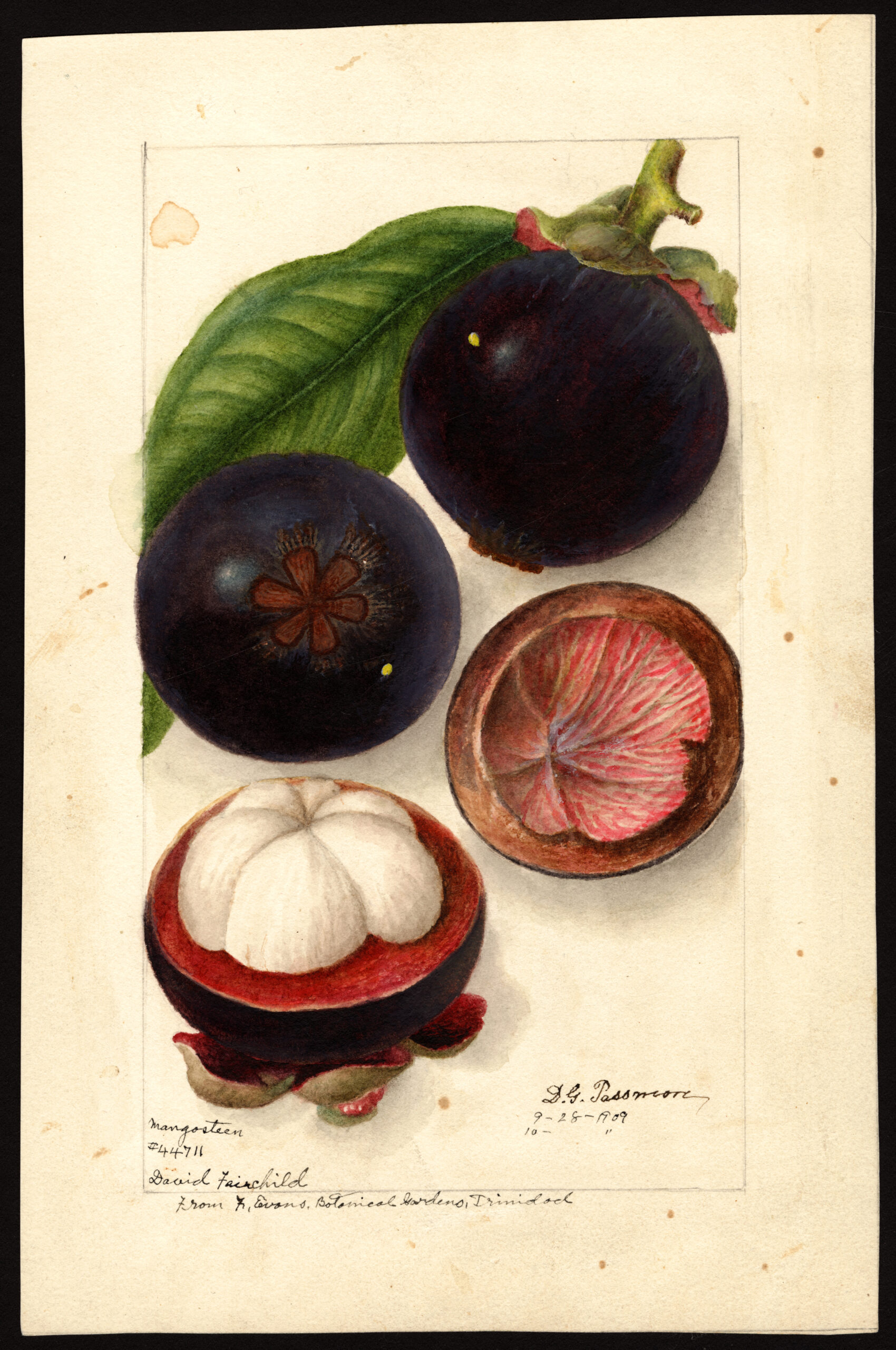
Queen Vic­to­ria report­ed­ly offered knight­hood to any trav­el­er pre­sent­ing her a man­gos­teen — still a rare treat in the west.  They were banned in the U.S. until 2007 in the inter­est of pro­tect­ing local agri­cul­ture from the threat of stow­away Asian fruit flies.

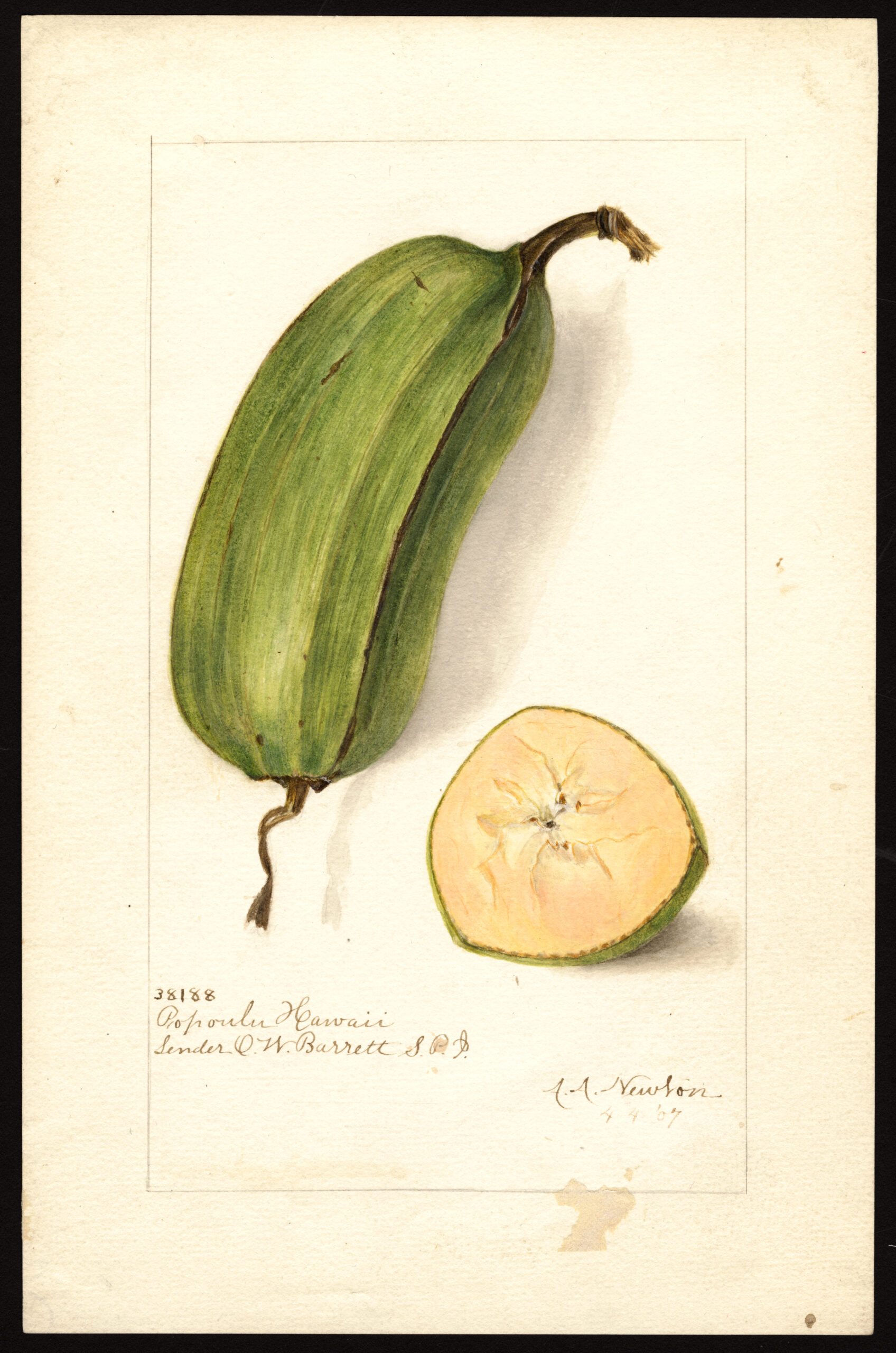
The thick, square-end­ed Popoulu banana would nev­er be mis­tak­en for a Chiq­ui­ta from the out­side. Accord­ing to The World of Bananas in Hawai’i: Then and Now, its lin­eage dates back tens of thou­sands of years to the Van­u­atu arch­i­pel­ago.

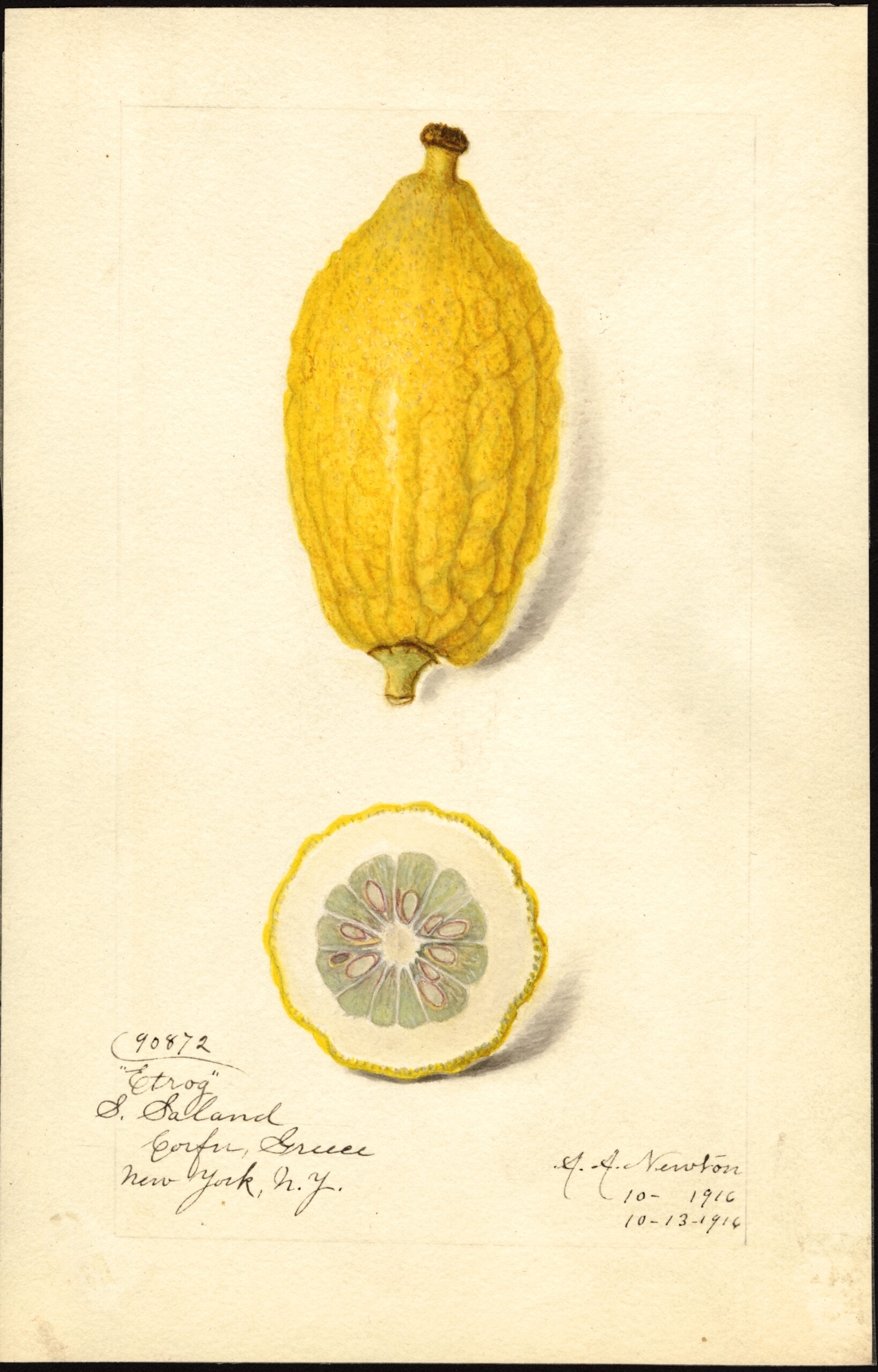
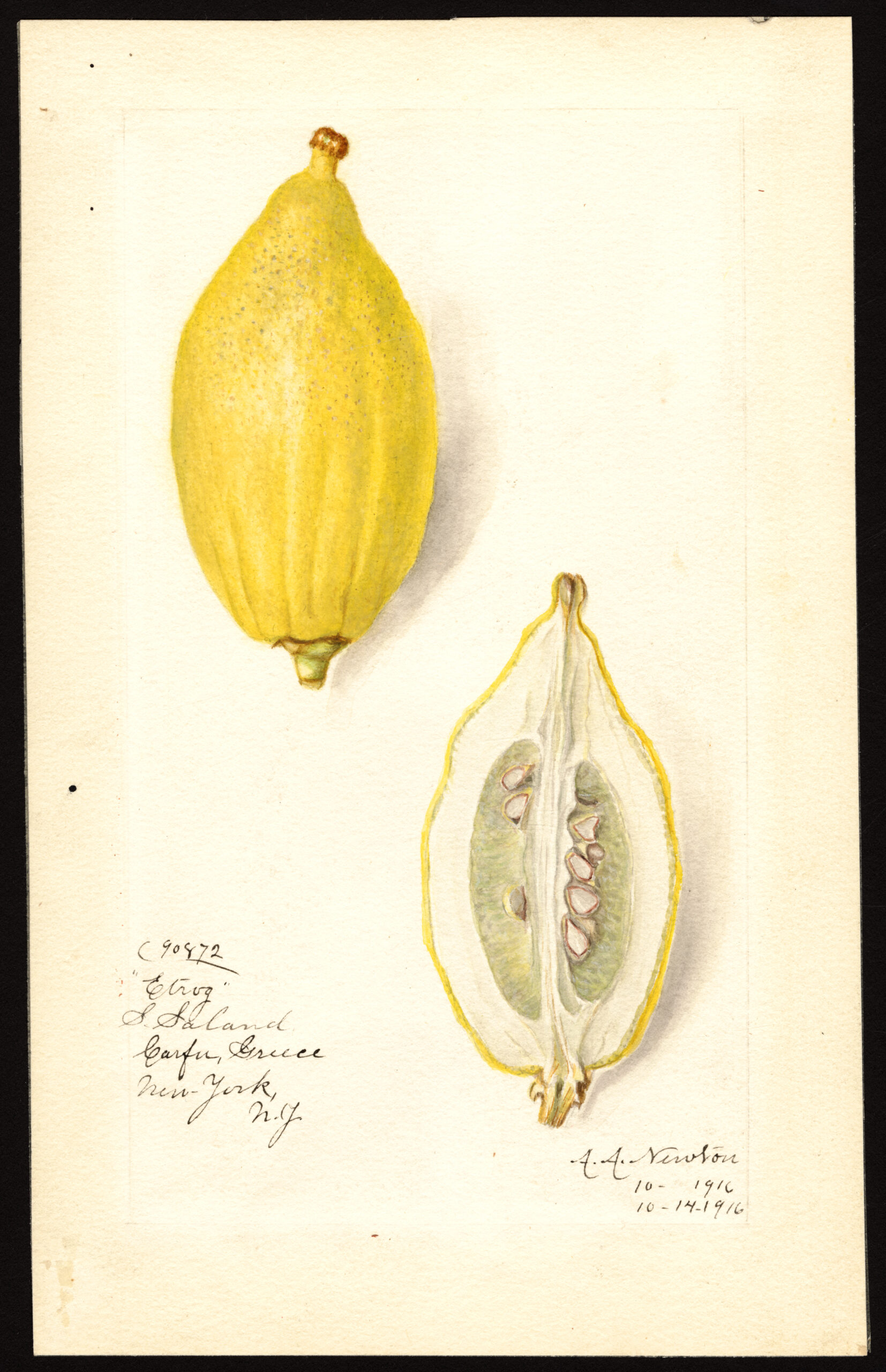
If you cel­e­brate the har­vest fes­ti­val Sukkot, you like­ly encoun­tered an etrog with­in the last month. The noto­ri­ous­ly fid­dly crop has been cul­ti­vat­ed domes­ti­cal­ly since 1980, when a yeshi­va stu­dent in Brook­lyn, seek­ing to keep costs down and ensure that kosher pro­to­cols were main­tained, con­vinced a third-gen­er­a­tion Cal­i­for­nia cit­rus grow­er by the name of Fitzger­ald to give it a go.

Explore and down­load hi-res images from the Pomo­log­i­cal Water­col­or Col­lec­tion here.

Relat­ed Con­tent 

A Col­lec­tion of Vin­tage Fruit Crate Labels Offers a Volup­tuous Vision of the Sun­shine State

In 1886, the US Gov­ern­ment Com­mis­sioned 7,500 Water­col­or Paint­ings of Every Known Fruit in the World: Down­load Them in High Res­o­lu­tion

A Stun­ning, Hand-Illus­trat­ed Book of Mush­rooms Drawn by an Over­looked 19th Cen­tu­ry Female Sci­en­tist

Via Aeon

– Ayun Hal­l­i­day is the Chief Pri­ma­tol­o­gist of the East Vil­lage Inky zine and author, most recent­ly, of Cre­ative, Not Famous: The Small Pota­to Man­i­festo and Cre­ative, Not Famous Activ­i­ty Book. Fol­low her @AyunHalliday.

Why Jean-Honoré Fragonard’s Rococo Masterpiece, The Swing, Is Less Innocent Than It First Appears

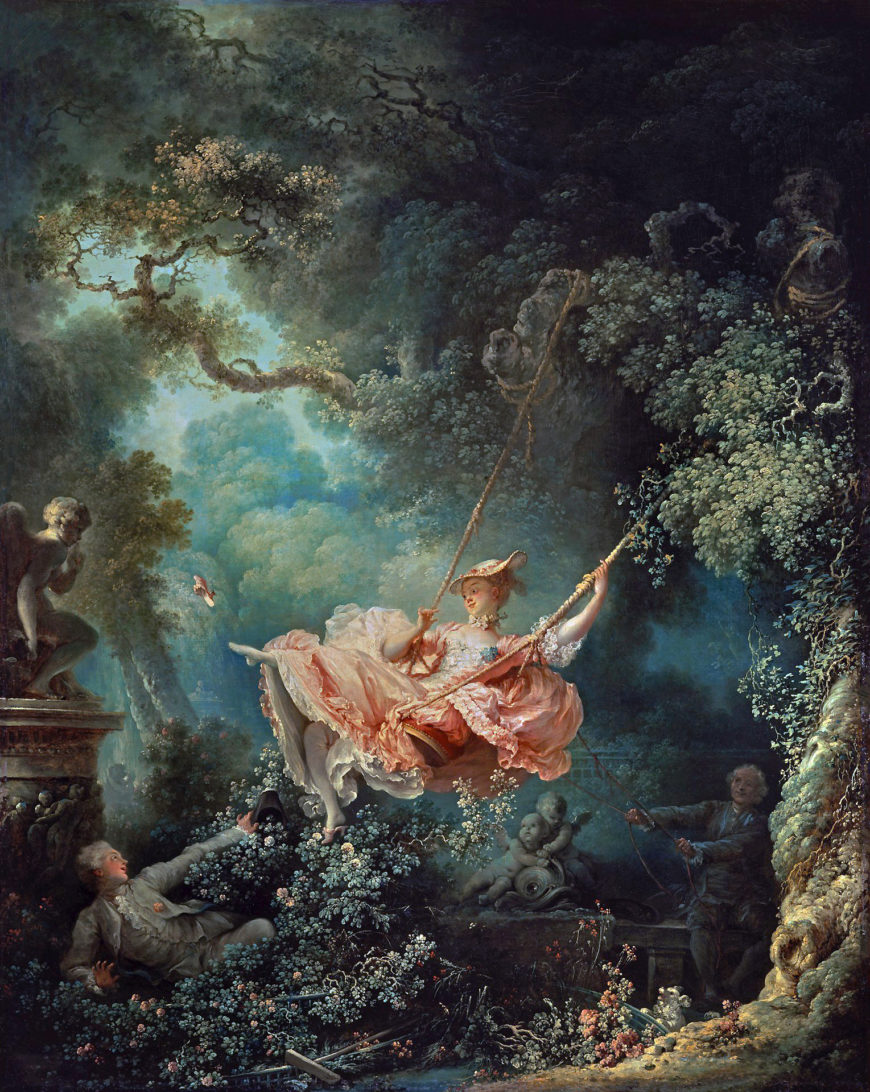
If you were to see Jean-Hon­oré Frag­o­nard’s L’Escar­po­lette, or The Swing, at the Wal­lace Col­lec­tion, you might not think par­tic­u­lar­ly hard about it. Though all the sub­tle light effects that make the young woman in pink pop out of the lush gar­den that sur­rounds her are impres­sive, grant­ed — and they’ve become even more so since the paint­ing’s recent restora­tion — there does­n’t seem to be much else of inter­est at first glance. But take a sec­ond glance, and you may well get a sense of what, back in the sev­en­teen-six­ties, made this com­mis­sion “so raunchy, many artists would­n’t have done it for all the mon­ey in the world.”

So says the nar­ra­tor of the Art Deco video above, which promis­es an expla­na­tion of why The Swing “isn’t as inno­cent as it seems.” Take, for exam­ple, the young man reclin­ing in the can­vas low­er-left cor­ner, whose ecsta­t­ic expres­sion can per­haps be explained by what’s entered his line of sight. But “for­get about the fact that he can see up her skirt: her ankle is show­ing, a very erot­ic ges­ture at the time.”

All of this inten­si­fies when we know the sto­ry behind the paint­ing, and specif­i­cal­ly that “the man who com­mis­sioned the paint­ing is the man in the bush, and he’s also the wom­an’s lover, not her hus­band.” Is her hus­band the old­er fel­low crouched in the oppo­site cor­ner, clutch­ing the swing’s reins? Per­haps, but like any piece of art worth regard­ing, this one leaves room for inter­pre­ta­tion.

Still, if you under­stand some­thing of the mores of its time and place, there’s no mis­tak­ing its tit­il­lat­ing intent. None of Frag­o­nard’s con­tem­po­raries could have imag­ined that this paint­ing would one day hang in a pub­lic gallery for all the world to see, com­mis­sioned as it was for dis­play only in a pri­vate home. Many paint­ings were in the time of Roco­co, “a style of art that comes out of the Baroque,” as art his­to­ri­an Steven Zuck­er says in the Smarthis­to­ry video just above, which despite hav­ing “jet­ti­soned the seri­ous­ness, the moral­i­ty” of its pre­de­ces­sor, nev­er­the­less retained “a sense of ener­gy, a sense of move­ment.” The Swing remains “a per­fect expres­sion of the friv­o­li­ty, the lux­u­ry, and the indul­gence of the Roco­co” — and a reminder, as the Art Deco video puts it, that “what­ev­er hap­pens in the mys­ti­cal gar­den, stays in the mys­ti­cal fairy gar­den.”

Relat­ed con­tent:

The Scan­dalous Paint­ing That Helped Cre­ate Mod­ern Art: An Intro­duc­tion to Édouard Manet’s Olympia

What Makes Vermeer’s The Milk­maid a Mas­ter­piece?: A Video Intro­duc­tion

When John Singer Sargent’s “Madame X” Scan­dal­ized the Art World in 1884

Why Does This Lady Have a Fly on Her Head?: A Curi­ous Look at a 15th-Cen­tu­ry Por­trait

Gus­tav Klimt’s Icon­ic Paint­ing The Kiss: An Intro­duc­tion to Aus­tri­an Painter’s Gold­en, Erot­ic Mas­ter­piece (1908)

Based in Seoul, Col­in Marshall writes and broad­casts on cities, lan­guage, and cul­ture. His projects include the Sub­stack newslet­ter Books on Cities, the book The State­less City: a Walk through 21st-Cen­tu­ry Los Ange­les and the video series The City in Cin­e­ma. Fol­low him on Twit­ter at @colinmarshall or on Face­book.

Carl Jung on the Power of Tarot Cards: They Provide Doorways to the Unconscious & Perhaps a Way to Predict the Future

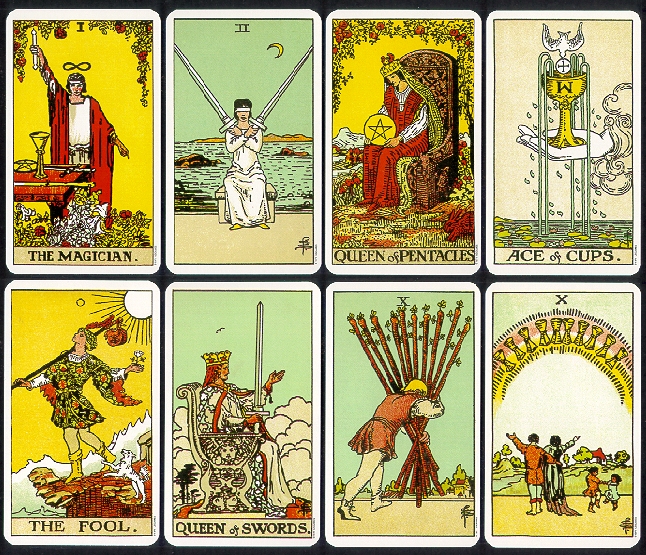
It is gen­er­al­ly accept­ed that the stan­dard deck of play­ing cards we use for every­thing from three-card monte to high-stakes Vegas pok­er evolved from the Tarot. “Like our mod­ern cards,” writes Sal­lie Nichols, “the Tarot deck has four suits with ten ‘pip’ or num­bered cards in each…. In the Tarot deck, each suit has four ‘court’ cards: King, Queen, Jack, and Knight.” The lat­ter fig­ure has “mys­te­ri­ous­ly dis­ap­peared from today’s play­ing cards,” though exam­ples of Knight play­ing cards exist in the fos­sil record. The mod­ern Jack is a sur­vival of the Page cards in the Tarot. (See exam­ples of Tarot court cards here from the 1910 Rid­er-Waite deck.) The sim­i­lar­i­ties between the two types of decks are sig­nif­i­cant, yet no one but adepts seems to con­sid­er using their Gin Rum­my cards to tell the future.

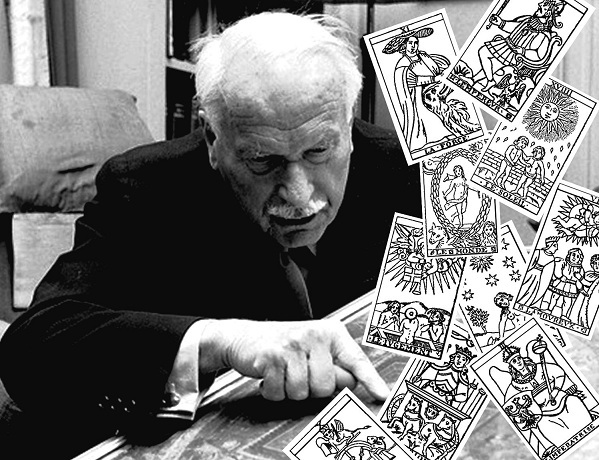
The emi­nent psy­chi­a­trist Carl Jung, how­ev­er, might have done so.

As Mary K. Greer explains, in a 1933 lec­ture Jung went on at length about his views on the Tarot, not­ing the late Medieval cards are “real­ly the ori­gin of our pack of cards, in which the red and the black sym­bol­ize the oppo­sites, and the divi­sion of the four—clubs, spades, dia­monds, and hearts—also belongs to the indi­vid­ual sym­bol­ism.

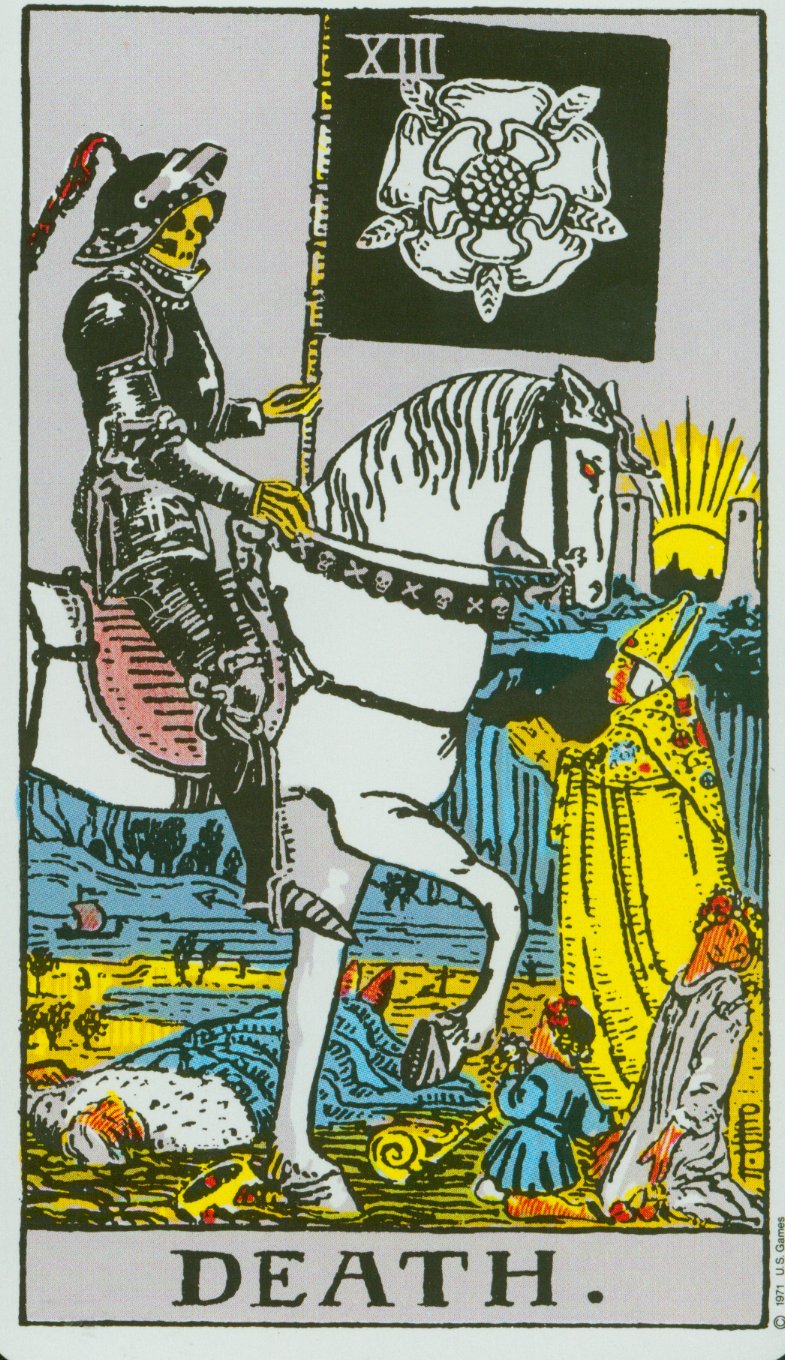
They are psy­cho­log­i­cal images, sym­bols with which one plays, as the uncon­scious seems to play with its con­tents.” The cards, said Jung, “com­bine in cer­tain ways, and the dif­fer­ent com­bi­na­tions cor­re­spond to the play­ful devel­op­ment of mankind.” This, too, is how Tarot works—with the added dimen­sion of “sym­bols, or pic­tures of sym­bol­i­cal sit­u­a­tions.” The images—the hanged man, the tow­er, the sun—“are sort of arche­typ­al ideas, of a dif­fer­en­ti­at­ed nature.”

Thus far, Jung has­n’t said any­thing many ortho­dox Jun­gian psy­chol­o­gists would find dis­agree­able, but he goes even fur­ther and claims that, indeed, “we can pre­dict the future, when we know how the present moment evolved from the past.” He called for “an intu­itive method that has the pur­pose of under­stand­ing the flow of life, pos­si­bly even pre­dict­ing future events, at all events lend­ing itself to the read­ing of the con­di­tions of the present moment.” He com­pared this process to the Chi­nese I Ching, and oth­er such prac­tices. As ana­lyst Marie-Louise von Franz recounts in her book Psy­che and Mat­ter:

Jung sug­gest­ed… hav­ing peo­ple engage in a div­ina­to­ry pro­ce­dure: throw­ing the I Ching, lay­ing the Tarot cards, con­sult­ing the Mex­i­can div­ina­tion cal­en­dar, hav­ing a tran­sit horo­scope or a geo­met­ric read­ing done.

Con­tent seemed to mat­ter much less than form. Invok­ing the Swe­den­bor­gian doc­trine of cor­re­spon­dences, Jung notes in his lec­ture, “man always felt the need of find­ing an access through the uncon­scious to the mean­ing of an actu­al con­di­tion, because there is a sort of cor­re­spon­dence or a like­ness between the pre­vail­ing con­di­tion and the con­di­tion of the col­lec­tive uncon­scious.”

What he aimed at through the use of div­ina­tion was to accel­er­ate the process of “indi­vid­u­a­tion,” the move toward whole­ness and integri­ty, by means of play­ful com­bi­na­tions of arche­types. As anoth­er mys­ti­cal psy­chol­o­gist, Ale­jan­dro Jodor­owsky, puts it, “the Tarot will teach you how to cre­ate a soul.” Jung per­ceived the Tarot, notes the blog Fae­na Aleph, “as an alchem­i­cal game,” which in his words, attempts “the union of oppo­sites.” Like the I Ching, it “presents a rhythm of neg­a­tive and pos­i­tive, loss and gain, dark and light.”

Much lat­er in 1960, a year before his death, Jung seemed less san­guine about Tarot and the occult, or at least down­played their mys­ti­cal, div­ina­to­ry pow­er for lan­guage more suit­ed to the lab­o­ra­to­ry, right down to the usu­al com­plaints about staffing and fund­ing. As he wrote in a let­ter about his attempts to use these meth­ods:

Under cer­tain con­di­tions it is pos­si­ble to exper­i­ment with arche­types, as my ‘astro­log­i­cal exper­i­ment’ has shown. As a mat­ter of fact we had begun such exper­i­ments at the C. G. Jung Insti­tute in Zurich, using the his­tor­i­cal­ly known intu­itive, i.e., syn­chro­nis­tic meth­ods (astrol­o­gy, geo­man­cy, Tarot cards, and the I Ching). But we had too few co-work­ers and too lit­tle means, so we could not go on and had to stop.

Lat­er inter­preters of Jung doubt­ed that his exper­i­ments with div­ina­tion as an ana­lyt­i­cal tech­nique would pass peer review. “To do more than ‘preach to the con­vert­ed,’” wrote the authors of a 1998 arti­cle pub­lished in the Jour­nal of Para­psy­chol­o­gy, “this exper­i­ment or any oth­er must be done with suf­fi­cient rig­or that the larg­er sci­en­tif­ic com­mu­ni­ty would be sat­is­fied with all aspects of the data tak­ing, analy­sis of the data, and so forth.” Or, one could sim­ply use Jun­gian meth­ods to read the Tarot, the sci­en­tif­ic com­mu­ni­ty be damned.

As in Jung’s many oth­er cre­ative reap­pro­pri­a­tions of myth­i­cal, alchem­i­cal, and reli­gious sym­bol­ism, his inter­pre­ta­tion of the Tarot inspired those with mys­ti­cal lean­ings to under­take their own Jun­gian inves­ti­ga­tions into para­psy­chol­o­gy and the occult. Inspired by Jung’s ver­bal descrip­tions of the Tarot’s major arcana, artist and mys­tic Robert Wang has cre­at­ed a Jun­gian Tarot deck, and an accom­pa­ny­ing tril­o­gy of books, The Jun­gian Tarot and its Arche­typ­al Imagery, Tarot Psy­chol­o­gy, and Per­fect Tarot Div­ina­tion.

You can see images of each of Wang’s cards here. His books pur­port to be exhaus­tive stud­ies of Jung’s Tarot the­o­ry and prac­tice, writ­ten in con­sul­ta­tion with Jung schol­ars in New York and Zurich. Sal­lie Nichols’ Jung and Tarot: An Arche­typ­al Jour­ney is less volu­mi­nous and innovative—using the tra­di­tion­al, Pamela Cole­man-Smith-illus­trat­ed, Rid­er-Waite deck rather than an updat­ed orig­i­nal ver­sion. But for those will­ing to grant a rela­tion­ship between sys­tems of sym­bols and a col­lec­tive uncon­scious, her book may pro­vide some pen­e­trat­ing insights, if not a recipe for pre­dict­ing the future.

Note: An ear­li­er ver­sion of this post appeared on our site in 2017.

If you would like to sign up for Open Culture’s free email newslet­ter, please find it here. It’s a great way to see our new posts, all bun­dled in one email, each day.

If you would like to sup­port the mis­sion of Open Cul­ture, con­sid­er mak­ing a dona­tion to our site. It’s hard to rely 100% on ads, and your con­tri­bu­tions will help us con­tin­ue pro­vid­ing the best free cul­tur­al and edu­ca­tion­al mate­ri­als to learn­ers every­where. You can con­tribute through Pay­Pal, Patre­on, and Ven­mo (@openculture). Thanks!

Relat­ed Con­tent 

The Artis­tic & Mys­ti­cal World of Tarot: See Decks by Sal­vador Dalí, Aleis­ter Crow­ley, H.R. Giger & More

Carl Jung Offers an Intro­duc­tion to His Psy­cho­log­i­cal Thought in a 3‑Hour Inter­view (1957)

The Vision­ary Mys­ti­cal Art of Carl Jung: See Illus­trat­ed Pages from The Red Book

How Carl Jung Inspired the Cre­ation of Alco­holics Anony­mous

Josh Jones is a writer and musi­cian based in Durham, NC. Fol­low him at @jdmagness

by | Permalink | Make a Comment ( 71 ) |

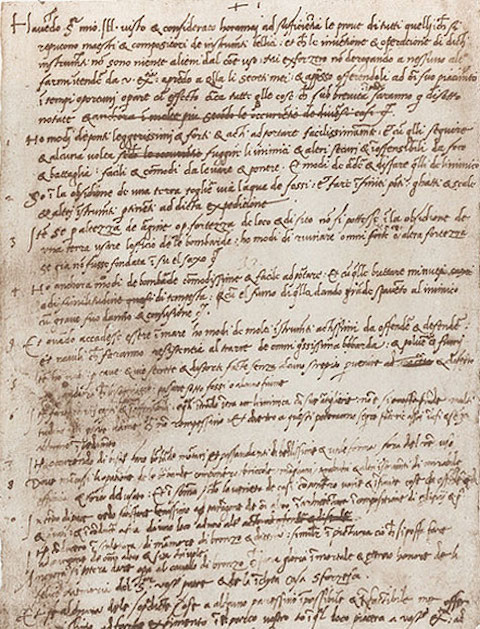
Leonardo da Vinci’s Handwritten Resume (Circa 1482)

DaVinciResume

We know that Michelan­ge­lo wrote gro­cery lists; now we have evi­dence that Leonar­do wrote resumes. “Before he was famous, before he paint­ed the Mona Lisa and the Last Sup­per, before he invent­ed the heli­copter, before he drew the most famous image of man, before he was all of these things, Leonar­do da Vin­ci was an arti­fi­cer, an armor­er, a mak­er of things that go ‘boom,’ ” writes Marc Cen­del­la on his blog about job-search­ing and recruit­ment advice. “Like you, he had to put togeth­er a resume to get his next gig. So in 1482, at the age of 30, he wrote out a let­ter and a list of his capa­bil­i­ties and sent it off to Ludovi­co il Moro, Duke of Milan.” Hav­ing yet to estab­lish his rep­u­ta­tion as per­haps the Ital­ian Renais­sance’s most respect­ed poly­math, Leonar­do spelled him­self out, in trans­la­tion, as fol­lows:

Most Illus­tri­ous Lord, Hav­ing now suf­fi­cient­ly con­sid­ered the spec­i­mens of all those who pro­claim them­selves skilled con­trivers of instru­ments of war, and that the inven­tion and oper­a­tion of the said instru­ments are noth­ing dif­fer­ent from those in com­mon use: I shall endeav­or, with­out prej­u­dice to any one else, to explain myself to your Excel­len­cy, show­ing your Lord­ship my secret, and then offer­ing them to your best plea­sure and appro­ba­tion to work with effect at oppor­tune moments on all those things which, in part, shall be briefly not­ed below.

1. I have a sort of extreme­ly light and strong bridges, adapt­ed to be most eas­i­ly car­ried, and with them you may pur­sue, and at any time flee from the ene­my; and oth­ers, secure and inde­struc­tible by fire and bat­tle, easy and con­ve­nient to lift and place. Also meth­ods of burn­ing and destroy­ing those of the ene­my.

2. I know how, when a place is besieged, to take the water out of the trench­es, and make end­less vari­ety of bridges, and cov­ered ways and lad­ders, and oth­er machines per­tain­ing to such expe­di­tions.

3. If, by rea­son of the height of the banks, or the strength of the place and its posi­tion, it is impos­si­ble, when besieg­ing a place, to avail one­self of the plan of bom­bard­ment, I have meth­ods for destroy­ing every rock or oth­er fortress, even if it were found­ed on a rock, etc.

4. Again, I have kinds of mor­tars; most con­ve­nient and easy to car­ry; and with these I can fling small stones almost resem­bling a storm; and with the smoke of these cause great ter­ror to the ene­my, to his great detri­ment and con­fu­sion.

5. And if the fight should be at sea I have kinds of many machines most effi­cient for offense and defense; and ves­sels which will resist the attack of the largest guns and pow­der and fumes.

6. I have means by secret and tor­tu­ous mines and ways, made with­out noise, to reach a des­ig­nat­ed spot, even if it were need­ed to pass under a trench or a riv­er.

7. I will make cov­ered char­i­ots, safe and unat­tack­able, which, enter­ing among the ene­my with their artillery, there is no body of men so great but they would break them. And behind these, infantry could fol­low quite unhurt and with­out any hin­drance.

8. In case of need I will make big guns, mor­tars, and light ord­nance of fine and use­ful forms, out of the com­mon type.

9. Where the oper­a­tion of bom­bard­ment might fail, I would con­trive cat­a­pults, man­gonels, tra­boc­chi, and oth­er machines of mar­vel­lous effi­ca­cy and not in com­mon use. And in short, accord­ing to the vari­ety of cas­es, I can con­trive var­i­ous and end­less means of offense and defense.

10. In times of peace I believe I can give per­fect sat­is­fac­tion and to the equal of any oth­er in archi­tec­ture and the com­po­si­tion of build­ings pub­lic and pri­vate; and in guid­ing water from one place to anoth­er.

11. I can car­ry out sculp­ture in mar­ble, bronze, or clay, and also I can do in paint­ing what­ev­er may be done, as well as any oth­er, be he who he may.

Again, the bronze horse may be tak­en in hand, which is to be to the immor­tal glo­ry and eter­nal hon­or of the prince your father of hap­py mem­o­ry, and of the illus­tri­ous house of Sforza.

And if any of the above-named things seem to any­one to be impos­si­ble or not fea­si­ble, I am most ready to make the exper­i­ment in your park, or in what­ev­er place may please your Excel­len­cy – to whom I com­ment myself with the utmost humil­i­ty, etc.

Even the dens­est fif­teenth-cen­tu­ry Duke, I wager, could see the use in a man able to make portable bridges, get water out of trench­es, destroy rock built upon rock, fling a storm of stones, for­ti­fy ves­sels, pass under rivers, and make every­thing from “big guns,” cat­a­pults, man­gonels, and tra­boc­chi to unat­tack­able cov­ered char­i­ots. Though Leonar­do under­stand­ably con­cen­trates on his wartime engi­neer­ing skills, he also touch­es on the range of oth­er dis­ci­plines — Renais­sance man, remem­ber — he has mas­tered, like archi­tec­ture, sculp­ture, and paint­ing. Per­haps most impres­sive­ly of all, he rat­tles off all these points with­out seem­ing par­tic­u­lar­ly boast­ful. “You’ll notice he doesn’t recite past achieve­ments,” Cen­del­la adds, “because those are about his achieve­ments, and not about the Duke’s needs.” Still, he might have added that, giv­en just a few more years, he could design a pret­ty cap­ti­vat­ing organ.

Note: An ear­li­er ver­sion of this post appeared on our site in 2014.

If you would like to sign up for Open Culture’s free email newslet­ter, please find it here. It’s a great way to see our new posts, all bun­dled in one email, each day.

If you would like to sup­port the mis­sion of Open Cul­ture, con­sid­er mak­ing a dona­tion to our site. It’s hard to rely 100% on ads, and your con­tri­bu­tions will help us con­tin­ue pro­vid­ing the best free cul­tur­al and edu­ca­tion­al mate­ri­als to learn­ers every­where. You can con­tribute through Pay­Pal, Patre­on, and Ven­mo (@openculture). Thanks!

Relat­ed Con­tent:

Michelangelo’s Hand­writ­ten 16th-Cen­tu­ry Gro­cery List

Leonar­do da Vinci’s Note­books Get Dig­i­tized: Where to Read the Renais­sance Man’s Man­u­scripts Online

Leonar­do Da Vinci’s To-Do List from 1490: The Plan of a Renais­sance Man

by | Permalink | Make a Comment ( 3 ) |

What Makes Kazimir Malevich’s Black Square (1915) Not Just Art, But Important Art

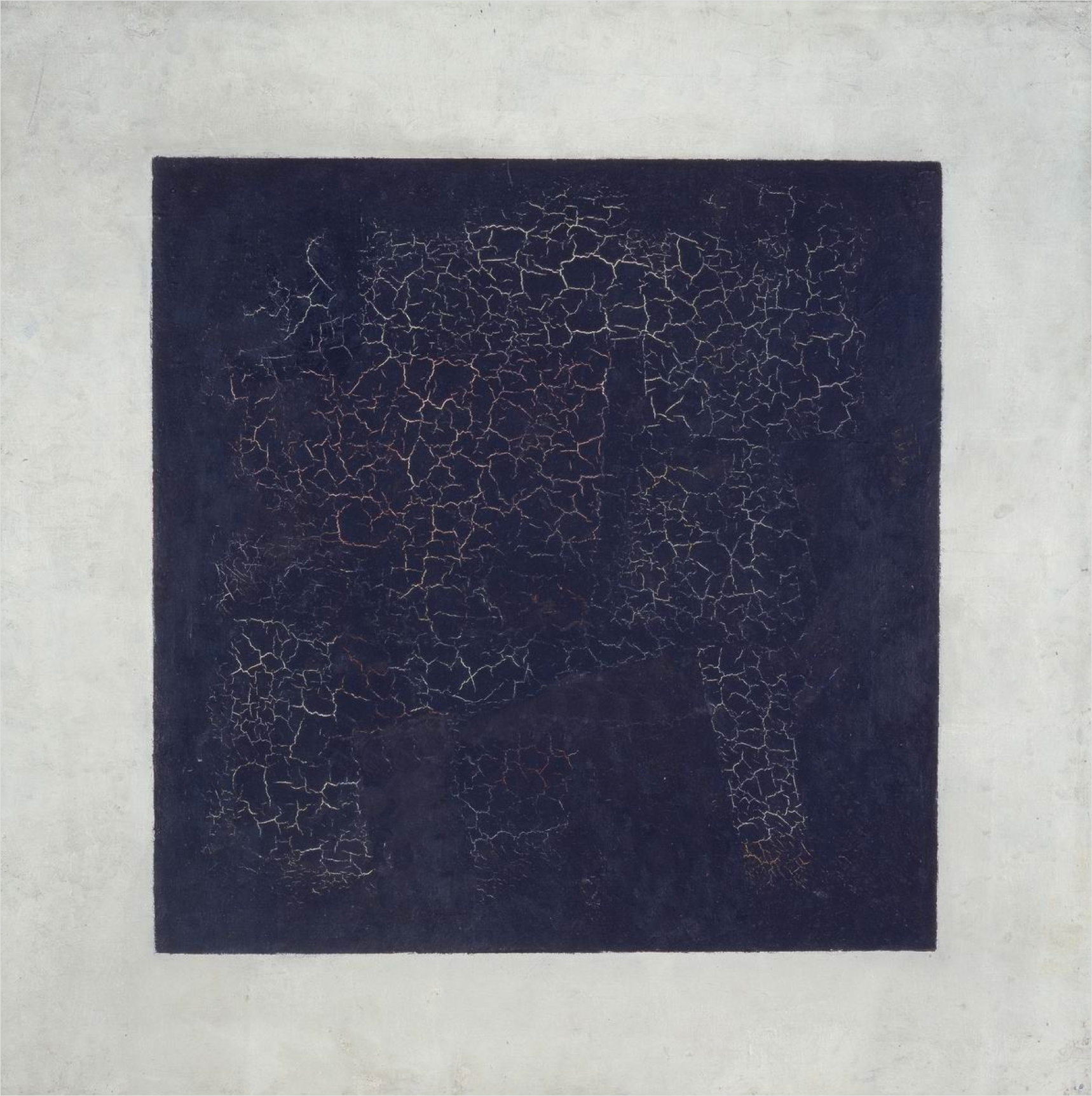
Who cre­at­ed the first work of abstract art has long been a fraught ques­tion indeed. Bet­ter, per­haps, to ask who first said of a work of art that a kid could have made it. A strong con­tender in that divi­sion is the Russ­ian artist Véra Pes­tel, whom his­to­ry remem­bers as hav­ing react­ed to Kaz­imir Male­vich’s 1915 paint­ing Black Square with the words “Any­one can do this! Even a child can do this!” Yes, writes nov­el­ist Tatyana Tol­staya a cen­tu­ry lat­er in the New York­er, “any child could have per­formed this sim­ple task, although per­haps chil­dren lack the patience to fill such a large sec­tion with the same col­or.” And in any case, time hav­ing tak­en its toll, Male­vich’s square does­n’t look quite as black as it used to.

Nor was the square ever quite so square as we imag­ine it. “Its sides aren’t par­al­lel or equal in length, and the shape isn’t quite cen­tered on the can­vas,” says the nar­ra­tor of the ani­mat­ed TED-Ed les­son above. Instead, Male­vich placed the form slight­ly off-kil­ter, giv­ing it the appear­ance of move­ment, and the white sur­round­ing it a liv­ing, vibrat­ing qual­i­ty.”

Fair enough, but is it art? If you’d asked Male­vich him­self, he might have said it sur­passed art. In 1913,  he “real­ized that even the most cut­ting-edge artists were still just paint­ing objects from every­day life, but he was irre­sistibly drawn to what he called ‘the desert,’ where noth­ing is real except feel­ing.” Hence his inven­tion of the style known as Supre­ma­tism, “a depar­ture from the world of objects so extreme, it went beyond abstrac­tion.”

Male­vich made bold claims for Supre­ma­tism in gen­er­al and Black Square in par­tic­u­lar. “Up until now there were no attempts at paint­ing as such, with­out any attribute of real life,” he wrote. “Paint­ing was the aes­thet­ic side of a thing, but nev­er was orig­i­nal and an end in itself.” As Tol­staya puts it, he “once and for all drew an uncross­able line that demar­cat­ed the chasm between old art and new art, between a man and his shad­ow, between a rose and a cas­ket, between life and death, between God and the Dev­il. In his own words, he reduced every­thing to the ‘zero of form.’ ” She calls this zero’s emer­gence in such a stark form “one of the most fright­en­ing events in art in all of its his­to­ry of exis­tence.” If so, here we have an argu­ment for not let­ting young chil­dren see Black Square and endur­ing the con­se­quent night­mares — even if they could have paint­ed it them­selves.

Relat­ed con­tent:

Down­load 144 Beau­ti­ful Books of Russ­ian Futur­ism: Mayakovsky, Male­vich, Khleb­nikov & More (1910–30)

The Tree of Mod­ern Art: Ele­gant Draw­ing Visu­al­izes the Devel­op­ment of Mod­ern Art from Delacroix to Dalí (1940)

Down­load Russ­ian Futur­ist Book Art (1910–1915): The Aes­thet­ic Rev­o­lu­tion Before the Polit­i­cal Rev­o­lu­tion

Who Paint­ed the First Abstract Paint­ing?: Wass­i­ly Kandin­sky? Hilma af Klint? Or Anoth­er Con­tender?

Steve Mar­tin on How to Look at Abstract Art

An Inter­ac­tive Social Net­work of Abstract Artists: Kandin­sky, Picas­so, Bran­cusi & Many More

Based in Seoul, Col­in Marshall writes and broad­casts on cities, lan­guage, and cul­ture. His projects include the Sub­stack newslet­ter Books on Cities, the book The State­less City: a Walk through 21st-Cen­tu­ry Los Ange­les and the video series The City in Cin­e­ma. Fol­low him on Twit­ter at @colinmarshall or on Face­book.

Why Henry VIII’s Codpiece Is So Monumental in Holbein’s Famous, Lost Portrait

Dur­ing the 15th and 16th cen­turies, fash­ion­able men sport­ed a cod­piece. Orig­i­nal­ly a gar­ment designed to pro­tect and sup­port the prover­bial “Willy” (espe­cial­ly when men wore tights), the cod­piece mor­phed into some­thing else–a sign of viril­i­ty, “a bulging and absurd rep­re­sen­ta­tion of mas­culin­i­ty itself.” The cod­piece fea­tured promi­nent­ly in paint­ings by mas­ters such as Tit­ian, Gior­gione, Bruegel and Hol­bein. Above, Evan Puschak (aka the Nerd­writer) intro­duces you to Hol­bein’s famous por­trait of Hen­ry VIII, “the poster boy for cod­pieces.”

For a deep­er dive into the sub­ject, you can read the New York­er piece “A Brief His­to­ry of the Cod­piece, the Per­son­al Pro­tec­tion for Renais­sance Equip­ment.” And to go still deep­er, see Michael Glover’s entire book ded­i­cat­ed to the sub­ject, Thrust: A Spas­mod­ic Pic­to­r­i­al His­to­ry of the Cod­piece in Art.

If you would like to sign up for Open Culture’s free email newslet­ter, please find it here. It’s a great way to see our new posts, all bun­dled in one email, each day.

If you would like to sup­port the mis­sion of Open Cul­ture, con­sid­er mak­ing a dona­tion to our site. It’s hard to rely 100% on ads, and your con­tri­bu­tions will help us con­tin­ue pro­vid­ing the best free cul­tur­al and edu­ca­tion­al mate­ri­als to learn­ers every­where. You can con­tribute through Pay­Pal, Patre­on, and Ven­mo (@openculture). Thanks!

Relat­ed Con­tent 

Get­ting Dressed Over the Cen­turies: 35 Videos Show How Women & Men Put on Clothes Dur­ing Ancient, Medieval & Mod­ern Times

Watch the Renais­sance Paint­ing, The Bat­tle of San Romano, Get Brought Beau­ti­ful­ly to Life in a Hand-Paint­ed Ani­ma­tion

Free Course: An Intro­duc­tion to the Art of the Ital­ian Renais­sance


How Japanese Kintsugi Masters Restore Pottery by Beautifying the Cracks

A few years ago, we fea­tured here on Open Cul­ture the Japan­ese art of kintsu­gi, whose prac­ti­tion­ers repair bro­ken pot­tery with gold in a man­ner that empha­sizes rather than hides the cracks. Since then, the idea seems to have cap­tured the West­ern imag­i­na­tion, inspir­ing no few online inves­ti­ga­tions but also books with titles like Kintsu­gi Well­ness: The Japan­ese Art of Nour­ish­ing Mind, Body, and Spir­it, and Kintsu­gi: Embrace Your Imper­fec­tions and Find Hap­pi­ness — the Japan­ese Way. But as kintsug­ist Yuki Matano reminds us, “kintsu­gi is most­ly seen as a refined repair­ing tech­nique in Japan. Japan­ese peo­ple do not usu­al­ly asso­ciate kintsu­gi with art ther­a­py or men­tal health.”

To get back to the essence of kintsu­gi, and gain a clear­er under­stand­ing of its labo­ri­ous phys­i­cal nature, it could­n’t hurt to watch a few kintsug­ists at work. Take Hiro­ki Kiyokawa, who reflects on his 45 years prac­tic­ing the art in Kyoto — not with­out express­ing his own ideas about how he feels he’s also “restor­ing the bro­ken parts of myself” — in the BBC video above.

Or, for a more mod­ern pre­sen­ta­tion, have a look at this tuto­r­i­al video from Chima­ha­ga, a kintsug­ist who not long ago launched his own Youtube chan­nel ded­i­cat­ed to explain­ing what he does. He’s even uploaded videos about not just kintsu­gi, (金継ぎ, or “gold­en join­ery”), but also gintsu­gi (銀継ぎ), which achieves a dif­fer­ent but equal­ly strik­ing effect using sil­ver instead of gold.

Kintsu­gi clear­ly isn’t a hob­by you can mas­ter over a few week­ends. But you don’t have to be a life­long Kyoto arti­san to ben­e­fit from learn­ing it, as empha­sized by psy­chol­o­gist Alexa Alt­man in the video just above. Hav­ing learned kintsu­gi in Japan, she prac­tices it here in a some­what uncon­ven­tion­al way, repair­ing not pot­tery dam­aged over time or by acci­dent, but pot­tery which she’s smashed on pur­pose. The bowl, in this case, rep­re­sents “some aspect of your­self”; the ham­mer is “an instru­ment of change”; the glue is “all about con­nec­tion”; the holes and cracks “can be rep­re­sen­ta­tions of loss”; the gold is “glo­ry, a cel­e­bra­tion.” Whether or not you accept these metaphors, those who prac­tice kintsu­gi — or any craft demand­ing such a degree of patience and con­cen­tra­tion — sure­ly improve their psy­cho­log­i­cal state in so doing.

Relat­ed Con­tent:

Kintsu­gi: The Cen­turies-Old Japan­ese Craft of Repair­ing Pot­tery with Gold & Find­ing Beau­ty in Bro­ken Things

Wabi-Sabi: A Short Film on the Beau­ty of Tra­di­tion­al Japan

20 Mes­mer­iz­ing Videos of Japan­ese Arti­sans Cre­at­ing Tra­di­tion­al Hand­i­crafts

The Mak­ing of Japan­ese Hand­made Paper: A Short Film Doc­u­ments an 800-Year-Old Tra­di­tion

Watch a Japan­ese Crafts­man Lov­ing­ly Bring a Tat­tered Old Book Back to Near Mint Con­di­tion

A Brief His­to­ry of Japan­ese Art: From Pre­his­toric Pot­tery to Yay­oi Kusama in Half an Hour

Based in Seoul, Col­in Marshall writes and broad­casts on cities, lan­guage, and cul­ture. His projects include the Sub­stack newslet­ter Books on Cities, the book The State­less City: a Walk through 21st-Cen­tu­ry Los Ange­les and the video series The City in Cin­e­ma. Fol­low him on Twit­ter at @colinmarshall or on Face­book.

When Salvador Dalí Gave a Lecture at the Sorbonne & Arrived in a Rolls Royce Full of Cauliflower (1955)

Sal­vador Dalí led a long and event­ful life, so much so that cer­tain of its chap­ters out­landish enough to define any­one else’s exis­tence have by now been almost for­got­ten. “You’ve done some very mys­te­ri­ous things,” Dick Cavett says to Dalí on the 1971 broad­cast of his show above. “I don’t know if you like to be asked what they mean, but there was an inci­dent once where you appeared for a lec­ture in Paris, at the Sor­bonne, and you arrived in a Rolls-Royce filled with cau­li­flow­ers.” At that, the artist wastes no time launch­ing into an elab­o­rate, semi-intel­li­gi­ble expla­na­tion involv­ing rhi­noc­er­os horns and the gold­en ratio.

The inci­dent in ques­tion had occurred six­teen years ear­li­er, in 1955. “With bed­lam in his mind and a quaint pro­fu­sion of fresh cau­li­flower in his Rolls-Royce lim­ou­sine, Span­ish-born Sur­re­al­ist Painter Sal­vador Dalí arrived at Paris’ Sor­bonne Uni­ver­si­ty to unbur­den him­self of some gib­ber­ish,” says the con­tem­po­rary notice in Time. “His sub­ject: ‘Phe­nom­e­no­log­i­cal Aspects of the Crit­i­cal Para­noiac Method.’ Some 2,000 ecsta­t­ic lis­ten­ers were soon shar­ing Sal­vador’s Dalir­i­um.”

To them he announced his dis­cov­ery that “ ‘every­thing departs from the rhi­noc­er­os horn! Every­thing departs from [Dutch Mas­ter] Jan Ver­meer’s The Lace­mak­er! Every­thing ends up in the cau­li­flower!’ The rub, apol­o­gized Dali, is that cau­li­flow­ers are too small to prove this the­o­ry con­clu­sive­ly.”

Near­ly sev­en decades lat­er, Honi Soit’s Nicholas Osiowy takes these ideas rather more seri­ous­ly than did the sneer­ing cor­re­spon­dent from Time. “Beneath the sim­ple shock val­ue and easy sur­re­al­ism, it becomes clear Dalí was onto some­thing; the hum­ble cau­li­flower is con­sid­ered one of the best exam­ples of the leg­endary gold­en ratio,” Osiowy writes. “Cau­li­flow­ers, rhi­noc­er­os­es and anteaters’ tongues were to Dali essen­tial man­i­fes­ta­tions of a glo­ri­ous shape; deserv­ing of an explic­it depic­tion in his The Sacra­ment of the Last Sup­per,” paint­ed in the year of his Sor­bonne lec­ture. “Shape, the idea of geom­e­try itself, is the unsung mag­ic of not just art but our entire cul­tur­al con­scious­ness.” Not that Dalí him­self would have copped to com­mu­ni­cat­ing that: “I am against any kind of mes­sage,” he insists in response to a ques­tion from fel­low Dick Cavett Show guest, who hap­pened to be silent-film icon Lil­lian Gish. The sev­en­ties did­n’t need the sur­re­al; they were the sur­re­al.

Relat­ed con­tent:

When Sal­vador Dali Met Sig­mund Freud, and Changed Freud’s Mind About Sur­re­al­ism (1938)

When Sal­vador Dalí Dressed — and Angri­ly Demol­ished — a Depart­ment Store Win­dow in New York City (1939)

Sal­vador Dalí Reveals the Secrets of His Trade­mark Mous­tache (1954)

Q: Sal­vador Dalí, Are You a Crack­pot? A: No, I’m Just Almost Crazy (1969)

Sal­vador Dalí Strolls onto The Dick Cavett Show with an Anteater, Then Talks About Dreams & Sur­re­al­ism, the Gold­en Ratio & More (1970)

How Dick Cavett Brought Sophis­ti­ca­tion to Late Night Talk Shows: Watch 270 Clas­sic Inter­views Online

Based in Seoul, Col­in Marshall writes and broad­casts on cities, lan­guage, and cul­ture. His projects include the Sub­stack newslet­ter Books on Cities, the book The State­less City: a Walk through 21st-Cen­tu­ry Los Ange­les and the video series The City in Cin­e­ma. Fol­low him on Twit­ter at @colinmarshall or on Face­book.

« Go BackMore in this category... »
Quantcast