New York, New York—there are many ways of assessing whether or not you’ve “made” it here—these days it includes an appearance on photographer Brandon Stanton’s wildly popular blog, Humans of New York, in which a spontaneous street portrait is anchored by a personal quote or longer anecdote.
Following several books and a UN-sponsored world tour to document humans in over twenty countries, the project has morphed into a 13-episode docu-series as part of Facebook’s original video content platform.
Aided by cinematographer Michael Crommett, Stanton elicits his customary blend of universal and specific truths from his interview subjects. Extending the moment into the video realm affords viewers a larger window onto the complexities of each human’s situation.
Take episode four, “Relationships,” above:
An ample, unadorned woman in late-middle age recalls being swept off her feet by a passion that still burns bright…
An NYU grad stares uncomfortably in her purple cap and gown as her divorced parents air various regrets…
A couple with mismatched views on marriage are upstaged by a spontaneous proposal unfolding a few feet away…
La Vie en Rose holds deep meaning for two couples, despite radically different locations, presentations, and orientations.
A little girl has no problem calling the shots around her special fella…
I love you, New York!!!
Other themes include Money, Time, Purpose, and Parenting.
One of the great pleasures of both series and blog is Stanton’s open-mindedness as to what constitutes New York and New Yorkers.
Some interviews take place near such tourist-friendly locales as Bethesda Fountain and the Washington Square Arch, but just as many transpire alongside noticeably Outer Borough architecture or the blasted cement heaths aproning its less sought after public schools.
Below, Stanton explains his goal when conducting interviews and demonstrates how a non-threatening approach can soften strangers to the point of candor.
I left much of my reading of C.S. Lewis behind, but one quote of his will stay with me for life: “It is a good rule,” he advised, “after reading a new book, never to allow yourself another new one till you have read an old one in between.” I believe his advice is invaluable for maintaining a balanced perspective and achieving a healthy critical distance from the tumult of the present.
Reading works of ancient writers shows us how alike the mores and the crises of the ancients were to ours, and how vastly different. Those similarities and differences can help us evaluate certain current orthodoxies with greater wisdom. And that’s not to mention countless historians, novelists, poets, playwrights, critics, and philosophers from the past few hundred years, or several decades, who have much to teach us about where our modern ideas came from and how much they’ve deviated from their precedents.
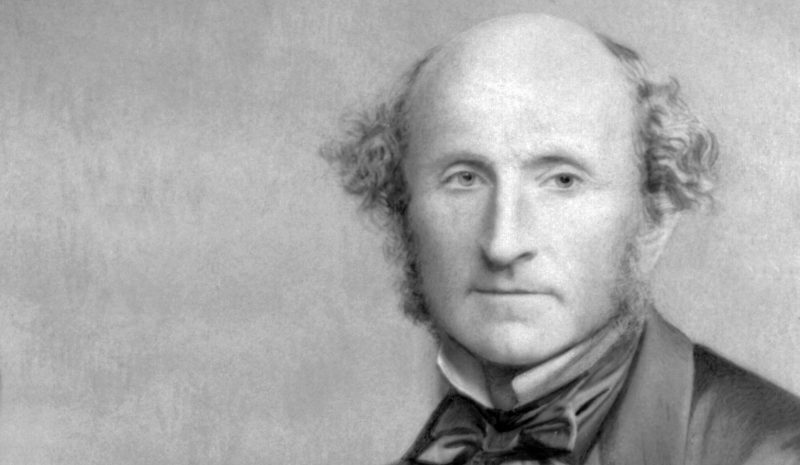
For example, 19th century liberal political philosopher John Stuart Mill is now widely admired by conservative and libertarian writers and academics as a proponent of individual economic liberty, the free market, and a flat tax. And they are not wrong, he was all of that, in his early thought. (Mill later supported several socialist causes.) Many of his other political views might be denounced by quite a few as the excesses of campus activist leftism. Adam Gopnik summarizes the Victorian philosopher’s generous slate of positions:
Mill believed in complete equality between the sexes, not just women’s colleges and, someday, female suffrage but absolute parity; he believed in equal process for all, the end of slavery, votes for the working classes, and the right to birth control (he was arrested at seventeen for helping poor people obtain contraception), and in the common intelligence of all the races of mankind. He led the fight for due process for detainees accused of terrorism; argued for teaching Arabic, in order not to alienate potential native radicals.…
Can people to Mill’s left on economics learn something from him? Sure. Can people to his right on nearly everything else learn a thing or two? It’s worth a shot. Mill championed engaging those with whom we disagree (he greatly admired Thomas Carlyle; the two couldn’t have been more different in many respects). He also argued vigorously for “’liberty of the press’ as one of the securities against corrupt or tyrannical government.” Before nodding your head in agreement—read Mill’s arguments. He might not agree with you.
And what did John Stuart Mill read? In Chapter One of his autobiography, Mill gives a detailed account of his classical education from ages 3–7, during which time he read “the whole of Herodotus,” “the first six dialogues of Plato,” “part of Lucian,” all in their original Greek, of course, as any young gentleman of the time would. Mill’s father, Scottish philosopher James Mill, intentionally set out to create a genius with this advanced course of study.
Lapham’s Quarterlyexcerpted the passage, and turned the many books Mill mentions into a list called “Early Education.” You can find all of the titles below, including the ancients mentioned and over two dozen “modern” works (that is, since the time of the Renaissance) Mill read as a child in English, including Cervantes’ mammoth Don Quixote. Most of us will have to make do with translations of the Greek texts, but take heart, even Mill “learnt no Latin until my eighth year.” The list shows not only Mill’s daunting precocity, but also how essential classical texts were to well-educated Europeans of any age.
It also highlights what kinds of texts were valued by Mill’s society, or at least by his father. All of the authors but one are men, all of them are Europeans, most of the works are histories and biographies. Given Mill’s broad views, his own recommended reading list might look different. Nonetheless, Mill’s account of his extraordinary early years gives us a fascinating look at the relative breadth of a liberal education in 19th century Britain. What ancient authors did you read as a young student? Or do you read now, between books, essays, articles, or Twitterstorms du jour?
In Greek
Aesop–The Fables
Xenophon–The Anabasis, Memorials of Socrates, The Cryopadeia
Herodotus–The Histories
Diogenes Laertius–some of The Lives of Philosophers
Lucian–various works
Isocrates–parts of To Demonicus and To Nicocles
William Robertson–The History of America, The History of the Reign of the Emperor Charles V, The History of Scotland During the Reigns of Queen Mary and King James VI
David Hume–The History of England
Edward Gibbon–The History of the Decline and Fall of the Roman Empire
Robert Watson–The History of the Reign of Philip II, King of Spain
Robert Watson and William Thompson–The History of the Reign of Philip III, King of Spain
Nathaniel Hooke–The Roman History, from the Building of Rome to the Ruin of the Commonwealth
Charles Rollin–The Ancient History of the Egyptians, Carthaginians, Assyrians, Babylonians, Medes and Persians, Macedonians and Grecians
Plutarch–Parallel Lives
Gilbert Burnet--Bishop Burnet’s History of His Own Time
The Annual Register of World Events, A Review of the Year (1758–1788)
John Millar–An Historical View of the English Government
Johann Lorenz von Mosheim–An Ecclesiastical History
Thomas McCrie–The Life of John Knox
William Sewell–The History of the Rise, Increase, and Progress of the Christian People Called Quakers
Thomas Wight and John Rutty–A History of the Rise and Progress of People Called Quakers in Ireland
Philip Beaver–African Memoranda
David Collins–An Account of the English Colony in New South Wales
George Anson–A Voyage Round the World
Daniel Defoe–Robinson Crusoe
The Arabian Nights and Arabian Tales
Miguel de Cervantes–Don Quixote
Maria Edgeworth–Popular Tales
Henry Brooke–The Fool of Quality; or the History of Henry, Earl of Moreland
Maus, cartoonist Art Spiegelman’s groundbreaking, Pulitzer Prize-winning account of his complicated relationship with his Holocaust survivor father, is a story that lingers.
Spiegelman famously chose to depict the Jews as mice and the Nazis as cats. Non-Jewish civilians of his father’s native Poland were rendered as pigs. He flirted with the idea of depicting his French-born wife, the New Yorker’s art editor, Françoise Mouly, as a frog or a poodle, until she convinced him that her conversion to Judaism merited mousehood, too.
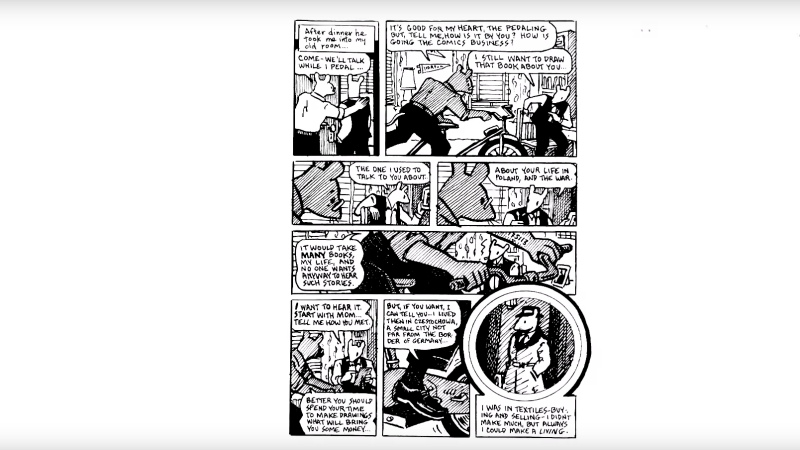
The characters’ anthropomorphism is not the only visual innovation, as the Nerdwriter, Evan Puschak, points out above.
On first glance, nothing much appears to be happening on that page—hoping to convince his elderly father to submit to interviews for the book that would eventually become Maus, Spiegelman trails him to his childhood bedroom, which the older man has equipped with an exercise bike that he pedals in dress shoes and black socks.
But, as Spiegelman himself once pointed out:
Those panels are each units of time. You see them simultaneously, so you have various moments in time simultaneously made present.
Readers must force themselves to proceed slowly in order to fully appreciate the coexistence of all those moments.
Left to our own devices, we might pick up on the senior Spiegelman’s concentration camp tattoo, or the introduction of Art’s late mother via the framed photo he shows himself picking up.
But Puschak takes us on an even deeper dive, noting the significance of Art’s placement in the long mid-page panel. Watch out for the 4:30 mark, another visual stunner is teased out in a manner reminiscent of the revelation of a message written in invisible ink.
So Maus conferred commercial success upon its creator, while hanging onto some of the bold visual experiments from earlier in his career, when he and Mouly helped drive the underground comix scene—the past and present entwined yet again.
And this is just one page. Should you venture forth in search of further visual cues later in the text, please use the comments section to share your discoveries.
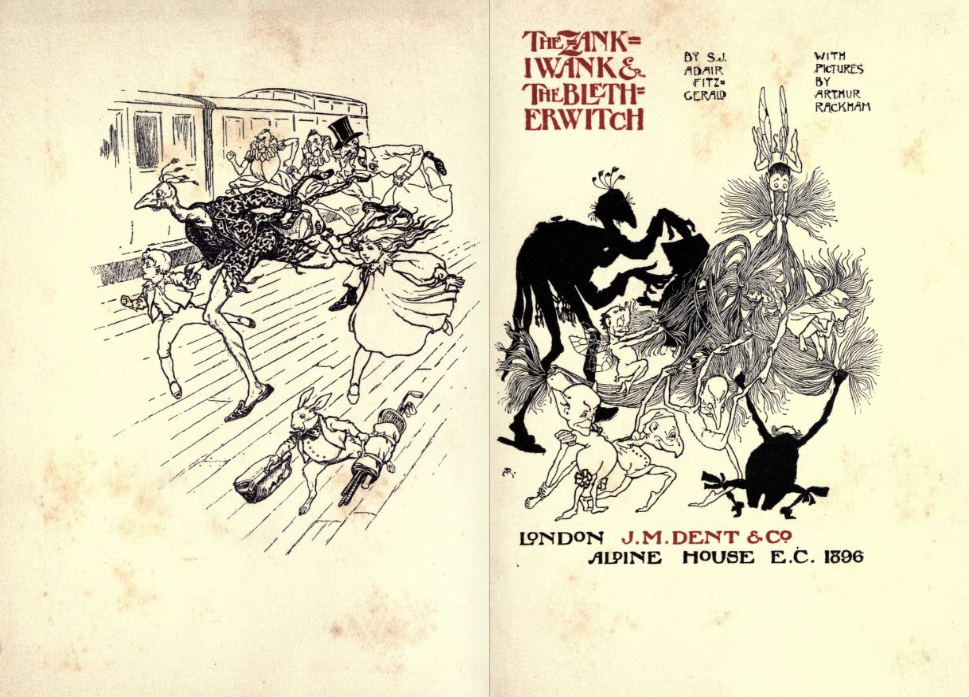
In the early 18th century, the novel was seen as a frivolous and trivial form at best, a morally corrupting one at worst. Given that the primary readers of novels were women, the belief smacks of patriarchal condescension and a kind of thought control. Fiction is a place where readers can imaginatively live out fantasies and tragedies through the eyes of an imagined other. Respectable middle-class women were expected instead to read conduct manuals and devotionals.
English novelist Samuel Richardson sought to bring respectability to his art in the form of Pamela in 1740, a novel which began as a conduct manual and whose subtitle rather bluntly states the moral of the story: “Virtue Rewarded.”
This moralizing expressed itself in another literary form as well. Children’s books, such as there were, also tended toward the moralistic and didactic, in attempts to steer their readers away from the dangers of what was then called “enthusiasm.”
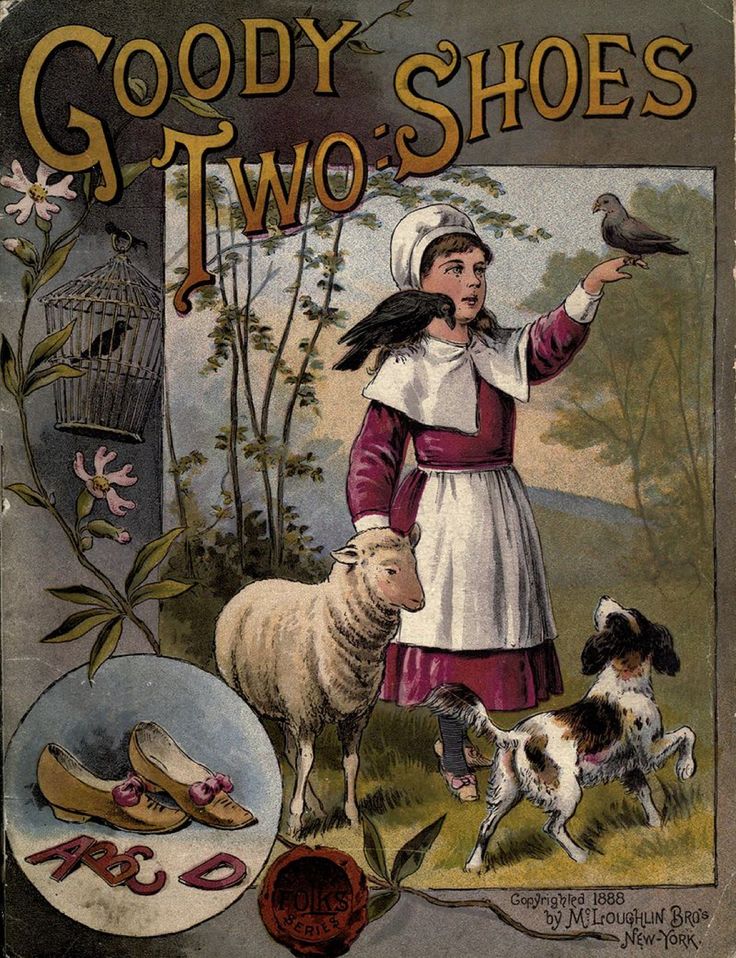
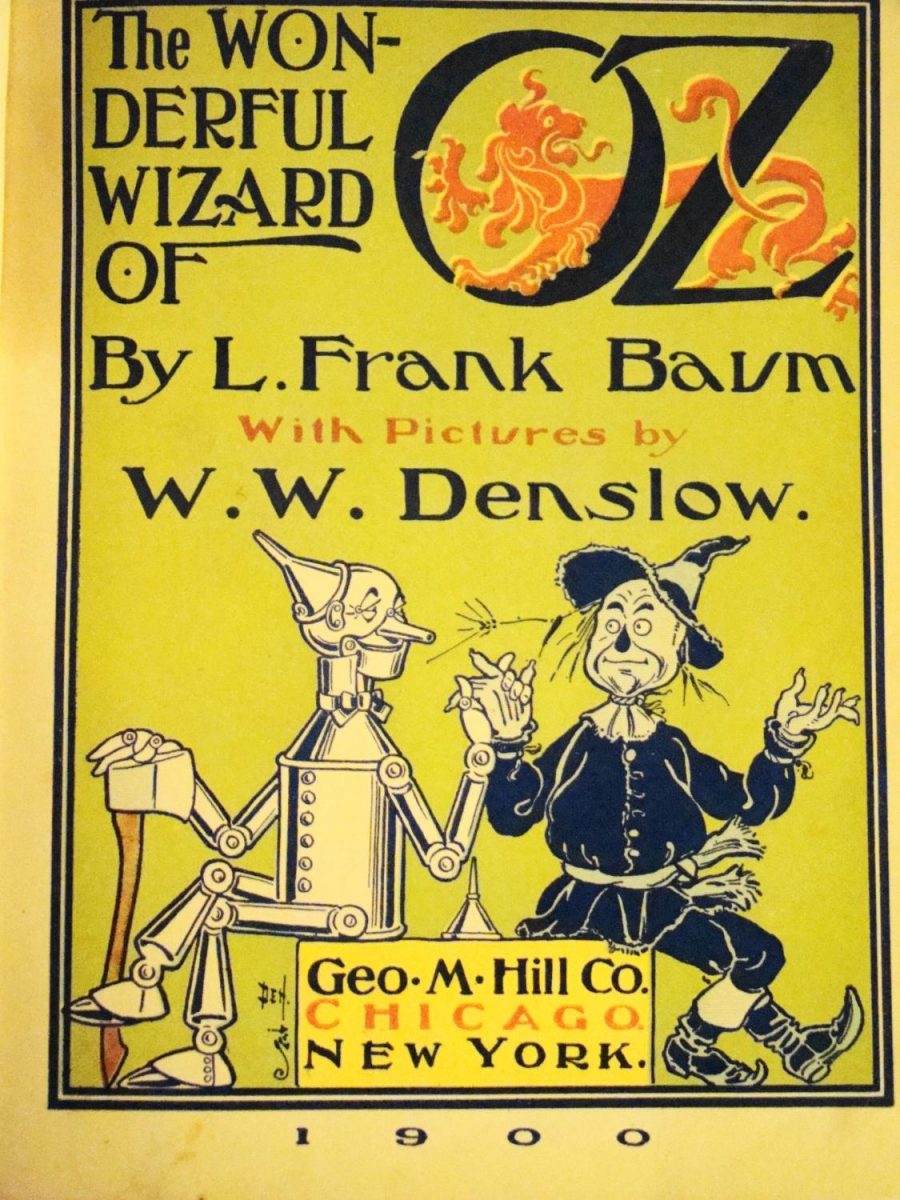
“Prior to the mid-eighteenth century,” notes the UCLA Children’s Book Collection—a digital repository of over 1800 children’s books dating from 1728 to 1999—“books were rarely created specifically for children, and children’s reading was generally confined to literature intended for their education and moral edification rather than for their amusement. Religious works, grammar books, and ‘courtesy books’ (which offered instruction on proper behavior) were virtually the only early books directed at children.” But a change was in the making in the middle of the century.
Pamela attracted a ribald, even pornographic, response—most notably in Henry Fielding’s satire An Apology for the Life of Mrs. Shamela Andrews and the Marquis de Sade’s Justine Meanwhile, the world of children’s literature also underwent a radical shift. “The notion of pleasure in learning was becoming more widely accepted.” Illustrations, previously “consisting of small woodcut vignettes,” slowly began to move to the fore, and “innovations in typography and printing allowed greater freedom in reproducing art.”
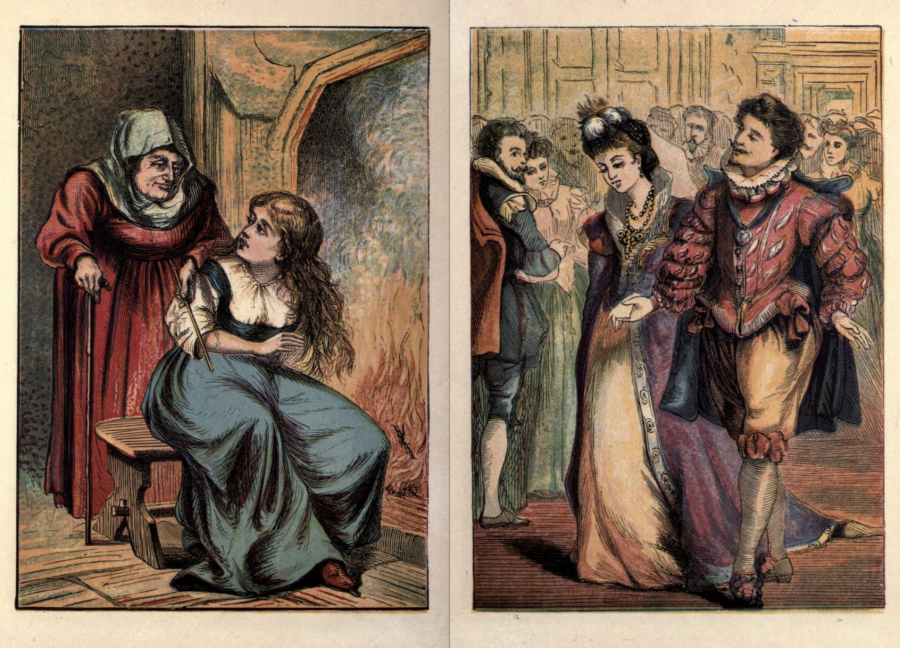
That’s not to say that the didactic attitude was dispelled—we see codes of conduct and overt religious themes embedded in children’s literature throughout the 19th century. But as we pointed out in a post on another children’s book archive from the University of Florida, the more staid and traditional books increasingly competed with adventure stories, works of fantasy, and what we call today Young Adult literature like that of Mark Twain and Louisa May Alcott. You can see this tension in the UCLA collection, between pleasure and duty, leisure and work, and education as moral and social training and as a means of achieving personal freedom.
Of the adult literary imagination of the time, Leo Bersani writes in A Future for Astyanaxthat “the confrontation in nineteenth-century works between a structured, socially viable and verbally analyzable self and the wish to shatter psychic and social structures produces considerable stress and conflict.” I think we can see a similar conflict, expressed much more playfully, in books for children of the past two hundred years or so. Enter the UCLA collection, which includes not only historic children’s books but present-day exhibit catalogs and more, here.
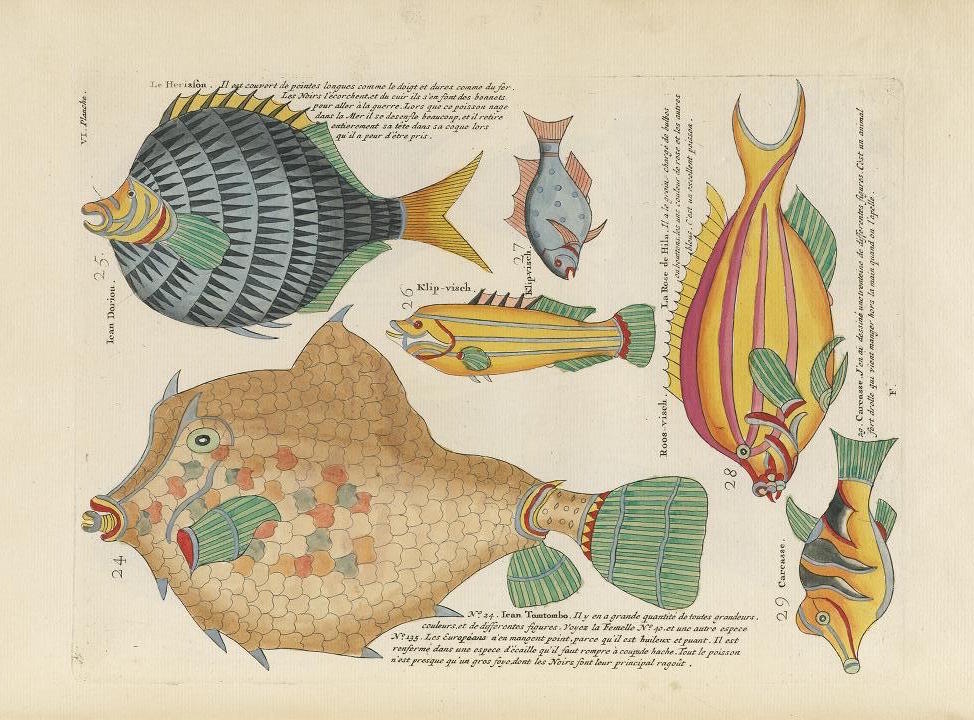
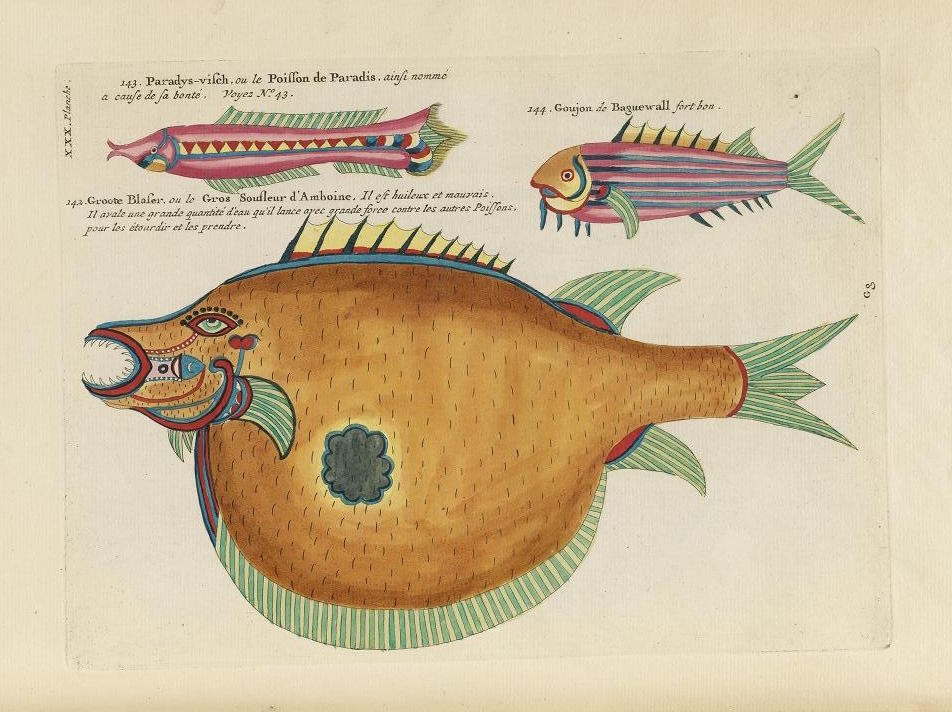
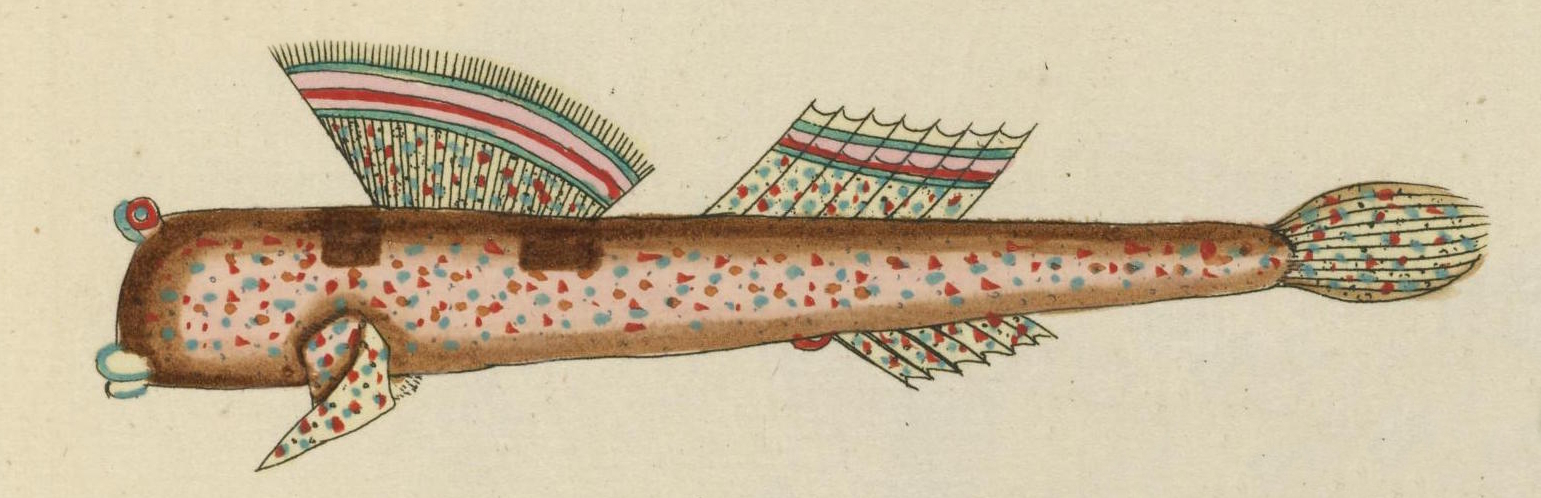
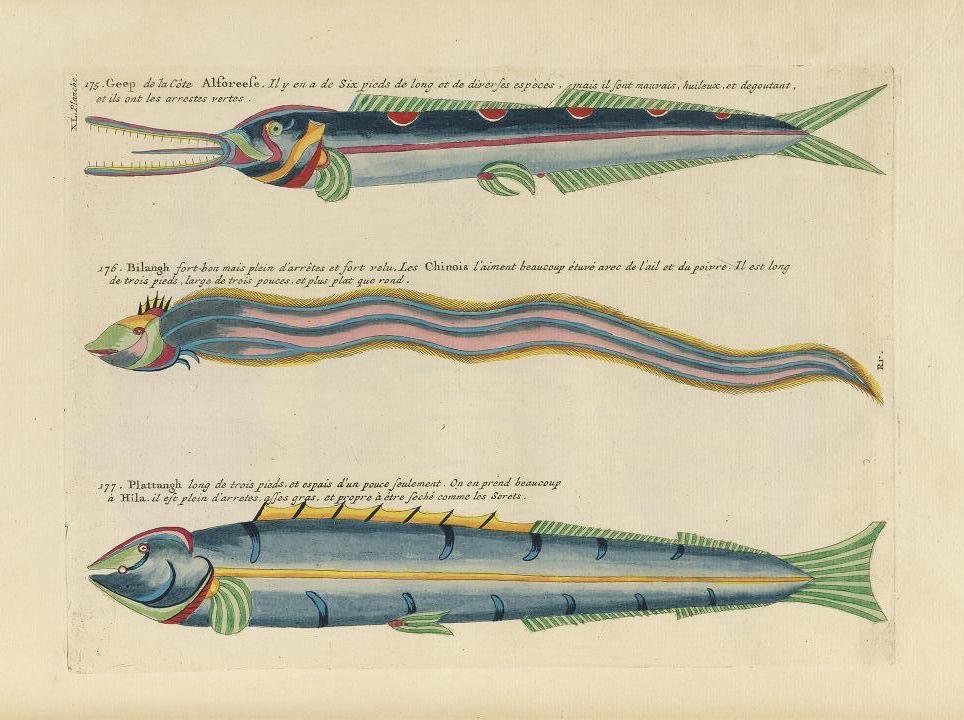
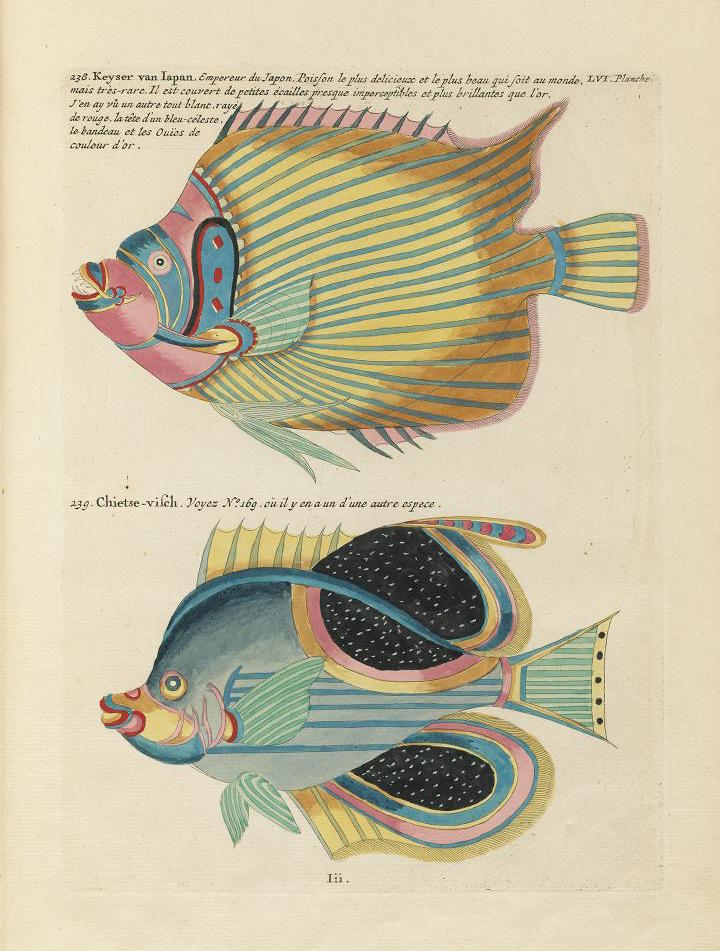
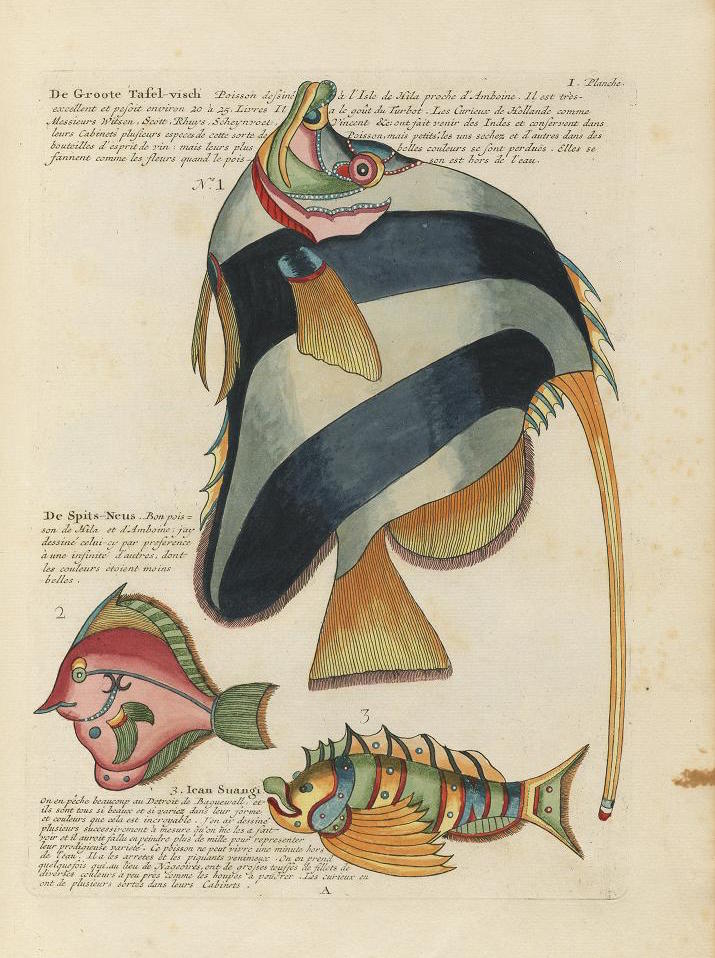
Whether in the tanks into which we gaze at the aquarium or the CGI-intensive wildlife-based gagfests at which we gaze in the theater, most of us in the 21st century have seen more than a few funny fish. Eighteenth-century Europeans couldn’t have said the same. The great majority passed their entire lives without so much as a glance at the form of even one live exotic creature of the deep, and most of those who have a sense of what such a sight looked like probably got it from an illustration. But even so, some of the illustrated fish of the day must have proven unforgettable, especially the ones in Louis Renard’s Poissons, Ecrevisses et Crabes.
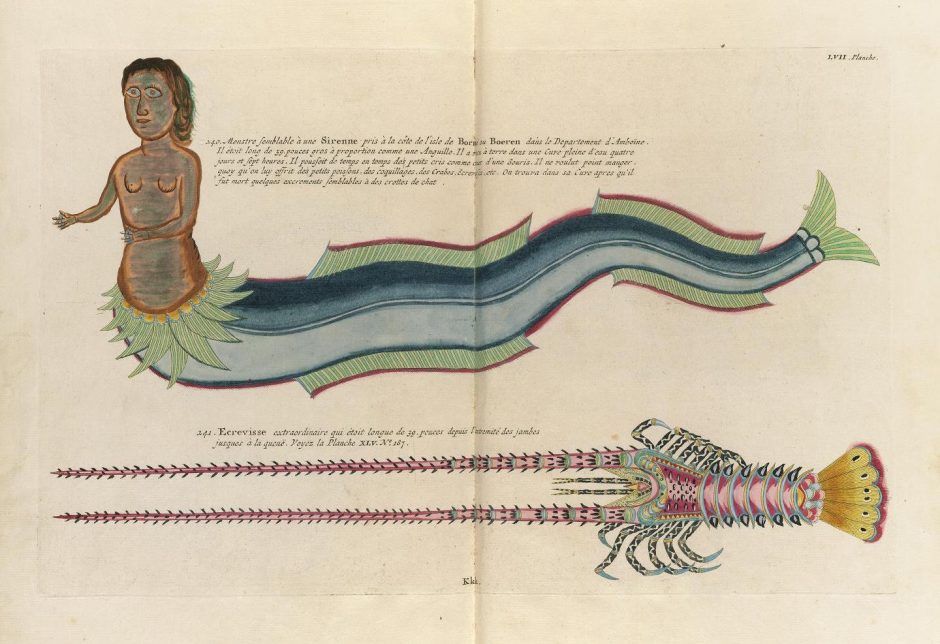
First published in 1719 with a second edition, seen here, in 1754, Renard’s book, whose full title translates to Fishes, Crayfishes, and Crabs, of Diverse Colors and Extraordinary Form, that Are Found Around the Islands of the Moluccas and on the Coasts of the Southern Lands, showed its readers, in full color for the very first time, creatures the likes of which they’d never have had occasion even to imagine. The book’s 460 hand-colored copper engravings depict, according to the Glasgow University Library, “415 fishes, 41 crustaceans, two stick insects, a dugong and a mermaid.”
The specimens in the first part of the book tend toward the realistic, while those of the second “verge on the surreal,” many of which “bear no similarity to any living creatures,” some of which bear “small human faces, suns, moons and stars” on their flanks and carapaces, most possessed of colors “applied in a rather arbitrary fashion,” though brilliantly so. In the short accompanying texts, “several of the fish” — presumably not the mermaid — “are assessed in terms of their edibility and are accompanied by brief recipes.”
Renard himself, who lived from 1678 to 1746, seems to have had a career as colorful as the fish in his book. “As well as spending some seventeen years as a publisher and bookdealer,” he also “sold medicines, brokered English bonds and, more intriguingly, acted as a spy for the British Crown, being employed by Queen Anne, George I and George II.” Far from keeping that part of his life a secret, “Renard used his status as an ‘agent’ to help advertise his books. This particular work is actually dedicated to George I while the title-page describes the publisher as ‘Louis Renard, Agent de Sa Majesté Britannique.’ ”
You can behold more of Poissons, Ecrevisses et Crabesat the Public Domain Review. “If the illustrations are breathtaking to us now, with all the hours of David Attenborough documentaries under our belts,” they write, “one can only imagine the impact this would have had on a European audience of the eighteenth century, to which the exotic ocean life of the East would have been virtually unknown.”
Though received as a respectable scientific work in its day — and even, as the Glasgow University Library puts it, “a product of the Enlightenment” — the book now stands as an enchanting tribute to the combination of a little knowledge and a lot of human imagination.
Based in Seoul, Colin Marshall writes and broadcasts on cities and culture. His projects include the book The Stateless City: a Walk through 21st-Century Los Angeles and the video series The City in Cinema. Follow him on Twitter at @colinmarshall or on Facebook.
MVRDV, a Dutch architecture and urban design firm, teamed up with Chinese architects to create the Tianjin Binhai Library, a massive cultural center featuring “a luminous spherical auditorium around which floor-to-ceiling bookcases cascade.” Located not far from Beijing, the library was built quickly by any standards. It took only three years to move from “the first sketch to the [grand] opening” on October 1. Elaborating on the library, which can house 1.2 million books, MVRDV notes:
The building’s mass extrudes upwards from the site and is ‘punctured’ by a spherical auditorium in the centre. Bookshelves are arrayed on either side of the sphere and act as everything from stairs to seating, even continuing along the ceiling to create an illuminated topography. These contours also continue along the two full glass facades that connect the library to the park outside and the public corridor inside, serving as louvres to protect the interior against excessive sunlight whilst also creating a bright and evenly lit interior.
The video above gives you a visual introduction to the building. And, on the MRDV website, you can view a gallery of photos that let you see the library’s shapely design.
If you would like to support the mission of Open Culture, consider making a donation to our site. It’s hard to rely 100% on ads, and your contributions will help us continue providing the best free cultural and educational materials to learners everywhere. You can contribute through PayPal, Patreon, and Venmo (@openculture). Thanks!
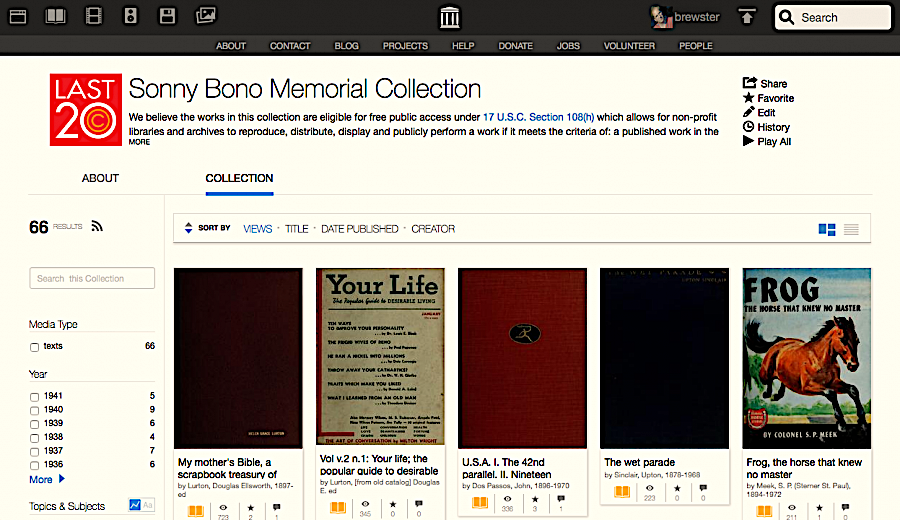
Here at Open Culture, we can never resist the chance to feature books free to read and download online. Books can become free in a number of different ways, one of the most reliable being reversion to the public domain after a certain amount of time has passed since its publication — usually a long time, with the result that the average age of the books freely available online skews quite old. Nothing wrong with old or even ancient reading material, of course, but sometimes one wishes copyright law didn’t put quite such a delay on the process. The Internet Archive and its collaborators have recently made progress in that department, finding a legal means of “liberating” books of a less distant vintage than usual.
“The Internet Archive is now leveraging a little known, and perhaps never used, provision of US copyright law, Section 108h, which allows libraries to scan and make available materials published [from] 1923 to 1941 if they are not being actively sold,” writes the site’s founder Brewster Kahle.
At the moment, the Sonny Bono Memorial Collection offers such 94-to- 76-year-old pieces of reading material as varied as André Malraux’s The Royal Way, Arnold Dresden’s An Invitation to Mathematics, René Kraus’ Winston Churchill: A Biography, Colonel S.P. Meek’s Frog, the Horse that Knew No Master, and Donald Henderson Clarke’s Impatient Virgin. Kahle assures us that “We will add another 10,000 books and other works in the near future,” and reminds us that “if the Founding Fathers had their way, almost all works from the 20th century would be public domain by now.” The intentions of the Founding Fathers may matter to you or they may not, but if you’re an Open Culture reader, you can hardly quibble with the new availability of dozens of free books online — and the prospect of thousands more soon to come. Stay tuned and watch the collection grow.
Based in Seoul, Colin Marshall writes and broadcasts on cities and culture. His projects include the book The Stateless City: a Walk through 21st-Century Los Angeles and the video series The City in Cinema. Follow him on Twitter at @colinmarshall or on Facebook.
Book history buffs don’t need to be told, but the rest of us probably do: incunable—from a Latin word meaning “cradle,” “swaddling clothes,” or “infancy”—refers to a book printed before 1501, during the very first half-century of printing in Europe. An overwhelming number of the works printed during this period were in Latin, the transcontinental language of philosophy, theology, and early science. Yet one of the most revered works of the time, Dante’s Divine Comedy—written in Italian—fully attained its status as a literary classic in the latter half of the 15th century.
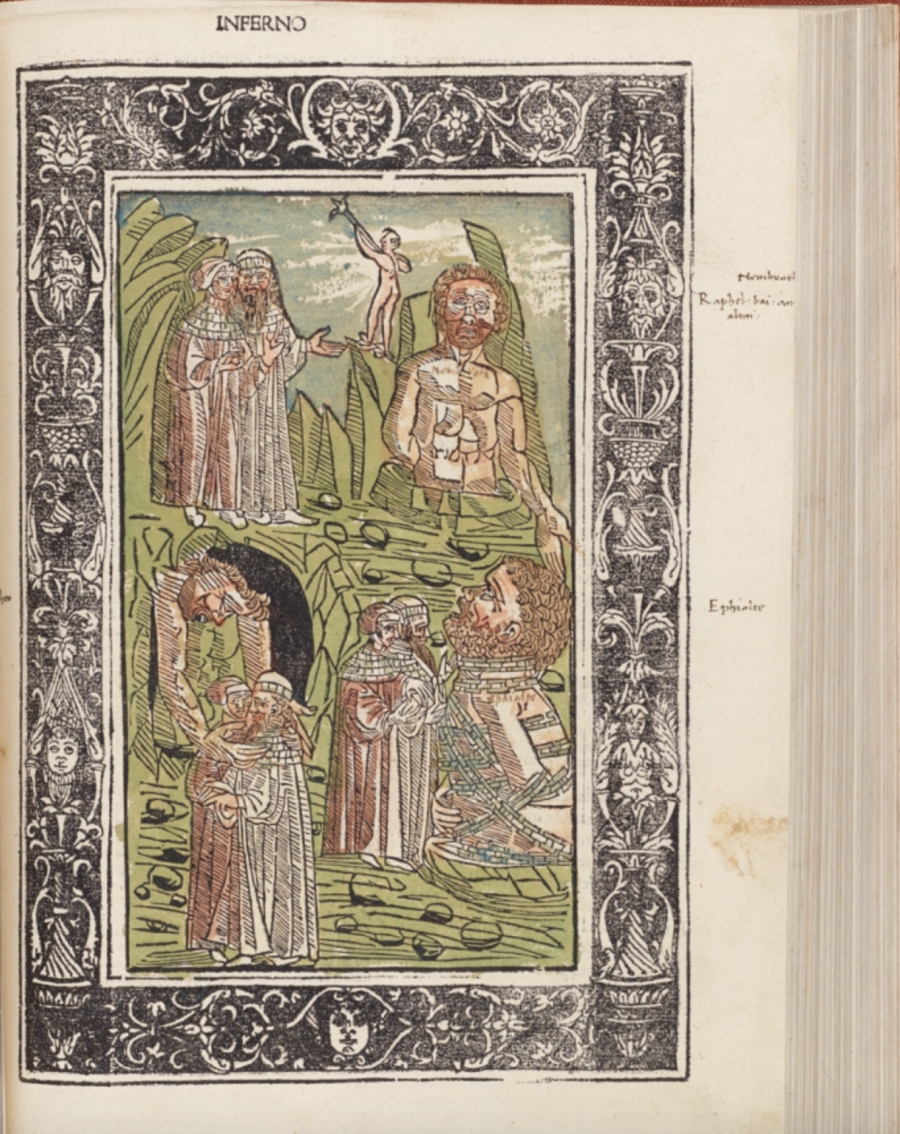
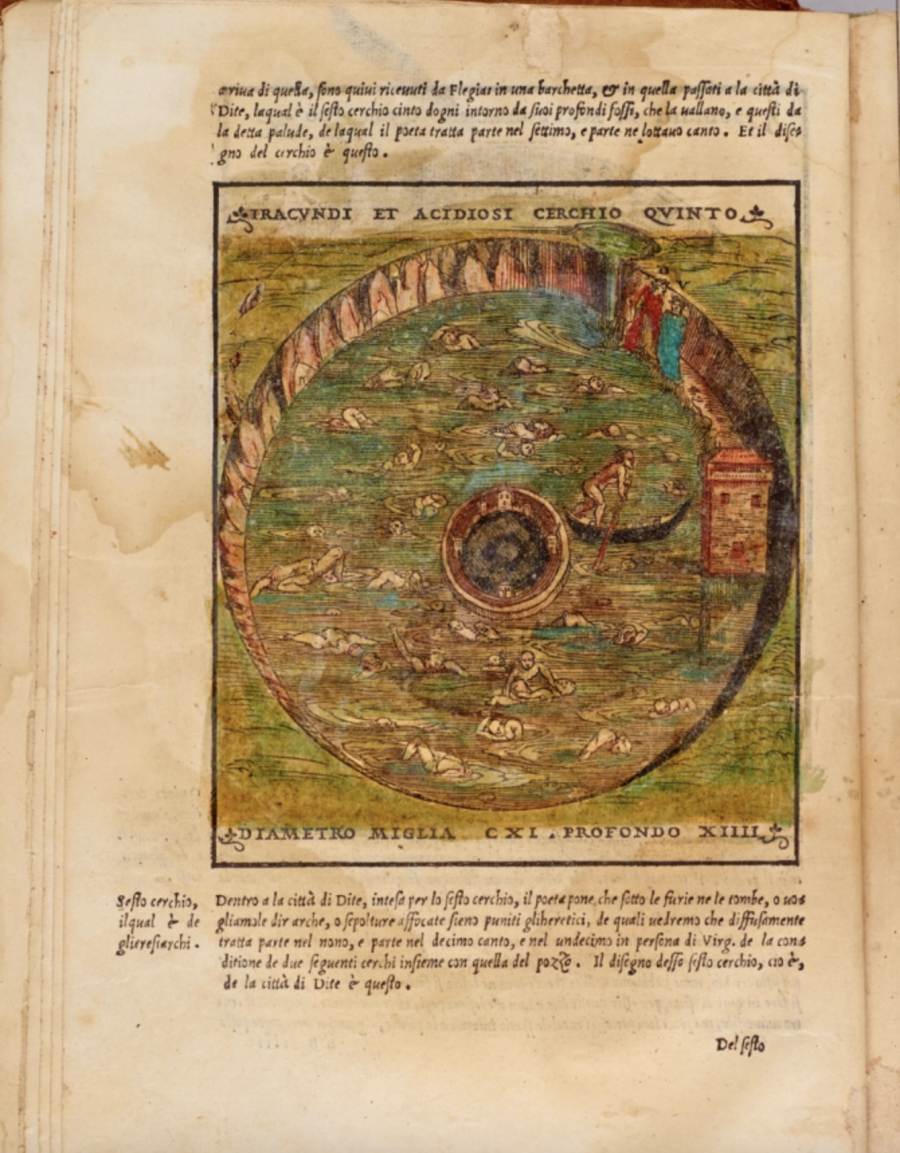
In addition to numerous commentaries and biographies of its author, over 10 editions of the epic Medieval poem— the tale of Dante’s descent into hell and rise through purgatory and paradise—appeared in the period of incunabula, the first in 1472. The 1481 edition contained art based on Sandro Botticelli’s unfinished series of Divine Comedy illustrations. The first fully-illustrated edition appeared in 1491. None of these printings included the word Divine in the title, which did not come into use until 1555. The Commedia, as it was originally called, continued to gain in stature into the 16th century, where it received lavish treatment in other illustrated editions.
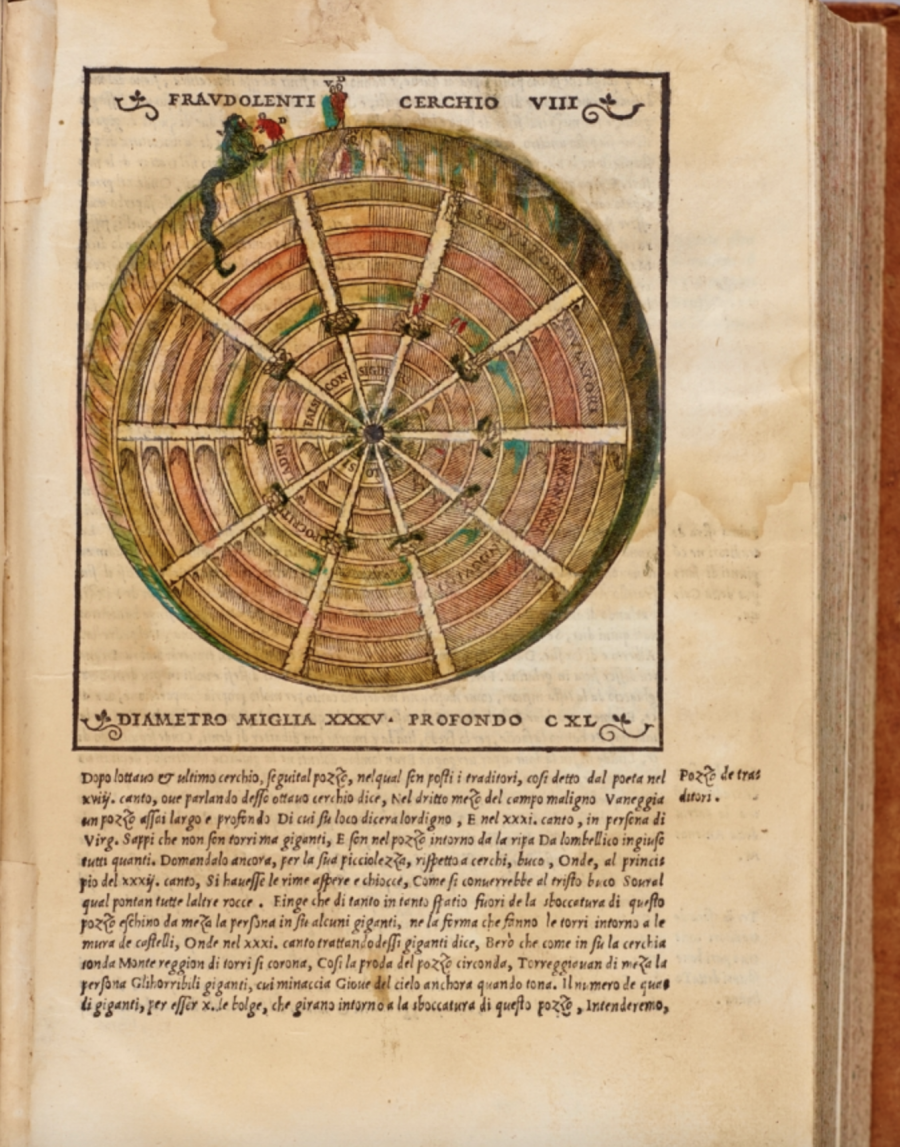
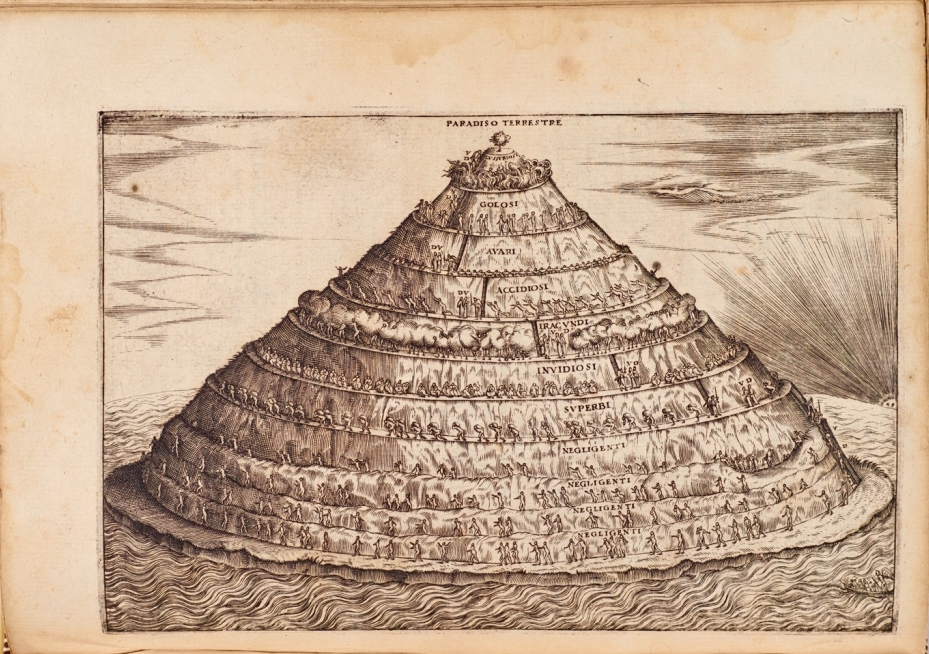
You can see Illustrations from three of the editions from the first 100-plus years of printing here, and many more at Digital Dante, a collaborative effort from Columbia University’s Library and Department of Italian. These images, from Columbia’s Rare Book and Manuscript Library, represent a 1497 woodcut edition, at the top, with a number of hand-colored pages; an edition from 1544, above, with almost 90 circular and traditionally-composed scenes, all of them probably hand-colored in the 19th century; and a 1568 edition with three engraved maps, one for each book, like the carefully-rendered visualization of purgatory, below.
Of this last edition, Jane Siegel, Librarian for Rare Books, writes, “the relative lack of illustrations are balanced by the fineness and detail made possible by using expensive copper engravings as a medium, and by the lively decorated and historiated woodcut initials sprinkled throughout the volume at the head of each canto.” Each of these historical artifacts shows us a lineage of craftsmanship in the infancy and early childhood of printing, a time when literary works of art could be turned doubly into masterpieces with illustration and typography that complemented the text. Luckily for lovers of Dante, finely-illustrated editions of the Divine Comedy have never gone away.
We're hoping to rely on loyal readers, rather than erratic ads. Please click the Donate button and support Open Culture. You can use Paypal, Venmo, Patreon, even Crypto! We thank you!
Open Culture scours the web for the best educational media. We find the free courses and audio books you need, the language lessons & educational videos you want, and plenty of enlightenment in between.