Learn Anatomy Through a Pictorial History of James Bond 007

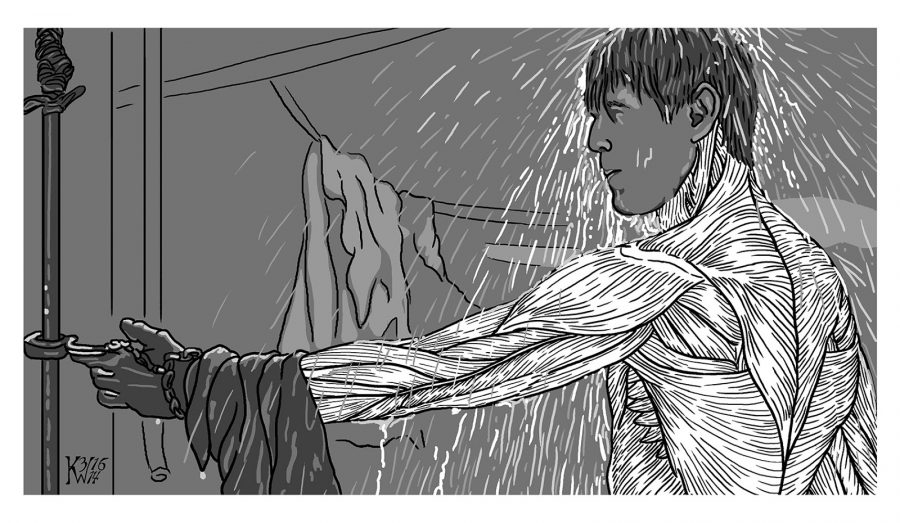
Remem­ber the scene in Tomor­row Nev­er Dies when sexy dou­ble agent Wai Lin hand­cuffs James Bond to the show­er and leaves him there?

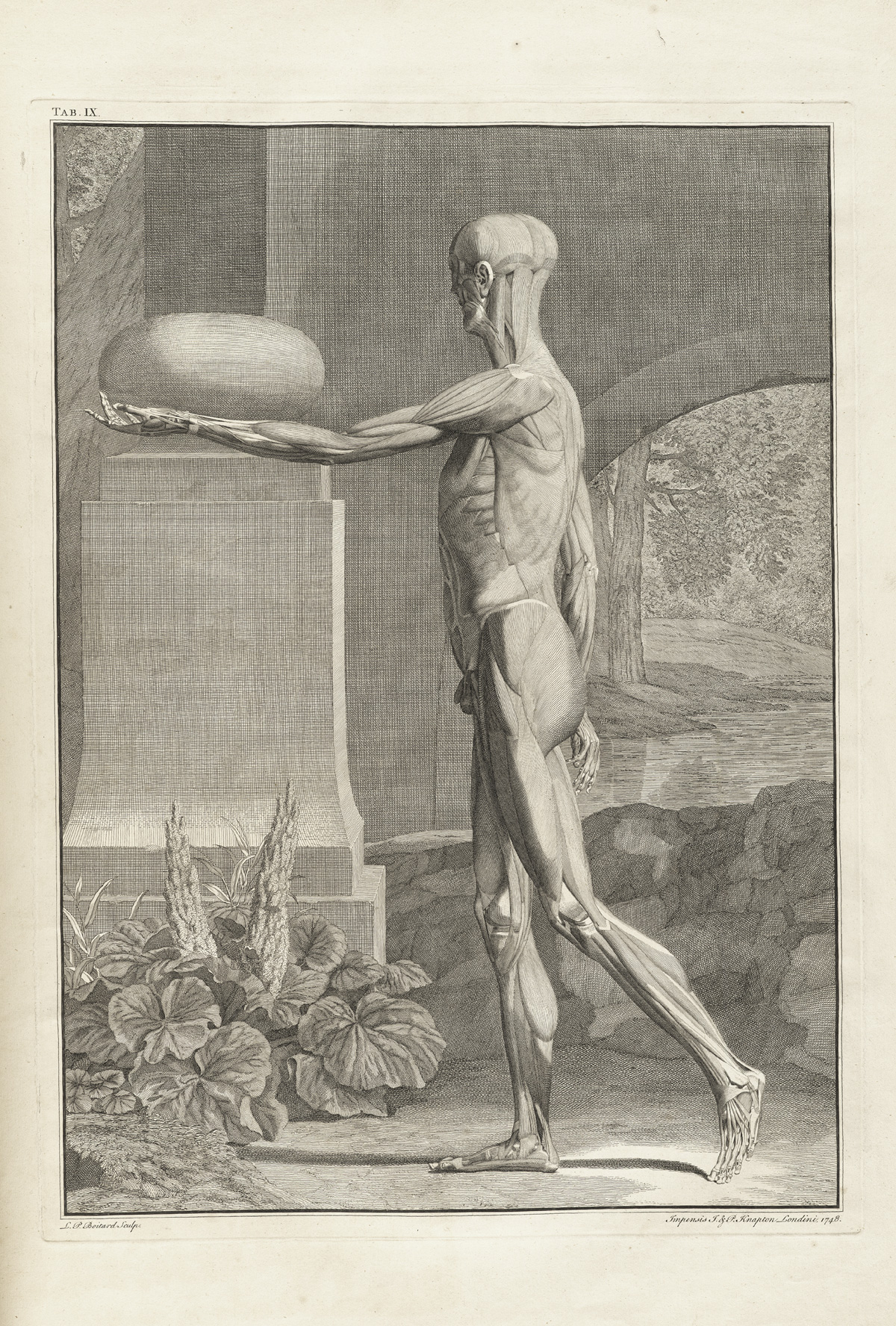
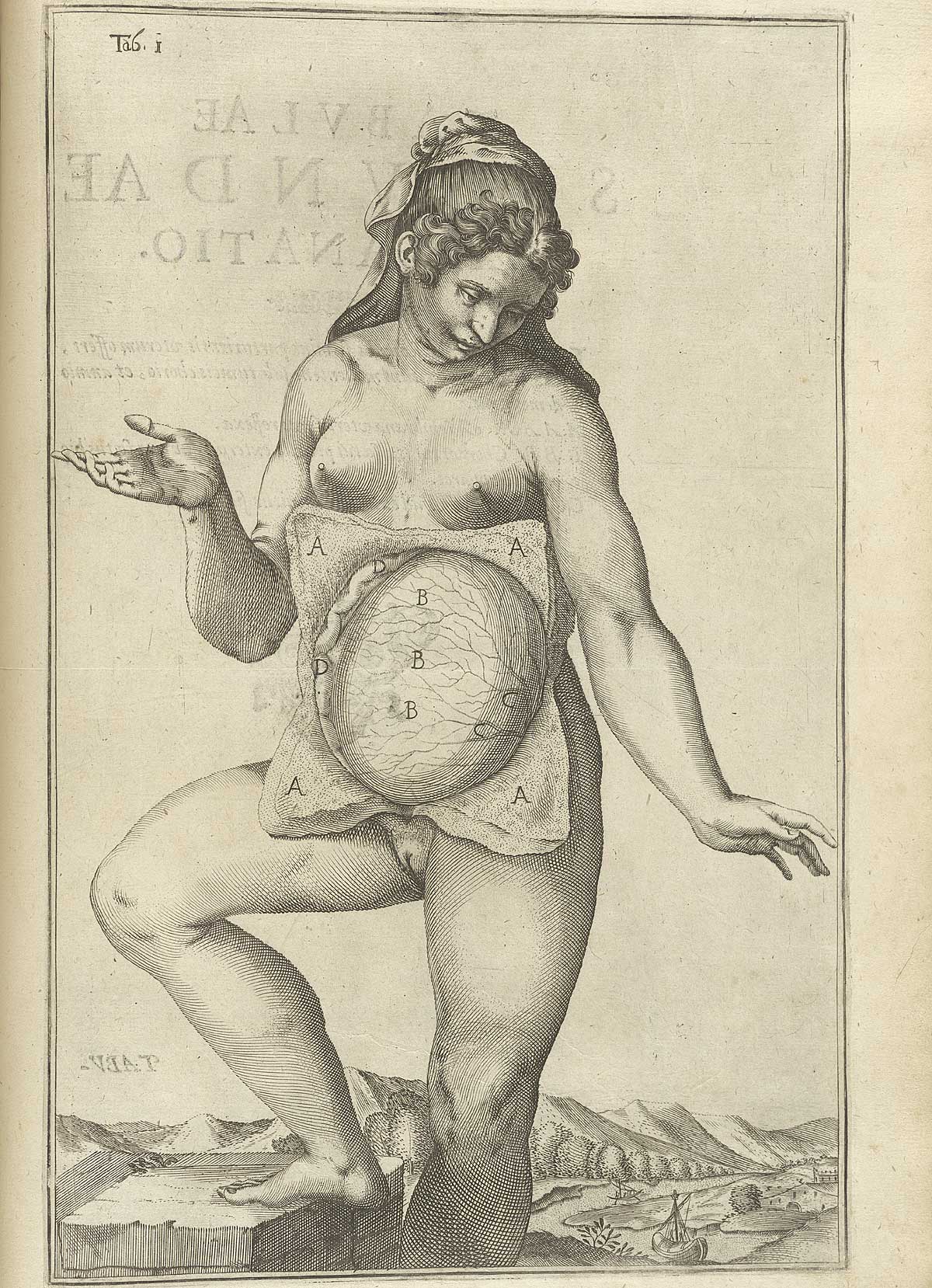
Alter­nate­ly, remem­ber “Table 9” from anatomist Bernard Siegfried Albi­nus’ 1749 Tab­u­lae sceleti et mus­cu­lo­rum cor­poris humani?

Kri­o­ta Will­berg, an edu­ca­tor, mas­sage ther­a­pist at Memo­r­i­al Sloan Ket­ter­ing Can­cer Cen­ter, and author of Draw Stronger: Self-Care For Car­toon­ists and Oth­er Visu­al Artists, is suf­fi­cient­ly steeped in both Bond and Albi­nus to iden­ti­fy strik­ing visu­al sim­i­lar­i­ties.

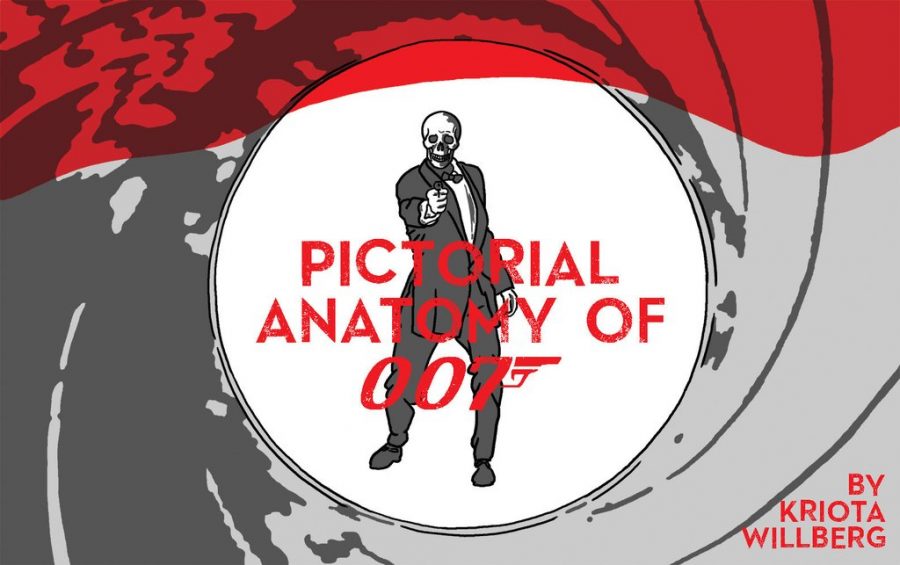
That show­er scene is just one icon­ic moment that Will­berg includ­ed in her mini-com­ic, Pic­to­r­i­al Anato­my of 007.

Agent Bond’s sar­to­r­i­al sense is a cru­cial aspect of his appeal, but Will­berg, a Bond fan who’s seen every film in the canon at least five times, digs below that cel­e­brat­ed sur­face, peel­ing back skin to expose the struc­tures that lie beneath.

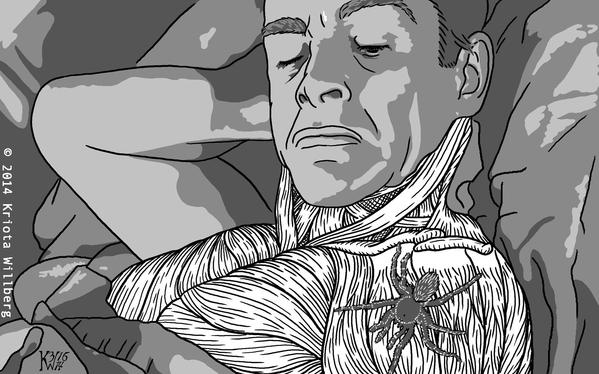
Sean Connery’s Bond exhibits a vet­er­an artist’s mod­el’s still­ness wait­ing for the right time to make his move against Dr. No’s “eight-legged assas­sin.” Even before Will­berg got involved, it was an excel­lent show­case for his pecs, delta, and ster­n­ocleit­o­mas­toid mus­cles.

Leav­ing her flayed Bonds in their cin­e­mat­ic set­tings are a way of pay­ing trib­ute to the antique anatom­i­cal illus­tra­tions Will­berg admires for their dynamism:

…sit­ting in a chair, tak­ing a stroll, hold­ing its skin or organs out of the way so that the read­er can get a bet­ter look at deep­er struc­tures. Some of the cadav­ers are very flir­ty. The pic­tures remind us that we are the organs we see on the page. They do stuff! 

The New York Acad­e­my of Med­i­cine select­ed Will­berg as its first Artist in Res­i­dence, because of the way she explores the inter­sec­tions between body sci­ences and artis­tic prac­tices. (Oth­er projects include an intri­cate needle­point X‑Ray of her own root canal and Stitchin’ Time!, a fic­tion­al encounter in which Aulus Cor­nelius Cel­sus (c. 25 BCE – c. 50 CE), author of  De Med­i­c­i­na, and sur­geon Aelius Galenus (129  – c. 200 CE) team up to repair a dis­em­bow­eled glad­i­a­tor.

Is there a squea­mish bone in this artist’s body?

All signs point to no.

Asked to pick a favorite Bond movie, she names Goldfin­ger for the mythol­o­gy con­cern­ing the infa­mous scene where­in a beau­ti­ful woman is paint­ed gold, but also 2006’s Casi­no Royale for keep­ing the tor­ture scene from the book:

I didn’t think they’d have the balls! Sor­ry! Poor taste but I couldn’t resist. Although Tim­o­thy Dal­ton phys­i­cal­ly resem­bled Bond as described in the books, most of the movies make Bond out to be smarter than Flem­ing wrote him. I think Judy Dench called Daniel Craig, Casi­no Royale’s Bond, a “blunt instru­ment” which is pret­ty much how he’s writ­ten. He’s tough and lucky and that’s why he’s sur­vived. Plus the machete fight is great. 

Some­times peo­ple get too pris­sy about the body. I am meat and liv­er and sausage and so are you. Your body is inescapable while you live. You should get to know it. Think about it in dif­fer­ent con­texts. It’s fun!

When From Rus­sia With Love’s Rosa Klebb punch­es mas­ter assas­sin, Red Grant, in the stom­ach, she is squish­ing a liv­ing liv­er through liv­ing abdom­i­nal mus­cles.

Hard copies of Kri­o­ta Willberg’s anato­my-based comics, includ­ing Pic­to­r­i­al Anato­my of 007, are avail­able from Bird­cage Bot­tom Books.

Lis­ten to an hour-long inter­view with Comics Alter­na­tive in which Will­berg dis­cuss­es her New York Acad­e­my of Med­i­cine res­i­den­cy, anatom­i­cal research, and the ways in which humor informs her approach here.

Relat­ed Con­tent:

The Spell­bind­ing Art of Human Anato­my: From the Renais­sance to Our Mod­ern Times

Down­load the Sub­lime Anato­my Draw­ings of Leonar­do da Vin­ci: Avail­able Online, or in a Great iPad App

Free Online Biol­o­gy Cours­es 

Ayun Hal­l­i­day is an author, illus­tra­tor, the­ater mak­er and Chief Pri­ma­tol­o­gist of the East Vil­lage Inky zine.  Her lat­est script, Fawn­book, is avail­able in a dig­i­tal edi­tion from Indie The­ater Now.  Fol­low her @AyunHalliday.

When Andy Warhol Made a Batman Superhero Movie (1964)

Each of us has a favorite Bat­man movie. My own alle­giance still lies with the one Tim Bur­ton direct­ed in 1989, a pro­to­type of the mod­ern dark super­hero block­buster in which Jack Nichol­son made quite an impact as the Jok­er. But Heath Ledger made an even big­ger one in The Dark Knight, an espe­cial­ly beloved entry in Christo­pher Nolan’s acclaimed Bat­man pic­tures of the 21st cen­tu­ry. These days, with enough dis­tance, some even admit to enjoy­ing Joel Schu­macher’s ultra-campy takes on Bat­man from the late 1990s, or their spir­i­tu­al pre­de­ces­sor Bat­man: The Movie from 1966, an exten­sion of the self-par­o­dy­ing tele­vi­sion series star­ring Adam West. But before all of them there was Bat­man Drac­u­la, direct­ed by no less a vision­ary — and no less a Bat­man fan — than Andy Warhol.

Star­ring Warhol’s fel­low exper­i­men­tal film­mak­er Jack Smith in both title roles, Bat­man Drac­u­la pits the Caped Cru­sad­er of com­ic-book fame against the vam­pir­ic Tran­syl­van­ian count of leg­end, the mil­lion­aire vig­i­lante who seems to fear noth­ing but bats against the immor­tal recluse who spends much of his time in the form of a bat.

Smith may bear a faint resem­blance to Chris­t­ian Bale, Nolan’s Bat­man, but there all aes­thet­ic resem­blance to the “real” Bat­man movies ends. Shot in black and white on var­i­ous rooftops around New York and Long Island as well as in Warhol’s “Fac­to­ry,” Warhol’s unau­tho­rized approach to the mate­r­i­al seems to get as abstract and spon­ta­neous as most of the cin­e­ma put togeth­er by his coterie — or at least the sur­viv­ing footage makes it look that way. Though Warhol did com­plete Bat­man Drac­u­la, he only showed it at a few of his art shows before DC Comics called and demand­ed an imme­di­ate end to its screen­ings.

Nobody has found a com­plete print since, but you can watch a few min­utes of the sur­viv­ing footage cut to “The Noth­ing Song” by the Vel­vet Under­ground & Nico (a much more endur­ing prod­uct of the Fac­to­ry) in the video at the top of the post. Below that we have the LowRes Wün­der­bred video essay “Decon­struct­ing Andy Warhol’s Bat­man Drac­u­la,” which pro­vides more details on the mak­ing of Bat­man Drac­u­la and its con­text in the careers of Warhol and his col­lab­o­ra­tors. The Film His­to­ries video on Bat­man Drac­u­la just above gets into how the movie opened up a “Pan­do­ra’s box” of unau­tho­rized Bat­man and Bat­man-like movies, includ­ing The Wild World of Bat­woman and the Fil­ipino Alyas Bat­man at Robin. So many Bat­man projects, offi­cial and oth­er­wise, now exist, and so many more remain to be made. But will any of the mate­ri­al’s future stew­ards push its artis­tic bound­aries as much as Warhol did?

Relat­ed Con­tent:

The Evo­lu­tion of Bat­man in Cin­e­ma: From 1939 to Present

City of Scars: The Impres­sive Bat­man Fan Film Made for $27,000 in 21 Days

Watch Nos­fer­atu, the Sem­i­nal Vam­pire Film, Free Online (1922)

Warhol’s Cin­e­ma: A Mir­ror for the Six­ties (1989)

The Uncen­sored Andy Warhol-Direct­ed Video for The Cars’ Hit “Hel­lo Again” (NSFW)

Based in Seoul, Col­in Mar­shall writes and broad­casts on cities, lan­guage, and cul­ture. His projects include the book The State­less City: a Walk through 21st-Cen­tu­ry Los Ange­les and the video series The City in Cin­e­ma. Fol­low him on Twit­ter at @colinmarshall or on Face­book.

Hunter S. Thompson Hated Getting Caricatured as “Uncle Duke” in Garry Trudeau’s Doonesbury: ‘If I Ever Catch That Little Bastard, I’ll Tear His Lungs Out’

Gar­ry Trudeau’s Doones­bury is hard­ly the cul­tur­al touch­stone it once was, but then again, nei­ther are com­ic strips in gen­er­al, and polit­i­cal strips in par­tic­u­lar. No amount of urbane wit­ti­cism and sequen­tial nar­ra­tive humor can com­pete with the crazed jum­ble of arcane memes in the 21st cen­tu­ry. Hunter S. Thomp­son may have writ­ten about the late-20th cen­tu­ry polit­i­cal scene as a hal­lu­ci­na­to­ry night­mare, but per­haps even he would be sur­prised at how close real­i­ty has come to his hyper­bole.

In its hey­day, Trudeau’s top­i­cal, lib­er­al-lean­ing satire of politi­cians, polit­i­cal jour­nal­ists, clue­less hip­pies, and cyn­i­cal cor­po­rate and aca­d­e­m­ic elites hit the tar­get more often than it missed. For many fans, one of Trudeau’s most beloved char­ac­ters, Uncle Duke—a car­i­ca­ture of Thomp­son intro­duced in 1974—was a per­fect bulls­eye. Writer Wal­ter Isaac­son paid tongue-in-cheek trib­ute to the char­ac­ter as his “hero” on the strip’s 40th anniver­sary. Duke even made an ani­mat­ed appear­ance on Lar­ry King Live in 2000 (below), announc­ing his can­di­da­cy for pres­i­dent after serv­ing as Gov­er­nor of Amer­i­can Samoa and Ambas­sador to Chi­na.

It would be a tremen­dous under­state­ment to say that Thomp­son him­self was not flat­tered by the por­tray­al. The amoral Duke—a “self-obsessed, utter­ly unscrupu­lous epit­o­me of evil who has sent a chill down read­ers’ spines,” writes The Guardian’s Ed Pilk­ing­ton, sent Thomp­son into a parox­ysm of rage. The gonzo writer saw the char­ac­ter “as a form of copy­right infringe­ment.” He “sent an enve­lope of used toi­let paper to Trudeau and once mem­o­rably said: ‘If I ever catch that lit­tle bas­tard, I’ll tear his lungs out.’” The threats got even more spe­cif­ic and grue­some.

“Hunter despised Trudeau,” writes Thomp­son biog­ra­ph­er William McK­een in his book Out­law Jour­nal­ist. “’He’s going to be sur­prised some­day,’ Hunter said. ‘I’m going to set him on fire first, then crush every one of his ribs, one by one, start­ing from the bot­tom.’” He had been turned into a joke. Jan Wen­ner, “when he couldn’t get Hunter to write for him… put him on the cov­er of Rolling Stone any­way, as Uncle Duke in a Trudeau-drawn cov­er.” Thomp­son pon­dered a $20 mil­lion libel suit. “All over Amer­i­ca,” he rant­ed, “kids grow up want­i­ng to be fire­men and cops, pres­i­dents and lawyers, but nobody wants to grow up to be a car­toon char­ac­ter.”

The mock­ery began imme­di­ate­ly after Uncle Duke first appeared in the strip in 1974. In a High Times inter­view, Thomp­son describes the day he first learned of the char­ac­ter:

It was a hot, near­ly blaz­ing day in Wash­ing­ton, and I was com­ing down the steps of the Supreme Court look­ing for some­body, Carl Wag­n­er or some­body like that. I’d been inside the press sec­tion, and then all of a sud­den I saw a crowd of peo­ple and I heard them say­ing, “Uncle Duke,” I heard the words Duke, Uncle; it didn’t seem to make any sense. I looked around, and I rec­og­nized peo­ple who were total strangers point­ing at me and laugh­ing. I had no idea what the fuck they were talk­ing about. I had got­ten out of the habit of read­ing fun­nies when I start­ed read­ing the Times. I had no idea what this out­burst meant…It was a weird expe­ri­ence, and as it hap­pened I was sort of by myself up there on the stairs, and I thought: “What in the fuck mad­ness is going on? Why am I being mocked by a gang of strangers and friends on the steps of the Supreme Court? Then I must have asked some­one, and they told me that Uncle Duke had appeared in the Post that morn­ing.

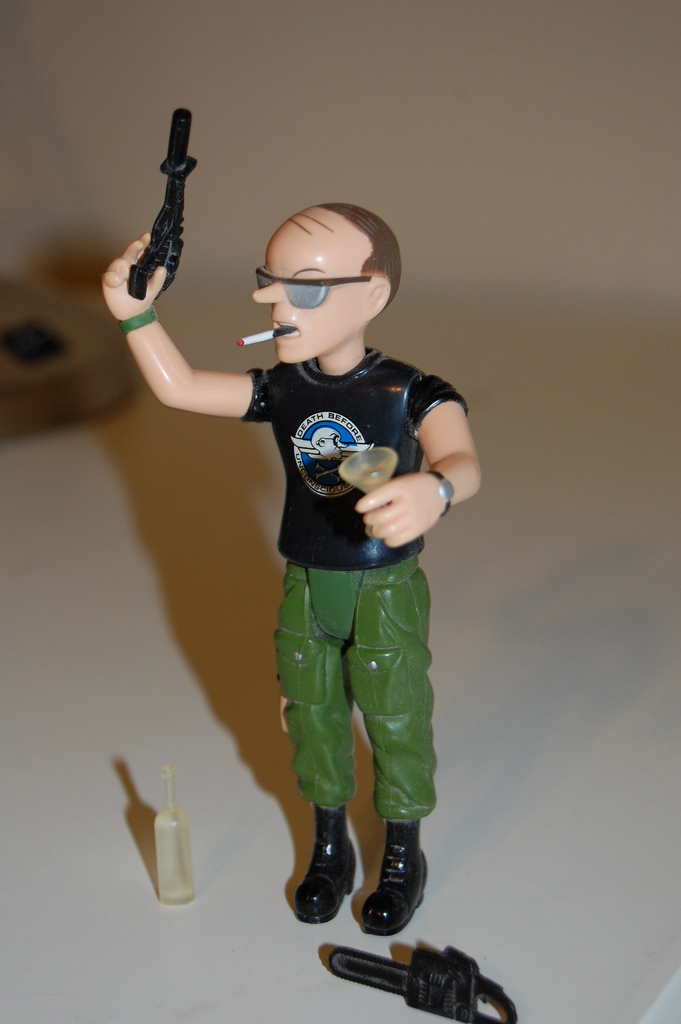
While Trudeau seems to have tak­en the phys­i­cal threats seri­ous­ly, he didn’t back down from his relent­less satir­i­cal take­downs of Thompson’s vio­lent ten­den­cies, para­noia, and com­i­cal­ly exag­ger­at­ed sub­stance abuse. As Dan­ger­ous Minds describes, in 1992, Trudeau pub­lished a book called Action Fig­ure!: The Life and Times of Doonesbury’s Uncle Duke “that chron­i­cled the mis­ad­ven­tures of Uncle Duke.” It also “came with a five-inch action fig­ure of the dear Uncle Duke along with a mar­ti­ni glass, an Uzi, cig­a­rette hold­er, a bot­tle of booze, and a chain­saw.”

See the Uncle Duke action fig­ure at the top—one of a half-dozen images Dan­ger­ous Minds pulled from eBay (his t‑shirt reads “Death Before Uncon­scious­ness.”) As much as Thomp­son despised Uncle Duke, and Trudeau for cre­at­ing him, he him­self helped feed the caricature—with his alter ego Raoul Duke and his chron­i­cles of his own bizarre behav­ior. Trudeau’s admi­ra­tion, of a sort, for Thompson’s excess­es was a con­tin­u­ing dri­ver of the writer’s fame, for good or ill. “Uncle Duke was who fans craved,” writes Sharon Eber­son at the Pitts­burgh Post-Gazette, “and Thomp­son often felt oblig­ed” to live up to his car­toon image.

Relat­ed Con­tent:

Hunter S. Thompson’s Deca­dent Dai­ly Break­fast: The “Psy­chic Anchor” of His Fre­net­ic Cre­ative Life

How Hunter S. Thomp­son Gave Birth to Gonzo Jour­nal­ism: Short Film Revis­its Thompson’s Sem­i­nal 1970 Piece on the Ken­tucky Der­by

Read 11 Free Arti­cles by Hunter S. Thomp­son That Span His Gonzo Jour­nal­ist Career (1965–2005)

Josh Jones is a writer and musi­cian based in Durham, NC. Fol­low him at @jdmagness

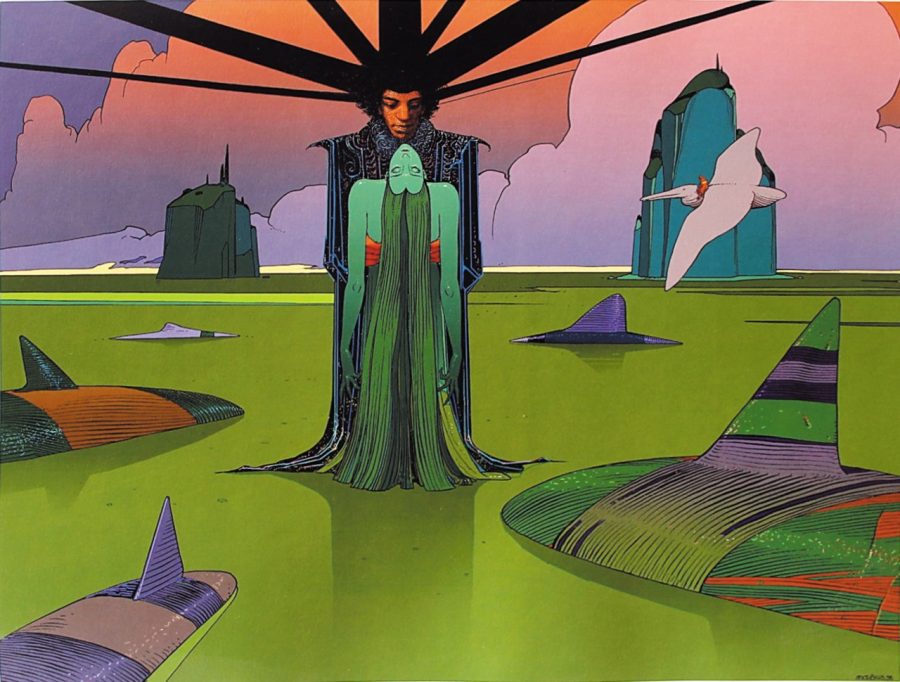
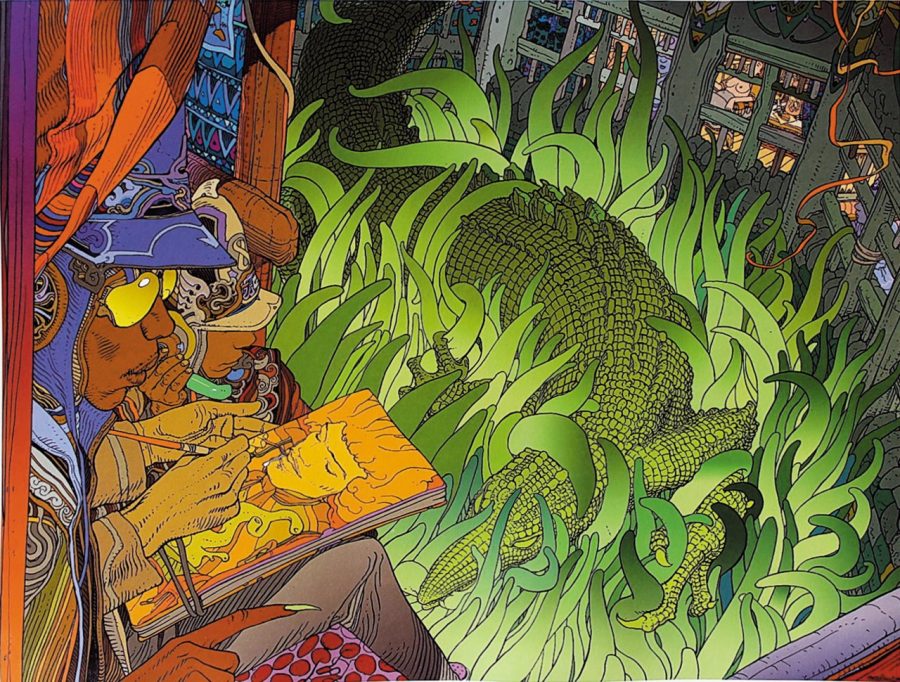
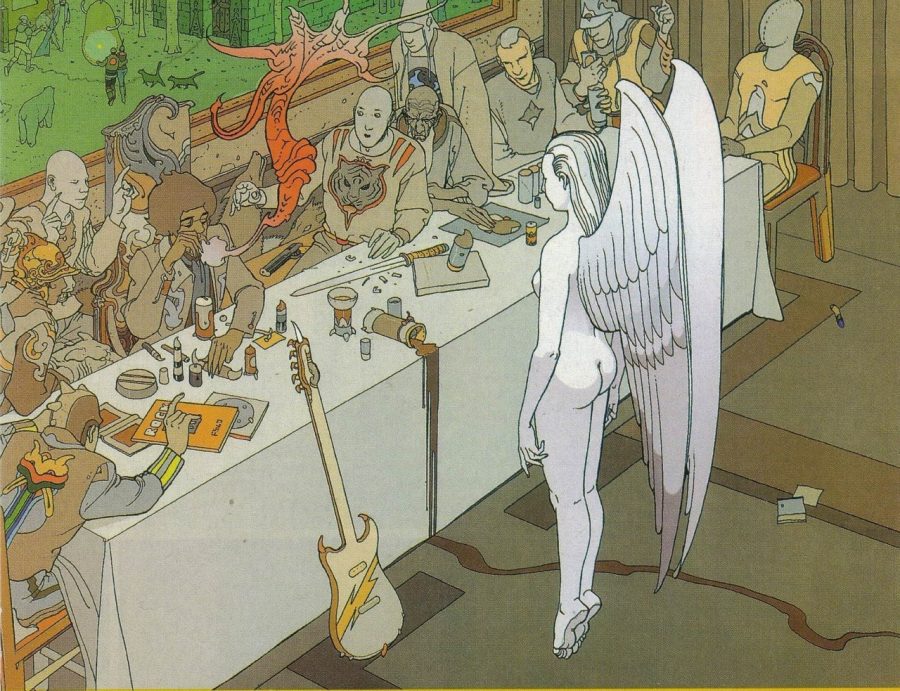
“The Long Tomorrow”: Discover Mœbius’ Hard-Boiled Detective Comic That Inspired Blade Runner (1975)

Ale­jan­dro Jodor­owsky may nev­er have made his film adap­ta­tion of Frank Her­bert’s Dune, but plen­ty came out of the attempt — includ­ing, one might well argue, Blade Run­ner. Mak­ing that still huge­ly influ­en­tial adap­ta­tion of Philip K. Dick­’s Do Androids Dream of Elec­tric Sheep?, Rid­ley Scott and his col­lab­o­ra­tors looked to a few key visu­al sources, one of them a two-part short sto­ry in com­ic form called “The Long Tomor­row.”

Illus­trat­ed by none oth­er than French artist Mœbius, one of the rich­est visu­al imag­i­na­tions of our time, it tells the futur­is­tic hard-boiled sto­ry of a pri­vate detec­tive in a dense, ver­ti­cal under­ground city filled with androids, row­dy bars, assas­sins, and fly­ing cars. “I’m a con­fi­den­tial nose,” says the pro­tag­o­nist by way of intro­duc­tion. “My office is on the 97th lev­el. Club’s the name, Pete Club.”

Then comes the fate­ful piece of nar­ra­tion that begins any detec­tive sto­ry worth its salt: “It start­ed out a day like any oth­er day.” But by the end of that day, Club has tak­en a job from a clas­sic dame in need, fend­ed off both a four-armed thug and a hired assas­sin, slain an alien mon­ster with whom he finds him­self in bed, and recov­ered the pres­i­den­t’s miss­ing brain.

The sto­ry was writ­ten writ­ten by Dan O’Ban­non, then known main­ly for the film Dark Star, a sci­ence-fic­tion com­e­dy he’d made with his Uni­ver­si­ty of South­ern Cal­i­for­nia class­mate John Car­pen­ter. On the strength of that, Jodor­owsky had brought him onto Dune to work on its spe­cial effects, just as he’d brought Mœbius on to cre­ate its sto­ry­boards and con­cept art. With noth­ing to do before shoot­ing began — which it nev­er did — O’Ban­non first drew “The Long Tomor­row” him­self as a way of keep­ing busy. Mœbius took one look at it and imme­di­ate­ly saw its promise.

The French may have coined the term film noir, but this ear­ly work of future noir ben­e­fit­ed from hav­ing an Amer­i­can writer. “When Euro­peans try this kind of par­o­dy, it is nev­er entire­ly sat­is­fac­to­ry,” Mœbius writes in the intro­duc­tion to the book ver­sion of “The Long Tomor­row.” “The French are too French, the Ital­ians are too Ital­ian … so, under my nose was a pas­tiche that was more orig­i­nal than the orig­i­nals.” It also, with Mœbius’ art, laid the visu­al ground­work for gen­er­a­tions of sci-fi sto­ries to come.

“The way Neu­ro­mancer-the-nov­el ‘looks’ was influ­enced in large part by some of the art­work I saw in  Heavy Met­al,” said William Gib­son, refer­ring to the Eng­lish ver­sion of Métal hurlant, the mag­a­zine that pop­u­lar­ized Mœbius’ work. (O’Ban­non also worked on the ani­mat­ed Heavy Met­al anthol­o­gy film, released in 1981.) But per­haps Rid­ley Scott, who start­ed work­ing with the artist on 1979’s O’Ban­non-script­ed Alien, described the influ­ence of Mœbius’ art on our visions of the future best: “You see it every­where, it runs through so much you can’t get away from it.” In a cul­tur­al sense, all of us live in Pete Club’s city now.

via Dan­ger­ous Minds

Relat­ed Con­tent:

Métal hurlant: The Huge­ly Influ­en­tial French Com­ic Mag­a­zine That Put Moe­bius on the Map & Changed Sci-Fi For­ev­er

Mœbius & Jodorowsky’s Sci-Fi Mas­ter­piece, The Incal, Brought to Life in a Tan­ta­liz­ing Ani­ma­tion

Moe­bius’ Sto­ry­boards & Con­cept Art for Jodorowsky’s Dune

In Search of Mœbius: A Doc­u­men­tary Intro­duc­tion to the Inscrutable Imag­i­na­tion of the Late Com­ic Artist Mœbius

The Blade Run­ner Sketch­book Fea­tures The Orig­i­nal Art of Syd Mead & Rid­ley Scott (1982)

The 14-Hour Epic Film, Dune, That Ale­jan­dro Jodor­owsky, Pink Floyd, Sal­vador Dalí, Moe­bius, Orson Welles & Mick Jag­ger Nev­er Made

Based in Seoul, Col­in Mar­shall writes and broad­casts on cities and cul­ture. His projects include the book The State­less City: a Walk through 21st-Cen­tu­ry Los Ange­les and the video series The City in Cin­e­ma. Fol­low him on Twit­ter at @colinmarshall or on Face­book.

Discover David Lynch’s Bizarre & Minimalist Comic Strip, The Angriest Dog in the World (1983–1992)

Most David Lynch fans dis­cov­er him through his films. But those of us who read alter­na­tive week­ly news­pa­pers in their 1980s and 90s hey­day may well have first encoun­tered his work in anoth­er medi­um entire­ly: the com­ic strip. Like many of the best-known exam­ples of the form, Lynch’s com­ic strip stars an ani­mal, specif­i­cal­ly a dog, but a dog “so angry he can­not move. He can­not eat. He can­not sleep. He can just bare­ly growl. Bound so tight­ly with ten­sion and anger, he approach­es the state of rig­or mor­tis.” That text, which pre­pared read­ers for a read­ing expe­ri­ence some way from Mar­maduke, intro­duced each and every edi­tion of The Angri­est Dog in the World, which ran between 1983 and 1992.

Dur­ing that entire time, the strip’s art­work nev­er changed either: four pan­els in which the tit­u­lar dog strains against a rope staked down in a sub­ur­ban back­yard, in the last of which night has fall­en. The sole vari­a­tion came in the word bub­bles that occa­sion­al­ly emerged from the win­dow of the house, pre­sum­ably rep­re­sent­ing the voice of the dog’s own­ers.

You can see a few exam­ples at Lynch­net and also on this blog. “If every­thing is real… then noth­ing is real as well,” it says one week. On anoth­er: “It must be clear to even the non-math­e­mati­cian that the things in this world just don’t add up to beans.” Or, in a nod to the region of The Angri­est Dog in the World’s home paper the LA Read­er: “Bill… who is this San Andreas? I can’t believe it’s all his fault.”

“At some point David Lynch called up the edi­tor at the time, James Vow­ell, and said, ‘Hi, I’d like to do a com­ic strip for you,’” says for­mer Read­er edi­tor Richard Gehr as quot­ed by John F. Kel­ly at Spooky Comics. Every week there­after, Lynch would phone the Read­er to dic­tate the text of the lat­est strip. “We would give it to some­body in the pro­duc­tion depart­ment and they would White Out the pan­els from the week before and write in a new, quote/unquote… gag.” The clip from The Incred­i­bly Strange Film Show’s 1990 episode on Lynch above shows the evo­lu­tion of the process: some­one, one of Lynch’s assis­tants or per­haps Lynch him­self, would reg­u­lar­ly slip under the Read­er’s office door an enve­lope con­tain­ing word bal­loons writ­ten and ready to paste into the strip. (Dan­ger­ous Minds finds an inter­view where Vow­ell describes anoth­er pro­duc­tion method alto­geth­er, involv­ing wax paper.)

Lynch came up with the words, but what about the images? “I assume he drew the first iter­a­tion,” says Gehr as quot­ed by Kel­ly. “I don’t even know if the sec­ond and third [pan­els] were hand drawn. Those could have been mimeo­graphed too or some­thing.” The style does bear a resem­blance to that of the town map Lynch drew to pitch Twin Peaks to ABC. The atten­tive fan can also find a host of oth­er con­nec­tions between The Angri­est Dog in the World and Lynch’s oth­er work. That fac­to­ry in the back­ground, for instance, looks like a place he’d pho­to­graph, or even a set­ting of Eraser­head, dur­ing whose frus­trat­ing years-long shoot he came up with the strip’s con­cept in the first place. “I had tremen­dous anger,” says Lynch in David Bre­skin’s book Inner Views. “And I think when I began med­i­tat­ing, one of the first things that left was a great chunk of that.” If only the Angri­est Dog in the World could have found it in him­self to do the same.

via Dan­ger­ous Minds

Relat­ed Con­tent:

David Lynch Draws a Map of Twin Peaks (to Help Pitch the Show to ABC)

The Paint­ings of Filmmaker/Visual Artist David Lynch

David Lynch’s Pho­tographs of Old Fac­to­ries

“The Art of David Lynch”— How Rene Magritte, Edward Hop­per & Fran­cis Bacon Influ­enced David Lynch’s Cin­e­mat­ic Vision

David Lynch’s New ‘Crazy Clown Time’ Video: Intense Psy­chot­ic Back­yard Crazi­ness (NSFW)

The Incred­i­bly Strange Film Show: Revis­it 1980s Doc­u­men­taries on David Lynch, John Waters, Ale­jan­dro Jodor­owsky & Oth­er Film­mak­ers

Based in Seoul, Col­in Mar­shall writes and broad­casts on cities and cul­ture. His projects include the book The State­less City: a Walk through 21st-Cen­tu­ry Los Ange­les and the video series The City in Cin­e­ma. Fol­low him on Twit­ter at @colinmarshall or on Face­book.

The Story of How David Jones Became David Bowie Gets Told in a New Graphic Novel

What, exact­ly, turned David Jones into David Bowie? Observers have been ask­ing that ques­tion ever since the artis­ti­cal­ly inclined rock star — who, we might say, made rock star­dom into a viable art form in the first place — began his high-pro­file exper­i­men­ta­tion with his own image in the ear­ly 1970s. Hav­ing put out his first big hit “Space Odd­i­ty” a few years before that, in 1969, he spent the peri­od in between liv­ing, with his then-wife Ang­ie, at a Vic­to­ri­an vil­la in South Lon­don called Had­don Hall. “The cou­ple rent­ed a ground-floor flat for £7 a week – the Spi­ders from Mars were, I think, sequestered around an upstairs land­ing – and in one of its cav­ernous rooms, their ceil­ings paint­ed sil­ver, Ang­ie cut David’s hair and stitched the first Zig­gy out­fit.”

Those words come from the Guardian’s Rachel Cooke, review­ing the bio­graph­i­cal graph­ic nov­el Had­don Hall: When David Invent­ed Bowie. “Its author, the Tunisian-born French car­toon­ist Nejib, puts Bowie’s lost house cen­tre stage, David and Ang­ie hav­ing fall­en instant­ly in love with its dis­creet decrepi­tude, its tow­ers and mould­ings and pre­pos­ter­ous­ly long cor­ri­dors,” she writes. “Nejib is won­der­ful­ly alive to the influ­ences on Bowie in this cru­cial peri­od, from the final ill­ness of his father, John, to Stan­ley Kubrick’s 1971 film adap­ta­tion of A Clock­work Orange (leav­ing the cin­e­ma after see­ing it, the still strug­gling Bowie sud­den­ly sees what he should be: a rock star ‘who’s all destruc­tion and the future’).”

A Bowie schol­ar could argue that his and Ang­ie’s Had­don Hall years pro­vid­ed the space for the most cru­cial ges­ta­tion peri­od and space in his career. In an inter­view with the Her­ald, Nejib relates his dis­sat­is­fac­tion with extant Bowie biogra­phies, and how one biog­ra­ph­er even admits that writ­ing a sat­is­fy­ing one may be “rather impos­si­ble because Bowie is a fic­tion cre­at­ed by David Jones, a very secret man. I loved that idea and I con­sid­er Bowie as one of the most pow­er­ful fic­tion­al cre­ations of this peri­od. That was very lib­er­at­ing for me to make this ‘por­trait’ of Bowie in a graph­ic nov­el,” which he describes as “not a doc­u­men­tary, but a fic­tion,” based on more than just facts and as a result “a mix of many things.”

More fas­ci­nat­ed by “fragili­ty and doubt than suc­cess and star­dom,” Nejib — whose art style brings to mind car­toons seen in mag­a­zines of the late 1960s and ear­ly 1970s — focus­es on a “gap” in Bowie’s life as its sto­ry has pre­vi­ous­ly been told: “The man is close to becom­ing the genius we know, but he is full of doubt. I was inspired by an inter­view in which he said that he felt that all his influ­ences were merg­ing and he felt that it was the moment for him to make the big jump!” And make the big jump he did, not just once but over and over again through­out the course of his life, rein­vent­ing him­self both musi­cal­ly and as a per­sona when­ev­er nec­es­sary. What­ev­er impor­tance any giv­en Bowie fan grants his time in Had­don Hall, they’ve got to admit that those years make for a tale best told visu­al­ly.

You can pick up your own copy of Nejib’s graph­ic nov­el, Had­don Hall: When David Invent­ed Bowie.

via Hyper­al­ler­gic

Relat­ed Con­tent:

The Sto­ry of Zig­gy Star­dust: How David Bowie Cre­at­ed the Char­ac­ter that Made Him Famous

David Bowie & Bri­an Eno’s Col­lab­o­ra­tion on “Warsza­wa” Reimag­ined in a Com­ic Ani­ma­tion

96 Draw­ings of David Bowie by the “World’s Best Com­ic Artists”: Michel Gondry, Kate Beat­on & More

50 Years of Chang­ing David Bowie Hair Styles in One Ani­mat­ed GIF

How Leonard Cohen & David Bowie Faced Death Through Their Art: A Look at Their Final Albums

Based in Seoul, Col­in Mar­shall writes and broad­casts on cities and cul­ture. His projects include the book The State­less City: a Walk through 21st-Cen­tu­ry Los Ange­les and the video series The City in Cin­e­ma. Fol­low him on Twit­ter at @colinmarshall or on Face­book.

Watch the Original Black Panther Animated Series Online: All Six Episodes Now Available Thanks to Marvel

Last month, I was thrilled to learn of a talk com­ing to my town called “The Writ­ers of Wakan­da.” I scored a (free) tick­et, think­ing that maybe the mas­sive block­buster movie’s director/writer Ryan Coogler might make an appear­ance (or his co-writer Joe Robert Cole), or maybe one or more of the high-pro­file writ­ers who have expand­ed the comic’s world recent­ly, like Ta-Nehisi Coates, Rox­anne Gay, or Nne­di Oko­rafor. Well, either there was some kind of bait-and-switch at work or I naive­ly failed to read the fine print. The event was a pan­el of devot­ed fans of the com­ic hav­ing a dis­cus­sion about their life­long fan­dom, the many iter­a­tions of the char­ac­ter through var­i­ous Mar­vel writer’s hands, and the film’s huge cul­tur­al impact at home and abroad. It was slight­ly dis­ap­point­ing but also quite enjoy­able and infor­ma­tive.

I learned, for exam­ple, that some of the most well-loved and high­ly-praised char­ac­ters in the film appeared very late in the series’ run (which began with the character’s cre­ation by Stan Lee and Jack Kir­by in 1966) and were intro­duced by its first black writ­ers, the “chron­i­cal­ly under­ap­pre­ci­at­ed” Christo­pher Priest and the film­mak­er Regi­nald Hudlin.

In the late 90s, Priest invent­ed the Dora Mila­je, the elite all-female fight­ing force who pro­tect Wakanda’s kings (who each take on the man­tle of super­hero Black Pan­ther once they ascend the throne). Hudlin cre­at­ed the char­ac­ter of Shuri, King T’Challa’s younger sis­ter and the sci­en­tif­ic mas­ter­mind behind his high-tech empire of vibra­ni­um-pow­ered gear and gad­getry. Which brings us, at last, to the sub­ject of this post, the Black Pan­ther ani­mat­ed series, co-pro­duced by BET and Mar­vel, who have released all six episodes on Mar­vel’s YouTube chan­nel. Stream them all above.

Tak­ing its sto­ry from Hudlin’s 2005 comics run, the series is less ani­ma­tion and more “a stop motion com­ic,” as Nerdist writes, “added to the art­work of John Romi­ta, Jr.” This is all to its cred­it, as is its star-stud­ded voice cast­ing, with Ker­ry Wash­ing­ton as Shuri, Alfre Woodard as the Queen Moth­er, Jill Scott as Storm, and Dji­mon Houn­sou as T’Challa/Black Pan­ther. How does it com­pare to the block­buster film? From its first sal­vo of Wakan­dan war­rior prowess in a cold open set in the 5th cen­tu­ry A.D., to its sev­en­ties-African-funk-inspired theme song, to a present-day scene in the White House, with a blus­tery racist army gen­er­al (played by Stan Lee) who sounds like a mem­ber of the cur­rent admin­is­tra­tion, the first episode, above, sug­gests it will live up to Hudlin’s cast­ing of the char­ac­ter as “an unapolo­getic African man,” as Todd Steven Bur­roughs writes at The Root, “open­ly opposed to white, West­ern suprema­cy.”

Hudlin wrote some of the comic’s most polit­i­cal­ly chal­leng­ing sto­ries, delv­ing into “seri­ous Euro­pean col­o­niza­tion themes.” These themes are woven through­out the ani­mat­ed series, which fea­tures such char­ac­ters now famil­iar to film­go­ers as Everett Ross and the vil­lain Klaw. Cap­tain Amer­i­ca para­chutes in—in a flashback—meets an ear­li­er Black Pan­ther dur­ing World War II, and takes a beat­ing. (“These are dan­ger­ous times,” says Cap, “you need to choose a side.” The reply: “We have, our own.”) The X‑Men’s Storm, for­mer­ly the first most-famous African super­hero, plays a sig­nif­i­cant role. Not in the series, like­ly to many people’s dis­ap­point­ment, are the Dora Mila­je, at least in star­ring roles, and the film’s pri­ma­ry antag­o­nist Erik Kill­mon­ger.

But not to wor­ry. The ass-kick­ing gen­er­al Okoye and her cadre of war­riors will soon get a spin-off com­ic writ­ten by Oko­rafor, and there’s been some spec­u­la­tion, at least, about whether Kill­mon­ger will return (res­ur­rect­ed, per­haps, as he was in the comics) in the inevitable Black Pan­ther 2. In the mean­time, both long­time and new fans of the char­ac­ter can get their fix in this six-episode series, which offers a thrilling, bloody, and his­tor­i­cal­ly fas­ci­nat­ing take not only on the Black Pan­ther him­self, but on the com­pli­cat­ed rela­tion­ship of Wakan­da to the machi­na­tions of the West­ern world through­out colo­nial his­to­ry and into the present.

Relat­ed Con­tent:

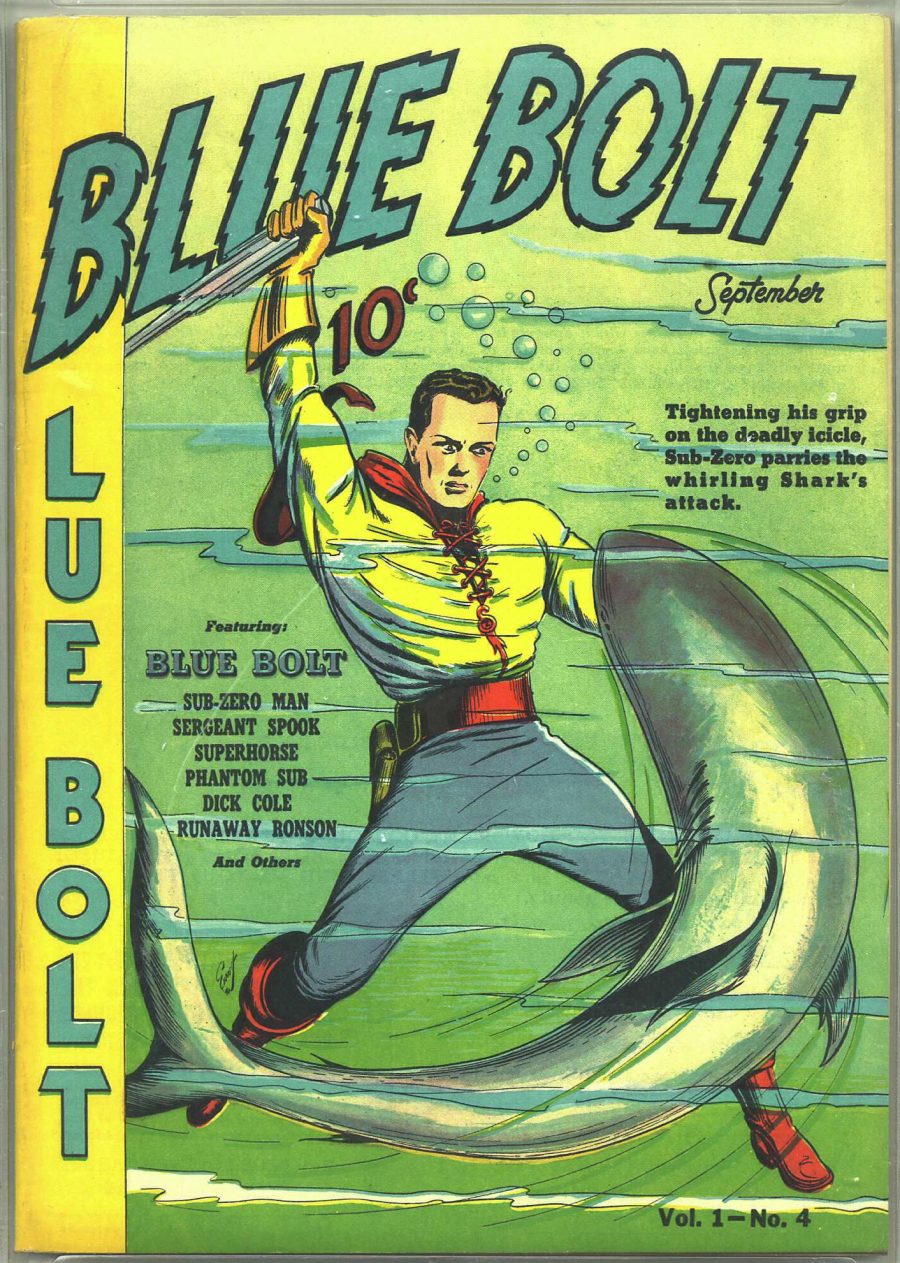
Down­load Over 22,000 Gold­en & Sil­ver Age Com­ic Books from the Com­ic Book Plus Archive

Why Mar­vel and Oth­er Hol­ly­wood Films Have Such Bland Music: Every Frame a Paint­ing Explains the Per­ils of the “Temp Score”

How to Draw in the Style of Japan­ese Man­ga: A Series of Free & Wild­ly Pop­u­lar Video Tuto­ri­als from Artist Mark Cril­ley

Josh Jones is a writer and musi­cian based in Durham, NC. Fol­low him at @jdmagness

Where Are They Now? An Animated Mockumentary Reveals What Happened to Your Favorite 1980s Cartoon Characters After Their Heyday

It’s a cau­tion­ary tale about what hap­pens when the world you pre­pared your­self for changes and leaves you behind. Cold­ly, and some­times with­out warn­ing.

Above, watch Steve Cutts’ 2014 ani­mat­ed mock­u­men­tary, “Where Are They Now?”. Star­ring Roger and Jes­si­ca Rab­bit, and fea­tur­ing cameos by Garfield and The Smurfs, the short film revis­its car­toon char­ac­ters who had it all in the 1980s. Then hit the skids in the ear­ly 90s. Hard. “We had done our jobs,” says an aged Jes­si­ca Rab­bit. “Now we were for­got­ten about. Obso­lete.” It’s a bleak pic­ture that Cutts paints. But, it’s not all bad. He-Man became a wealthy lin­gerie design­er. We could all use a well-thought-out Plan B.

Relat­ed Con­tent:

A Look Inside Mel Blanc’s Throat as He Per­forms the Voic­es of Bugs Bun­ny and Oth­er Car­toon Leg­ends

Chuck Jones’ 9 Rules For Draw­ing Road Run­ner Car­toons, or How to Cre­ate a Min­i­mal­ist Mas­ter­piece

The Long Game of Cre­ativ­i­ty: If You Haven’t Cre­at­ed a Mas­ter­piece at 30, You’re Not a Fail­ure

« Go BackMore in this category... »
Quantcast