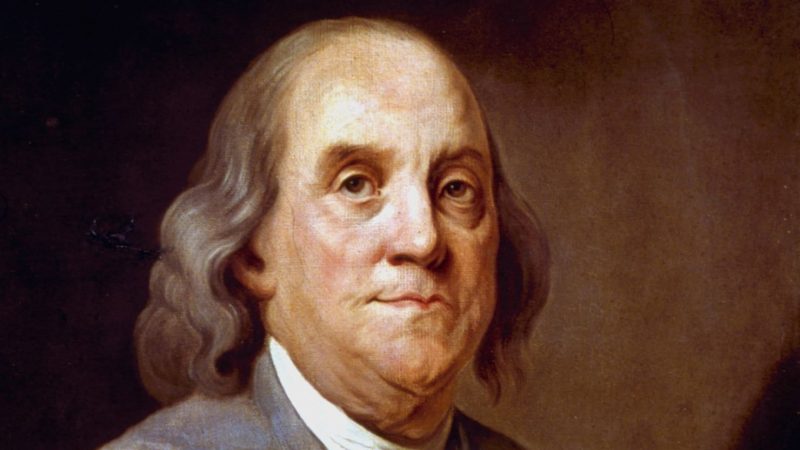
Let me quickly pass along some good news from the Library of Congress: “The papers of American scientist, statesman and diplomat Benjamin Franklin have been digitized and are now available online for the first time.… The Franklin papers consist of approximately 8,000 items mostly dating from the 1770s and 1780s. These include the petition that the First Continental Congress sent to Franklin, then a colonial diplomat in London, to deliver to King George III; letterbooks Franklin kept as he negotiated the Treaty of Paris that ended the Revolutionary War; drafts of the treaty; notes documenting his scientific observations, and correspondence with fellow scientists.” Find the digitized collection of papers here.
If you would like to support the mission of Open Culture, consider making a donation to our site. It’s hard to rely 100% on ads, and your contributions will help us continue providing the best free cultural and educational materials to learners everywhere. You can contribute through PayPal, Patreon, and Venmo (@openculture). Thanks!
What cities have, over the past century, defined in our imaginations the very concept of the city? Obvious choices include New York and London, and here on Open Culture we’ve featured historic street-level footage of both (New York in 1911, London between 1890 and 1920) that vividly reveals how, even over a hundred years ago, they’d already matured as commercially, technologically, and demographically impressive metropolises. At the turn of the 20th century, the 6.5 million-strong London ranked as the most populous city on Earth, and New York had overtaken it within a few decades. But by the mid-1960s, a new contender had suddenly risen to the top spot: Tokyo.
Historically speaking, of course, the word “new” doesn’t quite apply to the Japanese capital, since as a settled area it goes back to the third millennium BC. But Tokyo didn’t become the capital, effectively, until 1869 (not that even today’s denizens of Kyoto, the country’s previous capital, seem ever to have ceded the distinction in their own minds), around the same time that the previously closed-off island nation opened up to the rest of the world. Provided by Amsterdam’s EYE Filmmuseum, the footage at the top of the post dates from less than half a century thereafter and conveys something of what it must have felt like to live in not just a country zealously engaged in the project of modernization, but in the very center of that project.
These clips were shot on the streets of Tokyo in 1913 and 1915, just after the death of Emperor Meiji, who since 1868 had presided over the so-called Meiji Restoration. That period saw not just a re-consolidation of power under the Emperor, but an assimilation of all things Western — or at least an assimilation of all things Western that official Japan saw as advantageous in its mission to “catch up” with the existing world powers. For the citizens of Tokyo, these, most benignly, included urban parks: “Japanese enjoy to the fullest the pleasures afforded by the numerous parks of the Empire,” says one of the film’s title cards. “Uyeno Park, Tokio, is a very popular place, especially on Sunday afternoons.” But then, going by what we see in the footage, every place in Tokyo seems popular.
On the brink of thoroughgoing urbanization, the cityscape includes shrines, woodblock prints, signs and banners filled to bursting with text (and presumably color), and hand-painted advertisements for the then-novelty of the motion picture. The Tokyoites inhabiting it wear traditional kimono as well as the occasional Western suit and hat. Young men pull rickshaws and ride bicycles (those latter having grown much more numerous since). Peripatetic merchants sell their wares from enormous wooden frames strapped to their backs. Countless children, both in and out of school uniform, stare curiously at the camera. None, surely, could imagine the destruction soon to come with the 1923 Kanto Earthquake, let alone the firebombing of World War II — nor the astonishingly fast development thereafter that would, by the time of the reborn city’s 1964 Olympic Games, make it the largest in the world.
Based in Seoul, Colin Marshall writes and broadcasts on cities and culture. His projects include the book The Stateless City: a Walk through 21st-Century Los Angeles and the video series The City in Cinema. Follow him on Twitter at @colinmarshall or on Facebook.
Other than one or two of the world’s supercentenarians, nobody remembers New York in 1911. Plenty of living historians and enthusiasts of the city have paid intensive attention to that booming time period when the city’s population fast approached five million, but none experienced it first-hand. They, and we, can get no closer to it than watching the footage above, originally shot by a Swedish documentary team which set out to capture the most celebrated places in the world at the time, a list also including Niagara Falls, Paris, Monte Carlo, and Venice. The practically immaculate condition of the film highlights both the similarities and differences between the street life of New York over a century ago and of New York today.
Take a look at the tailored or tailored-looking clothing on nearly everyone, even the one-legged man making his deliberate way past the Chinese grocery. Then as now, most New Yorkers got around on foot, and since the city’s first subway line had opened just seven years before, the dominant public transit options remained streetcars and elevated trains.
In the realm of private vehicles, horse-drawn carriages had only just begun to give way to motorcars. (Since 1911 was still the age of silent film, the ambient sound of all this was added later.) “Take note of the surprising and remarkably timeless expression of boredom exhibited by a young girl filmed as she was chauffeured along Broadway in the front seat of a convertible limousine,” says the Museum of Modern Art’s notes.
MoMA, which exhibited the footage last year, also points out familiar landmarks: “Opening and closing with shots of the Statue of Liberty, the film also includes New York Harbor; Battery Park and the John Ericsson statue; the elevated railways at Bowery and Worth Streets; Broadway sights like Grace Church and Mark Cross; the Flatiron Building on Fifth Avenue; and Madison Avenue.” Any modern New Yorker halfway interested in the city will know all those places, and even if the city has changed in countless other ways, they’ll sense the very same characteristic vitality in these clips that they feel there today. Will New Yorkers of the future have the same reaction, to, say, the Japanese high-definition video demo footage shot on those very same streets in the 1990s? It’ll take about eighty years to find out. We probably won’t be here by then, but New York certainly will.
Based in Seoul, Colin Marshall writes and broadcasts on cities and culture. His projects include the book The Stateless City: a Walk through 21st-Century Los Angeles and the video series The City in Cinema. Follow him on Twitter at @colinmarshall or on Facebook.
While the value of slaves in the U.S. from the colonial period to the Civil War rose and fell like other market goods, for the most part, enslaved people constituted the most valuable kind of property, typically worth even more than land and other highly valued resources. In one study, three University of Kansas historians estimate that during most of the 18th century in South Carolina, slaves “made up close to half of the personal wealth recorded in probate inventory in most decades.” By the 19th century, slaveholders had begun taking out insurance policies on their slaves as Rachel L. Swarns documents at The New York Times.
“Alive,” Swarns writes, “slaves were among a white man’s most prized assets. Dead, they were considered virtually worthless…. By 1847, insurance policies on slaves accounted for a third of the policies in a firm”—New York Life—“that would become one of the nation’s Fortune 100 companies.” Given the huge economic incentives for perpetuating the system of chattel slavery, the fact that people did not want to be held in forced labor for life—and to condemn their children and grandchildren to the same—presented slaveholders with a serious problem.
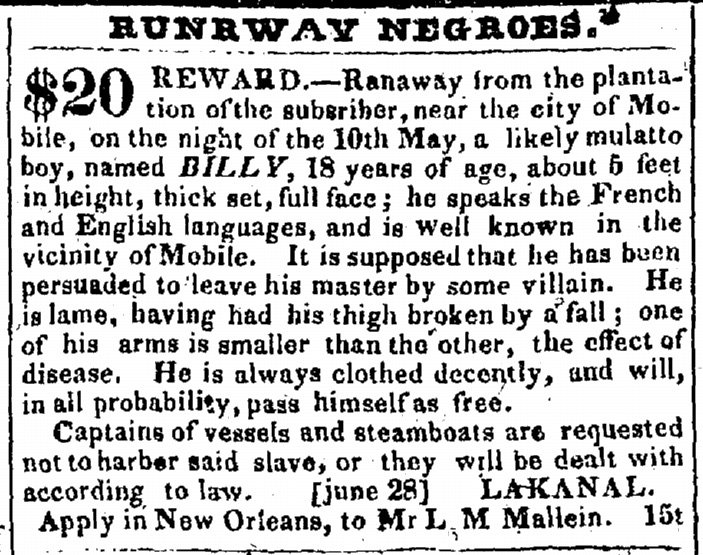
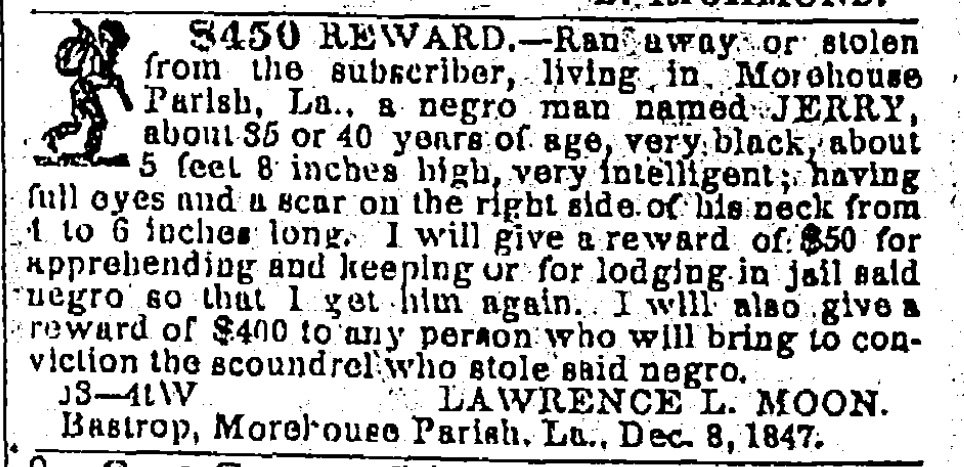
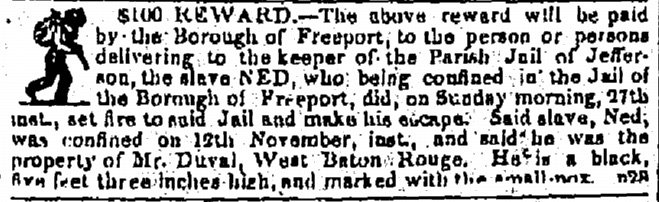
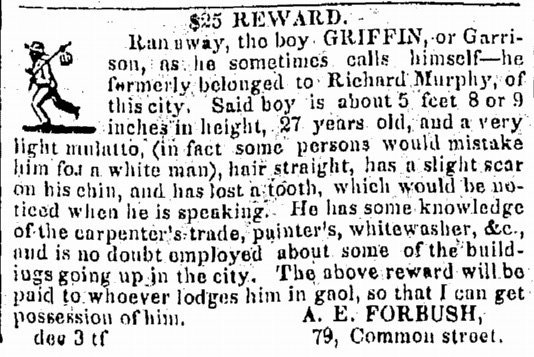
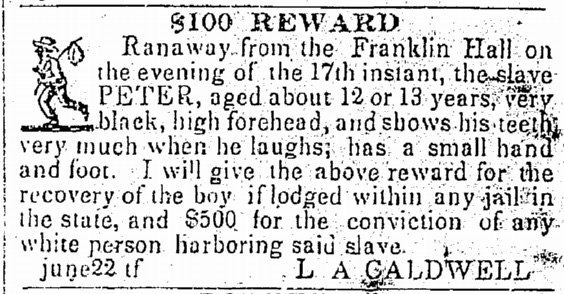
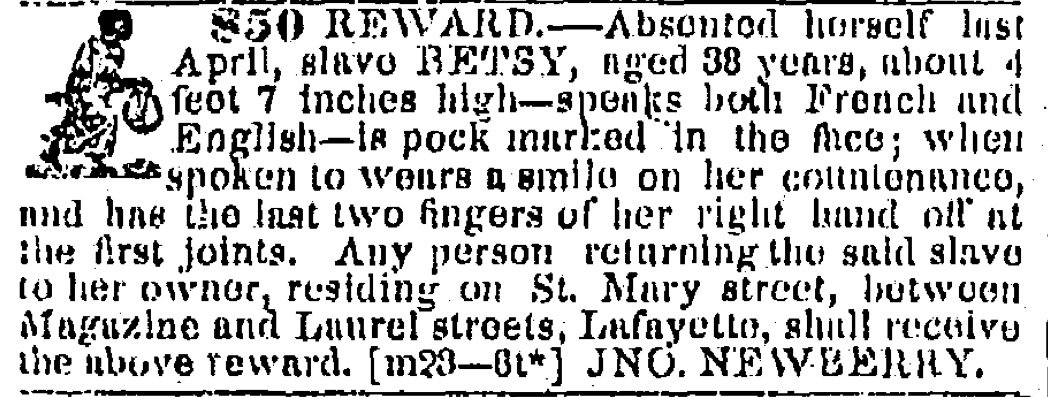
For over 250 years, countless numbers of enslaved people attempted to escape to freedom. And thousands of slaveowners ran newspaper ads to try and recover their investments. These ads are likely familiar from textbooks and historical articles on slavery; they have long been used singly to illustrate a point, “but they have never been systematically collected,” notes Cornell University’s Freedom on the Move project, which intends to “compile all North American slave runaway ads and make them available for statistical, geographical, textual, and other forms of analysis.” While the database is still in progress, examples of the ads are being shared on the @fotmproject Twitter account.
The ongoing project presents a tremendous opportunity for historical scholars of the period. “If we could collect and collate all of these ads,” the project’s researchers write, “we would create what might be the single richest source of data possible for understanding the lives of the approximately eight million people who were enslaved in the U.S.” It is estimated that 100,000 or more such ads survive “from the colonial and pre-Civil War U.S.,” though they might represent a fraction of those published, and of the number of attempted, and successful, escapes.
Many of the ads casually reveal evidence of brutal treatment, listing scars and brands, missing fingers, speech impediments, and halting walks. They show many of the escaped slaves to have been skilled in several trades and speak multiple languages. A large number of the escapees are children. As University of New Orleans historian Mary Niall Mitchell tells Hyperallergic, “ironically, in trying to retrieve their property—the people they claimed as things—enslavers left us mounds of evidence about the humanity of the people they bought and sold.” (Mitchell is one of the projects three lead researchers, along with University of Alabama’s Joshua Rothman and Cornell’s Edward Baptist, author of The Half Has Never Been Told.)
The slaveholders who ran ads also left evidence of what they made themselves believe in order to hold people as property. One ad describes a runaway slave named Billy as having been “persuaded to leave his master by some villain,” as though Billy must surely have been contented with his lot. In the overwhelming majority of cases, we will never know with certainty what most people thought about being enslaved. Yet the fact that hundreds of thousands attempted to escape at great personal risk, often without any help—to such a degree that extreme, inflammatory measures like the Fugitive Slave Act were eventually deemed necessary—should offer sufficient testament, if the relatively few written narratives aren’t enough. “For some” of the people in the ads, says Mitchell, “this may be the only place something about them survives, in any detail, in the written record,”
Freedom on the Move, writes Hyperallergic’s Allison Meier, “expands on the history of resistance against slavery in the 18th and 19th centuries.” It offers a compelling picture of two intolerably irresolvable views—those of slaveholders who viewed enslaved people as proprietary investments; and those of the enslaved who refused to be reduced to objects for others’ pleasure and profit.
Radio has always been a fairly transportive medium.
During the Great Depression, entire families clustered round the electronic hearth to enjoy a variety of entertainments, including live remote broadcasts from the glamorous nightclubs and hotels where celebrity bandleaders like Count Basie and Duke Ellington held sway.
1950s teens’ transistors took them to a head space less square than the white bread suburbs their parents inhabited.
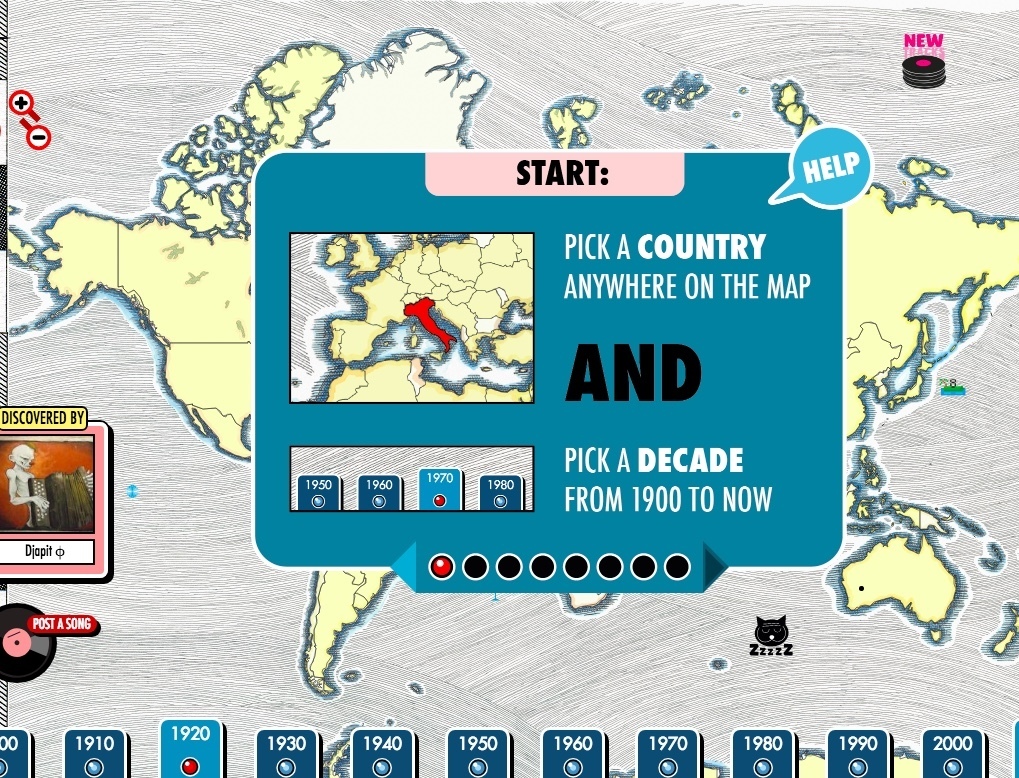
The Radiooooo.comsite (there’s also a version available for the iPhone and Android) allows modern listeners to experience a bit of that magical time traveling sensation, via an interactive map that allows you to tune in to specific countries and decades.
The content here is user-generated. Register for a free account, and you too can begin sharing eccentric faves.
Find a user whose tastes mirror your own? Click their profile for a stat card of tracks they’ve favorited and uploaded, as well as any other sundry details they may feel like sharing, such as country of origin and age.
There are fun awards to be earned here, with the most sought after pelts going to the first to upload a song to an empty country, or upload a track from 1910–1920. (Cameroon, 1940 … go!)
As with an actual radio, you are not selecting the actual playlist, though you can nudge the needle a bit by toggling to your desired mood—slow, fast and/or weird.
And you need not limit yourself to a single destination. Embark on a strange musical trip by using Radiooooo’s taxi function to carry you to multiple countries and decades. (I closed my eyes and wound up shuttling between Ukraine and Mauritania in the 60s and 80s.)
Dotted around the map are island icons, where the ever-growing collection is sorted according to themes like Hawaii, Neverland (“for children big and small”), and 8‑Bit video game music. Le Club, floating midway between Europe and North America, contains brand new releases from contemporary labels.
The Now Playing window includes an option to buy, when possible, as well as the artist’s name and album artwork. Share, like, get your groove on…
And stay tuned for Radiooooo’s latest baby, Le Globe, an interactive 3‑D map of the world and a decade selector dial mounted on a “beautiful connected object.”
The boundaries are extremely permeable here.
Have a browse through Radiooooo’s Instagram feed for a feast of cover art or head to France for one of their in-person listening parties. (There’s one next week in the secret listening room of Paris’ Grand Hotel Amour.)
Readers, if your explorations unearth an exceptional track, please share it in the comments, below.
Download the Radioooo app for Mac or Android here, or listen on the website. (You may need to fool around with various browsers to find the one that works best for you.)
Ayun Halliday is an author, illustrator, theater maker and Chief Primatologist of the East Village Inky zine. Her radio dial is set to Romania 1910 in anticipation of the third installment of her literary-themed variety show, Necromancers of the Public Domain , Monday, April 23 at the New York Society Library. Follow her @AyunHalliday.
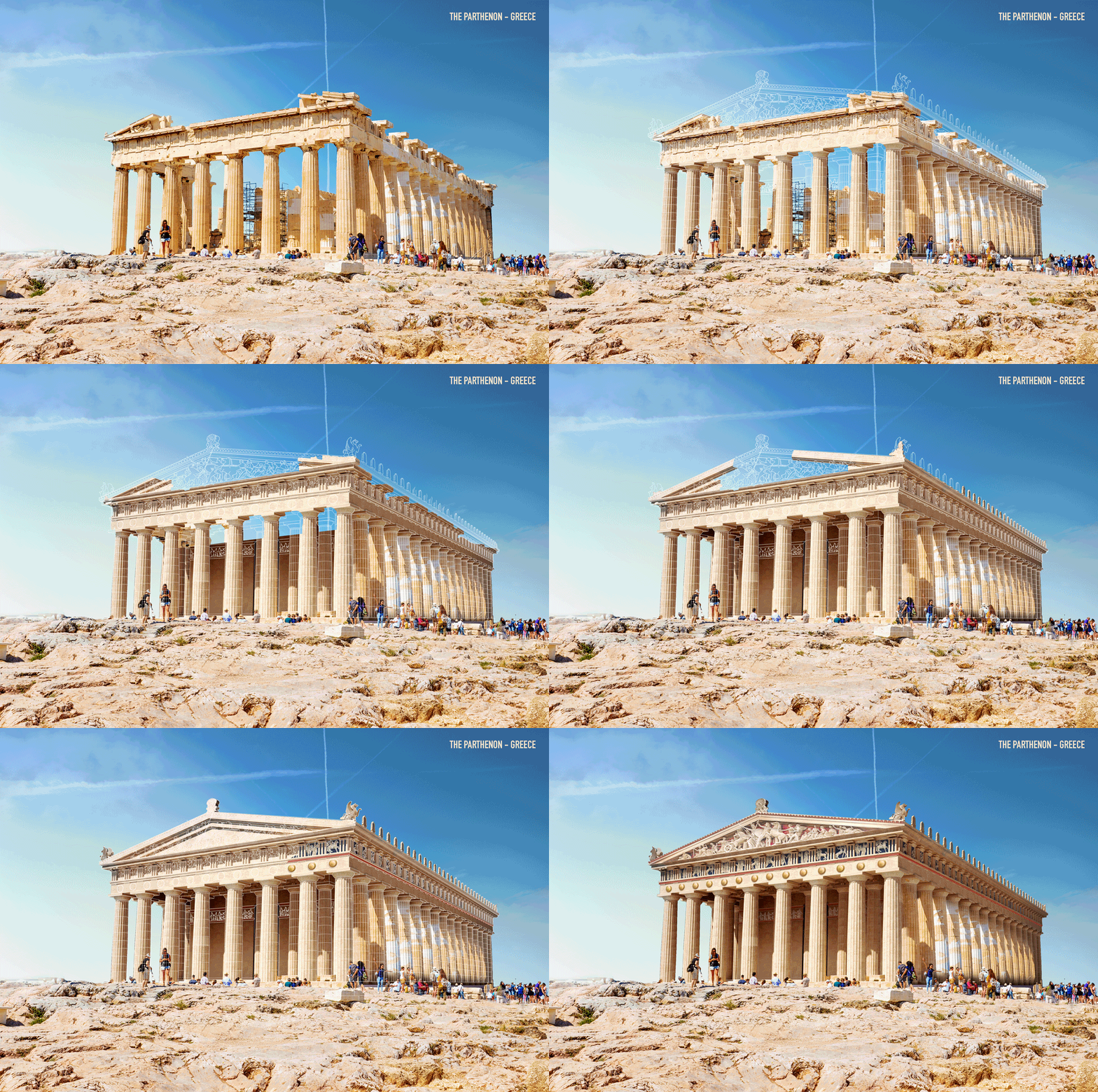
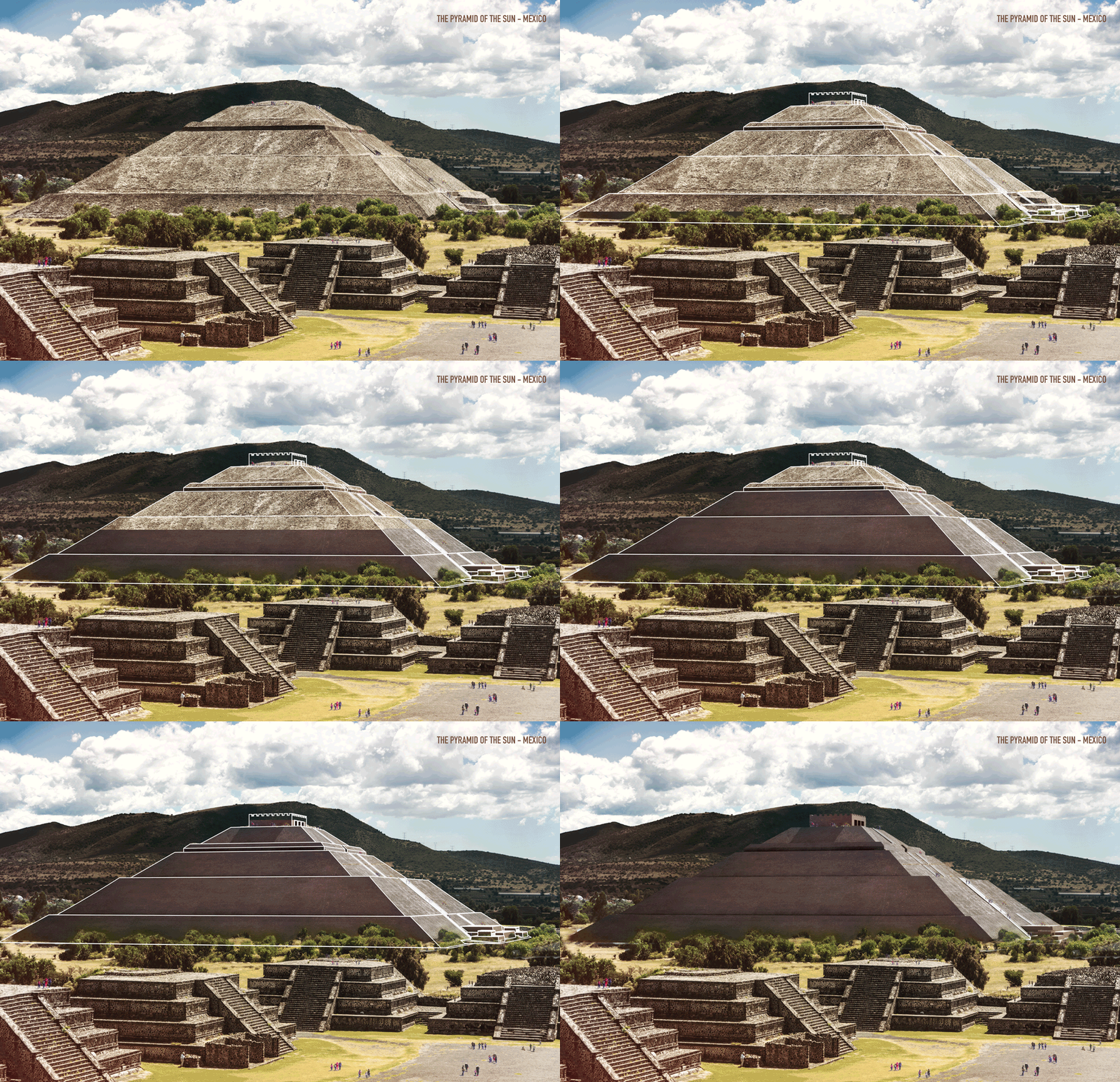
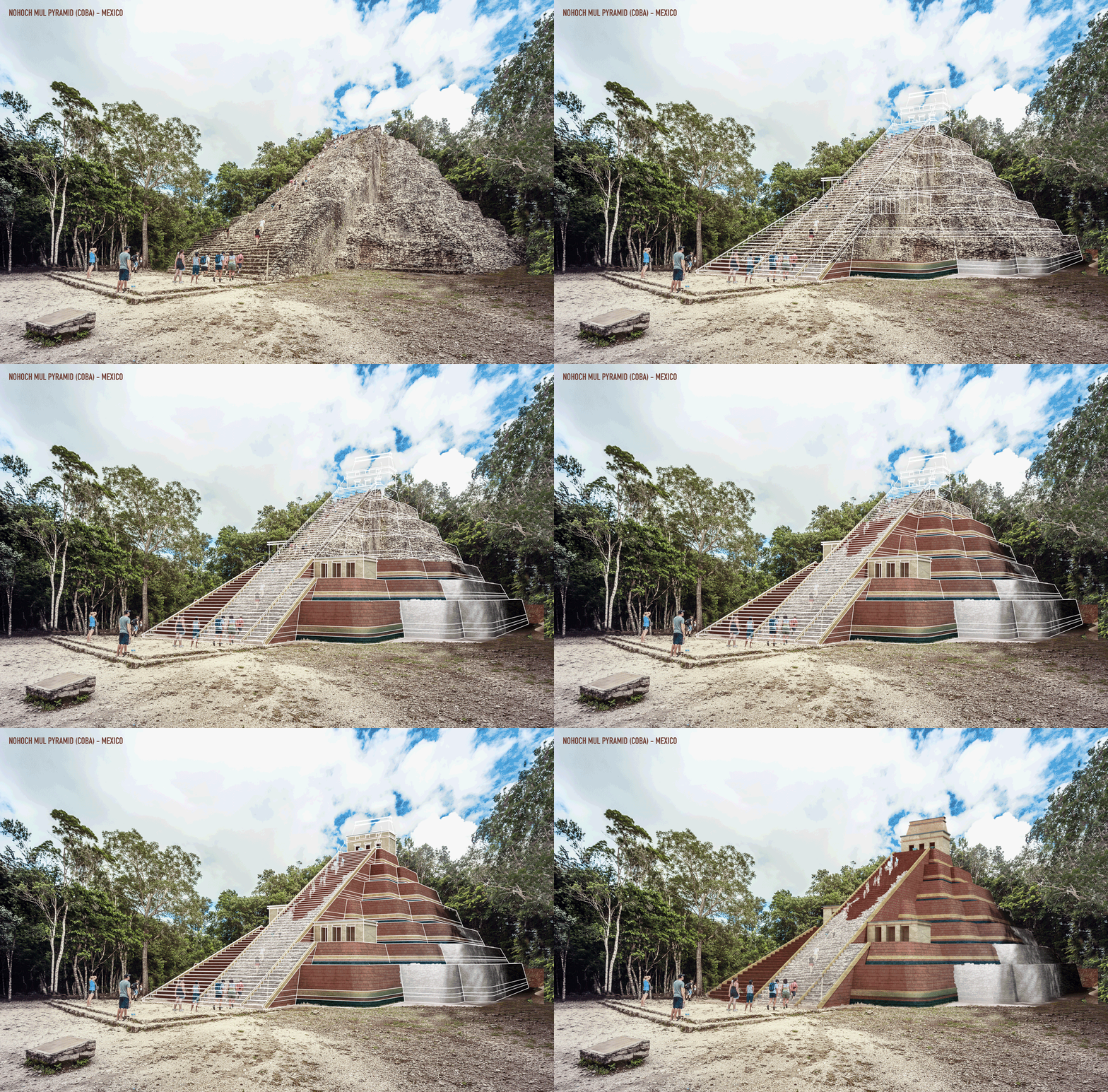
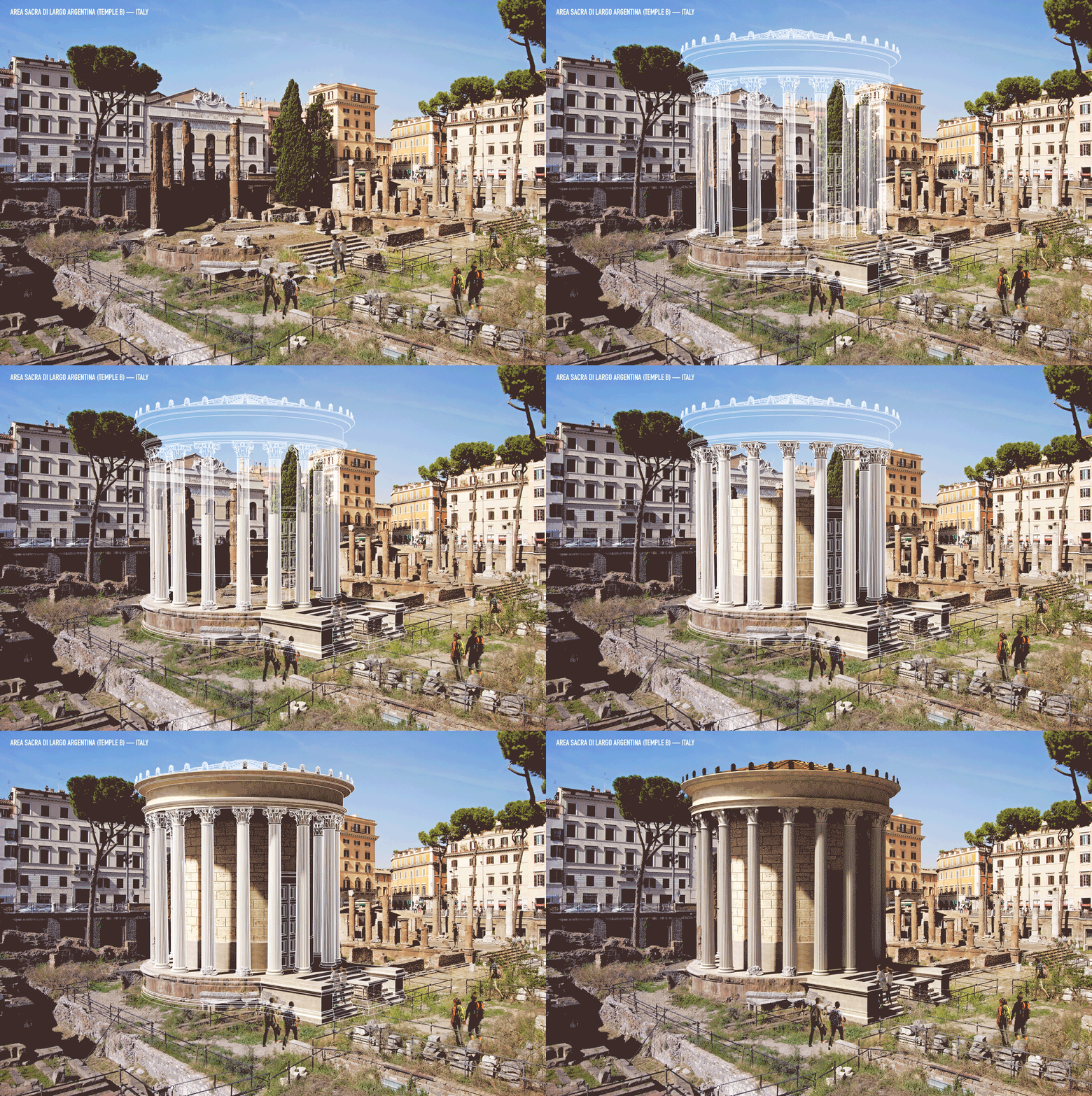
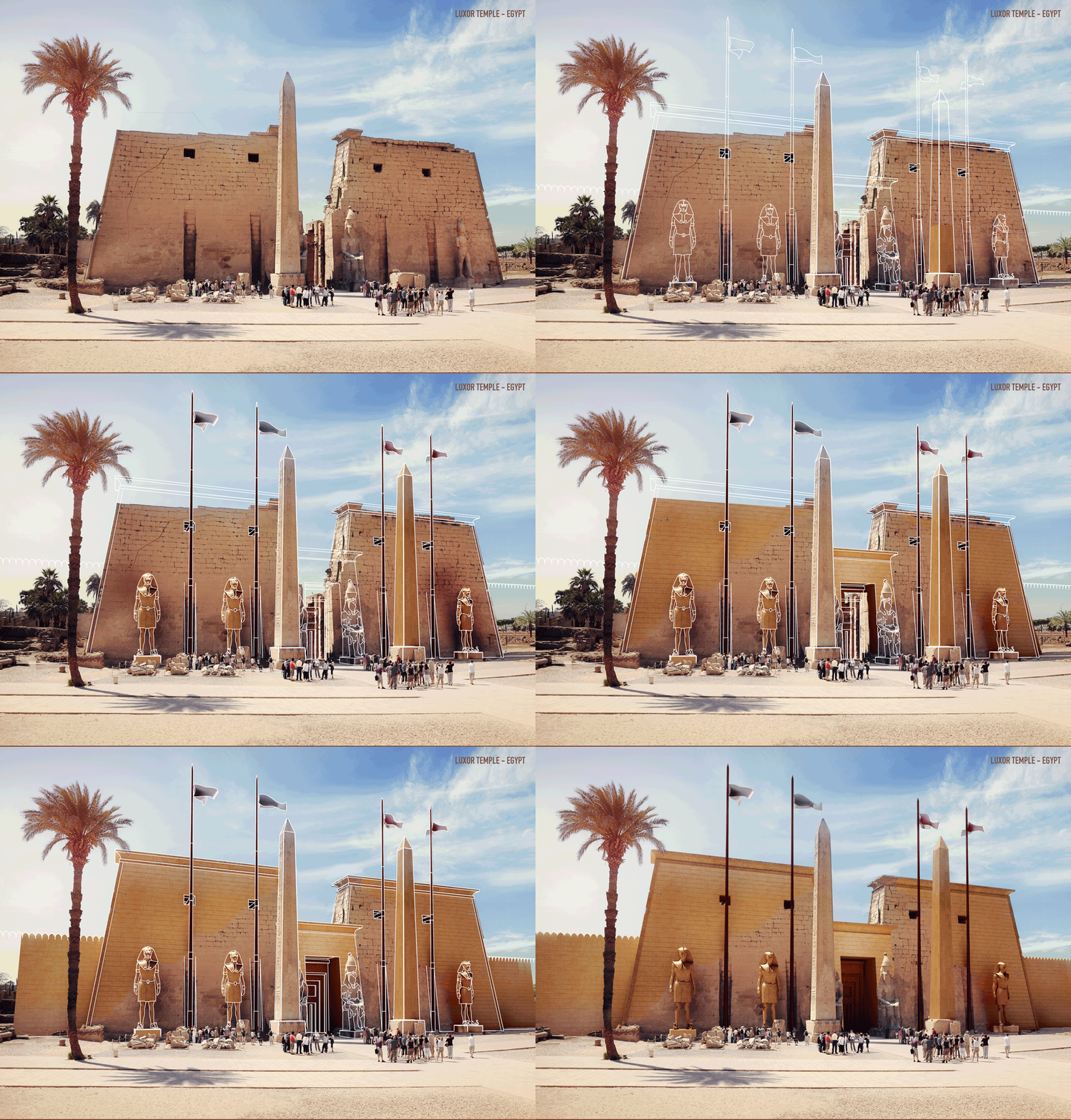
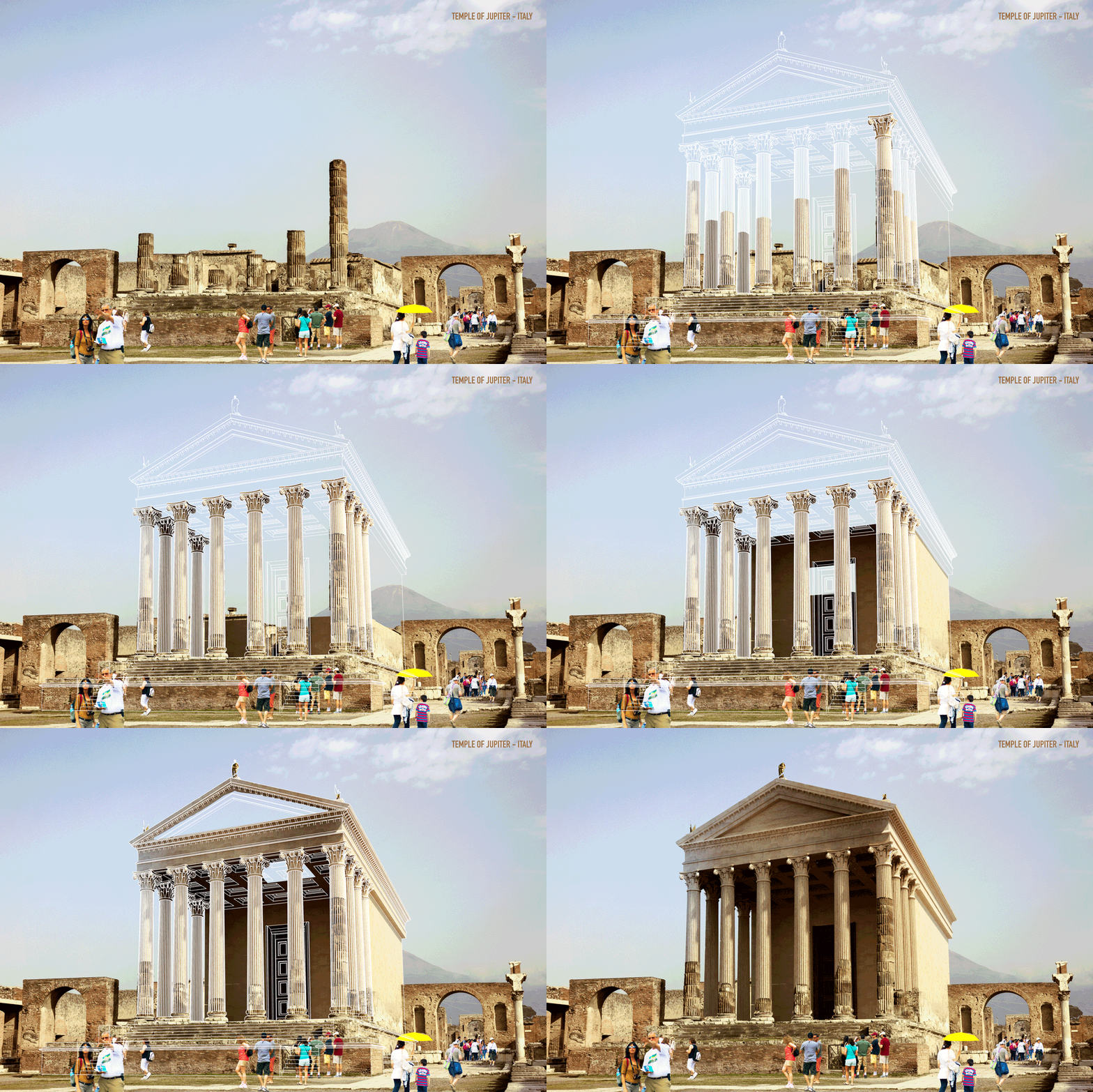
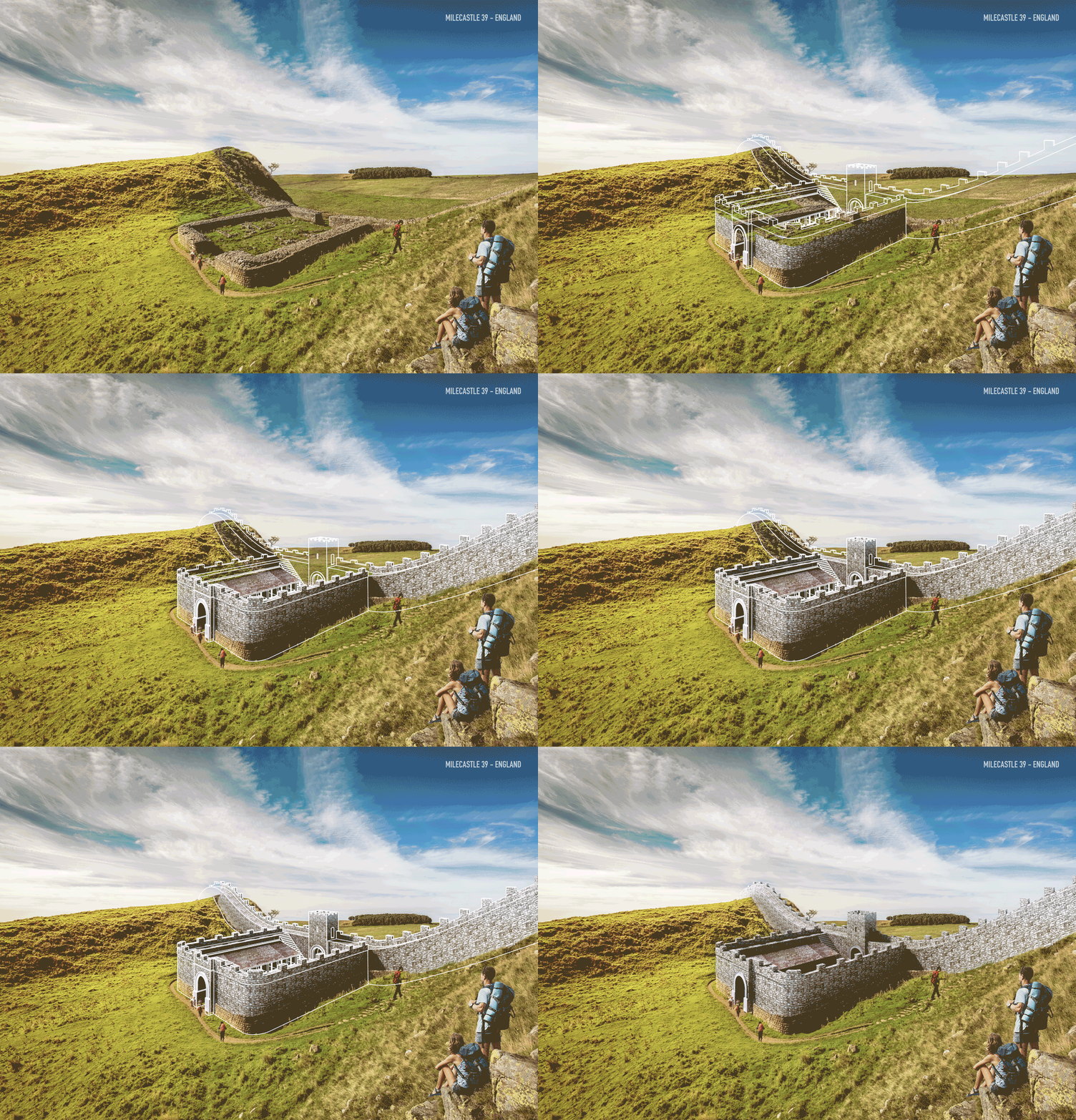
The “seven wonders of the world”: all of us have all heard the phrase so many times, but can we name the specific wonders to which it refers? Though the list took its final form in the Renaissance, it originates all the way back with the ancient Greeks who wanted a sense of the most majestic man-made landmarks that lay within their territory. These were eventually narrowed down to the Great Pyramid of Giza, the Hanging Gardens of Babylon (whether they really existed or not), the Temple of Artemis at Ephesus, the Statue of Zeus at Olympia, the Mausoleum at Halicarnassus, the Colossus of Rhodes, and the Lighthouse of Alexandria.
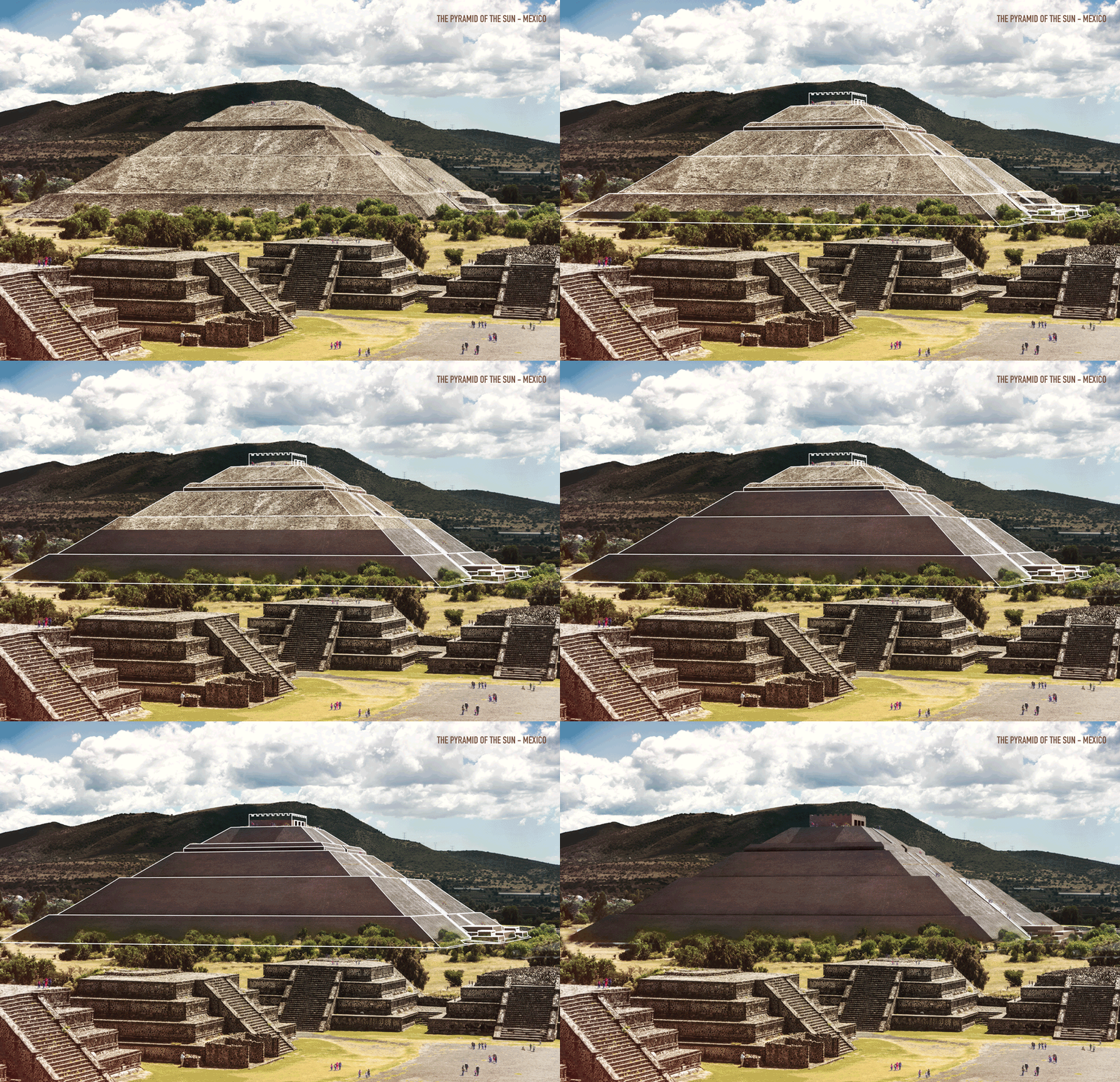
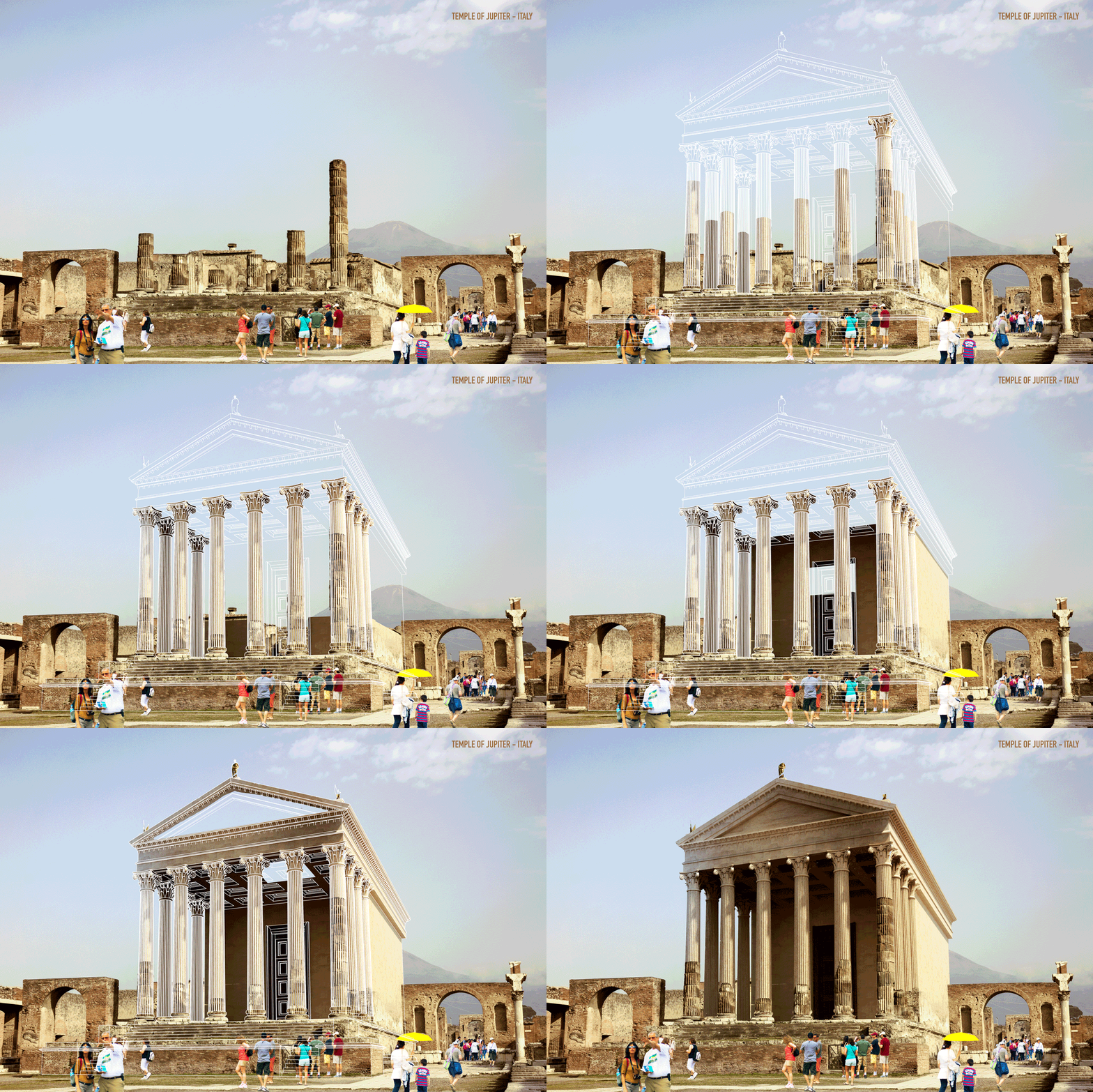
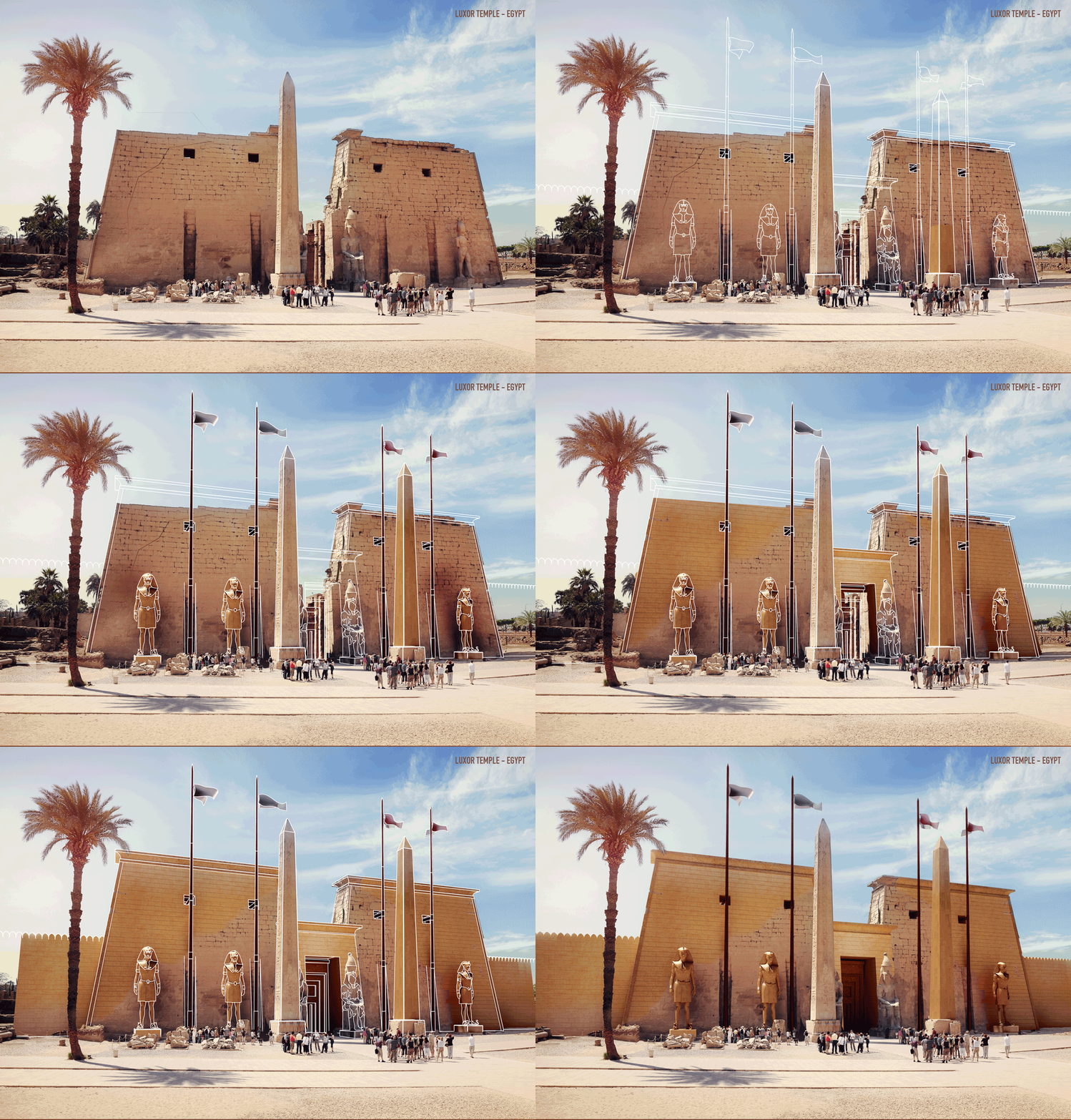
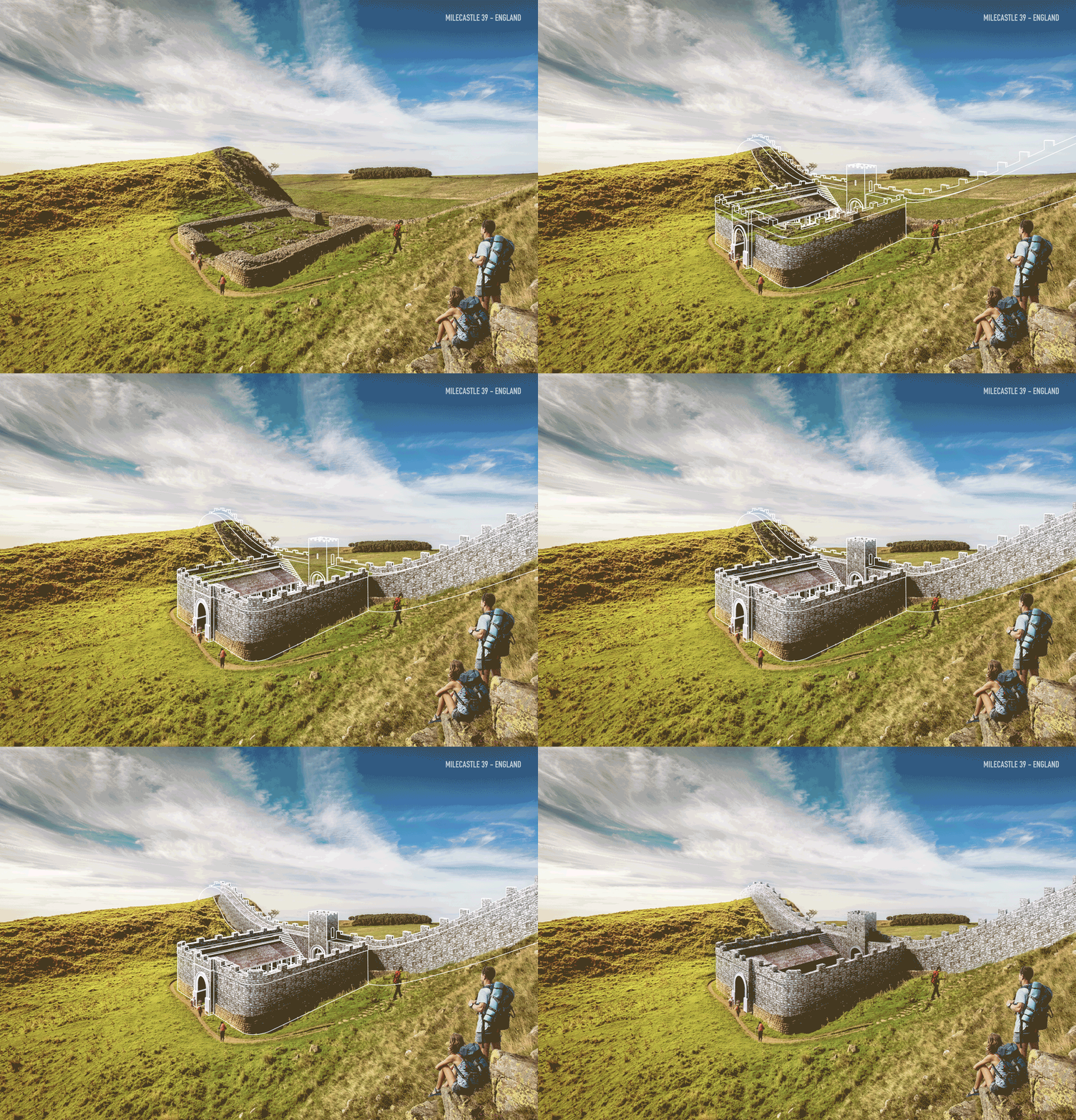
The GIFS, which trace the lines of the original structures over the ruins and then fill them in photorealistic detail, are the work of husband-wife team Maja Wrońska and Przemek Sobiecki.
“Despite their ‘ruinous’ condition, these structures have influenced many of history’s great architects, and continue to be an inspiration today,” writes Designboom’s Rob Reuland. “These sites have been depleted by time and by conquest, parts are reused, others just fall away with neglect. Seeing them restored is a bit like hopping in the Delorean and cranking the flux capacitor, and reversing their slow decay.” And as a commenter adds below, “the next thing would be this in combination with AR-glasses while visiting the site” — the ongoing collaboration, in other words, of the wonders of the ancient world and the wonders of the modern one. See all seven of the animated GIFs here.
Based in Seoul, Colin Marshall writes and broadcasts on cities and culture. His projects include the book The Stateless City: a Walk through 21st-Century Los Angeles and the video series The City in Cinema. Follow him on Twitter at @colinmarshall or on Facebook.
We’ve all seen that famous New Yorker cover satirizing a New Yorker’s distorted, self-centered view of the world: Manhattan occupies a good half of the image, relegating the rest of America (and indeed the world) to the status of outer-outer boroughs. What Saul Steinberg did with a drawing in 1976, pioneering Roman geographer Pomponius Mela had done, in a much less comedic but much more accurate way, with text nineteen centuries before. Writing from his perspective under the reign of the Emperor Gaius, Claudius, or both, Mela created nothing less than a worldview, which tells us now how the ancient Romans conceived of the world around them, its characteristics and its relationship to the territory of the mightiest empire going.
“Pomponius Mela is a puzzle, and so is his one known work, The Chorography,” writes Frank E. Romer in Pomponius Mela’s Description of the World. In that series of three books, which seems not to have contained any maps itself, Mela divides the Earth into two rough “hemispheres” and five zones, two of them cold, one of them hot, and two in between.
Pulling together what in his day constituted a wealth of geographical knowledge from a variety of previous sources, he painted a word-picture of the world more accurate, on the whole, than any written down before. Scholars since have also praised Mela’s clear, accessible prose style — clear and accessible, in any case, for a first-century text composed in Latin.
Various maps, including the 1898 reproduction pictured at the top of the post (see it in a larger format here), have attempted to visualize Mela’s worldview and make it legible at a glance. You can see more versions at Cartographic-images.net, and theDavid Rumsey Map Collection shows the world according to Mela placed alongside the world according to Ptolemy and the world according to Dionysius Periegetes. Though Mela showed greater insight into the integration of the various parts of the world known to the ancient Romans than did his predecessors, he also, of course, had his blind spots and rough areas, including the assumption that human beings could only live in the two most temperate of the climatic zones he defined. Even so, the maps derived from his work provide an informative glimpse of how, exactly, Romans saw their place in the world — or rather how, exactly, they saw their place in the center of it.
Based in Seoul, Colin Marshall writes and broadcasts on cities and culture. His projects include the book The Stateless City: a Walk through 21st-Century Los Angeles and the video series The City in Cinema. Follow him on Twitter at @colinmarshall or on Facebook.
Here’s some very rare footage of the great Mexican painters Diego Rivera and Frida Kahlo paying a visit to exiled Soviet revolutionary Leon Trotsky and his wife, Natalia Sedova, in Coyocoán, Mexico, in 1938.
The Trotskys had arrived the year before, after Rivera petitioned the government of President Lázaro Cárdenas to grant the controversial Marxist leader and theorist sanctuary in Mexico. When the Trotskys arrived on a Norwegian oil tanker at the port city of Tampico in January of 1937, Rivera was not well, but Kahlo boarded the ship to welcome the Trotskys and accompanied them on an armored train to Mexico City. She invited the Trotskys to stay at her family home, La Casa Azul (the Blue House) in Coyocoán, now a section of Mexico City. By the time this footage was taken by a visiting American named Ivan Heisler, Trotsky and Kahlo had either had, or were about to have, a brief affair, and the friendship between the two couples would soon fall apart. In early 1939 Trotsky moved to another house in the same neighborhood, where he was assassinated in August of 1940.
If you would like to support the mission of Open Culture, consider making a donation to our site. It’s hard to rely 100% on ads, and your contributions will help us continue providing the best free cultural and educational materials to learners everywhere. You can contribute through PayPal, Patreon, and Venmo (@openculture). Thanks!
We're hoping to rely on loyal readers, rather than erratic ads. Please click the Donate button and support Open Culture. You can use Paypal, Venmo, Patreon, even Crypto! We thank you!
Open Culture scours the web for the best educational media. We find the free courses and audio books you need, the language lessons & educational videos you want, and plenty of enlightenment in between.