Watch Free Plays from Shakespeare’s Globe Theatre: Romeo & Juliet, Macbeth & More

As depress­ing arti­cles about the upcom­ing Sum­mer of COVID-19 begin to pro­lif­er­ate, our hopes for beach days, con­cert series, and sum­mer camp begin to dim.

Here in New York City, the Pub­lic Theater’s announce­ment that it is can­celling the upcom­ing sea­son of its famed Shake­speare in the Park was met with under­stand­able sad­ness.

You don’t have to like Shake­speare to enjoy the rit­u­al of enter­ing Cen­tral Park short­ly after dawn, pre­pared to sit online for sev­er­al hours await­ing noon’s free tick­et dis­tri­b­u­tion, then return­ing to the Dela­corte lat­er that night with snacks and sweater and wine.

Per­form­ing a quick Inter­net search to brush up on the plot can enhance the expe­ri­ence, but—and I saw this as some­one whose degree includ­ed a met­ric heinieload of The Bard—it can be equal­ly sat­is­fy­ing to spend the final acts enjoy­ing an impromp­tu, al fres­co nap.

Bonus points if a rac­coon runs across the stage at some point.

Alas all this must be denied us in the sum­mer of 2020, but it’s still with­in our pow­er to repli­cate that sum­mer feel­ing in advance of the equinox, using the past pro­duc­tions that London’s Globe The­atre is screen­ing on its YouTube chan­nel as our start­ing place.

First up is Romeo & Juli­et from 2009, star­ring Ellie Kendrick and Adetomi­wa Edun, though accord­ing to the Inde­pen­dent’s Michael Coveney, the show belongs to Pen­ny Lay­den as the Nurse:

Far removed from the fuss­ing tra­di­tion of com­ic gar­ruli­ty and the Patri­cia Rout­ledge fac­tor, Lay­den plays her as a scrubbed, mid­dle-aged, sen­si­ble woman car­ry­ing a his­to­ry of sad­ness. The bawdy assault on her by Philip Cum­bus’s melan­choly Mer­cu­tio is both shock­ing and plau­si­ble, and she retains her qui­et dig­ni­ty while at the same time mourn­ing its sac­ri­fice.

Back to New York City…

Pri­or to start­ing your screen­ing, you’ll want to approx­i­mate a seat at the Dela­corte (which, like the Globe, is authen­ti­cal­ly cir­cu­lar in shape). I rec­om­mend a met­al fold­ing chair.

Sprin­kle a table­spoon or so of water onto the seat if you want to pre­tend it rained all after­noon lead­ing up to the per­for­mance.

Def­i­nite­ly have some wine to pour into a plas­tic cup.

Slather your­self in insect repel­lent.

Silence your cell phone.

If your housemate’s cell phone goes off mid-per­for­mance, feel free to tsk and sssh and roll your eyes. Hon­est­ly, how hard is it to com­ply with the famil­iar instruc­tions of the house manager’s speech?

At inter­mis­sion, stand out­side your own bath­room door for at least 15 min­utes before let­ting your­self into a “stall” to use the facil­i­ties.

Doze all you want to…. arrange for your house­mate to tsk and sssh at you from an appro­pri­ate dis­tance, should your snor­ing become audi­ble.

You have until Sun­day, May 3 to stum­ble sleep­i­ly away from the screen, and pre­tend you’re wan­der­ing to the sub­way with 1799 oth­er New York­ers.

Then make plans to wake up at 5:30 and sit on the floor with a ther­mos of cof­fee for sev­er­al hours, hop­ing that they won’t run out of tick­ets for The Two Noble Kins­men before you make it to the top of the line.

(Spoil­er alert: they won’t.)

Oth­ers in the Globe’s free series:

Mac­Beth, May 11 until UK schools reopen

The Winter’s Tale (2018), May 18 — May 31

The Mer­ry Wives of Wind­sor (2019), June 1 — June 14

A Mid­sum­mer Night’s Dream (2013), June 15 — 28

Click­ing the red “dis­cov­er more” lozenge beneath each show’s pho­to on the Globe Watch’s land­ing page will lead you to a wealth of sup­port­ing mate­ri­als, from pre-show chats with the Globe’s Post-Doc­tor­al Research Fel­low Will Tosh to pho­tos, arti­cles, and a stu­dent chal­lenge specif­i­cal­ly tai­lored to the times we find our­selves liv­ing through now.

Sub­scribe to the Globe’s YouTube chan­nel to receive reminders.

Donate to the Globe here.

Amer­i­cans can make a tax-deductible dona­tion to The Pub­lic The­ater here.

via My Mod­ern Met

Relat­ed Con­tent:

Take a Vir­tu­al Tour of Shakespeare’s Globe The­atre in Lon­don

A 68 Hour Playlist of Shakespeare’s Plays Being Per­formed by Great Actors: Giel­gud, McK­ellen & More

A Free Shake­speare Col­or­ing Book: While Away the Hours Col­or­ing in Illus­tra­tions of 35 Clas­sic Plays

Ayun Hal­l­i­day is an author, illus­tra­tor, the­ater mak­er and Chief Pri­ma­tol­o­gist of the East Vil­lage Inky zine.  Depend­ing on how long this thing goes on, she may look into giv­ing Pen­ny Lay­den a run for the mon­ey by live-stream­ing her solo show, NURSE. Fol­low her @AyunHalliday.

Dyson Creates 44 Free Engineering & Science Challenges for Kids Quarantined During COVID-19

A heads up: Dyson has “cre­at­ed 44 engi­neer­ing and sci­ence activ­i­ties for chil­dren to try out while at home dur­ing the coro­n­avirus pan­dem­ic, from mak­ing a bal­loon-pow­ered car to build­ing a bridge from spaghet­ti,” writes the Dezeen web­site. They go on to add: “Com­prised of 22 sci­ence tasks and 22 engi­neer­ing activ­i­ties, the Chal­lenge Cards can be com­plet­ed by chil­dren using com­mon house­hold items such as eggs, string and bal­loons.” You can also find a relat­ed playlist of videos on YouTube, one of which appears above.

This engineering/science activ­i­ties have been added to our refreshed col­lec­tion, 200 Free Kids Edu­ca­tion­al Resources: Video Lessons, Apps, Books, Web­sites & More. If you know of any great K‑12 resources, espe­cial­ly ones that are always free, please add them in the com­ments below, and we will try to add them to the list.

via Dezeen

If you would like to sign up for Open Culture’s free email newslet­ter, please find it here. It’s a great way to see our new posts, all bun­dled in one email, each day.

If you would like to sup­port the mis­sion of Open Cul­ture, con­sid­er mak­ing a dona­tion to our site. It’s hard to rely 100% on ads, and your con­tri­bu­tions will help us con­tin­ue pro­vid­ing the best free cul­tur­al and edu­ca­tion­al mate­ri­als to learn­ers every­where. You can con­tribute through Pay­Pal, Patre­on, and Ven­mo (@openculture). Thanks!

Relat­ed Con­tent:

How Schools Can Start Teach­ing Online in a Short Peri­od of Time: Free Tuto­ri­als from the Stan­ford Online High School

1,500 Free Online Cours­es from Top Uni­ver­si­ties

How Fin­land Cre­at­ed One of the Best Edu­ca­tion­al Sys­tems in the World (by Doing the Oppo­site of U.S.)

Learn 48 Lan­guages Online for Free: Span­ish, Chi­nese, Eng­lish & More

by | Permalink | Make a Comment ( 8 ) |

Free Online Drawing Lessons for Kids, Led by Favorite Artists & Illustrators

When I became the Kennedy Cen­ter Edu­ca­tion Artist-in-Res­i­dence, I didn’t real­ize the most impact­ful word in that title would be “Res­i­dence.” —illus­tra­tor Mo Willems

Even as schools regroup and online instruc­tion gath­ers steam, the scram­ble con­tin­ues to keep cooped-up kids engaged and hap­py.

These COVID-19-prompt­ed online draw­ing lessons and activ­i­ties might not hold much appeal for the sin­gle-mind­ed sports nut or the junior Feyn­man who scoffs at the trans­for­ma­tive prop­er­ties of art, but for the art‑y kid, or fans of cer­tain children’s illus­tra­tors, these are an excel­lent diver­sion.

Mo Willems, author of Knuf­fle Bun­ny and the Kennedy Center’s first Edu­ca­tion Artist-in-Res­i­dence, is open­ing his home stu­dio every week­day at 1pm EST for approx­i­mate­ly twen­ty min­utes worth of LUNCHDOODLES. Episode 5, finds him using a fat mark­er to doo­dle a Can­dy­land-ish game board (sans trea­cle).

Once the design is com­plete, he rolls the dice to advance both his piece and that of his home view­er. A 5 lands him on the crowd-pleas­ing direc­tive “fart.” Clear­ly the online instruc­tor enjoys cer­tain lib­er­ties the class­room teacher would be ill-advised to attempt.

Check out the full playlist on the Kennedy Center’s YouTube chan­nel and down­load activ­i­ty pages for each episode here.

#MoL­unch­Doo­dles

If the dai­ly LUNCHDOODLES leaves ‘em want­i­ng more, there’s just enough time for a quick pee and snack break before Lunch Lady’s Jar­rett J. Krosocz­ka takes over with Draw Every­day with JJK, a basic illus­tra­tion les­son every week­day at 2pm EST. These are a bit more nit­ty grit­ty, as JJK, the kid who loved to draw and grew up to be an artist, shares prac­ti­cal tips on pen­cil­ing, ink­ing, and draw­ing faces. Pro tip: resis­tant Star Wars fans will like­ly be hooked by the first episode’s Yoda, a char­ac­ter Krosocz­ka is well versed in as the author and illus­tra­tor of the Star Wars Jedi Acad­e­my series.

Find the com­plete playlist here.

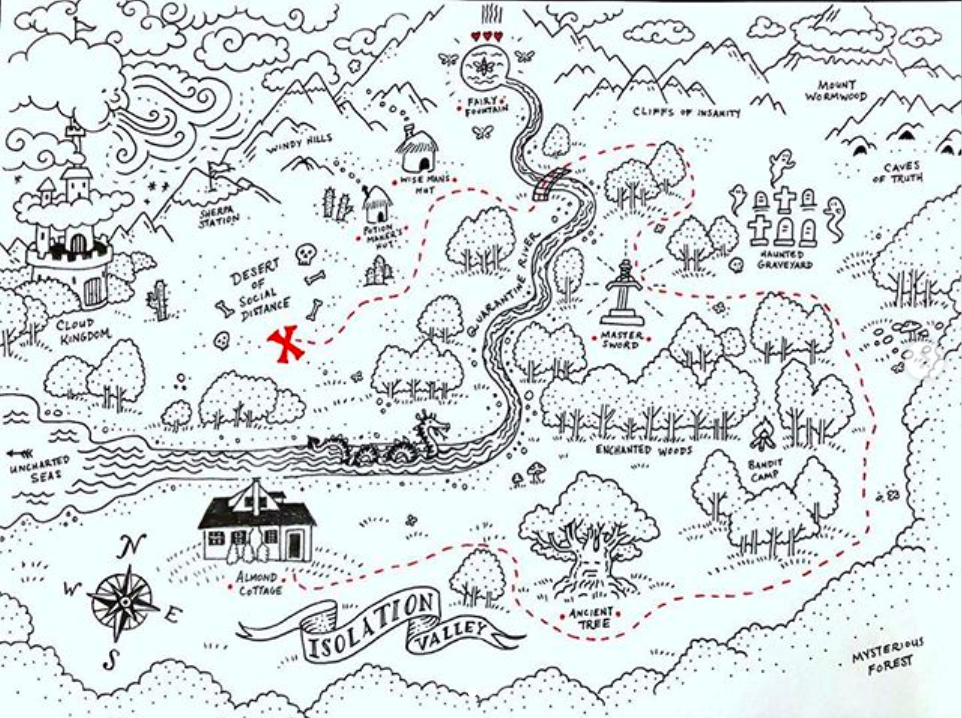
Illus­tra­tor Car­son Ellis eschews video lessons to host a Quar­an­tine Art Club on her Insta­gram page. Her most recent assign­ment is car­tog­ra­phy based chal­lenge, with help­ful tips for cre­at­ing an “impact­ful page turn” for those who wish to share their cre­ations on Insta­gram:

DRAW A MAP: When we think of trea­sure maps, we think of sea mon­sters, islands with palm trees, pirate ships, anthro­po­mor­phic clouds blow­ing gales upon white-capped seas. YOUR map can be of any­where: an enchant­ed wood, a dystopi­an sub­urb, your back­yard, your apart­ment that has nev­er felt so small, all of the above, none of the above. Or your map can be a tra­di­tion­al trea­sure map lead­ing to a pirate’s hoard. It’s total­ly up to you. Three things that you MUST include are: a com­pass rose (very important—look this up if you don’t know what it is), the name of the place you are map­ping, and a red X.

DRAW THE TREASURE: The first part of this assign­ment is to draw a map with a red X to mark the loca­tion of hid­den trea­sure. The sec­ond part of this assign­ment is to draw the trea­sure. I don’t know what the trea­sure is. Only you know what the trea­sure is. Draw it on a sep­a­rate piece of paper from the map.

BONUS POINTS: If you’re going to post this on insta­gram, I rec­om­mend for­mat­ting it with two images. Post the map first, then the trea­sure which the view­er will swipe to see. This will cre­ate what we in the kids book world call AN IMPACTFUL PAGE TURN. That’s the thing that hap­pens when you’re read­ing a pic­ture book and you turn the page to dis­cov­er some­thing fun­ny or sur­pris­ing. It’s kind of hard to explain, but you know a good page turn when you’ve expe­ri­enced one.

#Quar­an­ti­n­eArt­Club

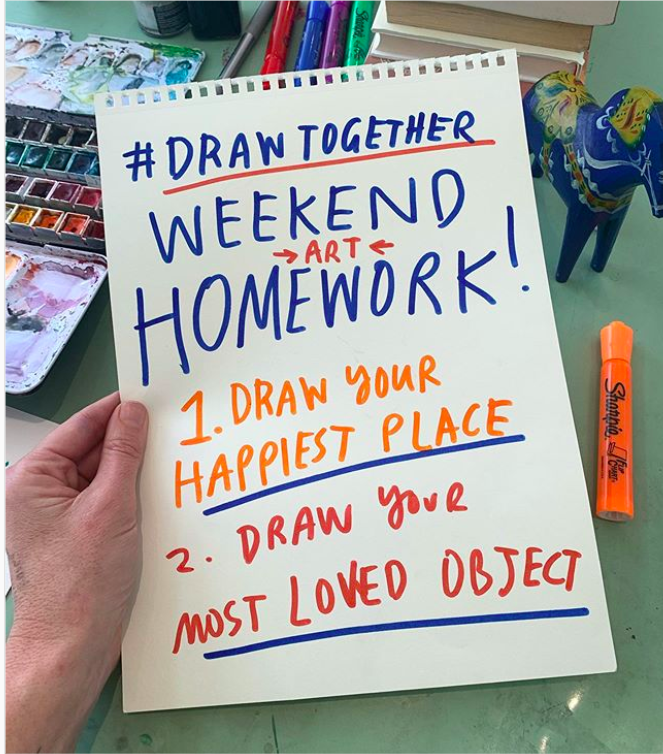
Wendy McNaughton, who spe­cial­izes in drawn jour­nal­ism, also likes the Insta­gram plat­form, host­ing a live Draw Togeth­er ses­sion every school day, from 10–10.30 am PST. Her approach is a bit more freeform, with impromp­tu dance par­ties, spe­cial guests, and field trips to the back­yard.

Her How to Watch Draw Togeth­er high­light is a hilar­i­ous crash course in Insta­gram Live, scrawled in mag­ic mark­er by some­one who’s pos­si­bly only now just get­ting a grip on the plat­form. Don’t see it? Maybe it’s the week­end, or “maybe ask a mil­len­ni­al for help?”

#Draw­To­geth­er

And bless E.B. Goodale, an illus­tra­tor, first time author and moth­er of a young son, who hav­ing coun­ter­act­ed the heart­break of a can­celled book tour with a hasti­ly launched week of dai­ly Insta­gram Live Tod­dler Draw­ing Club meet­ings, made the deci­sion to scale back to just Tues­days and Thurs­days:

It was fun doing it every­day but turned out to be a bit too much to han­dle giv­en our family’s new sched­ule. We’re all fig­ur­ing it out, right? I hope you will con­tin­ue to join me in our unchar­tered ter­ri­to­ry next week as we draw to stay sane. Tune in live to make requests or watch it lat­er and fol­low along at home.

(Her How to Draw a Cat tuto­r­i­al, above, was like­ly intend­ed for in-per­son book­store events relat­ing to her just pub­lished Under the Lilacs…)

#draw­ing­with­tod­dlers

Our per­son­al favorite is Stick­ies Art School, whose online children’s class­es are led not by mul­ti-dis­ci­pli­nary artist Nina Katchadouri­an, whose Face­book page serves as the online insti­tu­tion’s home, but rather her senior tuxe­do cat, Stick­ies.

Stick­ies, who comes to the gig with an impres­sive com­mand of Eng­lish, honed no doubt by fre­quent appear­ances on Katchadourian’s Insta­gram page, affects a dif­fi­dent air to dole out assign­ments, the lat­est of which is above.

He allows his stu­dents ample time to com­plete their tasksthus far all por­traits of him­self. The next one, to ren­der Stick­ies in a cos­tume of the artist’s choice, is due Wednes­day by 9am, Berlin time.

Stick­ies also offers pos­i­tive feed­back on sub­mit­ted work in delight­ful fol­low up videos, a respon­si­bil­i­ty that Katchadouri­an takes seri­ous­ly:

There have been so many con­ver­sa­tions at NYU Gal­latin where I’m on the fac­ul­ty about online teach­ing, how to do it, how to think of a stu­dio course in this new form, etc, and I think per­haps that crossed over with the desire to cheer up some peo­ple with kids, many of whom are already Stick­ies fans, or so I have been told. 

His child pro­teges are no doubt unaware that Stick­ies looked ready to leave the plan­et sev­er­al weeks ago, a fact whose import will res­onate with many pet own­ers in these dark days:

Maybe a third ele­ment was just being so glad he is still around, that hav­ing him active­ly “out there” feels good and life-affirm­ing at the moment.

Stick­ies Art School is mar­velous fun for adults to audit from afar, via Katchadourian’s pub­lic Face­book posts. If you are a par­ent whose child would like to par­tic­i­pate, send her a friend request and men­tion that you’re doing so on behalf of your child artist.

Search­ing on the hash­tag #art­teach­er­sofin­sta­gram will yield many more resources.

Art of Edu­ca­tion Uni­ver­si­ty has sin­gled out 12 accounts to get you start­ed, as well as lots of help­ful infor­ma­tion for class­room art teach­ers who are fig­ur­ing out how to teach effec­tive­ly online.

Relat­ed Con­tent:

Learn to Draw Butts with Just Five Sim­ple Lines

Car­toon­ist Lyn­da Bar­ry Teach­es You How to Draw

How to Draw the Human Face & Head: A Free 3‑Hour Tuto­r­i­al

Ayun Hal­l­i­day is an author, illus­tra­tor, the­ater mak­er and Chief Pri­ma­tol­o­gist of the East Vil­lage Inky zine. Giv­en the can­cel­la­tion of every­thing, she’s tak­en to Insta­gram to doc­u­ment her social dis­tance strolls through New York City’s Cen­tral Park, using the hash­tag #queenoftheapeswalk  Fol­low her @AyunHalliday.

Audible Providing Free Audio Books to Kids & Teens: Introducing the New Service, Audible Stories

A heads up to all par­ents, Audi­ble has announced that they’re pro­vid­ing free sto­ries for kids dur­ing this peri­od of social dis­tanc­ing, which inevitably means wide­spread school clo­sures. They write:

For as long as schools are closed, we’re open. Start­ing today, kids every­where can instant­ly stream an incred­i­ble col­lec­tion of sto­ries, includ­ing titles across six dif­fer­ent lan­guages, that will help them con­tin­ue dream­ing, learn­ing, and just being kids.

All sto­ries are free to stream on your desk­top, lap­top, phone or tablet.

Explore the col­lec­tion, select a title and start lis­ten­ing.

It’s that easy.

Win­nie the Pooh, Alice’s Adven­tures in Won­der­land, Beat­rix Pot­ter–they’re all avail­able as free audio.

You can find more free audio books in our col­lec­tion, 1,000 Free Audio Books: Down­load Great Books for Free

If you would like to sign up for Open Culture’s free email newslet­ter, please find it here. It’s a great way to see our new posts, all bun­dled in one email, each day.

If you would like to sup­port the mis­sion of Open Cul­ture, con­sid­er mak­ing a dona­tion to our site. It’s hard to rely 100% on ads, and your con­tri­bu­tions will help us con­tin­ue pro­vid­ing the best free cul­tur­al and edu­ca­tion­al mate­ri­als to learn­ers every­where. You can con­tribute through Pay­Pal, Patre­on, and Ven­mo (@openculture). Thanks!

Relat­ed Con­tent:

Enter an Archive of 6,000 His­tor­i­cal Children’s Books, All Dig­i­tized and Free to Read Online

A Dig­i­tal Archive of 1,800+ Children’s Books from UCLA

Clas­sic Children’s Books Now Dig­i­tized and Put Online: Revis­it Vin­tage Works from the 19th & 20th Cen­turies


6 Minute Reprieve From the World’s Troubles, Courtesy of Tilda Swinton, Countertenor Anthony Roth Costanzo, and Five Springer Spaniels

This video of Til­da Swin­ton’s Springer Spaniels cavort­ing in pas­toral Scot­land to a Han­del aria per­formed by coun­tertenor Antho­ny Roth Costan­zo won’t cure what ails you, but it is def­i­nite­ly good med­i­cine.

Swin­ton and her part­ner, artist San­dro Kopp, filmed the beau­ti­ful beasts in such a way as to high­light their dog­gy exu­ber­ance, whether mov­ing as a pack or tak­ing a solo turn.

The title of the aria, “Rompo i Lac­ci,” from the sec­ond act of Flavio, trans­lates to “I break the laces,” and there’s no mis­tak­ing the joy Rosy, Dora, Louis, Dot, and Snow­bear take in being off the leash.

Flash­backs to their roly­poly pup­py selves are cute, but it’s the feath­ery ears and tails of the adult dogs that steal the show as they bound around beach and field.

The film­mak­ers get a lot of mileage from their stars’ lolling pink tongues and will­ing­ness to vig­or­ous­ly launch them­selves toward any out of frame treat.

We’ve nev­er seen a ten­nis ball achieve such beau­ty.

There’s also some fun to be had in spe­cial effects where­in the dogs are dou­bled by a mir­ror effect and lat­er, when one of them turns into a canine Rorschach blot.

The video was orig­i­nal­ly screened as part of Costan­zo’s mul­ti-media Glass Han­del instal­la­tion for Opera Philadel­phia, an explo­ration into how opera can make the hairs on the back of our neck stand up.

Relat­ed Con­tent:

Stephen Fry Hosts “The Sci­ence of Opera,” a Dis­cus­sion of How Music Moves Us Phys­i­cal­ly to Tears

How a Philip Glass Opera Gets Made: An Inside Look

Til­da Swin­ton Recites Poem by Rumi While Reek­ing of Vetiv­er, Heliotrope & Musk

Ayun Hal­l­i­day is an author, illus­tra­tor, the­ater mak­er and Chief Pri­ma­tol­o­gist of the East Vil­lage Inky zine. Fol­low her @AyunHalliday.

The Summerhill School, the Radical Educational Experiment That Let Students Learn What, When, and How They Want (1966)

Among the polit­i­cal and social rev­o­lu­tions of the 1960s, the move­ment to democ­ra­tize edu­ca­tion is of cen­tral his­tor­i­cal impor­tance. Par­ents and politi­cians were entrenched in bat­tles over inte­grat­ing local schools years after 1954’s Brown v. Board of Edu­ca­tion. Sit-ins and protests on col­lege cam­pus­es made sim­i­lar stu­dent unrest today seem mild by com­par­i­son. Mean­while, qui­eter, though no less rad­i­cal, edu­ca­tion­al move­ments pro­lif­er­at­ed in com­munes, home­schools, and com­mu­ni­ties that could pay for pri­vate schools.

Most of these exper­i­men­tal meth­ods drew from old­er sources, such as the the­o­ries of Rudolf Stein­er and Maria Montes­sori, both of whom died before the Age of Aquar­ius. One move­ment that got its start decades ear­li­er was pop­u­lar­ized in the 60s when its founder A.S. Neill pub­lished the influ­en­tial Sum­mer­hill: A Rad­i­cal Approach to Child Rear­ing, a clas­sic work of alter­na­tive ped­a­gogy in which the Scot­tish writer and edu­ca­tor described the rad­i­cal ideas devel­oped in his Sum­mer­hill School in Eng­land, first found­ed in 1921.

Neill’s school “helped to pio­neer the ‘free school’ phi­los­o­phy,” writes Aeon, “in which lessons are nev­er manda­to­ry and near­ly every aspect of stu­dent life can be put to a vote.” His meth­ods “and a ris­ing coun­ter­cul­tur­al move­ment inspired sim­i­lar insti­tu­tions to open around the world.” When Neill first pub­lished his book, how­ev­er, he was very much on the defen­sive, against “an increas­ing reac­tion against pro­gres­sive edu­ca­tion,” psy­chol­o­gist Erich Fromm wrote in the book’s fore­word.

At the extreme end of this back­lash Fromm sit­u­ates “the remark­able suc­cess in teach­ing achieved in the Sovi­et Union,” where “the old-fash­ioned meth­ods of author­i­tar­i­an­ism are applied in full strength.” Fromm defend­ed exper­i­ments like Neill’s, despite their “often dis­ap­point­ing” results, as a nat­ur­al out­growth of the Enlight­en­ment.

Dur­ing the eigh­teenth cen­tu­ry, the ideas of free­dom, democ­ra­cy, and self-deter­mi­na­tion were pro­claimed by pro­gres­sive thinkers; and by the first half of the 1900’s these ideas came to fruition in the field of edu­ca­tion. The basic prin­ci­ple of such self-deter­mi­na­tion was the replace­ment of author­i­ty by free­dom, to teach the child with­out the use of force by appeal­ing to his curios­i­ty and spon­ta­neous needs, and thus to get him inter­est­ed in the world around him. This atti­tude marked the begin­ning of pro­gres­sive edu­ca­tion and was an impor­tant step in human devel­op­ment.

What seemed anar­chic to its detrac­tors had its roots in the tra­di­tion of indi­vid­ual lib­er­ty against feu­dal tra­di­tions of unques­tioned author­i­ty. But Neill was less like John Locke, who includ­ed chil­dren in his cat­e­go­ry of irra­tional beings (along with “idiots” and “Indi­ans”) than he was like Jean Jacques Rousseau. Fromm sug­gests this too: “A.S. Neill’s sys­tem is a rad­i­cal approach to child rear­ing because it rep­re­sents the true prin­ci­ple of edu­ca­tion with­out fear. In Sum­mer­hill School author­i­ty does not mask a sys­tem of manip­u­la­tion.”

Stu­dents decide what they want to learn, and what they don’t, with no cur­ricu­lum, require­ments, or test­ing to speak of and no struc­tured time or manda­to­ry atten­dance. Is such a thing even pos­si­ble in prac­tice? How could edu­ca­tors man­age and mea­sure stu­dent progress, or ensure their stu­dents learn any­thing at all? What might this look like? Find out in the 1966 Nation­al Film Board of Cana­da doc­u­men­tary Sum­mer­hill, above, full of “can­did moments and scenes,” Aeon writes, “that evoke the rhythms of dai­ly life at the school and give a sense of the children’s lived expe­ri­ence.”

Dis­or­ga­nized, but not chaot­ic, class­room bus­tle con­trasts with idyl­lic, sun­lit moments on Summerhill’s ver­dant grounds and hon­est crit­i­cism, some from the stu­dents them­selves. One girl admits that the free play wears thin after a while and that “there prob­a­bly aren’t such good facil­i­ties for learn­ing here, after a cer­tain lev­el. But you can always go some­where else after­wards” (though many would have dif­fi­cul­ty with entrance exams). Anoth­er stu­dent talks about the strug­gle to study with­out struc­ture to help min­i­mize dis­trac­tions. Despite Neill’s philo­soph­i­cal aver­sion to fear, she says “you’re always afraid of miss­ing some­thing.”

We also meet the man him­self, A.S. Neill, a rum­pled, avun­cu­lar fig­ure at 83 years old, who pro­claims free­dom as the answer for stu­dents who strug­gle in school, and for stu­dents who don’t. If we’re hon­est, we might all admit we felt this strong­ly as chil­dren our­selves. It may nev­er be an impulse that’s com­pat­i­ble with con­tem­po­rary goals for edu­ca­tion, which is often geared toward work­place train­ing at the expense of cre­ative think­ing. But for many stu­dents, the oppor­tu­ni­ty to pur­sue their own course on their own terms can become the impe­tus for a life­time of inde­pen­dent thought and action. I can’t think of a lofti­er edu­ca­tion­al goal.

via Aeon

Relat­ed Con­tent:

Noam Chom­sky Spells Out the Pur­pose of Edu­ca­tion

Noam Chom­sky Defines What It Means to Be a Tru­ly Edu­cat­ed Per­son

Lyn­da Bar­ry on How the Smart­phone Is Endan­ger­ing Three Ingre­di­ents of Cre­ativ­i­ty: Lone­li­ness, Uncer­tain­ty & Bore­dom

Buck­min­ster Fuller Rails Against the “Non­sense of Earn­ing a Liv­ing”: Why Work Use­less Jobs When Tech­nol­o­gy & Automa­tion Can Let Us Live More Mean­ing­ful Lives

Josh Jones is a writer and musi­cian based in Durham, NC. Fol­low him at @jdmagness

Cooking with Wool: Watch Mouthwatering Tiny Woolen Food Animations

Our fas­ci­na­tion with tiny food can be traced to the mouth­wa­ter­ing illus­tra­tions in Beat­rix Potter’s The Tale of Two Bad Mice.

Just like the doll­house-sized comestibles that so con­found­ed the tit­u­lar rodents, Tom Thumb and Hun­ca­munca, ani­ma­tor Andrea Love’s minia­ture pas­ta with red sauce is as ined­i­ble as it is appe­tiz­ing.

The self-taught stop motion specialist’s medi­um of choice is wool.

In an inter­view with Drag­on Frame stop motion software’s com­pa­ny blog, when they fea­tured Cook­ing with Wool: Break­fast, above, Love explained:

I like to make short per­son­al projects exper­i­ment­ing with the dif­fer­ent ways to ani­mate wool. The tech­nique is called nee­dle felt­ing and it involves shap­ing wool with a barbed nee­dle. I love the fuzzy aes­thet­ic, and feel like the pos­si­bil­i­ties are end­less. Every­thing in this video is made out of wool or felt, and is built over rigid insu­la­tion foam. This was a weekend/evening project, done over the course of three days… It is very chal­leng­ing work­ing with tiny bits of wool, but also amaz­ing how much detail can be achieved on a small scale when you con­sid­er that it is just tiny clumps of fur.

For­get the showstoppers—the melt­ing but­ter, the fried eggs flip­ping in the pan, the steam ris­ing from cup and ket­tle…

Let’s take a moment to admire the atten­tion to detail that went into the back­ground aspects—the rub­ber spat­u­la, the bananas, the cheery flecked wall­pa­per…

The only thing miss­ing is a pothold­er to han­dle that pip­ing hot cast iron skil­let.

Per­haps she ran out of wool?

The Port Townsend, Wash­ing­ton res­i­dent, who grad­u­at­ed from Hamp­shire Col­lege with a con­cen­tra­tion in film stud­ies and sus­tain­able agri­cul­ture, whips up her tee­ny wee­ny wooly meals in the same base­ment stu­dio where she crafts pro­mo­tion­al videos for local busi­ness­es, includ­ing the yarn shop where she sources her wool rov­ings.

View more of Andrea Love’s fiber-art stop motion ani­ma­tions, includ­ing a “dig­i­tal” banana paint­ing cre­at­ed with a woolen tablet and sty­lus, on her web­site and Insta­gram page.

Relat­ed Con­tent:

The Online Knit­ting Ref­er­ence Library: Down­load 300 Knit­ting Books Pub­lished From 1849 to 2012

Behold an Anatom­i­cal­ly Cor­rect Repli­ca of the Human Brain, Knit­ted by a Psy­chi­a­trist

20+ Knit­ters and Cro­chet Artists Stitch an Aston­ish­ing 3‑D Recre­ation of Picasso’s Guer­ni­ca

Ayun Hal­l­i­day is an author, illus­tra­tor, the­ater mak­er and Chief Pri­ma­tol­o­gist of the East Vil­lage Inky zine.  Join her in NYC on Mon­day, Feb­ru­ary 3 for New York: The Nation’s Metrop­o­lis the 21st install­ment of her book-based vari­ety show, Necro­mancers of the Pub­lic Domain. Fol­low her @AyunHalliday.

The New York Public Library Announces the Top 10 Checked-Out Books of All Time

Pub­lic libraries are unsung heroes of their com­mu­ni­ties. Many a busy work­ing adult can take their impor­tance for grant­ed. But par­ents of young chil­dren know—the library is a qui­et haven, place of won­der and dis­cov­ery, and free resource for all sorts of edu­ca­tion­al expe­ri­ences. Giv­en the impor­tance of libraries in kids’ lives, it’s no won­der that six of the top ten most-checked-out books—accord­ing to the New York Pub­lic Library—are children’s books.

The NYPL cal­cu­lat­ed the most checked out books in its his­to­ry in hon­or of its 125th anniver­sary. Giv­en that it hous­es the sec­ond largest col­lec­tion in the U.S., after the Library of Con­gress, and serves mil­lions in the most lin­guis­ti­cal­ly diverse city in the coun­try, its cir­cu­la­tion num­bers give us a rea­son­able sam­pling of near-uni­ver­sal tastes.

These include time­less clas­sics of children’s lit­er­a­ture: Ezra Jack Keats’ Calde­cott-win­ning The Snowy Day tops the list, “in print and in the Library’s cat­a­log con­tin­u­ous­ly since 1962”; The Cat in the Hat comes in at a close sec­ond. Where the Wild Things Are and The Very Hun­gry Cater­pil­lar round out the list of books for the very young.

Where is the stal­wart Good­night Moon, you may ask? Here we have a juicy bit of lore:

By all mea­sures, this book should be a top check­out (in fact, it might be the top check­out) if not for an odd piece of his­to­ry: extreme­ly influ­en­tial New York Pub­lic Library children’s librar­i­an Anne Car­roll Moore hat­ed Good­night Moon when it first came out. As a result, the Library didn’t car­ry it until 1972. That lost time bumped the book off the top 10 list for now. But give it time.

For now, Mar­garet Wise Brown’s 1947 clas­sic receives hon­or­able men­tion. Clas­sic kids’ books cir­cu­late a lot because they’re wide­ly read, but also because they’re short, which leads to more turnover, the Library points out. Length of time in print is also a fac­tor, which makes the pres­ence of Har­ry Pot­ter and the Sorcerer’s Stone, pub­lished in 1998, par­tic­u­lar­ly impres­sive.

  1. The Snowy Day by Ezra Jack Keats: 485,583 check­outs
  2. The Cat in the Hat by Dr. Seuss: 469,650 check­outs
  3. 1984 by George Orwell: 441,770 check­outs
  4. Where the Wild Things Are by Mau­rice Sendak: 436,016 check­outs
  5. To Kill a Mock­ing­bird by Harp­er Lee: 422,912 check­outs
  6. Char­lot­te’s Web by E.B. White: 337,948 check­outs
  7. Fahren­heit 451 by Ray Brad­bury: 316,404 check­outs
  8. How to Win Friends and Influ­ence Peo­ple by Dale Carnegie: 284,524 check­outs
  9. Har­ry Pot­ter and the Sor­cer­er’s Stone by J.K. Rowl­ing: 231,022 check­outs
  10. The Very Hun­gry Cater­pil­lar by Eric Car­le: 189,550 check­outs

Like J.K. Rowling’s mod­ern clas­sic, all of the remain­ing books on the list are novels—save out­lier How to Win Friends and Influ­ence Peo­ple by Dale Carnegie—and all are nov­els read exten­sive­ly by mid­dle and high school stu­dents, a fur­ther sign of the sig­nif­i­cance of pub­lic libraries.

Some stu­dents may only be required to read a small hand­ful of nov­els in their school career, and whether they fol­low through, and maybe go on to read more and more books, and maybe write a few books of their own, may depend upon those nov­els con­stant­ly cir­cu­lat­ing for every­one through insti­tu­tions like the New York Pub­lic Library.

See the full list above and learn more about the project at NPR and the NYPL.

via Metafil­ter

Relat­ed Con­tent:

The New York Pub­lic Library Lets Patrons Check Out Ties, Brief­cas­es & Hand­bags for Job Inter­views

The New York Pub­lic Library Puts Clas­sic Sto­ries on Insta­gram: Start with Alice’s Adven­tures in Won­der­land and Read Kafka’s The Meta­mor­pho­sis Soon

What Are the Most Stolen Books? Book­store Lists Fea­ture Works by Muraka­mi, Bukows­ki, Bur­roughs, Von­negut, Ker­ouac & Palah­niuk

Josh Jones is a writer and musi­cian based in Durham, NC. Fol­low him at @jdmagness.

« Go BackMore in this category... »
Quantcast