The First American Picture Book, Wanda Gág’s Millions of Cats (1928)

For bet­ter (I’d say), or worse, the inter­net has turned cat peo­ple into what may be the world’s most pow­er­ful ani­mal lob­by. It has brought us fas­ci­nat­ing ani­mat­ed his­to­ries of cats and ani­mat­ed sto­ries about the cats of goth­ic genius and cat-lov­ing author and illus­tra­tor Edward Gorey; cats blithe­ly leav­ing inky paw­prints on medieval man­u­scripts and polite­ly but firm­ly refus­ing to be denied entry into a Japan­ese art muse­um. It has giv­en us no short­age of delight­ful pho­tos of artists with their cat famil­iars

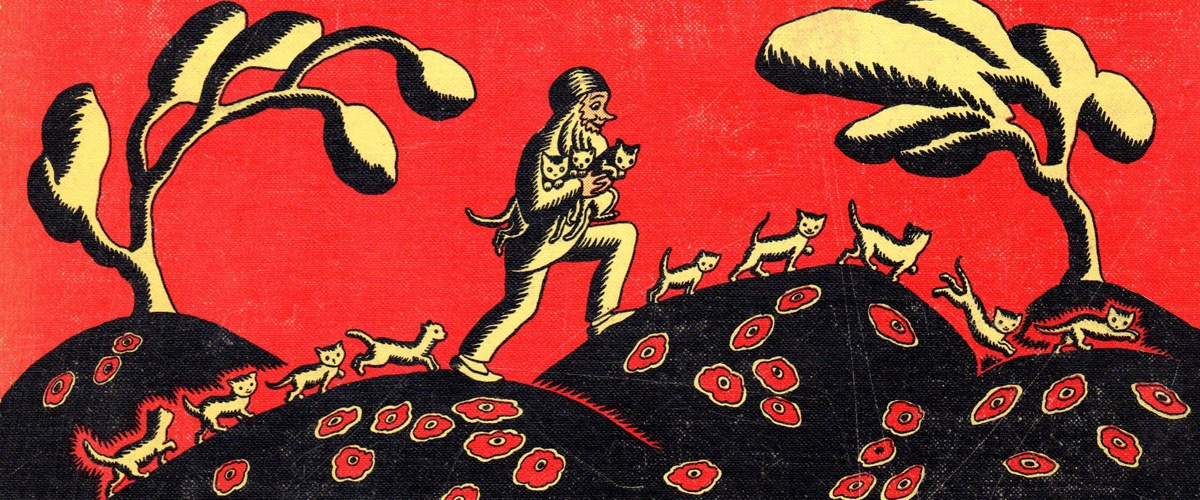
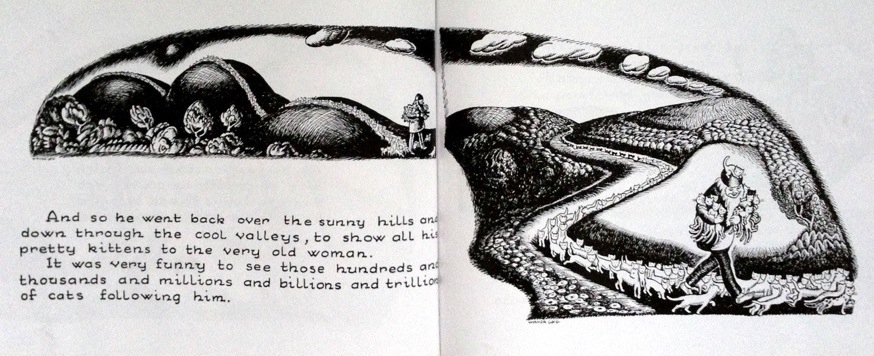
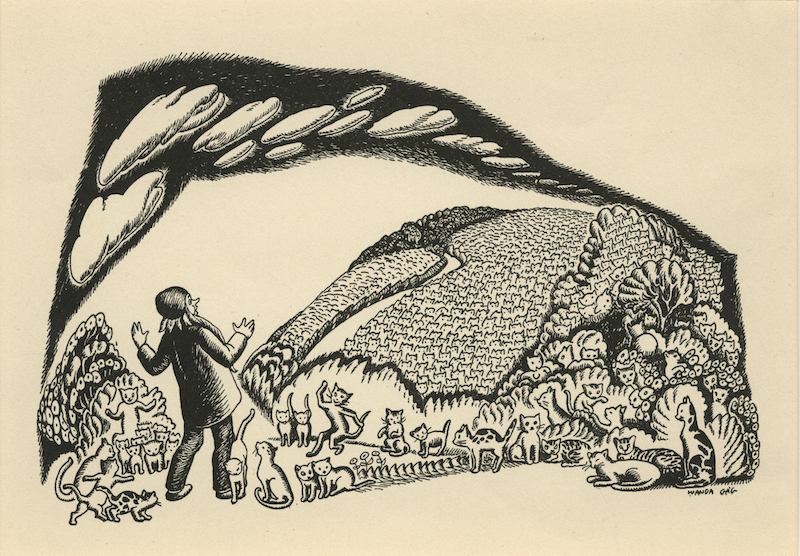
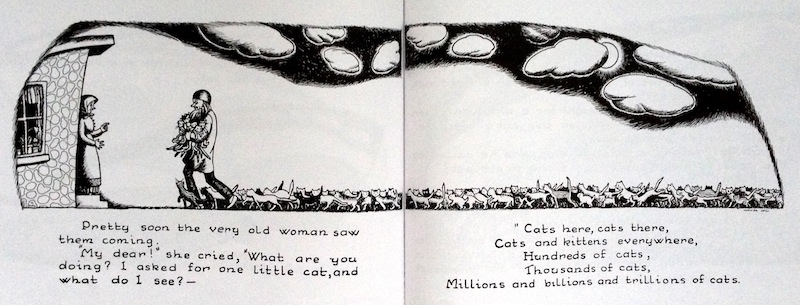
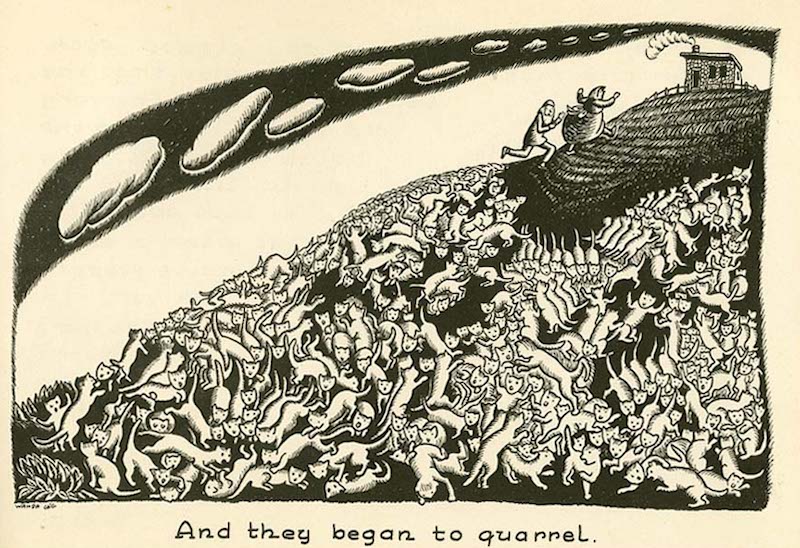
Cat antics and awe have always been a very online phe­nom­e­non, but the mys­te­ri­ous and ridicu­lous, diminu­tive beasts of prey have also always been insep­a­ra­ble from art and cul­ture. As fur­ther evi­dence, we bring you Mil­lions of Cats, like­ly the “first tru­ly Amer­i­can pic­ture book done by an Amer­i­can author/artist,” explains a site devot­ed to it.

“Pri­or to its pub­li­ca­tion in 1928, there were only Eng­lish pic­ture books for the children’s perusal.” The book “sky rock­et­ed Wan­da Gág into instant fame and set in stone her rep­u­ta­tion as a children’s author and illus­tra­tor.”

It set a stan­dard for Calde­cott-win­ning children’s lit­er­a­ture for close to a hun­dred years since its appear­ance, though the award did not yet exist at the time. The book’s cre­ator was “a fierce ide­al­ist and did not believe in alter­ing her own aes­theti­cism just because she was pro­duc­ing work for chil­dren. She liked to use styl­ized human fig­ures, asym­met­ri­cal com­po­si­tions, strong lines and slight spa­tial dis­tor­tion.” She also loved cats, as befits an artist of her inde­pen­dent tem­pera­ment, one shared by the likes of oth­er cat-lov­ing artists like T.S. Eliot and Charles Dick­ens.

Mil­lions of Cats’ author and illus­tra­tor may not share in the fame of so many oth­er artists who took pic­tures with their cats, but she and her cat Noopy were as pho­to­genic as any oth­er feline/human artis­tic duo, and she was a peer to the best of them. The book’s edi­tor, Ernes­tine Evans, wrote in the Nation that Mil­lions of Cats “is as impor­tant as the librar­i­ans say it is. Not only does it bring to book-mak­ing one of the most tal­ent­ed and orig­i­nal of Amer­i­can lith­o­g­ra­phers… but it is a mar­riage of pic­ture and tale that is per­fect­ly bal­anced.”

Gág (rhymes with “jog”) was “a cel­e­brat­ed artist… in the Green­wich Vil­lage-cen­tic Mod­ernist art scene in the 1920s,” writes Lithub, “a free-think­ing, sex-pos­i­tive left­ist who also designed her own clothes and trans­lat­ed fairy tales.” She adapt­ed the text from “a sto­ry she had made up to enter­tain her friends’ chil­dren,” with the mil­lions of cats mod­eled on Noopy. Gág is the found­ing moth­er of children’s book dynas­ties like The Cat in the Hat and Pete the Cat, an artist whom mil­lions of cat lovers can dis­cov­er again or for the first time in a New­bery-win­ning 2006 collector’s edi­tion.

Read a sum­ma­ry of the charm­ing sto­ry of Mil­lions of Cats at Lithub and learn more about her, the tal­ent­ed Gág fam­i­ly of artists, and her charm­ing, very cat-friend­ly house here.

via LitHub

Relat­ed Con­tent:

Insane­ly Cute Cat Com­mer­cials from Stu­dio Ghi­b­li, Hayao Miyazaki’s Leg­endary Ani­ma­tion Shop

Enter an Archive of 6,000 His­tor­i­cal Children’s Books, All Dig­i­tized and Free to Read Online

A Dig­i­tal Archive of 1,800+ Children’s Books from UCLA

Josh Jones is a writer and musi­cian based in Durham, NC. Fol­low him at @jdmagness

18 Classic Myths Explained with Animation: Pandora’s Box, Sisyphus & More

Greek myths have an incred­i­ble shelf life.

We may not retain all the play­ers’ names or the intri­ca­cies of the var­i­ous plot lines, but the cre­ative pun­ish­ments the gods—Zeus, in particular—visited upon those who dis­pleased them have pro­vid­ed mod­ern mor­tals with an endur­ing short­hand for describ­ing our own woes.

Tempt­ed to sneak a peek inside a lover’s diary? Take a tee­ny swig from the liquor cab­i­net whilst hous­esit­ting? Go snoop­ing in your teenager’s Inter­net his­to­ry?

DON’T DO IT, PANDORA!!!

But if curios­i­ty com­pels you to explore beyond the famous punch­lines of mythology’s great­est hits, TED-Ed’s ani­mat­ed Myths from Around the World series is a rec­om­mend­ed rum­mage.

Aver­ag­ing around five min­utes per tale, each episode is packed tight as a snake in a can of mixed nuts. Pre­pare to be sur­prised by some of the tid­bits that come spring­ing out.

Take Pandora’s box, above.

(Actu­al­ly it was a jar, but why quib­ble?)

Not to unleash too many major spoil­ers, but how many of us remem­bered that the thing con­tained a bit of good along with all that evil?

Or that the ves­sel she wasn’t allowed to open was but one of many gifts the gods bestowed upon her at birth? In fact, Zeus gave her two presents, that pret­ty box, jar, what­ev­er, and—wait for it—an irre­press­ibly inquis­i­tive nature.

Or the close con­nec­tion between Pan­do­ra and Prometheus? Zeus con­ceived of Pan­do­ra as a ret­ri­bu­tion for Prometheus steal­ing fire and return­ing it to earth.

Remem­ber Prometheus?

No, not the guy who’s doomed to spend his life rolling a mas­sive rock uphill, only to have it roll back down before he reach­es the top. That’s Sisy­phus, as in Sisyphean task, like laun­dry or clean­ing the cat lit­ter.

Prometheus is the Titan who winds up chained to a rock so Zeus can send a hun­gry vulture—some say eagle—to devour his liv­er once a day.

(Which kind of puts the cat lit­ter in per­spec­tive.)

In addi­tion to ancient Greek crowd pleasers, the 18-episode Myths from Around the World playlist delves into the famil­iar stuff of Norse, Chi­nese, and ancient Egypt­ian leg­ends, as well as less wide­ly known Cam­bo­di­an and Irish tales.

Each video’s descrip­tion has a link to a full Ted-Ed les­son, with the usu­al com­ple­ment of quizzes, resources and oppor­tu­ni­ties for teacher cus­tomiza­tion.

Watch the full playlist here.

Relat­ed Con­tent:

The Myth of Sisy­phus Won­der­ful­ly Ani­mat­ed in an Oscar-Nom­i­nat­ed Short Film (1974)

Greek Myth Comix Presents Homer’s Ili­ad & Odyssey Using Stick-Man Draw­ings

Con­cepts of the Hero in Greek Civ­i­liza­tion (A Free Har­vard Course) 

Ayun Hal­l­i­day is an author, illus­tra­tor, the­ater mak­er and Chief Pri­ma­tol­o­gist of the East Vil­lage Inky zine.  Join her in New York City for the next install­ment of her book-based vari­ety show, Necro­mancers of the Pub­lic Domain, this March. Fol­low her @AyunHalliday.

“Odyssey of the Ear”: A Beautiful Animation Shows How Sounds Travel Into Our Ears and Become Thoughts in Our Brain

As all school­child­ren know, we hear with our ears. And as all school­child­ren also prob­a­bly know, we hear with our brains — or if they don’t know it, at least they must sus­pect it, giv­en the way sounds around us seem to turn with­out effort into thoughts in our heads. But how? It’s the inter­face between ear and brain where things get more com­pli­cat­ed, but “Odyssey of the Ear,” the six-minute video above, makes it much clear­er just how sound gets through our ears and into our brains. Suit­able for view­ers of near­ly any age, it com­bines sil­hou­ette ani­ma­tion (of the kind pio­neered by Lotte Reiniger) with live action, pro­jec­tion, and even dance.

Accord­ing to the video, which was orig­i­nal­ly pro­duced as part of Har­vardX’s Fun­da­men­tals of Neu­ro­science course, the process works some­thing like this. Our out­er ear col­lects sounds from our envi­ron­ment when things vibrate in the phys­i­cal world, pro­duc­ing vari­a­tions in air pres­sure, or “sound waves” that pass through the air.

The sound waves enter the ear and pass down through the audi­to­ry canal, at the end of which they hit the ear drum. The ear drum trans­fers the vibra­tions of the sound waves to a “series of lit­tle bones,” three of them, called the ossi­cles, or “ham­mer, anvil, and stir­rup.” These trans­mit the sounds to the flu­id-filled inner ear through a mem­brane called the “oval win­dow.”

Inside the inner ear is the snail-shaped organ known as the cochlea, and inside the cochlea is the organ of cor­ti, and inside the organ of cor­ti are “thou­sands of audi­to­ry hair cells,” actu­al­ly recep­tor neu­rons called stere­ocil­ia, that “con­vert the motion ener­gy of sound waves into elec­tri­cal sig­nals that are com­mu­ni­cat­ed to the audi­to­ry nerve.” From there, “the sig­nal goes into struc­tures deep­er in the brain, until at last it reach­es the audi­to­ry cor­tex, where we con­scious­ly expe­ri­ence sound.” That con­scious expe­ri­ence of sound may make it feel as if we imme­di­ate­ly rec­og­nize and con­sid­er all the nois­es, voic­es, or music we hear, but as “Odyssey of the Ear” reveals, sound waves have to make quite an epic jour­ney before they reach our brains at all. At that point the waves them­selves may have dis­si­pat­ed, but they live on in our con­scious­ness. In oth­er words, “the brain has tak­en what was out­side and made it inside.”

via The Kids Should See This

Relat­ed Con­tent:

Eve­lyn Glen­nie (a Musi­cian Who Hap­pens to Be Deaf) Shows How We Can Lis­ten to Music with Our Entire Bod­ies

How Did Beethoven Com­pose His 9th Sym­pho­ny After He Went Com­plete­ly Deaf?

The Neu­ro­science of Bass: New Study Explains Why Bass Instru­ments Are Fun­da­men­tal to Music

The British Library’s “Sounds” Archive Presents 80,000 Free Audio Record­ings: World & Clas­si­cal Music, Inter­views, Nature Sounds & More

Feel Strange­ly Nos­tal­gic as You Hear Clas­sic Songs Reworked to Sound as If They’re Play­ing in an Emp­ty Shop­ping Mall: David Bowie, Toto, Ah-ha & More

The Vin­cent Van Gogh Action Fig­ure, Com­plete with Detach­able Ear

Based in Seoul, Col­in Mar­shall writes and broad­casts on cities, lan­guage, and cul­ture. His projects include the book The State­less City: a Walk through 21st-Cen­tu­ry Los Ange­les and the video series The City in Cin­e­ma. Fol­low him on Twit­ter at @colinmarshall or on Face­book.

Librarian Honors a Dying Tree by Turning It Into a Little Free Library

And then she said to Anni­ka, “Why don’t you feel in that old tree stump? One prac­ti­cal­ly always finds things in old tree stumps.” 

- Pip­pi Long­stock­ing, Astrid Lind­gren 

Remem­ber that oth­er clas­sic of chil­dren’s lit­er­a­ture, where­in a boy runs from the city to a seclud­ed moun­tain, tak­ing up res­i­dence in an old tree he hol­lows into a cozy shel­ter?

Pub­lic librar­i­an and artist Shar­alee Armitage Howard’s Lit­tle Free Library is a bit like that, except there was no run­ning involved.

When the ven­er­a­ble and ail­ing cot­ton­wood in her Coeur d’Alene front yard began drop­ping branch­es on cars parked below, Howard faced the inevitable. But rather than chop the tree even with the ground, she arranged with the removal crew to leave a con­sid­er­able amount of stump intact.

Then, in a Pip­pi Long­stock­ing-ish move, she filled it with books for her neigh­bors and strangers to dis­cov­er.

The inte­ri­or has a snug, wood­land vibe, wor­thy of Beat­rix Pot­ter or Ali­son Utt­ley, with tidy shelves, soft light­ing, and a shin­gled roof to pro­tect the con­tents from the ele­ments.

Ever since Decem­ber, when Howard post­ed pho­tos to social media, the fairy­tale-like struc­ture has been engen­der­ing epic amounts of glob­al good­will.

What a beau­ti­ful way to pre­serve and hon­or a tree that stood for well over a cen­tu­ry.

One of the few naysay­ers is Red­dit user dis­cern­ing­per­vert, who is per­haps not giv­ing voice to the Lorax, so much as Thalia, Muse of Com­e­dy, when he writes:

It’s like a house of hor­rors for trees. Inside the corpse of their for­mer com­rade are the processed rem­nants of their tree­broth­ers and treesisters.

A lit­er­al Tree­house of Hor­ror…

Vis­it Howard’s Lit­tle Free Library (char­ter #8206) the next time you’re in Ida­ho. Or install one of your own.

(Those with trees to throw at the cause may want to begin with the stump hol­low­ing tuto­r­i­al below.)

via Twist­ed Sifter

Relat­ed Con­tent:

RIP Todd Bol, Founder of the Lit­tle Free Library Move­ment: He Leaves Behind 75,000 Small Libraries That Pro­mote Read­ing World­wide

Free Libraries Shaped Like Doc­tor Who’s Time-Trav­el­ing TARDIS Pop Up in Detroit, Saska­toon, Macon & Oth­er Cities

Grow­ing Up Sur­round­ed by Books Has a Last­ing Pos­i­tive Effect on the Brain, Says a New Sci­en­tif­ic Study

Ayun Hal­l­i­day is an author, illus­tra­tor, the­ater mak­er and Chief Pri­ma­tol­o­gist of the East Vil­lage Inky zine.  See her onstage in New York City in Feb­ru­ary as host of  The­ater of the Apes book-based vari­ety show, Necro­mancers of the Pub­lic Domain. Fol­low her @AyunHalliday.

How Zora Neale Hurston & Eleanor Roosevelt Helped Create the First Realistic African American Baby Doll (1951)

In the 1930s and 40s, child psy­chol­o­gists Ken­neth and Mamie Clark found that very young black chil­dren in the U.S. usu­al­ly chose dolls with lighter skin col­ors when giv­en a choice. The find­ings sug­gest­ed that the chil­dren had inter­nal­ized dom­i­nant prej­u­dices against them “by the time they reached nurs­ery school,” notes the Nation­al Muse­um of Play. “These stud­ies played an impor­tant role in the NAACP’s bat­tle in the 1950s to end seg­re­ga­tion in pub­lic schools.”

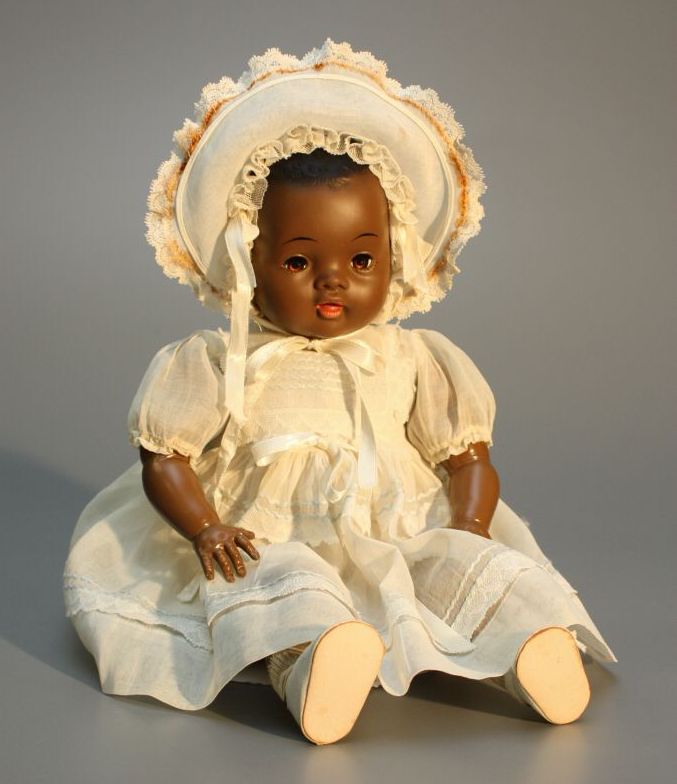
What often goes unre­marked in accounts of this research is that at the time “almost all of the African Amer­i­can dolls on the mar­ket were mod­eled after racist stereo­types,” as Emi­ly Tem­ple notes in an arti­cle on LitHub draw­ing on the work of his­to­ri­an Gor­don Pat­ter­son. “Those that weren’t” car­i­ca­tures “were just white dolls that had been paint­ed brown.” This had been the case for two cen­turies, as Col­lec­tors Week­ly explains. Black chil­dren had been inter­nal­iz­ing racism—learning to asso­ciate pos­i­tive attrib­ut­es with white dolls and neg­a­tive attrib­ut­es with black dolls.

But those chil­dren (and their par­ents) had also been reject­ing the racist car­i­ca­tures and forms of era­sure on offer. Tem­ple writes of how one white woman, Sara Lee Creech “noticed two black chil­dren play­ing with white dolls in a car out­side of a post office in Belle Glade, Flori­da.” She felt that they should have toys that rep­re­sent­ed their expe­ri­ence as well. Already a social jus­tice war­rior, as they say—“active in the women’s move­ments since the mid 1930s” and help­ing to found “an Inter­ra­cial Coun­cil in Belle Glade”—Creech decid­ed she would cre­ate a doll that “would rep­re­sent the beau­ty and diver­si­ty of black chil­dren.”

If this “sounds a lit­tle white savior‑y,” writes Tem­ple, “I’m with you,” but there’s much more to the sto­ry. Creech sub­mit­ted the idea to her friend Zora Neale Hurston, pio­neer­ing ethno­g­ra­ph­er of African Amer­i­can cul­ture and pre­mier nov­el­ist of the Harlem Renais­sance. Hurston “was enthu­si­as­tic about the project” and, in turn, pledged to “show pic­tures of the doll to the ‘well known and influ­en­tial mem­bers’ of the black com­mu­ni­ty with whom she had con­nec­tions.”

In 1950, Hurston wrote to Creech in praise of her inten­tion to “meet our long­ing for under­stand­ing of us as we real­ly are, and not as some would have us.” At the same time, Creech’s friend Maxe­da von Hesse brought Eleanor Roo­sevelt onto the project, who enthu­si­as­ti­cal­ly sup­port­ed it as well, going so far as to host a tea with Mary Bethune, Ralph Bunche, and Jack­ie Robin­son, among oth­er influ­en­tial fig­ures, “to con­sult on the appro­pri­ate skin.”

The Ide­al Toy Com­pa­ny—found­ed by the cre­ators of the first mass-pro­duced Ted­dy Bear—took on the enter­prise of man­u­fac­tur­ing the doll, named Sara Lee, sell­ing the toy between 1951 and 1953. It was the first attempt to mass-mar­ket a real­is­tic African Amer­i­can baby doll. She first appeared in the 1951 Sears Roe­buck Christ­mas Cat­a­log. Major mag­a­zines like Esquire, Life, Time, Ebony, and Newsweek announced the doll’s arrival, but sales were even­tu­al­ly dis­ap­point­ing due to man­u­fac­tur­ing flaws.

The demand, how­ev­er, had always been there. Film­mak­er Saman­tha Knowles and doll col­lec­tors like Debra Britt and Deb­bie Behan Gar­rett describe their expe­ri­ences with the scarci­ty of black dolls on the mar­ket. Dur­ing her child­hood in the 1950s and 60s, Gar­rett remarks, “black dolls were just not read­i­ly avail­able, and those that were avail­able, my moth­er felt were not true rep­re­sen­ta­tions of black peo­ple. So all of my dolls were white.” (In his arti­cle, Pat­ter­son cites Toni Mor­rison’s The Bluest Eye as the clas­si­cal­ly trag­ic lit­er­ary treat­ment of the sit­u­a­tion.)

Even after the brief intro­duc­tion of the Sara Lee doll, Gar­ret­t’s expe­ri­ence con­tin­ued to be that of most back chil­dren. As the Muse­um of Play notes, it wouldn’t be until 1968 that major com­pa­nies would again mass-mar­ket black dolls, start­ing with Barbie’s friend Christie. That year also saw the release of “Baby Nan­cy,writes Gar­rett, made by new­ly-found­ed black-owned doll com­pa­ny Shin­dana toys, which became “the nation’s largest man­u­fac­tur­er of black dolls and games.”

Read more at LitHub about how Zora Neale Hurston, Eleanor Roo­sevelt, and an unknown activist in the late 1940s and ear­ly 50s first opened the door to a more inclu­sive toy mar­ket that treat­ed its cus­tomers more equal­ly. Using com­mer­cial means to effect social change may remain a debat­able tac­tic, but there’s no ques­tion that pos­i­tive cul­tur­al rep­re­sen­ta­tion mat­ters for children’s devel­op­ment. Inten­tion­al or oth­er­wise, exclu­sion and stereo­typ­ing cause real harm. As Deb­bie Gar­rett puts it, “if black chil­dren are force-fed that white is bet­ter, or if that’s all that they are exposed to, then they might start to think, ‘What is wrong with me?’”

via LitHub

Relat­ed Con­tent:

Zora Neal Hurston Wrote a Book About Cud­jo Lewis, the Last Sur­vivor of the Atlantic Slave Trade, and It’s Final­ly Get­ting Pub­lished 87 Years Lat­er

Down­load Dig­i­tized Copies of The Negro Trav­el­ers’ Green Book, the Pre-Civ­il Rights Guide to Trav­el­ing Safe­ly in the U.S. (1936–66)

Actors from The Wire Star in a Short Film Adap­ta­tion of Zora Neale Hurston’s “The Gild­ed Six-Bits” (2001)

Josh Jones is a writer and musi­cian based in Durham, NC. Fol­low him at @jdmagness

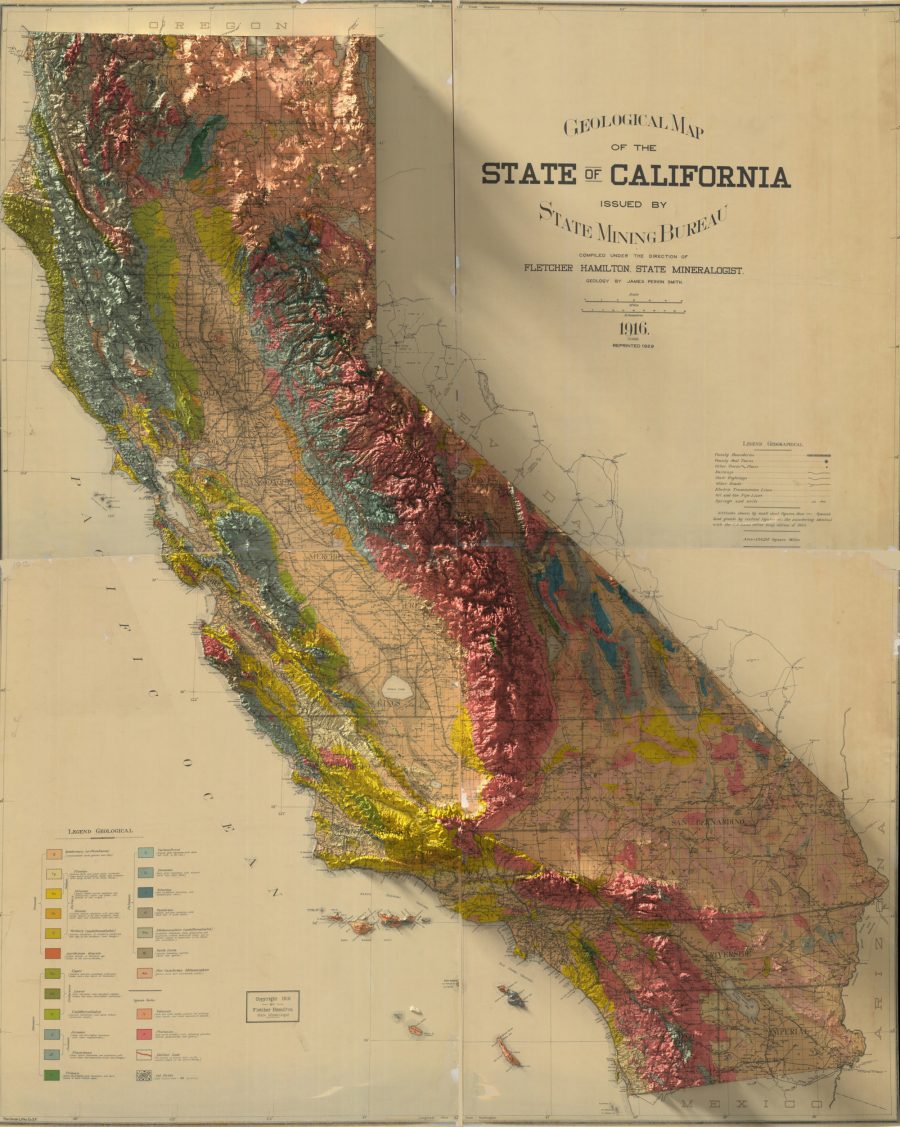
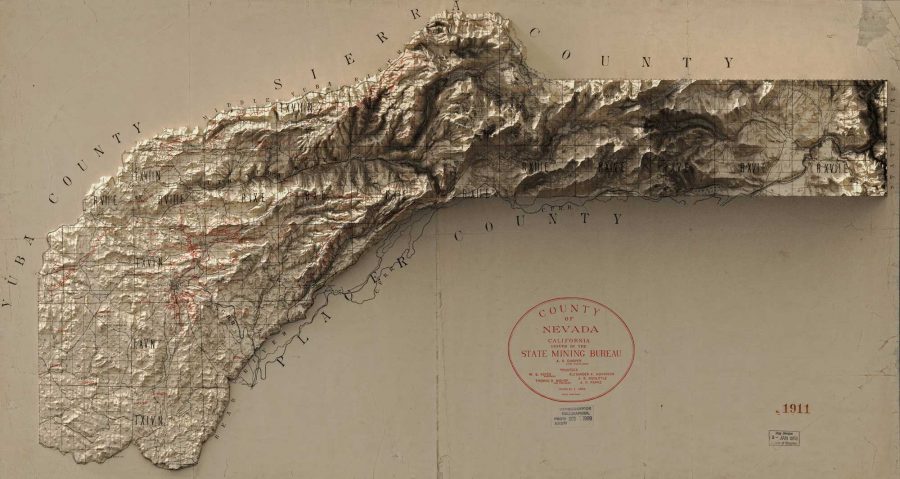
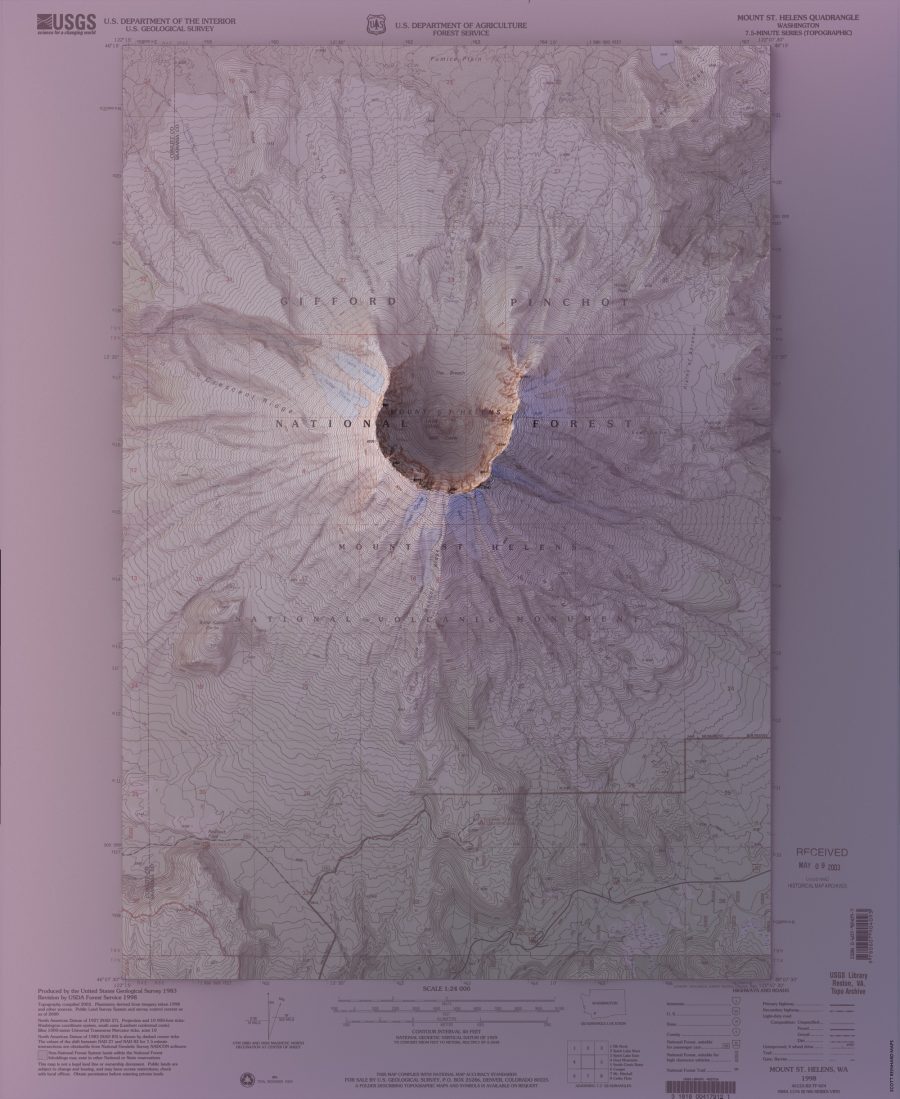
Vintage Geological Maps Get Turned Into 3D Topographical Wonders

What good is an old-fash­ioned map in the age of apps?

One need not be a moun­taineer, geo­sci­en­tist, or civ­il engi­neer to get the topo­graph­i­cal lay of the land with a speed and accu­ra­cy that would have blown Lewis and Clark’s minds’ right through the top of the lynx and otter top­pers they took to wear­ing after their stan­dard issue army lids wore out.

There’s still some­thing to be said for the old ways, though.

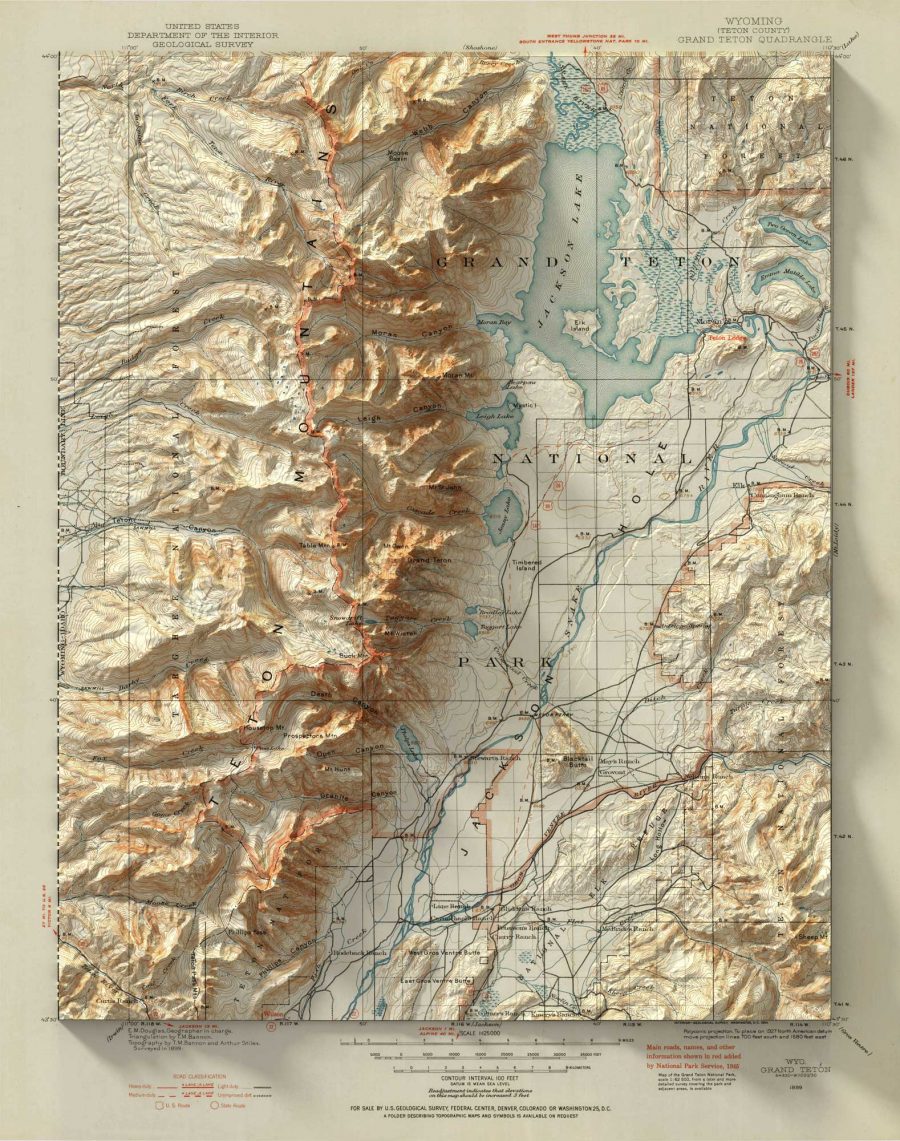
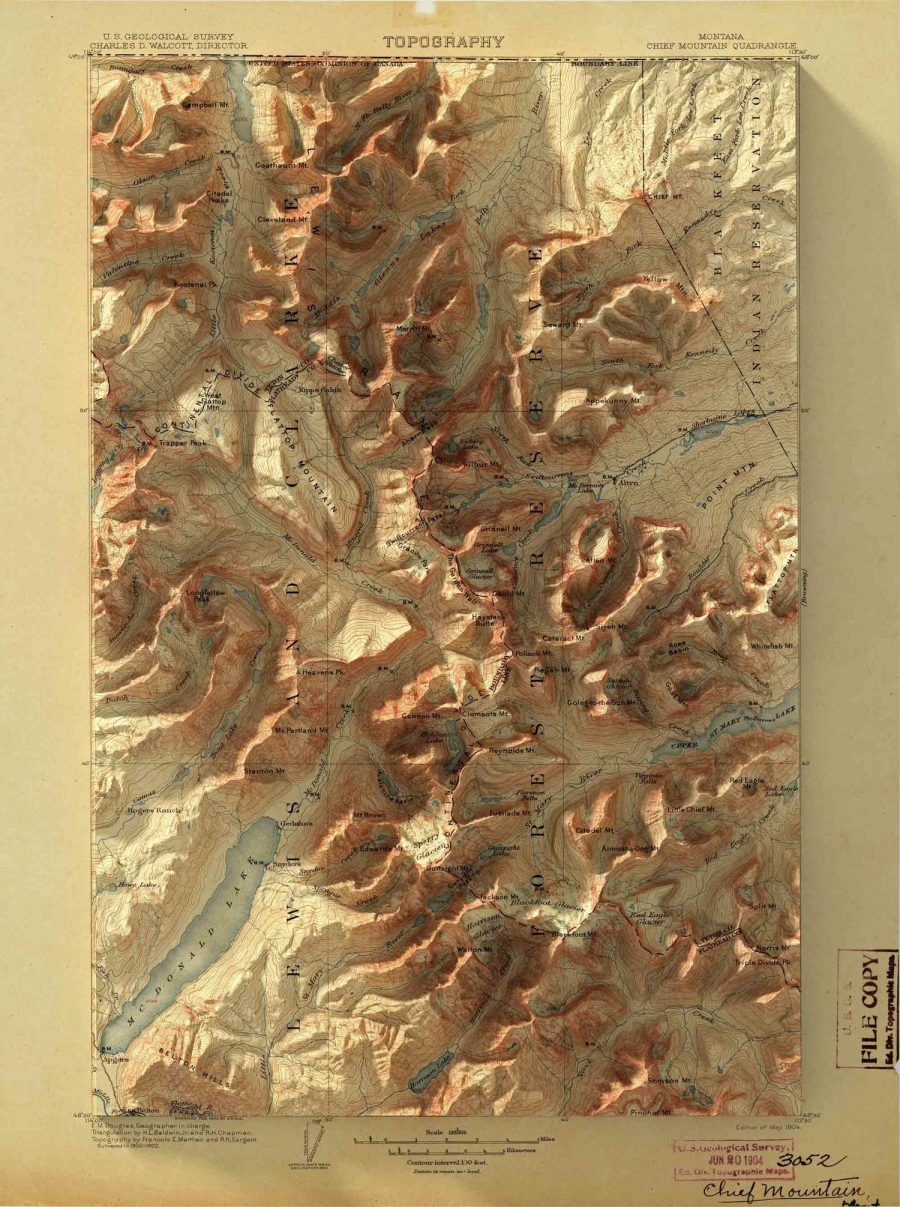
Graph­ic design­er Scott Rein­hard has all the lat­est tech­no­log­i­cal advances at his dis­pos­al, but it took com­bin­ing them with hun­dred-year-old maps for him to get a tru­ly 3‑D appre­ci­a­tion for loca­tions he has vis­it­ed around the Unit­ed States, as well as his child­hood home.

A son of Indi­ana, Rein­hard told Colossal’s Kate Sierzputows­ki that he found some Grand Teton-type excite­ment in the noto­ri­ous­ly flat Hoosier State once he start­ed mar­ry­ing offi­cial nation­al geospa­tial data to vin­tage map designs:

 When I began ren­der­ing the ele­va­tion data for the state, the sto­ry of the land emerged. The glac­i­ers that reced­ed across the north­ern half of the state after the last ice age scraped and gouged and shaped the land in a way that is spec­tac­u­lar­ly clear…I felt empow­ered by the abil­i­ty to col­lect and process the vast amounts of infor­ma­tion freely avail­able, and cre­ate beau­ti­ful images.

(The gov­ern­ment shut-down has not dam­aged the accu­ra­cy of Reinhard’s maps, but the U.S. Geo­log­i­cal Survey’s web­site does warn the pub­lic that the effects of any earth­quakes or oth­er force majeure occur­ring dur­ing this black-out peri­od will not imme­di­ate­ly be reflect­ed in their topos.)

(Nor are they able to respond to any inquiries, which puts a damper on hol­i­day week­end plans for mak­ing salt dough maps, anoth­er Hoosier state fave, at least in 1974…)

As writer Jason Kot­tke notes, the shad­ows the moun­tains cast on the mar­gins of Reinhard’s maps are a par­tic­u­lar­ly effec­tive opti­cal trick.

You can see more of Reinhard’s dig­i­tal­ly enhanced maps from the late 19th and ear­ly 20th-cen­tu­ry, and order prints in his online shop.

via Kot­tke/Colos­sal

Relat­ed Con­tent:

View and Down­load Near­ly 60,000 Maps from the U.S. Geo­log­i­cal Sur­vey (USGS)

Down­load 67,000 His­toric Maps (in High Res­o­lu­tion) from the Won­der­ful David Rum­sey Map Col­lec­tion

The His­to­ry of Car­tog­ra­phy, “the Most Ambi­tious Overview of Map Mak­ing Ever Under­tak­en,” Is Free Online

Ayun Hal­l­i­day is an author, illus­tra­tor, the­ater mak­er and Chief Pri­ma­tol­o­gist of the East Vil­lage Inky zine.  See her onstage in New York City in Feb­ru­ary as host of  The­ater of the Apes book-based vari­ety show, Necro­mancers of the Pub­lic Domain. Fol­low her @AyunHalliday.

How a Word Enters the Dictionary: A Quick Primer

Giv­en that you’re read­ing this on the Inter­net, we pre­sume you’ll be able to define many of the over 800 words that were added to the Mer­ri­am-Web­ster dic­tio­nary in 2018:

bio­hack­ing

bougie

binge­able

guac

hangry

Lat­inx

mock­tail

zoo­dles

But what about some of the humdingers lex­i­cog­ra­ph­er Kory Stam­per, for­mer asso­ciate edi­tor for Mer­ri­am-Web­ster and author of Word by Word: The Secret Life of Dic­tio­nar­ies, unleash­es in the above video?

pre­scrip­tivism

descrip­tivism

sprachge­fühl

ety­mo­log­i­cal fal­li­cist

(Bonus: bird strike)

And here we thought we were flu­ent in our native tongue. Face palm, to use anoth­er newish entry and an exam­ple of descrip­tivism. (It’s when the dic­tio­nary fol­lows the culture’s lead, accord­ing nov­el­ty its due by offi­cial­ly rec­og­niz­ing words that have entered the par­lance, rather than pre­scrib­ing the way cit­i­zens should be speak­ing.)

To hear Stam­per tell it, dic­tio­nary writ­ing is a dream gig for read­ers as well as word lovers.

Part of every day is spent read­ing, flag­ging any unfa­mil­iar words that may pop up for fur­ther research.

Did teenage slang give rise to it?

Was it born of busi­ness trends or tech indus­try advances?

Stam­per is adamant that lan­guage is not fixed, but rather a liv­ing organ­ism. Words go in and out of fash­ion, and take on mean­ings beyond the ones they sport­ed when first includ­ed in the dic­tio­nary. (Have a look at “extra” to see some evo­lu­tion­ary effects of the Eng­lish lan­guage and back it up with a peek inside the Urban Dic­tio­nary.)

Before a word pass­es dic­tio­nary muster, it must meet three cri­te­ria: it must have crossed into wide­spread use, it seems like­ly to stick around for a while, and it must have some sort of sub­stan­tive mean­ing, as opposed to being known sole­ly for its length (“antidis­es­tab­lish­men­tar­i­an­ism”), or some oth­er struc­tur­al won­der.

“Iouea” con­tains all five reg­u­lar vow­els and no oth­er let­ters. The fact that it exists to describe a genus of sea sponges may seem some­what beside the point to all but marine biol­o­gists.

What new words will enter the lex­i­con in 2019?

Per­haps we should look to the past. We set Merriam-Webster’s Time Trav­el­er dial back 100 years to dis­cov­er the words that debuted in 1919. There’s an abun­dance of good­ies here, some of whose WWI-era con­text has already expand­ed to accom­mo­date mod­ern mean­ing (anti-stress, fan­boy, super­pimp, unbuffered). Read­ers, care to take a stab at fresh­en­ing up some oth­er can­di­dates:

apple-knock­er

buck­shee

cape­skin

culti­gen

game­tophore

inter­ro­gee

micromethod

neu­ro­pro­tec­tive

out­gas

pre­re­turn

putsch

sce­nar­ist

Relat­ed Con­tent: 

The Largest His­tor­i­cal Dic­tio­nary of Eng­lish Slang Now Free Online: Cov­ers 500 Years of the “Vul­gar Tongue”

“Lynchi­an,” “Kubrick­ian,” “Taran­ti­noesque” and 100+ Film Words Have Been Added to the Oxford Eng­lish Dic­tio­nary

Dic­tio­nary of the Old­est Writ­ten Language–It Took 90 Years to Com­plete, and It’s Now Free Online

Ayun Hal­l­i­day is an author, illus­tra­tor, the­ater mak­er and Chief Pri­ma­tol­o­gist of the East Vil­lage Inky zine.  See her onstage in New York City Jan­u­ary 14 as host of The­ater of the Apes book-based vari­ety show, Necro­mancers of the Pub­lic Domain. Fol­low her @AyunHalliday.

How Peter Jackson Made His State-of-the-Art World War I Documentary, They Shall Not Grow Old: An Inside Look

There are very few work­ing direc­tors today who can do what Peter Jack­son does so well—create extra­or­di­nary spec­ta­cles on the grand­est of scales while also stay­ing tight­ly focused on char­ac­ter devel­op­ment and emo­tion­al depth. He’s made mis­steps. His Hob­bit tril­o­gy felt bloat­ed, busy and unnec­es­sary, but one rea­son it so dis­ap­point­ed was because he’d already shown him­self a mas­ter of fan­ta­sy film­mak­ing with what many con­sid­ered the unfilm­ma­ble Lord of the Rings.

Of course non-Tolkien-relat­ed Jack­son films like Heav­en­ly Crea­tures also show­case these strengths, on a small­er scale: the abil­i­ty to retain the human dimen­sion amidst cin­e­mat­ic spec­ta­cles and inhu­man dark­ness (a qual­i­ty he mined explic­it­ly in his years as a hor­ror direc­tor). All of these sen­si­bil­i­ties, includ­ing a pro­nounced streak of dark humor and tal­ent for manip­u­lat­ing his audi­ences, make him the ide­al direc­tor for a doc­u­men­tary on World War I.

It’s a con­flict that makes lit­tle his­tor­i­cal sense to most of us, that unfold­ed on a scale few of us can imag­ine, with few iden­ti­fi­able heroes and vil­lains and a com­pli­cat­ed geopo­lit­i­cal sit­u­a­tion that can feel out of our grasp.

Many doc­u­men­taries on the war are infor­ma­tive but, frankly, quite dull. In striv­ing for objec­tiv­i­ty, they lose sight of human­i­ty. Rather than adopt the voice of god and news­reel look that char­ac­ter­izes the usu­al fare, Jack­son has tak­en an active role in shap­ing the nar­ra­tive for us with cut­ting-edge block­buster cin­e­mat­ic tech­niques. He gives us char­ac­ters to care about in show­ing the hor­ror of trench war­fare, the con­fu­sion and cama­raderie of war. Though he uses orig­i­nal footage, it is dig­i­tal­ly enhanced and col­orized, screened in 3D, with record­ings of remem­brances from the sol­diers them­selves dra­mat­i­cal­ly over­laid to cre­ate the sense that the fig­ures we see onscreen are speak­ing to us.

The result, as Guy Lodge writes at Vari­ety, “is a tech­ni­cal daz­zler with a sur­pris­ing­ly humane streak…. So daz­zling­ly trans­for­ma­tive is the restora­tion of this footage that it may as well be the prod­uct of a movie shoot.” Indeed, once the cred­its roll, view­ers see the same “ver­i­ta­ble army of mag­ic-work­ing tech­ni­cians’ names” as they would on any big-bud­get action movie. Jack­son has, in effect, pro­duced “the world’s most state-of-the-art edu­ca­tion­al film,” apply­ing all the emo­tion­al levers and pul­leys of fea­ture film­mak­ing to a his­tor­i­cal archive.

Like most of us, stu­dents have trou­ble under­stand­ing the scale of the war and con­nect­ing with the lives of peo­ple so indis­tinct­ly pho­tographed and far away in time. Jack­son makes sure that they can do both, and his film will be sent to every high school in the U.K. Those schools will not, of course, be able to repro­duce the 3D effects. Yet even these, though they sound “gim­micky on the face of it,” writes Lodge, prove “to have an expe­ri­en­tial pur­pose, con­vey­ing the jud­der­ing move­ment and chaos of a con­flict many of us have large­ly viewed through cal­ci­fied still images.”

In the inter­views and behind the scenes videos here, we learn how Jack­son and his team solved the film speed prob­lem to make the old reels look nat­ur­al, how they cre­at­ed a col­or palette and removed blur­ri­ness and blem­ish­es. Jack­son also talks about his own per­son­al stake in the project, imag­in­ing what his grand­fa­ther endured in the Great War. This con­nec­tion seems to have spurred him all the more in the effort.

“To memo­ri­al­ize these sol­diers a hun­dred years lat­er,” he says, “is to try to bring some of their human­i­ty back into the world again, to stop them being a black and white cliché.” In cre­at­ing this mov­ing memo­r­i­al, Jack­son goes far beyond the man­date of an edu­ca­tion­al film. He has used all the tech­niques at his dis­pos­al to make good on the promise in Robert Lau­rence Binyon’s 1914 poem “For the Fall­en,” from which the doc­u­men­tary takes its title:

They shall grow not old, as we that are left grow old:
Age shall not weary them, nor the years con­demn.
At the going down of the sun and in the morn­ing
We will remem­ber them.

Relat­ed Con­tent:

Peter Jackson’s New Film on World War I Fea­tures Incred­i­ble Dig­i­tal­ly-Restored Footage From the Front Lines: Get a Glimpse

Watch World War I Unfold in a 6 Minute Time-Lapse Film: Every Day From 1914 to 1918

The Great War: Video Series Will Doc­u­ment How WWI Unfold­ed, Week-by-Week, for the Next 4 Years

Josh Jones is a writer and musi­cian based in Durham, NC. Fol­low him at @jdmagness

« Go BackMore in this category... »
Quantcast