Carl Jung Writes a Review of Joyce’s Ulysses and Mails It To The Author (1932)

jung joyce 2

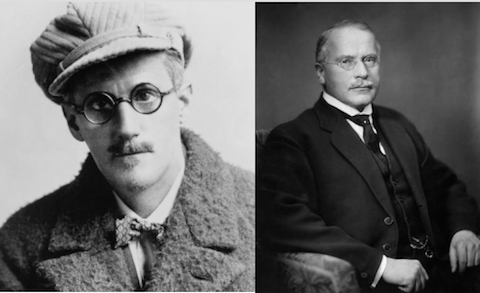
Feel­ings about James Joyce’s Ulysses tend to fall rough­ly into one of two camps: the reli­gious­ly rev­er­ent or the exasperated/bored/overwhelmed. As pop­u­lar exam­ples of the for­mer, we have the many thou­sand cel­e­brants of Blooms­day—June 16th, the date on which the nov­el is set in 1904. These rev­el­ries approach the lev­el of saints’ days, with re-enact­ments and pil­grim­ages to impor­tant Dublin sites. On the oth­er side, we have the reac­tions of Vir­ginia Woolf, say, or cer­tain friends of mine who left wry com­ments on Blooms­day posts about pick­ing up some­thing more “read­able” to cel­e­brate. (A third cat­e­go­ry, the scan­dal­ized, has more or less died off, as scat­ol­ogy, blas­phe­my, and cuck­oldry have become the stuff of sit­coms.) Anoth­er famous read­er, Carl Jung, seems at first to damn the nov­el with some faint praise and much scathing crit­i­cism in a 1932 essay for Europäis­che Revue, but ends up, despite him­self, writ­ing about the book in the lan­guage of a true believ­er.

A great many read­ers of Jung’s essay may per­haps nod their heads at sen­tences like “Yes, I admit I feel I have been made a fool of” and “one should nev­er rub the reader’s nose into his own stu­pid­i­ty, but that is just what Ulysses does.” To illus­trate his bore­dom with the nov­el, he quotes “an old uncle,” who says “’Do you know how the dev­il tor­tures souls in hell? […] He keeps them wait­ing.’” This remark, Jung writes, “occurred to me when I was plow­ing through Ulysses for the first time. Every sen­tence rais­es an expec­ta­tion which is not ful­filled; final­ly, out of sheer res­ig­na­tion, you come to expect noth­ing any longer.” But while Jung’s cri­tique may val­i­date cer­tain hasty read­ers’ hatred of Joyce’s near­ly unavoid­able 20th cen­tu­ry mas­ter­work, it also probes deeply into why the nov­el res­onates.

For all of his frus­tra­tion with the book—his sense that it “always gives the read­er an irri­tat­ing sense of inferiority”—Jung nonethe­less bestows upon it the high­est praise, com­par­ing Joyce to oth­er prophet­ic Euro­pean writ­ers of ear­li­er ages like Goethe and Niet­zsche. “It seems to me now,” he writes, “that all that is neg­a­tive in Joyce’s work, all that is cold-blood­ed, bizarre and banal, grotesque and dev­il­ish, is a pos­i­tive virtue for which it deserves praise.” Ulysses is “a devo­tion­al book for the object-besot­ted white man,” a “spir­i­tu­al exer­cise, an aes­thet­ic dis­ci­pline, an ago­niz­ing rit­u­al, an arcane pro­ce­dure, eigh­teen alchem­i­cal alem­bics piled on top of one anoth­er […] a world has passed away, and is made new.” He ends the essay by quot­ing the novel’s entire final para­graph. (Find longer excerpts of Jung’s essay here and here.)

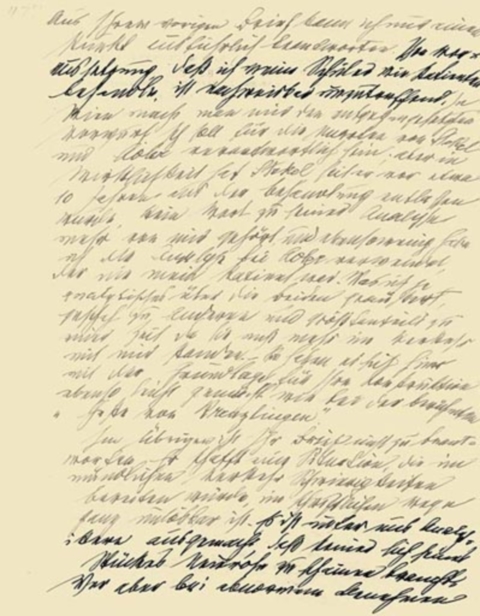
Jung not only wrote what may be the most crit­i­cal­ly hon­est yet also glow­ing response to the nov­el, but he also took it upon him­self in Sep­tem­ber of 1932 to send a copy of the essay to the author along with the let­ter below. Let­ters of Note tells us that Joyce “was both annoyed and proud,” a fit­ting­ly divid­ed response to such an ambiva­lent review.

Dear Sir,

Your Ulysses has pre­sent­ed the world such an upset­ting psy­cho­log­i­cal prob­lem that repeat­ed­ly I have been called in as a sup­posed author­i­ty on psy­cho­log­i­cal mat­ters.

Ulysses proved to be an exceed­ing­ly hard nut and it has forced my mind not only to most unusu­al efforts, but also to rather extrav­a­gant pere­gri­na­tions (speak­ing from the stand­point of a sci­en­tist). Your book as a whole has giv­en me no end of trou­ble and I was brood­ing over it for about three years until I suc­ceed­ed to put myself into it. But I must tell you that I’m pro­found­ly grate­ful to your­self as well as to your gigan­tic opus, because I learned a great deal from it. I shall prob­a­bly nev­er be quite sure whether I did enjoy it, because it meant too much grind­ing of nerves and of grey mat­ter. I also don’t know whether you will enjoy what I have writ­ten about Ulysses because I could­n’t help telling the world how much I was bored, how I grum­bled, how I cursed and how I admired. The 40 pages of non stop run at the end is a string of ver­i­ta­ble psy­cho­log­i­cal peach­es. I sup­pose the dev­il’s grand­moth­er knows so much about the real psy­chol­o­gy of a woman, I did­n’t.

Well, I just try to rec­om­mend my lit­tle essay to you, as an amus­ing attempt of a per­fect stranger that went astray in the labyrinth of your Ulysses and hap­pened to get out of it again by sheer good luck. At all events you may gath­er from my arti­cle what Ulysses has done to a sup­pos­ed­ly bal­anced psy­chol­o­gist.

With the expres­sion of my deep­est appre­ci­a­tion, I remain, dear Sir,

Yours faith­ful­ly,

C. G. Jung

With this let­ter of intro­duc­tion, Jung was “a per­fect stranger” to Joyce no longer. In fact, two years lat­er, Joyce would call on the psy­chol­o­gist to treat his daugh­ter Lucia, who suf­fered from schiz­o­phre­nia, a trag­ic sto­ry told in Car­ol Loeb Schloss’s biog­ra­phy of the novelist’s famous­ly trou­bled child. For his care of Lucia and his care­ful atten­tion to Ulysses, Joyce would inscribe Jung’s copy of the book: “To Dr. C.G. Jung, with grate­ful appre­ci­a­tion of his aid and coun­sel. James Joyce. Xmas 1934, Zurich.”

via Let­ters of Note

Relat­ed Con­tent:

Every­thing You Need to Enjoy Read­ing James Joyce’s Ulysses on Blooms­day

The Very First Reviews of James Joyce’s Ulysses: “A Work of High Genius” (1922)

Vir­ginia Woolf Writes About Joyce’s Ulysses, “Nev­er Did Any Book So Bore Me,” and Quits at Page 200

Josh Jones is a writer and musi­cian based in Durham, NC. Fol­low him at @jdmagness

The Famous Letter Where Freud Breaks His Relationship with Jung (1913)

FreudJung

Freud and Jung. Jung and Freud. His­to­ry has close­ly asso­ci­at­ed these two who did so much exam­i­na­tion of the mind in ear­ly 20th-cen­tu­ry Europe, but the sim­ple con­nec­tion of their names belies a much more com­pli­cat­ed rela­tion­ship between the men them­selves. At the top of the post, you can see the let­ter that Sig­mund Freud, father of psy­cho­analy­sis, wrote to Carl Gus­tav Jung, founder of ana­lyt­i­cal psy­chol­o­gy, in order to end that rela­tion­ship entire­ly. “At first Freud saw in Jung a suc­ces­sor who might lead the psy­cho­an­a­lyt­ic move­ment into the future,” say the cura­tor’s com­ments at the Library of Con­gress’ web site, “but by 1913 rela­tions between the two men had soured.

While Freud claims in his let­ter that it is ‘demon­stra­bly untrue’ that he treats his fol­low­ers as patients, in the very same let­ter we find him allud­ing to Jung’s ‘ill­ness.’ ” Freud calls it “a con­ven­tion among us ana­lysts that none of us need feel ashamed of his own neu­ro­sis. But one [mean­ing Jung] who while behav­ing abnor­mal­ly keeps shout­ing that he is nor­mal gives ground for the sus­pi­cion that he lacks insight into his ill­ness. Accord­ing­ly, I pro­pose that we aban­don our per­son­al rela­tions entire­ly.”

“I shall lose noth­ing by it,” he con­tin­ues, “for my only emo­tion­al tie with you has been a long thin thread — the lin­ger­ing effect of past dis­ap­point­ments — and you have every­thing to gain, in view of the remark you recent­ly made to the effect that an inti­mate rela­tion­ship with a man inhib­it­ed your sci­en­tif­ic free­dom.” This rela­tion­ship, writes Lionel Trilling in a review of The Cor­re­spon­dence Between Sig­mund Freud and C.G. Jung, “had its bright begin­ning in 1906 and came to its embit­tered end in 1913,” when Freud wrote this let­ter.  “Freud and Jung were not good for one anoth­er; their con­nec­tion made them sus­cep­ti­ble to false atti­tudes and ambigu­ous tones. [ … ] The intel­lec­tu­al and pro­fes­sion­al dif­fer­ences between the two men, pro­found as these even­tu­al­ly became, would per­haps not of them­selves have brought about a break so dras­tic as did take place had not their alien­at­ing ten­den­cy been rein­forced by per­son­al con­flicts.” Only a com­par­a­tive study of Freud and Jung’s meth­ods would yield a com­plete under­stand­ing of their roles in the strug­gle for the soul of psy­cho­analy­sis. But on a more basic lev­el, this hard­ly counts as the first nor the last col­lapse, in any field of human endeav­or, of a per­haps overde­ter­mined suc­ces­sion between an emi­nence and his would-be pro­tege — though it may count as one of the most elo­quent­ly doc­u­ment­ed ones.

Relat­ed Con­tent:

Sig­mund Freud Speaks: The Only Known Record­ing of His Voice, 1938

Face to Face with Carl Jung: ‘Man Can­not Stand a Mean­ing­less Life’

Carl Gus­tav Jung Explains His Ground­break­ing The­o­ries About Psy­chol­o­gy in Rare Inter­view (1957)

Carl Gus­tav Jung Pon­ders Death

Col­in Mar­shall hosts and pro­duces Note­book on Cities and Cul­ture and writes essays on cities, lan­guage, Asia, and men’s style. He’s at work on a book about Los Ange­les, A Los Ange­les Primer. Fol­low him on Twit­ter at @colinmarshall or on Face­book.

Eudora Welty Writes a Quirky Letter Applying for a Job at The New Yorker (1933)

eudora welty

“Eudo­ra Wel­ty is one of the rea­sons that you thank God you know how to read,” writes an online review­er of her auto­bi­og­ra­phy One Writer’s Begin­nings. It’s a sen­ti­ment with which I could not agree more. Whether in mem­oir, short sto­ry, or nov­el, Wel­ty—win­ner of near­ly every lit­er­ary prize save the Nobel—speaks with the most high­ly indi­vid­ual of voic­es. (Wel­ty once told a Paris Review inter­view­er that she doesn’t read any­one for “kin­dred­ness.”) Her prose, so attuned to its own rhythms, so con­fi­dent­ly ven­tur­ing into new realms of thought, seems to sur­prise even her. Indeed, teach­ers of writ­ing could hard­ly do bet­ter than assign Wel­ty to illus­trate the elu­sive con­cept of “voice”—it’s a writer­ly qual­i­ty she mas­tered ear­ly, or per­haps always pos­sessed.

Take the 1933 let­ter below in which she intro­duces her­self, a young post­grad­u­ate of 23, to The New York­er in hopes of secur­ing a posi­tion doing… well, what­ev­er. She pro­pos­es “drum[ming] up opin­ions” on books and film, but only at the rate of “a lit­tle para­graph each morning—a lit­tle para­graph each night” (though she would “work like a slave” if asked). She also offers to replace car­toon­ist (and author of “The Secret Life of Wal­ter Mit­ty”) James Thurber “in case he goes off the deep end.” The let­ter brims with win­some self-con­fi­dence and breezy opti­mism, as well as the unself­con­scious self-aware­ness she makes look so easy: “That shows you how my mind works,” she writes, “quick, and away from the point.” The mag­a­zine staff, points out Shane Par­rish of Far­nam Street, “ignored her plea […] miss­ing the obvi­ous tal­ent,” though of course they would begin pub­lish­ing her sto­ries just a few years lat­er.

Read the let­ter in full below and mar­vel at how any­one could reject such a delight­ful­ly enthu­si­as­tic can­di­date (she would do just fine as a junior “pub­lic­i­ty agent” for the WPA).

March 15, 1933

Gen­tle­men,

I sup­pose you’d be more inter­est­ed in even a sleight‑o’-hand trick than you’d be in an appli­ca­tion for a posi­tion with your mag­a­zine, but as usu­al you can’t have the thing you want most.

I am 23 years old, six weeks on the loose in N.Y. How­ev­er, I was a New York­er for a whole year in 1930–31 while attend­ing adver­tis­ing class­es in Columbi­a’s School of Busi­ness. Actu­al­ly I am a south­ern­er, from Mis­sis­sip­pi, the nation’s most back­ward state. Ram­i­fi­ca­tions include Wal­ter H. Page, who, unluck­i­ly for me, is no longer con­nect­ed with Dou­ble­day-Page, which is no longer Dou­ble­day-Page, even. I have a B.A. (’29) from the Uni­ver­si­ty of Wis­con­sin, where I majored in Eng­lish with­out a care in the world. For the last eigh­teen months I was lan­guish­ing in my own office in a radio sta­tion in Jack­son, Miss., writ­ing con­ti­nu­ities, dra­mas, mule feed adver­tise­ments, san­ta claus talks, and life insur­ance playlets; now I have giv­en that up.

As to what I might do for you — I have seen an unto­ward amount of pic­ture gal­leries and 15¢ movies late­ly, and could review them with my old pros­per­ous detach­ment, I think; in fact, I recent­ly coined a gen­er­al word for Matis­se’s pic­tures after see­ing his lat­est at the Marie Har­ri­man: con­cu­bineap­ple. That shows you how my mind works — quick, and away from the point. I read sim­ply vora­cious­ly, and can drum up an opin­ion after­wards.

Since I have bought an India print, and a large num­ber of phono­graph records from a Mr. Nuss­baum who picks them up, and a Cezanne Bathers one inch long (that shows you I read e. e. cum­mings I hope), I am anx­ious to have an apart­ment, not to men­tion a small portable phono­graph. How I would like to work for you! A lit­tle para­graph each morn­ing — a lit­tle para­graph each night, if you can’t hire me from day­light to dark, although I would work like a slave. I can also draw like Mr. Thurber, in case he goes off the deep end. I have stud­ied flower paint­ing.

There is no telling where I may apply, if you turn me down; I real­ize this will not phase you, but con­sid­er my oth­er alter­na­tive: the U of N.C. offers for $12.00 to let me dance in Vachel Lind­say’s Con­go. I con­go on. I rest my case, repeat­ing that I am a hard work­er.

Tru­ly yours,

Eudo­ra Wel­ty

Welty’s let­ter appears along­side dozens more remark­able mis­sives in the beau­ti­ful new book, Let­ters of Note: An Eclec­tic Col­lec­tion of Cor­re­spon­dence Deserv­ing of a Wider Audi­ence.

via Far­nam Street/Brain Pick­ings

Relat­ed Con­tent:

Ralph Wal­do Emer­son Writes a Job Rec­om­men­da­tion for Walt Whit­man (1863)

Read Rejec­tion Let­ters Sent to Three Famous Artists: Sylvia Plath, Kurt Von­negut & Andy Warhol

Gertrude Stein Gets a Snarky Rejec­tion Let­ter from Pub­lish­er (1912)

Josh Jones is a writer and musi­cian based in Durham, NC. Fol­low him at @jdmagness.

James Joyce’s Dirty Love Letters Read Aloud by Martin Starr, Paget Brewster & Other TV Comedy Actors (NSFW)

(Be warned, these videos are Not Safe for Work. And unless you can deal with strong lan­guage, you should skip watch­ing these clips.)

Last year we fea­tured James Joyce’s “dirty let­ters” to his wife, orig­i­nal­ly writ­ten in 1909 but not dis­cov­ered in all their cere­bral­ly erot­ic glo­ry until this cen­tu­ry. For Valen­tine’s Day, the sketch com­e­dy video site Fun­ny or Die cap­i­tal­ized on the avail­abil­i­ty of these high­ly detailed, fan­ta­sy-sat­u­rat­ed Joycean mash notes by hav­ing them read dra­mat­i­cal­ly. For this task the pro­duc­ers round­ed up five well-known actors, such as Mar­tin Starr from such comed­ical­ly respect­ed tele­vi­sion shows as Freaks and Geeks and Par­ty Down. You can watch his read­ing above. “I would like you to wear draw­ers with three or four frills, one over the oth­er at the knees and up the thighs, and great crim­son bows in them, so that when I bend down over you to open them and” — but you don’t just want to read it. You want to hear such a mas­ter­piece per­formed.

Off rais­ing the chil­dren in Tri­este, Joyce’s wife Nora wrote replies of a pre­sum­ably sim­i­lar ardor-sat­u­rat­ed nature. Alas, these remain undis­cov­ered, but that unfor­tu­nate fact does­n’t stop actress­es as well as actors from pro­vid­ing oral ren­di­tions of their own. Just above, we have Paget Brew­ster from Friends and Crim­i­nal Minds read­ing aloud anoth­er of Joyce’s love let­ters, one which moves with sur­pris­ing swift­ness from evok­ing “the spir­it of eter­nal beau­ty” to evok­ing “a hog rid­ing a sow.” This series of read­ings also includes con­tri­bu­tions from The Mid­dle­man’s Natal­ie Morales, The Kids in the Hall’s Dave Foley, and Sat­ur­day Night Live’s Michaela Watkins. They all reveal that, with his tex­tu­al cre­ativ­i­ty as well as his close acquain­tance with those places where the roman­tic meets the repul­sive, James Joyce would have made quite a sex­ter today. You can have that idea for free, lit­er­ate sketch com­e­dy video pro­duc­ers of the inter­net.

PS Apolo­gies for the lengthy ads that pre­cede the videos. They come from Fun­ny or Die and we have no con­trol over them.

Relat­ed Con­tent:

James Joyce’s “Dirty Let­ters” to His Wife (1909)

James Joyce Plays the Gui­tar, 1915

On Blooms­day, Hear James Joyce Read From his Epic Ulysses, 1924

James Joyce, With His Eye­sight Fail­ing, Draws a Sketch of Leopold Bloom (1926)

James Joyce’s Ulysses: Down­load the Free Audio Book

Col­in Mar­shall hosts and pro­duces Note­book on Cities and Cul­ture and writes essays on cities, lan­guage, Asia, and men’s style. He’s at work on a book about Los Ange­les, A Los Ange­les Primer. Fol­low him on Twit­ter at @colinmarshall or on Face­book.

Ernest Hemingway’s “Love Letter” to His “Dearest Kraut,” Marlene Dietrich (1955)

Hemingway-to-Marlene-Diet-001

Click to enlarge

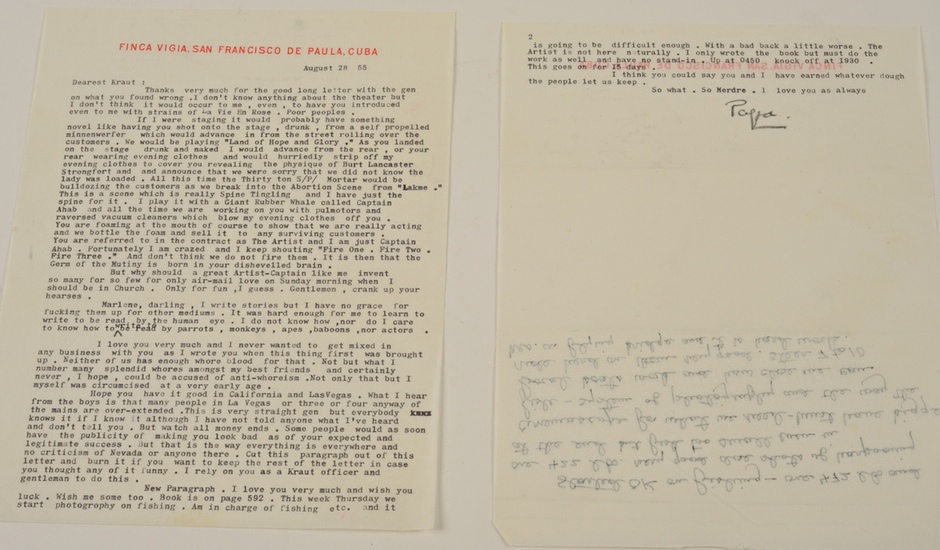
We think today of Ernest Hem­ing­way as that most styl­is­ti­cal­ly dis­ci­plined of writ­ers, but it seems that, out­side his pub­lished work and espe­cial­ly in his per­son­al cor­re­spon­dence, he could cut pret­ty loose. One par­tic­u­lar­ly vivid exam­ple has returned to pub­lic atten­tion recent­ly by appear­ing for sale on a site called auctionmystuff.com: a let­ter from Hem­ing­way to leg­endary singer-actress Mar­lene Diet­rich, dat­ed August 28, 1955. “In the inti­mate, ram­bling and reveal­ing let­ter,” writes the Wall Street Jour­nal’s Jonathan Welsh, “Hem­ing­way pro­fess­es his love for Diet­rich a num­ber of times, though the two are said to have nev­er con­sum­mat­ed the rela­tion­ship.” He also, Welsh notes, “talks about stag­ing one of her per­for­mances, in which he imag­ines her ‘drunk and naked.’ ” The full let­ter, which spares no detail of this elab­o­rate fan­ta­sy, runs as fol­lows:

Dear­est Kraut :

Thanks very much for the good long let­ter with the gen on what you found wrong. I don’t know any­thing about the the­ater but I don’t think it would occur to me, even, to have you intro­duced even to me with strains of La Vie En Rose. Poor peo­ples.

If I were stag­ing it would prob­a­bly have some­thing nov­el like hav­ing you shot onto the stage, drunk, from a self-pro­pelled min­nen­wer­fer which would advance in from the street rolling over the cus­tomers. We would be play­ing “Land of Hope and Glo­ry.” As you land­ed on the stage drunk and naked I would advance from the rear, or from your rear wear­ing evening clothes and would hur­ried­ly strip off my evening clothes to cov­er you reveal­ing the physique of Burt Lan­cast­er Strong­fort and announce that we were sor­ry that we did not know the lady was loaded. All this time the Thir­ty ton S/P/ Mor­tar would be bull­doz­ing the cus­tomers as we break into the Abor­tion Scene from “Lakme.” This is a scene which is real­ly Spine Tin­gling and I have just the spine for it. I play it with a Giant Rub­ber Whale called Cap­tain Ahab and all the time we are work­ing on you with pul­mo­tors and raversed (sic) clean­ers which blow my evening clothes off you. You are foam­ing at the mouth of course to show that we are real­ly act­ing and we bot­tle the foam and sell it to any sur­viv­ing cus­tomers. You are referred to in the con­tract as The Artist and I am just Cap­tain Ahab. For­tu­nate­ly I am crazed and I keep shout­ing “Fire One. Fire Two. Fire Three.” And don’t think we do not fire them. It is then that the Germ of the Mutiny is born in your disheveled brain.

But why should a great Artist-Cap­tain like me invent so many for so few for only air-mail love on Sun­day morn­ing when I should be in church. Only for fun, I guess. Gen­tle­men, crank up your hears­es.

Mar­lene, dar­ling, I write sto­ries but I have no grace for fuck­ing them up for oth­er medi­ums. It was hard enough for me to learn to write to be read by the human eye. I do not know how, nor do I care to know how to write to be read by par­rots, mon­keys, apes, baboons, nor actors.

I love you very much and I nev­er want­ed to get mixed in any busi­ness with you as I wrote you when this thing first was brought up. Nei­ther of us has enough whore blood for that. Not but what I num­ber many splen­did whores amongst my best friends and cer­tain­ly nev­er, I hope, could be accused of anti-whor­eism. Not only that but I was cir­cum­cised as a very ear­ly age.

Hope you have it good in Cal­i­for­nia and Las Vegas. What I hear from the boys is that many peo­ple in La Vegas (sic) or three or four any­way of the mains are over-extend­ed. This is very straight­gen but every­body knows it if I know it although I have not told any­one what I’ve heard and don’t tell you. But watch all mon­ey ends. Some peo­ple would as soon have the pub­lic­i­ty of mak­ing you look bad as of your expect­ed and legit­i­mate suc­cess. But that is the way every­thing is every­where and no crit­i­cism of Neva­da or any­one there. Cut this para­graph out of this let­ter and burn it if you want to keep the rest of the let­ter in case you thought any of it fun­ny. I rely on you as a Kraut offi­cer and gen­tle­men do this.

New Para­graph. I love you very much and wish you luck. Wish me some too. Book is on page 592. This week Thurs­day we start pho­tog­ra­phy on fish­ing. Am in charge of fish­ing etc. and it is going to be dif­fi­cult enough. With a bad back a lit­tle worse. The Artist is not here nat­u­ral­ly. I only wrote the book but must do the work as well and have no stand-in. Up at 0450 knock off at I930. This goes on for I5 days.

I think you could say you and I have earned what­ev­er dough the peo­ple let us keep.

So what. So Mer­dre. I love you as always.

Papa

“To him she was ‘my lit­tle Kraut,’ or ‘daugh­ter,’ to her he was sim­ply ‘Papa’ — and it was love at first sight when they met aboard a French ocean lin­er in 1934,” writes The Guardian’s Kate Con­nol­ly of the two icons’ unusu­al rela­tion­ship. “Hem­ing­way and Diet­rich start­ed writ­ing to each oth­er when he was 50 and she was 47, remain­ing in close con­tact until the writer’s sui­cide in 1961. But they nev­er con­sum­mat­ed their love, because of what Hem­ing­way referred to as ‘unsyn­chro­nised pas­sion.’ ” A fan of both Hem­ing­way and Diet­rich could pre­sum­ably desire noth­ing more than one of the orig­i­nal pieces of their cor­re­spon­dence, but this par­tic­u­lar let­ter, with a start­ing price of $35,000, drew not a sin­gle bid — per­haps a sale, like the phys­i­cal expres­sion of the Old Man and the Sea author and “Lili Mar­leen” singer’s love, fat­ed nev­er to hap­pen.

Relat­ed Con­tent:

Mar­lene Dietrich’s Tem­per­me­n­tal Screen Test for The Blue Angel (and the Com­plete 1930 Film)

Ernest Hem­ing­way to F. Scott Fitzger­ald: “Kiss My Ass”

Ernest Hemingway’s Delu­sion­al Adven­tures in Box­ing: “My Writ­ing is Noth­ing, My Box­ing is Every­thing.”

Ernest Hemingway’s Favorite Ham­burg­er Recipe

Clive Owen & Nicole Kid­man Star in HBO’s Hem­ing­way & Gell­horn: Two Writ­ers, A Mar­riage and a Civ­il War

Col­in Mar­shall hosts and pro­duces Note­book on Cities and Cul­ture and writes essays on cities, lan­guage, Asia, and men’s style. He’s at work on a book about Los Ange­les, A Los Ange­les Primer. Fol­low him on Twit­ter at @colinmarshall or on Face­book.

Mark Twain Writes a Rapturous Letter to Walt Whitman on the Poet’s 70th Birthday (1889)

TwaintoWhitman1

May 31, 1889, Walt Whitman’s sev­en­ti­eth birth­day, occa­sioned a cel­e­bra­tion of the poet in his home­town of Cam­den, New Jer­sey, with a sev­er­al course din­ner called “The Feast of Rea­son” fol­lowed by a pro­gram called “The Flow of Soul,” a suc­ces­sion of tes­ti­mo­ni­al speech­es and read­ings by promi­nent politi­cians and a few minor lit­er­ary fig­ures. Whit­man him­self was in ill health, but he man­aged to attend dur­ing dessert, deliv­er a brief response, then stay for over two hours after­ward (see the event’s orig­i­nal pro­gram, with menu, here). While the event itself, writes Ed Fol­som in the Walt Whit­man Quar­ter­ly Review, was intend­ed as a “local cel­e­bra­tion of Camden’s most famous per­son­al­i­ty,” the occa­sion prompt­ed admir­ers world­wide to send birth­day wish­es by wire and let­ter. Some of the famous lit­er­ary fig­ures who wrote includ­ed John Adding­ton Symonds, William Dean How­ells, John Green­leaf Whit­ti­er, and Mark Twain.

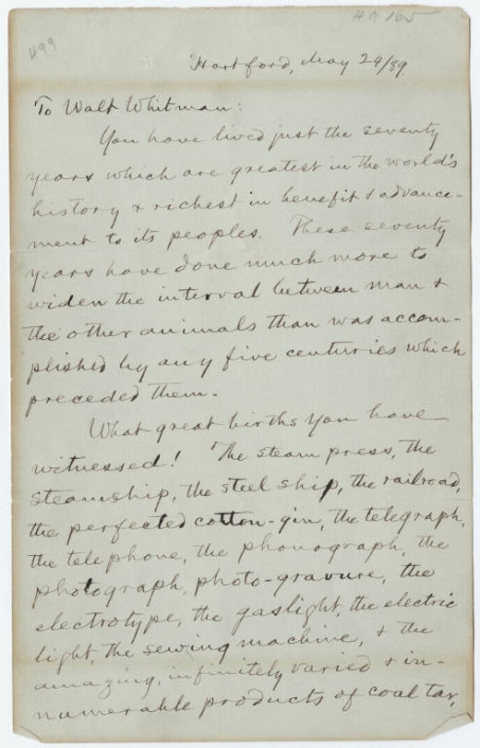
Twain’s let­ter (first page above) is not only a deeply heart­felt appre­ci­a­tion of the great­est liv­ing Amer­i­can poet, it is also, as Let­ters of Note puts it, “a love let­ter to human endeav­or.” Twain enu­mer­ates with awe the astound­ing tech­no­log­i­cal advances Whit­man has wit­nessed in his life­time, from steam pow­er to pho­tog­ra­phy to elec­tric light. The let­ter is char­ac­ter­is­tic of the opti­mism of the age—so per­fect­ly cap­tured a lit­tle over a decade lat­er in Hen­ry Adams’ mem­oir chap­ter “The Dynamo and the Vir­gin.” Twain, hard­ly a reli­gious man, evinces an almost rap­tur­ous faith in progress, con­clud­ing with a Bib­li­cal allu­sion and a some­what obscure ref­er­ence to an apoc­a­lyp­tic figure—“him for whom the earth was made”—who would appear in thir­ty years time. One can’t help but think, in hind­sight, of Yeats’ 1919 occult med­i­ta­tion on the loss of that Vic­to­ri­an cer­tain­ty in “The Sec­ond Com­ing.” As Marc L. Roark observes at The Lit­er­ary Table, “Twain was cor­rect — thir­ty years from the let­ter would see tech­nol­o­gy like the world nev­er knew.  Unfor­tu­nate­ly, that tech­nol­o­gy was that of war.”

Hart­ford, May 24/89

To Walt Whit­man:

You have lived just the sev­en­ty years which are great­est in the world’s his­to­ry & rich­est in ben­e­fit & advance­ment to its peo­ples. These sev­en­ty years have done much more to widen the inter­val between man & the oth­er ani­mals than was accom­plished by any five cen­turies which pre­ced­ed them.

What great births you have wit­nessed! The steam press, the steamship, the steel ship, the rail­road, the per­fect­ed cot­ton-gin, the tele­graph, the phono­graph, the pho­to­graph, pho­to-gravure, the elec­trotype, the gaslight, the elec­tric light, the sewing machine, & the amaz­ing, infi­nite­ly var­ied & innu­mer­able prod­ucts of coal tar, those lat­est & strangest mar­vels of a mar­velous age. And you have seen even greater births than these; for you have seen the appli­ca­tion of anes­the­sia to surgery-prac­tice, where­by the ancient domin­ion of pain, which began with the first cre­at­ed life, came to an end in this earth for­ev­er; you have seen the slave set free, you have seen the monar­chy ban­ished from France, & reduced in Eng­land to a machine which makes an impos­ing show of dili­gence & atten­tion to busi­ness, but isn’t con­nect­ed with the works. Yes, you have indeed seen much — but tar­ry yet a while, for the great­est is yet to come. Wait thir­ty years, & then look out over the earth! You shall see mar­vels upon mar­vels added to these whose nativ­i­ty you have wit­nessed; & con­spic­u­ous above them you shall see their for­mi­da­ble Result — Man at almost his full stature at last! — & still grow­ing, vis­i­bly grow­ing while you look. In that day, who that hath a throne, or a gild­ed priv­i­lege not attain­able by his neigh­bor, let him pro­cure his slip­pers & get ready to dance, for there is going to be music. Abide, & see these things! Thir­ty of us who hon­or & love you, offer the oppor­tu­ni­ty. We have among us 600 years, good & sound, left in the bank of life. Take 30 of them — the rich­est birth-day gift ever offered to poet in this world — & sit down & wait. Wait till you see that great fig­ure appear, & catch the far glint of the sun upon his ban­ner; then you may depart sat­is­fied, as know­ing you have seen him for whom the earth was made, & that he will pro­claim that human wheat is worth more than human tares, & pro­ceed to orga­nize human val­ues on that basis.

Mark Twain

See Let­ters of Note for the remain­ing images of Twain’s let­ter. You can peruse all of the speech­es, let­ters, and telegrams addressed to Whit­man on his 70th birth­day in the col­lec­tion Camden’s Com­pli­ment to Walt Whit­man, pub­lished that same year.

For many more fas­ci­nat­ing his­tor­i­cal let­ters, be sure to check out Let­ters of Note’s new book, Let­ters of Note: Cor­re­spon­dence Deserv­ing of a Wider Audi­ence.

Relat­ed Con­tent:

Hear Walt Whit­man (Maybe) Read­ing the First Four Lines of His Poem, “Amer­i­ca” (1890)

Mark Twain Writes a “Gush­ing,” “Self-Dep­re­cat­ing” Wed­ding Announce­ment to His Fam­i­ly (1869)

Mark Twain Drafts the Ulti­mate Let­ter of Com­plaint (1905)

Josh Jones is a writer and musi­cian based in Durham, NC. Fol­low him at @jdmagness.

Albert Camus Wins the Nobel Prize & Sends a Letter of Gratitude to His Elementary School Teacher (1957)

Image by Unit­ed Press Inter­na­tion­al, via Wiki­me­dia Com­mons

What would you do if you won a Nobel Prize? Who would you thank? We’ve all won­dered about it, per­haps not about the Nobel specif­i­cal­ly, but about some poten­tial­ly lega­cy-con­firm­ing prize or oth­er — maybe an Oscar, maybe a MacArthur Fel­low­ship. When Albert Camus, the short-lived French nov­el­ist-philoso­pher who wrote such endur­ing works as The Stranger and The Myth of Sisy­phus, won the Nobel for Lit­er­a­ture in 1957for his impor­tant lit­er­ary pro­duc­tion, which with clear-sight­ed earnest­ness illu­mi­nates the prob­lems of the human con­science in our times,” he thanked an ele­men­tary-school teacher. “One could argue that, in the his­to­ry of the field, few teacher-pupil rela­tion­ships have had more dra­mat­ic impact than that of Louis Ger­main on his young pupil Albert Camus,” says Chica­go Tri­bune arti­cle pub­lished dur­ing an upswing in Amer­i­can inter­est in Camus’ work. That hap­pened soon after the pub­li­ca­tion of his unfin­ished auto­bi­o­graph­i­cal nov­el The First Man, a “clas­sic sto­ry of a poor boy who made good” whose appen­dix includes the author’s real-life cor­re­spon­dence with his for­mer teacher.

One of these let­ters Camus wrote to Ger­main not long after win­ning the Nobel. (You can hear his actu­al accep­tance speech here.) He no doubt saw the old­er man’s for­ma­tive influ­ence as essen­tial to the work that brought that pres­ti­gious prize his way, since, as Let­ters of Note puts it, “he was just 11-months-old when his father was killed in action dur­ing The Bat­tle of the Marne; his moth­er, par­tial­ly deaf and illit­er­ate, then raised her boys in extreme pover­ty with the help of his heavy-hand­ed grand­moth­er. It was in school that Camus shone, due in no small part to the encour­age­ment offered by his beloved teacher.” Though nev­er thrilled about pub­lic hon­ors of this type, Camus nonethe­less knew a chance to express long-felt grat­i­tude when he saw it, and to Ger­main he wrote these sen­tences as brief and as pow­er­ful as many in his books: 

19 Novem­ber 1957

Dear Mon­sieur Ger­main,

I let the com­mo­tion around me these days sub­side a bit before speak­ing to you from the bot­tom of my heart. I have just been giv­en far too great an hon­our, one I nei­ther sought nor solicit­ed.

But when I heard the news, my first thought, after my moth­er, was of you. With­out you, with­out the affec­tion­ate hand you extend­ed to the small poor child that I was, with­out your teach­ing and exam­ple, none of all this would have hap­pened.

I don’t make too much of this sort of hon­our. But at least it gives me the oppor­tu­ni­ty to tell you what you have been and still are for me, and to assure you that your efforts, your work, and the gen­er­ous heart you put into it still live in one of your lit­tle school­boys who, despite the years, has nev­er stopped being your grate­ful pupil. I embrace you with all my heart.

Albert Camus

For more such mem­o­rable cor­re­spon­dence, do con­sid­er hav­ing a look at Let­ters of Note’s new­ly pub­lished book, Let­ters of Note: An Eclec­tic Col­lec­tion of Cor­re­spon­dence Deserv­ing of a Wider Audi­ence.

Relat­ed Con­tent:

On His 100th Birth­day, Hear Albert Camus Deliv­er His Nobel Prize Accep­tance Speech (1957)

Albert Camus Writes a Friend­ly Let­ter to Jean-Paul Sartre Before Their Per­son­al and Philo­soph­i­cal Rift

Albert Camus Talks About Adapt­ing Dos­toyevsky for the The­atre, 1959

The Fall by Albert Camus Ani­mat­ed

Col­in Mar­shall hosts and pro­duces Note­book on Cities and Cul­ture and writes essays on cities, lan­guage, Asia, and men’s style. He’s at work on a book about Los Ange­les, A Los Ange­les Primer. Fol­low him on Twit­ter at @colinmarshall or on Face­book.

The Drawings of Jean-Paul Sartre

SartreDrawings1

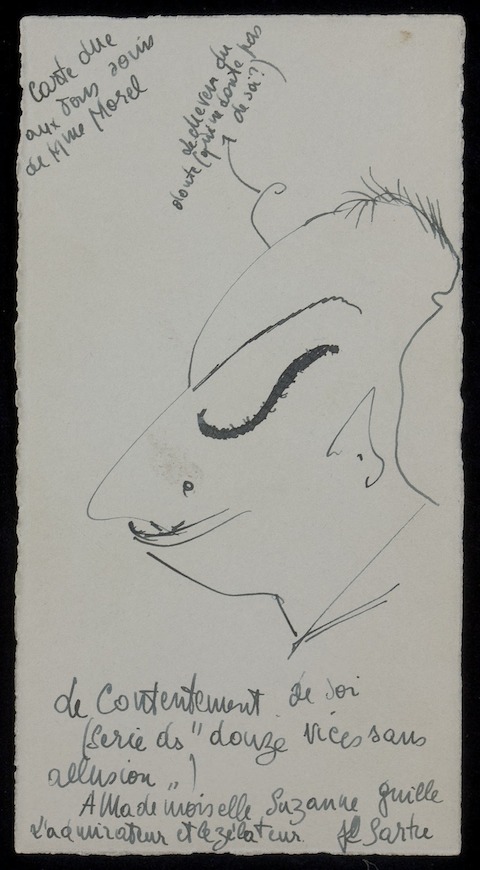
We’ve estab­lished some­thing of a tra­di­tion here of fea­tur­ing draw­ings by famous authors. It seems, unsur­pris­ing­ly, that skill with the pen often goes hand-in-glove with a keen visu­al sense, though admit­ted­ly some writ­ers are more tal­ent­ed drafts­men than oth­ers. William Faulkn­er, for exam­ple, cre­at­ed some very fine pen-and-ink illus­tra­tions for his col­lege news­pa­per dur­ing his brief time at Ole Miss. Franz Kafka’s expres­sion­is­tic sketch­es are quite strik­ing, despite his anguished protes­ta­tions to the con­trary. And Jorge Luis Borges’ doo­dles are as quirky and play­ful as the author him­self. Today we bring you the sketch­es of that great French exis­ten­tial­ist philoso­pher, nov­el­ist, and play­wright Jean-Paul Sartre—a col­lec­tion of six rough, child­like car­i­ca­tures that are, shall we say, rather less than accom­plished. It’s cer­tain­ly for the best—as the cliché goes—that Sartre nev­er quit his day job for an art career.

SartreDrawings2

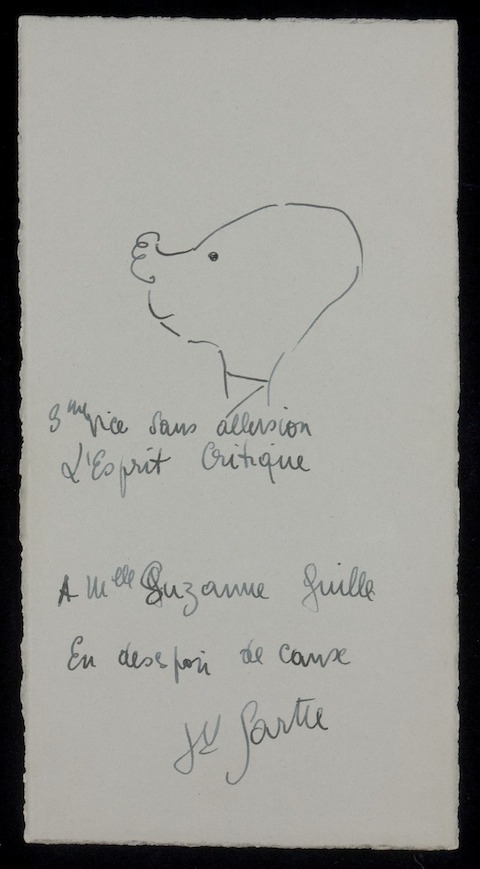
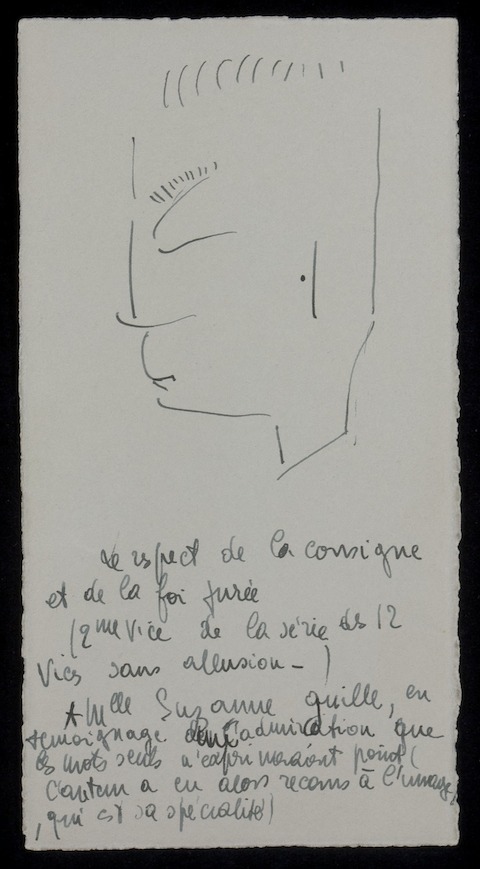
But there is a cer­tain wicked charm in Sartre’s visu­al satires of human moral fail­ings, which he calls a “series de ‘douze vices sans allusion’”—roughly, “a series of twelve vices with­out ref­er­ence.” Either Sartre only com­plet­ed half the series, or—more likely—half have been lost, since the author assures the recip­i­ent of his hand­i­work, a Made­moi­selle Suzanne Guille, that he presents to her a “série com­plete.” Who was Suzanne Guille? Your guess is as good as mine. Yale’s Bei­necke Rare Book & Man­u­script Library, which hous­es these sketch­es, gives us no indi­ca­tion. Per­haps she was a rel­a­tive, per­haps the spouse, of Pierre Guille, Simon de Beauvoir’s last lover? Giv­en the many com­pli­cat­ed liaisons pur­sued by both Sartre and his part­ner, the pos­si­bil­i­ties are indeed intrigu­ing. As for the draw­ings? Their sub­jects hold more inter­est than their exe­cu­tion, pro­vid­ing us with keys to Sartre’s moral uni­verse.

SartreDrawings3

The first car­i­ca­ture, at the top, is titled “Le Con­tent­ment de soi”—“Self-Satisfaction”—and the character’s pompous expres­sion says as much. Below it, the curi­ous lit­tle fel­low with the curlicue nose is called “L’Esprit Critique”—“The Spir­it of Crit­i­cism.” And above we have “Le respect de la con­signe et de la jurée”—“Keeping a Sworn Oath.” You can see the remain­ing three draw­ings, and read Sartre’s let­ter (in French, of course) to Made­moi­selle Guille in pdf form here.

Relat­ed Con­tent:

Philosophy’s Pow­er Cou­ple, Jean-Paul Sartre and Simone de Beau­voir, Fea­tured in 1967 TV Inter­view

James Joyce, With His Eye­sight Fail­ing, Draws a Sketch of Leopold Bloom (1926)

Two Child­hood Draw­ings from Poet E.E. Cum­mings Show the Young Artist’s Play­ful Seri­ous­ness

The Art of Sylvia Plath: Revis­it Her Sketch­es, Self-Por­traits, Draw­ings & Illus­trat­ed Let­ters

Wal­ter Kaufmann’s Clas­sic Lec­tures on Niet­zsche, Kierkegaard and Sartre (1960)

Josh Jones is a writer and musi­cian based in Durham, NC. Fol­low him at @jdmagness

« Go BackMore in this category... »
Quantcast