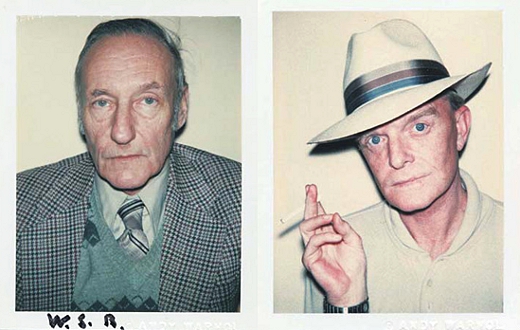
William S. Burroughs Sends Anti-Fan Letter to In Cold Blood Author Truman Capote: “You Have Sold Out Your Talent”

burroughs to capote

On July 23, 1970, William S. Bur­roughs wrote Tru­man Capote a let­ter. “This is not a fan let­ter in the usu­al sense — unless you refer to ceil­ing fans in Pana­ma.” Instead, Bur­rough­s’s mis­sive is a poi­son pen let­ter, blis­ter­ing even by the high stan­dards of New York lit­er­ary cir­cles. Of course, Capote, author of Break­fast at Tiffany’s and In Cold Blood, was no stranger to feuds. He often trad­ed wit­ty, ven­omous barbs with the likes of Gore Vidal and Nor­man Mail­er. Yet Burroughs’s let­ter comes off as much dark­er and, with the ben­e­fit of hind­sight, much more unnerv­ing.

As Thom Robin­son thor­ough­ly details in his arti­cle for Real­i­tyS­tu­dio, the two had a long and com­pli­cat­ed past filled with pro­fes­sion­al jeal­ousy and per­son­al dis­dain. They first met when Bur­roughs was a strug­gling writer and Capote was work­ing as a copy boy at The New York­er in the ear­ly 1940s. Bur­roughs was no doubt ran­kled by Capote’s mete­oric rise to lit­er­ary star­dom just after the war, thanks to some high­ly-praised short sto­ries that appeared in Harper’s Bazaar and oth­er pub­li­ca­tions. Bur­roughs and his fel­low Beat writ­ers ridiculed Capote in their pri­vate let­ters. In a let­ter to Allen Gins­berg, Jack Ker­ouac described Capote’s work as “full of bull on every page.” When Kerouac’s On the Road was pub­lished, Capote dis­missed the book by say­ing, “[it] isn’t writ­ing at all — it’s typ­ing.”

When Naked Lunch was final­ly released in Amer­i­ca in 1962, three years after its pub­li­ca­tion in France, William S. Bur­roughs became a lit­er­ary icon. (Hear Bur­roughs read Naked Lunch here.) At the same time, Capote was start­ing to devel­op a genre he called cre­ative non-fic­tion, which would even­tu­al­ly cul­mi­nate with In Cold Blood. When talk­ing about his book in a 1968 inter­view with Play­boy, Capote com­pared Burroughs’s writ­ing with his own. In Cold Blood “is real­ly the most avant-garde form of writ­ing exis­tent today […] cre­ative fic­tion writ­ing has gone as far as it can exper­i­men­tal­ly. […] Of course we have writ­ers like William Bur­roughs, whose brand of ver­bal sur­face triv­ia is amus­ing and occa­sion­al­ly fas­ci­nat­ing, but there’s no base for mov­ing for­ward in that area.” At anoth­er point, Capote quipped, “Nor­man Mail­er thinks [he] is a genius, which I think is ludi­crous beyond words. I don’t think William Bur­roughs has an ounce of tal­ent.”

So when Bur­roughs put pen to paper in 1970, he already had plen­ty of rea­sons to dis­like Capote. In the let­ter, though, Bur­rough­s’s ire was specif­i­cal­ly direct­ed at Capote’s dubi­ous ethics in writ­ing In Cold Blood, a book that Bur­roughs described as “a dull unread­able book which could have been writ­ten by any staff writer on The New York­er.” (Note: You can read an ear­ly ver­sion of In Cold Blood in The New York­er itself.)

The spine of In Cold Blood is the first-hand account of con­vict­ed killers Dick Hick­ock and Per­ry Smith. Capote spent hours inter­view­ing them and in the process grew close to them, espe­cial­ly Smith. In spite of this, Capote did lit­tle to help their defense. (This is the sub­ject of not one but two movies, by the way, Capote and Infa­mous.) Crit­ic Ken­neth Tynan, in a scathing review for The Observ­er, cried foul. “For the first time an influ­en­tial writer of the front rank has been placed in a posi­tion of priv­i­leged inti­ma­cy with crim­i­nals about to die, and–in my view–done less than he might have to save them,” he wrote. “An attempt to help (by sup­ply­ing new psy­chi­atric tes­ti­mo­ny) might eas­i­ly have failed: what one miss­es is any sign that it was ever con­tem­plat­ed.” The fact of the mat­ter was that the book worked bet­ter if they died. Though Capote’s biog­ra­ph­er Ger­ald Clarke argued that there was lit­tle that the writer could have done to save the two, he con­ced­ed that “Tynan was right when he sug­gest­ed that Tru­man did not want to save them.”

Seem­ing­ly repulsed by Capote’s entire project, Bur­roughs took the Tynan’s cri­tique one step fur­ther. He argued that Capote not only sold out his sub­jects but served as a mouth­piece for those in pow­er.

I feel that [Tynan] was much too lenient. Your recent appear­ance before a sen­a­to­r­i­al com­mit­tee on which occa­sion you spoke in favor of con­tin­u­ing the present police prac­tice of extract­ing con­fes­sions by deny­ing the accused the right of con­sult­ing con­sul pri­or to mak­ing a state­ment also came to my atten­tion. In effect you were speak­ing in approval of stan­dard police pro­ce­dure: obtain­ing state­ments through bru­tal­i­ty and duress, where­as an intel­li­gent police force would rely on evi­dence rather than enforced con­fes­sions. […] You have placed your ser­vices at the dis­pos­al of inter­ests who are turn­ing Amer­i­ca into a police state by the sim­ple device of delib­er­ate­ly fos­ter­ing the con­di­tions that give rise to crim­i­nal­i­ty and then demand­ing increased police pow­ers and the reten­tion of cap­i­tal pun­ish­ment to deal with the sit­u­a­tion they have cre­at­ed.

For some­one who had fre­quent­ly been on the wrong end of the law and for some­one who spent his life giv­ing voice to the mar­gin­al­ized, this was an anath­e­ma. Bur­roughs then deliv­ered a chill­ing, voodoo-style curse:

You have betrayed and sold out the tal­ent that was grant­ed you by this depart­ment. That tal­ent is now offi­cial­ly with­drawn. Enjoy your dirty mon­ey. You will nev­er have any­thing else. You will nev­er write anoth­er sen­tence above the lev­el of In Cold Blood. As a writer you are fin­ished. Over and out.

Bur­roughs’ curse seemed to have worked. 1970 was the high-water mark of Capote’s career. He nev­er wrote anoth­er nov­el after In Cold Blood, though he labored for years on a nev­er com­plet­ed book called Answered Prayers. He spent the rest of his life on a down­ward alco­holic spi­ral until his death in 1984.

You can read the entire let­ter, which is kept at the Bur­roughs Archive of the New York Pub­lic Library’s Berg Col­lec­tion, below:

July 23, 1970
My Dear Mr. Tru­man Capote
This is not a fan let­ter in the usu­al sense — unless you refer to ceil­ing fans in Pana­ma. Rather call this a let­ter from “the read­er” — vital sta­tis­tics are not in cap­i­tal let­ters — a selec­tion from mar­gin­al notes on mate­r­i­al sub­mit­ted as all “writ­ing” is sub­mit­ted to this depart­ment. I have fol­lowed your lit­er­ary devel­op­ment from its incep­tion, con­duct­ing on behalf of the depart­ment I rep­re­sent a series of inquiries as exhaus­tive as your own recent inves­ti­ga­tions in the sun flower state. I have inter­viewed all your char­ac­ters begin­ning with Miri­am — in her case with­hold­ing sug­ar over a peri­od of sev­er­al days proved suf­fi­cient induce­ment to ren­der her quite com­mu­nica­tive — I pre­fer to have all the facts at my dis­pos­al before tak­ing action. Need­less to say, I have read the recent exchange of genial­i­ties between Mr. Ken­neth Tynan and your­self. I feel that he was much too lenient. Your recent appear­ance before a sen­a­to­r­i­al com­mit­tee on which occa­sion you spoke in favor of con­tin­u­ing the present police prac­tice of extract­ing con­fes­sions by deny­ing the accused the right of con­sult­ing con­sul pri­or to mak­ing a state­ment also came to my atten­tion. In effect you were speak­ing in approval of stan­dard police pro­ce­dure: obtain­ing state­ments through bru­tal­i­ty and duress, where­as an intel­li­gent police force would rely on evi­dence rather than enforced con­fes­sions. You fur­ther cheap­ened your­self by reit­er­at­ing the banal argu­ment that echoes through let­ters to the edi­tor when­ev­er the issue of cap­i­tal pun­ish­ment is raised: “Why all this sym­pa­thy for the mur­der­er and none for his inno­cent vic­tims?” I have in line of duty read all your pub­lished work. The ear­ly work was in some respects promis­ing — I refer par­tic­u­lar­ly to the short sto­ries. You were grant­ed an area for psy­chic devel­op­ment. It seemed for a while as if you would make good use of this grant. You choose instead to sell out a tal­ent that is not yours to sell. You have writ­ten a dull unread­able book which could have been writ­ten by any staff writer on the New York­er — (an under­cov­er reac­tionary peri­od­i­cal ded­i­cat­ed to the inter­ests of vest­ed Amer­i­can wealth). You have placed your ser­vices at the dis­pos­al of inter­ests who are turn­ing Amer­i­ca into a police state by the sim­ple device of delib­er­ate­ly fos­ter­ing the con­di­tions that give rise to crim­i­nal­i­ty and then demand­ing increased police pow­ers and the reten­tion of cap­i­tal pun­ish­ment to deal with the sit­u­a­tion they have cre­at­ed. You have betrayed and sold out the tal­ent that was grant­ed you by this depart­ment. That tal­ent is now offi­cial­ly with­drawn. Enjoy your dirty mon­ey. You will nev­er have any­thing else. You will nev­er write anoth­er sen­tence above the lev­el of In Cold Blood. As a writer you are fin­ished. Over and out. Are you track­ing me? Know who I am? You know me, Tru­man. You have known me for a long time. This is my last vis­it.

The polaroids above were tak­en by Andy Warhol.

via: Fla­vor­wire/Let­ters of Note/Real­i­tyS­tu­dio

Relat­ed Con­tent: 

William S. Bur­roughs Reads His First Nov­el, Junky

William S. Bur­roughs on the Art of Cut-up Writ­ing

William S. Bur­roughs Explains What Artists & Cre­ative Thinkers Do for Human­i­ty: From Galileo to Cézanne and James Joyce

550 Free Audio Books: Down­load Great Books for Free

Jonathan Crow is a Los Ange­les-based writer and film­mak­er whose work has appeared in Yahoo!, The Hol­ly­wood Reporter, and oth­er pub­li­ca­tions. You can fol­low him at @jonccrowAnd check out his blog Veep­to­pus, fea­tur­ing one new draw­ing of a vice pres­i­dent with an octo­pus on his head dai­ly. 

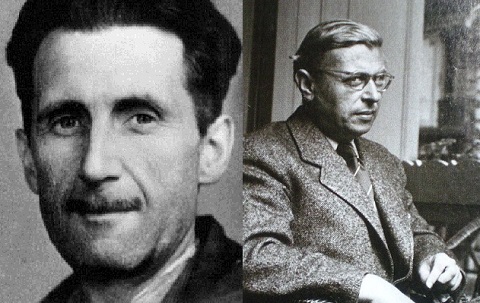
George Orwell Reviews a Book by That “Bag of Wind,” Jean-Paul Sartre (1948)

OrwellSartre
Yes­ter­day we fea­tured George Orwell’s review of Adolf Hitler’s Mein Kampf — not just an iso­lat­ed news­pa­per piece, or one of a scat­tered few, in a life oth­er­wise spent churn­ing out impor­tant nov­els like Ani­mal Farm and 1984, but a par­tic­u­lar­ly per­cep­tive book review among the many in his pro­lif­ic jour­nal­is­tic career. (He even wrote “Con­fes­sions of a Book Review­er,” the defin­i­tive arti­cle on that prac­tice.) Today we have anoth­er of Orwell’s pieces tak­ing on a well-known 20th-cen­tu­ry Con­ti­nen­tal fig­ure: this time, the French exis­ten­tial­ist philoso­pher Jean-Paul Sartre and his book Por­trait of the Anti­semite.

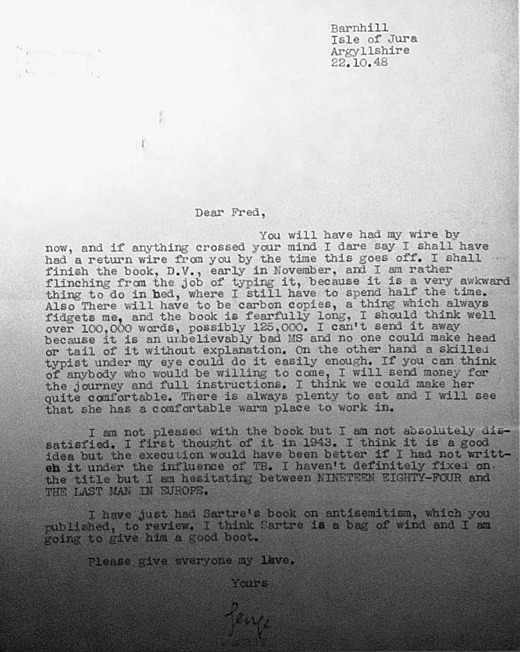
orwell letter

But as a pre­lude to the review, have a look at the Octo­ber 1948 let­ter above, post­ed orig­i­nal­ly at Let­ters of Note. In it, Orwell writes to his pub­lish­er Fred­er­ic War­burg, keep­ing him post­ed on the state of the man­u­script of 1984. Then, at the very end, he adds that “I have just had Sartre’s book on anti­semitism, which you pub­lished, to review. I think Sartre is a bag of wind and I am going to give him a good boot.” That “good boot,” which ran in The Observ­er the next month, goes like this:

Anti­semitism is obvi­ous­ly a sub­ject that needs seri­ous study, but it seems unlike­ly that it will get it in the near future. The trou­ble is that so long as anti­semitism is regard­ed sim­ply as a dis­grace­ful aber­ra­tion, almost a crime, any­one lit­er­ate enough to have heard the word will nat­u­ral­ly claim to be immune from it; with the result that books on anti­semitism tend to be mere exer­cis­es in cast­ing motes out of oth­er peo­ple’s eyes. M. Sartre’s book is no excep­tion, and it is prob­a­bly no bet­ter for hav­ing been writ­ten in 1944, in the uneasy, self-jus­ti­fy­ing, quis­ling-hunt­ing peri­od that fol­lowed on the Lib­er­a­tion.

At the begin­ning, M. Sartre informs us that anti­semitism has no ratio­nal basis: at the end, that it will not exist in a class­less soci­ety, and that in the mean­time it can per­haps be com­bat­ed to some extent by edu­ca­tion and pro­pa­gan­da. These con­clu­sions would hard­ly be worth stat­ing for their own sake, and in between them there is, in spite of much cer­e­bra­tion, lit­tle real dis­cus­sion of the sub­ject, and no fac­tu­al evi­dence worth men­tion­ing.

We are solemn­ly informed that anti­semitism is almost unknown among the work­ing class. It is a mal­a­dy of the bour­geoisie, and, above all, of that goat upon whom all our sins are laid, the “pet­ty bour­geois.” With­in the bour­geoisie it is sel­dom found among sci­en­tists and engi­neers. It is a pecu­liar­i­ty of peo­ple who think of nation­al­i­ty in terms of inher­it­ed cul­ture and prop­er­ty in terms of land.

Why these peo­ple should pick on Jews rather than some oth­er vic­tim M. Sartre does not dis­cuss, except, in one place, by putting for­ward the ancient and very dubi­ous the­o­ry that the Jews are hat­ed because they are sup­posed to have been respon­si­ble for the Cru­ci­fix­ion. He makes no attempt to relate anti­semitism to such obvi­ous­ly allied phe­nom­e­na as for instance, colour prej­u­dice.

Part of what is wrong with M. Sartre’s approach is indi­cat­ed by his title. “The” anti-Semi­te, he seems to imply all through the book, is always the same kind of per­son, rec­og­niz­able at a glance and, so to speak, in action the whole time. Actu­al­ly one has only to use a lit­tle obser­va­tion to see that anti­semitism is extreme­ly wide­spread, is not con­fined to any one class, and, above all, in any but the worst cas­es, is inter­mit­tent.

But these facts would not square with M. Sartre’s atom­ised vision of soci­ety. There is, he comes near to say­ing, no such thing as a human being, there are only dif­fer­ent cat­e­gories of men, such as “the” work­er and “the” bour­geois, all clas­si­fi­able in much the same way as insects. Anoth­er of these insect-like crea­tures is “the” Jew, who, it seems, can usu­al­ly be dis­tin­guished by his phys­i­cal appear­ance. It is true that there are two kinds of Jew, the “Authen­tic Jew,” who wants to remain Jew­ish, and the “Inau­then­tic Jew,” who would like to be assim­i­lat­ed; but a Jew, of whichev­er vari­ety, is not just anoth­er human being. He is wrong, at this stage of his­to­ry, if he tries to assim­i­late him­self, and we are wrong if we try to ignore his racial ori­gin. He should be accept­ed into the nation­al com­mu­ni­ty, not as an ordi­nary Eng­lish­man, French­man, or what­ev­er it may be, but as a Jew.

It will be seen that this posi­tion is itself dan­ger­ous­ly close to anti-semi­tism. Race prej­u­dice of any kind is a neu­ro­sis, and it is doubt­ful whether argu­ment can either increase or dimin­ish it, but the net effect of books of this kind, if they have an effect, is prob­a­bly to make anti­semitism slight­ly more preva­lent than it was before. The first step towards seri­ous study of anti­semitism is to stop regard­ing it as a crime. Mean­while, the less talk there is about “the” Jew or “the” anti­semite, as a species of ani­mal dif­fer­ent from our­selves, the bet­ter.

In Phi­los­o­phy Now, Mar­tin Tyrrell writes on Orwell’s rela­tion­ship to the sub­ject, which he saw “as a kind of gra­tu­itous clev­er­ness and he had no appetite for that. In Orwell’s writ­ings, fic­tion or non-fic­tion, there are few good intel­lec­tu­als. Where they appear, then it is usu­al­ly only to spin words with­out mean­ing. At best, they are inad­ver­tent­ly con­fus­ing; at worst, delib­er­ate­ly so: Marx­ists, for exam­ple, or nation­al­ists or Anglo or Roman Catholics. Or Jean-Paul Sartre. [ … ] Bewil­dered by exis­ten­tial­ism, what most irked Orwell about Sartre was his seem­ing denial of indi­vid­u­al­i­ty.” Tyrrell describes Orwell as “an indi­vid­u­al­ist so much so that, when he came to list his rea­sons for becom­ing a writer, he put ‘sheer ego­ism’ at the top. In addi­tion, and much more con­tro­ver­sial­ly, his review of Mein Kampf sees in Hitler more than a lit­tle of the trag­ic Orwellian hero, the small man embarked upon a doomed revolt.” Not every­one, of course, will agree with Orwell’s aggres­sive­ly plain­spo­ken takes on Hitler and Nazism, or Sartre and exis­ten­tial­ism, but try sub­sti­tut­ing a vari­ety of oth­er con­tro­ver­sial “-isms” for “anti­semitism” in the review above, and you’ll see how we’d still think more clear­ly if we bore his obser­va­tions in mind today.

via Let­ters of Note 

Relat­ed Con­tent:

George Orwell Reviews Mein Kampf (1940)

George Orwell Explains in a Reveal­ing 1944 Let­ter Why He’d Write 1984

George Orwell’s 1984: Free eBook, Audio Book & Study Resources

Jean-Paul Sartre Breaks Down the Bad Faith of Intel­lec­tu­als

Sartre, Hei­deg­ger, Niet­zsche: Doc­u­men­tary Presents Three Philoso­phers in Three Hours

Wal­ter Kaufmann’s Clas­sic Lec­tures on Niet­zsche, Kierkegaard and Sartre (1960)

Col­in Mar­shall hosts and pro­duces Note­book on Cities and Cul­ture and writes essays on cities, lan­guage, Asia, and men’s style. He’s at work on a book about Los Ange­les, A Los Ange­les Primer. Fol­low him on Twit­ter at @colinmarshall or on Face­book.

Ray Bradbury: “I Am Not Afraid of Robots. I Am Afraid of People” (1974)

BradburyRobotLetter

Any­one remem­ber Michael Crichton’s West­world (or the Simp­sons par­o­dy)? In this dystopi­an 1973 sci-fi, tourists vis­it a tri­umvi­rate of fan­ta­sy theme parks staffed by robot­ic his­tor­i­cal re-enac­tors: Roman World, Medieval World, and the tit­u­lar West World, with its “law­less vio­lence on the Amer­i­can Fron­tier.” When a virus infects the parks’ androids, James Brolin must fight a ruth­less robot gunslinger—played by a stone-faced Yul Brenner—to the death. The film may look laugh­ably dat­ed, but the fears it taps into are any­thing but: 2001, Ter­mi­na­tor, Bat­tlestar Galac­ti­ca, I, Robot, and even a West­world remake in the works—the peren­ni­al theme of man vs. machine, as old in film at least as Fritz Lang’s silent Metrop­o­lis, becomes ever more rel­e­vant in our drone-haunt­ed world.

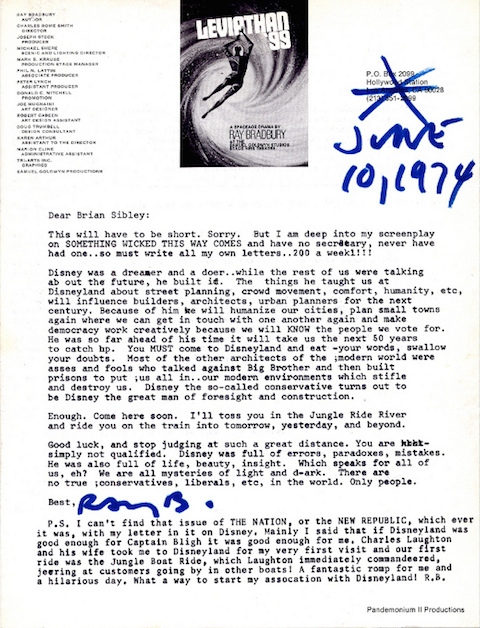
But are evil—or at least dan­ger­ous­ly malfunctioning—robots some­thing we should legit­i­mate­ly fear? Not accord­ing to vision­ary sci-fi author and Dis­ney enthu­si­ast Ray Brad­bury in a let­ter to Eng­lish writer Bri­an Sib­ley, penned in 1974, one year after the release of theme-park hor­ror West­world. The main body of Bradbury’s let­ter con­sists of a vig­or­ous defense of Walt Dis­ney and Dis­ney­land, against whom “most of the oth­er archi­tects of the mod­ern world were ass­es and fools.” Sib­ley recalls that his ini­tial let­ter “expressed doubts about Disney’s use of Audio-Ani­ma­tron­ic cre­ations in Dis­ney­land.” “At the time,” he explains, “I… had prob­a­bly read too many sci-fi sto­ries about the dan­ger of robots tak­ing over our human world—including, of course, some by Ray—and so saw it as a sin­is­ter rather than benign exper­i­ment.”

After his praise of Dis­ney, Brad­bury writes two agi­tat­ed post­scripts explod­ing what Sib­ley calls “ill-informed and prej­u­diced views” on robots.  He class­es auto­mat­ed enti­ties with benign “exten­sions of peo­ple” like books, film pro­jec­tors, cars, and pre­sum­ably all oth­er forms of tech­nol­o­gy. Notwith­stand­ing the fact that books can­not actu­al­ly wield weapons and kill peo­ple, Brad­bury makes an inter­est­ing argu­ment about fears of robots as akin to those that lead to cen­sor­ship and enforced igno­rance. But Bradbury’s coun­ter­claim sounds a mis­an­throp­ic note that nonethe­less rings true giv­en the salient exam­ples he offers: “I am not afraid of robots,” he states, emphat­i­cal­ly, “I am afraid of peo­ple, peo­ple, peo­ple.” He goes on to list just a few of the con­flicts in which humans kill humans, reli­gious, racial, nation­al­ist, etc.: “Catholics killing Protes­tants… whites killing blacks… Eng­lish killing Irish.…” It’s a short sam­pling that could go on indef­i­nite­ly. Brad­bury strong­ly implies that the fears we project onto robot­ic bogey­men are in real­i­ty well-ground­ed fears of each oth­er. Peo­ple, he sug­gests, can be mon­strous when they don’t “remain human,” and technology—including robots—only assists with the nec­es­sary task of “human­iz­ing” us. “Robots?” Brad­bury writes, “God, I love them. And I will use them humane­ly to teach all of the above.” 

Read a tran­script of the let­ter below, cour­tesy of Let­ters of Note, and be sure to check out that site’s new book-length col­lec­tion of fas­ci­nat­ing his­tor­i­cal cor­re­spon­dence.

June 10, 1974

Dear Bri­an Sib­ley:

This will have to be short. Sor­ry. But I am deep into my screen­play on SOMETHING WICKED THIS WAY COMES and have no sec­re­tary, nev­er have had one..so must write all my own letters..200 a weekl!!!

Dis­ney was a dream­er and a doer..while the rest of us were talk­ing ab out the future, he built it. The things he taught us at Dis­ney­land about street plan­ning, crowd move­ment, com­fort, human­i­ty, etc, will influ­ence builders archi­tects, urban plan­ners for the next cen­tu­ry. Because of him we will human­ize our cities, plan small towns again where we can get in touch with one anoth­er again and make democ­ra­cy work cre­ative­ly because we will KNOW the peo­ple we vote for. He was so far ahead of his time it will take is the next 50 years to catch up. You MUST come to Dis­ney­land and eat your words, swal­low your doubts. Most of the oth­er archi­tects of the mod­ern world were ass­es and fools who talked against Big Broth­er and then built pris­ons to put us all up in..our mod­ern envi­ron­ments which sti­fle and destroy us. Dis­ney the so-called con­ser­v­a­tive turns out to be Dis­ney the great man of fore­sight and con­struc­tion.

Enough. Come here soon. I’ll toss you in the Jun­gle Ride Riv­er and ride you on the train into tomor­row, yes­ter­day, and beyond.

Good luck, and stop judg­ing at such a great dis­tance. You are sim­ply not qual­i­fied. Dis­ney was full of errors, para­dox­es, mis­takes. He was also full of life, beau­ty, insight. Which speaks for all of us, eh? We are all mys­ter­ies of light and dark. There are no true con­ser­v­a­tives, lib­er­als, etc, in the world. Only peo­ple.

Best,

(Signed, ‘Ray B.’)

P.S. I can’t find that issue of THE NATION, of the NEW REPUBLIC, which ever it was, with my let­ter in it on Dis­ney. Main­ly I said that if Dis­ney­land was good enough for Cap­tain Bligh it was good enough for me. Charles Laughton and his wife took me to Dis­ney­land for my very first vis­it and our first ride was the Jun­gle Boat Ride, which Laughton imme­di­ate­ly com­man­deered, jeer­ing at cus­tomers going by in oth­er boats! A fan­tas­tic romp for me and a hilar­i­ous day. What a way to start my asso­ci­a­tion with Dis­ney­land! R.B.

P.S. Can’t resist com­ment­ing on you fears of the Dis­ney robots. Why aren’t you afraid of books, then? The fact is, of course, that peo­ple have been afraid of books, down through his­to­ry. They are exten­sions of peo­ple, not peo­ple them­selves. Any machine, any robot, is the sum total of the ways we use it. Why not knock down all robot cam­era devices and the means for repro­duc­ing the stuff that goes into such devices, things called pro­jec­tors in the­atres? A motion pic­ture pro­jec­tor is a non-humanoid robot which repeats truths which we inject into it. Is it inhu­man? Yes. Does it project human truths to human­ize us more often than not? Yes.

The excuse could be made that we should burn all books because some books are dread­ful.

We should mash all cars because some cars get in acci­dents because of the peo­ple dri­ving them.

We should burn down all the the­atres in the world because some films are trash, dri­v­el.

So it is final­ly with the robots you say you fear. Why fear some­thing? Why not cre­ate with it? Why not build robot teach­ers to help out in schools where teach­ing cer­tain sub­jects is a bore for EVERYONE? Why not have Pla­to sit­ting in your Greek Class answer­ing jol­ly ques­tions about his Repub­lic? I would love to exper­i­ment with that. I am not afraid of robots. I am afraid of peo­ple, peo­ple, peo­ple. I want them to remain human. I can help keep them human with the wise and love­ly use of books, films, robots, and my own mind, hands, and heart.

I am afraid of Catholics killing Protes­tants and vice ver­sa.

I am afraid of whites killing blacks and vice ver­sa.

I am afraid of Eng­lish killing Irish and vice ver­sa.

I am afraid of young killing old and vice ver­sa.

I am afraid of Com­mu­nists killing Cap­i­tal­ists and vice ver­sa.

But…robots? God, I love them. I will use them humane­ly to teach all of the above. My voice will speak out of them, and it will be a damned nice voice.

Best, R.B.

via Let­ters of Note

Relat­ed Con­tent:

Ray Brad­bury: Lit­er­a­ture is the Safe­ty Valve of Civ­i­liza­tion

The Secret of Life and Love, Accord­ing to Ray Brad­bury (1968)

Isaac Asi­mov Explains His Three Laws of Robots

Josh Jones is a writer and musi­cian based in Durham, NC. Fol­low him at @jdmagness

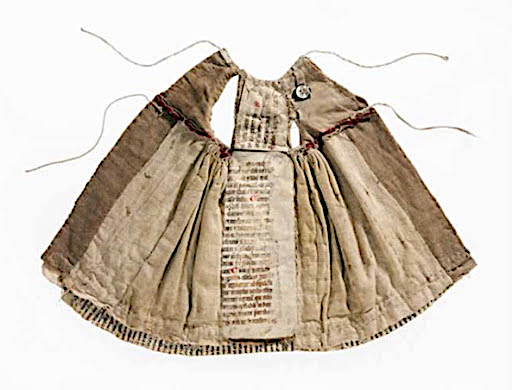
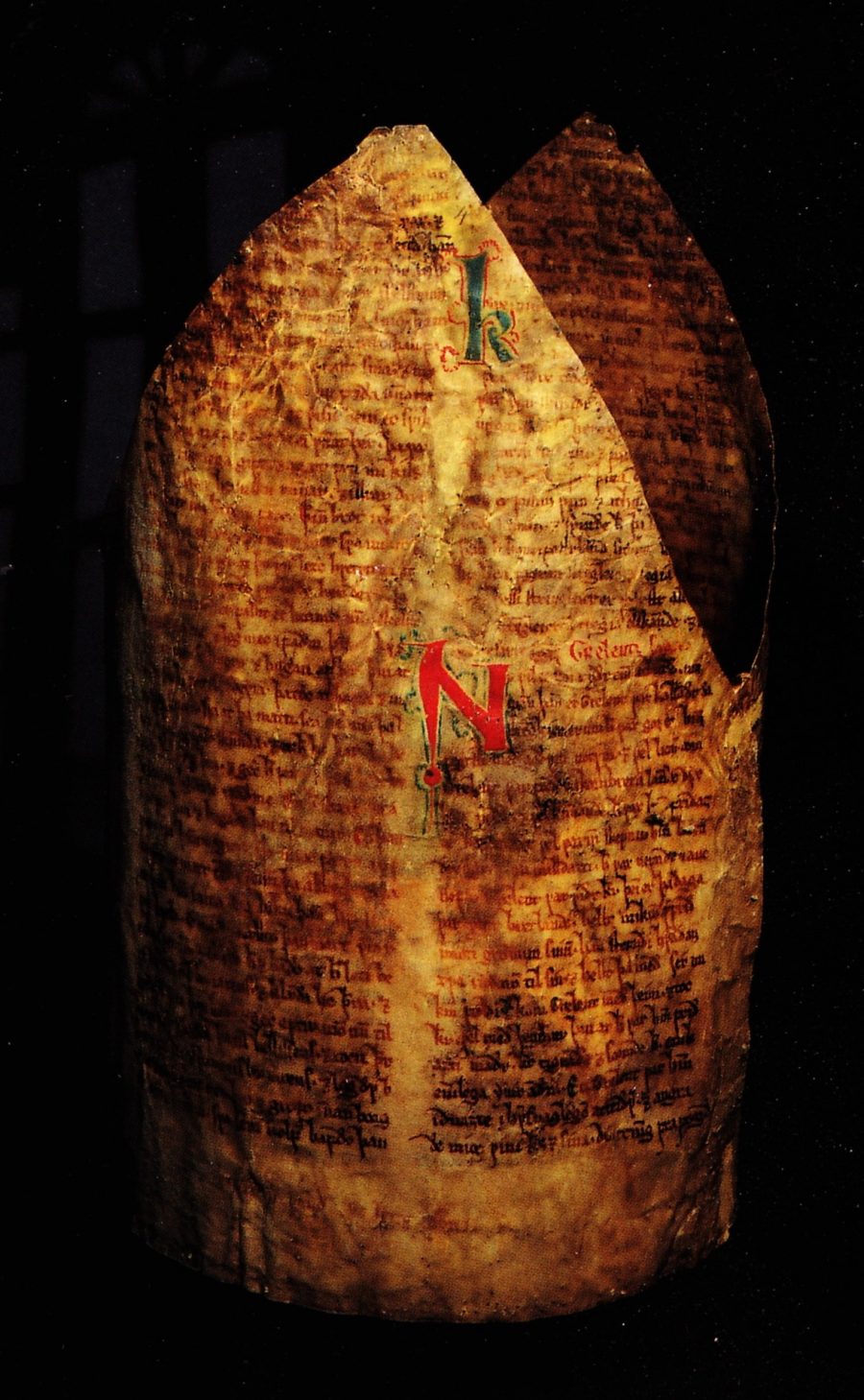
Wearable Books: In Medieval Times, They Took Old Manuscripts & Turned Them into Clothes

I like old news­pa­per, smooth­ing it out to read about what was hap­pen­ing on the day an old­er rel­a­tive packed away the good crys­tal or some oth­er frag­ile tchotchke.

Trav­el­ing in India, I dug how the snacks I pur­chased to eat on the train came wrapped in old book pages. When my trav­el­ing com­pan­ion real­ized he had lost his jour­nal, there was com­fort in know­ing that it would be rein­car­nat­ed as cones to hold deli­cious chana jor garam.

Tak­ing a thrift store frame apart, I was thrilled to dis­cov­er that behind the pre­vi­ous own­ers kit­tens in a bas­ket print lurked a home­made Moth­er’s Day card from the 40’s and a cal­en­dar page that not­ed the date some­one named David quit drink­ing. (I sent it along to Found Mag­a­zine.)

What I would­n’t give to stum­ble upon a dress lined with a 13th-cen­tu­ry man­u­script. Or a bishop’s miter stiff­ened with racy 13th-cen­tu­ry Norse love poet­ry!

Appar­ent­ly, it’s a rich tra­di­tion, putting old pages to good use, once they start feel­ing like they’ve out­lived their intend­ed pur­pose. The bish­op like­ly did­n’t know the specifics on the mate­r­i­al that made his hat stand up. I’ll bet the  sis­ters of the Ger­man Cis­ter­cian con­vent where the dress above orig­i­nat­ed were more con­cerned with the out­ward appear­ance of the gar­ments they were stitch­ing for their wood­en stat­ues than the not-for-dis­play lin­ing.

As Dutch art his­to­ri­an Erik Kwakkel explains on his medieval­frag­ments blog, the inven­tion of the Guten­berg press demot­ed scads of hand­writ­ten text to more pro­le­tar­i­an pur­pose. Ulti­mate­ly, it’s not as grim as it sounds:

the dis­mem­bered books were to have a sec­ond life: they became trav­el­ers in time, stow­aways… with great and impor­tant sto­ries to tell. Indeed, sto­ries that may oth­er­wise not have sur­vived, giv­en that clas­si­cal and medieval texts fre­quent­ly only come down to us in frag­men­tary form. The ear­ly his­to­ry of the Bible as a book could not be writ­ten if we were to throw out frag­ment evi­dence.

Relat­ed Con­tent:

Medieval Cats Behav­ing Bad­ly: Kit­ties That Left Paw Prints … and Peed … on 15th Cen­tu­ry Man­u­scripts

Dutch Book From 1692 Doc­u­ments Every Col­or Under the Sun: A Pre-Pan­tone Guide to Col­ors

Archive of Hand­writ­ten Recipes (1600 – 1960) Will Teach You How to Stew a Calf’s Head and More

The British Library Puts Online 1,200 Lit­er­ary Trea­sures From Great Roman­tic & Vic­to­ri­an Writ­ers

Ayun Hal­l­i­day is an author, home­school­er and the Chief Pri­ma­tol­o­gist of The East Vil­lage Inky zine. Fol­low her @AyunHalliday

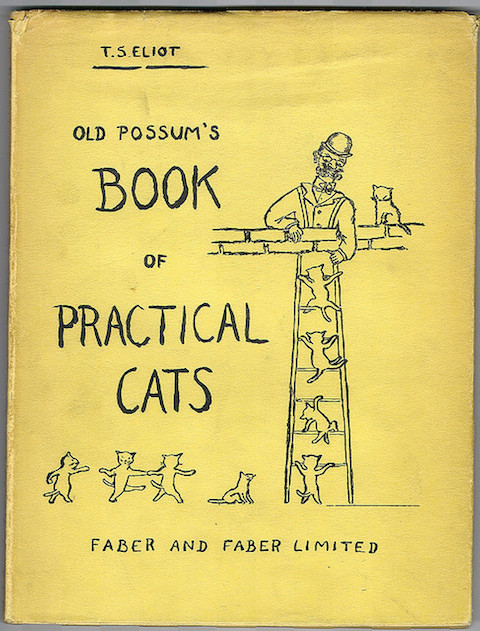
T.S. Eliot Illustrates His Letters and Draws a Cover for Old Possum’s Book of Practical Cats

Old-Possum-cover

Like so many poets, Thomas Stearns Eliot could write a fine let­ter. Unlike quite so many poets, he could also illus­trate those fine let­ters with an amus­ing pic­ture or two. The T.S. Eliot Soci­ety’s web site has sev­er­al exam­ples of what the author of “The Waste Land” could do when he got think­ing visu­al­ly as well as tex­tu­al­ly. At the top of the post, we have a cov­er he drew for a book of his own, Old Pos­sum’s Book of Prac­ti­cal Cats, a well-known work of Eliot’s in its own right but also indi­rect­ly known and loved by mil­lions as the basis of Andrew Lloyd Web­ber’s musi­cal Cats. Well before this satir­i­cal feline mate­r­i­al attained such grand embell­ish­ment for and far-reach­ing fame on the stage, it took its first, hum­ble pub­lic form in 1939. Had you bought Old Pos­sum’s Book of Prac­ti­cal Cats then, you would have bought the one above, with Eliot’s hand-drawn cov­er. (It runs $37,000 now.) The very next year, a new edi­tion came out ful­ly illus­trat­ed by Nicholas Bent­ley. The inim­itable Edward Gorey took his turn with the 1982 edi­tion, and the lat­est, pub­lished in 2009, fea­tures the art of Ger­man illus­tra­tor Axel Schef­fler.

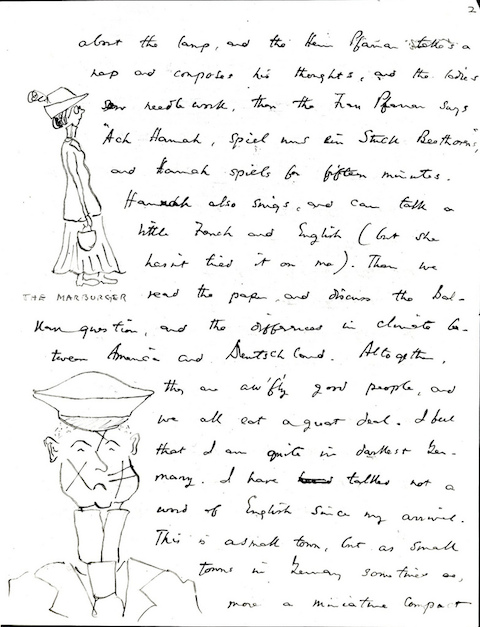
Eliot-illustrated-letter

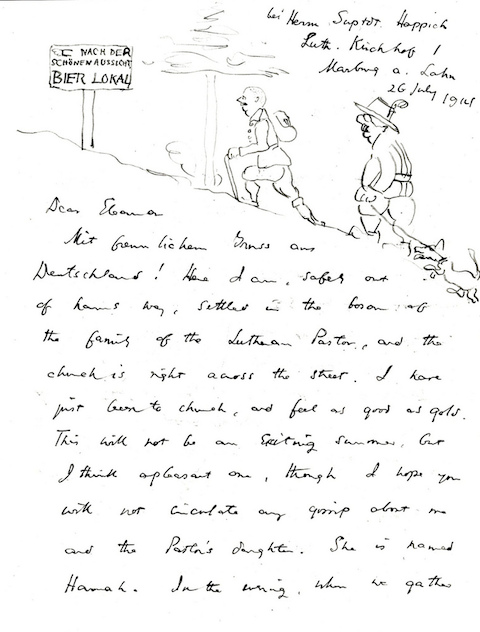
Above and below, you can see a cou­ple more sur­viv­ing exam­ples of what Eliot could do with pen and ink, albeit not in a con­text nec­es­sar­i­ly intend­ed for pub­li­ca­tion. While Eliot’s actu­al hand­writ­ing may not make for easy read­ing, even if you can read the Ger­man in which he some­times wrote, his draw­ings vivid­ly dis­play his impres­sions of the peo­ple pre­sum­ably men­tioned in the text. I’d have tak­en such pains, too, if I had the expec­ta­tion some 20th-cen­tu­ry men of let­ters seemed to that their col­lect­ed cor­re­spon­dence would even­tu­al­ly see print. Yet Eliot him­self went back and forth about it, “torn over whether to allow pub­lic access to his pri­vate let­ters after his death,” writes Salon’s Kera Bolonik. “ ‘I don’t like read­ing oth­er people’s pri­vate cor­re­spon­dence in print, and I do not want oth­er peo­ple to read mine,’ he said in 1927. But six years lat­er, he admit­ted he had an ‘inerad­i­ca­ble’ desire for his let­ters to reach a wider audi­ence. ‘We want to con­fess our­selves in writ­ing to a few friends, and we do not always want to feel that no one but those friends will ever read what we have writ­ten’ ” — or see what we have drawn.

Eliot-illustrated-letter-4

Relat­ed Con­tent:

Lis­ten to T.S. Eliot Recite His Late Mas­ter­piece, the Four Quar­tets

T.S. Eliot Reads His Mod­ernist Mas­ter­pieces “The Waste Land” and “The Love Song of J. Alfred Prufrock”

Bob Dylan Reads From T.S. Eliot’s Great Mod­ernist Poem The Waste Land

Col­in Mar­shall hosts and pro­duces Note­book on Cities and Cul­ture and writes essays on cities, lan­guage, Asia, and men’s style. He’s at work on a book about Los Ange­les, A Los Ange­les Primer. Fol­low him on Twit­ter at @colinmarshall or on Face­book.

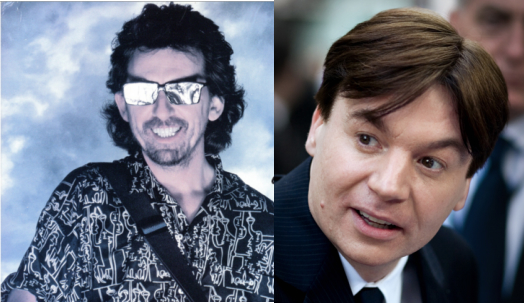
George Harrison Wrote His Last Letter to Austin Powers Creator Mike Myers, Asking for a Mini Me Doll (2001)

harrison myers

In a band full of extro­vert­ed goof­balls and pranksters, George Har­ri­son was the qui­et one, the seri­ous Bea­t­le, the straight man and intro­spec­tive mys­tic, right? Not so, accord­ing to Trav­el­ling Wilburys band­mate Tom Pet­ty, who once coun­tered the “qui­et Bea­t­le” sobri­quet with “he nev­er shut up. He was the best hang you could imag­ine.” Not so, accord­ing to Har­ri­son him­self, who once said “I think I’ve had an image, peo­ple have had a con­cept of me being real­ly straight cause I was the seri­ous one or some­thing. I mean, I’m the biggest lunatic around. I’m com­plete­ly com­i­cal, you know? I like crazi­ness. I had to in order to be in the Bea­t­les.”

It’s true that Har­ri­son dis­liked fame and its trap­pings and dove deeply into life’s mys­ter­ies. In his final tele­vised inter­view, he is con­tem­pla­tive and, yes, deeply seri­ous. And while some of the sto­ries of the end of his life are heartbreaking—like that of the oncol­o­gist who alleged­ly showed up unan­nounced at the dying Bea­t­les’ door and cajoled him into sign­ing an auto­graph when he could bare­ly write his name—the sto­ry of the last let­ter he ever wrote made me smile.

Accord­ing to Mike Myers, cre­ator of Wayne’s World and the six­ties spoof Austin Pow­ers fran­chise, that let­ter arrived in his hands on the very day of Harrison’s death, deliv­ered via pri­vate inves­ti­ga­tor as Myers and crew shot the third of the Pow­ers films.

Har­ri­son wrote but nev­er mailed the short note a month before his death in Novem­ber, 2001. In it, he reveals his love for Austin Pow­ers, par­tic­u­lar­ly the “Mini Me” char­ac­ter from The Spy Who Shagged Me (played by Verne Troyer)—a minia­ture clone of Pow­ers’ neme­sis Dr. Evil. In a GQ inter­view, Myers quotes from the let­ter: “…sit­ting here with my Dr. Evil doll…I just want­ed to let you know I’ve been all over Europe for a mini-you doll.” Har­ri­son also jok­ing­ly cor­rect­ed Myers’ Liv­er­pudlian: “Dr. Evil says frickin’ but any good Scouser dad will tell you it’s actu­al­ly ‘frig­gin’ as in a ‘four of fish and fin­ger pie,’ if you get my drift.”

The “Scouser dad” ref­er­ence was par­tic­u­lar­ly poignant for Myers, whose par­ents come from Liv­er­pool. “You don’t know what The Bea­t­les were in my house,” Myers told WENN news, “They were every­thing. Liv­er­pool was poor­ish and it was rough and all of a sud­den it was cool to come from this town, so my par­ents were eter­nal­ly grate­ful.” Har­ri­son returned the grat­i­tude, writ­ing “thanks for the movies, so much fun,” a sen­ti­ment Myers reacts to with “Dude, I can’t even.” And real­ly, what could else could you say? “To get this let­ter,” and on the very day of Harrison’s pass­ing no less, “was unbe­liev­able,” said Myers, “It hits you and it can knock you off your feet.”

As for that rep­u­ta­tion for seri­ous­ness? I don’t know about you, but from now on, when I think of the last days of George Har­ri­son, I won’t think of his oppor­tunis­tic doc­tor, or his turn­ing down the OBE, or even that fate­ful final per­for­mance on VH1. I’ll imag­ine him sit­ting on the couch with a Dr. Evil doll, writ­ing Mike Myers to request a Mini Me.

Relat­ed Con­tent:

Bob Dylan and George Har­ri­son Play Ten­nis, 1969

George Har­ri­son in the Spot­light: The Dick Cavett Show (1971)

Phil Spector’s Gen­tle Pro­duc­tion Notes to George Har­ri­son Dur­ing the Record­ing of All Things Must Pass

Here Comes The Sun: The Lost Gui­tar Solo by George Har­ri­son

Josh Jones is a writer and musi­cian based in Durham, NC. Fol­low him at @jdmagness

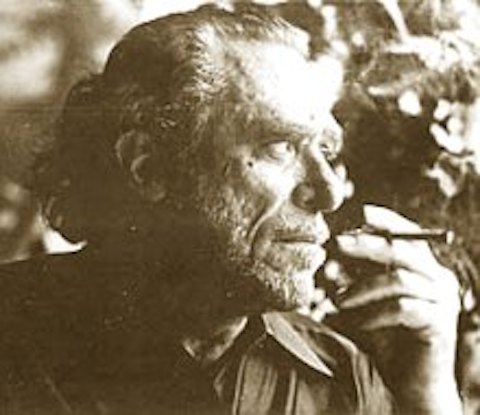
Charles Bukowski Rails Against 9‑to‑5 Jobs in a Brutally Honest Letter (1986)

Charles_Bukowski_smoking

Charles Bukows­ki—or “Hank” to his friends—assiduously cul­ti­vat­ed a lit­er­ary per­sona as a peren­ni­al drunk­en dead­beat. He most­ly lived it too, but for a few odd jobs and a peri­od of time, just over a decade, that he spent work­ing for the Unit­ed States Post Office, begin­ning in the ear­ly fifties as a fill-in let­ter car­ri­er, then lat­er for over a decade as a fil­ing clerk. He found the work mind-numb­ing, soul-crush­ing, and any num­ber of oth­er adjec­tives one uses to describe repet­i­tive and deeply unful­fill­ing labor. Actu­al­ly, one needn’t sup­ply a description—Bukowski has splen­did­ly done so for us, both in his fic­tion and in the epis­tle below unearthed by Let­ters of Note.

In Bukowski’s first nov­el Post Office (1971), the writer of lowlife com­e­dy and pathos builds in plen­ty of wish-ful­fill­ment for his lit­er­ary alter ego Hen­ry Chi­nas­ki. Kyle Ryan at The Onion’s A.V. Club sums it up suc­cinct­ly: “In Bukowski’s world, Chi­nas­ki is prac­ti­cal­ly irre­sistible to women, despite his alco­holism, misog­y­ny, and gen­er­al crank­i­ness.” In real­i­ty, to say that Bukows­ki found lit­tle solace in his work would be a gross under­state­ment. But unlike most of his equal­ly mis­er­able co-work­ers, Bukows­ki got to retire ear­ly, at age 49, when, in 1969, Black Spar­row Press pub­lish­er John Mar­tin offered him $100 a month for life on the con­di­tion that he quit his job and write full time.

Need­less to say, he was thrilled, so much so that he penned the let­ter below fif­teen years lat­er, express­ing his grat­i­tude to Mar­tin and describ­ing, with char­ac­ter­is­tic bru­tal hon­esty, the life of the aver­age wage slave. And though com­par­isons to slav­ery usu­al­ly come as close to the lev­el of absurd exag­ger­a­tion as com­par­isons to Nazism, Bukowski’s por­trait of the 9 to 5 life makes a very con­vinc­ing case for what we might call the the­sis of his let­ter: “Slav­ery was nev­er abol­ished, it was only extend­ed to include all the col­ors.”

After read­ing his let­ter below, you may feel a great deal more sym­pa­thy, if you did not already, with Bukowski’s life choic­es. You may find your­self, in fact, re-eval­u­at­ing your own.

8–12-86

Hel­lo John:

Thanks for the good let­ter. I don’t think it hurts, some­times, to remem­ber where you came from. You know the places where I came from. Even the peo­ple who try to write about that or make films about it, they don’t get it right. They call it “9 to 5.” It’s nev­er 9 to 5, there’s no free lunch break at those places, in fact, at many of them in order to keep your job you don’t take lunch. Then there’s OVERTIME and the books nev­er seem to get the over­time right and if you com­plain about that, there’s anoth­er suck­er to take your place.

You know my old say­ing, “Slav­ery was nev­er abol­ished, it was only extend­ed to include all the col­ors.”

And what hurts is the steadi­ly dimin­ish­ing human­i­ty of those fight­ing to hold jobs they don’t want but fear the alter­na­tive worse. Peo­ple sim­ply emp­ty out. They are bod­ies with fear­ful and obe­di­ent minds. The col­or leaves the eye. The voice becomes ugly. And the body. The hair. The fin­ger­nails. The shoes. Every­thing does.

As a young man I could not believe that peo­ple could give their lives over to those con­di­tions. As an old man, I still can’t believe it. What do they do it for? Sex? TV? An auto­mo­bile on month­ly pay­ments? Or chil­dren? Chil­dren who are just going to do the same things that they did?

Ear­ly on, when I was quite young and going from job to job I was fool­ish enough to some­times speak to my fel­low work­ers: “Hey, the boss can come in here at any moment and lay all of us off, just like that, don’t you real­ize that?”

They would just look at me. I was pos­ing some­thing that they did­n’t want to enter their minds.

Now in indus­try, there are vast lay­offs (steel mills dead, tech­ni­cal changes in oth­er fac­tors of the work place). They are layed off by the hun­dreds of thou­sands and their faces are stunned:

“I put in 35 years…”

“It ain’t right…”

“I don’t know what to do…”

They nev­er pay the slaves enough so they can get free, just enough so they can stay alive and come back to work. I could see all this. Why could­n’t they? I fig­ured the park bench was just as good or being a barfly was just as good. Why not get there first before they put me there? Why wait?

I just wrote in dis­gust against it all, it was a relief to get the shit out of my sys­tem. And now that I’m here, a so-called pro­fes­sion­al writer, after giv­ing the first 50 years away, I’ve found out that there are oth­er dis­gusts beyond the sys­tem.

I remem­ber once, work­ing as a pack­er in this light­ing fix­ture com­pa­ny, one of the pack­ers sud­den­ly said: “I’ll nev­er be free!”

One of the boss­es was walk­ing by (his name was Mor­rie) and he let out this deli­cious cack­le of a laugh, enjoy­ing the fact that this fel­low was trapped for life.

So, the luck I final­ly had in get­ting out of those places, no mat­ter how long it took, has giv­en me a kind of joy, the jol­ly joy of the mir­a­cle. I now write from an old mind and an old body, long beyond the time when most men would ever think of con­tin­u­ing such a thing, but since I start­ed so late I owe it to myself to con­tin­ue, and when the words begin to fal­ter and I must be helped up stair­ways and I can no longer tell a blue­bird from a paper­clip, I still feel that some­thing in me is going to remem­ber (no mat­ter how far I’m gone) how I’ve come through the mur­der and the mess and the moil, to at least a gen­er­ous way to die.

To not to have entire­ly wast­ed one’s life seems to be a wor­thy accom­plish­ment, if only for myself.

yr boy,

Hank

via Fla­vor­wire

Relat­ed Con­tent:

Charles Bukows­ki: Depres­sion and Three Days in Bed Can Restore Your Cre­ative Juices (NSFW)

“Don’t Try”: Charles Bukowski’s Con­cise Phi­los­o­phy of Art and Life

The Last (Faxed) Poem of Charles Bukows­ki

Josh Jones is a writer and musi­cian based in Durham, NC. Fol­low him at @jdmagness

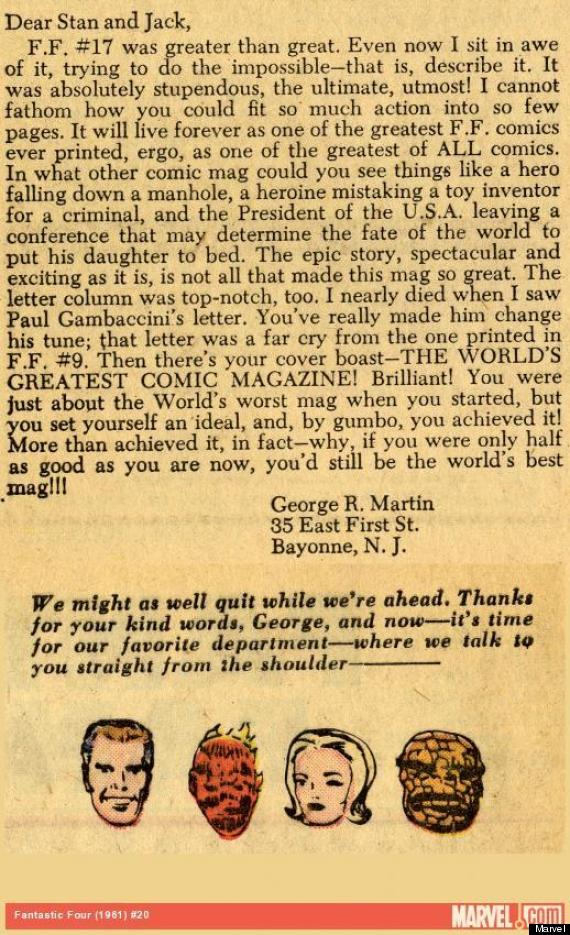
15-Year-Old George R.R. Martin Writes a Fan Letter to Stan Lee & Jack Kirby (1963)

martin-LETTER

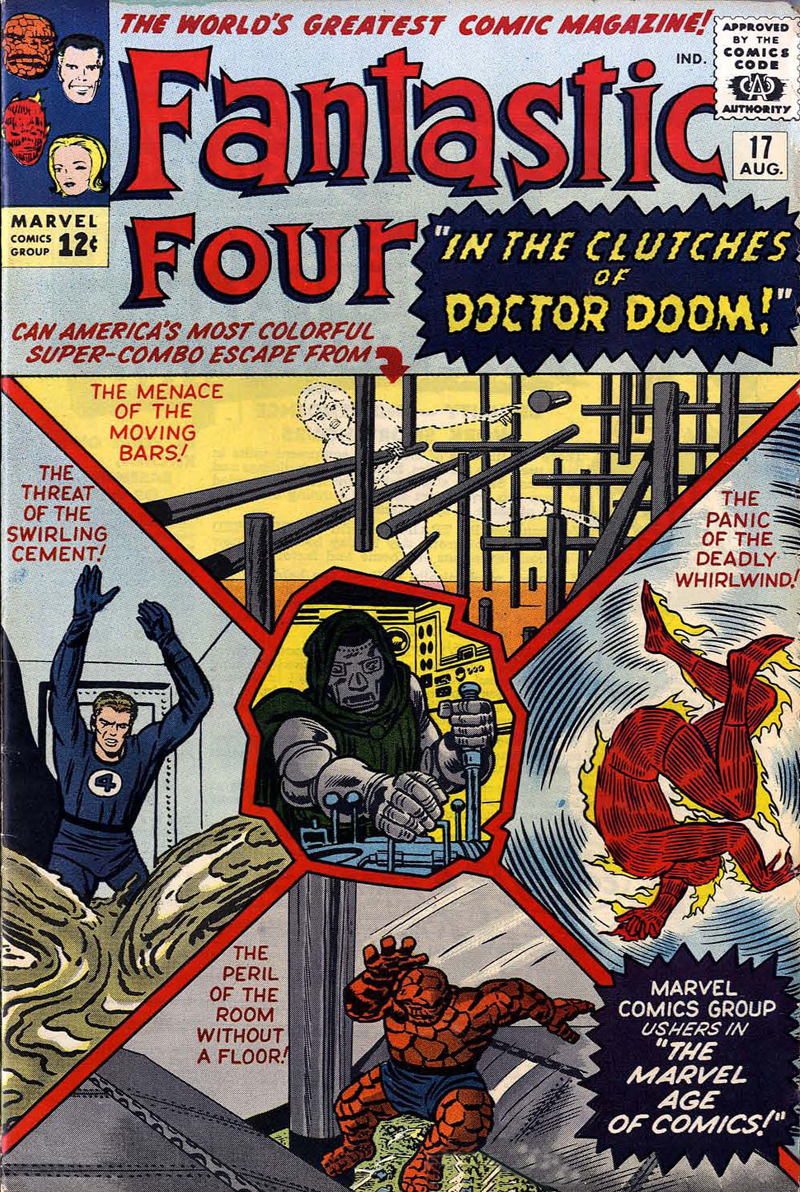
The let­ter above goes to show two things. George Ray­mond Richard Mar­tin, oth­er­wise known as George R.R. Mar­tin, or sim­ply as GRRM, had fan­ta­sy and writ­ing in his blood from a young age. Decades before he wrote his fan­ta­sy nov­el series A Song of Ice and Fire, which HBO adapt­ed into Game of Thrones, a 15-year-old George R. Mar­tin sent a fan let­ter to Stan Lee and Jack Kir­by, the leg­endary cre­ators of Spi­der-Man, the Hulk, Thor, the X‑Men and the Fan­tas­tic Four (called “F.F.” in the let­ter). When you read the note, you can imme­di­ate­ly tell that young Mar­tin was steeped in sci-fi and fan­ta­sy lit­er­a­ture. He could also string togeth­er some fair­ly com­plex sen­tences dur­ing his teenage years — sen­tences that many adults would strug­gle to write. But here’s the cool part for me. Wun­derkind Mar­tin lived in good old Bay­onne, NJ, the town where yours tru­ly has deep fam­i­ly roots. You can find the cov­er of the much-praised F.F. #17 below.

FF017cover

via Huff­Po

Relat­ed Con­tent:

Down­load 15,000+ Free Gold­en Age Comics from the Dig­i­tal Com­ic Muse­um

Lars von Trier’s Ani­mat­ed Movie Made When He Was 11 Years Old

See Carl Sagan’s Child­hood Sketch­es of The Future of Space Trav­el

« Go BackMore in this category... »
Quantcast