F. Scott Fitzgerald Tells His 11-Year-Old Daughter What to Worry About (and Not Worry About) in Life, 1933

f-scott-fitzgerald

Born 117 years ago today in St. Paul, Min­neso­ta, F. Scott Fitzger­ald, that some­what louche denizen—some might say inventor—of the “Jazz Age,” has been immor­tal­ized as the ten­der young man we see above: Prince­ton dropout, writer of The Great Gats­by, boozy com­pan­ion to beau­ti­ful South­ern belle flap­per Zel­da Sayre. Amidst all the glam­or­iza­tion of his best and worst qual­i­ties, it’s easy to for­get that Fitzger­ald was also the father of a daugh­ter, Frances Scott Fitzger­ald, who went on to have her own suc­cess­ful career as a writer. Unlike the chil­dren of some of Fitzgerald’s con­tem­po­raries, Frances thrived, which must be some tes­ta­ment to her father’s par­ent­ing (and to Zelda’s as well, though she alleged­ly hoped, like Daisy Buchanan, that her daugh­ter would become a “beau­ti­ful lit­tle fool”).

We get more than a hint of Fitzgerald’s father­ly char­ac­ter in a won­der­ful lit­tle let­ter that he sent to her in August of 1933, when Frances was away at sum­mer camp. Fitzger­ald, renowned for his extremes, coun­sels an almost Epi­cure­an mid­dle way—distilling, per­haps, hard lessons learned dur­ing his decline in the thir­ties (which he wrote of can­did­ly in “The Crack Up”). He con­cludes with a list of things for his daugh­ter to wor­ry and not wor­ry about. It’s a very touch­ing mis­sive that I look for­ward to shar­ing with my daugh­ter some day. I’ll have my own advice and sil­ly in-jokes for her, but Fitzger­ald pro­vides a very wise lit­er­ary sup­ple­ment. Below is the full let­ter, pub­lished in the New York Times in 1958. The typos, we might assume, are all sic, giv­en Fitzgerald’s pen­chant for such errors:

AUGUST 8, 1933
LA PAIX RODGERS’ FORGE
TOWSON, MATYLAND

DEAR PIE:

I feel very strong­ly about you doing duty. Would you give me a lit­tle more doc­u­men­ta­tion about your read­ing in French? I am glad you are hap­py– but I nev­er believe much in hap­pi­ness. I nev­er believe in mis­ery either. Those are things you see on the stage or the screen or the print­ed page, they nev­er real­ly hap­pen to you in life.

All I believe in in life is the rewards for virtue (accord­ing to your tal­ents) and the pun­ish­ments for not ful­fill­ing your duties, which are dou­bly cost­ly. If there is such a vol­ume in the camp library, will you ask Mrs. Tyson to let you look up a son­net of Shake­speare’s in which the line occurs Lilies that fes­ter smell far worse than weeds…

I think of you, and always pleas­ant­ly, but I am going to take the White Cat out and beat his bot­tom hard, six times for every time you are imper­ti­nent. Do you react to that?…

Half-wit, I will con­clude. Things to wor­ry about:

Wor­ry about courage
Wor­ry about clean­li­ness
Wor­ry about effi­cien­cy
Wor­ry about horse­man­ship…
Things not to wor­ry about:
Don’t wor­ry about pop­u­lar opin­ion
Don’t wor­ry about dolls
Don’t wor­ry about the past
Don’t wor­ry about the future
Don’t wor­ry about grow­ing up
Don’t wor­ry about any­body get­ting ahead of you
Don’t wor­ry about tri­umph
Don’t wor­ry about fail­ure unless it comes through your own fault
Don’t wor­ry about mos­qui­toes
Don’t wor­ry about flies
Don’t wor­ry about insects in gen­er­al
Don’t wor­ry about par­ents
Don’t wor­ry about boys
Don’t wor­ry about dis­ap­point­ments
Don’t wor­ry about plea­sures
Don’t wor­ry about sat­is­fac­tions
Things to think about:
What am I real­ly aim­ing at?
How good am I real­ly in com­par­i­son to my con­tem­po­raries in regard to:
(a) Schol­ar­ship
(b) Do I real­ly under­stand about peo­ple and am I able to get along with them?
© Am I try­ing to make my body a use­ful intru­ment or am I neglect­ing it?

With dear­est love,

Relat­ed Con­tent:

F. Scott Fitzger­ald Cre­ates a List of 22 Essen­tial Books, 1936

“Noth­ing Good Gets Away”: John Stein­beck Offers Love Advice in a Let­ter to His Son (1958)

Read F. Scott Fitzgerald’s Sto­ry “May Day,” and Near­ly All of His Oth­er Work, Free Online

Josh Jones is a writer and musi­cian based in Durham, NC. Fol­low him at @jdmagness

Frida Kahlo Writes a Personal Letter to Georgia O’Keeffe After O’Keeffe’s Nervous Breakdown (1933)

frida 4

fridatoGeorgia

kahlo2

Click for larg­er image

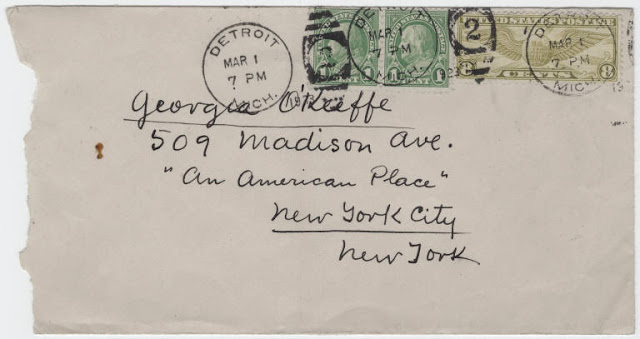
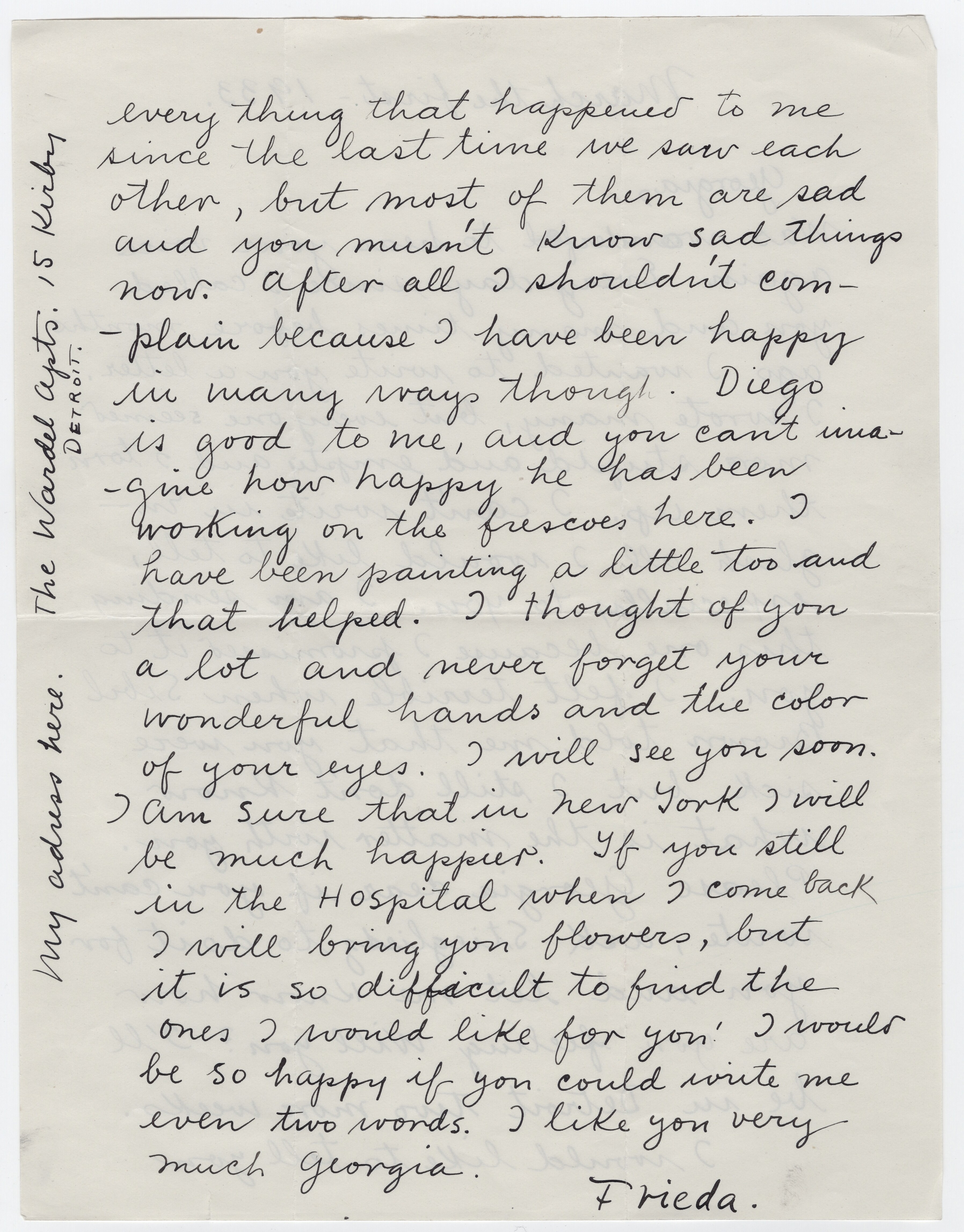
Impor­tant twen­ti­eth-cen­tu­ry painters, as every stu­dent of art his­to­ry learns, did­n’t tend to sail smooth­ly through exis­tence. Those even a lit­tle inter­est­ed in famed Mex­i­can self-por­traitist Fri­da Kahlo have heard much about the tra­vails both roman­tic and phys­i­cal she endured in her short life. But in this less­er-known instance, anoth­er artist suf­fered, and Kahlo offered the solace. Avail­able to view from Yale’s Bei­necke Rare Book & Man­u­script Library, we have here a let­ter Kahlo sent to Geor­gia O’Ke­effe, painter of blos­soms and south­west Amer­i­can land­scapes (and more besides), on March 1st, 1933. At that time, O’Ke­effe, who the year before had strug­gled and failed to com­plete a mur­al project for Radio City Music Hall on time, lived through the after­math of a ner­vous break­down which had hos­pi­tal­ized her (diag­no­sis: “psy­choneu­ro­sis”), sent her to no less remote a locale than Bermu­da to recu­per­ate, and pre­vent­ed her from paint­ing again until 1934.

Kahlo’s let­ter, sent from Detroit where her mural­ist hus­band Diego Rivera had tak­en a com­mis­sion for 27 fres­coes at the Insti­tute of the Arts, runs as fol­lows:

Geor­gia,

Was won­der­ful to hear your voice again. Every day since I called you and many times before months ago I want­ed to write you a let­ter. I wrote you many, but every one seemed more stu­pid and emp­ty and I torn them up. I can’t write in Eng­lish all that I would like to tell, espe­cial­ly to you. I am send­ing this one because I promised it to you. I felt ter­ri­ble when Sybil Brown told me that you were sick but I still don’t know what is the mat­ter with you. Please Geor­gia dear if you can’t write, ask Stieglitz to do it for you and let me know how are you feel­ing will you ? I’ll be in Detroit two more weeks. I would like to tell you every thing that hap­pened to me since the last time we saw each oth­er, but most of them are sad and you must­n’t know sad things now. After all I should­n’t com­plain because I have been hap­py in many ways though. Diego is good to me, and you can’t imag­ine how hap­py he has been work­ing on the fres­coes here. I have been paint­ing a lit­tle too and that helped. I thought of you a lot and nev­er for­get your won­der­ful hands and the col­or of your eyes. I will see you soon. I am sure that in New York I will be much hap­pi­er. If you still in the hos­pi­tal when I come back I will bring you flow­ers, but it is so dif­fi­cult to find the ones I would like for you. I would be so hap­py if you could write me even two words. I like you very much Geor­gia.

Frie­da

“Clear­ly Kahlo hoped for a deep­er friend­ship, or per­haps more, with O’Ke­effe, when she and Diego went to New York a few weeks lat­er,” writes Sharyn Rohlf­sen Udall in Carr, O’Ke­effe, Kahlo: Places of Their Own. “From there, she wrote to a friend on 11 April (by which time O’Ke­effe had gone to Bermu­da to con­va­lesce) that because of O’Ke­ef­fe’s ill­ness there had been no love­mak­ing between them that time. A boast­ful exag­ger­a­tion of their close­ness? Know­ing Kahlo’s predilec­tion for sex­u­al hyper­bole, this seems like­ly.”

via A Piece of Mono­logue, A Writer’s Rumi­na­tions

Relat­ed Con­tent:

The Art of Hand­writ­ing as Prac­ticed by Famous Artists: Geor­gia O’Keeffe, Jack­son Pol­lock, Mar­cel Duchamp, Willem de Koon­ing & More

The Real Geor­gia O’Keeffe: The Artist Reveals Her­self in Vin­tage Doc­u­men­tary Clips

Watch Mov­ing Short Films of Fri­da Kahlo and Diego Rivera at the “Blue House”

Fri­da Kahlo and Diego Rivera Vis­it Leon Trot­sky in Mex­i­co, 1938

Col­in Mar­shall hosts and pro­duces Note­book on Cities and Cul­ture and writes essays on lit­er­a­ture, film, cities, Asia, and aes­thet­ics. He’s at work on a book about Los Ange­lesA Los Ange­les PrimerFol­low him on Twit­ter at @colinmarshall.

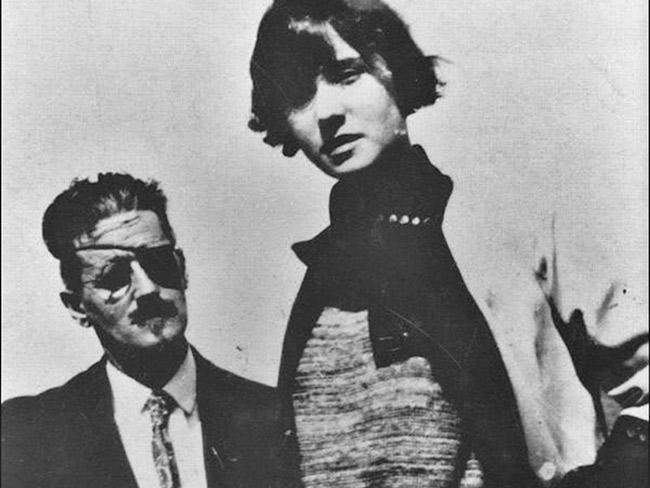
James Joyce’s “Dirty Letters” to His Wife (1909)

Writer and artist Alis­tair Gen­try once pro­posed a lec­ture series he called “One Eyed Mon­ster.” Cen­tral to the project is what Gen­try calls “the cult of James Joyce,” an exem­plar of a larg­er phe­nom­e­non: “the vul­ture-like pick­ing over of the cre­ative and mate­r­i­al lega­cies of dead artists.” “Untal­ent­ed and non­cre­ative peo­ple,” writes Gen­try, “are able to build last­ing careers from what one might call the Tal­ent­ed Dead.” Gentry’s judg­ment may seem harsh, but the ques­tions he asks are inci­sive and should give pause to schol­ars (and blog­gers) who make their liv­ings comb­ing through the per­son­al effects of dead artists, and to every­one who takes a spe­cial inter­est, pruri­ent or oth­er­wise, in such arti­facts. Just what is it we hope to find in artists’ per­son­al let­ters that we can’t find in their pub­lic work? I’m not sure I have an answer to that ques­tion, espe­cial­ly in ref­er­ence to James Joyce’s “dirty let­ters” to his wife and chief muse, Nora.

The let­ters are by turns scan­dalous, tit­il­lat­ing, roman­tic, poet­ic, and often down­right fun­ny, and they were writ­ten for Nora’s eyes alone in a cor­re­spon­dence ini­ti­at­ed by her in Novem­ber of 1909, while Joyce was in Dublin and she was in Tri­este rais­ing their two chil­dren in very strait­ened cir­cum­stances. Nora hoped to keep Joyce away from cour­te­sans by feed­ing his fan­tasies in writ­ing, and Joyce need­ed to woo Nora again—she had threat­ened to leave him for his lack of finan­cial sup­port. In the let­ters, they remind each oth­er of their first date on June 16, 1904 (sub­se­quent­ly memo­ri­al­ized as “Blooms­day,” the date on which all of Ulysses is set). We learn quite a lot about Joyce’s predilec­tions, much less about Nora’s, whose side of the cor­re­spon­dence seems to have dis­ap­peared. Declared lost for some time, Joyce’s first reply let­ter to Nora in the “dirty let­ters” sequence was recent­ly dis­cov­ered and auc­tioned off by Sotheby’s in 2004.

I do not excerpt here any of the lan­guage from Joyce’s sub­se­quent let­ters, not for modesty’s sake but because there is far too much of it to choose from. If those prud­ish cen­sors of Ulysses had read this exchange, they might have dropped dead from grave wounds to their sense of deco­rum. As far as I can ascer­tain, the let­ters exist in pub­li­ca­tion only in the out-of-print Select­ed Let­ters of James Joyce, edit­ed by pre-emi­nent Joyce biog­ra­ph­er Richard Ell­mann, and in a some­what trun­cat­ed form on this site. Alis­tair Gen­try has done us the favor of tran­scrib­ing the let­ters as they appear in Ellmann’s Select­ed Let­ters on his site here. Of our inter­est in them, he asks:

Does any­one have the right to read things that were clear­ly meant only for two spe­cif­ic peo­ple…? Now that they have been exposed to the world’s gaze, albeit in a fair­ly lim­it­ed fash­ion, does any­body except these two (who are dead) have any right to make objec­tions about or exer­cise con­trol over the man­ner in which these pri­vate doc­u­ments and records of inti­ma­cy are used?

Ques­tions worth con­sid­er­ing, if not answered eas­i­ly. Nev­er­the­less, despite his crit­i­cal mis­giv­ings, Gen­try writes: “These let­ters stand on their own as bril­liant and, dare I say, arous­ing Joycean writ­ing. In my opin­ion they’re def­i­nite­ly worth read­ing.” I must say I agree. Joyce’s broth­er Stanis­laus once wrote in a diary entry: “Jim is thought to be very frank about him­self but his style is such that it might be con­tend­ed that he con­fess­es in a for­eign language—an eas­i­er con­fes­sion than in the vul­gar tongue.” In the “dirty let­ters,” we get to see the great alchemist of ordi­nary lan­guage and expe­ri­ence prac­ti­cal­ly rev­el in the most vul­gar con­fes­sions.

Relat­ed Con­tent:

James Joyce Plays the Gui­tar, 1915

On Blooms­day, Hear James Joyce Read From his Epic Ulysses, 1924

James Joyce, With His Eye­sight Fail­ing, Draws a Sketch of Leopold Bloom (1926)

James Joyce’s Ulysses: Down­load the Free Audio Book

Josh Jones is a writer and musi­cian based in Durham, NC. Fol­low him at @jdmagness

Raymond Chandler Denounces Strangers on a Train in Sharply-Worded Letter to Alfred Hitchcock

Images via Wiki­me­dia Com­mons

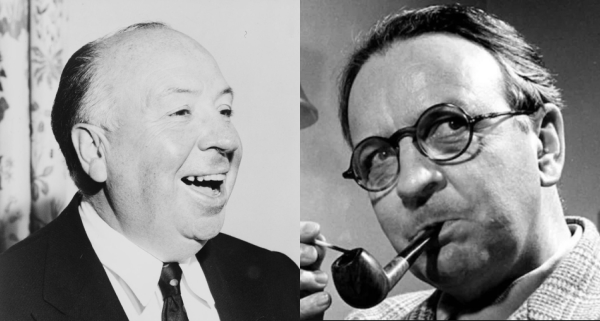
Alfred Hitch­cock, like sev­er­al oth­er of the twen­ti­eth cen­tu­ry’s best-known auteurs, made some of his most wide­ly seen work by turn­ing books into movies. Or rather, he hired oth­er writ­ers to turn these books into screen­plays, which he then turned into movies — which, the way these things go, often bore lit­tle ulti­mate resem­blance to their source mate­r­i­al. In the case of his 1951 pic­ture Strangers on a Train, based upon The Tal­ent­ed Mr. Rip­ley author Patri­cia High­smith’s first nov­el of the same name, Hitch­cock burned through a few such hired hands. First he engaged Whit­field Cook, whose treat­ment bol­stered the nov­el­’s homo­erot­ic sub­text. Then he impor­tuned a series of the bright­est liv­ing lights of Amer­i­can lit­er­a­ture — Thorn­ton Wilder, John Stein­beck, Dashiell Ham­mett — to have a go at the full screen­play, none of whom could bring them­selves sign on to the job. Then along came the only respect­ed “name” writer who could rise — or, giv­en that many at first thought High­smith’s nov­el tawdry, sink — to the job: Philip Mar­lowe’s cre­ator, Ray­mond Chan­dler.

The Big Sleep author wrote and sub­mit­ted a first draft of Strangers on a Train. Then a sec­ond. He would hear no feed­back from the direc­tor except the mes­sage inform­ing him of his fir­ing. Hitch­cock pur­sued “Shake­speare of Hol­ly­wood” Ben Hecht to come up with the next draft, but Hecht offered his young assis­tant Czen­zi Ormonde instead. Togeth­er with Hitch­cock­’s wife and asso­ciate pro­duc­er, Ormonde com­plete­ly rewrote the script in less than three weeks. When Chan­dler lat­er got hold of the film’s final script, he sent Hitch­cock his assess­ment, as fea­tured on Let­ters of Note:

Decem­ber 6th, 1950

Dear Hitch,

In spite of your wide and gen­er­ous dis­re­gard of my com­mu­ni­ca­tions on the sub­ject of the script of Strangers on a Train and your fail­ure to make any com­ment on it, and in spite of not hav­ing heard a word from you since I began the writ­ing of the actu­al screenplay—for all of which I might say I bear no mal­ice, since this sort of pro­ce­dure seems to be part of the stan­dard Hol­ly­wood depravity—in spite of this and in spite of this extreme­ly cum­ber­some sen­tence, I feel that I should, just for the record, pass you a few com­ments on what is termed the final script. I could under­stand your find­ing fault with my script in this or that way, think­ing that such and such a scene was too long or such and such a mech­a­nism was too awk­ward. I could under­stand you chang­ing your mind about the things you specif­i­cal­ly want­ed, because some of such changes might have been imposed on you from with­out. What I can­not under­stand is your per­mit­ting a script which after all had some life and vital­i­ty to be reduced to such a flab­by mass of clichés, a group of face­less char­ac­ters, and the kind of dia­logue every screen writer is taught not to write—the kind that says every­thing twice and leaves noth­ing to be implied by the actor or the cam­era. Of course you must have had your rea­sons but, to use a phrase once coined by Max Beer­bohm, it would take a “far less bril­liant mind than mine” to guess what they were.

Regard­less of whether or not my name appears on the screen among the cred­its, I’m not afraid that any­body will think I wrote this stuff. They’ll know damn well I did­n’t. I should­n’t have mind­ed in the least if you had pro­duced a bet­ter script—believe me. I should­n’t. But if you want­ed some­thing writ­ten in skim milk, why on earth did you both­er to come to me in the first place? What a waste of mon­ey! What a waste of time! It’s no answer to say that I was well paid. Nobody can be ade­quate­ly paid for wast­ing his time.

(Signed, ‘Ray­mond Chan­dler’)

Note that Chan­dler, ever the writer, points out his own “extreme­ly cum­ber­some sen­tence” even as he sum­mons so much vit­ri­ol for what he con­sid­ers a life­less script. As a long­time res­i­dent of Los Ange­les by this point, and one who had already worked on the screen­plays for The Blue Dahlia and Dou­ble Indem­ni­ty, he knew well the pro­ce­dures of “the stan­dard Hol­ly­wood deprav­i­ty.” But noth­ing, to his mind, could excuse such “clichés,” “face­less char­ac­ters,” and dia­logue that “says every­thing twice and leaves noth­ing to be implied.” We could all, no mat­ter what sort of work we do, learn from Chan­dler’s unwa­ver­ing atten­tion to his craft, and we’d do espe­cial­ly well to bear in mind his pre­emp­tive objec­tion to the argu­ment that, hey, at least he got a big check: “Nobody can be ade­quate­ly paid for wast­ing his time.”

What­ev­er your own opin­ion on Hitch­cock, don’t for­get our col­lec­tion of 20 Free Hitch­cock Movies Online, nor, of course, our big col­lec­tion, 4,000+ Free Movies Online: Great Clas­sics, Indies, Noir, West­erns, Doc­u­men­taries & More.

Relat­ed Con­tent:

Ray­mond Chan­dler: There’s No Art of the Screen­play in Hol­ly­wood

Watch Ray­mond Chandler’s Long-Unno­ticed Cameo in Dou­ble Indem­ni­ty

Alfred Hitch­cock: The Secret Sauce for Cre­at­ing Sus­pense

Col­in Mar­shall hosts and pro­duces Note­book on Cities and Cul­ture and writes essays on lit­er­a­ture, film, cities, Asia, and aes­thet­ics. He’s at work on a book about Los Ange­lesA Los Ange­les Primer. Fol­low him on Twit­ter at @colinmarshall.

Virginia Woolf’s Handwritten Suicide Note: A Painful and Poignant Farewell (1941)

handwriting-virginia-woolf-10921544-600-870

It seems like a very mor­bid and inhu­man prac­tice to treat the sui­cide note as a piece of lit­er­a­ture, even if the author of said note is a writer as famous as Vir­ginia Woolf. And yet, why not? I can antic­i­pate all sorts of eth­i­cal objec­tions hav­ing to do with decen­cy, and I share some of those sen­ti­ments. Let us not for­get, how­ev­er, that death has often been a lit­er­ary occa­sion: the long tra­di­tion of record­ed last words ranges from deathbed con­fes­sions to the strange­ly the­atri­cal genre of the gal­lows speech (see Socrates, Anne Boleyn, or John Brown). Like those unfor­get­table fig­ures of his­to­ry, Vir­ginia Woolf’s last script­ed words are pored over by lay read­ers and schol­ars alike (see, for exam­ple, pages on Woolf’s final words from Smith Col­lege and Yale).

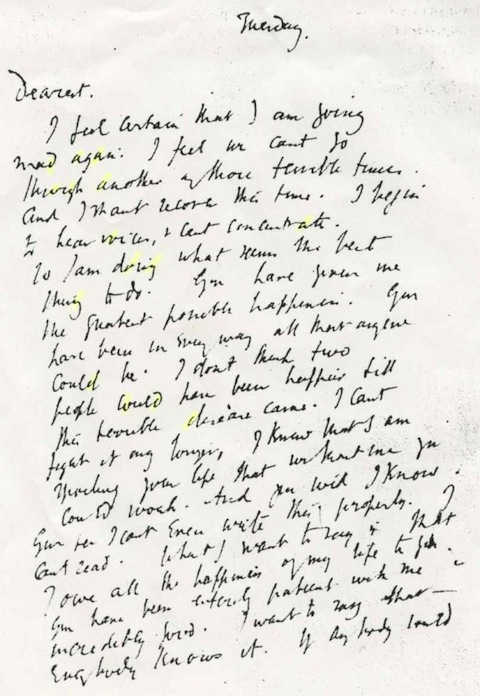
Woolf’s death, in March of 1941, occa­sioned the third of her sui­cide let­ters, and yes, it feels unseem­ly to linger over her last piece of prose. Per­haps it is the mode of death, sui­cide still being a soci­etal taboo, thought of as trag­ic even when it’s under­tak­en calm­ly and ratio­nal­ly by some­one ready to leave this world. And in many cas­es, espe­cial­ly those involv­ing men­tal ill­ness, death seems so need­less, so extreme. Such was the case with Woolf, who drowned her­self after a long strug­gle with what would prob­a­bly be called today bipo­lar dis­or­der. Her sui­cide note, writ­ten to her hus­band Leonard, is a haunt­ing and beau­ti­ful doc­u­ment, in all its unadorned sin­cer­i­ty behind which much tur­moil and anguish lie. See a scan of the hand­writ­ten note at the top, and read the full tran­script below. Direct­ly above, you can hear a dra­mat­ic read­ing of Woolf’s note, such a wrench­ing mis­sive because it is not a farewell to the world at large, but rather to a trust­ed friend and lover.

Dear­est,

I feel cer­tain I am going mad again. I feel we can’t go through anoth­er of those ter­ri­ble times. And I shan’t recov­er this time. I begin to hear voic­es, and I can’t con­cen­trate. So I am doing what seems the best thing to do. You have giv­en me the great­est pos­si­ble hap­pi­ness. You have been in every way all that any­one could be. I don’t think two peo­ple could have been hap­pi­er till this ter­ri­ble dis­ease came. I can’t fight any longer. I know that I am spoil­ing your life, that with­out me you could work. And you will I know. You see I can’t even write this prop­er­ly. I can’t read. What I want to say is I owe all the hap­pi­ness of my life to you. You have been entire­ly patient with me and incred­i­bly good. I want to say that — every­body knows it. If any­body could have saved me it would have been you. Every­thing has gone from me but the cer­tain­ty of your good­ness. I can’t go on spoil­ing your life any longer.

I don’t think two peo­ple could have been hap­pi­er than we have been.

Relat­ed Con­tent:

Vir­ginia Woolf and Friends Dress Up as “Abyssin­ian Princes” and Fool the British Roy­al Navy (1910)

Watch Pat­ti Smith Read from Vir­ginia Woolf, and Hear the Only Sur­viv­ing Record­ing of Woolf’s Voice

“A Haunt­ed House” by Vir­ginia Woolf

Find Works by Vir­ginia Woolf in Our Col­lec­tions of Free Audio Books and Free eBooks.

Josh Jones is a writer and musi­cian based in Durham, NC. Fol­low him at @jdmagness

Richard Feynman’s Letter to His Departed Wife: “You, Dead, Are So Much Better Than Anyone Else Alive” (1946)

feynman letter to wife

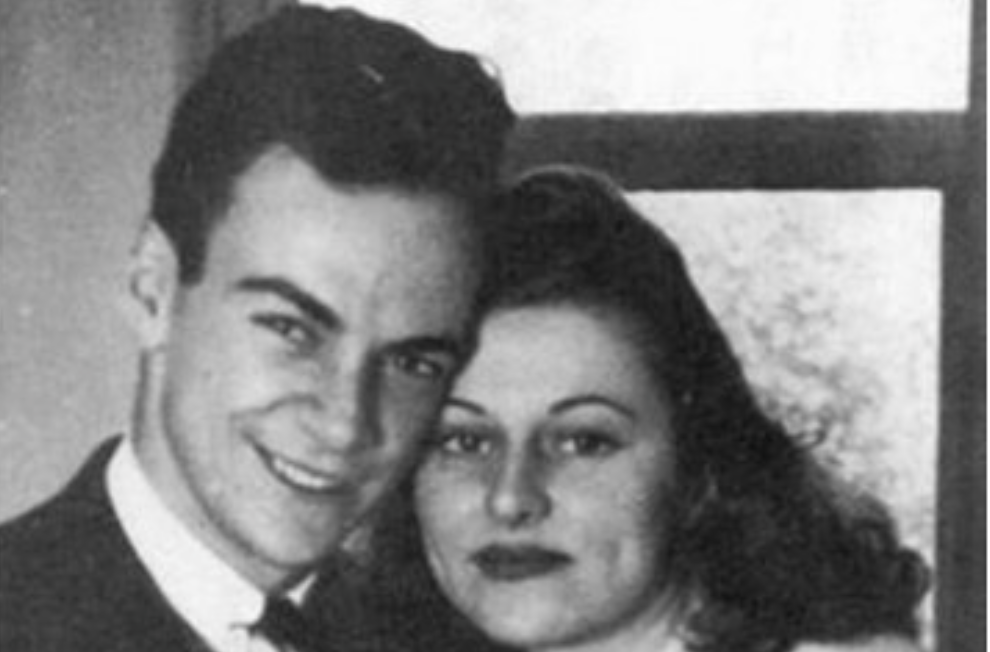
In June 1945, the 27-year-old physi­cist Richard Feyn­man lost his wife, Arline Feyn­man, to tuber­cu­lo­sis. Only 25 years old, she was Richard’s high-school sweet­heart. And yet she was much more. As Lawrence Krauss writes in 2012 biog­ra­phy on Feyn­man:

Richard and Arline were soul mates. They were not clones of each oth­er, but sym­bi­ot­ic oppo­sites — each com­plet­ed the oth­er. Arline admired Richard’s obvi­ous sci­en­tif­ic bril­liance, and Richard clear­ly adored the fact that she loved and under­stood things he could bare­ly appre­ci­ate at the time. But what they shared, most of all, was a love of life and a spir­it of adven­ture.

Dur­ing their years togeth­er, Richard and Arline exchanged fre­quent let­ters, many now col­lect­ed in the vol­ume, Per­fect­ly Rea­son­able Devi­a­tions from the Beat­en Track. But none is more poignant than the one writ­ten to Arline six­teen months after her death. Still despair­ing, still lost, Feyn­man wrote a cathar­tic let­ter that was sealed and nev­er opened until his own death in 1988. Deeply touch­ing, it reads as fol­lows:

Octo­ber 17, 1946

D’Arline,

I adore you, sweet­heart.

I know how much you like to hear that — but I don’t only write it because you like it — I write it because it makes me warm all over inside to write it to you.

It is such a ter­ri­bly long time since I last wrote to you — almost two years but I know you’ll excuse me because you under­stand how I am, stub­born and real­is­tic; and I thought there was no sense to writ­ing.

But now I know my dar­ling wife that it is right to do what I have delayed in doing, and that I have done so much in the past. I want to tell you I love you. I want to love you. I always will love you.

I find it hard to under­stand in my mind what it means to love you after you are dead — but I still want to com­fort and take care of you — and I want you to love me and care for me. I want to have prob­lems to dis­cuss with you — I want to do lit­tle projects with you. I nev­er thought until just now that we can do that. What should we do. We start­ed to learn to make clothes togeth­er — or learn Chi­nese — or get­ting a movie pro­jec­tor. Can’t I do some­thing now? No. I am alone with­out you and you were the “idea-woman” and gen­er­al insti­ga­tor of all our wild adven­tures.

When you were sick you wor­ried because you could not give me some­thing that you want­ed to and thought I need­ed. You needn’t have wor­ried. Just as I told you then there was no real need because I loved you in so many ways so much. And now it is clear­ly even more true — you can give me noth­ing now yet I love you so that you stand in my way of lov­ing any­one else — but I want you to stand there. You, dead, are so much bet­ter than any­one else alive.

I know you will assure me that I am fool­ish and that you want me to have full hap­pi­ness and don’t want to be in my way. I’ll bet you are sur­prised that I don’t even have a girl­friend (except you, sweet­heart) after two years. But you can’t help it, dar­ling, nor can I — I don’t under­stand it, for I have met many girls and very nice ones and I don’t want to remain alone — but in two or three meet­ings they all seem ash­es. You only are left to me. You are real.

My dar­ling wife, I do adore you.

I love my wife. My wife is dead.

Rich.

PS Please excuse my not mail­ing this — but I don’t know your new address.

via the always great Let­ters of Note

Relate Con­tent:

‘The Char­ac­ter of Phys­i­cal Law’: Richard Feynman’s Leg­endary Lec­ture Series at Cor­nell, 1964

Richard Feyn­man Presents Quan­tum Elec­tro­dy­nam­ics for the Non­Sci­en­tist

Leonard Susskind, Father of String The­o­ry, Warm­ly Remem­bers His Friend, Richard Feyn­man

Free Online Physics Cours­es

by | Permalink | Make a Comment ( 21 ) |

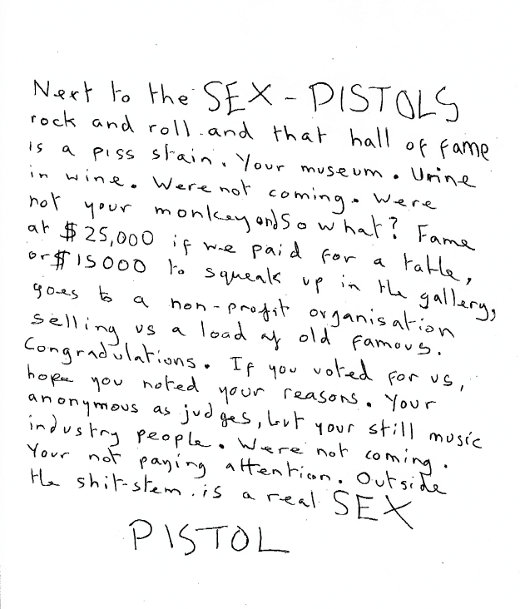
Johnny Rotten’s Cordial Letter to the Rock and Roll Hall of Fame: Next to the Sex Pistols, You’re ‘a Piss Stain’

johnny rotten hall of fame

The Sex Pis­tols cer­tain­ly weren’t the first to balk at show­ing up to receive a tro­phy at the Rock and Roll Hall of Fame induc­tion cer­e­mo­ny. They were, how­ev­er, notable for the style in which they declined to attend. When word came in ear­ly 2006 that the Pis­tols would be induct­ed, the band’s singer John Lydon, whose stage name was “John­ny Rot­ten,” faxed the Hall of Fame a hand­writ­ten note. “Next to the SEX-PISTOLS rock and roll and that hall of fame is a piss stain,” wrote Lydon. “Your muse­um. Urine in wine. Were not com­ing. Were not your mon­key and so what?” You can read the rest above, or watch below as a bemused Jann Wen­ner, co-founder of the muse­um, reads the let­ter out loud dur­ing the cer­e­mo­ny.

via Let­ters of Note

Relat­ed Con­tent: 

The His­to­ry of Punk Rock: A Doc­u­men­tary

The Art of Punk, MOCA’s Series of Punk Doc­u­men­taries, Begins with Black Flag

Mal­colm McLaren on The Quest for Authen­tic Cre­ativ­i­ty

Punk Meets High Fash­ion in Met­ro­pol­i­tan Muse­um of Art Exhi­bi­tion PUNK: Chaos to Cou­ture

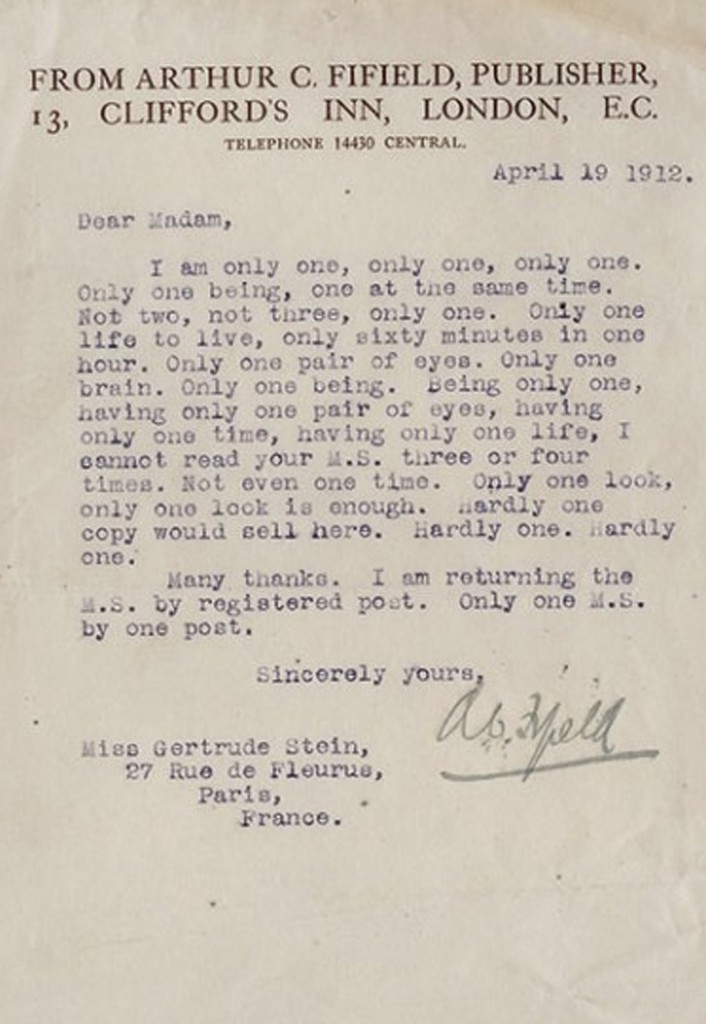
Gertrude Stein Gets a Snarky Rejection Letter from Publisher (1912)

stein-rejection-letter

Gertrude Stein con­sid­ered her­self an exper­i­men­tal writer and wrote what The Poet­ry Foun­da­tion calls “dense poems and fic­tions, often devoid of plot or dia­logue,” with the result being that “com­mer­cial pub­lish­ers slight­ed her exper­i­men­tal writ­ings and crit­ics dis­missed them as incom­pre­hen­si­ble.” Take, for exam­ple, what hap­pened when Stein sent a man­u­script to Alfred C. Fifield, a Lon­don-based pub­lish­er, and received a rejec­tion let­ter mock­ing her prose in return. Accord­ing to Let­ters of Note, the man­u­script in ques­tion was pub­lished many years lat­er as her mod­ernist nov­el, The Mak­ing of Amer­i­cans: Being a His­to­ry of a Fam­i­ly’s Progress (1925). You can hear Stein read­ing a selec­tion from the nov­el below. Also find oth­er Gertrude Stein works in our col­lec­tions of Free eBooks and Free Audio Books.

via Elec­tric Lit­er­a­ture

Relat­ed Con­tent:

Hear Gertrude Stein Read Works Inspired by Matisse, Picas­so, and T.S. Eliot (1934)

Gertrude Stein Recites ‘If I Told Him: A Com­plet­ed Por­trait of Picas­so’

The Dead Authors Pod­cast: H.G. Wells Com­i­cal­ly Revives Lit­er­ary Greats with His Time Machine

James Joyce in Paris: “Deal With Him, Hem­ing­way!”

by | Permalink | Make a Comment ( 14 ) |

« Go BackMore in this category... »
Quantcast