Short Film Shows What Happens When a Letter from World War II Finally Gets Delivered 69 Years Later

A few years ago, I stum­bled upon a nev­er-sent let­ter writ­ten to a friend when we were both in col­lege. The con­tents weren’t heavy. Dis­or­ga­ni­za­tion is the most like­ly expla­na­tion for why it nev­er went in the mail. I cracked the enve­lope and had a look.

It was a time cap­sule, for sure, a cringe-induc­ing one. It was­n’t so much the life I was report­ing on as how I framed it, self-aggran­dize­ment strain­ing to pass as non­cha­lance. For­tu­nate­ly, an artist acquain­tance hap­pened to be run­ning a project— send her your shred­d­a­ble doc­u­ments, and even­tu­al­ly, she’d send you a few sheets of hand­made paper in which your mulched data min­gled with that of oth­ers. Tru­ly a beau­ti­ful way to dis­pose of the evi­dence.

But what hap­pens when nei­ther the writer, nor the intend­ed recip­i­ent, is the find­er of the lost let­ter? In Feb­ru­ary 2013, some mail post­ed by Lt. Joseph O. Matthews, a sol­dier sta­tioned at a mil­i­tary train­ing facil­i­ty in Jack­sonville, North Car­oli­na, found its way to Abbi Jacob­son, an actress (and col­or­ing book author!) rent­ing an apart­ment on Mac­Dou­gal Street in New York City. Addressed to Matthew’s wife, the can­cel­la­tion mark was dat­ed Decem­ber 2, 1944.

Jacob­son opened the let­ter, the con­di­tion of the enve­lope hav­ing sug­gest­ed that she would not be the first to breach its con­tents dur­ing the 69 years it had spent wan­der­ing in the wilder­ness. The words inside were roman­tic, a young offi­cer inform­ing the bride he’d left back home that he’d soon be ship­ping out to Oki­nawa. Eager to pull an Amélie by reunit­ing the let­ter with those to whom it would mean the most, Jacob­son enlist­ed the help of her friend, doc­u­men­tary film­mak­er Todd Bieber. Togeth­er they searched records at City Hall, look­ing for clues. When that approach proved fruit­less, they cre­at­ed the Lost Let­ter Project, a web por­tal that invit­ed the pub­lic to join in the search.

An avalanche of tweets, Face­book updates, and human inter­est pieces ensued. In no time at all, they had their man, or rather his descen­dants, Lt. Matthews hav­ing passed away in 1999, crush­ing Jacob­son’s dreams of hand deliv­er­ing the let­ter to “a lit­tle old man and a lit­tle old lady.” (I’m will­ing to bet Jacob­son will one day wish there was a giant blender capa­ble of turn­ing dig­i­tal state­ments like how cute would that be, my god, right? I love old peo­ple into hand­made paper.)

Bieber’s video reveals what became of Lt. Matthews and his wife. Even more inter­est­ing is how the let­ter res­onates with his grown chil­dren, par­tic­u­lar­ly a cer­tain the­o­log­i­cal ref­er­ence at odds with the man they thought they knew.

Relat­ed Con­tent:

In Touch­ing Video, Artist Mari­na Abramović & For­mer Lover Ulay Reunite After 22 Years Apart

“Noth­ing Good Gets Away”: John Stein­beck Offers Love Advice in a Let­ter to His Son (1958)

Stephen King Writes A Let­ter to His 16-Year-Old Self: “Stay Away from Recre­ation­al Drugs”

Ayun Hal­l­i­day is all for stuff­ing your stock­ing with a hol­i­day gift sub­scrip­tion to the East Vil­lage Inky, her award win­ning hand-illus­trat­ed zine. Fol­low her @AyunHalliday

Read Rejection Letters Sent to Three Famous Artists: Sylvia Plath, Kurt Vonnegut & Andy Warhol

PlathRejection

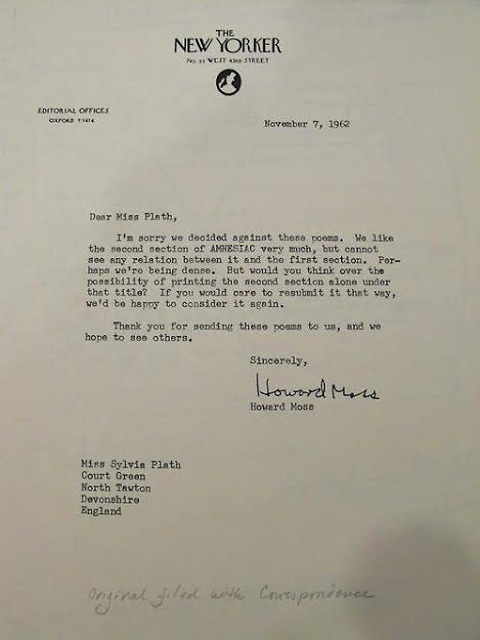
Every suc­cess­ful artist must mas­ter the art of accept­ing rejec­tion. “Fail bet­ter,” said Beck­ett in his grim euphemism for per­se­ver­ance. “I love my rejec­tion slips,” wrote Sylvia Plath in every hope­ful poet’s favorite quote. “They show me I try.” Plath—who also wrote “I am made, crude­ly, for success”—collected scores of rejec­tion let­ters, receiv­ing them even after the con­sid­er­able suc­cess of 1960’s The Colos­sus and Oth­er Poems. The 1962 let­ter above (click here to view in a larg­er for­mat), from The New York­er, doesn’t exact­ly reject a Plath sub­mis­sion, but it does rec­om­mend cut­ting the entire first sec­tion of “Amne­si­ac” and resub­mit­ting “the sec­ond sec­tion alone under that title.” “Per­haps we’re being dense,” demurs edi­tor Howard Moss.

The rejec­tion must have been all the more painful since Plath was under a con­tract with the mag­a­zine, which enti­tled her to “an annu­al sum for the priv­i­lege of hav­ing a ‘first read­ing’ plus sub­se­quent pub­lish­ing rights to her new poet­ry,” Plath schol­ars tell us. And yet “much to her dis­tress she main­ly received rejec­tions dur­ing Novem­ber and Decem­ber 1962.” The poem was even­tu­al­ly bro­ken in two, with the first half pub­lished as “Lyon­nesse,” but not by Plath her­self but by pub­lish­ers after her death. Hear Plath read the full poem as she intend­ed it in her edi­tion of Ariel, above.

VonnegutRejection

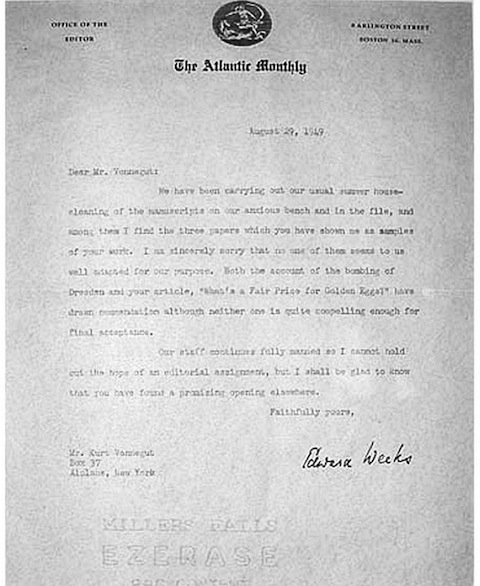
Kurt Von­negut received an imper­son­al, and it would seem, long-over­due rejec­tion let­ter from edi­tor of The Atlantic Edward Weeks in 1949. Weeks writes breezi­ly that he found Vonnegut’s “sam­ples” dur­ing the “usu­al sum­mer house-clean­ing,” announc­ing its slush-pile sta­tus. Weeks does at least give the impres­sion that some­one, if not him, had read Vonnegut’s sub­mis­sions. The aspir­ing writer was 27 years old, strik­ing out “just a few years after sur­viv­ing the bomb­ing of Dres­den as a POW,” Let­ters of Note informs us, and still twen­ty years away from pub­lish­ing his ground­break­ing nov­el Slaugh­ter­house Five. Let­ters of Note also pro­vides us with the tran­script below for the bad­ly fad­ed type­script.

The Atlantic Month­ly

August 29, 1949

Dear Mr. Von­negut:

We have been car­ry­ing out our usu­al sum­mer house-clean­ing of the man­u­scripts on our anx­ious bench and in the file, and among them I find the three papers which you have shown me as sam­ples of your work. I am sin­cere­ly sor­ry that no one of them seems to us well adapt­ed to for our pur­pose. Both the account of the bomb­ing of Dres­den and your arti­cle, “What’s a Fair Price for Gold­en Eggs?” have drawn com­men­da­tion although nei­ther one is quite com­pelling enough for final accep­tance.

Our staff con­tin­ues ful­ly manned so I can­not hold out the hope of an edi­to­r­i­al assign­ment, but I shall be glad to know that you have found a promis­ing open­ing else­where.

Faith­ful­ly yours,

(Signed, ‘Edward Weeks’)

WarholRejection

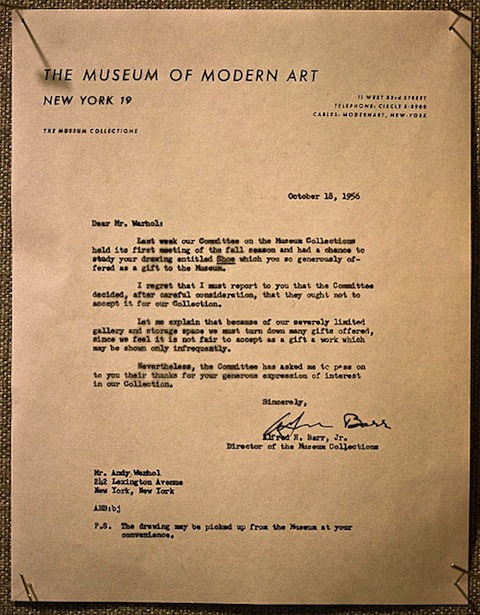
Of course visu­al artists are not immune. Andy Warhol received the above rejec­tion let­ter from New York’s Muse­um of Mod­ern Art when he attempt­ed to donate a draw­ing in 1956. To its lat­er cha­grin, the muse­um wouldn’t let him give his work away:

Last week our Com­mit­tee on the Muse­um Col­lec­tions held its first meet­ing of the fall sea­son and had a chance to study your draw­ing enti­tled Shoe which you so gen­er­ous­ly offered as a gift to the Muse­um.

I regret that I must report to you that the Com­mit­tee decid­ed, after care­ful con­sid­er­a­tion, that they ought not to accept it for our Col­lec­tion.

The Warhol rejec­tion cir­cu­lat­ed a few years ago after the MoMA tweet­ed Let­ters of Note’s post on it (read the full tran­script there). Its most galling fea­ture: a post­script that reads, with dis­mis­sive cour­tesy, “The draw­ing may be picked up from the muse­um at your con­ve­nience.”

Relat­ed Con­tent:

Gertrude Stein Gets a Snarky Rejec­tion Let­ter from Pub­lish­er (1912)

No Women Need Apply: A Dis­heart­en­ing 1938 Rejec­tion Let­ter from Dis­ney Ani­ma­tion

New York­er Car­toon Edi­tor Bob Mankoff Reveals the Secret of a Suc­cess­ful New York­er Car­toon

Josh Jones is a writer and musi­cian based in Durham, NC. Fol­low him at @jdmagness

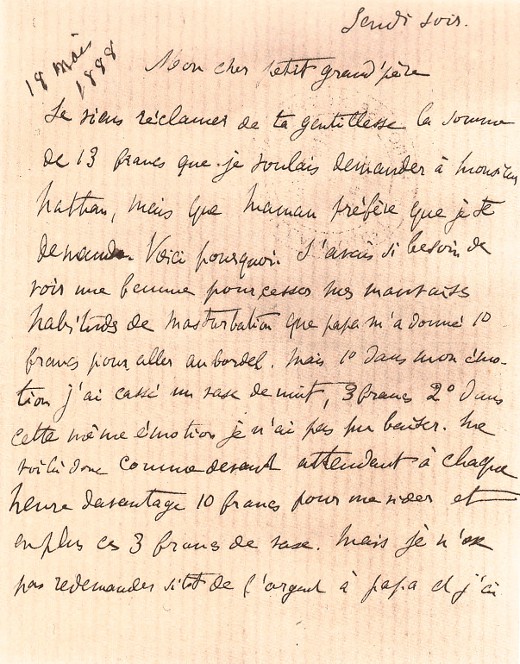
16-Year-Old Marcel Proust Tells His Grandfather About His Misguided Adventures at the Local Brothel

ProustLetter

“One can say any­thing so long as one does not say ‘I.’ ” Mar­cel Proust wrote these words to his fel­low French­man of let­ters André Gide, and they con­sti­tute valu­able advice for any nov­el­ist as well as a use­ful key to under­stand­ing Proust’s own work. We think of Proust — espe­cial­ly today, the hun­dredth anniver­sary of Swan­n’s Way, which opens his mas­ter­work Remem­brance of Things Past (À la recherche du temps per­du) — as an impor­tant French nov­el­ist, an impor­tant mod­ern nov­el­ist, an impor­tant fin-de-siè­cle nov­el­ist, and so on. We also think of Proust as an impor­tant gay nov­el­ist.  And we owe that, in some sense, to Gide, who revealed the clos­et­ed Proust’s homo­sex­u­al­i­ty in their pub­lished cor­re­spon­dence after Proust’s death. Sex­u­al­i­ty has since become a major ele­ment of the robust field of Proust crit­i­cism, and the let­ter above sure­ly gives its schol­ars mate­r­i­al — or at least those schol­ars will­ing to exam­ine the author’s biog­ra­phy along­side his work.

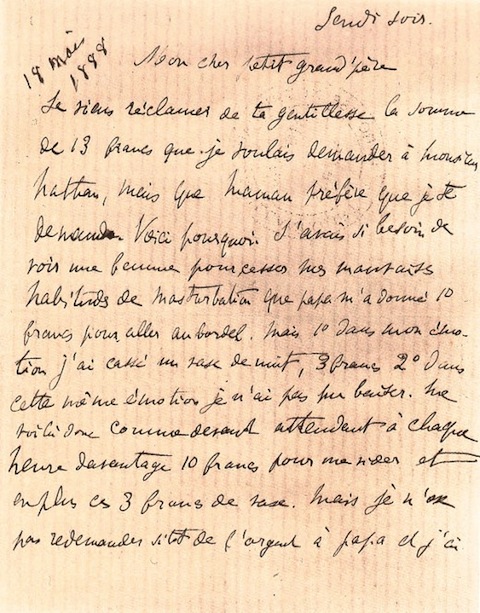
The author of Remem­brance of Things Past once suf­fered, accord­ing to Let­ters of Note, from an obses­sion with mas­tur­ba­tion. “As a teenag­er this caused prob­lems for his fam­i­ly, not least his father, a pro­fes­sor of hygiene, who like many of the day believed that such a wor­ry­ing habit could cause homo­sex­u­al­i­ty if left unchecked.” Giv­en 10 francs by Proust père, Mar­cel went off to the neigh­bor­hood broth­el to, in the­o­ry, get him­self set straight. And the out­come of this “cure”? We defer to the six­teen-year-old Proust him­self, who in the let­ter above tells the whole sor­did sto­ry to his grand­fa­ther:

18 May 1888

Thurs­day evening.

My dear lit­tle grand­fa­ther,

I appeal to your kind­ness for the sum of 13 francs that I wished to ask Mr. Nathan for, but which Mama prefers I request from you. Here is why. I so need­ed to see if a woman could stop my awful mas­tur­ba­tion habit that Papa gave me 10 francs to go to a broth­el. But first, in my agi­ta­tion, I broke a cham­ber pot: 3 francs; then, still agi­tat­ed, I was unable to screw. So here I am, back to square one, wait­ing more and more as hours pass for 10 francs to relieve myself, plus 3 francs for the pot. But I dare not ask Papa for more mon­ey so soon and so I hoped you could come to my aid in a cir­cum­stance which, as you know, is not mere­ly excep­tion­al but also unique. It can­not hap­pen twice in one life­time that a per­son is too flus­tered to screw.

I kiss you a thou­sand times and dare to thank you in advance.

I will be home tomor­row morn­ing at 11am. If you are moved by my sit­u­a­tion and can answer my prayers, I will hope­ful­ly find you with the amount. Regard­less, thank you for your deci­sion which I know will come from a place of friend­ship.

Mar­cel.

Many thanks to Let­ters of Note for uncov­er­ing this illu­mi­nat­ing and — inten­tion­al­ly? unin­ten­tion­al­ly? — comedic piece of cor­re­spon­dence from lit­er­ary his­to­ry, and to Fabi­en Bon­net and Larst Onovich, to whom Let­ters of Note, in turn, gives cred­it.

Relat­ed Con­tent:

Supreme Court Jus­tice Stephen Brey­er Dis­cuss­es His Love for Read­ing Proust, and Why “Lit­er­a­ture is Cru­cial to Any Democ­ra­cy”

Watch Mon­ty Python’s “Sum­ma­rize Proust Com­pe­ti­tion” on the 100th Anniver­sary of Swann’s Way

Lis­ten­ing to Proust’s Remem­brance of Things Past, (Maybe) the Longest Audio Book Ever Made

Free eBooks: Read All of Proust’s Remem­brance of Things Past on the Cen­ten­ni­al of Swann’s Way

Col­in Mar­shall hosts and pro­duces Note­book on Cities and Cul­ture and writes essays on lit­er­a­ture, film, cities, Asia, and aes­thet­ics. He’s at work on a book about Los Ange­lesA Los Ange­les Primer. Fol­low him on Twit­ter at @colinmarshall.

Mark Twain Writes a “Gushing,” “Self-Deprecating” Wedding Announcement to His Family (1869)

TwainLetters

I am of the rather uncon­tro­ver­sial opin­ion that any mar­riage is what any two peo­ple make of it them­selves. I’m also of the opin­ion that no mat­ter how many peo­ple may pub­licly dis­agree with that idea, in pri­vate, peo­ple make their own rules. Nonethe­less, the less out­spo­ken among us often respond to moral­ists and scolds in our lives with the live-and-let live atti­tude expressed by a char­ac­ter in E.M. Forster’s Where Angels Fear to Tread: “Let Philip say what he likes, and he will let us do what we like.”

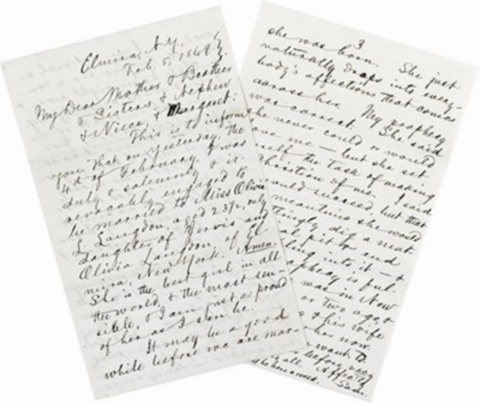
Such pas­sive-aggres­sive arrange­ments can be alien­at­ing, an opin­ion Mark Twain seemed to hold when he announced to his fam­i­ly the upcom­ing nup­tials to his future wife of 34 years, Olivia Lang­don. In a dis­play of what Book­tryst calls “the sort of sen­ti­ment deeply appre­ci­at­ed by a prospec­tive spouse,” Twain wrote his fam­i­ly in 1869 to tell them the news, and he tried to win them over. His announce­ment is a “gush­ing, self-dep­re­cat­ing dec­la­ra­tion of intent.” One, more­over, that pre­sumes his audience’s con­trari­ness. The then 34-year-old Twain antic­i­pates and address­es what seems his family’s pri­ma­ry objec­tion to his mar­riage in gen­er­al: he details his finan­cial plans and express­es his inten­tion to pro­ceed “unaid­ed.”

Twain then mounts his best per­sua­sive case to sway his readers—Mother & Broth­er & Sis­ters & Nephew & Niece, & Margaret—in Langdon’s favor. He says that every­one who knows her “nat­u­ral­ly” loves her. He also goes so far as to say that Lang­don “set her­self the task of mak­ing a Chris­t­ian of me” and that “she would suc­ceed.” Any­one who knows Twain’s atti­tudes toward reli­gion, and Chris­tian­i­ty in par­tic­u­lar, may see some hyper­bole, or even disin­gen­u­ous­ness, here, but per­haps it’s a sin­cere expres­sion of how far he was will­ing to go for the woman who stood by his side as he lost his for­tune and hers in scheme after failed get-rich-quick scheme. As Book­tryst nice­ly puts it, “Aside from pen & paper, the only invest­ment that ever paid off for him was his effort to win the heart of Olivia Lang­don.”

Read a full tran­script of the let­ter below.

My dear Moth­er & Broth­er & Sis­ters & Nephew & Niece, & Mar­garet: 
This is to inform you that on yes­ter­day, the 4th of Feb­ru­ary, I was duly & solemn­ly & irrev­o­ca­bly engaged to be mar­ried to Miss Olivia L. Lang­don, of Elmi­ra, New York. Amen. She is the best girl in all the world, & the most sen­si­ble, & I am just as proud of her as I can be.

It may be a good while before we are mar­ried, for I am not rich enough to give her a com­fort­able home right away, & I don’t want any­body’s help. I can get an eighth of the Cleve­land Her­ald for $25,000, & have it so arranged that I can pay for it as I earn the mon­ey with my unaid­ed hands. I shall look around a lit­tle more, & if I can do no bet­ter else­where, I shall take it.
I am not wor­ry­ing about whether you will love my future wife or not—if you know her twen­ty-four hours & then don’t love her, you will accom­plish what nobody else has ever suc­ceed­ed in doing since she was born. She just nat­u­ral­ly drops into every­body’s affec­tions that comes across her. My prophe­cy was cor­rect. She said she nev­er could or would love me—but she set her­self the task of mak­ing a Chris­t­ian of me. I said she would suc­ceed, but that in the mean­time she would unwit­ting­ly dig a mat­ri­mo­ni­al pit & end up tum­bling into it—& lo! the prophe­cy is ful­filled. She was in New York a day or two ago, & George Wiley & his wife Clara know her now. Pump them, if you want to. You shall see her before very long. 
Love to all. Affec­t’­ly 
Sam. 
P.S. Shall be here a week.

via Book­tryst

Relat­ed Con­tent:

Mark Twain Drafts the Ulti­mate Let­ter of Com­plaint (1905)

Mark Twain Wrote the First Book Ever Writ­ten With a Type­writer

Mark Twain Shirt­less in 1883 Pho­to

Josh Jones is a writer and musi­cian based in Durham, NC. Fol­low him at @jdmagness

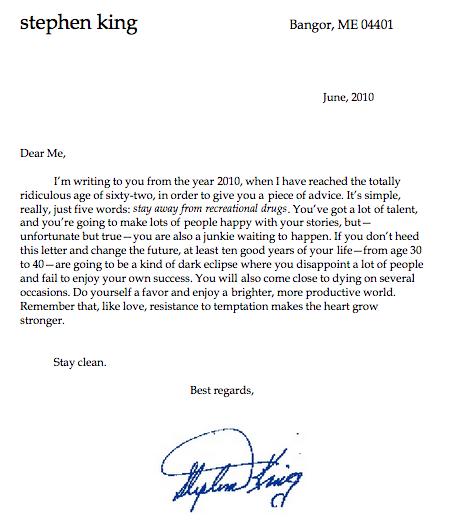
Stephen King Writes A Letter to His 16-Year-Old Self: “Stay Away from Recreational Drugs”

king letter to self 2

By the 1980s, it looked like Stephen King had every­thing. He had authored a series of best­sellers — Car­rie, The Shin­ing, Cujo – and turned them into block­buster movies. He had a big, 24-room house. Plen­ty of cash in the bank.  All the trap­pings of that Amer­i­can Dream. And yet … and yet … he was angry and depressed, smok­ing two packs of cig­a­rettes a day, drink­ing lots of beer, snort­ing coke, and enter­tain­ing sui­ci­dal thoughts. It’s no won­der then that the author, who sobered up dur­ing the late 80s, con­tributed the let­ter above to a 2011 col­lec­tion called Dear Me: A Let­ter to My 16-Year-Old Self. Edit­ed by Joseph Gal­liano, the book asked 75 celebri­ties, writ­ers, musi­cians, ath­letes, and actors this ques­tion: “If as an adult, you could send a let­ter to your younger self, what words of guid­ance, com­fort, advice or oth­er mes­sage would you put in it?” In King’s case, the advice  was short, sweet, to the point. In essence, a mere five words.

To view the let­ter in a larg­er for­mat, click here.

via Fla­vor­wire

Relat­ed Con­tent:

Stephen Fry: What I Wish I Had Known When I Was 18

Radiohead’s Thom Yorke Gives Teenage Girls Endear­ing Advice About Boys (And Much More)

Stephen King Reads from His Upcom­ing Sequel to The Shin­ing

by | Permalink | Make a Comment ( 14 ) |

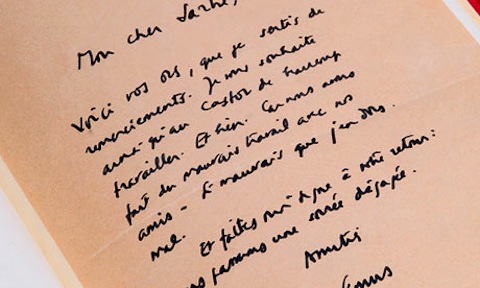
Albert Camus Writes a Friendly Letter to Jean-Paul Sartre Before Their Personal and Philosophical Rift

Camus letter to Sartre

As maître of the mid-cen­tu­ry French philo­soph­i­cal scene, Jean-Paul Sartre wield­ed some con­sid­er­able influ­ence in his home coun­try and abroad. His celebri­ty did not pre­vent him from work­ing under the edi­tor­ship of his friend and fel­low nov­el­ist, Albert Camus, how­ev­er. Camus, the younger of the two and the more rest­less and unset­tled, edit­ed the French resis­tance news­pa­per Com­bat; Sartre wrote for the paper, and even served as its post­war cor­re­spon­dent in New York (where he met Her­bert Hoover) in 1945. Accord­ing to Simone de Beau­voir, the two became acquaint­ed two years ear­li­er at a pro­duc­tion of Sartre’s The Flies. They were already mutu­al admir­ers from afar, Camus hav­ing reviewed Sartre’s work and Sartre hav­ing writ­ten glow­ing­ly of Camus’ The Stranger. Ronald Aron­son, a schol­ar and biog­ra­ph­er of the philoso­phers’ rela­tion­ship, describes their first meet­ing below, quot­ing from de Beauvoir’s mem­oir The Prime of Life:

“[A] dark-skinned young man came up and intro­duced him­self: it was Albert Camus.” His nov­el The Stranger, pub­lished a year ear­li­er, was a lit­er­ary sen­sa­tion, and his philo­soph­i­cal essay The Myth of Sisy­phus had appeared six months pre­vi­ous­ly. [Camus] want­ed to meet the increas­ing­ly well-known nov­el­ist and philosopher—and now playwright—whose fic­tion he had reviewed years ear­li­er and who had just pub­lished a long arti­cle on Camus’s own books. It was a brief encounter. “I’m Camus,” he said. Sartre imme­di­ate­ly “found him a most like­able per­son­al­i­ty.”

As the recent­ly dis­cov­ered let­ter above shows—from Camus to Sartre—the two were inti­mate friends as well as col­lab­o­ra­tors. Thought to have been writ­ten some­time between 1943 and 1948, the let­ter is famil­iar and can­did. Camus opens with “My dear Sartre, I hope you and Cas­tor [“the beaver,” Sartre’s nick­name for de Beau­voir] are work­ing a lot… let me know when you return and we will have a relaxed evening.” Aron­son com­ments that the let­ter “shows that despite what some writ­ers have said, Sartre and Camus had a close friend­ship.”

Aronson’s com­ment is under­stat­ed. The queru­lous falling out of Sartre and Camus has acquired almost leg­endary sta­tus, with the two some­times stand­ing in for two diver­gent paths of French post-war phi­los­o­phy. Where Sartre grav­i­tat­ed toward ortho­dox Marx­ism, and aligned his views with Stalin’s even in the face of the Sovi­et camps, Camus repu­di­at­ed rev­o­lu­tion­ary vio­lence and val­orized the trag­ic strug­gle of the indi­vid­ual in 1951’s The Rebel, the work that alleged­ly incit­ed their philo­soph­i­cal split. Andy Mar­tin at the New York Times’ “The Stone” blog writes a con­cise sum­ma­ry of their intel­lec­tu­al and tem­pera­men­tal dif­fer­ences:

While Sartre after the war was more than ever a self-pro­fessed “writ­ing machine,” Camus was increas­ing­ly grapho­pho­bic, haunt­ed by a “dis­gust for all forms of pub­lic expres­sion.” Sartre’s phi­los­o­phy becomes soci­o­log­i­cal and struc­tural­ist in its bina­ry empha­sis. Camus, all alone, in the night, between con­ti­nents, far away from every­thing, is already less the solemn “moral­ist” of leg­end (“the Saint,” Sartre called him), more a (pre-)post-structuralist in his greater con­cern and anx­i­ety about lan­guage, his empha­sis on dif­fer­ence and refusal to artic­u­late a clear-cut the­o­ry: “I am too young to have a sys­tem,” he told one audi­ence [in New York].

While Camus’ polit­i­cal dis­en­gage­ment and cri­tique of Com­mu­nist prax­is in The Rebel may have pre­cip­i­tat­ed the increas­ing­ly frac­tious rela­tion­ship between the two men, there may have also been a per­son­al dis­agree­ment over a mutu­al love inter­est named Wan­da Kosakiewicz, whom both men pur­sued long before their split over ideas. Mar­tin also tells that story—one per­haps more inter­est­ing in a dra­mat­ic sense than the abstract sum­ma­ry above—at The Tele­graph. The short doc­u­men­tary clip below also dra­ma­tizes their dis­agree­ment with inter­views, rare pho­tos, news­reel footage, and read­ings from The Rebel. There is no men­tion, how­ev­er, of Wan­da.

Relat­ed Con­tent:

Philosophy’s Pow­er Cou­ple, Jean-Paul Sartre and Simone de Beau­voir, Fea­tured in 1967 TV Inter­view

Albert Camus Talks About Adapt­ing Dos­toyevsky for the The­atre, 1959

Simone de Beau­voir Explains “Why I’m a Fem­i­nist” in a Rare TV Inter­view (1975)

Free Online Cours­es in Phi­los­o­phy from Great Uni­ver­si­ties 

Josh Jones is a writer and musi­cian based in Durham, NC. Fol­low him at @jdmagness

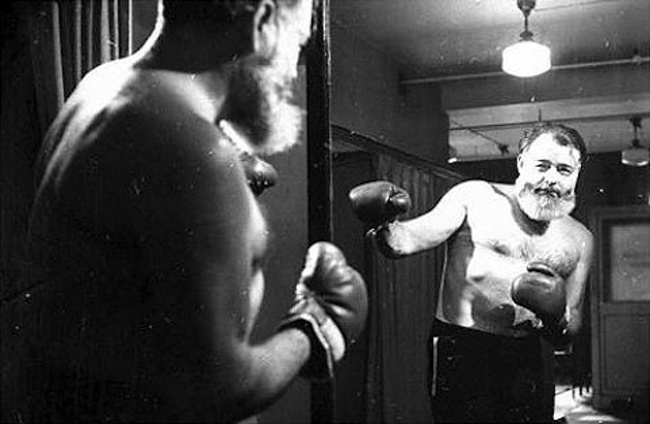
Ernest Hemingway’s Delusional Adventures in Boxing: “My Writing is Nothing, My Boxing is Everything.”

In a 1954 inter­view in the Paris Review, Ralph Elli­son said of one of his lit­er­ary heroes: “When [Ernest Hem­ing­way] describes some­thing in print, believe him; believe him even when he describes the process of art in terms of base­ball or box­ing; he’s been there.” I read this think­ing that Elli­son might be a bit too cred­u­lous. Hem­ing­way, after all, has pro­voked no end of eye-rolling for his leg­endary machis­mo, brava­do, and maybe sev­er­al dozen oth­er Latin descrip­tors for mas­cu­line fool­har­di­ness and blus­ter. As for his “box­ing,” we would be wise not to believe him. He may have “been there,” but the real box­ers he encoun­tered, and tried to spar with, would nev­er tes­ti­fy he knew what he was doing

Ernest Hem­ing­way wasn’t a box­er so much as he was a “box­er”… a leg­end in his own mind, a roman­tic. Hemingway’s friend and some­time spar­ring part­ner, nov­el­ist Mor­ley Callaghan tells it this way: “we were two ama­teur box­ers. The dif­fer­ence between us was that he had giv­en time and imag­i­na­tion to box­ing; I had actu­al­ly worked out a lot with good fast col­lege box­ers.” Or, as the author of an arti­cle on the Fine Books & Col­lec­tions site has it, “Hem­ing­way was lost in the romance of a sport that has no romance to those seri­ous­ly pur­su­ing it; the romance strict­ly belongs to spec­ta­tors.”

As a spec­ta­tor with pre­ten­tions to great­ness in the sport, Papa was prone to over­es­ti­mat­ing his abil­i­ties, at the expense of his actu­al skill as a writer. As he would tell Josephine Herb­st, with­out a hint of irony, “my writ­ing is noth­ing, my box­ing is every­thing.”

Hemingwayletter

Click for larg­er image

How did the pros eval­u­ate his self-pro­fessed abil­i­ty? Jack Dempsey, who spent time in Paris in the ‘20s being fet­ed and fawned over, had this to say of Hemingway’s aspi­ra­tions:

There were a lot of Amer­i­cans in Paris and I sparred with a cou­ple, just to be oblig­ing…. But there was one fel­low I would­n’t mix it with. That was Ernest Hem­ing­way. He was about twen­ty-five or so and in good shape, and I was get­ting so I could read peo­ple, or any­way men, pret­ty well. I had this sense that Hem­ing­way, who real­ly thought he could box, would come out of the cor­ner like a mad­man. To stop him, I would have to hurt him bad­ly, I did­n’t want to do that to Hem­ing­way. That’s why I nev­er sparred with him.

Giv­en Hemingway’s pen­chant for self-delu­sion in this mat­ter, he may have inter­pret­ed this as Dempsey’s capit­u­la­tion to his obvi­ous prowess. An even more scathing cri­tique of Hemingway’s bul­ly­ing… I mean box­ing skill … comes to us via Book­tryst’s Stephen J. Gertz, who prof­fers an amus­ing dis­sec­tion of the let­ter above, an unpub­lished cor­re­spon­dence Hem­ing­way sent in 1943 to George Brown, the writer’s “train­er, coach, friend, and fac­to­tum.” Brown, it seems, was kind­ly, or pru­dent, enough to encour­age his employ­er in his delu­sions. How­ev­er, Gertz writes, “the real­i­ty was that any­one who had even the slight­est idea of what they were doing in the ring could take Hem­ing­way, who was noto­ri­ous for fool­ish­ly try­ing to actu­al­ly fight trained box­ers.” He’s lucky, then, that Dempsey prac­ticed such judi­cious restraint. If not, we may nev­er have seen any fic­tion from Hem­ing­way after he tried to go a round or two with the champ.

Relat­ed Con­tent:

Ernest Hem­ing­way to F. Scott Fitzger­ald: “Kiss My Ass”

18 (Free) Books Ernest Hem­ing­way Wished He Could Read Again for the First Time

Ernest Hemingway’s Favorite Ham­burg­er Recipe

Josh Jones is a writer and musi­cian based in Durham, NC. Fol­low him at @jdmagness

Stanley Kubrick to Ingmar Bergman: “You Are the Greatest Filmmaker at Work Today” (1960)


If you saw our post on Stan­ley Kubrick­’s ten favorite films in 1963, you may remem­ber that Ing­mar Bergman ranked high on his list, specif­i­cal­ly with 1957’s Wild Straw­ber­ries. Three years ear­li­er, Kubrick had mailed the Swedish film­mak­er a fan let­ter prais­ing his “vision of life,” “cre­ation of mood and atmos­phere,” “avoid­ance of the obvi­ous,” and “truth­ful­ness and com­plete­ness of char­ac­ter­i­za­tion.” Could a screen­ing of Wild Straw­ber­ries, a film which stands as evi­dence of all those qual­i­ties, have moved the 31-year-old Kubrick to write to Bergman such words of appre­ci­a­tion about his “unearth­ly and bril­liant” work? The dream sequence above, made haunt­ing in a way only Bergman could do it, show­cas­es just one of the many facets of that pic­ture’s mood, atmos­phere, and unearth­li­ness.

Along­side Vic­tor Sjöström as the bad-dream­ing pro­fes­sor Isak Borg, Wild Straw­ber­ries stars Ingrid Thulin as his con­temp­tu­ous daugh­ter-in-law Mar­i­anne. Kubrick sin­gles Thulin out as one of the Bergman reg­u­lars who “live vivid­ly in my mem­o­ry,” though she may also have attained her place in that cre­ative­ly hyper­ac­tive mind on the strength of her gen­der bound­ary-cross­ing per­for­mance in 1958’s The Magi­cian, view­able just above. Read all that Kubrick wrote to Bergman below, or vis­it the orig­i­nal post fea­tur­ing it at Let­ters of Note. You’ll notice that Kubrick also name-checks Max von Sydow, as any seri­ous Bergman enthu­si­ast should: not only did the man appear in both Wild Straw­ber­ries and The Magi­cian, but by 1960 he’d also starred as a venge­ful father in Bergman’s The Vir­gin Spring and, of course, as the Cru­sades-weary knight Anto­nius Block in The Sev­enth Seal, which would become a sig­na­ture film for both actor and direc­tor. Whether those par­tic­u­lar per­for­mances cap­tured Kubrick­’s imag­i­na­tion I don’t know, but I feel sure of one thing: play chess with Death, and you right­ful­ly earn the admi­ra­tion of the next big auteur.

Feb­ru­ary 9, 1960

Dear Mr. Bergman,

You have most cer­tain­ly received enough acclaim and suc­cess through­out the world to make this note quite unnec­es­sary. But for what­ev­er it’s worth, I should like to add my praise and grat­i­tude as a fel­low direc­tor for the unearth­ly and bril­liant con­tri­bu­tion you have made to the world by your films (I have nev­er been in Swe­den and have there­fore nev­er had the plea­sure of see­ing your the­ater work). Your vision of life has moved me deeply, much more deeply than I have ever been moved by any films. I believe you are the great­est film-mak­er at work today. Beyond that, allow me to say you are unsur­passed by any­one in the cre­ation of mood and atmos­phere, the sub­tle­ty of per­for­mance, the avoid­ance of the obvi­ous, the truth­full­ness and com­plete­ness of char­ac­ter­i­za­tion. To this one must also add every­thing else that goes into the mak­ing of a film. I believe you are blessed with won­der­full actors. Max von Sydow and Ingrid Thulin live vivid­ly in my mem­o­ry, and there are many oth­ers in your act­ing com­pa­ny whose names escape me. I wish you and all of them the very best of luck, and I shall look for­ward with eager­ness to each of your films.

Best Regards,

(Signed, ‘Stan­ley Kubrick’)

Stan­ley Kubrick

via Let­ters of Note

Relat­ed Con­tent:

Stan­ley Kubrick’s List of Top 10 Films (The First and Only List He Ever Cre­at­ed)

Rare 1960s Audio: Stan­ley Kubrick’s Big Inter­view with The New York­er

Stan­ley Kubrick’s Very First Films: Three Short Doc­u­men­taries

Ing­mar Bergman’s Soap Com­mer­cials Wash Away the Exis­ten­tial Despair

Col­in Mar­shall hosts and pro­duces Note­book on Cities and Cul­ture and writes essays on lit­er­a­ture, film, cities, Asia, and aes­thet­ics. He’s at work on a book about Los Ange­lesA Los Ange­les Primer. Fol­low him on Twit­ter at @colinmarshall.

« Go BackMore in this category... »
Quantcast