Harvard’s Digital Giza Project Lets You Access the Largest Online Archive on the Egyptian Pyramids (Including a 3D Giza Tour)

Noth­ing excites the imag­i­na­tion of young his­to­ry-and-sci­ence-mind­ed kids like the Egypt­ian pyra­mids, which is maybe why so many peo­ple grow up into ama­teur Egyp­tol­o­gists with very strong opin­ions about the pyra­mids. For such peo­ple, access to the high­est qual­i­ty infor­ma­tion seems crit­i­cal for their online debates. For pro­fes­sion­al aca­d­e­mics and seri­ous stu­dents of ancient Egypt such access is crit­i­cal to doing their work prop­er­ly. All lovers and stu­dents of ancient Egypt will find what they need, freely avail­able, at Har­vard University’s Dig­i­tal Giza Project.

“Chil­dren and spe­cial­ized schol­ars alike may study the mate­r­i­al cul­ture of this ancient civ­i­liza­tion from afar,” Harvard’s Meta­l­ab writes, “often with greater access than could be achieved in per­son.” The project opened at Har­vard in 2011 after spend­ing its first eleven years at the Muse­um of Fine Arts, Boston with the goal of “dig­i­tiz­ing and post­ing for free online all of the archae­o­log­i­cal doc­u­men­ta­tion from the Har­vard University—Boston Muse­um of Fine Arts Expe­di­tion to Giza, Egypt (about 1904–1947),” notes the about page.

The Dig­i­tal Giza Project was born from a need to cen­tral­ize research and arti­facts that have been scat­tered all over the globe. “Doc­u­ments and images are held in far­away archives,” the Har­vard Gazette points out, “arti­facts and oth­er relics of ancient Egypt have been dis­persed, stolen, or destroyed, and tombs and mon­u­ments have been dis­man­tled, weath­er-worn, or locked away behind pas­sages filled in when an exca­va­tion clos­es.” Oth­er obsta­cles to research include the expense of trav­el and, more recent­ly, the impos­si­bil­i­ty of vis­it­ing far-off sites.

Expand­ing far beyond the scope of the orig­i­nal expe­di­tions, the project has part­nered with “many oth­er insti­tu­tions around the world with Giza-relat­ed col­lec­tions” to com­pile its search­able library of down­load­able PDF books and jour­nal arti­cles. Kids, adult enthu­si­asts, and spe­cial­ists will all appre­ci­ate Giza 3D, a recon­struc­tion with guid­ed tours of all the major arche­o­log­i­cal sites at the pyra­mids, from tombs to tem­ples to the Great Sphinx, as well as links to images and arche­o­log­i­cal details about each of the var­i­ous finds with­in.

For a pre­view of the mul­ti­me­dia expe­ri­ence on offer at the Dig­i­tal Giza Project, see the videos here from project’s YouTube chan­nel. Each short video pro­vides a wealth of infor­ma­tion; young learn­ers and those just get­ting start­ed in their Egyp­tol­ogy stud­ies can find lessons, glos­saries, an overview of the peo­ple and places of Giza, and more at the Giza @ School page. What­ev­er your age, occu­pa­tion, or lev­el of com­mit­ment, if you’re inter­est­ed in learn­ing more about the pyra­mids at Giza, you need to book­mark Dig­i­tal Giza. Start here.

Relat­ed Con­tent: 

Who Built the Egypt­ian Pyra­mids & How Did They Do It?: New Arche­o­log­i­cal Evi­dence Busts Ancient Myths

A 3,000-Year-Old Painter’s Palette from Ancient Egypt, with Traces of the Orig­i­nal Col­ors Still In It

What Ancient Egypt­ian Sound­ed Like & How We Know It

Josh Jones is a writer and musi­cian based in Durham, NC. Fol­low him at @jdmagness

How the Internet Archive Digitizes 3,500 Books a Day–the Hard Way, One Page at a Time

Does turn­ing the pages of an old book excite you? How about 3 mil­lion pages? That’s how many pages Eliza Zhang has scanned over her ten years with the Inter­net Archive, using Scribe, a spe­cial­ized scan­ning machine invent­ed by Archive engi­neers over 15 years ago. “Lis­ten­ing to 70s and 80s R&B while she works,” Wendy Hana­mu­ra writes at the Inter­net Archive blog, “Eliza spends a lit­tle time each day read­ing the dozens of books she han­dles. The most chal­leng­ing part of her job? ‘Work­ing with very old, frag­ile books.”

The frag­ile state and wide vari­ety of the mil­lions of books scanned by Zhang and the sev­en­ty-or-so oth­er Scribe oper­a­tors explains why this work has not been auto­mat­ed. “Clean, dry human hands are the best way to turn pages,” says Andrea Mills, one of the lead­ers of the dig­i­ti­za­tion team. “Our goal is to han­dle the book once and to care for the orig­i­nal as we work with it.”

Rais­ing the glass with a foot ped­al, adjust­ing the two cam­eras, and shoot­ing the page images are just the begin­ning of Eliza’s work. Some books, like the Bureau of Land Man­age­ment pub­li­ca­tion fea­tured in the video, have myr­i­ad fold-outs. Eliza must insert a slip of paper to remind her to go back and shoot each fold-out page, while at the same time inputting the page num­bers into the item record. The job requires keen con­cen­tra­tion.

If this expe­ri­enced dig­i­tiz­er acci­den­tal­ly skips a page, or if an image is blur­ry, the pub­lish­ing soft­ware cre­at­ed by our engi­neers will send her a mes­sage to return to the Scribe and scan it again.

It’s not a job for the eas­i­ly bored; “It takes con­cen­tra­tion and a love of books,” says Inter­net Archive founder Brew­ster Kahle. The painstak­ing process allows dig­i­tiz­ers to pre­serve valu­able books online while main­tain­ing the integri­ty of phys­i­cal copies. “We do not dis­bind the books,” says Kahle, a method that has allowed them to part­ner with hun­dreds of insti­tu­tions around the world, dig­i­tiz­ing 28 mil­lion texts over two decades. Many of those books are rare and valu­able, and many have been deemed of lit­tle or no val­ue. “Increas­ing­ly,” writes the Archive’s Chris Free­land, “the Archive is pre­serv­ing many books that would oth­er­wise be lost to his­to­ry or the trash bin.”

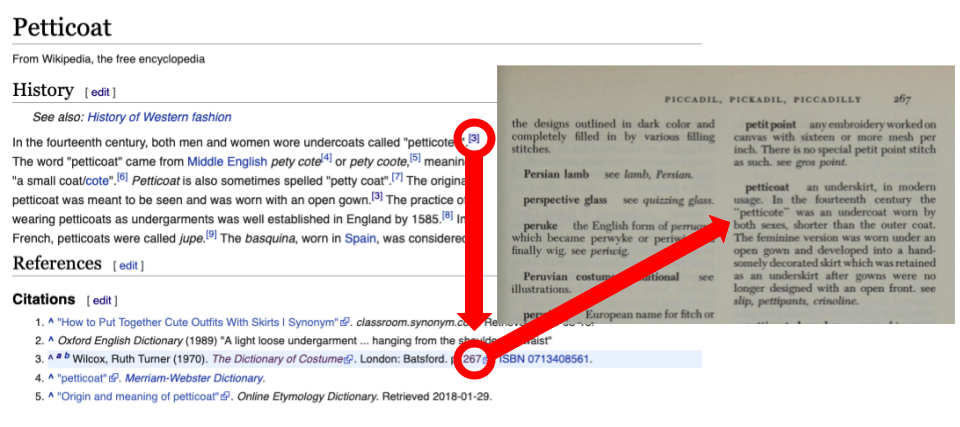
In one exam­ple, Free­land cites The dic­tio­nary of cos­tume, “one of the mil­lions of titles that reached the end of its pub­lish­ing life­cy­cle in the 20th cen­tu­ry.” It is also a work cit­ed in Wikipedia, a key source for “stu­dents of all ages… in our con­nect­ed world.” The Inter­net Archive has pre­served the only copy of the book avail­able online, mak­ing sure Wikipedia edi­tors can ver­i­fy the cita­tion and researchers can use the book in per­pe­tu­ity. If look­ing up the def­i­n­i­tion of “pet­ti­coat” in an out-of-print ref­er­ence work seems triv­ial, con­sid­er that the Archive dig­i­tizes about 3,500 books every day in its 18 dig­i­ti­za­tion cen­ters. (The dic­tio­nary of cos­tume was iden­ti­fied as the Archive’s 2 mil­lionth “mod­ern book.”)

Libraries “have been vital in times of cri­sis,” writes Alis­tair Black, emer­i­tus pro­fes­sor of Infor­ma­tion Sci­ences at the Uni­ver­si­ty of Illi­nois, and “the coro­n­avirus pan­dem­ic may prove to be a chal­lenge that dwarfs the many episodes of anx­i­ety and cri­sis through which the pub­lic library has lived in the past.” A huge part of our com­bined glob­al crises involves access to reli­able infor­ma­tion, and book scan­ners at the Inter­net Archive are key agents in pre­serv­ing knowl­edge. The col­lec­tions they dig­i­tize “are crit­i­cal to edu­cat­ing an informed pop­u­lace at a time of mas­sive dis­in­for­ma­tion and mis­in­for­ma­tion,” says Kahle. When asked what she liked best about her job, Zhang replied, “Every­thing! I find every­thing inter­est­ing…. Every col­lec­tion is impor­tant to me.”

The Inter­net Archive offers over 20,000,000 freely down­load­able books and texts. Enter the col­lec­tion here.

Relat­ed Con­tent: 

Libraries & Archivists Are Dig­i­tiz­ing 480,000 Books Pub­lished in 20th Cen­tu­ry That Are Secret­ly in the Pub­lic Domain

10,000 Vin­tage Recipe Books Are Now Dig­i­tized in The Inter­net Archive’s Cook­book & Home Eco­nom­ics Col­lec­tion

Clas­sic Children’s Books Now Dig­i­tized and Put Online: Revis­it Vin­tage Works from the 19th & 20th Cen­turies

Josh Jones is a writer and musi­cian based in Durham, NC. Fol­low him at @jdmagness

4,000 Priceless Scrolls, Texts & Papers From the University of Tokyo Have Been Digitized & Put Online

The phrase “open­ing of Japan” is a euphemism that has out­lived its pur­pose, serv­ing to cloud rather than explain how a coun­try closed to out­siders sud­den­ly, in the mid-19th cen­tu­ry, became a major influ­ence in art and design world­wide. Nego­ti­a­tions were car­ried out at gun­point. In 1853, Com­modore Matthew Per­ry pre­sent­ed the Japan­ese with two white flags to raise when they were ready to sur­ren­der. (The Japan­ese called Perry’s fleet the “black ships of evil men.”) In one of innu­mer­able his­tor­i­cal ironies, we have this ugli­ness to thank for the explo­sion of Impres­sion­ist art (van Gogh was obsessed with Japan­ese prints and owned a large col­lec­tion) as well as much of the beau­ty of Art Nou­veau and mod­ernist archi­tec­ture at the turn of the cen­tu­ry.

We may know ver­sions of this already, but we prob­a­bly don’t know it from a Japan­ese point of view. “As our glob­al soci­ety grows ever more con­nect­ed,” writes Katie Bar­rett at the Inter­net Archive blog, “it can be easy to assume that all of human his­to­ry is just one click away. Yet lan­guage bar­ri­ers and phys­i­cal access still present major obsta­cles to deep­er knowl­edge and under­stand­ing of oth­er cul­tures.”

Unless we can read Japan­ese, our under­stand­ing of its his­to­ry will always be informed by spe­cial­ist schol­ars and trans­la­tors. Now, at least, thanks to coop­er­a­tion between the Uni­ver­si­ty of Tokyo Gen­er­al Library and the Inter­net Archive, we can access thou­sands more pri­ma­ry sources pre­vi­ous­ly unavail­able to “out­siders.”

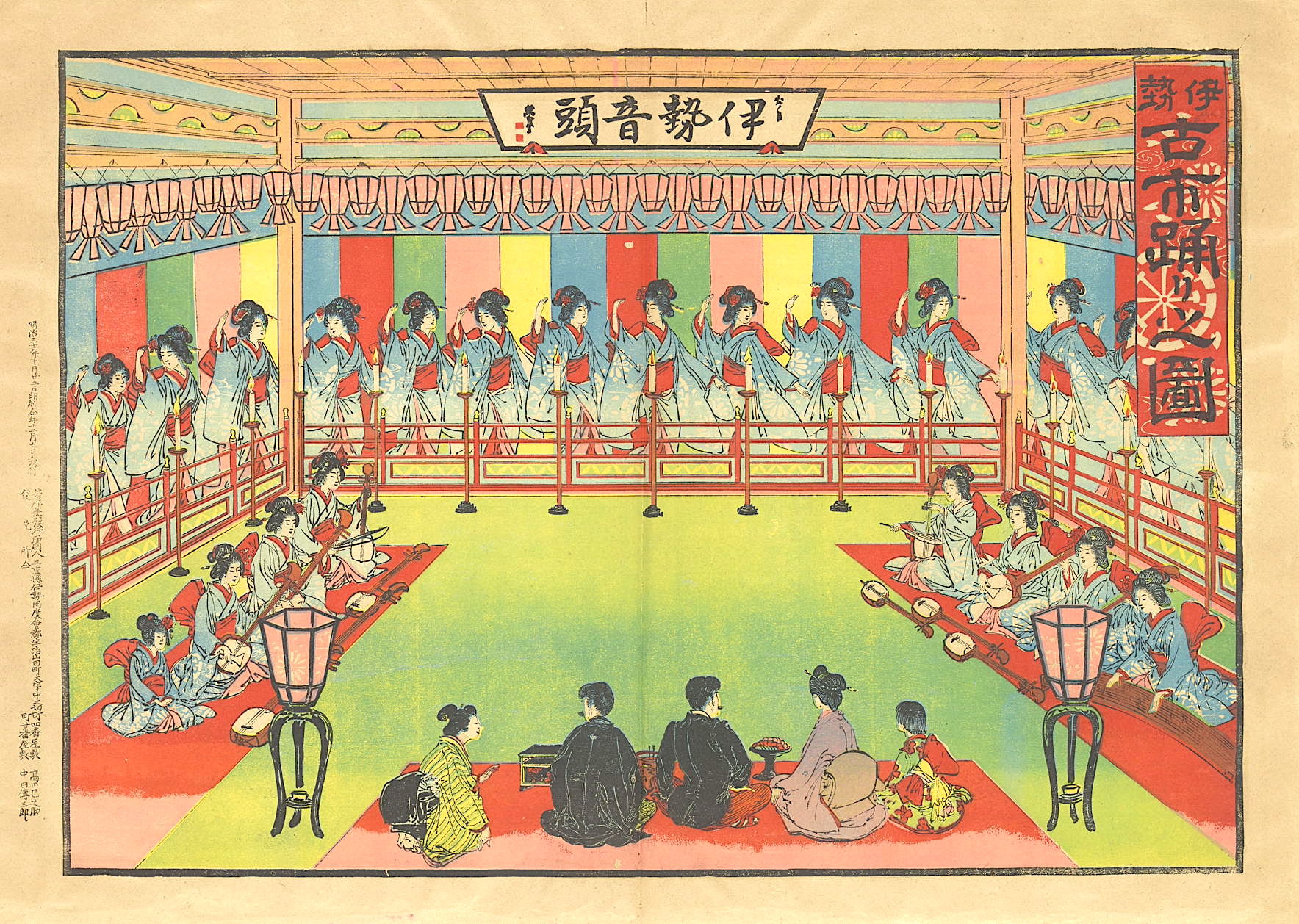
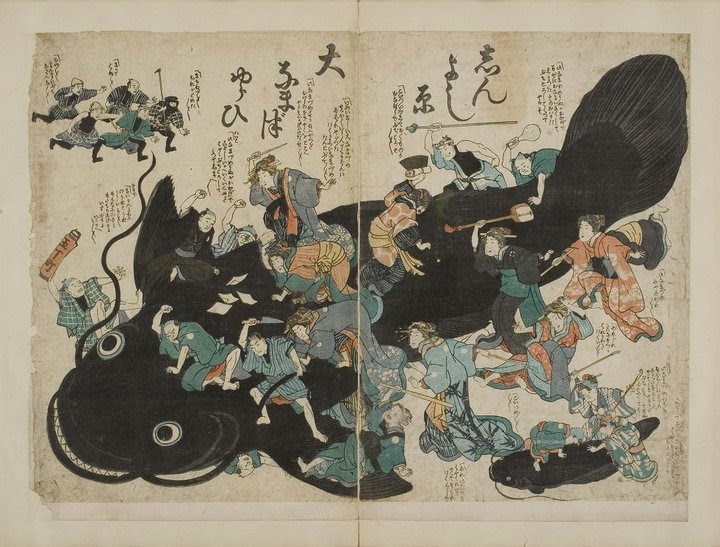
“Since June 2020,” notes Bar­rett, “our Col­lec­tions team has worked in tan­dem with library staff to ingest thou­sands of dig­i­tal files from the Gen­er­al Library’s servers, map­ping the meta­da­ta for over 4,000 price­less scrolls, texts, and papers.” This mate­r­i­al has been dig­i­tized over decades by Japan­ese schol­ars and “show­cas­es hun­dreds of years of rich Japan­ese his­to­ry expressed through prose, poet­ry, and art­work.” It will be pri­mar­i­ly the art­work that con­cerns non-Japan­ese speak­ers, as it pri­mar­i­ly con­cerned 19th-cen­tu­ry Euro­peans and Amer­i­cans who first encoun­tered the country’s cul­tur­al prod­ucts. Art­work like the humor­ous print above. Bar­rett pro­vides con­text: 

In one satir­i­cal illus­tra­tion, thought to date from short­ly after the 1855 Edo earth­quake, cour­te­sans and oth­ers from the demi­monde, who suf­fered great­ly in the dis­as­ter, are shown beat­ing the giant cat­fish that was believed to cause earth­quakes. The men in the upper left-hand cor­ner rep­re­sent the con­struc­tion trades; they are try­ing to stop the attack on the fish, as rebuild­ing from earth­quakes was a prof­itable busi­ness for them.

There are many such depic­tions of “seis­mic destruc­tion” in ukiyo‑e prints dat­ing from the same peri­od and the lat­er Mino-Owari earth­quake of 1891: “They are a sober­ing reminder of the role that nat­ur­al dis­as­ters have played in Japan­ese life.” 

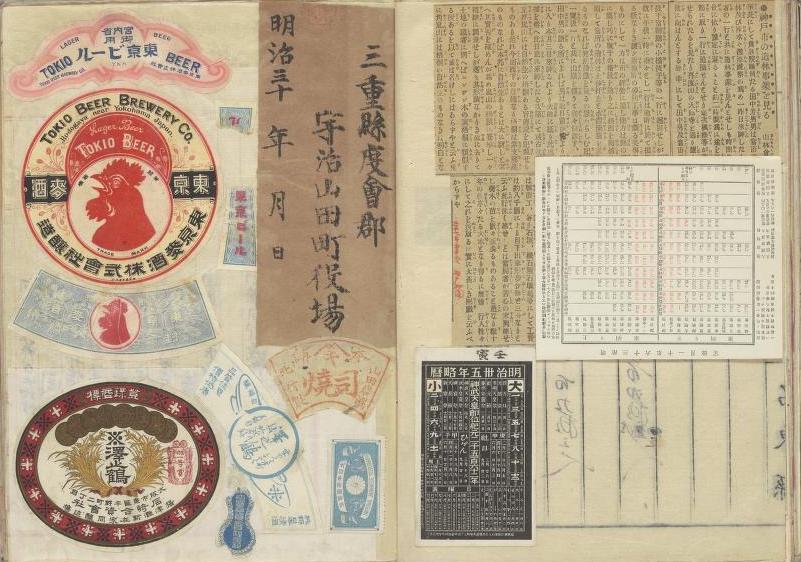
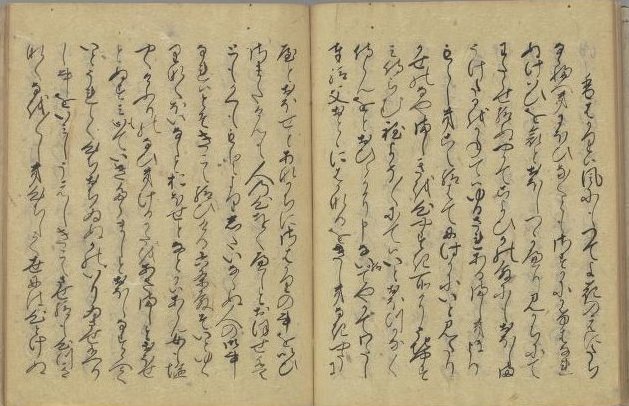
You can see many more dig­i­tized arti­facts, such as the charm­ing book of Japan­ese ephemera above, at the Inter­net Archive’s Uni­ver­si­ty of Tokyo col­lec­tion. Among the 4180 items cur­rent­ly avail­able, you’ll also find many Euro­pean prints and engrav­ings held in the library’s 25 col­lec­tions. All of this mate­r­i­al “can be used freely with­out pri­or per­mis­sion,” writes the Uni­ver­si­ty of Tokyo Library. “Among the high­lights,” Bar­rett writes, “are man­u­scripts and anno­tat­ed books from the per­son­al col­lec­tion of the nov­el­ist Mori Ōgai (1862–1922), an ear­ly man­u­script of the Tale of Gen­ji, [below] and a unique col­lec­tion of Chi­nese legal records from the Ming Dynasty.” Enter the col­lec­tion here.

Relat­ed Con­tent: 

Watch the Mak­ing of Japan­ese Wood­block Prints, from Start to Fin­ish, by a Long­time Tokyo Print­mak­er

Watch Vin­tage Footage of Tokyo, Cir­ca 1910, Get Brought to Life with Arti­fi­cial Intel­li­gence

Down­load Clas­sic Japan­ese Wave and Rip­ple Designs: A Go-to Guide for Japan­ese Artists from 1903

Down­load Vin­cent van Gogh’s Col­lec­tion of 500 Japan­ese Prints, Which Inspired Him to Cre­ate “the Art of the Future”

Josh Jones is a writer and musi­cian based in Durham, NC. Fol­low him at @jdmagness

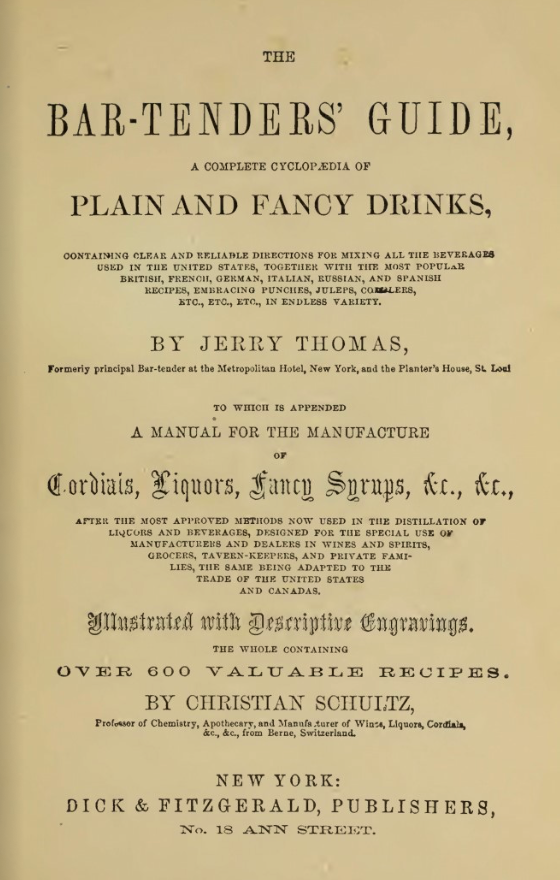
A Digital Library for Bartenders: Vintage Cocktail Books with Recipes Dating Back to 1753

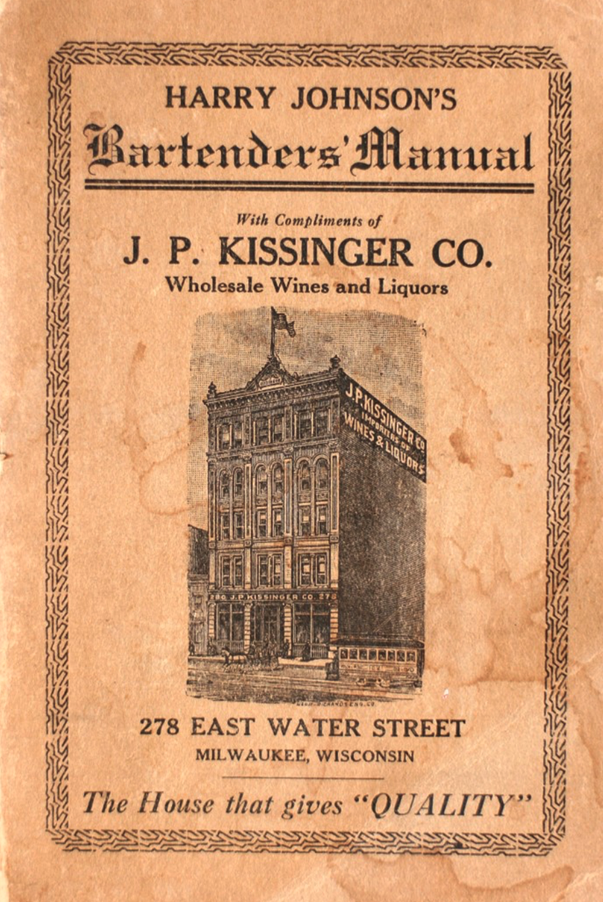
So, um… you look like you could use a drink… or anoth­er drink, or five…. I’ve giv­en it up, but I can still mix a mean cock­tail. How about a Stom­ach Julep (Julepum Stom­achicum). No white suit or veran­da required. It’s a “saf­fron syrup made with sher­ry, spir­it rec­ti­fied with mint, and a non-alco­holic mint dis­til­late” among oth­er “fas­ci­nat­ing ingre­di­ents.” Yes, this is a recipe from a 1753 phar­ma­col­o­gy text­book, but in 1753, one’s bar­tender might just as well also be the local alchemist, phar­ma­cist, and cap­tive audi­ence. Fear­ing a resur­gence of plague and oth­er mal­adies, lack­ing prop­er health­care or clean water, the Ear­ly Mod­ern British for­ti­fied them­selves with booze.

The New Eng­lish Dis­pen­sato­ry might seem like an odd text, nonethe­less, to include in an online library for bar­tenders, but it is per­fect­ly in keep­ing with the spir­it of the EUVS Dig­i­tal Col­lec­tion, an appre­cia­ble sam­pling of man­u­als, cock­tail menus, recipe books, and his­tor­i­cal ephemera relat­ed to “a pro­fes­sion that has redis­cov­ered a jus­ti­fi­able sense of pride and pur­pose.”

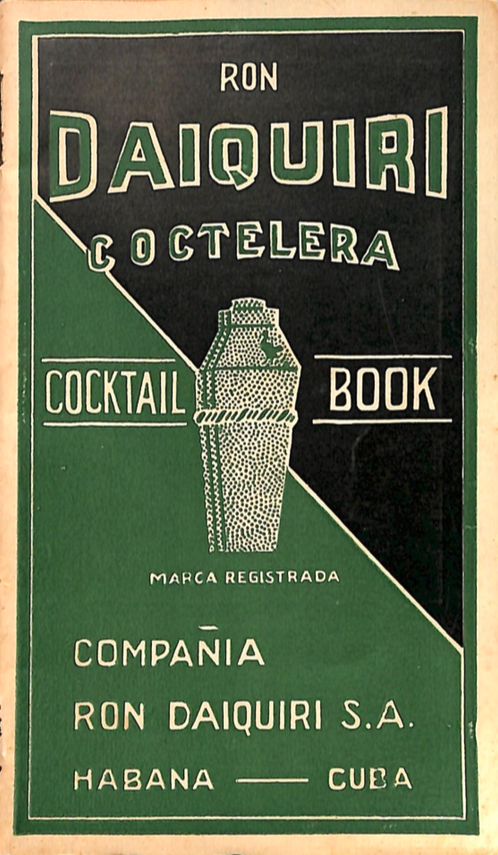
This sense does seem to vary great­ly between estab­lish­ments, but the col­lec­tion does not dis­crim­i­nate, though it does dis­play a par­tic­u­lar fond­ness for Cuba in its cur­rent state of digitization—now up to a few dozen titles span­ning the years 1753 to 1959. More books will be com­ing online soon out of a phys­i­cal col­lec­tion of “over 1,000 vol­umes.”

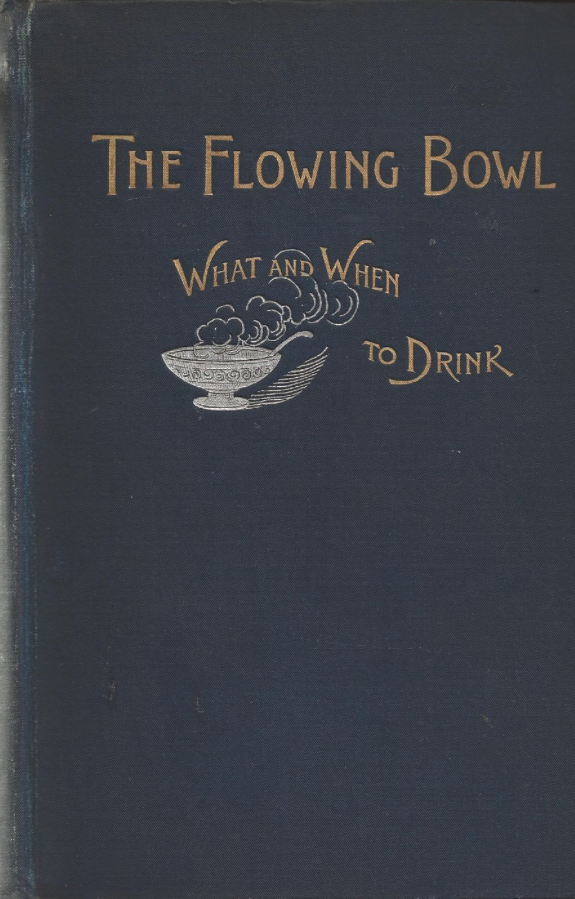
It may be hard to imag­ine earn­ing a bar­tend­ing Ph.D. but one could cer­tain­ly find a dis­ser­ta­tion top­ic in the impres­sive breadth and depth of the col­lec­tion, even in its lim­it­ed state. Or, more like­ly, one could put togeth­er a unique­ly imag­i­na­tive cock­tail menu that no one else in town can boast of. Bar­tend­ing is both art and sci­ence. In his 1892 book The Flow­ing Bowl, New York bar­tender William Schmidt, also known as “The Only William,” com­ments:

Mixed drinks might be com­pared to music: an orches­tra will pro­duce good music, pro­vid­ed all play­ers are artists; but have only one or two infe­ri­or musi­cians in your band and you may be con­vinced they will spoil the entire har­mo­ny.

To the bartender’s list of sup­ple­men­tary roles in the lives of their cus­tomers, we can add anoth­er: con­duc­tor. William first came to promi­nence in the pro­fes­sion in Ham­burg, Ger­many before emi­grat­ing to Chica­go, then Man­hat­tan. His tastes, in music and liquors, remained Euro­pean. “The finest mixed drinks and their ingre­di­ents are of for­eign ori­gin. Are not all of the supe­ri­or cor­dials of for­eign make?” he wrote. Clear­ly he knew noth­ing of bour­bon.

The Only William did know that fine art requires show­man­ship and style. He was “renowned for his acro­bat­ic bar­tend­ing feats: throw­ing flam­ing and non-flam­ing drinks in grace­ful arcs.” The EUVS Dig­i­tal Col­lec­tion presents William as a kind of bar­tend­ing folk hero, a larg­er-than-life fig­ure who was said to have invent­ed a new drink dai­ly. If this is so, it may not be so sur­pris­ing. William was not only total­ly devot­ed to his art, but he was also a schol­ar, “cred­it­ed with an ency­clo­pe­dic knowl­edge of the clas­sics.”

The Flow­ing Bowl con­tains Schmidt’s “his­to­ry of var­i­ous bev­er­ages, descrip­tions of his­toric Gre­co-Roman ban­quets, sam­ple menus with bev­er­age pair­ings, plus a live­ly selec­tion of poet­ry read­ings whose focus is on drink.” One gets the sense he rep­re­sents the ide­al patron of The Bartender’s Library. What would such a mod­el bar­tender do dur­ing the pan­dem­ic? I think he’d hit the books, espe­cial­ly giv­en that so many, like his own, are free online. And giv­en the ever-present pos­si­bil­i­ty of plague and oth­er calami­ties, I guess he’d offer spir­it­ed reme­dies to the peo­ple locked down at home with him.

Note: One com­menter on the Cock­tail archive site left these com­ments, which might prove handy:

Here is a list of con­ver­sions, with Impe­r­i­al mea­sure­ments (from the U.K), as well as few British ones–as both are found in many clas­sic cock­tail books and can be mighty con­fus­ing.

1 quart (Impe­r­i­al) = 40 ounces

1 quart = 32 ounces

1 bot­tle = 24 ounces

1 pint (Impe­r­i­al) = 20 ounces

1 pint = 16 ounces

1/2 pint (Impe­r­i­al) = 10 ounces

1/2 pint = 8 ounces

1 gill (Impe­r­i­al) = 4.8 ounces

1 gill = 4 ounces

1 dram = 1/4 table­spoon (found in the British met­ric sys­tem or Eng­lish recipes before approx. 1972)

1 wine­glass = 2 ounces

1 jig­ger = 1 1/2 ounces – 1 1/4 ounces

1 pony = 1 (flu­id) ounce = 2 table­spoons

1 table­spoon = 1/2 (flu­id) ounces

1 tea­spoon = 1/16 flu­id ounces

A dash is a tricky one. When applied to bit­ters, a “dash” makes sense: it’s what comes out the top of the bot­tle. But if you find a recipe call­ing for “dash­es of syrup,” check out sim­i­lar drink recipes and use your judg­ment in how much you need.

Relat­ed Con­tent: 

The Sci­ence of Beer: A New Free Online Course Promis­es to Enhance Your Appre­ci­a­tion of the Time­less Bev­er­age

A New Dig­i­tized Menu Col­lec­tion Lets You Revis­it the Cui­sine from the “Gold­en Age of Rail­road Din­ing”

The Recipes of Famous Artists: Din­ners & Cock­tails From Tol­stoy, Miles Davis, Mar­i­lyn Mon­roe, David Lynch & Many More

Josh Jones is a writer and musi­cian based in Wash­ing­ton, DC. Fol­low him @jdmagness

Recipes from the Kitchen of Georgia O’Keeffe

What shall we read before bed?

Geor­gia O’Keeffe was a fan of cook­books, telling her young assis­tant Mar­garet Wood that they were “enjoy­able night­time com­pa­ny, pro­vid­ing brief and pleas­ant read­ing.”

Among the culi­nary vol­umes in her Abiquiu, New Mex­i­co ranch home were The Fan­ny Farmer Boston Cook­ing School Cook­bookThe Joy of Cook­ingLet’s Eat Right to Keep Fit and Cook Right, Live Longer.

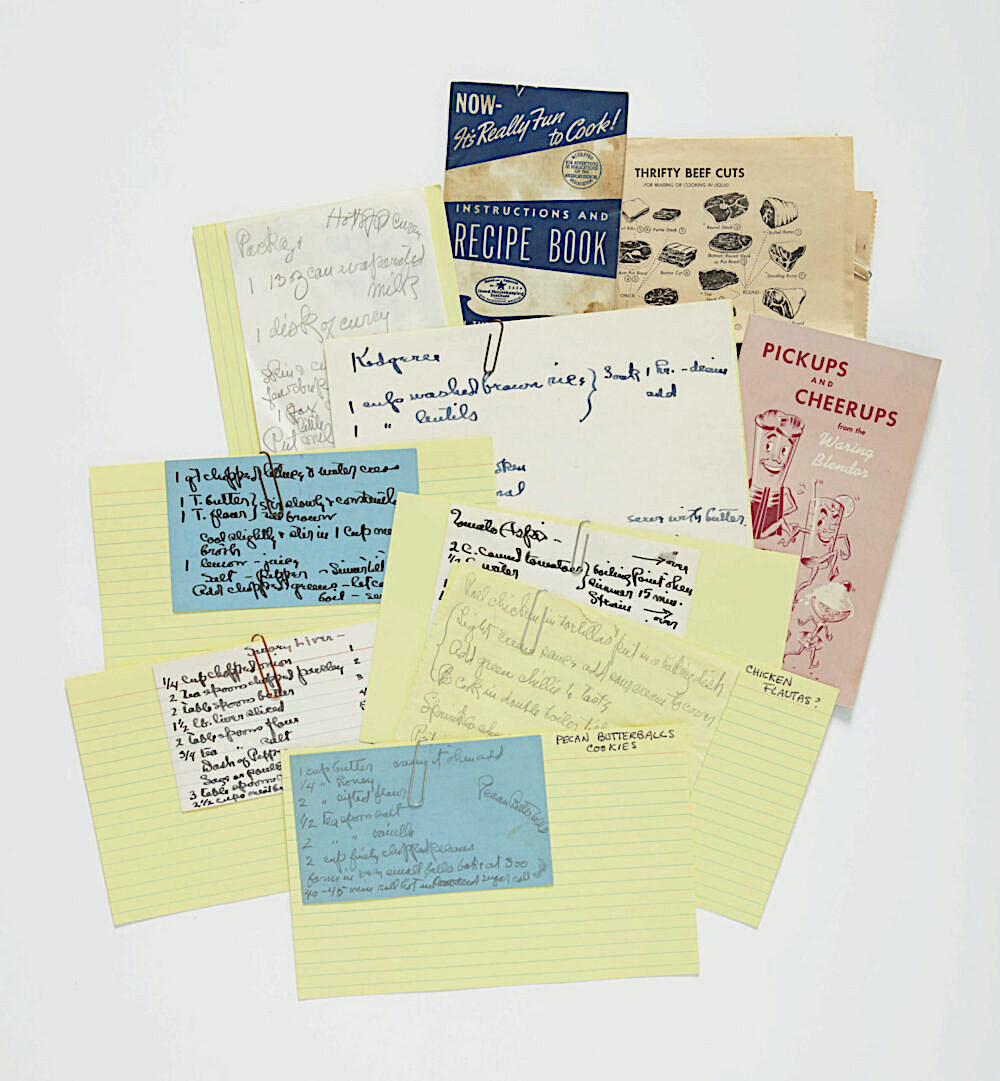
Also Pick­ups and Cheerups from the War­ing Blender, a 21-page pam­phlet fea­tur­ing blend­ed cock­tails, that now rests in Yale University’s Bei­necke Library, along with the rest of the con­tents of O’Keeffe’s recipe box, acquired the night before it was due to be auc­tioned at Sotheby’s. (Some of the images on this page come cour­tesy of Sothe­by’s.)

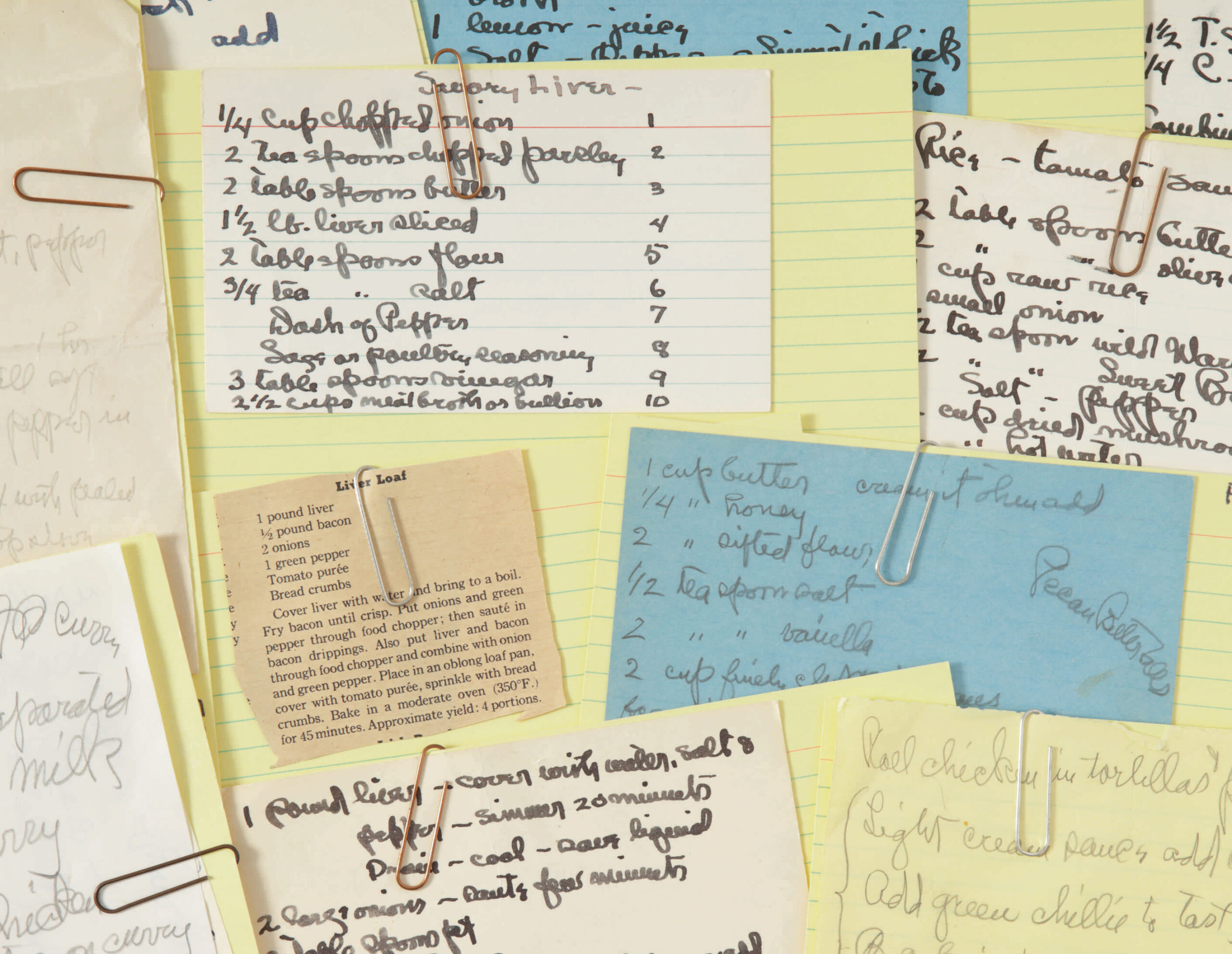
In addi­tion to recipes—inscribed by the artist’s own hand in ink from a foun­tain pen, typed by assis­tants, clipped from mag­a­zines and news­pa­pers, or in pro­mo­tion­al book­lets such as the one pub­lished by the War­ing Prod­ucts Company—the box housed man­u­als for O’Keeffe’s kitchen appli­ances.

The book­let that came with her pres­sure cook­er includes a spat­tered page devot­ed to cook­ing fresh veg­gies, a tes­ta­ment to her abid­ing inter­est in eat­ing health­ful­ly.

O’Keeffe had a high regard for sal­ads, gar­den fresh herbs, and sim­ple, local­ly sourced food.

Today’s bud­dha bowl craze is, how­ev­er, “the oppo­site of what she would enjoy” accord­ing to Wood, author of the books Remem­ber­ing Miss O’Ke­effe: Sto­ries from Abiquiu and A Painter’s Kitchen: Recipes from the Kitchen of Geor­gia O’Keeffe.

Wood, who was some 66 years younger than her employ­er, recent­ly vis­it­ed The Spork­ful pod­cast to recall her first days on the job :

…she said, “Do you like to cook?” 

And I said, “Yes, I cer­tain­ly do.” 

So she said, “Well, let’s give it a try.” 

And after two days of my hip­pie health food, she said, “My dear, let me show you how I like my food.” My first way of try­ing to cook for us was a lot of brown rice and chopped veg­eta­bles with chick­en added. And that was not what she liked. 

An exam­ple of what she did like: Roast­ed lemon chick­en with fried pota­toes, a green sal­ad fea­tur­ing let­tuce and herbs from her gar­den, and steamed broc­coli.

Also yogurt made with the milk of local goats, whole wheat flour ground on the premis­es, water­cress plucked from local streams, and home can­ning.

Most of these labor-inten­sive tasks fell to her staff, but she main­tained a keen inter­est in the pro­ceed­ings.

Not for noth­ing did the friend who referred Wood for the job warn her it would “require a lot of patience because Miss O’Ke­effe was extreme­ly par­tic­u­lar.”

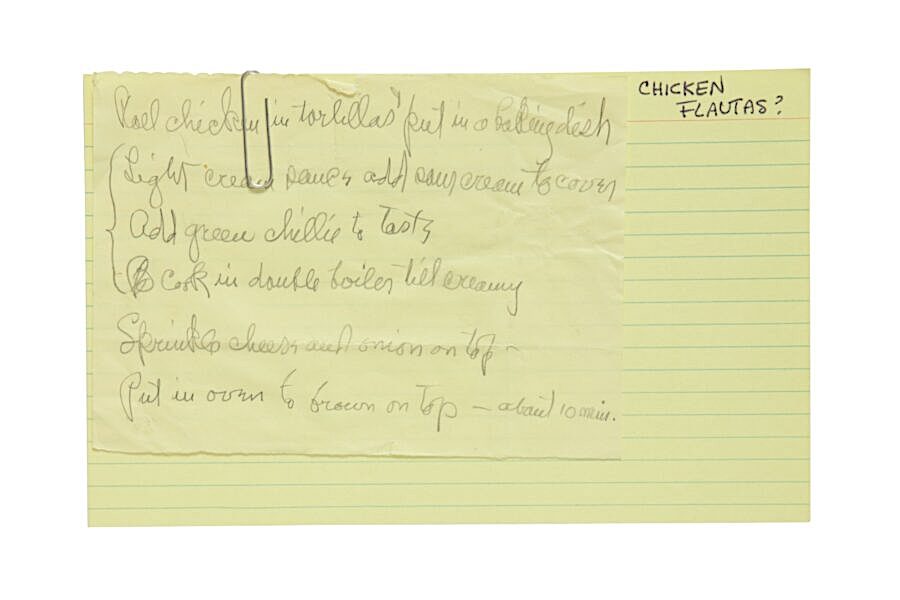
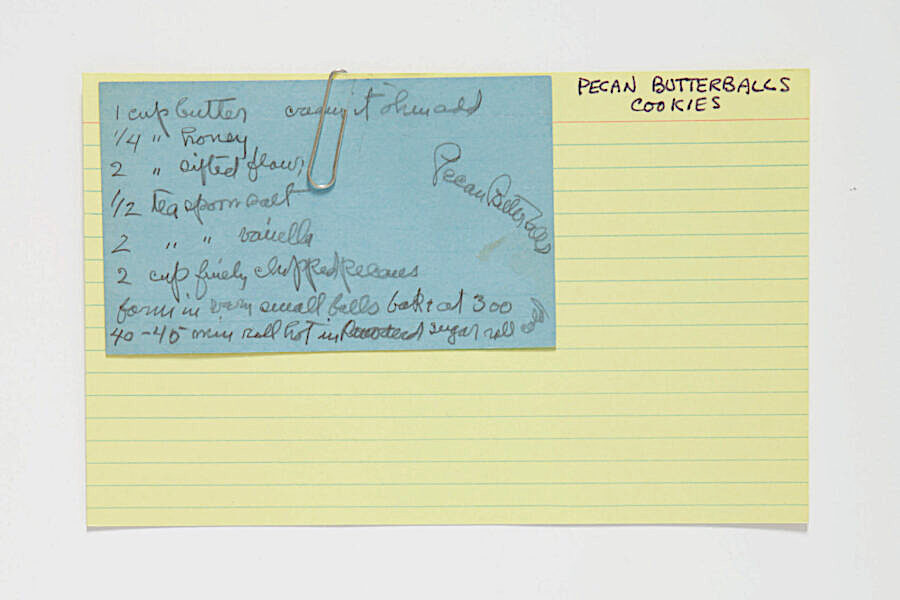
The jot­tings from the recipe box don’t real­ly con­vey this exact­ing nature.

Those accus­tomed to the extreme­ly spe­cif­ic instruc­tions accom­pa­ny­ing even the sim­plest recipes to be found on the Inter­net may be shocked by O’Ke­ef­fe’s brevi­ty.


Per­haps we should assume that she sta­tioned her­self close by the first time any new hire pre­pared a recipe from one of her cards, know­ing she would have to ver­bal­ly cor­rect and redi­rect.

(O’Keeffe insist­ed that Wood stir accord­ing to her method—don’t scrape the sides, dig down and lift up.)

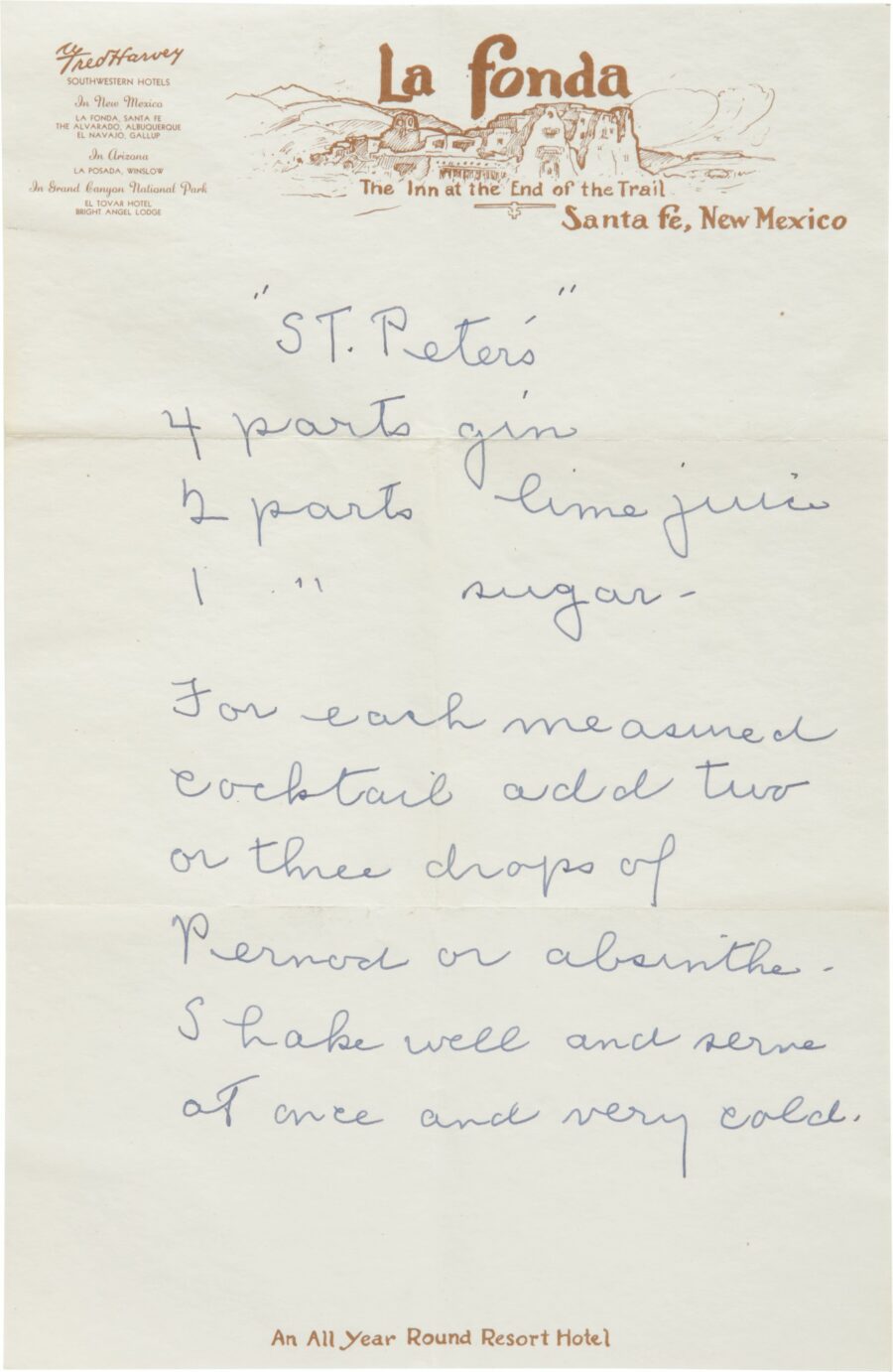
The box also con­tained recipes that were like­ly rar­i­ties on O’Keeffe’s table, giv­en her dietary pref­er­ences, though they are cer­tain­ly evoca­tive of the peri­od: toma­to aspic, Mary­land fried chick­enFloat­ing Islands, and a cock­tail she may have first sipped in a San­ta Fe hotel bar.

The Bei­necke plans to dig­i­tize its new­ly acquired col­lec­tion. This gives us hope that one day, the Geor­gia O’Keeffe Muse­um may fol­low suit with the red recipe binder Wood men­tions in A Painter’s Kitchen:

This was affec­tion­ate­ly referred to as “Mary’s Book,” named after a pre­vi­ous staff mem­ber who had com­piled it. That note­book was con­tin­u­al­ly con­sult­ed, and revised to include new recipes or to improve on old­er ones…. As she had col­lect­ed a num­ber of healthy and fla­vor­ful recipes, she would occa­sion­al­ly laugh and com­ment, “We should write a cook­book.”

Relat­ed Con­tent: 

Explore 1,100 Works of Art by Geor­gia O’Keeffe: They’re Now Dig­i­tized and Free to View Online

Geor­gia O’Keeffe: A Life in Art, a Short Doc­u­men­tary on the Painter Nar­rat­ed by Gene Hack­man

The Art & Cook­ing of Fri­da Kahlo, Sal­vador Dali, Geor­gia O’Keeffe, Vin­cent Van Gogh & More

Ayun Hal­l­i­day is an author, illus­tra­tor, the­ater mak­er and Chief Pri­ma­tol­o­gist of the East Vil­lage Inky zine.  Fol­low her @AyunHalliday.

The Internet Archive Will Digitize & Preserve Millions of Academic Articles with Its New Database, “Internet Archive Scholar”

Open access pub­lish­ing has, indeed, made aca­d­e­m­ic research more acces­si­ble, but in “the move from phys­i­cal aca­d­e­m­ic jour­nals to dig­i­tal­ly-acces­si­ble papers,” Saman­tha Cole writes at Vice, it has also become “more pre­car­i­ous to pre­serve…. If an insti­tu­tion stops pay­ing for web host­ing or changes servers, the research with­in could dis­ap­pear.” At least a cou­ple hun­dred open access jour­nals van­ished in this way between 2000 and 2019, a new study pub­lished on arx­iv found. Anoth­er 900 jour­nals are in dan­ger of meet­ing the same fate.

The jour­nals in per­il include schol­ar­ship in the human­i­ties and sci­ences, though many pub­li­ca­tions may only be of inter­est to his­to­ri­ans, giv­en the speed at which sci­en­tif­ic research tends to move. In any case, “there shouldn’t real­ly be any decay or loss in sci­en­tif­ic pub­li­ca­tions, par­tic­u­lar­ly those that have been open on the web,” says study co-author Mikael Laasko, infor­ma­tion sci­en­tist at the Han­ken School of Eco­nom­ics in Helsin­ki. Yet, in dig­i­tal pub­lish­ing, there are no print­ed copies in uni­ver­si­ty libraries, cat­a­logued and main­tained by librar­i­ans.

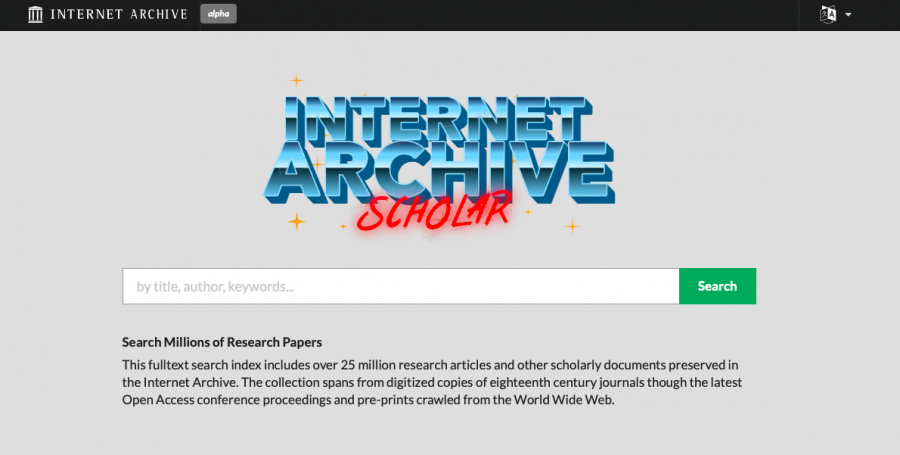
To fill the need, the Inter­net Archive has cre­at­ed its own schol­ar­ly search plat­form, a “full­text search index” that includes “over 25 mil­lion research arti­cles and oth­er schol­ar­ly doc­u­ments” pre­served on its servers. These col­lec­tions span dig­i­tized and orig­i­nal dig­i­tal arti­cles pub­lished from the 18th cen­tu­ry to “the lat­est Open Access con­fer­ence pro­ceed­ings and pre-prints crawled from the World Wide Web.” Con­tent in this search index comes in one of three forms:

  • pub­lic web con­tent in the Way­back Machine web archives (web.archive.org), either iden­ti­fied from his­toric col­lect­ing, crawled specif­i­cal­ly to ensure long-term access to schol­ar­ly mate­ri­als, or crawled at the direc­tion of Archive-It part­ners
  • dig­i­tized print mate­r­i­al from paper and micro­form col­lec­tions pur­chased and scanned by Inter­net Archive or its part­ners
  • gen­er­al mate­ri­als on the archive.org col­lec­tions, includ­ing con­tent from part­ner orga­ni­za­tions, uploads from the gen­er­al pub­lic, and mir­rors of oth­er projects

The project is still in “alpha” and “has sev­er­al bugs,” the site cau­tions, but it could, when it’s ful­ly up and run­ning, become part of a much-need­ed rev­o­lu­tion in aca­d­e­m­ic research—that is if the major aca­d­e­m­ic pub­lish­ers don’t find some legal pre­text to shut it down.

Aca­d­e­m­ic pub­lish­ing boasts one of the most rapa­cious legal busi­ness mod­els on the glob­al mar­ket, and one of the most exploita­tive: a dou­ble stan­dard in which schol­ars freely pub­lish and review research for the pub­lic ben­e­fit (osten­si­bly) and very often on the pub­lic dime; while pri­vate inter­me­di­aries rake in astro­nom­i­cal sums for them­selves with pay­walls. The open access mod­el has changed things, but the only way to tru­ly serve the “best inter­ests of researchers and the pub­lic,” neu­ro­sci­en­tist Shaun Khoo argues, is through pub­lic infra­struc­ture and ful­ly non-prof­it pub­li­ca­tion.

Maybe Inter­net Archive Schol­ar can go some way toward bridg­ing the gap, as a pub­licly acces­si­ble, non-prof­it search engine, dig­i­tal cat­a­logue, and library for research that is worth pre­serv­ing, read­ing, and build­ing upon even if it does­n’t gen­er­ate share­hold­er rev­enue. For a deep­er dive into how the Archive built its for­mi­da­ble, still devel­op­ing, new data­base, see the video pre­sen­ta­tion above from Jef­fer­son Bai­ley, Direc­tor of Web Archiv­ing & Data Ser­vices. And have a look at Inter­net Archive Schol­ar here. It cur­rent­ly lacks advanced search func­tions, but plug in any search term and pre­pare to be amazed by the incred­i­ble vol­ume of archived full text arti­cles you turn up.

Relat­ed Con­tent:

The Inter­net Archive Makes 2,500 More Clas­sic MS-DOS Video Games Free to Play Online: Alone in the Dark, Doom, Microsoft Adven­ture, and Oth­ers

Libraries & Archivists Are Dig­i­tiz­ing 480,000 Books Pub­lished in 20th Cen­tu­ry That Are Secret­ly in the Pub­lic Domain

The Boston Pub­lic Library Will Dig­i­tize & Put Online 200,000+ Vin­tage Records

Josh Jones is a writer and musi­cian based in Durham, NC. Fol­low him at @jdmagness

Hear the Voices of Americans Born in Slavery: The Library of Congress Features 23 Audio Interviews with Formerly Enslaved People (1932–75)

“Dur­ing the last three decades of legal slav­ery in Amer­i­ca,” writes Lucin­da MacK­ethan at the Nation­al Human­i­ties Cen­ter, “African Amer­i­can writ­ers per­fect­ed one of the nation’s first tru­ly indige­nous gen­res of writ­ten lit­er­a­ture: the North Amer­i­can slave nar­ra­tive.” These heav­i­ly medi­at­ed mem­oirs were the only real first­hand accounts of slav­ery most Amer­i­cans out­side the South encoun­tered. Their authors were urged by abo­li­tion­ist pub­lish­ers to adopt con­ven­tions of the sen­ti­men­tal nov­el, and to fea­ture showy intro­duc­tions by white edi­tors to val­i­date their authen­tic­i­ty.

Fugi­tive slave nar­ra­tives did not nec­es­sar­i­ly give white Amer­i­cans new infor­ma­tion about slavery’s wrongs, but they served as “proof” that enslaved peo­ple were, in fact, peo­ple, with feel­ings and intel­lects and aspi­ra­tions just like theirs. Ex-enslaved writ­ers like Fred­er­ick Dou­glass and Har­ri­et Jacobs sen­sa­tion­al­ized read­ers with sto­ries of the phys­i­cal and sex­u­al vio­lence of slav­ery, and their sto­ries became abo­li­tion­ists’ most potent weapon. The form suc­ceed­ed as much on dra­mat­ic effect as on its doc­u­men­tary val­ue.

Dou­glas and Jacobs were excep­tion­al in that they had learned to read and write and escaped their ter­ri­ble con­di­tions through strength of will, inge­nu­ity, the kind­ness­es of oth­ers, and sheer luck. Most were not so for­tu­nate. But we now have access to many more first­hand accounts—thanks to the work of the Fed­er­al Writ­ers Project (FWP) of the Works Progress Admin­is­tra­tion and oth­ers, who record­ed thou­sands of inter­views with for­mer­ly enslaved peo­ple liv­ing well into the 20th cen­tu­ry, all from the first gen­er­a­tion to out­live slav­ery.

Ted Kop­pel debuted some clips of those record­ings to his Night­line audi­ence in the 1999 episode above. “They are haunt­ing voic­es,” he says, then pref­aces the tape with “brace your­selves for a minor mir­a­cle.” What is mirac­u­lous about the fact that peo­ple who were born in slav­ery lived into the age of audio record­ing? Per­haps one rea­son it seems so is that we are con­di­tioned to think of legal enslave­ment and its effects as reced­ing fur­ther back in time than they actu­al­ly do. In the 1930s, the FWP filed tran­scripts of over 2,300 inter­views and 500 black-and-white pho­tographs of peo­ple born into slav­ery.

Also, in the 30s, eth­nol­o­gists like Zora Neale Hurston and the Lomax­es began record­ing audio inter­views with for­mer­ly enslaved peo­ple like Foun­tain Hugh­es, fur­ther up, born in Char­lottesville, Vir­ginia. Record­ed in 1949, he is fear­ful­ly reluc­tant to talk about his expe­ri­ence but vocal about it nonethe­less: ““You was­n’t no more than a dog to some of them in them days. You was­n’t treat­ed as good as they treat dogs now. But still I did­n’t like to talk about it. Because it makes, makes peo­ple feel bad you know. Uh, I, I could say a whole lot I don’t like to say. And I won’t say a whole lot more.”

The Library of Con­gress puts the 23 sur­viv­ing record­ings in con­text:

The record­ings of for­mer slaves in Voic­es Remem­ber­ing Slav­ery: Freed Peo­ple Tell Their Sto­ries took place between 1932 and 1975 in nine states. Twen­ty-three inter­vie­wees dis­cuss how they felt about slav­ery, slave­hold­ers, coer­cion of slaves, their fam­i­lies, and free­dom. Sev­er­al indi­vid­u­als sing songs, many of which were learned dur­ing the time of their enslave­ment. It is impor­tant to note that all of the inter­vie­wees spoke six­ty or more years after the end of their enslave­ment, and it is their full lives that are reflect­ed in these record­ings. The indi­vid­u­als doc­u­ment­ed in this pre­sen­ta­tion have much to say about liv­ing as African Amer­i­cans from the 1870s to the 1930s, and beyond.

Only sev­en of these voic­es have been matched with pho­tographs. Many of these mean and women were inter­viewed else­where, but on the whole, lit­tle bio­graph­i­cal infor­ma­tion about them exists. The final inter­vie­wee, Char­lie Smith, record­ed in 1975, was the sub­ject of a book and numer­ous mag­a­zine arti­cles. He died four years lat­er at 137 years old. Hear all of the audio inter­views with for­mer­ly enslaved peo­ple at the Library of Congress’s Voic­es Remem­ber­ing Slav­ery project and find resources for teach­ers here.

Relat­ed Con­tent:

The Names of 1.8 Mil­lion Eman­ci­pat­ed Slaves Are Now Search­able in the World’s Largest Genealog­i­cal Data­base, Help­ing African Amer­i­cans Find Lost Ances­tors

What the Text­books Don’t Tell Us About The Atlantic Slave Trade: An Ani­mat­ed Video Fills In His­tor­i­cal Gaps

The Atlantic Slave Trade Visu­al­ized in Two Min­utes: 10 Mil­lion Lives, 20,000 Voy­ages, Over 315 Years

The “Slave Bible” Removed Key Bib­li­cal Pas­sages In Order to Legit­imize Slav­ery & Dis­cour­age a Slave Rebel­lion (1807)

1.5 Mil­lion Slav­ery Era Doc­u­ments Will Be Dig­i­tized, Help­ing African Amer­i­cans to Learn About Their Lost Ances­tors

Josh Jones is a writer and musi­cian based in Durham, NC. Fol­low him at @jdmagness

The Bird Library: A Library Built Especially for Our Fine Feathered Friends

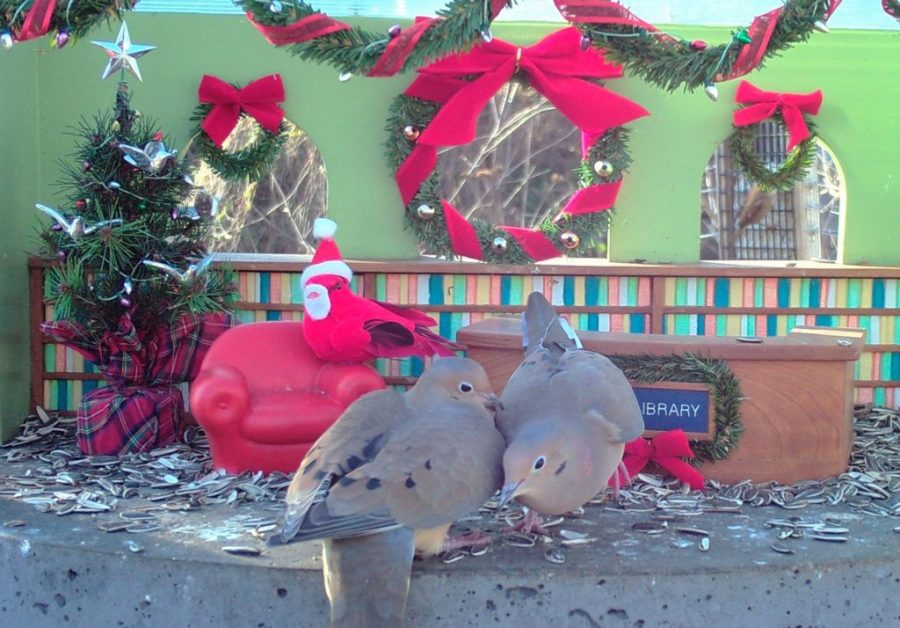
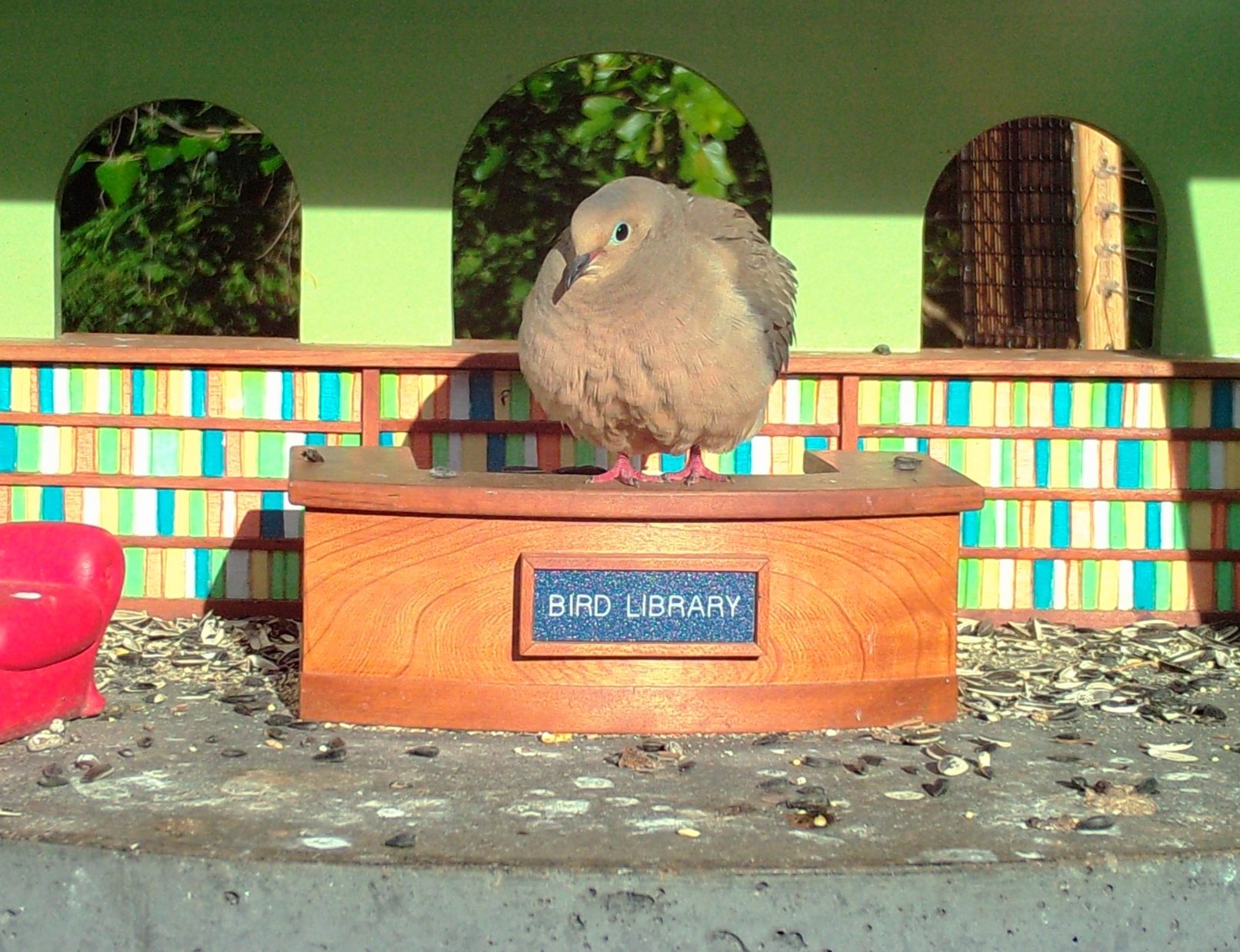
“The two things I love most are nov­els and birds,” said Jonathan Franzen in a Guardian pro­file not long ago. “They’re both in trou­ble, and I want to advo­cate for both of them.” Chances are that even that famous­ly inter­net-averse nov­el­ist-turned-bird­watch­er would enjoy the online attrac­tion called The Bird Library, “where the need to feed meets the need to read.” Its live Youtube stream shows the goings-on of a tiny library built espe­cial­ly for our feath­ered friends. “Perched in a back­yard in the city of Char­lottesville,” writes Atlas Obscu­ra’s Claire Voon, “it is the pas­sion project of librar­i­an Rebec­ca Flow­ers and wood­work­er Kevin Cwali­na, who brought togeth­er their skills and inter­ests to show­case the lives of their back­yard birds.”

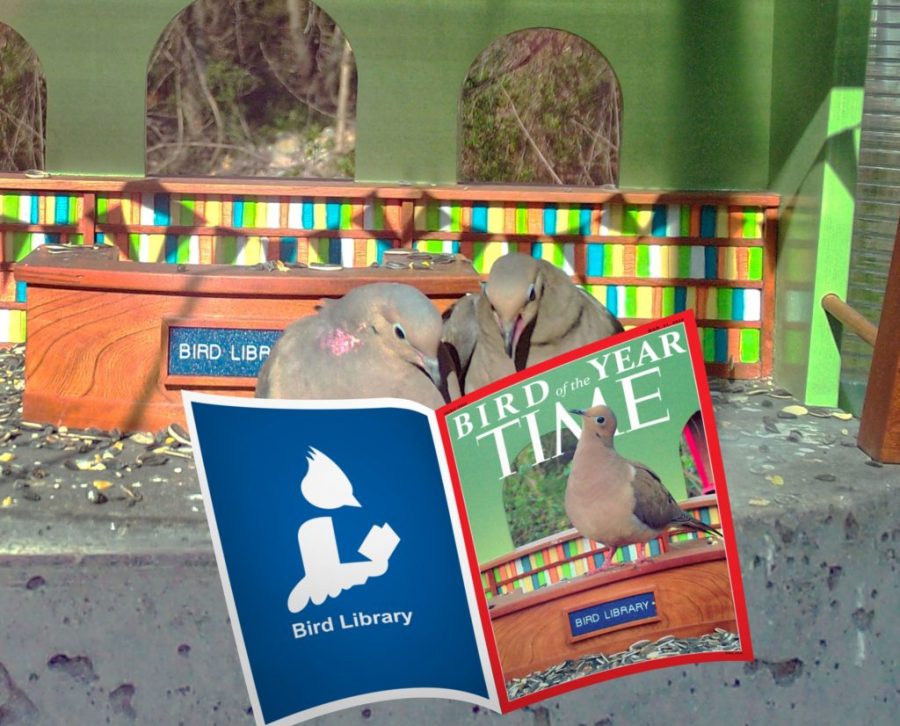
Recent vis­i­tors, Voon adds, “have includ­ed a strik­ing rose-breast­ed gros­beak, a car­di­nal that looks like it’s vap­ing, and a trio of mourn­ing doves seem­ing­ly caught in a seri­ous meet­ing.” The Bird Library’s web site offers an archive of images cap­tur­ing the insti­tu­tion’s wee reg­u­lars, all accom­pa­nied by enliven­ing cap­tions. (“Why did the bird go to the library?” “He was look­ing for book­worms.”)

Just as year-round bird­watch­ing brings plea­sures dis­tinct from more casu­al ver­sions of the pur­suit, year-round view­ing of The Bird Library makes for a deep­er appre­ci­a­tion not just of the vari­ety of species rep­re­sent­ed among its patrons — the cre­ators have count­ed 20 so far — but for the sea­son­al changes in the space’s decor, espe­cial­ly around Christ­mas­time.

As long­time view­ers know, this isn’t the orig­i­nal Bird Library. “In late 2018 we demol­ished the old Bird Library and start­ed design and devel­op­ment of a new and improved Bird Library 2.0! Com­plete with a large con­crete base for increased capac­i­ty and a big­ger cir­cu­la­tion desk capa­ble of feed­ing all our guests all day long.” Just as libraries for humans need occa­sion­al ren­o­va­tion, so, it seems, do libraries for birds — a con­cept that could soon expand out­side Vir­ginia. “Cwali­na hopes to even­tu­al­ly pub­lish an open-access plan for a sim­i­lar bird library, so that oth­er bird­ers can build their own ver­sions,” reports Voon. And a bird-lov­ing 21st-cen­tu­ry Andrew Carnegie steps for­ward to ensure their archi­tec­tur­al respectabil­i­ty, might we sug­gest going with mod­ernism?

via Atlas Obscu­ra

Relat­ed Con­tent:

Mod­ernist Bird­hous­es Inspired by Bauhaus, Frank Lloyd Wright and Joseph Eich­ler

Free Enter­tain­ment for Cats and Dogs: Videos of Birds, Squir­rels & Oth­er Thrills

Down­load 435 High Res­o­lu­tion Images from John J. Audubon’s The Birds of Amer­i­ca

Explore an Inter­ac­tive Ver­sion of The Wall of Birds, a 2,500 Square-Foot Mur­al That Doc­u­ments the Evo­lu­tion of Birds Over 375 Mil­lion Years

RIP Todd Bol, Founder of the Lit­tle Free Library Move­ment: He Leaves Behind 75,000 Small Libraries That Pro­mote Read­ing World­wide

McDonald’s Opens a Tiny Restau­rant — and It’s Only for Bees

Based in Seoul, Col­in Mar­shall writes and broad­casts on cities, lan­guage, and cul­ture. His projects include the book The State­less City: a Walk through 21st-Cen­tu­ry Los Ange­les and the video series The City in Cin­e­ma. Fol­low him on Twit­ter at @colinmarshall, on Face­book, or on Insta­gram.

« Go BackMore in this category... »
Quantcast