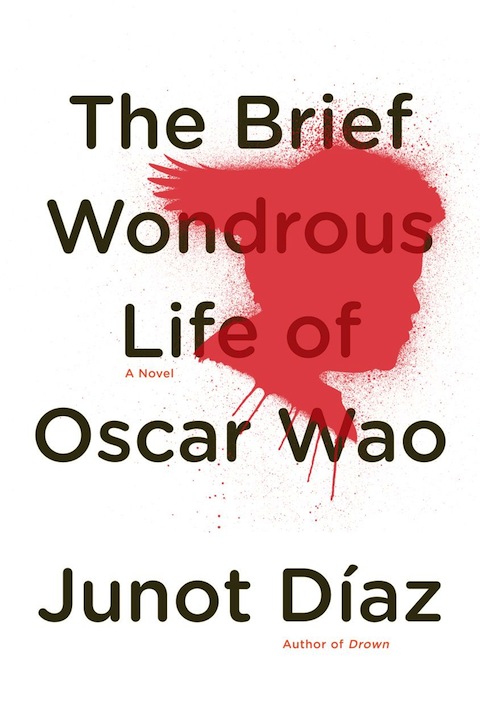
Junot Díaz’s breakout 2007 novel The Brief Wondrous Life of Oscar Wao is a brilliant illustration of “misprision,” the act of misreading or misunderstanding that, in Harold Bloom’s estimation, precipitates new literary creation. In Díaz’s novel, the experiences of a young immigrant—a sci-fi nerd and gamer interacting with culture high and low—brings forth a vibrant, playful polyglot born from misunderstanding and desire.
So far, this reading is the standard fare of critical appraisals of the book. Now, however, we have it on authority—from the author himself, who has provided his own annotations for an excerpt of Oscar Wao via “Poetry Genius,” a section of the popular site “Rap Genius,” that allows authors to annotate their own work. The portion of the novel Díaz chooses to annotate is packed with allusions to science fiction classics, including Frank Herbert’s Dune, Planet of the Apes, and, of course, Star Wars. In the selection below on Star Wars’ fictional planet Tatooine, Díaz makes a humorous and insightful comment on nerd culture, race and nationality, and the yearning every fanboy or girl has to see him or herself in the works they love.
Depending on your fanboy orientation either the first or second most famous desert planet in nerdom. Again when I saw those landscapes in Star Wars I felt surge of kinship. Shit, on first viewing I also thought my man’s name was Juan Kenobi. But that’s what happens when you’re an immigrant kid of color in a culture that erases your community completely. You start inventing filiations.
As publisher Melville House’s blog notes, Díaz’s annotation often reads like a “line-by-line author talk.” Per usual, the author is as comfortable in an off-the-cuff vernacular as he is in an erudite literary-critical voice, as when he cites David Foster Wallace, Jorge Luis Borges, Patrick Chamoiseau, and William Vollmann as inspirations. The Poetry Genius site also includes the fascinating interview with Díaz above. Fans of Díaz and the novel won’t want to miss it.
Here’s a fascinating glimpse of the very first Bloomsday celebration, filmed in Dublin in 1954.
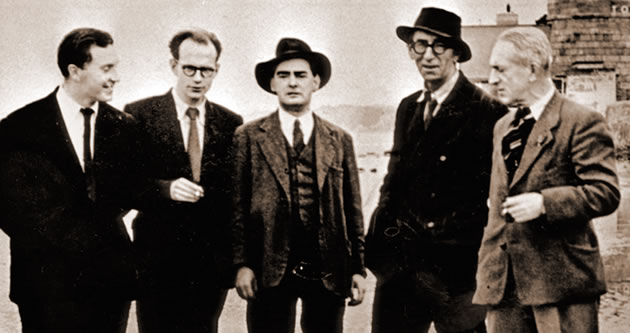
The footage shows the great Irish comedic writer Brian O’Nolan, better known by his pen name Flann O’Brien, appearing very drunk as he sets off with two other renowned post-war Irish writers, Patrick Kavanagh and Anthony Cronin, and a cousin of James Joyce, a dentist named Tom Joyce, on a pilgrimage to visit the sites in James Joyce’s epic novel Ulysses.
The footage was taken by John Ryan, an artist, publisher and pub owner who organized the event. The idea was to retrace the steps of Leopold Bloom and other characters from the novel, but as Peter Costello and Peter van de Kamp explain in this humerous passage from their book, Flann O’Brien: An Illustrated Biography, things began to go awry right from the start:
The date was 16 June, 1954, and though it was only mid-morning, Brian O’Nolan was already drunk.
This day was the fiftieth anniversary of Mr. Leopold Bloom’s wanderings through Dublin, which James Joyce had immortalised in Ulysses.
To mark this occasion a small group of Dublin literati had gathered at the Sandycove home of Michael Scott, a well-known architect, just below the Martello tower in which the opening scene of Joyce’s novel is set. They planned to travel round the city through the day, visiting in turn the scenes of the novel, ending at night in what had once been the brothel quarter of the city, the area which Joyce had called Nighttown.
Sadly, no-one expected O’Nolan to be sober. By reputation, if not by sight, everyone in Dublin knew Brian O’Nolan, otherwise Myles na Gopaleen, the writer of the Cruiskeen Lawn column in the Irish Times. A few knew that under the name of Flann O’Brien, he had written in his youth a now nearly forgotten novel, At Swim-Two-Birds. Seeing him about the city, many must have wondered how a man with such extreme drinking habits, even for the city of Dublin, could have sustained a career as a writer.
As was his custom, he had been drinking that morning in the pubs around the Cattle Market, where customers, supposedly about their lawful business, would be served from 7:30 in the morning. Now retired from the Civil Service, on grounds of “ill-health”, he was earning his living as a free-lance journalist, writing not only for the Irish Times, but for other papers and magazines under several pen-names. He needed to write for money as his pension was a tiny one. But this left little time for more creative work. In fact, O’Nolan no longer felt the urge to write other novels.
The rest of the party, that first Bloomsday, was made up of the poet Patrick Kavanagh, the young critic Anthony Cronin, a dentist named Tom Joyce, who as Joyce’s cousin represented the family interest, and John Ryan, the painter and businessman who owned and edited the literary magazine Envoy. The idea of the Bloomsday celebration had been Ryan’s, growing naturally out of a special Joyce issue of his magazine, for which O’Nolan had been guest editor.
Ryan had engaged two horse drawn cabs, of the old fashioned kind, which in Ulysses Mr. Bloom and his friends drive to poor Paddy Dignam’s funeral. The party were assigned roles from the novel. Cronin stood in for Stephen Dedalus, O’Nolan for his father, Simon Dedalus, John Ryan for the journalist Martin Cunningham, and A.J. Leventhal, the Registrar of Trinity College, being Jewish, was recruited to fill (unkown to himself according to John Ryan) the role of Leopold Bloom.
Kavanagh and O’Nolan began the day by deciding they must climb up to the Martello tower itself, which stood on a granite shoulder behind the house. As Cronin recalls, Kavanagh hoisted himself up the steep slope above O’Nolan, who snarled in anger and laid hold of his ankle. Kavanagh roared, and lashed out with his foot. Fearful that O’Nolan would be kicked in the face by the poet’s enormous farmer’s boot, the others hastened to rescue and restrain the rivals.
With some difficulty O’Nolan was stuffed into one of the cabs by Cronin and the others. Then they were off, along the seafront of Dublin Bay, and into the city.
In pubs along the way an enormous amount of alcohol was consumed, so much so that on Sandymount Strand they had to relieve themselves as Stephen Dedalus does in Ulysses. Tom Joyce and Cronin sang the sentimental songs of Tom Moore which Joyce had loved, such as Silent, O Moyle. They stopped in Irishtown to listen to the running of the Ascot Gold Cup on a radio in a betting shop, but eventually they arrived in Duke Street in the city centre, and the Bailey, which John Ryan then ran as a literary pub.
They went no further. Once there, another drink seemed more attractive than a long tour of Joycean slums, and the siren call of the long vanished pleasures of Nighttown.
Celebrants of the first Bloomsday pause for a photo in Sandymount, Dublin on the morning of June 16, 1954. From left are John Ryan, Anthony Cronin, Brian O’Nolan (a.k.a. Flann O’Brien), Patrick Kavanagh and Tom Joyce, cousin of James Joyce.
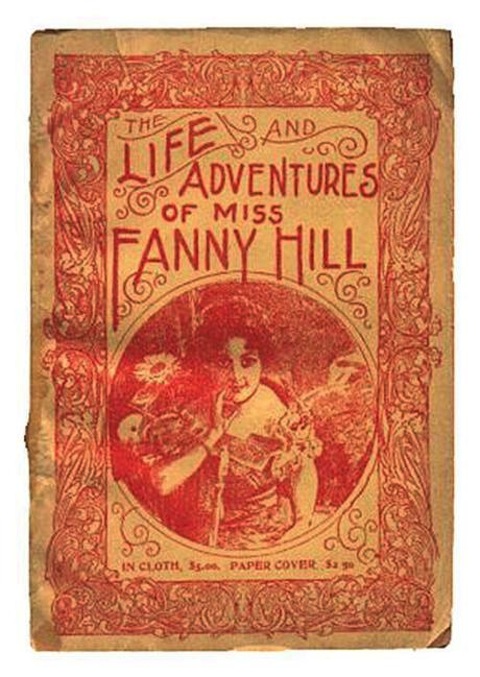
In a recent interview with literary historian Loren Glass about the achievements of taboo-busting publisher Grove Press, I wondered whether anyone growing up today could conceive of a book causing a public scandal, let alone a trial that reaches the Supreme Court. Grove had the highest-profile of its several legal skirmishes after publishing Henry Miller’s Tropic of Cancer in 1961. Two years later, G.P. Putnam Sons would drop their own literary bombshell in the form of Memoirs of a Woman of Pleasure, better known by the name of the protagonist there referenced, Fanny Hill, who, orphaned at fifteen, throws herself into a career in “profit by pleasing.” Originally written in 1748 by John Cleland, a former British East India Company employee locked up in debtors’ prison, the book broke new ground by offering almost nothing but a string of elaborately crafted (and, technically, “vulgar” language-free) sex scenes.
“A partial list of the book’s adventures includes an orgy, sex between women, masturbation, masochism, cross-dressing, and a detailed sodomy scene that is one of only two known explicit depictions of male same-sex ardor in the language before the end of the 19th century,” writes the Boston Globe’s Ruth Graham in an article on the 50th anniversary of the Fanny Hill-vindicating verdict. “The book still has the capacity to shock. As [assistant attorney general William I.] Cowin noted in front of the Supreme Court, after the first 10 pages of the novel, ‘all but 32 have sexual themes.’ But Fanny Hill would not have survived so long if it were merely scandalous in 18th-century terms: It remains revolutionary today because, as English critic Peter Quennell wrote in the introduction to the 1963 edition, “It treats of pleasure as the aim and end of existence.” You can find out just what this means by downloading the book free from Project Gutenberg or iTunes, or listening to a free audio version here. Whether these text-only editions count as worksafe all depends, of course, on the size of your screen and the literacy of your co-workers. You can see bawdy illustrations that appeared in historical editions here. Note that they are very definitively NSFW.
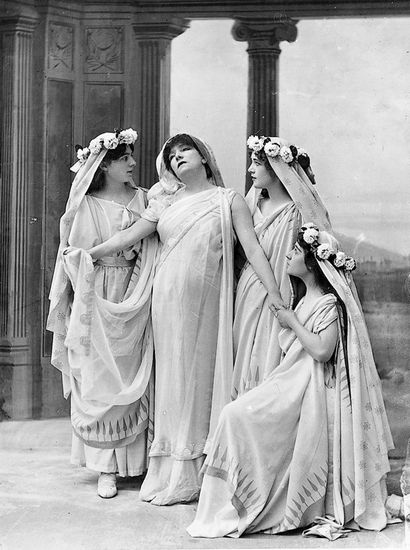
The French actress Sarah Bernhardt is often remembered as the first international superstar. Her hypnotic presence and flamboyant personality are legendary. “She could contrive thrill after thrill,” wrote Lytton Strachey of Bernhardt’s acting ability, “she could seize and tear the nerves of her audience, she could touch, she could terrify, to the top of her astonishing bent.” Bernhardt died before the age of talking movies, notes her biographer Robert Gottlieb, “yet she remains the most famous actress the world has ever known.”
How good was she? Listen below, and you can begin to form your own opinion. The recording was made in February of 1910, when Bernhardt and her troupe were touring America. To tap into the emerging phonographic record market, Bernhardt stopped by Thomas Edison’s laboratory in West Orange, New Jersey, to cut some wax cylinders. For one recording, she chose a scene from Jean Racine’s 1677 tragedy Phèdre, which is based on Euripides’ Hippolytus and Seneca’s Phaedra. Bernhardt plays the title role opposite an unknown actor in the highly dramatic Act II Scene V, in which Phèdre declares her love for Hypolyte, her stepson:
Unfortunately, the video image moves in a distracting way. So perhaps the best way to enjoy the audio is to forget the image and read along with Bernhardt. A full transcript follows the jump:
Stick to what you know goes the conventional wisdom. Author Richard Wright won acclaim documenting the African-American experience in the 30’s and 40’s. Literary standing in the bag, he could have explored any number of avenues through his writing, or chosen to delve deeper into the rich territory from which his career had been mined.
Or, you know, he could’ve starred in a 1951 film adaptation of Native Son, his best selling Book of the Month Club selection.
Which only really counts as sticking with what one knows when one has the acting chops to back it up —something the 40 year old Wright, playing a character 20 years younger than himself, did not. It doesn’t help that the period dialogue sounds stilted to modern ears, and Buenos Aires makes a bizarre geographic substitute for the original’s Chicago location. In the age of the digital connection, his turn in the little seen production assumed train wreck status.
A cursory online search reveals a long line of amateur critics busting on Wright’s ultimately ill-advised celluloid foray. Let us come at things from a slightly adjusted angle. Most of us have seen, if not been, an imaginative child at play, whispering invented lines for favorite dolls and action figures’ spur of the moment scenarios.
Couldn’t we hold that that is what Wright is up to here? He may not be the most convincing handling of a prop gun, but he still bests your average 7‑year-old believer. Those willing to overlook an untrained actor’s less-than-Oscar interpretation-caliber might be rewarded with insight…
John Updike once said of his task as a writer, “My only duty was to describe reality as it had come to me — to give the mundane its beautiful due.” In book after book, he did just that.
With a sharp eye and a searching intellect, Updike reconstituted the details of everyday life into fluid, lyrical prose. “He turned a sentence better than anyone else,” said Ian McEwan in reaction to Updike’s untimely death in 2009. Philip Roth added: “John Updike is our time’s greatest man of letters, as brilliant a literary critic and essayist as he was a novelist and short story writer. He is and always will be no less a national treasure than his 19th-century precursor, Nathaniel Hawthorne. His death constitutes a loss to our literature that is immeasurable.”
In June of 2004, Updike sat for an interview with the Academy of Achievement, a Washington-based non-profit group dedicated to inspiring young people to succeed. In a wide-ranging conversation, Updike is asked whether he has any advice for writers just starting out. “You hesitate to give advice to young writers,” Updike says, “because there’s a limit to what you can say. It’s not exactly like being a musician, or even an artist, where there’s a set number of skills that have to be mastered.” Nevertheless, he goes on to make several suggestions:
To the young writers, I would merely say, “Try to develop actual work habits, and even though you have a busy life, try to reserve an hour, say — or more — a day to write.” Some very good things have been written on an hour a day. Henry Green, one of my pets, was an industrialist actually. He was running a company, and he would come home and write for just an hour in an armchair, and wonderful books were created in this way. So, take it seriously, you know, just set a quota. Try to think of communicating with some ideal reader somewhere. Try to think of getting into print. Don’t be content just to call yourself a writer and then bitch about the crass publishing world that won’t run your stuff. We’re still a capitalist country, and writing to some degree is a capitalist enterprise, when it’s not a total sin to try to make a living and court an audience. “Read what excites you,” would be advice, and even if you don’t imitate it you will learn from it. All those mystery novels I read I think did give me some lesson about keeping a plot taut, trying to move forward or make the reader feel that kind of tension is being achieved, a string is being pulled tight. Other than that, don’t try to get rich on the other hand. If you want to get rich, you should go into investment banking or being a certain kind of a lawyer. But, on the other hand, I would like to think that in a country this large — and a language even larger — that there ought to be a living in it for somebody who cares, and wants to entertain and instruct a reader.
Looking back on the literary career of Leonard Cohen—in full flower in the mid-sixties before his second life as a folk singer/songwriter—one encounters many comparisons to Joyce. For example, in the National Film Board of Canada’s description of Ladies and Gentlemen… Mr. Leonard Cohen, the 1965 documentary film about the 30-year-old Canadian poet, we find: “it truly is, after Joyce, a portrait of the artist as a young man.” On the back cover of Cohen’s second and final novel, the hallucinatory, postmodernist Beautiful Losers, we find a blurb from the Boston Sunday Herald: “James Joyce is not dead…. He lives in Montreal under the name of Cohen.”
Beautiful Losers’ dense system of historical references does put one in mind of Ulysses, but the language, the syntax, the eagle flights into the holy and dives into the profane, remind me somewhat of another Buddhist poet of Canadian extraction, Jack Kerouac. Cohen even sounds a bit like Kerouac, in the short 1967 film, “Poen” (above), an experimental piece that sets four readings of a prose-poem from Beautiful Losers to a montage of starkly provocative images from black-and-white film and photography, Goya, and various surrealists. Made by Josef Reeve for the National Film Board, the short reels out four different recorded takes of Cohen reading the poem. At the end of each reading, he says, “cut,” and the film fades to black.
Taken from the novel’s context, the poem becomes a personal meditation on meditation, or perhaps on writing: “My mind seems to go out on a path, the width of a thread,” begins Cohen and unfolds an image of mental discovery like that described by Donald Barthelme, who once said “writing is a process of dealing with not-knowing…. At best there’s a slender intuition, not much greater than an itch.”
In the animation above, from the NFB’s 1977 “Poets on Film No. 1,” Canadian actor Paul Hecht reads Cohen’s poem “A Kite is a Victim,” from his 1961 collection The Spice-Box of Earth. Like the poem from Beautiful Losers, “A Kite is a Victim” is also about process, but it’s a formal meditation, focused on the image of the kite, which flutters through each of the four stanzas in metaphors of taming, capturing and nurturing language, then letting it go, hoping to be made “worthy and lyric and pure.” The pace of Hecht’s reading, the piano score behind his voice, and the vibrant color of the hand-drawn animation makes this a very different experience of Cohen’s writing than “Poen.”
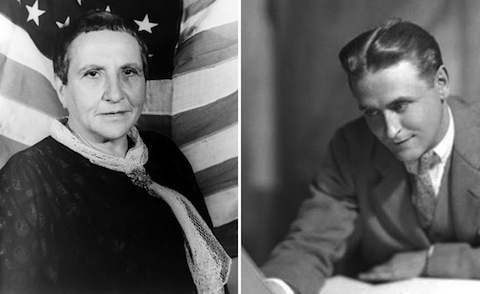
“Here we are and have read your book and it is a good book.” That sentence about The Great Gatsby may read, in isolation, like one out of a particularly unmotivated high school student’s summer-reading report. But it actually comes from astute woman of letters Gertrude Stein in a letter — and, in its way, a review of the then-new novel — to F. Scott Fitzgerald himself. This missive from one distinguished literary member of America’s “Lost Generation” to another continues as follows:
I like the melody of your dedication and it shows that you have a background of beauty and tenderness and that is a comfort. The next good thing is that you write naturally in sentences and that too is a comfort. You write naturally in sentences and one can read all of them and that among other things is a comfort. You are creating the contemporary world much as Thackeray did his in Pendennis and Vanity Fair and this isn’t a bad compliment. You make a modern world and a modern orgy strangely enough it was never done until you did it in This Side of Paradise. My belief in This Side of Paradise was alright. This is as good a book and different and older and that is what one does, one does not get better but different and older and that is always a pleasure. Best of good luck to you always, and thanks so much for the very genuine pleasure you have given me. We are looking forward to seeing you and Mrs. Fitzgerald when we get back in the Fall. Do please remember me to her and to you always
Gtde Stein
Stein’s words, come to think of it, might make just the ticket for the aforementioned English-class slacker who may have actually read The Great Gatsby, and might even have enjoyed it, but can’t pin down what everyone expects him to respect about it. “You write naturally in sentences and one can read all of them” tells you everything you need to about why so many other skilled writers have made a habit of re-reading the novel every decade, every year, even every few months. “You are creating the contemporary world” sums up much of Fitzgerald’s thematic accomplishment, and that bit about “a modern orgy” makes the point much more vivid indeed. And thinking in the longer term, this hypothetical teenager might well benefit from the piece of all-purpose wisdom that “one does not get better but different and older and that is always a pleasure.”
We're hoping to rely on loyal readers, rather than erratic ads. Please click the Donate button and support Open Culture. You can use Paypal, Venmo, Patreon, even Crypto! We thank you!
Open Culture scours the web for the best educational media. We find the free courses and audio books you need, the language lessons & educational videos you want, and plenty of enlightenment in between.