Edgar Allan Poe created a body of work that will seemingly never go out of style, especially around Halloween time. Not only do his stories and poems still inspire dread in the 21st century, but so also do the many hundreds of Poe retellings and adaptations created in the 166 years since the author’s mysterious death. But, we might ask, after so many film adaptations from so many classic horror actors and directors, whether we need yet another one? You’ll have to make up your own mind, but if you’re anything like me, you’ll watch the trailer above for Lion King and Aladdin animator Raul Garcia’s Poe anthology Extraordinary Tales and answer “Yes!” and “More please!” And you can see more, in the clips below from Garcia’s incredible-looking film, hitting theaters on October 23rd.
One reason the new treatment of the five stories Garcia animates seems to work so well is that they draw on the talents of actors and directors who have previously delivered classic Poe retellings. For example, “The Fall of the House of Usher,” above, is narrated by the late, great Christopher Lee, who joins horror legend Vincent Price as one of the greatest readers of Poe’s “The Raven.” The voice-over is Lee’s last role, and it’s hard to think of a more fitting final act for the venerable horror maven. (Lee was also at the time recording “a heavy-metal-rock-opera based on Charlemagne’s life”—one of many metal albums he recorded.)
Garcia has created a unique look for each featurette. For “Usher,” he tells Carlos Aguilar at Indiewire, “the idea was for the characters to look as if they were carved out of wood, like if they were figures that belonged to Czech animator Jirí Trnka.” Just hearing Lee above intone the phrase “an unexpected sense of insufferable gloom” is enough to convince me I need to see the rest of this film.
Just above, we have a clip from a much less famous Poe story, “The Facts in the Case of M. Valdemar,” a chilling detective tale about a man mesmerized in articulo mortis—at the moment of death. Narrated by English actor Julian Sands, who has made his own appearances in several horror films, the animation style comes directly out of classic E.C. horror comics like Tales From the Crypt, which drew many an idea from Poe, basing one story “The Living Death!” on “M. Valdemar.” The “mauve, yellow and mossy green comic-book panels,” writes a New York Times review, “prove that you don’t need fancy technology to achieve a third dimension.”
You’ll notice the unmistakable visage of Vincent Price in the character of the mesmerist, and you’ll likely know of Price’s own turn as Poe himself in An Evening with Edgar Allan Poe. Price also starred in Roger Corman’s many Poe adaptations—beginning with House of Usher—and Garcia has tapped the legendary Corman’s voice for Extraordinary Tales, as well as contemporary horror director extraordinaire Guillermo Del Toro. And if this weren’t horror royalty enough, Garcia’s animated take on “The Tell-Tale Heart” features none other than Bela Lugosi, in an archival reading of the story the Dracula actor made sometime before his death in 1956. Read more about how Garcia found the Lugosi audio and conceived of Extraordinary Tales in his interview here.
Do you consider yourself well-educated? Cultured, even? By whose standards?
We may superficially assume these terms name immutable qualities, but they are in any analysis dependent on where and when we happen to be situated in history. The most sophisticated of Medieval doctors—a title then closer to the European “docent” than our general use of Dr.—would appear profoundly ignorant to us; and we, with our painfully inadequate grasp of church Latin, Aristotelianism, and arcane theological arguments, would appear profoundly ignorant to him.
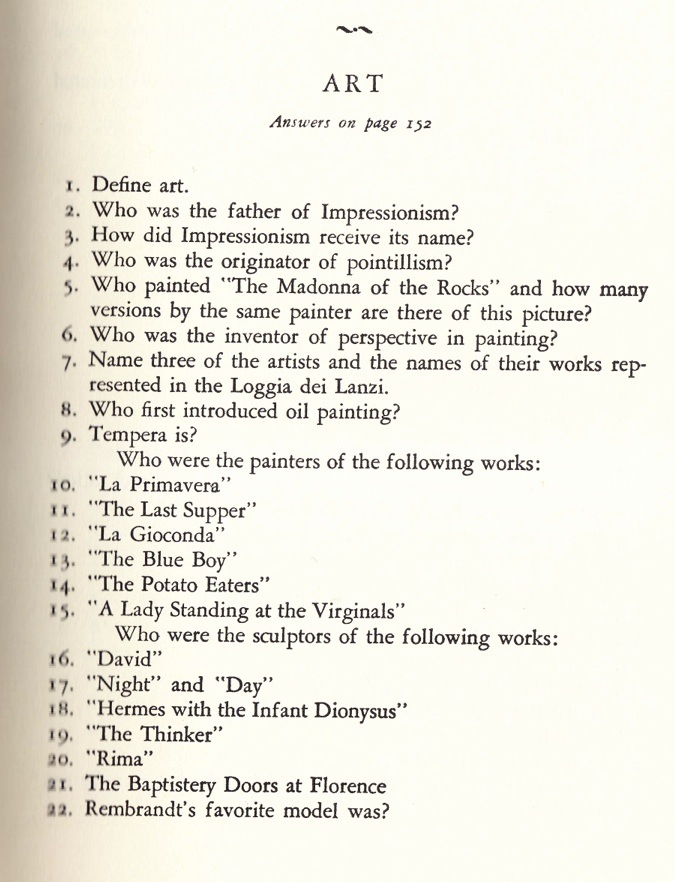
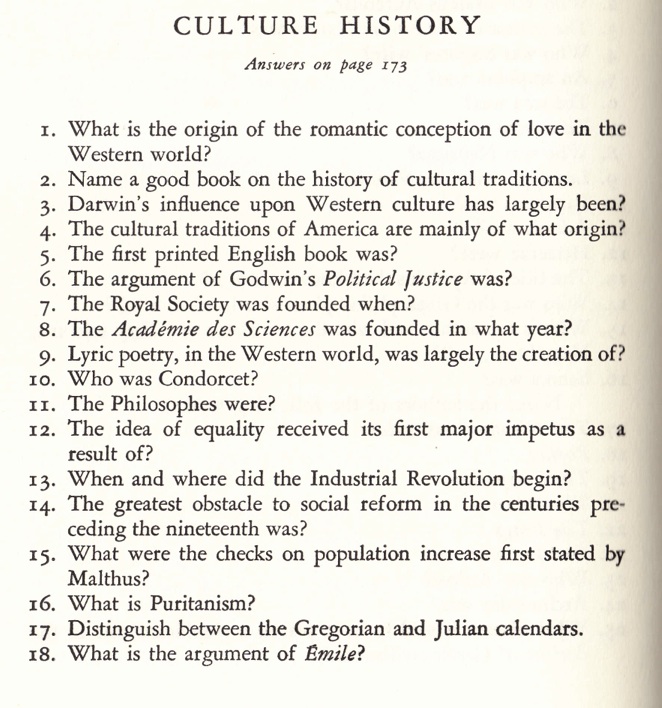
What does it mean to be cultured? Is it the acquisition of mostly useless cultural capital for its own sake, or of a set of codes that helps us navigate the world successfully? In an attempt to address these fraught questions, Ashley Montagu, a student of hugely influential German-born anthropologist Franz Boas, wrote The Cultured Man in 1958. Rebecca Onion at Slate describes the book as containing “quizzes for 50 categories of knowledge in the arts and sciences, with 30 questions each.” In the page above, we have the first 22 questions of Montagu’s “Art” quiz (with the answers here).
You’ll probably notice right away that while most of the questions have definite, unambiguous answers, others like “Define art,” seem patently unanswerable in all but the most general and unsatisfactory ways. Montagu defines art in one succinct sentence: “Art is the making or doing of things that have form and beauty”—which strikes me as anemic, though functional enough.
Montagu intended his book to test not only knowledge of cultural facts, but also of “attitudes”: a person “considered ‘cultured,’” writes Onion, “would not just be able to readily summon facts, but also to access humane feelings, which would necessarily come about after contact with culture.” Many administrators of “culture”—curators, art historians, literature professors, etc—would agree with the premise: ideally, the more cultural knowledge we acquire, the more empathy and understanding of other peoples and cultures we should manifest. Whether this routinely occurs in practice is another matter. For Montagu, Onion remarks, a “cultured man” is “curious, unprejudiced, rational, and ethical.”
Given Montagu’s enlightened philosophical bent, we can charitably ascribe language in his book that itself seems prejudiced to our viewing this artifact from a distance of almost seventy years in the future. We might also find that many of his questions push us to examine our 21st century biases more carefully. His approach may remind us of frivolous internet diversions or the standardized tests we’ve grown to think of as the precise opposite of lively, critically-engaged educational tools. Yet Montagu intended his quizzes to be “both dynamic and constructive,” to alert readers to areas of ignorance and encourage them to fill gaps in their cultural knowledge. Many of his answers offer references for further study. “No one grows who stands still,” he wrote.
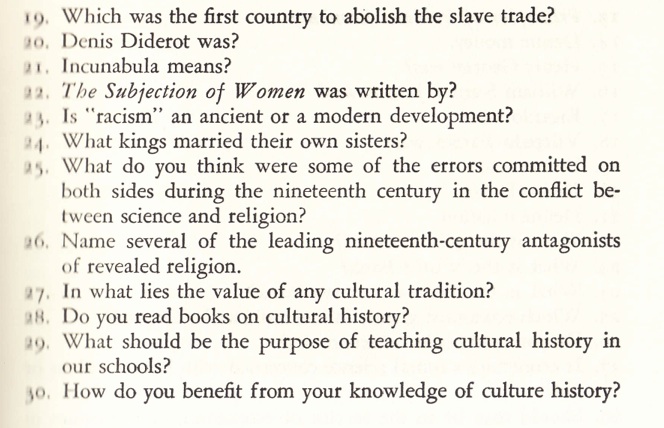
To see more of Montagu’s quiz questions—such as those above from the “Culture History” category (get the answers here)—and find out how you stack up against the cultured elite of the 50s, head over to Rebecca Onion’s post at Slate.
Despite its ancient origins, The Odyssey is an epic for modernity. The Greek poem gives us the hero as a homesick wanderer and uprooted seeker, an exile or a refugee, sustained by his cunning; he even comes across, writes scholar Deirdre McClosky, as “a crafty merchant type,” while also representing “three pagan virtues—temperance, justice, and prudence.” He’s a complicated hero, that is to say—most unlike Achilles, his antithesis in the prior epic The Iliad, the “foundational text,” says Simon Goldhill, “of Western culture.”
Goldhill, a Cambridge classics professor, introduces an undertaking itself admirably epic: a reading of The Iliad featuring “sixty-six artists, 18,225 lines of text” and—on the day it took place, August 14th of this year—an “audience of more than 50,000 people across the world, watching online or in person at the Almeida and the British Museum.” Now you can watch all 68 sections of the marathon event at the Almeida’s website until September 21, 2016. (Access the videos on pages One, Two, and Three.) Just above, see a short video that documents the making of this historic reading.
Goldhill goes on to say that the epic poem, “puts in place most of the great themes of Western literature, from power to adultery.” In a way, it’s fitting that it be a huge communal event: If The Odyssey is novelistic in many ways, as James Joyce’s Ulysses seems to have definitively shown, The Iliad is like a blockbuster comic book film. Achilles, writes McClosky, “is what the Vikings called a berserker”—his motive force, over and above companionship or love—is kleos: fame and glory. The one question that drives the “whole of The Iliad,” says Goldsmith, is “the question of what is worth dying for. For Achilles, the answer is simple.”
Undoubtedly we admire Achilles even as we cringe at his fury, and we celebrate all sorts of people who run headlong into what seems like certain death. But we also find figures who embody his violence and certainty disturbing, to say the least, both on and off the battlefield. Though crafty Odysseus temporarily stays Achilles’ rage, the warrior eventually kills so many Trojans that a river turns against him, and his abuse of Hector’s body makes for stomach-turning reading—or listening as the case may be. Pragmatic Odysseus may have given us the modern hero, and anti-hero, but power and glory-mad strongmen like Agamemnon and Achilles may be even more with us these days, and The Iliad is still an essential part of the architecture of Western grand narrative traditions.
After Goldhill’s introduction, see “greatest stage actor of his generation” Simon Russell Beale pick up the text, then younger actors Pippa Bennett-Warner and Mariah Gale, followed by gruff Brian Cox. (Find the readings on this page.) Few of the readers are as famous as Scottish film and stage star Cox, but nearly all are British theater-trained actors who deliver stirring, often thrilling, readings of the Robert Fagles translation. See the remaining 63 readings at the Almeida Theatre’s website here.
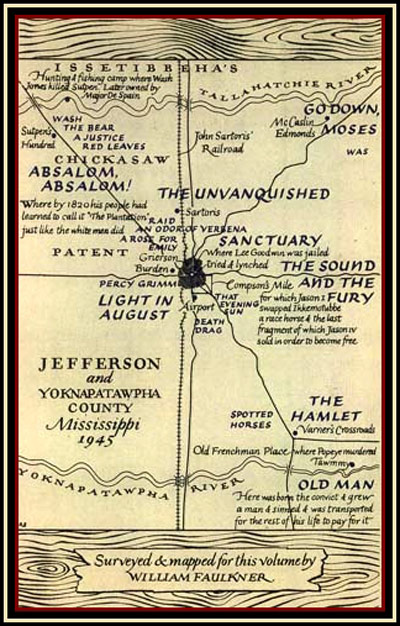
If you’ve ever had difficulty getting around in Yoknapatawpha—getting the lay of the land, as it were—Faulkner has stepped in again to help his readers. He drew several maps of varying levels of detail that show Yoknapatawpha, its county seat of Jefferson in the center, and various key characters’ plantations, crossroads, camps, stores, houses, etc. from the fifteen novels and story cycles set in the author’s native Mississippi.
Perhaps the most reproduced of Faulkner’s maps, above, comes from 1946’s The Portable Faulkner and was drawn by the author at the request of editor Malcolm Cowley. We see named on the map the locations of settings in The Unvanquished, Sanctuary, The Sound and the Fury, The Hamlet, Go Down, Moses, Light in August, and the stories “A Rose for Emily” and “Old Man,” among others. This map, dated 1945, had an important predecessor, however: the map below, the final page in Faulkner’s epic tragedy Absalom, Absalom! Most readers of that novel, myself included, have thought of Quentin Compson’s deeply conflicted, repeated assertions that he doesn’t hate the South as the novel’s conclusion. It’s a passionate speech as memorable, and as final, as Molly Bloom’s silent “Yes” at the end of Joyce’s Ulysses. Not so, writes Faulkner scholar Robert Hamblin, the novel actually ends after Quentin, and after the appendix’s chronology and genealogy; the novel truly ends with the map.
What Hamblin wants us to acknowledge is that the map creates more ambiguity than it resolves. The map, he says “is more than a graphic representation of an actual place”—or in this case, a fictional place based on an actual place—“it is simultaneously a metaphor.” While it further attempts to situate the novel in history, giving Yoknapatawpha the tangibility of Thomas Hardy’s fictional Wessex or Sherwood Anderson’s Winesburg, Ohio, the map also elevates the county to a mythic dimension, like “Bullfinch’s maps depicting the settings of the Greek and Roman myths and the wanderings of Ulysses, Sir Thomas More’s map of Utopia, Jonathan Swift’s maps of the travels of Lemuel Gulliver.”
The Portable Faulkner map at the top of the post appears “in a style unlike Faulkner’s” and was “much reduced for publication in first and subsequent printings,” A Companion to William Faulkner tells us. The Absalom map, on the other hand, appeared in a first, limited-edition of the novel in 1936, hand-drawn and lettered in red and black ink, a color-coding feature common to “Faulkner’s many hand-made books.” Click the image, then click it again to zoom in and read the details. You’ll notice a number of odd things. For one, Faulkner gives equal attention to naming locations and describing events that occurred in other Yoknapatawpha novels, mainly murders, deaths, and various crimes and hardships. For another, his neat capital lettering reproduces the letter “N” backwards several times, but just as many times he writes it normally, occasionally doing both in the same word or name—a stylistic quirk that is not reproduced in The Portable Faulkner map.
Finally, in contrast to the map at the top, which Faulkner gives his name to as one who “surveyed & mapped” the territory,” in the Absalom map, he lists himself—beneath the town and county names, square mileage, and population count by race—as “sole owner & proprietor.” Against Alfred Korzybski’s famous dictum, Tokizane Sanae insists that at least when it comes to literary maps, “Map is Territory… proof of newly conquered ownership of a land”—the territory of a deed. Suitably, Faulkner ends a novel obsessed with ownership and property with a statement of ownership and property—over his entire fictional universe. In an ironic exaggeration of the power of surveyors, cartographers, architects, and their landowning employers, the map “spatializes and visualizes the concept of a mythical soil and the power of this God.” In that sense, it forces us to view all of the Mississippi novels not as historical fiction, but as episodes in a great religious mythology, with the same depth and resonance as ancient scripture or political allegory.
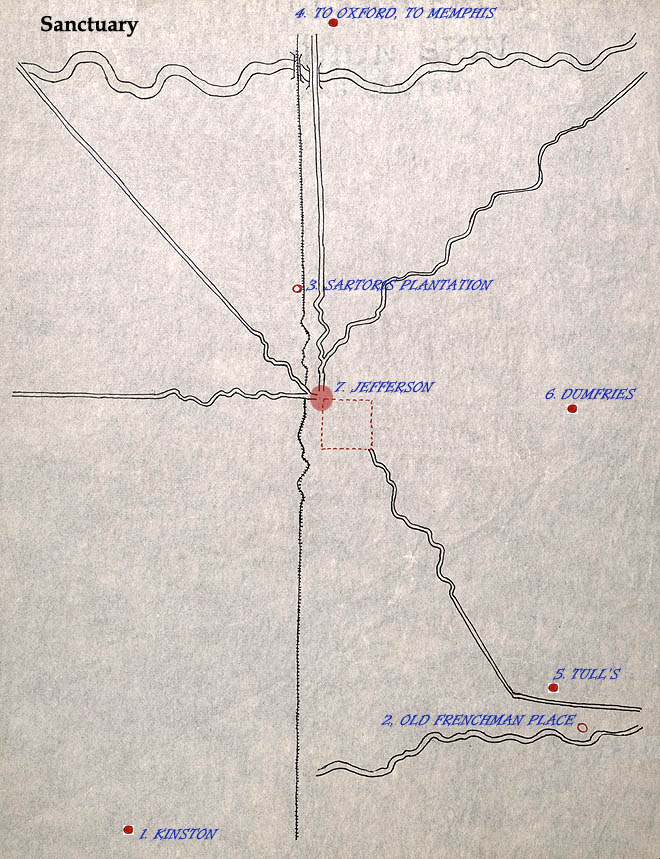
If we wish to see Faulkner’s map this way—a zoom out into an aerial shot at the end of an epic picture—then we’re unlikely to find it of much use as a guide to the plain-faced logistics of his fiction. It’s unclear to me that Faulkner intended it that way, as much as it’s unclear that Ezra Pound and T.S. Eliot’s footnotes to The Waste Land serve any purpose except to distract and confuse readers. But of course readers have been using those footnotes, and Faulkner’s map, as guidelines to their respective texts for decades anyway, noting inconsistencies and finding meaningful correspondences where they can. One interesting example of such a use of Faulkner’s mapmaking comes to us from the site of a comprehensive University of Virginia Faulkner course that covers a bulk of the Yoknapatawpha books. The project, “Mapping Faulkner,” begins with a considerably sparser Yoknapatawpha map, one probably made “late in his life” and which “seems unfinished,” lacking most of the place names and descriptions, and certainly the assertive signature. With overlaid blue lettering, the site does what the Absalom map does not—gives each novel, or 9 of them anyway, its own map, with discrete boundaries between events, characters, and time periods.
If Faulkner wanted us to see the books as manifestations of a singular consciousness, all radiating from a single source of wisdom, this project isolates each novel, and its themes. In the map of Sanctuary, above, only locations from that novel appear. On the page itself, a click on the circular markings under each locale brings up a window with annotations and page references. The apparatus might at first appear to be a useful guide through the notoriously difficult novels, provided Faulkner meant the locations to actually correspond to the text in this way. But what are we to do with this visual information? Lacking any legend, we can’t use the map to judge scale and distance. And by removing all of the other events occurring in the vicinity in the span of around a hundred years or so, the maps denude the novels of their greater context, the purpose to which their “owner & proprietor” devoted them at the end of Absalom, Absalom! Faulkner’s maps, as works of art in their own right, extend “the tragic view of life and history that the Sutpen narrative has already conveyed” in Absalom, Absalom!, writes Hamblin: “Through the handwritten entries that Faulkner made,” in that map, the most complete drawn in the author’s own hand, “the landscape of Yoknapatawpha is presented primarily as a setting for grief, villainy, and death.”
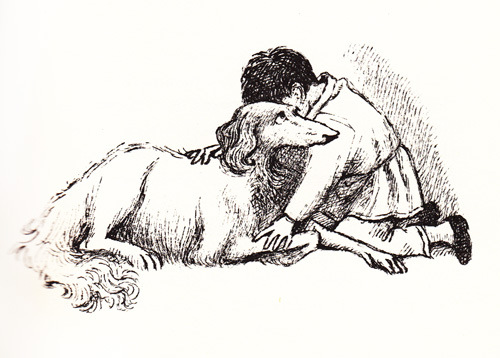
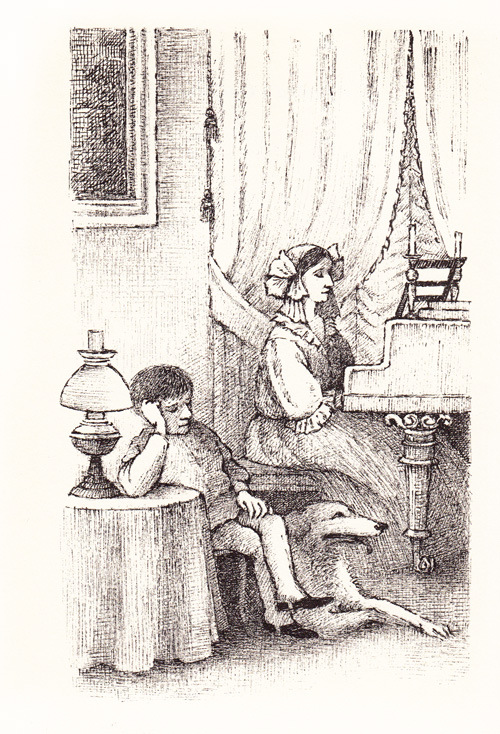
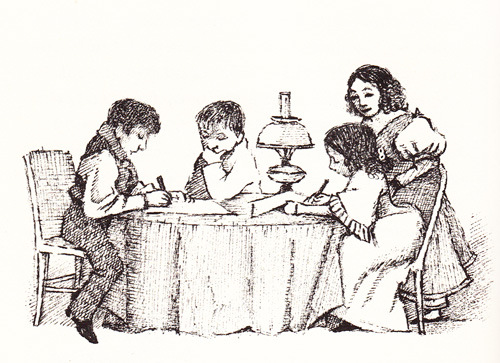
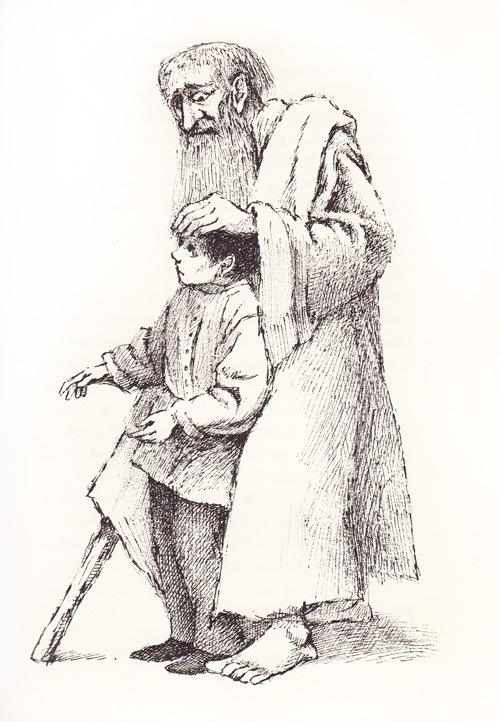
Even those of us who know nothing else of Maurice Sendak’s work know Where the Wild Things Are, almost always because we read and found ourselves captivated by it in our own childhoods — if, of course, our childhoods happened in 1963 or later. Though that year saw the publication of that best-known of Sendak’s many works as an illustrator and writer — and indeed, quite possibly the best-known children’s book of the twentieth century, illustrated or written by anyone — the world got something else intriguing from Sendak at the same time: an illustrated edition of Leo Tolstoy’s 1852 autobiographical novel Nikolenka’s Childhood.
At Brainpickings, Maria Popova writes of the struggle Sendak, then a young and insecure artist at the beginning of his career, endured to complete this lesser-known project: “His youthful insecurity, however, presents a beautiful parallel to the coming-of-age themes Tolstoy explores. The illustrations, presented here from a surviving copy of the 1963 gem, are as tender and soulful as young Sendak’s spirit.” Here we’ve selected a few of the images that Popova gathered from this out-of-print book; to see more, do have a look at her original post.
Later in life Sendak explained his anxiety about accompanying the words of the man who wrote War and Peace: “You can’t illustrate Tolstoy. You’re competing with the greatest illustrator in the world. Pictures bring him down and just limp along.” At Letters of Note, you can read the words of encouragement written to the young Sendak by his editor Ursula Nordstrom, who acknowledged that, “sure, Tolstoy and Melville have a lot of furniture in their books and they also know a lot of facts, but that isn’t the only sort of genius, you know that. Yes, Tolstoy is wonderful (his publisher asked me for a quote) but you can express as much emotion and ‘cohesion and purpose’ in some of your drawings as there is in War and Peace. I mean that.”
From Alain de Botton’ School of Life comes the latest in a series of animated introductions to influential literary figures. Previous installments gave us a look at the life and work of Marcel Proust and Virginia Woolf. This one takes us inside the literary world of Jane Austen. And, as always, de Botton puts an accent on how reading literature can change your life. “Jane Austen’s novels are so readable and so interesting…” notes The School of Life Youtube channel,” because she wasn’t an ordinary kind of novelist: she wanted her work to help us to be better and wiser people. Her novels [available on this list] had a philosophy of personal development at their heart.” The video above expands on that idea. Enjoy.
Creative Commons image by Osama Shukir Muhammed Amin
When one enters the world of The Epic of Gilgamesh, the oldest epic poem we know of, one enters a world lost to time. Though its strange gods and customs would have seemed perfectly natural to its inhabitants, the culture of Gilgamesh has so far receded from historical memory that there’s little left with which we might identify. Scholars believe Gilgamesh the demi-god mythological character may have descended from legends (such as a 126-year reign and superhuman strength) told about a historical 5th king of Uruk. Buried under the fantastic stories lies some documentary impulse. On the other hand, Gilgamesh—like all mythology—exists outside of time. Gilgamesh and Enkidu always kill the Bull of Heaven, again and again forever. That, perhaps, is the secret Gilgamesh discovers at the end of his long journey, the secret of Keats’ Grecian Urn: eternal life resides only in works of art.
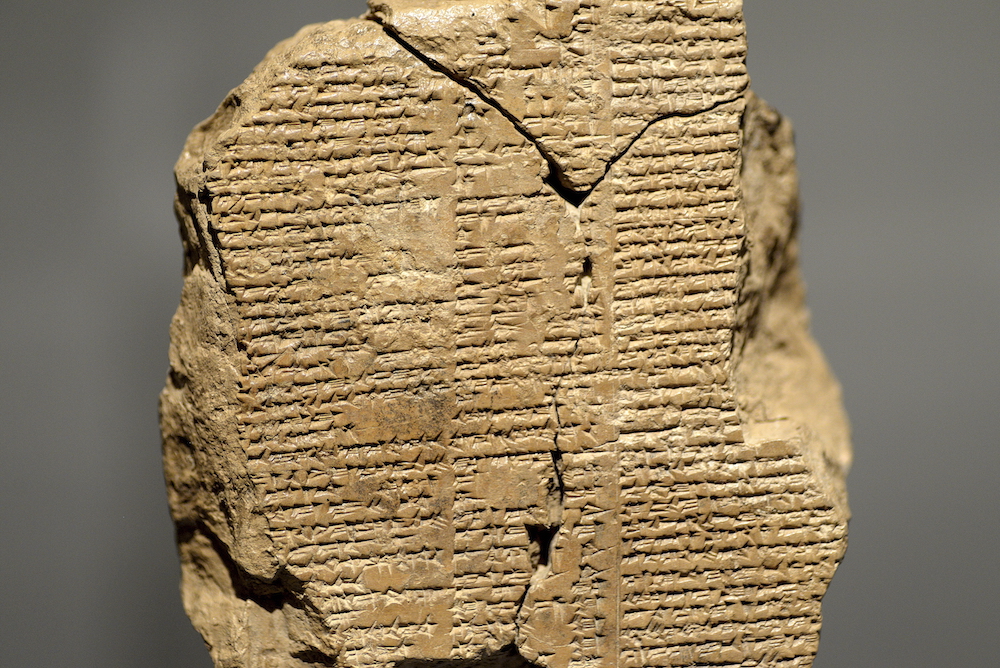
And perhaps the only way to approach some common understanding of myths as both products of their age and as archetypes in realms of pure thought comes through a deep immersion in their historical languages. In the case of Gilgamesh, that means learning the extraordinarily long-lived Akkadian, a Mesopotamian language that dates from about 2,800 BCE to around 100 CE. In order to do so, archeologists and Assyriologists had to decipher fragments of cuneiform stone tablets like those on which Gilgamesh was discovered. The task proved exceptionally difficult, such that when George Smith announced his translation of the epic’s so-called “Flood Tablet” in 1872, it had lain “undisturbed in the [British] Museum for nearly 20 years,” writes The Telegraph, since “there were so few people in the world able to read ancient cuneiform.”
Cuneiform is not a language, but an alphabet. The script’s wedge-shaped letters (cuneus is Latin for wedge) are formed by impressing a cut reed into soft clay. It was used by speakers of several Near Eastern languages including Sumerian, Akkadian, Urartian and Hittite; depending on the language and date of a given script, its alphabet could consist of many hundreds of letters. If this weren’t challenging enough, cuneiform employs no punctuation (no sentences or paragraphs), it does not separate words, there aren’t any vowels and most tablets are fragmented and eroded.
Nonetheless, Smith, an entirely self-educated scholar, broke the code, and when he discovered the fragment containing a flood narrative that predated the Biblical account by at least 1,000 years, he reportedly “became so animated that, mute with excitement, he began to tear his clothes off.” That story may also be legend, but it is one that captures the passionately obsessive character of George Smith. Thanks to his efforts, those of many other 19th century academics, treasure hunters, and tomb raiders, and modern scholars toiling away at the University of London, we can now hear Gilgamesh read not only in Old Akkadian (the original language), but also later Babylonian dialects, the languages used to record the Code of Hammurabiand a later, more fragmented version of the Gilgamesh epic.
The University of London’s Department of the Languages and Cultures of the Ancient Near East hosts on its website several readings in different scholars’ voices of Gilgamesh, The Epic of Anzu, the Codex Hammurabi and other Babylonian texts. Above, you can hear Karl Hecker read the first 163 lines of Tablet XI of the Standard Akkadian Gilgamesh. These lines tell the story of Utnapishtim, the mythical and literary precursor to the Biblical Noah. So important was the discovery of this flood story that it “challenged literary and biblical scholarship and would help to redefine beliefs about the age of the Earth,” writes The Telegraph. When George Smith made his announcement in 1872, “even the Prime Minister, William Gladstone, was in attendance.” Unfortunately, things did not end well for Smith, but because of his efforts, we can come as close as possible to the sound of Gilgamesh’s world, one that may remind us of a great many modern languages, but that uniquely preserves ancient history and ageless myth.
The University of London site also includes translations and transliterations of the cuneiform writing, from Professor Andrew George’s 2003 The Babylonian Gilgamesh Epic: Introduction, Critical Edition and Cuneiform Texts. Furthermore, there are answers to Frequently Asked Questions, many of which you may yourself be asking, such as “What are Babylonian and Assyrian?”; “Given they are dead, how can one tell how Babylonian and Assyrian were pronounced?”; “Did Babylonian and Assyrian poetry have rhyme and metre, like English poetry?”; and—for those with a desire to enter further into the ancient world of Gilgamesh and other Akkadian, Babylonian, and Assyrian semi-mythical figures—“What if I actually want to learn Babylonian and Assyrian?”
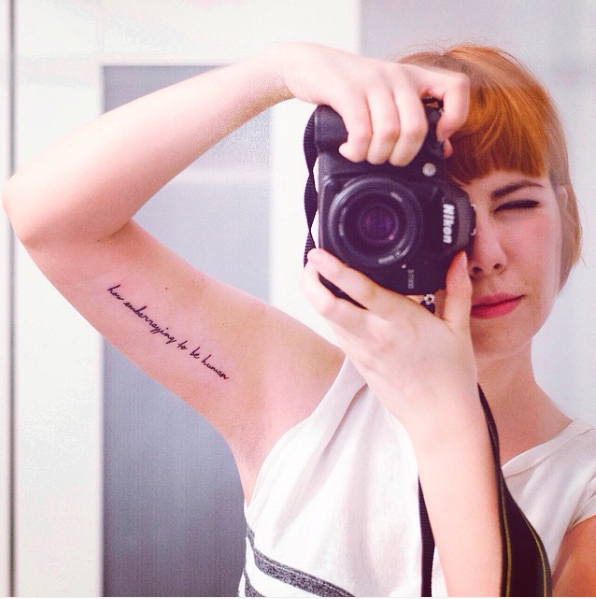
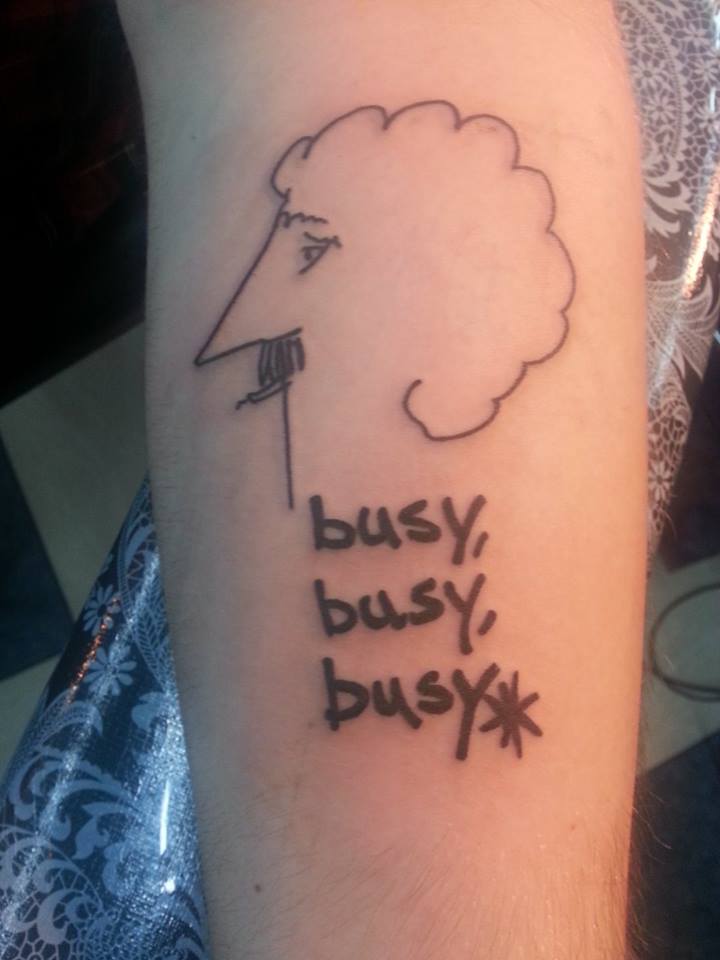
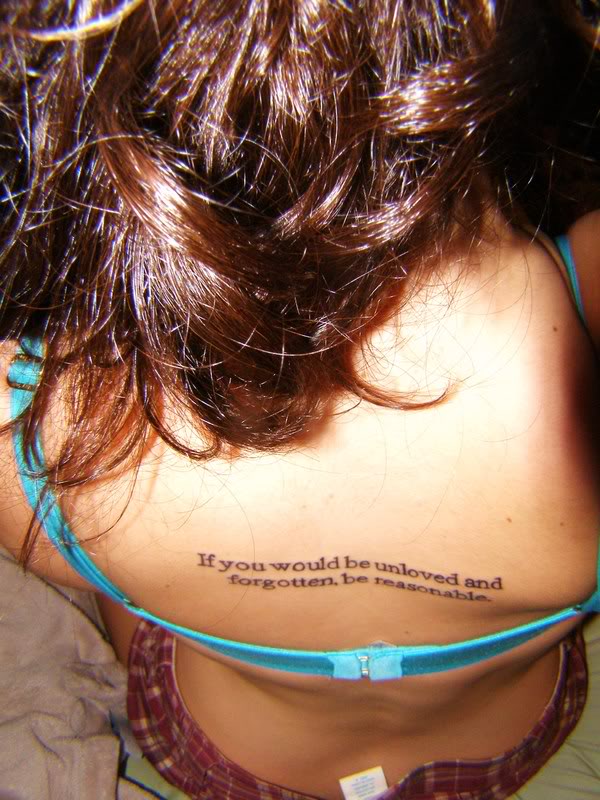
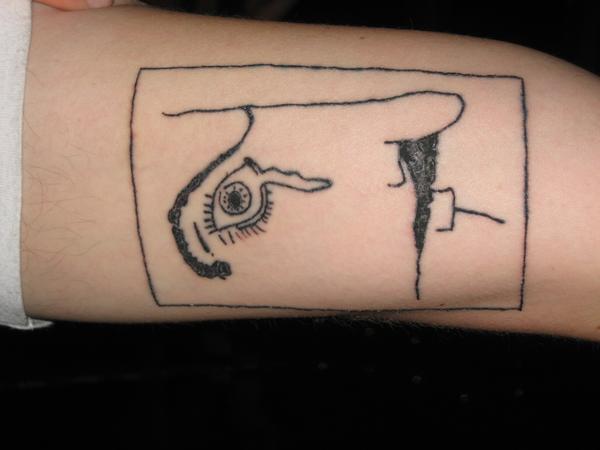
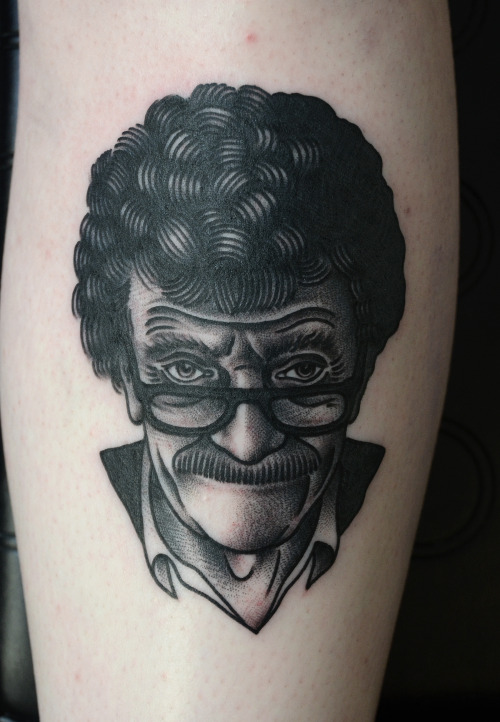
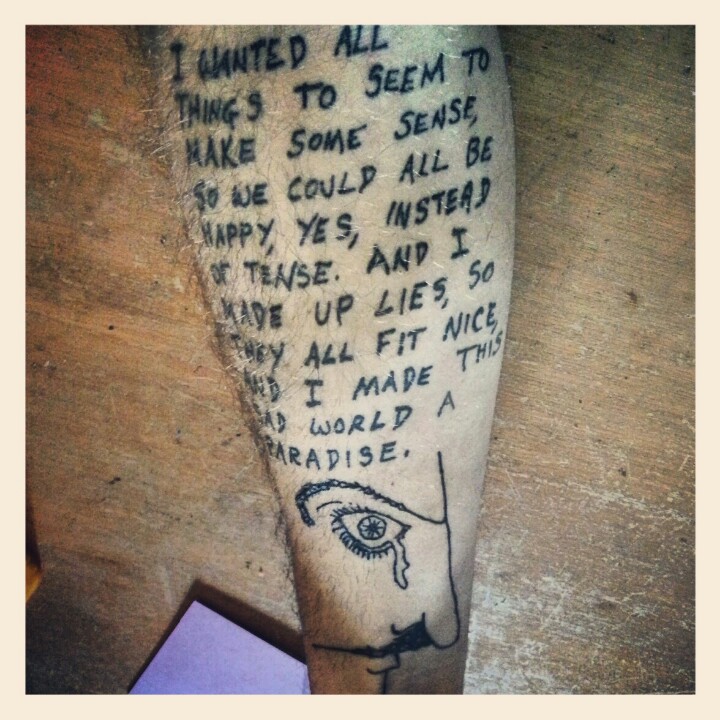
It’s not surprising. Vonnegut’s humor and concision make him one of the most quotable authors of all time, perfectly suited to the task.
Repetition is the price Vonnegut tattoo enthusiasts must pay for such enduring popularity.
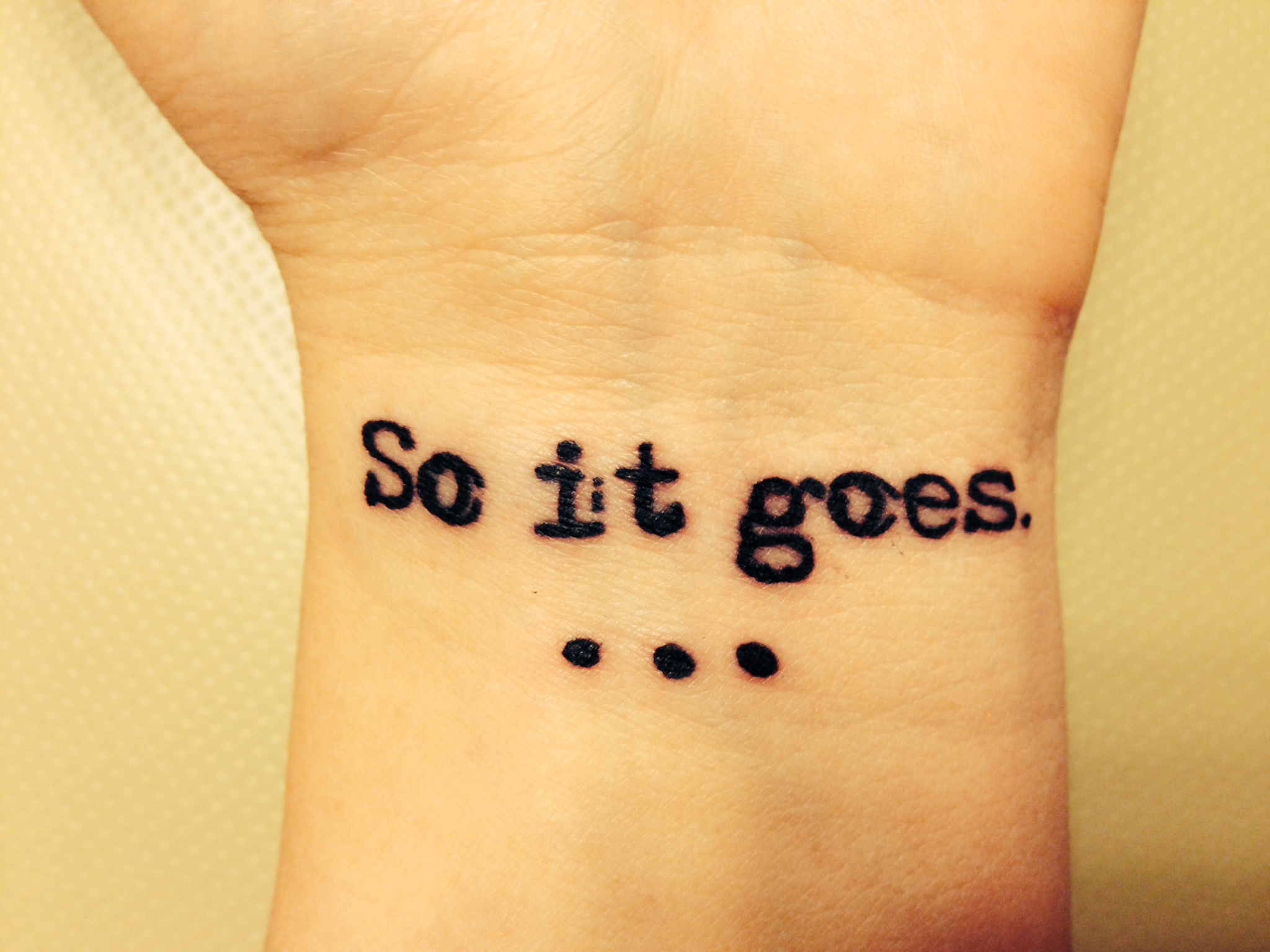
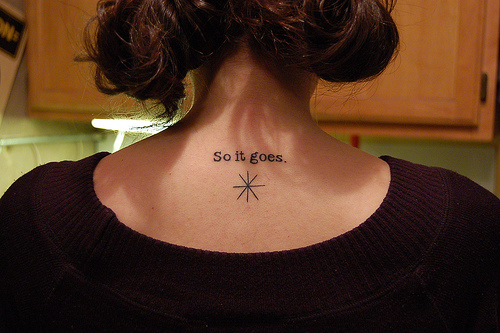
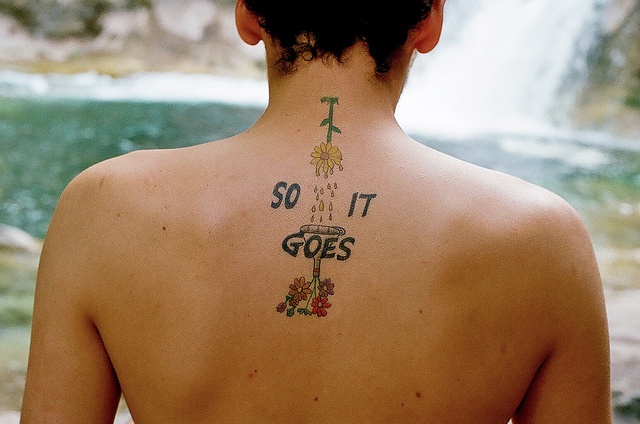
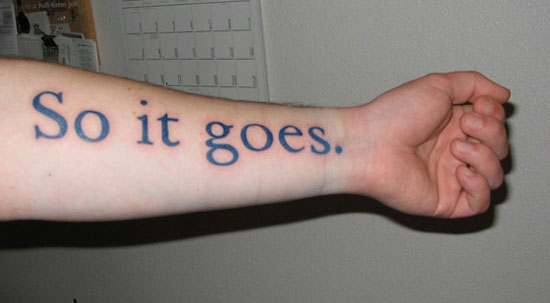
The phrase “so it goes” occurs 106 times in Slaughterhouse-Five, a figure dwarfed many times over by the number of hides upon which it is permanently inked. Recurrence is so frequent that the literary tattoo blog, Contrariwise, recently hosted a round of So It Goes Saturdays. So it goes.
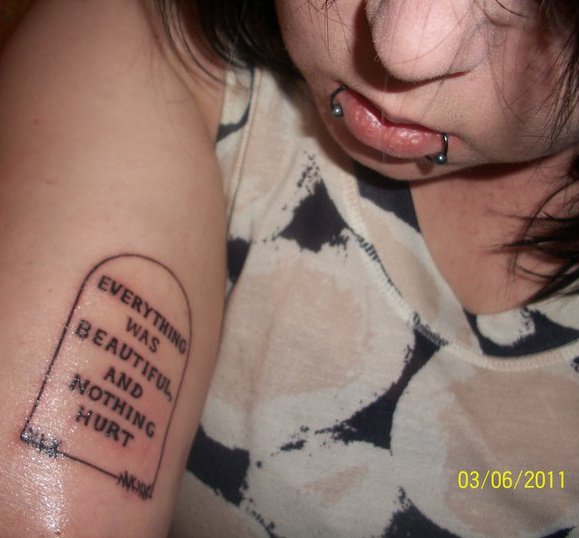
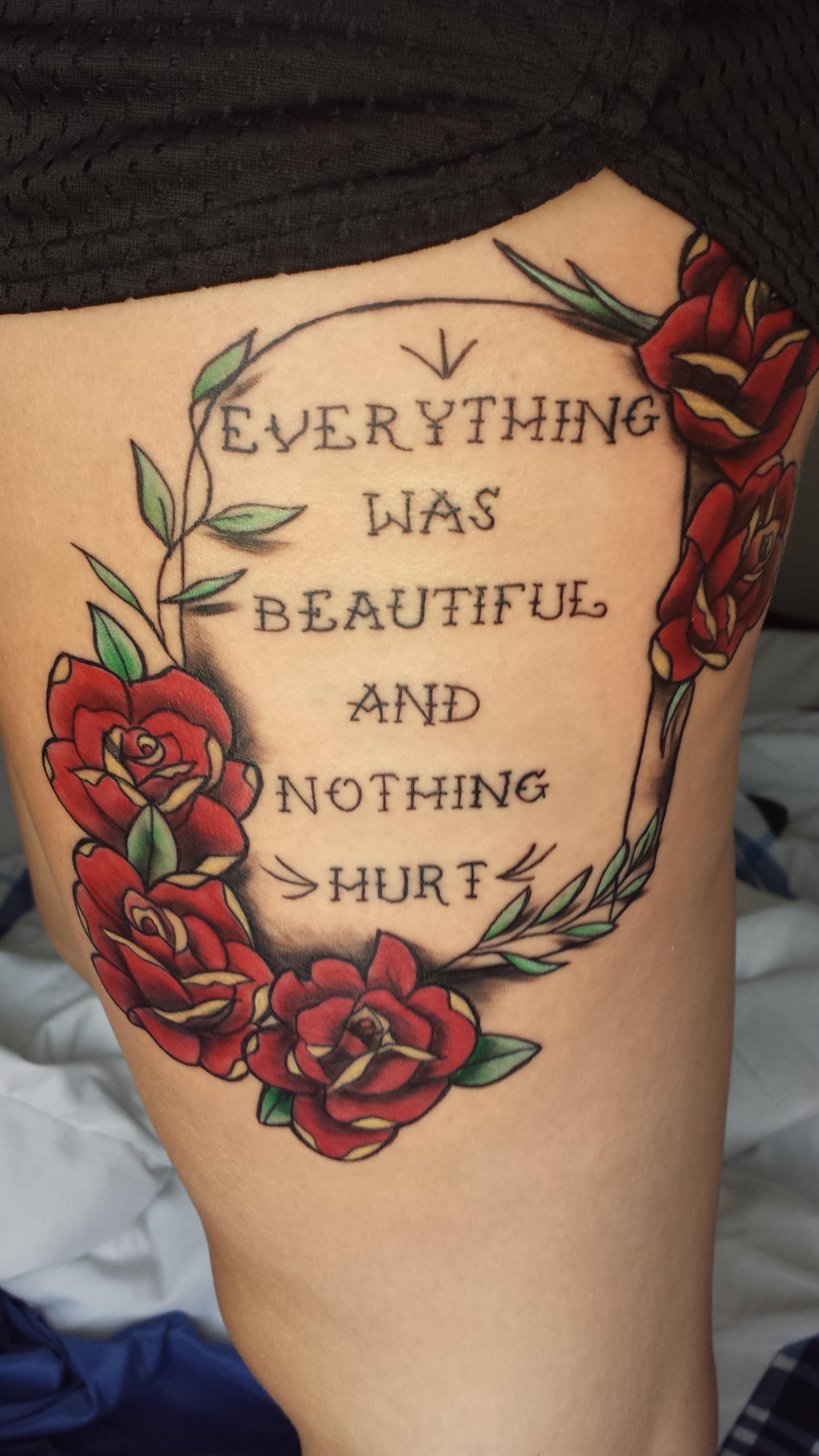
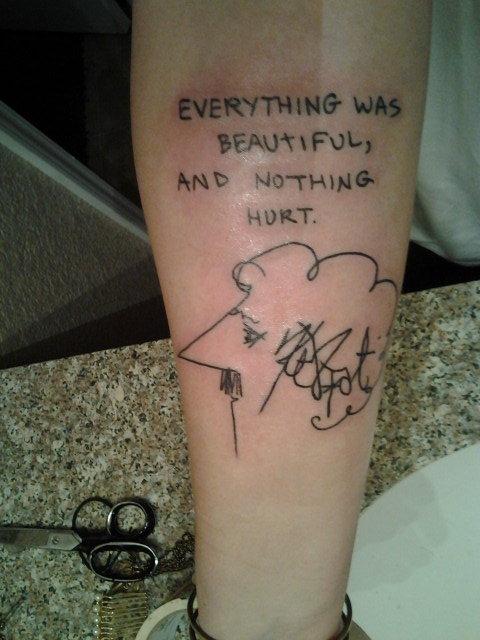
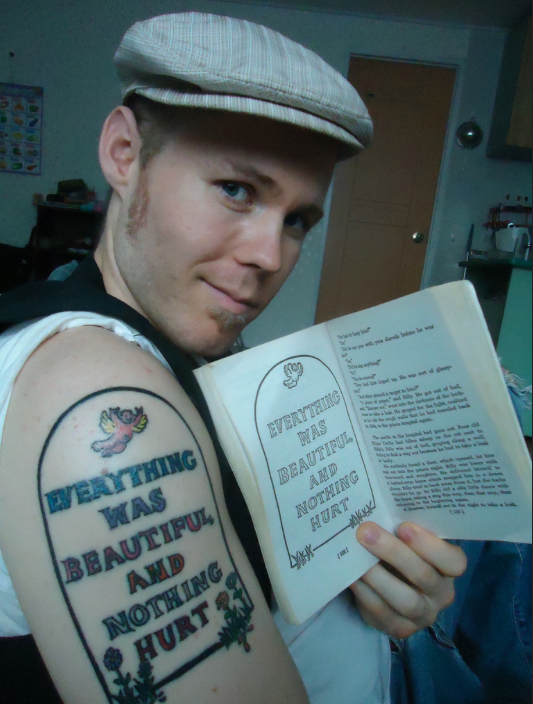
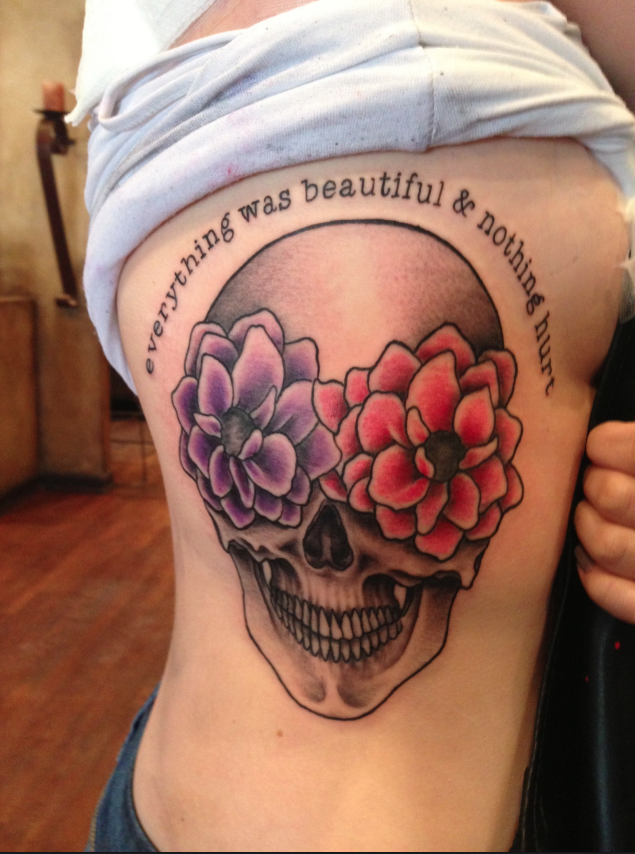
The second runner up, also from Slaughterhouse-Five, is the painfully ironic “Everything was Beautiful and Nothing Hurt.”
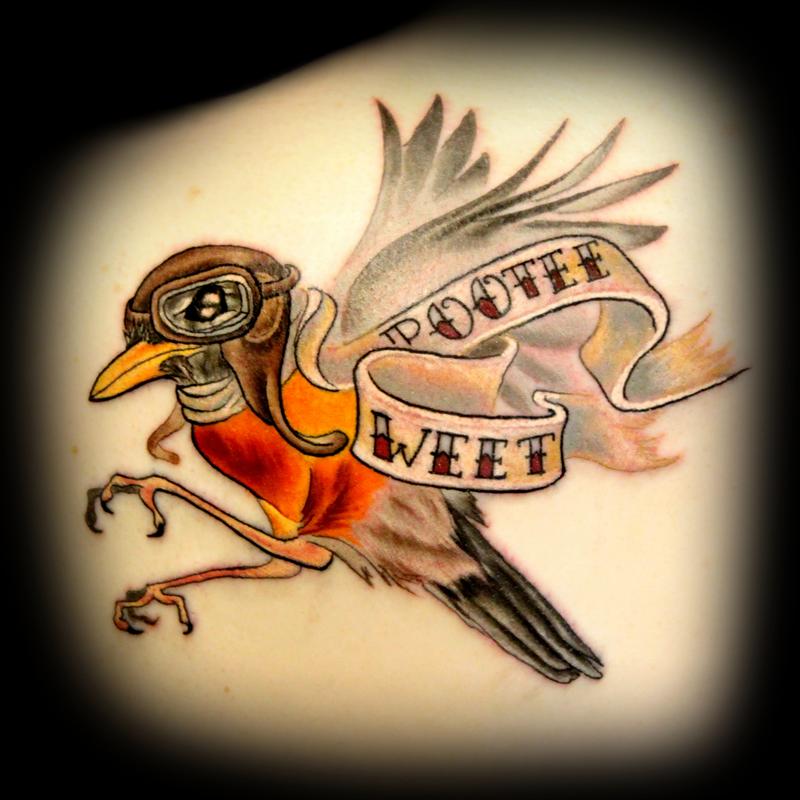
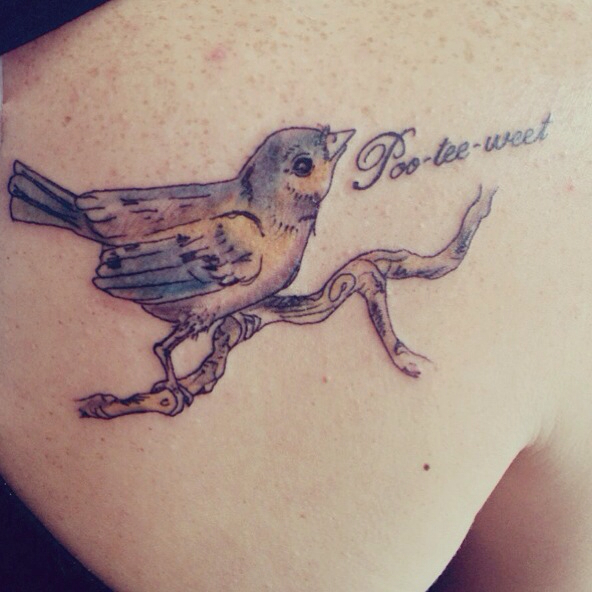
Those who’d rather put a bird on it than present an accessible sentiment to the uninitiated can opt for “poo-tee-weet,” the catchphrase of a bird who’s a witness to war. Certain to confound the folks staring at your triceps in the grocery line.
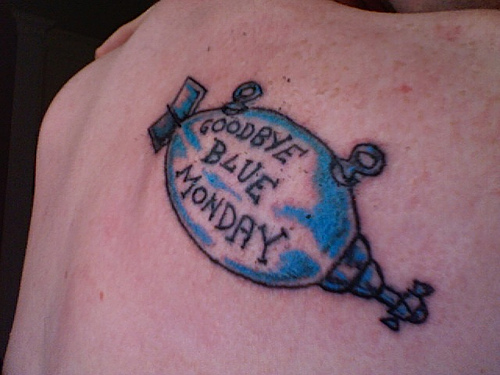
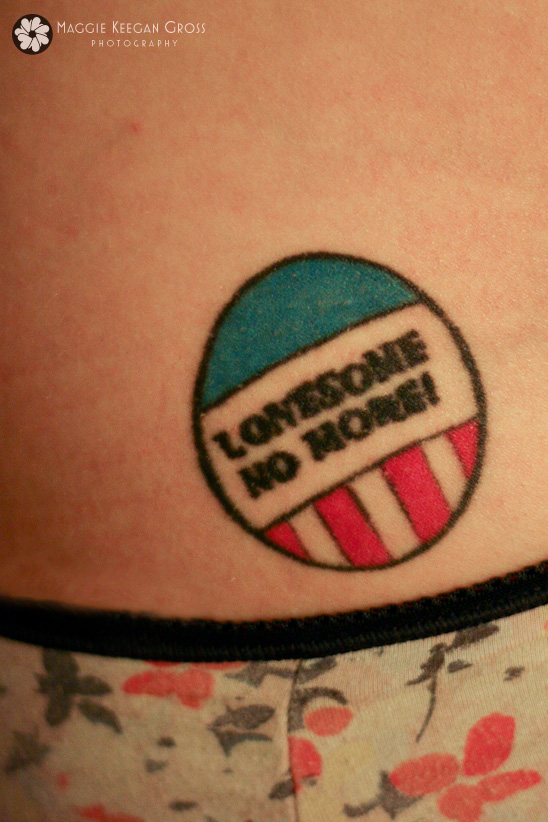
Slaughterhouse Five is not Vonnegut’s only tattoo-friendly novel, of course.
Ayun Halliday is an author, illustrator, and Chief Primatologist of the East Village Inky zine. Her play, Fawnbook, opens in New York City later this month. Follow her @AyunHalliday
We're hoping to rely on loyal readers, rather than erratic ads. Please click the Donate button and support Open Culture. You can use Paypal, Venmo, Patreon, even Crypto! We thank you!
Open Culture scours the web for the best educational media. We find the free courses and audio books you need, the language lessons & educational videos you want, and plenty of enlightenment in between.