The History of Cartography, the “Most Ambitious Overview of Map Making Ever,” Now Free Online

history of cartography2

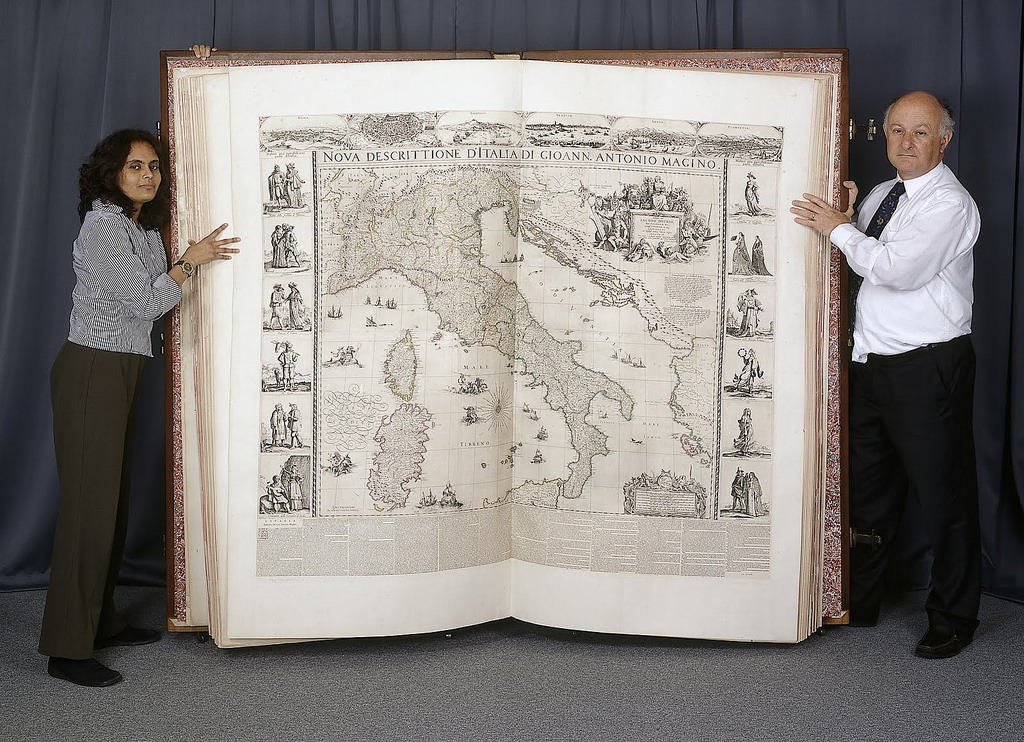
Worth a quick men­tion: The Uni­ver­si­ty of Chica­go Press has made avail­able online — at no cost — the first three vol­umes of The His­to­ry of Car­tog­ra­phy. Or what Edward Roth­stein, of The New York Times, called “the most ambi­tious overview of map mak­ing ever under­tak­en.” He con­tin­ues:

Peo­ple come to know the world the way they come to map it—through their per­cep­tions of how its ele­ments are con­nect­ed and of how they should move among them. This is pre­cise­ly what the series is attempt­ing by sit­u­at­ing the map at the heart of cul­tur­al life and reveal­ing its rela­tion­ship to soci­ety, sci­ence, and reli­gion…. It is try­ing to define a new set of rela­tion­ships between maps and the phys­i­cal world that involve more than geo­met­ric cor­re­spon­dence. It is in essence a new map of human attempts to chart the world.

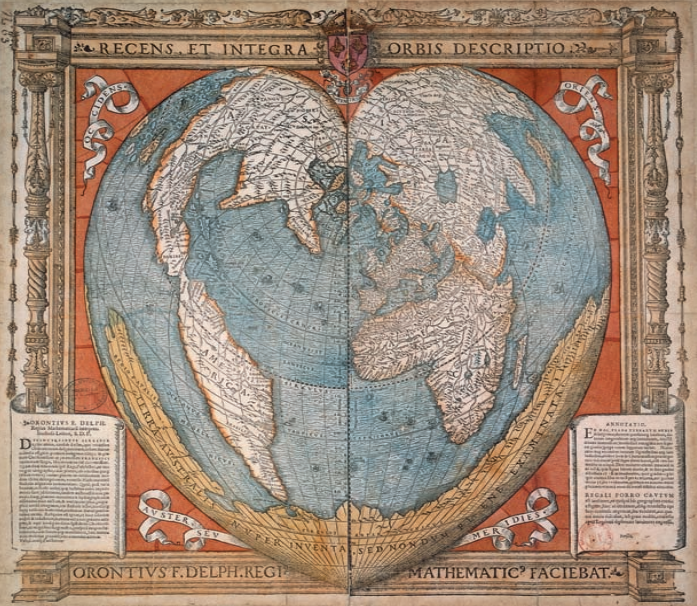
If you head over to this page, then look in the upper left, you will see links to three vol­umes (avail­able in a free PDF for­mat). My sug­ges­tion would be to look at the gallery of col­or illus­tra­tions for each book, links to which you’ll find below. The image above, appear­ing in Vol. 2, dates back to 1534. It was cre­at­ed by Oronce Fine, the first chair of math­e­mat­ics in the Col­lège Roy­al (aka the Col­lège de France), and it fea­tures the world mapped in the shape of a heart. Pret­ty great.

Vol­ume 1

Gallery of Col­or Illus­tra­tions

Vol­ume 2: Part 1

Gallery of Col­or Illus­tra­tions (Plates 1–24)
Gallery of Col­or Illus­tra­tions (Plates 25–40)

Vol­ume 2: Part 2

Gallery of Col­or Illus­tra­tions (Plates 1–16)
Gallery of Col­or Illus­tra­tions (Plates 17–40)

Vol­ume 2: Part 3

Gallery of Col­or Illus­tra­tions (Plates 1–8)
Gallery of Col­or Illus­tra­tions (Plates 9 –24)

Vol­ume 3: Part 1

Gallery of Col­or Illus­tra­tions (Plates 1–24)
Gallery of Col­or Illus­tra­tions (Plates 25–40)

Vol­ume 3: Part 2

Gallery of Col­or Illus­tra­tions (Plates 41–56)
Gallery of Col­or Illus­tra­tions (Plates 57–80)

Note: If you buy Vol 1. on Ama­zon, it will run you $248. As beau­ti­ful as the book prob­a­bly is, you’ll prob­a­bly appre­ci­ate this free dig­i­tal offer­ing. The series will be added to our col­lec­tion, 800 Free eBooks for iPad, Kin­dle & Oth­er Devices.

Relat­ed Con­tent:

A Won­der­ful Sci­en­tif­ic Map of the Moon from 1679: Can You Spot the Secret Moon Maid­en?

Galileo’s Moon Draw­ings, the First Real­is­tic Depic­tions of the Moon in His­to­ry (1609–1610)

New York Pub­lic Library Puts 20,000 Hi-Res Maps Online & Makes Them Free to Down­load and Use

by | Permalink | Make a Comment ( 4 ) |

The First Scientific Map of the Moon (1679)

moon-lg (1)

Mil­lions watched as astro­naut Neil Arm­strong put boots to the moon in 1969.

It was, as he famous­ly remarked, one “giant leap for mankind,” but from a sci­en­tif­ic stand­point the ter­ri­to­ry was far from vir­gin.

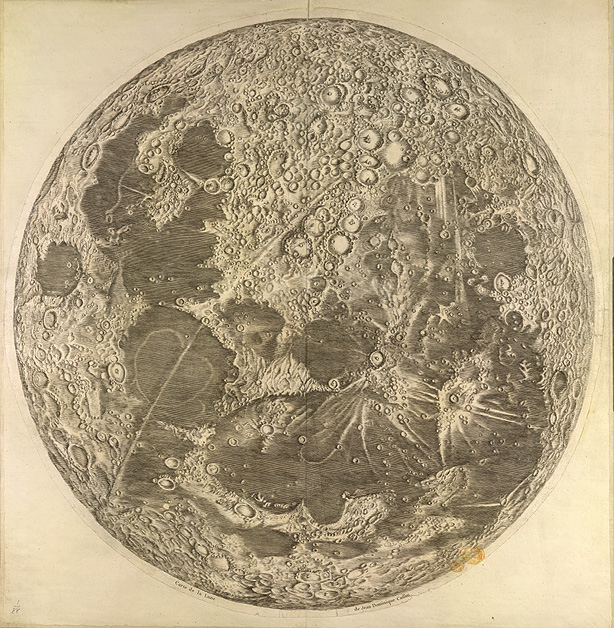
Near­ly 300 years ear­li­er, engi­neer Gio­van­ni Domeni­co Cassi­ni, astronomer to Sun King Louis XIV, made lunar his­to­ry in 1679, when he pub­lished the first sci­en­tif­ic map of the moon, above.

Need­less to say, the event was not tele­vised and Cassi­ni nev­er had the oppor­tu­ni­ty to walk on the sur­face he stud­ied. Instead he observed it through the eye­piece of a tele­scope, a rel­a­tive­ly new inven­tion.

His pre­de­ces­sors, includ­ing Galileo, used the then-rev­o­lu­tion­ary tool to delve deep­er into their own lunar obses­sions, mak­ing sketch­es and per­form­ing exper­i­ments designed to repli­cate the craters they noticed in the moon’s crust.

Cassi­ni, then eight years into his forty year career as Direc­tor of the Paris Obser­va­to­ry, pro­duced a map so exhaus­tive, it pro­vid­ed his peers with far more details of the moon’s sur­face than they had with regard to their own plan­et.

He also used his pow­ers of obser­va­tion to expand human under­stand­ing of Mars, Sat­urn, and France itself (which turned out to be much small­er than pre­vi­ous­ly believed).

moon maiden


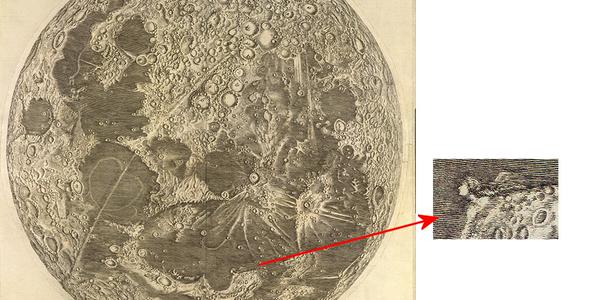
A man of sci­ence, he may not have been entire­ly immune to the sort of moon-based whim­sy that has long infect­ed poets, song­writ­ers, and 19th-cen­tu­ry roman­tic hero­ines. Hid­ing in the low­er right quad­rant, near Cape Her­a­clides on the Sinus Iridum (aka Bay of Rain­bows), is a tiny, bare-shoul­dered moon maid. See right above.

Or per­haps this appeal­ing­ly play­ful vision can be attrib­uted to Cassini’s engraver Claude Mel­lan.

Either way, she seems exact­ly the sort of female life form a 17th-cen­tu­ry human male might hope to encounter on a trip to the moon.

via Pick­over Real­i­ty Car­ni­val

Relat­ed Con­tent:

Free Online Astron­o­my Cours­es

Galileo’s Moon Draw­ings, the First Real­is­tic Depic­tions of the Moon in His­to­ry (1609–1610)

The Birth of the Moon: How Did It Get There in the First Place?

Michio Kaku Schools Takes on Moon Land­ing-Con­spir­a­cy Believ­er on His Sci­ence Fan­tas­tic Pod­cast

Ayun Hal­l­i­day is an author, illus­tra­tor, and Chief Pri­ma­tol­o­gist of the East Vil­lage Inky zine. Fol­low her @AyunHalliday

12 Classic Literary Road Trips in One Handy Interactive Map

on the road mapped

Fan­ta­sy fic­tion invari­ably includes a map for read­ers to under­stand the hero’s jour­ney, lit­er­al­ly. We know that Hob­bits had to walk a long way into Mor­dor, but see­ing it car­to­graph­i­cal­ly real­ly hits home. But what of the great road trip nov­els, where the coun­try is Amer­i­ca, the jour­ney is long and often cir­cu­lar, and self-actu­al­iza­tion awaits the hero, and not an army of orcs?

Atlas Obscu­ra, Joshua Foer and Dylan Thuras’ blog of dis­cov­ery and adven­ture in the mod­ern world, have come to the res­cue with an inter­ac­tive map that plots out the trav­els of road trip-filled books, some non-fic­tion, oth­ers fic­tion­al­ized real­i­ty. Where a loca­tion is men­tioned in a text, it has been pinned to the map, and by click­ing on the pin, the rel­e­vant text is revealed. Clever stuff.

For exam­ple, the map for Jack Kerouac’s On the Road (see snap­shot above) plots out the five trips con­tained in the nov­el, and one can see the main hubs of the sto­ry: NYC and San Fran­cis­co, of course, but also Den­ver and the crazed detour town to Mex­i­co City, where Sal, Dean, and Stan Shep­hard par­ty hard in a bor­del­lo and Sal winds up with dysen­tery for his trou­bles.

zen road trip
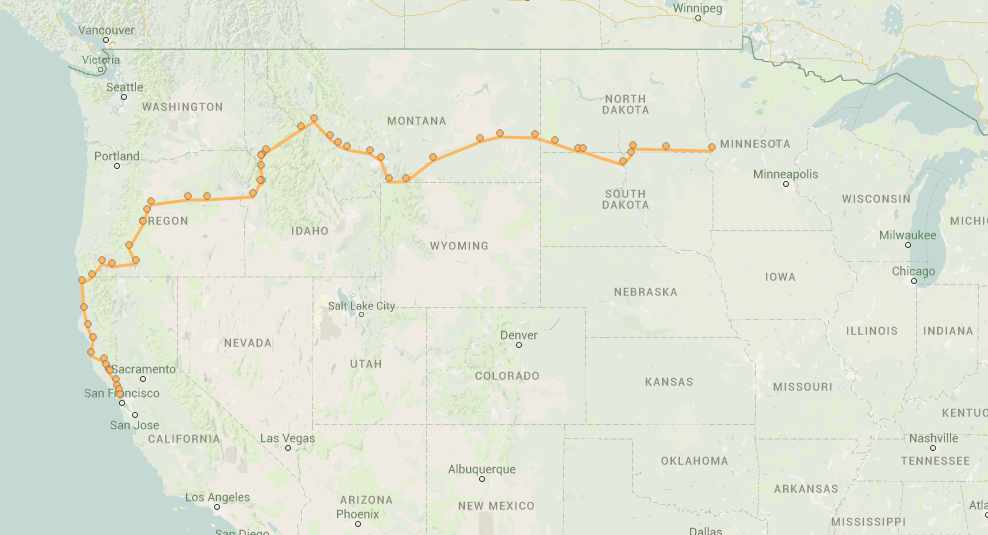
For some­thing more straight­for­ward, check out the North­west trav­els at the heart of Robert M. Pirsig’s Zen and the Art of Motor­cy­cle Main­te­nance. Writ­ten in the first per­son, the novel’s nar­ra­tor trav­els by motor­cy­cle with his son from Min­neso­ta to North­ern Cal­i­for­nia, end­ing up in San Fran­cis­co, tak­ing 17 days. The philo­soph­i­cal jour­ney, how­ev­er, cov­ers wider ter­rain.

koolaid road trip
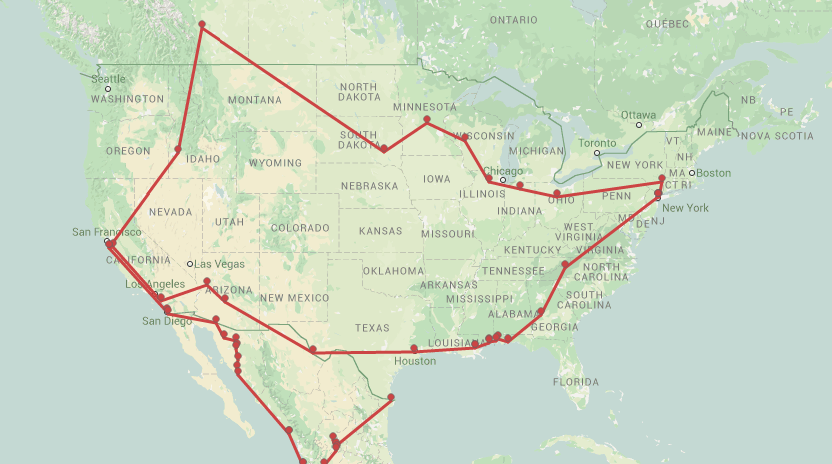
Anoth­er Bay Area tale, Tom Wolfe’s account of Ken Kesey and the Mer­ry Pranksters in The Elec­tric Kool-Aid Acid Test starts in La Hon­da, Cal­i­for­nia, a moun­tain get­away to the west of San Jose, and, as one can see, com­pletes a cir­cle of the States, includ­ing trips to both Cal­gary, Cana­da and Man­zanil­lo, Mex­i­co, where every­body is “uptight,” man, head­ing north­east to both Gua­na­ju­a­to and Aguas­calientes, where Acid Tests are admin­is­tered.

There’s more at the link, includ­ing maps for Wild, A Walk Across Amer­i­ca, and Trav­els with Charley. It might inspire a repeat read­ing of a favorite book. Or it might inspire you to just light out for the ter­ri­to­ries.

Relat­ed Con­tent:

The Acid Test Reels: Ken Kesey & The Grate­ful Dead’s Sound­track for the 1960s Famous LSD Par­ties

Jack Ker­ouac Reads from On the Road (1959)

The Books You Think Every Intel­li­gent Per­son Should Read: Crime and Pun­ish­ment, Moby-Dick & Beyond (Many Free Online)

Ted Mills is a free­lance writer on the arts who cur­rent­ly hosts the FunkZone Pod­cast. You can also fol­low him on Twit­ter at @tedmills, read his oth­er arts writ­ing at tedmills.com and/or watch his films here.

A 1932 Illustrated Map of Harlem’s Night Clubs: From the Cotton Club to the Savoy Ballroom

32 Harlem Map

Harlem’s under­go­ing anoth­er Renais­sance of late. Crime’s down, real estate prices are up, and throngs of pale-faced hip­sters are descend­ing to check the area out.

Sure, something’s gained, but some­thing’s lost, too.

For today’s hol­i­day in Harlem, we’re going to climb in the Way­back Machine. Set the dial for 1932. Don’t for­get your map. (Click the image above to view a larg­er ver­sion.)

This deliri­ous arti­fact comes cour­tesy of Elmer Simms Camp­bell (1906–1971), an artist whose race proved an imped­i­ment to career advance­ment in his native Mid­west. Not long after relo­cat­ing to New York City, he had the good for­tune to be befriend­ed by the great Cab Cal­loway, star of the Cot­ton Club. Hi-de-hi-de-hi-de-ho! Check the low­er left cor­ner of your map.

You may notice that the com­pass rose devi­ates rather dras­ti­cal­ly from estab­lished norms. As you’ve no doubt heard, the Bronx is up, and the Battery’s down, but not in this case. Were you to choose those trees in the upper left cor­ner as your start­ing point, you’d be at the top of Cen­tral Park, basi­cal­ly equidis­tant from the east and west sides. (Take the 2 or the 3 to 110th St…)

But keep in mind that this map is not drawn to scale. I know it looks like the joints are jump­ing from the sec­ond you step off the curb, but in real­i­ty, you’ll need to hoof it 21 blocks from the top of Cen­tral Park to 131st street for things to start cookin’. Hope­ful­ly, this geo­graph­i­cal lib­er­ty won’t get you too hot under the col­lar. And if it does, well, it may be Pro­hi­bi­tion, but stress-reliev­ing bev­er­ages await you in every loca­tion list­ed, as well as in some 500 speakeasies Camp­bell allowed to remain on the down low.

If that does­n’t do it for you, there’s a guy sell­ing reefer across the street from Earl “Snake­hips” Tuck­er.

As you stag­ger back and forth between Sev­enth Avenue to Lenox (now referred to as Adam Clay­ton Pow­ell Jr. Boule­vard and Mal­colm X), bear in mind that Camp­bell was the first African-Amer­i­can car­toon­ist to be nation­al­ly pub­lished in the New York­er, Play­boy, and Esquire, whose bug-eyed, now retired mas­cot, Esky, was a Camp­bell cre­ation.

In the end, he was an extreme­ly suc­cess­ful illus­tra­tor, though few of his cre­ations are reflec­tive of his race.

The map above, which did dou­ble duty as end­pa­pers for Calloway’s auto­bi­og­ra­phy, Of Min­nie the Moocher and Me, is far clos­er to home.

Right above, see Cab Cal­loway per­form “Hotcha Razz Ma Tazz” at the famous Cot­ton Club, in Harlem, 1935.

via Big Think

Relat­ed Con­tent:

Watch Langston Hugh­es Read Poet­ry from His First Col­lec­tion, The Weary Blues (1958)

Duke Ellington’s Sym­pho­ny in Black, Star­ring a 19-Year-old Bil­lie Hol­i­day

Rare Record­ing of Con­tro­ver­sial­ist, Jour­nal­ist and Amer­i­can Lit­er­ary & Social Crit­ic, H.L. Menck­en

Ayun Hal­l­i­day is an author, Hoos-York­er, home­school­er, and Chief Pri­ma­tol­o­gist of the East Vil­lage Inky zine. Fol­low her @AyunHalliday

Map Showing Where Today’s Countries Would Be Located on Pangea

Pangaea

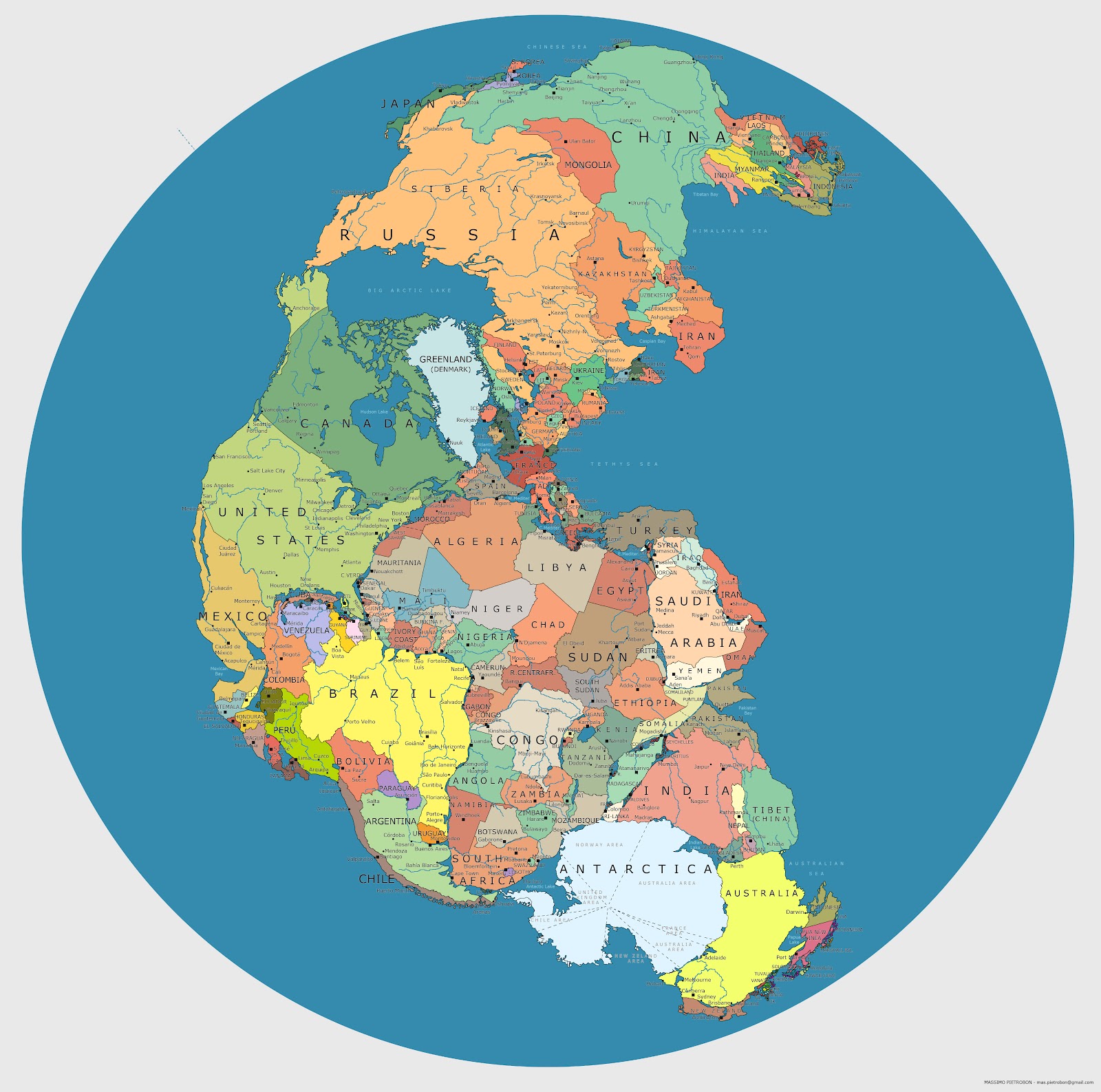
The super­con­ti­nent of Pangea formed some 270 mil­lion years ago, dur­ing the Ear­ly Per­mi­an Peri­od, and then began to break up 70 mil­lion years lat­er, even­tu­al­ly yield­ing the con­ti­nents we inhab­it today. Pangea was, of course, a peo­ple­less place. But if you were to drop today’s nations on that great land mass, here’s what it might look like. (Click on the image to view it in a much larg­er, high res­o­lu­tion for­mat.) The map’s cre­ator is Mas­si­mo Pietrobon, some­one who play­ful­ly describes him­self as “a famous explor­er and car­tog­ra­ph­er of Atlantis,” and who has tak­en on oth­er exper­i­ments with maps in the past. When some­one claimed that the scale of cer­tain coun­tries was­n’t exact­ly right, Mas­si­mo was quick to con­fess on his blog, “Yes, it’s just a tri­al, it can be bet­ter.” But it’s a cre­ative start.

If you would like to sign up for Open Culture’s free email newslet­ter, please find it here. It’s a great way to see our new posts, all bun­dled in one email, each day.

If you would like to sup­port the mis­sion of Open Cul­ture, con­sid­er mak­ing a dona­tion to our site. It’s hard to rely 100% on ads, and your con­tri­bu­tions will help us con­tin­ue pro­vid­ing the best free cul­tur­al and edu­ca­tion­al mate­ri­als to learn­ers every­where. You can con­tribute through Pay­Pal, Patre­on, and Ven­mo (@openculture). Thanks!

via Pick­over’s Real­i­ty Car­ni­val

Relat­ed Con­tent:

An Inter­ac­tive Map of Odysseus’ 10-Year Jour­ney in Homer’s Odyssey

Play Cae­sar: Trav­el Ancient Rome with Stanford’s Inter­ac­tive Map

Down­load 78 Free Online His­to­ry Cours­es: From Ancient Greece to The Mod­ern World

by | Permalink | Make a Comment ( 17 ) |

The Art of Mapping Music: Mike Hamad’s 200 Schematics of Songs by Phish, Pink Floyd & The Dead

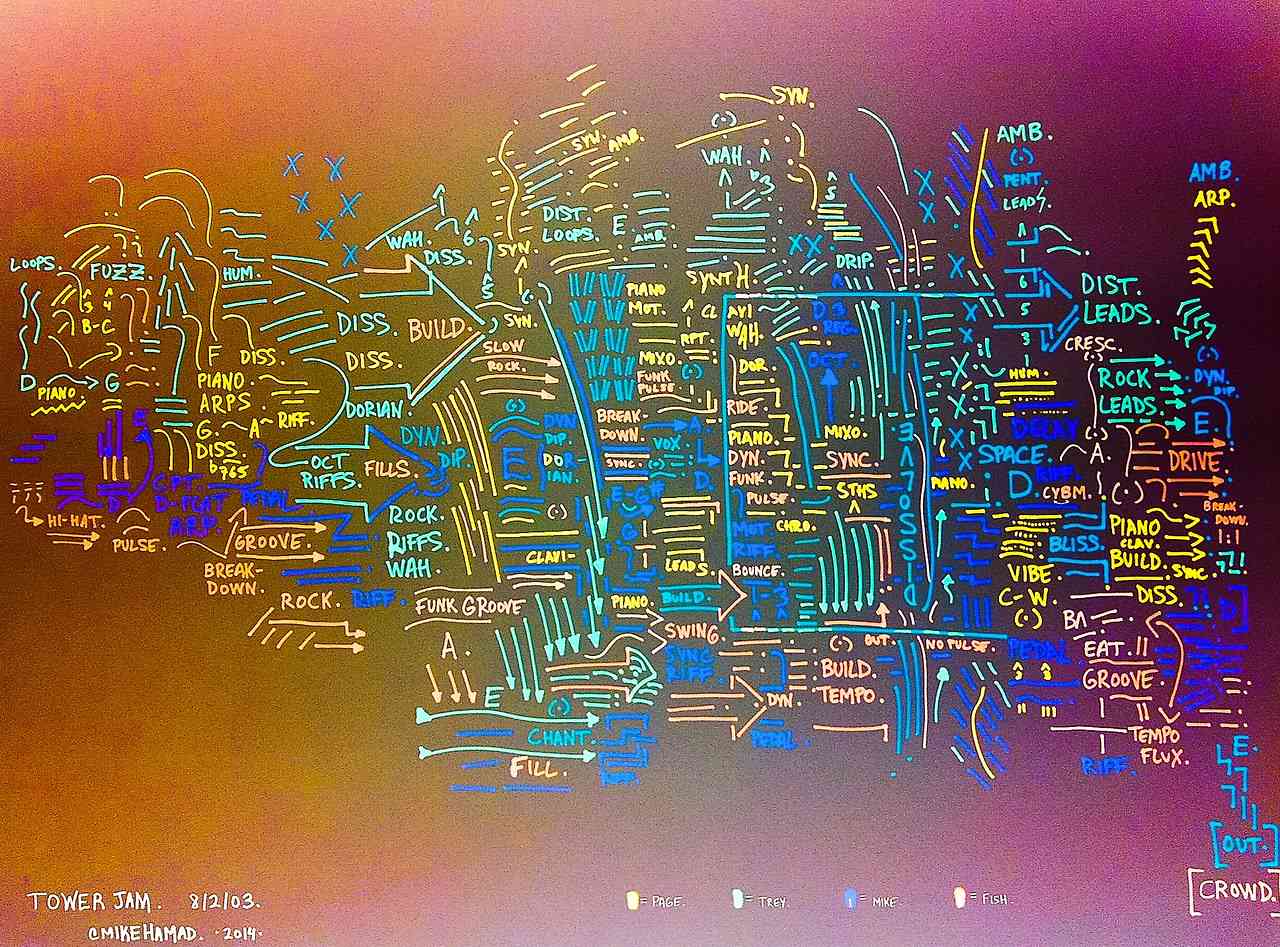
Mike Hamad, a music writer for The Hart­ford Courant, has a deep and abid­ing love for Phish. He also has a tal­ent for draw­ing “schemat­ics” or maps that turn the expe­ri­ence of lis­ten­ing to music into some­thing visu­al. Over at his tum­blr SetlistSchemat­ics, you can find near­ly 200 schemat­ics of songs (usu­al­ly per­formed live) by The Grate­ful Dead, The Dave Matthews Band, Pink Floyd, and most­ly Phish. Accord­ing to a short pro­file in The New York Times, Hamad “has a master’s degree in music the­o­ry and a Ph.D. in musi­col­o­gy” — his dis­ser­ta­tion focused on the tonal rela­tion­ships in Franz Liszt’s songs — and, some­where along the way, he devel­oped a ten­den­cy to trans­late music into schemat­ics, a flur­ry of “arrows, descrip­tive notes, roman numer­als and wavy lines.”

phish map 3

If you’re inter­est­ed in giv­ing Hamad’s method a try, we sug­gest lin­ing up some col­or­ful pens and  big sheets of paper, and then tun­ing into these clas­sic Phish con­certs found in our archive: Phish Plays the Entire­ty of the Talk­ing Heads’ Remain in Light (1996) or Phish Plays All of The Rolling Stones’ Clas­sic Album, Exile on Main Street, Live in Con­cert.

via @NYTimes and h/t Eric

World War I Unfolds in a Three Minute Time-Lapse Film: Every Day From 1914 to 1918

As time places us ever fur­ther from the event, our knowl­edge of (and—generally speaking—interest in World War I) has shrunk pre­cip­i­tously.  That trend is revers­ing as the cen­ten­ni­al of Arch­duke Franz Fer­di­nand’s assas­si­na­tion draws nigh.

The Atlantic’s Alan Tay­lor launched an excel­lent 10-part series on World War I, which thus­far explored the role of tech­nol­o­gy and ani­mals.

Car­toon­ist Joe Sac­co doc­u­ment­ed the Bat­tle of the Somme’s first day in The Great War, an aston­ish­ing twen­ty-four-foot-long panora­ma.

The UK’s Impe­r­i­al War Muse­um is invit­ing the pub­lic to con­tribute pho­tos and fam­i­ly anec­dotes to Lives of the First World War, an inter­ac­tive dig­i­tal data­base.

It’s a good time to play catch up.

Before I start­ed study­ing this game-chang­ing cat­a­stroph­ic event with my young son, one of my few ger­mane pieces of infor­ma­tion was that a lot of sol­diers lived and died in trench­es dug along the West­ern front. Even with­out pho­tos, sta­tis­tics, or per­son­al sto­ries, this defin­ing aspect hits home hard in Emper­or Tiger­star’s ani­mat­ed map of the Great War’s chang­ing front lines in Europe and the Mid­dle East, above.

The trench­es were built fol­low­ing the First Bat­tle of the Marne in Sep­tem­ber 1914. Even­tu­al­ly they cov­ered over 25,000 miles. Hun­dreds of thou­sands met their ghast­ly ends there, via bombs, ill­ness, and poi­son gas attacks, but these loss­es result­ed in very lit­tle geo­graph­ic gain for one side or the oth­er.

If you’re look­ing for change, keep your eye peeled for the Russ­ian Rev­o­lu­tion. The West­ern Front was a dead­lock.

An ani­mat­ed time­line of World War II can be found here.

Relat­ed Con­tent:

The BBC’s Hor­ri­ble His­to­ries Videos Will Crack You Up and Teach You About WWI (and More)

British Actors Read Poignant Poet­ry from World War I

World War I Remem­bered in Sec­ond Life

Ayun Hal­l­i­day is the author of sev­en books, and cre­ator of the award win­ning East Vil­lage Inky zine. Fol­low her @AyunHalliday

New York Public Library Puts 20,000 Hi-Res Maps Online & Makes Them Free to Download and Use

1863CentralPark

When I was a kid, my father brought home from I know not where an enor­mous col­lec­tion of Nation­al Geo­graph­ic mag­a­zines span­ning the years 1917 to 1985. I found, tucked in almost every issue, one of the magazine’s gor­geous maps—of the Moon, St. Peters­burg, the Himalayas, East­ern Europe’s ever-shift­ing bound­aries. I became a car­tog­ra­phy enthu­si­ast and geo­graph­i­cal sponge, por­ing over them for years just for the sheer enjoy­ment of it, a plea­sure that remains with me today. Whether you’re like me and sim­ply love the imag­i­na­tive exer­cise of trac­ing a map’s lines and con­tours and absorb­ing infor­ma­tion, or you love to do that and you get paid for it, you’ll find innu­mer­able ways to spend your time on the new Open Access Maps project at the New York Pub­lic Library. The NYPL announces the release with the expla­na­tion below:

The Lionel Pin­cus & Princess Firyal Map Divi­sion is very proud to announce the release of more than 20,000 car­to­graph­ic works as high res­o­lu­tion down­loads. We believe these maps have no known US copy­right restric­tions.* To the extent that some juris­dic­tions grant NYPL an addi­tion­al copy­right in the dig­i­tal repro­duc­tions of these maps, NYPL is dis­trib­ut­ing these images under a Cre­ative Com­mons CC0 1.0 Uni­ver­sal Pub­lic Domain Ded­i­ca­tion. The maps can be viewed through the New York Pub­lic Library’s Dig­i­tal Col­lec­tions page, and down­loaded (!), through the Map Warp­er.

What does this mean? Sim­ply put, â€śit means you can have the maps, all of them if you want, for free, in high res­o­lu­tion.” Maps like that above, of New York’s Cen­tral Park, issued in 1863, ten years before Fred­er­ick Law Olm­st­ed and Calvert Vaux com­plet­ed their his­toric re-design.

Can you—as I did with my neat­ly fold­ed, yel­low­ing archive—have all the maps in full-col­or print? Well, no, unless you’re pre­pared to bear the cost in ink and paper and have some spe­cial­ized print­ing equip­ment that can ren­der each map in its orig­i­nal dimen­sions. But you can access some­thing worlds away from what I could have imagined—a dig­i­tal enhance­ment tech­nol­o­gy called â€śwarp­ing,” also known as “geo­rec­ti­fi­ca­tion.”

nypl map

This, explains the NYPL, “is the process where dig­i­tal images of maps are stretched, plac­ing the maps them­selves into their geo­graph­ic con­text, ren­dered either on the web­site or with tools such as Google Earth.” For exam­ple, below see a “warp­ing” of the 1916 Redraft of the 1660 “Castel­lo Plan” for then-New Ams­ter­dam over a cur­rent-day Google Earth image of low­er Man­hat­tan (and note how much the island has been expand­ed past its 17th cen­tu­ry shores). The “warp­ing” tech­nol­o­gy is open access, mean­ing that “any­body with a com­put­er can cre­ate an account, log in, and begin warp­ing and trac­ing maps.” User con­tri­bu­tions remain, “a la Wikipedia,” and add “one more piece to this new his­tor­i­cal geo­graph­ic data mod­el.”

Castello_Plan_Warp

The “warp­er” is a spe­cial fea­ture that helps place his­tor­i­cal maps in a mod­ern visu­al field, but it in no way ruins the enjoy­ment of those maps as archival pieces or art objects. You can see car­tog­ra­ph­er John Wol­cott Adams orig­i­nal 1916 Castel­lo Plan redraft below, and vis­it NYPL’s Dig­i­tal Col­lec­tions for a high res­o­lu­tion image, ful­ly zoomable and, yes, print­able. For more on the incred­i­ble warp­ing tech­nol­o­gy NYPL makes avail­able to us, see this extend­ed blog post, “Unbind­ing the Atlas: Work­ing with Dig­i­tal Maps.” Over ten thou­sand of the collection’s maps are of New York and New Jer­sey, dat­ing from 1852 to 1922, includ­ing prop­er­ty, zon­ing, and topo­graph­ic maps. In addi­tion, over one thou­sand of the maps depict Mid-Atlantic cities from the 16th to the 19th cen­turies, and over 700 are topo­graph­ic maps of the Aus­tro-Hun­gar­i­an Empire between 1877 and 1914. That should be enough to keep any ama­teur or pro­fes­sion­al map-lover busy for a good long while. Start dig­ging into the maps here.

1660CastelloPlan

Relat­ed Con­tent:

The British Library Puts 1,000,000 Images into the Pub­lic Domain, Mak­ing Them Free to Reuse & Remix

Down­load 15,000+ Free Gold­en Age Comics from the Dig­i­tal Com­ic Muse­um

Down­load Over 250 Free Art Books From the Get­ty Muse­um

14,000 Free Images from the French Rev­o­lu­tion Now Avail­able Online

Josh Jones is a writer and musi­cian based in Durham, NC. Fol­low him at @jdmagness

« Go BackMore in this category... »
Quantcast