The First Museum Dedicated Exclusively to Poster Art Opens Its Doors in the U.S.: Enter the Poster House

How times have changed since our late 80s col­lege days. Under­grads do research online, upload assign­ments to a serv­er, stream music, down­load affir­ma­tive sex­u­al con­sent con­tracts, and turn to Face­book when it’s time to find a ride home for the hol­i­days.

But one aspect of the col­le­giate lifestyle remains unchanged.

They still fes­toon their dorm rooms with posters—the actu­al paper arti­cle, affixed to the walls with blue put­ty, a care­ful­ly curat­ed col­lec­tion of taste and aspi­ra­tion.

As Cait Munro writes in Refin­ery 29:

Fresh­man, already scram­bling to find and loud­ly artic­u­late an iden­ti­ty, can leave the poster sale with two or three plas­tic tubes hous­ing scrolls that rep­re­sent the very essence of their new, par­ent-free, on-cam­pus selves. Posters become an afford­able, demon­stra­ble expres­sion of who they are as a per­son — or, in the tra­di­tion of peo­ple eager to leave behind their home­town selves, who they want to be.

Legions of style blogs have decreed that these posters should be giv­en the heave-ho along with the plas­tic milk crate shelv­ing, come grad­u­a­tion.

Per­son­al­ly, I would rather gaze upon the tat­tered repro­duc­tion of the first paint­ing that spoke to me at the Art Insti­tute of Chica­go than any­thing the design experts float as an accept­ably grown up alter­na­tive.

Is Alphonse Mucha’s Byzan­tine 1896 ad for Job rolling papers some­how unwor­thy because legions of dewy eyed under­grads have giv­en it a peren­ni­al place of unframed hon­or?

The dri­ving forces behind the new­ly opened Poster House in New York City would say no. The first Amer­i­can muse­um ded­i­cat­ed exclu­sive­ly to poster art, its cura­tors cast a wide net through the form’s 160 year his­to­ry, whether the end goal of the work was war bond sales, pub­lic health edu­ca­tion, or straight-up box office sales. As the Poster House writes:

For a poster to suc­ceed, it must com­mu­ni­cate. By com­bin­ing the pow­er of images and words, posters speak to audi­ences quick­ly and per­sua­sive­ly. Blend­ing design, adver­tis­ing, and art, posters clear­ly reflect the place and time in which they were made.

What did the best-sell­ing poster of actress Far­rah Faw­cett in a red tank suit say to—and about—teenage boys in 1976? What did it say about Amer­i­can val­ues and gen­der norms in that Bicen­ten­ni­al year? Why no posters of Bet­sy Ross?

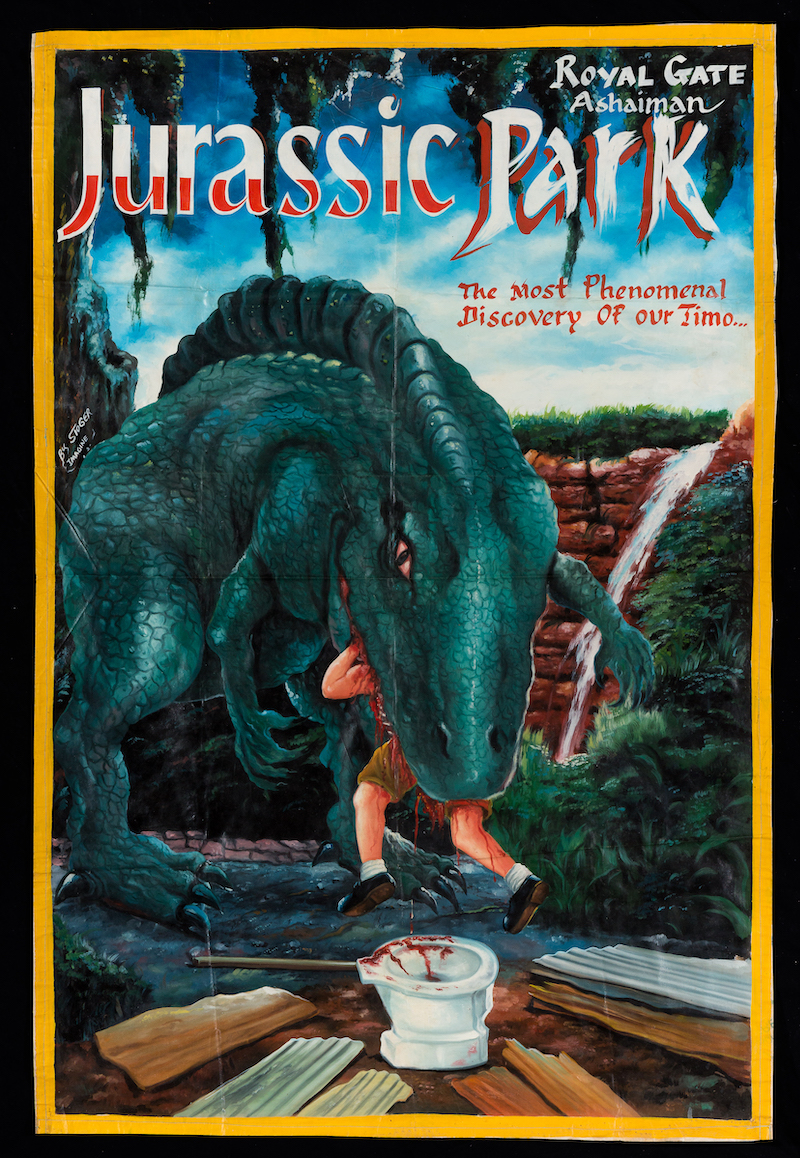
How does the offi­cial poster for Juras­sic Park, above, com­pare to the hand-paint­ed, pre­sum­ably unau­tho­rized image used to mar­ket it to audi­ences in Ghana?

(End­less grat­i­tude to illus­tra­tor and mon­ster movie fan Aeron Alfrey for bring­ing this and oth­er Ghan­ian spins on Amer­i­can film releas­es to our atten­tion.)

Some posters have remark­able stay­ing pow­er, reap­pear­ing in a num­ber of guis­es. Wit­ness Rosie the Riv­et­er and James Mont­gomery Flagg’s Uncle Sam-themed WWI recruit­ment poster, to say noth­ing of the Barack Oba­ma “Hope” poster by Shep­ard Fairey, the poster that launched a thou­sand par­o­dies, most­ly dig­i­tal, but even so.

To learn more about vis­it­ing Poster House, its inau­gur­al Alphonse Mucha exhib­it and upcom­ing events such as Drink and Draw, click here.

via Hyper­al­ler­gic

Relat­ed Con­tent:

The Film Posters of the Russ­ian Avant-Garde

10,000 Clas­sic Movie Posters Get­ting Dig­i­tized & Put Online by the Har­ry Ran­som Cen­ter at UT-Austin: Free to Browse & Down­load

Chill­ing and Sur­re­al Pro­pa­gan­da Posters from the NSA Are Now Declas­si­fied and Put Online

40,000 Film Posters in a Won­der­ful­ly Eclec­tic Archive: Ital­ian Tarkovsky Posters, Japan­ese Orson Welles, Czech Woody Allen & Much More

The Library of Con­gress Makes Thou­sands of Fab­u­lous Pho­tos, Posters & Images Free to Use & Reuse

Vin­tage 1930s Japan­ese Posters Artis­ti­cal­ly Mar­ket the Won­ders of Trav­el

100 Great­est Posters of Film Noir

Ayun Hal­l­i­day is an author, illus­tra­tor, the­ater mak­er and Chief Pri­ma­tol­o­gist of the East Vil­lage Inkyzine.  Fol­low her @AyunHalliday.

 

Leonardo da Vinci’s Huge Notebook Collections, the Codex Forster, Now Digitized in High-Resolution: Explore Them Online

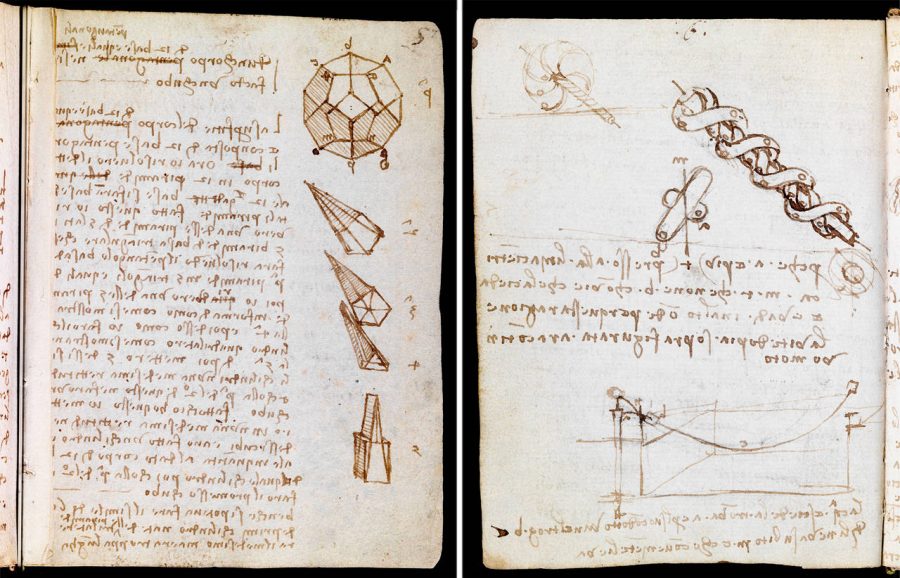
It may seem like a bizarre ques­tion, but indulge me for a moment: could it be pos­si­ble that the most famous artist of the Renais­sance and maybe in all of art his­to­ry, Leonar­do da Vin­ci, is an under­rat­ed fig­ure? Con­sid­er the fact that until rel­a­tive­ly recent­ly, a huge amount of his work—maybe a major­i­ty of his draw­ings, plans, sketch­es, notes, con­cepts, the­o­ries, etc.—has been unavail­able to all but spe­cial­ized schol­ars who could access (and read) his copi­ous note­books, span­ning the most pro­duc­tive peri­od of his career.

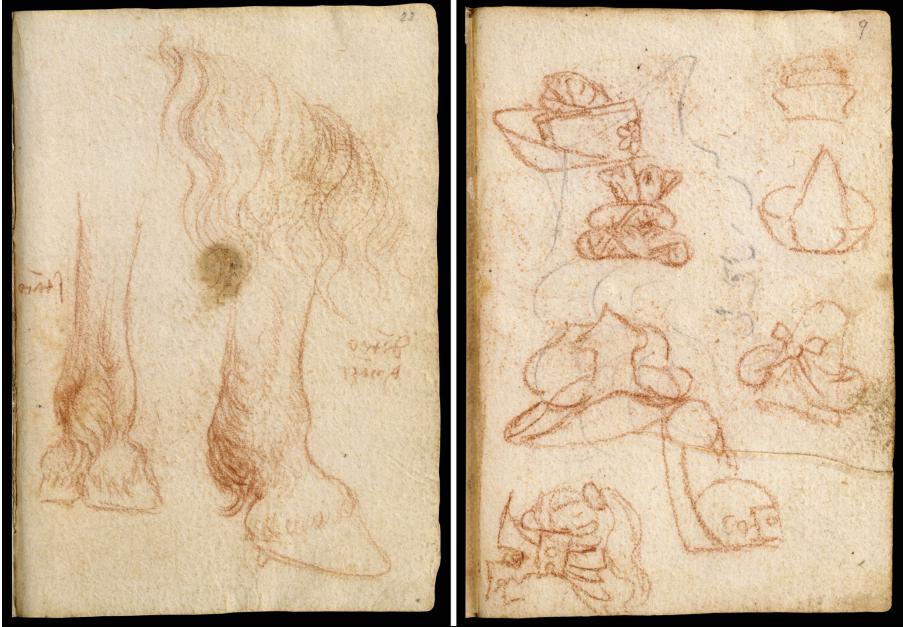
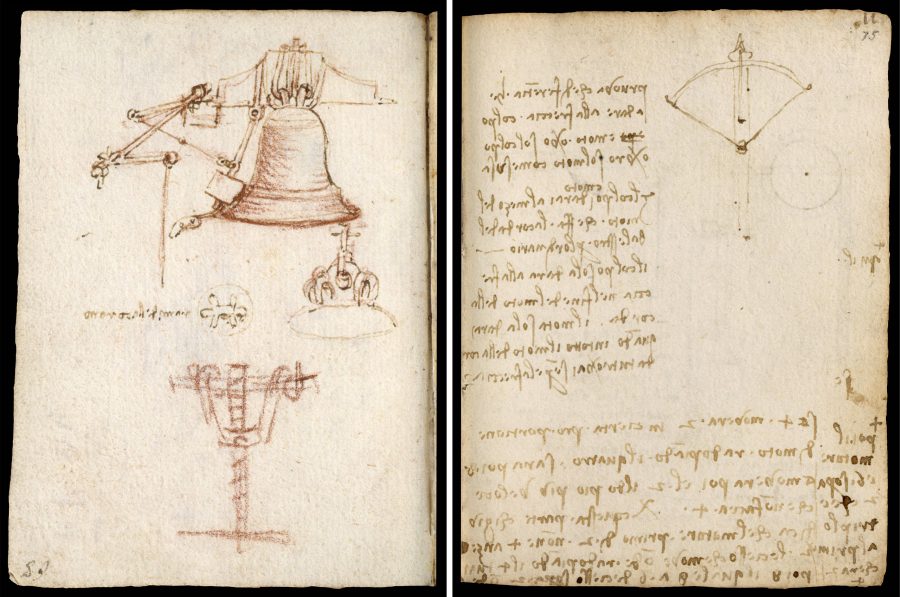
“Leonar­do seems to have begun record­ing his thoughts in note­books from the mid-1480s,” writes the Vic­to­ria & Albert Muse­um (the V&A), “when he worked as a mil­i­tary and naval engi­neer for the Duke of Milan. None of Leonardo’s pre­de­ces­sors, con­tem­po­raries or suc­ces­sors used paper quite like he did—a sin­gle sheet con­tains an unpre­dictable pat­tern of ideas and inven­tions.” He worked on loose sheets, which were lat­er bound togeth­er in books, or codices, by the artists who inher­it­ed them. As we have been report­ing, these note­book col­lec­tions have been com­ing avail­able online in open, high-res­o­lu­tion dig­i­tal ver­sions.

Now the V&A has announced that all three of its Leonar­do codices, called the Forster Codices after the col­lec­tor who bequeathed them to the muse­um, are avail­able to view “in amaz­ing detail.” Click here to see Codex Forster 1, Codex Forster 2, and Codex Forster 3. Here we see fur­ther evi­dence that Leonar­do was a supreme draughts­man. As Clau­dio Gior­gione, cura­tor at the Leonar­do da Vin­ci Nation­al Sci­ence and Tech­nol­o­gy Muse­um in Milan, points out, “Leonar­do was not the only one to draw machines and to do sci­en­tif­ic draw­ings, many oth­er engi­neers did that,” and many artists as well. â€śBut what Leonar­do did bet­ter than oth­ers is to make a rev­o­lu­tion of the tech­ni­cal draw­ing,” almost defin­ing the field with his metic­u­lous atten­tion to detail.

What’s more, notes Uni­ver­si­ty of Oxford Pro­fes­sor Mar­tin Kemp, “while oth­er artists might have been prob­ing some aspects of anatomy—muscles, bones, tendons—Leonardo took the study to a new lev­el.” Such a lev­el, in fact, that he “can be regard­ed as the father of bio­engi­neer­ing,” argues John B. West in the Amer­i­can Jour­nal of Phys­i­ol­o­gy.

Lit­tle atten­tion has been paid to [Leonar­do] as a phys­i­ol­o­gist. But he was an out­stand­ing engi­neer, and he was one of the first peo­ple to apply the prin­ci­ples of engi­neer­ing to under­stand the func­tion of ani­mals includ­ing humans.

Gior­gione warns against see­ing Leonar­do as a prophet­ic vision­ary for his inno­va­tions. He was not a man out of time; “the artist engi­neer is a known fig­ure in Renais­sance Italy.” But he per­fect­ed the tools and meth­ods of this dual pro­fes­sion with such rest­less inge­nu­ity and skill that we still find it aston­ish­ing over 500 years lat­er. His lengthy expla­na­tions of these excep­tion­al tech­ni­cal draw­ings are writ­ten, nat­u­ral­ly, in his famous mir­ror writ­ing.

Of Leonardo’s odd writ­ing sys­tem, we may learn some­thing new as well, though we may find this part, at least, a lit­tle dis­ap­point­ing. As the V&A points out, his idio­syn­crat­ic method might not have been so unique after all, or have been a sophis­ti­cat­ed device for Leonar­do to hide his ideas from com­peti­tors and future curi­ous read­ers. It might have come about “because he was left-hand­ed and may have found it eas­i­er to write from right to left…. Writ­ing mas­ters at the time would have made demon­stra­tions of mir­ror writ­ing, and his let­ter-shapes are in fact quite ordi­nary.”

Noth­ing else about the man seems to war­rant that descrip­tion. See all three Forster Codices the Vic­to­ria & Albert Muse­um site here: Codex Forster 1, Codex Forster 2, and Codex Forster 3. And see one codex from the col­lec­tion, as the V&A announced on Twit­ter, live in per­son at the British Library’s Leonar­do da Vin­ci: A Mind in Motion exhib­it.

h/t Atze­cLa­dy

Relat­ed Con­tent:

Leonar­do da Vinci’s Vision­ary Note­books Now Online: Browse 570 Dig­i­tized Pages

A Com­plete Dig­i­ti­za­tion of Leonar­do Da Vinci’s Codex Atlanti­cus, the Largest Exist­ing Col­lec­tion of His Draw­ings & Writ­ings

Leonar­do da Vinci’s Ear­li­est Note­books Now Dig­i­tized and Made Free Online: Explore His Inge­nious Draw­ings, Dia­grams, Mir­ror Writ­ing & More

Why Did Leonar­do da Vin­ci Write Back­wards? A Look Into the Ulti­mate Renais­sance Man’s “Mir­ror Writ­ing”

Josh Jones is a writer and musi­cian based in Durham, NC. Fol­low him at @jdmagness

A New Archive Transcribes and Puts Online the Diaries & Notebooks of Women Artists, Art Historians, Critics and Dealers

While one is still com­par­a­tive­ly young, one has many more thoughts & cer­tain­ly sen­ti­ments than one is able to make use of. It seems as if these might be stored up so that in old age or when one became less pro­lif­ic one could find mat­ter to use. Every thought or sug­ges­tion could be of use.

- Gertrude Van­der­bilt Whit­neysculp­tor, col­lec­tor, founder of the Whit­ney Muse­um of Amer­i­can Art, 1906

There are very few moral defens­es for rum­mag­ing inside another’s pri­vate diary or sketch­book, until that per­son shuf­fles off this mor­tal coil … and even then snoop­ers may get burned by what they read.

Or not.

Bore­dom is anoth­er strong pos­si­bil­i­ty.

Best to stick with fig­ures of his­tor­i­cal import.

With all due respect to Fri­da Kahlo, I pre­fer those whom his­to­ry hasn’t turned into mega-celebs.

It’s fun to dis­cov­er a fas­ci­nat­ing per­son via her own words and doo­dles, rather than seek them out as a bedaz­zled fan girl.

The Women’s His­to­ry Project at the Archives of Amer­i­can Art is scan­ning a trove of hand­writ­ten papers as part of a year long mis­sion to pre­serve and pass along the cre­ative process­es and dai­ly doings of var­i­ous women artists, art his­to­ri­ans, crit­ics, deal­ers, and gallery own­ers. Fas­ci­nat­ing read­ing awaits those who can get past the enig­mat­ic antique scrawl. More on that below.

A sam­ple:

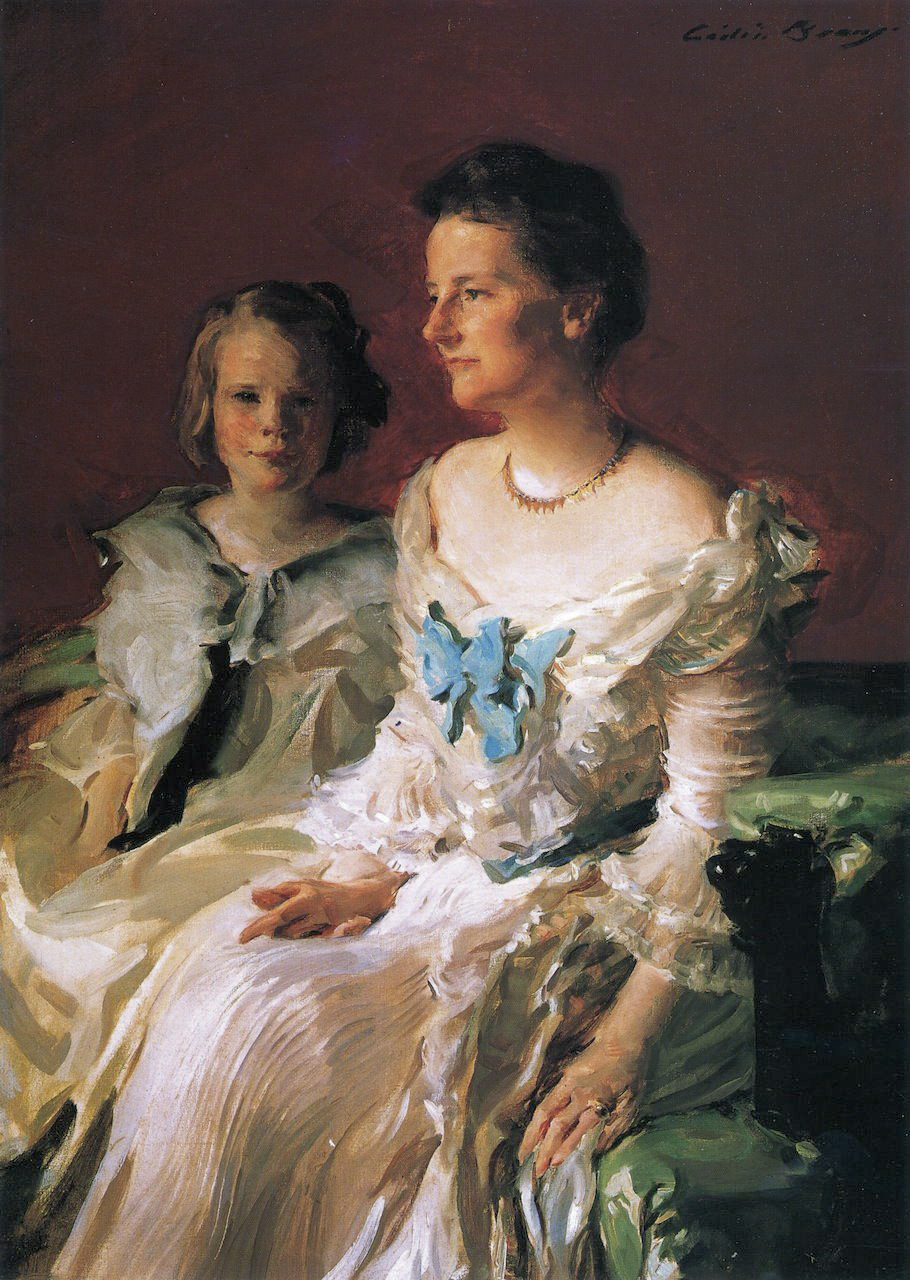
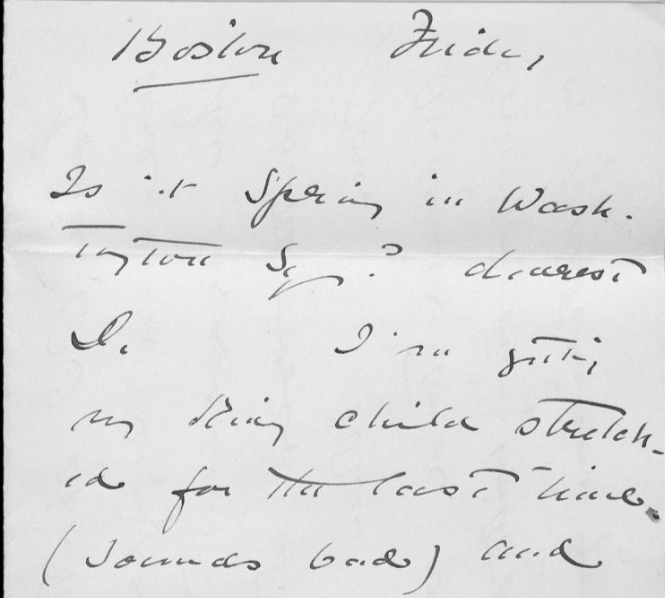
Por­traitist Cecil­ia Beaux’s let­ters to her friend, fre­quent sit­ter, and pos­si­ble lover, actress Dorothea Gilder. (See Beaux’s paint­ing of â€śMrs. Theodore Roo­sevelt and daugh­ter Ethel” from 1902 up top.)

The note­book of sculp­tor Anna Cole­man Ladd, stuffed with quotes, poems, research, def­i­n­i­tions, and auto­bi­o­graph­i­cal mus­ings, dat­ed the same year that she found­ed the Amer­i­can Red Cross Stu­dio for Por­trait Masks for severe­ly dis­fig­ured WW1 vets.

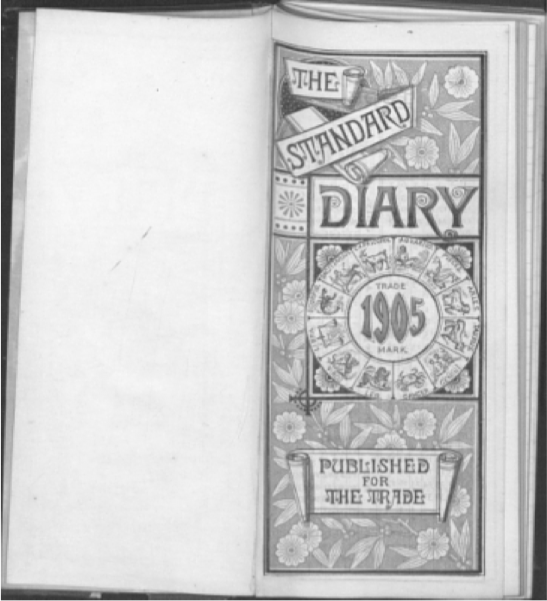
The above men­tioned Whitney’s 1914 trav­el diary, when she made sev­er­al trips to France in the name of estab­lish­ing and sup­port­ing a hos­pi­tal in north-cen­tral France.

Ready to explore?

You can do more than that.

The project is a part of the Smith­son­ian Tran­scrip­tion Cen­ter, which depends upon the pub­lic to take a crack at deci­pher­ing the obscure cur­sive of these hand­writ­ten pages, strike-throughs, mar­gin­a­lia, and all.  You can try your hand at a sin­gle sen­tence or tack­le an entire col­lec­tion or diary. No wor­ries if you have no tran­scrip­tion expe­ri­ence. The Cen­ter has easy to fol­low instruc­tions here.

Your efforts will make the dig­i­tized doc­u­ments key­word search­able, while pre­serv­ing the orig­i­nal cre­ators’ mem­o­ries for future gen­er­a­tions. New con­tent will be added month­ly through March 2020.

Begin your explo­rations of the Women’s His­to­ry Project at the Archives of Amer­i­can Art here.

via Hyper­al­ler­gic

Relat­ed Con­tent:

Ven­er­a­ble Female Artists, Musi­cians & Authors Give Advice to the Young: Pat­ti Smith, Lau­rie Ander­son & More

The Dai­ly Rit­u­als of 143 Famous Female Cre­ators: Octavia But­ler, Edith Whar­ton, Coco Chanel & More

“The Artist Project” Reveals What 127 Influ­en­tial Artists See When They Look at Art: An Acclaimed Video Series from The Met­ro­pol­i­tan Muse­um of Art

Ayun Hal­l­i­day is an author, illus­tra­tor, the­ater mak­er and Chief Pri­ma­tol­o­gist of the East Vil­lage Inky zine.  Join her in New York City this June for the next install­ment of her book-based vari­ety show, Necro­mancers of the Pub­lic Domain. Fol­low her @AyunHalliday.

Download Free Coloring Books from 113 Museums

One can only col­or so many flo­ral-trimmed affir­ma­tions before one begins to crave some­thing slight­ly more per­verse. An ema­ci­at­ed, naked, anthro­po­mor­phized man­drake root, say or…

Thy wish is our com­mand, but be pre­pared to hus­tle, because today is the final day of Col­or Our Col­lec­tions, a com­pelling­ly demo­c­ra­t­ic ini­tia­tive on the part of the New York Acad­e­my of Med­i­cine.

Since 2016, the Acad­e­my has made an annu­al prac­tice of invit­ing oth­er libraries, archives, and cul­tur­al insti­tu­tions around the world to upload PDF col­or­ing pages based on their col­lec­tions for the pub­lic’s free down­load.

This year 113 insti­tu­tions took the bait.

Our host, the New York Acad­e­my of Med­i­cine kicks things off with the afore­men­tioned man­drakes, and then some.

Med­ical sub­jects are a pop­u­lar theme here. You’ll find plen­ty of organs and oth­er rel­e­vant details to col­or, com­pli­ments of Boston’s Count­way Library’s Cen­ter for the His­to­ry of Med­i­cineLondon’s Roy­al Col­lege of Physi­cians, and the His­tor­i­cal Med­ical Library of The Col­lege of Physi­cians of Philadel­phia (aka the Müt­ter Muse­um).

The col­or­ing book of the Richard­son-Sloane Spe­cial Col­lec­tions Cen­ter at the Dav­en­port Pub­lic Library is a bit more all-ages. They cer­tain­ly remind me of my child­hood. The work of native son, Patrick J. Costel­lo, above, fig­ures heav­i­ly here. Either he deserves a lot of cred­it for devel­op­ing the School House Rock aes­thet­ic, or he was one of a num­ber of hard work­ing illus­tra­tors tap­ping into the cartoon‑y, thick-nibbed zeit­geist

The Andover-Har­vard The­o­log­i­cal Library’s col­or­ing book has some divine options for those who would use their col­or­ing pages as DIY 16th-cen­tu­ry book­plates or alpha­bet primers.

Those who need some­thing more com­plex will appre­ci­ate the intri­cate maps of the Lithuan­ian Art Museum’s col­or­ing book. Col­or­ing Franz Hogenberg’s 1581 map of Vil­nius is the emo­tion­al equiv­a­lent of walk­ing the labyrinth for god knows how many hours.

As befits a con­tent web­site-cum-dig­i­tal-Nation­al-Library, the Memo­ria Chile­na Col­or­ing Book 2019 has some­thing for every taste: flayed anatom­i­cal stud­ies, 1940’s fash­ions, curi­ous kit­ty cats, and a heap­ing help­ing of jesters.

Check out all your options here.

Once you’ve had your way with the Cray­olas, please share your cre­ations with the world, using the hash­tag #Col­or­Our­Col­lec­tions.

Par­tic­i­pat­ing Insti­tu­tions 2019

The New York Acad­e­my of Med­i­cine Library

Roy­al Col­lege of Physi­cians, Lon­don

OHSU His­tor­i­cal Col­lec­tions & Archives

Uni­ver­si­ty of Wis­con­sin-Mil­wau­kee Spe­cial Col­lec­tions

Swarth­more Col­lege Libraries

South Car­oli­na State Library

Shenan­doah Coun­ty Library, Truban Archives

Bib­liote­ca de la Uni­ver­si­dad de Zaragoza

Christ’s Col­lege Library, Cam­bridge

Tow­er Hill Botan­ic Gar­den

Uni­ver­si­ty of Water­loo Spe­cial Col­lec­tions & Archives

Wagenin­gen Uni­ver­si­ty & Research

Brunel Uni­ver­si­ty Spe­cial Col­lec­tions

Hawaii State Foun­da­tion on Cul­ture and the Arts

Wash­ing­ton State Library

Saint Fran­cis de Sales Parish Unit­ed by the Most Blessed Sacra­ment Parish His­to­ry Archives

Get­ty Research Insti­tute

Auck­land Muse­um

Loy­ola Uni­ver­si­ty Chica­go Archives & Spe­cial Col­lec­tions

Seton Hall Uni­ver­si­ty Libraries

Bib­lio­theque interuni­ver­si­taire de Sante, Paris

Dig­i­tal Library at Vil­lano­va Uni­ver­si­ty

West Vir­ginia and Region­al His­to­ry Cen­ter

Bass Library, Yale Uni­ver­si­ty Library

Uni­ver­si­ty of Kansas Libraries

Med­ical Her­itage Library

The Ohio State Uni­ver­si­ty Health Sci­ences Library

Uni­ver­si­ty of Mass­a­chu­setts Amherst Libraries

Rut­gers Uni­ver­si­ty Spe­cial Col­lec­tions and Uni­ver­si­ty Archives

Uni­ver­si­ty of British Colum­bia Library

Nation­al Library of Med­i­cine

Sci­ence His­to­ry Insti­tute

Rick­er Library of Archi­tec­ture and Art at the Uni­ver­si­ty of Illi­nois

Chau­tauqua Insti­tu­tion Archives

Bib­lio­theque et Archives nationales du Que­bec

The LuEs­ther T. Mertz Library of the New York Botan­i­cal Gar­den

Auburn Uni­ver­si­ty Spe­cial Col­lec­tions and Archives

Open Muse­um, Acad­e­mia Sini­ca Cen­ter for Dig­i­tal Cul­tures

Les Champs Libres

Lithuan­ian Art Muse­um

Memo­ria Chile­na

Bar­ret Library, Rhodes Col­lege

Wales High­er Edu­ca­tion Libraries Forum (WHELF)

Roy­al Anthro­po­log­i­cal Insti­tute

Delaware Muse­um of Nat­ur­al His­to­ry

James Madi­son Uni­ver­si­ty Libraries

Utah State Uni­ver­si­ty Libraries Spe­cial Col­lec­tions & Archives

Stevens Insti­tute of Tech­nol­o­gy / Archives & Spe­cial Col­lec­tions

War­ing His­tor­i­cal Library of the Med­ical Uni­ver­si­ty of South Car­oli­na

Bernard Beck­er Med­ical Library at Wash­ing­ton Uni­ver­si­ty in St. Louis

Uni­ver­si­ty of Puget Sound

Drex­el Uni­ver­si­ty Col­lege of Med­i­cine Lega­cy Cen­ter Archives and Spe­cial Col­lec­tions

Queens’ Col­lege Library, Cam­bridge

Stadt­bib­lio­thek Koeln

Andover-Har­vard The­o­log­i­cal Library

Rare Book and Man­u­script CRAI Library at Uni­ver­si­ty of Barcelona

New­ber­ry Library

His­tor­i­cal Med­ical Library of The Col­lege of Physi­cians of Philadel­phia

Lam­beth Palace Library

Fol­ger Shake­speare Library

Uni­ver­si­ty of Glas­gow Archives and Spe­cial Col­lec­tions

John J. Burns Library

Bio­di­ver­si­ty Her­itage Library

The Uni­ver­si­ty of Iowa Libraries, Iowa Dig­i­tal Library

Ten­nessee State Muse­um

Cen­ter for the His­to­ry of Med­i­cine, Count­way LIbrary

Russ­ian State Library

South Car­oli­na His­tor­i­cal Soci­ety

Library Com­pa­ny of Philadel­phia

The Burke Library at Union The­o­log­i­cal Sem­i­nary

Pratt Insti­tute Archives

The Chil­dren’s Muse­um of Indi­anapo­lis

Wan­gen­steen His­tor­i­cal Library of Biol­o­gy and Med­i­cine, Uni­ver­si­ty of Min­neso­ta Libraries

Wash­ing­ton Uni­ver­si­ty Libraries Julian Edi­son Depart­ment of Spe­cial Col­lec­tions

Libraries and Cul­tur­al Resources, Uni­ver­si­ty of Cal­gary

Leonard H. Axe Library, Pitts­burg State Uni­ver­si­ty

Susque­han­na Uni­ver­si­ty, Blough-Weis Library

Richard­son-Sloane Spe­cial Col­lec­tions Cen­ter, Dav­en­port Pub­lic Library

Den­ver Pub­lic Library, West­ern His­to­ry and Geneal­o­gy

Find­lay-Han­cock Coun­ty Pub­lic Library

North­ern Illi­nois Uni­ver­si­ty

Escuela Supe­ri­or de Artes de Yucatan

Lake Coun­ty Pub­lic Library

Unit­ed Nations Library Gene­va

Jele­niorskie Cen­trum Infor­ma­cji i Edukacji Region­al­nej Ksi­azni­ca Karkonos­ka

Women and Lead­er­ship Archives, Loy­ola Uni­ver­si­ty Chica­go

Grand Portage Nation­al Mon­u­ment Archives Col­lec­tion

Jagiel­lon­ian Library

Botan­i­cal Research Insti­tute of Texas

Uni­ver­si­ty of North Texas Libraries

Lehigh Uni­ver­si­ty Libraries Spe­cial Col­lec­tions

Rare Book and Man­u­script Library at the Uni­ver­si­ty of Illi­nois at Urbana-Cham­paign

Mass­a­chu­setts Gen­er­al Hos­pi­tal Archives & Spe­cial Col­lec­tions

Clark Spe­cial Col­lec­tions, McDer­mott Library, USAFA

Bib­lio­theque nationale de France

Cen­tre for Chi­nese Con­tem­po­rary Art Archive & Library

Shangri La Muse­um of Islam­ic Art, Cul­ture & Design

British Library

West­ern Uni­ver­si­ty Archives and Spe­cial Col­lec­tions

Euro­peana

Den­ver Botan­ic Gar­dens

Med­Chi, The Mary­land State Med­ical Soci­ety

Grin­nell Col­lege Libraries

Uni­ver­si­ty of Mary­land, Bal­ti­more Coun­ty (UMBC)

His­tor­i­cal Soci­ety of Penn­syl­va­nia

Nation­al Library of Rus­sia

East­ern Ken­tucky Uni­ver­si­ty Spe­cial Col­lec­tions & Archives

Nume­lyo

Louisiana State Uni­ver­si­ty Spe­cial Col­lec­tions

New York State Library

North Car­oli­na Pot­tery Cen­ter

Roy­al Hor­ti­cul­tur­al Soci­ety Libraries

Library of Vir­ginia

Relat­ed Con­tent:

Ayun Hal­l­i­day is an author, illus­tra­tor, the­ater mak­er and Chief Pri­ma­tol­o­gist of the East Vil­lage Inky zine.  See her onstage in New York City this Mon­day as host of  The­ater of the Apes book-based vari­ety show, Necro­mancers of the Pub­lic Domain. Fol­low her @AyunHalliday.

Explore an Interactive Version of The Wall of Birds, a 2,500 Square-Foot Mural That Documents the Evolution of Birds Over 375 Million Years

Now, this avian Vat­i­can also has its own Michelan­ge­lo.

– Audubon Mag­a­zine

And the Class of Aves has its very own avian Pan­tone chart, cre­at­ed by sci­ence illus­tra­tor Jane Kim in ser­vice of her 2,500 square-foot Wall of Birds mur­al at Cor­nell University’s Lab of Ornithol­o­gy.

The cus­tom chart’s fifty-one col­ors com­prise about 90 per­cent of the fin­ished work. A palette of thir­teen Gold­en Flu­id Acrylics sup­plied the jew­el-toned accents so thrilling to bird­watch­ers.

Along the way, Kim absorbed a tremen­dous amount of infor­ma­tion about the how and why of bird feath­er col­oration:

The iri­des­cence on the neck and back of the Superb Star­ling comes not from pig­ment,

but from struc­tur­al col­or. The starling’s out­er feath­ers are con­struct­ed in a way

that refracts light like myr­i­ad prisms, mak­ing the bird appear to shim­mer. The epony­mous

col­or­ing of the Lilac-breast­ed Roller results from a dif­fer­ent kind of struc­tur­al

col­or, cre­at­ed when woven microstruc­tures in the feath­ers, called barbs and bar­bules,

reflect only the short­er wave­lengths of light like blue and vio­let.

The pri­ma­ry col­ors that lend their name to the Red-and-yel­low Bar­bet are

derived from a class of pig­ments called carotenoids that the bird absorbs in its diet.

These are the same com­pounds that turn flamin­gos’ feath­ers pink. As a mem­ber of

the fam­i­ly Musophagi­dae, the Hartlaub’s Tura­co dis­plays pig­men­ta­tion unique in the

bird world. Birds have no green pig­men­ta­tion; in most cas­es, ver­dant plumage is a

com­bi­na­tion of yel­low carotenoids and blue struc­tur­al col­or. Tura­cos are an excep­tion,

dis­play­ing a green, cop­per-based pig­ment called tura­coverdin that they absorb

in their her­biv­o­rous diet. The flash of red on the Hartlaub’s under­wings comes from

turacin, anoth­er cop­per-based pig­ment unique to the fam­i­ly.


Kim also boned up on her sub­jects’ mat­ing rit­u­als, dietary habits, song styles, and male/female dif­fer­ences pri­or to inscrib­ing the 270 life-size, life­like birds onto the lab’s largest wall.

She exam­ined spec­i­mens from the cen­ter’s col­lec­tion and reviewed cen­turies’ worth of field obser­va­tions.

(The sev­en­teenth-cen­tu­ry Eng­lish nat­u­ral­ist John Ray dis­missed the horn­bill fam­i­ly as hav­ing a “foul look,” a colo­nial­ism that ruf­fled Kim’s own feath­ers some­what. In retal­i­a­tion, she dubbed the Great Horn­bill, “the Cyra­no of the Jun­gle” owing to his “tequi­la-sun­rise-hued facial phal­lus,” and select­ed him as the cov­er boy for her book about the mur­al.)

Research and pre­lim­i­nary sketch­ing con­sumed an entire year, after which it took 17 months to inscribe 270 life-size creatures—some long extinct—onto the lab’s main wall. The birds are set against a greyscale map of the world, and while many are depict­ed in flight, every one save the Wan­der­ing Alba­tross has a foot touch­ing its con­ti­nent of ori­gin.

Those who can’t vis­it the Wall of Birds (offi­cial title: From So Sim­ple a Begin­ning) in per­son, can log some dig­i­tal bird­watch­ing using a spec­tac­u­lar inter­ac­tive web-based ver­sion of the mur­al that pro­vides plen­ty of infor­ma­tion about each spec­i­men, some of it lit­er­ary. (The afore­men­tioned Alba­tross’ entry con­tains a pass­ing ref­er­ence to The Rime of the Ancient Mariner.)

Explore the Wall of Birds’ inter­ac­tive fea­tures here.

You can down­load a free chap­ter of The Wall of Birds: One Plan­et, 243 Fam­i­lies, 375 Mil­lion Years by sub­scrib­ing to Kim’s mail­ing list here.

Via Hyper­al­ler­gic

Relat­ed Con­tent:

Cor­nell Launch­es Archive of 150,000 Bird Calls and Ani­mal Sounds, with Record­ings Going Back to 1929

What Kind of Bird Is That?: A Free App From Cor­nell Will Give You the Answer

Mod­ernist Bird­hous­es Inspired by Bauhaus, Frank Lloyd Wright and Joseph Eich­ler

Ayun Hal­l­i­day is an author, illus­tra­tor, the­ater mak­er and Chief Pri­ma­tol­o­gist of the East Vil­lage Inky zine.  See her onstage in New York City Feb­ru­ary 11 for The­ater of the Apes book-based vari­ety show, Necro­mancers of the Pub­lic Domain. Fol­low her @AyunHalliday.

The Musical Instruments in Hieronymus Bosch’s The Garden of Earthly Delights Get Brought to Life, and It Turns Out That They Sound “Painful” and “Horrible”

Wel­come to The Gar­den of Earth­ly Delights.

You’ll find no angel­ic strings here.

Those are reserved for first class cit­i­zens whose vir­tu­ous lives earned them pas­sage to the upper­most heights.

Down below, stringed instru­ments pro­duce the most hell­ish sort of cacoph­o­ny, a fit­ting accom­pa­ni­ment for the horn whose bell is befouled with the arm of a tor­tured soul.

How do we know that’s what they sound­ed like?

A group of musi­col­o­gists, crafts­peo­ple and aca­d­e­mics from the Bate Col­lec­tion of Musi­cal Instru­ments at the Uni­ver­si­ty of Oxford, took it upon them­selves to actu­al­ly build the instru­ments depict­ed in Hierony­mus Bosch’s action-packed trip­tych—the hell harp, the vio­lat­ed lute, the gross­ly over­sized hur­dy-gur­dy…

…And then they played them.

Let us hope they stopped shy of shov­ing flutes up their bums. (Such a place­ment might pro­duce a sound, but not from the flute’s gold­en throat).

The Bosch exper­i­ment added ten more instru­ments to the museum’s already impres­sive, over-1000-strong col­lec­tion of wood­winds, per­cus­sion, and brass, many from the stu­dios of esteemed mak­ers, some dat­ing all the way back to the Renais­sance.

Unfor­tu­nate­ly, the new addi­tions don’t sound very good. “Hor­ri­ble” and “painful” are among the adjec­tives the Bate Col­lec­tion man­ag­er Andrew Lamb uses to describe the aur­al fruits of his team’s months-long labors.

Might we assume Bosch would have want­ed it that way?

Bran­don McWilliams, the wag behind Bosch’s wild­ly enthu­si­as­tic, f‑bomb-laced review of thrash met­al band Slayer’s 1986 Reign in Blood album, would sure­ly say yes, as would
Alden and Cali Hack­mann, North Amer­i­can hur­dy-gur­dy mak­ers, who note that Bosch’s painter­ly des­e­cra­tions were not lim­it­ed to their per­son­al favorite instru­ment:

Bosch and his con­tem­po­raries viewed music as sin­ful, asso­ci­at­ing it with oth­er sins of the flesh and spir­it. A num­ber of oth­er instru­ments are also depict­ed: a harp, a drum, a shawm, a recorder, and the met­al tri­an­gle being played by the woman (a nun, per­haps) who is appar­ent­ly impris­oned in the key­box of the instru­ment. The hur­dy-gur­dy was also asso­ci­at­ed with beg­gars, who were often blind. The man turn­ing the crank is hold­ing a beg­ging bowl in his oth­er hand. Hang­ing from the bowl is a met­al seal on a rib­bon, called a “gaber­lun­zie.” This was a license to beg in a par­tic­u­lar town on a par­tic­u­lar day, grant­ed by the nobil­i­ty. Sol­diers who were blind­ed or maimed in their lord’s ser­vice might be giv­en a gaber­lun­zie in rec­om­pense.

To the best of our knowl­edge, no gaber­fun­zies were grant­ed, nor any sin­ners eter­nal­ly damned, in the Bate Collection’s caper. Accord­ing to man­ag­er Lamb, expand­ing the bound­aries of music edu­ca­tion was rec­om­pense enough, well worth the tem­po­rary affront to ten­der ears.

via Metafil­ter

Relat­ed Con­tent:

Take a Vir­tu­al Tour of Hierony­mus Bosch’s Bewil­der­ing Mas­ter­piece The Gar­den of Earth­ly Delights

The Hierony­mus Bosch Demon Bird Was Spot­ted Rid­ing the New York City Sub­way the Oth­er Day…

Hierony­mus Bosch Fig­urines: Col­lect Sur­re­al Char­ac­ters from Bosch’s Paint­ings & Put Them on Your Book­shelf

Ayun Hal­l­i­day is an author, illus­tra­tor, the­ater mak­er and Chief Pri­ma­tol­o­gist of the East Vil­lage Inky zine.  See her onstage in New York City tonight as host of The­ater of the Apes book-based vari­ety show, Necro­mancers of the Pub­lic Domain. Fol­low her @AyunHalliday.
Watch the Painstaking and Nerve-Racking Process of Restoring a Drawing by Michelangelo

We live in a dis­pos­able cul­ture, but cer­tain things war­rant the time and effort of mend­ing—good shoes, hearts, Michelan­ge­lo draw­ings…

The Met­ro­pol­i­tan Muse­um of Art’s paper con­ser­va­tor Mar­jorie Shel­ley, above, had the nerve-wrack­ing task of tack­ling the lat­ter, in prepa­ra­tion for last year’s Michelan­ge­lo: Divine Drafts­man and Design­er exhi­bi­tion.

The work in ques­tion, a two-sided sketch fea­tur­ing designs for a mon­u­men­tal altar or facade, thought to be San Sil­ve­stro in Capite, Rome, arrived in sad con­di­tion.

The 16th-cen­tu­ry linen and flax paper on which the pre­cious ren­der­ings were made was stained with mold, and bad­ly creased due to a poor­ly repaired tear and two long-ago attempts to mount it for eas­i­er view­ing, one by the artist’s blind nephew and anoth­er by col­lec­tor and biog­ra­ph­er Fil­ip­po Bald­in­uc­ci.

Like many restora­tion experts, Shel­ley exhibits extra­or­di­nary patience and nerves of steel. Iden­ti­fy­ing the dam­age and its cause is just the begin­ning. The hands-on por­tion of her work involves intro­duc­ing sol­vents and mois­ture, both of which have the poten­tial to fur­ther dam­age the del­i­cate draw­ing. Even though she choos­es the least inva­sive of tools—a tiny brush—to loosen the 500-year-old adhe­sive, one slip could spell dis­as­ter. It’s not just the draw­ing that’s of his­tor­i­cal import. The well-intend­ed mount­ings are also part of the nar­ra­tive, and must be pre­served as such.

As she explains above, a bedaz­zling Sis­tine Chapel-like makeover was nei­ther pos­si­ble nor prefer­able.

One won­ders how many of the 702,516 vis­i­tors who attend­ed the exhi­bi­tion dur­ing its 3 month run noticed Shelley’s hand­i­work (or even the draw­ing itself, giv­en the large num­ber of oth­er, sex­i­er works on dis­play).

Relat­ed Con­tent:

Watch an Art Con­ser­va­tor Bring Clas­sic Paint­ings Back to Life in Intrigu­ing­ly Nar­rat­ed Videos

How an Art Con­ser­va­tor Com­plete­ly Restores a Dam­aged Paint­ing: A Short, Med­i­ta­tive Doc­u­men­tary

The Art of Restor­ing a 400-Year-Old Paint­ing: A Five-Minute Primer

Rembrandt’s Mas­ter­piece, The Night Watch, Will Get Restored and You Can Watch It Hap­pen Live, Online

Ayun Hal­l­i­day is an author, illus­tra­tor, the­ater mak­er and Chief Pri­ma­tol­o­gist of the East Vil­lage Inky zine.  See her onstage in New York City this Jan­u­ary as host of  The­ater of the Apes book-based vari­ety show, Necro­mancers of the Pub­lic Domain. Fol­low her @AyunHalliday.

Watch a Playthrough of the Oldest Board Game in the World, the Sumerian Royal Game of Ur, Circa 2500 BC

They may not sur­prise the aver­age mar­ket ana­lyst, but the gam­ing industry’s fig­ures tell a pret­ty com­pelling sto­ry. New­zoo esti­mates that “2.3 bil­lion gamers across the globe will spend $137. 9 bil­lion on games in 2018.” Ven­ture­Beat reports that mobile games account for over 50 per­cent of the total. Cur­rent­ly, “about 91 per­cent of the glob­al mar­ket is dig­i­tal, mean­ing that $125.3 bil­lion worth of games flows through dig­i­tal­ly con­nect­ed chan­nels as opposed to phys­i­cal retail.”

That’s a lot of vir­tu­al dough float­ing around in vir­tu­al worlds. But this vast and rapid growth in dig­i­tal gam­ing does not mean phys­i­cal games are going away any­time soon—and that includes cards, board games, and oth­er table­top games, a mar­ket that has “surged as play­ers have grown jad­ed with the dig­i­tal screens they toil over dur­ing the work day,” wrote Joon Ian Wong in 2016.

Ven­ture cap­i­tal is flow­ing into board game devel­op­ment. Table­top bars and cafes are pop­ping up all over the world, encour­ag­ing peo­ple to min­gle over Scrab­ble and Cards Against Human­i­ty. It seems the time is just right to revive the old­est playable board game in the world. If some­one hasn’t already launched a Kick­starter to bankroll a new Roy­al Game of Ur, I sus­pect we’ll see one any day now. At least four-and-a-half-thou­sand years old, accord­ing to British Muse­um Cura­tor Irv­ing Finkel, the Roy­al Game of Ur was prob­a­bly invent­ed by the Sume­ri­ans. And it seems like it might still be a blast, and a con­sid­er­able chal­lenge, to play.

“You might think it’s so old that it’s irre­triev­able to us, that we’ve got no idea what it was like play­ing, what the rules were like,” Finkel says in the video at the top, “but all sorts of evi­dence has come to light so that we know how this game was played.” He promis­es, in no uncer­tain terms, to wipe the floor with YouTu­ber Tom Scott in a Roy­al Game of Ur show­down, and Scott, who has nev­er played the game before, seems at a decid­ed dis­ad­van­tage. But watch their con­test to see how the game is played and whether Finkel makes good on his threat. Along the way, he lib­er­al­ly shares his knowl­edge.

For a short­er course on the Roy­al Game of Ur, see Finkel’s video above. It takes him a cou­ple min­utes to get around to intro­duc­ing his sub­ject, the dis­cov­ery and deci­pher­ing of the “world’s old­est rule book.” A con­sum­mate ancient his­to­ry detec­tive, Finkel describes how he decod­ed an ancient tablet that explained a game, but which game, no one knew. So, the ded­i­cat­ed cura­tor tried the rules on every mys­te­ri­ous ancient game he could find, till he land­ed on the “game of twen­ty squares” from Mesopotamia. “It fit­ted per­fect­ly,” he says with rel­ish. See the orig­i­nal board, pieces, and dice from about 2500 BC, and learn how Finkel had been search­ing for its rules of play since he was 9 years old.

For more of Finkel’s pas­sion­ate pub­lic schol­ar­ship, see him demon­strate how to write in cuneiform and read about how his work on cuneiform tablets led to him dis­cov­er­ing the old­est ref­er­ence to the Noah’s Ark myth.

Relat­ed Con­tent:

How to Write in Cuneiform, the Old­est Writ­ing Sys­tem in the World: A Short, Charm­ing Intro­duc­tion

Hear the “Seik­i­los Epi­taph,” the Old­est Com­plete Song in the World: An Inspir­ing Tune from 100 BC

The British Muse­um Is Now Open To Every­one: Take a Vir­tu­al Tour and See 4,737 Arti­facts, Includ­ing the Roset­ta Stone

Josh Jones is a writer and musi­cian based in Durham, NC. Fol­low him at @jdmagness.

« Go BackMore in this category... »
Quantcast