13 Glorious Minutes of The Ramones in Kansas City, Captured on a Super‑8 Camera (1978)

Thir­teen min­utes was an awful long time for The Ramones, since they could play an entire album of songs in a quar­ter of an hour. Thus, when Ramones fan Mark Gilman snuck a Super‑8 sound cam­era into the Grena­da The­ater in Kansas City in July of 1978 to secret­ly film the band, he man­aged to cap­ture an awful lot of The Ramones on film before he was forced to shut it down. The band, as you can see above, was in top form.

I exag­ger­ate a lit­tle.… Ramones albums are longer than this film clip. Their self-titled 1976 debut is over twice the length at 29 min­utes, which is still three or four min­utes shy of the short­est LPs of the time (back when albums only meant vinyl). Into that almost-half-hour, the ulti­mate 70s New York punk band crammed 14 songs, at an aver­age of two min­utes each: no solos, no filler, no extend­ed intros, out­ros, or remix­es.…

That’s exact­ly what we see above: mops of hair and a sweaty, leather-and-den­im-clad wall of pure, dumb rock ’n’ roll, played blis­ter­ing­ly fast with max­i­mum atti­tude. It’s qual­i­ty, audi­ence-lev­el footage of about half a clas­sic Ramones show, which usu­al­ly spanned around 30 min­utes: no ban­ter, chat­ter, tun­ing up, requests, or encores. This is what you came for, and this — full-on assault of bub­blegum melodies, thud­ding chants of “I wan­na” and “I don’t wan­na” played with chain­saw pre­ci­sion — is what you get.

They seemed ful­ly-formed, walk­ing and talk­ing right of the womb when they hit stages out­side the New York clubs that nur­tured them. But four years ear­li­er, their first audi­ences did­n’t see a dis­ci­plined rock ’n’ roll machine; they saw a sham­bling mess. Ryan Bray describes the impres­sions of long­time tour man­ag­er Monte Mel­nick on first see­ing them in 1974:

Musi­cal­ly, songs like “Now I Wan­na Sniff Some Glue” were already in the band’s reper­toire, but the songs were plagued by errat­ic tem­pos, blown notes, and oth­er sort­ed son­ic mis­cues. Between-song bick­er­ing also marred the band’s ear­li­est shows. For a sec­ond, Dee Dee and Tom­my seem like they’re almost ready to come to blows when they can’t agree on what song to play next.

“I did­n’t like them at all,” Mel­nick remem­bers. “It was pret­ty raw. They were stop­ping and start­ing and fight­ing. They could bare­ly play.” They did­n’t meet a dev­il at a cross­roads in the years between these ear­ly gigs and their 1978 live album It’s Alive (record­ed at Lon­don’s Rain­bow The­atre on the last day of the year as the band fin­ished a 1977 UK tour). They played a hell of a lot of gigs, and pushed them­selves hard for a rock star­dom they’d nev­er real­ly achieve until their found­ing mem­bers died.

All­mu­sic’s Mark Dem­ing describes the band in 1978 as “relent­less.… a big-block hot rod thrown in to fifth gear” and calls their live album of the time “one of the best and most effec­tive live albums in the rock canon.” Watch them play “I Wan­na Be Well” at the Rain­bow The­atre, just above, and catch a rare bit of stage ban­ter from Joey regard­ing the pre­vi­ous night’s chick­en vin­daloo.

via Boing Boing

Relat­ed Con­tent: 

Dave Grohl & Greg Kurstin Cov­er The Ramones “Blitzkrieg Bop” to Cel­e­brate Han­nukah: Hey! Oy! Let’s Goy!

Talk­ing Heads Per­form The Ramones’ “I Wan­na Be Your Boyfriend” Live in 1977 (and How the Bands Got Their Start Togeth­er)

CBGB’s Hey­day: Watch The Ramones, The Dead Boys, Bad Brains, Talk­ing Heads & Blondie Per­form Live (1974–1982)

Josh Jones is a writer and musi­cian based in Durham, NC. Fol­low him at @jdmagness

Watch the Full Set of Joni Mitchell’s Amazing Comeback Performance at the Newport Folk Festival

“She’s doing some­thing very, very brave right now for you guys. This is a trust fall, and she picked the right peo­ple to do this with.” — Bran­di Carlile intro­duc­ing Joni Mitchell at the New­port Folk Fes­ti­val, 2022

Come­back queen Joni Mitchell stunned fans with her recent appear­ance at the New­port Folk Fes­ti­val this sum­mer, her first full pub­lic con­cert since 2000. In New­port tra­di­tion, sur­prise stars make an appear­ance every year. For­mer guests have includ­ed Dol­ly Par­ton, Cha­ka Khan, and Mitchel­l’s friend David Cros­by. Mitchel­l’s arrival this year was a rev­e­la­tion. She appeared out of the blue, when most peo­ple rea­son­ably assumed she’d nev­er per­form again after suf­fer­ing a debil­i­tat­ing brain aneurysm in 2015 that left her unable to speak or walk.

Yet, as we point­ed out in an ear­li­er post, Mitchel­l’s return to the stage has been years in the mak­ing. Since her aneurysm, she has con­found­ed even the neu­ro­sur­geons with her recov­ery, teach­ing her­self to play gui­tar again by watch­ing online videos and learn­ing to sing again not long after she re-learned how to get out of bed. When Mitchel­l’s long­time friend Bran­di Carlile announced her arrival on the stage with, “This scene shall for­ev­er be known hence­forth as the Joni Jam!,” Carlile referred to years of recent musi­cal get-togeth­ers in Mitchel­l’s liv­ing room.

The “Joni Jams” at Mitchel­l’s Los Ange­les home includ­ed “a very spe­cial cir­cle of friends,” music writer and radio host Aim­sel Pon­ti notes, includ­ing “Her­bie Han­cock, Paul McCart­ney, Elton John and Bon­nie Raitt. Most­ly, from the way Carlile described it, Joni would crack jokes and take it all in rather than par­tic­i­pate all that much.” But she was lis­ten­ing, learn­ing, and becom­ing inspired by her peers and the younger artists who joined her onstage: Carlile, Wynon­na Judd, Mar­cus Mum­ford, and oth­ers. As Carlile fin­ished her own New­port set, the stage filled with cush­iony chairs and couch­es, and sev­er­al more musi­cians.

“We’re here to invite you into the liv­ing room,” Carlile says in her pas­sion­ate intro­duc­tion (above), while the audi­ence holds their breath await­ing the announce­ment of her spe­cial guest. Then Carlile “told us about all of Joni’s pets and her many orchids and the hid­den door to the bath­room,” writes Pon­ti. “Then she told us how it does­n’t feel com­plete with­out Joni there to crack jokes and nod with approval.” Then her hero took the stage to gasps, in a blue beret and sun­glass­es, and hun­dreds of fans born too late to see her in her glo­ry days wept as she joined with Carlile on the first song, “Carey.” The New York Times’ Lind­say Zoladz describes the moment:

When Mitchell first came out onstage, she seemed a tad over­whelmed, cling­ing to her cane and back­ing up Carlile, who took the lead on a breezy, cel­e­bra­to­ry “Carey.” But over the course of that song, a vis­i­ble change came over Mitchell. Her shoul­ders loos­ened. She began to shim­my. And all at once she seemed to regain her voice — her voice, sonorous and light, seem­ing to dance over those bal­let­ic melodies at a jazzy tem­po all her own.

The first time Mitchell took the stage at New­port in 1967, she came at the behest of Judy Collins. She was a young unknown, about to become a folk god­dess. When she returned to New­port in 1969, she was a star in her own right. Over the decades, she has left fans with mem­o­ries of her per­for­mances that they have guard­ed like trea­sures as they’ve aged with her. (The Guardian has col­lect­ed a few of these poignant rem­i­nisces.) Now she’s an inspi­ra­tion to an entire­ly new young gen­er­a­tion and, one hopes, to old­er artists who might feel they have lit­tle left to con­tribute.

“The 78-year-old Mitchel­l’s per­for­mance,” Kirthana Ramiset­ti writes at Salon, “show­cased an artist tran­scend­ing the chal­lenges of aging and seri­ous health issues.… To hear music writ­ten in the full blos­som of her youth, yet per­formed with a weight­i­ness and know­ing per­spec­tive from hav­ing weath­ered so much in her life, arguably gave these songs a greater pow­er than when they were first record­ed.”

Such is often the case with artists as they mature beyond youth­ful sen­ti­ments and grow into their youth­ful pre­coc­i­ty. (It has been so for Paul Simon, whose own reap­pear­ance at New­port this year seems over­shad­owed by Mitchel­l’s come­back.)  Ramiset­ti quotes Mitchel­l’s “The Cir­cle Game,” with which she closed out her sur­prise set — “We’re cap­tive on the carousel of time / We can’t return, we can only look behind from where we came.”

Watch Mitchel­l’s full live New­port set (in jum­bled order) at the top of the post (or on this playlist), and see the setlist of orig­i­nals and clas­sic cov­ers from her his­toric per­for­mance just below.

Carey

Come in From the Cold

Help Me

Case of You

Big Yel­low Taxi

Just Like This Train

Why Do Fools Fall in Love

Amelia

Love Potion #9

Shine

Sum­mer­time

Both Sides Now

The Cir­cle Game

Relat­ed Con­tent: 

How Joni Mitchell Learned to Play Gui­tar Again After a 2015 Brain Aneurysm–and Made It Back to the New­port Folk Fes­ti­val

Joni Mitchell Sings “Both Sides Now” at the New­port Folk Fes­ti­val: Watch Clips from Her First Full Con­cert Since 2002

Hear Demos & Out­takes of Joni Mitchell’s Blue on the 50th Anniver­sary of the Clas­sic Album

Josh Jones is a writer and musi­cian based in Durham, NC. Fol­low him at @jdmagness.

How Paul Simon Wrote “The Boxer”

The word­less cho­rus has become a gim­mick in sing-along bal­ladry and throw­away pop. Done bad­ly, it sounds like lazy song­writ­ing or — to take a phrase from Som­er­set Maugh­am — “unearned emo­tion.” At its best, a word­less cho­rus is a moment of sub­lim­i­ty, express­ing beau­ty or tragedy before which lan­guage fails. Either way, it usu­al­ly starts as a place­hold­er, in brack­ets. (As in, “we’ll put some­thing bet­ter here when we get around to it.”) Only lat­er in the song­writ­ing process does it become a choice.

In what may be one of the great­est choic­es of word­less cho­rus­es on record, Simon and Gar­funkel’s “The Box­er” chan­nels its raw pow­er in only two repeat­ed syl­la­bles (and pos­si­bly a word?): “Lie-la-lie, Lie-la-lie-lie-lie-lie-lie.…” The cho­rus of Paul Simon’s hit from 1970’s Bridge Over Trou­bled Water needs no more elab­o­ra­tion than the “arrest­ing whipcrack of a snare drum” (played by wreck­ing crew drum­mer Hal Blaine), Dan Einav writes at Finan­cial Times:

[The Box­er] was the result of a painstak­ing and pro­tract­ed record­ing process that took more than 100 hours, used numer­ous back­ing musi­cians and even spanned a num­ber of loca­tions — from Nashville, to St Paul’s Chapel at Colum­bia Uni­ver­si­ty, to the some­what less ethe­re­al set­ting of a hall­way abut­ting an echoey ele­va­tor shaft at one of Colum­bia Records’ New York stu­dios.

Simon’s epic nar­ra­tive song was hard­ly like “the unvar­nished, home­spun records that were per­haps more close­ly asso­ci­at­ed with folk music at the time,” and that was exact­ly the idea.

Some saw the “lie-la-lie” as a dig at Bob Dylan’s inau­then­tic pre­sen­ta­tion as a Woody Guthrie-like fig­ure. Simon debunked the the­o­ry in a 1984 inter­view quot­ed in the Poly­phon­ic video at the top. “I think the song was about me: every­body’s beat­ing me up.” He explained the theme of the beat­en but unbowed con­tender as com­ing out of the fig­u­ra­tive drub­bing he and Art Gar­funkel had tak­en from the crit­ics:

For the first few years, it was just praise. It took two or three years for peo­ple to real­ize that we weren’t strange crea­tures that emerged from Eng­land but just two guys from Queens who used to sing rock ‘n’ roll. And maybe we weren’t real folkies at all! May we weren’t even hip­pies!”

He wise­ly steered the song away from a nar­ra­tive about a guy who wasn’t even a hip­pie. And being a guy from Queens, he could tell a New York Sto­ry like few oth­ers could. Simon ref­er­ences his frus­tra­tion at being mis­un­der­stood, but his pro­tag­o­nist’s strug­gle to make it in the big city is far more uni­ver­sal than a song­writer’s angst.

The box­er is an “arche­typ­al char­ac­ter rep­re­sen­ta­tive of the strug­gle and lone­li­ness that can come with work­ing class life,” notes Poly­phon­ic. “The sec­ond verse is a care­ful por­trait of this exis­tence, depict­ing the box­er as a young man try­ing to find his foot­ing in a harsh world.”

When I left my home and my fam­i­ly
I was no more than a boy
In the com­pa­ny of strangers
In the qui­et of the rail­way sta­tion
Run­ning scared
Lay­ing low, seek­ing out the poor­er quar­ters
Where the ragged peo­ple go
Look­ing for the places
Only they would know

The mid­dle-class Simon did­n’t live this char­ac­ter’s life, nor did he pur­sue a box­ing career. But his abil­i­ty to imag­ine the lives of oth­ers through sto­ry-songs like “The Box­er” has been one of his great­est strengths as a writer. Simon’s nar­ra­tive gift served him well over and over in his career, and has served his fans. We can feel the feel­ings of Simon’s school­yard delin­quent, his frus­trat­ed lover look­ing for a way out, and his bit­ter, down-and-out trag­ic hero try­ing to make it in the big city, whether or not we’ve been there our­selves.

In the videos above, you can learn more about the writ­ing of this clas­sic cry of des­per­a­tion and strug­gle from Poly­phon­ic; and, learn about the record­ing from musi­cians who played on it, includ­ing drum­mer Hal Blaine. Then, see Simon and Gar­funkel fill out the song’s melody with their time­less har­monies live in Cen­tral Park, and, just above, see Simon by him­self in 2020, play­ing a solo ver­sion ded­i­cat­ed to his fel­low New York­ers com­bat­ing the fear and suf­fer­ing of COVID dur­ing lock­down.

Relat­ed Con­tent: 

Watch Simon & Gar­funkel Sing “The Sound of Silence” 45 Years After Its Release, and Just Get Haunt­ing­ly Bet­ter with Time

Paul Simon Tells the Sto­ry of How He Wrote “Bridge Over Trou­bled Water” (1970)

Paul Simon Decon­structs “Mrs. Robin­son” (1970)

Josh Jones is a writer and musi­cian based in Durham, NC. Fol­low him at @jdmagness.

The Evolution of Music: 40,000 Years of Music History Covered in 8 Minutes

“We’re drown­ing in music,” says Michael Spitzer, pro­fes­sor of music at the Uni­ver­si­ty of Liv­er­pool. “If you were born in Beethoven’s time, you’d be lucky if you heard a sym­pho­ny twice in your life­time, where­as today, it’s as acces­si­ble as run­ning water.” We should­n’t take music, or run­ning water, for grant­ed, and the com­par­i­son should give us pause: do we need music –- for exam­ple, near­ly any record­ing of any Beethoven sym­pho­ny we can think of -– to flow out of the tap on demand? What does it cost us? Might there be a mid­dle way between hear­ing Beethoven when­ev­er and hear­ing Beethoven almost nev­er?

The sto­ry of how human­i­ty arrived at its cur­rent rela­tion­ship with music is the sub­ject of the Big Think inter­view with Spitzer above, in which he cov­ers 40,000 years in 8 min­utes: “from bone flutes to Bey­on­cé.” We begin with his the­sis that “we in the West” think of music his­to­ry as the his­to­ry of great works and great com­posers. This mis­con­cep­tion “tends to reduce music into an object,” and a com­mod­i­ty. Fur­ther­more, we “over­val­ue the role of the com­pos­er,” plac­ing the pro­fes­sion­al over “most peo­ple who are innate­ly musi­cal.” Spitzer wants to recov­er the uni­ver­sal­i­ty music once had, before radios, record play­ers, and stream­ing media.

For near­ly all of human his­to­ry, until Edi­son invents the phono­graph in 1877, we had no way of pre­serv­ing sound. If peo­ple want­ed music, they had to make it them­selves. And before humans made instru­ments, we had the human voice, a unique devel­op­ment among pri­mates that allowed us to vocal­ize our emo­tions. Spitzer’s book The Musi­cal Human: A His­to­ry of Life on Earth tells the sto­ry of human­i­ty through the devel­op­ment of music, which, as Matthew Lyons points out in a review, came before every oth­er met­ric of mod­ern human civ­i­liza­tion:

The ear­li­est known pur­pose-built musi­cal instru­ment is some forty thou­sand years old. Found at Geis­senklöster­le in what is now south­east­ern Ger­many, it is a flute made from the radi­al bone of a vul­ture. Remark­ably, the five holes bored into the bone cre­ate a five-note, or pen­ta­ton­ic, scale. Which is to say, before agri­cul­ture, reli­gion, set­tle­ment – all the things we might think of as ear­ly signs of civil­i­sa­tion – palae­olith­ic men and women were already famil­iar with the con­cept of pitch.

If music is so crit­i­cal to our social devel­op­ment as a species, we should learn to treat it with the respect it deserves. We should also, Spitzer argues, learn to play and sing for our­selves again, and think of music not only as a thing that oth­er, more tal­ent­ed peo­ple pro­duce for our con­sump­tion, but as our own evo­lu­tion­ary inher­i­tance, passed down over tens of thou­sands of years.

Relat­ed Con­tent: 

Watch an Archae­ol­o­gist Play the “Litho­phone,” a Pre­his­toric Instru­ment That Let Ancient Musi­cians Play Real Clas­sic Rock

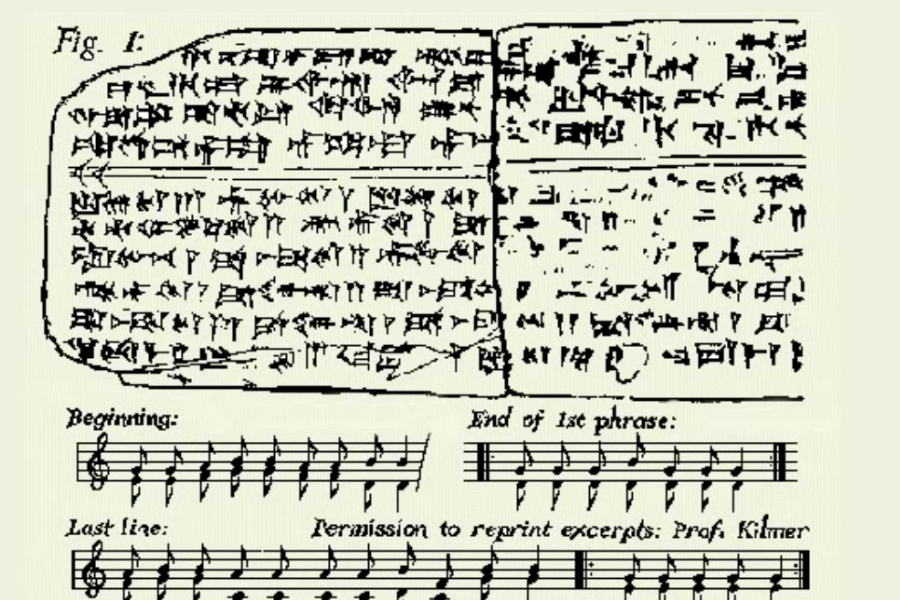
Lis­ten to the Old­est Song in the World: A Sumer­ian Hymn Writ­ten 3,400 Years Ago

See Ancient Greek Music Accu­rate­ly Recon­struct­ed for the First Time

Josh Jones is a writer and musi­cian based in Durham, NC. Fol­low him at @jdmagness

The Inventive Artwork of Pink Floyd’s Syd Barrett

We’ve had fun at the expense of the mul­ti-hyphen­ate: i.e. “I’m an actor-slash-drum­mer-slash-make­up-artist-slash-brand-ambas­sador,” etc…. And, fair enough. Few peo­ple are good enough at their one job to rea­son­ably excel at two or three, right? But then again, we live in the kind of hyper­spe­cial­ized world Hen­ry Ford could only dream of, and con­sid­er our­selves high­ly favored if we’re allowed to be just the one thing long enough to retire and do noth­ing.

What if we could have mul­ti­ple iden­ti­ties with­out being thought of as unse­ri­ous, eccen­tric, or men­tal­ly ill?

Dis­cus­sions of Syd Bar­rett, Pink Floyd’s found­ing singer and gui­tarist, nev­er pass with­out ref­er­ence to his men­tal ill­ness and abrupt dis­ap­pear­ance from the stage. But they also rarely engage with Bar­rett as an artist post-Pink Floyd: name­ly, his two under­rat­ed solo albums; and his out­put as a painter, the medi­um in which he began his career and to which he returned for the last thir­ty years of his life.

If Bar­rett were allowed a role oth­er than crazy dia­mond (a role, we must allow, assigned to him by his for­mer band­mates), we might see more of his work in gallery col­lec­tions and exhi­bi­tions. One can­not say this about every famous musi­cian who paints. For Bar­rett, art was not a hob­by, and it called to him before music. It was in his stu­dent days at Cam­bridgeshire Col­lege of Arts and Tech­nol­o­gy that he met David Gilmour. From Cam­bridge he moved to Cam­ber­well Col­lege of Arts in Lon­don and began to pro­duce and exhib­it mature stu­dent work (see here).

Bar­ret­t’s work “shows some of the advan­tages of an art school train­ing,” wrote a review­er of a 1964 exhi­bi­tion. “He is already show­ing him­self a sen­si­tive han­dler of oil paint who wise­ly lim­its his palette to gain rich­ness and den­si­ty.” (Bar­rett had dis­played a prodi­gious ear­ly tal­ent for achiev­ing these qual­i­ties in water­col­or — see, for exam­ple, an impres­sive, impres­sion­is­tic still-life of orange dahlias, auc­tioned off in 2021, made when the artist was only 15.)

His train­ing gave him the con­fi­dence to break away from for­mal exer­cis­es dur­ing this peri­od and exper­i­ment with dif­fer­ent styles and sub­jects, from the dis­turb­ing, prim­i­tivist Lions to the hol­low-eyed, Munch-like Por­trait of a Girl. Bar­ret­t’s first stu­dent peri­od end­ed in the mid-six­ties, as Pink Floyd began to take off and Bar­rett “turned into a song­writer” (then-man­ag­er Andrew King lat­er wrote) “it seemed like overnight.”

After his spell with Pink Floyd and brief solo record­ing career came to an end, Bar­rett moved back to Cam­bridge with his moth­er in 1978, dropped the nick­name “Syd” and began paint­ing again as Roger Bar­rett, avoid­ing any men­tion of life in music. From that year until he died, he worked in sev­er­al styles and dif­fer­ent media, paint­ing strik­ing abstrac­tions and land­scapes and even mak­ing his own fur­ni­ture designs.

While he burned many can­vas­es, many from this time sur­vive. See a select­ed chronol­o­gy of his work in the video above and in the pho­tos here. Try to put aside the sto­ry of Syd Bar­rett the trag­ic Pink Floyd front­man, and let the work of Roger Bar­rett the artist inspire you.

via Boing­Bo­ing

Relat­ed Con­tent:

Syd Barrett’s “Effer­vesc­ing Ele­phant” Comes to Life in a New Retro-Style Ani­ma­tion

Under­stand­ing Pink Floyd’s Wish You Were Here, Their Trib­ute to Depart­ed Band­mate Syd Bar­rett

Watch David Gilmour Play the Songs of Syd Bar­rett, with the Help of David Bowie & Richard Wright

Josh Jones is a writer and musi­cian based in Durham, NC. Fol­low him at @jdmagness.

Cover Songs: Philosophy and Taxonomy on Pretty Much Pop: A Culture Podcast #129

 width=

Is re-play­ing or re-record­ing a song writ­ten and per­formed by some­one else an act of love or pre­da­tion? Your host Mark Lin­sen­may­er is joined by Too Much Joy’s Tim Quirk, the Gig Gab Podcast’s Dave Hamil­ton, and the author of A Phi­los­o­phy of Cov­er Songs Prof. P.D. Mag­nus to talk about dif­fer­ent types of and pur­pos­es for cov­ers, look a lit­tle at the his­to­ry, share favorites, and more.

A few of the many cov­er songs we men­tion include:

This playlist includes most of the songs men­tioned in P.D.’s book.

To prep for this, in addi­tion to read­ing P.D.’s book (which is free), we looked at var­i­ous lists of best and worst cov­er songs of all time: from timeout.combestlifeonline.comRolling StoneRadio X. Also check out this episode of the Ghost Notes Pod­cast.

Fol­low us @news4wombats (for P.D.), @tbquirk@DaveHamilton, and @MarkLinsenmayer.

Hear more Pret­ty Much Pop. Sup­port the show at patreon.com/prettymuchpop or by choos­ing a paid sub­scrip­tion through Apple Pod­casts. This pod­cast is part of the Par­tial­ly Exam­ined Life pod­cast net­work.

Pret­ty Much Pop: A Cul­ture Pod­cast is the first pod­cast curat­ed by Open Cul­ture. Browse all Pret­ty Much Pop posts.

How Joni Mitchell Learned to Play Guitar Again After a 2015 Brain Aneurysm–and Made It Back to the Newport Folk Festival

Joni Mitchell almost quit the music indus­try in 1996, two years after releas­ing what crit­ics called her best album since the 70s, 1994’s Tur­bu­lent Indi­go. “I was in a los­ing fight with a busi­ness that basi­cal­ly, you know, was treat­ing me like an also-ran or a has-been, even though I was still doing good work,” she told an inter­view­er at the time. “Every­thing about the busi­ness dis­gust­ed me.”

But show busi­ness has nev­er real­ly been about the show or the busi­ness for Mitchell. From her deeply per­son­al song­writ­ing to her vocal vul­ner­a­bil­i­ty, she imbues her music with the deep­est parts of her­self. Then there’s her bril­liant­ly idio­syn­crat­ic gui­tar play­ing. “Her gui­tar does­n’t real­ly sound like a gui­tar,” Jef­frey Pep­per Rodgers writes at Acoustic Gui­tar. “The tre­ble strings become a cool-jazz horn sec­tion; the bass snaps out of syn­co­pa­tions like a snare drum; the notes ring out in clus­ters that sim­ply don’t come out of a nor­mal six-string.”

Mitchell “mas­tered the idea that she could tune the gui­tar any way she want­ed,” says David Cros­by. She tuned to “the num­bers in a date… a piece of music that I liked on the radio,” she says. “I’d tune to bird­songs and the land­scape I was sit­ting in.” Try­ing to dupli­cate Mitchel­l’s tun­ings is typ­i­cal­ly a fool’s errand; even she for­gets them. But “Joni’s weird chords,” as she says, are indis­pens­able to her sound. (She also says she’s only writ­ten two songs — one of them her first — in stan­dard tun­ing.)

In 1996, a dig­i­tal gui­tar ped­al that emu­lat­ed her tun­ings and allowed a greater range of sym­phon­ic tones brought her back to the stage. Or, to put it anoth­er way — what brought her back to music was the gui­tar, which is exact­ly what brought her back to the stage at this year’s New­port Folk Fes­ti­val — play­ing her first live set in 20 years after suf­fer­ing a brain aneurysm in 2015. (She last played New­port 53 years ago in 1969.) Noth­ing keeps Joni down for long.

In this case, how­ev­er, Mitchell did­n’t just for­get her tun­ings after her ill­ness. She for­got how to play the gui­tar alto­geth­er. She had to teach her­self again by watch­ing videos of her play­ing online. “I’m learn­ing,” she says in the CBS inter­view at the top. “I’m look­ing at videos that are on the net, to see where to put my fin­gers. It’s amaz­ing… when you have an aneurysm, you don’t know how to get into a chair. You don’t know how to get out of bed. You have to learn all these things again. You’re going back to infan­cy, almost.”

She’s come a long way since 2015, when she could nei­ther speak nor walk, “much less play the gui­tar,” notes NPR. “To be able to recov­er to the point of being able to per­form as a musi­cian is real­ly incred­i­ble,” says Dr. Antho­ny Wang, a neu­ro­sur­geon at Ronald Regan UCLA Hos­pi­tal. “Play­ing an instru­ment and vocal cord coor­di­na­tion, those sort of things are real­ly, super com­plex fine move­ments that would take a long time to relearn.” Mitchel­l’s com­mit­ment to mas­ter­ing her instru­ment again was unflag­ging.

See her above pluck out “Joni’s weird chords” on one of her Park­er Fly gui­tars in a solo sec­tion from the song “Just Like This Train” from Court & Spark. As we not­ed in an ear­li­er post, she was joined at New­port by a host of celebri­ty friends, includ­ing Bran­di Carlile, who sits with her in the CBS inter­view and con­firms the amount of “will and grit” she applied to her recov­ery. She’s sur­vived polio, per­son­al tragedy, the 60s, chain smok­ing, and a debil­i­tat­ing aneurysm: the 78-year-old liv­ing leg­end won’t be with us for­ev­er, but we might expect she’ll have a gui­tar in her hand when she final­ly makes her exit from the music busi­ness for the last time.

via NPR

Relat­ed Con­tent:

Joni Mitchell Sings “Both Sides Now” at the New­port Folk Fes­ti­val: Watch Clips from Her First Full Con­cert Since 2002

Hear Demos & Out­takes of Joni Mitchell’s Blue on the 50th Anniver­sary of the Clas­sic Album

How Joni Mitchell Wrote “Wood­stock,” the Song that Defined the Leg­endary Music Fes­ti­val, Even Though She Wasn’t There (1969)

Josh Jones is a writer and musi­cian based in Durham, NC. Fol­low him at @jdmagness.

Joni Mitchell Sings “Both Sides Now” at the Newport Folk Festival: Watch Clips from Her First Full Concert Since 2002

This week­end, the New­port Folk Fes­ti­val made head­lines when it brought out of retire­ment two music leg­ends. Paul Simon returned to the stage and per­formed “Grace­land,” “The Box­er” and “oth­er clas­sics.” But Joni Mitchell stole the show when she per­formed (with a lit­tle help from Bran­di Carlile) “Both Sides Now,” “Big Yel­low Taxi,” “Just Like This Train” and 10 oth­er songs. Mitchell suf­fered a brain aneurysm in 2015, and had­n’t per­formed a full con­cert since 2002. Hence why the show was a big deal.

Get the full back­sto­ry on the New­port per­for­mance over at NPR.

Just Like This Train

Sum­mer­time

Cir­cle Game

If you would like to sign up for Open Culture’s free email newslet­ter, please find it here. It’s a great way to see our new posts, all bun­dled in one email, each day.

If you would like to sup­port the mis­sion of Open Cul­ture, con­sid­er mak­ing a dona­tion to our site. It’s hard to rely 100% on ads, and your con­tri­bu­tions will help us con­tin­ue pro­vid­ing the best free cul­tur­al and edu­ca­tion­al mate­ri­als to learn­ers every­where. You can con­tribute through Pay­Pal, Patre­on, and Ven­mo (@openculture). Thanks!

Relat­ed Con­tent 

Joni Mitchell Pub­lish­es a Book of Her Rarely Seen Paint­ings & Poet­ry

Joni Mitchell Sings an Aching­ly Pret­ty Ver­sion of “Both Sides Now” on the Mama Cass TV Show (1969)

See Clas­sic Per­for­mances of Joni Mitchell from the Very Ear­ly Years–Before She Was Even Named Joni Mitchell (1965/66)

How Joni Mitchell Wrote “Wood­stock,” the Song that Defined the Leg­endary Music Fes­ti­val, Even Though She Wasn’t There (1969)

Songs by Joni Mitchell Re-Imag­ined as Pulp Fic­tion Book Cov­ers & Vin­tage Movie Posters

« Go BackMore in this category... »
Quantcast