50,000 Norman Rockwell Photographs Now Digitized and Available Online

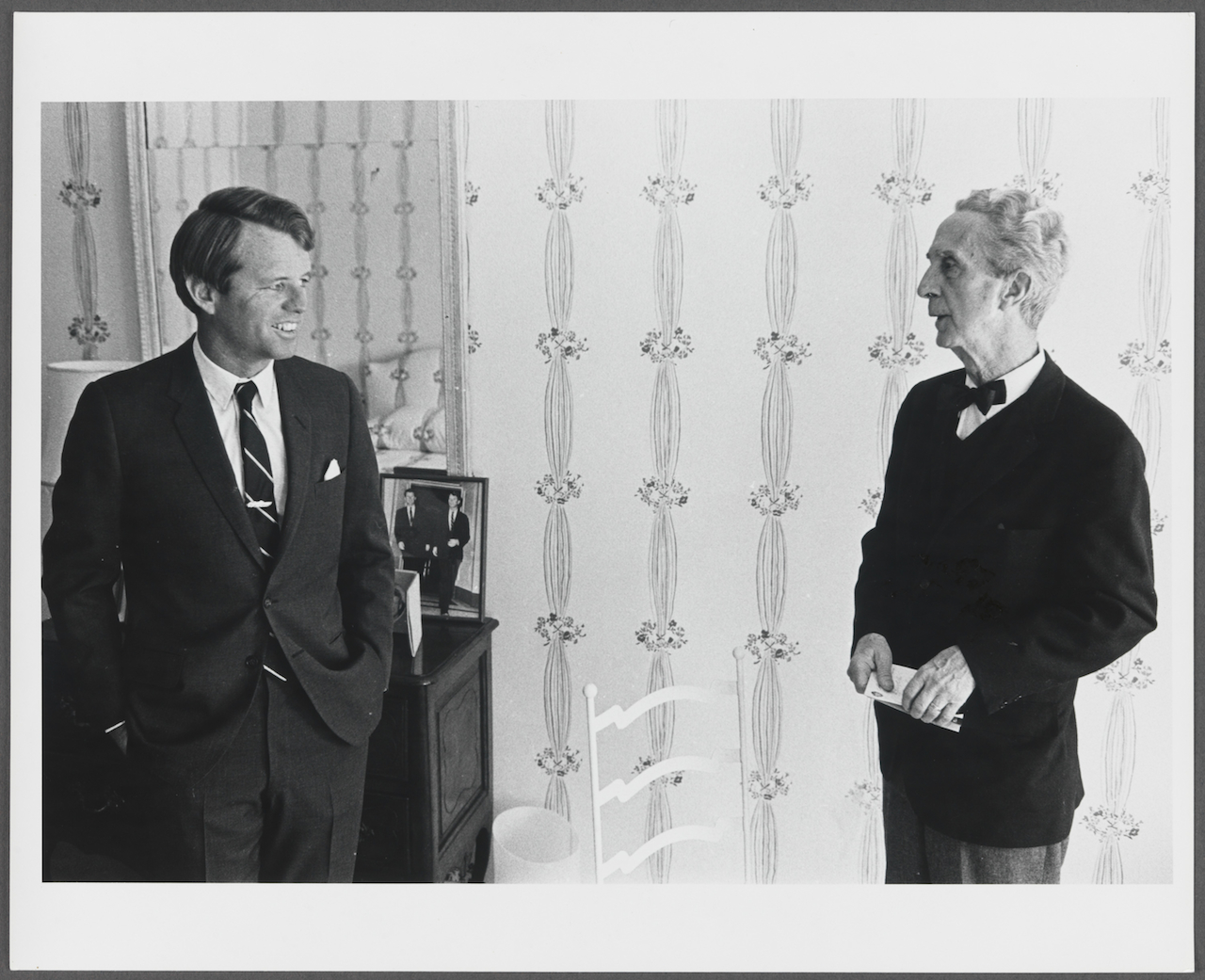
rfk rockwell

Ref­er­ence pho­to for Nor­man Rockwell’s por­trait of Robert F. Kennedy, c. 1968. Cour­tesy of the Nor­man Rock­well Muse­um Col­lec­tions.

What­ev­er you think of Nor­man Rock­well’s paint­ings and illus­tra­tions, you can’t deny them the sta­tus of endur­ing Amer­i­cana. For my mon­ey, Rock­well’s images cer­tain­ly make for more inter­est­ing rep­re­sen­ta­tions of the cul­ture than those of, say, Thomas Kinkade. But even if you have lit­tle inter­est in the Amer­i­ca Rock­well cre­at­ed on paper and can­vas, you’ll sure­ly find com­pelling the Amer­i­ca he cap­tured in pho­tographs. We now have unprece­dent­ed access to these thanks to a $150,000 grant from the Insti­tute of Muse­um and Library Ser­vices that has enabled the Nor­man Rock­well Muse­um to dig­i­tize what they call the Nor­man Rock­well Pho­to­graph­ic Print Col­lec­tion: approx­i­mate­ly 50,000 images that, accord­ing to archivist Venus Van Ness, “pro­vide a unique win­dow into Mr. Rockwell’s work­ing process, his per­son­al life, and the times in which he lived.”

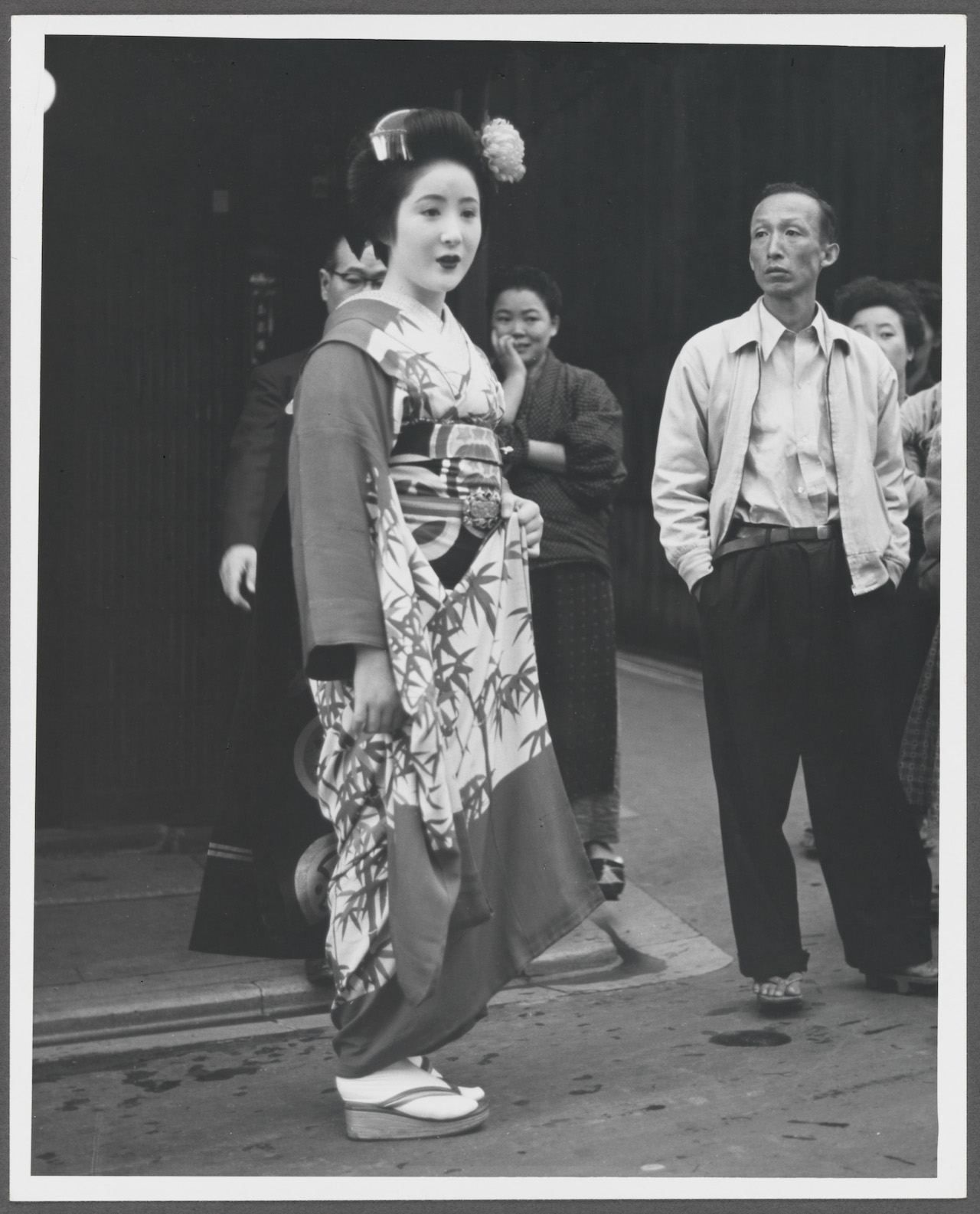
norman-rockwell-pan-am

Ref­er­ence pho­to for “Por­trait of a Geisha Girl,” Pan Amer­i­can- Japan (1956)

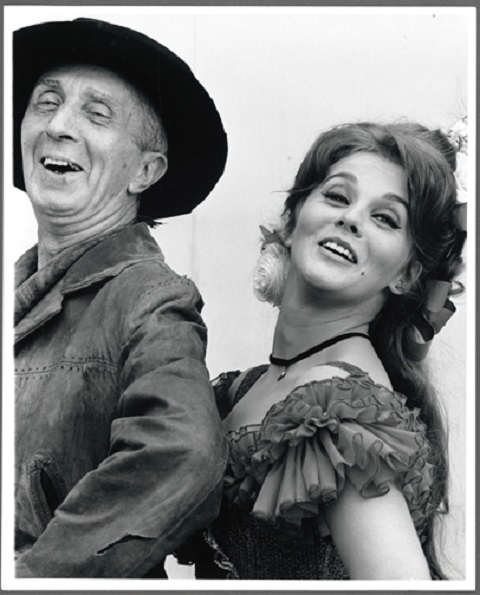
These images include “ref­er­ence pho­tos Rock­well used to com­pose his paint­ings, pho­tos of work in progress, and can­did shots of him work­ing and inter­act­ing with John Wayne, Ann-Mar­gret, Pres­i­dents Dwight D. Eisen­how­er and John F. Kennedy, and many oth­er twen­ti­eth-cen­tu­ry icons who posed for the artist in his Stock­bridge stu­dio, on loca­tion at a movie set, at the White House, or — as in the case of Kennedy — at his Hyan­nis Port home on Cape Cod.”

You can browse them on this page, which dis­plays the search results for the word “pho­to­graph” in the Nor­man Rock­well Muse­um’s archives. And if you want to dig up those pho­tos of Wayne, Ann-Mar­gret, Kennedy, or oth­er icons of what they call the Amer­i­can cen­tu­ry, you can also add par­tic­u­lar terms to search for spe­cif­ic sub­jects. Or you can even search for spe­cif­ic places, for instance Rock­well’s many ref­er­ence pho­tos for the ads he did for flights to Japan by Pan Am — nat­u­ral­ly, the icon­i­cal­ly Amer­i­can air­line.

Norman Rockwell and Ann-Margret

Ref­er­ence pho­to of Nor­man Rockwell’s Por­trait of Ann-Mar­gret, c. 1965.

“To any­one who saw the exhi­bi­tion Nor­man Rock­well: Behind the Cam­era, which was orga­nized by the Nor­man Rock­well Muse­um and opened at the Brook­lyn Muse­um in Novem­ber 2010,” writes Hyper­al­ler­gic’s Ben­jamin Sut­ton, “the impor­tance of pho­tog­ra­phy to Rockwell’s prac­tice is not news. That show jux­ta­posed some of Rockwell’s best known paint­ings like ‘New Kids in the Neigh­bor­hood’ (1967) and ‘Boy in a Din­ing Car’ (1946) with the many, many stu­dio and doc­u­men­tary pho­tos the artist took and spliced togeth­er before putting pen­cil to paper or paint­brush to can­vas.” But now “the pub­lic and art his­to­ri­ans can get a bet­ter sense of the labo­ri­ous pre­lim­i­nary pho­tog­ra­phy work that went into each of Rockwell’s images, and the excep­tion­al lev­el of access he was giv­en to his sub­jects.” And though the process of brows­ing them may remain tricky for the time being, rest assured that, accord­ing to the offi­cial site, “the Museum’s new dig­i­tal expe­ri­ences project is get­ting under­way with sup­port from yet anoth­er IMLS match­ing grant award­ed in Sep­tem­ber.” And so Amer­i­can inno­va­tion con­tin­ues, on a lev­el Rock­well could nev­er have imag­ined.

This post comes via Hyper­al­ler­gic, where you can see more pho­tos in a nice, large for­mat.

Relat­ed Con­tent:

Nor­man Rockwell’s Type­writ­ten Recipe for His Favorite Oat­meal Cook­ies

Yale Launch­es an Archive of 170,000 Pho­tographs Doc­u­ment­ing the Great Depres­sion

Pho­tog­ra­phy by Lud­wig Wittgen­stein Dis­played by Archives at Cam­bridge

Col­in Mar­shall hosts and pro­duces Note­book on Cities and Cul­ture and writes essays on cities, lan­guage, Asia, and men’s style. He’s at work on a book about Los Ange­les, A Los Ange­les Primer. Fol­low him on Twit­ter at @colinmarshall or on Face­book.

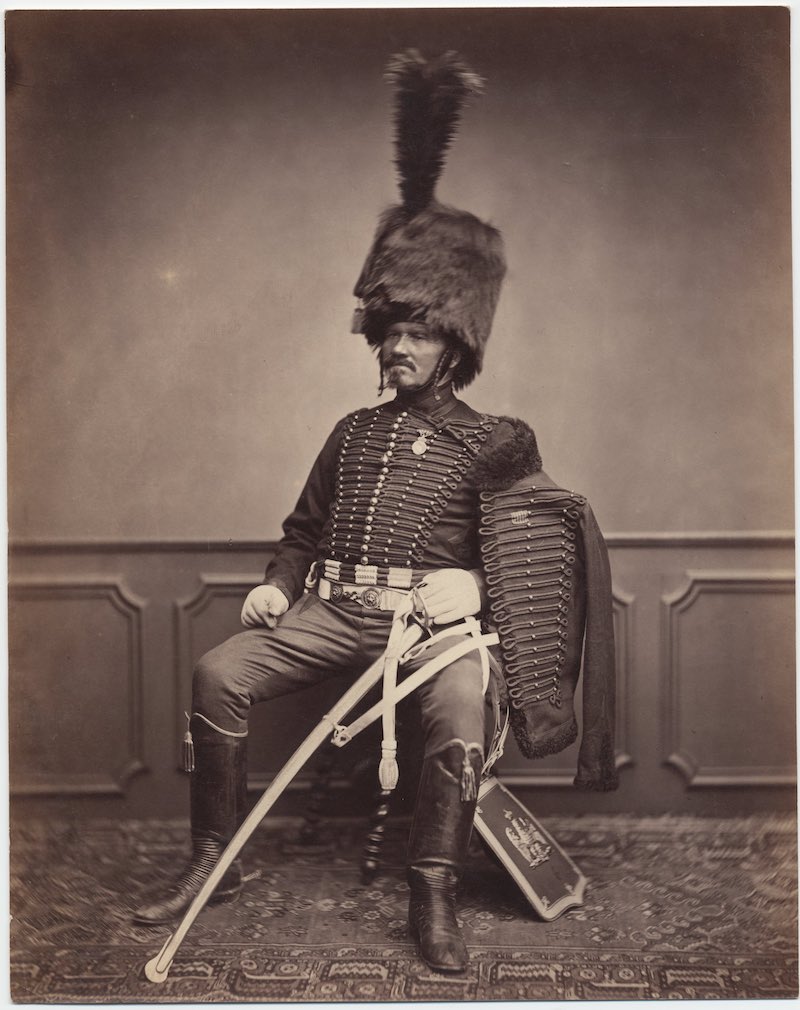
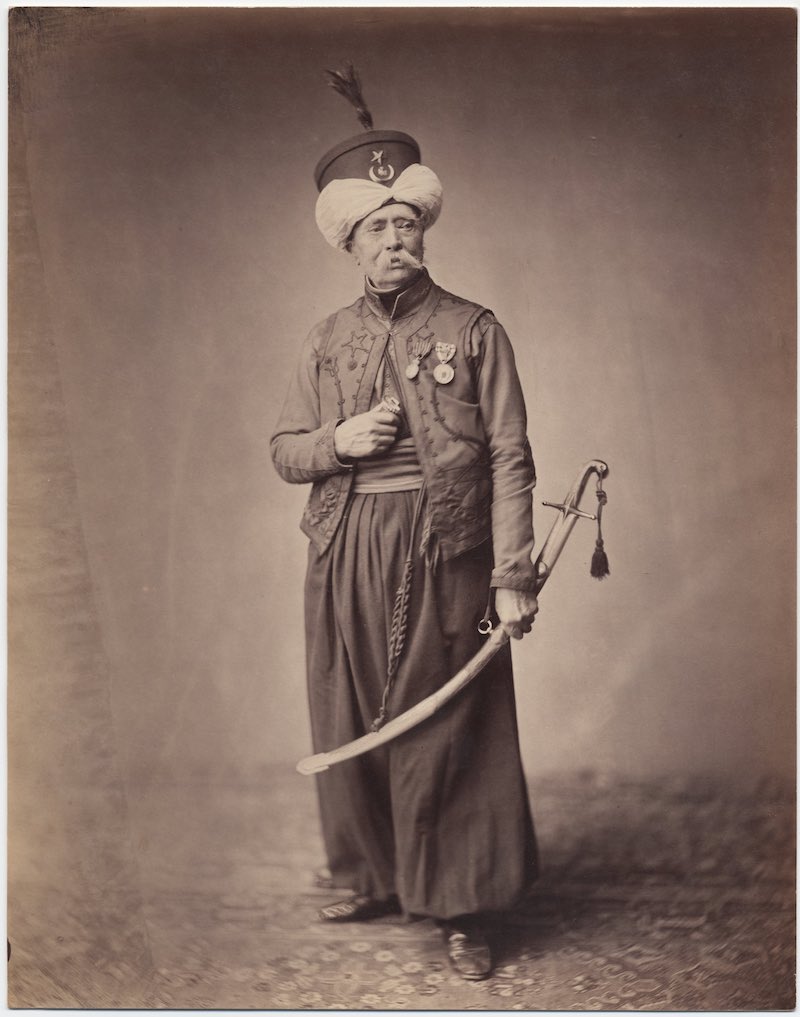
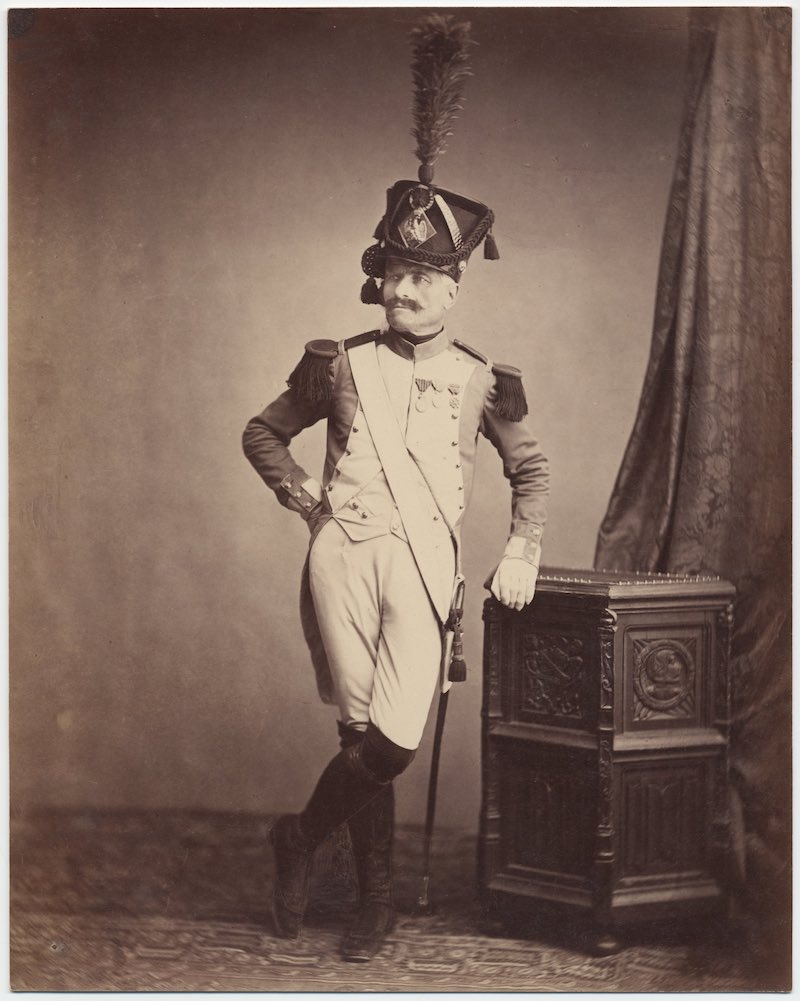
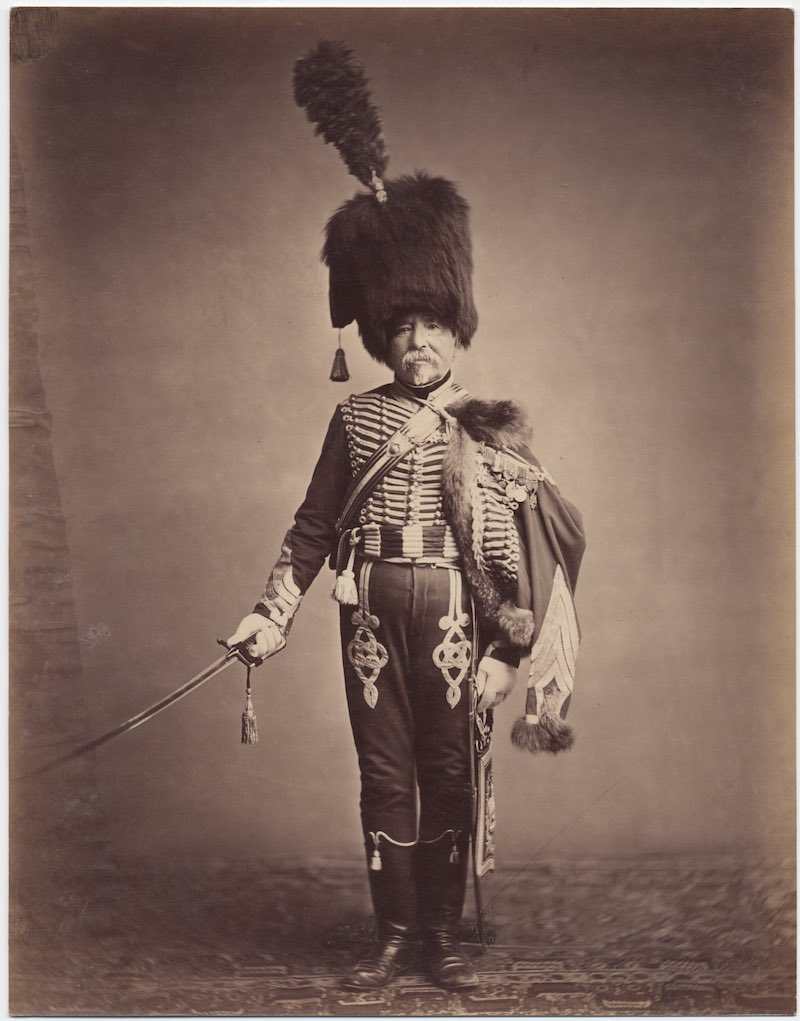
Vintage Photos of Veterans of the Napoleonic Wars, Taken Circa 1858

Monsieur Moret of the 2nd Regiment 1814/15

His­to­ri­ans have debat­ed for cen­turies how Napoleon Bona­parte man­aged to turn the same men who once over­threw a king in the name of lib­erté, égal­ité  and fra­ter­nité into a for­mi­da­ble fight­ing force devot­ed to an emper­or. But that’s pre­cise­ly what he did. As he swept through Italy, Spain and Egypt, his army grew rapid­ly and not just with French troops. Pol­ish, Ger­man, Dutch and Ital­ian sol­diers took up arms under Napoleon’s ban­ner. In 1805, in a French vil­lage fac­ing the Eng­lish Chan­nel, Napoleon chris­tened his mas­sive multi­na­tion­al army the Grande Armée.

Monsieur Ducel Mameluke de la Garde  1813-1815.

Orig­i­nal­ly, the diminu­tive despot from Cor­si­ca planned to use the force to invade Britain but that ulti­mate­ly nev­er hap­pened. Instead, he direct­ed his force to take out some of his con­ti­nen­tal rivals. The Grande Armée destroyed the Holy Roman Empire at Auster­litz. After it forced the Aus­tri­ans into sub­mis­sion fol­low­ing the Bat­tle of Wagram in 1809, the Grande Armée set out for Napoleon’s dis­as­trous cam­paign in Rus­sia. As it marched towards Moscow in 1812, its ranks swelled to over a half mil­lion troops. As it retreat­ed, it was reduced to less than 120,000.

Monsieur Vitry Departmental Guard

Napoleon and the Grande Armée were final­ly defeat­ed in 1815 dur­ing the Bat­tle of Water­loo. And though Napoleon was igno­min­ious­ly exiled to Elba, he, and his army, con­tin­ued to be revered by the French. On the anniver­sary of his death, May 5th, vet­er­ans of the Napoleon­ic wars would pay homage to the Emper­or by march­ing in full uni­form through Paris’ Place Vendôme.

Quartermaster Fabry 1st Hussars

In 1858, some­one took por­traits of the vet­er­ans using that new­fan­gled tech­nol­o­gy called pho­tog­ra­phy. The men were well into old age when the pic­tures were tak­en, and some were clear­ly strug­gling to stay still for the length of the camera’s expo­sure. But they all look impres­sive in their uni­forms com­plete with epaulettes, medals, sash­es and plumes. You can see some of the images above. Click on each to enlarge them.

The pho­tographs, high­light­ed this week on Mash­able, come from a web­site host­ed by Brown Uni­ver­si­ty. There you can see more images from the col­lec­tion.

via Mash­able

Relat­ed Con­tent:

14,000 Free Images from the French Rev­o­lu­tion Now Avail­able Online

The First Col­or Pho­tos From World War I: The Ger­man Front

Napoleon: The Great­est Movie Stan­ley Kubrick Nev­er Made

Jonathan Crow is a Los Ange­les-based writer and film­mak­er whose work has appeared in Yahoo!, The Hol­ly­wood Reporter, and oth­er pub­li­ca­tions. You can fol­low him at @jonccrow. And check out his blog Veep­to­pus, fea­tur­ing lots of pic­tures of vice pres­i­dents with octo­pus­es on their heads.  The Veep­to­pus store is here.

David Lynch’s Photographs of Old Factories

lynch factory 1

David Lynch’s break out movie, Eraser­head, is the sort of movie that will seep into your uncon­scious and stay with you for days or weeks – like a par­tic­u­lar­ly unnerv­ing night­mare. Shot in inky black and white, the film achieves its uncan­ny pow­er in part because of its set­ting — a rot­ting indus­tri­al moon­scape bereft of nature. Much of the film’s sound­track is filled with the clank­ing of dis­tant machines and the hiss­ing of steam escap­ing pipes.

Lynch’s obses­sion with the rem­nants of the indus­tri­al rev­o­lu­tion have punc­tu­at­ed much of his work since — from the grimy, claus­tro­pho­bic Vic­to­ri­an streets in The Ele­phant Man to the open­ing titles of Twin Peaks to his 1990 avant-garde mul­ti­me­dia extrav­a­gan­za Indus­tri­al Sym­pho­ny No. 1.

“Well…if you said to me, ‘Okay, we’re either going down to Dis­ney­land or we’re going to see this aban­doned fac­to­ry,’ there would be no choice,” said Lynch once in an inter­view. “I’d be down there at the fac­to­ry. I don’t real­ly know why. It just seems like such a great place to set a sto­ry.”

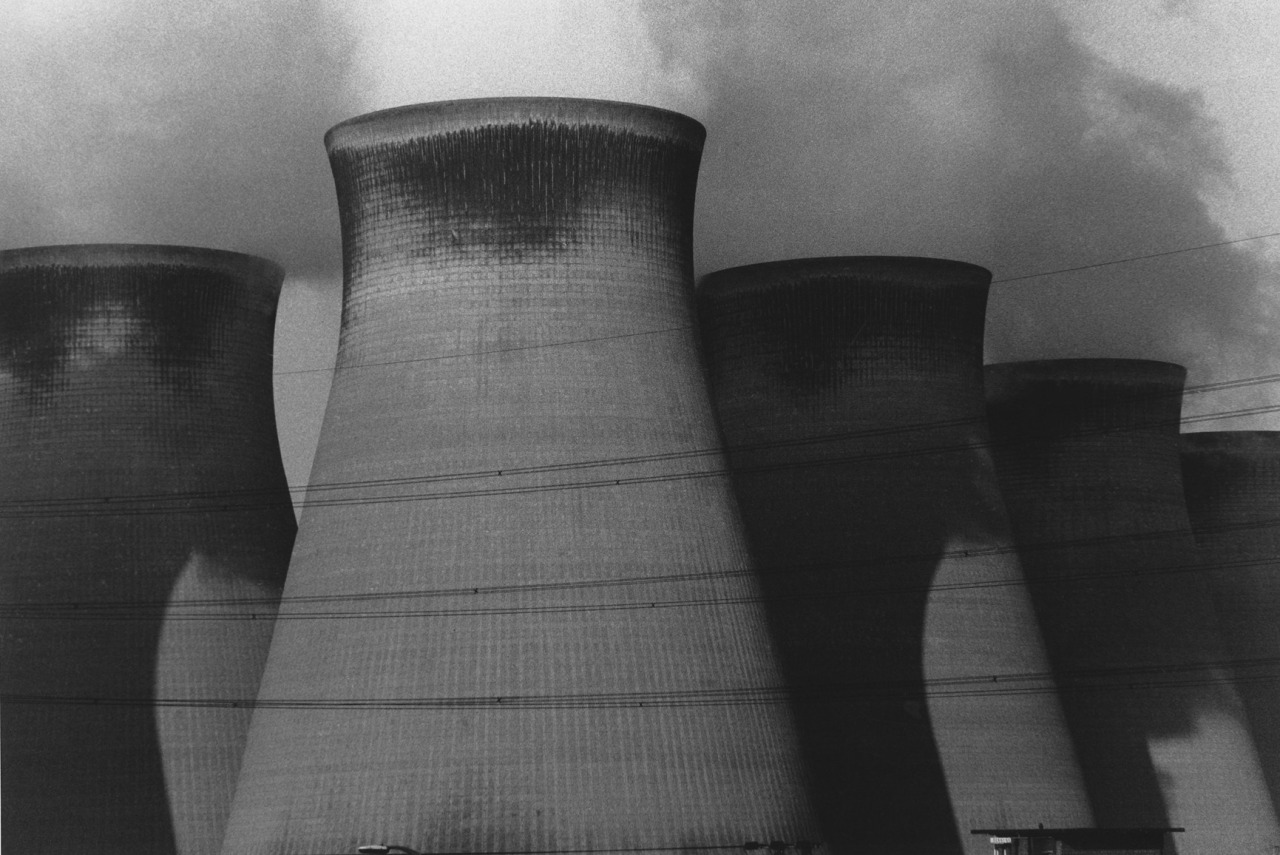
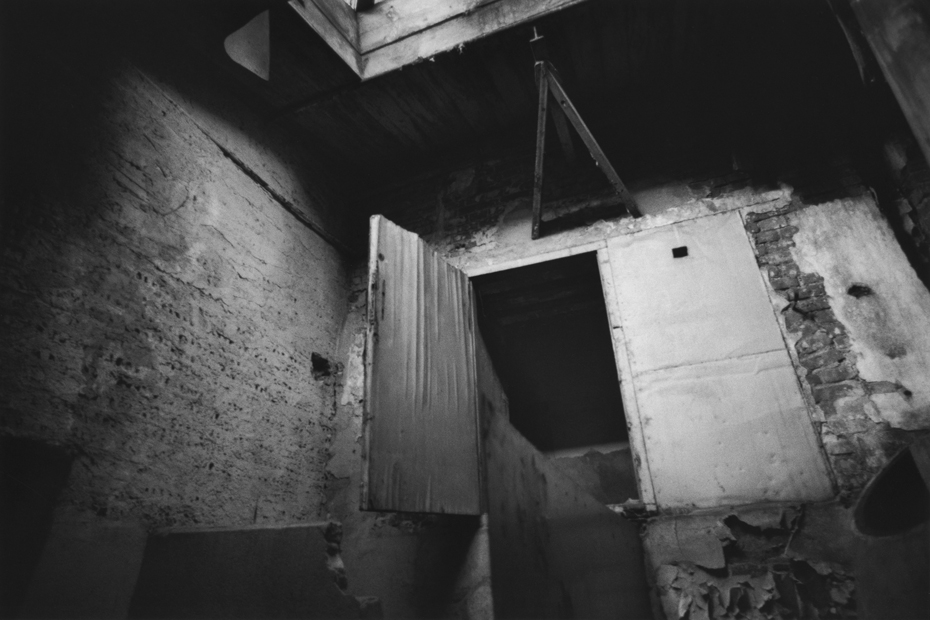
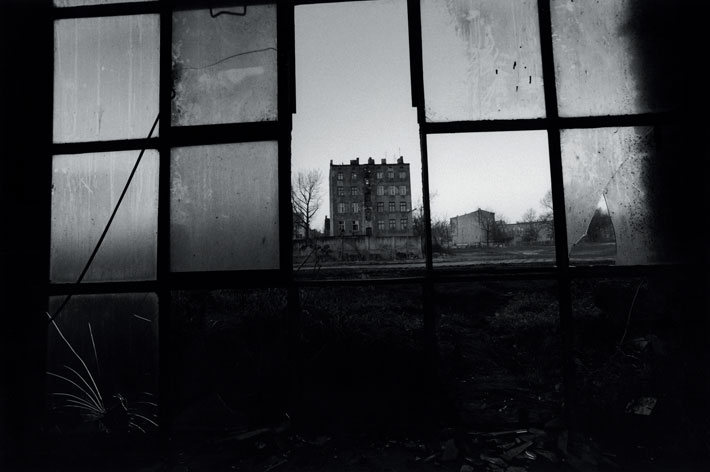
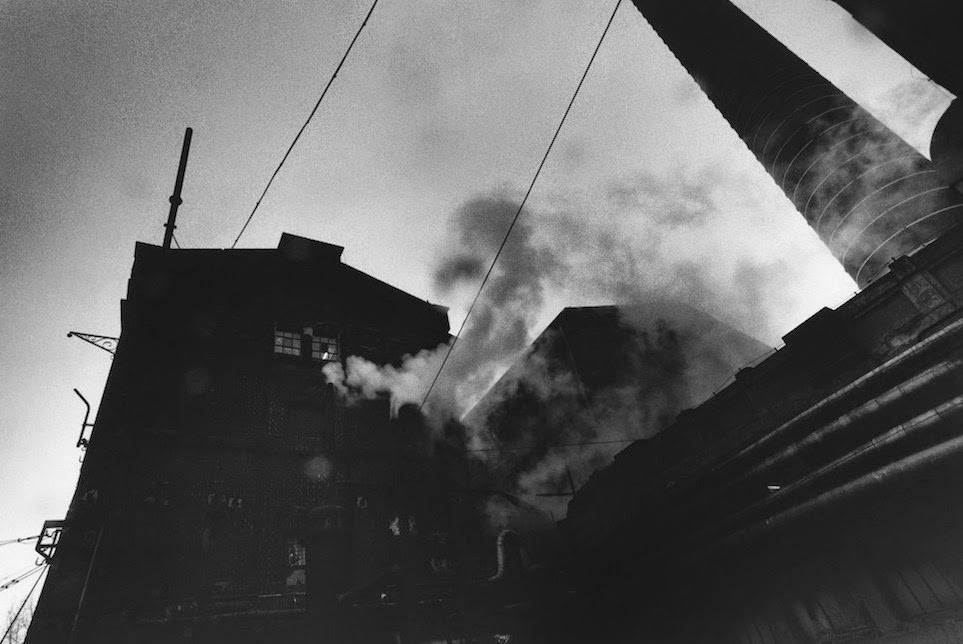
Ear­li­er this year, Lynch exhib­it­ed at a Lon­don gallery a series of pho­tographs he shot of, yes, rot­ting fac­to­ries around New York, Eng­land and par­tic­u­lar­ly Poland. The sub­jects of the pho­tos are pret­ty mun­dane – a door, a win­dow, a wall – but he imbues them with this odd tone of fore­bod­ing and men­ace. In oth­er words, Lynch makes them seem Lynchi­an.

“It’s an incred­i­ble mood,” Lynch told Dazed Mag­a­zine. “I feel like I’m in a place that’s just mag­i­cal, where nature is reclaim­ing these derelict fac­to­ries. It’s very dreamy. Every place you turn, there’s some­thing so sen­sa­tion­al and sur­pris­ing – it’s the Bea­t­les’ Mag­i­cal Mys­tery Tour. All the cities are look­ing more and more the same. The real trea­sures are going away; the mood they cre­ate is going away.”

See more pho­tos below and, if you’re so inclined, you can buy the book to the exhib­it here.

A door in Lodz, Poland
lynch factory 2.2

A win­dow and a real estate oppor­tu­ni­ty in Lodz

david lynch factory 3

A fac­to­ry. Lodz, Poland.

david lynch factory 4

Relat­ed Con­tent:

The Mas­ter­ful Polaroid Pic­tures Tak­en by Film­mak­er Andrei Tarkovsky

David Lynch Presents the His­to­ry of Sur­re­al­ist Film (1987)

David Lynch Lists His Favorite Films & Direc­tors, Includ­ing Felli­ni, Wilder, Tati & Hitch­cock

Stan­ley Kubrick’s Jazz Pho­tog­ra­phy and The Film He Almost Made About Jazz Under Nazi Rule

Young Stan­ley Kubrick’s Noirish Pic­tures of Chica­go, 1949

Jonathan Crow is a Los Ange­les-based writer and film­mak­er whose work has appeared in Yahoo!, The Hol­ly­wood Reporter, and oth­er pub­li­ca­tions. You can fol­low him at @jonccrow. And check out his blog Veep­to­pus, fea­tur­ing lots of pic­tures of vice pres­i­dents with octo­pus­es on their heads.  The Veep­to­pus store is here.


Young Stanley Kubrick’s Noirish Pictures of Chicago, 1949

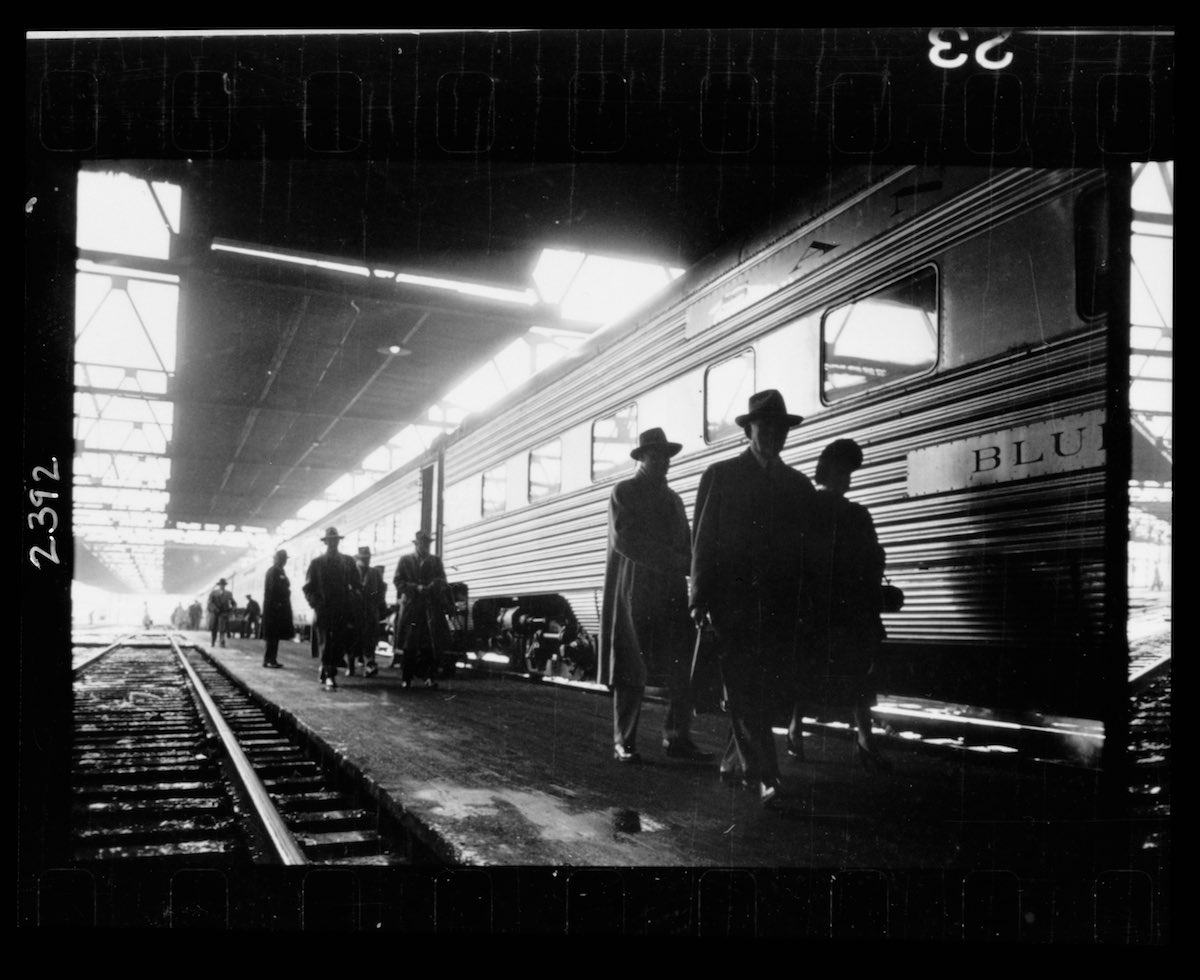
Men, probably commuters, walking along a platform next to a train

When Stan­ley Kubrick was a mere high school stu­dent in April 1945, just after FDR died, he snapped a pic­ture of a news ven­dor framed on either side by posters announc­ing the president’s death. He was so excit­ed by the pic­ture that he skipped school to devel­op it and then marched right into the office of Look mag­a­zine. Pho­to edi­tor Helen O’Brian offered to buy the pho­to for $25. Dis­play­ing his trade­mark cock­i­ness, Kubrick told her that he want­ed to see what price he could get from The New York Dai­ly News. They only offered $10, so Kubrick went with Look. With­in a few months, at the age of 17, Kubrick became a staff pho­tog­ra­ph­er for the pub­li­ca­tion.

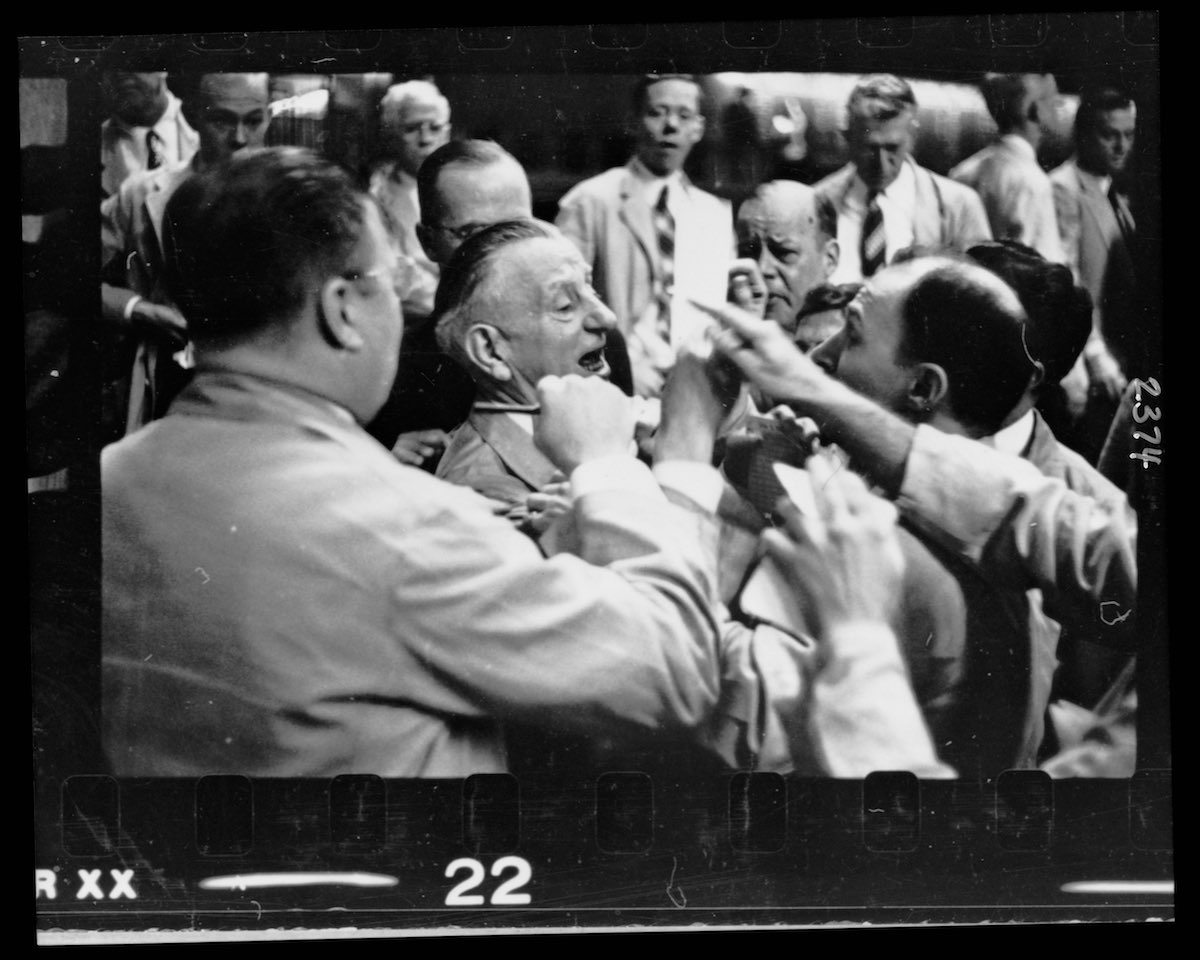
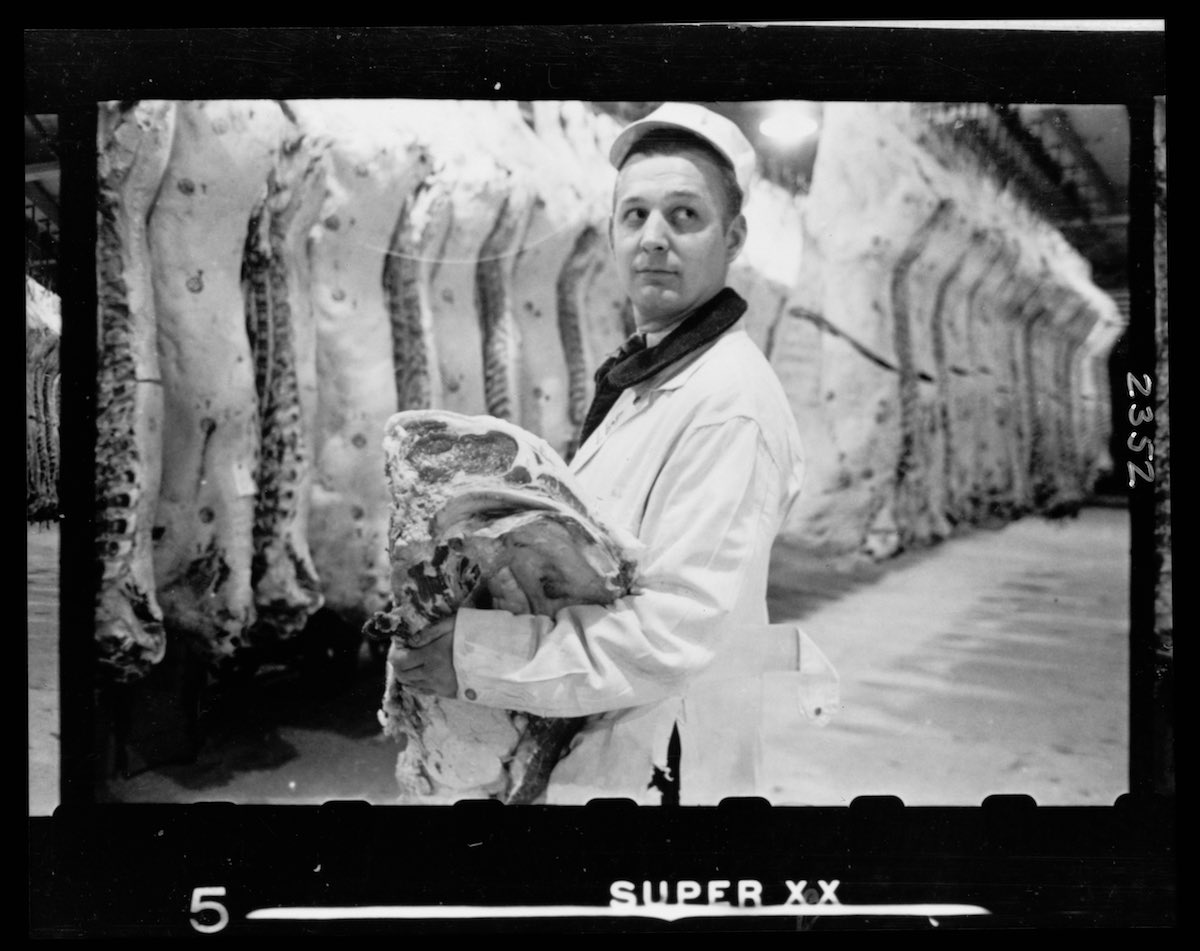
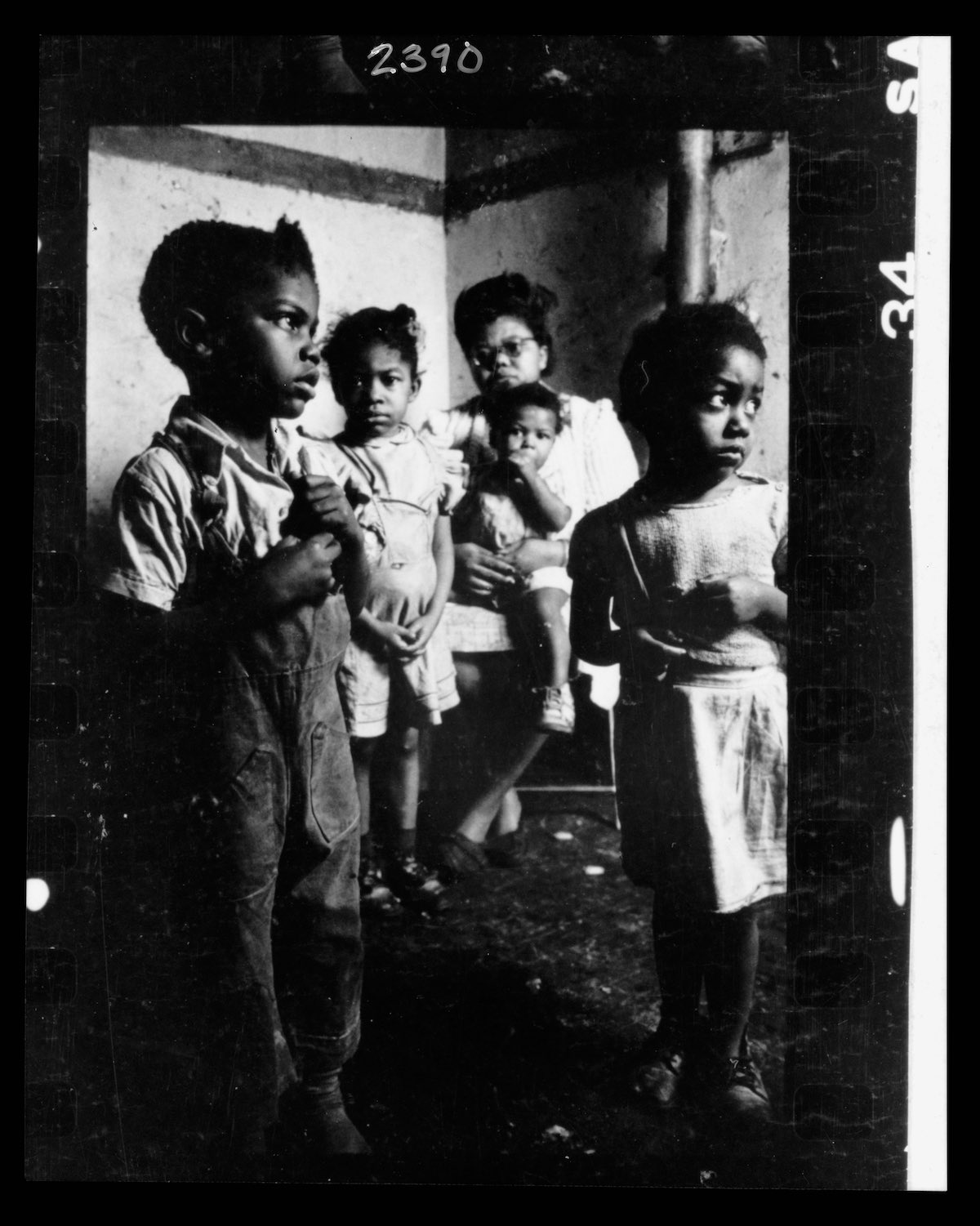
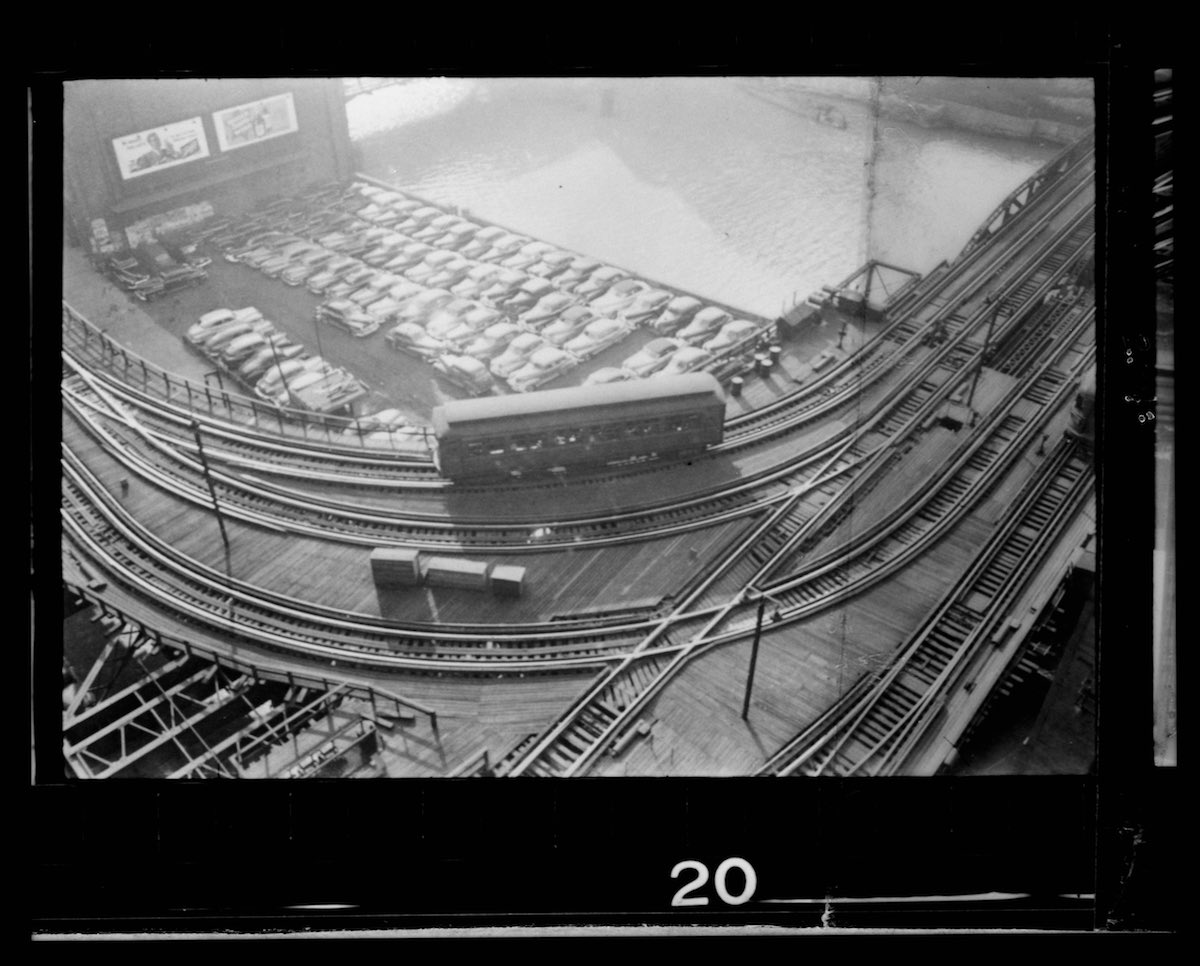
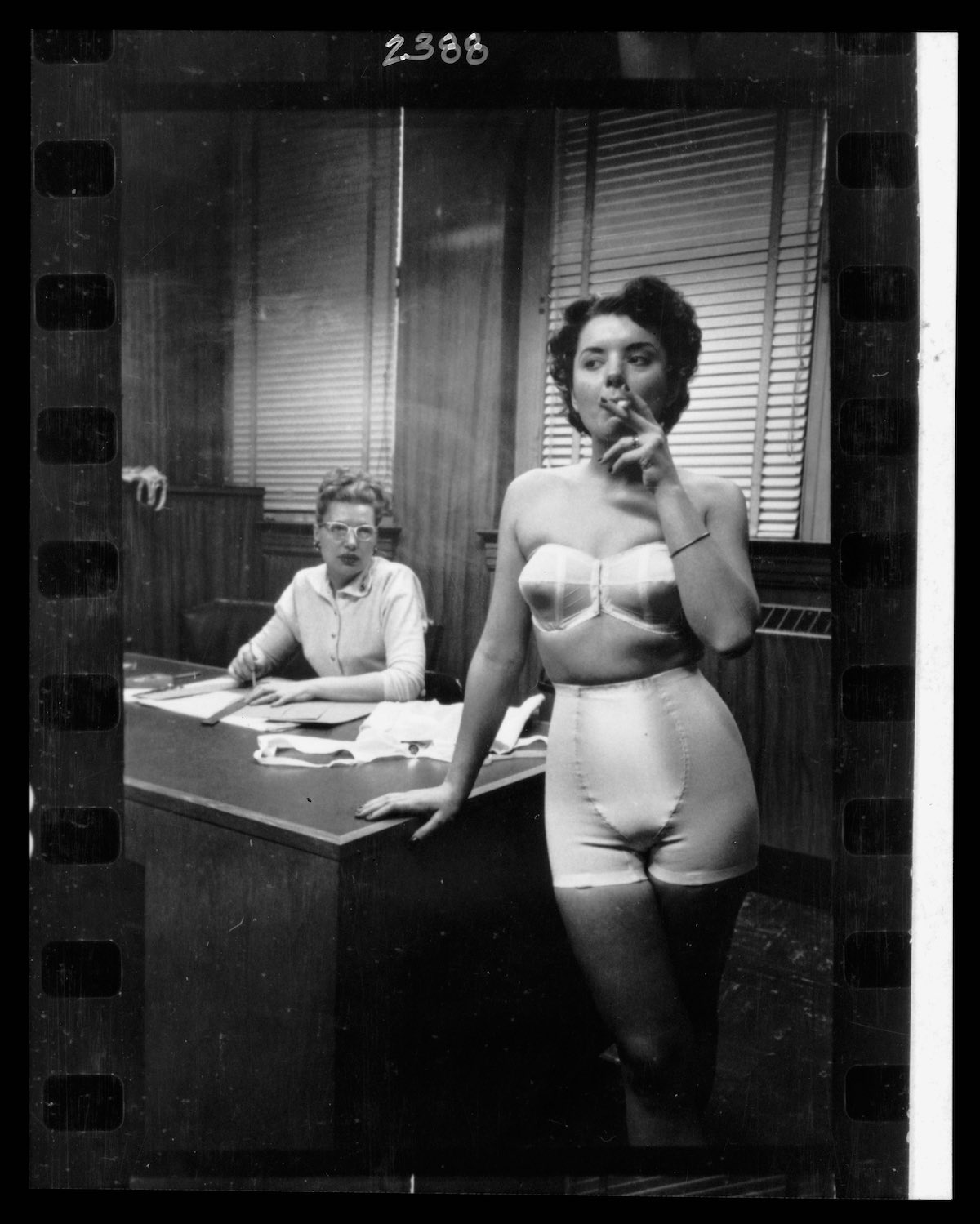
Below you can see some pho­tographs that Kubrick took in 1949 while on assign­ment in Chica­go. Using the same noirish high-con­trast, low-light look that marked his first three movies, he doc­u­ment­ed all dif­fer­ent stra­ta of soci­ety from floor traders, to lin­gerie mod­els, to meat pack­ers to impov­er­ished African-Amer­i­can fam­i­lies. Click  on the images to view them in a larg­er for­mat. Find a more exten­sive gallery of images here. To take a clos­er look at Kubrick­’s pho­tog­ra­phy, see the 2018 Taschen book Stan­ley Kubrick Pho­tographs: Through a Dif­fer­ent Lens and also Stan­ley Kubrick: Dra­ma & Shad­ows.

Men work­ing the floor at the Chica­go Board of Trade

Men working the floor at the Chicago Board of Trade

Lin­gerie mod­el, wear­ing a gir­dle and strap­less bra, smok­ing in an office; in the back­ground a woman sits at a desk

Lingerie model, wearing a girdle and strapless bra, smoking in an office; in the background a woman sits at a desk

Butch­er hold­ing slab of beef in a meat lock­er

Butcher holding slab of beef in a meat locker

African Amer­i­can moth­er and her four chil­dren in their ten­e­ment apart­ment

African American mother and her four children in their tenement apartment

Over­head view of the “L” ele­vat­ed rail­way

Overhead view of the "L" elevated railway in Chicago, Illinois

via Mash­able

Relat­ed Con­tent

Stan­ley Kubrick’s Very First Films: Three Short Doc­u­men­taries

The Mak­ing of Stan­ley Kubrick’s A Clock­work Orange

James Cameron Revis­its the Mak­ing of Kubrick’s 2001: A Space Odyssey

Ter­ry Gilliam: The Dif­fer­ence Between Kubrick (Great Film­mak­er) and Spiel­berg (Less So)

Jonathan Crow is a Los Ange­les-based writer and film­mak­er whose work has appeared in Yahoo!, The Hol­ly­wood Reporter, and oth­er pub­li­ca­tions. You can fol­low him at @jonccrow. And check out his blog Veep­to­pus, fea­tur­ing lots of pic­tures of vice pres­i­dents with octo­pus­es on their heads.  The Veep­to­pus store is here.

Photos of Hiroshima by Hiroshima Mon Amour Star Emmanuelle Riva (1958)

hiroshima mon amour pix

Hiroshi­ma Mon Amour, Alain Resnais’s land­mark 1960 med­i­ta­tion on war and mem­o­ry, was Emmanuelle Riva’s first star­ring role. She plays a mar­ried actress (catch a scene here) who, while mak­ing a movie in Japan, has an affair with a Japan­ese archi­tect played by Eiji Oka­da. Screen­writer Mar­guerite Duras chis­els away at the actress’s Gal­lic reserve over the course of the film as mem­o­ries of the war, not to men­tion guilt over the affair, over­whelm her. Resnais lingers on Riva’s face as she comes apart. Her per­for­mance is as brave as it is exact. French film crit­ic Jean Domarchi once stat­ed, “Hiroshi­ma is a doc­u­men­tary on Emmanuelle Riva.”

HMA 2

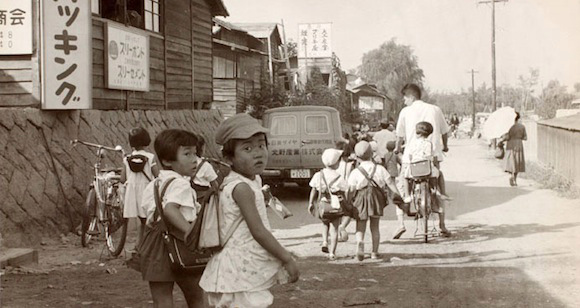
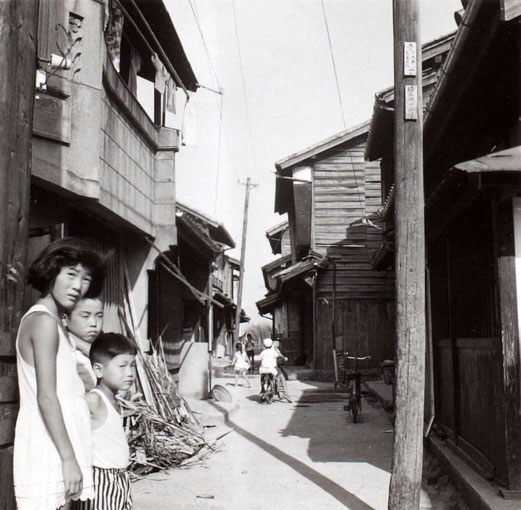
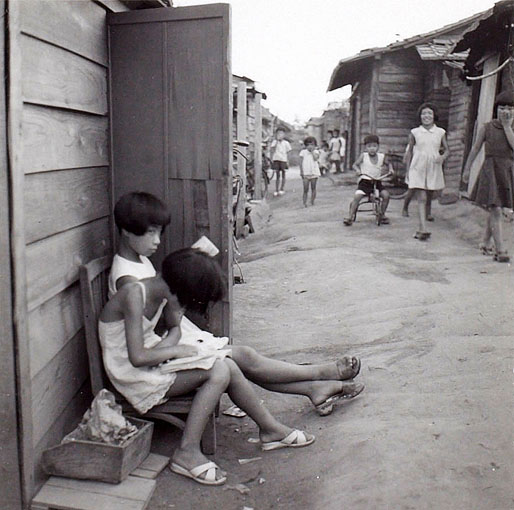
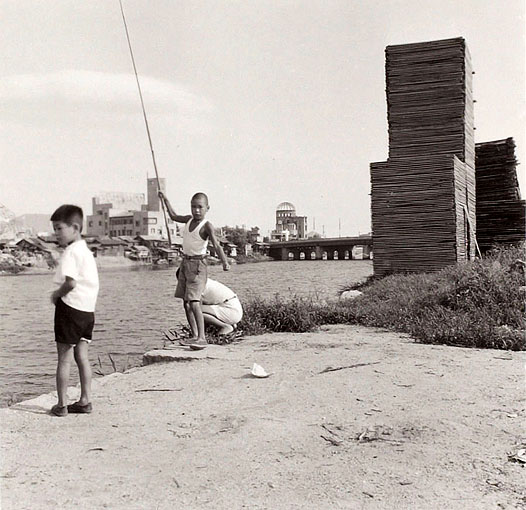
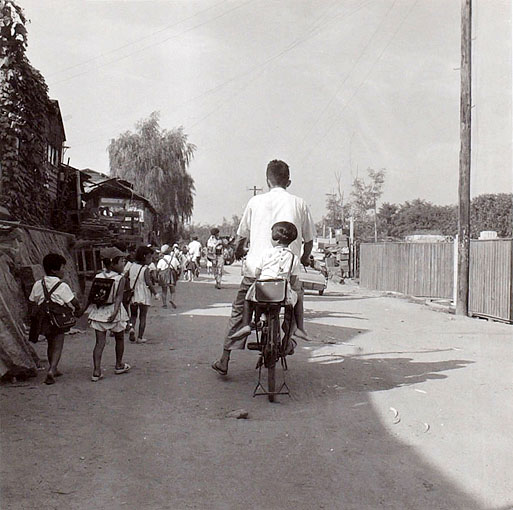
As it turns out, Riva was doc­u­ment­ing Hiroshi­ma too. While film­ing on loca­tion, she took a series of pho­tographs of every­day life of a city still recov­er­ing from the war. They are a fas­ci­nat­ing slice of life from a Japan that has long dis­ap­peared. The Hiroshi­ma Riva cap­tured was still dom­i­nat­ed by dirt roads and wood­en build­ings. Peo­ple still reg­u­lar­ly wore tra­di­tion­al geta wood­en shoes.

hma 3

Chil­dren seemed to be a favorite sub­ject for Riva. She pho­tographs a flock of ele­men­tary school stu­dents walk­ing to school; a pair of boys fish­ing before the gen­baku dome – ground zero for the bomb; and a gag­gle of kids star­ing agog into the lens, no doubt curi­ous at the sight of a styl­ish French woman with an expen­sive cam­era.

hma 4

Years lat­er, Riva’s pic­tures were col­lect­ed into a book called Hiroshi­ma 1958, which, sad­ly, seems to be avail­able only in Japan. Riva, of course, went on to a cel­e­brat­ed act­ing career, includ­ing an Oscar-nom­i­nat­ed turn in Michael Haneke’s har­row­ing love sto­ry Amour.

hma 5via RocketNews24

Relat­ed Con­tent:

Watch Alain Resnais’ Short, Evoca­tive Film Toute la mémoire du monde (1956)

Haunt­ing Unedit­ed Footage of the Bomb­ing of Nagasa­ki (1945)

Aki­ra Kuro­sawa & Gabriel Gar­cía Márquez Talk About Film­mak­ing (and Nuclear Bombs) in Six Hour Inter­view

Jonathan Crow is a Los Ange­les-based writer and film­mak­er whose work has appeared in Yahoo!, The Hol­ly­wood Reporter, and oth­er pub­li­ca­tions. You can fol­low him at @jonccrow. And check out his blog Veep­to­pus, fea­tur­ing lots of pic­tures of vice pres­i­dents with octo­pus­es on their heads.  The Veep­to­pus store is here.

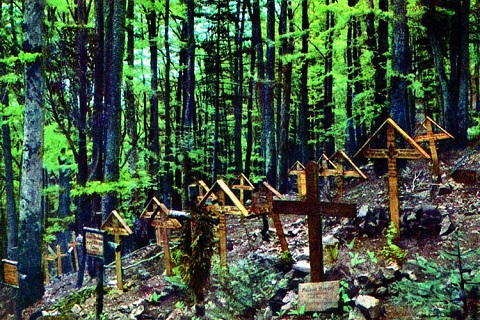
The First Color Photos From World War I: The German Front

Hildebrand 1

On June 28, 1914, Gavri­lo Prin­cip assas­si­nat­ed Arch­duke Franz Fer­di­nand of Aus­tria. Most of us know this — or at least if we don’t know the exact date, we know it hap­pened in 1914, 100 years ago. We also know that the spark of the killing ignit­ed the inter­na­tion­al geopo­lit­i­cal tin­der­box just wait­ing to flame into the First World War. Yet as mil­i­tary his­to­ri­ans often remind us, no one event can real­ly start a con­flict of that unprece­dent­ed scale any more than one event can stop it. The sec­ond half of the year 1914 saw a series of inter­re­lat­ed crises, respons­es, counter-crises, and counter respons­es that, these hun­dred years on, few of us could cite off the top of our heads.

ww i color photos 3

We can com­pen­sate for the cen­tu­ry between us and the Great War by read­ing up on it, of course. Of the count­less vol­umes avail­able, I per­son­al­ly rec­om­mend Geoff Dyer’s The Miss­ing of the Somme. But noth­ing brings home the detailed real­i­ty of this ever-more-dis­tant “huge mur­der­ous pub­lic fol­ly,” in the words of J.B. Priest­ly, like look­ing at col­or pho­tos from the front.

Hildebrand 2

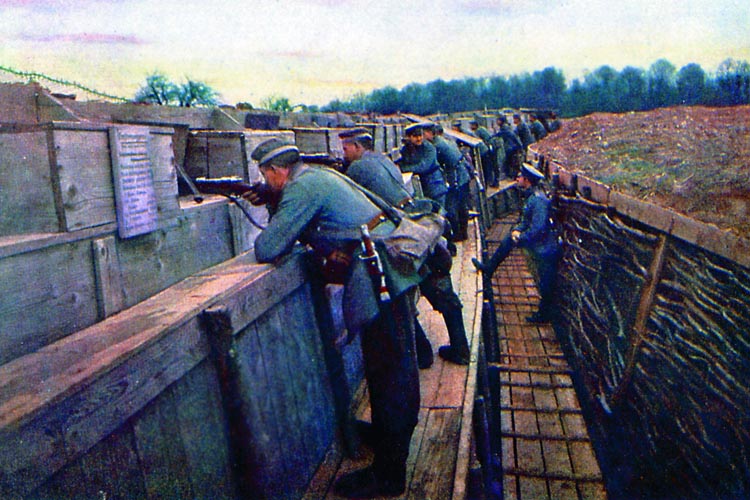
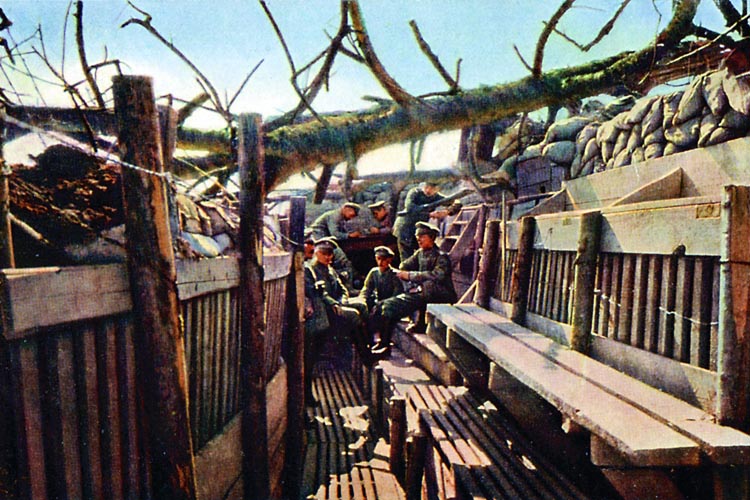
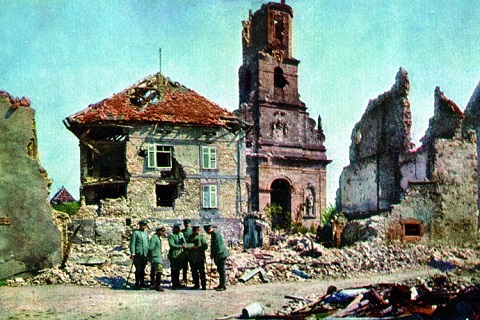
That col­or pho­tog­ra­phy exists of any­thing in mid-1910s Europe, much less as momen­tous and dis­as­trous a peri­od as World War I, still sur­pris­es some peo­ple. We owe these shots to the efforts of Ger­man pho­tog­ra­ph­er Hans Hilde­brand, as well as to his coun­try’s already-estab­lished appre­ci­a­tion for the art and adept­ness in engi­neer­ing its tools. “In 1914, Ger­many was the world tech­ni­cal leader in pho­tog­ra­phy and had the best grasp of its pro­pa­gan­da val­ue,” writes R.G. Grant in World War I: The Defin­i­tive Visu­al His­to­ry. “Some 50 pho­tog­ra­phers were embed­ded with its forces, com­pared with 35 for the French. The British mil­i­tary author­i­ties lagged behind. It was not until 1916 that a British pho­tog­ra­ph­er was allowed on the West­ern Front.” But among his coun­try­men, only Hilde­brand took pic­tures in col­or.

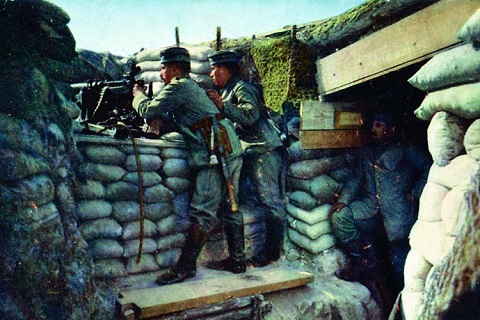
S. 237: Schützengraben im Oberelsass. (Foto: Hans Hildenbrand)

The over­whelm­ing major­i­ty of pho­tos tak­en dur­ing World War I were black and white,” writes Spiegel Online, where you can browse a gallery of eigh­teen of his pho­tos, “lend­ing the con­flict a stark aes­thet­ic which dom­i­nates our visu­al mem­o­ry of the war.” Hilde­brand’s images thus stand out with their almost unre­al-look­ing vivid­ness, a result achieved not sim­ply by his use of col­or film, but by his rel­a­tive­ly long expe­ri­ence with a still fair­ly new medi­um. He’d already found­ed a col­or film soci­ety in his native Stuttgart three years before the Arch­duke’s assas­si­na­tion, and had tried his hand at autochrome print­ing as ear­ly as 1909.

S. 241: Schützengraben im Oberelsass.(Foto: Hans Hildenbrand)

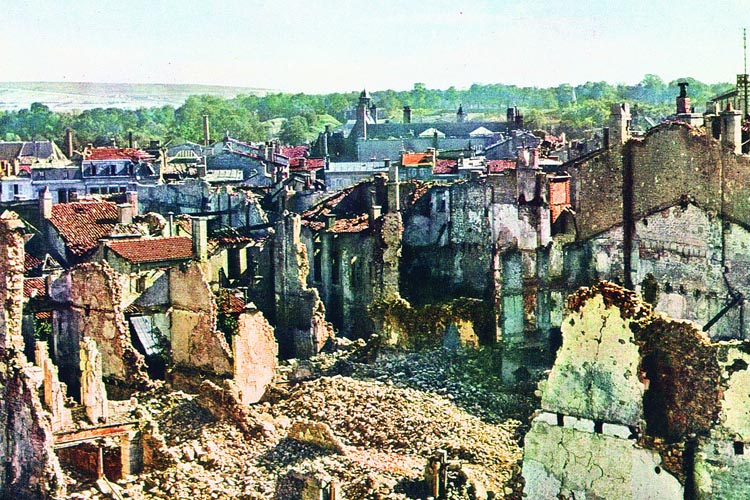
Though not him­self a dyed-in-the-wool pro­pa­gan­dist, he did need to pose the sol­diers for these pho­tos, due to the lack of a film sen­si­tive enough to cap­ture actu­al action. Still, they give us a clear­er idea of the sit­u­a­tion than do most con­tem­po­rary images. Hard­ly a glo­ri­fi­ca­tion, Hilde­brand’s work seems to speak to what those of us now, one hun­dred years in the future, would come to see in World War I: its mis­ery, its oppres­sive sense of futil­i­ty, and the haunt­ing destruc­tion it left behind.

Hildebrand 3

via Dan­ger­ous Minds

Relat­ed Con­tent:

Watch World War I Unfold in a 6 Minute Time-Lapse Film: Every Day From 1914 to 1918

British Actors Read Poignant Poet­ry from World War I

Frank W. Buck­les, The Last U.S. Vet­er­an of World War I

World War I Remem­bered in Sec­ond Life

Col­in Mar­shall hosts and pro­duces Note­book on Cities and Cul­ture and writes essays on cities, lan­guage, Asia, and men’s style. He’s at work on a book about Los Ange­les, A Los Ange­les Primer. Fol­low him on Twit­ter at @colinmarshall or on Face­book.

Photos of Jean-Paul Sartre & Simone de Beauvoir Hanging with Che Guevara in Cuba (1960)

sartre che smoke

In 1960, Jean-Paul Sartre and Simone de Beau­voir ven­tured to Cuba dur­ing, as he wrote, the “hon­ey­moon of the rev­o­lu­tion.” Mil­i­tary strong­man Ful­gen­cio Batista’s regime had fall­en to Fidel Cas­tro’s gueril­la army and the whole coun­try was alight with rev­o­lu­tion­ary zeal. As Beau­voir wrote, “after Paris, the gai­ety of the place explod­ed like a mir­a­cle under the blue sky.”

At the time, Sartre and de Beau­voir were inter­na­tion­al­ly renown, the intel­lec­tu­al pow­er cou­ple of the 20th cen­tu­ry. Beauvoir’s book, The Sec­ond Sex (1949), laid the ground­work for the fem­i­nism move­ment, and her book The Man­darins won France’s high­est lit­er­ary award in 1954. Sartre’s name had become a house­hold word. The phi­los­o­phy he cham­pi­oned – Exis­ten­tial­ism – was being read and debat­ed around the world. And his polit­i­cal activism — loud­ly con­demn­ing France’s war in Alge­ria, for instance — had giv­en him real moral author­i­ty. When Sartre was arrest­ed in 1968 for civ­il dis­obe­di­ence, Charles de Gaulle par­doned him, not­ing, “You don’t arrest Voltaire.” As Deirdre Bair notes in her biog­ra­phy of Beau­voir, “Sartre became the one intel­lec­tu­al whose pres­ence and com­men­tary emerg­ing gov­ern­ments clam­ored for, as if he alone could val­i­date their rev­o­lu­tions.” So it’s not ter­ri­bly sur­pris­ing that Fidel Cas­tro wined and dined the two dur­ing their month in Cuba.

sartre-beauvoir-and-che-in-cuba

Cuban pho­tog­ra­ph­er Alber­to Kor­da cap­tured the cou­ple as they met with Cas­tro, Che Gue­vara and oth­er lead­ers of the rev­o­lu­tion. One pic­ture (above) is of Gue­vara in his com­bat boots and trade­mark beret, light­ing a cig­ar for the French philoso­pher. Sartre looks small and unhealthy com­pared to the strap­ping, mag­net­ic rev­o­lu­tion­ary. Sartre was appar­ent­ly impressed by the time he spent with the gueril­la leader. When Che died in Bolivia sev­en years lat­er, Sartre famous­ly wrote that Gue­vara was “not only an intel­lec­tu­al but also the most com­plete human being of our age.”

Lat­er, Kor­da caught them as they were guid­ed through the streets of Havana. And as you can see (below), that icon­ic image of Gue­vara, lat­er plas­tered on T‑shirts and Rage Against the Machine album cov­ers, is on that same role of film.

When the cou­ple returned to Paris, Sartre wrote arti­cle after arti­cle extolling the rev­o­lu­tion. Beau­voir, who was equal­ly impressed, wrote, “For the first time in our lives, we were wit­ness­ing hap­pi­ness that had been attained by vio­lence.”

KordaFilmRollChe

Yet their enthu­si­asm for the regime cooled when they returned to Cuba a year lat­er. The streets of Havana had lit­tle of the joy as the pre­vi­ous year. When they talked to fac­to­ry work­ers, they heard lit­tle but par­rot­ing of the offi­cial par­ty line. Beau­voir and Sartre ulti­mate­ly denounced Cas­tro (along with a bunch of oth­er intel­lec­tu­al lumi­nar­ies like Gabriel Gar­cia Mar­quez and Octavio Paz) in an open let­ter that crit­i­cized him for the arrest of Cuban poet Her­ber­to Padil­lo.

You can read more about the life and pho­tog­ra­phy of Alber­to Kor­da in the 2006 book, Cuba: by Kor­da.

Pho­tos above by Alber­to Kor­da.

via Crit­i­cal The­o­ry

Relat­ed Con­tent: 

Philosophy’s Pow­er Cou­ple, Jean-Paul Sartre and Simone de Beau­voir, Fea­tured in 1967 TV Inter­view

Jean-Paul Sartre Breaks Down the Bad Faith of Intel­lec­tu­als

Wal­ter Kaufmann’s Clas­sic Lec­tures on Niet­zsche, Kierkegaard and Sartre (1960)

Jonathan Crow is a Los Ange­les-based writer and film­mak­er whose work has appeared in Yahoo!, The Hol­ly­wood Reporter, and oth­er pub­li­ca­tions. You can fol­low him at @jonccrowAnd check out his blog Veep­to­pus, fea­tur­ing one new draw­ing of a vice pres­i­dent with an octo­pus on his head dai­ly.  The Veep­to­pus store is here.

The First Color Portrait of Leo Tolstoy, and Other Amazing Color Photos of Czarist Russia (1908)

A good few peo­ple object­ed to a recent project that col­orized old pho­tos of Walt Whit­man, Char­lie Chap­lin, Helen Keller, Mark Twain, and oth­er his­tor­i­cal char­ac­ters. Leave them alone! they grumped. The past, they want­ed left in black and white. But this is not so eas­i­ly done when some photos—whether of august per­son­ages like Leo Tol­stoy above, or of ordi­nary anony­mous peas­ants below—were always processed in col­or. The Tol­stoy image dates from 1908, two years before his death, but the process is much old­er, and suc­cess­ful col­or pho­tographs, not sim­ply hand-paint­ed col­oriza­tions, go back at least to the Lumiere Broth­ers’ Autochromes from the late 19th cen­tu­ry.

Russian Workers

The method that gave us Tol­stoy in col­or involved tak­ing three photographs—with a red, a green, and a blue filter—then pro­ject­ing the result­ing prints through fil­ters of the same col­or. It’s a pro­ce­dure that dates to Scot­tish sci­en­tist James Clerk Maxwell’s 1861 exper­i­ments, which put to the test sev­er­al ear­li­er the­o­ries. The pho­tographs you see here are the work of sci­en­tist and inven­tor Sergei Prokudin-Gorsky, who had per­fect­ed the pro­jec­tion method to such a degree that—as he wrote in a let­ter to Tol­stoy ask­ing him to pose—he only need­ed “from 1 to 3 sec­onds to take the pho­to­graph.” Thus it would not be “over­ly tire­some” for the soon-to-be eighty-year-old nov­el­ist.

Tol­stoy, of course, was a nation­al insti­tu­tion, and had war­rant­ed an ear­li­er attempt at a col­or por­trait by an anony­mous ama­teur to whom Prokudin-Gorsky refers in his let­ter of request. The first attempt, the inven­tor implies, was a botched job. Billing him­self as a spe­cial­ist in “pho­tog­ra­phy ‘in nat­ur­al col­ors,’” the self-con­fi­dent entre­pre­neur assured the writer he could pro­duce “excel­lent results” with “accu­rate col­ors.” “My col­ored pro­jec­tions,” he wrote, “are known in both Europe and in Rus­sia.” Prokudin-Gorsky was received and giv­en two days to take sev­er­al col­or pho­tographs, though whether the oth­ers have sur­vived, I do not know. We do know that the por­trait appeared in the August, 1908 issue of The Pro­ceed­ings of the Russ­ian Tech­ni­cal Soci­ety as “the first Russ­ian col­or pho­to­por­trait.” The jour­nal offered the image in trib­ute to Tolstoy’s upcom­ing 80th birth­day cel­e­bra­tion, writ­ing:

Our peri­od­i­cal, as a pure­ly tech­ni­cal one, can­not hon­or this ven­er­a­ble rep­re­sen­ta­tive of Russ­ian thought and word with spe­cial arti­cles. Desir­ing, how­ev­er, to take part in the gen­er­al fes­tiv­i­ties, the edi­to­r­i­al staff […] decid­ed to pub­lish in this, its August issue, the newest por­trait of Tol­stoy, which is the dernier mot in pho­to­graph­ic tech­nol­o­gy. The por­trait was tak­en on loca­tion and in nat­ur­al col­ors, achieved through tech­ni­cal meth­ods alone, with­out any use of the artist’s brush or tool.

Prokudin-Gorsky expressed his grat­i­tude to the nov­el­ist by mail­ing him a pho­to­graph­ic peri­od­i­cal con­tain­ing “many pic­tures pro­duced in my work­shops from my pho­tographs.” Per­haps the oth­er pho­tos we see here were con­tained in that jour­nal. Prokudin-Gorsky had every rea­son to be proud of his work, and the Russ­ian Tech­ni­cal Soci­ety every rea­son to endorse it. The pic­tures are stun­ning.

1911 Cathedral

Some of the pho­tographs, like the Tol­stoy por­trait, have a painter­ly, almost impres­sion­is­tic qual­i­ty. Oth­ers, like the 1911 vil­lage scene with the Niko­laevskii Cathe­dral in the dis­tance, have almost the depth of field and fine-grained clar­i­ty of 35mm film. And some, like that of the already car­toon­ish struc­ture below, have an almost hal­lu­ci­na­to­ry CGI qual­i­ty. The method wasn’t perfect—even with such short expo­sures, sub­jects had to remain absolute­ly still. If they moved, the result was an eerie dou­ble expo­sure effect you see in the mid­dle dis­tance of the field work­ers pho­tographed above. But over­all, these pho­tographs sim­ply aston­ish in their crisp­ness and fideli­ty.

Russian Mill

You can see many more of Prokudin-Gorsky’s images at this online gallery, which includes over a dozen ear­ly-twen­ti­eth cen­tu­ry pho­tos of Russ­ian labor­ers, land­scapes, and self por­traits. Prokudin-Gorsky’s work also pre­serves images of var­i­ous East­ern Euro­pean peo­ples in tra­di­tion­al dress—like the final Emir of Bukhara, now Uzbek­istan, below in 1910. Many of these groups were on the verge of cul­tur­al extinc­tion in the com­ing years of Sovi­et impe­ri­al­ism. Unwit­ting­ly, Prokudin-Gorsky man­aged to beau­ti­ful­ly cap­ture the very end of tsarist Rus­sia, most poignant­ly sym­bol­ized for so many Rus­sians by their aged lit­er­ary hero, whose birth­day we cel­e­brate again today. Google decid­ed to do so in full col­or as well, with fan­cy doo­dles of his major works. You may accuse them of tam­per­ing with the past, but those who find these col­or pho­tographs too mod­ern may need to expand their def­i­n­i­tion of moder­ni­ty.

Last Emir

Relat­ed Con­tent:

Col­orized Pho­tos Bring Walt Whit­man, Char­lie Chap­lin, Helen Keller & Mark Twain Back to Life

Rare Record­ing: Leo Tol­stoy Reads From His Last Major Work in Four Lan­guages, 1909

Vin­tage Footage of Leo Tol­stoy: Video Cap­tures the Great Nov­el­ist Dur­ing His Final Days

Josh Jones is a writer and musi­cian based in Durham, NC. Fol­low him at @jdmagness
« Go BackMore in this category... »
Quantcast