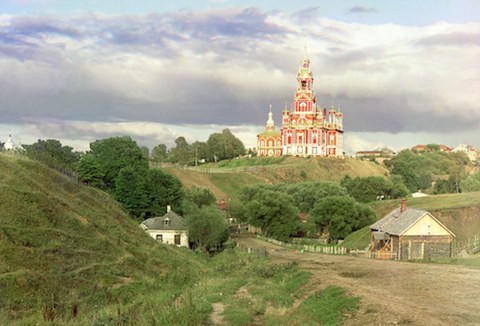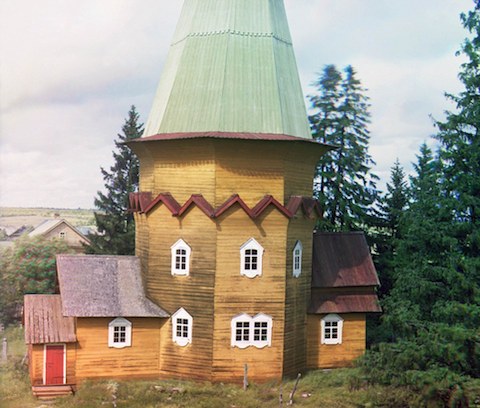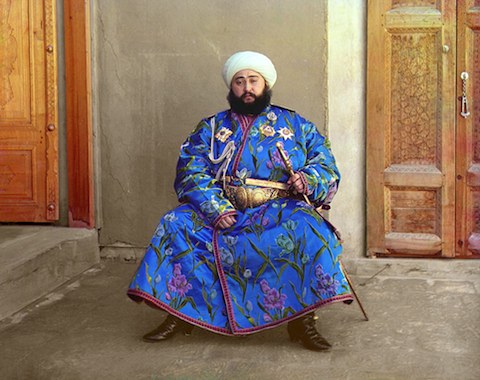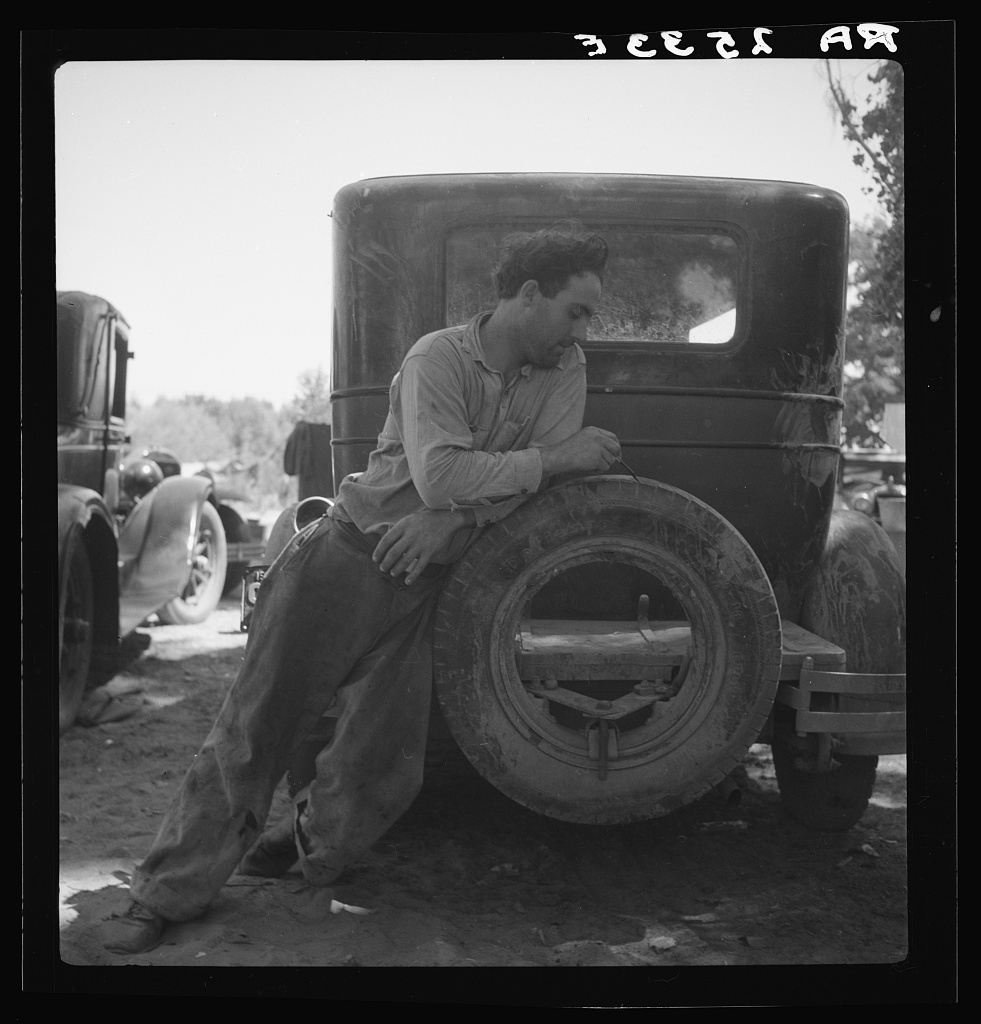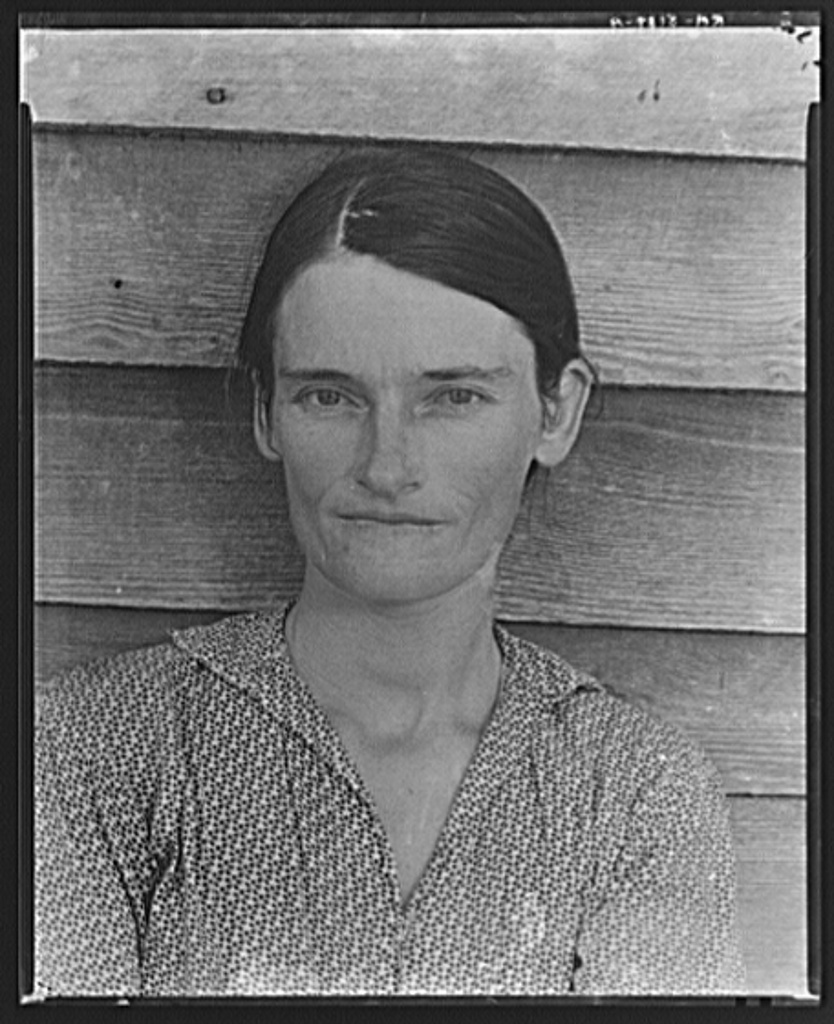
During the Great Depression, The Farm Security Administration—Office of War Information (FSA-OWI) hired photographers to travel across America to document the poverty that gripped the nation, hoping to build support for New Deal programs being championed by F.D.R.‘s administration.
Legendary photographers like Dorothea Lange, Walker Evans, and Arthur Rothstein took part in what amounted to the largest photography project ever sponsored by the federal government. All told, 170,000 photographs were taken, then catalogued back in Washington DC. The Library of Congress became their eventual resting place.
Yale University has launched Photogrammar, a sophisticated web-based platform for organizing, searching, and visualizing these 170,000 historic photographs.
Photogrammar also offers a handy interactive map that lets you gather geographical information about 90,000 photographs in the collection.
And then there’s a section called Photogrammar Labs where innovative visualization techniques and data experiments will gradually shed new light on the image archive.
Top image: A migrant agricultural worker in Marysville migrant camp, trying to figure out his year’s earnings. Taken in California in 1935 by Dorothea Lange.
Second image: Allie Mae Burroughs, wife of cotton sharecropper. Photo taken in Hale County, Alabama in 1935 by Walker Evans.
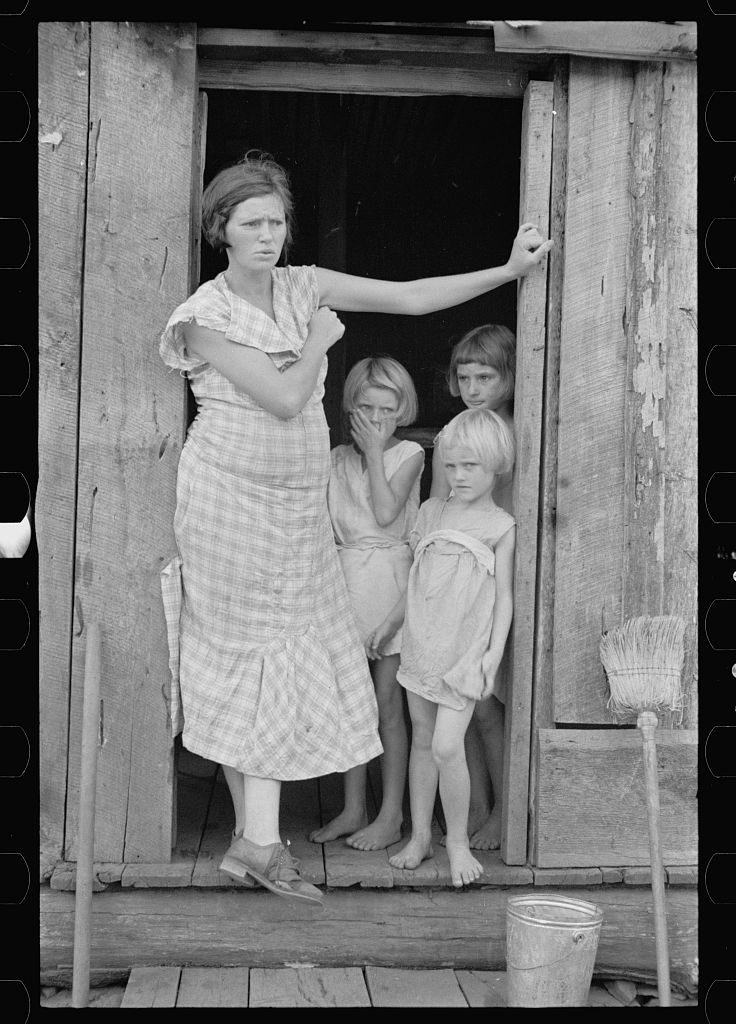
Third image: Wife and children of sharecropper in Washington County, Arkansas. By Arthur Rothstein. 1935.
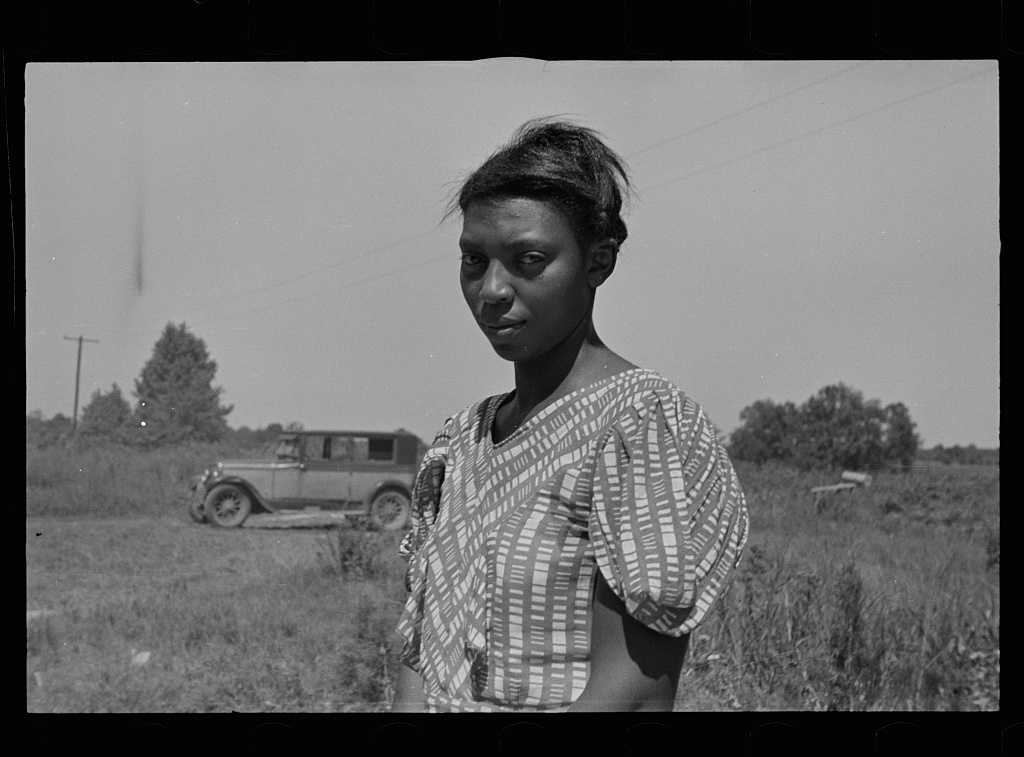
Fourth image: Wife of Negro sharecropper, Lee County, Mississippi. Again taken by Arthur Rothstein in 1935.
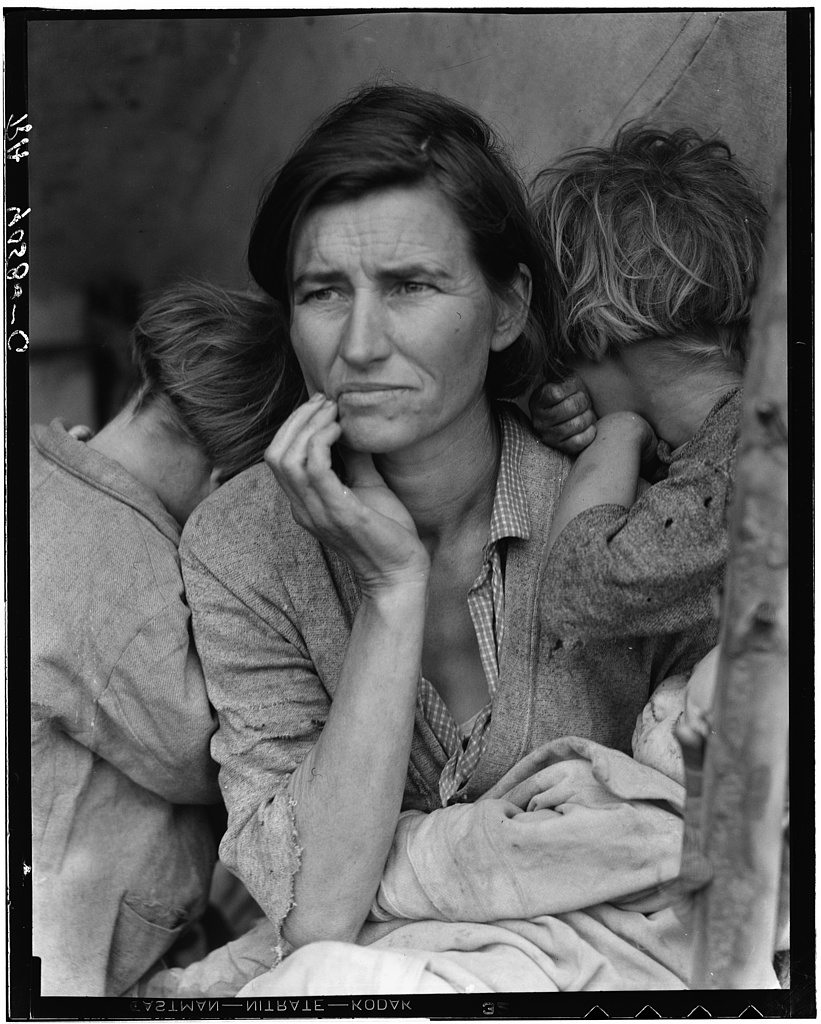
Bottom image: Destitute pea pickers in California. Mother of seven children. Age thirty-two. Taken by Dorothea Lange in Nipomo, California, 1936.
Polaroid photography, which looked about to fade out forever for a while there, has in recent years made a comeback. Chalk it up, if you must, to a grand revaluing wave of the physically analog in our age of digital ephemerality — the same tide on which enthusiasm for vinyl, zines, and even VHS tapes has risen again. But we must acknowledge that Andy Warhol, in a sense, got there first. It hardly counts as the only matter on which the mastermind of the Factory showed prescience; take, for instance, his quip about everyone in the future getting fifteen minutes of fame, a prediction which, as Jonathan Lethem put it, has in our present hardened into “drab processional.” Some of these very 21st-century people now enjoying (or enduring) their own fifteen minutes — most of them presumably not even born within Warhol’s lifetime — surely keep a Polaroid camera at hand. They acknowledge, on some level, what the consummate 20th-century “pop artist” sensed: that the ostensibly cheap and disposable, including self-developing film used for untrained vacation snapshots and mere reference material for “real” works of art, has its own kind of permanence.
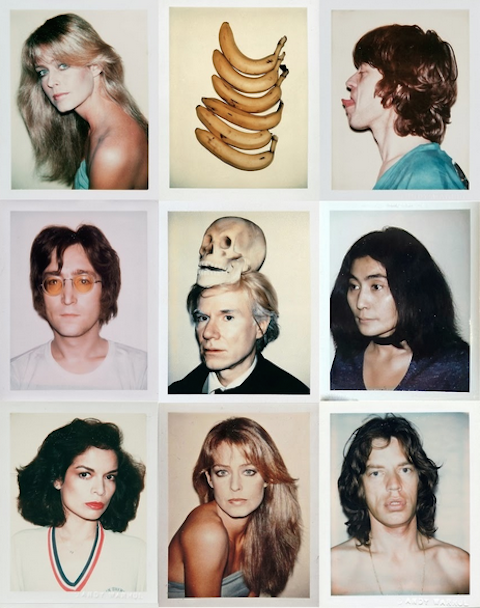
Here we have a selection of Warhol’s own works of Polaroid photography, a medium he took up around 1970 and used to further his interest in portraiture. The University of California, Berkeley Art Museum, just one of the institutions to put them on display, says that “these images often served as the basis for his commissioned portraits, silk-screen paintings, drawings, and prints.” The wide subset they showed “reveals that superstars were not the only figures that Warhol photographed with his Polaroid Big Shot, the distinct plastic camera he used for the majority of his sittings. Over half of those who sat for him were little known or remain unidentified.” Whether of Mick Jagger, Yoko Ono, O.J. Simpson, Debbie Harry, himself, a row of bananas, or someone faintly recognizable yet ultimately unnamable, each of Warhol’s Polaroids remains “fully identified with the artwork that ultimately grew out of it; the face depicted becomes a kind of signifier for larger cultural concepts of beauty, power, and worth.”
Now what would Warhol, a known early enthusiast of computer art, have said about the arrival of Instagram filters meant to make our instantaneous, high-resolution digital photos look like Polaroids again?
Maison Carnot, an ad studio in France, has produced a delightful short film that lets you see Paris through the viewfinder of the classic Pentax 67 camera. Antoine Pai, one of the filmmakers, told Petapixel, “As Parisians, we are so used to the charm of our city that we forget sometimes to take a minute and observe.” “Marcel Proust once said, ‘Mystery is not about traveling to new places but it’s about looking with new eyes.’ That is totally what we felt while shooting this film.” To see Paris through a differnent lens, watchParis Through Pentax above. To get the backstory on the contraption Maison Carnot jerry-rigged to shoot the film, head over to Petapixel.
Early in his long career, Dennis Hopper found time to “do history a favor,” using his camera to document a world “on fire with change.”
Good timing. The period from 1961 to 1967 was a less than fertile period for him as an actor after some less than professional behavior landed him on the Hollywood naughty list. His interest in photography may not have kept him out of trouble, but it did help him maintain a sense of artistic purpose whilst picking up a healthy number of guest appearances on TV.
Busy busy busy. (Something tells me James Franco and Ethan Hawke would approve.)
Having redeemed his reputation with The Trip and Cool Hand Luke, Hopper was back on track for movie stardom, but not before he chose the most stirring of thousands of images for a solo exhibition at the Fort Worth Art Center, held in 1969–70.
In the estimation of curator Petra Giloy-Hirtz, who recreated this show for the London Royal Academy of Art’s “Dennis Hopper: The Lost Album,” the work that captured the average Joe’s experience during this period of upheaval places him among the best photographers of the period.
When disco pioneer Giorgio Morodoer released a colorized version of Fritz Lang’s Metropolis – featuring a soundtrack with Billy Squier, Pat Benatar and Adam Ant, no less – film purists everywhere howled with disbelief at how the film’s moody black and white had been turned into Easter egg pinks and blues. It felt like a gimmick and, worse, it just didn’t look real.
Colorization has come a long way since then. In the hands of the right Photoshop wizard — like artist Dana Keller — a colorized photograph of, say, the Oklahoma dust bowl or turn-of-the-century Coney Island gives viewers the chill of the uncanny. People and things that have long since departed this world suddenly seem vital and alive. It makes that foreign country called the past feel eerily familiar.
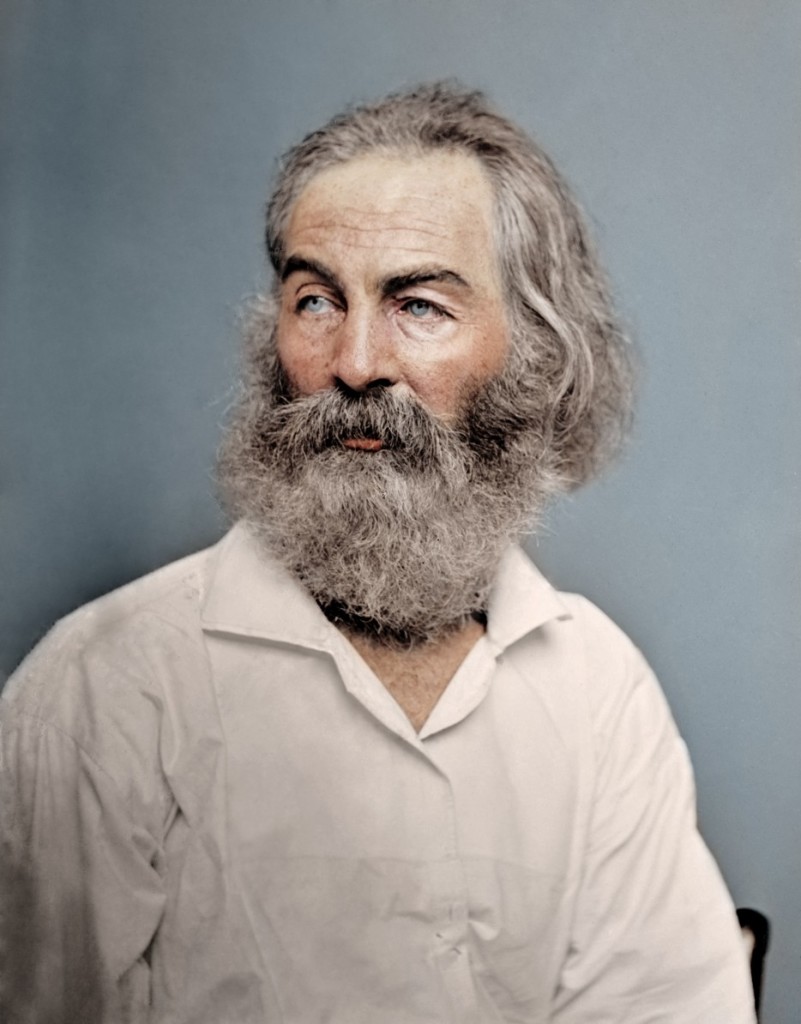
Above is a picture of poet Walt Whitman. His trademark long hair and Karl Marx beard would look right at home in certain corners of Portland. Apart from that, there is both a sensitivity and ferociousness about this picture. Whitman definitely looks like he’s capable of delivering a barbaric yawp. You can see what the picture looked like in its original black and white here.
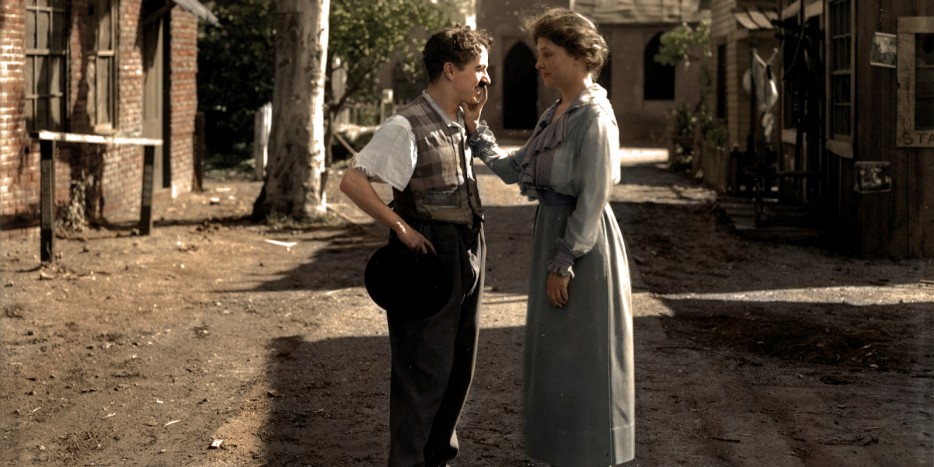
This photograph of Helen Keller drawing a hand over Charlie Chaplin’s face from 1919 looks like it could be a still from an upcoming Oscar bait biopic. In fact the picture was taken in Hollywood while Keller was on one of her speaking tours. (See original here.)
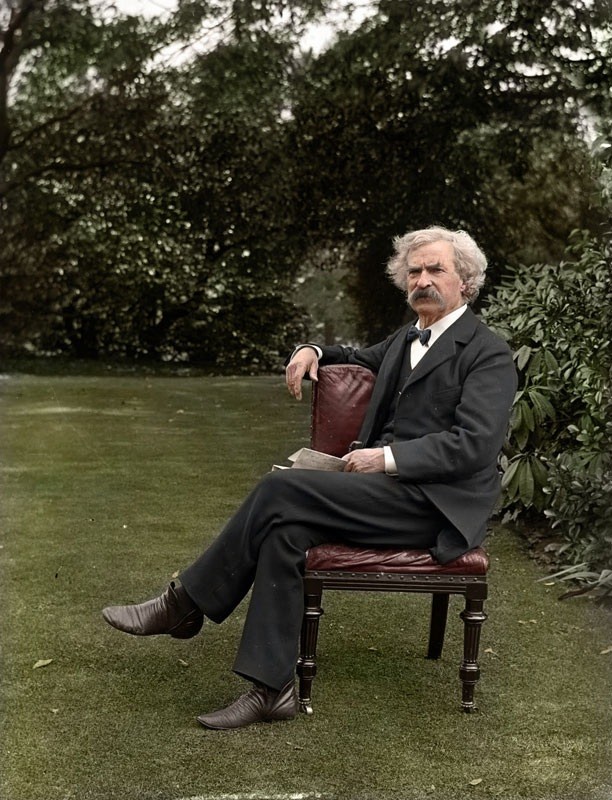
Likewise with this portrait (original here) of Mark Twain. You can almost hear him make some pithy comment like “A photograph is a most important document, and there is nothing more damning to go down to posterity than a silly, foolish smile caught and fixed forever.” As you can see from the picture, Twain didn’t take that risk, opting for more of a whiskery scowl.
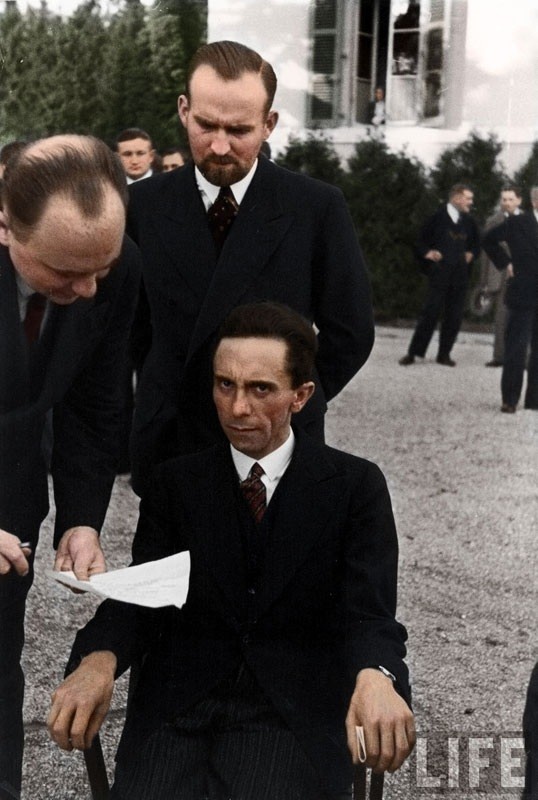
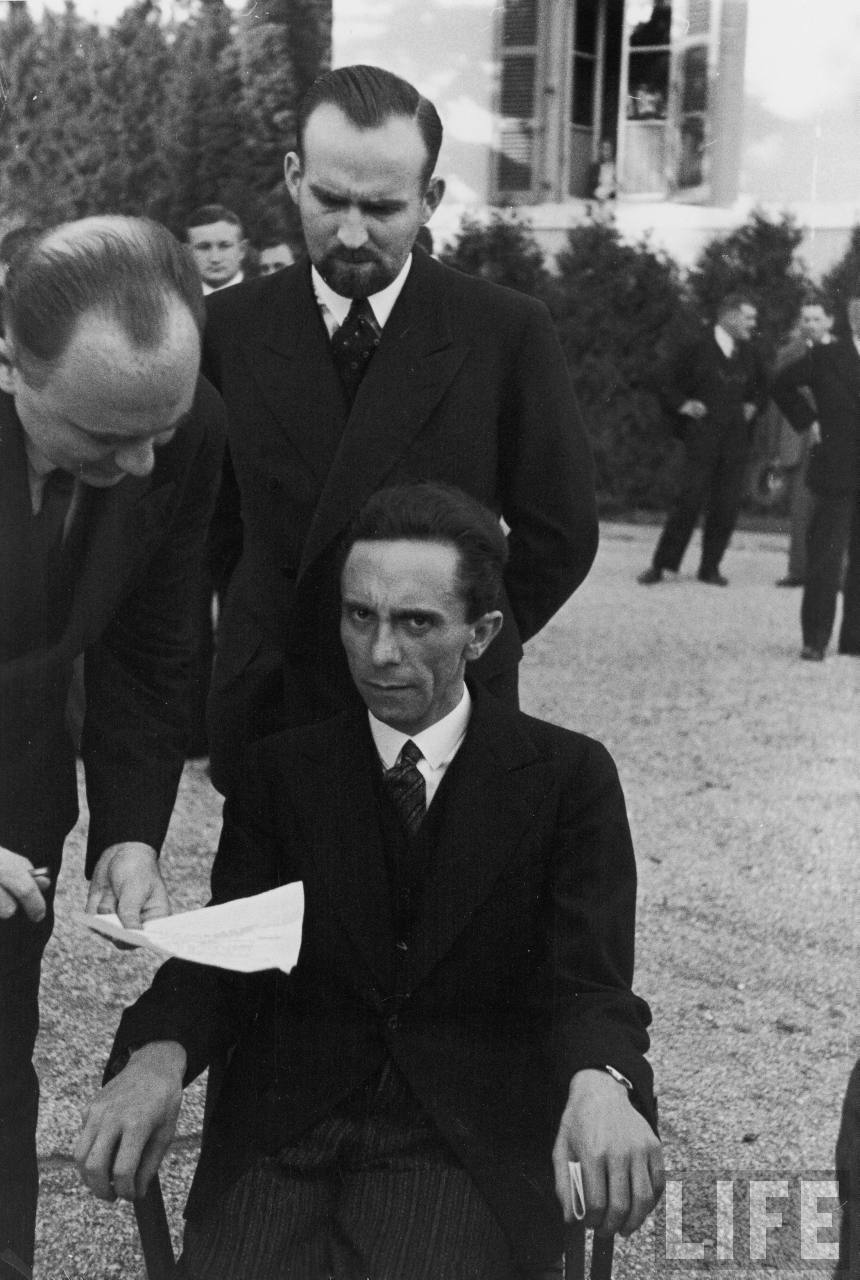
This picture of Joseph Goebbels (original) staring down a Jewish photographer is simply terrifying. It’s the sort of death stare common among psycho-killers, death row inmates and, apparently, Nazi propaganda ministers.
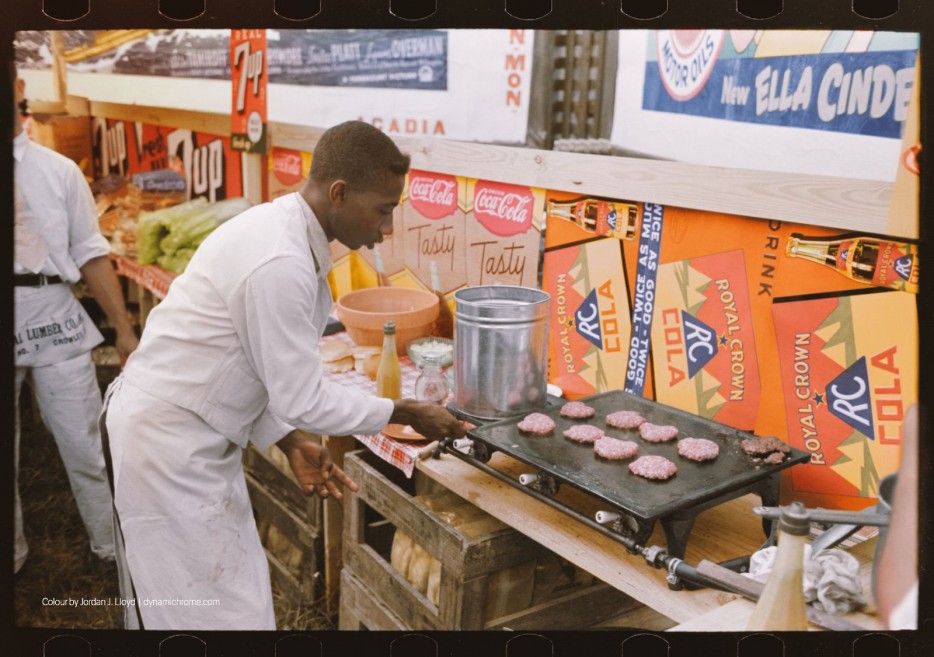
And this picture of a humble burger flipper from 1938 is so crisp that it looks like it might have been taken yesterday.
Jonathan Crow is a Los Angeles-based writer and filmmaker whose work has appeared in Yahoo!, The Hollywood Reporter, and other publications. You can follow him at @jonccrow. And check out his art blog Veeptopus.
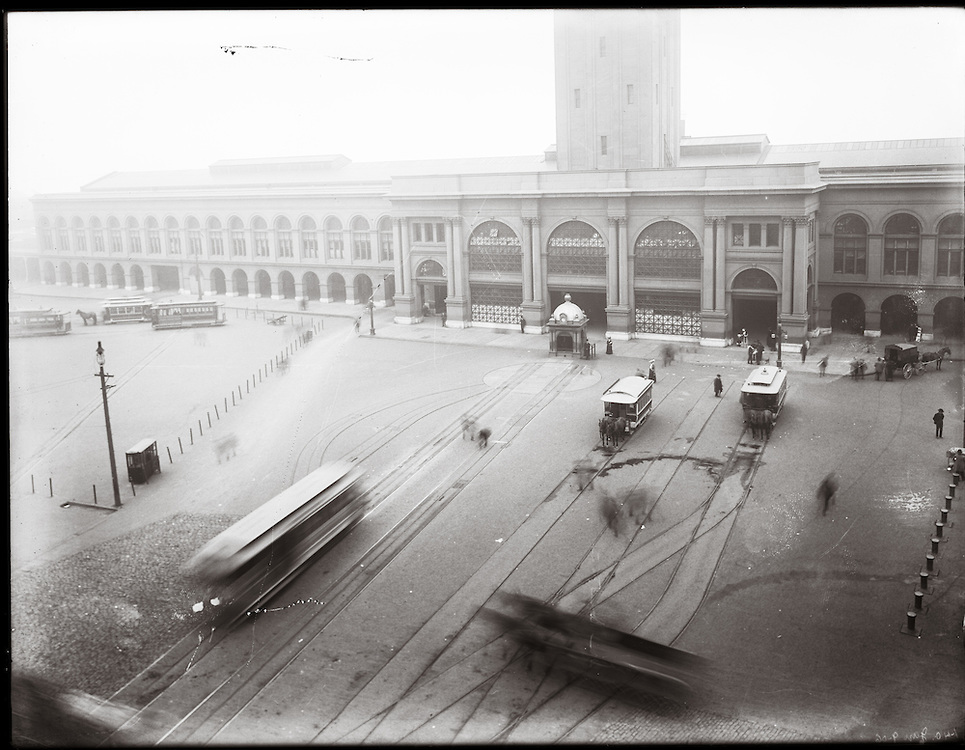
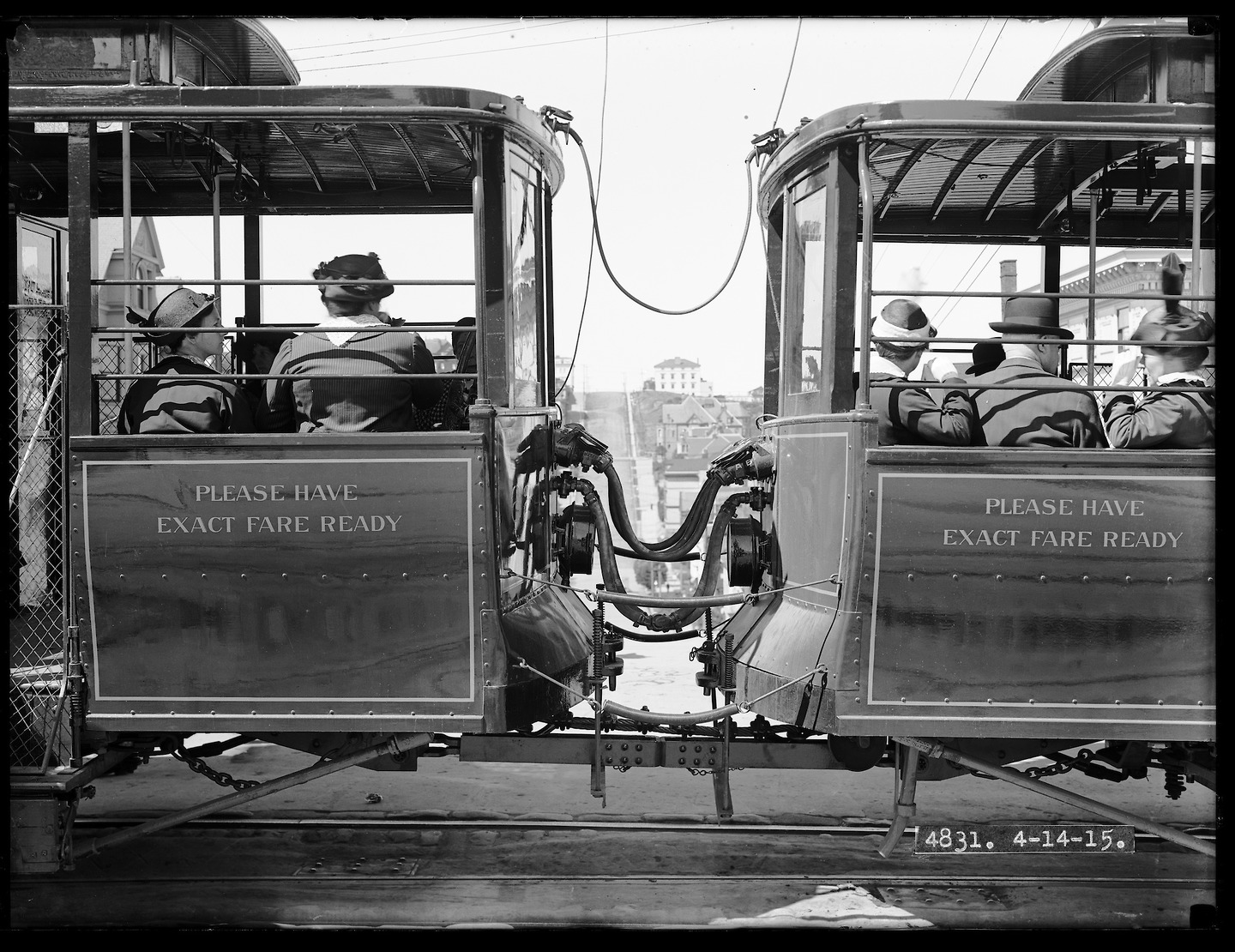
Featuring a collection of glass plate, nitrate and acetate negatives, the living archive tells “the story of San Francisco, its transition from a stretch of sand dunes to an internationally acclaimed city, it’s rise from the rubble of the devastating earthquake of 1906 and the vital role public transportation played and continues to play in revitalizing the city.” The archive contains nearly 5,000 images, all neatly divided into 14 collections. You can enter the archive and start perusing here.
One of the great polymaths of the 19th century, Lewis Carroll (pen name of Charles Lutwidge Dodgson) —mathematician, logician, author, poet, Anglican cleric—took to the new medium of photography with the same alacrity he applied to all of his pursuits. Though he may be described as a hobbyist in the sense that he never pursued the art professionally, he nonetheless “became a master of the medium, boasting a portfolio of roughly 3,000 images and his very own studio.”
So says a recent article by Gannon Burgett on Carroll’s “24-year career as a photographer,” during which he made a number of portraits, including one of then-poet laureate of England Alfred, Lord Tennyson. His subjects also included “landscapes, dolls, dogs, statues, paintings, trees and even skeletons.”
Carroll excelled at a developing method called the wet collodion process, which replaced the daguerreotype as the primary means of photographic image-making. This process seems to have been something like painting in oils, requiring a great deal of dexterity and chemical know-how, and similarly subject to decay when done improperly. Carroll particularly valued this method for its difficulty (he described it in detail in some lines added to a poem called “Hiawatha’s Photographing”)—so much so that once a dry developing process came into being, he abandoned the medium altogether, complaining that it became so easy anyone could do it. Carroll’s obsessive focus on process mirrored an obsession with his favorite photographic subjects, young children, including Tennyson’s son Hallam (above). Most famously, Carroll obsessively photographed the young Alice Liddell (top and below as “The Queen of May”), daughter of family friend Henry George Liddell and inspiration for Carroll’s most famous fictional character.
Many of Carroll’s photographs of Alice and other children can seem downright prurient to our eyes. As Carroll’s biographer Jenny Woolf writes in a 2010 essay for the Smithsonian, “of the approximately 3,000 photographs Dodgson made in his life, just over half are of children—30 of whom are depicted nude or semi-nude.”
Some of his portraits—even those in which the model is clothed—might shock 2010 sensibilities, but by Victorian standards they were… well, rather conventional. Photographs of nude children sometimes appeared on postcards or birthday cards, and nude portraits—skillfully done—were praised as art studies […]. Victorians saw childhood as a state of grace; even nude photographs of children were considered pictures of innocence itself.
Woolf admits that Carroll’s interest, as scholars have speculated for decades, may have been less than innocent, prompting Vladimir Nabokov to propose “a pathetic affinity” between Carroll and the narrator of Lolita. The evidence for Carroll’s possible pedophilia is highly suggestive but hardly conclusive. Burgett summarizes the claims as only speculative at best: “The entire controversy is an almost century-long debate, and one that doesn’t seem to be making any major progress in either direction.” In a Slate review of Woolf’s Lewis Carroll biography, Seth Lerer also acknowledges the controversy, but reads the photographs of Alice, her sisters, and friends as representative of larger trends, as “brilliant testimonies to the taste, the sentiment, and perhaps the sexuality of mid-Victorian England.”
A great part of this Victorian sensibility consists of the “recognition that all life involves role-playing,” hence the recurring photos of the girls in dress-up—as figures from myth and literature and exotic Orientalist characters, such as the photo above of Alice and her sister Lorina as “Chinamen.” “These are the tableaux of Victorian melodrama,” writes Lerer, “images on stage-sets of the imagination.” We see another of Carroll’s favorite photographic subjects, Alexandra “Xie” Kitchin, daughter of a colleague, also given the Orientalist treatment below, posed as an off-duty tea merchant.
Carroll’s carefully staged child photographs are very much like those of other photographers of the period like Mary Cowden Clarke and Julia Margaret Cameron, who also photographed Alice Liddell, even into her adulthood. Cameron’s photographs also included child nudes, to a similar effect as Carroll’s—the depiction of a “state of grace” in which children appear as nymphs, “gypsies” or other such types supposedly belonging to Edenic worlds untouched by adult cares. Given the context Woolf, Lerer and others provide, it’s reasonable to view Carroll’s child photography as consistent with the tastes of the day. (Though no one suggests this as an alibi for Carroll’s possibly troubling proclivities.)
As it stands, the photographs of Alice and other children open a fascinating, if sometimes discomfiting, window on an age that viewed childhood very differently than our own. They also give us a view of Carroll’s strange inner world, one not unlike the unsettling fantasy realm of 20th century folk artist Henry Darger. Unlike Darger, Carroll’s work brought him widespread fame in his lifetime, but like that reclusive figure, the author of Alice’s Adventures in Wonderland and Through the Looking Glass was a shy, introspective man whose imaginative landscape possessed a logic all its own, charged with magic, threat, and longing for lost childhood innocence.
See a galleries of Carroll’s photographs of Alice and other children here and here, and see this site for more general info on Carroll’s photography.
Suffering from tuberculosis, André Villers spent eight long years at a sanatorium in the French Riviera town of Vallauris, starting in 1947. There, while recovering, he learned photography, refined his craft, and later shot portraits of Europe’s great artists — Fernand Léger, Alexander Calder, Salvador Dalí, Joan Miró, Marc Chagall, Max Ernst, Jean Cocteau, Luis Buñuel, Federico Fellini, to name a few. Villers met Picasso in 1953 and stayed at his side for close to a decade, writes The Age, “quietly observing and shooting the man at work and at play.” In the image above, we find Picasso most certainly at play. Apparently Pablo threw on some random clothes one day, and said “Look at me, I am Popeye!” That scene is recorded for posterity with the great image above. Click to view it in a larger format.
If you would like to sign up for Open Culture’s free email newsletter, please find it here. It’s a great way to see our new posts, all bundled in one email, each day.
If you would like to support the mission of Open Culture, consider making a donation to our site. It’s hard to rely 100% on ads, and your contributions will help us continue providing the best free cultural and educational materials to learners everywhere. You can contribute through PayPal, Patreon, and Venmo (@openculture). Thanks!
We're hoping to rely on loyal readers, rather than erratic ads. Please click the Donate button and support Open Culture. You can use Paypal, Venmo, Patreon, even Crypto! We thank you!
Open Culture scours the web for the best educational media. We find the free courses and audio books you need, the language lessons & educational videos you want, and plenty of enlightenment in between.