Stephen Hawking Shows His Funny Side in John Oliver’s Series “Great Minds: People Who Think Good”

John Oliv­er kicked off his new series “Great Minds: Peo­ple Who Think Good” with an extend­ed inter­view with Stephen Hawk­ing. For a moment there, it all feels a bit like a clas­sic Ali G inter­view. (Remem­ber Sacha Baron Cohen’s price­less inter­view with Noam “Nor­man” Chom­sky?) But, soon enough, you real­ize that Hawk­ing is in on the joke. And he deliv­ers some good lines, with the hint of a smile.

Relat­ed Con­tent:

A Brief His­to­ry of Time, Errol Mor­ris’ Film About the Life & Work of Stephen Hawk­ing

Stephen Hawking’s Uni­verse: A Visu­al­iza­tion of His Lec­tures with Stars & Sound

Stephen Hawk­ing: Aban­don Earth Or Face Extinc­tion

Free Online Physics Cours­es

Morgan Freeman & Fake Neil deGrasse Tyson Teach Physics While High on Helium and Grass

Viral video #1: In a new ad for the Sci­ence Chan­nel’s series, Through the Worm­hole, actor Mor­gan Free­man uses heli­um to entice view­ers into think­ing about how physi­cists are study­ing grav­i­ty in places where it acts quite strange­ly. It’s kind of a cryp­tic mes­sage, but it grabs your atten­tion, does­n’t it? Through the Worm­hole returns to the air­waves, with Sea­son 5, on June 4th.

Viral Video #2 asks you to imag­ine what hap­pens when you put the grass in Neil deGrasse Tyson. “Every­thing is star stuff. This piz­za, this cheese, this pep­per­oni.” That’s a reboot of Cos­mos that may actu­al­ly get rat­ings.

via io9 

Neil deGrasse Tyson Moonwalking

A cou­ple weeks ago, we showed you the Pre-His­to­ry of Michael Jackson’s Moon­walk, high­light­ing a med­ley of the fan­cy foot moves of Cab Cal­loway, Sam­my Davis Jr., Fred Astaire and some less­er-known fig­ures like Rub­ber­neck Holmes and Earl “Snake­hips” Tuck­er. Some­one could just as eas­i­ly make anoth­er mon­tage, a Post-His­to­ry of Michael Jack­son’s Moon­walk, and it would sure­ly have to include the clip above. It fea­tures our favorite astro­physi­cist Neil deGrasse Tyson strut­ting his stuff at StarTalk Live last year. In the back­ground, you can see anoth­er great moon­walk­er, Buzz Aldrin, on the stage.

Episode #9 of Tyson’s Cos­mos reboot airs on Fox tonight. US view­ers can watch episodes 1–8 on Hulu here. The orig­i­nal Cos­mos with Carl Sagan appears here.

Relat­ed Con­tent:

Neil deGrasse Tyson Lists 8 (Free) eBooks Every Intel­li­gent Per­son Should Read

Watch Episode #1 of Neil deGrasse Tyson’s Cos­mos Reboot on Hulu (US View­ers)

Neil deGrasse Tyson on the Stag­ger­ing Genius of Isaac New­ton

Neil deGrasse Tyson Talks Aster­oid Physics & “Non New­ton­ian Solids” with Inspir­ing 9‑Year-Old Stu­dent

by | Permalink | Make a Comment ( 3 ) |

Watch Episode #3 of Cosmos with Neil deGrasse Tyson: “When Knowledge Conquered Fear” (US Viewers)

Last week’s episode of the Cos­mos reboot saw Neil deGrasse Tyson giv­ing Fox view­ers a les­son in evo­lu­tion, a les­son that end­ed with the qui­et but emphat­ic dec­la­ra­tion: “The the­o­ry of evo­lu­tion, like the the­o­ry of grav­i­ty, is a sci­en­tif­ic fact. Evo­lu­tion real­ly hap­pened.” This week Tyson, the astro­physi­cist who directs the Hay­den Plan­e­tar­i­um, intro­duced view­ers to some sub­jects he holds near and dear: comets and grav­i­ty, the work of Edmond Hal­ley and Isaac New­ton, and how they changed our under­stand­ing of the world.

Relat­ed Con­tent:

Episode #1 of Neil deGrasse Tyson’s Cos­mos Reboot on Hulu (US View­ers)

Episode #2 of Neil deGrasse Tyson’s Cos­mos: Explains the Real­i­ty of Evo­lu­tion (US View­ers)

Neil deGrasse Tyson on the Stag­ger­ing Genius of Isaac New­ton

Neil deGrasse Tyson Talks Aster­oid Physics & “Non New­ton­ian Solids” with Inspir­ing 9‑Year-Old Stu­dent


Watch The Touching Moment When Physicist Andrei Linde Learns That His Theories on the Big Bang Were Finally Validated

On Mon­day, the sci­ence world joy­ous­ly cel­e­brat­ed a sem­i­nal astro­physics dis­cov­ery. Using a tele­scope in the South Pole, researchers from the Har­vard-Smith­son­ian Cen­ter for Astro­physics detect­ed rip­ples in the fab­ric of space-time, called grav­i­ta­tion­al waves. These waves con­firmed the infla­tion the­o­ry, which stat­ed that for a brief moment — one tril­lionth of a tril­lionth of a tril­lionth of a sec­ond after the big bang — the uni­verse was vio­lent­ly expand­ing faster than the speed of light. Stanford’s Andrei Linde (along with MIT’s Alan Guth) was one of the thinkers respon­si­ble for work­ing out this the­o­ry in the 1980s. In the video above, anoth­er Stan­ford pro­fes­sor, Chao-Lin Kuo, vis­its Linde to break the news of the dis­cov­ery to him on his front porch. Find­ing out that much of his career had been vin­di­cat­ed in such spec­tac­u­lar fash­ion, Linde was appro­pri­ate­ly moved and stunned. You can learn more about Lin­de’s work in The Stan­ford Report.

via Dai­ly Dot

Ilia Blin­d­er­man is a Mon­tre­al-based cul­ture and sci­ence writer. Fol­low him at @iliablinderman, or read more of his writ­ing at the Huff­in­g­ton Post.

Relat­ed Con­tent:

60 Sec­ond Adven­tures in Astron­o­my Explains the Big Bang, Rel­a­tiv­i­ty & More with Fun Ani­ma­tion

Mea­sur­ing the Uni­verse: How Astronomers Learned to Mea­sure Celes­tial Dis­tances Explained with Ani­ma­tion

The Hig­gs Boson, AKA the God Par­ti­cle, Explained with Ani­ma­tion

Free Online Physics Cours­es

Free Online Astron­o­my Cours­es

World Science U Starts to Offer Innovative, Free Courses in the Sciences

In high school, my physics teacher taught the class by hav­ing us lis­ten to his long, monot­o­nous lec­tures. After I real­ized that I couldn’t digest his ver­bal lessons, I stopped lis­ten­ing. Instead, I picked up a text­book and nev­er looked back. I can only imag­ine how much bet­ter off I would have been had I tak­en a physics class like Bri­an Greene’s spe­cial rel­a­tiv­i­ty course on World Sci­ence U.

We fea­tured Greene’s work two years ago, when the Colum­bia Uni­ver­si­ty physi­cist and math­e­mati­cian launched his impres­sive PBS series, The Fab­ric of The Cos­mos. Now, Greene and oth­er sci­en­tists have cre­at­ed a new edu­ca­tion plat­form called World Sci­ence U, and it promis­es to offer rich, rig­or­ous and engag­ing cours­es in the sci­ences — for free. As Greene explains above, the free cours­es offered by World Sci­ence U take abstract con­cepts and rep­re­sent them graph­i­cal­ly, using a slew of inter­ac­tive activ­i­ties and real-world sce­nar­ios. Stu­dents receive imme­di­ate per­for­mance feed­back on the prob­lem sets they com­plete, and have access to a large num­ber of video lec­tures. The­o­ry is illus­trat­ed by way of intu­itive ani­ma­tions, and exer­cis­es are paired with video solu­tions that take stu­dents through the ide­al way to derive the answer.

Although lat­er class­es will tack­le gen­er­al rel­a­tiv­i­tyquan­tum mechan­ics, and oth­er sub­jects, World Sci­ence U has only two full cours­es avail­able at present. The first is Greene’s brief con­cep­tu­al class on spe­cial rel­a­tiv­i­ty that lasts 2–3 weeks, called Space, Time, and Ein­steinThere’s also a more advanced, uni­ver­si­ty lev­el course on the same top­ic called Spe­cial Rel­a­tiv­i­tywhich lasts about 10 weeks. Inter­est­ed? We’ll let Greene him­self tell you a lit­tle more about them in the video below.

World Sci­ence U also has a nifty sec­tion called Sci­ence Unplugged, where read­ers can find dozens of short video answers to a mul­ti­tude of ques­tions they may have about sci­en­tif­ic con­cepts, like dark mat­ter and quan­tum mechan­ics. Below, for exam­ple, Greene explains the anthrop­ic prin­ci­ple:

To learn more, vis­it World Sci­ence U. We’ve added its ear­ly cours­es to our large list of free physics cours­es, part of our com­pendi­um of over 825 free online cours­es.

Ilia Blin­d­er­man is a Mon­tre­al-based cul­ture and sci­ence writer. Fol­low him at @iliablinderman, or read more of his writ­ing at the Huff­in­g­ton Post.

Relat­ed Con­tent:

The Fab­ric of the Cos­mos with Bri­an Greene: Watch the Com­plete NOVA Series Online

The Ori­gins Project Brings Togeth­er Neil DeGrasse Tyson, Richard Dawkins, Lawrence Krauss, Bill Nye, Ira Fla­tow, and More on One Stage

Quantum Entanglement Animated

PhD Comics has released the third video in an ani­mat­ed series explain­ing Quan­tum con­cepts and devices. This one focus­es on Quan­tum Entan­gle­ment and fea­tures the work of Cal­tech physi­cists Jeff Kim­ble and Chen-Lung Hung. Mean­while Jorge Cham, cre­ator of PhD Comics, pro­vides the accom­pa­ny­ing ani­ma­tion.

Entire cours­es on Quan­tum Entan­gle­ment can be found in our col­lec­tion of Free Online Physics Cours­es, part of our col­lec­tion of 825 Free Online Cours­es.

Relat­ed Con­tent:

Leonard Susskind Teach­es You “The The­o­ret­i­cal Min­i­mum” for Under­stand­ing Mod­ern Physics

Quan­tum Physics Made Rel­a­tive­ly Sim­ple: A Mini Course from Nobel Prize-Win­ning Physi­cist Hans Bethe

The Hig­gs Boson, AKA the God Par­ti­cle, Explained with Ani­ma­tion

What’s Next for the Large Hadron Col­lid­er? PhD Comics Intro­duces the Search for Extra Dimen­sions

The Famous Feyn­man Lec­tures on Physics: The New Online Edi­tion (in HTML5)

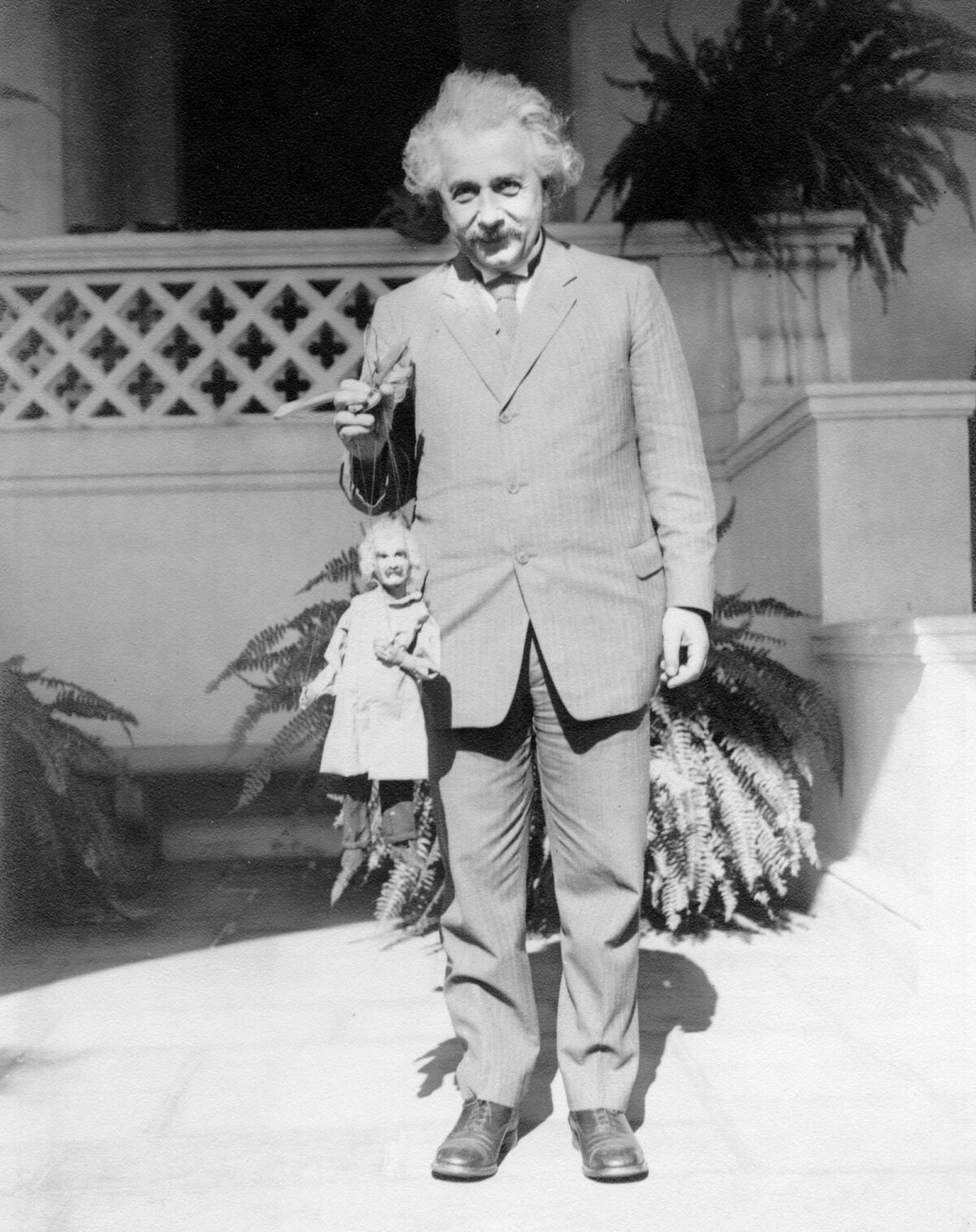
Albert Einstein Holding an Albert Einstein Puppet (Circa 1931)

The Yale Pup­peteers, con­sist­ing of For­man Brown, Har­ry Bur­nett, and Rod­dy Bran­don, came togeth­er in the 1920s and spent almost the next sev­en decades tour­ing the Unit­ed States, putting on satir­i­cal per­for­mances that fea­tured pup­pets in star­ring roles. They also staged per­for­mances at the Turn­about The­ater from 1941 to 1956, turn­ing it into a Hol­ly­wood insti­tu­tion.

In 1965, while speak­ing to the Los Ange­les Times, Har­ry Bur­nett reflect­ed on his career and recalled how the pup­pet troupe “enter­tained Charles Chap­lin, Gre­ta Gar­bo, Lionel Bar­ry­more,” and even “pre­sent­ed a spe­cial show for Dr. Albert Ein­stein when he vis­it­ed the street while teach­ing at Cal­tech.” That’s like­ly the ori­gin of the ear­ly 1930s pho­to above, which fea­tures Ein­stein pos­ing with an Ein­stein mar­i­onette. The web­site Retro­naut pro­vides a lit­tle more back­ground on the pho­to:

Ein­stein saw the pup­pet per­form at the Teatro Tori­to [a pre­de­ces­sor to the Turn­about The­ater] and was quite amused. He reached into his jacket’s breast pock­et, pulled out a let­ter and crum­pled it up. Speak­ing in Ger­man, he said, ‘The pup­pet wasn’t fat enough!’ He laughed and stuffed the crum­pled let­ter up under the smock to give the pup­pet a fat­ter bel­ly. This is a won­der­ful pho­to­graph that Har­ry trea­sured. Har­ry Bur­nett also kept the let­ter in a frame and loved to retell the sto­ry and at the end give his pix­ish laugh.

The sto­ry of Bur­nett and his com­rades was told in a 1993 doc­u­men­tary, Turn­about: The Sto­ry of the Yale Pup­peteers. Unfor­tu­nate­ly it’s not avail­able online.

via Dan­ger­ous Minds

Relat­ed Con­tent:

Lis­ten as Albert Ein­stein Reads ‘The Com­mon Lan­guage of Sci­ence’ (1941)

“Do Sci­en­tists Pray?”: A Young Girl Asks Albert Ein­stein in 1936. Ein­stein Then Responds.

Ein­stein for the Mass­es: Yale Presents a Primer on the Great Physicist’s Think­ing

The Musi­cal Mind of Albert Ein­stein: Great Physi­cist, Ama­teur Vio­lin­ist and Devo­tee of Mozart

Free Physics Cours­es in our Col­lec­tion of 825 Free Online Cours­es

by | Permalink | Make a Comment ( 1 ) |

« Go BackMore in this category... »
Quantcast