Michael Moore’s 13 Rules for Making Documentaries — Really Powerful & Entertaining Documentaries

66ème Festival de Venise (Mostra)

Flickr Com­mons Image by Nico­las Genin

You don’t rile up as many peo­ple as Michael Moore has with­out mas­ter­ing the art of but­ton push­ing. Clint East­wood threat­ened to kill him (alleged­ly). Christo­pher Hitchens, echo­ing the sen­ti­ments of many Iraq war sup­port­ers, called his work “dis­hon­est and dem­a­gog­ic.” And the State Department—opponents of both social­ized health­care and the Cuban government—attempted to dis­cred­it Moore with lies about his film Sicko. Those are some pow­er­ful ene­mies, espe­cial­ly for a “come­di­an and a pop­ulist” whose only weapons are cam­eras, micro­phones, and best­selling top­i­cal rants. On the oth­er hand, Moore inspires mil­lions of reg­u­lar folks. As far back as 2004, a pro­file in The New York­er described the simul­ta­ne­ous­ly angry and jovial doc­u­men­tar­i­an as “a polit­i­cal hero” to mil­lions who “revere” him.

How does a doc­u­men­tary film­mak­er cre­ate such pas­sion? Moore, writes The New York­er, inten­tion­al­ly pro­vokes; but he is also “exquis­ite­ly sen­si­tive to his audience’s mood and response. The harsh­ness of his com­e­dy, the pro­por­tion of com­e­dy to polit­i­cal anger, the flat­tery or mock­ery of the audi­ence, the num­ber and type of swear­words he uses….” All care­ful­ly con­trolled. And all of it adds up to some­thing more than doc­u­men­tary. Moore treats the term almost as a pejo­ra­tive, as he told an audi­ence in his keynote speech at the 2014 Toron­to Inter­na­tion­al Film Festival’s Doc Con­fer­ence. Typ­i­cal doc­u­men­tar­i­ans, Moore said, “sound like a scold. Like you’re Moth­er Supe­ri­or with a wood­en ruler in your hand.”

Some crit­ics of Moore make this very charge against him. Nonethe­less, his abil­i­ty to move peo­ple, both in the­aters and live audi­ences, to tears, peals of laugh­ter, and fits of rage, speaks of much more than humor­less moral­ism. Doc­u­men­tar­i­ans, Moore says in the 13-point “man­i­festo” of his speech, should aspire to more. Hence his first rule, which he derives part­ly from Fight Club. Below it, see abridg­ments of the oth­er twelve guide­lines, and read Moore’s speech in its entire­ty at Indiewire. If he repeats him­self, and he does, a lot, I sup­pose it’s because he feels the point is impor­tant enough to dri­ve home many times:

1. The first rule of doc­u­men­taries is: Don’t make a doc­u­men­tary — make a MOVIE.

…the audi­ence, the peo­ple who’ve worked hard all week — it’s Fri­day night, and they want to go to the movies. They want the lights to go down and be tak­en some­where. They don’t care whether you make them cry, whether you make them laugh, whether you even chal­lenge them to think — but damn it, they don’t want to be lec­tured, they don’t want to see our invis­i­ble wag­ging fin­ger pop­ping out of the screen. They want to be enter­tained.

2. Don’t tell me shit I already know.

Oh, I see — you made the movie because there are so many peo­ple who DON’T know about genet­i­cal­ly mod­i­fied foods. And you’re right. There are. And they just can’t wait to give up their Sat­ur­day to learn about it

3. The mod­ern doc­u­men­tary sad­ly has mor­phed into what looks like a col­lege lec­ture, the col­lege lec­ture mode of telling a sto­ry.

That has to stop. We have to invent a dif­fer­ent way, a dif­fer­ent kind of mod­el.

4. I don’t like Cas­tor Oil…. Too many of your doc­u­men­taries feel like med­i­cine.

The peo­ple don’t want med­i­cine. If they need med­i­cine, they go to the doc­tor. They don’t want med­i­cine in the movie the­aters. They want Goobers, they want pop­corn, and they want to see a great movie.

5. The Left is bor­ing.

…we’ve lost our sense of humor and we need to be less bor­ing. We used to be fun­ny. The Left was fun­ny in the 60s, and then we got real­ly too damn seri­ous. I don’t think it did us any good.

6. Why don’t more of your films go after the real vil­lains — and I mean the REAL vil­lains?

Why aren’t you nam­ing names? Why don’t we have more doc­u­men­taries that are going after cor­po­ra­tions by name? Why don’t we have more doc­u­men­taries going after the Koch Broth­ers and nam­ing them by name?

7. I think it’s impor­tant to make your films per­son­al.

I don’t mean to put your­self nec­es­sar­i­ly in the film or in front of the cam­era. Some of you, the cam­era does not like you. Do not go in front of the cam­era. And I would count myself as one of those. … But peo­ple want to hear the voice of a per­son. The vast major­i­ty of these doc­u­men­tary films that have had the most suc­cess are the ones with a per­son­al voice.

8. Point your cam­eras at the cam­eras.

Show the peo­ple why the main­stream media isn’t telling them what is going on.      

9. Books and TV have non­fic­tion fig­ured out. Peo­ple love to watch Stew­art and Col­bert. Why don’t you make films that come from that same spir­it? 

Why would­n’t you want the same huge audi­ence they have? Why is it that the Amer­i­can audi­ence says, I love non­fic­tion books and I love non­fic­tion TV — but there’s no way you’re drag­ging me into a non­fic­tion movie! Yet, they want the truth AND they want to be enter­tained. Yes, repeat after me, they want to be enter­tained!

10. As much as pos­si­ble, try to film only the peo­ple who dis­agree with you.

That is what is real­ly inter­est­ing. We learn so much more by you train­ing your cam­era on the guy from Exxon or Gen­er­al Motors and get­ting him to just blab on.

11. The audi­ence is part of the film.

While you are film­ing a scene for your doc­u­men­tary, are you get­ting mad at what you are see­ing? Are you cry­ing? Are you crack­ing up so much that you are afraid that the micro­phone is going to pick it up? If that is hap­pen­ing while you are film­ing it, then there is a very good chance that’s how the audi­ence is going to respond, too. Trust that. You are the audi­ence, too.

12. Less is more. You already know that one.

Edit. Cut. Make it short­er. Say it with few­er words. Few­er scenes. Don’t think your shit smells like per­fume. It does­n’t.

13. Final­ly… Sound is more impor­tant than pic­ture.

Pay your sound woman or sound man the same as you pay the DP, espe­cial­ly now with doc­u­men­taries. Sound car­ries the sto­ry. It’s true in a fic­tion film, too.

So there you have it aspir­ing film­mak­ers. Should you to wish to gal­va­nize, polar­ize, move, and inspire your audi­ence as you tell them the truth (as you see it), you’d do well to take a few point­ers from Michael Moore. Polit­i­cal differences—and homi­ci­dal urges—aside, even par­tic­u­lar­ly right-lean­ing doc­u­men­tary direc­tors might con­sid­er tak­ing a few pages from Moore’s play­book. A few media per­son­al­i­ties, it seems, already have, at least when it comes to defin­ing their pur­pose. One last time, with feel­ing, for the TL;DR crowd: “Yes, repeat after me, [audi­ences] want to be enter­tained! If you can’t accept that you are an enter­tain­er with your truth, then please get out of the busi­ness.”

via Indiewire

Relat­ed Con­tent:

Michael Moore Tells Wis­con­sin Teach­ers “Amer­i­ca Isn’t Broke”

Bowl­ing for Columbine: It’s Online and 10 Years Lat­er the School Mas­sacres Con­tin­ue. Have You Had Enough?!

Josh Jones is a writer and musi­cian based in Durham, NC. Fol­low him at @jdmagness

Slavoj Žižek Calls Political Correctness a Form of “Modern Totalitarianism”

Opin­ions on what we gen­er­al­ly mean by the phrase “polit­i­cal cor­rect­ness” vary wide­ly. Does it refer to the ways we try to main­tain basic polite­ness and com­mon decen­cy in what we like to think of as a plu­ral­is­tic, egal­i­tar­i­an soci­ety? Or is it a form of Orwellian, state-spon­sored mind con­trol that squash­es dis­sent and ban­ish­es unpop­u­lar ideas from pub­lic dis­course? On the one hand, sto­ries of unac­cept­ably abu­sive behav­ior in work­places, class­rooms, and gov­ern­ment build­ings abound, seem­ing to require plac­ing rea­son­able lim­its on speech. On the oth­er hand, extreme exam­ples of ram­pant “trig­ger warn­ings” and oth­er such qual­i­fiers—on col­lege lit­er­a­ture syl­labi, for exam­ple—can seem hyper­sen­si­tive, patron­iz­ing, and sil­ly at best.

In the Big Think video above, Marx­ist the­o­rist, cul­tur­al crit­ic, and pro­fes­sion­al provo­ca­teur Slavoj Žižek approach­es the term as a kind of enforced nice­ness that obscures oppres­sive pow­er rela­tion­ships. He begins with an exam­ple, of a so-called “post­mod­ern, non-author­i­tar­i­an father,” who uses a sub­tle form of emo­tion­al coer­cion, play­ing on feel­ings of guilt, to enforce love and respect for a grand­par­ent. This mod­el, says Žižek, is “par­a­dig­mat­ic” of “mod­ern total­i­tar­i­an­ism”:

This is why the for­mu­la of mod­ern total­i­tar­i­an­ism is not “I don’t care what you think, just do it.” This is tra­di­tion­al author­i­tar­i­an­ism. The total­i­tar­i­an for­mu­la is, “I know bet­ter than you what you real­ly want.”

“In this sense,” says Žižek, “I am hor­ri­fied by this new cul­ture of experts.” In his typ­i­cal­ly ani­mat­ed style, he leaps from case to case—the ban­ning of pub­lic e‑cigarette smok­ing, for example—to show how con­cerns about pub­lic health or racism give way to mean­ing­less, cul­tur­al­ly stul­ti­fy­ing mor­al­iz­ing. His point that polit­i­cal cor­rect­ness can be a humor­less “self-dis­ci­pline” is per­sua­sive. Whether his exam­ples of “pro­gres­sive racism”—or the social release valve of obscene or racist jokes—translate to an Amer­i­can con­text is debat­able. (Trig­ger warn­ing: Žižek drops a cou­ple n‑words).

Does the uncouth Žižek get a pass because he dis­avows per­son­al prej­u­dice, even as he makes light of it? Is there real­ly a “great art” to the racist joke that can bring peo­ple clos­er togeth­er? Do we need a “tiny exchange of friend­ly obscen­i­ties” to estab­lish “real con­tact” with oth­er peo­ple? I for one wouldn’t want to live in a soci­ety with­out obscene humor and hon­est, open con­ver­sa­tion. But whether all forms of polit­i­cal cor­rect­ness— what­ev­er it is—are “mod­ern total­i­tar­i­an­ism,” I leave to you to decide. It does seem to me that if we can’t have polit­i­cal debates with­out fear and shame then we real­ly have lost some mea­sure of free­dom; but if we’re unable to debate with good will and sen­si­tiv­i­ty, then we’ve lost some impor­tant mea­sure of our human­i­ty.

Relat­ed Con­tent:

Slavoj Žižek: What Full­fils You Cre­ative­ly Isn’t What Makes You Hap­py

Slavoj Žižek on the Feel-Good Ide­ol­o­gy of Star­bucks

Slavoj Žižek’s Pervert’s Guide to Ide­ol­o­gy Decodes The Dark Knight and They Live

Josh Jones is a writer and musi­cian based in Durham, NC. Fol­low him at @jdmagness

Günter Grass Takes On Facebook: “Someone Who Has 500 Friends, Has No Friends.”

Inci­sive social crit­ic, nov­el­ist, poet, sculp­tor, and inspi­ra­tion to such tren­chant fab­u­lists as John Irv­ing and Salman Rushdie, Ger­man writer Gün­ter Grass passed away this week with a well-defined lega­cy as “his country’s moral con­science.” Win­ner of the Nobel Prize in 1999, the author did not shy away from con­tro­ver­sial polit­i­cal stances—despite his own once-hid­den past as a teenage mem­ber of the Hitler Youth and Waf­fen-SS. In 2012, Grass caused an inter­na­tion­al stir with the pub­li­ca­tion of his poem “What Must Be Said,” a fierce cri­tique of Israel’s mil­i­tarism. The poem drew some rather pre­dictable charges, and its pub­li­ca­tion, wrote Der Spiegel, broached what many con­sid­ered a taboo sub­ject. The inci­dent rep­re­sents only one of Grass’s many pub­lic state­ments, woven through­out his art and life, against nation­al­ism and war.

Which brings us to the video inter­view above from 2013. While not exact­ly address­ing a mat­ter of dire geopo­lit­i­cal sig­nif­i­cance, Grass nonethe­less levies his char­ac­ter­is­tic crit­i­cal wit against a cor­po­rate enti­ty that threat­ens to swal­low the globe, vir­tu­al­ly—Face­book. Remark­ing on his chil­dren and grandchildren’s expe­ri­ence with the social net­work, Grass says he told one of them, “Some­one who has 500 friends, has no friends.” It’s some­thing of a famil­iar sen­ti­ment by now—we’ve all read numer­ous think-pieces more or less say­ing the same thing. But Grass goes on to define the val­ue of what he calls “direct expe­ri­ences” in spe­cif­ic terms—with the admis­sion that he feels like “a dinosaur” for writ­ing his man­u­scripts by hand and typ­ing them on an old Olivet­ti type­writer.

The idea of own­ing a mobile phone and being acces­si­ble at all times—and as I know now, under sur­veil­lance, is abhor­rent to me. With the lat­est find­ings in mind, it sur­pris­es me—that mil­lions of peo­ple do not dis­tance them­selves from Face­book and all that—and say “I want no part of it.”

Grass’ aver­sion to Facebook—and the online world in general—isn’t strict­ly polit­i­cal, but lit­er­ary as well. He acknowl­edges the ease and speed of the inter­net as a research tool, and yet… “lit­er­a­ture… You can’t speed it up when you work with it. If you do, you do so at the expense of qual­i­ty.” To hear more from Grass about the writ­ing process and his atti­tudes toward lit­er­a­ture and activism, read his inter­view in the Paris Review.

via Bib­liokept

Relat­ed Con­tent:

The Prob­lem with Face­book: “It’s Keep­ing Things From You”

Stephen Hawk­ing Starts Post­ing on Face­book: Join His Quest to Explain What Makes the Uni­verse Exist

Wittgen­stein Day-by-Day: Face­book Page Tracks the Philosopher’s Wartime Expe­ri­ence 100 Years Ago

Josh Jones is a writer and musi­cian based in Durham, NC. Fol­low him at @jdmagness

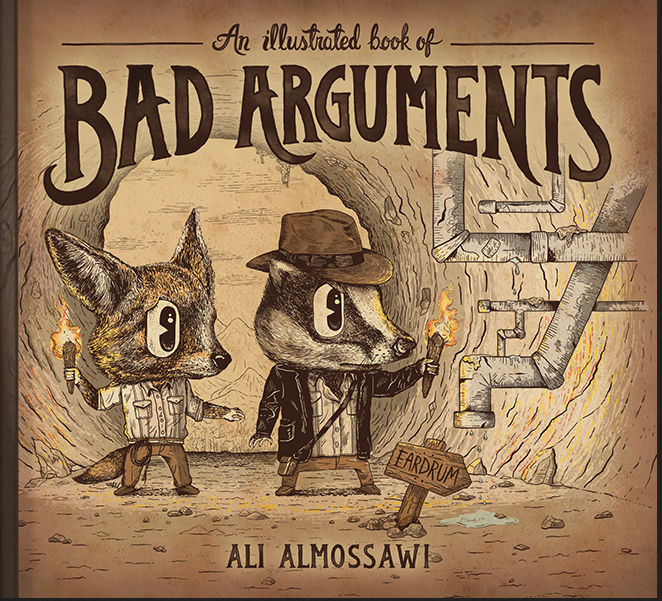
Read An Illustrated Book of Bad Arguments: A Fun Primer on How to Strengthen, Not Weaken, Your Arguments

bad arguments.jpg

The sci­ence of argu­men­ta­tion can seem com­pli­cat­ed, but in day-to-day terms, it quite often comes down to com­pet­ing emo­tions. Polit­i­cal dis­agree­ments thrive on dis­gust and fear; we shut down our rea­son­ing when we feel stressed or angry; and it is dif­fi­cult to get oppo­nents to hear us, whether they agree or not, if we do not exhib­it any sym­pa­thy for their posi­tion, hard as that may be.

How­ev­er, sub­jects in tests told not to feel any­thing about an issue before view­ing media about it tend to be more sup­port­ive. They’ve had some oppor­tu­ni­ty to access high­er order think­ing skills and to over­ride knee-jerk reac­tions. Most argu­ments take place in the fray—family din­ners, online forum wars—but even in these cas­es, apply­ing the best of our rea­son­ing, before, dur­ing, or after, can put us in bet­ter stead. As Ali Almos­sawi, author of An Illus­trat­ed Book of Bad Argu­ments (read online ver­sion here) puts it in his pref­ace:

… for­mal­iz­ing one’s rea­son­ing [can] lead to use­ful ben­e­fits such as clar­i­ty of thought and expres­sion, objec­tiv­i­ty and greater con­fi­dence. The abil­i­ty to ana­lyze argu­ments also help[s] pro­vide a yard­stick for know­ing when to with­draw from dis­cus­sions that would most like­ly be futile.

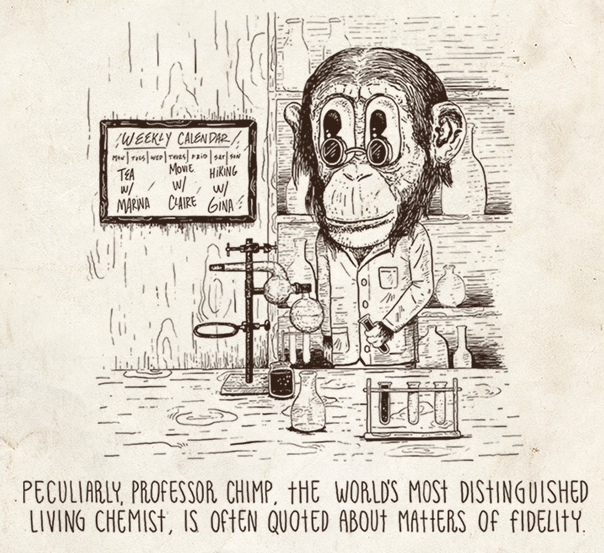
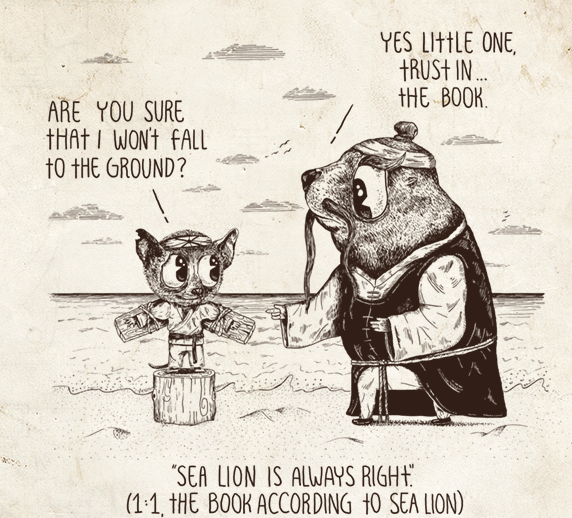
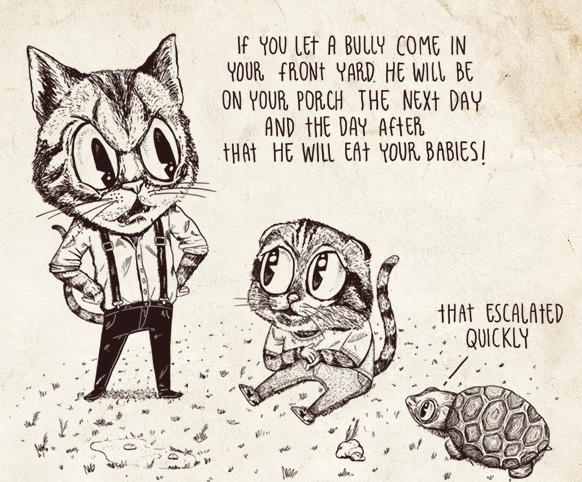
Almossawi’s strat­e­gy to mit­i­gate bad, or wast­ed, think­ing comes in the form of an inoc­u­la­tion. He quotes Stephen King, who “describes his expe­ri­ence of read­ing a par­tic­u­lar­ly ter­ri­ble nov­el as, ‘the lit­er­ary equiv­a­lent of a small­pox vac­ci­na­tion.’” Rather than a Ciceron­ian trea­tise on what makes a good argu­ment, Almos­sawi presents us with nine­teen exam­ples of the bad: infor­mal log­i­cal fal­lac­i­es we may be famil­iar with—Appeal to Author­i­ty (below), Cir­cu­lar Rea­son­ing (fur­ther down), Slip­pery Slope (bottom)—as well as many we may not be.

Appeal to Authority

The twist here is in Ale­jan­dro Giraldo’s play­ful illus­tra­tions, and the mem­o­rable exam­ples that fol­low Almossawi’s descrip­tions. Inspired part­ly by “alle­gories such as Orwell’s Ani­mal Farm and part­ly by the humor­ous non­sense of works such as Lewis Carroll’s sto­ries and poems,” the draw­ings are also high­ly rem­i­nis­cent, if not very much inspired by, the baroque car­toons of Tony Mil­lion­aire. The art is rich and full of sur­pris­es; the sam­ple argu­ments sil­ly but effec­tive at mak­ing the point.

Circular Reasoning

The next time you find your­self melt­ing down over a dis­agree­ment, it will like­ly help to take a time out and refresh your­self with this use­ful primer. If noth­ing else, it will give you some insight into the short­com­ings of your own argu­ments, and maybe some mea­sure of when to drop the sub­ject alto­geth­er. As Richard Feynman—quoted in an epi­logue to the book—once remarked, “The first prin­ci­ple is that you must not fool your­self and you are the eas­i­est per­son to fool.”  Find the book online here, or pur­chase a copy here.

Slippery Slope

Relat­ed Con­tent:

130+ Free Online Phi­los­o­phy Cours­es

A Guide to Log­i­cal Fal­lac­i­es: The “Ad Hominem,” “Straw­man” & Oth­er Fal­lac­i­es Explained in 2‑Minute Videos

Philoso­pher Daniel Den­nett Presents Sev­en Tools For Crit­i­cal Think­ing

Oxford’s Free Course Crit­i­cal Rea­son­ing For Begin­ners Will Teach You to Think Like a Philoso­pher

Josh Jones is a writer and musi­cian based in Durham, NC. Fol­low him at @jdmagness

President Obama Chats with David Simon About Drugs, The Wire & Omar

Back in 2012, Pres­i­dent Oba­ma, already on record as being a fan of The Wire, was asked by ESPN to name his favorite char­ac­ter on the show, to which he replied “It’s got to be Omar, right? I mean, that guy is unbe­liev­able, right?” Fast for­ward to 2015, and we find Mr. Oba­ma host­ing David Simon (the cre­ator of The Wire) at the White House, and hav­ing a frank con­ver­sa­tion about the TV show and the war on drugs, and what lessons we’ve learned along the way. Of course, the con­ver­sa­tion does­n’t end with­out Omar get­ting a men­tion … or with­out us get­ting to see Oba­ma as TV host. A sign of what’s to come after 2016?

Fol­low us on Face­book, Twit­ter, Google Plus and LinkedIn and  share intel­li­gent media with your friends. Or bet­ter yet, sign up for our dai­ly email and get a dai­ly dose of Open Cul­ture in your inbox.

by | Permalink | Make a Comment ( 1 ) |

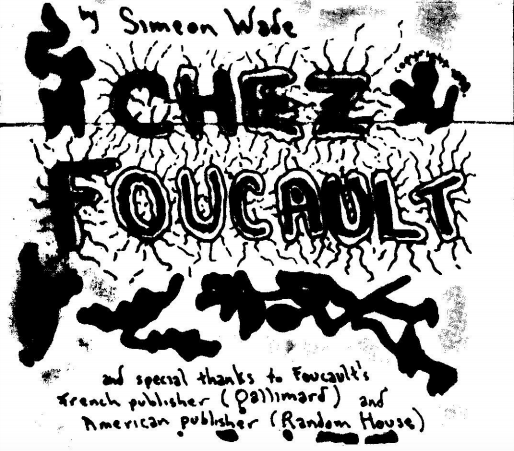
Read Chez Foucault, the 1978 Fanzine That Introduced Students to the Radical French Philosopher

chez foucault1

The recent “adjunct walk out day” has remind­ed peo­ple out­side academia—at least those who paid any attention—of the decay­ing state of Amer­i­can high­er edu­ca­tion, a con­di­tion dri­ven in part by a sear­ing under­cur­rent of anti-intel­lec­tu­al­ism in U.S. polit­i­cal cul­ture. It’s a trend his­to­ri­an Richard Hof­s­tadter iden­ti­fied last cen­tu­ry in his Pulitzer Prize-win­ning 1963 study Anti-Intel­lec­tu­al­ism in Amer­i­can Life. But not long after Hofstadter’s book appeared, anoth­er, more vital cur­rent took hold in the 60s and 70s, one brought on by the broad­en­ing pos­si­bil­i­ties for those pre­vi­ous­ly denied access to elite uni­ver­si­ties, and by rec­i­p­ro­cal rela­tion­ships between rad­i­cals and schol­ars. Aca­d­e­mics like Tim­o­thy Leary became fig­ure­heads of the coun­ter­cul­ture, rev­o­lu­tion­ar­ies like Huey New­ton earned Ph.D.s, and activist pro­fes­sors like Angela Davis held the line between the worlds of high­er ed and pop­u­lar dis­sent. The uni­ver­si­ties became not only sites of stu­dent protest, but also matri­ces of rev­o­lu­tion­ary the­o­ry.

Into this foment­ing intel­lec­tu­al cul­ture stepped French the­o­rist Michel Fou­cault, who first lec­tured in the U.S. in 1975 after the pub­li­ca­tion of his His­to­ry of Sex­u­al­i­ty. Fou­cault was a true prod­uct of the French uni­ver­si­ty sys­tem and an aca­d­e­m­ic super­star of sorts, as well as a gad­fly of rev­o­lu­tion­ary move­ments from Paris in ’68, to Iran in ’79, to Berke­ley in the 80s. His work as a philoso­pher and polit­i­cal dis­si­dent prompt­ed one biog­ra­ph­er to refer to him as a “mil­i­tant intel­lec­tu­al,” though his pol­i­tics could some­times be as obscure as his prose. By 1981, he had risen to such cul­tur­al promi­nence in the States that Time mag­a­zine pub­lished a pro­file of him and his “grow­ing cult.” One of Foucault’s Amer­i­can acolytes, Sime­on Wade, befriend­ed the philoso­pher in the mid-sev­en­ties and wrote an unpub­lished, 121-page account of Foucault’s alleged 1975 LSD trip in Death Val­ley (referred to in James Miller’s The Pas­sion of Michel Fou­cault). Wade, along with a num­ber of oth­er Uni­ver­si­ty of Cal­i­for­nia stu­dents, also inter­viewed Fou­cault the fol­low­ing year.

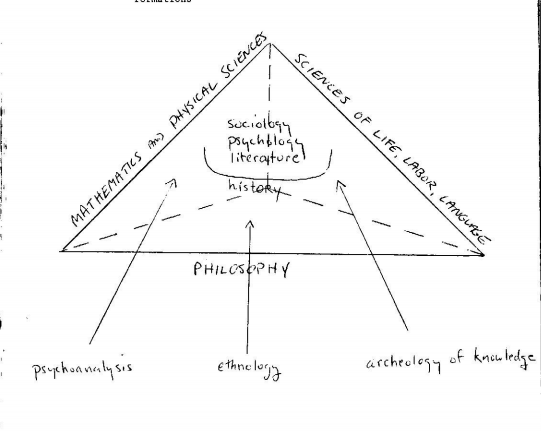
chez foucault 2

In 1978, Wade pub­lished the inter­view in what may be the most pop­ulist of mediums—the fanzine. Titled Chez Fou­cault, with a ded­i­ca­tion “for Michael Stone­man,” the mimeo­graphed doc­u­ment looks on its face like a typ­i­cal hand­made self-pub­li­ca­tion from the peri­od, with its murky let­ter­ing and gen­er­al­ly hap­haz­ard design. But inside, Chez Fou­cault is far denser than any chap­book or rock ‘zine. In his pref­ace, Wade describes Chez Fou­cault as “a work­book I tin­kered togeth­er for teach­ers and stu­dents in the human­i­ties, social sci­ences and nat­ur­al sci­ences.” Accord­ing­ly, in addi­tion to the inter­view, he includes a syn­op­sis of Foucault’s Dis­course on Lan­guage, a “tran­scrip­tion” of his Dis­ci­pline and Pun­ish, a sketch of “The Ear­ly Fou­cault,” and a bib­li­og­ra­phy, glos­sary, read­ing and film list, and ver­i­ta­ble course out­line. It’s a very rich text that pro­vides a thor­ough intro­duc­tion to many of Foucault’s major works. Of prin­ci­ple inter­est, how­ev­er, is the inter­view, seem­ing­ly unpub­lished any­where else. In it, Fou­cault elab­o­rates on sev­er­al of his key con­cepts, such as the rela­tion­ship between dis­course and pow­er:

I do not want to try to find behind the dis­course some­thing which would be the pow­er and which would be the source of the dis­course […]. We start from the dis­course as it is! […] The kind of analy­sis I make does not deal with the prob­lem of the speak­ing sub­ject, but looks at the ways in which the dis­course plays a role inside the strate­gi­cal sys­tem in which the pow­er is involved, for which pow­er is work­ing. So pow­er won’t be some­thing out­side the dis­course. Pow­er won’t be some­thing like a source or the ori­gin of dis­course. Pow­er will be some­thing which is work­ing through the dis­course.

This con­cise expla­na­tion offers a key to Foucault’s method. Dis­avow­ing the labels of both philoso­pher and his­to­ri­an (he calls him­self a “jour­nal­ist”), Fou­cault defines his pro­gram as “an analy­sis of dis­course, but not with the per­spec­tive of ‘point of view.’” (If the dis­tinc­tion is con­fus­ing, a read­ing of his essay “What is an Author?” may help clar­i­fy things.) Fou­cault dis­cuss­es the biopol­i­tics of pow­er, call­ing the human body “a pro­duc­tive force,” which “exists in and through a polit­i­cal sys­tem.” He also talks about the “polit­i­cal use” of a crit­i­cal the­o­ry such as his, and the pos­si­bil­i­ty of rev­o­lu­tion­ary phi­los­o­phy:

I do not think there is such a thing as a con­ser­v­a­tive phi­los­o­phy or a rev­o­lu­tion­ary phi­los­o­phy. Rev­o­lu­tion is a polit­i­cal process; it is an eco­nom­ic process. Rev­o­lu­tion is not a philo­soph­i­cal ide­ol­o­gy. And that’s impor­tant. That’s the rea­son why some­thing like Hegelian phi­los­o­phy has been both a rev­o­lu­tion­ary ide­ol­o­gy, a rev­o­lu­tion­ary method, a rev­o­lu­tion­ary tool, but also a con­ser­v­a­tive one. Look at Niet­zsche. Niet­zsche brought forth won­der­ful ideas, or tools if you like. He was used by the Nazi Par­ty. Now a lot of Left­ist thinkers use him. So we can­not be sure if what we are say­ing is rev­o­lu­tion­ary or not.

There is much more worth read­ing in Foucault’s inter­view with Wade and his fel­low stu­dents, and stu­dents and teach­ers of Fou­cault will find all of Chez Fou­cault worth­while. You can read and down­load the entire Fou­cault ‘zine here. And lest you think it’s the only one of its kind, don’t miss Judy!, the 1993 fanzine devot­ed to philoso­pher Judith But­ler.

via Pro­gres­sive Geo­gra­phies and Mono­skop

Relat­ed Con­tent:

Hear Michel Fou­cault Deliv­er His Lec­ture on “Truth and Sub­jec­tiv­i­ty” at UC Berke­ley, In Eng­lish (1980)

Hear Michel Foucault’s Lec­ture “The Cul­ture of the Self,” Pre­sent­ed in Eng­lish at UC Berke­ley (1983)

Michel Fou­cault – Beyond Good and Evil: 1993 Doc­u­men­tary Explores the Theorist’s Con­tro­ver­sial Life and Phi­los­o­phy

Watch a “Lost Inter­view” With Michel Fou­cault: Miss­ing for 30 Years But Now Recov­ered

Josh Jones is a writer and musi­cian based in Durham, NC. Fol­low him at @jdmagness

George Orwell Creates a Who’s Who List of “Crypto” Communists for British Intelligence Forces (1949)

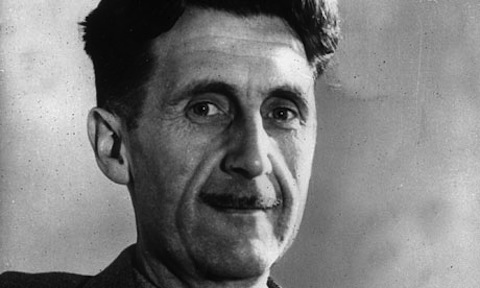
George-Orwell-001

Jour­nal­ist and nov­el­ist Eric Blair, known for all of his pro­fes­sion­al life by the pen name George Orwell, staunch­ly iden­ti­fied him­self as a demo­c­ra­t­ic social­ist. For exam­ple, in his slim 1946 pub­li­ca­tion Why I Write, he declared, “Every line of seri­ous work I have writ­ten since 1936 has been writ­ten, direct­ly or indi­rect­ly, against total­i­tar­i­an­ism and for demo­c­ra­t­ic social­ism as I under­stand it.” Despite the wide­spread blur­ring of lines these days between social­ism and communism—whether through igno­rance or delib­er­ate misleading—the dis­tinc­tion was not lost on Orwell. Though he sup­port­ed an equi­table dis­tri­b­u­tion of wealth and pub­lic insti­tu­tions for the com­mon good, he fierce­ly opposed Sovi­et com­mu­nism as anti-demo­c­ra­t­ic and oppres­sive. As Orwell biog­ra­ph­er John Newsinger writes, one “cru­cial dimen­sion to Orwell’s social­ism was his recog­ni­tion that the Sovi­et Union was not social­ist. Unlike many on the left, instead of aban­don­ing social­ism once he dis­cov­ered the full hor­ror of Stal­in­ist rule in the Sovi­et Union, Orwell aban­doned the Sovi­et Union and instead remained a social­ist.”

Of course, Orwell’s anti-com­mu­nist sen­ti­ments are famil­iar to every stu­dent who has read Ani­mal Farm. Less well known is the degree to which he con­tributed to anti-com­mu­nist pro­pa­gan­da, even cor­re­spond­ing with British secret ser­vices and keep­ing a black­list of writ­ers he deemed either “cryp­tos” (secret com­mu­nists), “fel­low trav­ellers” (com­mu­nist sym­pa­thiz­ers), or out­right mem­bers of the Com­mu­nist Par­ty. Orwell’s involve­ment with the Infor­ma­tion Research Depart­ment (IRD), a pro­pa­gan­da unit formed in 1948 under the UK’s For­eign Office to com­bat Stal­in­ism at home and abroad has received a good deal of atten­tion in the past few decades, in part because of the dis­cov­ery in 2003 of a pri­vate note­book con­tain­ing his orig­i­nal list. Even before this rev­e­la­tion, biog­ra­phers and his­to­ri­ans had known about the list, which Orwell includ­ed, in part, in a let­ter to his love inter­est Celia Kir­wan, who worked for the IRD, with the instruc­tions that she keep it secret due to its “libelous” nature. Orwell intend­ed that the writ­ers on the list not be asked to work for the IRD because, in his esti­ma­tion, they were peo­ple who could not be trust­ed.

Reac­tions to Orwell’s list have been very mixed. When the sto­ry first broke in the late nineties, Orwell’s long­time friend Michael Foot said he found the list “amaz­ing” and out of char­ac­ter. One of the peo­ple named, Nor­man Macken­zie, ascribed the list to Orwell’s ill­ness, say­ing that the writer was “los­ing his grip on him­self” in 1949 dur­ing his final strug­gle with the tuber­cu­lo­sis that killed him that year. Orwell biog­ra­ph­er Bernard Crick defend­ed his actions, writ­ing, “He did it because he thought the Com­mu­nist Par­ty was a total­i­tar­i­an men­ace. He wasn’t denounc­ing these peo­ple as sub­ver­sives. He was denounc­ing them as unsuit­able for counter-intel­li­gence oper­a­tion.” On the oth­er hand, late left­ist fire­brand jour­nal­ist Alexan­der Cock­burn con­demned Orwell as a “snitch” and thought the list was evi­dence of Orwell’s big­otry, giv­en his sus­pi­cion of Paul Robe­son as “anti-white” and his denounc­ing of oth­ers due to their rumored homo­sex­u­al­i­ty or Jew­ish back­ground. He makes a com­pelling case. What­ev­er Orwell’s moti­va­tions, the effect on the named indi­vid­u­als’ pro­fes­sion­al and polit­i­cal lives was mild, to say the least. This was hard­ly a McCarthyite witch-hunt. Nonethe­less, it’s a lit­tle hard for admir­ers of Orwell not to wince at this col­lab­o­ra­tion with the state secret ser­vice.

Below, see the list he sub­mit­ted to Kir­wan in his let­ter. Fur­ther down is a list of names, includ­ing those of Orson Welles and Kather­ine Hep­burn, that appeared in his note­book but not on the list he gave to the IRD.

Writ­ers and jour­nal­ists

Aca­d­e­mics and sci­en­tists

Actors

Labour MPs

Oth­ers

Peo­ple named in Orwell’s note­book, but not appear­ing on the final IRD list:

Relat­ed Con­tent:

George Orwell Explains in a Reveal­ing 1944 Let­ter Why He’d Write 1984

George Orwell Reviews Mein Kampf (1940)

George Orwell’s Five Great­est Essays (as Select­ed by Pulitzer-Prize Win­ning Colum­nist Michael Hiltzik)

Josh Jones is a writer and musi­cian based in Durham, NC. Fol­low him at @jdmagness

How “America’s First Drug Czar” Waged War Against Billie Holiday and Other Jazz Legends

The U.S. government’s so-called “War on Drugs” pre­dates Richard Nixon’s coinage of the term in 1971 by many decades, though it is under his admin­is­tra­tion that it assumed its cur­rent scope and char­ac­ter. Before Wood­stock and Viet­nam, before the cre­ation of the DEA in 1973, the Fed­er­al Bureau of Narcotics—headed by “America’s first drug czar,” Com­mis­sion­er Har­ry J. Anslinger, from 1930 to 1962—waged its own war, at first pri­mar­i­ly on mar­i­jua­na, and, to a great degree, on jazz musi­cians and jazz cul­ture. Anslinger came to pow­er in the era of Reefer Mad­ness, the title of a rather ridicu­lous 1938 anti-drug film that has come to stand in for hyper­bol­ic anti-pot para­noia of the ’30s and ’40s more gen­er­al­ly. Much of that mad­ness was the Commissioner’s spe­cial cre­ation.

Like so much of the post-Nixon drug war, Anslinger staged his cam­paign as a moral cru­sade against cer­tain kinds of users: dis­si­dents, the coun­ter­cul­ture, and espe­cial­ly immi­grants and blacks. Accord­ing to Alexan­der Cockburn’s White­out: The CIA, Drugs, and the Press, Anslinger’s “first major cam­paign was to crim­i­nal­ize the drug com­mon­ly known as hemp. But Anslinger renamed it ‘mar­i­jua­na’ to asso­ciate it with Mex­i­can labor­ers,” and claimed that the drug “can arouse in blacks and His­pan­ics a state of men­ac­ing fury or homi­ci­dal attack.” Anslinger “became the prime shaper of Amer­i­can atti­tudes to drug addic­tion.” And like lat­er despis­ers of rock ‘n’ roll and hip-hop, Anslinger’s hatred of jazz moti­vat­ed many of his tar­get­ed attacks.

Anslign­er linked mar­i­jua­na with jazz and per­se­cut­ed many black musi­cians, includ­ing Thelo­nious Monk, Dizzy Gille­spie and Duke Elling­ton. Louis Arm­strong was also arrest­ed on drug charges, and Anslinger made sure his name was smeared in the press. In Con­gress he tes­ti­fied that “[c]oloreds with big lips lure white women with jazz and mar­i­jua­na.”

“Mar­i­jua­na is tak­en by… musi­cians,” he told Con­gress in 1937, “And I’m not speak­ing about good musi­cians, but the jazz type.” Although the La Guardia Com­mit­tee would refute almost every­thing Anslinger tes­ti­fied to about the effects of smok­ing pot, the dam­age was already done. (Anslinger’s pros­e­cu­tion of jazz musi­cians, par­tic­u­lar­ly Louis Armstrong—paralleled that of anoth­er pow­er-mad, para­noid bureau­crat, J. Edgar Hoover.)

Anslinger did not sim­ply dis­like jazz. He feared it. “It sound­ed,” he wrote, “like the jun­gles in the dead of night.” In jazz, “unbe­liev­ably ancient inde­cent rites of the East Indies are res­ur­rect­ed.” And the lives of jazz musi­cians “reek of filth.” And yet, writes Johann Hari in his book Chas­ing the Scream (excerpt­ed in Politi­co), his cam­paign large­ly failed because of the jazz world’s “absolute sol­i­dar­i­ty” in oppo­si­tion to it. “In the end,” writes Hari, “the Trea­sury Depart­ment told Anslinger he was wast­ing his time.” And so, “he scaled down his focus until it set­tled like a laser on one sin­gle target—perhaps the great­est female jazz vocal­ist there ever was,” Bil­lie Hol­i­day.

Any­one with even the most cur­so­ry knowl­edge about Hol­i­day knows she had a drug prob­lem in des­per­ate need of treat­ment. And, of course, Hol­i­day was­n’t addict­ed to a rel­a­tive­ly harm­less sub­stance like mar­i­jua­na, but to hero­in, which—along with alco­hol abuse—eventually lead to her death. Yet, as Cock­burn writes, Anslinger had “hammer[ed] home his view that [drug addic­tion] was not… treat­able,” but “could only be sup­pressed by harsh crim­i­nal sanc­tions.” Accord­ing­ly, he “hunt­ed” Holiday—in Hari’s apt description—sending agents after her when he heard “whis­pers that she was using hero­in, and—after she flat­ly refused to be silent about racism.”

Recruit­ing a black agent, Jim­my Fletch­er, for the job, Anslinger began his attacks on Hol­i­day in 1939. Fletch­er shad­owed Hol­i­day for years, and became pro­tec­tive, even­tu­al­ly, “it seems,” writes Hari, “fall[ing] in love with her.” But Anslinger broke the case through Holliday’s vicious­ly abu­sive hus­band, Louis McK­ay, who agreed to inform on her—something no fel­low musi­cian would do. In May of 1947, Hol­i­day was arrest­ed and put on tri­al for pos­ses­sion of nar­cotics. “Sick and alone,” writes Het­tie Jones in Big Star Fallin’ Mama: Five Women in Black Music, “she signed away her right to a lawyer and no one advised her to do oth­er­wise.” Promised a “hos­pi­tal cure in return for a plea of guilty,” she was instead “con­vict­ed as a ‘crim­i­nal defen­dant,’ and a ‘wrong­do­er,’ and sen­tenced to a year and a day in the Fed­er­al Women’s Refor­ma­to­ry at Alder­son, West Vir­ginia.”

After her release, Hol­i­day was stripped of her cabaret license, restrict­ed from singing in “all the jazz clubs in the Unit­ed States… on the grounds,” writes Hari, “that lis­ten­ing to her might harm the morals of the pub­lic.” Two years after her first con­vic­tion, Anslinger recruit­ed anoth­er agent, a sadist named George White, who was all too hap­py take Hol­i­day down. He did so in 1949 at the Mark Twain Hotel in San Francisco—“one of the few places she could still perform”—arresting her with­out a war­rant and with what were very like­ly plant­ed drugs. White appar­ent­ly “had a long his­to­ry of plant­i­ng drugs on women” and “may well have been high when he bust­ed Bil­lie for get­ting high.” (See the declas­si­fied case against her here. Her man­ag­er John Levy is erro­neous­ly referred to as her “hus­band” and called “Joseph Levy.”)

A jury refused to con­vict, but Anslinger glo­ried in the toll his cam­paign had tak­en. “She had slipped from the peak of her fame,” he wrote, “her voice was crack­ing.” After her death in 1959, he wrote cal­lous­ly, “for her, there would be no more ‘Good Morn­ing Heartache.’” For her part, though Hol­i­day “didn’t blame Anslinger’s agents as indi­vid­u­als; she blamed the drug war,” writ­ing in her auto­bi­og­ra­phy, “Imag­ine if the gov­ern­ment chased sick peo­ple with dia­betes, put a tax on insulin and drove it into the black mar­ket… then sent them to jail…. We do prac­ti­cal­ly the same thing every day in the week to sick peo­ple hooked on drugs.”

Many jazz musi­cians, but espe­cial­ly Hol­i­day, paid dear­ly for Anslinger and the Fed­er­al Bureau of Nar­cotics’ “war on drugs.” Hari doc­u­ments the “race pan­ic” that under­lay most of Anslinger’s actions and the egre­gious dou­ble stan­dard he applied, includ­ing a “friend­ly chat” he had with Judy Gar­land over her hero­in addic­tion and kid gloves treat­ment of a “Wash­ing­ton soci­ety host­ess,” in con­trast to his relent­less pros­e­cu­tion of Hol­i­day. His per­se­cu­tion of Hol­l­i­day and oth­ers was accom­pa­nied by a pro­pa­gan­da cam­paign that demo­nized “the Negro pop­u­la­tion” as dan­ger­ous addicts. As Hari points out, Anslinger “did not cre­ate these under­ly­ing trends,” but he pro­mot­ed racist fic­tions and manip­u­lat­ed them to his advan­tage. And his sin­gling out of cul­tures and groups he per­son­al­ly dis­liked and feared as spe­cial tar­gets for vig­or­ous, prej­u­di­cial pros­e­cu­tion helped set the agen­da for anti-drug leg­is­la­tion and cul­tur­al atti­tudes in every decade since he decid­ed to go after jazz and Bil­lie Hol­i­day.

Har­i’s book, Chas­ing the Scream, is now avail­able on Ama­zon.

Relat­ed Con­tent:

Bil­lie Hol­i­day — The Life and Artistry of Lady Day: The Com­plete Film

Duke Ellington’s Sym­pho­ny in Black, Star­ring a 19-Year-old Bil­lie Hol­i­day

Curi­ous Alice — The 1971 Anti-Drug Movie Based on Alice in Won­der­land That Made Drugs Look Like Fun

Louis Arm­strong Plays His­toric Cold War Con­certs in East Berlin & Budapest (1965)

Josh Jones is a writer and musi­cian based in Durham, NC. Fol­low him at @jdmagness

« Go BackMore in this category... »
Quantcast