BritBox Now Streaming Now Streaming 550 Episodes Doctor Who and Many Other British TV Shows

Back in the day, Amer­i­cans could watch an occa­sion­al British TV show on PBS or UHF. A lit­tle Ben­ny Hill. Some Upstairs Down­stairs, but not a whole lot more.

Those days of scarci­ty are now long gone. Last month, BBC World­wide and ITV launched Brit­box, a stream­ing ser­vice that fea­tures the biggest col­lec­tion of British TV shows ever. And, accord­ing to Nerdist, that col­lec­tion now includes 550 clas­sic Doc­tor Who episodes, orig­i­nal­ly aired between 1963 and 1989. For those not famil­iar with Doc­tor Who, Den of Geek has a handy guide that will help you get start­ed.

Brit­box cur­rent­ly offers a one-week free tri­al. Ergo, you can start binge-watch­ing some Doc­tor Who shows for the next 168 hours. After the free tri­al, the ser­vice costs $6.99 per month, and you can can­cel, has­sle free, when­ev­er you want.

Oth­er Brit­box shows include Sher­lock HolmesEas­t­En­ders, Upstairs Down­stairs, Black­ad­der, Bleak House, Inspec­tor Morsepro­grams with Louis Ther­oux, A Stitch Through Time, and more.

If you would like to sup­port the mis­sion of Open Cul­ture, con­sid­er mak­ing a dona­tion to our site. It’s hard to rely 100% on ads, and your con­tri­bu­tions will help us con­tin­ue pro­vid­ing the best free cul­tur­al and edu­ca­tion­al mate­ri­als to learn­ers every­where. You can con­tribute through Pay­Pal, Patre­on, and Ven­mo (@openculture). Thanks!

Relat­ed Con­tent:

The BBC Cre­ates Step-by-Step Instruc­tions for Knit­ting the Icon­ic Dr. Who Scarf: A Doc­u­ment from the Ear­ly 1980s

Vin­cent van Gogh Vis­its a Mod­ern Muse­um & Gets to See His Artis­tic Lega­cy: A Touch­ing Scene from Doc­tor Who

42 Hours of Ambi­ent Sounds from Blade Run­ner, Alien, Star Trek and Doc­tor Who Will Help You Relax & Sleep

Stream 72 Hours of Ambient Sounds from Blade Runner: Relax, Go to Sleep in a Dystopian Future

As reflex­ive­ly as we may now describe the 2019 Los Ange­les of Blade Run­ner as “dystopi­an” — and indeed, as vivid a mod­ern dystopia as cin­e­ma has yet pro­duced — who among us would­n’t want to spend at least a few hours there? Much of the sur­face appeal is, of course, visu­al: the rainy neon-lined streets, the indus­tri­al fear­some­ness, those tow­er-side video geisha. But no film tru­ly suc­ceeds, at cre­at­ing a world or any­thing else, with­out the right sound. We may not con­scious­ly real­ize it when we watch the movie, no mat­ter how many times we’ve seen it before, but the son­ic ele­ments, all care­ful­ly craft­ed, do more than their fair share to make Blade Run­ner feel like Blade Run­ner.

And so the best way to put your­self into Blade Run­ner’s world may be to sur­round your­self with its sounds, a task made much eas­i­er by “ambi­ent geek” Crysknife007, whose Youtube chan­nel offers a playlist of ambi­ent noise from Blade Run­ner places. These include Deckard’s apart­ment, the Tyrell Build­ing, the Brad­bury Hotel, and oth­ers, each of which loops for a con­tin­u­ous twelve hours. (The com­plete playlist above runs for 72 hours.) Some of the loca­tions even die-hard fans of the movie might not rec­og­nize, because they come from anoth­er exten­sion of Blade Run­ner’s real­i­ty: the 1997 PC adven­ture game that has a new cast of char­ac­ters play out a dif­fer­ent sto­ry in the pro­to-cyber­punk urban set­ting with the same neces­si­ty for just the right sound to cre­ate just the right atmos­phere

Crysknife007, who as an ambi­ent musi­cian goes under the name “Cheesy Ner­vosa,” seems to have a side line in this sort of thing: last month we fea­tured oth­er sci-fi-inspired selec­tions from the same Youtube chan­nel like the sounds of the ship’s engine from Star Trek: the Next Gen­er­a­tion and the TARDIS from Doc­tor Who. But it’s Blade Run­ner, as Thom Ander­sen says in his doc­u­men­tary Los Ange­les Plays Itself, that “con­tin­ues to fas­ci­nate. Per­haps it express­es a nos­tal­gia for a dystopi­an vision of the future that has become out­dat­ed. This vision offered some con­so­la­tion because it was at least sub­lime. Now the future looks brighter, hot­ter, and bland­er.” But even as the real 2019 draws near, what­ev­er the future actu­al­ly ends up look­ing like, we at least know we can keep it sound­ing inter­est­ing.

Relat­ed Con­tent:

The Art of Mak­ing Blade Run­ner: See the Orig­i­nal Sketch­book, Sto­ry­boards, On-Set Polaroids & More

10 Hours of Ambi­ent Arc­tic Sounds Will Help You Relax, Med­i­tate, Study & Sleep

Moby Lets You Down­load 4 Hours of Ambi­ent Music to Help You Sleep, Med­i­tate, Do Yoga & Not Pan­ic

Music That Helps You Sleep: Min­i­mal­ist Com­pos­er Max Richter, Pop Phe­nom Ed Sheer­an & Your Favorites

42 Hours of Ambi­ent Sounds from Blade Run­ner, Alien, Star Trek and Doc­tor Who Will Help You Relax & Sleep

Based in Seoul, Col­in Mar­shall writes and broad­casts on cities and cul­ture. He’s at work on a book about Los Ange­les, A Los Ange­les Primer, the video series The City in Cin­e­ma, the crowd­fund­ed jour­nal­ism project Where Is the City of the Future?, and the Los Ange­les Review of Books’ Korea Blog. Fol­low him on Twit­ter at @colinmarshall or on Face­book.

Ray Bradbury’s The Martian Chronicles: A Radio Drama Starring Derek Jacobi & Hayley Atwell (Free Audio Book)

Image by Futuril­la, via Flickr Com­mons

For your week­end lis­ten­ing plea­sure, we present a 70 minute radio drama­ti­za­tion of The Mar­t­ian Chron­i­cles, Ray Brad­bury’s “time­less fable of doomed Mar­t­ian coloni­sa­tion.” Aired by the BBC, this pro­duc­tion stars Derek Jaco­bi and Hay­ley Atwell. Read this lit­tle blurb, which helps set the stage. Then stream the embed­ded Spo­ti­fy audio below.

When the first expe­di­tion to Mars mys­te­ri­ous­ly dis­ap­pears, Earth sends a sec­ond to find out what hap­pened. But the real mis­sion is clas­si­fied. And only Cap­tain Wilder knows the truth. Spender, an anthro­pol­o­gist on Wilder’s crew, attempts to pre­vent the coloni­sa­tion that she believes will erad­i­cate the last of an ancient peo­ple liv­ing on Mars. But to what lengths will she go?

As the hon­ourable but duty-bound Cap­tain Wilder tracks the now rogue Spender into the Mar­t­ian moun­tains, the future of this ancient plan­et is at stake. Mean­while, Earth itself teeters on the brink of its own glob­al cat­a­stro­phe as the very sur­vival of human­i­ty hangs in the bal­ance.…

If you need Spo­ti­fy, down­load it here.

This pro­duc­tion will be added to our col­lec­tion, 1,000 Free Audio Books: Down­load Great Books for Free.

Look­ing for free, pro­fes­­sion­al­­ly-read audio books from Audible.com? Here’s a great, no-strings-attached deal. If you start a 30 day free tri­al with Audible.com, you can down­load two free audio books of your choice. Get more details on the offer here.

by | Permalink | Make a Comment ( 4 ) |

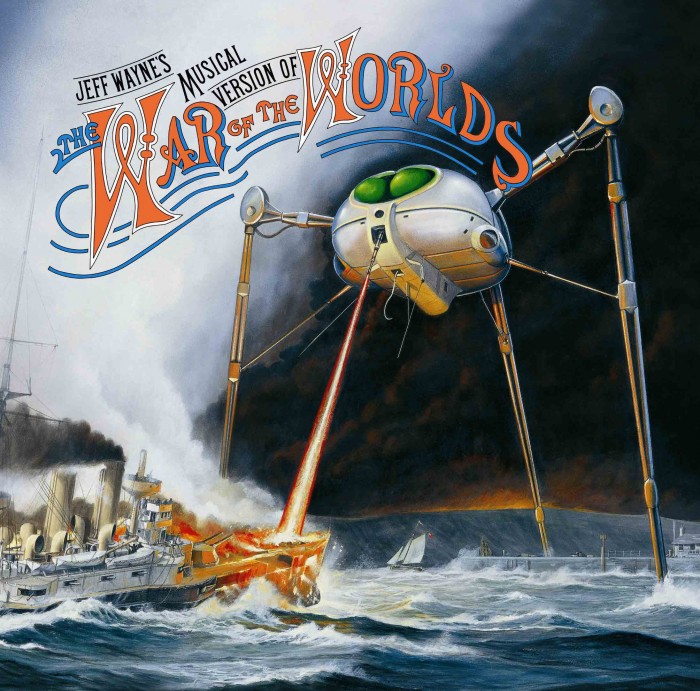
Hear the Prog-Rock Adaptation of H.G. Wells’ War of the Worlds: The 1978 Rock Opera That Sold 15 Million Copies Worldwide

Since the 1950s at least, Amer­i­cans have embraced sci­ence fic­tion of all kinds—from the high con­cepts of 2001 to the high kitsch of Bar­barel­la—even if some­times only among devot­ed cult fans. The Queen-scored Flash Gor­don, for exam­ple, did not do well in U.S. the­aters on its release in 1980, though it was a hit in the UK. But not long after, its icon­ic, puls­ing theme song, with its oper­at­ic blasts, became an unmis­tak­able call­back to the final days of 70s rock opera’s glo­ri­ous excess­es.

And yet some­how, anoth­er equal­ly bom­bas­tic sci-fi rock opera pro­duced in 1978, Jeff Wayne’s musi­cal adap­ta­tion of H.G. Wells’ War of the Worlds, has been denied prop­er cult sta­tus in the States. At the time of its release, U.S. audi­ences, primed by the pre­vi­ous year’s colos­sal hit, Star Wars, per­haps sought more swash­buck­ling fare, not prog-rock dou­ble con­cept albums based on clas­sic nov­els. Amer­i­can indif­fer­ence, how­ev­er, in no way hin­dered the album’s pop­u­lar­i­ty abroad.

Accord­ing to its clunky web­site, Wayne’s adap­ta­tion, “is one of the best known and best-sell­ing musi­cal works of all time.” This is no emp­ty boast; it had “sold approx­i­mate­ly 15 mil­lion records around the world” by 2013 and in 2009 was named the 40th best-sell­ing album ever. And for good rea­son! While you may nev­er have heard of Wayne—he wrote music for TV com­mer­cials for much of his career, and once struck it big by pro­duc­ing David Essex’s 1973 hit “Rock On”—you know the “cast” of his War of the Worlds.

Richard Bur­ton nar­rates, lend­ing the pro­ceed­ings the grav­i­tas Orson Welles gave The Alan Par­sons Project’s adap­ta­tion of Edgar Allan Poe (and, many years ear­li­er, brought to his own infa­mous War of the Worlds adap­ta­tion). The songs promi­nent­ly fea­ture Thin Lizzy’s Phil Lynott and The Moody Blues’ Justin Hay­ward, both huge stars at the time, as well as David Essex, “musi­cal the­ater vet Julie Cov­ing­ton,” writes Dan­ger­ous Minds’ Ron Kretsch, and “gui­tar ace and Sex Pis­tols demo pro­duc­er Chris Sped­ding.”

Sup­ple­ment­ing the album’s musi­cal charms, and they are many, the orig­i­nal LP also came “pack­aged in a gate­fold with a book con­tain­ing the com­plete script and some awe­some paint­ings, most­ly by not­ed Lord of the Rings cov­er artist Geoff Tay­lor.” For many of us, Jeff Wayne’s War of the Worlds will seem like a lost mas­ter­piece, a bril­liant­ly kitschy sci-fi, prog-dis­co clas­sic that nev­er got its due. For fans, how­ev­er, in “no less than 22 coun­tries,” as the album’s site pro­claims, where it chart­ed, reach­ing num­ber one in half of them, the strange­ly inspired rock opera may well be very famil­iar.

You can hear the com­plete dou­ble LP at the playlist above (or click here), along with two more “sides” of alter­nates, out­takes, and demos. (If you need Spo­ti­fy, down­load it here.) One of the songs, Hayward’s “For­ev­er Autumn,” above, was orig­i­nal­ly writ­ten for a “late-‘60s LEGO com­mer­cial,” but war­rant­ed inclu­sion because “Wayne sim­ply want­ed a bal­lad to be includ­ed.” The move is typ­i­cal of his more is more pro­duc­tion approach to War of the Worlds, and yet, some­how, it all comes togeth­er into an engross­ing expe­ri­ence. For some rea­son, in 2012, Wayne decid­ed to remake the album, with Liam Nee­son tak­ing on the nar­ra­tion duties. Judg­ing by its Ama­zon reviews, the new ver­sion is just as beloved by many fans as the old.

via Dan­ger­ous Minds

Relat­ed Con­tent:

Hear Orson Welles’ Icon­ic War of the Worlds Broad­cast (1938)

The Very First Illus­tra­tions of H.G. Wells’ The War of the Worlds (1897)

The Great Leonard Nimoy Reads H.G. Wells’ Sem­i­nal Sci-Fi Nov­el The War of the Worlds

Josh Jones is a writer and musi­cian based in Durham, NC. Fol­low him at @jdmagness

Discover Ray Bradbury & Kurt Vonnegut’s 1990s TV Shows: The Ray Bradbury Theater and Welcome to the Monkey House

There has always been good tele­vi­sion. Even Kurt Von­negut, wit­ti­est of cur­mud­geons, had to agree in 1991 when he was inter­viewed in The Cable Guide for his own con­tri­bu­tion to the medi­um, an adap­ta­tion of his book of sto­ries, Wel­come to the Mon­key House on Show­time. Von­negut did not like tele­vi­sion, and com­pared it to thalido­mide. “We don’t know what the side effects are until it’s too late.” He could only go up from there, and did, prais­ing, Cheers, M*A*S*H, and Hill Street Blues, and then say­ing, “I’d rather have writ­ten Cheers than any­thing I’ve writ­ten.”

I nev­er know exact­ly when to take Von­negut seri­ous­ly. He also calls TV everybody’s “rot­ten teacher” and says “I’m sor­ry tele­vi­sion exists,” but he had long been a TV writer in its “so-called gold­en days,” as John Goudas put it in a Los Ange­les Times inter­view with Von­negut in 1993, when his sev­en-episode run of Kurt Vonnegut’s Mon­key House, host­ed by him­self, would soon come to a close. Von­negut found him­self very pleased by the results, remark­ing of his sto­ries that “TV can do them very well,” and espe­cial­ly prais­ing “More State­ly Man­sions,” above, star­ring an irre­press­ible Made­line Kahn, whom he called “a superb actress.”

Anoth­er very direct, wit­ty spec­u­la­tive writer in the same year’s issue of The Cable Guide, Ray Brad­bury, appeared with Von­negut as part of two “duel­ing, short fea­tures,” notes Nick Greene at Men­tal Floss,
“under the aus­pices of pro­mot­ing the authors’ upcom­ing cable spe­cials,” Mon­key House and The Ray Brad­bury The­ater. Brad­bury was also an old media hand, hav­ing writ­ten for radio in the 50s, and see­ing adap­ta­tions of his sto­ries made since that decade, includ­ing one on Alfred Hitchcock’s Alfred Hitch­cock Presents. Like Hitch­cock, when it came time for his own show, The Ray Brad­bury The­ater in 1985, Brad­bury intro­duced the episodes and became a pub­lic face for thou­sands of view­ers.

He also wrote each episode, all 65 of them, from 1985–86 on HBO and 1988–92 on USA. In his Cable Guide inter­view, Brad­bury calls tele­vi­sion, “most­ly trash,” then adds, “I’m full of trash… I’ve watched thou­sands of hours of TV. I’ve seen every movie ever made… everything’s the same.” What did he like to watch? Nova, unsur­pris­ing­ly, and CNN, which he called “the most rev­o­lu­tion­ary thing in years.” In his inter­view (which you can read in a high res­o­lu­tion scan at Men­tal Floss), Brad­bury cred­its tele­vi­sion for “a lot of what hap­pened in Europe”—referring to the fall of Com­mu­nism, as well as Tianan­men Square, and the Gulf War. “Final­ly, the mes­sage got through,” he says, “and peo­ple revolt­ed… CNN,” he con­clud­ed, “is very pow­er­ful tele­vi­sion.” If he could see us now. See Bradbury’s very first episode of The Ray Brad­bury The­ater, “Mar­i­onettes” from 1985, just above. And pur­chase the com­plete TV series online.

Relat­ed Con­tent:

Hear Kurt Von­negut Read Slaugh­ter­house-Five, Cat’s Cra­dle & Oth­er Nov­els

Hear Kurt Von­negut Vis­it the After­life & Inter­view Dead His­tor­i­cal Fig­ures: Isaac New­ton, Adolf Hitler, Eugene Debs & More (Audio, 1998)

Ray Brad­bury Gives 12 Pieces of Writ­ing Advice to Young Authors (2001)

How Ray Brad­bury Wrote the Script for John Huston’s Moby Dick (1956)

Josh Jones is a writer and musi­cian based in Durham, NC. Fol­low him at @jdmagness

Free eBook Lets You Read Stories from 75 Up-and-Coming Sci-Fi Authors (Available for a Limited Time)

Image by Dave Revoy, via Wiki­me­dia Com­mons

A quick heads up for sci-fi fans. Writes Wired UK:

Spec­u­la­tive fic­tion author Jake Kerr has edit­ed and released Event Hori­zon 2017, a huge anthol­o­gy of short fic­tion by 75 authors eli­gi­ble for this year’s John W. Camp­bell Award for Best New Writer. Kerr, who assem­bled the book over a week­end, said: “I knew it would­n’t look like a ‘book­store’ book, but I also knew it would look nice and some­thing a young author would be proud to have: their first paper­back book with their name in it.” Event Hori­zon 2017 is avail­able as a free ebook, or as two phys­i­cal vol­umes at the cost price of $10.33 apiece.

Find the free ebook here. Get more details on the col­lec­tion at The Verge.

If you would like to sup­port the mis­sion of Open Cul­ture, con­sid­er mak­ing a dona­tion to our site. It’s hard to rely 100% on ads, and your con­tri­bu­tions will help us con­tin­ue pro­vid­ing the best free cul­tur­al and edu­ca­tion­al mate­ri­als to learn­ers every­where. You can con­tribute through Pay­Pal, Patre­on, and Ven­mo (@openculture). Thanks!

Relat­ed Con­tent:

800 Free eBooks for iPad, Kin­dle & Oth­er Devices

Hear Radio Dra­mas of Isaac Asimov’s Foun­da­tion Tril­o­gy & 7 Clas­sic Asi­mov Sto­ries

Arthur C. Clarke Cre­ates a List of His 12 Favorite Sci­ence-Fic­tion Movies (1984)

Sci-Fi Icon Robert Hein­lein Lists 5 Essen­tial Rules for Mak­ing a Liv­ing as a Writer

Sci-Fi Writer Robert Hein­lein Imag­ines the Year 2000 in 1949, and Gets it Most­ly Wrong

1,000 Free Audio Books: Down­load Great Books for Free

How Ridley Scott’s Blade Runner Illuminates the Central Problem of Modernity

Of all the soci­etal debates now going on in the West, many have to do with iden­ti­ty: who belongs in which group? Which groups belong in which places? And what if who we are changes accord­ing to con­text? In its own deep con­cern with iden­ti­ty, Rid­ley Scot­t’s Blade Run­ner, one of the most endur­ing cin­e­mat­ic visions of the 20th cen­tu­ry, has come to look even more pre­scient than it already did. The video essay­ist Evan Puschak, bet­ter known as Nerd­writer, finds out what the film under­stands about the prob­lems of social life in its future — our present — in a chap­ter of his “Under­stand­ing Art” series called “Blade Run­ner: The Oth­er Side of Moder­ni­ty.”

Blade Run­ner tells the sto­ry of Rick Deckard, a retired police detec­tive called back to work to hunt down a group of slave androids, known as “repli­cants,” who have escaped their con­fine­ment in an off-world min­ing camp and arrived on Earth. “In that process,” says Puschak, “we are con­front­ed with an avalanche of big ideas: what it means to be human, how our mem­o­ries cre­ate who we are, themes of love, exploita­tion, post-colo­nial­ism, social hier­ar­chy, and social decay.”

It all takes place in an imag­ined Los Ange­les of 2019, a rainy, dark­ly sub­lime urban realm whose “upper world is crisp, clean, and pre­dom­i­nant­ly Cau­casian,” and whose “street-lev­el world is dirty, chaot­ic, and mul­ti­cul­tur­al, par­al­lel­ing the ‘white flight’ of the mid-20th cen­tu­ry.”

The vision of moder­ni­ty at work in Blade Run­ner “finds its expres­sion, nec­es­sar­i­ly, in moments between devel­op­ments of the plot,” in its glimpses, delib­er­ate­ly offered by Scott and his col­lab­o­ra­tors, into the built and social envi­ron­ment at the mar­gins of the action. The over­all effect is “to pro­duce a world the keynote of which is malaise.” And though enthu­si­asts have writ­ten a great deal about the film’s explo­ration of human­i­ty itself — argu­ments still erupt, after all, over the issue of whether Deckard is a repli­cant him­self, even after Scott him­self has tried to set­tle it — “the cen­tral prob­lem of moder­ni­ty isn’t human­i­ty; it’s iden­ti­ty.”

In Puschak’s view, Blade Run­ner diag­noses the con­di­tion that “all the free­dom of mod­ern soci­ety, all its sec­u­lar­ism and egal­i­tar­i­an­ism and choice, con­ceals a dark­er side to the coin: the side on which human iden­ti­ty isn’t deter­mined by soci­ety, but by the indi­vid­ual, mak­ing its for­ma­tion, by def­i­n­i­tion, prob­lem­at­ic.” Indeed, we could see the shift from soci­etal­ly deter­mined iden­ti­ty to indi­vid­u­al­ly deter­mined iden­ti­ty — framed pos­i­tive­ly, the long march toward free­dom — as one of the main threads of the past few cen­turies of human his­to­ry, here rep­re­sent­ed by Deckard’s strug­gle with “the grad­ual break­down of the only iden­ti­ty he’s ever had.”

The essay high­lights one espe­cial­ly poignant but lit­tle-acknowl­edged scene where Deckard, hav­ing just slain one of his assigned tar­gets, instinc­tive­ly goes to buy a drink, but “what he real­ly needs is some kind of con­nec­tion, some place where the rules of inter­ac­tion are still sol­id and know­able.” Ulti­mate­ly, even after Deckard has dis­patched all of the rogue repli­cants, no “sat­is­fac­to­ry answer to the puz­zle of moder­ni­ty” emerges, but “Blade Run­ner does­n’t seek to give answers.” Instead, it seems to have known what ques­tions we would soon ask our­selves about “the con­se­quences of a soci­ety that, for all its mem­bers, is as lim­it­less as the vast archi­tec­ture of a city, yet as indif­fer­ent as the rain.”

Relat­ed Con­tent:

Watch Tears In the Rain: A Blade Run­ner Short Film–A New, Unof­fi­cial Pre­quel to the Rid­ley Scott Film

What Hap­pens When Blade Run­ner & A Scan­ner Dark­ly Get Remade with an Arti­fi­cial Neur­al Net­work

Watch an Ani­mat­ed Ver­sion of Rid­ley Scott’s Blade Run­ner Made of 12,597 Water­col­or Paint­ings

Blade Run­ner Gets Re-Cre­at­ed, Shot for Shot, Using Only Microsoft Paint

Blade Run­ner is a Waste of Time: Siskel & Ebert in 1982

Philip K. Dick Pre­views Blade Run­ner: “The Impact of the Film is Going to be Over­whelm­ing” (1981)

The City in Cin­e­ma Mini-Doc­u­men­taries Reveal the Los Ange­les of Blade Run­ner, Her, Dri­ve, Repo Man, and More

Based in Seoul, Col­in Mar­shall writes and broad­casts on cities and cul­ture. He’s at work on a book about Los Ange­les, A Los Ange­les Primer, the video series The City in Cin­e­ma, the crowd­fund­ed jour­nal­ism project Where Is the City of the Future?, and the Los Ange­les Review of Books’ Korea Blog. Fol­low him on Twit­ter at @colinmarshall or on Face­book.

The Fiction of the Science: A Meditation on How Artists & Storytellers Can Advance Technology

In ele­men­tary school, a play­ful teacher gave us an assign­ment. Every­one was to dream up some sort of amaz­ing inven­tion, then draw both a design and an adver­tise­ment for it.

It seemed most of my class­mates were primed for a future in which sneak­ers would come equipped with ful­ly oper­a­tional, built-in wings.

I suc­cumbed to peer pres­sure and turned in an ad show­ing a laugh­ing, air­borne boy, taunt­ing an earth­bound adult by dan­gling his be-winged sneak­er-clad foot just a few inch­es out of reach.

My Fleet Foot was award­ed a good grade, but I felt no pas­sion for it. The inven­tion that tru­ly cap­tured me was the one depict­ed in my favorite illus­tra­tion from Pat­apoufs et Fil­if­ers, the fun­ny French children’s book my father had passed down, about a war between fat and thin peo­ple. The thin char­ac­ters were indus­tri­ous and high­ly dri­ven, but the fat ones knew how to live, loung­ing in feath­er beds beside wall spig­ots dis­pens­ing hot choco­late.

Those spig­ots were—then and now—a tech­no­log­i­cal advance­ment I would love to see real­ized.

Robert Wong, are you lis­ten­ing?

In the Fic­tion of Sci­ence, the short film above, Wong, a graph­ic design­er and Google Cre­ative Lab’s VP, shows how sto­ry­telling can put the spurs to those with the train­ing and know-how to ush­er these wild-sound­ing advance­ments into the real world.

Case in point, the cell phone.

Mar­tin Coop­er, an engi­neer at Motoro­la, is wide­ly regard­ed as the father of the mobile phone, but when we take a broad­er view, the cell phone actu­al­ly has two dad­dies: Coop­er and Wah Ming Chang, the artist respon­si­ble for many of Star Trek’s icon­ic props, includ­ing the phas­er, the tri­corder and the com­mu­ni­ca­tor—a “portable trans­ceiv­er device in use by Starfleet crews since the mid-22nd cen­tu­ry.”

(Not sur­pris­ing­ly, Coop­er was a huge Star Trek fan.)

Touch screens and 3D fab­ri­ca­tions born of hand ges­tures are among the many cre­ative fic­tions that have quick­ly become real­i­ty as sci­ence and art inter­min­gle on movie sets and in the lab.

If you’re inspired to take an active part in this rev­o­lu­tion, Google Cre­ative Lab is cur­rent­ly tak­ing appli­ca­tions for The Five, a one-year paid pro­gram for five lucky inno­va­tors, drawn from a pool of artists, design­ers, film­mak­ers, devel­op­ers, and oth­er tal­ent­ed, mul­ti-dex­trous mak­ers.

Relat­ed Con­tent:

Pixar’s 22 Rules of Sto­ry­telling

Learn Python: A Free Online Course from Google

John Berg­er (RIP) and Susan Son­tag Take Us Inside the Art of Sto­ry­telling (1983)

Ayun Hal­l­i­day is an author, illus­tra­tor, and the­ater mak­er whose play Zam­boni Godot is play­ing in New York City through March 18. Fol­low her @AyunHalliday.

« Go BackMore in this category... »
Quantcast