The Great Leonard Nimoy Reads H.G. Wells’ Seminal Sci-Fi Novel The War of the Worlds

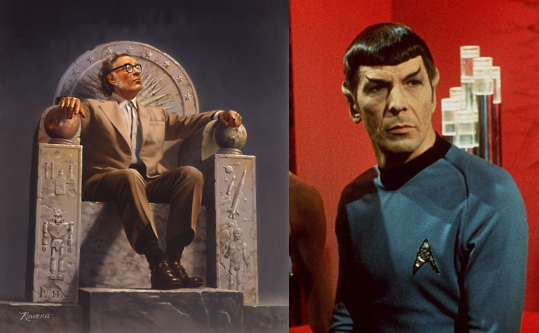
As you know if you saw our pre­vi­ous posts fea­tur­ing Leonard Nimoy’s read­ings of sto­ries by Ray Brad­bury and Isaac Asi­mov, the late Star Trek icon could — unsur­pris­ing­ly, per­haps — tell a sci­ence-fic­tion tale with the best of them. It turns out that he could also give mas­ter­ful read­ings of sci­ence fic­tion from oth­er eras too, as far back as the ear­li­est works to define the genre, which we’ve dis­cov­ered after hear­ing his per­for­mance of H.G. Wells’ The War of the Worlds, an out-of-print edi­tion recent­ly dig­i­tized from cas­sette tape and post­ed to Youtube in two parts.

With this sto­ry of Earth invad­ed from “across the gulf of space” by aliens with “minds that are to our minds as ours are to those of the beasts that per­ish, intel­lects vast and cool and unsym­pa­thet­ic,” Wells did much to help give sci­ence fic­tion the form we rec­og­nize today. The War of the Worlds came out in book form in 1898, pre­ced­ed by such sim­i­lar­ly spec­u­la­tive and inno­v­a­tive works as The Time Machine and The Invis­i­ble Man, and then fol­lowed by the likes of The First Men in the Moon and The Shape of Things to Come. (Find most of these works neat­ly pack­aged in the HG Wells Clas­sic Col­lec­tion.) This Leonard Nimoy record­ing orig­i­nal­ly came out in 1976, pub­lished by the record label Caed­mon, known for doing plen­ty of inno­va­tion of their own in the then-yet-unnamed field of audio­books.

Caed­mon put out not just this album and the one with Nimoy read­ing Brad­bury, but oth­ers fea­tur­ing Kurt Von­negut, Vin­cent Price, Ten­nessee Williams, T.S. Eliot, Ernest Hem­ing­way, and Sylvia Plath. As much as sci­ence-fic­tion die-hards will enjoy hear­ing this pair­ing of Nimoy and Wells here, some will cer­tain­ly want to track down the actu­al LP — not just for the col­lec­tors’ val­ue, but because it fea­tures lin­er notes by none oth­er than that oth­er vast­ly influ­en­tial cre­ator of sci-fi as we know it, Isaac Asi­mov. It looks like there’s one used copy on Ama­zon. The read­ing, we should note, is an abridged ver­sion of the orig­i­nal text.

Relat­ed Con­tent:

Leonard Nimoy Reads Ray Brad­bury Sto­ries From The Mar­t­ian Chron­i­cles & The Illus­trat­ed Man (1975–76)

Isaac Asimov’s Favorite Sto­ry “The Last Ques­tion” Read by Isaac Asi­mov— and by Leonard Nimoy

Leonard Nimoy Nar­rates Short Film About NASA’s Dawn: A Voy­age to the Ori­gins of the Solar Sys­tem

Col­in Mar­shall writes else­where on cities, lan­guage, Asia, and men’s style. He’s at work on a book about Los Ange­les, A Los Ange­les Primer, the video series The City in Cin­e­maand the crowd­fund­ed jour­nal­ism project Where Is the City of the Future? Fol­low him on Twit­ter at @colinmarshall or on Face­book.

Hear Radio Dramas of Isaac Asimov’s Foundation Trilogy & 7 Classic Asimov Stories

Rochester Insti­tute of Tech­nol­o­gy, via Wiki­me­dia Com­mons

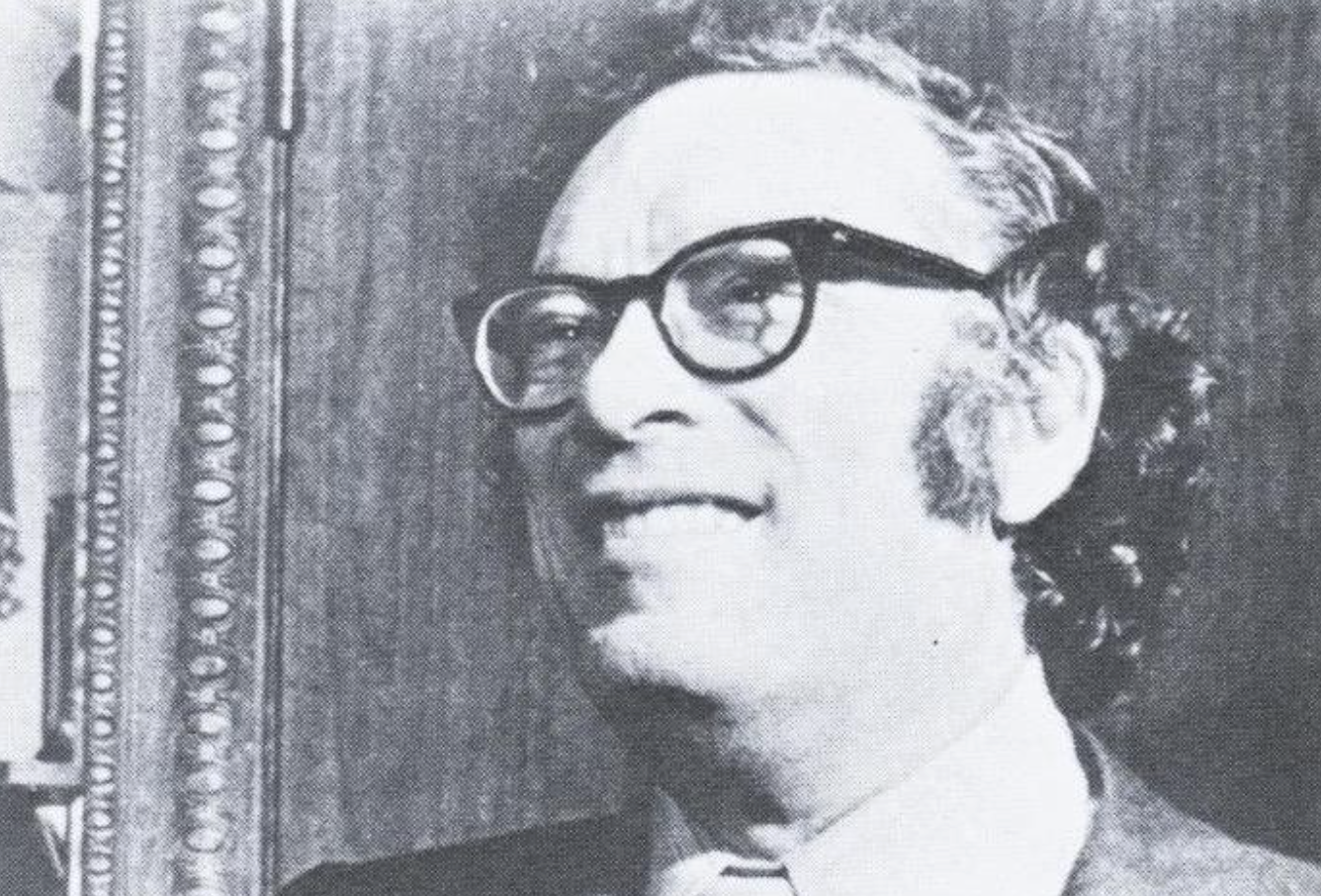
Isaac Asi­mov’s huge­ly influ­en­tial sci­ence fic­tion clas­sic The Foun­da­tion Tril­o­gy will soon, it seems, become an HBO series, reach­ing the same audi­ences who were won over by the Game of Thrones adap­ta­tions. We can expect favorite char­ac­ter arcs to emerge, per­haps dis­tort­ing the orig­i­nal nar­ra­tive; we can expect plen­ty of inter­net memes and new rip­ples of influ­ence through suc­ces­sive gen­er­a­tions. In fact, if the series becomes a real­i­ty, and catch­es on the way most HBO shows do—either with a mass audi­ence or a lat­er devot­ed cult following—I think we can expect much renewed inter­est in the field of “psy­chohis­to­ry,” the futur­is­tic sci­ence prac­ticed by the nov­els’ hero Hari Sel­don.

?si=Xfh61enLrJbhctd_
This is no small thing. Foun­da­tion has inspired a great many sci­ence fic­tion writ­ers, from Dou­glas Adams to George Lucas. But it has also guid­ed the careers of peo­ple whose work has more imme­di­ate real-world con­se­quences, like econ­o­mist Paul Krug­man and fer­vent advo­cate of pos­i­tive psy­chol­o­gy Mar­tin Selig­man. “The tril­o­gy real­ly is a unique mas­ter­piece,” writes Krug­man,” there has nev­er been any­thing quite like it.” The fic­tion­al sci­ence of psy­chohis­to­ry inspired the exper­i­men­tal pre­dic­tive tech­niques Selig­man devel­oped and described in his book Learned Opti­mism:

In his impos­si­ble-to-put-down Foun­da­tion Trilogy—I read it in one thir­ty-hour burst of ado­les­cent excitement—Asimov invents a great hero for pim­ply, intel­lec­tu­al kids…. “Wow!” thought this impres­sion­able ado­les­cent…. That “Wow!” has stayed with me all my life.

If you’re think­ing that the epic scale of Asi­mov’s sprawl­ing trilogy—one he explic­it­ly mod­eled after Edward Gib­bon’s mul­ti-vol­ume His­to­ry of the Decline and Fall of the Roman Empire—will prove impos­si­ble to real­ize on the screen, you may be right. On the oth­er hand, Asi­mov’s prose has lent itself par­tic­u­lar­ly well to an old­er dra­mat­ic medi­um: the radio play. As we not­ed in an ear­li­er post on a pop­u­lar 1973 BBC adap­ta­tion of the tril­o­gy, Ender’s Game author Orson Scott Card once described the books as “all talk, no action.” This may sound like a dis­par­age­ment, except, Card went on to say, “Asi­mov’s talk is action.”


Today, we bring you sev­er­al dif­fer­ent radio adap­ta­tions of Asi­mov’s fic­tion, and you can hear the many ways his fas­ci­nat­ing con­cepts, trans­lat­ed into equal­ly fas­ci­nat­ing, and yes, talky, fic­tion, have inspired writ­ers, sci­en­tists, film­mak­ers, and “pim­ply, intel­lec­tu­al kids” alike for decades. At the top of the post, hear the entire, eight-hour BBC adap­ta­tion of Foun­da­tion from start to fin­ish. You can also stream and down­load indi­vid­ual episodes on Spo­ti­fy and at Youtube and the Inter­net Archive. Below it, we have clas­sic sci-fi radio dra­ma series Dimen­sion X’s drama­ti­za­tions of “Peb­ble in the Sky” and “Night­fall,” both from 1951.

Also hear two Asi­mov’s sto­ries “The ‘C’ Chute” and “Hostess”—both pro­duced by Dimen­sion X suc­ces­sor X Minus One. These series, wrote Col­in Mar­shall in a pre­vi­ous post, “show­case Amer­i­can cul­ture at its mid-20th-cen­tu­ry finest: for­ward-look­ing, tem­pera­men­tal­ly bold, tech­no­log­i­cal­ly adept, and sat­u­rat­ed with earnest­ness but for the occa­sion­al sur­pris­ing­ly know­ing irony or bleak edge of dark­ness.”

Not to be out­done by these two pro­grams, Mutu­al Broad­cast­ing Sys­tem cre­at­ed Explor­ing Tomor­row, a “sci­ence fic­tion show of sci­ence-fic­tion­eers, by sci­ence-fic­tion­eers and for sci­ence-fic­tion­eers” that ran briefly from 1957 to 1958. Below, they adapt Asi­mov’s sto­ry “The Liar.”

These old-time radio dra­mas will cer­tain­ly appeal to the nos­tal­gia of peo­ple who were alive to hear them when they first aired. But while their pro­duc­tion val­ues will nev­er come close to match­ing those of HBO, they offer some­thing for younger lis­ten­ers as well—an oppor­tu­ni­ty to get lost in Asi­mov’s com­plex ideas, and to engage the imag­i­na­tion in ways tele­vi­sion does­n’t allow. Whether or not Foun­da­tion ever suc­cess­ful­ly makes it to the small screen, I would love to see Asi­mov’s fiction—in print, on the radio, on screen, or on the internet—continue to inspire new sci­en­tif­ic and social vision­ar­ies for gen­er­a­tions to come.

Relat­ed Con­tent:

Isaac Asimov’s Favorite Sto­ry “The Last Ques­tion” Read by Isaac Asi­mov— and by Leonard Nimoy

Isaac Asimov’s Foun­da­tion Tril­o­gy: Hear the 1973 Radio Drama­ti­za­tion

Dimen­sion X: The 1950s Sci­Fi Radio Show That Dra­ma­tized Sto­ries by Asi­mov, Brad­bury, Von­negut & More

X Minus One: More Clas­sic 1950s Sci-Fi Radio from Asi­mov, Hein­lein, Brad­bury & Dick

Josh Jones is a writer and musi­cian based in Durham, NC. Fol­low him at @jdmagness

Who Was Afraid of Ray Bradbury & Science Fiction? The FBI, It Turns Out (1959)

ray bradbury fbi fb

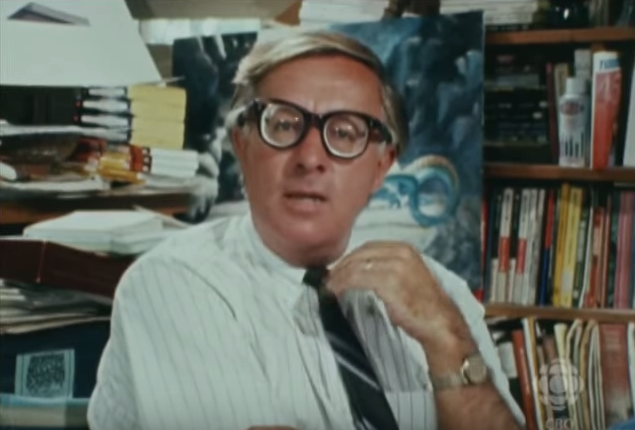
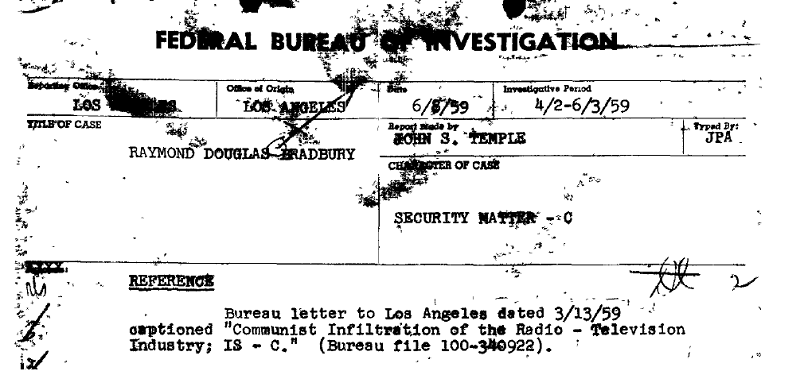
When you think of the most astute minds of our time, you might well think of Ray Brad­bury’s — but you prob­a­bly don’t think of him as one of the most astute ter­ror­ist minds of our time. The Fed­er­al Bureau of Inves­ti­ga­tion, how­ev­er, saw things dif­fer­ent­ly. Col­lab­o­ra­tive news site Muck­Rock found that out through files “released to for­mer Muck­Rock­er Inkoo Kang [which] doc­u­ment the decade the Bureau spent try­ing to deter­mine if Brad­bury was, if not a card-car­ry­ing Com­mu­nist, at least a sym­pa­thet­ic ‘fel­low trav­el­er.’ ” See snip­pets of doc­u­ments here from 1959.

Bradburysecuritymatter

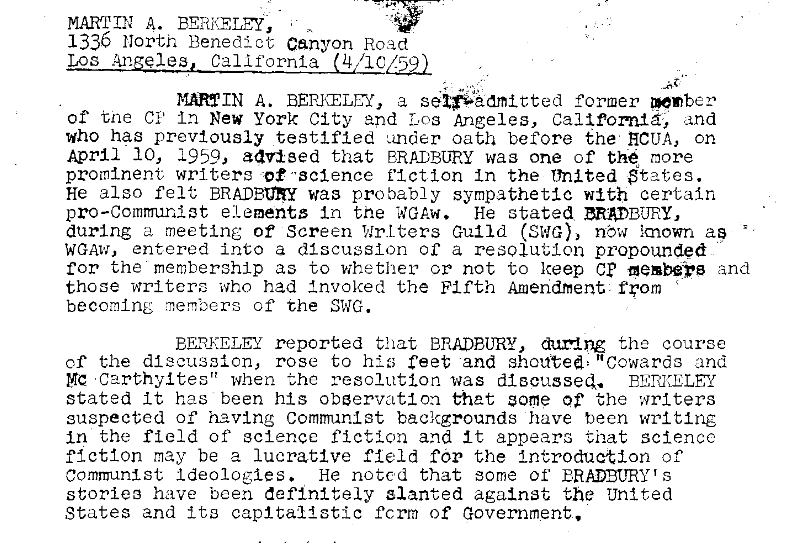
You can view the files them­selves, obtained under the Free­dom of Infor­ma­tion Act, at Muck­Rock. There, the site’s JPat Brown also sum­ma­rizes the orga­ni­za­tion’s basis for sus­pi­cion against the author: his “mem­ber­ship in the Screen Writer’s Guild, as well as his vocal oppo­si­tion to McCarthy­ism, drew par­tic­u­lar atten­tion,” as did the use in The Mar­t­ian Chron­i­cles of the “repeat­ed theme that earth­men are despoil­ers and not devel­op­ers.” Not just Brad­bury’s work but the whole of sci­ence fic­tion, which infor­mant Mar­tin Berke­ley calls a pos­si­bly “lucra­tive field for the intro­duc­tion of Com­mu­nist ide­ol­o­gy,” comes in for an indict­ment.

brad2

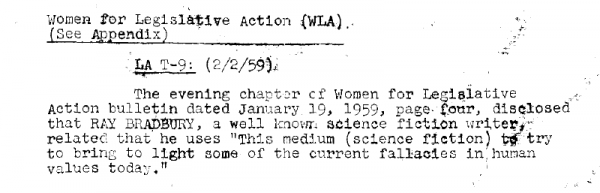
“Com­mu­nists have found fer­tile oppor­tu­ni­ties for devel­op­ment,” Berke­ley says, “for spread­ing dis­trust and lack of con­fi­dence in Amer­i­ca [sic] insti­tu­tions in the area of Sci­ence Fic­tion writ­ing.” Anoth­er, unsur­pris­ing­ly clear­er view of the genre comes from Brad­bury him­self, quot­ed dis­ap­prov­ing­ly in the file from a 1959 Wom­en’s Leg­isla­tive Action Bul­letin. There, he said he uses the medi­um of sci­ence fic­tion to “try to bring to light some of the cur­rent fal­lac­i­es in human val­ues today” — the one thing, as the author of Fahren­heit 451 must have known full well, that the pow­ers that be least want any­body to do. Get more at Muck­Rock.

bradconclu

via Metafil­ter

Relat­ed Con­tent:

Ray Brad­bury: “I Am Not Afraid of Robots. I Am Afraid of Peo­ple” (1974)

Ray Brad­bury: Lit­er­a­ture is the Safe­ty Valve of Civ­i­liza­tion

Sovi­et Ani­ma­tions of Ray Brad­bury Sto­ries: ‘Here There Be Tygers’ & ‘There Will Comes Soft Rain’

FBI’s “Vault” Web Site Reveals Declas­si­fied Files on Hem­ing­way, Ein­stein, Mar­i­lyn & Oth­er Icons

Col­in Mar­shall writes on cities, lan­guage, Asia, and men’s style. He’s at work on a book about Los Ange­les, A Los Ange­les Primer, and the video series The City in Cin­e­ma. Fol­low him on Twit­ter at @colinmarshall or on Face­book.

“Auteur in Space”: A Video Essay on How Andrei Tarkovsky’s Solaris Transcends Science Fiction

If you haven’t yet seen Andrei Tarkovsky’s Solaris but do plan on watch­ing it (find it online here), rest assured that there’s no wrong way to go about it. You can plunge, with­out prepa­ra­tion, right into its vivid, tor­ment­ed Sovi­et sci-fi world of fail­ing high tech­nol­o­gy, sub­lime nat­ur­al forces, and haunt­ing mem­o­ry. You can do no end of pre­lim­i­nary research on the film, its mak­er, and its mak­er’s strug­gle to adapt the orig­i­nal Stanis­law Lem nov­el to his own dis­tinc­tive sen­si­bil­i­ty. Or you could just pre­cede your screen­ing with “Auteur in Space,” a brief exam­i­na­tion of Solaris by well-known cinephile video essay­ist kog­o­na­da.  It was made on behalf of The British Film Insti­tute.

“The very con­cept of genre is as cold as the tomb,” the nar­ra­tor quotes Tarkovsky as writ­ing, going on to cite his crit­i­cism of Stan­ley Kubrick­’s 2001 “for being too enam­ored by the spec­ta­cle of the genre, for being too exot­ic, too immac­u­late.” From then on, the video demon­strates not just what Tarkovsky does to push Solaris out of the shad­ow of 2oo1, but also to break it out of the stan­dard forms of sci­ence fic­tion and, ulti­mate­ly, to free it from the stric­tures of genre itself — to occu­py that cat­e­go­ry we can only call Tarkovsky.

And so the Russ­ian auteur decides to make the space sta­tion on which most of the film takes place “look like a bro­ken-down old bus.” He decides “to spend five min­utes show­ing a man in an ordi­nary car trav­el­ing along the high­way, and less than two min­utes show­ing his main char­ac­ter trav­el­ing through space.” He gives in to his “occu­pa­tion with the ele­men­tal things of Earth.” He comes to “ques­tion the lim­its of sci­ence in engag­ing the mys­ter­ies of exis­tence,” ulti­mate­ly using Solaris to pit sci­ence against fic­tion, “each with their own weight and his­to­ry and pur­suit of truth and knowl­edge.”

If, indeed, you haven’t yet seen Solaris and watch this video essay, you’ll sure­ly find your­self no longer able to resist the temp­ta­tion to expe­ri­ence the film as soon as pos­si­ble. Maybe you’ll pop in the DVD or Blu-Ray, or bet­ter yet, maybe you’ll catch a the­atri­cal screen­ing. But if you under­stand­ably can’t wait for even a moment, you can watch it free online right now. And find oth­er Tarkovsky films free online here.

via io9

Relat­ed Con­tent:

Andrei Tarkovsky Calls Kubrick’s 2001: A Space Odyssey a “Pho­ny” Film “With Only Pre­ten­sions to Truth”

Watch Solaris (1972), Andrei Tarkovsky’s Haunt­ing Vision of the Future

Andrei Tarkovsky’s Solaris Shot by Shot: A 22-Minute Break­down of the Director’s Film­mak­ing

The Mas­ter­ful Polaroid Pic­tures Tak­en by Film­mak­er Andrei Tarkovsky

Tarkovsky’s Advice to Young Film­mak­ers: Sac­ri­fice Your­self for Cin­e­ma

A Poet in Cin­e­ma: Andrei Tarkovsky Reveals the Director’s Deep Thoughts on Film­mak­ing and Life

Col­in Mar­shall writes on cities, lan­guage, Asia, and men’s style. He’s at work on a book about Los Ange­les, A Los Ange­les Primer, and the video series The City in Cin­e­ma. Fol­low him on Twit­ter at @colinmarshall or on Face­book.

Read Arthur C. Clarke’s Super Short, 31-Word Sci-Fi Story, “siseneG”

clarke 31 word story

As brevi­ty in fic­tion goes, who can top “For sale: baby shoes, nev­er worn”? That much-ref­er­enced six-word sto­ry, often attrib­uted to Ernest Hem­ing­way, cer­tain­ly packs an impres­sive amount of human dra­ma into its short length. But what about oth­er gen­res? What would a six-word sci­ence- fic­tion sto­ry look like? i09 crowd­sourced count­less such works in 2014: respons­es, which tend­ed toward the escha­to­log­i­cal, includ­ed “The Uni­verse died. He did not,” “New world. Cryo­genic fail­ure. Seeds dead,” and “Final­ly sen­tient, it switched itself off.”

Not bad, but what would we get if we went to the pro­fes­sion­als? Alas, Sir Arthur C. Clarke, pro­lif­ic author of such respect­ed sci-fi nov­els as 2001: A Space Odyssey and Ren­dezvous with Rama, passed away just five years before i09 issued its chal­lenge. Still, we have an idea of the direc­tion his entry might have gone in from of “siseneG,” a sto­ry sto­ry — a very short sto­ry indeed — Clarke sent in to Ana­log mag­a­zine in 1984:

And God said: DELETE lines One to Aleph. LOAD. RUN.
And the Uni­verse ceased to exist.

Then he pon­dered for a few aeons, sighed, and added: ERASE.
It nev­er had exist­ed.

“This is the only short sto­ry I’ve writ­ten in ten years or so,” Clarke wrote in the accom­pa­ny­ing note. “I think you’ll agree that they don’t come much short­er.” We now know that they can come some­what short­er, at least 25 words short­er than “siseneG,” but sure­ly we can all agree that Clarke set a high stan­dard for sci­en­tif­ic (or per­haps tech­no­log­i­cal-exis­ten­tial) flash fic­tion decades before the coinage of the term. But then, we always knew the man had a knack for look­ing ahead.

via Let­ters of Note

Relat­ed Con­tent:

In 1964, Arthur C. Clarke Pre­dicts the Inter­net, 3D Print­ers and Trained Mon­key Ser­vants

Arthur C. Clarke Pre­dicts in 2001 What the World Will Look By Decem­ber 31, 2100

Arthur C. Clarke Nar­rates Film on Mandelbrot’s Frac­tals; David Gilmour Pro­vides the Sound­track

Free Sci­ence Fic­tion Clas­sics on the Web: Hux­ley, Orwell, Asi­mov, Gaiman & Beyond

Col­in Mar­shall writes on cities, lan­guage, Asia, and men’s style. He’s at work on a book about Los Ange­les, A Los Ange­les Primer, and the video series The City in Cin­e­ma. Fol­low him on Twit­ter at @colinmarshall or on Face­book.

Isaac Asimov’s Foundation Trilogy: Hear a Radio Dramatization (1973)

TheFoundationTrilogy
Last year Jonathan Nolan–screenwriter of Memen­to and Inter­stel­lar and not coin­ci­den­tal­ly direc­tor Christo­pher Nolan’s brother–announced that he would be devel­op­ing Isaac Asimov’s leg­endary Foun­da­tion tril­o­gy for HBO as a series. And we assume he’s still doing that, because there’s been nary a peep from the chan­nel since. So far the Inter­net con­sen­sus has been a col­lec­tive “well, that could be good!” instead of groans, which is a heart­en­ing thing these days.

For those who haven’t read the clas­sic books, but would like to get the jump on ol’ Nolan, we sub­mit this BBC Radio pro­duc­tion from 1973, which is now avail­able on Spo­ti­fy below. (Down­load Spo­ti­fy soft­ware here.) The record­ing also lives on Archive.org as well.

Right from the begin­ning we know we are in good hands, with the ana­log drones of the BBC Radio­phon­ic Work­shop ush­er­ing us into a stereo land­scape filled with plum­my British accents and atmos­pher­ic sound effects. It’s like the best ever episode of Doc­tor Who with­out a Tardis, cor­ri­dors, or the enfee­bled cries of a lost com­pan­ion.

The Foun­da­tion Tril­o­gy is heav­i­ly indebt­ed to Edward Gibbon’s The His­to­ry of the Decline and Fall of the Roman Empire, as well as a belief in the cir­cu­lar nature of his­to­ry.

Asimov’s hero in the first book, Hari Sel­don, using a sci­ence called psy­chohis­to­ry, can see the inevitable col­lapse of the Galac­tic Empire in which he lives and sets about try­ing to change it by set­ting up an oppo­si­tion called the Foun­da­tion. The nov­els then jump decades ahead, check­ing in with this essen­tial con­flict, much like Gibbon’s work goes from emper­or to emper­or, mark­ing the decline of empire and its inevitabil­i­ty. Free of aliens and shoot-em-ups, Foun­da­tion is very human despite its galac­tic scope.

Adapt­ed by Patrick Tull and Mike Stott, the eight part radio series does a good job of pre­sent­ing the nov­els as a char­ac­ter-dri­ven dra­ma, and while it is talky (it’s radio after all), it was Orson Scott Card who said of Foun­da­tion, it is “all talk, no action — but Asi­mov’s talk is action.”

It also influ­enced many future sci-fi writ­ers. No doubt some­where along the way Dou­glas Adams was lis­ten­ing to the radio play’s talk­ing ency­clo­pe­dia and think­ing, hmm, what if this had jokes?
And once you get through the trilogy–maybe after an eight-hour flight?–there’s more Asi­mov radio plays for your lis­ten­ing plea­sure on Spo­ti­fy: Host­ess, Peb­ble in the Sky, and Night­fall.

If you would like to sign up for Open Culture’s free email newslet­ter, please find it here. It’s a great way to see our new posts, all bun­dled in one email, each day.

If you would like to sup­port the mis­sion of Open Cul­ture, con­sid­er mak­ing a dona­tion to our site. It’s hard to rely 100% on ads, and your con­tri­bu­tions will help us con­tin­ue pro­vid­ing the best free cul­tur­al and edu­ca­tion­al mate­ri­als to learn­ers every­where. You can con­tribute through Pay­Pal, Patre­on, and Ven­mo (@openculture). Thanks!

Relat­ed Con­tent:

Isaac Asimov’s Favorite Sto­ry “The Last Ques­tion” Read by Isaac Asi­mov— and by Leonard Nimoy

Lis­ten to 188 Dra­ma­tized Sci­ence Fic­tion Sto­ries by Ursu­la K. Le Guin, Isaac Asi­mov, Philip K. Dick, J.G. Bal­lard & More

Two Doc­u­men­taries Intro­duce Delia Der­byshire, the Pio­neer in Elec­tron­ic Music

1,000 Free Audio Books: Down­load Great Books for Free

Ted Mills is a free­lance writer on the arts who cur­rent­ly hosts the FunkZone Pod­cast. You can also fol­low him on Twit­ter at @tedmills, read his oth­er arts writ­ing at tedmills.com and/or watch his films here.

Listen to 188 Dramatized Science Fiction Stories by Ursula K. Le Guin, Isaac Asimov, Philip K. Dick, J.G. Ballard & More

Mind_Webs_cd_-_01

We here at Open Cul­ture believe that, as far as sci­ence-fic­tion deliv­ery sys­tems go, you can’t do much bet­ter than radio dra­ma. We’ve pre­vi­ous­ly fea­tured quite a range of it, from the clas­sic 1950s series Dimen­sion X and its suc­ces­sor X Minus One to adap­ta­tions of such clas­sic works as Isaac Asi­mov’s Foun­da­tion tril­o­gy, Aldous Hux­ley’s Brave New World, and, most recent­ly, Ursu­la K. LeGuin’s The Left Hand of Dark­ness. Now we’ve opened up anoth­er trea­sure trove of sci-fi radio in the form of the archives of Mind Webs, orig­i­nal­ly broad­cast on Madi­son, Wis­con­sin’s WHA-AM, start­ing in the 1970s

One old-time radio site describes Mind Webs as “not real­ly audio dra­ma in the strict sense of the def­i­n­i­tion,” but “read­ings of sci­ence fic­tion sto­ries by some of the gen­re’s best writ­ers [ … ] enhanced by music, peri­od­ic sound cues, and the occa­sion­al char­ac­ter voice.” As the col­lec­tor who made his record­ings of the series avail­able to the Inter­net Archive puts it, Mind Webs “stands as a tes­ta­ment to not only some of our great­est spec­u­la­tive fic­tion authors, but just how well sim­ple dia­log and music minus major sound effects can con­vey sto­ries so well.”

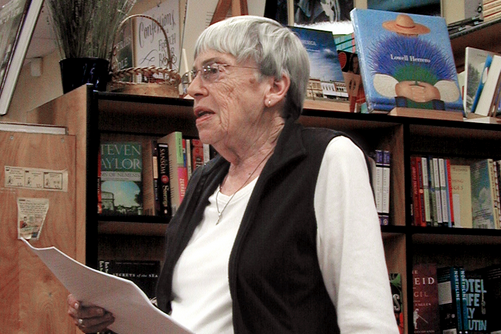
Which authors count­ed as great enough for inclu­sion into the Mind Webs canon? Some of the names, like Ursu­la K. LeGuin, Isaac Asi­mov, Arthur C. Clarke, and Ray Brad­bury, you’d expect to find in this archive, but oth­ers go far­ther afield: the series also fea­tures sto­ries by the likes of Philip K. Dick, J.G. Bal­lard, H.P. Love­craft — writ­ers who, each in their own way, bent the bound­aries of all known fic­tion, sci­ence- or oth­er­wise — and even such sup­pos­ed­ly tra­di­tion­al sto­ry­tellers as John Cheev­er and Roald Dahl who, in these selec­tions, put their own spin on real­i­ty.

Lis­ten to enough episodes of Mind Webs, and you may get hooked on the voice and read­ing style of its host Michael Han­son, a fix­ture on Wis­con­sin pub­lic radio for some­thing like forty years. Back in 2001, just after wrap­ping up his career in that sec­tor, Han­son wrote in to the New York Times lament­ing the state of pub­lic radio, espe­cial­ly its pro­gram direc­tors turned into “syco­phan­tic bean coun­ters” and a “pro­nounced dumb­ing down of pro­gram con­tent.” Mind Webs, which kept on going from the 70s through the 90s, came from a time before all that, and now its smart sto­ry­telling has come avail­able for all of us to enjoy.

The playlist above will let you stream all of the sto­ries — rough­ly 88 hours worth — from start to fin­ish. Or you can access the audio at Archive.org here.

Relat­ed Con­tent:

Hear Inven­tive Sto­ries from Ursu­la Le Guin & J.G. Bal­lard Turned Into CBC Radio Dra­mas

Hear Aldous Huxley’s Brave New World and 84 Clas­sic Radio Dra­mas from CBS Radio Work­shop (1956–57)

Hear Ursu­la K. Le Guin’s Pio­neer­ing Sci-Fi Nov­el, The Left Hand of Dark­ness, as a BBC Radio Play

Free: Isaac Asimov’s Epic Foun­da­tion Tril­o­gy Dra­ma­tized in Clas­sic Audio

Dimen­sion X: The 1950s Sci­Fi Radio Show That Dra­ma­tized Sto­ries by Asi­mov, Brad­bury, Von­negut & More

X Minus One: More Clas­sic 1950s Sci-Fi Radio from Asi­mov, Hein­lein, Brad­bury & Dick

Col­in Mar­shall writes on cities, lan­guage, Asia, and men’s style. He’s at work on a book about Los Ange­les, A Los Ange­les Primer, and the video series The City in Cin­e­ma. Fol­low him on Twit­ter at @colinmarshall or on Face­book.

Andrei Tarkovsky Calls Kubrick’s 2001: A Space Odyssey a “Phony” Film “With Only Pretensions to Truth”

2001 stanley kubrick

Yes­ter­day we ran a list of 93 films beloved by Stan­ley Kubrick, which includes two by Andrei Tarkovsky: 1972’s Solaris and 1986’s The Sac­ri­fice. You expect one auteur to appre­ci­ate the work of anoth­er — “game rec­og­nize game,” to use the mod­ern par­lance — but the selec­tion of Solaris makes spe­cial sense. Just four years before it, Kubrick had, of course, made his own psy­cho­log­i­cal­ly and visu­al­ly-intense cin­e­mat­ic voy­age out from Earth into the great beyond, 2001: A Space Odyssey.

The appre­ci­a­tion, alas, was­n’t mutu­al. “Tarkovsky sup­pos­ed­ly made Solaris in an attempt to one-up Kubrick after he had seen 2001 (which he referred to as cold and ster­ile),” writes Joshua War­ren at criterion.com. “Inter­est­ing­ly enough, Kubrick appar­ent­ly real­ly liked Solaris and I’m sure he found it amus­ing that it was mar­ket­ed as ‘the Russ­ian answer to 2001.’ ” Jonathan Crow recent­ly quot­ed Tarkovsky as say­ing: “2001: A Space Odyssey is pho­ny on many points, even for spe­cial­ists. For a true work of art, the fake must be elim­i­nat­ed.”

That pro­nounce­ment comes from a 1970, pre-Solaris inter­view with Tarkovsky by Naum Abramov. The Russ­ian auteur indicts what he sees as 2001’s lack of emo­tion­al truth due to its exces­sive tech­no­log­i­cal inven­tion, effec­tive­ly declar­ing that, in his own for­ay into the realm of sci­ence-fic­tion, “every­thing would be as it should. That means to cre­ate psy­cho­log­i­cal­ly, not an exot­ic but a real, every­day envi­ron­ment that would be con­veyed to the view­er through the per­cep­tion of the film’s char­ac­ters. That’s why a detailed ‘exam­i­na­tion’ of the tech­no­log­i­cal process­es of the future trans­forms the emo­tion­al foun­da­tion of a film, as a work of art, into a life­less schema with only pre­ten­sions to truth.”

solaris-1

Crit­ic Philip Lopate writes that “the media played up the cold-war angle of the Sovi­et director’s deter­mi­na­tion to make an ‘anti-2001,’ and cer­tain­ly Tarkovsky used more intense­ly indi­vid­ual char­ac­ters and a more pas­sion­ate human dra­ma at the cen­ter than Kubrick.” And the films do have sim­i­lar­i­ties, from their “leisure­ly, lan­guid” nar­ra­tives to their “widescreen mise-en-scène approach that draws on supe­ri­or art direc­tion” to their “air of mys­tery that invites count­less expla­na­tions.” But Lopate argues that the themes of Solaris resem­ble those of 2001 less than those of Hitch­cock­’s Ver­ti­go: “the inabil­i­ty of the male to pro­tect the female, the mul­ti­ple dis­guis­es or ‘res­ur­rec­tions’ of the loved one, the inevitabil­i­ty of repeat­ing past mis­takes.”

As a lover of both Kubrick and Tarkovsky’s work, I can hard­ly take sides. Maybe I just need to watch both 2001 and Solaris yet again, one after anoth­er, in order to bet­ter com­pare them. (Find Tarkovsky’s films free online here.) And maybe I need to throw Ver­ti­go into the evening as well. Now that’s what I call a triple fea­ture.

Relat­ed Con­tent:

Watch Solaris (1972), Andrei Tarkovsky’s Haunt­ing Vision of the Future

Andrei Tarkovsky’s Solaris Shot by Shot: A 22-Minute Break­down of the Director’s Film­mak­ing

Tarkovsky Films Now Free Online

Watch Stalk­er, Andrei Tarkovsky’s Mind-Bend­ing Mas­ter­piece Free Online

The Mas­ter­ful Polaroid Pic­tures Tak­en by Film­mak­er Andrei Tarkovsky

Tarkovsky’s Advice to Young Film­mak­ers: Sac­ri­fice Your­self for Cin­e­ma

A Poet in Cin­e­ma: Andrei Tarkovsky Reveals the Director’s Deep Thoughts on Film­mak­ing and Life

93 Films Beloved by Stan­ley Kubrick: From Fritz Lang’s Metrop­o­lis (1927) to Ron Shelton’s White Men Can’t Jump (1992)

Col­in Mar­shall writes on cities, lan­guage, Asia, and men’s style. He’s at work on a book about Los Ange­les, A Los Ange­les Primer, and the video series The City in Cin­e­ma. Fol­low him on Twit­ter at @colinmarshall or on Face­book.

« Go BackMore in this category... »
Quantcast