Christopher R. Scotese, a geologist affiliated with Northwestern University, has created an animation showing “the plate tectonic evolution of the Earth from the time of Pangea, 240 million years ago, to the formation of Pangea Proxima, 250 million years in the future.” The blurb accompanying the video on Youtube adds:
The animation starts with the modern world then winds it way back to 240 million years ago (Triassic). The animation then reverses direction, allowing us to see how Pangea rifted apart to form the modern continents and ocean basins. When the animation arrives back at the present-day, it continues for another 250 million years until the formation of the next Pangea, “Pangea Proxima”.
According to an article published by NASA back in 2000, Scotese’s visualization of the future is something of an educated “guesstimate.” “We don’t really know the future, obviously,” he says. “All we can do is make predictions of how plate motions will continue, what new things might happen, and where it will all end up.” You can see his predictions play out above.
If you would like to support the mission of Open Culture, consider making a donation to our site. It’s hard to rely 100% on ads, and your contributions will help us continue providing the best free cultural and educational materials to learners everywhere. You can contribute through PayPal, Patreon, and Venmo (@openculture). Thanks!
In my childhood, I heard stories about Henrietta Lacks’ miraculous cells. I heard these stories because she happened to have been my grandmother’s cousin. But this was just oral lore, I thought at first, legendary and implausible. Cells don’t just keep growing indefinitely. Nothing is immortal. That’s a safe assumption in most every other case, but millions of people now know what only a relatively self-contained community of researchers, doctors, biology students, and, eventually, the Lacks family once did: Henrietta’s cervical cancer cells continued to grow and multiply after her death in 1951. They may, indeed, do so forever.
The once anonymous cell line, called HeLa, has provided researchers worldwide with invaluable medical data. Henrietta herself went unrecognized and unremembered until fairly recently. That all changed after Rebecca Skloot’s book The Immortal Life of Henrietta Lacks, based on an earlier series of articles, appeared in 2010 to great acclaim. Since the publication of Skloot’s bestseller, the story of Henrietta and the Lacks family has further achieved renown in a 2017 film version starring Oprah Winfrey.
Suffice it say, seeing Henrietta arrive on the pop cultural stage has been a strange experience. (One made even weirder by other media moments, like indie band Yeasayer and former Dead Kennedys singer Jello Biafra releasing songs about her and her cells.) The injustices of Henrietta’s story are now well-known. She was poor and received substandard medical treatment. Her cells were harvested without her knowledge, and after her death, no one notified the family about the worldwide use of her cells for biomedical research. That is, until doctors did research on her children in the 70s, publishing family medical records without consent and gathering more data because the HeLa cells had contaminated other cell lines.
She has “become one of the most powerful symbols for informed consent in the history of science,” Nela Ulaby writes at NPR. She is also a symbol, says Bill Pretzer, senior curator at the National Museum of African American History and Culture (NMAAHC), “that history can be remade, re-remembered.” To that end, Henrietta has been immortalized as a whole human being, not just the source of extraordinarily immortal cells. Her portrait, by African-American artist Kadir Nelson, now hangs in the National Portrait Gallery, a representation of both the historical figure and her world-historical biological legacy.
Drawing on the photograph that adorns the cover of Skloot’s book, the portrait shows her “just like they said she was in life,” says her granddaughter Jeri Lacks-Whye, “happy, outgoing, giving,” and stylishly dressed. The two missing buttons on her dress represent the cells taken from her body, and the pattern behind her, which “almost looks like wallpaper,” says National Portrait Gallery curator Dorothy Moss, is “actually representative of her cells.” Other tributes, notes Ulaby, include a “high school for students interested in medicine” and “a minor planet whirling in the asteroid belt between Mars and Jupiter.” The cells have also generated billions of dollars in profit.
In life, she could never have imagined this strange kind of fame and fortune. The HeLa cells were instrumental in the development of the polio vaccine and research in cloning, gene mapping, and in vitro fertilization. They have traveled into space and around the world hundreds of times. The story of the person they came from, says Skloot in a 2010 interview, reminds us that “there are human beings behind every biological sample used in the laboratory… but they’re usually left out of the equation.” Making those lives an essential part of the conversation in medical research can help keep that research ethically honest, equitable, and, one hopes, based in serving human needs over corporate greed.
By reasons of parenting, I’ve become well acquainted with a song—perhaps you know it?— called “Fifty Nifty United States,” taught to schoolchildren as a geographical mnemonic device. The lyrics mention that “each individual state contributes a quality that is great.” What are some great qualities of, say, Delaware, New Mexico, or South Dakota? We aren’t told. Hey, it’s enough that a five or six-year-old can remember “shout ‘em, scout ‘em, tell all about ‘em” before rattling off an alphabetical list of “ev’ry state in the good old U.S.A.”
But if you hail from the U.S., you can enumerate many contributions from a few nifty states, whether culinary delights, historical events, writers, artists, sports heroes, etc. And most everyone’s got stories about visiting natural wonders, hiking mountain trails, fording rivers, gazing upon breathtaking vistas.
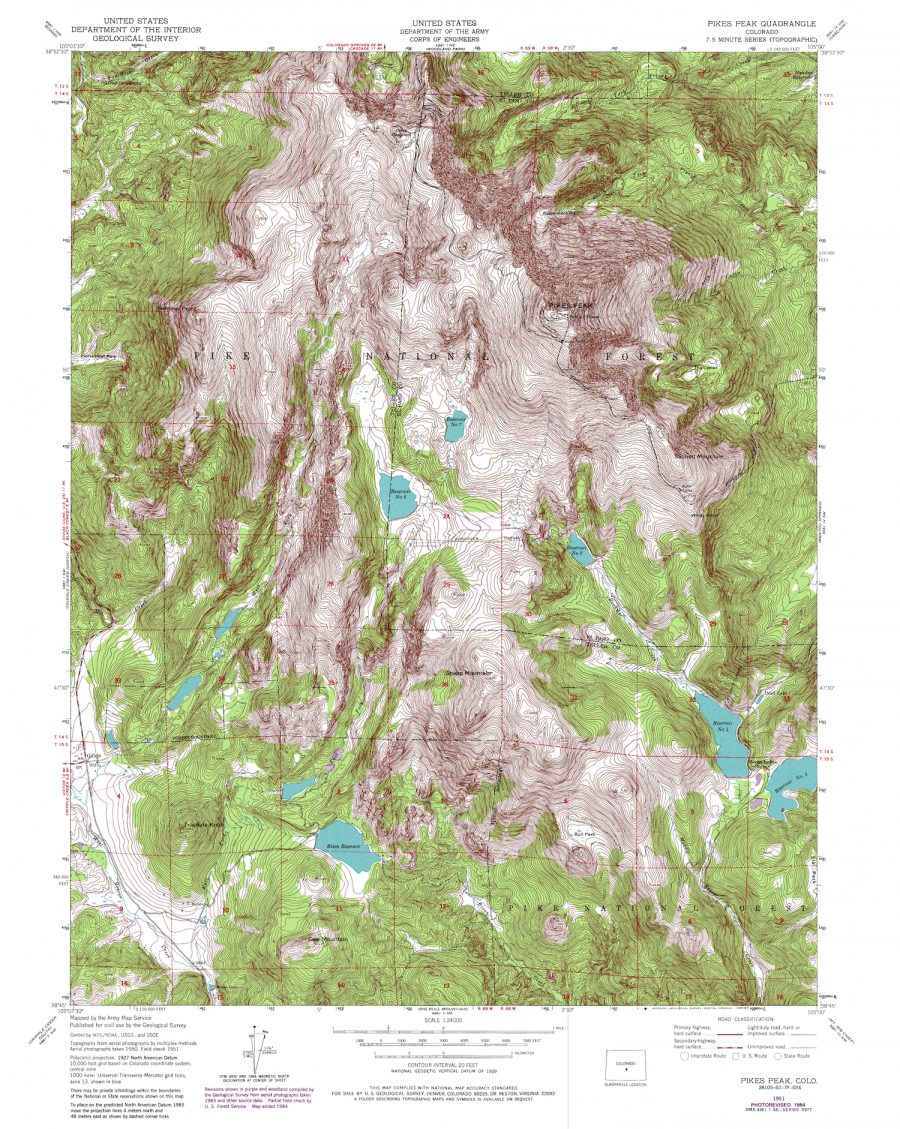
We may be occasional tourists, travel enthusiasts, or experts, but whatever our level of experience in the country, it’s probably kid stuff compared to the work of the scientists at the U.S. Geological Survey (USGS).
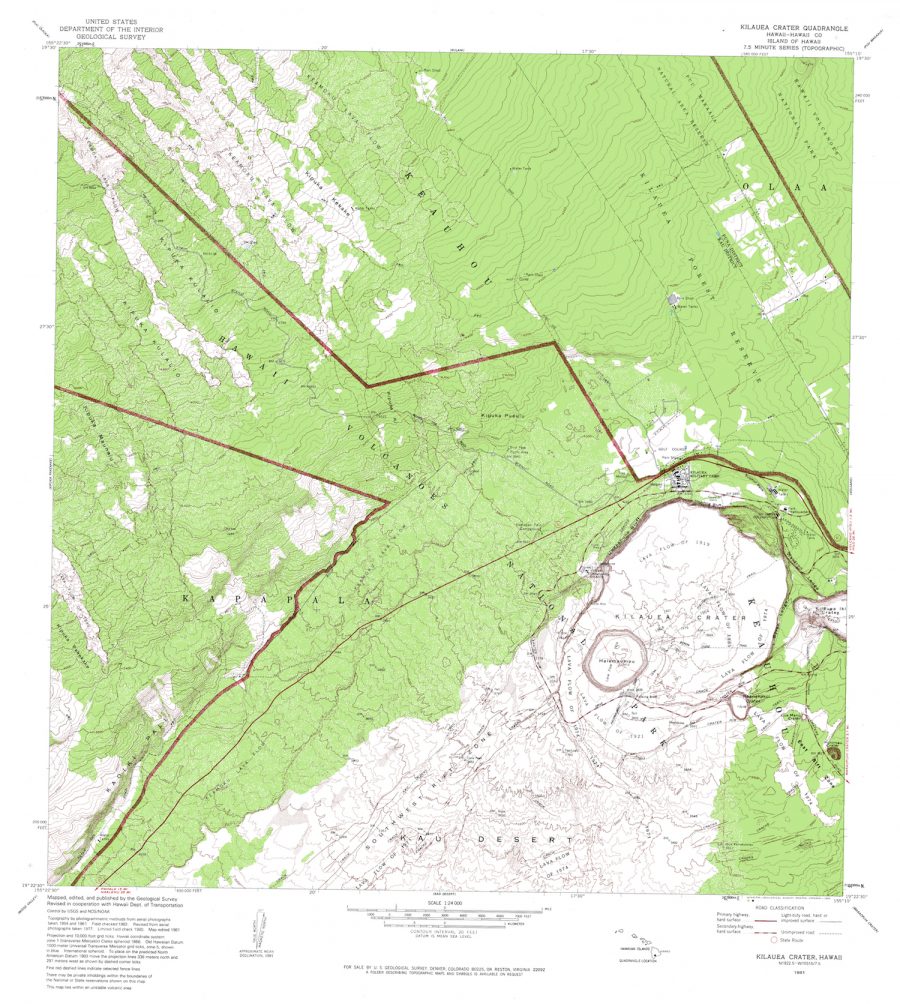
And just above, the devastating Kīlauea Volcano, in a map compiled from aerial photos taken in 1954 and 1961. (See the USGS site for the latest info about the ongoing eruption there.) Below, a nifty map of New York City, created “by photogrammetric methods from aerial photographs taken [in] 1954 and planetable surveys [in] 1955. Revised from aerial photographs taken [in] 1966.” Google maps may be more current, but these USGS maps have an aura of scientific authority around them, evidence of painstaking surveys, checked and rechecked over the decades by hundreds of pairs of hands and eyes.
Browsing the archive can be a challenge, since the maps are catalogued by coordinates rather than place names, but you can enter the names of specific locations in the search field. Also, be advised, the maps “are best used with global positioning software,” the archive tells visitors. Nonetheless, you can click on the first download option for “Multi Page Processed TIFF” to pull up a huge, downloadable image. Enter the archive here and get to scouting.
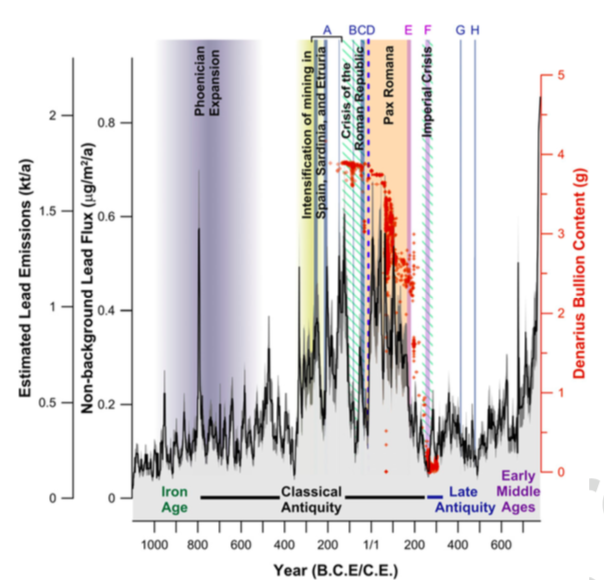
When we see stories pop up involving scientific findings in glacier ice, we might brace for unpleasant environmental news about the future. But a paper published just recently in Proceedings of the National Academy of Sciences instead reveals fascinating findings about the distant past—the history of ancient Rome between 1100 B.C.E. to 800 C.E. Historians know this 1,900-year period through archaeological and literary evidence. Now climate scientists have provided a treasury of new data to help substantiate or revise scholarly understandings of Rome’s economic rises and falls, by measuring the stratifications of lead pollution in a roughly 400-meter ice core from Greenland.
Why lead? “It’s a proxy for coin production,” says Seth Bernard, professor of ancient history at the University of Toronto. Roman currency, the denarius, was made from silver, mined primarily on the Iberian Peninsula. “But these mines didn’t excavate pure silver,” notes Robinson Meyer at The Atlantic. “Instead, they unearthed an ore of silver, lead, and copper that had to be smelted into silver. This process filled the air with lead pollution,” which eventually made its way on air currents to Greenland, where “storms deposited lead-tainted snow or sleet over the Arctic island.” New layers formed upon the old, each one preserved for posterity.
In the mid-1990s, scientists began drilling Greenland’s ice sheet in the North Greenland Ice core Project (NGRIP). At the time, a team attempted a similar analysis on the lead levels and their correspondence to ancient coinage, “which used a similar but rudimentary technique,” Meyer writes. But this study only drew from 18 data points. By contrast, the new research “made 25,000 different measurements of the ice core.” Improved technology has refined the measurement process, allowing researchers to detect “the presence of 35 different elements and chemicals at once,” and to tie their observations to specific years, or fairly close to it, anyway. The chart above shows the fluctuations in lead emissions over the almost 2000-year span.
One of the study’s authors, Joseph McConnell, estimates the margin of error as within one or two years. “That’s pretty good,” he says, “a lot better than what archaeologists are used to, I can tell you that.” This allows the team of climate scientists, archaeologists, and historians to match their observations about lead levels to known historical events. As The New York Times reports, “lead emissions rose in periods of peace and prosperity, such as the Pax Romana, which ran from 27 BC to 180 A.D. and dropped during the civil wars that preceded the Pax and the rise of the emperor Augustus. There were also dramatic drops that coincided with the Antonine plague of 165–180 A.D., thought to have been small pox, and the Cyprian plague, cause uncertain, of 250–270 A.D.”
The data, notes The Economist, “provide a new window onto the workings of the ancient economy…. Not all of the lead trapped in the glacier comes from silver minding, but much of it does,” and scientists can make informed guesses about just how much. Many unanswered questions remain. “What we’d love to have is a document that says Rome had a state monetary policy,” says Bernard. The empire’s specific economic policies are largely a mystery, but the ice core samples provide a wealth of new evidence for the increase and decrease in currency production, and ever-more refined technologies will allow for even more data to emerge from the pollutants trapped in glacial ice in the near future.
In 1975, the philosopher of science Paul Feyerabend published his highly contrarian Against Method, a book in which he argued that “science is essentially an anarchic enterprise,” and as such, ought to be accorded no more privilege than any other way of knowing in a democratic society. Motivated by concerns about science as a domineering ideology, he argued the historical messiness of scientific practice, in which theories come about not through elegant logical thinking but often by complete accident, through copious trial and error, intuition, imagination, etc. Only in hindsight do we impose restrictions and tidy rules and narratives on revolutionary discoveries.
Several years later, in the third, 1993 edition of the book, Feyerebend observed with alarm the same widespread anti-science bias that Carl Sagan wrote of two years later in Demon-Haunted World. “Times have changed,” he wrote, “Considering some tendencies in U.S. education… and in the world at large I think that reason should now be given greater weight.”
Feyerabend died the following year, but I wonder how he might revise or qualify a 2018 edition of the book, or whether he would republish it at all. Politically-motivated science denialism reigns. Indeed, a blithe denial of any observable reality, aided by digital technology, has become a dystopian new norm. But as the philosopher also commented, such circumstances may “occur frequently today… but may disappear tomorrow.”
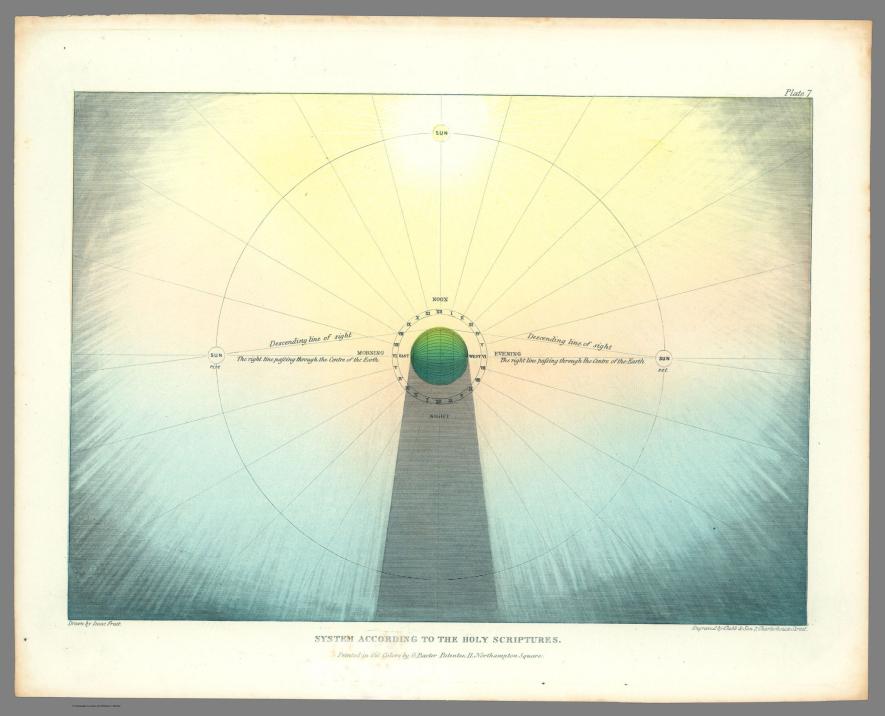
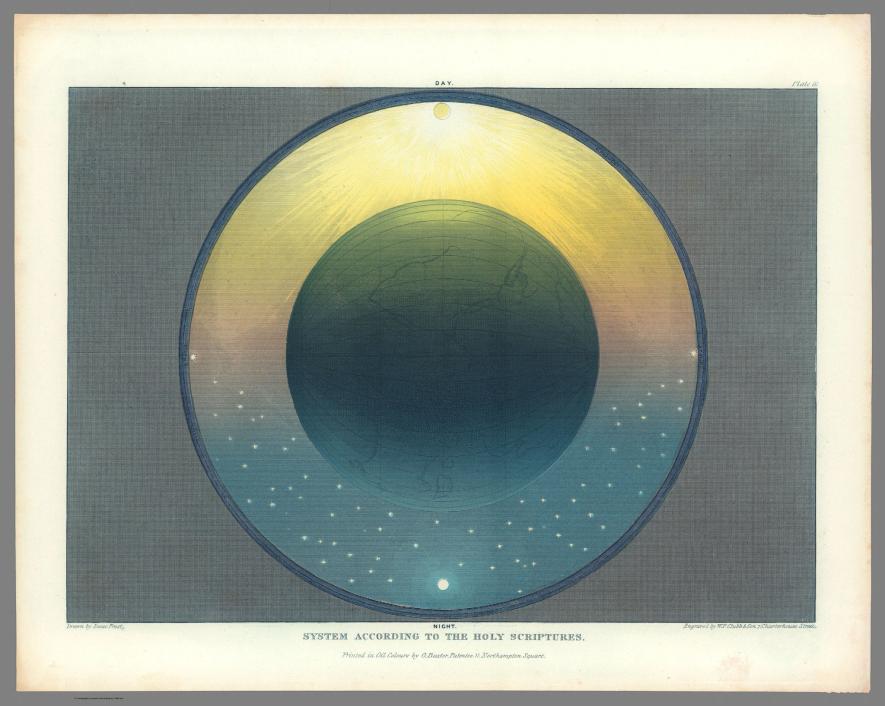
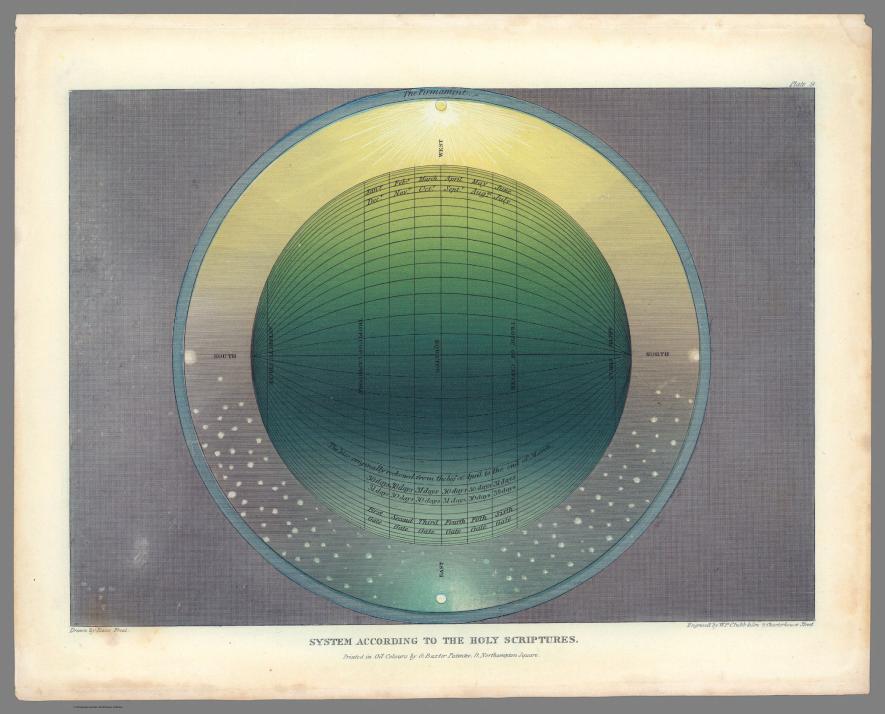
In the recorded history of human inquiry across cultures and civilizations, we see ideas we call scientific co-existing with what we recognize as pseudo- and anti-scientific notions. The differences aren’t always very clear at the time. And then, sometimes, they are. During the so-called Age of Reason, when the development of the modern sciences in Europe slowly eclipsed other modes of explanation, one obscure group of contrarians persisted in almost comically stubborn unreason. Calling themselves the Muggletonians, the Protestant sect—like those today who deny climate change and evolution—resisted an overwhelming consensus of empirical science, the Copernican view of the solar system, despite all available evidence the contrary. In so doing, they left behind a series of “beautiful celestial maps,” notes Greg Miller at National Geographic, some of which resemble William Blake’s visual poetry.
The sect began in 1651, when a London tailor named John Reeve “claimed to have received a message from God” naming his cousin Lodowicke Muggleton as the “’last messenger for a great work unto this bloody unbelieving world.’… One of the main principles of their faith, a later observer wrote, was that ‘There is no Devil but the unclean Reason of men.’” Their view of the universe, based, of course, on scripture, resembles the Medieval Catholic view that Galileo attempted to correct, but their principle antagonist was not the Italian polymath or the earlier Renaissance astronomer Copernicus, but the great scientific mind of the time, Isaac Newton, whom Muggletonians railed against into the 19th and even 20th century. Muggletonians, Miller writes,” had remarkable longevity—the last known member died in 1979 after donating the sect’s archive of books and papers… to the British Library.”
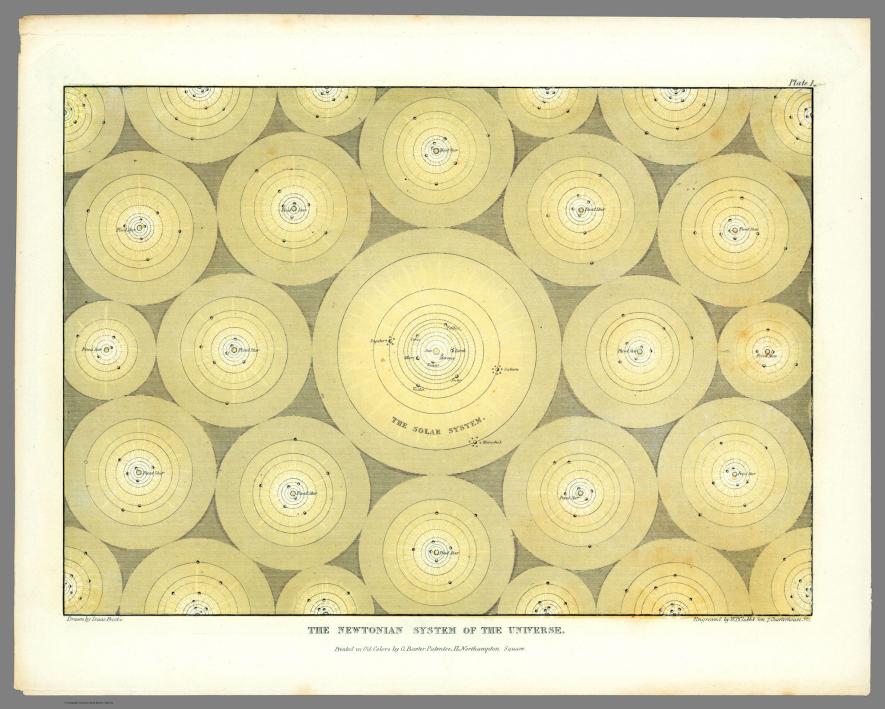
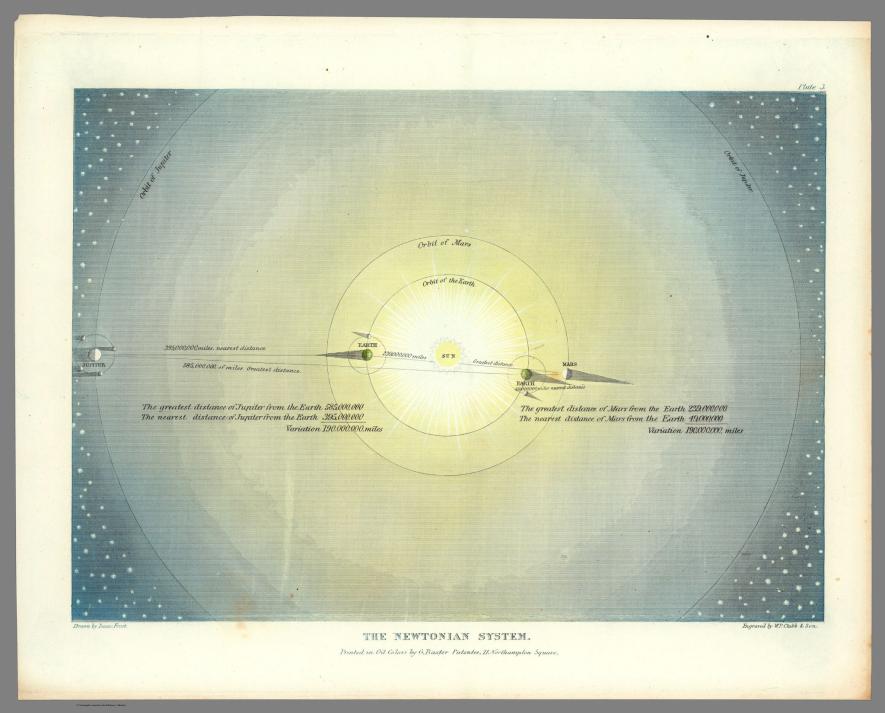
These plates come from an 1846 book called Two Systems of Astronomy. Written by Muggletonian Isaac Frost, it “pitted the scientific system of Isaac Newton—which held that the gravitational pull of the sun holds the Earth and other planets in orbit around it—against an Earth-centered universe based on a literal interpretation of the Bible.” The plate above, for example, “attempts to show the absurdity of the Newtonian system by depicting our solar system as one of many in an infinite and godless universe.” Ironically, in attempting to ridicule Newton (who was himself a pseudo-scientist and Biblical literalist in other ways), the Muggletonians stumbled upon the view of modern astronomers, who extrapolate a mind-boggling number of possible solar systems in an observable universe of over 100 billion galaxies (though these systems are not enclosed cells crammed together side-by-side). Another plate, below, shows Frost’s depiction of the hated Newtonian system, with the Earth, Mars, and Jupiter orbiting the Sun.
The other maps, further up, all represent the Muggletonian view. Historian of science Francis Reid describes it thus:
According to Frost, Scripture clearly states that the Sun, the Moon and the Stars are embedded in a firmament made of congealed water and revolve around the Earth, that Heaven has a physical reality above and beyond the stars, and that the planets and the Moon do not reflect the Sun’s rays but are themselves independent sources of light.
Frost gave lectures at “establishments set up for the education of artisans and other workmen.” It seems he didn’t attract much attention and was frequently heckled by audience members. Like flat earthers, Muggletonians were treated as cranks, and unlike today’s religious anti-science crusaders, they never had the power to influence public policy or education. For this reason, perhaps, it is easy to see them as quaintly humorous. Frost’s maps, as Miller writes, “remain strangely alluring” for both their artistic quality and their astonishingly determined credulity. The plates are now part of the massive David Rumsey collection, which houses thousands of rare historical maps. For another fascinating look at religious cartography, see Miller’s National Geographic post “mapping the Apocalypse.”
For decades we’ve laughed at the persistent movie and television cliche of “image enhance,” whereby characters — usually detectives of one kind or another in pursuit of a yet-unknown villain — discover just the clue they need by way of technological magic that somehow increases the amount of detail in a piece of found footage. But now, of course, our age of rapidly improving artificial intelligence has brought an algorithm for that. And not only can such technologies find visual data we never thought an image contained, they can find sonic data as well: recovering the sound, in other words, “recorded” in ostensibly silent video.
“When sound hits an object, it causes small vibrations of the object’s surface,” explains the abstract of “The Visual Microphone: Passive Recovery of Sound from Video,” a paper by Abe Davis, Michael Rubinstein, Neal Wadhwa, Gautham Mysore, Fredo Durand, and William T. Freeman. “We show how, using only high-speed video of the object, we can extract those minute vibrations and partially recover the sound that produced them, allowing us to turn everyday objects — a glass of water, a potted plant, a box of tissues, or a bag of chips — into visual microphones.” Or a listening device. You can see, and more impressively hear, this process in action in the video at the top of the post.
The video just above magnifies the sound-caused motion of a bag of chips, to give us a sense of what their algorithm has to work with when it infers the sound present in the bag’s environment. In a way this all holds up to common sense, given that sound, as we all learn, comes from waves that make other things vibrate, be they our eardrums, our speakers — or, as this research reveals, pretty much everything else as well. Though the bag of chips turned out to work quite well as a recording medium, some of their other test subjects, including a brick chosen specifically for its lack of sound-capturing potential, also did better than expected.
The hidden information potentially recoverable from video hardly stops there, as suggested by Rubinstein’s TED Talk just above. “Of course, surveillance is the first application that comes to mind,” he says, to slightly nervous laughter from the crowd. But “maybe in the future we’ll be able to use it, for example, to recover sound across space, because sound can’t travel in space, but light can.” Just one of many scientifically noble possibilities, for which watching what we say next time we open up a bag of Doritos would be, perhaps, a small price to pay.
Based in Seoul, Colin Marshall writes and broadcasts on cities and culture. His projects include the book The Stateless City: a Walk through 21st-Century Los Angeles and the video series The City in Cinema. Follow him on Twitter at @colinmarshall or on Facebook.
Magic is real—hear me out. No, you can’t solve life’s problems with a wand and made-up Latin. But there are academic departments of magic, only they go by different names now. A few hundred years ago the difference between chemistry and alchemy was nil. Witchcraft involved as much botany as spellwork. A lot of fun bits of magic got weeded out when gentlemen in powdered wigs purged weird sisters and gnostic heretics from the field. Did the old spells work? Maybe, maybe not. Science has become pretty reliable, I guess. Standardized classification systems and measurements are okay, but yawn… don’t we long for some witching and wizarding? A well-placed hex might work wonders.
Say no more, we’ve got you covered: you, yes you, can learn charms and potions, demonology and other assorted dark arts. How? For a onetime fee of absolutely nothing, you can enter magical books from the Early Modern Period.
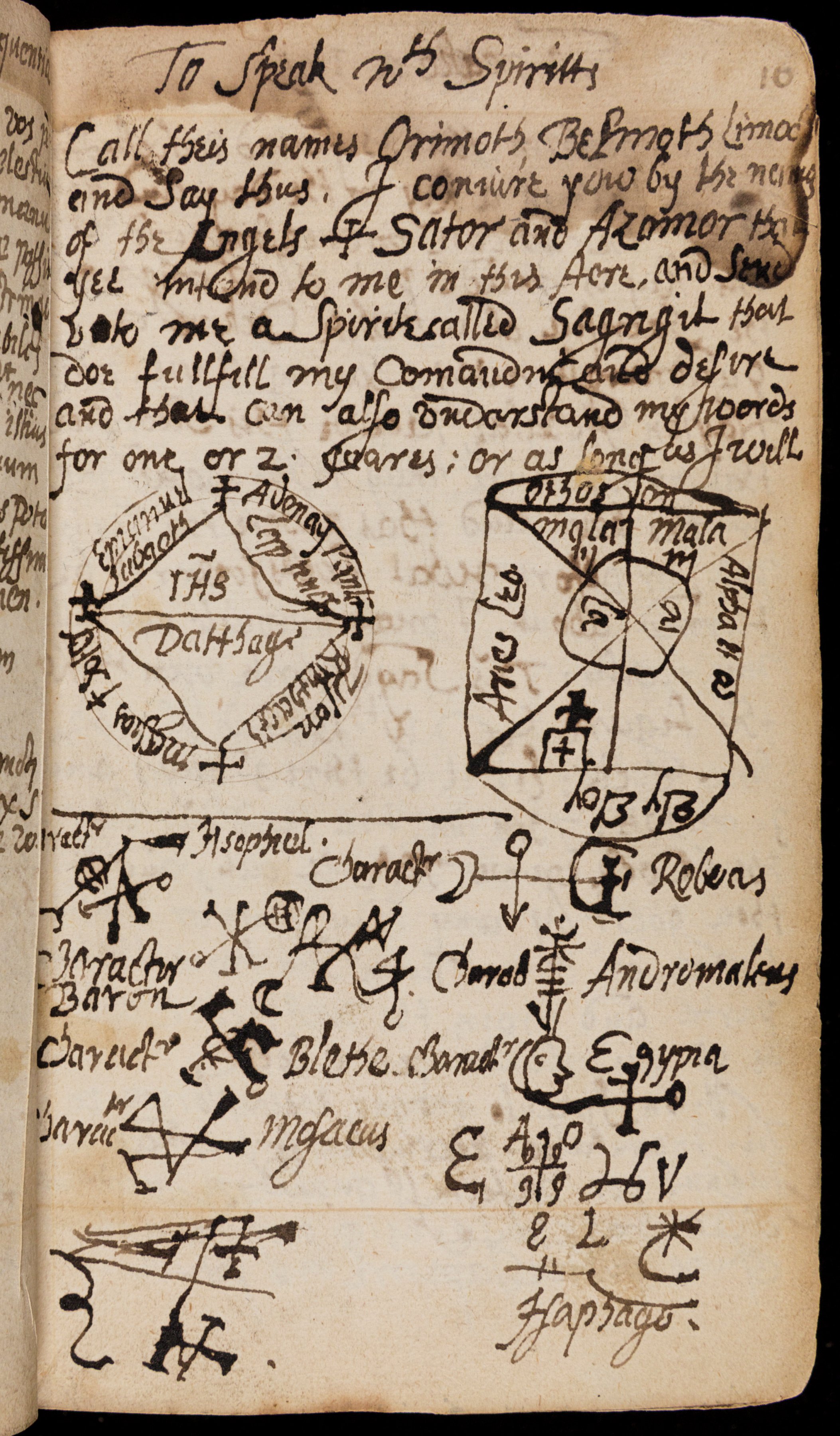
The library’s Transcribing Faith initiative gives users a chance to connect with texts like The Book of Magical Charms(above), by transcribing and/or translating the contents therein. Like software engineer Joseph Peterson—founder of the Esoteric Archives, which contains a large collection of John Dee’s work—you can volunteer to help the Newberry’s project “Religious Change, 1450–1700.” The Newberry aims to educate the general public on a period of immense upheaval. “The Reformation and the Scientific Revolution are very big, capital letter concepts,” project coordinator Christopher Fletcher tells Smithsonian.com, “we lose sight of the fact that these were real events that happened to real people.”
By aiming to return these texts to “real people” on the internet, the Newberry hopes to demystify, so to speak, key moments in European history. “You don’t need a Ph.D. to transcribe,” Fletcher points out. Atlas Obscura describes the process as “much like updating a Wikipedia page,” only “anyone can start transcribing and translating and they don’t need to sign up to do so.” Check out some transcriptions of The Book of Magical Charms—written by various anonymous authors in the seventeenth century—here. The book, writes the Newberry, describes “everything from speaking with spirits to cheating at dice to curing a toothache.”
Need to call up a spirit for some dirty work? Just follow the instructions below:
Call their names Orimoth, Belmoth Limoc and Say thus. I conjure you by the neims of the Angels + Sator and Azamor that yee intend to me in this Aore, and Send unto me a Spirite called Sagrigid that doe fullfill my comandng and desire and that can also undarstand my words for one or 2 yuares; or as long as I will.
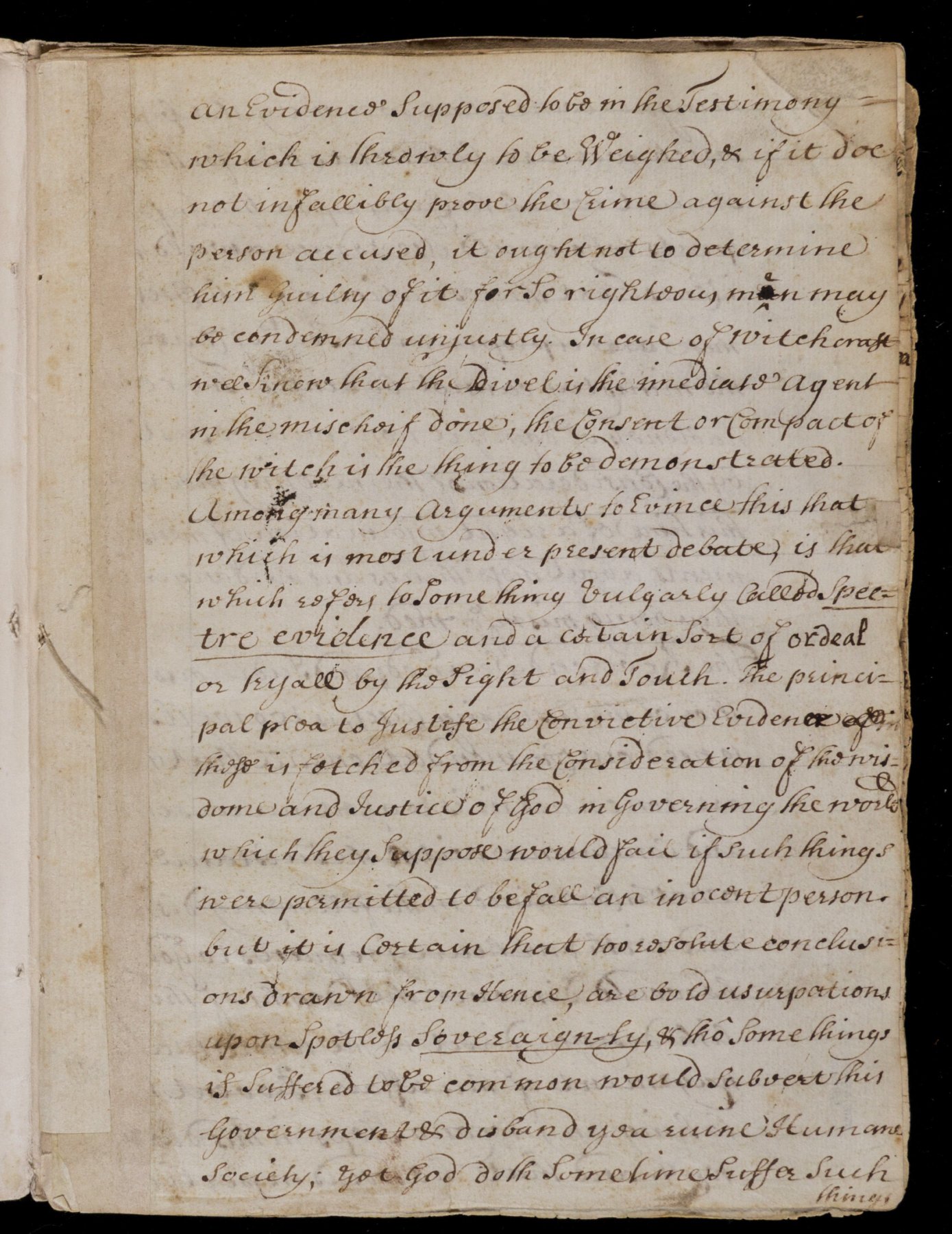
Seems simple enough, but of course this business did not sit well with some powerful people, including one Increase Mather, father of Cotton, president of Harvard, best known from his work on the Salem Witch Trials. Increase defended the prosecutions in a manuscript titled Cases of Conscience Concerning Evil Spirits, a page from which you can see further up. The text reads, in part:
an Evidence Supposed to be in the Testimony which is throwly to be Weighed, & if it doe not infallibly prove the Crime against the person accused, it ought not to determine him Guilty of it for So righteous may be condemned unjustly.
Mather did not consider these to be show trials or “witchhunts” but rather the fair and judicious application of due process, for whatever that’s worth. Elsewhere in the text he famously wrote, “It were better that Ten Suspected Witches should escape, than that one Innocent Person should be Condemned.” Cold comfort to those condemned as guilty for likely practicing some mix of religion and early science.
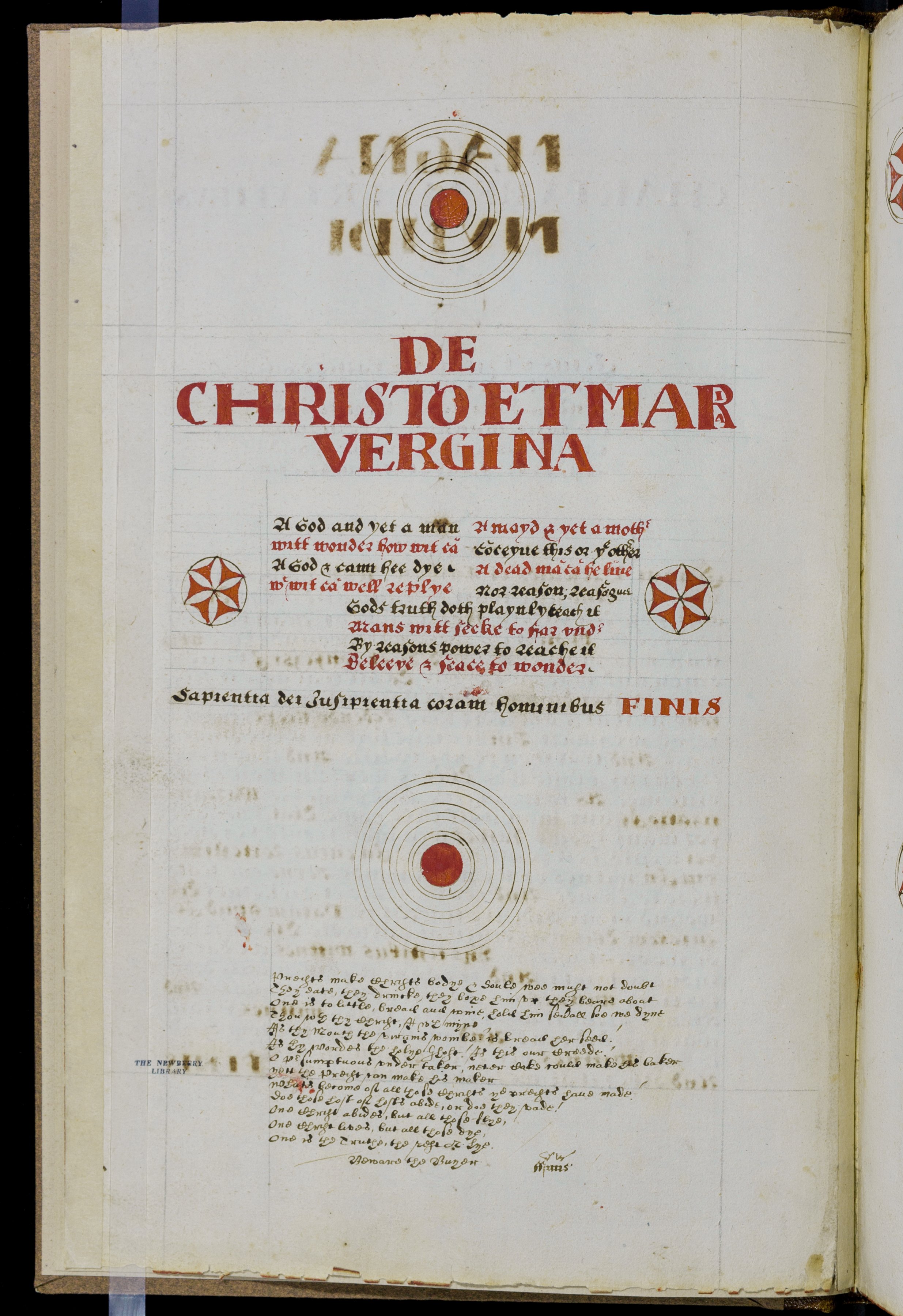
These texts are written in English and concern themselves with magical and spiritual matters expressly. Other manuscripts in the project’s archive roam more broadly across topics and languages, and “shed light on the entwined practices of religion and reading.” One “commonplace book,” for example (above), from sometime between 1590 and 1620, contains sermons by John Donne as well as “religious, political, and practical texts, including a Middle English lyric,” all carefully written out by an English scribe named Henry Feilde in order to practice his calligraphy.
Another such text, largely in Latin, “may have been started as early as the 16th century, but continued to be used and added to well into the 19th century. Its compilers expressed interest in a wide range of topics, from religious and moral questions to the liberal arts to strange events.” Books like these “reflected the reading habits of early modern people, who tended not to read books from beginning to end, but instead to dip in and out of them,” extracting bits and bobs of wisdom, quotations, recipes, prayers, and even the odd spell or two.
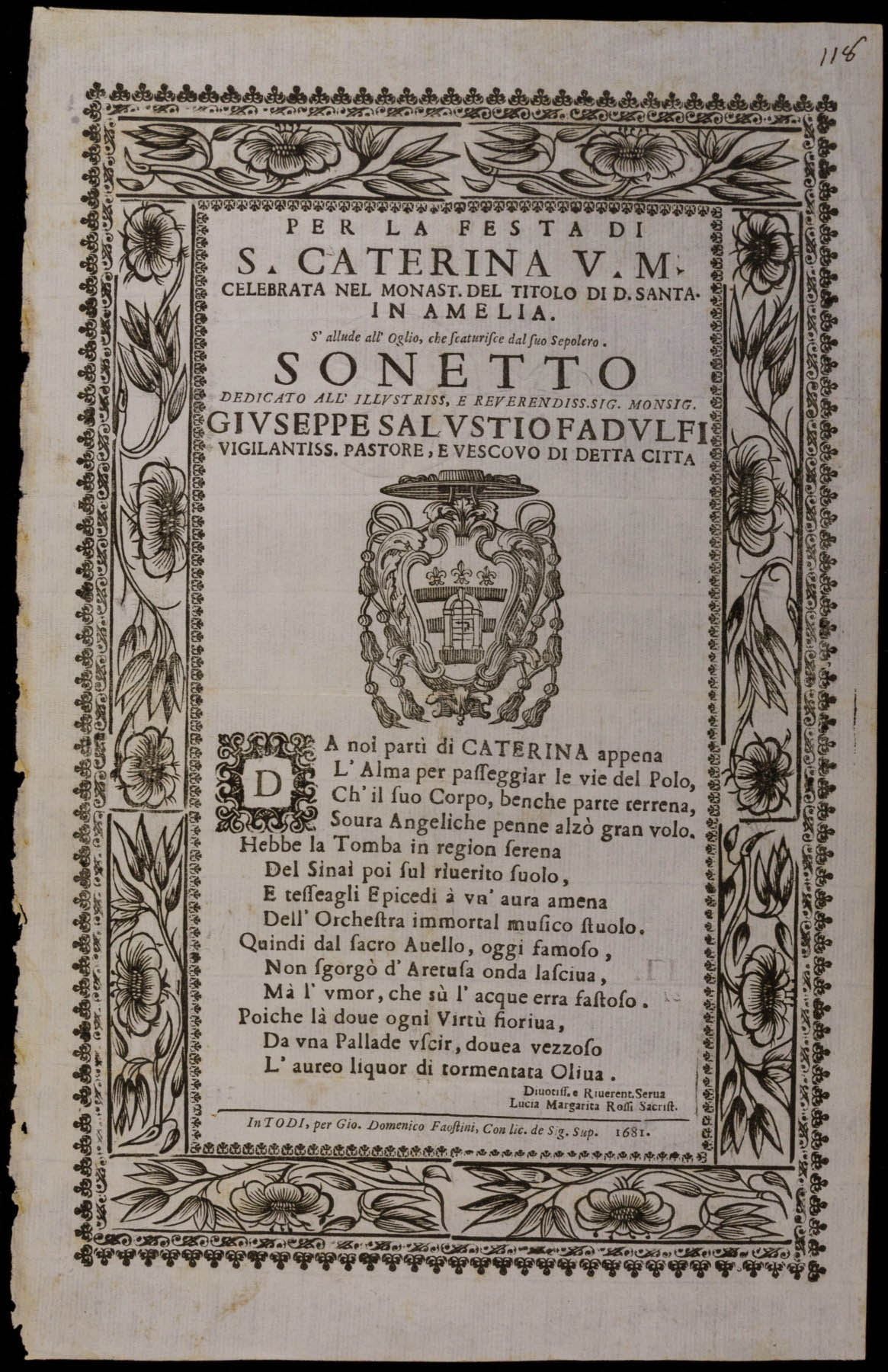
The final work in need of transcription/translation is also the only printed text, or texts, rather, a collection of Italian religious broadsides, advertising “public celebrations and commemorations of Catholic feast days and other religious occasions.” Hardly summoning spirits, though some may beg to differ. If you’re so inclined to take part in opening the secrets of these rare books for lay readers everywhere, visit Transcribing Faith here and get to work.
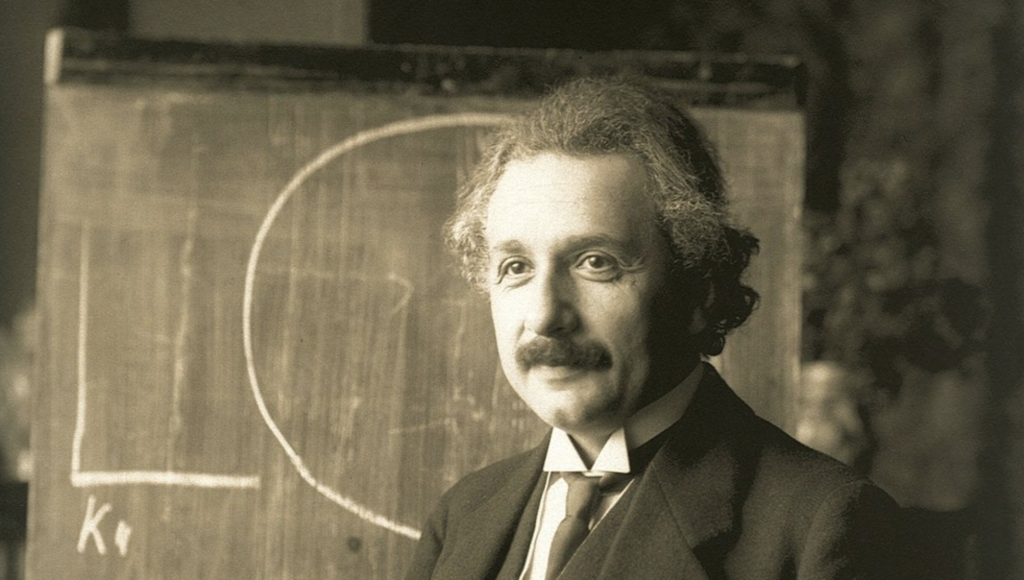
Here’s an extraordinary recording of Albert Einstein from the fall of 1941, reading a full-length essay in English:
The essay is called “The Common Language of Science.” It was recorded in September of 1941 as a radio address to the British Association for the Advancement of Science. The recording was apparently made in America, as Einstein never returned to Europe after emigrating from Germany in 1933.
Einstein begins by sketching a brief outline of the development of language, before exploring the connection between language and thinking. “Is there no thinking without the use of language,” asks Einstein, “namely in concepts and concept-combinations for which words need not necessarily come to mind? Has not every one of us struggled for words although the connection between ‘things’ was already clear?”
Despite this evident separation between language and thinking, Einstein quickly points out that it would be a gross mistake to conclude that the two are entirely independent. In fact, he says, “the mental development of the individual and his way of forming concepts depend to a high degree upon language.” Thus a shared language implies a shared mentality. For this reason Einstein sees the language of science, with its mathematical signs, as having a truly global role in influencing the way people think:
The supernational character of scientific concepts and scientific language is due to the fact that they have been set up by the best brains of all countries and all times. In solitude, and yet in cooperative effort as regards the final effect, they created the spiritual tools for the technical revolutions which have transformed the life of mankind in the last centuries. Their system of concepts has served as a guide in the bewildering chaos of perceptions so that we learned to grasp general truths from particular observations.
Einstein concludes with a cautionary reminder that the scientific method is only a means toward an end, and that the welfare of humanity depends ultimately on shared goals.
Perfection of means and confusion of goals seem–in my opinion–to characterize our age. If we desire sincerely and passionately for the safety, the welfare, and the free development of the talents of all men, we shall not be in want of the means to approach such a state. Even if only a small part of mankind strives for such goals, their superiority will prove itself in the long run.
The immediate context of Einstein’s message was, of course, World War II. The air force of Einstein’s native country had only recently called off its bombing campaign against England. A year before, London weathered 57 straight nights of bombing by the Luftwaffe. Einstein had always felt a deep sense of gratitude to the British scientific community for its efforts during World War I to test the General Theory of Relativity, despite the fact that its author was from an enemy nation.
“The Common Language of Science” was first published a year after the radio address, in Advancement of Science 2, no. 5. It is currently available in the Einstein anthologies Out of My Later Years and Ideas and Opinions.
Note: An earlier version of this post appeared on our site in March 2013.
If you would like to support the mission of Open Culture, consider making a donation to our site. It’s hard to rely 100% on ads, and your contributions will help us continue providing the best free cultural and educational materials to learners everywhere. You can contribute through PayPal, Patreon, and Venmo (@openculture). Thanks!
We're hoping to rely on loyal readers, rather than erratic ads. Please click the Donate button and support Open Culture. You can use Paypal, Venmo, Patreon, even Crypto! We thank you!
Open Culture scours the web for the best educational media. We find the free courses and audio books you need, the language lessons & educational videos you want, and plenty of enlightenment in between.