An Astronaut’s Guide to Life on Earth by Commander Chris Hadfield: The Viral Book Trailer

As Com­man­der of the Inter­na­tion­al Space Sta­tion, Chris Had­field “cap­ti­vat­ed the world with stun­ning pho­tos and com­men­tary from space.” Per­haps you remem­ber him singing David Bowie’s “Space Odd­i­ty” on board the Inter­na­tion­al Space Sta­tion, or, on a more prac­ti­cal lev­el, explain­ing what hap­pens when astro­nauts shed tears in space –an impor­tant ques­tion, no doubt, but maybe not as head­line grab­bing as this oth­er Had­field talk: Every­thing You Want­ed to Know About Going to the Bath­room in Space But Were Afraid to Ask.

Had­field returned from the ISS in May, and he has appar­ent­ly been busy writ­ing a book that came out just days ago, An Astro­naut’s Guide to Life on Earth: What Going to Space Taught Me About Inge­nu­ity, Deter­mi­na­tion, and Being Pre­pared for Any­thingTo pro­mote the book, Had­field “enlist­ed his son to make a video for his new book launch that would be as enter­tain­ing as his time in space,” accord­ing to Devour. Mis­sion accom­plished, we all agree. The video has logged near­ly 1,000,000 views and count­ing in a mat­ter of days.

If you want to get famil­iar with the mate­r­i­al cov­ered in Had­field­’s book, I’d encour­age you to lis­ten to his recent inter­view with Ter­ry Gross on Fresh Air.

Relat­ed Con­tent:

The Won­der, Thrill & Mean­ing of See­ing Earth from Space. Astro­nauts Reflect on The Big Blue Mar­ble

60 Sec­ond Adven­tures in Astron­o­my Explains the Big Bang, Rel­a­tiv­i­ty & More with Fun Ani­ma­tion

Star Gaz­ing from the Inter­na­tion­al Space Sta­tion (and Free Astron­o­my Cours­es Online)

The Wis­dom of Carl Sagan Ani­mat­ed

Noam Chomsky Schools 9/11 Truther; Explains the Science of Making Credible Claims

We don’t often write up videos post­ed by 9–11 Truthers, but you can watch an inter­est­ing exchange when this par­tic­u­lar Truther con­fronts well-known lin­guist and polit­i­cal observ­er Noam Chom­sky dur­ing the ques­tion ses­sion after the lat­ter’s talk at the Uni­ver­si­ty of Flori­da. “You’ve men­tioned quite a few con­tra­dic­tions from the media and their pre­sen­ta­tions on things, and I think the most noto­ri­ous case of this is with Sep­tem­ber 11, 2001,” says the Truther after tak­ing the micro­phone. “You want­ed to see a con­sen­sus of engi­neers and spe­cial­ists that under­stand the actu­al struc­tures of these build­ings and their pos­si­ble col­lapse, and there is such a group. It’s called Archi­tects and Engi­neers for 9–11 Truth.” As the Truther gets into the “con­sen­sus of over 2000 of them,” the mod­er­a­tor inter­rupts, won­der­ing if he actu­al­ly has a ques­tion. (Sure­ly we’ve all endured these moments in ques­tion seg­ment.) But the Truther con­tin­ues: “This con­sen­sus shows that Build­ing 7, the third build­ing that fell on 9/11, fell in freefall speed as the [Nation­al Insti­tute of Stan­dard and Tech­nol­o­gy] report acknowl­edges. Are you ready to come for­ward and jump on board with 9/11?” Thus asked to com­ment on whether the media has cov­ered up the man­ner in which this par­tic­u­lar build­ing col­lapsed, Chom­sky replies with a defense of stan­dard sci­en­tif­ic pro­ce­dures.

“In fact, you’re right that there’s a con­sen­sus among a minis­cule num­ber of archi­tects and engi­neers. They are not doing what sci­en­tists and engi­neers do when they think they’ve dis­cov­ered some­thing. What you do is write arti­cles in sci­en­tif­ic jour­nals, give talks at the pro­fes­sion­al soci­eties, go to the civ­il engi­neer­ing depart­ment at MIT or Flori­da or wher­ev­er you are, and present your results, then pro­ceed to try to con­vince the nation­al acad­e­mies, the pro­fes­sion­al soci­ety of physi­cists and civ­il engi­neers, the depart­ments of the major uni­ver­si­ties, that you’ve dis­cov­ered some­thing. There hap­pen to be a lot of peo­ple around who spend an hour on the inter­net and think they know a lot physics, but it does­n’t work like that. There’s a rea­son there are grad­u­ate schools in these depart­ments.” But has­n’t the gov­ern­ment intim­i­dat­ed those who know the real sto­ry from speak­ing out against the offi­cial line? “Any­body who has any famil­iar­i­ty with polit­i­cal activism knows that this is one of the safest things you can do. It’s almost risk­less. Peo­ple take risks far beyond this con­stant­ly — includ­ing sci­en­tists and engi­neers.” Chom­sky has more to say about the facts we can use, the opin­ions he dis­avows, and the forces dri­ving the Iraq War in the remain­der of the sev­en-minute clip. “We will let you be the judge of his response,” say the video’s notes. Indeed.

via Crit­i­cal The­o­ry

Relat­ed Con­tent:

Noam Chom­sky Slams Žižek and Lacan: Emp­ty ‘Pos­tur­ing’

Clash of the Titans: Noam Chom­sky and Michel Fou­cault Debate Human Nature and Pow­er on Dutch TV, 1971

Noam Chom­sky vs. William F. Buck­ley, 1969

Col­in Mar­shall hosts and pro­duces Note­book on Cities and Cul­ture and writes essays on lit­er­a­ture, film, cities, Asia, and aes­thet­ics. He’s at work on a book about Los Ange­lesA Los Ange­les Primer. Fol­low him on Twit­ter at @colinmarshall.

Charles Darwin’s Son Draws Cute Pictures on the Manuscript of On the Origin of Species

Most of us can iden­ti­fy Charles Dar­win as the father of mod­ern evo­lu­tion­ary biol­o­gy, but were you aware that he also fathered ten chil­dren with his cousin, Emma Wedg­wood?

As dad­dies go, Dar­win was quite evolved him­self, dis­play­ing a 21st-cen­tu­ry lev­el of devo­tion to and involve­ment with his young. He even went so far as to let one of his kids draw on the orig­i­nal man­u­script for On the Ori­gin of Species. Sav­ing paper was as good for the envi­ron­ment in the mid-1800s as it is today, but his will­ing­ness to let his pre­cious pages do dou­ble duty may explain why the sem­i­nal doc­u­ment sur­vives as mere piece­meal today.

Maybe Charles and Emma read some arti­cle that sug­gest­ed their house­hold would run more smooth­ly if it were bet­ter orga­nized, and lack­ing such mod­ern solu­tions as col­or­ful Ikea stor­age bins and scan­ners, sim­ply pitched all but the absolute best of their chil­dren’s art­work. (Or maybe their youngest was a scrunch­er, destroy­ing pages by the fist­ful.)

origindrawing2

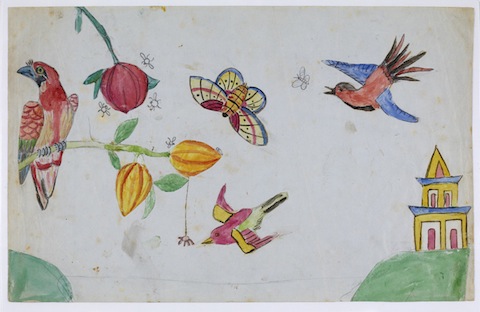
It seems a good bet young Fran­cis Dar­win’s water­col­or of birds, bugs and a but­ter­fly con­verg­ing on a trio of botan­i­cal­ly viable flow­ers (above) would’ve done his nat­u­ral­ist papa proud.

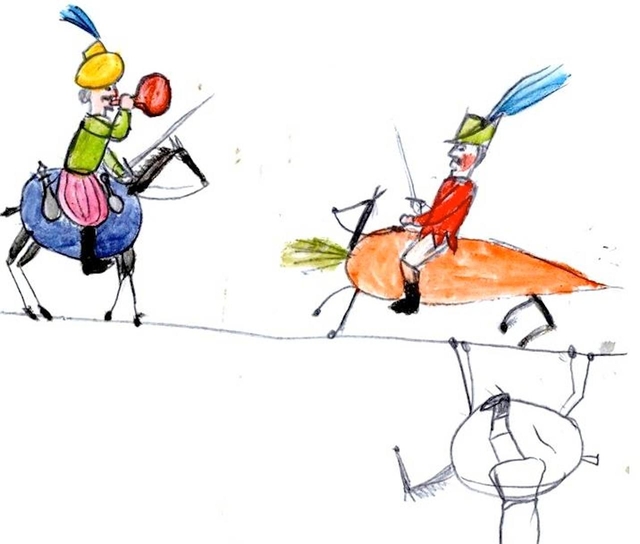
I can also state with near-sci­en­tif­ic cer­tain­ty that if the Dar­wins had had a refrig­er­a­tor, The Bat­tle of the Fruit and Veg­etable Sol­diers (top) would have been on it. Today, Fran­cis’ masterpiece—and its flipside—reside in the Cam­bridge Uni­ver­si­ty Library.

via The Tele­graph

Relat­ed Con­tent:

Watch Dar­win, a 1993 Film by Peter Green­away

Read the Orig­i­nal Let­ters Where Charles Dar­win Worked Out His The­o­ry of Evo­lu­tion

The Genius of Charles Dar­win Revealed in Three-Part Series by Richard Dawkins

Darwin’s Per­son­al Library Goes Dig­i­tal: 330 Books Online

Darwin’s Lega­cy, a Stan­ford course in our col­lec­tion of 750 Free Online Cours­es

Ayun Hal­l­i­day remem­bers her grand­moth­er was very impressed by her abil­i­ty to  draw Huck­le­ber­ry Finn with his legs crossed. Fol­low her @AyunHalliday

Stunning Time-lapse of Lasers at the Mauna Kea Observatories in Hawaii

Sean Goebel, a grad­u­ate stu­dent in astron­o­my at the Uni­ver­si­ty of Hawaii, has made this beau­ti­ful and fas­ci­nat­ing time-lapse film of the obser­va­to­ries on Mau­na Kea shoot­ing laser beams into the night sky over the Big Island of Hawaii.

The lasers are part of the obser­va­to­ries’ adap­tive optics sys­tems, which com­pen­sate for dis­tor­tions in light trav­el­ing through the Earth­’s atmos­phere. “Just as waves of heat com­ing off pave­ment blur out the detail of far­away objects,” explains Goebel on his Web site, “winds in the atmos­phere blur out fine detail in the stars/galaxies/whatever is being observed. This is the rea­son that stars twin­kle. The laser is used to track this atmos­pher­ic tur­bu­lence, and one of the mir­rors in the tele­scope bends hun­dreds of times per sec­ond in order to can­cel out the blur­ring.”

Adap­tive optics make use of a guide star in the area of the sky near the object being observed. As light arriv­ing from the guide star shifts, elec­tron­ic cir­cuits in the sys­tem auto­mat­i­cal­ly com­pute the minute adjust­ments to the deformable tele­scope mir­ror that are need­ed to can­cel out the dis­tor­tion.

There are, how­ev­er, places in the sky where a nat­ur­al guide star does­n’t exist close enough to the object astronomers want to observe. To solve this prob­lem, the sci­en­tists cre­ate arti­fi­cial guide stars using laser beams. For exam­ple, sev­er­al of the obser­va­to­ries on Mau­na Kea shine sodi­um laser beams into the upper atmos­phere, where they inter­act with a nat­u­ral­ly occur­ring lay­er of sodi­um atoms. The excit­ed atoms give off light, cre­at­ing a point source for the adap­tive optics sys­tem to focus on. The pow­er­ful lasers must be used very care­ful­ly, says Goebel:

A typ­i­cal laser point­er that you might use to point at stuff/exercise your cat is about 5 mW. That’s five one-thou­sandths of a watt. Not a whole lot of pow­er. And yet it’s enough to blind air­plane pilots. The lasers on the tele­scopes are in the range of 15–40 watts. The FAA calls a no-fly zone over the area when a laser is in use, and two peo­ple have to stand around out­side in the freez­ing tem­per­a­tures and watch for air­planes. Each of them has a kill switch to turn off the laser in case an air­plane comes near. Addi­tion­al­ly, the tele­scope has to send its tar­get list to Space Com­mand ahead of time. Space Com­mand then tells them not to use the laser at spe­cif­ic times, osten­si­bly to avoid blind­ing spy satel­lites. How­ev­er, you could cal­cu­late the spy satel­lite orbits if you knew where they were at spe­cif­ic times, so Space Com­mand also tells the tele­scope to not use the laser at ran­dom times when no satel­lites are over­head.

Goebel cap­tured the images for his time-lapse mon­tage over a peri­od of sev­en nights this past spring and sum­mer. Con­di­tions atop Mau­na Kea, which ris­es to an alti­tude of over 13,000 feet above sea lev­el, pre­sent­ed a chal­lenge. Goebel had to con­tend with high winds, freez­ing tem­per­a­tures and low oxy­gen. “Essen­tial­ly every­one suf­fers from alti­tude sick­ness” on Mau­na Kea, he says. “It’s not uncom­mon for tourists to step out of their vehi­cles and imme­di­ate­ly pass out. Going from sea lev­el to 14,000 feet in the span of a cou­ple of hours will do that to you.”

For more on Goebel and his work, includ­ing tech­ni­cal spec­i­fi­ca­tions and exam­ples of oth­er work, vis­it his Web site.

Stephen Fry Hosts “The Science of Opera,” a Discussion of How Music Moves Us Physically to Tears

I vivid­ly recall my first opera. It was The Mar­riage of Figaro at the Met­ro­pol­i­tan Opera in New York. A friend bought two fam­i­ly cir­cle tickets—nosebleed seats—and insist­ed that I come along. She was a trained opera singer and afi­ciona­do. I was an unlearned neo­phyte. Most of my expec­ta­tions were ful­filled: the enor­mous­ly impres­sive space, plen­ty of bom­bast, intri­cate­ly designed sets and cos­tum­ing. And it was long. Very long. But not, as I had feared, bor­ing. Not at all. I had not expect­ed, in fact, to be so phys­i­cal­ly moved by the per­for­mances, and not only moved to basic emotions—I was moved deep in my gut. There’s no way I could ade­quate­ly explain it.

But the med­ical sci­en­tists in the video above can. In “The Sci­ence of Opera,” actor Stephen Fry and come­di­an Alan Davies con­vene a pan­el of researchers from Uni­ver­si­ty Col­lege Lon­don to dis­cuss what hap­pened phys­i­o­log­i­cal­ly when the pair were hooked up to var­i­ous sen­sors as they attend­ed Verdi’s Simon Boc­cane­gra at the Roy­al Opera House. Like the pair­ing at my first opera, Fry is a knowl­edge­able lover of the art and Davies is almost an opera vir­gin (the sto­ry of his actu­al first opera gets a good laugh). The gad­gets attached to Fry and Davies mea­sured their heart rates, breath­ing, sweat, and “var­i­ous oth­er emo­tion­al respons­es.” What do we learn from the exper­i­ment? For one thing, as neu­ro­bi­ol­o­gist Michael Trim­ble informs us, “music is dif­fer­ent from all the oth­er arts.” For exam­ple, nine­ty per­cent of peo­ple sur­veyed admit to being moved to tears by a piece of music. Only five to ten per­cent say the same about paint­ing or sculp­ture. Fry and Davies’ auto­nom­ic ner­vous sys­tem respons­es con­firm the pow­er of music (and sto­ry) to move us beyond our con­scious con­trol and aware­ness.

And why is this? You’ll have to watch the dis­cus­sion to learn more—I won’t sum­ma­rize it here. Just know that we get insights not only into the sci­ence of opera, but the art as well—Verdi’s art in particular—and the var­i­ous dis­ci­plines rep­re­sent­ed here do much to expand our appre­ci­a­tion of music, whether we specif­i­cal­ly love opera or not. This is not the first talk on opera Fry has been a part of. He pre­vi­ous­ly host­ed anoth­er Roy­al Opera Com­pa­ny event called “Ver­di vs. Wag­n­er: the 200th birth­day debate” (above). Though I favor the Ger­mans, I’d say it’s a draw, but par­ti­sans of either one will like­ly come away with their opin­ions intact, hav­ing learned a thing or two along the way.

Relat­ed Con­tent:

Stephen Fry Reads Oscar Wilde’s Children’s Sto­ry “The Hap­py Prince”

Stephen Fry, Lan­guage Enthu­si­ast, Defends The “Unnec­es­sary” Art Of Swear­ing

Math­e­mu­si­cian Vi Hart Explains the Space-Time Con­tin­u­um With a Music Box, Bach, and a Möbius Strip

Find Yale’s Course “Lis­ten­ing to Music” in our Col­lec­tion of 775 Free Online Cours­es

Josh Jones is a writer and musi­cian based in Durham, NC. Fol­low him at @jdmagness

Study Finds That Reading Tolstoy & Other Great Novelists Can Increase Your Emotional Intelligence

tolstoy social intelligence

A new study pub­lished this week in Sci­ence con­cludes that you may get some­thing unex­pect­ed from read­ing great lit­er­ary works: more fine­ly-tuned social and emo­tion­al skills. Con­duct­ed by Emanuele Cas­tano and David Com­er Kidd (researchers in the psych depart­ment at the New School for Social Research), the study deter­mined that read­ers of lit­er­ary fic­tion (as opposed to pop­u­lar fic­tion or non-fic­tion) find them­selves scor­ing bet­ter on tests mea­sur­ing empa­thy, social per­cep­tion and emo­tion­al intel­li­gence. In some cas­es, it took read­ing lit­er­ary fic­tion for only a few min­utes for test scores to improve.

The New York Times has a nice overview of the study, where, among oth­er things, it fea­tures a quote by Albert Wend­land, an Eng­lish pro­fes­sor at Seton Hall, who puts the rela­tion­ship between lit­er­a­ture and social intel­li­gence into clear terms: “Read­ing sen­si­tive and lengthy explo­rations of people’s lives, that kind of fic­tion is lit­er­al­ly putting your­self into anoth­er person’s posi­tion — lives that could be more dif­fi­cult, more com­plex, more than what you might be used to in pop­u­lar fic­tion. It makes sense that they will find that, yeah, that can lead to more empa­thy and under­stand­ing of oth­er lives.”

If you’re look­ing to increase your abil­i­ty to nav­i­gate com­plex social sit­u­a­tions — and have a plea­sur­able time doing it — then grab a good book. One place to start is with our recent post: The 10 Great­est Books Ever, Accord­ing to 125 Top Authors (Down­load Them for Free). Or sim­ply dive into our col­lec­tion of 500 Free eBooks, which includes many great clas­sics.

via Peter Kauf­man, mas­ter­mind of The Intel­li­gent Chan­nel

Relat­ed Con­tent:

David Bowie’s List of Top 100 Books

18 (Free) Books Ernest Hem­ing­way Wished He Could Read Again for the First Time

Neil deGrasse Tyson Lists 8 (Free) Books Every Intel­li­gent Per­son Should Read

550 Free Audio Books: Down­load Great Books for Free

by | Permalink | Make a Comment ( 7 ) |

Richard Dawkins and Jon Stewart Debate Whether Science or Religion Will Destroy Civilization

One of the sad facts of human psy­chol­o­gy is that knowl­edge can be used for evil just as eas­i­ly as it can be used for good. If the human race had nev­er fig­ured out how to use fire, for exam­ple, we would­n’t have to wor­ry about those pesky arson­ists.

If some peo­ple are will­ing to use the fruits of knowl­edge to hurt peo­ple, should we stop acquir­ing knowl­edge? It sounds absurd, but that’s a ques­tion that is often asked, though it’s invari­ably couched in dif­fer­ent lan­guage.

When Richard Dawkins, the evo­lu­tion­ary biol­o­gist and out­spo­ken athe­ist, made an appear­ance on The Dai­ly Show last week to pro­mote his new mem­oir, host Jon Stew­art asked: “Do you believe that the end of our civ­i­liza­tion will be through reli­gious strife or sci­en­tif­ic advance­ment?”  The answer, Dawkins said, is prob­a­bly both. “Sci­ence pro­vides, in the form of tech­nol­o­gy, weapons which hith­er­to have been avail­able only to rea­son­ably respon­si­ble gov­ern­ments,” said Dawkins, and those weapons “are like­ly to become avail­able to nut­cas­es who believe that their god requires them to wreak hav­oc and destruc­tion.”

The con­ver­sa­tion then moves beyond reli­gious fanati­cism. “Sci­ence is the most pow­er­ful way to do what­ev­er it is you want to do,” said Dawkins, “and if you want to do good, it’s the most pow­er­ful way of doing good. If you want to do evil, it’s the most pow­er­ful way to do some­thing evil.”

Dawkin­s’s last state­ment echoes the words of Albert Ein­stein, who warned that the sci­en­tif­ic method is only a means to an end, and that the wel­fare of human­i­ty depends ulti­mate­ly on shared goals. You can hear Ein­stein make his point by vis­it­ing our post, “Lis­ten as Albert Ein­stein Reads ‘The Com­mon Lan­guage of Sci­ence’ (1941)”.

Relat­ed Con­tent:

Grow­ing Up in the Uni­verse: Richard Dawkins Presents Cap­ti­vat­ing Sci­ence Lec­tures for Kids (1991)

Jon Stewart’s William & Mary Com­mence­ment Address: The Entire World is an Elec­tive

Richard Dawkins Explains Why There Was Nev­er a First Human Being

Richard Feynman Gets Jazzed Explaining How Rubber Bands Work

Back in 1983, the BBC aired Fun to Imag­ine, a tele­vi­sion series host­ed by Richard Feyn­man that used physics to explain how the every­day world works. Here, in lan­guage that makes sense to any­one with a basic ground­ing in sci­ence, the Nobel Prize-win­ning physi­cist answered ques­tions like, Why can’t ten­nis balls bounce for­ev­er? What are we real­ly see­ing when we look in the mir­ror? And, as shown above, why are rub­ber bands stretchy? The clip comes from Fun to Imag­ine, and thanks to this ded­i­cat­ed BBC web­site, you can watch online all six videos in the series, each run­ning about 12 min­utes. (If you have any dif­fi­cul­ty view­ing them at the BBC, sim­ply watch the all-in-one video below.) But beware, Feyn­man’s enthu­si­asm for sci­ence is con­ta­gious. So watch the clips at your own risk, and be pre­pared to start play­ing with boun­cy, stretchy things dur­ing your free time, hope­ful­ly with a big smile on your face.

via Kot­tke

Relat­ed Con­tent:

Richard Feynman’s Let­ter to His Depart­ed Wife: “You, Dead, Are So Much Bet­ter Than Any­one Else Alive” (1946)

Richard Feyn­man Presents Quan­tum Elec­tro­dy­nam­ics for the Non­Sci­en­tist

The Famous Feyn­man Lec­tures on Physics: The New Online Edi­tion (in HTML5)

‘The Char­ac­ter of Phys­i­cal Law’: Richard Feynman’s Leg­endary Lec­ture Series at Cor­nell, 1964

« Go BackMore in this category... »
Quantcast