The Science of Breaking Bad: Professor Donna Nelson Explains How the Show Gets it Right

There’s noth­ing fun­ny about the rav­ages of high­ly addic­tive nar­cotics or gang­land turf wars. Nev­er­the­less, Vince Gilligan’s riv­et­ing hit Break­ing Bad man­aged to start on a (yes, dark­ly) com­ic note that still sounds occa­sion­al­ly as the show hur­tles toward its fate­ful con­clu­sion this Sun­day. (Conan O’Brien has had a lot of fun with these moments in par­o­dies of the show’s char­ac­ters’ quirks and its some­times-grue­some desert absur­di­ties.)

What anchors the show, even when it veers into gal­lows humor, is its sense of authen­tic­i­ty. Despite Break­ing Bad’s theatrical—almost Shakespearean—plotting, Gilli­gan and his writ­ers have tak­en care to build a very believ­able scaf­fold­ing behind every out­ra­geous set piece, even when it comes to the sci­ence of per­fec­tion­is­tic chem­istry teacher Wal­ter White’s super high-qual­i­ty crys­tal metham­phet­a­mine. In order to get the sci­ence right, Gilli­gan approached Don­na Nel­son, Pro­fes­sor of Organ­ic Chem­istry at the Uni­ver­si­ty of Okla­homa.

Nel­son doesn’t only con­sult on the nature of illic­it chem­i­cal com­pounds; she has also pro­vid­ed the show’s writ­ers with insights into the moti­va­tions and meth­ods of chemists and teach­ers. As Nel­son says, “to us who are edu­cat­ed in sci­ence, when­ev­er we see sci­ence pre­sent­ed inac­cu­rate­ly, it’s like fin­ger­nails on a black­board. It just dri­ves us crazy, and we can’t stay immersed in the show.” As a Break­ing Bad fan who is, I’ll be hon­est, large­ly chem­istry-illit­er­ate, I’d still cred­it some of my immer­sion to how real the sci­ence feels, a by-prod­uct, sure­ly, of how gen­uine it is. Watch Pro­fes­sor Nel­son in the video above, pro­duced by the Amer­i­can Chem­i­cal Soci­ety, explain how the show cre­at­ed its illu­sions with the stuff of 100% real sci­ence.

Well, okay, it’s maybe more like 96%. As you might have sus­pect­ed, the sig­na­ture pow­der blue col­or of Walter’s prod­uct is pure dra­mat­ic inven­tion.

Relat­ed Con­tent:

Watch the Orig­i­nal Audi­tion Tapes for Break­ing Bad Before the Final Sea­son Debuts

The Break­ing Bad Theme Played with Meth Lab Equip­ment

Inside Break­ing Bad: Watch Conan O’Brien’s Extend­ed Inter­view with the Show’s Cast and Cre­ator

Down­load Free Online Chem­istry Cours­es

Josh Jones is a writer and musi­cian based in Durham, NC. Fol­low him at @jdmagness

Vladimir Nabokov’s Delightful Butterfly Drawings

NabokovInscription1

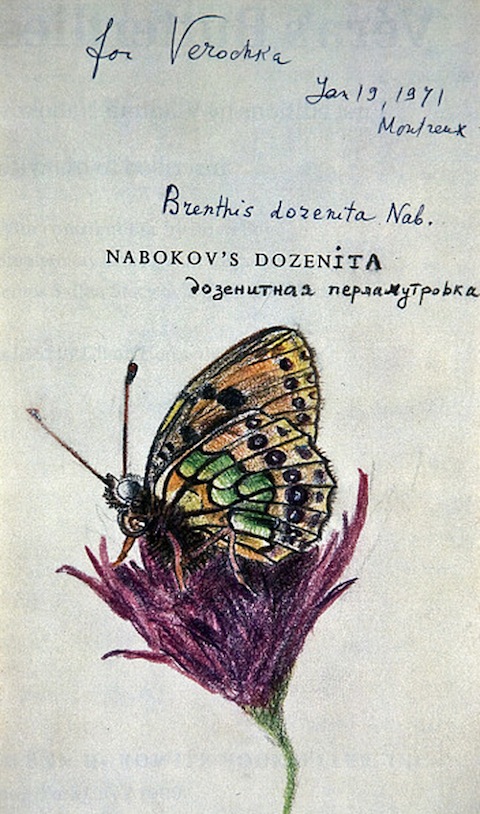
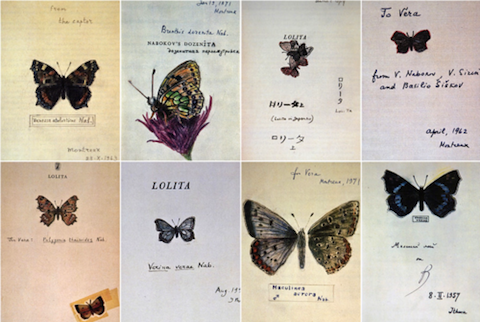
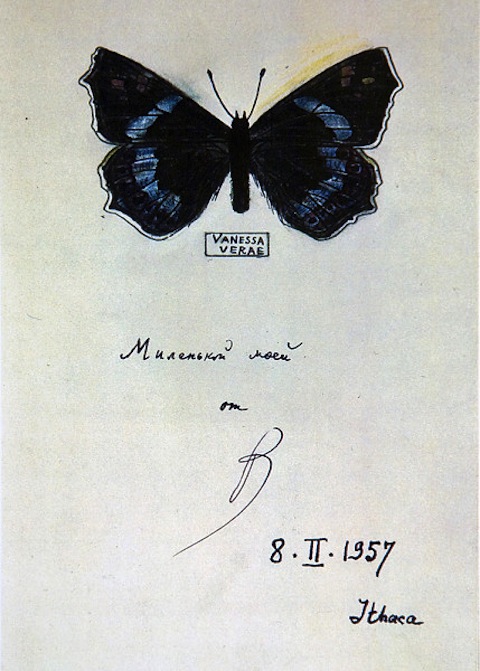
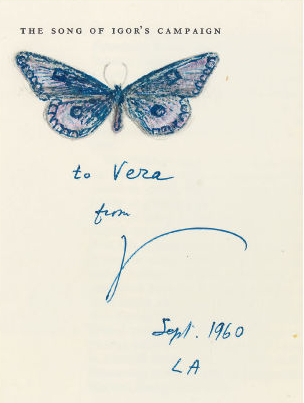
We don’t often talk about the hob­bies (oth­er than drink­ing, any­way) of respect­ed twen­ti­eth-cen­tu­ry writ­ers. But do you know a sin­gle Nabokov read­er, or even an aspir­ing Nabokov read­er, igno­rant of the lep­i­dopter­ist lean­ings of the author of Loli­taThe Gift, and Pale Fire?  The man liked but­ter­flies, as any of the wide­ly seen pho­tographs of him wield­ing his com­i­cal­ly over­sized net can attest. But when his eyes turned toward these strik­ing, del­i­cate insects, he did­n’t nec­es­sar­i­ly put down his pen. Nabokov’s wife Vera, accord­ing to a Book­tryst post on the sale of his book and man­u­script col­lec­tions, “trea­sured nature, art, and life’s oth­er intan­gi­bles more high­ly than mate­r­i­al pos­ses­sions, and Vladimir knew that for Christ­mas, birth­days and anniver­saries” — in Mon­treux in 1971, Itha­ca in 1957, Los Ange­les in 1960, or any­where at any time in their life togeth­er  — “Vera appre­ci­at­ed his thought­ful and del­i­cate but­ter­fly draw­ings much more than some trin­ket. She  delight­ed in these draw­ings in a way she nev­er did for the land­scapes he used to paint for her in ear­li­er days.” For the woman clos­est to his heart, Nabokov drew the crea­tures clos­est to his heart.

NabokovInscription2

“From the age of sev­en, every­thing I felt in con­nec­tion with a rec­tan­gle of framed sun­light was dom­i­nat­ed by a sin­gle pas­sion. If my first glance of the morn­ing was for the sun, my first thought was for the but­ter­flies it would engen­der.” This he declares in his auto­bi­og­ra­phy Speak, Mem­o­ry. “I have hunt­ed but­ter­flies in var­i­ous climes and dis­guis­es: as a pret­ty boy in knicker­bock­ers and sailor cap; as a lanky cos­mopoli­tan expa­tri­ate in flan­nel bags and beret; as a fat hat­less old man in shorts.” Despite the pas­sion with which Nabokov pur­sued lep­i­doptery, it seemed, in his life­time, his accom­plish­ments in the field would remain most­ly non-pro­fes­sion­al; he began one book called But­ter­flies of Europe and anoth­er called But­ter­flies in Art, but fin­ished nei­ther.

But in 2000, out came the 782-page Nabokov’s But­ter­flies, which col­lects, as its co-edi­tor Bri­an Boyd writes in the Atlantic, “his aston­ish­ing­ly diverse writ­ing about but­ter­flies, whether sci­en­tif­ic or artis­tic, pub­lished or unpub­lished, care­ful­ly fin­ished or rough­ly sketched, in poems, sto­ries, nov­els, mem­oirs, sci­en­tif­ic papers, lec­tures, notes, diaries, let­ters, inter­views, dreams.” And in 2011, a hypoth­e­sis he had about but­ter­fly evo­lu­tion had its vin­di­ca­tion under the Roy­al Soci­ety of Lon­don. But to under­stand how much but­ter­flies meant to him, we need look no fur­ther than the title pages of the vol­umes he gave his wife.

NabokovInscription3

via Book Tryst

Relat­ed Con­tent:

Vladimir Nabokov Cre­ates a Hand-Drawn Map of James Joyce’s Ulysses

Vladimir Nabokov Mar­vels Over Dif­fer­ent Loli­ta Book Cov­ers

Vladimir Nabokov (Chan­nelled by Christo­pher Plum­mer) Teach­es Kaf­ka at Cor­nell

Col­in Mar­shall hosts and pro­duces Note­book on Cities and Cul­ture and writes essays on lit­er­a­ture, film, cities, Asia, and aes­thet­ics. He’s at work on a book about Los Ange­lesA Los Ange­les PrimerFol­low him on Twit­ter at @colinmarshall.

Bohemian Gravity: String Theory Explored With an A Cappella Version of Bohemian Rhapsody

This past spring, Tim­o­thy Blais wrote his mas­ters the­sis at McGill Uni­ver­si­ty in Mon­tre­al. Titled “A new quan­ti­za­tion con­di­tion for par­i­ty-vio­lat­ing three-dimen­sion­al grav­i­ty,” the the­sis clocks in at 74 pages and gets into some seri­ous physics. The first line reads: “(2+1)-dimensional grav­i­ty with a neg­a­tive cos­mo­log­i­cal con­stant is a topo­log­i­cal the­o­ry with no local degrees of free­dom.” I have to admit that Tim lost me right there. But he has made some amends with Bohemi­an Grav­i­ty, a poten­tial­ly viral video that explores string the­o­ry with the help of an a cap­pel­la par­o­dy of Queen’s Bohemi­an Rhap­sody. I have to admit that I don’t quite under­stand the sub­stance of the video either. But I am thor­ough­ly enter­tained and that counts for some­thing.

Blais pre­vi­ous­ly record­ed “Rolling in the Hig­gs,” a sci­en­tif­ic riff on Adele’s song. Accord­ing to his Face­book page, these “sci­ence-par­o­dy cre­ations are 100% orig­i­nal­ly record­ed and made out of unal­tered sounds from his mouth, throat and vocal cords.” Keep an eye on his YouTube Chan­nel, acapel­la­science, for more videos (we hope) in the future.

H/T Robin/via I F’ing Love Sci­ence

Relat­ed Con­tent:

Gui­tarist Bri­an May Explains the Mak­ing of Queen’s Clas­sic Song, ‘Bohemi­an Rhap­sody’

Lis­ten to Fred­die Mer­cury and David Bowie on the Iso­lat­ed Vocal Track for the Queen Hit ‘Under Pres­sure,’ 1981

The Hig­gs Boson, AKA the God Par­ti­cle, Explained with Ani­ma­tion

What’s Next for the Large Hadron Col­lid­er? PhD Comics Intro­duces the Search for Extra Dimen­sions

Free Physics Cours­es

by | Permalink | Make a Comment ( 3 ) |

Enter E.O. Wilson’s Encyclopedia of Life: Free Access to All The World’s Knowledge About Life

One of the trea­sures of our time, biol­o­gist E.O. Wil­son, the folksy and bril­liant author of two Pulitzer Prize-win­ning books and the world’s lead­ing author­i­ty on ants, is 84 years old and retired from his pro­fes­sor­ship at Har­vard. But even in retire­ment he came up with one of the most inno­v­a­tive new sci­en­tif­ic resources avail­able today: the Ency­clo­pe­dia of Life, a net­worked ency­clo­pe­dia of all the world’s knowl­edge about life.

Six years ago Wil­son announced his vision for such a project while accept­ing the 2007 TED Prize. He expressed a wish for a col­lab­o­ra­tive tool to cre­ate an infi­nite­ly expand­able page for each species—all 1.9 mil­lion known so far—where sci­en­tists around the world can con­tribute text and images.

Wilson’s dream came true, not long after he announced it, and the EOL was so pop­u­lar right away that it had to go off-line for a spell to expand its capac­i­ty to han­dle the traf­fic. The site was redesigned to be more acces­si­ble and to encour­age con­tri­bu­tions from users. It’s vision: to con­tin­ue to dynam­i­cal­ly cat­a­log every liv­ing species, as research is com­plet­ed, and to include the rough­ly 20,000 new species dis­cov­ered every year.

Wilson’s vision is man­i­fest in a fun and well-designed site use­ful for edu­ca­tors, aca­d­e­mics, and any curi­ous per­son with access to the Inter­net.

Search for a species or just browse. Each EOL tax­on­o­my page fea­tures a detailed overview of the species, research, arti­cles and media. Media can be fil­tered by images, video, and sound. There are 66 dif­fer­ent pieces of media about Tas­man­ian Dev­ils, for exam­ple. A group of Tassies, as they’re known, get pret­ty dev­il­ish over their din­ner in this video, con­tributed by an Aus­tralian Ph.D. stu­dent.

As E.O. Wil­son so elo­quent­ly puts it, the EOL has the poten­tial to inspire oth­ers to search for life, to under­stand it, and, most impor­tant­ly, to pre­serve it.

Relat­ed Con­tent:

E.O. Wilson’s Olive Branch: The Cre­ation

Cen­tral Intel­li­gence: From Ants to the Web

Free Biol­o­gy Cours­es

Kate Rix writes about dig­i­tal media and edu­ca­tion. Fol­low her on Twit­ter.

A Planetary Perspective: Trillions of Pictures of the Earth Available Through Google Earth Engine

In 1972 the Earth Resources Tech­nol­o­gy Satel­lite, or Land­sat, launched into space with a mis­sion to cir­cle the plan­et every 16 days and take pic­tures of the Earth. For more than forty years, the Land­sat pro­gram has cre­at­ed the longest ever con­tin­u­ous record of Earth’s sur­face.

Now those images are avail­able to every­one. And thanks to Google Earth Engine, it’s pos­si­ble to down­load and ana­lyze them.

Five years ago NASA and the U.S. Geo­log­i­cal Sur­vey rewrote their pro­to­cols and made the images avail­able for free, tril­lions of them, a ridicu­lous­ly mas­sive col­lec­tion of pic­tures tak­en from more than 400 miles away, some of them unrec­og­niz­able.

Is that green patch in the Ama­zon basin a for­est or a pas­ture?

But with a lit­tle help from Google’s cloud, this data has amaz­ing pow­er. It used to be that only a big insti­tu­tion, like a uni­ver­si­ty or a coun­try, had the pro­cess­ing pow­er to down­load the data. With a sin­gle CPU it would take months to suck down the images. Now, it only takes a few hours. With that free­dom, small envi­ron­men­tal watch­dog agen­cies and mon­i­tor­ing groups have access to the same data that the big guys have had for years. All they need to do is write the algo­rithms to help inter­pret what they’re see­ing.

And best of all, we can all see the results.

Watch Las Vegas grow from a dusty casi­no town into sub­ur­ban sprawl.

See the Palm Islands bloom into being off the coast of Dubai between 1984 and 2012.

One of the most dev­as­tat­ing is to watch the her­ring­bone of roads devel­op in the Ama­zon over just 28 years.

Down­load GoogleEarth’s free plu­g­in to view pre­com­put­ed datasets, like this one ren­der­ing the few remain­ing places on the Earth that are more than a kilo­me­ter from the near­est road.

Relat­ed Con­tent:

Hiroshi­ma Atom­ic Bomb­ing Remem­bered with Google Earth

Google Presents an Inter­ac­tive Visu­al­iza­tion of 100,000 Stars

Cut­ting-Edge Tech­nol­o­gy Recon­structs the Bat­tle of Get­tys­burg 150 Years Lat­er

Kate Rix writes about edu­ca­tion and dig­i­tal media. Vis­it her web­site and fol­low her on Twit­ter

Avant-Garde Poet Henri Michaux Creates Educational Film Visualizing Effects of Mescaline & Hash (1964)

You don’t need to under­stand French to appre­ci­ate the project. In 1964, the Swiss phar­ma­ceu­ti­cal com­pa­ny San­doz (now Novar­tis) com­mis­sioned the Bel­gian writer, poet and painter Hen­ri Michaux to pro­duce a film that demon­strat­ed the effects of hal­lu­cino­genic drugs. The com­pa­ny saw the film as a way to help its sci­en­tists get clos­er to the hal­lu­cino­genic expe­ri­ence — not sur­pris­ing, giv­en that San­doz was the com­pa­ny that first syn­the­sized LSD back in 1938.

Hen­ri Michaux had already pub­lished accounts where he used words, signs and draw­ings to recount his expe­ri­ences with trip-induc­ing drugs. (See his trans­lat­ed book, Mis­er­able Mir­a­cle.) And that con­tin­ued with the new film, Images du monde vision­naire (Images of a Vision­ary World.) At the top, you can find the trip­py seg­ment devot­ed to mesca­line, and, below that, Michaux’s visu­al treat­ment of hashish. Watch the com­plete film, except for one unfor­tu­nate­ly blem­ished minute, here.

Relat­ed Con­tent:

This is What Oliv­er Sacks Learned on LSD and Amphet­a­mines

Aldous Huxley’s LSD Death Trip

Ken Kesey’s First LSD Trip Ani­mat­ed

How to Oper­ate Your Brain: A User Man­u­al by Tim­o­thy Leary (1993)

Beyond Tim­o­thy Leary: 2002 Film Revis­its His­to­ry of LSD

by | Permalink | Make a Comment ( 3 ) |

What We Still Don’t Know: Martin Rees Tackles Deepest Scientific Questions in Great Documentary

Episode one: ‘Are We Alone?’

“The Uni­verse is still a place of mys­tery and won­der,” says cos­mol­o­gist Mar­tin Rees in this three-part series from Chan­nel 4. “With each advance, new ques­tions come into sharp­er focus.”

What We Still Don’t Know was first broad­cast in 2004. It won a British Indie Award the fol­low­ing year for best sci­ence doc­u­men­tary. Direct­ed by Srik Narayanan and nar­rat­ed by David Mal­one, the series offers a fas­ci­nat­ing look at some of the most fun­da­men­tal ques­tions in sci­ence — or indeed, in life. “Are We Alone?” (above). “Why Are We Here?” and “Are We Real?” (Both below).

Episode two: ‘Why Are We Here?

Episode three: ‘Are We Real?’

by | Permalink | Make a Comment ( 3 ) |

An Animated History of Physics Introduces the Discoveries of Galileo, Newton, Maxwell & Einstein

How can you present sci­en­tif­ic ideas to an audi­ence of all ages — sci­en­tists and non-sci­en­tists alike — so that these ideas will stick in peo­ple’s minds? Since 2012, BBC Two has been try­ing to answer this ques­tion with its series “Dara Ó Bri­ain’s Sci­ence Club.” Irish stand-up come­di­an and TV pre­sen­ter Dara Ó Bri­ain invites experts to his show to tack­le the biggest con­cepts in sci­ence in a way that is under­stand­able to non-experts as well. Film clips and ani­ma­tions are used to visu­al­ize the ideas and con­cepts dealt with in the show.

In 2012, Åsa Lucan­der, a Lon­don-based ani­ma­tor orig­i­nal­ly from Fin­land, was approached by the BBC with the task of cre­at­ing an ani­ma­tion about the his­to­ry of physics. The result is as enter­tain­ing as it is instruc­tive. The clip deals with the dis­cov­er­ies of four major sci­en­tists and the impact of their find­ings: Galileo Galilei, Isaac New­ton, James Clerk Maxwell and Albert Ein­stein.

Bonus mate­r­i­al:

By pro­fes­sion, Matthias Rasch­er teach­es Eng­lish and His­to­ry at a High School in north­ern Bavaria, Ger­many. In his free time he scours the web for good links and posts the best finds on Twit­ter.

Relat­ed con­tent:

Free Online Physics Cours­es

Leonard Susskind Teach­es You “The The­o­ret­i­cal Min­i­mum” for Under­stand­ing Mod­ern Physics

125 Great Sci­ence Videos: From Astron­o­my to Physics and Psy­chol­o­gy

« Go BackMore in this category... »
Quantcast