This short film was an award winner at the 2015 Drone Film festival held in Cabourg, France. Enjoy the ride.
If you would like to support the mission of Open Culture, consider making a donation to our site. It’s hard to rely 100% on ads, and your contributions will help us continue providing the best free cultural and educational materials to learners everywhere. You can contribute through PayPal, Patreon, and Venmo (@openculture). Thanks!
And now? Meet Nellie Bly, cartoon action hero. (Heroine? Hard to say which honorific the opinionated and forward-thinking Bly, born in 1864, would prefer…)
Filmmaker Penny Lane’s “Nellie Bly Makes the News,” above, is not the first to recognize this sort of potential in the pioneering journalist, whose 151st birthday was celebrated with an animated Google Doodle and accompanying song by Karen O, but Lane (no relation to Lois, the fictional reporter modeled on you-know-who) wisely lets Bly speak for herself.
Not only that, she brings her into the studio for a 21st-century interview, in which an eye-rolling Bly describes the resistance she encountered from the male elite, who felt it was not just unseemly but impossible that a young woman should pursue the sort of journalistic career she envisioned for herself.
She also touches on some of her most famous journalistic stunts, such as the undercover stints in a New York City “insane asylum”and box-making factory that led to exposés and eventually, social reform.
Biographer Brooke Kroeger and brief glimpses of archival materials touch on some of the other highlights in Bly’s audacious, self-directed career.
The cartoon Bly’s hairdo and attire are period appropriate, but her vocal inflections, courtesy of broadcast reporter and voiceover artist Sammi Jo Francis, are closer in spirit to that of Broad City’s Ilana Glazer.
(Interesting to note, given Bly’s complaints about how prominently the one dress she took on her round the world trip featured in outside stories about that adventure, that dress is a preoccupation of The Appreciation of Booted Newswomen blog. Respectful as that site is, the focus there is definitely not on journalistic achievement.)
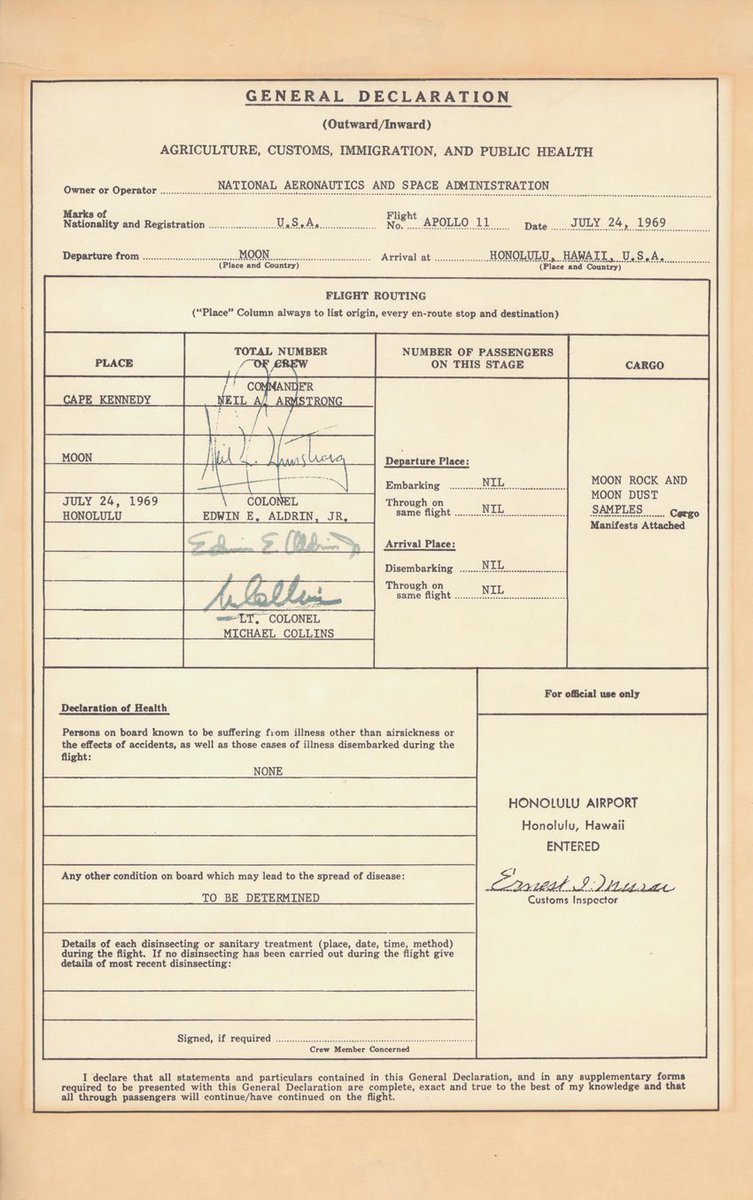
Above, find a document signed 50 years ago by Neil Armstrong, Buzz Aldrin, and Michael Collins after they returned from the first manned trip to the moon. The three astronauts came down in the Pacific Ocean and were taken to Honolulu on July 24, 1969, where they supposedly signed this immigration form, declaring a cargo of moon rocks and dust. President Nixon was good enough to let them back into the country.
The form, NASA spokesperson John Yembrick told Space.com, is authentic. And, he says, it was a joke. He does not, however, say exactly when the form was signed, either on the day the crew splashed down or sometime afterward. They did not actually arrive in Honolulu until the 26th. After their return,
The astronauts were trapped inside a NASA trailer as part of a quarantine effort just in case they brought back any germs or disease from the moon. They even wore special biological containment suits when they walked out on the deck of the USS Hornet after being retrieved.
NASA transported them to Houston, quarantine trailer and all, and they emerged from isolation three weeks later.
Astronauts these days mostly just need a shower when they touch down, although internet savvy International Space Station astronaut Chris Hadfield did tell some customs related stories on a Reddit AMA—maybe nothing so weird as the current space snorkeling up there, but still a pretty great read.
Note: An earlier version of this post originally appeared on our site in December 2013.
You don’t have enough time in life to read all the books you want to. But if you change your habits just a bit, you’ll be able to read many more books in the time you do have left than you otherwise could have. Filmmaker Max Joseph learns these and other lessons about reading in this short documentary, Bookstore: How to Read More. In it he travels in search of not just the advice of some of the world’s most expert readers (or at least some of the most expert readers in America), but also in search of the experience of the most beautiful bookstores in the world (or at least in western Europe and South America).
Wait But Why blogger Tim Urban tells Joseph he would need to read for only half an hour per day to have read more than a thousand books by the end of his time on Earth, versus the single shelf he might read through with his current habits.
Eric Barker of Barking Up the Wrong Tree suggests that Joseph redirect his social media-viewing instincts toward whichever book he feels most excited about reading in the moment, and that he begin by setting his daily reading goal so low at first — say, just one page — that it’s practically easier to meet it than not. (To quote from Moby-Dick, “What cannot habit accomplish?”) Then Howard Berg, who holds the Guinness World Record declaring him the fastest reader alive, breaks down the techniques that can theoretically make each page go by in seconds.
But how fast do we really want to read? For counsel on the what and the why, Joseph visits the office of Ruth J. Simmons, president of Prairie View A&M University and former president of Brown University. She emphasizes the importance of reading not just frequently but widely, a condition that shouldn’t be terribly hard to fulfill given Joseph’s travel and shopping habits: in the video we see him visit a variety of highly Instagrammable (and drone-filmable) bookstores everywhere from Brussels and Maastricht to São Paulo and Buenos Aires. One of them, Lisbon’s Ler Devagar, tells him to “read slowly” with its very name, echoing Simmons’ description of reading as “forced meditation.” That framing is apt, but just like visiting a new bookstore, meditation makes the true bibliophile think of only one thing first: all the volumes out there still to be read.
Based in Seoul, Colin Marshall writes and broadcasts on cities, language, and culture. His projects include the book The Stateless City: a Walk through 21st-Century Los Angeles and the video series The City in Cinema. Follow him on Twitter at @colinmarshall, on Facebook, or on Instagram.
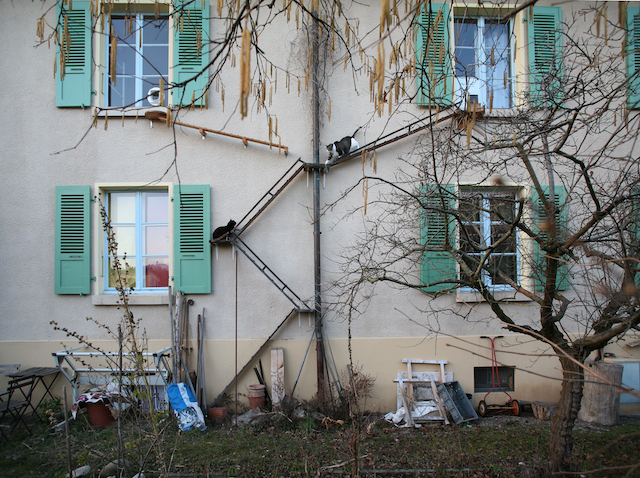
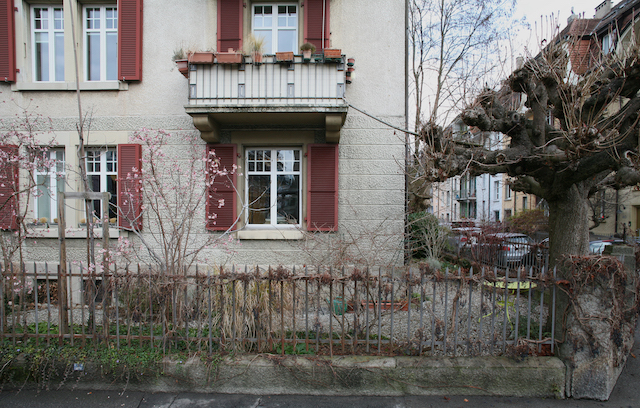
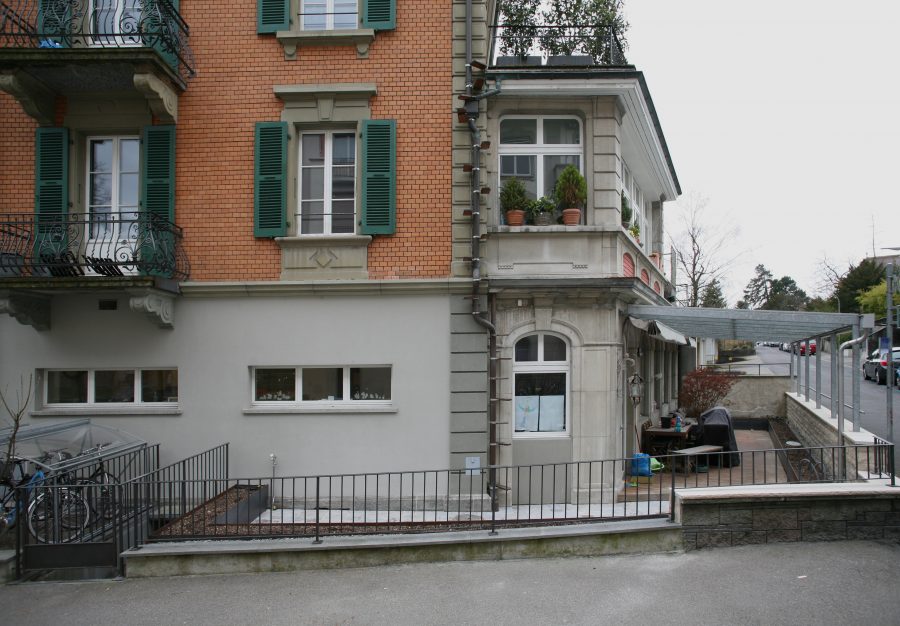
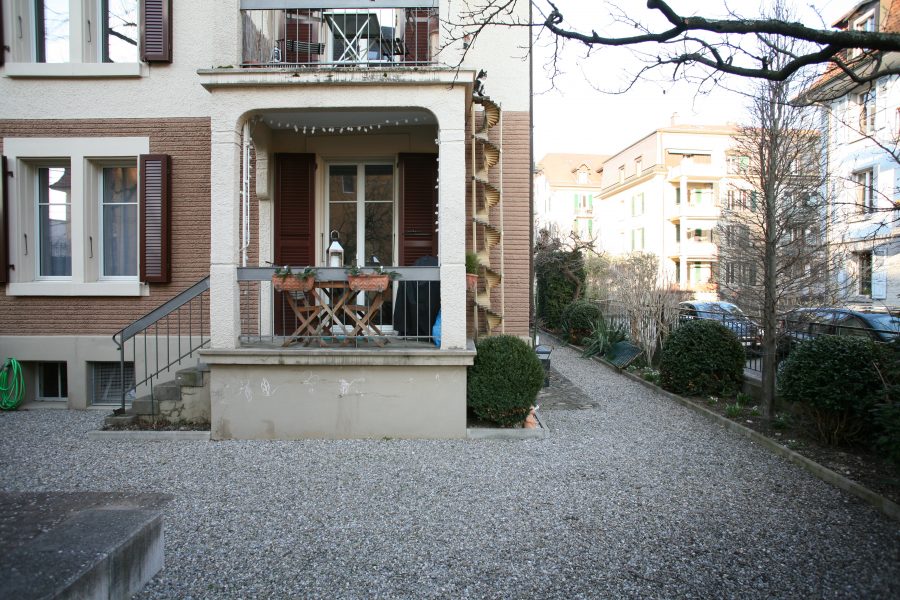
Days when one longs to be a cat, specifically a free-ranging feline of Bern, Switzerland, as featured in graphic designer Brigitte Schuster’s forthcoming book, Swiss Cat Ladders…
Some American cats come and go freely through—dare we say—doggie doors, those small apertures cut into existing points of entry, most commonly the one leading from kitchen to Great Outdoors.
The citizens of Bern have aimed much higher, customizing their homes in alignment with both the feline commitment to independence and their fearlessness where heights are concerned.
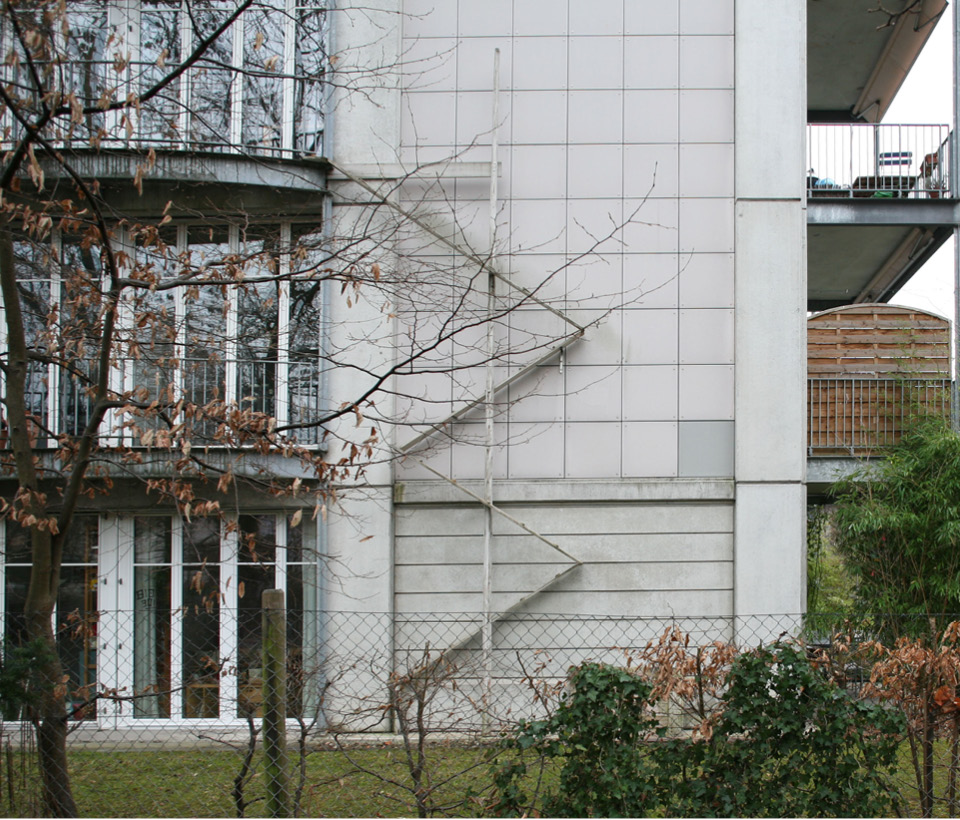
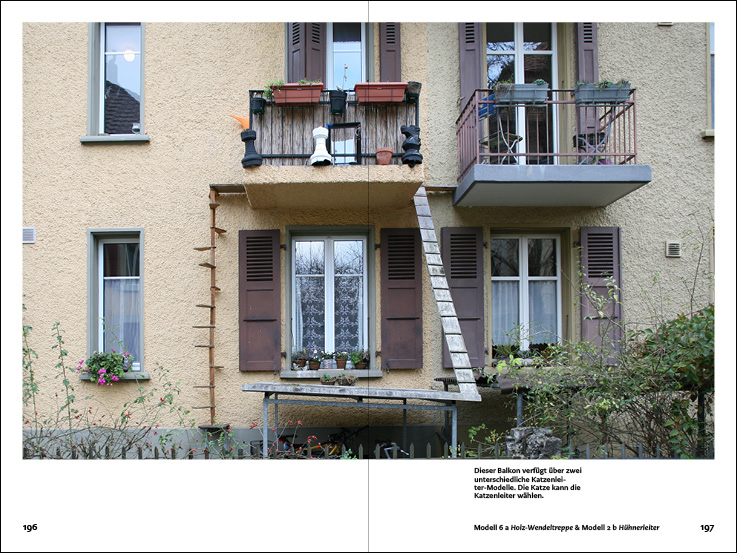
As Schuster documents, there’s no one solution designed to take cats from upper residential windows and patios to the destinations of their choosing.
Some buildings boast sleek ramps that blend seamlessly into the existing exterior design.
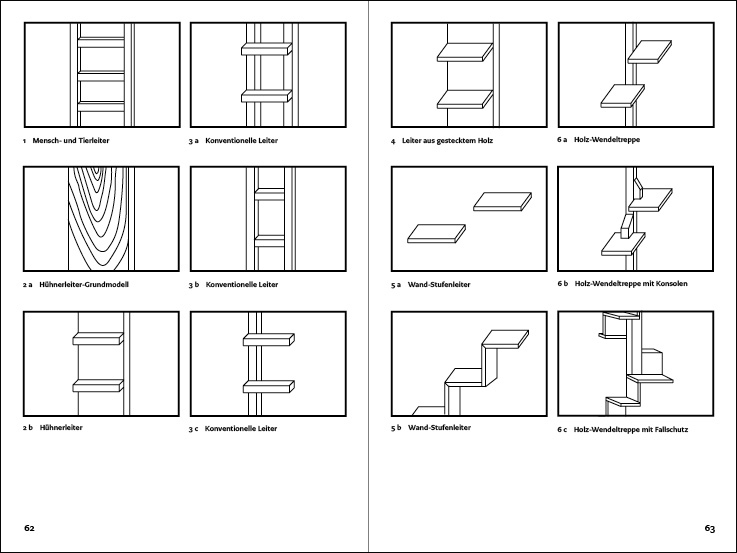
In others, surefooted pussies must navigate ramshackle wooden affairs, some of which seem better suited to the hen house.
One cat ladder connects to a nearby tree.
Another started life as a drain spout.
Humans who prefer to outsource their cat ladders may elect to purchase a prefabricated spiral staircase online.
Pre-order Swiss Cat Ladders for 45 € using the order form at the bottom of this page. The text, which is in both German and English, includes diagrams to inspire those who would cater to their own cat’s desire for high flying independence.
Ayun Halliday is an author, illustrator, theater maker and Chief Primatologist of the East Village Inky zine. Join her in New York City this June for the next installment of her book-based variety show, Necromancers of the Public Domain. And congratulations to her homeschooled senior, Milo Kotis, who graduates today! Follow her @AyunHalliday.
Bookcases are a great ice breaker for those who love to read.
What relief those shelves offer ill-at ease partygoers… even when you don’t know a soul in the room, there’s always a chance you’ll bond with a fellow guest over one of your hosts’ titles.
Occupy yourself with a good browse whilst waiting for someone to take the bait.
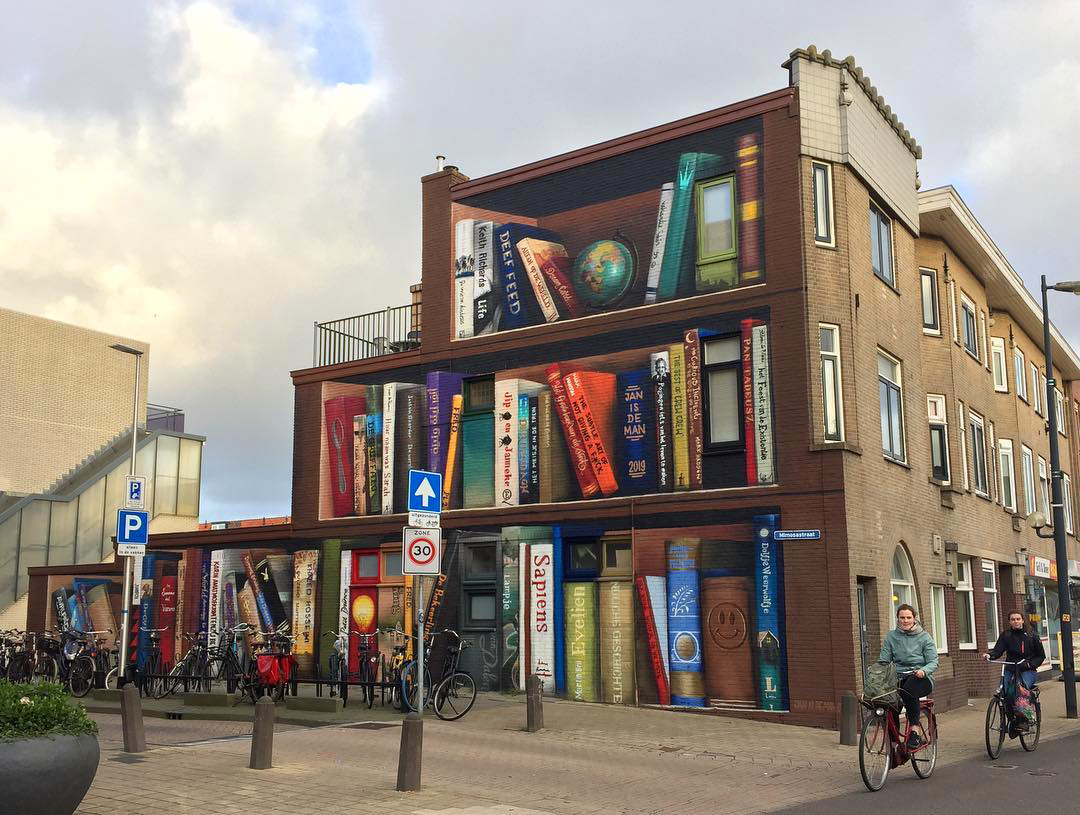
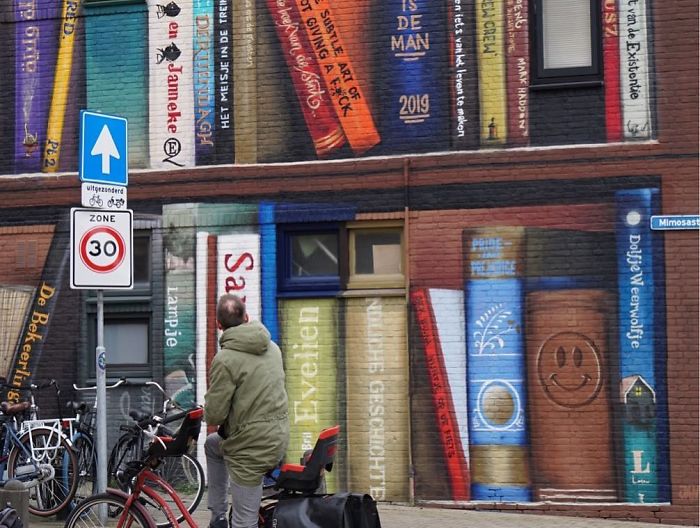
Now, with the aid of Dutch street artists Jan Is De Man and Deef Feed, some residents of Utrecht have turned their bookcases into street art, sparking conversation in their culturally diverse neighborhood.
De Man, whose close friends occupy the ground floor of a building on the corner of Mimosastraat and Amsterdam, had initially planned to render a giant smiley face on an exterior wall as a public morale booster, but the shape of the three-story structure suggested something a bit more literary.
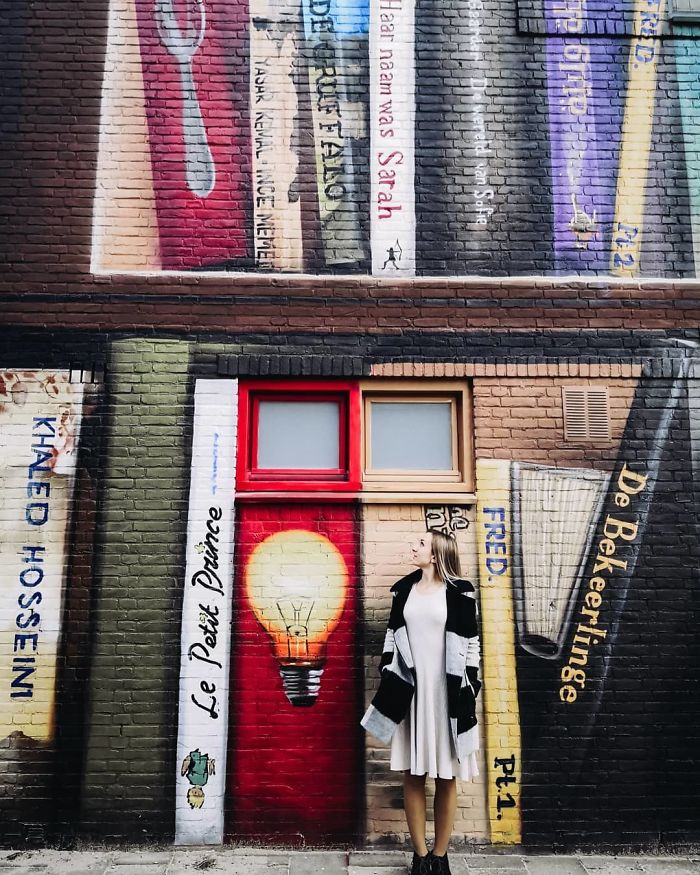
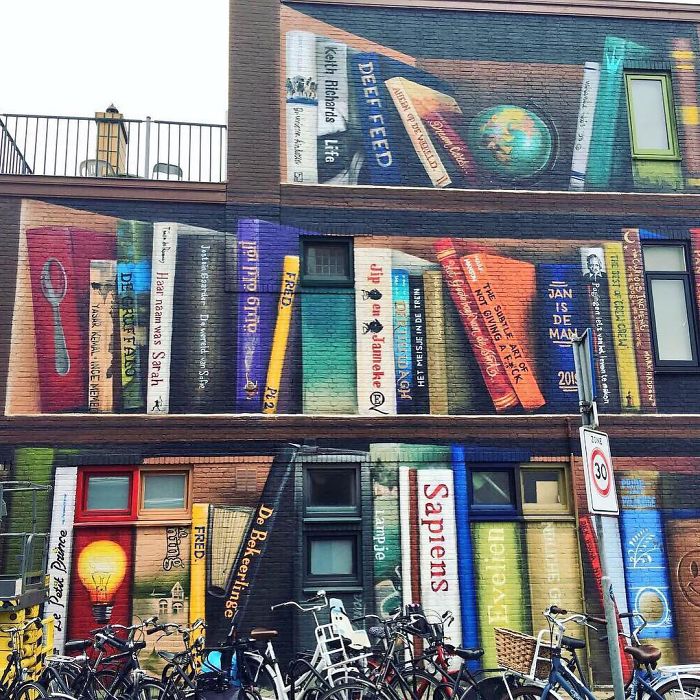
The trompe-l’oeil Boekenkast (or bookcase) took a week to create, and features titles in eight different languages.
Look closely and you’ll notice both artists’ names (and a smiley face) lurking among the spines.
Design mags may make an impression by ordering books according to size and color, but this communal 2‑D boekenkast looks to belong to an avid and omnivorous reader.
And a classy-looking hardbound Playboy collection that may or may not exist in real life.
(Readers, can you spot the other fakes?)
Boekenkast is the latest of a number of global bookshelf murals tempting literary pilgrims to take a selfie on the way to the local indie bookshop.
There’s been quite a bit of barking in the media lately to herald the reopening of the American Kennel Club Museum of the Dog, relocating from St. Louis to New York City’s Park Avenue.
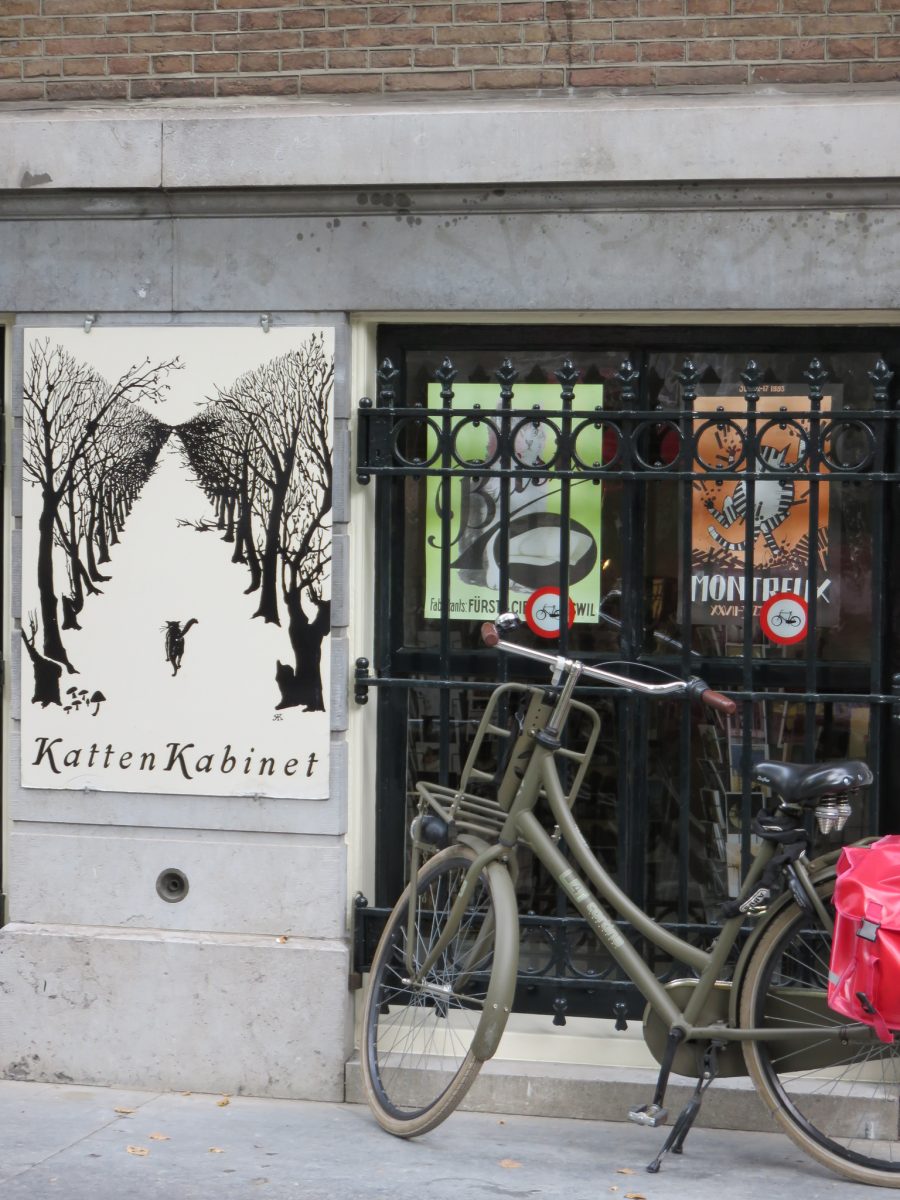
In contrast to the Museum of the Dog’s glitzy, glass-fronted HQ, the Cat Cabinet maintains a fairly low profile inside a 17th-century canal house. (Several visitors have noted in their Trip Advisor reviews that the 3‑room museum’s grand environs help justify the €7 admission.)
The KattenKabinet is more of a stealth operation, created as an homage to one J.P. Morgan, a dearly departed ginger tom, who lived upstairs with his owner.
The inaugural collection took shape around presents the formidable Morgan received during his 17 years on earth—paintings, a bronze cat statue, and a facsimile of a dollar bill featuring his likeness and the motto, “We Trust No Dog.”
In spirit, the Kabinet hews closely to America’s eclectic (and fast disappearing) roadside museums.
No apps, no interactive kiosks, a stolidly old fashioned approach when it comes to display…
It does have a gift shop, where one can purchase logo t‑shirts featuring an extremely cat-like specimen, viewed from the rear, tail aloft.
While the KattenKabinet’s holdings include some marquee names—Picasso, Toulouse-Lautrec, and Rembrandt—there’s something compelling about the collection’s less well known artists, many of whom embraced the museum’s pet subject again and again.
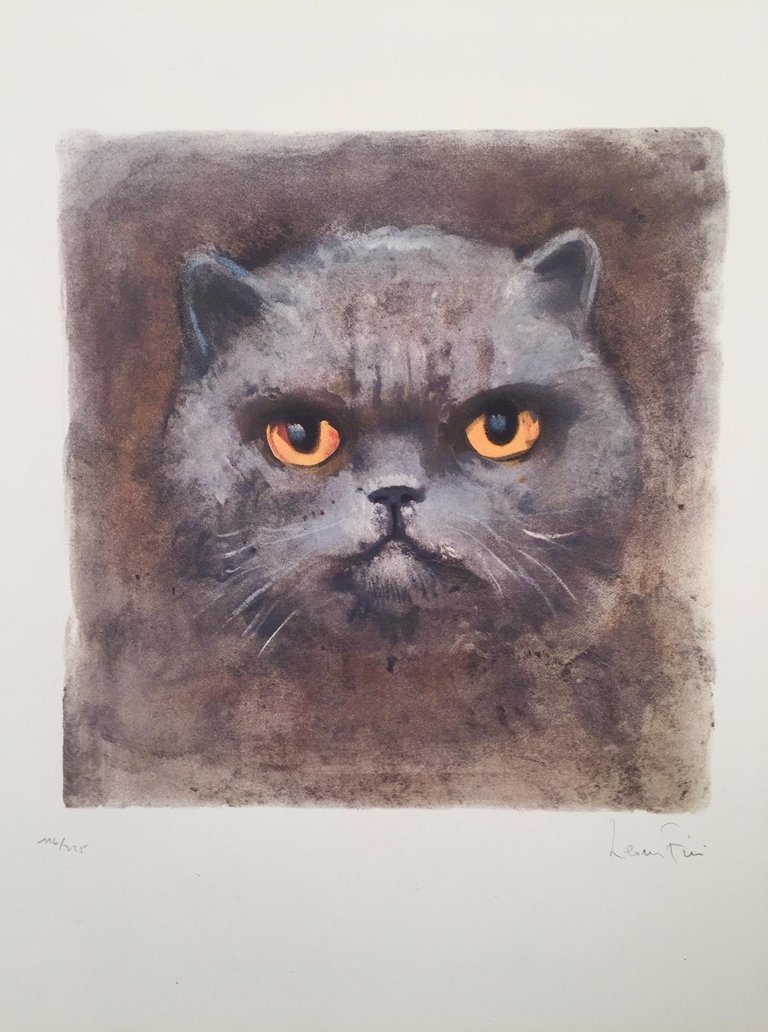
Museum founder Bob Meijer rewards virtual visitors with some juicy biographical tidbits about his artists, cat-related and otherwise. Take, for example, Leonor Fini, whose Ubu glowers below:
Fini had a three-way relationship with the Italian diplomat-cum-artist Stanislao LePri, who, like Fini, was difficult to pin into a certain style, and the Polish literary writer Constantin Jelenski. The two men were not, however, her only housemates: Fini had dozens of Persian cats around her. Indoors you rarely see a photo of her without a cat in her arms. In the Cat Cabinet you can find many of her works, from cheerfully colored cats to highly detailed portraits of cats. The women depicted in the paintings have that iconic mystique characteristic of Fini’s work.
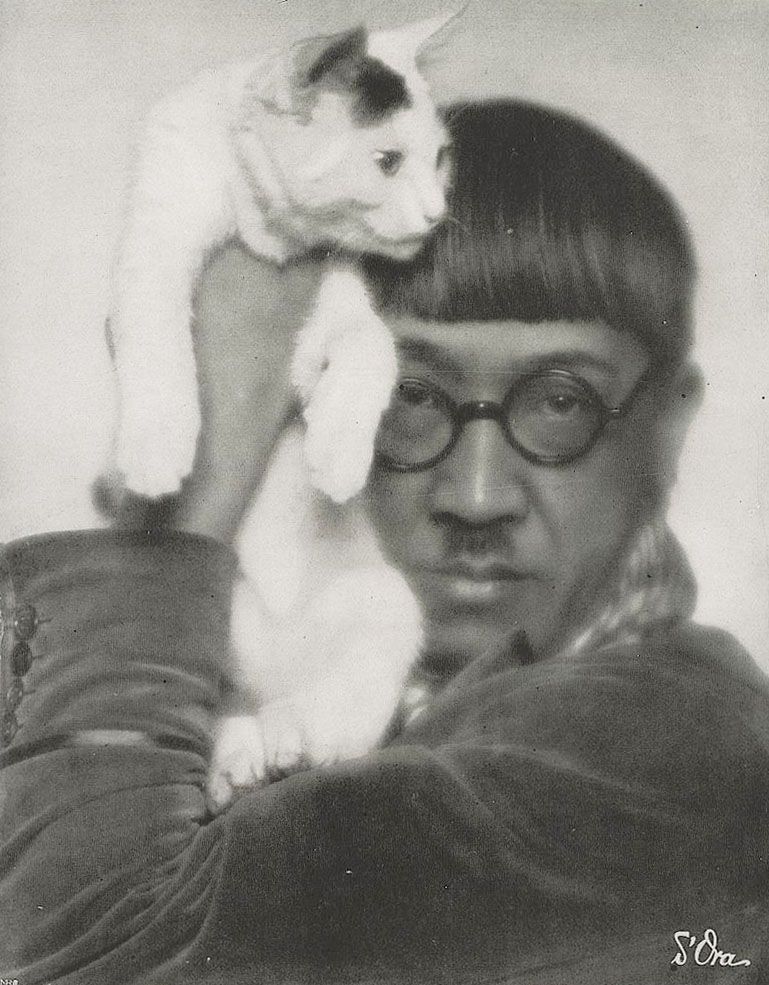
Tsuguharu Foujita, whose work is a staple of the museum, is another cat-loving-artist-turned-art-himself, by virtue of Dora Kalmus’ 1927 portrait, above.
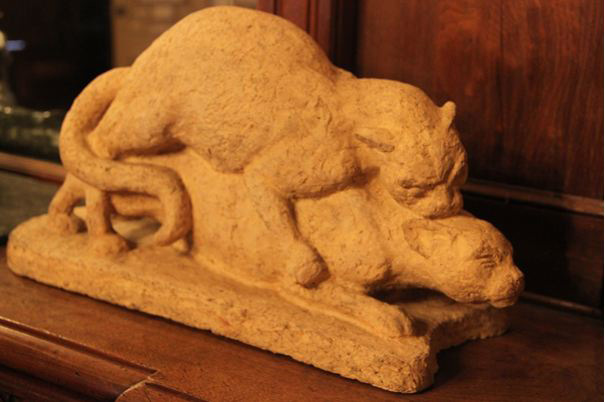
Hildo Krop is well represented throughout Amsterdam, his sculptures adorning bridges and buildings. Two Cats Making Love, on view at the Kabinet, is, Meijer comments,” clearly one of his smaller projects and probably falls into the category of “free work.” One of his most famous works, and of a different order of magnitude, is the Berlage monument on Victorieplein in Amsterdam.”
In addition to fine art, the Kabinet showcases other feline appearances—in vintage advertising, Tadaaki Narita’s Lucky cat pinball machine, and in the person, er, form of 5 live specimens who have the run of the place.
Those visiting in the flesh can cat around to some of Amsterdam’s other feline-themed attractions, including two cat cafes, a cat-centric boutique, and the floating shelter, De Poezenboot.
Chess Forum in Greenwich Village is, like Gramercy Typewriter and the Upper East Side’s Tender Buttons, the sort of shop New Yorkers feel protective of, even if they’ve never actually crossed the threshold.
“How can it still exist?” is a question left unanswered by “King of the Night,” Lonely Leap’s lovely short profile of Chess Forum’s owner, Imad Khachan, above, but no matter. We’re just glad it does.
The store, located a block and a half south of Washington Square, looks older than it is. Khachan, hung out his shingle in 1995, after five years as an employee of the now-defunct Village Chess Shop, a rift that riled the New York chess community.
Now, things are much more placid, though the film incorrectly suggests that Chess Forum is the only refuge where chess loving New Yorkers can avail themselves of an impromptu game, take lessons, and buy sets. (There are also shops in Brooklyn, Harlem, and the Upper East Side.) That said, Chess Forum might not be wrong to call itself “New York’s last great chess store.” It may well be the best of the last.
The narrow shop’s interior triggers nostalgia without seeming calculation, an organic reminder of the Village’s Bohemian past, when beret-clad folkies, artists, and students wiled away hours at battered wooden tables in its many cheap cafes and bars. (Two blocks away, sole survivor Caffé Reggio’s ambience is intact, but the prices have kept pace with the neighborhood, and the majority of its clientele are clutching guidebooks or the digital equivalent thereof.)
Khachan, born in Lebanon to Palestinian refugees, gives a warm welcome to tourists and locals alike, especially those who might make for an uneasy fit at tonier neighborhood establishments.
In an interview with the Greenwich Village Society for Historic Preservation, he recalled a “well-dressed and highly educated doctor who would come in wearing his Harvard logo sweater, and lose repeatedly to a homeless man who was a regular at Chess Forum and a chess master.”
The game also provides common ground for strangers who share no common tongue. In Jonathan Lord’s rougher New York City chess-themed doc,Passport Play, Khachan points out how diagrams in chess books speak volumes to experienced players, regardless of the language in which the book is written.
The store’s mottos also bear witness to the value its owner places on face-to-face human interaction:
Cool in the summer, warm in the winter and fuzzy all year long.
Chess Forum: An experience not a transaction
Smart people not smart phones. (You can play a game of chess on your phone, Khachan admits, but don’t fool yourself into thinking that it’s giving you a full chess experience.)
An hour of play costs about the same as a small latte in a coffeehouse chain (whose prevalence Khachan refers to as the Bostonization of NYC.) Senior citizens and children, both revered groups at Chess Forum, get an even better deal—from $1/hour to free.
Although the store’s official closing time is midnight, Khachan, single and childless, is always willing to oblige players who would stay later. His solitary musings on the neighborhood’s wee hours transformation supply the film’s title and meditative vibe, while reminding us that this gentle New York character was originally drawn to the city by the specter of a PhD in literature at nearby NYU.
Readers who would like to contribute to the health of this independently owned New York City establishment from afar can do so by purchasing a chess or backgammon set online.
Ayun Halliday is an author, illustrator, theater maker and Chief Primatologist of the East Village Inky zine. See her onstage in New York City through December 20th in the 10th anniversary production of Greg Kotis’ apocalyptic holiday tale, The Truth About Santa. Follow her @AyunHalliday.
We're hoping to rely on loyal readers, rather than erratic ads. Please click the Donate button and support Open Culture. You can use Paypal, Venmo, Patreon, even Crypto! We thank you!
Open Culture scours the web for the best educational media. We find the free courses and audio books you need, the language lessons & educational videos you want, and plenty of enlightenment in between.