DIY Air Purifiers for Teachers: Free Designs & Step-by-Step Instructions Online

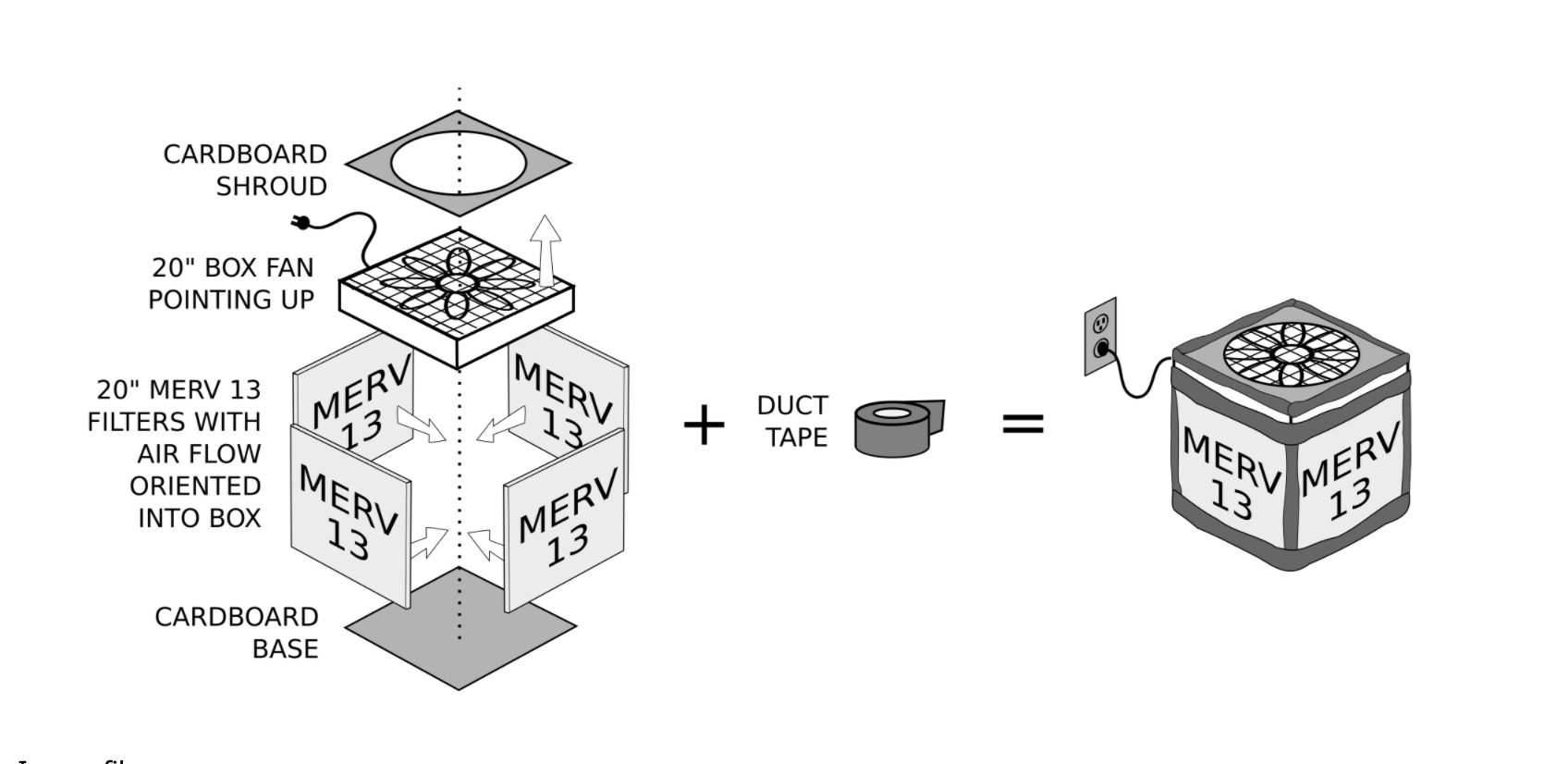
If you’re a teacher return­ing to the class­room, you may want some extra COVID pro­tec­tion. Thank­ful­ly, some researchers and prac­ti­tion­ers have cre­at­ed “a design for an in-room air puri­fi­er which can remove a sig­nif­i­cant amount of COVID-19 virus from the air.”

“The design involves mak­ing a ‘box’ out of four 20” MERV-13 fil­ters (the ‘sides’ of the box), a 20″ box fan (the ‘top’ of the box), and a card­board (the ‘bot­tom’ of the box’). Air flows in through the fil­ter sides, remov­ing par­tic­u­lates of the sizes that can trans­port COVID-19 par­ti­cles, and then flows out through the fan at the top.” These devices can be built from parts avail­able at Home Depot, Wal­mart and oth­er big box stores, and assem­bled in about 30–60 min­utes. Total cost runs $70-$200. Find designs and a step-by-step instruc­tions here. And read more about the puri­fi­er at NPR.

Relat­ed Con­tent 

DEVO Is Now Sell­ing COVID-19 Per­son­al Pro­tec­tive Equip­ment: Ener­gy Dome Face Shields

Bill Nye Shows How Face Masks Actu­al­ly Pro­tect You–and Why You Should Wear Them

MIT Presents a Free Course on the COVID-19 Pan­dem­ic, Fea­tur­ing Antho­ny Fau­ci & Oth­er Experts

Foo Fighters Perform “Back in Black” with AC/DC’s Brian Johnson: When Live Music Returns

At Sat­ur­day’s ben­e­fit con­cert, “Vax Live: The Con­cert to Reunite the World,” the Foo Fight­ers took the stage and per­formed “Back in Black” with AC/DC’s Bri­an John­son. It’s a tan­ta­liz­ing taste of the world to come, if we all do our part…

If you would like to sup­port the mis­sion of Open Cul­ture, con­sid­er mak­ing a dona­tion to our site. It’s hard to rely 100% on ads, and your con­tri­bu­tions will help us con­tin­ue pro­vid­ing the best free cul­tur­al and edu­ca­tion­al mate­ri­als to learn­ers every­where. You can con­tribute through Pay­Pal, Patre­on, and Ven­mo (@openculture). Thanks!

Relat­ed Con­tent:

Demen­tia Patients Find Some Eter­nal Youth in the Sounds of AC/DC

1,000 Musi­cians Per­form Foo Fight­ers’ “Learn to Fly” in Uni­son in Italy

Rick Ast­ley Sings an Unex­pect­ed­ly Enchant­i­ng Cov­er of the Foo Fight­ers’ “Ever­long”


by | Permalink | Make a Comment ( 1 ) |

Peanuts Plays Yes’ “Roundabout”

Dig­i­tal film­mak­er Gar­ren Lazar gives us a cre­ative par­o­dy video and a bad­ly-need­ed men­tal health break. Enjoy.

To watch pre­vi­ous Peanuts par­o­dies of songs by Queen, Lynyrd Skynyrd, Jour­ney & more, click here.

If you would like to sup­port the mis­sion of Open Cul­ture, con­sid­er mak­ing a dona­tion to our site. It’s hard to rely 100% on ads, and your con­tri­bu­tions will help us con­tin­ue pro­vid­ing the best free cul­tur­al and edu­ca­tion­al mate­ri­als to learn­ers every­where. You can con­tribute through Pay­Pal, Patre­on, and Ven­mo (@openculture). Thanks!

via Laugh­ingSquid

Relat­ed Con­tent

Umber­to Eco Explains the Poet­ic Pow­er of Charles Schulz’s Peanuts

The Vel­vet Under­ground as Peanuts Char­ac­ters: Snoopy Morphs Into Lou Reed, Char­lie Brown Into Andy Warhol

How Franklin Became Peanuts‘ First Black Char­ac­ter, Thanks to a Car­ing School­teacher (1968)


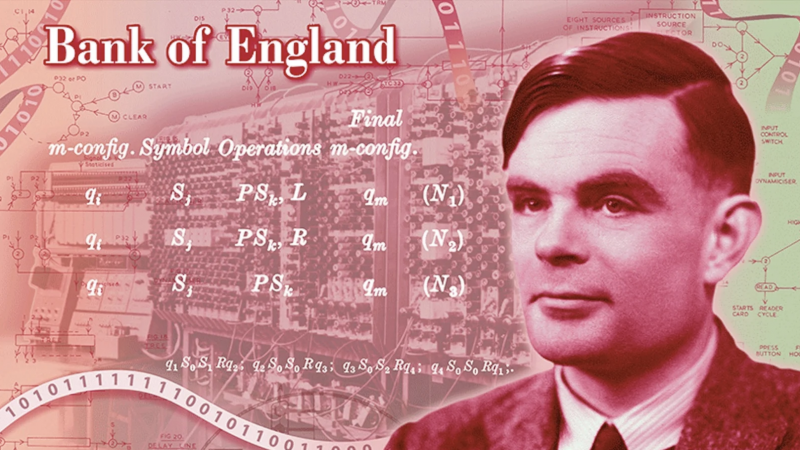
Alan Turing Will Be Featured on England’s New £50 Banknote

This week, the Bank of Eng­land announced that it will fea­ture Alan Tur­ing on its £50 ban­knote, thus com­plet­ing the polit­i­cal reha­bil­i­ta­tion of the Eng­lish math­e­mati­cian, com­put­er sci­en­tist and code break­er. The new note will go into cir­cu­la­tion in 2021. Find more at The Guardian.

If you would like to sup­port the mis­sion of Open Cul­ture, con­sid­er mak­ing a dona­tion to our site. It’s hard to rely 100% on ads, and your con­tri­bu­tions will help us con­tin­ue pro­vid­ing the best free cul­tur­al and edu­ca­tion­al mate­ri­als to learn­ers every­where. You can con­tribute through Pay­Pal, Patre­on, and Ven­mo (@openculture). Thanks!

Relat­ed Con­tent:

A Tur­ing Machine Hand­made Out of Wood

The Books on Young Alan Turing’s Read­ing List: From Lewis Car­roll to Mod­ern Chro­mat­ics

The LEGO Tur­ing Machine Gives a Quick Primer on How Your Com­put­er Works

The Enig­ma Machine: How Alan Tur­ing Helped Break the Unbreak­able Nazi Code

Hear the Christ­mas Car­ols Made by Alan Turing’s Com­put­er: Cut­ting-Edge Ver­sions of “Jin­gle Bells” and “Good King Wences­las” (1951)

Bryan Cranston Narrates the Landing on Omaha Beach on the 75th Anniversary of the D‑Day Invasion

75 years ago today, the Allies launched the D‑Day inva­sion in Nor­mandy, which marked a crit­i­cal turn­ing point in World War II–the begin­ning of the free­ing of Europe from Nazi con­trol. Above, actor Bryan Cranston com­mem­o­rates the anniver­sary by read­ing a let­ter that Pfc. Dominick “Dom” Bart sent to his wife. A 32-year-old infantry­man, Bart took part in the har­row­ing first wave of the mas­sive amphibi­ous assault. Below, we also hear Cranston read­ing the words of Pfc. Jim “Pee Wee” Mar­tin, describ­ing “his first taste of bat­tle as a para­troop­er in the D‑Day inva­sion.” As Cranston reads, you can watch “nev­er-before-seen restored high-res­o­lu­tion 4K footage from Oma­ha Beach.”

If you would like to sup­port the mis­sion of Open Cul­ture, con­sid­er mak­ing a dona­tion to our site. It’s hard to rely 100% on ads, and your con­tri­bu­tions will help us con­tin­ue pro­vid­ing the best free cul­tur­al and edu­ca­tion­al mate­ri­als to learn­ers every­where. You can con­tribute through Pay­Pal, Patre­on, and Ven­mo (@openculture). Thanks!

Relat­ed Con­tent:

Free Audio: Bryan Cranston, Break­ing Bad Star, Reads First Chap­ter of The Things They Car­ried

Bryan Cranston Reads Shelley’s Son­net “Ozy­man­dias” in Omi­nous Teas­er for Break­ing Bad’s Last Sea­son

Bryan Cranston Gives Advice to the Young: Find Your­self by Trav­el­ing and Get­ting Lost

The Who and Jimmy Fallon Sing “Won’t Get Fooled Again” with Classroom Instruments

Don’t miss the very end. And don’t miss The Who on tour this sum­mer

Relat­ed Con­tent:

Kei­th Moon, Drum­mer of The Who, Pass­es Out at 1973 Con­cert; 19-Year-Old Fan Takes Over

What Made John Entwistle One of the Great Rock Bassists? Hear Iso­lat­ed Tracks from “Won’t Get Fooled Again,” “Baba O’Riley” & “Pin­ball Wiz­ard”

Kei­th Moon’s Final Per­for­mance with The Who (1978)

Download the ModulAir, a Free Polyphonic Synthesizer, and Make Your Own Electronic Sounds

Over the years, we’ve talked a fair share about elec­tron­ic music–from the ear­li­est days of the genre, through con­tem­po­rary times. Now, we give you a chance to make your own elec­tron­ic sounds.

Accord­ing to Syn­thopia, a por­tal devot­ed to elec­tron­ic music, “Full Buck­et Music has released Mod­u­lAir 1.0 – a free poly­phon­ic mod­u­lar syn­the­siz­er for Mac & Win­dows.” (For the unini­ti­at­ed, a poly­phon­ic synthesizer–versus a mono­phon­ic one–can play mul­ti­ple notes at once.) The Mod­u­lAir “is a mod­u­lar poly­phon­ic soft­ware syn­the­siz­er for Microsoft Win­dows (VST) and Apple macOS (VST/AU), writ­ten in native C++ code for high per­for­mance and low CPU con­sump­tion.” Watch a demo above, and down­load it here.

via Syn­thopia

Relat­ed Con­tent:

Every­thing Thing You Ever Want­ed to Know About the Syn­the­siz­er: A Vin­tage Three-Hour Crash Course

Leonard Bern­stein Intro­duces the Moog Syn­the­siz­er to the World in 1969, Play­ing an Elec­tri­fied Ver­sion of Bach’s “Lit­tle Fugue in G”

The Mas­ter­mind of Devo, Mark Moth­ers­baugh, Presents His Per­son­al Syn­the­siz­er Col­lec­tion

Free, Open Source Mod­u­lar Synth Soft­ware Lets You Cre­ate 70s & 80s Elec­tron­ic Music—Without Hav­ing to Pay Thou­sands for a Real-World Syn­the­siz­er

by | Permalink | Make a Comment ( 2 ) |

The Lighter Side of Stephen Hawking: The Physicist Cracks Jokes and a Smile with John Oliver

In our trib­ute to Stephen Hawk­ing ear­li­er today, we dis­cussed the intel­lec­tu­al lega­cy of the depart­ed physi­cist, pay­ing par­tic­u­lar atten­tion to his ground­break­ing work on black holes. The video above is a bit lighter. It just lets you watch Hawk­ing in a comedic exchange with his com­pa­tri­ot John Oliv­er. If I’m not mis­tak­en, around the 3:46 mark, you can even see him crack a smile. Enjoy.

Relat­ed Con­tent:

Stephen Hawk­ing (RIP) Explains His Rev­o­lu­tion­ary The­o­ry of Black Holes with the Help of Chalk­board Ani­ma­tions

Stephen Hawking’s Ph.D. The­sis, “Prop­er­ties of Expand­ing Uni­vers­es,” Now Free to Read/Download Online

Watch A Brief His­to­ry of Time, Errol Mor­ris’ Film About the Life & Work of Stephen Hawk­ing

The Big Ideas of Stephen Hawk­ing Explained with Sim­ple Ani­ma­tion

Free Online Physics Cours­es


« Go BackMore in this category... »
Quantcast