George Martin knows something about mixing. The Beatles trusted him to mix their albums, deciding which ingredients to leave in, and which ones to leave out. (Take for example this lost guitar solo from “Here Comes The Sun.”) The record producer, sometimes known as the Fifth Beatle, has taste. No one disputes that. So let’s let him mix us the perfect dry gin martini and issue an amusing word of caution. Hope you’re taking careful notes.…
If there were ever a band that perfectly embodied all of the massive excesses of late 70’s arena rock, that band was Queen. Occasionally ridiculous, often sublime, never boring, the four piece overtook The Who for stage spectacle and rock theatrics, and could boast of one of the most adventurous and innovative rock guitarists of all time in Brian May.
The rhythm section of John Deacon and Roger Taylor didn’t slouch either, but as we know, when we’re talking Queen, we’re talking Freddie Mercury, the most charismatic, powerful lead singer in rock history, or as Allmusic’s Greg Plato put it, “one of rock’s greatest all-time entertainers/showmen,” who “possessed one of the greatest voices in all of music and penned some of pop’s most enduring and instantly recognizable compositions.” I suspect there a little hyperbole there, but maybe not much.
In any case, Mercury sold all those “greatests” to hundreds of millions of fans, over a 20 year career spanning 26 albums and many hundreds of operatic megashows. Mercury and the band worked incredibly long and hard to earn every accolade, tribute, box set, and memorial since Mercury’s shockingly sudden (or so it seemed) death from AIDS complications in 1991. One of the most recent of those tributes is the documentary above Queen: The Days of Our Lives.
Released on the 40th anniversary of Queen’s founding in May 2011, the film takes its title not from the long-running soap opera but from the band’s final recording together, “These Are the Days of Our Lives” (below), written by drummer Roger Taylor and issued as a single in the U.S. just one month before Mercury’s death. The song (and video) subsequently became a poignant reminder of Mercury’s talent and presence; it is a fitting reference for a Queen film this comprehensive.
The “plot” of the documentary, so to speak, can roughly be summarized as: rise from band of hungry university students to global rock stars; declining sales, low times, infighting; rise again in triumphant revival after the ’85 Live Aid and the Magic Tour in 1986; and, finally, tragically, the end. Producer Rhys Thomas says of the film:
We have set out to make the definitive Queen documentary. It’s a funny, honest, inspiring and ultimately tragic account of ‘a certain band called Queen,’ as told by the band themselves. We tell the story of four students who met in West London, slogged hard and conquered the world, ultimately changing rock music forever.
Whether you think Queen always changed rock music for the better is a matter of personal taste, but they’ll never be forgotten. Originally released in two parts on UK television, the full version of the documentary above has Dutch subtitles, tons of archival footage and revealing interviews, and enough awesome guitar solos to fill up Wembley Stadium.
Today marks what would be the 111th birthday of Ansel Adams, the American photographer who captured the sublime power of the wilderness, taking iconic images of the American West, most notably in Yosemite Valley. (See photo gallery here.) Original footage documenting the creative life of Ansel Adams is surprisingly hard to come by online. So A/V Geeks and Develop Tube did us all a favor when they revived this 1958 documentary revealing Adams’ technical approach to photography, the cameras and related gear he carried to the field, and his thoughts on the artistic horizons of photography.
If you would like to support the mission of Open Culture, consider making a donation to our site. It’s hard to rely 100% on ads, and your contributions will help us continue providing the best free cultural and educational materials to learners everywhere. You can contribute through PayPal, Patreon, and Venmo (@openculture). Thanks!
Like an invisible sculptor, the wind slowly shapes the natural world, bending Monterey Pines along California’s coast to reach horizontally towards the land, and whipping dry beach dunes into peaks.
Artists Fernanda Viégas and Martin Wattenberg, working as HintFM, used the aerial view of wind blowing around the United States as the template for a dynamic art piece, Wind Map. About every hour, Wind Map downloads wind circulation data from the National Digital Forecast Database. The site’s image of the continental U.S. refreshes with new data, showing the most current traces of wind patterns, in varying shades of white depending on wind speed.
Like grass on an expanse of hillside, the wind becomes visible against the dark background of the country. It’s possible to see, vividly, the wind’s strength as it swoops from the north west and the south, up into a single corridor that blasts up from Mobile Bay in Louisiana to Chicago and beyond.
HintFM calls the site a “living portrait” of the wind’s footprints at any given moment, but they make sure we know it’s art, not science. Please, they note, do not use the map or its data to fly a plane, sail a boat, or fight wildfires.
But the Wind Map archive can’t help but offer meteorological value. Watch the wind patterns as Hurricane Sandy brewed off the Eastern seaboard in October and again when it hit land. Other images in the archive gallery include days that produced some beautiful whorls of wind.
The site includes links to information about wind power. Made visible, the wind can be seen as the force it is, beautiful, powerful, harnessable.
Bertolt Brecht wasn’t much of a singer, but he could really roll his “r“s. This rare recording of the socialist playwright singing “Mack the Knife” was made in May of 1929, less than a year after the smash-hit premiere of The Threepenny Opera.
The song, called in German “Die Moritat von Mackie Messer,” was written in a rush only a few days before the August 31, 1928 Berlin premiere, after the actor who played Macheath complained that his entrance wasn’t grand enough. Brecht wrote the words overnight and asked his collaborator, the composer Kurt Weill, to set them to music. The song is modeled after the Moritat (from “mord” meaning murder and “tat” meaning deed), a kind of medieval ballad traditionally sung by traveling minstrels recounting the crimes of notorious murderers. An English translation begins:
See the shark with teeth like razors. All can read his open face. And Macheath has got a knife, but Not in such an obvious place.
See the shark, how red his fins are As he slashes at his prey. Mack the Knife wears white kid gloves which Give the minimum away.
Brecht’s gritty 1929 recording of the song is consistent with the ragged aesthetic of the original production of The Threepenny Opera, with its intentionally threadbare sets and its cast of actors who were not accomplished singers. Although Weill was the one who wrote the score, Brecht personally enjoyed playing music. The actress Lotte Lenya, who played Jenny in the original production, remembered how Brecht would strum his guitar and sing ballads “amateurishly but with an odd magnetism.” Besides “Mack the Knife,” there is also a recording from the same 1929 session of Brecht singing a lesser-known piece from The Threepenny Opera, “Song of the Insufficiency of Human Endeavor.” You can listen to that one by clicking here.
Now Little Johnny Jewel,
Oh, he’s so cool,
He has no decision,
He’s just trying to tell a vision
So go the first lines of “Little Johnny Jewel,” the first single from brilliant New York free-jazz punk band Television, written in tribute to James Newell Osterberg, better known as Iggy Pop. The song’s release in 1975 sadly coincided with the final breakup of Pop’s groundbreaking Detroit proto-punk garage band The Stooges, after which the self-destructive frontman checked himself into a mental institution to get clean. Maybe it seemed that the vision was spent, and might have been had David Bowie not stepped in, swept Pop away to Berlin, and helped him produce his first solo album, 1977’s The Idiot, quickly followed by the return to raw form, Lust for Life (with its demented cover art of a grinning Pop, looking for all the world like the high school yearbook photo of a burned-out future serial killer).
By 1986, Pop had cemented his status as a solo artist, Bowie collaborator, and esteemed forefather of punk and new wave, releasing the Bowie-produced Blah Blah Blah, with its single “Real Wild Child.” It’s at this point in his career that the Dutch film above, Lust for Life, caught up with him. The documentary opens with a captivating live performance of the title song from an ’86 show in Utrecht. Pop describes his sound as emanating from Motor City’s “industrial hum” and his encounter with Chicago blues. Later, Stooges guitarist Ron Asheton takes us on a tour of a University of Michigan ballroom where Elektra records scout, rock journalist, and punk impressario Danny Fields discovered and signed The Stooges in 1968. The late Asheton plays a significant role in the film, demonstrating the Stooges guitar sound and opening up about the band’s rise and demise. From there, we’re transported via some vintage, grainy footage to a Stooges gig, with a shirtless Iggy emerging from the crowd after a stage-dive (he gets credit for inventing the move).
The Stooges material provides crucial context for the emergence of Iggy Pop from the gritty Detroit garage-rock scene (which included another seminal proto-punk band, the MC5, with whom the Stooges often played). In one interview clip Pop explains in detail how he developed his songwriting with Asheton, drawing from Johnny Cash, the Rolling Stones, Velvet Underground, his own experiments with poetry, and the dull grind of Midwestern life. These animated interviews are priceless windows on the early influences of the so-called “godfather of punk,” situating The Stooges as emerging directly from late-sixties psychedelic rock. In some ways, Detroit bands like The Stooges and the MC5 (like Black Sabbath in England)—with their abrasive noise-rock cacophony, near-metal crunch, and minimalist blues foundations—provide the missing link between sixties rock and roll and punk. Stripping the former of its excesses and drawing on raw blues and country sentiment and loads of late-20th century disaffection, they took the nihilism in songs like The Stones’ “Street Fighting Man” to its logical conclusion. That seems, at least, the underlying premise of the film, and it makes a good case.
While the documentary’s few minutes of narration are in Dutch, the majority of Lust for Life is cut together from English-language interviews and old performance footage of Iggy and The Stooges. One rare clip has Pop in a black-and-white TV talk show interview comparing Johnny Rotten to Sigmund Freud, then standing and taking a bow to a guffawing audience. It’s a classic Iggy Pop moment, that alluring combination of erudition, showmanship, unsettling weirdness, and sheer taking-the-piss. Underneath the seemingly unhinged chaos and madness of Iggy Pop’s stage show has always lay a wicked intelligence, uncompromising work ethic, and pummeling drive to “tell a vision.”
Nearly thirty years after Television’s nod to Jim Osterberg, Henry Rollins—another usually-shirtless, hyperkinetic punk frontman—vividly described the qualities above in his spoken word tribute to Iggy, the survivor who still puts most rock stars to shame (from Rollins’ 2004 DVD Live at Luna Park). Rollins tells a hilarious story of how Pop blew his mind (and destroyed the stage) in a 1992 show opening for the Beastie Boys, which sparked Rollins many attempts to compete with his idol. After hearing the real thing, tell me what you think of Rollins’ Iggy Pop impression.
Your senses do deceive you, my friends. This is not the latest, greatest video from RSA Animate. No, this video comes to us via Pablo Morales de los Rios, a Spanish artist, who has artistically narrated the history of music — or the Historia de la Música – in a shade less than seven minutes. 6:59, to be precise. You don’t need much Spanish under your belt to realize that the story starts 50,000 years ago, then moves quickly from the Ancient Greeks, Romans and Egyptians, to the troubadours of the Middle Ages. The video gives disproportionate attention to classical music during the following periods — Renacimiento, Barroco, Classicismo and Romanticismo. But before wrapping up, we tack over to America and witness the birth of jazz and the blues, before heading back across the pond for the Invasión británica. Artistically speaking, it all culminates in a pretty interesting way. But we’ll let you see how things play out.
If you would like to support the mission of Open Culture, consider making a donation to our site. It’s hard to rely 100% on ads, and your contributions will help us continue providing the best free cultural and educational materials to learners everywhere. You can contribute through PayPal, Patreon, and Venmo (@openculture). Thanks!
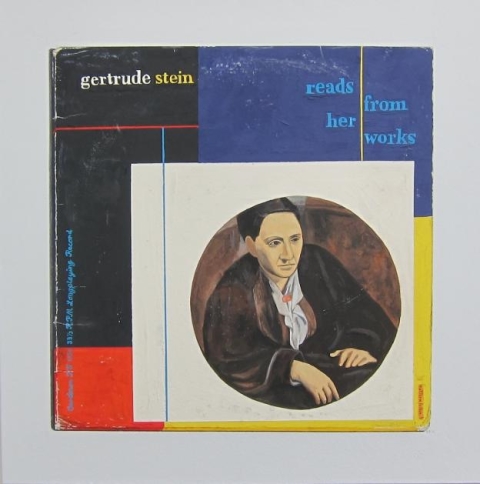
eBay prices for the album Gertrude Stein Reads Her Own Work range from $20 to $200. Vinyl purists, and Stein purists, may long for one of the still-sealed copies at the upper end of that range. The rest of us can enjoy hearing its recordings as mp3s, free on the internet courtesy of PennSound. These clips, recorded between 1934 and 1935 (which came out in album form in 1956) let you put yourself in the presence of the poet. Much of the work she reads aloud here comes inspired by observing other creative luminaries. The record’s producers included these homages along with a piece of an interview, variants of well-known poems such as “How She Bowed to Her Brother” (which often appears under the name “She Bowed to Her Brother”), and an excerpt from her novel The Making of Americans.
But to get straight into the textual substance, listen to “The Fifteenth of November… T.S. Eliot,” her portrait of her colleague in letters. Then hear her capturing a certain well-known painter in “If I Told Him: a Completed Portrait of Picasso.” And on painter Henri Matisse, she begins her remarks as follows: “One was quite certain that for a long part of his being one being living he had been trying to be certain that he was wrong in doing what he was doing and then when he could not come to be certain that he had been wrong in doing what he had been doing, when he had completely convinced himself that he would not come to be certain that he had been wrong in doing what he had been doing he was really certain then that he was a great one and he certainly was a great one.” If you feel proud of reading that whole sentence in one go, wait until you hear Stein speak it.
Colin Marshall hosts and produces Notebook on Cities and Culture and writes essays on literature, film, cities, Asia, and aesthetics. He’s at work on a book about Los Angeles, A Los Angeles Primer. Follow him on Twitter at @colinmarshall.
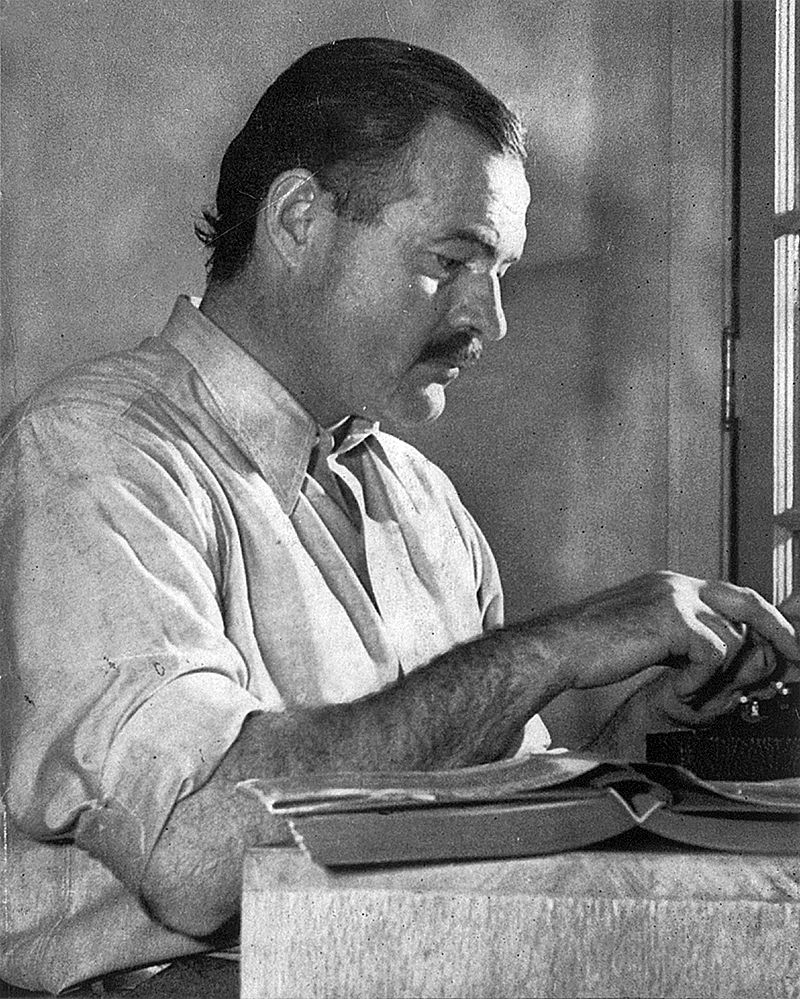
Before he was a big game hunter, before he was a deep-sea fisherman, Ernest Hemingway was a craftsman who would rise very early in the morning and write. His best stories are masterpieces of the modern era, and his prose style is one of the most influential of the 20th century.
Hemingway never wrote a treatise on the art of writing fiction. He did, however, leave behind a great many passages in letters, articles and books with opinions and advice on writing. Some of the best of those were assembled in 1984 by Larry W. Phillips into a book, Ernest Hemingway on Writing. We’ve selected seven of our favorite quotations from the book and placed them, along with our own commentary, on this page. We hope you will all–writers and readers alike–find them fascinating.
1: To get started, write one true sentence.
Hemingway had a simple trick for overcoming writer’s block. In a memorable passage in A Moveable Feast, he writes:
Sometimes when I was starting a new story and I could not get it going, I would sit in front of the fire and squeeze the peel of the little oranges into the edge of the flame and watch the sputter of blue that they made. I would stand and look out over the roofs of Paris and think, “Do not worry. You have always written before and you will write now. All you have to do is write one true sentence. Write the truest sentence that you know.” So finally I would write one true sentence, and then go on from there. It was easy then because there was always one true sentence that I knew or had seen or had heard someone say. If I started to write elaborately, or like someone introducing or presenting something, I found that I could cut that scrollwork or ornament out and throw it away and start with the first true simple declarative sentence I had written.
2: Always stop for the day while you still know what will happen next.
There is a difference between stopping and foundering. To make steady progress, having a daily word-count quota was far less important to Hemingway than making sure he never emptied the well of his imagination. In an October 1935 article in Esquire ( “Monologue to the Maestro: A High Seas Letter”) Hemingway offers this advice to a young writer:
The best way is always to stop when you are going good and when you know what will happen next. If you do that every day when you are writing a novel you will never be stuck. That is the most valuable thing I can tell you so try to remember it.
3: Never think about the story when you’re not working.
Building on his previous advice, Hemingway says never to think about a story you are working on before you begin again the next day. “That way your subconscious will work on it all the time,” he writes in the Esquire piece. “But if you think about it consciously or worry about it you will kill it and your brain will be tired before you start.” He goes into more detail in A Moveable Feast:
When I was writing, it was necessary for me to read after I had written. If you kept thinking about it, you would lose the thing you were writing before you could go on with it the next day. It was necessary to get exercise, to be tired in the body, and it was very good to make love with whom you loved. That was better than anything. But afterwards, when you were empty, it was necessary to read in order not to think or worry about your work until you could do it again. I had learned already never to empty the well of my writing, but always to stop when there was still something there in the deep part of the well, and let it refill at night from the springs that fed it.
4: When it’s time to work again, always start by reading what you’ve written so far.
T0 maintain continuity, Hemingway made a habit of reading over what he had already written before going further. In the 1935 Esquire article, he writes:
The best way is to read it all every day from the start, correcting as you go along, then go on from where you stopped the day before. When it gets so long that you can’t do this every day read back two or three chapters each day; then each week read it all from the start. That’s how you make it all of one piece.
5: Don’t describe an emotion–make it.
Close observation of life is critical to good writing, said Hemingway. The key is to not only watch and listen closely to external events, but to also notice any emotion stirred in you by the events and then trace back and identify precisely what it was that caused the emotion. If you can identify the concrete action or sensation that caused the emotion and present it accurately and fully rounded in your story, your readers should feel the same emotion. In Death in the Afternoon, Hemingway writes about his early struggle to master this:
I was trying to write then and I found the greatest difficulty, aside from knowing truly what you really felt, rather than what you were supposed to feel, and had been taught to feel, was to put down what really happened in action; what the actual things were which produced the emotion that you experienced. In writing for a newspaper you told what happened and, with one trick and another, you communicated the emotion aided by the element of timeliness which gives a certain emotion to any account of something that has happened on that day; but the real thing, the sequence of motion and fact which made the emotion and which would be as valid in a year or in ten years or, with luck and if you stated it purely enough, always, was beyond me and I was working very hard to get it.
6: Use a pencil.
Hemingway often used a typewriter when composing letters or magazine pieces, but for serious work he preferred a pencil. In the Esquire article (which shows signs of having been written on a typewriter) Hemingway says:
When you start to write you get all the kick and the reader gets none. So you might as well use a typewriter because it is that much easier and you enjoy it that much more. After you learn to write your whole object is to convey everything, every sensation, sight, feeling, place and emotion to the reader. To do this you have to work over what you write. If you write with a pencil you get three different sights at it to see if the reader is getting what you want him to. First when you read it over; then when it is typed you get another chance to improve it, and again in the proof. Writing it first in pencil gives you one-third more chance to improve it. That is .333 which is a damned good average for a hitter. It also keeps it fluid longer so you can better it easier.
7: Be Brief.
Hemingway was contemptuous of writers who, as he put it, “never learned how to say no to a typewriter.” In a 1945 letter to his editor, Maxwell Perkins, Hemingway writes:
It wasn’t by accident that the Gettysburg address was so short. The laws of prose writing are as immutable as those of flight, of mathematics, of physics.
If you would like to support the mission of Open Culture, consider making a donation to our site. It’s hard to rely 100% on ads, and your contributions will help us continue providing the best free cultural and educational materials to learners everywhere. You can contribute through PayPal, Patreon, and Venmo (@openculture). Thanks!
The so-called New (or “Gnu”) Atheism arrived at a time when fear, anger, and confusion over extremist religion had hit a fever pitch. Suddenly, people who didn’t pay much attention to religion—their own or anyone else’s—became intensely interested in religious criticism and debate; it was the perfect climate for a publishing storm, and that’s essentially how the movement began. It was also, of course, predated by thousands of years of philosophical atheism of some variety or another, but “new” atheism had something different to offer: while its proponents largely hailed from the same worlds as their intellectual predecessors—the arts, political journalism and activism, the sciences and academic philosophy—after September 11, these same people took the discussion to the popular press and a proliferation of internet outlets and well-organized conferences, debates, and meetings. And their expressions were uncompromising and polemical (though not “militant”—no shots were fired nor bombs detonated).
In the wake of over a decade of controversy unleashed by “new atheism,” a new film The Unbelievers (trailer above) follows two prominent scientists and stars of the movement–evolutionary biologist Richard Dawkins and theoretical physicist Lawrence Krauss—as they trek across the globe and explain their views. Dawkins and Krauss receive support from a cast of celebrity interviewees including Ricky Gervais, Werner Herzog, Woody Allen, Cormac McCarthy, Sarah Silverman, Ayaan Hirsi-Ali, and several more. The film’s website has no official release date (other than “2013”), but it does feature links to online buzz, both glib—Krankiesnarks that the trailer makes it look like Dawkins and Krauss have packed in the science and started a band—and subdued; the evangelical Christian Postdoes little but quote from the press package.
These champions of reason-over-religion have always had powerful critics, even among those who might otherwise seem sympathetic (take Marxist literary critic Terry Eagleton’s charge that new atheism is nothing but counter-fundamentalism). Then there is the host of religious detractors, many of them respected scientists and philosophers themselves. One notable name in this camp is famed geneticist Francis Collins, who headed the Human Genome Project. Obviously no denier of the explanatory power of science, Collins nonetheless argues for faith as a distinct kind of knowledge, as he does in the interview excerpt below from an appearance on The Charlie Rose Show.
The debates seem like they could rage on interminably, and probably will. I, for one, am grateful they can happen openly and in relative peace in so many places. But as the same sets of issues arise, some of the questions become just a bit more nuanced. British presenter Nicky Campbell, for example, recently presided over a large debate among several prominent scientists and clergy about whether or not all religions should accept evolution (below). While Dawkins and Krauss ultimately advocate a world without religion, the participants of this debate try to shift the terms to how scientific discovery and religious identity can coexist with minimal friction.
On January 24 1965, Sir Winston Churchill, the man who led Britain through the dark hours of the Second World War, died aged 90 at his London home. By decree of Queen Elizabeth II, his body lay in state for three days in the Palace of Westminster and a state funeral was held at St Paul’s Cathedral on January 30. Churchill was the first statesman to be given a state funeral in the 2oth century — a funeral that saw the largest assemblage of statesmen in the world until the funeral of Pope John Paul II in 2005. That day, the BBC reported that “silent crowds lined the streets to watch the gun carriage bearing Sir Winston’s coffin leave Westminster Hall as Big Ben struck 09:45. The procession travelled slowly through central London to St. Paul’s Cathedral for the funeral service.” After the service, his coffin was taken by boat to Waterloo Station, where a specially prepared railway carriage took Churchill to his final resting place at Bladon near Woodstock, close to his birthplace at Blenheim Palace.
This color footage of Churchill’s funeral is narrated by Walter Thompson, Churchill’s former bodyguard.
Bonus material:
A draft script for Winston Churchill’s obituary to be broadcast by the BBC World Service, prepared in 1962
By profession, Matthias Rascher teaches English and History at a High School in northern Bavaria, Germany. In his free time he scours the web for good links and posts the best finds on Twitter.
We're hoping to rely on loyal readers, rather than erratic ads. Please click the Donate button and support Open Culture. You can use Paypal, Venmo, Patreon, even Crypto! We thank you!
Open Culture scours the web for the best educational media. We find the free courses and audio books you need, the language lessons & educational videos you want, and plenty of enlightenment in between.