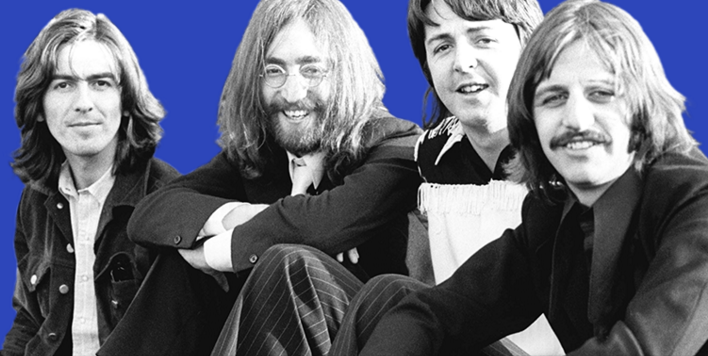
This morning, Josh Jones highlighted for you the new HD versions of Beatles videos on Youtube, and, along the way mentioned that, starting today, the Beatles’ music catalog — 13 albums and 4 compilations — would become available on various music streaming services, including Spotify. The switch has been flipped on all of that, and below, you can find a Spotify playlist of the Beatles’ albums. 14 hours of Beatles bliss.
What do I want for Christmas? I’ll settle for a little more insight into how to make the perfect cappuccino, the stuff that has reliably kept this site running day in, day out, for the past 9 years.
Enter Michael Phillips, Director for Education at Blue Bottle Coffee and the 2010 World Barista Champion, who, in this video produced by Munchies, offers a six minute primer on cappuccino-making. When all is said and done, what’s my takeaway? To achieve coffee Nirvana, maybe I need some better gear, like a La Marzocco. Or maybe, really, I need to take my love of coffee to another level, as Phillips clearly does in a nearly x‑rated moment at the very end. As with so many things, it’s not the gear, but the love and dedication, that makes the difference.
“He would turn over in his grave if he knew I’m about to read this,” says Stan Lee, Marvel Comics’ grand poo-bah, before launching into Clement Clarke Moore’s “The Night Before Christmas.” Moore’s 1823 poem helped solidify various ideas about Santa Claus and Christmas, especially in America, much like Lee and his co-creators forged the mutli-character Marvel Universe that now dominates 21st century mythology.
So who better to read the origin story of this costumed superhero than Stan the Man? Because we’re talking about Good St. Nick, a beloved non-human who is able to traverse the earth in the span of one night, squeeze down chimneys without getting stuck, burned, or even dirtying his clothes, gives presents freely, and whose sled is powered purely by magical reindeer, all with their own names. Plus he lives in a fortress of toymaking quasi-solitude at the North Pole.
Lee really gets into the carnival barker style in his reading from 2009, much like his own overheated prose in the pages of his comics. You can still hear the busy pulse of his native Manhattan in that gravelly voice. And if you’re wondering if Lee puts his own spin on things, wait till the end.
Ted Mills is a freelance writer on the arts who currently hosts the artist interview-based FunkZone Podcast. You can also follow him on Twitter at @tedmills, read his other arts writing at tedmills.com and/or watch his films here.
Since 1999, the French juggling group Les Objets Volants (The Flying Objects) have been entertaining audiences worldwide. Beyond juggling, their shows incorporate elements of theater, visual arts and even mathematics. And the group takes special pride in exploring new ways of handling and manipulating everyday objects. Which brings us to the performance above. There you can see Les Objets Volants perform Bach’s Prélude N°1. (which more typically sounds something like this) on “boomwhackers,” those hollow, color-coded, plastic percussion tubes, which are tuned to different musical pitches. Recorded last March, the clip is an outtake from a Les Objets Volants show called “Liaison Carbone,” which explores concepts in physics. Enjoy.
Follow Open Culture on Facebook and Twitter and share intelligent media with your friends. Or better yet, sign up for our daily email and get a daily dose of Open Culture in your inbox. And if you want to make sure that our posts definitely appear in your Facebook newsfeed, just follow these simple steps.
So you want to be a rock and roll star? Or a writer, or a filmmaker, or a comedian, or what-have-you…. And yet, you don’t know where to start. You’ve heard you need to find your own voice, but it’s difficult to know what that is when you’re just beginning. You have too little experience to know what works for you and what doesn’t. So? “Steal,” as the great John Cleese advises above, “or borrow or, as the artists would say, ‘be influenced by’ anything that you think is really good and really funny and appeals to you. If you study that and try to reproduce it in some way, then it’ll have your own stamp on it. But you have a chance of getting off the ground with something like that.”
Cleese goes on to sensibly explain why it’s nearly impossible to start with something completely new and original; it’s like “trying to fly a plane without any lessons.” We all learn the rudiments of everything we know by imitating others at first, so this advice to the budding writer and artist shouldn’t sound too radical. But if you need more validation for it, consider William Faulkner’s exhortation to take whatever you need from other writers. The beginning writer, Faulkner told a class at the University of Virginia, “takes whatever he needs, wherever he needs, and he does that openly and honestly.” There’s no shame in it, unless you fail to ever make it your own. Or, says Faulkner, to make something so good that others will steal from you.
One theory of how this works in literature comes from critic Harold Bloom, who argued in The Anxiety of Influence that every major poet more or less stole from previous major poets; yet they so misread or misinterpreted their influences that they couldn’t help but produce original work. T.S. Eliot advanced a more conservative version of the claim in his essay “Tradition and the Individual Talent.” We have a “tendency to insist,” wrote Eliot, on “those aspects or parts of [a poet’s] work in which he least resembles anyone else.” (Both Eliot and Faulkner used the masculine as a universal pronoun; whatever their biases, no gender exclusion is implied here.) On the contrary, “if we approach a poet without this prejudice we shall often find that not only the best, but the most individual parts of his work may be those in which the dead poets, his ancestors, assert their immortality most vigorously.”
It may have been a requirement for Eliot that his literary predecessors be long deceased, but John Cleese suggests no such thing. In fact, he worked closely with many of his favorite comedy writers. The point he makes is that one should “copy someone who’s really good” in order to “get off the ground.” In time—whether through becoming better than your influences, or misreading them, or combining their parts into a new whole—you will, Cleese and many other wise writers suggest, develop your own style.
Cleese has liberally discussed his influences, in his recent autobiography and elsewhere, and one can clearly see in his work the impression comedic forbears like Laurel and Hardy and the writer/actors of The Goon Showhad on him. But whatever he stole or borrowed from those comedians he also made entirely his own through practice and perseverance. Just above, see a television special on Cleese’s comedy heroes, with interviews from Cleese, legends who followed him, like Rik Mayall and Steve Martin, and those who worked side-by-side with him on Monty Python and other classic shows.
“I was told that some of you dudes don’t know anything about blues,” he said from the stage before beginning what he would go on to call the one of the greatest shows of his career: “So I wanna say this to you: I came to swap some with you. I imagine that quite a few of you dudes have the blues already.” After a little more friendly banter and an acknowledgment that it is Thanksgiving Day, B.B. King launches into “Downhearted” (or “How Blue Can You Get”) in front of his admiring audience of inmates at Sing Sing Correctional Facility in Ossining, New York.
It is three years after Johnny Cash performed at San Quentin (four years after his Folsom concert) and one year after Nixon declared the “war on drugs” and began the period of mass incarceration that has reached epidemic proportions today.
The concert at Sing Sing included not only King but also performances from comedian Jimmy Walker (J.J. from Good Times, who introduces King at the top), ensemble vocal group Voices of East Harlem, and Joan Baez and her sister Mimi Fariña, who you can see below sing “I Shall Be Released” and “Viva mi patria Bolivia.” In-between the stars performances, inmates put on a play and recited original poetry.
Baez, as you’ll see, was very well received, but the star of the night was King. The entire show was captured on film by documentary director David Hoffman, who had been teaching film at the prison and who organized the show. In the clips above, Hoffman shows us several close-ups of the inmates’ faces in beautifully humanizing portraits reminiscent of the photographs of Gordon Parks. You can see Hoffman below briefly describe the circumstances of the concert before another clip of the “Downhearted” performance and more.
See a few more clips from the concert on Youtube here, and buy a copy of the complete DVD here (Richard and Mimi Fariña’s website has a complete listing of performances). The Sing Sing concert had an impact on the performers as well as the inmates. Baez wrote an original song for the film’s credits (below) and her sister Mimi was inspired afterward to found Bread & Roses, which organizes concerts for people in hospitals, homeless shelters, prisons, and other institutions (“anywhere they serve Jell‑O,” joked comedian Don Novello).
This was not the first time King had performed at a prison. The year previous, in 1971, he put on a concert at Chicago’s Cook County Jail. The resulting record made Rolling Stone’s 500 best albums list, though it didn’t merit the most favorable review from the magazine. Nonetheless, Allmusic pronounced it a “live album with some real sparks to it,” and “possibly the best live version of ‘The Thrill is Gone’ of all its many incarnations.” Hear it below and decide for yourself, and hear the full Cook County live album here.
Of that earlier prison concert, King’s keyboardist Ron Levy remarked, “If anybody had the blues, it was those people incarcerated. And B.B. really felt compassion for those guys…. People don’t realize B.B. King was much more than just a musician and entertainer. He’s a human being, a humanitarian. He cared. He’s one of the really good guys. There aren’t many like him in history. He’s not just the king of the blues. He’s one of the kings of humanity.”
When you think Christmas, you probably think recently deceased Stone Temple Pilots singer Scott Weiland, no? No, you probably don’t, but he made a Christmas record all the same in 2011 (see his “Winter Wonderland” video above). You might say critics didn’t love it, but that’s not really the point. Artists often record Christmas records as novelty items for shoppers on a tear to snatch up and shove in the basket with other last-minute detritus. It seems like common wisdom that if you get your Christmas album on a Starbucks or Target product display, you’ll probably have a pretty happy new year.
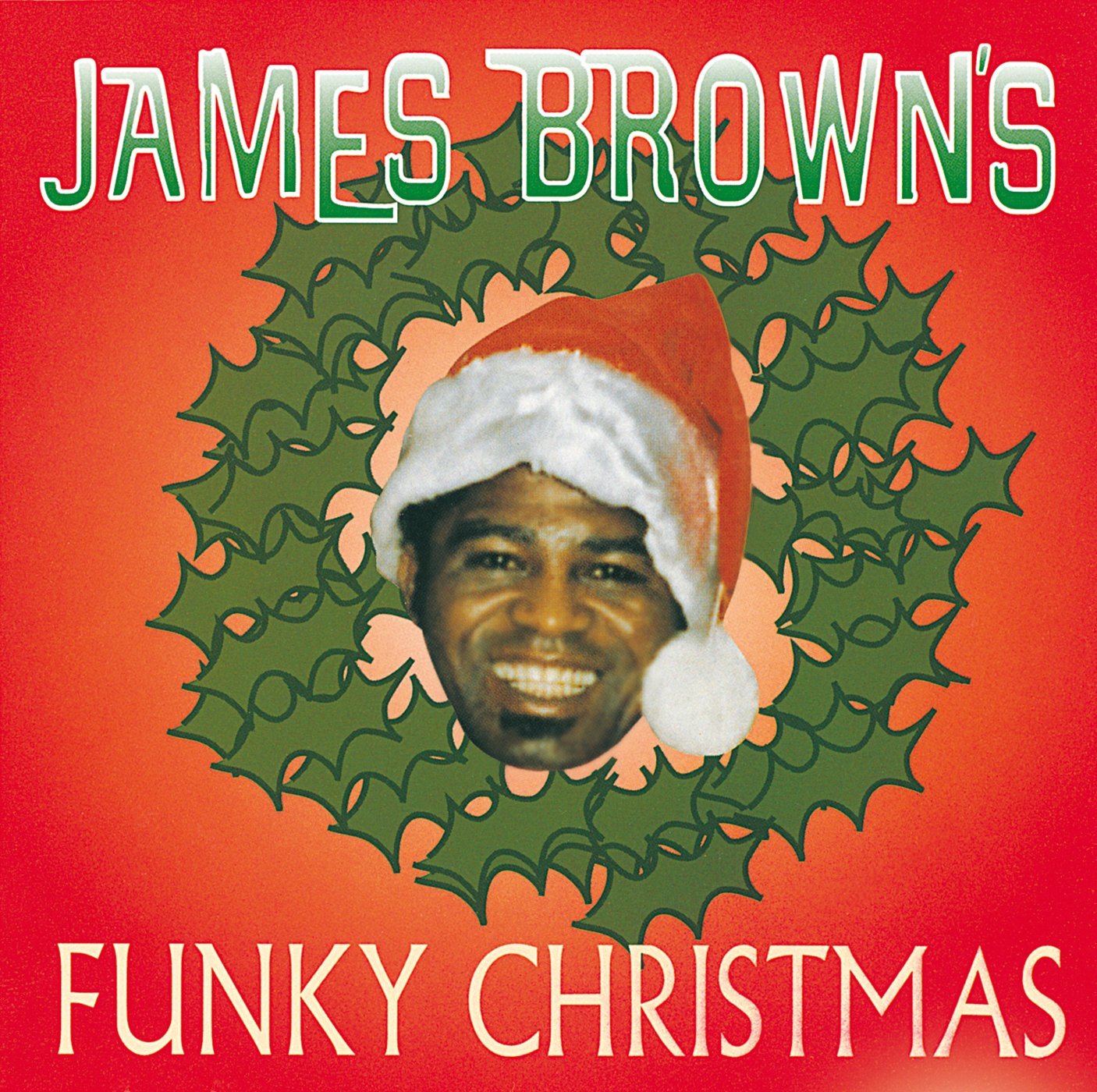
But then there are the rare exceptions, Christmas albums made with care, by artists who surely wanted to make money, but who also made something uniquely great of well-worn holiday classics, or penned new ones of their own. There is, of course, the mostly instrumental jazz greatness of Vince Guaraldi’s Charlie Brown Christmas soundtrack. But have you heard instrumental surf-rock legends The Ventures Christmas album? It’s outstanding. You’re intimately familiar with The Jackson 5’s brilliant soul renditions of songs like “Santa Claus is Coming to Town,” but you haven’t yet begun to yuletide, I say, until you’ve put on James Brown’s Funky Christmas, featuring such original tunes as “Go Power at Christmas Time” and the heartfelt plea on behalf of impoverished kids, “Santa Claus Go Straight to the Ghetto.”
We’ve got these albums and many more greats—from Bob Dylan, Johnny Cash, The Beach Boys, Willie Nelson, Ella Fitzgerald, Elvis Presley etc.—compiled in the Spotify playlist above, where they rub shoulders with unexpected gems from indie band Low, punk rockers Bad Religion, and horror legend Christopher Lee, whose Heavy Metal Christmas and Heavy Metal Christmas Too should be required listening at every holiday party. Hosting one of your own? Pull up our playlist of Christmas music worth hearing, hit play, and enjoy many quality hours of jazz, funk, country, soul, and rock and roll cheer and tidings. These suggestions come to us via Rolling Stone, Complex, and our readers on Twitter. If you need to download Spotify’s software, get it here. You can find a complete list of the albums below, with links to purchase them, should you need a last minute gift.
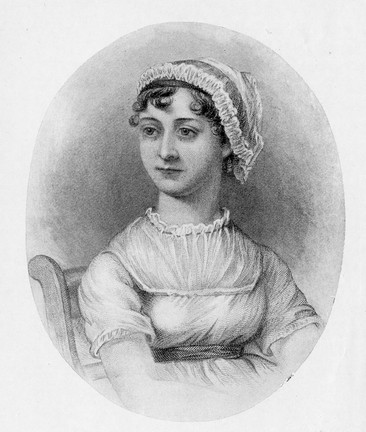
In a time when people offer up every gesture as fodder for their adoring social media public, it’s a little difficult to imagine living a life as private as Jane Austen (1775–1817) did. And yet, the impression we have of her as shy and retiring is misleading. She did not achieve literary fame during her lifetime, it’s true, and it’s not clear that she desired it. As her nephew James Edward Austen-Leigh wrote in the Memoir of Jane Austen, the 1870 biographical sketch that helped popularize Austen in the 19th century, “her talents did not introduce her to the notice of other writers, or connect her with the literary world, or in any degree pierce through the obscurity of her domestic retirement.” Yet, reducing Austen’s personality, as Austen-Leigh does, to “the moral rectitude, the correct taste, and the warm affections with which she invested her ideal characters” misses her fierce intelligence and complexity.
Austen’s nephew’s portrait of her seems concerned with preserving those canons of propriety that she scrupulously documented and satirized in her novels. Perhaps this is partly why he characterizes her as a very shy person. But we know that Austen maintained a lively social life and kept up regular correspondence with family and friends. Her letter-writing, some of it excerpted in Austen-Leigh’s biography, gives us the distinct impression that she used her letters to practice the sharp portraits she drew in the novels of the mores and strictures of her social class. Thus it is surprising when her nephew tells us we are “not to expect too much from them.” “The style is always clear,” he opined, “and generally animated, while a vein of humour continually gleams through the whole; but the materials may be thought inferior to the execution, for they treat only of the details of domestic life. There is in them no notice of politics or public events; scarcely any discussions on literature, or other subjects of general interest.”
What Austen’s nephew seems not to understand is what her legions of adoring readers and critics have since come to see in her work: in Austen, the “details of domestic life” are revealed as microcosms of her society’s politics, public events, literature, and “subjects of general interest.” Austen-Leigh almost admits as much, despite himself, when he compares his aunt’s letters to “the nest some little bird builds of the materials nearest at hand, of the twigs and mosses supplied by the tree in which it is placed; curiously constructed out of the simplest matters.” In Austen’s hands, however, the small domestic dramas proceeding on the country estates around her were anything but simple matters. Letter-writing plays a central role in novels like Pride and Prejudice, as in most fiction of the period. The surviving Austen letters are worth reading as source material for the novels—or worth reading for their own sake, so enjoyable are their turns of phrase and withering characterizations.
Take a November, 1800 letter Austen wrote to her sister Cassandra (preserved in the so-called “Brabourne edition” of her letters). Austen begins by confessing, “I believe I drank too much wine last night at Hurstbourne; I know not how else to account for the shaking of my hand to-day.” To the “venial error” of her hangover she attributes “any indistinctness of writing.” She then goes on to describe in vivid and very witty detail the ball she’d attended the night previous, taking the risk of boring her sister “because one is prone to think much more of such things the morning after they happen, than when time has entirely driven them out of one’s recollection.” Read an excerpt of her description below and see if the scene doesn’t come alive before your eyes:
There were very few beauties, and such as there were were not very handsome. Miss Iremonger did not look well, and Mrs. Blount was the only one much admired. She appeared exactly as she did in September, with the same broad face, diamond bandeau, white shoes, pink husband, and fat neck. The two Miss Coxes were there: I traced in one the remains of the vulgar, broad-featured girl who danced at Enham eight years ago; the other is refined into a nice, composed-looking girl, like Catherine Bigg. I looked at Sir Thomas Champneys and thought of poor Rosalie; I looked at his daughter, and thought her a queer animal with a white neck. Mrs. Warren, I was constrained to think, a very fine young woman, which I much regret. She has got rid of some part of her child, and danced away with great activity looking by no means very large. Her husband is ugly enough, uglier even than his cousin John; but he does not look so very old. The Miss Maitlands are both prettyish, very like Anne, with brown skins, large dark eyes, and a good deal of nose. The General has got the gout, and Mrs. Maitland the jaundice. Miss Debary, Susan, and Sally, all in black, but without any stature, made their appearance, and I was as civil to them as their bad breath would allow me.
CBGB, the birthplace of New York’s 1970s punk scene, closed in 2006, with Patti Smith headlining the final show. It was the end of an era, another great New York institution shutting its doors.
As the tweet above from indie radio station WFMU suggests, CBGB will be reincarnated apparently as a restaurant in a Newark Airport terminal, with a menu offering Cheeseburgers, Chicken Wings, Caprese Salads, Seared Togarashi Tuna, and Kobe Chili Dogs. The menu doesn’t seem to be shooting for authenticity, but maybe, hopefully the bathrooms will.
This past summer, we featured a shot-by-shot breakdown of several sequences in Andrei Tarkovsky’s Solaris by filmmaker and video essayist Antonios Papantoniou. Solaris, as well as the rest of Tarkovsky’s oeuvre, has given and will continue to give detail-oriented cinephiles a seemingly infinite amount of material to break down, scrutinize, and explain the genius of.
But what of big Hollywood films? Do they have nothing of interest to offer? Papantoniou clearly doesn’t think so: his other Shot by Shot video essays include looks, and very close looks indeed, at Brian De Palma’s The Untouchables, Martin Scorsese’s remake of Cape Fear, and even the mother of all blockbusters, Steven Spielberg’s Jaws.
These three auteurs, all of the same generation, came up in the 1970s cohort of filmmakers who brought about the “New Hollywood,” a movement wherein young directors like Spielberg, De Palma, and Scorsese (as well as Francis Ford Coppola, George Lucas, Paul Schrader, and many others) changed the rules of classical cinema, introducing a host of subjects and techniques previously unheard of in mainstream American films. Yet they still did make mainstream American films, which required a kind of hybridization of cutting-edge sensibilities with silver-screen expectations. Papantoniou specifically examines how these directors accomplish it through the kind of shots they capture and how they cut them together.
Papantoniou’s analyses identify the visual evidence of Spielberg’s “appetite for nonstop dynamic filmmaking,” De Palma’s “own unique post-modern style” expressed through techniques like point-of-view-shots, and of how “Scorsese distincts [sic] himself by adopting more rebellious techniques.” You might get the sense of a slight awkwardness in the language here, but the images selected speak for themselves — and besides, if you took film studies classes in college, you no doubt had at least one or two professors who compensated for their odd turns of phrase with their rigorous love of cinema, and from whom you ultimately learned a great deal. Video essays like these have increasingly made it possible for anyone, without going back to college or even going in the first place, to do that kind of learning — and, whether watching Tarkovsky or Spielberg, to never watch them inattentively again.
The end of 2015 has been dominated by crises. At times, amidst the daily barrage of fearful spectacle, it can be difficult to conceive of the years around the corner in ways that don’t resemble the next crop of blow-em-up action movies, nearly every one of which depicts some variation on the seemingly inexhaustible theme of the end-of-the-world. There’s no doubt many of our current challenges are unprecedented, but in the midst of anxieties of all kinds it’s worth remembering that—as Steven Pinker has thoroughly demonstrated—“violence has declined by dramatic degrees all over the world.”
In other words, as bad as things can seem, they were much worse for most of human history. It’s a long view cultural historian Otto Friedrich took in a grim survey called The End of the World: A History. Written near the end of the Cold War, Friedrich’s book documents some 2000 years of European catastrophe, during which one generation after another genuinely believed the end was nigh. And yet, certain far-seeing individuals have always imagined a thriving human future, especially during the profoundly destructive 20th century.
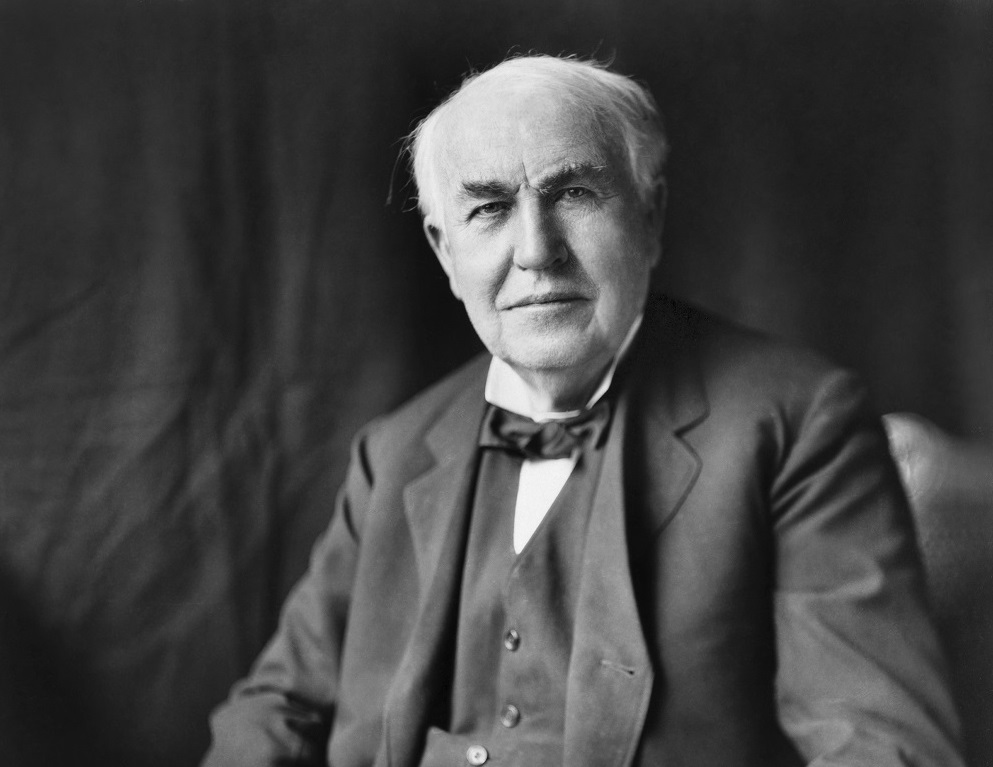
In 1900, engineer John Elfreth Watkins made a survey of the scientific minds of his day. As we noted in a previous post, some of those predictions of the year 2000 seem prescient, some preposterous; all boldly extrapolated contemporary trends and foresaw a radically different human world. At the height of the Cold War in 1964, Isaac Asimov partly described our present in his 50 year forecast. In 1926, and again 1935, no less a visionary than Nikola Tesla looked into the 21st century to envision a world both like and unlike our own.
1. Steam power, already on the wane, will rapidly disappear: “In the year 2011 such railway trains as survive will be driven at incredible speed by electricity (which will also be the motive force of all the world’s machinery).”
2. “[T]he traveler of the future… will fly through the air, swifter than any swallow, at a speed of two hundred miles an hour, in colossal machines, which will enable him to breakfast in London, transact business in Paris and eat his luncheon in Cheapside.”
3. “The house of the next century will be furnished from basement to attic with steel… a steel so light that it will be as easy to move a sideboard as it is today to lift a drawing room chair. The baby of the twenty-first century will be rocked in a steel cradle; his father will sit in a steel chair at a steel dining table, and his mother’s boudoir will be sumptuously equipped with steel furnishings….”
4. Edison also predicted that steel reinforced concrete would replace bricks: “A reinforced concrete building will stand practically forever.” By 1941, he told Cosmopolitan, “all constructions will be of reinforced concrete, from the finest mansions to the tallest skyscrapers.”
5. Like many futurists of the previous century, and some few today, Edison foresaw a world where tech would eradicate poverty: “Poverty was for a world that used only its hands,” he said; “Now that men have begun to use their brains, poverty is decreasing…. [T]here will be no poverty in the world a hundred years from now.”
6. Anticipating agribusiness, Edison predicted, “the coming farmer will be a man on a seat beside a push-button and some levers.” Farming would experience a “great shake-up” as science, tech, and big business overtook its methods.
7. “Books of the coming century will all be printed leaves of nickel, so light to hold that the reader can enjoy a small library in a single volume. A book two inches thick will contain forty thousand pages, the equivalent of a hundred volumes.”
8. Machines, Edison told Cosmopolitan, “will make the parts of things and put them together, instead of merely making the parts of things for human hands to put together. The day of the seamstress, wearily running her seam, is almost ended.”
9. Telephones, Edison confidently predicted, “will shout out proper names, or whisper the quotations from the drug market.”
10. Anticipating the logic of the Cold War arms race, though underestimating the mass destruction to precede it, Edison believed the “piling up of armaments” would “bring universal revolution or universal peace before there can be more than one great war.”
11. Edison “sounds the death knell of gold as a precious metal. ‘Gold,’ he says, ‘has even now but a few years to live. They day is near when bars of it will be as common and as cheap as bars of iron or blocks of steel.’”
He then went on, astonishingly, to echo the pre-scientific alchemists of several hundred years earlier: “’We are already on the verge of discovering the secret of transmuting metals, which are all substantially the same matter, though combined in different proportions.’”
Excited by the future abundance of gold, the Miami Metropolis piece on Edison’s predictions breathlessly concludes, “In the magical days to come there is no reason why our great liners should not be of solid gold from stem to stern; why we should not ride in golden taxicabs, or substituted gold for steel in our drawing rooms.”
In reading over the predictions from shrewd thinkers of the past, one is struck as much by what they got right as by what they got often terribly wrong. (Matt Novak’s Paleofuture, which brings us the Miami Metropolis article, has chronicled the checkered, hit-and-miss history of futurism for several years now.) Edison’s tone is more strident than most of his peers, but his accuracy was about on par, further suggesting that neither the most confident of techno-futurists, nor the most baleful of doomsayers knows quite what the future holds: their clearest forecasts obscured by the biases, technical limitations, and philosophical categories of their present.
We're hoping to rely on loyal readers, rather than erratic ads. Please click the Donate button and support Open Culture. You can use Paypal, Venmo, Patreon, even Crypto! We thank you!
Open Culture scours the web for the best educational media. We find the free courses and audio books you need, the language lessons & educational videos you want, and plenty of enlightenment in between.