It may sound redundant, but to many people a Hitchcock film would not be a Hitchcock film without Hitchcock. By this I mean not only Hitchcock’s masterful command of light and shadow, camera movement, and editing, but also the brief, witty appearances of the man himself, in front of the camera.
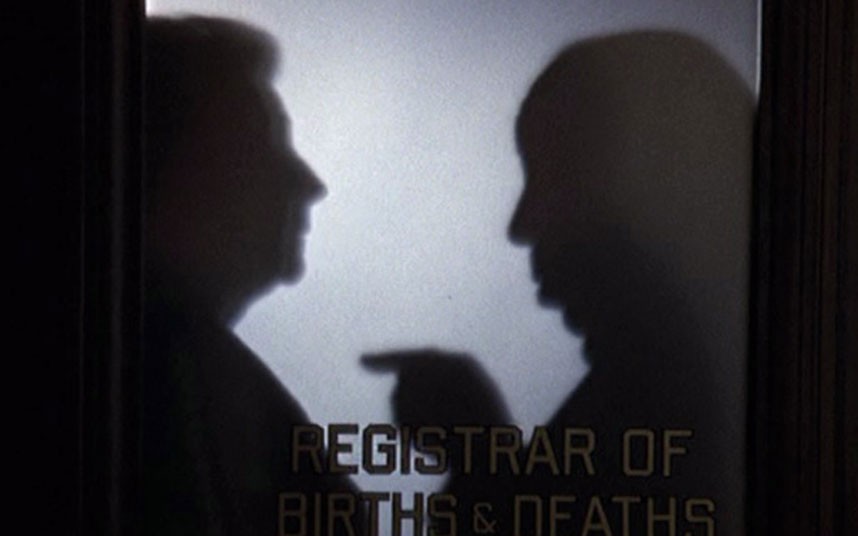
Of course we have the droll intro of the great director’s own TV show, with his silhouette sliding into a cartoon of his jowly profile. We also have the chance to spot him nearly everywhere else in his body of work since he appears—as a bystander or as some form of comic relief—in 37 of his films: from 1927’s The Lodger to 1976’s Family Plot. In this last cameo, as you can see below, he appears again in silhouette.
At the top of the post, you can watch a supercut of all 37 of these cameos. And see a complete list, with descriptions, at Wikipedia. AMC’s Tim Dirks tells us of “two recurring themes” in Hitchcock’s film appearances: “(1) Hitchcock often carried a musical instrument, and (2) Hitchcock often used public transportation (buses, trains, etc.), and was seen as a casual passer-by in the crowd in the public place (train stations, at an airport, etc.). Most of the cameos appeared early in the film, and often there was a bit of mild humor in the appearance.” Though they may seem narcissistic, Hitchcock promised the cameos were for the sake of his fans, who certainly appreciated the recurring trademark. “I always give a little thought to my appearances,” said the director in a 1966 interview, “and come on as early as possible—don’t want to hold them in suspense!”
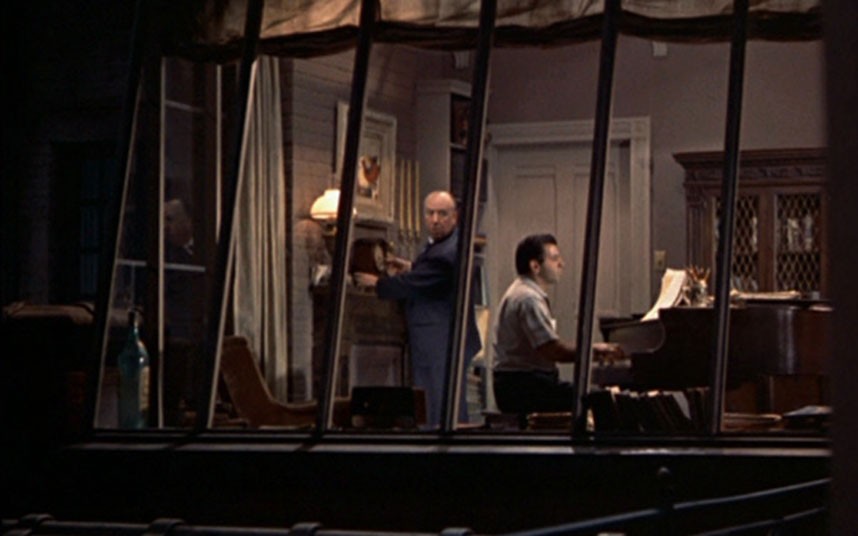
The Hitchcock cameos began by accident, writes MysteryNet, when, “short an actor in one of his first films, Hitchcock took it upon himself to play the small part.” In this movie, The Lodger(watch it online), Hitchcock actually appears twice—as a newsroom clerk and again later in a crowd. He would make two appearances in three more films: Suspicion, Rope, and Under Capricorn. Most of his cameos are very brief, some shot at a distance, and others with his back to the camera. To spot Hitchcock in your favorite of his films [you can watch 23 for free in our collection of Free Hitchcock films], see AMC’s complete list, which features thumbnails and approximations of how many minutes into the film he appears. Also don’t miss The Telegraph’s comprehensive gallery of stills of Hitchcock’s cameos, like that of his Rear Window appearance above.
The Well-Tempered Clavier, composed by JS Bach between 1722 and 1742, remains one of the most innovative and influential works in the history of Western classical music. A website from Northern Arizona State U. sums up what essentially made Bach’s composition — a collection of 48 preludes and fugues spread across two volumes — so innovative, so influential.
One of Bach’s primary purposes in composing these cycles was to demonstrate the feasibility of the “well tempered” tuning system that would allow for composition in every key.
Another purpose of the Well-Tempered Clavier was to reveal how modern and progressive composition could be informed by conservative ideas. The Well-Tempered Clavier is an encyclopedia of national and historical styles and idioms. Its influences range from the white-note style of the Renaissance motet to the French manier. Ironically, half of this stylistic smorgasbord is expressed in fugue, a form that was out of date upon the cycle’s completion. Bach was of course aware of this. His hope was to defend the venerable form by demonstrating how it could absorb contemporary flavors.
Above, we have something a little different. Created by director and visual artist Alan Warburton, this newly-released video takes a famous section of Bach’s composition and animates it with pulsing neon lights. Describing what went into making this video, the Sinfini Music website writes:
Alan’s incredible design incorporated many thousands of separate CGI lights, every one of which had to be tailored to the precise duration of Pierre-Laurent Aimard’s note strikes. ‘I needed to find a way of automating the process of these turning on and off in time with the music,’ says Alan. With no midi file of the performance available, he was faced with the seemingly impossible task of matching every note of a stand-in midi file to the recording, by ear alone…
Then it was a question of rendering the animated data in CGI within the virtual space created especially for the animation. This too, was no mean feat, even for the army of cloud-based computers that had a hand in the task. Each frame took 15 minutes to render because of the thousands of calculations involved in activating each light as well as the shadows, glows and reflections required to make the scene look truly life-like.
Sinfini Music, which commissioned this project, has more on Warburton’s creation here.
Hope this gets your weekend started on the right, er, note.
A few weeks ago, we featured Benedict Cumberbatch’s reading of the letter Alan Turing (whom Cumberbatch portrayed in last year’s The Imitation Game) wrote before his 1952 conviction of “gross indecency.” It came from Letters Live, “a series of live events celebrating the power of literary correspondence” put on by publisher Canongate and Cumberbatch’s production company SunnyMarch and “inspired by Shaun Usher’s Letters of Note” — a site Open Culture readers surely know well by now.
Back in 2013, Josh Jones wrote a post here on Virginia Woolf’s handwritten 1941 suicide note, “a haunting and beautiful document, in all its unadorned sincerity behind which much turmoil and anguish lie.” Having seen that note, perhaps you’d also like to hear it performed. If so, you’ll want to watch the Letters Live video at the top of the post, which offers an interpretation of the To the Lighthouse author’s declaration that “I can’t fight any longer” by Cumberbatch’s Sherlock co-star Louise Brealey.
If you haven’t had your fill of literary correspondence read aloud by these noted British performers, do pay a visit to Letters Live’s Youtube page, where you can also hear Brealey reading letters from Bessie Moore and Clementine Churchill as well as Cumberbatch reading letters from Chris Barker and more from Alan Turing. Watching internet videos of live performances of traditional letters — the mind may reel at all these simultaneous layers of mediation and interpretation, but the pieces of correspondence chosen still speak straight to the heart.
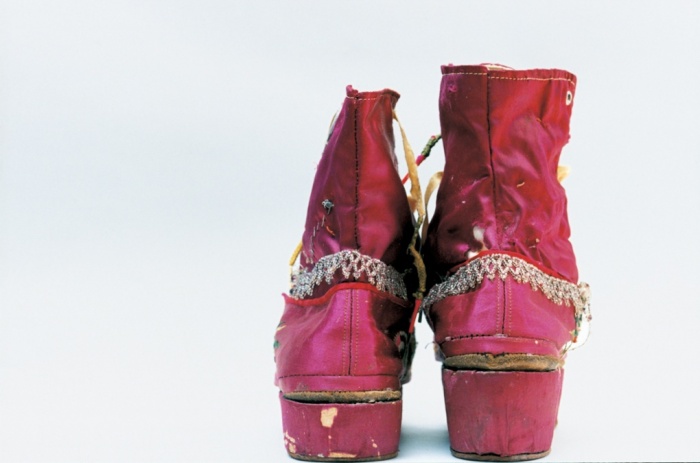
Imagine the dress up fun we could have in Grandma’s attic, if Grandma were Frida Kahlo (1907 – 1954) and the attic was a sealed off Mexico City bathroom where Grandpa — artist Diego Rivera, natch — had stashed all her stuff.
Yellow-laced scarlet booties trimmed with beads!
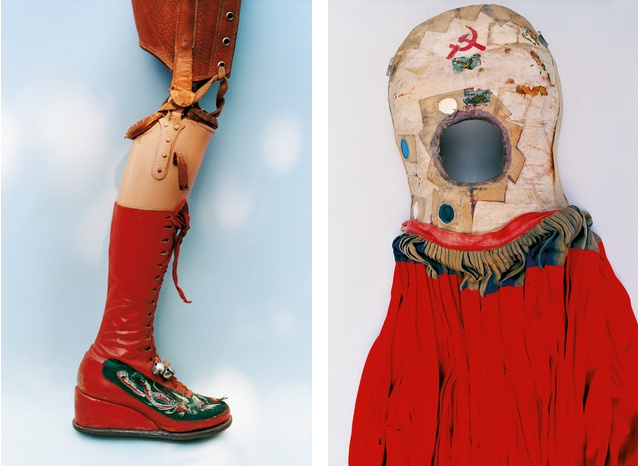
A saucy prosthetic leg! A skirted body cast embellished with hand-painted hammer and sickle.
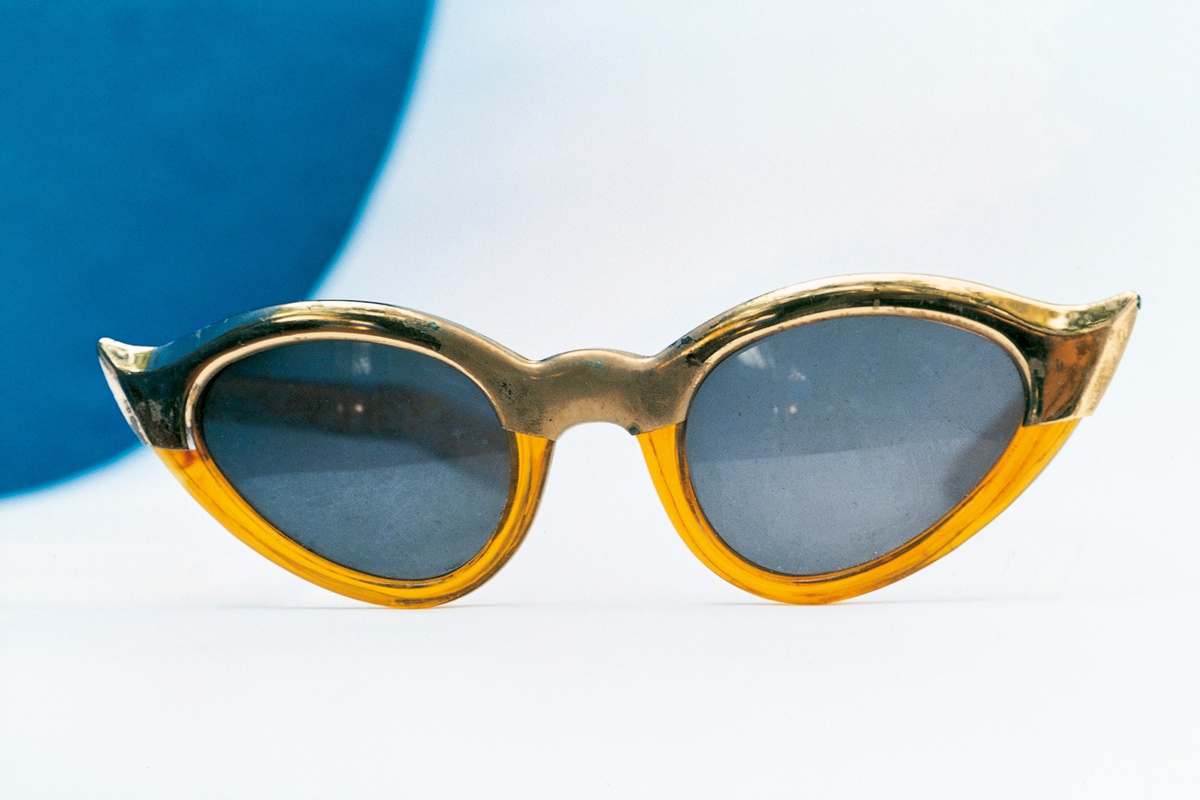
Now let us take a minute to live vicariously through photographer Ishiuchi Miyako, whose previous subjects have included the clothing of her late mother and victims of the atomic bombing of Hiroshima. In 2004, the Museo Frida Kahlo’s staff started organizing Frida’s personal effects. Rivera (1886–1957) had stored them in the aforementioned Mexico city bathroom, along with instructions that the room should remain sealed for a period of 15 years following his death. In 2011, the museum invited Miyako in to document the far-from-mint condition relics, almost 300 in total.
“If I met her, I wouldn’t ask any questions,” the photographer avowed in an interview with AnOther Magazine. “I would only want to stare at her and touch her body.”
What is the meaning of life? This may sound simplistic or naïve, especially in relation to much contemporary philosophy, which assumes the question is incoherent and reserves its focus for smaller and smaller slices of experience. And, of course, prior to the rise of secular modernity, the question was answered for us—and still is for a great many people—by religion. One either believed the answer, through coercion or otherwise, or kept quiet about it. But at least since Søren Kierkegaard, philosophers in the West have taken the question very seriously, and found all of the answers wanting. By the mid-twentieth century, there seemed to thinkers like Albert Camus to be no answer. Life has no meaning. It is inherently absurd and purposeless.
This Camus concluded in challenging essays like “The Myth of Sisyphus” and novels like L’Etranger, a book most of us know as The Stranger but which Alain de Botton, in his School of Life video above on Camus’ philosophy, translates as The Outsider. Reading this book, de Botton observes, “has long been an adolescent rite of passage” since many of its themes “are first tackled at seventeen or so.” Its protagonist, Meursault, an older, more nihilistic version of Holden Caulfield, illustrates Camus’ thesis through his steadfast refusal to identify with any meaning-making institutions or emotions, and through a casual, senseless murder. But while Meursault may see through the pretensions of his society, he has failed to see the world as it is.
Colin Wilson, another author many people read during intellectually formative years—who wrote an existentialist study also called The Outsider—describes Meursault’s indifference to life as a product of “his sense of unreality.” Only the looming prospect of death awakens him from what Meursault calls “a heavy grime of unreality.” Instead of despairing at life’s emptiness, Camus determined that true freedom required engaging fully with life, in the face of futility—with the ultimate prospect of death and the option of suicide always in view. Camus, says de Botton, “writes with exceptional intensity… as a guide for the reasons to live.” De Botton somewhat superficially praises Camus’ sexual prowess, fashion sense, and good looks as more than just “stylistic quirks,” but as markers of his psychological health.
But more than just a ladies man, Camus was a “great champion of the ordinary,” as well as a champion footballer and Nobel prize-winning literary star. He was also a fully committed journalist and political activist for much of his career, who stood by his individual principles even as other leftist intellectuals got swept up in the allure of Soviet communism under Stalin. In the documentary above, we learn important details of many of these qualities, as well of Camus’ troubled early life. Given his background of impoverishment and loss, it is indeed remarkable that Camus—much more so than other, more privileged philosophers—lived such a rich, fully engaged life.
In a rare television interview above, Camus answers questions about his theatrical adaptation of Dostoevsky’s The Possessed, another novel that confronts head on the question of life’s meaning. He speaks of the novel’s “nihilism,” now “the reality that we have to face.” Camus does not mention that Dostoyevsky, like the existentialist Kierkegaard, managed to salvage a kind of religious faith in the face of emptiness; the French philosopher and writer was convinced of the impossibility of such a thing. But whether one draws Dostoevsky or Camus’ conclusions, both would suggest that to live authentically, one must seriously grapple with the problem of meaninglessness and the reality of death.
Chris Burden passed away on May 10 and here at Open Culture we honored him with a post about his oddly hilarious late night 1970s TV commercials. But before that, Burden entered the public consciousness with one of his ballsiest and insane performance pieces.
“Shoot” (1971) consisted of the 25-year-old Burden being shot in the arm at close range by a friend wielding a rifle. A few inches off, and Burden would have probably died. Instead, as we see in the original piece above, he walks off very quickly, more in shock than pain. His intention was to be grazed by the bullet. It went a little deeper.
As Burden points out in the video, only eight seconds of the brief piece exists. It was filmed, November 19, 1971 in a small gallery in Santa Ana, CA called “F Space,” a few doors down from Burden’s studio, with only a few friends in attendance. He had previously announced his intention to be shot for art to the editors of an avant-garde art journal called Avalanche.
The video and Burden’s commentary on the missing footage is now what constitutes the piece. He urges us to listen for the sound of the empty shell hitting the ground. “In this instant I was a sculpture,” Burden later said. Journalists at the time wondered if Burden would make it to 30. Douglas Davis in Newsweek called him “the Evel Knievel of art.”
Coming at the height of the Vietnam War, the piece is about many things: trust, violence, the limits and risks of art, the role of the audience, the bravery of artists compared to the duty of soldiers. The video is now part of the MoMA and Whitney collections.
The New York Times commissioned this new short doc about the work and tracked down the marksman, one of Burden’s friends, whose identity had remained a secret until now. Fortunately, Burden is also in the video, and gives the last word:
“I think a lot of those performance works were an attempt to control fate or something,” Burden says. “Or giving you the illusion that you can control fate.”
Ted Mills is a freelance writer on the arts who currently hosts the FunkZone Podcast. You can also follow him on Twitter at @tedmills, read his other arts writing at tedmills.com and/or watch his films here.
Polaroid photography has seen a new wave of interest over the past decade, in large part from young photographers looking to do something different from what they can with the digital technology on which they grew up.
The other modern practitioners include no less a creator than Patti Smith, who have personally witnessed the format’s appearance, fade, and return. A few years ago, her Polaroid photography reached the galleries, becoming shows and installations in Connecticut and Paris.
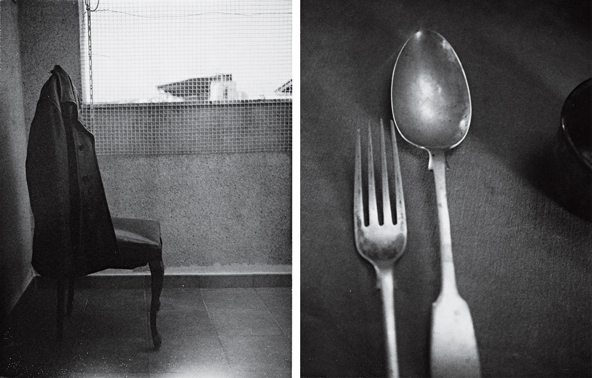
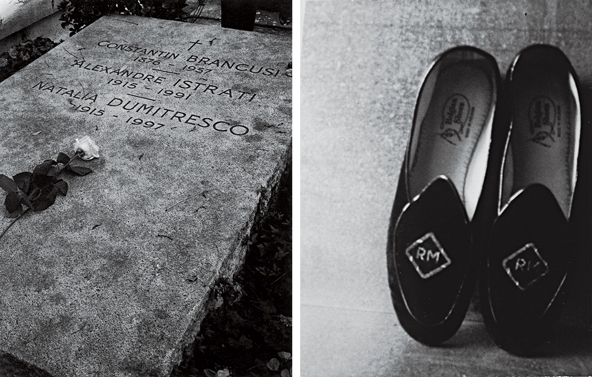
These “black-and-white silver gelatin prints made from Polaroid negatives, small and square and in soft focus,” writes the New York Times’ A.O. Scott, “are culled from a collection that documents hundreds of encounters with worldly effects transformed into sacred relics. A fork and a spoon that belonged to Arthur Rimbaud, the French symbolist poet who has been one of Smith’s touchstones forever. [Robert] Mapplethorpe’s bedroom slippers and the tambourine he made for Smith. A chair that belonged to the Chilean novelist Roberto Bolaño. William S. Burroughs’s bandanna. A replica of a life mask cast from the features of William Blake.”
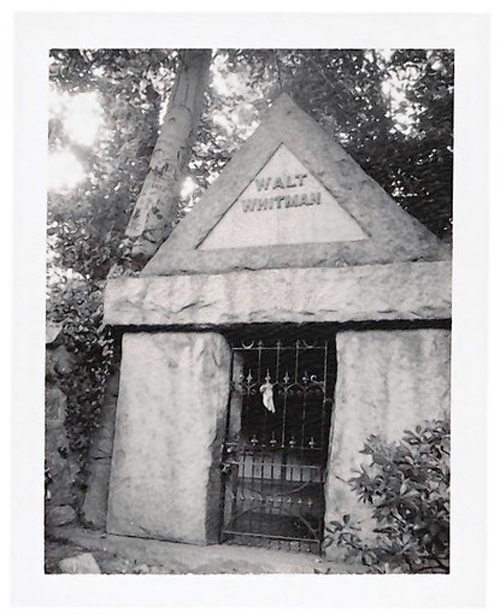
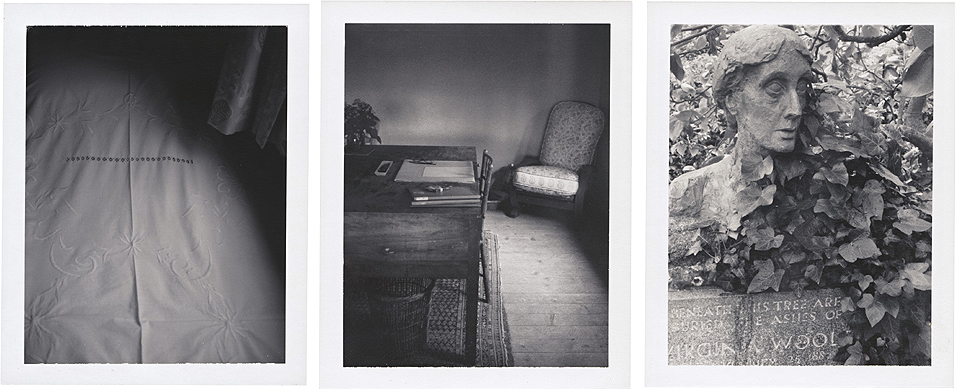
Smith’s “gorgeous, misty photographs are inspired by artifacts from some of Smith’s favorite artists, from museums she has visited around the world, and many are from her personal life,” writes Flavorwire’s Emily Temple on “Camera Solo,” the Hartford exhibition which introduced these Polaroids to America in 2011. If you didn’t make it to the Wadsworth Atheneum for that show, you can still experience it through Patti Smith: Camera Solo, its companion book. Or have a look at her work on display at the BBC’s site, the gallery that offers the photos of Virginia Woolf’s bed, writing desk, and gravestone just above.
You can see even more at this post from Lens Culture on “Land 250,” the exhibition of Smith’s Polaroid photography at Paris’ Fondation Cartier.“I first took Polaroids in the early 1970s as components for collages,” it quotes Smith as saying. “In 1995, after the death of my husband, I was unable to center on the complex process of drawing, recording or writing a poem. The need for immediacy drew me again to the Polaroid. I chose a vintage Land 100.” In 2002, she settled on the Land 250, the venerable instant camera that gave the Paris show and its associated monograph their titles. It surely counts as one of the most important artifacts of Smith’s artistic life — and one with which she has captured the artifacts of so many other artistic lives important to her.
Heads up David Foster Wallace fans. Yesterday, A24 Films released a trailer for The End of the Tour, James Ponsoldt’s upcoming film which stars Jason Segel as David Foster Wallace, and Jesse Eisenberg as Rolling Stone journalist David Lipsky. The film is based on Lipsky’s 2010 memoir, Although of Course You End Up Becoming Yourself, which documents the five-day road trip Lipsky took with Wallace in 1996, just as Wallace was completing the book tour for his breakout novel Infinite Jest.
You might know Jason Segel from lighter and often hilarious comedy films like Forgetting Sarah Marshall and Knocked Up. When The End of the Tourhits theaters on July 31st, you’ll see him inhabiting a very different kind of role.
When you’re done watching the trailer above, you can see the real David Foster Wallace in a Big, Uncut Interview recorded in 2003. It makes for an interesting comparison.
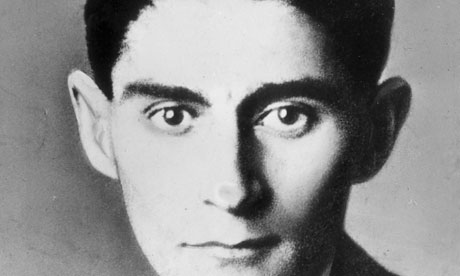
It’s easy to think of Franz Kafka as a celibate, even asexual, writer. There is the notable lack of eroticism of any recognizable sort in so much of his work. There is the prominent biographical detail—integral to so many interpretations—of his outsized fear of his father, which serves to infantilize him in a way. There is the image, writes Spiked, of “a lonely seer too saintly for this rank, sunken world.” All of this, James Hawes writes in his Excavating Kafka, “is pure spin.” Against such idolatry, both literary and quasi-religious, Hawes describes “the real Kafka,” including the fact that he was “far from an infrequent visitor to Prague’s brothels.” Though “tortured”—as his friend, biographer, and executor Max Brod put it—by guilt over his sexuality, Kafka nonetheless did not deny himself the frequent company of prostitutes and a collection of outré pornography.
But a part of the myth, Kafka’s extreme diffidence in romantic relationships with two women in his life—onetime fiancé Felice Bauer and Czech journalist Milena Jesenská—is not far off the mark. These relationships were indeed “tortured,” with Kafka “demanding commitment while doing his best to evade it.” His courtship with Felice was conducted almost entirely through letters, and his personal correspondence to both women, published in separate volumes by Schocken Books, “has all the earmarks of his fiction: the same nervous attention to minute particulars; the same paranoid awareness of shifting balances of power; the same atmosphere of emotional suffocation—combined, surprisingly enough, with moments of boyish ardor and delight.” So writes the New York Times’ Michiko Kakutani in her review of Letters to Felicein 1988.
A March 25, 1914 letter to Felice exemplifies these qualities, including Kafka’s tendency to “berate” his fiancé and to “backpedal” from the serious possibility of marriage. In answer to her seemingly unasked question of whether Bauer might find in him “the vital support you undoubtedly need,” Kafka writes,” there is nothing straightforward I can say to that”:
The exact information you want about me, dearest F., I cannot give you ; I can give it you, if at all, only when running along behind you in the Tiergarten, you always on the point of vanishing altogether, and I on the point of prostrating myself; only when thus humiliated, more deeply than any dog, am I able to do it. When you post that question now I can only say: I love you, F., to the limits of my strength, in this respect you can trust me entirely. But for the rest, F., I do not know myself completely. Surprises and disappointments about myself follow each other in endless succession.
The frustrated mystery, self-abasement, vague and fearful hints, and reference to dogs are all elements of the so oft-invoked Kafkaesque, though the frank proclamation of love is not. Not long after his 1917 diagnosis of tuberculosis, Kafka would break off the engagement. In 1920, he began his—also heavily scripted—affair with Jesenská, his side of which appears in the collected Letters to Milena. In these missives, the same set of personal and literary impulses alternate: tender expressions of devotion give way to dark and cryptic statements like “written kisses… are drunk on the way by the ghosts” and “I have spent all my life resisting the desire to end it.” One letter seems to have nothing at all to do with Milena and everything to do with Kafka’s project as a writer:
I am constantly trying to communicate something incommunicable, to explain something inexplicable, to tell about something I only feel in my bones and which can only be experienced in those bones. Basically it is nothing other than this fear we have so often talked about, but fear spread to everything, fear of the greatest as of the smallest, fear, paralyzing fear of pronouncing a word, although this fear may not only be fear but also a longing for something greater than all that is fearful.
Passages like these warrant the reduplication in Kakutani’s review title: “Kafka’s Kafkaesque Love Letters.” It is almost as if he used these letters as a testing ground for the tangled internal conflicts, doubts, and obsessions that would make their way into his fiction. Or that, in them, we see these Kafkaesque motifs distilled. It is during his engagement to Felice Bauer that Kafka produced “his most significant work, including The Metamorphoses,” and during his relationship with Milena Jesenská that my personal favorite, The Castle, took shape.
Although it has long been fashionable to resist the “biographical fallacy,” reading an author’s life into his or her work, the existence of hundreds of Kafka’s letters in publication makes this separation difficult. Elias Canetti described Kafka’s letters as a dialogue he was “conducting with himself,” one which “provide[s] an index of the emotional events that would inspire ‘The Trial’” and other works. Kafka’s unexpected bouts of romantic passion notwithstanding, these letters add a great deal of support to that critical assessment.
Yesterday, Blank on Blank dropped its latest animated video — this one featuring Joni Mitchell in conversation with record executive Joe Smith. In the interview originally recorded in 1986, Mitchell declares herself a reluctant star — someone who loved making music, but never wanted fame, and all the lost privacy and normalcy that comes along with it. Smith talked with Joni and countless other musicians while researching and writing his book Off the Record. You can still stream many of those interviews (for free) on iTunes and the Library of Congress website. We have more on that here.
If you would like to support the mission of Open Culture, consider making a donation to our site. It’s hard to rely 100% on ads, and your contributions will help us continue providing the best free cultural and educational materials to learners everywhere. You can contribute through PayPal, Patreon, and Venmo (@openculture). Thanks!
Reading David Byrne’s How Music Worksthe other day, I came across a passage where the Talking Heads frontman recalls his formative early exposure to the distinctive compositions and persona (not that you can really separate the two) of Sun Ra. “When I first moved to New York, I caught Sun Ra and his Arkestra at the 5 Spot, a jazz venue that used to be at St. Mark’s Place and Bowery,” Byrne writes. “He moved from instrument to instrument. At one point there was a bizarre solo on a Moog synthesizer, an instrument not often associated with jazz. Here was electronic noise suddenly reimagined as entertainment!”
Some might have written off Sun Ra and his Arkestra as indulging in formless artistic flailing, but in these shows, “as if to prove to skeptics that he and the band really could play, that they really had chops no matter how far out they sometimes got, they would occasionally do a traditional big band tune. Then it would be back to outer space.” As in Sun Ra’s music, so in Sun Ra’s words: as the jazz composer born Herman Poole Blount got increasingly experimental in his composition, the details of his “cosmic philosophy” underlying it, a kind of science-fiction-inflected Afro-mysticism, multiplied.
While many of Sun Ra’s pronouncements struck (and still strike) listeners as a bit odd, he could nevertheless ground them in a variety of intellectual contexts as a serious thinker. We offered evidence of this last year when we posted the full lecture and reading list from the course he taught at UC Berkeley in 1971, “The Black Man in the Cosmos.” Now you can hear it straight from the man himself in the playlist at the top of the post, which contains his lecture “The Power of Words,” also delivered at Berkeley in 1971, as part of the school’s Pan-African Studies curriculum.
But do heed the warning included with the videos: “Remember, Sun Ra was a ‘UNIVERSAL BEING’ not of this dimension or of a race category. With all his informative authority, in some cases during these lectures, the content will be shocking to hear.” Shocked or not, you may well come away from the experience convinced that not only did Sun Ra the musician understand the power of music, executed creatively, to take us to new aesthetic realms, he also understood the power of words to take us to new intellectual ones. But you’ve got to be willing to take the ride into outer space with him.
We're hoping to rely on loyal readers, rather than erratic ads. Please click the Donate button and support Open Culture. You can use Paypal, Venmo, Patreon, even Crypto! We thank you!
Open Culture scours the web for the best educational media. We find the free courses and audio books you need, the language lessons & educational videos you want, and plenty of enlightenment in between.