If you haven’t seen the painting at the MoMA in NYC, you’ve almost certainly seen those melting watches on posters and all sorts of kitschy products. Those poor watches have been abused over the years. But somehow I don’t mind seeing them on my favorite ephemeral canvas — the frothy milk surface of a latte. The latte above was decorated by Kazuki Yamamoto, a Japanese artist who uses nothing but a toothpick for a paint brush. You can find an online gallery of his work here, which includes some 3D creations. Or followpictures of his latest works on Twitter.
The 6‑minute introduction to Dalí’s 1931 painting (below) comes courtesy of Smart History.
Between the mid-nineteenth and early twentieth centuries, men and women alike made scrapbooks as a way of processing the news. As Ellen Gruber Garvey shows in her book Writing with Scissors: American Scrapbooks from the Civil War to the Harlem Renaissance, the practice crossed lines of class and gender. Everyone from Mark Twain and Susan B. Anthony to Joseph W.H. Cathcart, an African-American janitor living in Philadelphia who amassed more than a hundred volumes in the second half of the nineteenth century, selected and pasted articles and ephemera into big books, often annotating and commenting upon the material.
The Harry Ransom Center at the University of Texas at Austin has recently digitized ten scrapbooks belonging to Harry Houdini. The books are divided into three groups: volumes compiled by other magicians about their careers; scrapbooks holding Houdini’s clippings on the practice of magic in general; and books that chart Houdini’s investigations of fakes, frauds, and conjurers. (Later in his life, Houdini became fascinated with the post-WWI fad for spiritualism—mediums, séances, and psychics—and took on a role as skeptical debunker of spiritualist performers.)
The scrapbooks are fun to look at on a number of levels. First, it’s cool to think of Houdini and his magician colleagues selecting the articles and images and arranging them on the page. Second, the material that’s covered is colorful and bizarre (an article in one of Houdini’s books: “Trial By Combat Between A Dog And His Master’s Murderer”). Third, Houdini and his cohort clipped and saved from a wide array of periodicals; while it’s sometimes annoying that many of the articles have lost their metadata (date and place of publication), it’s still interesting to see the range of types of coverage that prevailed at the time.
The book put together by the performer S.S. Baldwin, mailed to Houdini by Baldwin’s daughter Shadow after Baldwin’s death, is particularly interesting. The Ransom Center’s introduction to the collection notes that some items in the Baldwin scrapbook “depict graphic subject matter”—a sure enticement for this researcher, at least, to make sure to check it out. The warning may refer to this amazing image of the Indian goddess Kali draped in severed heads and limbs, or an engraving of an execution by elephant. Alongside many articles about his performances, fliers, and other ephemera, Baldwin also collected images of people living in the places where he performed—an approach that adds yet another level of interest to his scrapbook.
Rebecca Onion is a writer and academic living in Philadelphia. She runs Slate.com’s history blog, The Vault. Follow her on Twitter: @rebeccaonion.
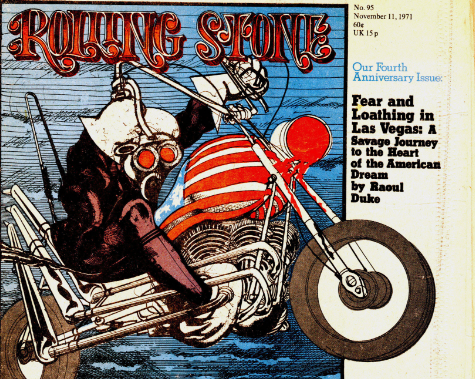
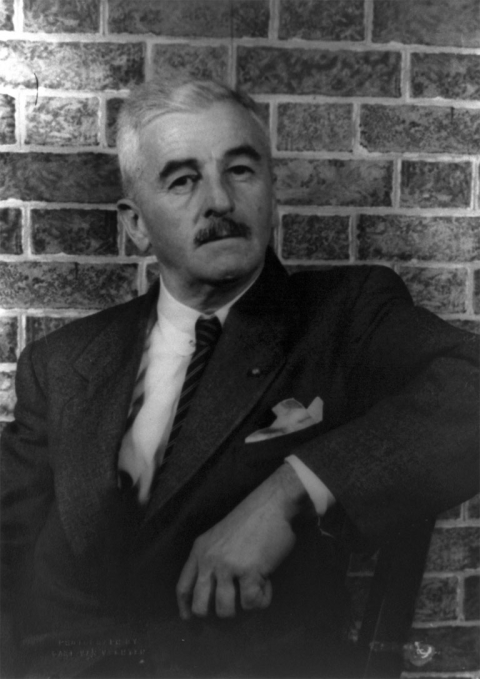
I confess, I prefer Faulkner to Hemingway and see nothing wrong with long, complex sentences when they are well-constructed. But in most non-Faulkner writing, they are not. Stream of consciousness is a deliberate effect of carefully edited prose, not the unrevised slop of a first draft. In my days as a writing teacher, I’ve read my share of the latter. The English teacher’s guide for paring down unruly writing resembles a new online app called “Hemingway,” which examines writing and grades it on a color-coded difficulty scale. “Hemingway” suggests using simpler diction, editing out adverbs in favor of stronger verbs, and eliminating passive voice. It promises to make your writing like that of the famous American minimalist, “strong and clear.”
Of course I couldn’t resist running the above paragraph through Hemingway. It received a score of 11—merely “O.K.” It suggested that I change the passive in sentence one and remove “carefully” from the fourth sentence (I declined), and it identified “unruly” as an adverb (it is not). Like all forms of advice, it pays to use your own judgment before applying wholesale. Nevertheless, the suggestion to streamline and simplify for clarity’s sake is a general rule worth heeding more often than not. Brothers Adam and Ben Long, creators of the app, realized that their “sentences often grow long to the point that they became difficult to read.” It happens to everyone, amateur and professional alike. The app suggests writing that scores a Grade 10 or below is “bold and clear.” Writing above this measure is “hard” or “very hard” to read. Which prompts the inevitable question: How does Hemingway himself score in the Hemingway app?
In a blog post yesterday for The New Yorker, Ian Crouch ran a few of the master’s passages through the online editing tool (a concept akin to John Malkovich entering John Malkovich’s head). The opening paragraph of “A Clean, Well-Lighted Place” received a score of 15. Hemingway’s description of Romero the bullfighter from The Sun Also Rises also “breaks several of the Hemingway rules” with its use of passive voice and extraneous adverbs. Does this mean even Hemingway falls short of the ideal? Or only that writing rules exist to be broken? Both, perhaps, and neither. Style is as elusive as grammar is constricting, and both are mastered only through endless practice. Will “Hemingway” turn you into Hemingway? No. Will it make you a better writer? Maybe. But only, I’d suggest, inasmuch as you learn when to accept and when to ignore its advice.
25 years ago, the hip hop trio De La Soul released its debut album 3 Feet High and Rising (above). Robert Christgau, the self-proclaimed “Dean of American Rock Critics” and long-time music editor for the Village Voice, declared that it was “unlike any rap album you or anybody else has ever heard.” And it wound up 23rd on The Source Magazine’s list of The 100 Best Rap Albums.
To celebrate the anniversary of this release, De La Soul has gone over and beyond and made all (but one) of their studio albums free to download until noon tomorrow (Saturday). Head over to the band’s web site, select the albums that you want to download, enter your name and email address, click “Submit for Sounds” and then wait until you receive an email containing the download links. It’s as simple as that. Happy listening.
The website of Abbey Road studios has an EarthCam trained on the intersection of Abbey Road and Grove End Road, right outside its stately Georgian Townhouse. You can monitor the site all day and night if you like, and the prospect of doing so seems no crazier to me than indulging a fixation with Paul is dead conspiracies. It’s a magical place, as likely to inspire awe as blind obsession. Although it has recorded artists from Paul Robeson to Lady Gaga, the historic studio acquired its shrine status from one moment only—The Beatles final recorded album, Abbey Road, and its infamous cover shot.
Seeing the sausage of that cover made in the alternate takes posted at the Beatles Bible site (two of which have Paul wearing sandals) doesn’t necessarily dispel the mystique, but it does disabuse one of illusions of total spontaneity. Even more so does the drawing at the top, which Paul McCartney made for photographer Iain Macmillan, who had 10 minutes to get the handful of shots he captured with his Hasselblad. In the top right-hand corner, you can see a small drawing added by Macmillan which adds depth to McCartney’s rudimentary compositions. These sketches show McCartney and Macmillan carefully visualizing the symmetries, strides, and even shadows of the crosswalk photo. (See the landmark above, empty, in a photo taken that same day.)
Sketching out important shots like these is common practice. For example, above you can see Peter Blake’s 1967 outline for the Sgt. Pepper’s Lonely Hearts Club Band cover art. But the Abbey Road sketch is further evidence of McCartney’s guiding hand in The Beatles’ image-making. Of Sgt. Pepper’s, John Lennon went on record as saying of the concept that “Sgt Pepper is Paul.” In this case, McCartney’s idea for the cover was instrumental in Blake’s eventual design: “a presentation featuring a mayor and a corporation, with a floral clock and a selection of photographs of famous faces on the wall behind The Beatles.” McCartney circulated a list among the band members, asking them to list their choice of celebrities. Many of the suggested figures ended up on the cover.
Of their subsequent concept album, The Magical Mystery Tour, Ringo likewise claimed “it’s Paul’s idea really, he came up with this.” Whenever McCartney formulated his ideas—for album structures, cover designs, or movies—he says in this video (which we can’t embed, unfortunately) that he would “draw something out.” Above, see his conceptual map for the Magical Mystery Tour film (click to enlarge). It may only be a coincidence that it looks something like a dreamcatcher. Maybe it’s more of a pie chart. In any case, McCartney describes it in fairly matter-of-fact terms as “virtually a script” that allowed him to “focus his thoughts.”
It fits perfectly into early 20th-century American lore, this all-too-real disaster: on January 15, 1919, a fifteen-foot wall of molasses rushed through Boston’s North End, killing 21, injuring 150, doing $100 million in today’s dollars worth of damage, and requiring 80,000 man-hours to clean up. Those figures come from a post on the subject at Mental Floss, which investigates what loosed the Great Molasses Flood in the first place. The United States Industrial Alcohol Company, owners of the brown, sticky substance in question and the exploding tank that contained it, pinned it on bomb-chuckers, claiming that, “since its alcohol was an ingredient in government munitions, anarchists must have sabotaged the tank.” Investigations later revealed the cause as none other than seat-of-the-pants capitalistic hubris, another standby of early 20th-century America.
The tank’s “absurdly shoddy construction work,” led by a man who “couldn’t even read a blueprint,” came down to this: they “threw up a gigantic tank as quickly and cheaply as possible, skimped on inspections and safety tests, and hoped for the best.” You can learn more about what happened in the video above, a dramatization of the events leading up to the Great Molasses Flood from the pilot episode of The Folklorist.
The contemporary images above and below come from the Boston Public Library’s Flickr set. For the most definitive study of this gooey calamity, you’ll want to seek out Dark Tide: The Great Boston Molasses Flood of 1919 by Stephen Puleo, who speaks in some detail about the event and its aftermath in this Real History video. All these well-documented facts aside, legend has it that, on a particularly hot day on Commercial Street, you can still smell the stuff.
Musical experimentalists Collective Cadenza’s Valentine’s Day Special “A History of Men Moving On” is to wallowing as speed dating is to courtship.
It’s a five minute medley of male romantic pain that takes us all the way from Roy Orbison’s 1960 “Only the Lonely” to CeeLo Green’s pointed “Fuck You.”
Vocalist Forest Van Dyke exhibits considerable dexterity, navigating these stylistic switchbacks. A shame he was directed to deliver so much of this choice material to a framed photo, awkwardly positioned on an upstage music stand. I know that the room was crowded, but I would’ve liked to see his feet, too. A man who can dance is something to see.
Kudos to musical director Michael Thurber for making explicit the similarities between Gotye’s “Somebody That I Used To Know” and Usher’s “Papers” (as covered by a goat). As with Hemingway’s couplet, the latter failed to make the round up. Does the heartbreak ever cease?
Peter Capaldi is best known in the States for being the most recent actor to play Doctor Who. But did you know that he is also an Oscar-winning filmmaker? His brilliant short film Franz Kafka’s It’s a Wonderful Life took the prize for Best Short Film in 1995.
The movie shows Kafka, on Christmas Eve, struggling to come up with the opening line for his most famous work, The Metamorphosis.
As Gregor Samsa awoke one morning from uneasy dreams he found himself transformed in his bed into a gigantic insect.
Capaldi wrings a lot of laughs out of Kafka’s inability to figure out what Samsa should turn into. A giant banana? A kangaroo? Even when the answer is literally staring at him in the face, Kafka is hilariously obtuse.
Richard E. Grant stars as the tortured, tightly-wound writer who is driven into fits as his creative process is interrupted for increasingly absurd reasons. The noisy party downstairs, it turns out, is populated by a dozen beautiful maidens in white. A lost delivery woman offers Kafka a balloon animal. A local lunatic searches for his companion named Jiminy Cockroach.
Jonathan Crow is a Los Angeles-based writer and filmmaker whose work has appeared in Yahoo!, The Hollywood Reporter, and other publications. You can follow him at @jonccrow.
If you don’t have enough existential angst in your life — and if you’re operating on the theory that there’s no such thing as too much Kafka (see our post from earlier today) — then check out this radio play called Samsa & Seuss, which aired originally on the CBC show Wiretap before appearing on This American Life. The piece is based on an epistolary short story by the late, great David Rakoff and is performed by Rakoff along with Jonathan Goldstein.
The story begins with a desperate Gregor Samsa reaching out to Dr. Seuss looking for some way to cure him of his malady — i.e. being a bug. Seuss’s reply is written entirely in verse — “Rest assured, I’ll endeavor to glean and deduce. You’ll be better than ever or my name isn’t Seuss” – which confuses Samsa to no end. At one point, Samsa asks, “Is metrical rhyme an American mode of correspondence?”
Yet what could be a one-joke novelty grows surprisingly poignant in Rakoff’s deft hands. When it becomes clear that the doctor’s eccentric health regime – “magnolia custard and rosehip soufflé and some dew drops with mustard” – has failed to fix the ailment of the increasingly depressed Samsa, Seuss’s cheery can-do attitude turns reflective:
I’m astonished at times when I think of the past, of my thousands of rhymes, of how life is so vast. I’m left, then, to wonder how anyone gleans a purpose or sense of what anything means. It’s not ours for the knowing. It’s meaning abstruse. We both best be going. Your loving friend, Seuss.
Jonathan Crow is a Los Angeles-based writer and filmmaker whose work has appeared in Yahoo!, The Hollywood Reporter, and other publications. You can follow him at @jonccrow.
If you have 22 minutes, why not sit back and watch the classic piece of television above, Alfred Hitchcock Presents’ 1961 episode “Bang, You’re Dead”? You may well have seen it before, quite possibly long ago, but you’ll find it holds up, keeping you in suspense today as artfully as it or any other Hitchcock production always has. But why do we get so emotionally engaged in this simple tale of a five-year-old boy who comes into possession of a real handgun that he mistakenly thinks a harmless toy? Here with detailed answers rooted in the mechanics of the human brain, we have “Neurocinematics: the Neuroscience of Film,” a presentation by Uri Hasson of Princeton University’s Neuroscience Institute.
Hitchcock conceived of his style of cinema, says Hasson in the clip below, as “doing experiments on the audience,” and of a movie itself as “a sequence of stages designed to have an effect on your brain.”
The brains of everyone sitting in the theater thus, theoretically, all become “resonant and aligned with the movie in a very powerful and complicated way.” Various types of research bear this out, from measuring the skin temperature, perspiration, and blood flow in the brains of subjects as they watch Hitchcock’s young protagonist add more “toy” bullets to the “toy” gun he brandishes around the neighborhood. In the clip below, you can see exactly how the scientists’ functional MRI machines scan the viewers as they watch the episode, whose plot, as one of the research team puts it, “keeps the participants a bit on their feet,” flat on their back though they need to remain for the duration. You’ll find the watching experience much more comfortable in your chair. It won’t produce much data for the scientific community, but at least now you’ll know what goes on in your brain as it happens, something about which even Hitchcock himself could only guess. To conduct your own experiments, see our collection of 21 Free Hitchcock Movies Online.
The vast digital collection includes books, ancient maps, and priceless prints. Amid the countless virtual tomes, some of the more impressive holdings include Mozart’s musical diary from the last seven years of his life, and Leonardo da Vinci’s notebook (find both above) where the artist and inventor theorized about mechanics. Da Vinci also recorded riddles in his notes, including: “The dead will come from underground and by their fierce movements will send numberless human beings out of the world” (Answer: “Iron, which comes from under the ground, is dead, but the weapons are made of it which kill so many men”).
We're hoping to rely on loyal readers, rather than erratic ads. Please click the Donate button and support Open Culture. You can use Paypal, Venmo, Patreon, even Crypto! We thank you!
Open Culture scours the web for the best educational media. We find the free courses and audio books you need, the language lessons & educational videos you want, and plenty of enlightenment in between.