The Weird World of Vintage Sports
British Pathé has released an interesting collection of vintage newsreel clips highlighting early experiments in hybrid sports. Some of the feats are daring, others merely silly. All are fun to watch.
Newsreels of this type were an important part of the movie-going experience in the first half of the 20th century, often featuring coverage of news, entertainment, culture and sports. Some reels were packaged into regularly appearing “cinemagazines” like Pathé Pictorial, a moving-picture analogue of the illustrated magazines of the day.
The reel above, shot in Bavaria in 1955, exposes the “Most Dangerous Sport in the World.” Motor skiing, also known as “motorized skijoring,” involves skiiers being pulled at high speeds over ice and snow by cars or motorcycles. You can scroll down to watch a few more of our favorites, or access the whole collection on YouTube, at the British Pathé Sporting History channel.
Cycle Skating, Paris, 1923:
Tennis on Ice, America, 1931:
Summer Skiing on the Boulevards, Paris, 1930:
Blimp Water Skiing, 1932:
Read More...Enroll in MIT’s First Free Certificate Course Today
Note: You can now find through the following link a complete list of Massive Open Online Courses (MOOCs), many offering certificates.
In the waning days of 2011, MIT announced MITx, a new e‑learning initiative that will offer certificates (find a list of Free Online Certificate Courses here) to students demonstrating mastery of free MIT courses. The university set a spring launch date for MITx, and they have now opened for enrollment the very first course. Taught by Anant Agarwal, Circuits and Electronics is an online adaption of MIT’s first undergraduate analog design course. According the MITx web site, this prototype course will run — free of charge — for students worldwide from March 5, 2012 through June 8, 2012. And students will have the opportunity to demonstrate their mastery of the material and earn a certificate from MITx. You can get more information on the course, or simply enroll in Circuits and Electronics, today. Just click here.
Many other engineering and computer science courses can be found in our collection of 400 Free Courses Online.
UPDATE: MIT professor David Pritchard and his education research group, RELATE are offering an online MIT-level course in Introductory Newtonian Mechanics. The course is free and does not require a textbook. Enrollment has just opened (it starts with an optional prerequisites test), and the course runs from March 1 — May 14, 2012. Individuals who complete the course will receive a letter of completion. This MIT course is unrelated to the MITx project mentioned right above.
via Wired Campus
Read More...Watch Breaking the Code, About the Life & Times of Alan Turing (1996)
Updated on December 24, 2013: Yesterday the British government brought a sad chapter to a close when it finally issued a posthumous pardon to Alan Turing, who was convicted in 1952 of breaking laws that criminalized homosexuality. The post you see below was originally written in February, 2012, when the question of Turing being pardoned was still up for debate. The film featured above is still very much worth your while.
This week the British government finally pardoned Alan Turing. One of the greatest mathematicians of the 20th century, Turing laid the foundations for computer science and played a key role in breaking the Nazi Enigma code during World War II. In 1952 he was convicted of homosexuality. He killed himself two years later, after being chemically castrated by the government.
On Monday, Justice Minister Tom McNally told the House of Lords that the government of Prime Minister David Cameron stood by the decision of earlier governments to deny a pardon, noting that the previous prime minister, Gordon Brown, had already issued an “unequivocal posthumous apology” to Turing. McNally was quoted in the Guardian:
A posthumous pardon was not considered appropriate as Alan Turing was properly convicted of what at the time was a criminal offense. He would have known that his offense was against the law and that he would be prosecuted. It is tragic that Alan Turing was convicted of an offense which now seems both cruel and absurd–particularly poignant given his outstanding contribution to the war effort. However, the law at the time required a prosecution and, as such, long-standing policy has been to accept that such convictions took place and, rather than trying to alter the historical context and to put right what cannot be put right, ensure instead that we never again return to those times.
The decision came as a disappointment to thousands of people around the world who had petitioned for a formal pardon during the centenary year of Turing’s birth. The Guardian also quoted an email sent by American mathematician Dennis Hejhal to a British colleague:
i see that the House of Lords rejected the pardon Feb 6 on what are formal grounds.
if law is X on date D, and you knowingly break law X on date D, then you cannot be pardoned (no matter how wrong or flawed law X is).
the real reason is OBVIOUS. they do not want thousands of old men saying pardon us too.
Efforts to obtain a pardon for Turing are continuing. British citizens and UK residents can still sign the petition.
To learn more about Turing’s life, you can watch the 1996 BBC film Breaking the Code (above, in its entirety), featuring Derek Jacobi as Turing and Nobel Prize-winning playwright Harold Pinter as the mysterious “Man from the Ministry.” Directed by Herbert Wise, the film is based on a 1986 play by Hugh Whitemore, which in turn was based on Andrew Hodge’s 1983 book Alan Turing: The Enigma.
Breaking the Code moves back and forth between two time frames and two very different codes: one military, the other social. The film runs 91 minutes, and has been added to our collection of Free Movies Online.
Read More...
Tom Waits Fishing with John Lurie: ‘Like Waiting for Godot on Water’
John Lurie is a musician, actor and artist. He’s also a horrible fisherman.
As saxophonist and leader of the punk-jazz group the Lounge Lizards, Lurie emerged as a cult figure in New York’s downtown arts scene in the 1980s, and the deal was cemented with his surly, straight-faced performances in Jim Jarmusch’s Stranger Than Paradise and Down by Law. As writer Tad Friend put it in a 2010 New Yorker article, “Between Fourteenth Street and Canal–the known universe, basically–he was the man.”
In 1991 Lurie ventured outside that universe, into the middle-American realm of the TV fishing show. With backing from Japanese investors, he assembled a film crew and invited some famous friends–Jarmusch, Tom Waits, Willem Dafoe, Dennis Hopper and Matt Dillon–on a series of improbable fishing trips. Fishing with John, as the series is called, builds on the deadpan, journey-to-nowhere sensibility of Stranger than Paradise: nothing much happens.
But that’s the point. As a reviewer for the Los Angeles Times said, Fishing with John is “like Waiting for Godot on water.” The pleasure is in observing people so utterly out of their element. It’s like watching Marlin Perkins or Curt Gowdy wander into a SoHo performance art happening.
In the episode above, Tom Waits doesn’t believe his ears when a Jamaican fishing guide tells him what time to get up in the morning: “Five o’clock?” Waits reportedly didn’t speak to Lurie for two years afterward. “I dunno why I ever let you talk me into this,” he grumbles. “It’s the most absurd thing I’ve ever done in my life.”
In addition to the Waits episode, you can watch the Jim Jarmusch segment online or own the entire series (six episodes, 147 minutes) on the Criterion Collection DVD, which includes commentary by Lurie. And to learn about what Lurie has been up to since the series was made–his struggle with the neurological effects of Lyme disease, his hiding out from an alleged stalker, his new focus on painting–be sure to read Larson Sutton’s 2011 interview with Lurie at Jambands.com. H/T Biblioklept
Related Content:
Jim Jarmusch: The Art of the Music in His Films
Tom Waits Reads Charles Bukowski
Tom Waits Makes Comic Appearance on Fernwood Tonight (1977)
Read More...Three Passions of Bertrand Russell (and a Collection of Free Texts)
“Three passions, simple but overwhelmingly strong, have governed my life,” wrote Bertrand Russell in the prologue to his autobiography: “the longing for love, the search for knowledge, and unbearable pity for the suffering of mankind.”
This five minute video, a preview of a three-part series produced in 2005 for Ontario public television called “The Three Passions of Bertrand Russell,” features a recording of Russell reading passages from the prologue, entitled “What I Have Lived For.” You can read the original text at the Bertrand Russell Society, an excellent online resource, that also makes available free books by Russell, including:
- An Essay on the Foundations of Geometry (1897)
- The Principles of Mathematics (1903)
- Our Knowledge of the External World (1914)
- Introduction to Mathematical Philosophy (1919)
- Mysticism and Logic and Other Essays (1919)
- The Analysis of Mind (1921)
- The Conquest of Happiness (1930)
You can also download the first edition of Russell’s landmark 1910–13 collaboration with Alfred North Whitehead, Principia Mathematica, as well as many of Russell’s essays, including:
- “A Free Man’s Worship” (1903)
- “On Denoting” (1905)
- “The Elements of Ethics” (1910)
- “The Ethics of War” (1915)
- “On Propositions” (1919)
- “Theory of Knowledge” (1926)
- “Why I am Not a Christian” (1927)
To explore the full list of available resources, and to learn how you can support the society’s activities, visit the Bertrand Russell Society website.
Also don’t miss some great Russell material in our own archives, including all six of his 1948 BBC Reith Lectures, a clip from a Canadian television interview featuring his views on God, and his eloquent 1959 message to the future.
Read More...Michel Foucault: Free Lectures on Truth, Discourse & The Self (UC Berkeley, 1980–1983)
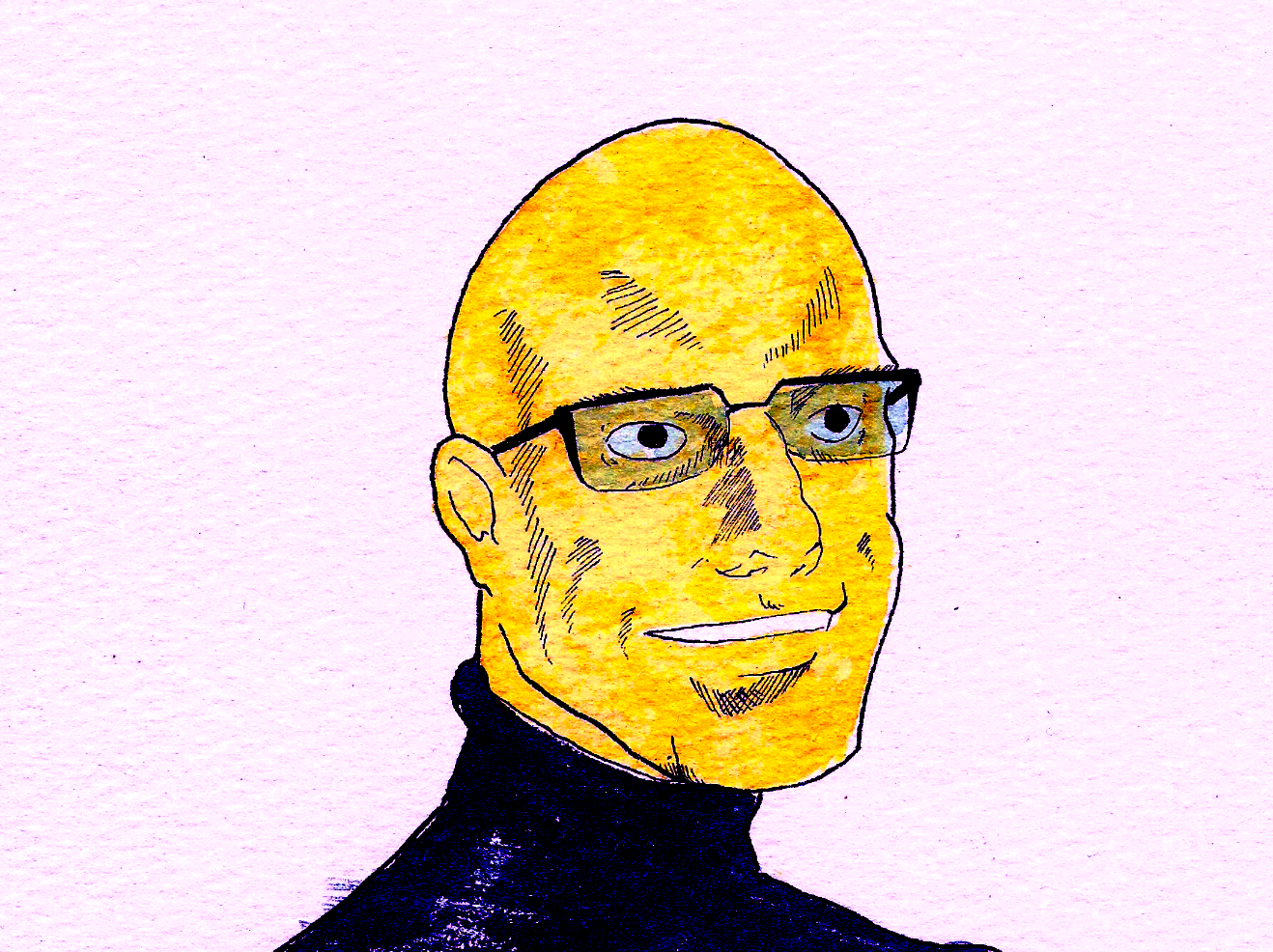
Image by Nemomain, via Wikimedia Commons
Michel Foucault (1926–1984) was an enormously influential French philosopher who wrote, among other things, historical analyses of psychiatry, medicine, the prison system, and the function of sexuality in social organizations. He spent some time during the last years of his life at UC Berkeley, delivering several lectures in English. And happily they were recorded for posterity:
- Four Lectures on Truth and Subjectivity (1980)
- Six Lectures on Discourse and Truth (1983)
- Three Lectures on “The Culture of the Self” (1983)
These last lectures are also available on YouTube (in audio format).
One of Foucault’s more controversial and memorable books was Discipline and Punish (1977), which traced the transition from the 18th century use of public torture and execution to–less than 50 years later–the prevalence of much more subtle uses of power, with a focus on incarceration, rehabilitation, prevention, and surveillance.
Here he is in 1983 commenting on that book (thanks for the link to Seth Paskin). The Partially Examined Life podcast recently discussed the book with Katharine McIntyre, doctoral candidate at Columbia. Foucault’s image of the panopticon well captures modern privacy concerns in the electronic age.
Finally, we leave you with a Schoolhouse Rock-style presentation of Foucault’s book The History of Sexuality, Volume 1 and some vintage video of Foucault’s 1971 debate with Noam Chomsky. Foucault’s lectures have been added to our list of Free Philosophy Courses, part of our big collection, 1,700 Free Online Courses from Top Universities.
If you would like to support the mission of Open Culture, consider making a donation to our site. It’s hard to rely 100% on ads, and your contributions will help us continue providing the best free cultural and educational materials to learners everywhere. You can contribute through PayPal, Patreon, and Venmo (@openculture). Thanks!
Mark Linsenmayer runs the Partially Examined Life philosophy podcast and blog. He also performs with the Madison, WI band New People.
Related Content:
Jacques Lacan, Academic Rock Star, Gives a Public Lecture, 1972
Lovers and Philosophers — Jean-Paul Sartre & Simone de Beauvoir Together in 1967
100 Free Online Philosophy Courses (Part of Our List of 875 Free Courses Online)
Read More...How Film Was Made in 1958: A Kodak Nostalgia Moment
Before pixels there were silver halide crystals, and before memory cards, film. Little yellow boxes cluttered the lives of photographers everywhere, and the Eastman Kodak Company was virtually synonymous with photography.
Things have really changed. With the recent news that Kodak is teetering on the brink of Chapter 11 bankruptcy, many are feeling nostalgia for those little yellow boxes and the rolls of silver gelatin film inside. To indulge this nostalgia–and perhaps learn something new about an old technology–we offer a fascinating 1958 documentary from Kodak entitled How Film is Made.
The documentary is in Dutch, but members of the Analog Photography Users Group launched a project to create English subtitles. You can read more about the project on Dutch member Marco Boeringa’s website. And you can watch the 18-minute film starting above and concluding below.
Follow Open Culture on Facebook and Twitter and share intelligent media with your friends. Or better yet, sign up for our daily email and get a daily dose of Open Culture in your inbox. And if you want to make sure that our posts definitely appear in your Facebook newsfeed, just follow these simple steps.
Read More...Fellini’s Fantastic TV Commercials
Last month we brought you some little-known soap commercials by Ingmar Bergman. Today we present a series of lyrical television advertisements made by the great Italian filmmaker Federico Fellini during the final decade of his life.
In 1984, when he was 64 years old, Fellini agreed to make a miniature film featuring Campari, the famous Italian apéritif. The result, Oh, che bel paesaggio! (“Oh, what a beautiful landscape!”), shown above, features a man and a woman seated across from one another on a long-distance train.
The man (played by Victor Poletti) smiles, but the woman (Silvia Dionisio) averts her eyes, staring sullenly out the window and picking up a remote control to switch the scenery. She grows increasingly exasperated as a sequence of desert and medieval landscapes pass by. Still smiling, the man takes the remote control, clicks it, and the beautiful Campo di Miracoli (“Field of Miracles”) of Pisa appears in the window, embellished by a towering bottle of Campari.
“In just one minute,” writes Tullio Kezich in Federico Fellini: His Life and Work, “Fellini gives us a chapter of the story of the battle between men and women, and makes reference to the neurosis of TV, insinuates that we’re disparaging the miraculous gifts of nature and history, and offers the hope that there might be a screen that will bring the joy back. The little tale is as quick as a train and has a remarkably light touch.”
Also in 1984, Fellini made a commercial titled Alta Societa (“High Society”) for Barilla rigatoni pasta (above). As with the Campari commercial, Fellini wrote the script himself and collaborated with cinematographer Ennio Guarnieri and musical director Nicola Piovani. The couple in the restaurant were played by Greta Vaian and Maurizio Mauri. The Barilla spot is perhaps the least inspired of Fellini’s commercials. Better things were yet to come.
In 1991 Fellini made a series of three commercials for the Bank of Rome called Che Brutte Notti or “The Bad Nights.” “These commercials, aired the following year,” writes Peter Bondanella in The Films of Federico Fellini, “are particularly interesting, since they find their inspiration in various dreams Fellini had sketched out in his dream notebooks during his career.”
In the episode above, titled “The Picnic Lunch Dream,” the classic damsel-in-distress scenario is turned upside down when a man (played by Paolo Villaggio) finds himself trapped on the railroad tracks with a train bearing down on him while the beautiful woman he was dining with (Anna Falchi) climbs out of reach and taunts him. But it’s all a dream, which the man tells to his psychoanalyst (Fernando Rey). The analyst interprets the dream and assures the man that his nights will be restful if he puts his money in the Banco di Roma.
The other commercials, which are currently not available online, are called “The Tunnel Dream” and “The Dream of the Lion in the Cellar.” (You can watch Roberto Di Vito’s short, untranslated film of Fellini and his crew working on the project here.)
The bank commercials were the last films Fellini ever made. He died a year after they aired, at age 73. In Kezich’s view, the deeply personal and imaginative ads amount to Fellini’s last testament, a brief but wondrous return to form. “In Federico’s life,” he writes, “these three commercial spots are a kind of Indian summer, the golden autumn of a patriarch of cinema who, for a moment, holds again the reins of creation.”
Follow Open Culture on Facebook and Twitter and share intelligent media with your friends. Or better yet, sign up for our daily email and get a daily dose of Open Culture in your inbox. And if you want to make sure that our posts definitely appear in your Facebook newsfeed, just follow these simple steps.
Read More...Watch Terry Gilliam’s Animated Short, The Christmas Card (1968)
In 1968, Terry Gilliam was a young American cartoonist living in London. He was having trouble making a living from magazine work, so his friend John Cleese suggested he get in touch with Humphrey Barclay, who was producing a slightly subversive television show for children called Do Not Adjust Your Set.
Subtitled “The Fairly Pointless Show,” it featured a group of previously unknown actors including Eric Idle, Michael Palin and Terry Jones, and attracted a cult following among adults. Barclay looked at Gilliam’s portfolio and decided he would fit right in.
For one early assignment, Gilliam was asked to prepare something for a special show to be broadcast on Christmas day, 1968, called Do Not Adjust Your Stocking. Looking for inspiration, he decided to visit the Tate Gallery. In The Pythons Autobiography of the Pythons, Gilliam remembered the project and how it figured into his emerging artistic style:
I went down to the Tate and they’ve got a huge collection of Victorian Christmas cards so I went through the collection and photocopied things and started moving them around. So the style just developed out of that rather than any planning being involved. I never analysed the stuff, I just did it the quickest, easiest way. And I could use images I really loved.
The result (above) is a hilarious free-associational send-up of traditional Christmas card motifs. In addition to being aired on the show, The Christmas Card was incorporated into Gilliam’s short debut film from 1968, Storytime, which is part of our collection of Free Movies Online.
For an update of Gilliam’s twisted take on Christmas–a darker reworking of his Malevolent Santa theme in The Christmas Card–look below for a drawing Gilliam posted a few days ago on his Facebook page. And as the man says, you better watch out!

via Bleeding Cool
Related Content:
Terry Gilliam: The Difference Between Kubrick (Great Filmmaker) and Spielberg (Less So)
Terry Gilliam (Monty Python) Shows You How to Make Your Own Cutout Animation
Read More...Ice Cube & Charles Eames Revel in L.A. Architecture
Here’s a little known fact about the rapper and actor Ice Cube. During his younger days, before he became a star, Mr. Cube studied architectural drafting at the Phoenix Institute of Technology in Arizona, where he gained an appreciation for the way architects, like rappers, can take existing materials and work them into entirely new creations. Yes, architects can do mashups, too. And perhaps no one did them better than the husband-and-wife design duo, Charles and Ray Eames, who built the Eames House, a landmark of modern architecture, in 1949.
In a video promoting a collaborative exhibit, “Pacific Standard Time: Art in L.A. 1945–1980,” Ice Cube drives the streets of L.A. and explains his admiration for the Eames House and other Los Angeles landmarks. Meanwhile below, you’ll find some vintage footage that captures Charles Eames (1907–1978), driving around the city, giving his own analysis of the hodge-podge architectural styles that define Los Angeles.
via The New York Times and Curiosity Counts
Read More...Support Us
We're hoping to rely on loyal readers, rather than erratic ads. Please click the Donate button and support Open Culture. You can use Paypal, Venmo, Patreon, even Crypto! We thank you!

About Us

Open Culture scours the web for the best educational media. We find the free courses and audio books you need, the language lessons & educational videos you want, and plenty of enlightenment in between.
Advertise With Us
FREE UPDATES!
GET OUR DAILY EMAIL
Get the best cultural and educational resources on the web curated for you in a daily email. We never spam. Unsubscribe at any time.
FOLLOW ON SOCIAL MEDIA
Open Culture editor Dan Colman scours the web for the best educational media. He finds the free courses and audio books you need, the language lessons & movies you want, and plenty of enlightenment in between.
Advertise With Us


