Why is the U.S. F’ed Up? 8 Lectures from Occupy Harvard Teach-In Provide Answers
Last Wednesday, the Occupy movement gained a little more intellectual momentum when eight faculty members from Harvard, Boston College, and N.Y.U. gathered in Cambridge to present a daylong Teach-In. In one talk, Archon Fung (Ford Foundation Professor of Democracy and Citizenship and Co-Director of Transparency Policy Project at Harvard) took a vague thesis of the Occupy movement — “Shit is Fucked Up and Bullshit” — and gave it some academic depth in a data-filled talk called “Why Has Inequality Grown in America? And What Should We Do About It?” The other talks are available on YouTube (see links below) or via audio stream:
Heterodox Economics: Alternatives to Mankiw’s Ideology - Stephen Marglin, Walter Barker Professor of Economics, Faculty of Arts and Sciences, Harvard University
Wall Street’s Role in the European Financial Crisis - Richard Parker, Lecturer in Public Policy and Senior Fellow at the Shorenstein Center, Kennedy School of Government, Harvard University
The Occupy Movement and Student Debt Refusal — Andrew Ross, Professor of Social and Cultural Analysis, New York University
Economics for the 99% — Juliet Schor, Professor of Sociology, Boston College
Booms and Busts: The Legal Dynamics of Modern Money — Christine Desan, Professor of Law, Harvard Law School, Harvard University
Fear and Power — Brad Epps, Professor of Romance Languages & Literatures and Department Chair for Studies in Women, Gender, and Sexuality, Faculty of Arts and Sciences, Harvard University
Vigilance, Inquiry, Alienation & Hope at Harvard and in the USA - John Womack, Robert Woods Bliss Professor of Latin American History and Economics, Faculty of Arts and Sciences, Harvard University
Related Content:
Noam Chomsky at Occupy Boston
Harvard Thinks Big, a TED-Esque Event
Read More...The Dark Knight: Anatomy of a Flawed Action Scene
There are many ways to make a movie, says film critic Jim Emerson, and many ways to make a mess.
The truck chase scene from Christopher Nolan’s 2008 film The Dark Knight is frankly a mess, as Emerson demonstrates in a fascinating video essay (above) produced as the first in a three-part series on the language of action sequences for the Indiewire blog Press Play. “We notice lapses in visual logic whether our brains register them consciously or not,” writes Emerson. “I found this scene utterly baffling the first time I saw it, and every subsequent time. At last, I now know exactly why.”
After studying the sequence shot by shot he realized that Nolan had violated fundamental rules of film grammar. You can follow along as Emerson, a Seattle-based critic who writes the Scanners film blog for the Chicago Sun-Times, sorts out the confusion. (There is an accompanying annotated transcript on Scanners.) And be sure to watch Emerson’s follow-up essays (below) which offer shot-by-shot analyses of action scenes that are clearly intelligible.
In Part II of his series (above), Emerson breaks down the highway chase scene from Phillip Noyce’s 2010 film, Salt. The sequence is easy to follow because Noyce is careful to establish the spatial relationships between the various elements, both within the frame and between shots. Writes Emerson:
There are certain directors I think of as “one-thing-at-a-time” filmmakers. That is, they seem to be incapable of composing shots that have more than one piece of information in them at a time. This makes for a very flat, rather plodding style. You see what the camera is pointed at in each shot, but you get very little sense of perspective when it comes to relating it to other elements in the scene. Noyce’s technique is much more fluid, organic and sophisticated. He keeps things from one shot visible in the next, even when shifting perspective–whether it’s only a few feet or clear across several lanes of traffic.
In Part III (above), Emerson revisits classic chase scenes from three films: Don Siegel’s The Lineup (1958), Peter Yates’s Bullitt (1968) and William Friedkin’s The French Connection (1971). In each case the director takes you on a chaotic, bumpy ride–but never loses you.
Read More...
A Day in Venezia
3,000,000 tourists move through Venice each year. The flood starts during the spring and peaks in summer, then recedes during the cooler months, giving the local residents a little peace. True, the city, made up of 124 islands, 183 canals and 438 bridges, is radiant during the summer. (Just watch below.) But the “Queen of the Adriatic” takes on a different beauty in the winter, something that a tourist, who simply goes by FKY, captures in an artful video above. Enjoy, and if you want to know more about the architectural wonders of this 1500-year-old city, don’t miss How Venice Works.
Read More...Stanford Launching 14 Free Online Courses in January/February: Enroll Today
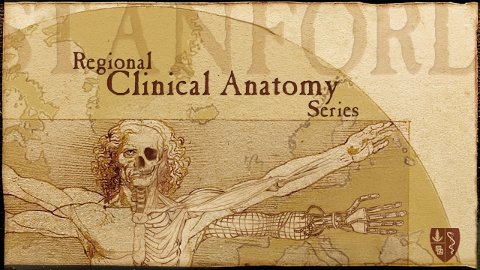 Two weeks ago, we mentioned that Stanford will be rolling out seven new courses in its experiment with online learning. Fast forward to today, and yet another seven courses have been added to the winter lineup, bringing the total to 14.
Immediately below, you’ll find the latest additions. All of these courses feature interactive video clips; short quizzes that provide instant feedback; the ability to pose high value questions to Stanford instructors; and feedback on your overall performance in the class.
Courses start in January and February. Enroll today for free. And, if something doesn’t pique your interest below, don’t miss our big list of 400 Free Online Courses.
Newly added:
Technology Entrepreneurship
Making Green Buildings
Anatomy
Information Theory
Design and Analysis of Algorithms I
The Lean Launchpad
Cryptography
Originally mentioned:
Computer Science 101
Software Engineering for SaaS
Human Computer Intereaction
Natural Language Processing
Game Theory
Probabilistic Graphical Models
Machine Learning
More Free Courses from Top Universities
Yale Rolls Out 10 New Courses – All Free
MIT Introduces Complete Courses to OpenCourseWare Project
Harvard Presents Free Courses with the Open Learning Initiative
Read More...Iconic Photographer Henri Cartier-Bresson Takes You Inside His Creative World: Watch “The Decisive Moment”
The great artists are often the ones who are best at recognizing and exploiting the unique character of their medium.
In the early 20th century, photography was mired in an intentionally fuzzy Pictorialism. The prevailing view was that photography had to imitate painting, or it wasn’t “art.” So in the early 1930s Edward Weston, Ansel Adams and a few others on the West Coast formed Group f/64 in protest. They embraced their medium’s inherent strength by placing large format cameras on tripods and stopping the lenses way down (all the way to f/64) to capture scenes with a level of detail and clarity that a painter could only dream of achieving.
Across the Atlantic an even greater revolution was taking place. With the introduction of the 35mm Leica camera and fast films, European photographers in the late 1920s and early 1930s were beginning to explore the medium’s astonishing ability to freeze time. Not only could photography render a static scene with more detail than painting, it could isolate and preserve an otherwise transitory moment from the flux of life. No artist seized upon this essential aspect of photography with greater brilliance and consistency than the Frenchman Henri Cartier-Bresson.
“In photography,” wrote Cartier-Bresson, “there is a new kind of plasticity, the product of instantaneous lines made by movements of the subject. We work in unison with movement as though it were a presentiment of the way in which life itself unfolds. But inside movement there is one moment at which the elements in motion are in balance. Photography must seize upon this moment and hold immobile the equilibrium of it.”
Cartier-Bresson would often say that his greatest joy was geometry. When he was 20 years old he studied painting under the cubist André Lhote, who adopted for his school the motto of Plato’s Academy: “Let no one ignorant of geometry enter.” Cartier-Bresson took an early interest in mathematically sophisticated painters. “He loved Paolo Uccello and Piero della Francesca because they were the painters of divine proportions,” writes Pierre Assouline in his book, Henri Cartier-Bresson: A Biography. “Cartier-Bresson was so immersed in their works that his mind filled with protractors and plumb lines. Like them, he dreamed of diagonals and proportions, and became obsessed with the mystique of measurements, as if the world was simply the product of numerical combinations.”
At the same time the young artist fell under the sway of a teacher whose approach was decidedly less rational. While still in his teens, Cartier-Bresson began sitting in on André Breton’s legendary Surrealist gatherings at the Café de la Place Blanche. He had little regard for Surrealist painting, but was intoxicated with the Surrealist philosophy of life: the emphasis on chance and intuition, the role of spontaneous expression, the all-encompassing attitude of revolt. It made a profound impression. In Henri Cartier-Bresson: The Early Work, Peter Galassi describes the Surrealist approach to life in a way that also neatly captures Cartier-Bresson’s eventual modus operandi as a photographer: “Alone, the Surrealist wanders the streets without destination but with a premeditated alertness for the unexpected detail that will release a marvelous and compelling reality just beneath the banal surface of ordinary existence.”
The geometric formalism of Renaissance painting and the serendipity of Surrealism were two key influences on Cartier-Bresson’s photography. A third came as an epiphany when he stumbled upon a reproduction of Martin Munkácsi’s “Three Boys at Lake Tanganyika.” The picture showed a group of African boys frolicking in the water. If the photographer had pressed the shutter a millisecond earlier or later, the beautifully balanced, interlocking composition would not have existed. “I suddenly understood that photography can fix eternity in a moment,” Cartier-Bresson later said. He gave up painting and bought his first Leica.
Over the next half century Cartier-Bresson would travel the world with a Leica in one hand, the strap twisted around his wrist, ready to raise it to his eye and fix eternity at any moment. Inwardly he held onto the spirit of Surrealism while outwardly calling himself a photojournalist. As a photojournalist he witnessed some of the biggest events of the 20th century. He was with Gandhi a few minutes before he was assassinated in 1948. He was in China when the communists took over in 1949. “He was the Tolstoy of photography,” said Richard Avedon shortly after Cartier-Bresson’s death in 2004 at the age of 95. “With profound humanity, he was the witness of the 20th Century.”
“To take photographs,” Cartier-Bresson once said, “is to hold one’s breath when all faculties converge in the face of fleeing reality. It is at that moment that mastering an image becomes a great physical and intellectual joy.”
Henri Cartier-Bresson: The Decisive Moment (above) is an 18-minute film produced in 1973 by Scholastic Magazines, Inc. and the International Center of Photography. It features a selection of Cartier-Bresson’s iconic photographs, along with rare commentary by the photographer himself.
Read More...Pepper Spraying Peaceful Protestors Continues; This Time at UC Davis
It’s becoming a trend. Around the country, policemen are pepper spraying peaceful protestors. It started in NYC when Tony Bologna, one of New York’s finest, pepper sprayed a group of young women already cordoned off by a police barrier. Next they managed to get an 84 year old woman in Seattle. And now Lieutenant John Pike gives UC Davis protestors a face full of pepper spray, even though they were peacefully seated on the ground. To make things worse, “When students covered their eyes with their clothing, police forced open their mouths and pepper-sprayed down their throats,” or so claims Nathan Brown, an assistant professor in the English Department. (You can read a first-hand student account here.)
Initially the chancellor of the university, Linda P.B. Katehi, appeared to defend the police action. But, as the video above went viral, she began changing her tune and calling for an investigation into the matter. Nothing like a little transparency … and some public shaming (below) … to make people see the light.
You can read a fuller account of Friday’s events in the UC Davis newspaper. Also don’t miss the paper’s collection of photos on Flickr. And I’d also recommend the analysis by James Fallows over at The Atlantic. Here’s the money quote:
I can’t see any legitimate basis for police action like what is shown here. Watch that first minute and think how we’d react if we saw it coming from some riot-control unit in China, or in Syria. The calm of the officer who walks up and in a leisurely way pepper-sprays unarmed and passive people right in the face? We’d think: this is what happens when authority is unaccountable and has lost any sense of human connection to a subject population. That’s what I think here.
And perhaps we can add this thought. If you’re the chancellor, the person charged with overseeing the education and welfare of students, you shouldn’t recognize the problem with Friday’s events only when the political heat gets turned up. Talk about a lack of human connection.…
Updates:
Officers in pepper spray incident placed on leave
Learn about pepper spray and the harm it does
Read More...Conception to Birth Visualized
Alexander Tsiaras has made a career of using advances in visualization technology to offer vivid tours of the human body. His books have taken readers inside the human heart, the kidneys and vascular system, and also human reproduction. Back in 2002, Tsiaras published From Conception to Birth: A Life Unfolds, a book that offers a “visual diary of fetal development.” Now, nearly a decade later, he brings that visual diary to video at a conference affiliated with TED. The visuals are impressive. There’s no denying that. But what might leave you cold (or not) is his willingness to talk about human development in terms of “mystery, magic, and divinity” rather than trying to grapple with any scientific analysis. Is this a nod to “Intelligent Design”? Or an unfortunate byproduct of the short talk format? Who knows.…
Read More...Marshall McLuhan on the Stupidest Debate in the History of Debating (1976)
In September 1976, Jimmy Carter and Gerald Ford squared off in a presidential debate, and the following day, the legendary communication theorist Marshall McLuhan appeared on the TODAY show, then hosted by Tom Brokaw, to offer some almost real-time analysis of the debate. The first televised presidential debate was famously held in 1960, and it pitted John F. Kennedy against Richard Nixon. Sixteen years later, pundits and citizens were still trying to make sense of the format. Was the televised debate a new and vital part of American democracy? Or was it a carefully controlled act of political performance? For McLuhan, there was still some idealistic sense that televised debates could enhance our democracy, assuming the message was suited to the medium. But McLuhan came away disillusioned, calling the Carter/Ford spectacle “the most stupid arrangement of any debate in the history of debating” and chalking up technical difficulties (watch them here) to the medium raging against the message.
If you would like to support the mission of Open Culture, consider making a donation to our site. It’s hard to rely 100% on ads, and your contributions will help us continue providing the best free cultural and educational materials to learners everywhere. You can contribute through PayPal, Patreon, and Venmo (@openculture). Thanks!
Related Content:
Norman Mailer & Marshall McLuhan Debate the Electronic Age
The Visionary Thought of Marshall McLuhan, Introduced and Demystified by Tom Wolfe
Marshall McLuhan’s 1969 Deck of Cards, Designed For Out-of-the-Box Thinking
Read More...Noam Chomsky & Michel Foucault Debate Human Nature & Power (1971)
Once again, we’re heading back to 1971. Yesterday we had Dick Cavett’s 1971 interview with George Harrison. Today, it’s the clash of two intellectual titans, Noam Chomsky and Michel Foucault. In ’71, at the height of the Vietnam War, the American linguist and French historian/social theorist appeared on Dutch TV to debate a fundamental question: Is there such a thing as innate human nature? Or are we shaped by experiences and the power of cultural and social institutions around us?
40 years later, you can find the classic debate on YouTube. If you need subtitles, make sure you turn on the captions function at the bottom of the video.
A full transcript of the debate can be read online, or you can purchase a copy in book format. Finally, a recent BBC program revisits and analyzes the Chomsky-Foucault encounter. H/T Metafilter
Related Content:
Free Online Courses in Philosophy
Jacques Lacan Speaks; Zizek Provides Free Cliffs Notes
Download Free Courses from Famous Philosophers: From Bertrand Russell to Michel Foucault
Noam Chomsky vs. William F. Buckley, 1969
Ali G and Noam Chomsky Talk Linguistics
Read More...Download Free Courses from Famous Philosophers: From Bertrand Russell to Michel Foucault
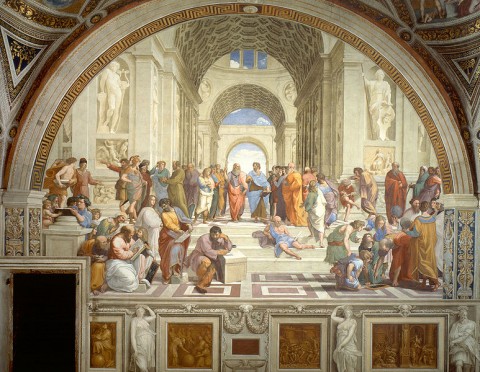
You can download hundreds of Free Courses from Great Universities. (Perhaps you already knew that.) And that includes courses by some of the biggest minds teaching in philosophy. (Is that old news too? Or some welcomed good news?) So we’re starting the week by giving you a rundown of some notable mentions.
John Searle began teaching philosophy at UC-Berkeley in 1959, and first did important work on “speech act” theory. Later he turned to consciousness and artificial intelligence, out of which came his famous “Chinese room” thought experiment. You can find a nice trio of classes online.
- Philosophy of Language — iTunes
- Philosophy of Mind — iTunes
- Philosophy of Society — iTunes
Walter Kaufmann spent 33 years teaching philosophy at Princeton. And more than anyone else, Kaufmann introduced Nietzsche’s philosophy to the English-speaking world and made it possible to take Nietzsche seriously as a thinker. Here he delivers three lectures on existentialists.
- Lectures on Nietzsche, Kierkegaard and Sartre — Web Site
Leo Strauss landed at The University of Chicago in 1949, where he spent decades teaching and writing on political philosophy, especially the political thought of the Ancients. His intellectual legacy is controversial, but his courses valuable.
- Hegel: The Philosophy of History - Web Site
- Kant — Web Site
- Nietzsche, Beyond Good and Evil - Web Site
Find many more Strauss courses here.
Bertrand Russell was one of the most important British philosophers of the last century — a logician, essayist and social critic best known for his work in mathematical logic and analytic philosophy. When it comes to this lecture series, start with the bottom lecture first and then work your way up.
- Authority & the Individual: Six BBC Lectures — Web Site
Michel Foucault taught history and philosophy at the Collège de France and published influential writings on power, knowledge, and discourse.
- Six Lectures on Truth & Subjectivity presented on the UC Berkeley campus (English) - YouTube
Find more Foucault audio here and here.
Hubert Dreyfus has taught many popular existentialism and phenomenology courses also at UC Berkeley, some of which laid the foundation for his new book, All Things Shining: Reading the Western Classics to Find Meaning in a Secular Age.
- Existentialism in Literature & Film — iTunes
- Heidegger — iTunes
- Heidegger’s Being & Time — iTunes
Michael Sandel has taught political philosophy at Harvard since 1980. His course on justice (below) has been taken by more than 15,000 students, making it the most popular undergraduate course at Harvard. This version aired on PBS and the web.
For all 75 philosophy courses, please see the Philosophy section of our list of 575 Free Online Courses.
Related Content:
The Harvard Classics: A Free Digital Collection
Stephen Fry on Philosophy & Unbelief
The Existential Star Wars: Sartre Meets Darth Vader
Read More...Support Us
We're hoping to rely on loyal readers, rather than erratic ads. Please click the Donate button and support Open Culture. You can use Paypal, Venmo, Patreon, even Crypto! We thank you!

About Us

Open Culture scours the web for the best educational media. We find the free courses and audio books you need, the language lessons & educational videos you want, and plenty of enlightenment in between.
Advertise With Us
FREE UPDATES!
GET OUR DAILY EMAIL
Get the best cultural and educational resources on the web curated for you in a daily email. We never spam. Unsubscribe at any time.
FOLLOW ON SOCIAL MEDIA
Open Culture editor Dan Colman scours the web for the best educational media. He finds the free courses and audio books you need, the language lessons & movies you want, and plenty of enlightenment in between.
Advertise With Us

