The Art of the Marbler: An Enchanting Film on the Centuries-Old Craft of Making Handmade Marbled Paper
The current mode of scandal in business and politics involves email and tweets rather than memoranda. But we do not yet live a paperless world, even if you haven’t dusted your printer in months. Book production and sales continue to rise, for example, defying predictions of a few years back that eBooks would overtake print. Even if we have to someday make paper in laboratories rather than forests and mills, it’s hard to imagine readers ever letting go of the pleasures of its textures and smells, or of simple, yet satisfying acts like placing a favorite paper bookmark in the creases.
We do, however, seem to live in a largely stationary-less world, and we have for some time. As the fine art of making artisanal papers recedes into history, so too does the printing of books with marbled covers and pages.
Yet, if you have on your shelf hardback books anywhere from 30 to 130 years old, you no doubt have a few with marbled patterns on them or in them. And if you’ve ever wondered about this strange art form, wonder no more. The 1970 British educational film, “The Art of the Marbler,” above, offers a broad overview of this fascinating “material which has covered books for many centuries.”
Produced by Bedfordshire Record Office of Cockerell Marbling and directed by K.V. Whitbread, the short film is a marvel of quaintness. It effortlessly achieves the kind of quirk Wes Anderson’s films strive for simply by being itself. We learn that every marbled paper, unlike Christmas wrapping paper, is a “separate and unique original.” And that the process is precious and specialized, and nearly all done by hand. Lest we become too enamored of the idea that marbling is strictly a historical curiosity these days, the mesmerizing video above from 2011 by Seyit Uygur shows us up close how his parents perform the art of Ebru, Turkish for paper marbling.
Marbling, the “printmaking technique that basically looks like capturing a galaxy on a page,” as Emma Dajska writes at Rookie, became quite popular in the Islamic world, where intricate patterns stood in lieu of portraits. But the process originated neither in England nor Turkey, but in China and, later, Japan, where it is known as Suminagashi, or “floating ink.” The Japanese technique, as you can see in the video tutorial above from Chrystal Shaulis, is very different from British Marbling or Turkish Ebru, seeming to combine the methods of Jackson Pollack with those of the Zen gardener. However it’s done, the results, as “The Art of the Marbler” tells and shows us, are each one a “unique original.”
“The Art of the Marbler” will be added to our list of Free Documentaries, a subset of our collection, 4,000+ Free Movies Online: Great Classics, Indies, Noir, Westerns, Documentaries & More.
Related Content:
The Making of Japanese Handmade Paper: A Short Film Documents an 800-Year-Old Tradition
How Ink is Made: The Process Revealed in a Mouth-Watering Video
Josh Jones is a writer and musician based in Durham, NC. Follow him at @jdmagness
Read More...Google Creates a Digital Archive of World Fashion: Features 30,000 Images, Covering 3,000 Years of Fashion History
Both the fashion and art worlds foster the creation of rarified artifacts inaccessible to the majority of people, often one-of-a-kind pieces that exist in specially-designed spaces and flourish in cosmopolitan cities. Does this mean that fashion is an art form like, say, painting or photography? Doesn’t fashion’s ephemeral nature mark it as a very different activity? We might consider that we can ask many of the same questions of haute couture as we can of fine art. What are the social consequences of taking folk art forms, for example, out of their cultural context and placing them in gallery spaces? What is the effect of tapping street fashion as inspiration for the runway, turning it into objects of consumption for the wealthy?
Such questions should remind us that fashion and the arts are embedded in human cultural and economic history in some very similar ways. But they are also very different social practices. Much like trends in food (both fine dining and cheap consumables) fashion has long been implicated in the spread of markets and industries, labor exploitation, environmental degradation, and even microbes. As Jason Daley points out at Smithsonian, “The craze for silk in ancient Rome helped spawn the Silk Road, a fashion for feathered hats contributed to the first National Wildlife Refuges. Fashion has even been wrapped up in pandemics and infectious diseases.”
So how to tell the story of a human activity so deeply embedded in every facet of world history? Expansively. Google Arts & Culture has attempted to do so with its “We wear culture” project. Promising to tell “the stories behind what we wear,” the project, as you can see in the teaser video at the top, “travelled to over 40 countries, collaborating with more than 180 cultural institutions and their world-renowned historians and curators to bring their textile and fashion collections to life.” Covering 3,000 years of history, “We wear culture” uses video, historical images, short quotes and blurbs, and fashion photography to create a series of online gallery exhibits of, for example, “The Icons,” profiles of designers like Oscar de la Renta, Coco Chanel, and Issey Miyake.
Another exhibit “Fashion as Art” includes a feature on Florence’s Museo Salvatore Ferragamo, a gallery dedicated to the famous designer and containing 10,000 models of shoes he created or owned. Asking the question “is fashion art?”, the exhibit “analyses the forms of dialogue between these two worlds: reciprocal inspirations, overlaps and collaborations, from the experiences of the Pre-Raphaelites to those of Futurism, and from Surrealism to Radical Fashion.” It’s a wonder they don’t mention the Bauhaus school, many of whose resident artists radicalized fashion design, though their geometric oddities seem to have had little effect on Ferragamo.
As you might expect, the emphasis here is on high fashion, primarily. When it comes to telling the stories of how most people in the world have experienced fashion, Google adopts a very European, supply side, perspective, one in which “The impact of fashion,” as one exhibit is called, spans categories “from the economy and job creation, to helping empower communities.” Non-European clothing makers generally appear as anonymous folk artisans and craftspeople who serve the larger goal of providing materials and inspiration for the big names.
Cultural historians may lament the lack of critical or scholarly perspectives on popular culture, the distinct lack of other cultural points of view, and the intense focus on trends and personalities. But perhaps to do so is to miss the point of a project like this one—or of the fashion world as a whole. As with fine art, the stories of fashion are often all about trends and personalities, and about materials and market forces.
To capitalize on that fact, “We wear culture” has a number of interactive, 360 degree videos on its YouTube page, as well as short, advertising-like videos, like that above on ripped jeans, part of a series called “Trends Decoded.” Kate Lauterbach, the program manager at Google Arts & Culture, highlights the videos below on the Google blog (be aware, the interactive feature will not work in Safari).
- Find out how Chanel’s black dress made it acceptable for women to wear black on any occasion (Musée des Arts Décoratifs, Paris, France — 1925)
- Step on up—way up—to learn how Marilyn Monroe’s sparkling red high heels became an expression of empowerment, success and sexiness for women (Museo Salvatore Ferragamo from Florence, Italy — 1959)
- See designer Vivienne Westwood’s unique take on the corset, one of the most controversial garments in history (Victoria and Albert Museum, London, UK — 1990)
- Discover the Comme des Garçons sweater and skirt with which Rei Kawakubo brought the aesthetics and craftsmanship of Japanese design onto the global fashion stage (Kyoto Costume Institute, Kyoto, Japan — 1983)
Does the project yet deliver on its promise, to “tell the stories behind what we wear”? That all depends, I suppose, on who “we” are. It is a very valuable resource for students of high fashion, as well as “a pleasant way to lose an afternoon,” writes Marc Bain at Quartz, one that “may give you a new understanding of what’s hanging in your own closet.”
“We wear culture” features 30,000 fashion pieces and more than 450 exhibits. Start browsing here.
Related Content:
1930s Fashion Designers Predict How People Would Dress in the Year 2000
Punk Meets High Fashion in Metropolitan Museum of Art Exhibition PUNK: Chaos to Couture
Josh Jones is a writer and musician based in Durham, NC. Follow him at @jdmagness
Read More...A Short, Animated Introduction to Emil Cioran, the “Philosopher of Despair”
It is admittedly a gross oversimplification, but if asked to summarize a critical difference between analytical Anglo-American philosophers and so-called “Continentals,” one might broadly say that the former approach philosophy as thinking, the latter as writing. Contrast, for example, John Locke, Thomas Hobbes, and Bertrand Russell—none of whom are especially known as prose stylists—with Michel de Montaigne, Kierkegaard, Nietzsche, or Albert Camus. While the Englishmen struck out into heady intellectual waters indeed, the Europeans brought the full weight of their personalities to bear on their investigations. They invented personae, wrote literary aphorisms, and often wrote fiction, drama, and dialogue in addition to philosophy.
Surely there are many exceptions to this scheme, but on the whole, Continental thinkers have been looser with the laws of logic and more intimate with the rules of rhetoric, as well as with their own emotional lives. But perhaps one of the greatest examples of such a philosophical writer is someone most of us have never heard of. After watching this short School of Life video introduction on Romanian-French philosopher Emil Cioran, we may be persuaded to get to know his work. Cioran, says Alain de Botton above, “is very much worthy of inclusion in the line of the greatest French and European moral philosophers and writers of maxims stretching back to Montaigne, Chamfort, Pascal, and La Rochefoucauld.”
Costica Bradatan describes Cioran as a “20th-century Nietzsche, only darker and with a better sense of humor.” Called a “philosopher of despair” by the New York Times upon his death in 1995, Cioran’s “hair-shirted world view resonated in the titles” of books like On the Heights of Despair, Syllogisms of Bitterness, and The Trouble with Being Born. Though his deeply pessimistic outlook was consistent throughout his career, he was not a systematic thinker. “Cioran often contradicts himself,” writes Bradatan, “but that’s the least of his worries. With him, self-contradiction is not even a weakness, but the sign a mind is alive.”
Like Nietzsche, Cioran possessed a “brooding, romantic, fatalistic temperament” combined with an obsession with religious themes, inherited from his father, a Greek Orthodox priest. The two also share a penchant for pithy aphorisms both shocking and darkly funny in their brutal candor. De Botton quotes one example: “It is not worth the bother of killing yourself, since you always kill yourself too late.” For Cioran, Bradatan remarks, writing philosophy was “not about being consistent, nor about persuasion or keeping a readership entertained.” It was a personal act of survival. “You write not to produce some body of text, but to act upon yourself; to bring yourself together after a personal disaster or to pull yourself out of a bad depression.”
Cioran put it this way: “Write books only if you are going to say in them the things you would never dare confide to anyone.” In his thematic obsessions, literary elegance, and personal investment in his work, Cioran resembles a number of writers we admire because philosophy for them was not a matter of rational abstraction; it was an active engagement with the most personal, yet universal, questions of life and death.
Related Content:
Free Online Philosophy Courses
Josh Jones is a writer and musician based in Durham, NC. Follow him at @jdmagness
Read More...A New Theme Park Based on Hayao Miyazaki’s My Neighbor Totoro Set to Open in 2020
Is a frame of reference necessary to appreciate Disney World? Can you enjoy a ride in a spinning teacup if you have no working knowledge of Alice in Wonderland? What sort of magic might the Magic Kingdom hold for those who’ve never heard of Cinderella or Peter Pan?
Now imagine if the theme park’s scope was narrowed to a single film.
You’ve got until 2020 to sneak in a viewing of the Hayao Miyazaki film, My Neighbor Totoro, before Ghibli Park, a 500-acre amusement park on the grounds of Japan’s 2005 World’s Fair site, opens.
To date, Miyazaki’s Studio Ghibli has produced more than a dozen feature-length animated films. That’s a lot of raw material for attractions.
Porco Rosso’s 1930s seaplanes have ride written all over them, and think of the Haunted Mansion-esque thrills that could be wrung from Spirited Away’s bathhouse.
How about a Jungle Cruise-style ramble through the countryside in Howl’s Moving Castle?
An underwater adventure with goldfish princess Ponyo?
Prepare for a very long wait if you’re joining the queue for those. It’s being reported that Ghibli Park will focus exclusively on a single film, 1988’s My Neighbor Totoro.
(Care to take a guess what its Mouse Ears will look like?)
The film’s theme of respect for the natural world is good news for the area’s existing flora. The governor of Japan’s Aichi Prefecture, where Ghibli Park is to be situated, has announced that it will be laid out in such a way as to preserve the trees.
Presumably the film’s iconic cat bus and fast growing camphor tree, above, will be powered by the greenest of energies.
Preview the sort of wonders in store by touring the lifesize house of My Neighbor Totoro’s human characters, Satsuki and Mei, below.
Related Content:
Hayao Miyazaki’s Masterpieces Spirited Away and Princess Mononoke Imagined as 8‑Bit Video Games
Software Used by Hayao Miyazaki’s Animation Studio Becomes Open Source & Free to Download
Hayao Miyazaki Picks His 50 Favorite Children’s Books
Ayun Halliday is an author, illustrator, theater maker and Chief Primatologist of the East Village Inky zine. She’ll be appearing onstage in New York City in Paul David Young’s Faust 3, opening later this week. Follow her @AyunHalliday.
Read More...Artists May Have Different Brains (More Grey Matter) Than the Rest of Us, According to a Recent Scientific Study

Image Photo courtesy of the Laboratory of Neuro Imaging at UCLA.
Sometimes—as in the case of neuroscience—scientists and researchers seem to be saying several contradictory things at once. Yes, opposing claims can both be true, given different context and levels of description. But which is it, Neuroscientists? Do we have “neuroplasticity”—the ability to change our brains, and therefore our behavior? Or are we “hard-wired” to be a certain way by innate structures.
The debate long predates the field of neuroscience. It figured prominently in the work, for example, of John Locke and other early modern theorists of cognition—which is why Locke is best known as the theorist of tabula rasa. In “Some Thoughts Concerning Education,” Locke mostly denies that we are able to change much at all in adulthood.
Personality, he reasoned, is determined not by biology, but in the “cradle” by “little, almost insensible impressions on our tender infancies.” Such imprints “have very important and lasting consequences.” Sorry, parents. Not only did your kid get wait-listed for that elite preschool, but their future will also be determined by millions of sights and sounds that happened around them before they could walk.
It’s an extreme, and unscientific, contention, fascinating as it may be from a cultural standpoint. Now we have psychedelic-looking brain scans popping up in our news feeds all the time, promising to reveal the true origins of consciousness and personality. But the conclusions drawn from such research are tentative and often highly contested.
So what does science say about the eternally mysterious act of artistic creation? The abilities of artists have long seemed to us godlike, drawn from supernatural sources, or channeled from other dimensions. Many neuroscientists, you may not be surprised to hear, believe that such abilities reside in the brain. Moreover, some think that artists’ brains are superior to those of mediocre ability.
Or at least that artists’ brains have more gray and white matter than “right-brained” thinkers in the areas of “visual perception, spatial navigation and fine motor skills.” So writes Katherine Brooks in a Huffington Post summary of “Drawing on the right side of the brain: A voxel-based morphometry analysis of observational drawing.” The 2014 study, published at NeuroImage, involved a very small sampling of graduate students, 21 of whom were artists, 23 of whom were not. All 44 students were asked to complete drawing tasks, which were then scored and compared to images of their brain taken by a method called “voxel-based morphometry.”
“The people who are better at drawing really seem to have more developed structures in regions of the brain that control for fine motor performance and what we call procedural memory,” the study’s lead author, Rebecca Chamberlain of Belgium’s KU Leuven University, told the BBC. (Hear her segment on BBC Radio 4’s Inside Science here.) Does this mean, as Artnet News claims in their quick take, that “artists’ brains are more fully developed?”
It’s a juicy headline, but the findings of this limited study, while “intriguing,” are “far from conclusive.” Nonetheless, it marks an important first step. “No studies” thus far, Chamberlain says, “have assessed the structural differences associated with representational skills in visual arts.” Would a dozen such studies resolve questions about causality–nature or nurture? As usual, the truth probably lies somewhere in-between.
At Smithsonian, Randy Rieland quotes several critics of the neuroscience of art, which has previously focused on what happens in the brain when we look at a Van Gogh or read Jane Austen. The problem with such studies, writes Philip Ball at Nature, is that they can lead to “creating criteria of right or wrong, either in the art itself or in individual reactions to it.” But such criteria may already be predetermined by culturally-conditioned responses to art.
The science is fascinating and may lead to numerous discoveries. It does not, as the Creators Project writes hyperbolically, suggest that “artists actually are different creatures from everyone else on the planet.” As University of California philosopher professor Alva Noe states succinctly, one problem with making sweeping generalizations about brains that view or create art is that “there can be nothing like a settled, once-and-for-all account of what art is.”
Emerging fields of “neuroaesthetics” and “neurohumanities” may muddy the waters between quantitative and qualitative distinctions, and may not really answer questions about where art comes from and what it does to us. But then again, given enough time, they just might.
Related Content:
This Is Your Brain on Jane Austen: The Neuroscience of Reading Great Literature
The Neuroscience of Drumming: Researchers Discover the Secrets of Drumming & The Human Brain
The Neuroscience & Psychology of Procrastination, and How to Overcome It
Josh Jones is a writer and musician based in Durham, NC. Follow him at @jdmagness
Read More...Why Catchy Songs Get Stuck in Our Brains: New Study Explains the Science of Earworms
What’s your current earworm?
For obvious yet sad reasons, “Raspberry Beret” and “Ashes to Ashes” have tunneled into my brain in the past year. Can’t seem to shake ‘em loose, though it certainly could be worse. Wander through a shopping mall (while they still exist), go to a chain restaurant or grocery store. You may pick up an unwanted passenger—the tune of a song you loathe, yet cannot for the life of you forget.
But can the Prince/Bowie soundtrack in my mind properly be called an “earworm”? According to researchers at Durham University, Goldsmiths, University of London, and the University of Tubingen, this is a scientific question. Music psychologist Kelly Jakubowski of Durham University and her colleagues published a study last year titled “Dissecting an Earworm: Melodic Features of Song Popularity Predict Involuntary Musical Imagery.” In it, they define the properties of songs that produce “involuntary” recall.
You can read the study yourself here. It begins with a summary of the previous research on “the concepts of musical ‘catchiness’ and song ‘hooks,’” as well as the advice successful musicians often give for writing “hooks” that will stick with listeners for life. It’s not as easy as it looks, though one of the hallmarks of a successful earworm is simplicity. As Joanna Klein writes at the New York Times, Jakubowski and her colleagues “found that earworm songs tended to be fast, with a common, simple melodic structure that generally went up and down and repeated, like ‘Twinkle Twinkle Little Star.’”
However, earworms also unsettle our expectations of simple melodies, with “surprising, unusual intervals,” as in the chorus of Lady Gaga’s insidious “Bad Romance” or, bane of every guitar store employee, Deep Purple’s “Smoke on the Water.” Research on earworms began, notes Klein, in 2001, “when James Kellaris, a marketing researcher and composer at the University of Cincinnati translated the German word for earwig, Ohrwürmer, into that ‘cognitive itch’ he called an ‘earworm.’”
Kellaris estimated that around “98 percent of people experience this phenomenon at some point in time.” In order to analyze the earworm, Jakubowski and her team collected lists of songs from 3,000 study participants. They attempted to isolate variables such as “popularity and recency” that “could affect the likelihood of the song becoming stuck in the mind.” Before controlling for these factors, “Bad Romance” appeared at the top of a list of “Songs Most Frequently Named as Involuntary Musical Imagery (INMI).”
It’s a tune that might—under certain circumstances, be used as a weapon—along with two other Gaga songs at numbers 8 and 9. See the full list below:
1. “Bad Romance,” Lady Gaga
2. “Can’t Get You Out of My Head,” Kylie Minogue
3. “Don’t Stop Believing,” Journey
4. “Somebody That I Used to Know,” Gotye
5. “Moves Like Jagger,” Maroon 5
6. “California Gurls,” Katy Perry
7. “Bohemian Rhapsody,” Queen
8. “Alejandro,” Lady Gaga
9. “Poker Face,” Lady Gaga
The study goes on, in some technical detail, to account for chart position, length of time on the charts, etc. Unless you’re familiar with the methods and jargon of this particular kind of psychological research, it’s a bit difficult to follow. But Klein summarizes some of the upshot: “While it may feel like earworms exist only to annoy you, researchers say they may actually serve a purpose.… earworms could be remnants of how we learned before written language, when information was more often passed through song.”
The survival of this mechanism can be used for good or ill—as was so humorously illustrated in my favorite scene from Pixar’s psycho-dramedy for kids, Inside Out. Advertising jingles, annoying pop songs that we mindlessly buy and stream because we can’t stop singing them, and—not least—perhaps the most effective earworms of all time, TV sitcom theme songs.
The heyday of unforgettable theme songs, the 80s, left us with some real gems: Klein names Growing Pains (“show me that smile again!”). But I’m guessing we could get together in the thousands for an impromptu chorus of Cheers, Charles in Charge, Family Ties, Family Matters, Step by Step, or my new earworm Silver Spoons (thanks YouTube). As these examples—and so many hundreds more—prove, musical earworms have been used by clever hacks to hack into our brains for quite some time now. When songwriters we like do it, we can at least enjoy the involuntary intrusions.
Feel free to share your own unshakeable earworms in the comments section below.
Related Content:
The Neuroscience & Psychology of Procrastination, and How to Overcome It
Josh Jones is a writer and musician based in Durham, NC. Follow him at @jdmagness
Read More...Slavoj Žižek Names His 5 Favorite Films
Anyone who has read the prose of philosopher-provocateur Slavoj Žižek, a potent mixture of the academic and the psychedelic, has to wonder what material has influenced his way of thinking. Those who have seen his film-analyzing documentaries The Pervert’s Guide to Cinema and The Pervert’s Guide to Ideology might come to suspect that he’s watched even more than he’s read, and the interview clip above gives us a sense of which movies have done the most to shape his internal universe. Asked to name his five favorite films, he improvises the following list:
- Melancholia (Lars von Trier), “because it’s the end of the world, and I’m a pessimist. I think it’s good if the world ends”
- The Fountainhead (King Vidor, 1949), “ultracapitalist propaganda, but it’s so ridiculous that I cannot but love it”
- A Man with a Movie Camera (Dziga Vertov, 1929), “standard but I like it.” It’s free to watch online.
- Psycho (Alfred Hitchcock, 1960), because “Vertigo is still too romantic” and “after Psycho, everything goes down”
- To Be or Not to Be (Ernst Lubitsch, 1942), “madness, you cannot do a better comedy”
You can watch a part of Žižek’s breakdown of Psycho, which he describes as “the perfect film for me,” in the Pervert’s Guide to Cinema clip just above. He views the house of Norman Bates, the titular psycho, as a reproduction of “the three levels of human subjectivity. The ground floor is ego: Norman behaves there as a normal son, whatever remains of his normal ego taking over. Up there it’s the superego — maternal superego, because the dead mother is basically a figure of superego. Down in the cellar, it’s the id, the reservoir of these illicit drives.” Ultimately, “it’s as if he is transposing her in his own mind as a psychic agency from superego to id.” But given that Žižek’s interpretive powers extend to the hermenutics of toilets and well beyond, he could probably see just about anything as a Freudian nightmare.
You can watch another of Žižek’s five favorite films, Dziga Vertov’s A Man with a Movie Camera, which we featured here on Open Culture a few years ago, just above. Whether or not you can tune into the right intellectual wavelength to enjoy Žižek’s own work, the man can certainly put together a stimulating viewing list.
For more of his recommendations — and his distinctive justifications for those recommendations — have a look at his picks from the Criterion Collection and his explanation of the greatness of Andrei Tarkovsky. If university superstardom one day stops working out for him, he may well have a bright future as a revival-theater programmer.
Related Content:
Slavoj Žižek Names His Favorite Films from The Criterion Collection
Slavoj Žižek Explains the Artistry of Andrei Tarkovsky’s Films: Solaris, Stalker & More
In His Latest Film, Slavoj Žižek Claims “The Only Way to Be an Atheist is Through Christianity”
Free: Dziga Vertov’s A Man with a Movie Camera, the 8th Best Film Ever Made
Alfred Hitchcock’s Rules for Watching Psycho (1960)
Based in Seoul, Colin Marshall writes and broadcasts on cities and culture. He’s at work on a book about Los Angeles, A Los Angeles Primer, the video series The City in Cinema, the crowdfunded journalism project Where Is the City of the Future?, and the Los Angeles Review of Books’ Korea Blog. Follow him on Twitter at @colinmarshall or on Facebook.
Read More...The Library of Congress Makes 25 Million Records From Its Catalog Free to Download

Image by Carol Highsmith, via Wikimedia Commons
A quick fyi: According to Fortune, The Library of Congress announced that it “will make 25 million records from its catalog available for the public to download.” They add:
Prior to this, the records—which include books and serials, music and manuscripts, and maps and visual materials spanning from 1968 to 2014—have only been accessible through a paid subscription. These files will be available for free download on [the Library of Congress site] and are also available on data.gov.
This move helps free up the library’s digital assets, allowing social scientists, data analysts, developers, statisticians and everyone else to work with the data “to enhance learning and the formation of new knowledge.” The huge data sets will be available here.
If you would like to support the mission of Open Culture, consider making a donation to our site. It’s hard to rely 100% on ads, and your contributions will help us continue providing the best free cultural and educational materials to learners everywhere. You can contribute through PayPal, Patreon, and Venmo (@openculture). Thanks!
Related Content:
Library of Congress Releases Audio Archive of Interviews with Rock ‘n’ Roll Icons
Read More...Visit a New Digital Archive of 2.2 Million Images from the First Hundred Years of Photography
Interested in photography? You’re in the right place. Over the years, we’ve compiled free classes on digital photography, hundreds of photography lectures, courses on photography appreciation, and documentaries on famous greats like Alfred Stieglitz, Diane Arbus, Edward Weston, and Henri Cartier-Bresson. You can learn the history of photography in “five animated minutes,” see the venerable art of tintype recreated, and visit archives from the Soviet Union, the collection of George Eastman, and the work of pioneering motion photographer Eadweard Muybridge (animated in 93 GIFs).
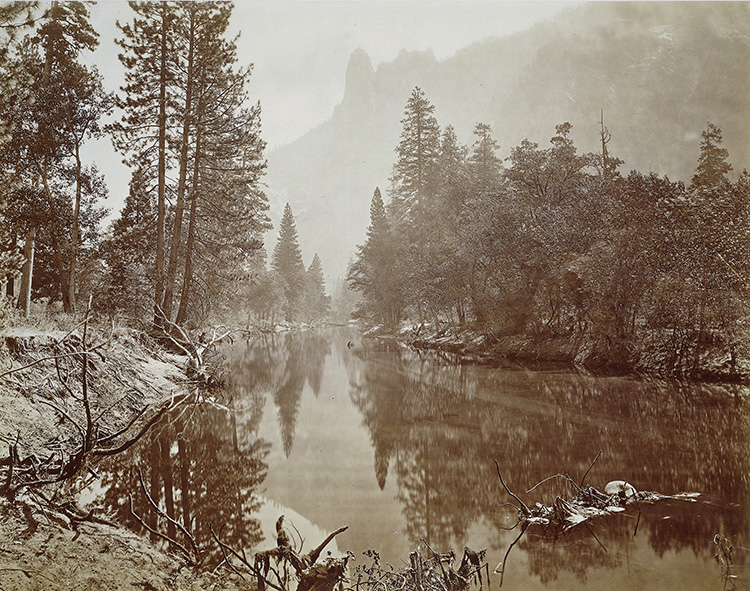
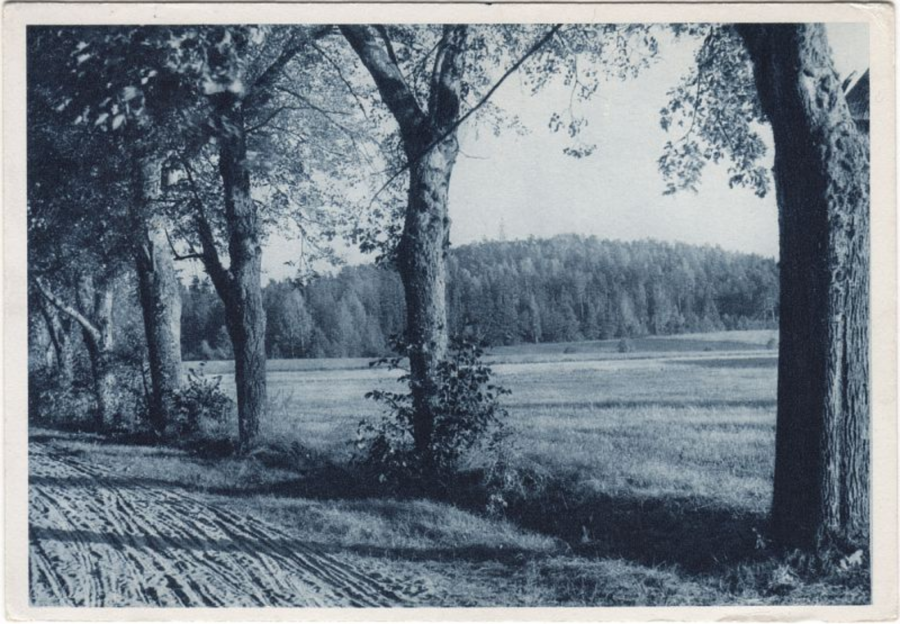
Still not enough? How about a digital library of 2.2 million images from the history of photography? Europeana Collections just launched its “latest thematic collection,” Europeana Photography, which, notes Douglas McCarthy at the site’s blog, “includes images and documents from 50 European institutions in 34 different countries.”
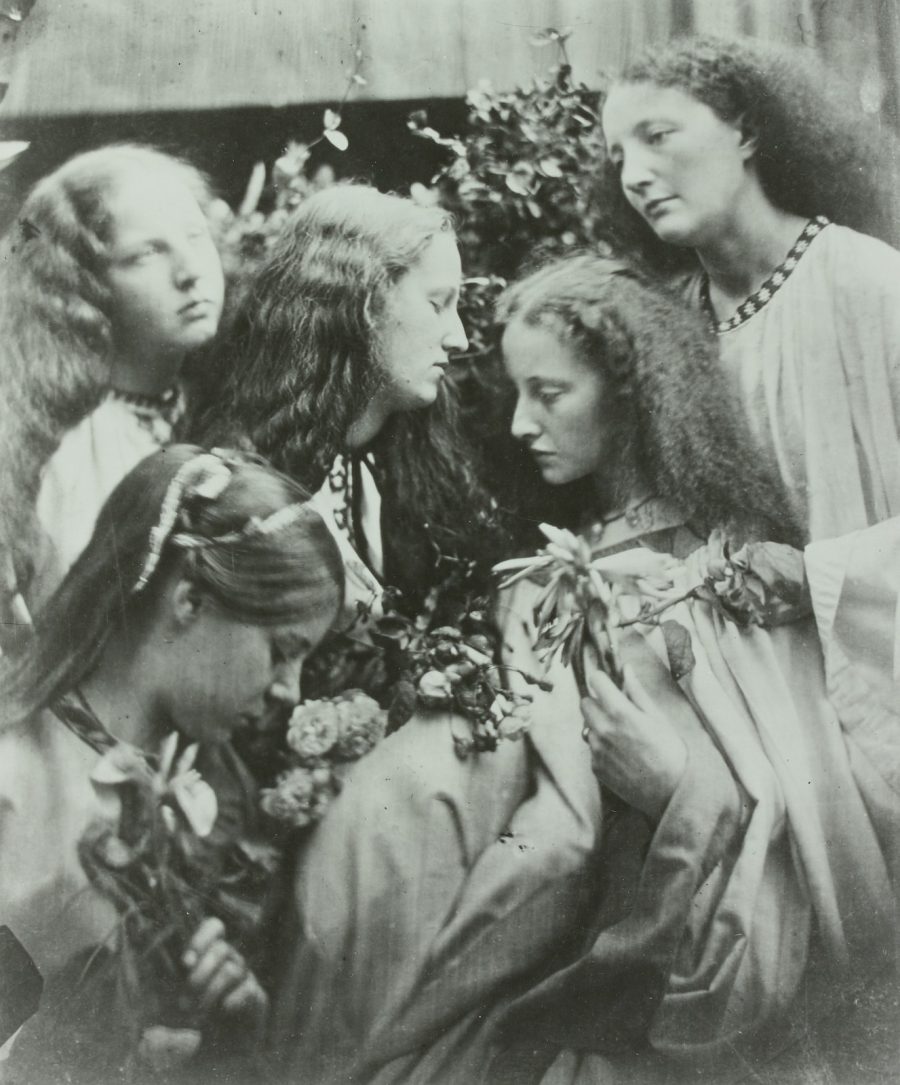
Stunning landscapes like that of Muybridge’s Loya: Valley of the Yosemite, above, and work from other innovators like Julia Margaret Cameron, below, represent highlights of the archive’s digital scans from the first 100 years of photography.
Lilie, 1898–1903. Wilhelm Weimar. Museum für Kunst und Gewerbe Hamburg, CC0
The collection promises, “future exhibitions on specific themes… telling compelling stories with stunning images.” Currently, you’ll find there themed “expositions” like “Industrial Photography in the Machine Age” and “Vintage Postcards of Southeastern Europe,” among others. A gallery on “The Magic Lantern” offers a tour of a pre-cinema entertainment technology. One on photographer Johan Wilhelm Weimar introduces viewers to incredibly striking work from his 1901 Herbarium.

The collection is searchable, downloadable, shareable, and you can choose from 23 different languages, including English. Its mission is international, but also very much built on the idea—some might say political fiction—of a culturally unified Europe, allowing people to “connect with their past, with fellow European citizens, explore remote eras and locations, and better appreciate the value of their continental, national and local cultural heritage.”
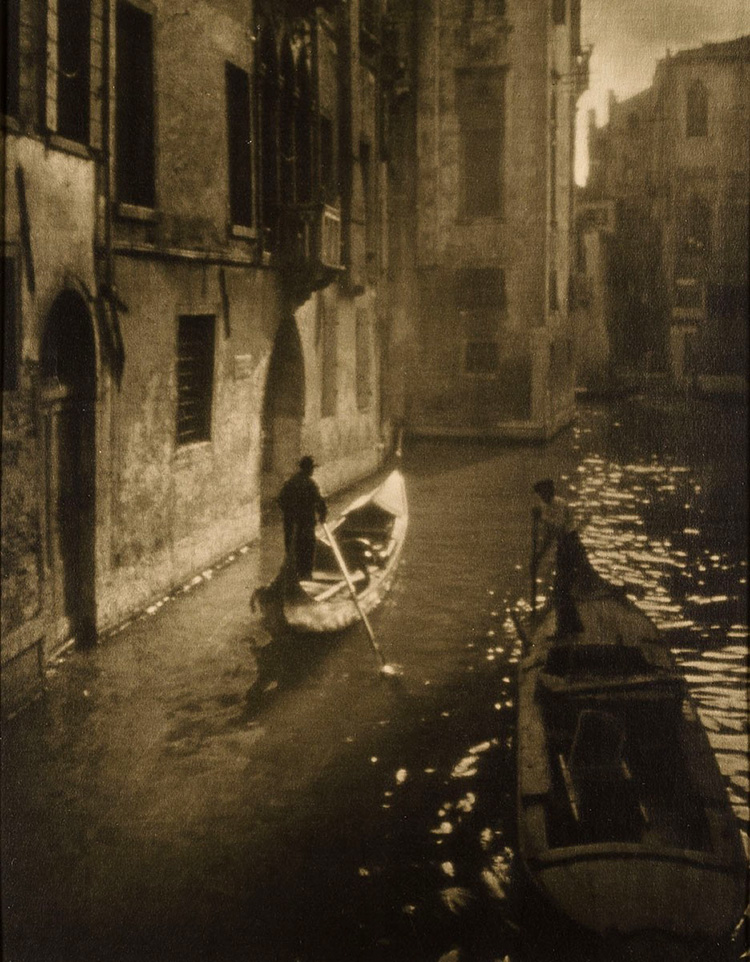
Grand Canal, Venice, 1929. Nicola Perscheid. Museum für Kunst und Gewerbe Hamburg, CC0
Lofty goals, but one need no such larger purpose to simply enjoy casually browsing, and making the kind of odd discoveries one might on a continental walking tour, with no particular destination in mind.
Visit the Europeana Photography archive here.
Related Content:
School of Visual Arts Presents 99 Hours of Free Photography Lectures
Josh Jones is a writer and musician based in Durham, NC. Follow him at @jdmagness
Read More...How Famous Paintings Inspired Cinematic Shots in the Films of Tarantino, Gilliam, Hitchcock & More: A Big Supercut
It’s no accident that one of the best-known series of cinema-analyzing video essays bears the title Every Frame a Painting. When describing the height of film’s visual potential, we often draw metaphors from art history, but the relationship also goes in another direction: more often than we might think, the filmmakers and their collaborators looked to the canvases of the masters for inspiration in the first place. In this trilogy of short video essays, “Film Meets Art,” “Film Meets Art II,” and “Film Meets Art III,” Vugar Efendi highlights some of the most striking paintings-turned-shots in the work of, among other auteurs, Alfred Hitchcock, Terry Gilliam, Quentin Tarantino, and Paul Thomas Anderson.
Efendi, writes Slate’s Madeline Raynor in a post on the second installment, “places shots from films side by side with the paintings that inspired them. And once you see the pairings, you won’t be able to unsee them. Some of these are unmistakable references — like Jean-Luc Godard’s ode to Jean-Auguste-Dominique Ingres — while others are more subtle.
Filmmakers have been recreating paintings since the days of silent film: the video’s earliest example is 1927’s Metropolis.” More recent instances include Alex Colville’s To Prince Edward Island in Wes Anderson’s Moonrise Kingdom, and Thomas Gainsborough’s The Blue Boy in Quentin Tarantino’s Django Unchained. While perhaps too obvious for inclusion into these essays, Wim Wenders once satirized this process with a movie-within-a-movie recreation of Edward Hopper’s Nighthawks in The End of Violence.
Which painters do filmmakers most often turn to for material? Efendi’s visual essays show us a fair few memorable and varied uses of Hopper, whose paintings possess a cinematic atmosphere of their own, and also Magritte, possibly because his dreamlike sensibility aligns well with that of cinema itself: L’empire des lumières in William Friedkin’s The Exorcist, La Robe du soir in Barry Jenkins’ Moonlight (winner of last year’s Best Picture Oscar), and Architecture au clair de Lune in Peter Weir’s The Truman Show. Weir’s work makes another appearance in the essays in the form of Picnic at Hanging Rock, a haunting film based on a haunting novel written in part out of fascination with a haunting painting, William Ford’s At the Hanging Rock — whose imagery then made it back into the screen adaptation. It seems that art, be it on canvas, film, or some medium yet unimagined, tells the story of civilization in more ways than one.
Related Content:
100,000 Free Art History Texts Now Available Online Thanks to the Getty Research Portal
Based in Seoul, Colin Marshall writes and broadcasts on cities and culture. He’s at work on a book about Los Angeles, A Los Angeles Primer, the video series The City in Cinema, the crowdfunded journalism project Where Is the City of the Future?, and the Los Angeles Review of Books’ Korea Blog. Follow him on Twitter at @colinmarshall or on Facebook.
Read More...Support Us
We're hoping to rely on loyal readers, rather than erratic ads. Please click the Donate button and support Open Culture. You can use Paypal, Venmo, Patreon, even Crypto! We thank you!

About Us

Open Culture scours the web for the best educational media. We find the free courses and audio books you need, the language lessons & educational videos you want, and plenty of enlightenment in between.
Advertise With Us
FREE UPDATES!
GET OUR DAILY EMAIL
Get the best cultural and educational resources on the web curated for you in a daily email. We never spam. Unsubscribe at any time.
FOLLOW ON SOCIAL MEDIA
Open Culture editor Dan Colman scours the web for the best educational media. He finds the free courses and audio books you need, the language lessons & movies you want, and plenty of enlightenment in between.
Advertise With Us


