Online Degrees & Mini Degrees: Explore Masters, Mini Masters, Bachelors & Mini Bachelors from Top Universities
Explore a collection of online Degree and Mini Degree Programs from major universities, including MIT, Harvard, UC Berkeley & more.
The lists below include Online Mini Master’s Degrees, Online Master’s Degrees, Online Mini Bachelor’s Degrees, and finally Online Bachelor’s Degrees.
Many of these programs are offered at a significantly lower price than traditional degree programs.
Mini Master’s Programs
To learn more about the value of MicroMasters programs from edX, and MasterTrack Certificate programs from Coursera, read this article from Business Insider.
Business
- Accounting — Indiana University via edX
- Business Leadership — The University of Queensland via edX
- Business Management — Indian Institute of Management Bangalore via edX
- Business and Operations for a Circular Bio-Economy — Wageningen University & Research via edX
- Certified Lifestyle Medicine Executive — Doane University via edX
- Corporate Innovation — The University of Queensland via edX
- Design Thinking - Rochester Institute of Technology via edX
- Digital Leadership — Boston University via edX
- Digital Product Management — Boston University via edX
- Entrepreneurship — Indian Institute of Management Bangalore via edX
- Finance — MIT via edX
- Finance, Analysis and Modeling — Macquarie via Coursera
- Global Business Leadership and Management — Arizona State via edX
- Global Leadership and Human Resource Management - Macquarie Business School via Coursera
- Healthcare Administration — Doane University via edX
- Innovation & Entrepreneurship — Tecnológico de Monterrey via edX
- Innovation Management & Entrepreneurship — HEC via Coursera
- International Hospitality Management — The Hong Kong Polytechnic University via edX
- Leadership in Global Development — The University of Queensland via edX
- MBA Core Curriculum — University of Maryland via edX
- Managing Technology & Innovation: How to deal with disruptive change — RWTH Aachen University via edX
- Marketing Analytics — UC Berkeley via edX
- Marketing in a Digital World — Curtin University via edX
- Principles of Manufacturing — MIT via edX
- Project Management — Rochester Institute of Technology via edX
Computer Science
- AI and Machine Learning — Arizona State University via Coursera
- Blockchain Applications — Duke University via Coursera
- Cloud Computing — University of Maryland via edX
- Cybersecurity — Rochester Institute of Technology via edX
- Cybersecurity- Arizona State University via Coursera
- Industrial Internet of Things — UC Boulder via Coursera
- Information Systems — Indiana University via edX
- Internet of Things (IoT) — Curtin University via edX
- Machine Learning for Analytics- U Chicago via edX
- Nanoscience and Technology — Purdue University via edX
- Predictive Analytics using Python — The University of Edinburgh via edX
- Quantum Technology: Computing — Purdue University via edX
- Quantum Technology: Detectors and Networking — Purdue University via edX
- Software Development — The University of British Columbia via edX
- Software Engineering - Arizona State University via Coursera
- Supply Chain Management — MIT via edX
- Supply Chain Excellence — Rutgers University via Coursera
Data Science
- Algorithms and Data Structures — UC San Diego via edX
- Analytics: Essential Tools and Methods — Georgia Tech via edX
- Big Data — University of Adelaide via edX
- Big Data — Arizona State University via Coursera
- Data Analytics for Managers — Tufts University via Coursera
- Data Science — UC San Diego via edX
- Statistics and Data Science — MIT via edX
Education
- Instructional Design- University of Illinois via Coursera
- Instructional Design and Technology — University of Maryland via edX
- Leading Educational Innovation and Improvement — University of Michigan via edX
Engineering
- Construction Engineering and Management — University of Michigan via Coursera
- Reliability and Decision Making in Engineering Design — Purdue University via edX
- Solar Energy Engineering - Delft University of Technology via edX
- Structural Design — Purdue University via edX
Health
- Health Informatics - Yale University via Coursera
- Water and Global Human Health — Queen’s University via edX
Humanities/Arts & Culture
- Humanities & Soft Skills — Tecnológico de Monterrey via edX
- Integrated Digital Media — NYU via edX
- English Proficiency for Graduate Studies Certificate — Arizona State University via Coursera
- Writing for Performance and the Entertainment Industries - Cambridge University via edX
Sustainability
- Economics and Policies for a Circular Bio-Economy — Wageningen University & Research via edX
- Emerging Automotive Technologies — Chalmers University via edX
- Sustainable Agribusiness — Doane University via edX
- Sustainable Energy — The University of Queensland via edX
- Sustainability and Development — University of Michigan via Coursera
UX Design
- UX Design — University of Minnesota via Coursera
- UX Design and Evaluation — HEC Montréal via edX
Sundry
- Chemistry and Technology for Sustainability — Wageningen University & Research via edX
- International Law - Université catholique de Louvain via edX
- Social Work: Practice, Policy and Research — University of Michigan via Coursera
Online Master’s Degrees
Business
- Online Master’s of Accounting (iMSA) — University of Illinois via Coursera
- Master’s Degree in Accounting — Indiana University via edX
- Master of Business Administration (iMBA) — University of Illinois via Coursera
- Online MBA Degree: Master of Business Administration — Boston University via edX
- Global Master of Business Administration (GMBA) — Macquarie University via Coursera
- MSc in Innovation and Entrepreneurship — HEC via Coursera
- Master’s Degree in Leadership: Service Innovation — The University of Queensland via edX
- Master of Science in Management — University of Illinois via Coursera
- Master’s Degree in Supply Chain Management — Arizona State via edX
Computer Science & Electrical Engineering
- Master’s Degree in Analytics — Georgia Tech via edX
- Master’s Degree in Computer Science - UT Austin via edX
- Master of Computer and Information Technology — University of Pennsylvania
- Master of Computer Science — Arizona State via Coursera
- Master of Computer Science (Featuring Data Science Track) — University of Illinois via Coursera
- Master’s Degree in Cybersecurity — Georgia Tech via edX
- Master’s Degree in IT Management — Indiana University via edX
- Master of Science in Electrical Engineering — UC Boulder via Coursera
- Master’s Degree in Electrical and Computer Engineering — Purdue University via edX
- Master of Machine Learning and Data Science - Imperial College London via Coursera
Data Science
- Master of Applied Data Science — University of Michigan via Coursera
- Master’s Degree in Data Science — UT-Austin via edX
- Master of Science in Data Science — UC Boulder via Coursera
Public Health
- Master of Public Health — University of Michigan via Coursera
- Global Master of Public Health (GMPH) — Imperial College London via Coursera
- Master of Science in Population and Health Sciences — University of Michigan via Coursera
Sundry
- Master’s Degree in Civil Engineering — Purdue University via edX
- Master’s Degree in Nutritional Sciences — UT-Austin via edX
- Master’s Degree in Mechanical Engineering — Purdue University via edX
Micro Bachelor’s Degrees
- Business Analytics Foundations - Southern New Hampshire University via edX
- Business and Professional Communication for Success — Doane University via edX
- Computer Science Fundamentals — NYU via edX
- Cybersecurity Fundamentals — NYU via edX
- Data Management with Python and SQL - Southern New Hampshire University via edX
- Elements of Data Science — Rice University via edX
- Introduction to Databases — NYU via edX
- Introduction to Information Technology — Western Governors University via edX
- Marketing Essentials — Doane University via edX
- Professional Writing — Arizona State via edX
- Programming & Data Structures — NYU via edX
Bachelor’s Degrees
- Bachelor of Applied Arts and Sciences — University of North Texas via Coursera
To explore a list of free courses, see our collection, 1,700 Free Online Courses from Top Universities.
Read More...Researchers Develop a Digital Model of the 2,200-Year-Old Antikythera Mechanism, “the World’s First Computer”
What’s the world’s oldest computer? If you answered the 5‑ton, room-sized IBM Mark I, it’s a good guess, but you’d be off by a couple thousand years or so. The first known computer may have been a handheld device, a little larger than the average tablet. It was also hand-powered and had a limited, but nonetheless remarkable, function: it followed the Metonic cycle, “the 235-month pattern that ancient astronomers used to predict eclipses,” writes Robby Berman at Big Think.
The ancient artifact known as the Antikythera mechanism — named for the Greek Island under which it was discovered — turned up in 1900. It took another three-quarters of a century before the secrets of what first appeared as a “corroded lump” revealed a device of some kind dating from 150 to 100 BC. “By 2009, modern imaging technology had identified all 30 of the Antikythera mechanism’s gears, and a virtual model of it was released,” as we noted in an earlier post.
The device could predict the positions of the planets (or at least those the Greeks knew of: Mercury, Venus, Mars, Jupiter, and Saturn), as well as the sun, moon, and eclipses. It placed Earth at the center of the universe. Researchers studying the Antikythera mechanism understood that much. But they couldn’t quite understand exactly how it worked, since only about a third of the complex mechanism has survived.

Image by University College London
Now, it appears that researchers from the University College of London have figured it out, debuting a new computational model in Scientific Reports. “Ours is the first model that conforms to all the physical evidence and matches the scientific inscriptions engraved on the mechanism itself,” lead author Tony Freeth tells The Engineer. In the video above, you can learn about the history of the mechanism and its rediscovery in the 20th century, and see a detailed explanation of Freeth and his team’s discoveries.
“About the size of a large dictionary,” the artifact has proven to be the “most complex piece of engineering from the ancient world” the video informs us. Having built a 3D model, the researchers next intend to build a replica of the device. If they can do so with “modern machinery,” writes Guardian science editor Ian Sample, “they aim to do the same with techniques from antiquity” — no small task considering that it’s “unclear how the ancient Greeks would have manufactured such components” without the use of a lathe, a tool they probably did not possess.

Image by University College London
The mechanism will still hold its secrets even if the UCL team’s model works. Why was it made, what was it used for? Were there other such devices? Hopefully, we won’t have to wait another several decades to learn the answers. Read the team’s Scientific Reports article here.
Related Content:
Modern Artists Show How the Ancient Greeks & Romans Made Coins, Vases & Artisanal Glass
How the Ancient Greeks Shaped Modern Mathematics: A Short, Animated Introduction
Josh Jones is a writer and musician based in Durham, NC. Follow him at @jdmagness
Read More...Yo-Yo Ma Plays an Impromptu Performance in Vaccine Clinic After Receiving 2nd Dose
After getting his second dose of the COVID-19 vaccine, Yo-Yo Ma “took a seat along the wall of the observation area, masked and socially distanced away from the others. He went on to pass 15 minutes in observation playing cello for an applauding audience,” writes the Berkshire Eagle. You can watch the scene above, which played out at Berkshire Community College this weekend. And read more about it here.
If you would like to support the mission of Open Culture, consider making a donation to our site. It’s hard to rely 100% on ads, and your contributions will help us continue providing the best free cultural and educational materials to learners everywhere. You can contribute through PayPal, Patreon, and Venmo (@openculture). Thanks!
Related Content:
How Do Vaccines (Including the COVID-19 Vaccines) Work?: Watch Animated Introductions
MIT Presents a Free Course on the COVID-19 Pandemic, Featuring Anthony Fauci & Other Experts
Read More...
Google & Coursera Launch Career Certificates That Prepare Students for Jobs in 6 Months: Data Analytics, Project Management and UX Design

We live in an age of less-than-total agreement as to the purpose of higher education. Should it immerse students in the best that has been thought and said? Provide an environment in which to come of age? Produce “leaders”? Or should it, as increasingly many argue, first and foremost secure professional futures? In the practice of recent decades, higher education has done a bit of each, to the satisfaction of some and the dissatisfaction of others. It has, in other words, become an industry subject to “disruption” by other players offering specialized solutions of their own. Take for example the new Career Certificates offered by Google and the online education platform Coursera.
“Designed to prepare learners for an entry-level role in under six months,” as Coursera CEO Jeff Maggioncalda explains it, these newly-unveiled Career Certificates “don’t have any prerequisites,” which means that most anyone interested in earning them can do so right now. This goes for “new grads landing their first job, front-line workers seeking stable employment, mid-career professionals making a pivot, or parents planning their return to the workforce,” and presumably myriad other walks of life besides.
Available in Data Analytics, Project Management, and User Experience (UX) Design, “each certificate is completely online, self-paced, and costs $39 per month” — significantly less than most existing forms of higher education, even of the most professionally or technologically oriented varieties.
If you’ve dipped into our list of online courses, you’ve probably encountered Coursera, a leading platform for massive online open courses (or MOOCs) used by some of the world’s best-known traditional universities. Its new provision of Google’s Career Certificates should go some way to making more familiar — at least to those us who’ve already learned online — a reimagining of professional education. This program’s “disruptive” potential, due not least to Google’s own consideration of these certificates as equivalent to a four-year degree, has already been well noted. “But while the new programs offer a fast track to new skills and possibly even a new job in a fraction of the time of a degree program,” writes Inc.‘s Justin Bariso, “students shouldn’t expect the courses to be a walk in the park.” And given that they’re unlikely to get easier, anyone interested in earning a Career Certificate would do well to look into it today.
Below, you can find a list of the new Career Certificates.
- User Experience (UX) Design Professional Certificate – UX design jobs are projected to steadily grow over the coming years, with median salaries for an entry-level role around $82,000. This seven-course certificate explores UX principles, UX terms, and industry-standard tools, including Figma and Adobe XD. By the time they complete the program, learners will have three portfolio projects to use in their job applications.
- Data Analytics Professional Certificate – In the U.S., there are nearly 15,000 open entry-level data analytics roles, with an annual median entry-level salary of more than $63,000. This seven-course certificate explores analytical skills, concepts, and tools used in many introductory data analytics roles – including SQL, Tableau, RStudio, and Kaggle.
- Project Management Professional Certificate – Employers will need to fill nearly 2.2 million new project-oriented roles each year through 2027, according to the Project Management Institute. This six-course certificate prepares learners to launch a project management career. It covers industry-standard tools and methods, including the agile project management system, and key soft skills, such as stakeholder management, problem-solving, and influencing.
- IT Support Professional Certificate — Prepare for an entry-level job as an IT support specialist. In this program, you’ll learn the fundamentals of operating systems and networking, and how to troubleshoot problems using code to ensure computers run correctly. This is for you if you enjoy solving problems, learning new tools, and helping others.
- IT Automation Professional Certificate — This is an advanced program for learners who have completed the Google IT Support Professional Certificate. This is for you if you want to build on your IT skills with Python and automation.
The new certificates have been added to our collection, 200 Online Certificate & Microcredential Programs from Leading Universities & Companies.
Note: Open Culture has a partnership with Coursera. If readers enroll in certain Coursera courses and programs, it helps support Open Culture.
Related Content:
Free Online Computer Science Courses
1,500 Free Online Courses from Top Universities
Based in Seoul, Colin Marshall writes and broadcasts on cities, language, and culture. His projects include the Substack newsletter Books on Cities, the book The Stateless City: a Walk through 21st-Century Los Angeles and the video series The City in Cinema. Follow him on Twitter at @colinmarshall or on Facebook.
Read More...Where Did the Metal Scream Come From? And How Do Metal Vocalists Avoid Destroying Their Vocal Cords?
Do metal singers take vocal lessons? Surely not the greats of old! Did Bruce Dickinson, Rob Halford, and Ozzy Osbourne take lessons? Or did they dive into the debauchery headfirst, screaming?
Iron Maiden’s Dickinson has been rumored to have received opera training. This is not true. Instead, he stole his vocal technique from his “dentist ex-girlfriend,” he says. “As an ex-pupil of the very prestigious Cheltenham Ladies’ College, she’d had quite extensive singing lessons, and she kept a notebook.” It changed his life.
Ozzy’s guitarist Zakk Wylde tells a funny story of the Black Sabbath legend’s wife Sharon ordering him up a coach… just once… a “man with a briefcase,” says the burly shredder, sent to take care of “our Joe Montana.” But Osbourne did end up working with a vocal coach, Kathleen Riggs, more regularly in later years.
Judas Priest’s Halford? He doesn’t mention a coach, but he does talk a lot about care and training. “My form of extreme singing,” he says, “it’s like a workout, you know…. Your vocal cords are muscles — they get burned out, they get tired.” As for his pioneering screams of over 40 years ago, he muses, “I sometimes think that’s a bit of a curse that I sang and recorded those certain songs so long ago, when I was a younger guy with a younger set of vocal cords.” He nearly wrecked his voice, he says, with cocaine and Jack Daniels.
It’s not opera, but metal singing is a seriously athletic activity and has only become more so as its vocals have grown more extreme, even if its fashion sense has not. As classically trained singer and actress Melissa Cross — the “Queen of Scream” — relates in the video at the top, she first became a metal vocal coach when a producer friend called her in dismay: the singers he was recording couldn’t get through a session without coughing blood.
Where did the metal scream come from, and why is it so prevalent if it’s such an unhealthy way to move one’s vocal folds day after day without training and technique? Vikings, Screamin’ Jay Hawkins’ “I Put a Spell on You,”; Led Zeppelin, Black Sabbath, AC/DC, and Judas Priest, of course… babies…. These are all points of origin for today’s extreme metal singing, say hosts LA Buckner and Nahre Sol in the PBS video further up.
The two talk to Cross about screaming without bleeding, and metal vocalist Natalie Kreuger talks about how warmups and opera-like breathing techniques are essential to maintaining vocal fitness. And if you need more convincing that metal singing requires serious power and stamina, take a look at the 10 longest live screams in metal, above. Let’s hope they all heed the example of the elder metal gods.
Related Content:
The Origins of the Death Growl in Metal Music
96-Year-Old Holocaust Survivor Fronts a Death Metal Band
Josh Jones is a writer and musician based in Durham, NC. Follow him at @jdmagness
Read More...Watch Chick Corea (RIP) Perform Intimate Acoustic Performances with Bobby McFerrin, Gary Burton, Hiromi Uehara & Others
It seems impossible to talk about keyboardist Chick Corea, who passed away from cancer on February 11 at age 79, without also talking about Miles Davis. Davis hand picked him for the groundbreaking albums In a Silent Way and Bitches Brew, and as a member of those ensembles, Corea helped shape the future of music and helped divide the jazz community into those who embraced the psychedelic “fusion” of jazz, rock, and other world musics and those who were fiercely protective of tradition.
Corea, however, “had already gone through early explorative phases of his career,” writes Jim Burlong at Jazz Views, before his “brief but not always happy” stint with Davis. He was on his way to the avant-garde direction he would take with his later group, Return to Forever. Yet no matter how far out there he went with Davis or the ridiculously accomplished RTF and hundreds of other musicians he played with, Corea always stayed connected to the music’s roots.
“Throughout his career,” Giovanni Russonello writes at The New York Times, Corea “never abandoned his first love, the acoustic piano, on which his punctilious touch and crisp sense of harmony made his playing immediately distinctive.” We hear it in compositions like “Spain” (at the top in a beautifully spare version with Bobby McFerrin), “500 Miles High,” and “Tones for Joan’s Bones,” all of which have “become jazz standards, marked by his dreamy but brightly illuminated harmonies and ear-grabbing melodies.”
We hear Corea’s “dreamy” acoustic piano throughout Return to Forever’s 1976 Romantic Warrior, an album that features 29 or so additional instruments among its four musicians, including a MiniMoog, Micromoog, Polymoog, Moog 15, ARP Odyssey, and an alarm clock and slide whistle on the quirky, medieval “The Magician.” This description alone might make purists cringe, but charges that jazz fusion albums are overstuffed and overly busy don’t tend to stick to Corea’s best recordings.
The sound of Return to Forever on Romantic Warrior, an album that influenced “bands to come on both sides of the Atlantic,” is “never crowded,” Burlong writes, “and the overall ambiance from all combinations of the thirty something instruments used is mostly one of controlled urgency.” Graced with a finesse that shines equally in weird, Scientology-inspired electric albums and traditional acoustic trios, Corea’s “versatility is second to none when it comes to the jazz world,” says his longtime friend and collaborator, vibraphonist Gary Burton.
Corea resisted the idea that funk and rock instrumentation in progressive jazz meant the invention of a new sub-genre. “It’s the media that are so interested in categorizing music,” he said in 1983, “the media and the businessmen, who, after all, have a vested interest in keeping marketing clear cut and separate. If critics would ask musicians their views about what is happening, you would find that there is always a fusion of sorts taking place… a continual merging of different streams.”
His advice to fellow musicians who might feel constrained by tradition or the strictures of the market is priceless (or “cheap but good,” he wrote), including the advice he gave a graduating class at Berklee College of Music in his home state of Massachusetts in 1997: “It’s all right to be yourself. In fact, the more yourself you are, the more money you make.” As a musician, Corea was never anything less than himself, though he didn’t seem in it for the money, sharing composition credit equally among the musicians on many of his ensemble albums.
Corea’s versatile musical approach won him 23 Grammys (“more than almost any other musician,” writes Russonello), three Latin Grammys, and the enduring respect and admiration of fans and fellow musicians. See more of his flawless chops in the intimate live performances above, including a Tiny Desk Concert with Burton, a full concert in Spain from 2018 with his acoustic trio, and a dueling piano performance of “Spain” live in Tokyo with pianist Hiromi Uehara, just above.
Related Content:
Chick Corea (RIP) Offers 16 Pieces of “Cheap But Good Advice for Playing Music in a Group” (1985)
The Universal Mind of Bill Evans: Advice on Learning to Play Jazz & The Creative Process
Miles Davis’ Bitches Brew Turns 50: Celebrate the Funk-Jazz-Psych-Rock Masterpiece
Josh Jones is a writer and musician based in Durham, NC. Follow him at @jdmagness
Read More...A New Database Will Document Every Slave House in the U.S.: Discover the “Saving Slave Houses Project”
In central North Carolina, not far from where I live, sits the Franklinton Center at Bricks, a 224-acre educational campus and conference center built on the remains of a historic “Agricultural, Industrial, and Normal School,” then junior college, for the descendants of enslaved people. These schools were themselves built on the land of a former cotton plantation, on former territory of the Tuscarora Nation. The campus acts as a palimpsest of Southern U.S. history. Each successive generation on the site after the Civil War has built memorials alongside modern institutions of learning and activism. The model is rare. As historian Damian Pargas of Leiden University tells Atlas Obscura’s Sabrina Imbler, “slavery is largely invisible in the [current] Southern landscape, and therefore easy to ignore or forget.”
Even at the Franklinton Center, the remnants of the slave past consist only of a whipping post, the focus of a remembrance area on the campus, and an antebellum slave cemetery a short distance away. All traces of slave quarters and houses have been wiped away. Where they remain in the U.S., writes Imbler, such buildings often “bear no visible trace of their past; many have been converted into garages, offices, or sometimes—unnervingly—bed-and-breakfasts. In some cases the structures have fallen into ruin or vanished entirely, leaving behind a depression in the ground.” Since 2012, Jobie Hill, a preservation architect, has tried to change that with her project Saving Slave Houses.
Hill is determined to build a first-of-its-kind database that honors and preserves these spaces in more than memory, and to unite the houses with the stories of people who once inhabited them. As she sees it, such a repository is long overdue. “There has never been a national survey of slave houses, except for the one I’m trying to do,” Hill says.
Houses, says Hill, in her TEDx talk above, “can tell us a lot about the people that lived there…. Each slave house has a valuable story to tell.” A slave house, Hill writes, on the project’s site, “was a place where enslaved people found strength and comfort from one another; but at the same time, it was a place that imposed physical limitations and psychological trauma.”
The project grew out of Hill’s master’s theses in preservation architecture and through an internship for the Historic American Buildings Survey (HABS), “a federal program established in 1933 to employ architects and draftsmen” during the Great Depression, Imbler notes. She has been able to identify slave houses by their small size, location on a property, “and if the building has a fireplace or chimney,” she says, noting that such buildings were rarely included in surveys. She has also cross-referenced surveys with the “largest, best-known collection of interviews from formerly enslaved people: the 1936–1938 WPA Slave Narrative Collection.”
These interviews “paint a grim picture of the cruel and cramped quarters enslaved people were forced to live in.” But slave houses are not only markers of a painful past. “A slave house simultaneously embodies suffering, yet perseverance and strong family bonds,” writes Hill. They are symbols of survival against daunting odds, and like the magnolia tree that marks the remembrance site at the Franklinton Center, they can “serve as a reminder that we too must do more than survive. We must find a way to thrive.” Learn more about Hill’s Saving Slave Houses project here.
via Atlas Obscura
Related Content:
Josh Jones is a writer and musician based in Durham, NC. Follow him at @jdmagness
Read More...Watch Amanda Gorman Read “The Hill We Climb,” “Making Mountains As We Run,” “Fury and Faith,” and More
Led by celebrity host Tom Hanks, the Biden inauguration’s entertainers, A‑listers all, were safe bets, reliable stadium-fillers with instant mass appeal. They “did exactly what we needed them to do,” remarked Stephanie Zacharek at TIME, offering the reassurance that “we no longer need to live in dread.” They were “singers you actually know,” Alexis Petridis wrote at The Guardian. The comment was a dig at the previous administration’s C and D‑list lineup, and also, perhaps, an admission that what Americans most crave is the familiar, which, of course, means, first and foremost, a national focus on celebrities we all know and love.
For a moment, however, this repetition of comforting household names was punctuated by an entirely new young face and voice—that of a poet, no less, a standard bearer of the form that has held the nation’s rapt attention in the work of Whitman, Frost, Hughes, and Angelou.
Amanda Gorman, chosen as the first National Youth Poet Laureate in 2017, channeled a tradition of American lyric writing about America in her inauguration poem, and she brought to it her own experiences as a Gen Z black feminist and activist who overcame a speech impediment to address the country at one of the most significant televised public events in recent history.
Gorman’s resume is a testament to her generation’s commitment to art and activism in the face of compounding crises, and to her personal commitment to change in a country that promises little for young black artists in particular. Named youth poet laureate of Los Angeles in 2014 at age 16, she published her first book of poetry, The One for Whom Food is Not Enough, the following year. She then went on to found a nonprofit writing and leadership program, open the literary season for the Library of Congress in 2017, and graduate cum laude from Harvard College with a degree in sociology in 2020.
While charting her own literary path, Gorman learned to use her voice as “a political choice,” as she says in her TED-Ed student talk above, in which she confidently asks a small audience of her peers, “whose shoulders do you stand on?” and “what do you stand for?” These are the questions she asks students in workshops, she says, to shake them out of the idea that poetry is for “dead white men who were just born to be old.” Then she shares her own answers. Gorman’s public appearances tend to focus on process as much as on politics and prosody. In a talk on “Presentation and Reading” at the Academy of Arts & Sciences in Cambridge below, she reads a poem, then has a brief discussion of “how it came to be.”
Gorman is as skilled a storyteller as she is a poet and educator. In her 2017 Moth GrandSLAM appearance in Boston, further up, she tells the story of trying to catch her big break auditioning for Broadway, an aspiration shaped by her childhood love of The Lion King. Her inaugural poem, she tells PBS, was written to “be accessible to anyone who might be watching, that they can feel that they are represented and well-established in this poem,” an act of writing she calls “a really difficult dance to do.” The effort did not blunt the poem’s most incisive lines, however, including its reference to “the belly of the beast,” in which “we’ve learned that quiet isn’t always peace.”
For Gorman, speaking out is a personal imperative she honed as “a form of a pathology,” overcoming her speech issues “by embarking on spoken word over and over and over again and reciting my poems. No matter how terrified I was, because I had the support of others, I was able to kind of slowly climb my way to the place I am at today.”
For millions of young people who watched the inauguration, it will be Gorman’s story of perseverance, community, personal growth, and refusal to be passive and silent in the face of social injustice that will most resonate, perhaps for the rest of their lives, amidst celebrations of a longed-for return to the familiar. See Gorman read more of her poetry above and below, including a poem for another inauguration, that of Harvard President Lawrence S. Bacow, in 2018.
Related Content:
Animated Poetry by US Poet Laureate
Josh Jones is a writer and musician based in Durham, NC. Follow him at @jdmagness
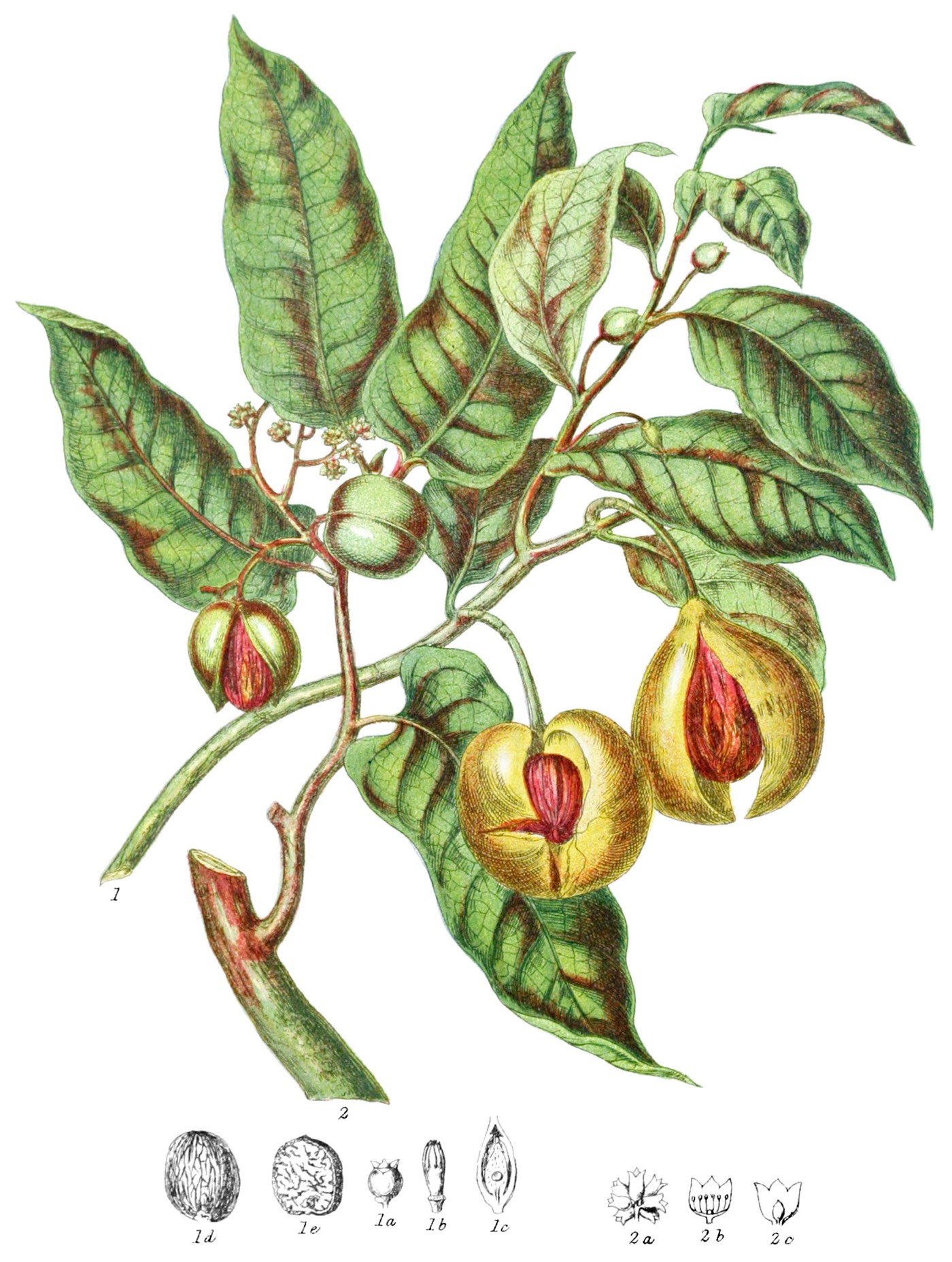
Read More...Behold an Interactive Online Edition of Elizabeth Twining’s Illustrations of the Natural Orders of Plants (1868)
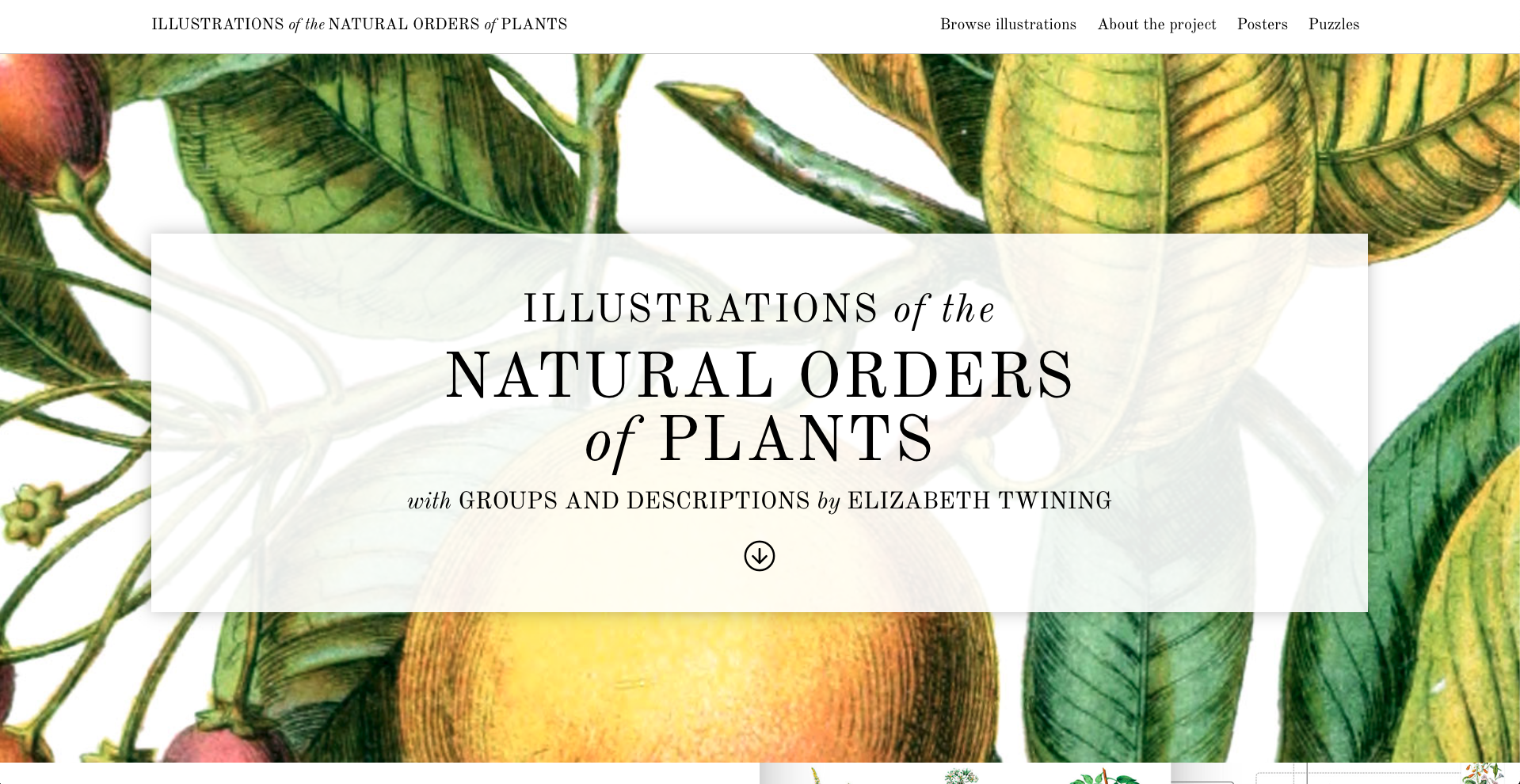
Of all the varied objects of creation there is, probably, no portion that affords so much gratification and delight to mankind as plants. —Elizabeth Twining
“Who owned nature in the eighteenth century?” asks Londa Schiebinger in Plants and Empire, a study of what the Stanford historian of science calls “colonial bioprospecting in the Atlantic World.” The question was largely decided at the time by “heroic voyaging botanists” and “biopirates” who claimed the world’s natural resources as their own. The matter was settled in the next couple centuries by merchants like Thomas Twining and his descendants, proprietors of Twinings tea. Founded as Britain’s first known tea shop in 1706, the company went on to become one of the largest purveyors of teas grown in the British colonies.
One of Twining’s descendants, Elizabeth Twining, carried on the legacy as what Schiebinger calls one of many “armchair naturalists, who coordinated and synthesized collecting from sinecures in Europe,” a role often taken on by women who could not travel the world. Twining aimed, however, not to create taxonomies of the world’s plants but those of her own country in a comparative analysis.
Her 1868 Illustrations of the Natural Orders of Plants, she wrote in her introduction, was “the first work which has thus done due honour to our British plants by connecting with others, and placing them whenever possible at the head of the Order to be illustrated.”

Twining’s revaluation of local British plants was in keeping with the reformist spirit of the age, and she herself was such a reformer. “Apart from her artistic endeavors,” writes Nicholas Rougeaux, Twining “was a notable philanthropist,” establishing almshouses and temperance halls, founding “mother’s meetings” in London, and helping to found the Bedford College for Women. She was inspired by Curtis’s The Botanical Magazine and “she practiced by making sketches from works in the Dulwich Picture Gallery, and toured famous museums thanks to her father’s patronage.”
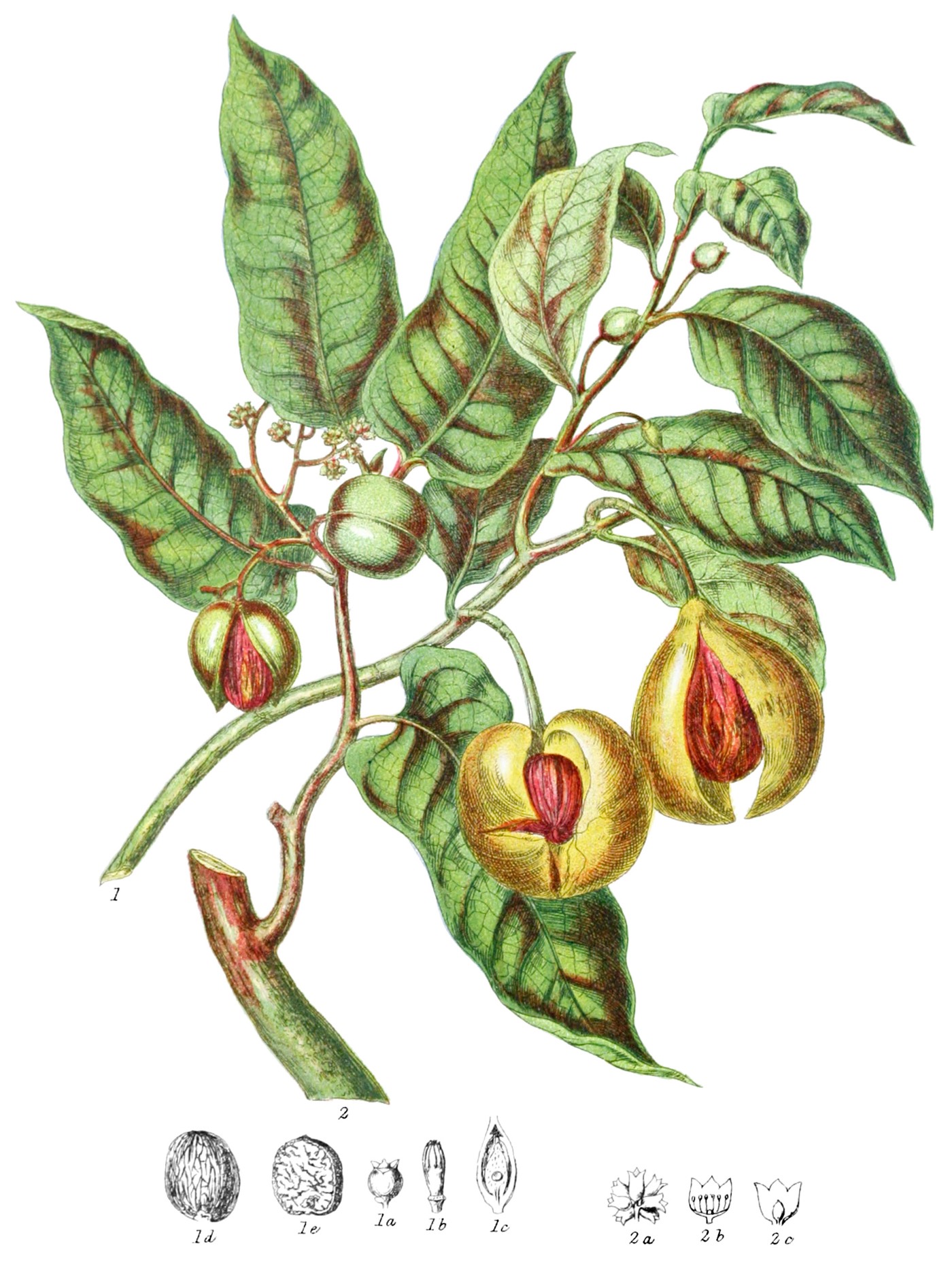
Twining authored and illustrated several botanical books, “most notably,” Rougeux writes, “the two volume Illustrations of the Natural Orders of Plants, which included a total of 160 hand-colored lithographs, royal folio, reportedly based on observation at the Royal Botanical Gardens in Kew and at Lexden Park in Colchester.” Rougeux has done for her work what the designer previously did for other illustrated classics of science and math (see the related links below): digitizing the illustrations and transliterating the text into a digital format, with hyperlinks and sharing features.
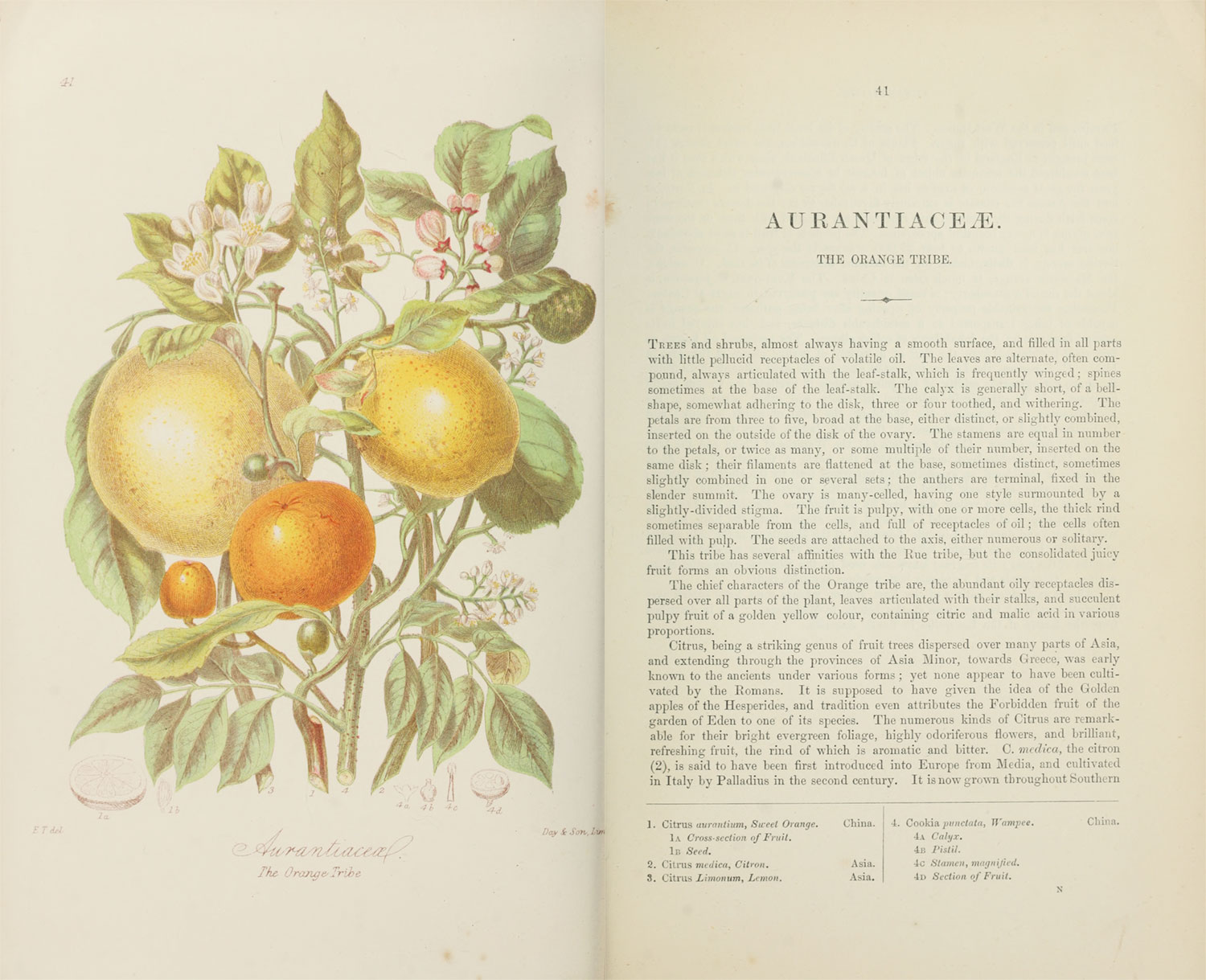
Rougeux’s Illustrations of the Natural Orders of Plants offers itself as “a complete reproduction and restoration… enhanced with interactive illustrations, descriptions, and posters featuring the illustrations.” The first two volumes of the original book were published in 1849 and 1855. Rougeux’s online version of the text is based on the 1868 second edition “with re-drawn illustrations based on her originals.” (See pages from the text above and below.) Rougeux’s digitized text is thus two steps removed from Twining’s original illustrations, but we can see the care and attention she put into classifying the flora of her native country.
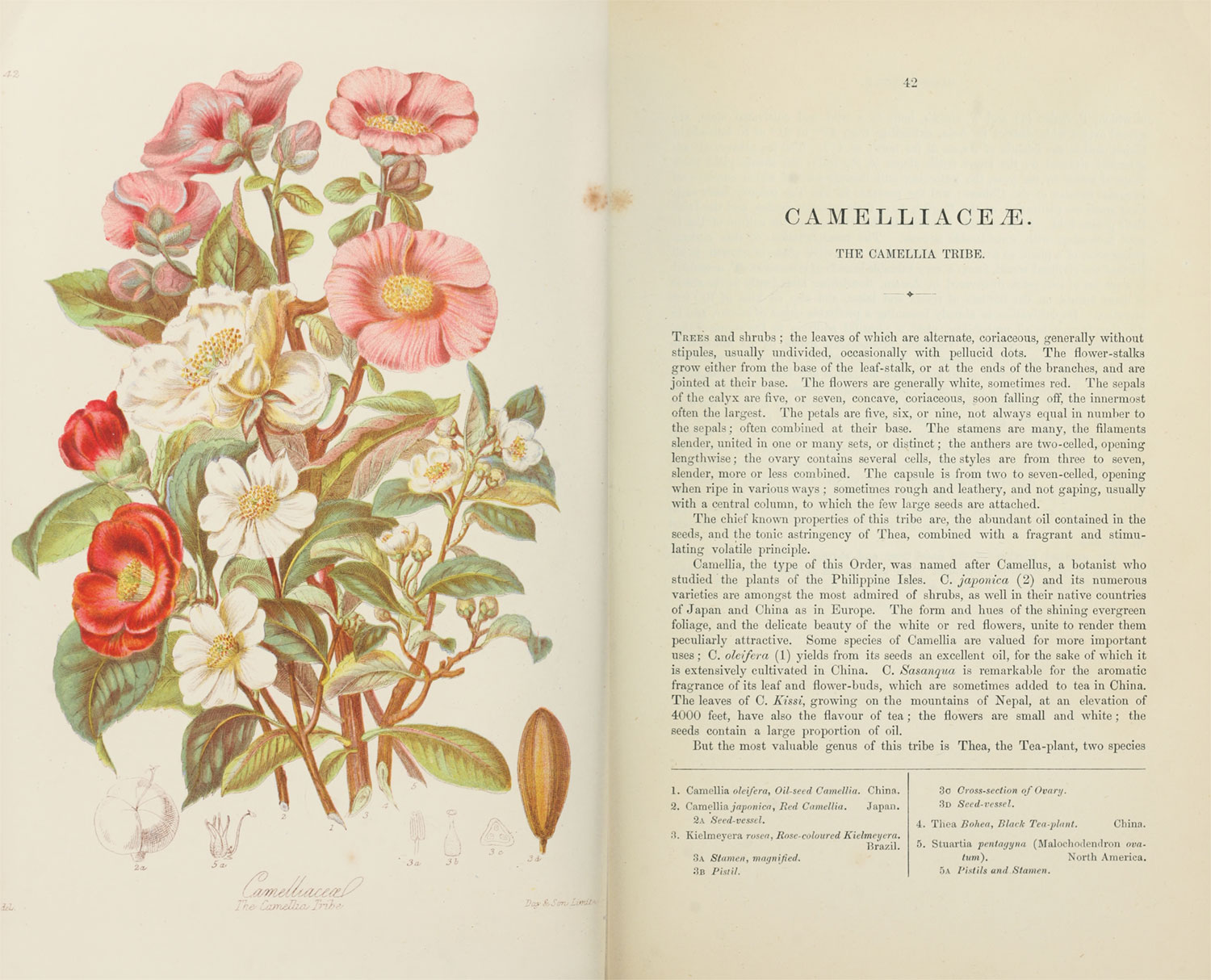
“Twining chose to illustrate plants using the classification system created by Augustin-Pyrame de Candolle based on multiple characteristics of plants—rather than the more widely used system by Carl Linnaeus which was focused on plants’ reproductive characteristics,” notes Rougeux, “because the De Candolle system was newer and she wanted her readers to be up to date as classification systems were evolving.”

Although biological taxonomies have changed considerably since her time, Twining’s Illustrations of the Natural Orders of Plants remains an intriguing “snapshot in time” that depicts not only the latest ideas about plant classification in the mid-19th century but also the attitudes a prominent member of the British ruling class adopted toward nature as a whole. See Rougeux’s online edition of Twining’s text here.
Related Content:
Josh Jones is a writer and musician based in Durham, NC. Follow him at @jdmagness
Read More...Wonder Woman 1984 in Context — Pretty Much Pop: A Culture Podcast #76

The holiday film release season has now passed, having issued only one real blockbuster, which is the return of Wonder Woman. This week’s Pretty Much Pop likewise offers a returning hero: Our college-going guest from ep. 33 on heroine journeys has now grown into a grad student in comics history, and she brings her deep WW knowledge to consider with your hosts Erica Spyres, Mark Linsenmayer, and Brian Hirt.
Part of the relevant context is the 2017 biopic Professor Marston and the Wonder Women, which revealed the unorthodox views of WW’s creator, and so of course this shows up in how WW judges us: She’s not just a Captain America-style patriot, but a foreigner who in the new film compassionately condemns our 80s greed and dishonesty. But do the themes actually make sense? And what’s with having her love interest return from the dead, hijacking another man’s body with no acknowledgment that that’s very skeevy?
Also, how does the depiction of WW’s homeland compare to other feminist utopias like Herland and “Sultana’s Dream”? Does it matter that WW was created by and initially aimed primarily at males? We learn a little about the post-Marston WW (who couldn’t join the Justice League, which was for boys only!) and talk about the ’70s TV show, the outfits, the villains, and WW in love.
Here are a few supplementary articles:
- “The Surprising Origin Story of Wonder Woman” by Jill Lepore
- “Does Wonder Woman 1984 Have a Steve Trevor Problem?” by Sarah El-Mahmoud
- “The Warped Morality of ‘Wonder Woman 1984’ ” by Dani Di Placido
- “How Wonder Woman 1984 Reboots the DC Hero’s Forgotten Superpower” by Eric Francisco
- “How ‘Wonder Woman 1984’ Villain Maxwell Lord Stays True to the Comics” by Graeme McMillan
- And from our former guest, Noah Berlatsky: “HBO Max’s ‘Wonder Woman 1984’ Stars a Trump‑y Villain, Gal Gadot’s Charm and a Garbled Message”
Hear more of this podcast at prettymuchpop.com. This episode includes bonus discussion you can access by supporting the podcast at patreon.com/prettymuchpop. This podcast is part of the Partially Examined Life podcast network.
Pretty Much Pop: A Culture Podcast is the first podcast curated by Open Culture. Browse all Pretty Much Pop posts.
Read More...
Support Us
We're hoping to rely on loyal readers, rather than erratic ads. Please click the Donate button and support Open Culture. You can use Paypal, Venmo, Patreon, even Crypto! We thank you!

About Us

Open Culture scours the web for the best educational media. We find the free courses and audio books you need, the language lessons & educational videos you want, and plenty of enlightenment in between.
Advertise With Us
FREE UPDATES!
GET OUR DAILY EMAIL
Get the best cultural and educational resources on the web curated for you in a daily email. We never spam. Unsubscribe at any time.
FOLLOW ON SOCIAL MEDIA
Open Culture editor Dan Colman scours the web for the best educational media. He finds the free courses and audio books you need, the language lessons & movies you want, and plenty of enlightenment in between.
Advertise With Us

