Adam Savage (Host of Mythbusters) Tells Sarah Lawrence Grads to Think Broadly … and Don’t Work for Fools
Adam Savage was born in New York City, not far from Sarah Lawrence College, the liberal arts school where he delivered the commencement speech this past weekend. Savage never went to Sarah Lawrence. Nor did he finish his own degree at NYU. But he had plenty to tell the graduating class. On his own web site, Savage calls himself “a maker of things.” As a kid, he made his own toys. As a young adult, he began experimenting with special effects for films, then served stints as an “animator, graphic designer, rigger, stage and interior designer, carpenter, scenic painter, welder, actor, writer, and television host.” (Perhaps you have seen his popular Discovery Channel show, Mythbusters.) In short, Savage is a “collector of skills, a polymath. How did he get this way? By casting his intellectual net widely and by continuing to learn throughout life — which is pretty much what we’re all about here. There’s a lot of good advice in this short, feel-good speech. Some of my favorite bits include:
“Don’t work for fools. It’s not worth it. Getting paid less to work for people you like and believe in is much better for you (and your career) in the long run.”
“Stay obsessed. That thing you can’t stop thinking about? Keep indulging it. Obsession is the better part of success. You will be great at the things that you can’t not do.”
“F. Scott Fitzgerald wrote The Great Gatsby and is one of our national treasures. A true giant of writing.The silliest thing he ever wrote is the quote, “There are no second acts in American lives.” This is insane. If there’s one thing that typifies the American experience it is that reinvention and rebirth are intrinsic to it. Raymond Chandler didn’t write a single word of any consequence until his 40s. Julia Child learned to cook at 40! Clint Eastwood directed his first film at 41. Don’t be afraid to be a late bloomer. Repeatedly.”
Good thoughts, all of them. You can find the full transcript here. H/T @opedr
More Commencement Speeches:
‘This Is Water’: Complete Audio of David Foster Wallace’s Kenyon Graduation Speech (2005)
Conan O’Brien Kills It at Dartmouth Graduation
J.K. Rowling Tells Harvard Grads Why Success Begins with Failure
Read More...Archive of Hemingway’s Newspaper Reporting Reveals Novelist in the Making
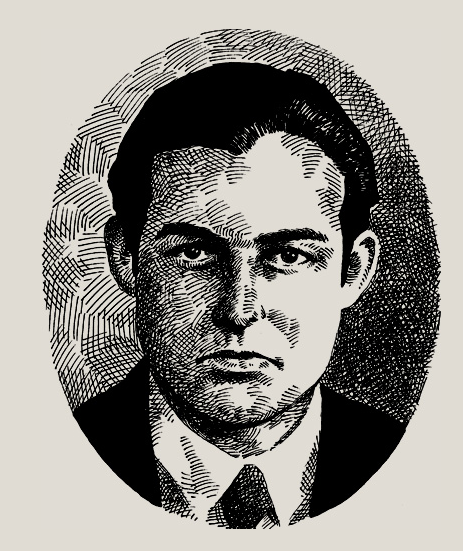 After returning from World War I, Ernest Hemingway moved to Toronto and began writing for the Toronto Star. He worked there from 1920 to 1924 and some 70 of his articles have been archived online in an attractive new website, the Hemingway Papers. At first Hemingway was a stringer and later he wrote as a staff writer, under the byline Ernest M. Hemingway. His first article bore the headline, “Taking a Chance for a Free Shave” and chronicled the young author’s visit to a barber college where straight-edge razors were wielded for free by students. He went on to write for the Star about boxing and trout fishing and organized crime in Chicago. By 1922 Hemingway had moved to Paris with his wife and sent dispatches that anticipated the themes of the novels that would make him famous. He wrote about the effects of war, bullfighting and the life of an impoverished artist in Paris. His association with the Star gave him access to post-war Europe that he wouldn’t have had otherwise and working as a reporter taught him how to get up close and personal with his subject matter.
The archive gives visitors plenty to explore, including commentary about the novelist’s early assignments and embedded annotations to help put the work in context. Hemingway developed his famously terse, hard-boiled style at the Star and reworked much of his reportage into his fiction. Readers of his short stories and novels will see seeds of Hemingway’s fiction in articles like “Tancredo is Dead,” about the death of a man whose job was to tease the bull by standing as still as a statue in the ring:
“No. He was neither an opera singer nor a five-cent cigar. He was once known as the bravest man in the world. And he died in a dingy, sordid room in Madrid, the city where he had enjoyed his greatest triumphs.”
Reading through Hemingway’s journalism is to witness a fiction writer in the making.
Kate Rix writes about k‑12 instruction and higher ed.
Read More...Why the University System, as We Know It, Won’t Last .… and What’s Coming Next
It’s easy to sell books and other commodities on the web. It’s not easy to deliver a quality education. But two converging trends point toward a future when we will see the traditional university give way to an online alternative — something I wasn’t willing to bank on two years ago. First, Silicon Valley is finally focusing on e‑learning. Udacity, Coursera, Kahn Academy, EdX — they’re all looking to lift e‑learning out of a long period of stagnation. And, second, times are tough, and the traditional university system doesn’t care enough about managing costs, while wrongly assuming that it has a captive audience.
This weekend, The New York Times took a good look at the financing of a college education and highlighted a few staggering data points.
- The U.S. has racked up more than $1 trillion in student loans.
- Today 94 percent of students earning a bachelor’s degree take out loans — up from 45 percent in 1993.
- It’s estimated that the “average debt [per student] in 2011 was $23,300, with 10 percent owing more than $54,000 and 3 percent more than $100,000.”
- “Payments are being made on just 38 percent of the balance of federal student loans, down from 46 percent five years ago.”
- Finally, state funding of education is going down, and tuition is going up, which means that the figures above will just get worse.
You don’t need me to spell things out. Paying for a college education is getting unsustainable, so much so that many expect a crisis in the college loan market in the coming years. And then you consider this. Many universities seem indifferent to the difficulties students face, if they’re not intentionally exacerbating the problem. At one point in the Times article, E. Gordon Gee, the president of Ohio State University, goes on record saying, “I readily admit it … I didn’t think a lot about costs. I do not think we have given significant thought to the impact of college costs on families.” Now listen to the latest episode of Planet Money, The Real Price of College (audio), which underscores a more galling fact — many colleges think that they gain a competitive advantage if they have a high sticker price. For many schools, lower tuition is a sign of weakness, not strength.
Universities can behave this way because they think they have a captive audience. Because college grads still earn considerably more than high school grads, colleges assume that students will keep enrolling. But what will happen when cash-strapped students are presented with a viable alternative? It may take 10 to 20 years, but I wouldn’t be surprised if a new breed of school emerges, schools that throw away the four year model (and the humanities too) and offer students a very targeted online education in “practical” fields — from accounting to coding to nursing to law and business — at a dramatically lower cost. Here, the education cycle gets shortened to perhaps two years, and then students get credentialed (maybe by a trusted third-party provider) and go to work, only to return later in their careers to take more courses in specialized areas. This model will require the right technology platform (something that will get worked out fairly soon) and a change in the expectations of employers and society more broadly (something that will take time to develop, but less time than complacent colleges think).
The new system won’t be better than the current one in many respects. It won’t offer a rounded education. The teaching will be less personal. Long-lasting social bonds won’t be made as easily. (You’ll need to pay the big bucks at a traditional school for that. No, they won’t all go away.) And the teaching jobs created by these universities won’t be terribly fulfilling or lucrative. But the new system will offer a more focused and affordable education to students on a mass scale. And when students graduate mostly debt free, they won’t complain. Nor will they be forced to forego college altogether, as some would now advocate. There’s perhaps something inevitable about this shift. But the insouciance of administrators and faculty inhabiting the current system won’t do anything to delay it. Stick around, and you’ll probably see that I’m right. And if you think my look into the crystal ball is wrong, let me know.
In the meantime, we give you another take on how to solve our world’s educational problems — Father Guido Sarducci’s Five Minute University:
For oodles of free courses, don’t forget to visit our collection of 450 Free Courses from Top Universities.
Read More...
Neil deGrasse Tyson & Richard Dawkins Ponder the Big Enchilada Questions of Science
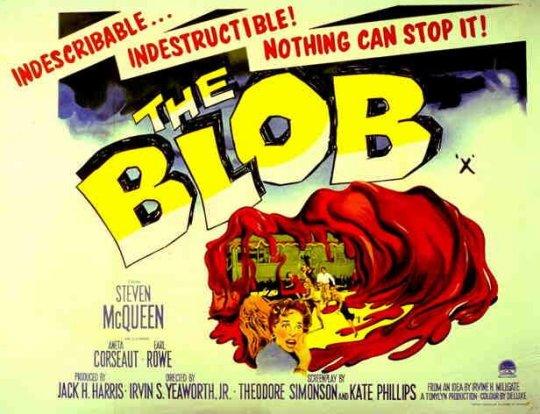
Whenever you bring together Neil deGrasse Tyson and Richard Dawkins — one the public face of astrophysics, the other the public face of biology — you’re pretty much guaranteed a good crowd and a spirited conversation. And that’s what students got in September 2010, when the scientists shared the stage at Howard University and considered some big enchilada questions. For example: Why did our mind — from an evolutionary point of view — lead us to abstract mathematics, which drives the major discoveries in physics? What are the chances that we’ll discover intelligent life in the universe, and, if they discover us (rather than the other way around), could we, as a civilization, be in big trouble? Is natural selection operative throughout the universe and would aliens look anything like us? And why is The Blob a much better alien than ET? In short, they’re considering just the kinds of mind-bending questions that college students love to entertain — and hopefully you do to. Their conversation runs about 50 minutes and a Q&A follows.
Related Content:
Neil deGrasse Tyson Lists 8 (Free) Books Every Intelligent Person Should Read
125 Great Science Videos: From Astronomy to Physics & Psychology
30 Free Physics Courses from Top Universities (More Free Courses here)
Read More...The Broken Tower, James Franco’s Docudrama On “Difficult” Poet Hart Crane: A Preview
Above, you’ll find a short trailer for The Broken Tower, a film about Hart Crane: candy-fortune scion, hard-drinking sexual adventurer, narrowly appreciated poet, and suicide victim at 32. The motion picture industry loves to dramatize this sort of literary life, although it tends to choose literary figures whose legacies have, in the fullness of time, accrued them a reasonable popularity. But Crane, though often seen as a more optimistic counterpart in modernism to T.S. Eliot, lacks almost all of Eliot’s name recognition outside scholarly circles. Part of this has to do with his notoriously “difficult” verbal style, which has made him nearly synonymous with a certain strain of poetic complexity. Allen Grossman once gave a lecture at the University of Chicago called “On Communicative Difficulty in General and ‘Difficult’ Poetry in Particular: The Example of Hart Crane’s ‘The Broken Tower.’ ” (The title name-checks the posthumously published biographical poem from which the new picture takes its name.) Even Tennessee Williams, a known fan of Crane’s work, said he could “hardly understand a single line” of it — adding that, of course, “the individual lines aren’t supposed to be intelligible.”
James Franco not only stars in The Broken Tower, but wrote, directed, and produced the film as well. Perhaps I need hardly mention that, since Franco makes no effort (and the media even less) to conceal his literary-academic interests and penchant for following several artistic pursuits at all times. The Broken Tower began as his NYU master’s thesis, went on to play at the Los Angeles Film Festival, and has very recently entered limited theatrical release. The clip above, taken from the Q&A at the picture’s Boston College premiere, features both Franco and Paul Mariani, author of The Broken Tower: The Life of Hart Crane, the biography that galvanized Franco’s fascination with Crane as he read it on the set of 2002’s Sonny. After hearing both men describe how the grim yet optimistic, resistant yet compelling wordscape of Hart Crane drew them in, don’t be surprised if you feel the impulse to do some research of your own.
(See also: Hart Crane’s poems on Poemhunter.com.)
Related content:
James Franco Reads Short Story in Bed for The Paris Review
The Book Trailer as Self-Parody: Stars Gary Shteyngart with James Franco Cameo
Colin Marshall hosts and produces Notebook on Cities and Culture. Follow him on Twitter at @colinmarshall.
Read More...John Cage Unbound: A New Digital Archive Presented by The New York Public Library
John Cage enthusiasts have surely rejoiced at the New York Public Library’s opening of John Cage Unbound: A Living Archive, which offers visitors a chance to experience how the uniquely innovative composer’s life and work continue to affect the performance of music today. But if you don’t happen to live in New York, no need to book a trip; you can browse the archive online whenever and from wherever you please. One wonders what Cage, who died the year before the debut of the World Wide Web as we know it, would have made of all the artistic invention, sonic and otherwise, that the internet has enabled. I like to think he’d gaze with great fascination at this site’s continually updated collection of not only vintage John Cage footage — him playing amplified cacti and plant materials with a feather with Takehisa Kosugi, him speaking in 1978 — but recent material as well, such as Paul Schuette’s interpretation of the piece “Water Walk,” and The Anta Project performing Cage’s famous “4’33”,” the piece that involves no playing, at the U.S.-Mexico border.
Bridging the gap between the old and the new, the video above collects personal impressions of John Cage from those who participated in his 1970 performance at Carlisle, Pennsylvania’s Dickinson College. “Intense, observant, focused,” says the college’s President William Durden. “Not necessarily a person who took up space, but a person who really… chiseled space.” Thinking about the nature of the concert, Joe Sobel, a musician who built an instrument out of junked car horns especially for it, remembers that “if you approached it in a dour, serious way, you weren’t going to be able to make any sense of it. In order to enjoy it, you had to be open and willing to get the joke.” He could say the same about everything John Cage ever did. Hearing these reflections and then, later in the video, seeing a group of Dickinson students grapple with putting on Cage’s “Radio Music” — a piece played not with traditional instruments, but literal radios — even viewers who aren’t yet John Cage enthusiasts may find themselves intrigued. Spending an evening at John Cage Unbound will get them up to speed on the composer’s enduring relevance; pair it with a reading of Cage’s famous book/manifesto Silence, and you’ll never think about music in quite the same way again.
Related content:
John Cage Performs Water Walk on “I’ve Got a Secret” (1960)
Colin Marshall hosts and produces Notebook on Cities and Culture. Follow him on Twitter at @colinmarshall
Read More...J.D. Salinger, Out for a Stroll: Reclusive Author of The Catcher in the Rye Caught on Film
As a photographic document, this footage is only slightly less astonishing than the famed 1967 Patterson-Gimlin film of a “Bigfoot” traipsing across a forest clearing in Northern California.
In this case the elusive creature is none other than J.D. Salinger. The footage appears to have been shot quite a few years before the writer’s death, at 91, in January of 2010. The caption on YouTube simply says, “J.D. Salinger out for a stroll in Cornish, New Hampshire.” Salinger had lived a quiet life in Cornish since 1953, two years after the publication of The Catcher in the Rye. But as one commentator on YouTube wryly points out, the footage was probably shot in another town just across the Connecticut River from Cornish:
If you really want me to tell you about it, this is likely Windsor, VT, judging by all the phony people and the parking meters and all. JD went there daily for his mail and a bite to eat at the diner. He was a madman that way. I know it’s corny and all, but that’s goddam Windsor, across the river from Cornish.
It’s true, Cornish has very few people and no parking meters. By all accounts Salinger lived a fairly normal life there. If you travel up that way you’re likely to meet people who remember seeing him out and about before his health declined. After he died, a trickle of anecdotes started to emerge. Their mundaneness somehow makes them all the more fascinating. For example, Yankee magazine published a story, “J.D. Salinger’s Last Supper,” about the writer’s fondness–right up to the very end–for the Saturday-night roast beef dinners at the Congregational Church in Hartland, Vermont. “Typically, he’d arrive an hour and a half ahead of the first seating–often to be first in line,” reports Jim Collins. “He’d sit quietly, writing in a spiral-bound notebook. Most people around him were unaware of who he was; the volunteers working the supper treated him like any other guest and protected his privacy.” Spiral-bound notebook, eh? Hmm.
Another anecdote is from writer Nicholas Carr, who tells a story on his blog about a surprise encounter he had with Salinger when he was an undergraduate student at Dartmouth College, which is located in Hanover, just up the valley from Cornish. Carr was working behind the circulation desk at the college library one summer when “a tall, slender, slightly stooped man” walked in. He remembers his boss whispering, “That’s J.D. Salinger”:
Holy crap, I thought. I just saw J.D. Salinger.
About ten minutes later Salinger suddenly reappeared at the desk, holding a dollar bill. I went over to him, and he said he needed change for the Xerox machine. I took his dollar and gave him four quarters.
That’s my claim to fame: I gave J.D. Salinger change for a buck.
Photocopies, eh? What was that old guy up to?
Read More...Martin Scorsese’s Very First Films: Three Imaginative Short Works
?si=ILR3sREkYPwPDwsP
Last week we featured the first three films of Stanley Kubrick. Today we focus on the first three by Martin Scorsese. Although the two men were about the same age when they ventured into filmmaking, and faced similar constraints, their earliest films are strikingly different.
Kubrick and Scorsese had both grown up in New York City and gone to high school in the Bronx, but their circumstances were worlds apart. Kubrick failed to get into college after high school because of bad grades but, as he put it, “backed into a fantastically good job at the age of seventeen” working as a staff photographer for Look magazine. Scorsese went to college and studied the history and aesthetics of cinema. When Kubrick decided to try his hand at motion pictures he was driven by a sense of economic urgency. His strategy was to get a foothold in the marketplace by beating the newsreel industry at its own game. Scorsese, on the other hand, was sheltered from economic worries. He was moved instead by the vivacity and inventiveness of French New Wave cinema, among other influences, and wanted to assert himself as the next great auteur.
As a severely asthmatic child, Scorsese went to the movies often. When high school graduation was approaching he thought about becoming a priest, and briefly considered studying literature. But then something caught his eye: a catalog for the New York University film school. He went to an NYU orientation session, where the various department heads took turns describing their programs to a room filled with prospective students. When the head of the Department of Television, Motion Pictures and Radio stood up–a man named Haig Manoogian–the young Scorsese was instantly impressed. “He had such energy, such passion,” Scorsese tells Richard Schickel in Conversations with Scorsese. “I said to myself, That’s where I want to be, with this person.”
Manoogian took the art of film very seriously. When Scorsese was a freshman in 1960 he attended Manoogian’s once-a-week class on the history of film. Each session included a lecture and the screening of a film. In Conversations with Scorsese the filmmaker remembers Manoogian’s ruthlessness in dealing with students who attended only to watch movies. “He’d say, okay, you don’t come back, you don’t come back,” says Scorsese, “ ‘because some of you must think because we’re showing movies, it’s fun. Get out.’ ”
As Scorsese moved through the program, he gradually began learning a few basic skills in the mechanics of making a movie. By junior year, each student was expected to collaborate in the making of a short film. So in 1963 Scorsese took Manoogian’s summer workshop, where he found that not every student got to direct. “He’d say, Okay, you’re director, you’re grip, you’re camera, whatever,” Scorsese tells Schickel. “So there were a lot of people who were very unhappy.” He quickly figured out that Manoogian was assigning the role of director to students who had their own screenplay. “What I did was write a script and get it to him as soon as possible, and he okayed it, so I was given a crew, and they all knew that they had to do what I wanted.”
Scorsese and his crew took one of the school’s old 16mm Bell & Howell Filmo cameras and shot a one-reel comedy in a week. He would later describe the film as “nine minutes of visual nonsense.” What’s a Nice Girl Like You Doing in a Place Like This?, as it is called, (see above) adopts the surreal comic sensibility Scorsese admired in the work of Mel Brooks and Ernie Kovaks, along with narrative technique he picked up watching French New Wave films, particularly those of François Truffaut. As he tells Schickel:
My little film had all the tricks and fun of just putting pictures together in slow motion and fast motion and stills, and intercutting with mattes the way Truffaut would do in Jules and Jim. It had no depth at all, but it was a lot of fun. And it won me a scholarship, so my father was able to use it for the tuition for the next year. And then that led me to doing another short film in my junior year, the second semester, and that became It’s Not Just You, Murray!
It’s Not Just You, Murray! part one:
It’s Not Just You, Murray! part two:
It’s Not Just You, Murray! (above), completed in 1964, is a much more ambitious film. It tells the story of a pair of Italian-American gansters. “The two characters, Murray and Joe,” Scorsese tells Michael Henry Wilson in Scorsese on Scorsese, “are close friends, but the sort who are constantly stealing from each other, pinching their whisky and their girls. They live the way I myself was living with my buddies–relationships that contain as much hate as love.”
Scorsese chose not to present Murray as a gangster at the beginning of the film, because he wanted to make a wider statement about American life. “I grew up in Little Italy,” he tells Wilson, “I’ve seen corruption up close, I’ve seen it operating every day. After that you can’t take the Establishment seriously. It’s all a fraud.” The two-reel film is like a preliminary sketch for some of Scorsese’s most famous later films. When Schickel tells Scorsese he had never seen It’s Not Just You, Murray!, he is surprised by the filmmaker’s description. “It was basically Goodfellas,” Scorsese says. “Huh,” says Schickel?
It’s Goodfellas. I did it in 1964. Murray was a big epic, as much as I could manage, of two guys who were friends in the underworld, from my old neighborhood. but I did it with very New Wave techniques. It was also a cross with The Roaring Twenties, an attempt at that sort of scale which led eventually to Mean Streets, which led ultimately to Goodfellas, and to Casino and Gangs of New York–the scale of it, the excessive nature of it. I mean, in Murray there’s just a hint of it. We didn’t have the money.
The Big Shave:
After Scorsese received his bachelor’s degree from NYU in 1964, he began work on his first feature film, Who’s That Knocking at My Door? It took him over two years to make, and in 1967 he still hadn’t found a distributor. At that time he received a grant from the Cinémathèque de Belgique to make a short film. The result was the third film by Scorsese to be released, and his first in color: The Big Shave (above). “In a bathroom that may represent the American Psyche haunted by the Vietnam war,” writes Wilson in a synopsis of the film, “the daily ritual of shaving turns into a scene of horror.”
As Scorsese tells Mary Pat Kelly in Martin Scorsese: The First Decade, “It grew out of my feelings about Vietnam. But in reality something else was going on inside of me, I think, which really had nothing to do with the war.” Scorsese was experiencing a number of professional and personal setbacks, and was deeply depressed at the time. “After separating from my wife,” he tells Wilson, “I was camping out in empty, creepy apartments.” He continues:
When I wrote the script, I was very serious, but while we were shooting it we never stopped laughing. Watching the rushes, we were doubled up. It was only afterwards that I tried to rationalize what I had done. I almost convinced myself that it was a film against the Vietnam war, that this guy who shaves so meticulously and ends up cutting his throat represented the average American of his day. It was because of these political implications that I used Bunny Berigan’s original 1939 version of “I Can’t Get Started” for the soundtrack. I even wanted to end with archival images of Vietnam, but I didn’t need them. The Big Shave was really a fantasy, a strictly personal vision of death.
You can find the Scorsese films mentioned above in our collection of Free Movies Online.
Read More...The Birth and Decline of a Book: Two Videos for Bibliophiles
If you’ve ever spent any time with old books, or stepped into the right used bookstore, you’ve encountered that distinctive smell. Produced by Abe’s Books, and drawing on research from chemists at University College, London, this video looks at the science behind the aroma of used books — at what happens when chemicals and organic matter confront heat, light, moisture and time.
When you’re done watching the video, you might want to spend time with a second clip that deals with another part of the lifecycle of the book — the birth of a book. Shot by Glen Milner at Smith-Settle Printers in Leeds, England, this short film lets you watch firsthand a book — Suzanne St Albans’ Mango and Mimosa — being made with old school printing methods. Enjoy.
If you would like to support the mission of Open Culture, consider making a donation to our site. It’s hard to rely 100% on ads, and your contributions will help us continue providing the best free cultural and educational materials to learners everywhere. You can contribute through PayPal, Patreon, and Venmo (@openculture). Thanks!
Read More...Ray Bradbury Gives 12 Pieces of Writing Advice to Young Authors (2001)
Like fellow genre icon Stephen King, Ray Bradbury has reached far beyond his established audience by offering writing advice to anyone who puts pen to paper. (Or keys to keyboard; “Use whatever works,” he often says.) In this 2001 keynote address at Point Loma Nazarene University’s Writer’s Symposium By the Sea, Bradbury tells stories from his writing life, all of which offer lessons on how to hone the craft. Most of these have to do with the day-in, day-out practices that make up what he calls “writing hygiene.” Watch this entertainingly digressive talk and you might pull out an entirely different set of points, but here, in list form, is how I interpret Bradbury’s program:
- Don’t start out writing novels. They take too long. Begin your writing life instead by cranking out “a hell of a lot of short stories,” as many as one per week. Take a year to do it; he claims that it simply isn’t possible to write 52 bad short stories in a row. He waited until the age of 30 to write his first novel, Fahrenheit 451. “Worth waiting for, huh?”
- You may love ’em, but you can’t be ’em. Bear that in mind when you inevitably attempt, consciously or unconsciously, to imitate your favorite writers, just as he imitated H.G. Wells, Jules Verne, Arthur Conan Doyle, and L. Frank Baum.
- Examine “quality” short stories. He suggests Roald Dahl, Guy de Maupassant, and the lesser-known Nigel Kneale and John Collier. Anything in the New Yorker today doesn’t make his cut, since he finds that their stories have “no metaphor.”
- Stuff your head. To accumulate the intellectual building blocks of these metaphors, he suggests a course of bedtime reading: one short story, one poem (but Pope, Shakespeare, and Frost, not modern “crap”), and one essay. These essays should come from a diversity of fields, including archaeology, zoology, biology, philosophy, politics, and literature. “At the end of a thousand nights,” so he sums it up, “Jesus God, you’ll be full of stuff!”
- Get rid of friends who don’t believe in you. Do they make fun of your writerly ambitions? He suggests calling them up to “fire them” without delay.
- Live in the library. Don’t live in your “goddamn computers.” He may not have gone to college, but his insatiable reading habits allowed him to “graduate from the library” at age 28.
- Fall in love with movies. Preferably old ones.
- Write with joy. In his mind, “writing is not a serious business.” If a story starts to feel like work, scrap it and start one that doesn’t. “I want you to envy me my joy,” he tells his audience.
- Don’t plan on making money. He and his wife, who “took a vow of poverty” to marry him, hit 37 before they could afford a car (and he still never got around to picking up a license).
- List ten things you love, and ten things you hate. Then write about the former, and “kill” the later — also by writing about them. Do the same with your fears.
- Just type any old thing that comes into your head. He recommends “word association” to break down any creative blockages, since “you don’t know what’s in you until you test it.”
- Remember, with writing, what you’re looking for is just one person to come up and tell you, “I love you for what you do.” Or, failing that, you’re looking for someone to come up and tell you, “You’re not nuts like people say.”
Related content:
Ray Bradbury: Literature is the Safety Valve of Civilization
The Shape of A Story: Writing Tips from Kurt Vonnegut
John Steinbeck’s Six Tips for the Aspiring Writer and His Nobel Prize Speech
Colin Marshall hosts and produces Notebook on Cities and Culture. Follow him on Twitter at @colinmarshall.
Read More...Support Us
We're hoping to rely on loyal readers, rather than erratic ads. Please click the Donate button and support Open Culture. You can use Paypal, Venmo, Patreon, even Crypto! We thank you!

About Us

Open Culture scours the web for the best educational media. We find the free courses and audio books you need, the language lessons & educational videos you want, and plenty of enlightenment in between.
Advertise With Us
FREE UPDATES!
GET OUR DAILY EMAIL
Get the best cultural and educational resources on the web curated for you in a daily email. We never spam. Unsubscribe at any time.
FOLLOW ON SOCIAL MEDIA
Open Culture editor Dan Colman scours the web for the best educational media. He finds the free courses and audio books you need, the language lessons & movies you want, and plenty of enlightenment in between.
Advertise With Us