An Architect Breaks Down the 5 Most Common Styles of College Campus
Every now and again on social media, the observation circulates that Americans look back so fondly on their college years because never again do they get to live in a well-designed walkable community. The organization of college campuses does much to shape that experience, but so do the buildings themselves. “People often say that college is the best four years of your life,” says architect Michael Wyetzner in the new Architectural Digest video above, “but it was also likely that it was some of the best architecture you’ve been around as well.” He goes on to identify, explain, and contextualize the five building styles most commonly seen on American college campuses: colonial, Collegiate Gothic, modernism, brutalism, and postmodernism.
For examples of colonial campus architecture, look no further than the Ivy League, only one of whose schools was built after the Declaration of Independence — whose author, Thomas Jefferson, later designed the University of Virginia, drawing much inspiration (if not always first-hand) from ancient Greece and Rome. “Ironically, after the US declared independence, newer schools wanted to look older,” says Wyetzner, a desire that spawned the enduring Collegiate Gothic style. Constructed out of masonry and brick, its earliest buildings tend to pick and choose features of genuine Gothic architecture while mixing and matching them with the design languages of other times and places. More recent examples have been strenuously faithful by comparison, incorporating gargoyles and all.
When they arise, architectural styles tend to align themselves with the old or the new, and it was the latter that overtook college campuses after the Second World War. Take the Illinois Institute of Technology, which was designed whole by no less a Bauhaus-credentialed modernist than Ludwig Mies van der Rohe. Modular, flat-roofed, and built with plenty of exposed brick, glass, and steel, its buildings proved influential enough that “nearly every high school in the United States that was built in the fifties and sixties” was designed in more or less the same way — albeit without the early utopian modernist spirit, which by that point had devolved into an industrial emphasis on “rationalism, functionality, and hygiene.”
After modernism came brutalism, the style of the least-beloved buildings on many a campus today. Coined by Le Corbusier, the style’s name comes from béton brut, or raw concrete, vast quantities of which were used to shape its hulking and, depending on how you feel about them, either dreary or awe-inspiring structures. The aesthetically promiscuous postmodernist buildings that began appearing in the sixties and multiplied in the seventies and eighties were more playful and historically aware — or all too playful and historically aware, as their detractors would put it. If you think back to your own college days, you can probably remember spending time in, or around, at least one example of each of these styles, because large US college campuses have, over time, become rich anthologies of architectural history. Would that most Americans could say the same about the places they live after graduation.
Related content:
Why People Hate Brutalist Buildings on American College Campuses
Architect Breaks Down Five of the Most Iconic New York City Apartments
An Architect Breaks Down the Design of New York City Subway Stations, from the Oldest to Newest
What Is Postmodern Architecture?: An Introduction in Three Videos
Based in Seoul, Colin Marshall writes and broadcasts on cities, language, and culture. His projects include the Substack newsletter Books on Cities and the book The Stateless City: a Walk through 21st-Century Los Angeles. Follow him on Twitter at @colinmarshall or on Facebook.
Why People Hate Brutalist Buildings on American College Campuses
Many Americans receive their introduction to the style known as Brutalism in college. This owes less to courses in twentieth-century architecture than to university campuses themselves, which tend to have been expanded or even wholly constructed in the decades immediately following the Second World War. As Vox’s Dean Peterson explains in the new video above, its veterans returned home eager to receive the tertiary education to which the G.I. Bill entitled them, which “necessitated that universities build new facilities to handle ballooning admissions. And with so many new buildings being needed, what did architects of the day turn to? Brutalism.”
“Not just a style of architecture but an entire aesthetic ethos,” Brutalism had developed through inspiration from the work of Charles-Édouard Jeanneret, better known as Le Corbusier. While other architects had employed concrete before him, he was the one to make the bold choice of leaving it exposed on the surface in its raw form: béton brut, to use the term that gave the movement its name.
To qualify under the rubric of this “new Brutalism,” as architectural historian Reyner Banham (later to become famous for his ultra-modern view of Los Angeles) referred to it, a structure should demonstrate “memorability as an image,” “clear exhibition of structure,” and “valuation of materials ‘as found’ ” — in contrast to the nineteen-fifties’ proliferation of seemingly featureless glass-sheathed skyscrapers designed by modernists like Ludwig Mies van der Rohe and his many imitators.
“Brutalist buildings strove for honesty in their materials and structure,” says Peterson. “They showed you how they were constructed.” Though acclaimed in their day as built statements of a break from the staid past into a wholly reimagined future, many campus Brutalist buildings in the United States subsequently fell into disrepair, owing to the economic downturn of the seventies and the resultant lapses into “deferred maintenance” — which, deferred long enough, shades into planned demolition. Such has been the case with Evans Hall, the statistics, economics, and mathematics building at University of California, Berkeley, which, since its construction in 1971, played an important part in the history of computer science, not least as the node through which the whole of the west coast connected to ARPANET, the military-built precursor to the internet.
Today, objections to Evans Hall’s Brutalist aesthetics, as well as to its location in front of the San Francisco Bay and its poor earthquake-safety rating (that last being fairly common among UC Berkeley’s structures), have led to its being emptied out with an eye toward replacement. Though it may be too late for Evans Hall, much of America’s Brutalist heritage can still be rehabilitated. “Be patient,” says architecture professor Timothy Rohan (author of a study of American Brutalist Paul Rudolph). “Just because you find something unfashionable at the moment doesn’t mean you should eradicate it.” This is not, perhaps, advice particularly well-suited to college students, but given the likelihood of their exposure to Brutalism not just on campus but also on Instagram, they may turn out to be its best hope yet.
Related content:
Why Do People Hate Modern Architecture?: A Video Essay
Based in Seoul, Colin Marshall writes and broadcasts on cities, language, and culture. His projects include the Substack newsletter Books on Cities, the book The Stateless City: a Walk through 21st-Century Los Angeles and the video series The City in Cinema. Follow him on Twitter at @colinmarshall or on Facebook.
Read More...Neil Gaiman Speaks at the Alternative Graduation Held at a College Resisting Ron DeSantis’ Hostile Takeover
His presidential campaign has ended before it started. But Ron DeSantis is the last to know it. And so he continues pandering to Trump’s base. After shipping migrants to Martha’s Vineyard, the Florida governor now picks costly fights with Disney, his state’s second largest employer; bans books in Florida public schools; and exerts political pressure on the state’s public colleges and universities.
At the New College of Florida, DeSantis is using the cudgel of government to transform a traditional liberal arts college into a conservative-leaning institution. If you’re not following what’s happening at New College, read this profile in The New Yorker. The article will help set the stage for the video above.
There, you will see author Neil Gaiman speaking at an alternative graduation arranged by New College students. Not wanting to participate in the official graduation architected by the school’s new conservative bosses (the event featured Scott Atlas, the radiologist who became Trump’s controversial Covid “expert,” how inspiring!), the students arranged an alt graduation and invited Gaiman to speak via video. Through a personal story, The Sandman author reminded the students of the liberal arts values that undergird the school, and left students with some timely advice: “You must fight for what you believe to be right while never losing your sense of humor or your sense of proportion.” Here’s to hoping that New College outlasts the erstwhile presidential contender.
Related Content
Neil Gaiman Gives Graduates 10 Essential Tips for Working in the Arts
John Waters’ RISD Graduation Speech: Real Wealth Is Life Without A*Holes
Read More...Coffee College: Everything You Wanted to Know about Coffee Making in One Lecture
No matter how much coffee you drink, you never drink the same coffee twice. Coffee-drinkers understand this instinctively, even those who only drink their coffee at home using the same beans and the same brewing process day in and day out. For even in the most controlled coffee-making conditions we can achieve in our everyday lives, variations have a way of creeping in. Endless scrutiny of those variations is all in a day’s work for someone like Matt Perger, who’s come out on or near the top of several barista championships, and who founded the online coffee-education service Barista Hustle and its associated Youtube channel.
In the channel’s most popular video by far, Perger delivers an 80-minute lecture on “advanced coffee making” at Assembly Coffee in London. After covering the adjectives used to describe the flavor of coffee in general — from “weak,” “delicate,” and “tea-like” to “luscious,” “bitter,” and “overwhelming” — he moves on to the vocabulary of extraction.
The most important stage in the coffee-making process as far as the resulting taste is concerned, extraction is accomplished by putting hot water through coffee grounds, in whichever manner and with whichever device you may choose to do it. Weaker methods of extraction result in “salty” or “vegetal” tastes, and stronger methods in “astringent” or “powdery” ones.
As in so many pursuits, the most desirable outcomes lie in the middle of the spectrum. Just how to achieve that perfectly “transparent,” “nutty,” “balanced,” and even “sweet” cup of coffee constitutes the driving professional question for Perger and baristas like him. Clearly possessed of a taste for rigor, he explains the effects of everything from the design of roasters and grinders to the techniques of brewing and pouring while citing the findings of experiments and blind taste tests — and even acknowledging when pieces of expensive coffee-making gear yield no demonstrable quantitative benefit. True coffee aficionados who have an endless appetite for this kind of talk may find themselves tempted to sign up for Barista Hustle’s online courses, but even more so to brew another cup for themselves.
Related content:
Everything You Wanted to Know About Coffee in Three Minutes
How to Make Coffee in the Bialetti Moka Pot: The “Ultimate Techique”
The Birth of Espresso: The Story Behind the Coffee Shots That Fuel Modern Life
Your Burning Questions About Coffee Answered by James Hoffmann
10 Essential Tips for Making Great Coffee at Home
Based in Seoul, Colin Marshall writes and broadcasts on cities, language, and culture. His projects include the Substack newsletter Books on Cities, the book The Stateless City: a Walk through 21st-Century Los Angeles and the video series The City in Cinema. Follow him on Twitter at @colinmarshall or on Facebook.
Read More...YouTube & Arizona State University Team Up to Offer Online Courses for Real College Credits
A recent Pew Research Center survey found that nearly one in five American teenagers is on Youtube “almost constantly.” Ten years ago, the figure surely wouldn’t have been that high, and twenty years ago, of course, Youtube didn’t exist at all. But today, no enterprise directed at teenagers can afford to ignore it: that goes for pop music and fashion, of course, but also for education. Most kids just starting college are on Youtube, but so are those about to start college, those taking time off from college, and those unsure of whether they’re willing or able to go to college at all. Hence College Foundation, a new extension of Youtube channel Study Hall, the product of a partnership between Arizona State University, YouTube and Crash Course.
Crash Course has long produced video series that, both entertainingly and at length, cover subjects taught in school from history to literature to philosophy and beyond. The College Foundation’s program will make it possible not just to learn on Study Hall, but to earn real college credits as well.
“Students who are interested in formal coursework beyond watching the videos may pay a $25 fee to enroll in an ASU online course that includes interacting with other students and instructors,” writes Inside Higher Education’s Susan D’Agostino. Upon completion of the course, “the student can decide whether they would like to pay $400 to record the grade and receive ASU credit.”
Enrollment is now open for the first four College Foundations courses, English Composition, College Math, U.S. History and Human Communication, all of which begin on March 7th. (Those who sign up before that start date will receive a $50 discount.) “Once you’re in a course, you can contact a success coach via email to get help with assignments,” writes TechCrunch’s Aisha Malik. “You can complete your coursework when it’s convenient for you, but you will have weekly due dates for most of the courses. If you want to access additional support, some instructors hold optional office hours.” This sort of learning experience could become a bridge to Youtube life and college life — the latter being the subject addressed, with characteristic Youtube directness, in the existing Study Hall course “How to College.”
Related content:
1,700 Free Online Courses from Top Universities
A Crash Course in World History
A Crash Course on Psychology: A 30-Part Video Series from Hank Green
Crash Course Big History: John Green Teaches Life, the Universe & Everything
Based in Seoul, Colin Marshall writes and broadcasts on cities, language, and culture. His projects include the Substack newsletter Books on Cities, the book The Stateless City: a Walk through 21st-Century Los Angeles and the video series The City in Cinema. Follow him on Twitter at @colinmarshall or on Facebook.
Read More...Ray Dalio Is Giving Away Free Copies of His New Book Principles for Dealing with the Changing World to High School & College Teachers and Their Students
As we noted back in March, investor Ray Dalio has published his latest bestseller, Principles for Dealing with the Changing World: Why Nations Succeed and Fail. A history of the rise and fall of empires over the last 500 years, the book uses the past to contemplate the future, particularly the fate of the United States and China. Today, for Teacher Appreciation Week, Dalio has announced that he’s willing to give a copy of the book “to any high school or college educator who wants it—and to all of their students if they intend to have them read it.” He writes:
Since releasing my book and animated video [above], Principles for Dealing with the Changing World Order, many people have told me that both would be helpful for teaching history in schools and asked me if I would help make that happen. So, during this Teacher Appreciation Week I will give a copy of the book to any high school or college educator who wants it—and to all of their students if they intend to have them read it. And if there’s a lot of interest, I’d be happy to extend the offer past this week. Of course, the Youtube video is already free and easily available and I encourage you to check that out if you want an overview of what’s in the book.
When you sign up, let me know if you’re interested in me hosting a live online session for classrooms, which I’ll do if people would like it. If you are not an educator but know some who might be interested in this offer, please share this link with them.
To access the offer, click here.
If you would like to support the mission of Open Culture, consider making a donation to our site. It’s hard to rely 100% on ads, and your contributions will help us continue providing the best free cultural and educational materials to learners everywhere. You can contribute through PayPal, Patreon, and Venmo (@openculture). Thanks!
Related Content
The Principles for Success by Entrepreneur & Investor Ray Dalio: A 30-Minute Animated Primer
Read More...Become a Project Manager Without a College Degree with Google’s Project Management Certificate
As we first mentioned last year, Google has launched a series of Career Certificate programs that allow students to gain expertise in a field, ideally enough to start working without a 4‑year college degree. This initiative now includes a Certificate in Project Management, which consists of six courses.
- Foundations of Project Management
- Project Initiation: Starting a Successful Project
- Project Planning: Putting It All Together
- Project Execution: Running the Project
- Agile Project Management
- Capstone: Applying Project Management in the Real World
Above, a Program Manager talks about “her path from dropping out of high school and earning a GED, joining the military, and working as a coder, to learning about program management and switching into that career track.” An introduction to the Project Management certificate appears below.
The Project Management program takes about six months to complete, and should cost about $250 in total. Students get charged $39 per month until they complete the program.
You can explore the Project Management certificate here. And find other Google career certificates in other fields–e.g. UX Design and Data Analytics–over on this page. All Google career courses are hosted on the Coursera platform.
Note: Open Culture has a partnership with Coursera. If readers enroll in certain Coursera courses and programs, it helps support Open Culture.
Related Content
150 Free Online Business Courses
Read More...Bill Gates Lets College Students Download a Free Digital Copy of His Book, How to Avoid a Climate Disaster
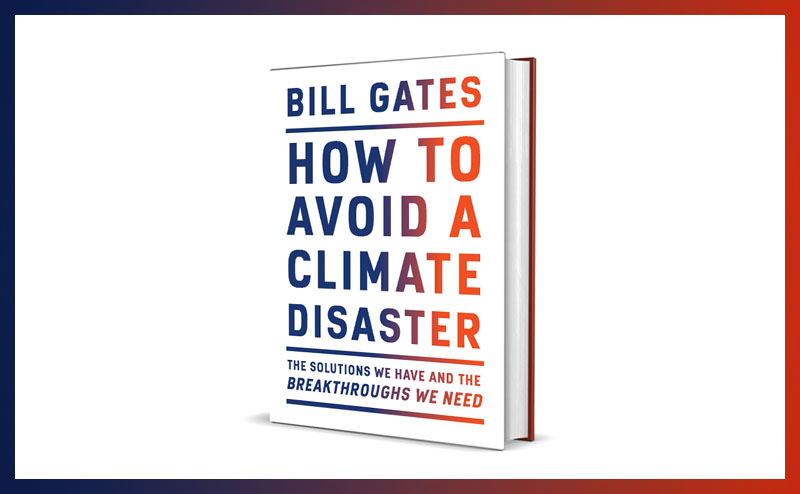
FYI: Earlier this year, Bill Gates published the New York Times bestseller, How to Avoid a Climate Disaster: The Solutions We Have and the Breakthroughs We Need. In the book, Gates explains why we need to work toward net-zero emissions of greenhouse gases, and how we can achieve this goal. Given that this responsibility will eventually fall to a younger generation of leaders, Gates has decided to make a digital copy of his book available to every college and university student in the world.
The book can be downloaded an .epub file which can be opened in a compatible e‑reader application on many devices. An email address, along with a name of college/university, is required. Find the book here.
Related Content
Take Big History: A Free Short Course on 13.8 Billion Years of History, Funded by Bill Gates
Bill Gates Recommends 5 Thought-Provoking Books to Read This Summer
Read More...Become a Project Manager Without a College Degree with Google’s Project Management Certificate
As we first mentioned last year, Google has launched a series of Career Certificate programs that allow students to gain expertise in a field, ideally enough to start working without a 4‑year college degree. This initiative now includes a Certificate in Project Management, which consists of six courses.
- Foundations of Project Management
- Project Initiation: Starting a Successful Project
- Project Planning: Putting It All Together
- Project Execution: Running the Project
- Agile Project Management
- Capstone: Applying Project Management in the Real World
Above, a Program Manager talks about “her path from dropping out of high school and earning a GED, joining the military, and working as a coder, to learning about program management and switching into that career track.” An introduction to the Project Management certificate appears below.
The Project Management program takes about six months to complete, and should cost about $250 in total. Students get charged $39 per month until they complete the program.
You can explore the Project Management certificate here. And find other Google career certificates in other fields–e.g. UX Design and Data Analytics–over on this page. All Google career courses are hosted on the Coursera platform.
Note: Open Culture has a partnership with Coursera. If readers enroll in certain Coursera courses and programs, it helps support Open Culture.
Related Content
Read More...Support Us
We're hoping to rely on loyal readers, rather than erratic ads. Please click the Donate button and support Open Culture. You can use Paypal, Venmo, Patreon, even Crypto! We thank you!

About Us

Open Culture scours the web for the best educational media. We find the free courses and audio books you need, the language lessons & educational videos you want, and plenty of enlightenment in between.
Advertise With Us
FREE UPDATES!
GET OUR DAILY EMAIL
Get the best cultural and educational resources on the web curated for you in a daily email. We never spam. Unsubscribe at any time.
FOLLOW ON SOCIAL MEDIA
Open Culture editor Dan Colman scours the web for the best educational media. He finds the free courses and audio books you need, the language lessons & movies you want, and plenty of enlightenment in between.
Advertise With Us


