The 20 Best iPod Utilities
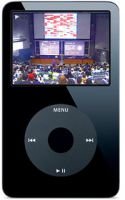 Lifehacker has assembled a great list that will help you maximize the use of your iPod. Here, they point you to free software that will let you 1) rip a DVD to your iPod, 2) copy music and videos to and from your iPod, and also from and to any computer, 3) load videos (and particularly YouTube videos) to you iPod, 4) put Wikipedia on your iPod, 5) free yourself from using iTunes, 6) backup your iPod, etc.
Check out the full list here and learn to make your iPod a better learning/entertainment tool.
PS: A very similar list of iPod tips was published a few days ago over at Pachecus.com, and they were kind of enough to include a link to one of our old features. Have a look here too.
Read More...
James Joyce’s Dubliners: Four Stories
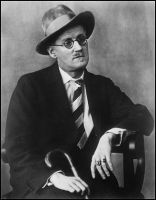 Back in June, we highlighted the release of James Joyce’s Ulysses in free audiobook format. Ulysses stands as Joyce’s most important work, and for some, it’s most the important work published in the English language during the entire 20th century. Despite Ulysses’ enormous stature, many readers still turn to Dubliners, a collection of 15 short stories that Joyce published in 1914, partly because it’s considered his most accessible writing. Over at Librivox, you can find several key stories from this collection — namely, The Sisters (mp3), Araby (mp3), Eveline (mp3), and The Dead (mp3 in zip file). The Dead is the longest and last story in the collection, and it’s a Christmas story, some say the “greatest of all Christmas stories,” which makes it particularly timely to mention here.
It’s worth noting that you can download the complete etext of Dubliners at Project Gutenberg or on Google Book Search. (The latter version is cleaner.) And, if you can suffer through it, Gutenberg also offers a free audio version of Joyce’s text, which is read by a computer, not a real person.
Lastly, be sure to spend some time perusing Librivox’s entire collection of free audiobooks. It’s the best on the web.
Read More...
MIT & Google for High School Students
Here’s a quick fyi on two initiatives announced for high school students this past week:
For six years, MIT’s OpenCourseWare initiative has done a great job bringing free educational materials to adult learners worldwide. (More on the initiative here.) Now, it has launched a section of its website devoted to high school students and teachers. Here, you’ll find a series of “MIT introductory courses” within 11 major areas of study (e.g. Engineering, Foreign Languages, Math, etc.). Plus, you can access information that supplements AP Biology, Physics and Calculus courses. This is a trove of material that the ambitious student will certainly want to explore.
Next, Google announced its first open source contest for pre-university students. Called the “Google Highly Open Participation Contest” (a bit of a mouthful), it’s intended to “help introduce secondary school and high school students to open source software development and to encourage young people through opportunities in the fields of science, technology, engineering, and math.” For more information you can click here and here.
Read More...
The Beginnings of New Journalism: Capote’s In Cold Blood
 Talk has recently focused on the passing of Norman Mailer, a novelist remembered for many things. As The New York Times put it, he was “a prodigious drinker and drug taker, a womanizer, a devoted family man, a would-be politician who ran for mayor of New York, a hipster existentialist, an antiwar protester, an opponent of women’s liberation and an all-purpose feuder and short-fused brawler, who with the slightest provocation would happily engage in head-butting, arm-wrestling and random punch-throwing.” He was, of course, also a novelist, and, for some, “the greatest novelist of the second half of the American century.” That’s at least how George Packer sized him up on his New Yorker blog.
For Packer, Mailer achieved his literary greatness when he ventured into the realm of “New Journalism,” helping to create a new genre that brought fresh literary techniques to conventional journalism and historical writing. We need only mention The Executioner’s Song, Mailer’s heavily-researched account of the execution of Gary Gilmore, that earned him the Pulitzer Prize in fiction in 1980.
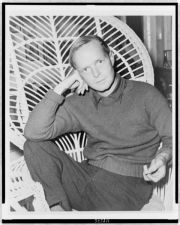
Although Tom Wolfe officially coined the expression “New Journalism” in 1973 (see the book with the same title and related book review), this literary approach was not entirely new. Other authors had already written masterpieces in the genre but referred to it by different names. More than anyone else, Truman Capote gave form to the genre when he published In Cold Blood in 1965. Famously centered around the 1959 murder of the Clutter family in rural Kansas, this “nonfiction novel” was written to give reality to something Capote believed for 20 years — that journalism was “the most underestimated, the least explored of literary mediums” and that in the right hands “journalism, reportage, could be forced to yield a serious new art form,” (See Capote’s interview with George Plimpton, 1966.)
In Cold Blood originally came out in four successive printings of The New Yorker. And as the current editor of the magazine describes it, “people were literally chasing the delivery trucks down the street.” Quite nicely, you can find the first installment of the novel in the New Yorker’s online archive (for free). It covers the first 70 pages of the currently published book, and here the stage for the rest of the nonfiction novel is set. To paraphrase a line from the recent film starring Philip Seymour Hoffman, it’s in this section of the novel where two Americas collide — the quiet conservative America and its violent underbelly.
Quick afterthought: The New Yorker should consider reprinting the four copies of the magazine which introduced In Cold Blood to the world. I imagine that copyright/contractual issues might stand in the way. But if they didn’t, it could be a pretty exciting media event and reading experience.
 Subscribe to Our Feed
The 10 Best Books of 2007
After recently publishing its list of 100 Notable Books of 2007, The New York Times has narrowed things down and selected The 10 Best Books of 2007 — five fiction, and five nonfiction. Have a look.
Read More...
Predictions for the World in 2008
The Economist has issued its predictions for the world in 2008, and here’s what they’re banking on: The Democrats, and particularly Hillary Clinton, narrowly win the upcoming presidential election. Meanwhile the United States, which has never met a bubble it doesn’t like, will get mired down with housing and credit problems. And looking for a new economic engine, the world will turn to China and India. Even better for China, it will host the Olympics in Beijing, win many medals, and feel like it has arrived (or rather re-arrived) as a nation. But perhaps feeling a bit too proud, it might ratchet up tensions with Taiwan, while the U.S. surprises everyone, even itself, by possibly striking a “grand bargain” with Iran. Other than that, George Bush will accomplish little during the last year of his administration, and politicians will talk lots about climate change. But whether they actually do anything is anyone’s guess.
For more predictions, check out The Economist’s full write-up, and keep an eye on The Economist podcast (iTunes — Feed — Web Site) where I’m sure these issues will get fuller coverage in the coming days.
Read More...
The MIT Lecture Browser & A Beautiful Mind
 MIT has released a new search engine that draws on speech recognition technology and lets users search MIT audio & video lectures by keyword. For example, if you type “NASA” into the search box, the search results will include all of the instances where a speaker utters the word NASA in a recorded lecture. (You can get more background information on the new search engine here.)
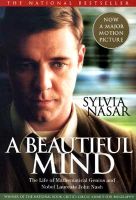
Now, what’s nice about using this example is that a “NASA” search will bring you to an intriguing presentation by Sylvia Nasar. (Click here and type “NASA” or “Sylvia.”) She’s the author of the bestelling book, A Beautiful Mind, which offers a biographical account of the Nobel Prize-winning mathematician John Nash and his struggles with paranoid schizophrenia. The book was turned into an Academy Award-winning film, and here you can find Nasar delivering a lecture at MIT called “A Beautiful Mind: Genius, Madness, Reawakening.” She’s a very able speaker and tells a good story. Have a look. (You can also access Nasar’s talk here.)
 Subscribe to Our Feed and check out our collection of Science Podcasts
How to Watch DVDs on Your iPod?
The answer is simple: Handbrake. This free, open source software (which works on MacOS X, Linux and Windows) makes it simple to load and watch DVDs on your video iPod. Here are some helpful instructions to get you started.
Read More...
The Graduate at 40
The film that spoke to a generation of alienated youth during the 1960s is now 40 years old (and actually looking much tamer than it first did). To mark the occasion, a 40th anniversary collector’s edition DVD has been released, filled with a good amount of extra materials. Also, Fresh Air broadcasted a show last week (iTunes — Feed — Web Site) that brought together interviews with various members of the film’s cast and crew. As Larry David would say, it’s pretty, pretty, pretty good. And, by the way, have a look back at our earlier post: Meet Larry David (in Video)

The Future of Print
WNYC’s latest On The Media (iTunes — Feed — Site) covers the crisis of traditional book publishing in a new media age. While Amazon rolls out the Kindle and more and more content comes out in pure digital form, we’re still publishing more books than ever before. One interesting note from the program is that publishers have discovered that offering more free content online (i.e. not just excerpts but whole chapters of new books) serves to increase sales even more. The show was great–worth a listen.
Read More...Support Us
We're hoping to rely on loyal readers, rather than erratic ads. Please click the Donate button and support Open Culture. You can use Paypal, Venmo, Patreon, even Crypto! We thank you!

About Us

Open Culture scours the web for the best educational media. We find the free courses and audio books you need, the language lessons & educational videos you want, and plenty of enlightenment in between.
Advertise With Us
FREE UPDATES!
GET OUR DAILY EMAIL
Get the best cultural and educational resources on the web curated for you in a daily email. We never spam. Unsubscribe at any time.
FOLLOW ON SOCIAL MEDIA
Open Culture editor Dan Colman scours the web for the best educational media. He finds the free courses and audio books you need, the language lessons & movies you want, and plenty of enlightenment in between.
Advertise With Us

