The Beatles: Podcasts From Yesterday
Podcasts often have a nice way of bringing the past back to life. Beatles fans will undoubtedly appreciate several audio files dedicated to the Fab Four. Let’s start with a particularly good one. Rolling Stone Magazine, as part of a web feature called Lennon Lives Foreover, has released a podcast (iTunes — Feed — Web Site) of Jann Wenner’s famous 1970 interview with John Lennon, which was conducted shortly after the band’s bitter breakup. Running over 3 hours, it is one of Lennon’s most extensive interviews, and it ranges broadly, touching not just on the breakup, but also on art and politics, drugs, Yoko, primal therapy and more. Another notable podcast along these lines is The Lost Lennon Tapes (iTunes — Feed — Web Site). Originally presented by Westwood One in 1988, this podcast presents a collection of Lennon’s private tapes — tapes that include early recordings of The Beatles, radio interviews with John, demo tapes, chronicles of the Double Fantasy recording sessions, and private moments at home.
Next up is something for George Harrison fans. This podcast, called George Harrison Living in a Material World (iTunes — Web Site) takes a look back at George Harrison’s 3rd solo album. And, among other things, it includes interviews with artists who played on the album. Living in a Material World, which went to #1 on the charts in 1973 and was digitally remastered last year, represents, at least for some, Harrison’s most artistically pure solo work.
Lastly, we conclude with a couple of podcasts that look at The Beatles as the collective Beatles. Here, we give you Beatlegs Podcast (iTunes — Feed — Web Site), a show that always features rare interviews or behind the scenes clips, followed by a rare outtake or live performance that few have heard before. And then there is Beatles Minute (iTunes — Feed — Web Site), a podcast coming out of Philadelphia that gives you short, daily tidbits about the band.
Bonus: you can get a few alternative takes on songs from the Help! and Abbey Road-era here. (The site provides songs in mp3 format.)
As a final note, all of these podcasts are housed in our developing Music Podcast Collection. If you are not sure what a podcast is, check out our Podcast Primer. And finally, if you want more cultural media along these lines, be sure to Subscribe to Our Feed.
Read More...What Books Made a Difference? Last Call
Over the past week, we’ve been sounding out our readers on what books have made a difference in their lives. We have about 35 replies so far (and probably 75–100 listed books), and we’ll keep collecting replies until tomorrow (Saturday). Feel free to make your book choices known. The basic guidelines for participating can be found here. We’ll post a hopefully useful summary of your book picks next week. And, as mentioned, we’ll give a $50 gift certificate from Amazon.com to one randomly selected contributor. Thanks for taking part and have a good weekend.
 Subscribe to Our Feed to get cultured web media every day.
Download 75+ free courses as podcasts from leading universities, or check out our University Video Collection.
Read More...Freakonomics Moves to The New York Times
A quick heads up: Steven Levitt and Stephen Dubner, authors of the major bestseller Freakonomics, have moved the related Freakonomics blogs to the New York Times. You can now catch it here, and you’ll need to create a free user account with the Times if you (inexplicably) don’t already have one. It looks like the Freakonomics guys are off to a good provocative start. Today’s post asks If You Were a Terrorist, How Would You Attack?

Read More...
Bestselling Novelist Sells Story Ideas for $1
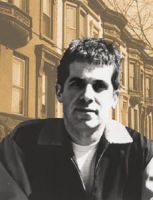 Bestselling writer Jonathan Lethem — author of one of my favorite novels Motherless Brooklyn — has put together an offer that’s hard to beat. He’ll sell you a story for a book, play, or screenplay for a mere $1. Then you can take the story idea, make it your own, and move it in new and unexpected directions.
This is obviously not a get-rich-quick scheme. It’s actually more about bringing Larry Lessig’s notion of free culture to the literary domain. You can get more on Lethem’s ideas here, but the upshot is that Lethem, being a fan of “adaptations, appropriations, collage, and sampling,” wants artists to “make material free and available for [creative] reuse.” (Some of this thinking informs a recent piece in Harper’s called “The ecstasy of influence: A plagiarism.”) The initiative, which he calls The Promiscuous Materials Project, offers a step in the right direction.
Related Content: Give a listen to this engaging interview with Lethem where he talks about this project and more. Also check out Lethem and other authors speaking at Google.
Tell us what books have changed your life. Three days left. We have over 30 contributions so far. Keep them coming.
Read More...
What Books Made a Difference? (Yes, We’re Talking to You)
We’re trying out something a little different today, and we hope that you’ll participate because by giving more, you’ll get more in return. (So far we have 18 people participating, now it is your turn.)
We want to draw on the collective wisdom of our readers and find out what great books you’ve read, and which particular one made a difference in your life. That is, what book has led you to look differently at literature, thinking, career, love, friendship, death, or whatever you consider important?
At some point later next week, we’ll bundle the submissions and post them for you. We’re hoping that this will give everyone a list of great and important books to read.
If you’d like to participate, please make a submission in the comments below, or **@******re.com”>via email. In whatever you write, please list the name of the book and the author, and then mention why the book mattered to you. (Your explanation can be as brief or as long as you like.) When we post the replies, we won’t use your names unless you otherwise consent. And we’ll otherwise protect the privacy of your email addresses.
Finally, we’ll randomly select one name from all of the submissions, and send that contributor a nice $50 gift certificate from Amazon.com.
We look forward to hearing from you, and thanks for taking part.
Read More...
The War of the Worlds on Podcast: How H.G. Wells and Orson Welles Riveted A Nation
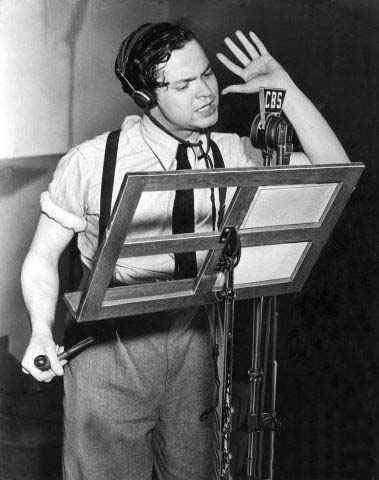 Today, by popular demand, we’re running an updated version of one of our more popular posts to date. Enjoy…
At hastened speeds during the past year, we have seen book lovers recording homegrown audiobooks and posting them on sites like Librivox (see our collection of free audiobooks here). For obvious copyright reasons, these audio texts largely come from the public domain, and, yes, they’re sometimes of uneven quality. Some good, some okay. Among the recent releases, you’d expect to find great classical works — the major plays by Shakespeare, the essential treatises by Plato and other philosophers, etc. — and you do get some of those. However, far more often you get texts by more modern writers who wrote within the thriller, sci fi and adventure genres. Here, I’m talking about Washington Irving, Robert Louis Stevenson, Edgar Allen Poe, Arthur Conan Doyle, and H.G. Wells. (Find these podcasts here.)
It seems rather fitting that Wells, the father of science fiction, would be among the first to have his writings digitally recorded and distributed. Nowadays, you can download, sync and listen to his major works – The New Accelerator (mp3), The Invisible Man (iTunes — feed), The Time Machine (iTunes — feed), and The War of the Worlds (iTunes). But what’s better than all of this, at least in our minds, is this vintage gem …
Here you can download the version of The War of the Worlds that Orson Welles famously adapted and aired on national radio in October 1938. Presented so that it sounded like an actual news broadcast, the Orson Welles version was mistaken for truth by many listeners who caught the program midstream (more info here), and, soon enough, they found themselves fleeing an unfolding Martian invasion, running down into their basements with guns cocked and ready to fire. You can catch the mp3 version of the famous Welles recording here (and also alternatively here). Have fun with this broadcast. It’s a classic.
Related content: For more old time, sci-fi radio broadcasts, check out this nice collection on iTunes.
Also see: Vintage Radio Archive: The Lone Ranger, Abbott & Costello, and Bob Hope
Read More...The Digital Encyclopedia of Life
In 2003, the Harvard biologist E.O. Wilson wrote a widely read essay that called for an “Encyclopedia of Life.” Summed up simply, Wilson had in mind “an online reference source and database” that catalogued “every one of the 1.8 million species that are named and known on this planet,” not to mention the many organisms that aren’t yet known. When fully compiled, the web-based database would offer a “macroscope” of sorts, a way to do comparative biology and ecology on an unprecedented scale, allowing scientists to gain new insights into the immense biodiversity of our planet.
Wilson is still pushing this vision, and he laid it out most recently at the TED Talks conference in Monterey, California. (Watch the video below.) The envisioned encyclopedia will be a collaborative enterprise, modeled somewhat along the lines of Wikipedia (see some demonstration pages here). And it’ll be accessible anywhere, anytime, to whoever could benefit from it. It’s expected to take close to a decade to complete the project, although some key components of the database will be available in 2008. (See this FAQ for more details.)
For more information on E.O. Wilson, I would encourage you to listen to Bill Moyers’ profile of Wilson (iTunes — Feed — MP3) which recently aired on PBS. You may also want to give some attention to Wilson’s latest book, The Creation: An Appeal to Save Life on Earth.

The Worst Sentence Awards
Every year the folks at the Bulwer-Lytton Fiction Contest celebrate their love for bad prose by running “a whimsical literary competition that challenges entrants to compose the opening sentence to the worst of all possible novels.” They’ve just announced this year’s champion sentences and they’re well worth a read. The contest accepts entries year-round, so if you think you’ve got what it takes to write the worst sentence of 2008, feel free to take your shot.
Read More...
The New Yorker Magazine Crosses the Digital Divide
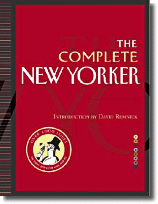 When you think of The New Yorker, you don’t generally think of a magazine with a substantial digital footprint. But, ever so gradually, under David Remnick’s editorial direction, this institution in American journalism and cultural commentary has launched a series of digital initiatives that complement the traditional print journal. And when you add them all up, you realize the magazine is pretty far along the digital curve. How else can you look at it when The New Yorker now offers a fairly robust website, which combines full pieces from the current print edition with specialized online features (take for example the new blog by George Packer)? And then consider the fact that you can now buy on DVD the complete historical archive of the magazine, going back to 1925, and then search and read through it on your computer — all for a fairly scant $63. (Get your own copy here.)
More minor, but nonetheless interesting, forays into the digital world include some recent experiments on the podcast front. Not long ago, we mentioned that The New Yorker’s trademark cartoons have been animated and can be watched as video podcasts (iTunes — Feed). Then there’s The New Yorker Fiction (iTunes — Feed), another relatively new podcast that features famous fiction writers reading out loud selected short stories from the magazine’s fiction archives. (It’s issued only monthly.) Finally, to round things out, another podcast has recently emerged, and it’s simply called Comment (iTunes — Feed) and that’s because it lets you listen to a weekly reading of the magazine’s “Comment” essay, often written by Hendrik Hertzberg, Nicholas Lemann, or David Remnick himself. For a complete list of New Yorker RSS feeds, click here.
You can find the podcasts mentioned above, and others like them, in our Arts & Culture Podcast Collection.
Read More...Wolf Brother: Serial Literary Entertainment
The Guardian Books Podcast has started offering an audiobook version of the young adult novel Wolf Brother as a serial podcast. The story is the first in a series of books by Michelle Paver called Chronicles of Ancient Darkness. It makes good audio since it’s gripping and not hard to follow (or get back into if you get distracted). But what really makes it worthwhile is Ian McKellan’s voice, which lends the tale just the right level of ancient, magical atmosphere. The Guardian has released 9 out of 13 episodes so far, at a rate of one a week. (Site, iTunes)
Click here for more free audiobooks.
Read More...
Support Us
We're hoping to rely on loyal readers, rather than erratic ads. Please click the Donate button and support Open Culture. You can use Paypal, Venmo, Patreon, even Crypto! We thank you!

About Us

Open Culture scours the web for the best educational media. We find the free courses and audio books you need, the language lessons & educational videos you want, and plenty of enlightenment in between.
Advertise With Us
FREE UPDATES!
GET OUR DAILY EMAIL
Get the best cultural and educational resources on the web curated for you in a daily email. We never spam. Unsubscribe at any time.
FOLLOW ON SOCIAL MEDIA
Open Culture editor Dan Colman scours the web for the best educational media. He finds the free courses and audio books you need, the language lessons & movies you want, and plenty of enlightenment in between.
Advertise With Us

