Watch the Proto-Punk Band The Monks Sow Chaos on German TV, 1966: A Great Concert Moment on YouTube
Call them proto-punk, call them avant-garde, but the American ex-pat group the Monks would have been a tiny footnote in rock music history if it wasn’t for a slow rediscovery of the group’s work. The above video is from their summer 1966 appearance on Beat Club, a live pop music show broadcast in Germany.
Enthusiastic teens bop away to the repetitive stomp of “Monk Chant,” with its tribal drums from Roger Johnston, a multi-tamborine attack, and a solo section which features both Larry Clark’s manic organ and three band members attacking the strings of a prone guitar. There’s a sense that anything can happen. These guys are gleefully crazy. (On other songs, band member Dave Day Havliceck would further freak out audiences with his electric banjo.)
Neither ur-hippies nor beatniks, the guys behind the Monks were five American G.I.s who were stationed in Germany and first started a more traditional garage rock band called the Five Torquays (not to be confused with the surf band from Orange County). After one single, they dropped the cover songs and trying to ape popular trends and turned into the Monks, shaving their heads in a monastic style and dressing in monk’s clothing.
Their brutal, repetitive songs and anti-Vietnam war lyrics were ahead of their time, but the latter was one of the main reasons they found it hard to break into the American market after they released Black Monk Time on Polydor Germany. That and internal conflict within the band led to the band breaking up in 1967. You can hear a lot of the Monks in the Velvet Underground, but it’s hard to say one was an influence on the other. It’s more like one great idea was in the air and only certain people had their antennas up.
The influence of the Monks popped up in the abrasive and hypnotic sounds of Krautrock several years later, and by the late 1980s post-punk band The Fall were covering their songs “I Hate You,” “Oh, How to Do Now,” and “Shut Up.”
Jon Spencer, Mike D. of the Beastie Boys, Genesis P. Orridge of Psychic T.V., and Stephen Malkmus of Pavement would all credit the Monks as an influence.
In 1997, their sole album was rereleased and two years later the band reunited for a New York concert to promote a retrospective compilation. In 2004, band member Roger Johnston passed from lung cancer, and after Transatlantic Feedback, a 2006 documentary on the group, several other members had passed away.
Related Content:
The Ramones, a New Punk Band, Play One of Their Very First Shows at CBGB (1974)
Kraftwerk’s First Concert: The Beginning of the Endlessly Influential Band (1970)
Ted Mills is a freelance writer on the arts who currently hosts the FunkZone Podcast. You can also follow him on Twitter at @tedmills, read his other arts writing at tedmills.com and/or watch his films here.
Read More...Salvador Dalí’s 1973 Cookbook Gets Reissued: Surrealist Art Meets Haute Cuisine
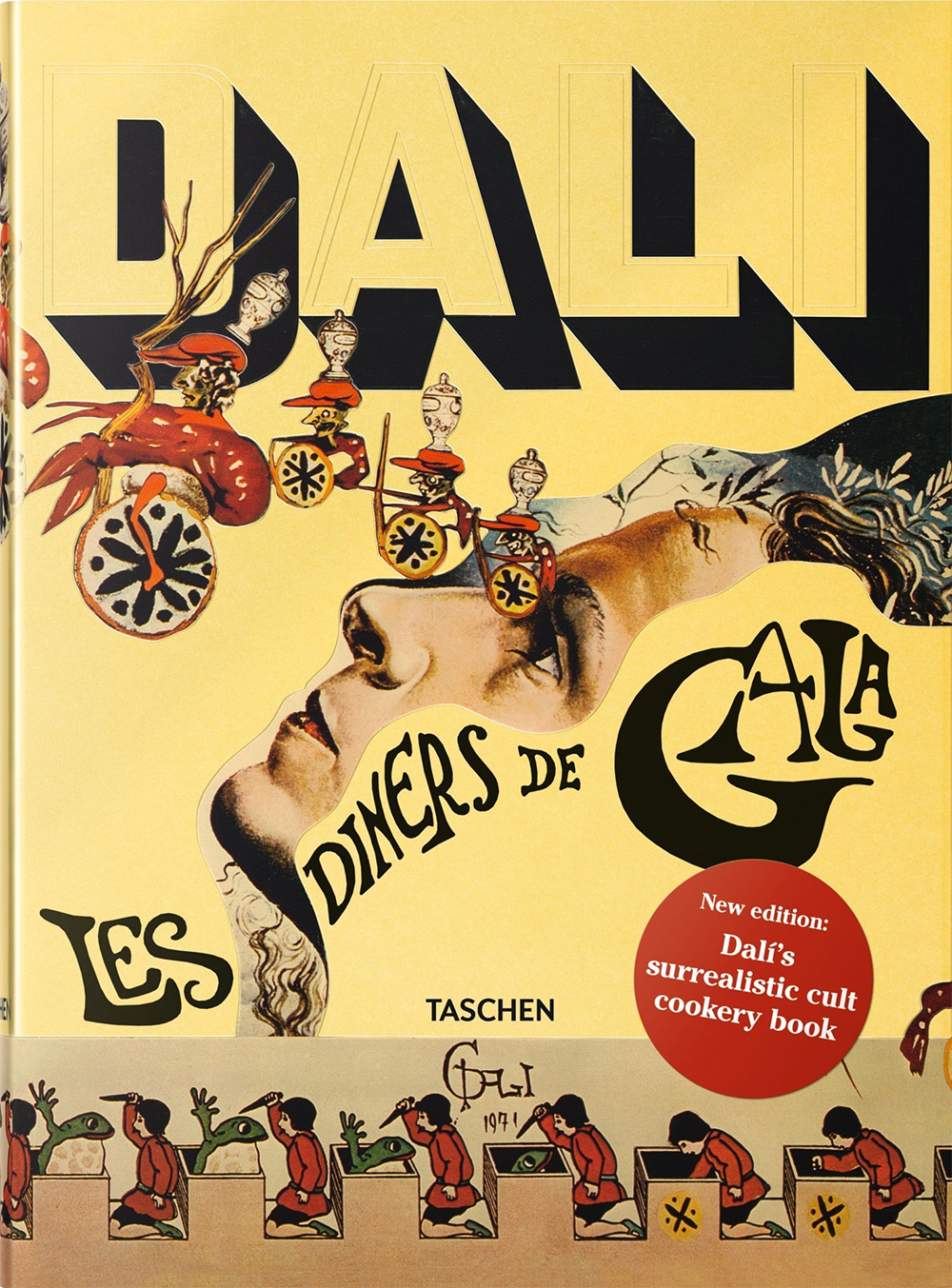
The skilled chef has always held a place of honor amongst gourmands and the fine dining elite. But it took television to bring us the celebrity chef: Julia Childs and Jacques Pepin; Dom DeLuise and Paul Prudhomme. Those were the good old days, before reality TV turned cooking into a competitive sport. Still, we’ve got many quality cooks on the tube, entertaining and hugely informative: Alton Brown, Anthony Bourdain, Gordon Ramsay, Jamie Oliver…. Many of us who take cooking seriously have at one time or another apprenticed under one of these food gurus.
My personal favorite? Well, I’m a fan of haute cuisine as fashioned by Salvador Dalí. Sure, the surrealist painter and all-around weirdo has been dead since 1989, and never had anything approaching a cooking show in his lifetime (though he did make a few TV ads and an appearance on What’s My Line?). Nor is Dalí known for his cooking. As you might guess, there’s good reason for that.
Dishes like “Veal Cutlets Stuffed with Snails,” “Thousand Year Old Eggs,” and “Toffee with Pine Cones” were never going to catch on widely. But when it comes to food as art—as an especially strange and imaginative form of art—it’s hard to beat Dalí’s rare, legendary 1973 cookbook Les Diners de Gala, just reissued by Taschen.
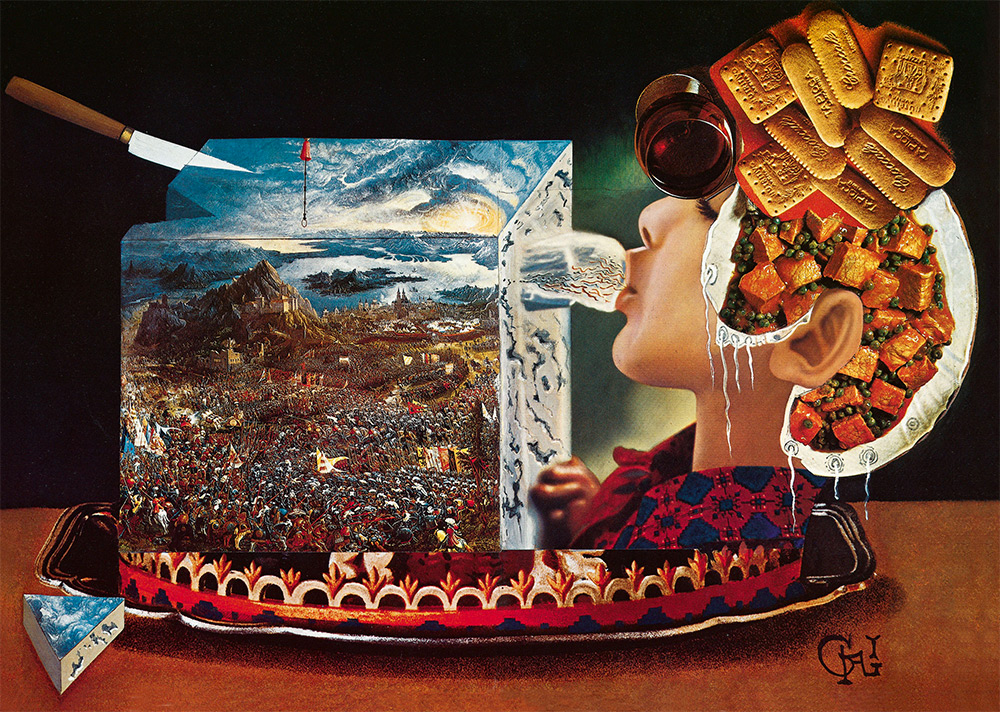
The book, writes This is Colossal, represented “a dream fulfilled” for Dalí, “who claimed at the age of 6 that he wanted to be a chef.” As is sometimes the case when a life’s goal goes unmet—it is perhaps for the best that the Spanish painter never seriously attempted to interest the general public in his sometimes inedible concoctions. He did, however, entertain his coterie of admirers, friends, and celebrity acquaintances with “opulent dinner parties thrown with his wife Gala.” As the cookbook suggests, these events “were almost more theatrical than gustatory.” In addition to the bizarre dishes he and Gala prepared, the guests “were required to wear completely outlandish costumes and an accompaniment of wild animals often roamed free around the table”…..
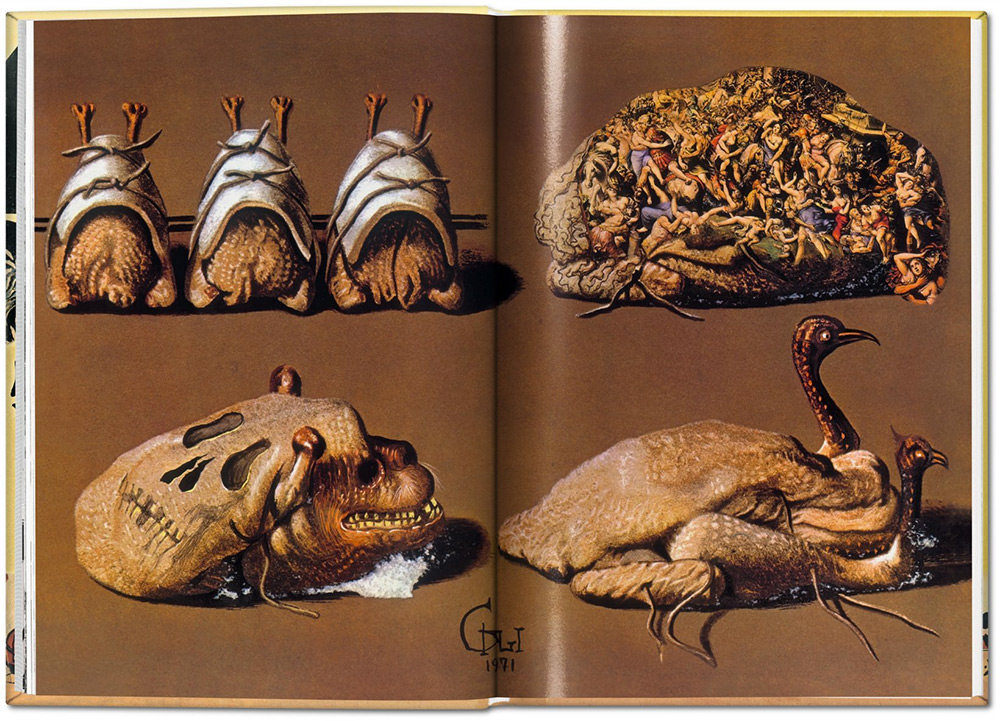
If only Dalí had lived into the age of the Kardashians. Likely he would have leapt at the chance to turn these art parties into great TV. Or maybe not. In any case, we can now reconstruct them ourselves with what design site It’s Nice That calls “a delicious combination of elaborately detailed oil paintings and kitsch 1970s food photography.” Along the way, Dalí drops aphorisms like “the jaw is our best tool to grasp philosophical knowledge” (recalling Nietzsche’s preoccupation with digestion). And despite the absurdity of many of these dishes—and paintings like that above which make the turducken look like casual fare—many of the actual recipes, This is Colossal notes, “originated in some of the top restaurants in Paris at the time including Lasserre, La Tour d’Argent, Maxim’s, and Le Train Bleu.”
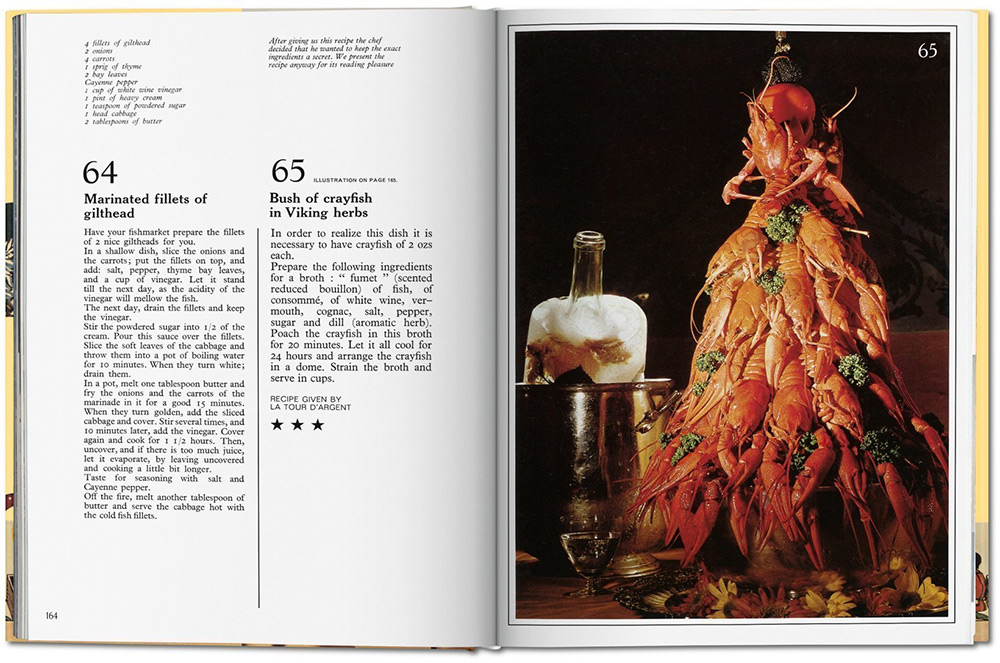
However, even as far back as 1973, home cooks had begun to fret about the healthiness of their food. Dalí gives such people fair warning; Les Diners de Gala, he writes, “is uniquely devoted to the pleasures of Taste. Don’t look for dietetic formulas here.”
We intend to ignore those charts and tables in which chemistry takes the place of gastronomy. If you are a disciple of one of those calorie-counters who turn the joys of eating into a form of punishment, close this book at once; it is too lively, too aggressive, and far too impertinent for you.
As if you thought Dalí would bow to something as quotidian as nutrition. See many more surreally sensual food illustrations and quotes from the book at Brain Pickings, where you’ll also find the full, extravagant recipe for “Conger of the Rising Sun.” You can order Les Diners de Gala online.
If you would like to support the mission of Open Culture, consider making a donation to our site. It’s hard to rely 100% on ads, and your contributions will help us continue providing the best free cultural and educational materials to learners everywhere. You can contribute through PayPal, Patreon, and Venmo (@openculture). Thanks!
Related Content:
Salvador Dalí Takes His Anteater for a Stroll in Paris, 1969
Salvador Dalí Goes Commercial: Three Strange Television Ads
Salvador Dalí’s Melting Clocks Painted on a Latte
Josh Jones is a writer and musician based in Durham, NC. Follow him at @jdmagness
Read More...When L. Frank Baum’s Wizard of Oz Series Was Banned for “Depicting Women in Strong Leadership Roles” (1928)
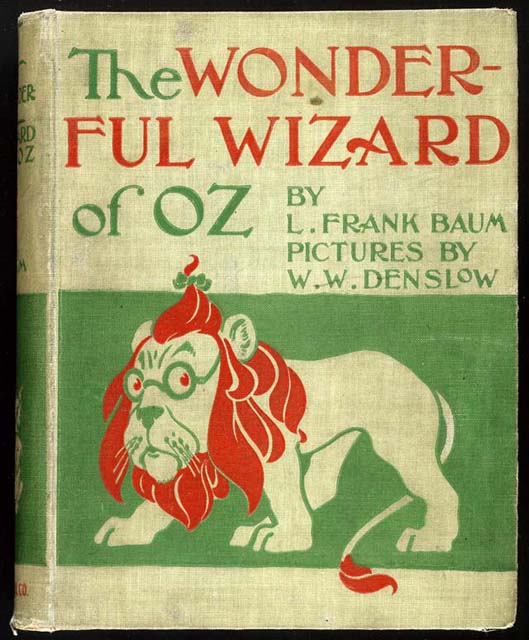
We’ve reached the final stretch of the most infuriating, unsettling election I’ve ever experienced. And we find the U.S. so polarized that—as The Wall Street Journal chillingly demonstrates in their “Blue Feed Red Feed” feature—the left and right seem to live in two entirely different realities. Still, one would have to work very hard on either side, I think, to deny the role sexism has played. One candidate, a known and well-documented misogynist, leads millions of supporters calling for his opponent’s death, imprisonment, and humiliation. That opponent, of course, happens to be the first woman to run on a major party ticket in a general election.
Do many Americans still have a problem with accepting women as leaders? I personally don’t think there’s much of an argument there, and people who see the question as redundant marvel at how long archaic attitudes about women in power have persisted. At least these days we can openly have the—often highly inflamed—conversation about sexism in business, entertainment, and government. And we can support a cultural industry thriving on strong female characters in fiction, film, and television. Not so much in 1928, when the Chicago Public Library banned The Wizard of Oz, writes Kristina Rosenthal at the University of Tulsa Department of Special Collections, “arguing that the story was ungodly for ‘depicting women in strong leadership roles.’”
First published in 1900, L. Frank Baum’s fantasy novel initiated a series of 13 Oz-themed sequels, all of which became immensely popular after MGM’s 1939 film adaptation. (You can find them all in text and audio format here.) And yet, “throughout the years the books have been opposed for their positive portrayals of femininity.” Various libraries used similar excuses to ban the books throughout the 50s and 60s. The Detroit public library banned the Oz books in 1957, stating they had “no value for children of today.” The ban remained in place until 1972. One Florida librarian circulated a memo to her colleagues calling the books “unwholesome,” among other things, and causing a run on local bookstores as children desperately tried to find them.
Other groups decided that the books promoted witchcraft in charges similar to those levied at the Harry Potter series. In 1986, a group of Fundamentalist Christian families in Tennessee came together to remove the The Wizard of Oz from their schools’ curriculum, protesting “the novel’s depiction of benevolent witches.” They argued, writes Rosenthal, “that all witches are bad, therefore it is ‘theologically impossible ‘for good witches to exist.” Many seeking to ban the books since have similarly referred to their positive depictions of magic and “godless supernaturalism,” but the Tennessee case stands as a landmark in the Religious Right’s litigious crusade against the government. The attorney who represented plaintiff Vicki Frost called on “every born-again Christian to get their children out of public schools.”
It’s odd to think of whimsical children’s literature so seemingly innocuous as The Wizard of Oz books as territory in the long culture wars of the 20th century. But as we are reminded every year during Banned Books Week (September 25 − October 1, 2016), literature often arouses the ire of those incensed by change and difference. Yet their attempts to suppress certain books have always backfired, making the targets of their censorship even more popular and sought-after. If you’d like to read Baum’s Oz books now, you needn’t confront a gatekeeping librarian; simply head over to our post on the complete Wizard of Oz series, with free eBooks and audio books of all 14 female-centric fantasy classics.
Related Content:
800 Free eBooks for iPad, Kindle & Other Devices
The Complete Wizard of Oz Series, Available as Free eBooks and Free Audio Books
74 Free Banned Books (for Banned Books Week)
1,000 Free Audio Books: Download Great Books for Free
Josh Jones is a writer and musician based in Durham, NC. Follow him at @jdmagness
Read More...The Art of Making Old-Fashioned, Hand-Printed Books
Reports of traditional books’ death are greatly exaggerated, thanks in part to the success of print-on-demand publishing and other digital innovations.
As thrilled as we are about the survival of the printed page—it’s a relief to have something to read after Wi-Fi fails during the zombie invasion—the craftsmanship that goes into hand-printed, hand-bound volumes is an almost-lost art.
The Victoria and Albert Museum’s video, above, documents the painstaking process, beginning with the arranging of metal type that will result in an octavo, the most common type of book.
It’s a quiet endeavor, though surely a bit louder than the V&A’s silent documentation, an unusual choice given a certain segment of the millennial populace’s appetite for well-edited artisanal craft videos in which music plays a big part.
A well-deployed tune could elevate these lovely visuals to the realms of the advanced elegy.
YouTube user, Kraftsman Sheng, attempts to remedy the situation by reproducing the video (sans attribution) with a soundtrack of his own choosing—pianist Roger Williams’ syrupy 1965 rendition of “Softly As I Leave You,” below.
An unconventional choice, to be sure. I should think something baroque would go better with all of this meticulous folding, cutting, and binding.
Though perhaps something a little more robust could highlight the hardcore heroism of the artisans toiling to keep this ancient art alive. Electric Lit has a round up of great book-inspired punk songs, of which “Time” by Richard Hell and the Voidoids seems particularly apt.
Print’s not dead!
via Atlas Obscura
Related Content:
Oxford University Presents the 550-Year-Old Gutenberg Bible in Spectacular, High-Res Detail
Ayun Halliday is an author, illustrator, theater maker and Chief Primatologist of the East Village Inky zine. Her play Zamboni Godot is opening in New York City in March 2017. Follow her @AyunHalliday.
Read More...How Literature Can Improve Mental Health: Take a Free Course Featuring Stephen Fry, Ian McKellen, Melvyn Bragg & More
The great 18th century writer Dr. Samuel Johnson, who suffered from severe bouts of depression, said “the only end of writing is to enable the reader better to enjoy life or better to endure it.”
So…is it true? Can a poem help you cope with grief? Can a sonnet stir your soul to hope?
The University of Warwick have teamed up with some famous faces, and a team of doctors to tackle these questions and others like them, in a free online course on FutureLearn.
Poets, writers and actors like Stephen Fry, Ian McKellen, Melvyn Bragg, Mark Haddon (The Curious Incident of the Dog in the Night Time), Ben Okri (The Famished Road), Rachel Kelly (Black Rainbow) and others, will discuss their own work and the work of famous writers like Austen, Shakespeare and Wordsworth — exploring how they can impact mental health and why works of writing are so often turned to in times of crisis.
Here’s Stephen Fry on the pleasure of poetry:
Plus throughout the 6‑week course doctors will offer a medical perspective, giving an insight into different mental health conditions.
The course is offered through FutureLearn which means it’s broken into chunks — so you can do it step by step. FutureLearn also features lots of discussion so you can share your ideas with other learners, which often can be as beneficial as the course material (as one previous learner put it “a really wonderful experience and I’ve loved the feedback and comments from fellow course members”).
Here’s a runthrough of what’s on the syllabus. The course focuses on six themes:
- Stress: In poetry, the word “stress” refers to the emphasis of certain syllables in a poem’s metre. How might the metrical “stresses” of poetry help us to cope with the mental and emotional stresses of modern life?
- Heartbreak: Is heartbreak a medical condition? What can Sidney’s sonnets and Austen’s Sense and Sensibility teach us about suffering and recovering from a broken heart?
- Bereavement: The psychologist Elisabeth Kübler-Ross famously proposed that there are five stages of grief. How might Shakespeare’s Hamlet and poems by Wordsworth and Hardy help us to think differently about the process of grieving?
- Trauma: PTSD or “shellshock” has long been associated with the traumatic experiences of soldiers in World War 1. How is the condition depicted in war poetry of the era? Can poems and plays offer us an insight into other sources of trauma, including miscarriage and assault?
- Depression and Bipolar: The writer Rachel Kelly subtitles her memoir Black Rainbow “how words healed me – my journey through depression”. Which texts have people turned to during periods of depression, and why? What can we learn from literature about the links between bipolar disorder and creativity?
- Ageing and Dementia: One of the greatest studies of ageing in English Literature is Shakespeare’s King Lear. Is it helpful to think about this play in the context of dementia? Why are sufferers of age-related memory loss often still able to recall the poems they have learned “by heart”?
Start the course for free today.
Jess Weeks is a copywriter at FutureLearn. The one poem which helps her endure is The Orange by Wendy Cope.
Related Content:
Book Readers Live Longer Lives, According to New Study from Yale University
Read More...An Animated Aldous Huxley Identifies the Dystopian Threats to Our Freedom (1958)
20 years after Aldous Huxley published Brave New World (1931), he was still the media’s go-to futurist. Let me cite two examples:
In 1950, Redbook Magazine asked four experts (including Huxley) “what the world may look like fifty years hence?,” to which the author responded:
During the next fifty years mankind will face three great problems: the problem of avoiding war; the problem of feeding and clothing a population of two and a quarter billions which, by 2000 A.D., will have grown to upward of three billions, and the problem of supplying these billions without ruining the planet’s irreplaceable resources.
Then, in 1958, a young reporter named Mike Wallace had Huxley play prophet on a 30-minute TV show. Overpopulation gets discussed again. But then Huxley returns to some familiar dystopian themes, identifying some emerging threats to our freedoms.
- Overorganization: “Well another force which I think is very strongly operative in this country is the force of what may be called of overorganization. Er…As technology becomes more and more complicated, it becomes necessary to have more and more elaborate organizations, more hierarchical organizations, and incidentally the advance of technology is being accompanied by an advance in the science of organization.
It’s now possible to make organizations on a larger scale than it was ever possible before, and so that you have more and more people living their lives out as subordinates in these hierarchical systems controlled by bureaucracy, either the bureaucracies of big businesses or the bureaucracies of big government.”
- Abuse of new technologies: “There are certainly devices which can be used [to limit freedoms.] I mean, let us er…take after all, a piece of very recent and very painful history is the propaganda used by Hitler, which was incredibly effective.
I mean, what were Hitler’s methods? Hitler used terror on the one kind, brute force on the one hand, but he also used a very efficient form of propaganda, which er…he was using every modern device at that time. He didn’t have TV., but he had the radio which he used to the fullest extent, and was able to impose his will on an immense mass of people. I mean, the Germans were a highly educated people.
- Drugs: I mean, in this book that you mentioned, this book of mine, “Brave New World,” er…I postulated it a substance called ‘soma,’ which was a very versatile drug. It would make people feel happy in small doses, it would make them see visions in medium doses, and it would send them to sleep in large doses.…
If you want to preserve your power indefinitely, you have to get the consent of the ruled, and this they will do partly by drugs as I foresaw in “Brave New World,” partly by these new techniques of propaganda. They will do it by bypassing the sort of rational side of man and appealing to his subconscious and his deeper emotions, and his physiology even, and so, making him actually love his slavery.
Above, you can watch animated excerpts from Wallace’s interview with Huxley, courtesy of Blank on Blank. Find the complete original interview below, along with a transcript here.
Related Content:
Aldous Huxley Predicts in 1950 What the World Will Look Like in the Year 2000
Hear Aldous Huxley Read Brave New World
Huxley to Orwell: My Hellish Vision of the Future is Better Than Yours (1949)
Read More...The History of Spiritual Jazz: Hear a Transcendent 12-Hour Mix Featuring John Coltrane, Sun Ra, Herbie Hancock & More
Jazz has inspired a great many things, and a great many things have inspired jazz, and more than a few of the music’s masters have found their aspiration by looking — or listening — to the divine. But that doesn’t necessarily mean they subscribe to traditional religion. As befits this naturally eclectic music that grew from an inherently eclectic country before it internationalized, its players tend to have an eclectic conception of the divine. In some of their interpretations, that conception sounds practically all-encompassing. You can experience the full spectrum of these aural visions, from the deeply personal to the fathomlessly cosmic, in this four-part, twelve-hour playlist of spiritual jazz from London online radio station NTS.
“During the tumultuous ’60s, there was a religious revolution to accompany the grand societal, sexual, racial, and cultural shifts already afoot,” writes Pitchfork’s Andy Beta. “Concurrently, the era’s primary African-American art form reflected such upheaval in its music, too: Jazz began to push against all constraints, be it chord changes, predetermined tempos, or melodies, so as to best reflect the pursuit of freedom in all of its forms.”
This culminated in John Coltrane’s masterpiece A Love Supreme, which opened the gates for other jazz players seeking the transcendent, using everything from “the sacred sound of the Southern Baptist church in all its ecstatic shouts and yells” to “enlightenment from Southeastern Asian esoteric practices like transcendental meditation and yoga.”
It goes without saying that you can’t talk about spiritual jazz without talking about John Coltrane. Nor can you ignore the distinctive music and theology of Herman Poole Blount, better known as Sun Ra, composer, bandleader, music therapist, Afrofuturist, and teacher of a course called “The Black Man in the Cosmos.” NTS’ expansive mix offers work from both of them and other familiar artists like Alice Coltrane, Earth, Wind & Fire, Herbie Hancock, Gil Scott-Heron, Ornette Coleman, and many more (including players from as far away from the birthplace of jazz as Japan) who, whether or not you’ve heard of them before, can take you to places you’ve never been before. Start listening with the embedded first part of the playlist above; continue on to parts two, three, and four, and maybe — just maybe — you’ll come out of it wanting to found a church of your own.
Related Content:
John Coltrane’s Handwritten Outline for His Masterpiece A Love Supreme
Discover the Church of St. John Coltrane, Founded on the Divine Music of A Love Supreme
Space Jazz, a Sonic Sci-Fi Opera by L. Ron Hubbard, Featuring Chick Corea (1983)
Based in Seoul, Colin Marshall writes and broadcasts on cities and culture. He’s at work on a book about Los Angeles, A Los Angeles Primer, the video series The City in Cinema, the crowdfunded journalism project Where Is the City of the Future?, and the Los Angeles Review of Books’ Korea Blog. Follow him on Twitter at @colinmarshall or on Facebook.
Read More...The History of Literature Podcast Takes You on a Literary Journey: From Ancient Epics to Contemporary Classics
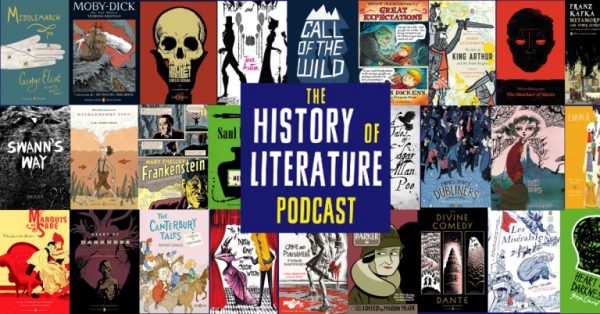
Even before you start on a journey through the history of literature, you know some of the stops you’ll make on the way: the Epic of Gilgamesh, the Bible, Homer’s Iliad and Odyssey, Greek tragedy, Shakespeare, Joyce. And so it comes as no surprise that Jacke Wilson, creator and host of the History of Literature podcast (from ancient epics to contemporary classics — Android — RSS), has so far devoted whole episodes, and often more than one, to each of them. A self-described “amateur scholar,” Wilson aims with this show, which he launched last October, to take “a fresh look at some of the most compelling examples of creative genius the world has ever known.”
Wilson also addresses questions like “How did literature develop? What forms has it taken? And what can we learn from engaging with these works today?” And yet he asks this rhetorical one in The History of Literature’s very first episode: “Is it just me, or is literature dying?” The also self-described “wildly unqualified host” admits that he at first tried to create a straightforward, straight-faced march through literary history, but found the result staid and lifeless. And so he loosened up, allowing in not just more of his personality but more of his doubts about the very literary enterprise in the 21st century.
Given that we get so much of our knowledge, human interaction, and pure wordcraft on the internet today, laments Wilson, what remains for novels, stories, poetry, and drama to provide us? As a History of Literature listener, I personally see things differently. The fact that we now have such abundant outlets from which to receive all those other things may strip literature of some of the relevance it once held by default, but it also lifts from literature a considerable burden. Just as the development of photography freed painting from the obligation to ever more faithfully represent reality, literature can now find forms and subjects better suited to the artistic experience that it, and only it, can deliver.
Jorge Luis Borges counts as only one of the writers who grasped the unexplored potential of literature, and Wilson uses one of the occasional episodes that breaks from the linearity of history to discuss the “Garden of Forking Paths” author’s thoughts on the meaning of life. He recorded it (listen above) in response to two deaths: that of “Fifth Beatle” George Martin, and even more so that of his uncle. Other relatable parts of Wilson’s life come into play in other conversations about writers both ancient and modern, such as the conversation about the works of Graham Greene and whether he can still get as much out of them as he did during his youthful traveling days. Literature, after all, may have no greater value than that it gets us asking questions — a value The History of Literature demonstrates in every episode.
Related Content:
A Crash Course in English Literature: A New Video Series by Best-Selling Author John Green
Entitled Opinions, the “Life and Literature” Podcast That Refuses to Dumb Things Down
The Dead Authors Podcast: H.G. Wells Comically Revives Literary Greats with His Time Machine
The Complete History of the World (and Human Creativity) in 100 Objects
78 Free Online History Courses: From Ancient Greece to The Modern World
55 Free Online Literature Courses: From Dante and Milton to Kerouac and Tolkien
Based in Seoul, Colin Marshall writes and broadcasts on cities and culture. He’s at work on a book about Los Angeles, A Los Angeles Primer, the video series The City in Cinema, the crowdfunded journalism project Where Is the City of the Future?, and the Los Angeles Review of Books’ Korea Blog. Follow him on Twitter at @colinmarshall or on Facebook.
Read More...Nakedly Examined Music Podcast Explores Songwriting with Cracker, King Crimson, Cutting Crew, Jill Sobule & More
I’m Mark Linsenmayer, the host of The Partially Examined Life Philosophy Podcast, and I’d like to introduce you to a new-in-2016 interview series called Nakedly Examined Music (iTunes — Facebook — RSS) that features great songwriters talking about their motivations and techniques regarding specific songs.
In episode one, for instance, indie rock icon and activist for artist rights David Lowery deconstructed the lyrics for his story songs “All Her Favorite Fruit” (Camper Van Beethoven, 1989) and “I Sold the Arabs the Moon” (from his 2011 solo album), contrasting these with the nonsense song that launched his career, “Take the Skinheads Bowling.”
The songs discussed are played in full, and the idea is to get a sense of the artist’s approach in very specific terms, and how this has changed over time. In episode 15, Craig Wedren shows us his development from writing heavy (“post-hardcore”), dissonant music in the 90s with Shudder to Think, to creating disco synthscapes with his early 00’s band Baby, to now composing music for soundtracks like Netflix’s “Wet Hot American Summer: First Day of Camp.”
The emphasis in a given interview depends on the artist: Guitar virtuoso Gary Lucas (Captain Beefheart, Jeff Buckley) eschews music theory, so the focus is more on the ideology of creation, whereas tap-guitar wizard Trey Gunn (King Crimson, David Sylvian) instructs us in combining time signatures and soloing in modes. The interviews both teach us how to listen to and appreciate music by showing us what to focus on, and also serve to instruct songwriters real and vicarious about decisions that go into a choice of chord or lyric or instrumentation.
What kind of music can you expect to hear? Officially, anything that has thought behind it, but I’m starting with my experience as musician (see www.marklint.com) and music lover growing up in the 80s and 90s listening to popular, indie, folk, punk, and progressive rock. There hare been some movement into soul (Episode 16 features the great Narada Michael Walden, who produced Whitney Houston among many others), electronica (Gareth Mitchell), country (Beth Kille), and future episodes will venture into classical, hip-hop, and world music. More typical, however (i.e. more akin to my own writing), are figures like 90s sweetheart and political activist Jill Sobule, cow-punk pioneer Jon Langford (Mekons), grunge-peddler turned symphonist Jonathan Donahue (Mercury Rev), NPR darling Chad Clark (Beauty Pill), and 80s Cutting Crew front-man Nick Eede. One of the episodes next to be released will feature Bill Bruford (Yes, King Crimson, Earthworks).
Listen to Jill Sobule in episode 18:
In one of the most interesting interviews (episode 3), major league music video director–and member of 70s supergroup 10cc and 80s duo Godley & Creme–Kevin Godley takes us from 70s prog excess (and getting to record jazz legend Sarah Vaughan) into the New Wave and out of music altogether, only to rediscover it post-retirement.
This is not about getting behind the scenes with your favorite stars or any other hype of that sort, but about talking with smart people to figure out the language of music, the motivations behind creation, and the techniques available for self-expression. In the course of these discussions, we get into changing trends in making a living in music (or not!), new music technologies, and, of course, philosophical issues.
Mark Linsenmayer is a writer and musician in Madison, WI. His Partially Examined Life Philosophy Podcast has been downloaded more than 15 million times. Learn more about Nakedly Examined Music at www.nakedlyexaminedmusic.com, subscribe via iTunes, or follow on Facebook.
Read More...Angelo Badalamenti Reveals How He and David Lynch Composed the Twin Peaks’ “Love Theme”
On my last trip to New York, some friends took me to a favorite new-wave Chinese place of theirs. When I asked where to find the bathroom, they said to go downstairs. The staircase deposited me into one of the most surreal bathroom approaches I’ve ever experienced: a long, narrow, fully mirrored hallway with a hauntingly familiar composition piped in from speakers installed along its length. Not until I resurfaced and asked what the deal was could I identify the music: the “Love Theme” from David Lynch’s early-1990s television series Twin Peaks.
Many TV themes have lodged themselves into our collective memory, mostly through sheer repetition, but few have retained as much evocative power as the one Lynch’s composer, Angelo Badalamenti, recorded for his short-lived postmodern detective show.
It had that power from the moment Badalamenti put his fingers to the keyboard, a story told in the clip above. “What do you see, David?” he remembers asking the director as he sits down before the very same Fender Rhodes on which he composed Twin Peaks’ major themes all those years ago. “Just talk to me.”
“We’re in a dark woods,” Badalamenti recalls Lynch first saying. “There’s a soft wind blowing through sycamore trees. There’s a moon out, some animal sounds in the background. You can hear the hoot of an owl. Just get me into that beautiful darkness.” Badalamenti plays as he played then, which drew an immediate response from Lynch: “Angelo, that’s great. I love that. That’s a good mood. But can you play it slower?” With the feedback loop between the scene in Lynch’s mind and the mood of Badalamenti’s music engaged, Lynch added a detail: “From behind a tree, in the back of the woods, is this very lonely girl. Her name is Laura Palmer.”
Badalamenti lightens his improvisation in a way that makes it somehow eerier. “That’s it!” The composer and the director play off one another’s ideas, almost like two long-collaborating musicians in a jam session. “She’s walking toward the camera, she’s coming closer… just keep building it! Just keep building it!” Eventually, they’ve created an entire rising and falling dramatic arc in this single piece of music (arguably more dramatic than the one created by the series itself, which Lynch left after two seasons). “David got up, gave me a big hug, and said, ‘Angelo, that’s Twin Peaks’ ” — and to this day, a part of the culture.
Related Content:
Hear the Music of David Lynch’s Twin Peaks Played by the Danish National Symphony Orchestra
Play the Twin Peaks Video Game: Retro Fun for David Lynch Fans
David Lynch’s Twin Peaks Title Sequence, Recreated in an Adorable Paper Animation
David Lynch Draws a Map of Twin Peaks (to Help Pitch the Show to ABC)
Elementary School Students Perform in a Play Inspired by David Lynch’s Twin Peaks
David Lynch Directs a Mini-Season of Twin Peaks in the Form of Japanese Coffee Commercials
Based in Seoul, Colin Marshall writes and broadcasts on cities and culture. He’s at work on a book about Los Angeles, A Los Angeles Primer, the video series The City in Cinema, the crowdfunded journalism project Where Is the City of the Future?, and the Los Angeles Review of Books’ Korea Blog. Follow him on Twitter at @colinmarshall or on Facebook.
Read More...Support Us
We're hoping to rely on loyal readers, rather than erratic ads. Please click the Donate button and support Open Culture. You can use Paypal, Venmo, Patreon, even Crypto! We thank you!

About Us

Open Culture scours the web for the best educational media. We find the free courses and audio books you need, the language lessons & educational videos you want, and plenty of enlightenment in between.
Advertise With Us
FREE UPDATES!
GET OUR DAILY EMAIL
Get the best cultural and educational resources on the web curated for you in a daily email. We never spam. Unsubscribe at any time.
FOLLOW ON SOCIAL MEDIA
Open Culture editor Dan Colman scours the web for the best educational media. He finds the free courses and audio books you need, the language lessons & movies you want, and plenty of enlightenment in between.
Advertise With Us

