How Many U.S. Marines Could Bring Down the Roman Empire?
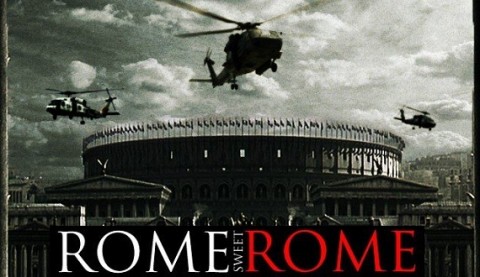
It all started as a thought experiment on Reddit.com when a user posed the question: “Could I destroy the entire Roman Empire during the reign of Augustus if I traveled back in time with a modern U.S. Marine infantry battalion or MEU?”
Then the Reddit user offered a more precise scenario:
Let’s say we go back in time with a Marine Expeditionary Unit (MEU) … could we destroy all 30 of Augustus’ legions?
We’d be up against nearly 330,000 men since each legion was comprised of 11,000 men. These men are typically equipped with limb and torso armor made of metal, and for weaponry they carry swords, spears, bows and other stabbing implements. We’d also encounter siege weapons like catapults and crude incendiary weapons.
We’d be made up of about 2000 members, of which about half would be participating in ground attack operations. We can use our mechanized vehicles (60 Humvees, 16 armored vehicles, etc), but we cannot use our attack air support, only our transport aircraft.
We also have medics with us, modern medical equipment and drugs, and engineers, but we no longer have a magical time-traveling supply line (we did have but the timelords frowned upon it, sadly!) that provides us with all the ammunition, equipment and sustenance we need to survive. We’ll have to succeed with the stuff we brought with us.
So, will we be victorious?
The question touched off a frenzy of discussion. One user, James Erwin, wrote a short story, Rome Sweet Rome, imagining how the battles might play out, and Warner Bros. came along and bought the movie rights to the story.
And now professional historians are weighing in. Interviewed in Popular Mechanics, historian Adrian Goldsworthy, an expert on the Roman army, offered these thoughts:
Obviously, there is a massive difference in firepower. Not only would Roman armor be useless against a rifle round—let alone a grenade launcher or a .50 caliber machine gun—it would probably distort the bullet’s shape and make the wound worse.
But here comes the difficulty:
In the short term and in the open, modern infantry could massacre any ancient soldiers at little risk to themselves. But you could not support modern infantry. So all of these weapons and vehicles could make a brief, dramatic, and even devastating appearance, but would very quickly become useless. Probably in a matter of days.… Marines are the best warriors ever trained. But they can’t fight an endless wave of soldiers. No one can.
You can find the rest of Goldsworthy’s thoughts here, and several good Roman history courses in our big collection of Free Online Courses.
Follow Open Culture on Facebook and Twitter and share intelligent media with your friends. Or better yet, sign up for our daily email and get a daily dose of Open Culture in your inbox. And if you want to make sure that our posts definitely appear in your Facebook newsfeed, just follow these simple steps.
Read More...Nobel Peace Prize Winner Leymah Gbowee Talks @Google
Last Wednesday, Liberian peace activist Leymah Gbowee paid a visit to Google to talk about her memoir, Mighty Be Our Powers: How Sisterhood, Prayer, and Sex Changed a Nation at War. Two days later, she was awarded the 2011 Nobel Peace Prize along with Ellen Johnson Sirleaf and Tawakkol Karman. The Googlers provide a quick introduction to her activism before the conversation begins.…
via Google Book Blog
Read More...R.E.M.‘s Final Encore (and an Early Concert from Germany)
They weren’t quite The Beatles, and they didn’t go out in the same style. (Catch The Beatles’ rooftop gig here.) But R.E.M. gave us 30 good years (ok, maybe 15), and, after calling it quits earlier this week, we thought it worthwhile to present their final live moments. So here it goes: R.E.M.‘s final encore played in Mexico City back in November, 2008. It’s a 36 minute set that features “Supernatural Superserious,” “Losing My Religion,” “I Believe,” “Country Feedback,” “Life and How to Live It,” and “Man on the Moon.”
Thanks to @opedr for the great find and, for good measure, we’re throwing in a vintage R.E.M. concert recorded in Germany in 1985 from the Fables of the Reconstruction tour. These were good old days.
Read More...
The Aurora Borealis Viewed from Orbit (and What Creates Those Northern Lights?)
Earlier this week, NASA astronaut Clayton Anderson tweeted a 14 second time-lapse film of the Aurora Borealis taken from the International Space Station. The short clip called to mind a more extensive view of the Northern Lights shot by Don Pettit, also working in the ISS, back in 2008. (Watch above.) And it raised the basic question: What causes the Aurora Borealis anyway?
The beautiful natural phenomenon starts deep inside the core of the sun, and the rest of the story gets explained in a five minute animated video created by Norwegian filmmaker Per Byhring and the Physics Department at the University of Oslo.
Both clips now appear in our collection of 125 Great Science Videos.
via Coudal Partners Blended Feed and BrainPickings
Read More...Kenneth Branagh Stars in Radio Dramatization of Epic Soviet Novel, Life and Fate (Free Audio)
Le Monde has called Life and Fate “the greatest Russian novel of the twentieth century,” and Martin Amis once described its author, Vasily Grossman, as “the Tolstoy of the USSR.” Now, if you haven’t read the novel, you can begin to understand the reason for all of the high praise.
Starting this week, the BBC will air an eight-hour dramatization of the masterpiece that offered a sweeping account of the siege of Stalingrad, one of the bloodiest battles of World War II. Although originally written in 1959, the book was officially censored in the Soviet Union until 1988 because, in the estimation of the apparatchiks, it threatened to do more harm to the USSR than Pasternak’s Doctor Zhivago.
Kenneth Branagh and David Tennant star in the 13-episode series that will be broadcast from 18 to 25 September on Radio 4. You can access the audio files online or via iTues, RSS Feed, and other formats here.
For more dramatizations of literary classics, please visit:
Aldous Huxley Reads Dramatized Version of Brave New World
HG Wells’ The War of the Worlds Narrated by Orson Welles
Free Audio Books: Download Great Books for Free
50 Classic Russian Films (Including Tarkovsky’s Finest) Now Online
Read More...The Sounds That Made Pop
Earlier this summer, the good folks at The Word assembled 40 Noises That Built Pop, a collection of distinctive pop music sounds that have “caused your ears to prick up, or your eyebrows to raise.” Some were originally created in quite calculated ways. Others were happy accidents. Either way, theses sounds are now part of the pop tradition. We have highlighted four sounds that speak to us. But you should really dive into and enjoy The Word’s collection that was clearly put together with loving care.
The Power Chord from The Kinks: You Really Got Me (1964)
“It’s the essential building block of rock; the root and the fifth of the chord played at substantial volume on guitar and distorted to taste. It’s also the musical equivalent of the poker face; with just the two notes, it’s neither a sunny-sounding major chord nor a gloomy minor… Without the power chord entire genres of metal simply wouldn’t exist.”
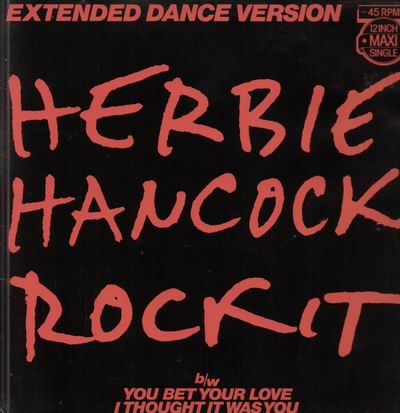
Vinyl Scratch from Herbie Hancock: Rockit (1983)
“Any DJ cueing up a record through one ear of a pair of headphones will have heard the sound of scratching, but it wasn’t until the early days of hip hop that it was incorporated into musical performance… Grandmaster Flash, Afrika Bambaataa and Kool Herc became the pioneers of “turntablism”, while Grand Mixer DXT’s work on Rockit propelled the sound into the mainstream and transformed the DJ into an unlikely frontman.”
Handclap from Kool & The Gang: Ladies Night (1979)
“As a percussive sound, [the handclap has] been used by everyone from flamenco dancers to Steve Reich, but it was in the mid-1970s when it found its true calling. Layered on top of the snare drum to emphasise the second and fourth beats of the bar, its formidable “crack” can be heard throughout disco and funk, and has since been employed by anyone wishing to hint at a party atmosphere…”
Guitar Feedback from Gang Of Four: Anthrax (1981)
“A classic case of rock music taking an undesirable noise and moulding it to suit its own purposes. The reason for feedback is simple: the guitar pickup “hears” itself being blasted out of a speaker cabinet, processes the sound and passes it to the speaker: noise piled upon noise. As rock music became less polite, more liberties were taken with feedback; while there’s an unintentional burst at the front end of I Feel Fine by The Beatles, the outro to The Who’s My Generation uses the sound more creatively.”
H/T Metafilter
And, on a totally unrelated note: Sun Ra and The Blues Project do Batman & Robin songs. Courtesy of the WFMU Blog Wayback Machine.
Read More...The History of Philosophy … Without Any Gaps
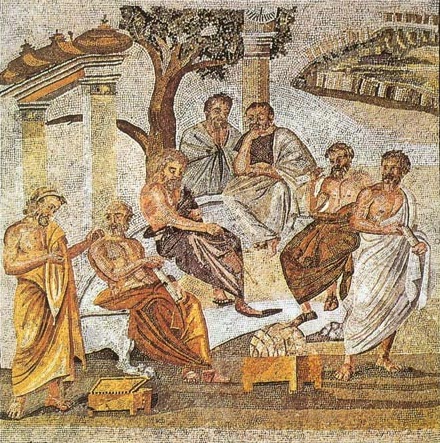 On Monday, we told you where you can download Free Courses from Top Philosophers (Foucault, Searle, Russell and the rest). As the day went along, our list grew thanks to reader suggestions, and we also discovered another promising resource — a podcast called “The History of Philosophy Without Any Gaps,” created by Peter Adamson, Professor of Ancient and Medieval Philosophy at King’s College London:
Beginning with the earliest ancient thinkers, the series will look at the ideas and lives of the major philosophers (eventually covering in detail such giants as Plato, Aristotle, Avicenna, Aquinas, Descartes, and Kant) as well as the lesser-known figures of the tradition.
That’s what Adamson promises, and he doesn’t disappoint. Over the past 34 months, Adamson has produced 136 episodes, each about 20 minutes long, covering the PreSocratics (Pythagoras, Zeno, Parmenides, etc) and then Socrates, Plato and Aristotle. That’s roughly 45 hours of audio, and there’s no telling how many more hours of audio will bring us to the modern period. The more, the better, we say.
You can access all episodes via these links: iTunes — RSS Feed — Web Site. Or find other free philosophy courses in our big collection of Free Courses Online.
If you would like to support the mission of Open Culture, consider making a donation to our site. It’s hard to rely 100% on ads, and your contributions will help us continue providing the best free cultural and educational materials to learners everywhere. You can contribute through PayPal, Patreon, and Venmo (@openculture). Thanks!
Related Content:
Free Online Philosophy Courses
Take First-Class Philosophy Courses Anywhere with Free Oxford Podcasts
Learn The History of Philosophy in 247 Podcasts (With More to Come)
Read More...Take Stanford Computer Science Courses This Fall: Free Worldwide
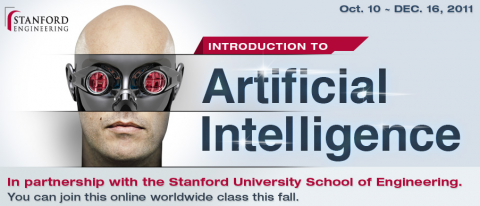
This fall, professors from Stanford’s prestigious School of Engineering will offer online three of its most popular computer science courses: Machine Learning, Introduction to Artificial Intelligence and Introduction to Databases. (You can sign up by clicking on these links.) The courses will feature short, interactive video clips that students can watch whenever and wherever they want; short quizzes that provide instant feedback; and the ability to rank questions to be answered by Stanford instructors. According to the Stanford Report, “Already more than 58,000 people have expressed interest in the artificial intelligence course taught by Sebastian Thrun, a Stanford research professor of computer science and a Google Fellow, and Google Director of Research Peter Norvig.”
This isn’t the first time Stanford has offered free computer science courses to the world. Back in 2008, Stanford Engineering Everywhere presented lectures from 10 complete online computer science and electrical engineering courses. This includes the three-course “Introduction to Computer Science” sequence taken by the majority of Stanford undergraduates. These courses are all listed in the Computer Science and Electrical Engineering sections of our big collection of Free Online Courses. H/T @eugenephoto
via Stanford News
Related Content:
Introduction to Computer Science & Programming: Free Courses
Developing Apps for iPhone & iPad: A Free Stanford Course
Read More...Ken Kesey’s First LSD Trip Animated
Back in 1959, Ken Kesey, then a grad student in Stanford’s creative writing program, started participating in government-sponsored medical research that tested a range of hallucinogens — LSD, psilocybin, mescaline, and the rest. As part of the research project, Kesey spoke into a taperecorder and recounted the ins-and-outs of his hallucinations. These tapes were eventually stored away, and Kesey went on to write One Flew Over the Cuckoo’s Nest, a book that now sits on TIME’s list of the 100 Best English-Language Novels since 1923.
A half century later (and ten years after Kesey’s own death), the LSD tapes live again. This week, the filmmaker Alex Gibney will release Magic Trip, a new documentary that revisits Kesey’s fabled road trip across America with the Merry Pranksters and their psychedelic “Further” bus. (Tom Wolfe, you might recall, famously covered this trip with The Electric Kool-Aid Acid Test, published in 1968.) Taken from the new film, the sequence above mixes the rediscovered tapes with some artful animation, and it captures the whole mood of Kesey’s first trip …
If you would like to support the mission of Open Culture, consider making a donation to our site. It’s hard to rely 100% on ads, and your contributions will help us continue providing the best free cultural and educational materials to learners everywhere. You can contribute through PayPal, Patreon, and Venmo (@openculture). Thanks!
Related Content:
Beyond Timothy Leary: 2002 Film Revisits History of LSD
Timothy Leary’s Wild Ride and the Folsom Prison Interview
via Wired
Read More...Hear Voices from the 19th Century: Tennyson, Gladstone & Tchaikovsky
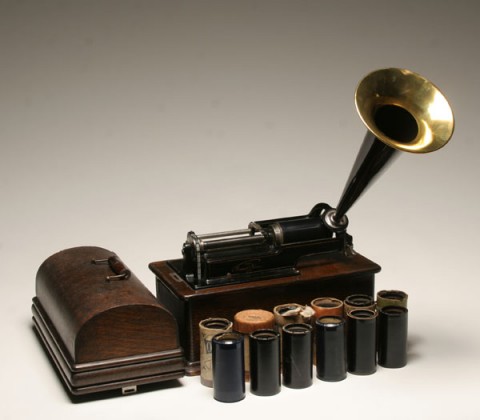
Head over to SoundCloud, and you’ll find 10 audio files that span three centuries. It’s a fairly random collection, we’ll admit. But two recordings from the 19th century immediately stand out.
First we have Alfred Lord Tennyson (1809 – 1892), Poet Laureate of the United Kingdom during Queen Victoria’s reign, reading “The Charge of the Light Brigade” on the wax cylinder in 1890.
And then we get to hear echoes of the voice of William Gladstone, the four-time Prime Minister of Great Britain (1809 — 1898). Here, Gladstone’s voice was recorded by Thomas Edison’s phonograph cylinder (1888), the same device that lets us listen to Tchaikovsky (The Nutcracker, the 1812 Overture, etc.) chatting with his friends. Some have doubted the authenticity of the Gladstone recording, but it still remains generally accepted.
For more on recordings from the 19th century, we’d recommend spending some time with a five-part BBC series called Gramophones & Grooves. It takes you into the early recording industry and lets you hear countless other voices.
Follow Open Culture on Facebook and Twitter and share intelligent media with your friends. Or better yet, sign up for our daily email and get a daily dose of Open Culture in your inbox. And if you want to make sure that our posts definitely appear in your Facebook newsfeed, just follow these simple steps.
Read More...Support Us
We're hoping to rely on loyal readers, rather than erratic ads. Please click the Donate button and support Open Culture. You can use Paypal, Venmo, Patreon, even Crypto! We thank you!

About Us

Open Culture scours the web for the best educational media. We find the free courses and audio books you need, the language lessons & educational videos you want, and plenty of enlightenment in between.
Advertise With Us
FREE UPDATES!
GET OUR DAILY EMAIL
Get the best cultural and educational resources on the web curated for you in a daily email. We never spam. Unsubscribe at any time.
FOLLOW ON SOCIAL MEDIA
Open Culture editor Dan Colman scours the web for the best educational media. He finds the free courses and audio books you need, the language lessons & movies you want, and plenty of enlightenment in between.
Advertise With Us

