The Meticulous, Elegant Illustrations of the Nature Observed in England’s Countryside
If you happen to have grown up in the English countryside, you probably retain a certain sensitivity to and affinity for nature. This can express itself in any number of ways, most often by a compulsion to garden, no matter how urban the setting in which you now live. But Jo Brown has shown how to base a career on it: an artist and illustrator — and “birder wildlifer mushroomer,” according to her Twitter bio — she has long kept a “nature journal” documenting the flora and fauna encountered in the countryside around her home in Devon.
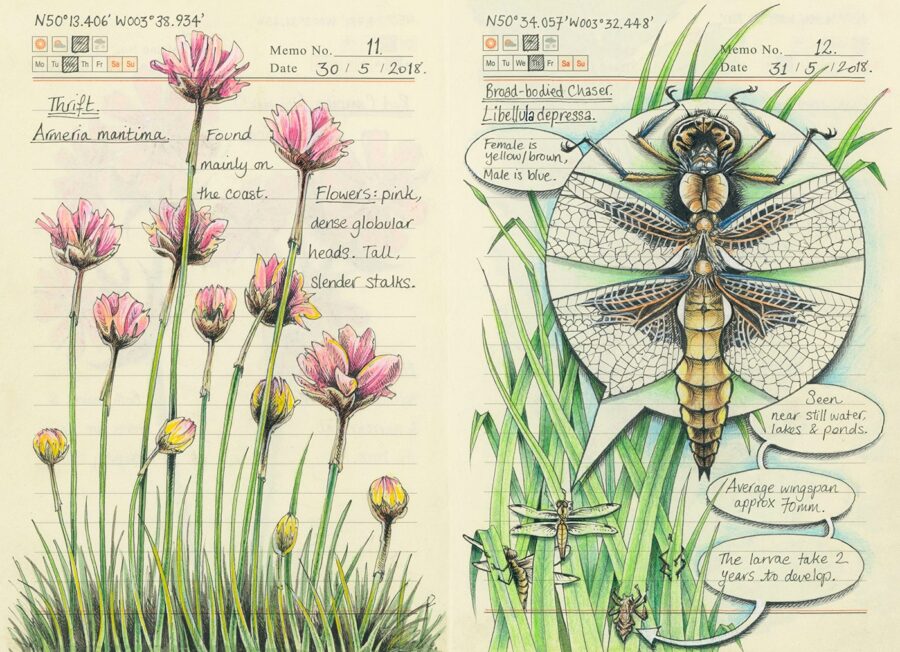
“At the end of April 2019, Jo posted a video of her journal so far on Twitter,” says her web site. “It went viral and her followers jumped from 9K followers to 20K followers in two days.” A glance at any given page reveals what so impressed them. “Each page of Brown’s notebook contains a pen and colored pencil drawing that begins at the pages’ edges, appearing to grow from the corner or across the paper,” writes Colossal’s Grace Ebert.
“Sometimes captured through close-ups that mimic scientific illustrations, the delicate renderings depict the detail of a buff-tailed bumblebee’s fuzzy torso and the red tendrils of a round-leaved sundew. Brown notes the common and Latin names for each species and common characteristics, in addition to where and when she spotted it.”
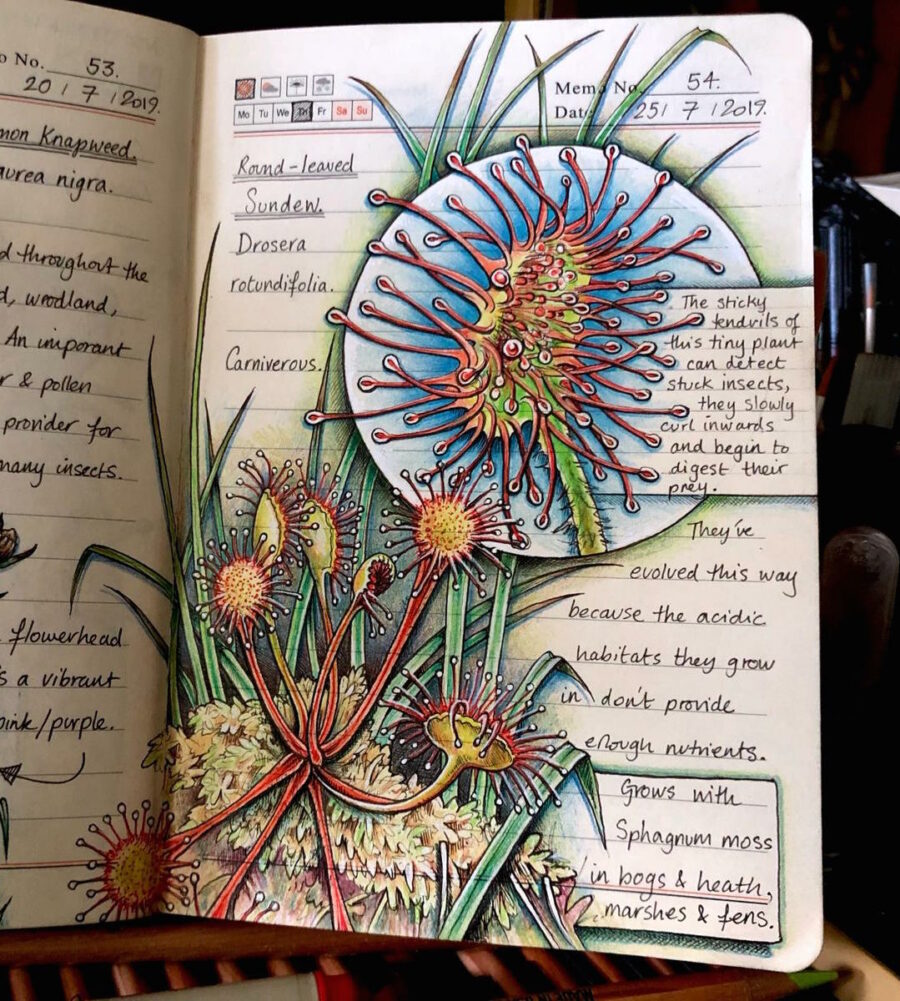
In other words, the nature journal showcases at once its creator’s keen eye, well-trained hand, and formidable knowledge of the natural world. It also stands as a prime example of the art of notebooking.

Using to its fullest advantage her ruled Moleskine notebook (the brand of choice for those invested in doing their jotting and sketching on the go for a couple of decades now), Brown effectively delivers a master class in the vivid, legible, and elegant — dare we say organic? — organization of both visual and textual information in the space of a small page.
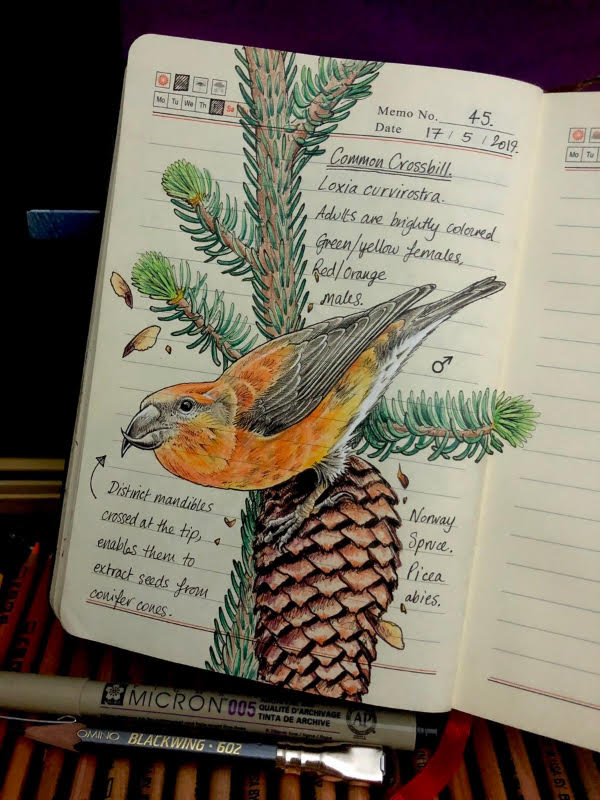
You can take a closer look at how she does it on her web site as well as her feeds on both Twitter and Instagram. More recently, her journal has been published in book form as Secrets of a Devon Wood. Few nature-lovers, perhaps, can equal Jo Brown as an artist, but everyone can enjoy the gloriously varied realm of life that surrounds them just as much as she does. “All that’s required,” she says, “is a little patience and quiet observation.”

Related Content:
Two Million Wondrous Nature Illustrations Put Online by The Biodiversity Heritage Library
Based in Seoul, Colin Marshall writes and broadcasts on cities, language, and culture. His projects include the Substack newsletter Books on Cities, the book The Stateless City: a Walk through 21st-Century Los Angeles and the video series The City in Cinema. Follow him on Twitter at @colinmarshall, on Facebook, or on Instagram.
Read More...40,000 Early Modern Maps Are Now Freely Available Online (Courtesy of the British Library)
Most of us do not, today, live in desperate need of maps. On the internet we can easily find not only the current maps we need to navigate most any territory on Earth, but also an increasing proportion of all the maps made before as well. You can find the latter in places like the David Rumsey Map Collection, which, as we wrote last year here on Open Culture, now boasts 91,000 historic maps free to download. It will surely add even more, as humanity seems to have only just begun digitizing its own many attempts to make the physical world legible, an art that goes back (as you know if you read the University of Chicago’s The History of Cartography online) to prehistoric Lascaux cave paintings of the night sky.
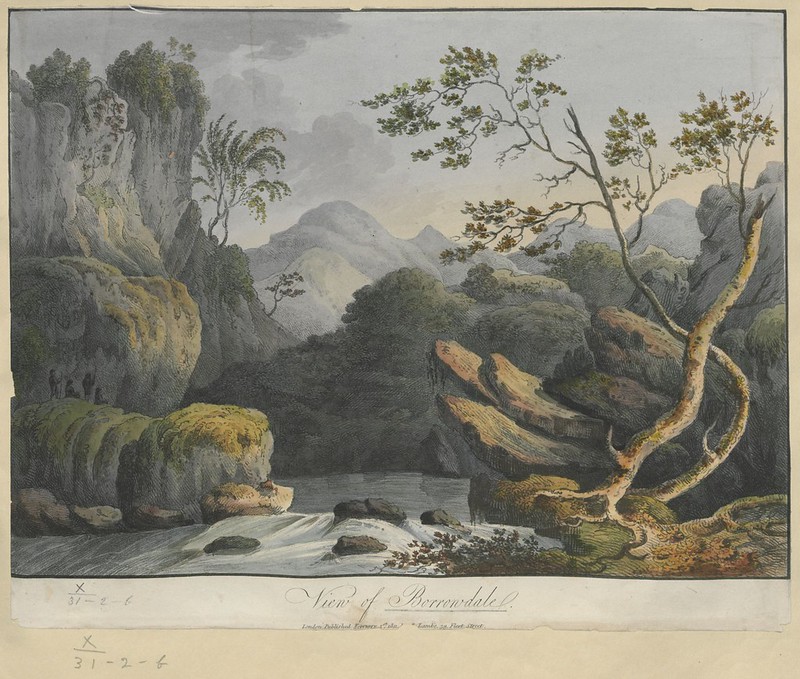
By that standard, the maps currently being digitized and uploaded by the British Library are downright modern — or early modern, to be more specific. Dating between 1500 and 1824, says Medievalists.net, these maps “are part of the Topographical Collection of King George III (K. Top),” which also includes “maps, atlases, architectural drawings, cartoons and watercolors.”
Part of “the larger King’s Library which was presented to the Nation by George IV in 1823,” the collection was amassed “during the formative period of the British Empire” and thus shows “how Britain viewed and interacted with the wider world during this period.”

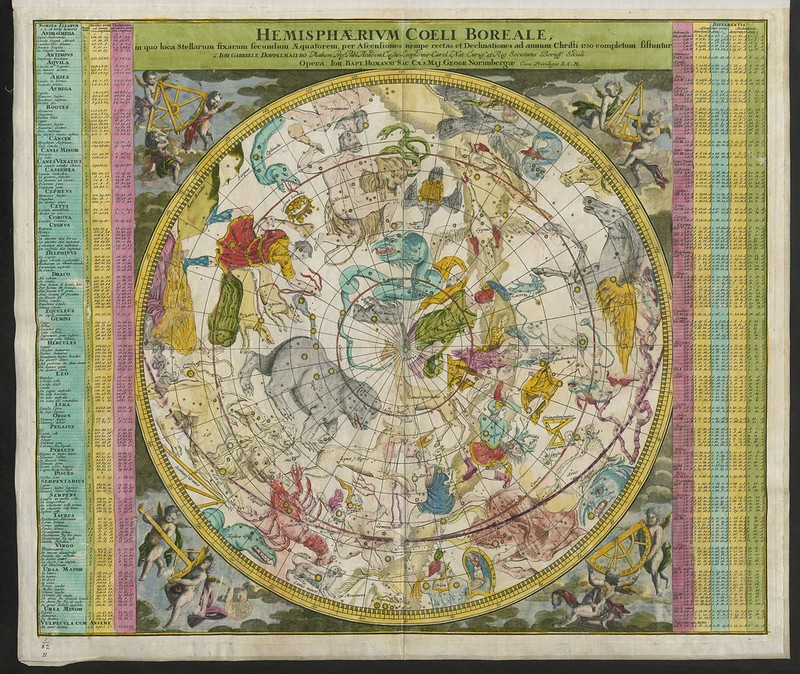
The British Library plans to post 40,000 of these maps (broadly considered), and you can now view the first set of roughly 18,000 at the institution’s Flickr Commons collection. Medievalists.net names as highlights of the full Topographical Collection of King George III such artifacts as “a hand-drawn map of New York City, presented to the future James II in 1664,” “The vast Kangxi Map of China of 1719 made by the Italian Jesuit Matteo Ripa,” “the earliest comprehensive land-use map of London from 1800,” and even “watercolors by noted 18th century artists such as Paul Sandby and Samuel Hieronymus Grimm.”
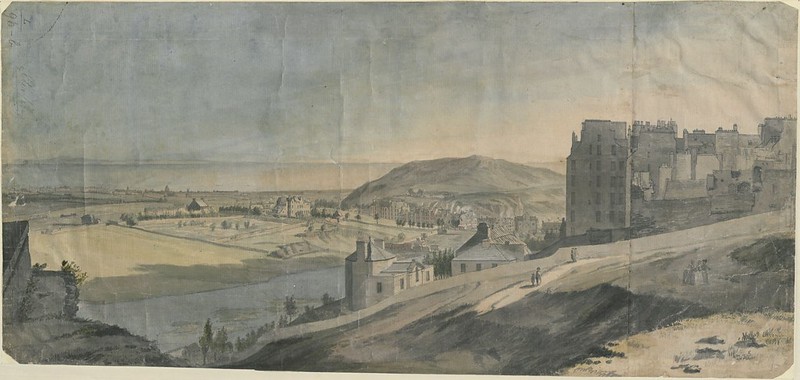
Many of the pieces the British Library has thus far uploaded to Flickr look like maps to us still today, but just as many, perhaps most, strike us more as works of art. This goes for traditional bird’s-eye-views rendered more vividly (and sometimes imaginatively) than we’re used to, as well for as richly drawn or even painted landscapes, all of which exist to provide a faithful representation of land, sea, and sky. You can view more such images along that spectrum, as well as read their stories in context, at the British Library’s Picturing Places site. The artistic and historical richness exuded by these maps today echoes the more tangible value they had when first created: back then, those who had the maps possessed the world.
Related Content:
Behold an Incredibly Detailed, Handmade Map Of Medieval Trade Routes
Download 91,000 Historic Maps from the Massive David Rumsey Map Collection
Based in Seoul, Colin Marshall writes and broadcasts on cities, language, and culture. His projects include the Substack newsletter Books on Cities, the book The Stateless City: a Walk through 21st-Century Los Angeles and the video series The City in Cinema. Follow him on Twitter at @colinmarshall, on Facebook, or on Instagram.
Read More...Three Days in Twin Peaks: An In-Depth Journey Through the Evocative Locations of David Lynch’s TV Series
After a time of great personal loss, a friend of mine set off on a road trip around the United States. When I later asked what part of the country had made the deepest impression on him, he named a few towns about thirty miles east of Seattle: the shooting locations, he hardly needed tell a fellow David Lynch fan, of Twin Peaks. Raised in Spokane, Washington, among a variety of other modest American cities, Lynch saw clearly the look and feel of the titular setting by the time he co-created the show with writer Mark Frost. He eventually found it in the Washingtonian towns of Snoqualmie, North Bend and Fall City, which even today offer a friendly reception to the occasional Twin Peaks pilgrim — at least according to my friend.
This was more recently corroborated by Jeremiah Beaver, creator of Youtube “Twin Peaks theory and analysis show” Take the Ring. Thirty years after the premiere of the famously cryptic yet transfixing original series, the Indianapolis-based Beaver made the trip to Washington to visit its every remaining location — as well as those used in the 1992 prequel film Twin Peaks: Fire Walk with Me, 2017’s Twin Peaks: The Return, and even these productions’ deleted scenes.
Into the half-hour-long “Three Days in Twin Peaks” Beaver fits a great deal of information related to Twin Peaks’ production and mythos as well as the real-life history of the relevant places. “It was at times hard to distinguish the Twin Peaks that lived in my imagination versus the ground beneath my feet,” he admits.
Beaver makes his way to locations both major and minor, from the Twin Peaks Sheriff’s Department (now the DirtFish Rally Racing School) and the Double R diner (Twede’s Cafe, “one of the few spots in Washington state that really owns its Peakness”) to the shack of the Book House biker club and the bench in E.J. Roberts Park once sat upon by the late Harry Dean Stanton’s Carl Robb. Some real buildings played dual roles: both Twin Peaks’ Blue Pine Lodge and Great Northern Hotel are in reality different parts of Poulsbo’s Kiana Lodge, and the Mt. Si Motel appears as “two different motels with elements of the supernatural,” first in Fire Walk with Me, then even more seedily in The Return. “That fresh mountain air and smell of trees is no joke,” says Beaver, words to heed if you plan on making your own Twin Peaks pilgrimage — and if you do, you can surely guess how he describes the coffee and cherry pie at Twede’s.
Related Content:
David Lynch Draws a Map of Twin Peaks (to Help Pitch the Show to ABC)
Watch an Epic, 4‑Hour Video Essay on the Making & Mythology of David Lynch’s Twin Peaks
Twin Peaks Actually Explained: A Four-Hour Video Essay Demystifies It All
Play the Twin Peaks Video Game: Retro Fun for David Lynch Fans
Based in Seoul, Colin Marshall writes and broadcasts on cities, language, and culture. His projects include the Substack newsletter Books on Cities, the book The Stateless City: a Walk through 21st-Century Los Angeles and the video series The City in Cinema. Follow him on Twitter at @colinmarshall, on Facebook, or on Instagram.
Read More...The Iconic Photography of Gordon Parks: An Introduction to the Renaissance American Artist
I felt the need for me to somehow or another, use humanity to get people to become aware of how people suffered. That was what drove me to it.
Poet, novelist, jazz pianist, classical composer, co-founder of Essence magazine, and first Black director of a major Hollywood film, based on a book he himself wrote.… Oh, and he also directed Shaft, the high watermark of Blaxploitation film and a production, says Evan Puschak, the Nerdwriter, above, “that helped to save MGM and the larger studio system from bankruptcy.” Gordon Parks lived “enough for ten lives,” but the resume above misses out on Parks’ “greatest contribution to American art in the 20th century… his photography.”
The self-taught Parks began taking pictures at 25, inspired by newsreel footage of the bombing of an American gunship. After seeing the film, he purchased his first camera and soon moved to Chicago, where he honed his craft in the early 40s and developed the skills that would bring him to the New Deal’s Farm Security Administration. There he worked under the legendary Roy Stryker, the former Columbia economist who also hired Dorothea Lange, Walker Evans, Edwin Rosskam, and other photographers who went on to have long careers in photojournalism.
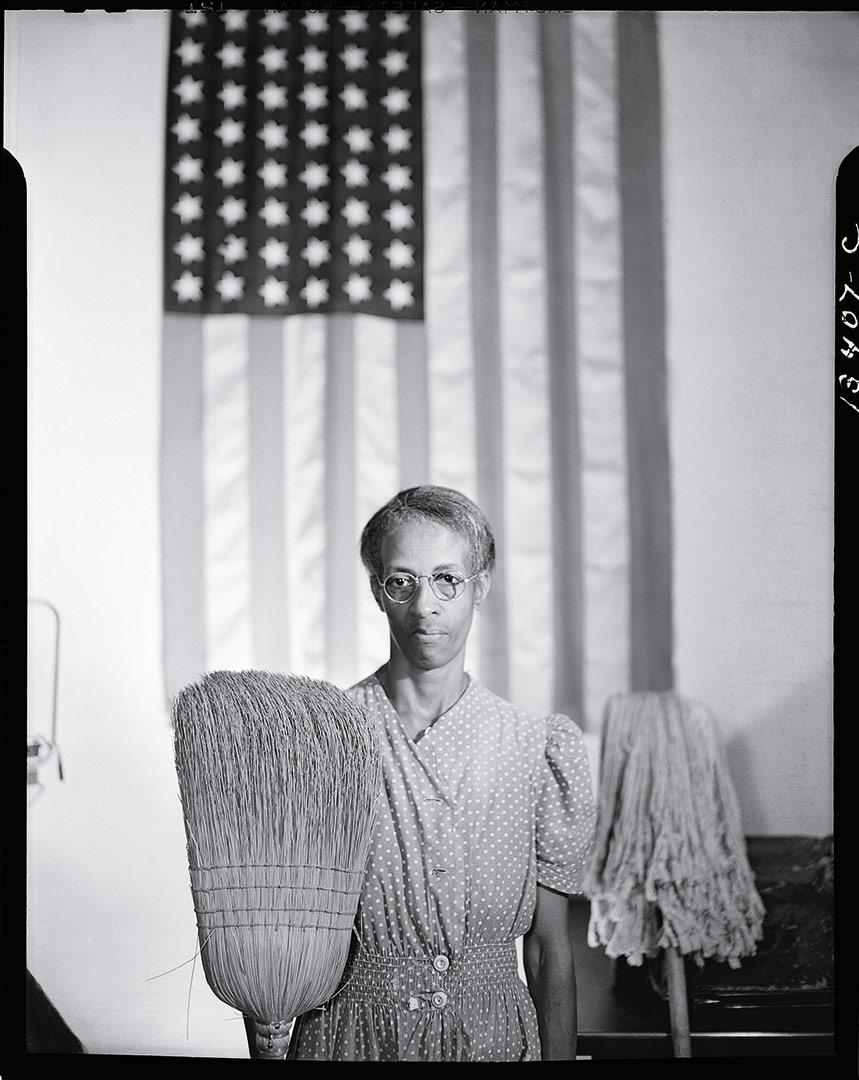
None of these Depression-era government photographers neglected the Black experience in America; under Stryker’s direction, the FSA did its best to faithfully document working-class and poor Americans of all backgrounds. Before being commissioned to do so, however, Parks, the only Black photographer in the group, was already seeking out candid, intimate images of life on the South Side of Chicago. When he began working for the FSA, he produced one of the most iconic images of the period, “American Gothic,” a solo restaging of the Grant Woods painting featuring a cleaning woman named Ella Watson, broom in one hand, mop in the other.
Stryker, one of the most daring photo editors of the time, helped establish the bold documentary style that dominated in the coming decades of Look and Life magazines. But even he saw Parks’ “American Gothic” as too incendiary. As Parks remembers in a clip above, “he says, ‘Well, you’re getting the idea, but you’re going to get us all fired. (Laughs) He says, ‘This is a government agency, and that picture is an indictment against America.’” Parks did not get fired. Instead, he went on to work for the FSA’s successor, the Office of War Information, and photographed the Tuskegee Airmen.
Parks’ skills as an artist were wide-ranging: his vision took in everything. He documented the Black experience in the 20th century with more sensitivity and depth than any other photographer. His photo essay of a Harlem gang leader earned him the first staff appointment for a Black photographer at Life in 1948. He would go on to document the Civil Rights movement and both celebrated and ordinary people around the country and the world for the next several decades, returning often to the fashion photography in which he got his start. He was a renaissance artist with an activist’s heart. Parks once called the camera a “weapon against poverty and racism,” but he tended to wield it much more like a paintbrush.
You can view galleries of Parks’ photographic work at The Gordon Parks Foundation website.
Related Content:
Yale Presents an Archive of 170,000 Photographs Documenting the Great Depression
Found: Lost Great Depression Photos Capturing Hard Times on Farms, and in Town
Josh Jones is a writer and musician based in Washington, DC. Follow him @jdmagness
Read More...When Louis Armstrong Stopped a Civil War in The Congo (1960)
When Louis Armstrong appeared in his hometown of New Orleans for the first time in nine years in 1965, it was, Ben Schwarz writes, “a low point for his critical estimation.” A younger generation saw his refusal to march on the front lines of the civil rights movement, risking life and limb, as a “racial cop-out,” as journalist Andrew Kopkind wrote at the time. Armstrong was seen as “a breezy entertainer with all the gravitas of a Jimmy Durante or Dean Martin.”
The criticism was unfair. Armstrong only played New Orleans in 1965 after the passage of the Civil Rights Act, having boycotted the city in 1956 when it banned integrated bands. In 1957 after events in Little Rock, Arkansas, Armstrong refused a State Department-sponsored tour of the Soviet Union over Eisenhower’s handling of the situation. He spoke out forcefully, used words you can’t repeat on NPR, called governor Orval Faubus an “ignorant plowboy” and the president “two-faced.”
But he preferred touring and making money to marching, and was happy to play for the State Department and PepsiCo on a 1960 tour of the African continent to promote, ostensibly, the opening of five new bottling plants. When he arrived in Leopoldville, capital city of the Congo, in late October, he even stopped a civil war, managing “to call a brief intermission in a country that had been unstable before his arrival,” Jayson Overby writes at the West End Blog.
Unstable is an understatement. The newly-independent country’s first elected president, Patrice Lumumba, had just been deposed in a coup by anti-communist Joseph Mobutu, survived a “bizarre” assassination attempt by the C.I.A., and would soon be on his way to torture and execution after the UN turned its back on him. The country was coming apart when Armstrong arrived. Then, it stopped. As he put it in a later interview, “Man, they even declared peace in The Congo fighting the day I showed up in Leopoldville.”
“Just for that day,” writes Overby, “he blew his horn and played with his band the sweet sound of jazz for a large crowd. But no sooner after Louis departed, the war resumed.” This being a joint state/commerce operation during the Cold War, there is of course much more to the story, some which lends credence to criticism of Armstrong as a government pawn used during “goodwill” tours to test out various forms of cultural warfare. That was, at least, the official stance of Moscow, according to the AP newsreel at the top of the post.
The Soviets “blasted Armstrong’s visit as a diversionary tactic,” and it was. Ricky Riccardi at the Louis Armstrong House Museum covers the event in great detail, including highlighting several declassified State Department memos that show the planning. In one, from October 14th, the first U.S. ambassador to the country, Clare Hayes Timberlake, argues that “cooperation with private firm might soften propaganda implications.”
After the October 27th performance, Timberlake judged the appearance “highly successful from standpoint over-all psychological impact on this troubled city.” Clearly, the 10,000 Congolese who showed up to see Satchmo play needed the break. But the diplomats misread the audience reaction, thinking they didn’t like the music when they started to leave at dusk. “Given the climate in Leopoldville,” Riccardi writes, “one can’t blame the locals for not wanting to stay out longer than they had to.” But it was, nonetheless, the State Department declared, the “first happy event” in the city since the country’s independence.
Related Content:
Louis Armstrong Remembers How He Survived the 1918 Flu Epidemic in New Orleans
The Cleanest Recordings of 1920s Louis Armstrong Songs You’ll Ever Hear
Josh Jones is a writer and musician based in Durham, NC. Follow him at @jdmagness
Read More...The Gruesome Dollhouse Death Scenes That Reinvented Murder Investigations
Who can resist miniatures?
Wee food, painstakingly rendered in felted wool…
Matchbook-sized books you can actually read…
Classic record albums shrunk down for mice…
The late Frances Glessner Lee (1878–1962) definitely loved miniatures, and excelled at their creation, knitting socks on pins, hand rolling real tobacco into tiny cigarettes, and making sure the victims in her realistic murder scene dioramas exhibited the proper degree of rigor mortis and lividity.
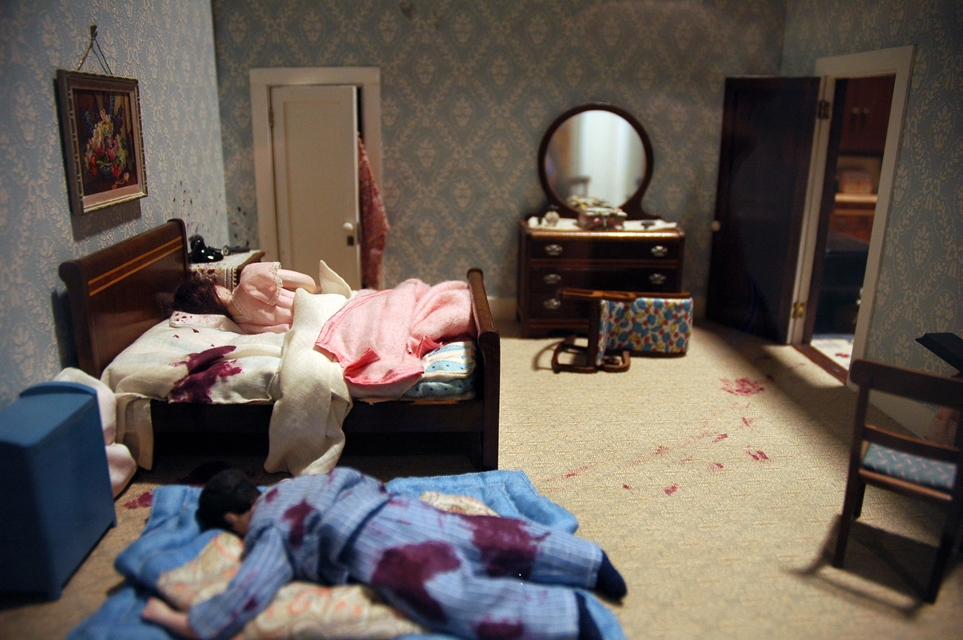
Lee began work on her Nutshell Studies of Unexplained Death at the age of 65, as part of a lifelong interest in homicide investigation.
Her preoccupation began with the Sherlock Holmes stories she read as a girl.
In the 1930s, the wealthy divorcee used part of a sizable inheritance to endow Harvard University with enough money for the creation of its Department of Legal Medicine.
Its first chairman was her friend, George Burgess Magrath, a medical examiner who had shared his distress that criminals were literally getting away with murder because coroners and police investigators lacked appropriate training for forensic analysis.
The library to which Lee donated a thousand books on the topic was named in his honor.
The homemade dioramas offered a more vivid experience than could be found in any book.
Each Nutshell Study required almost half a year’s work, and cost about the same as a house would have at the time. ($6000 in the 1940s.)
“Luckily, I was born with a silver spoon in my mouth,” Lee remarked. “It gives me the time and money to follow my hobby of scientific crime detection.”
Although Lee had been brought up in a luxurious 13 bedroom home (8 were for servants’ use), the domestic settings of the Nutshell Studies are more modest, reflective of the victims’ circumstances.
She drew inspiration from actual crimes, but had no interest in replicating their actual scenes. The crimes she authored for her little rooms were composites of the ones she had studied, with invented victims and in rooms decorated according to her imagination.
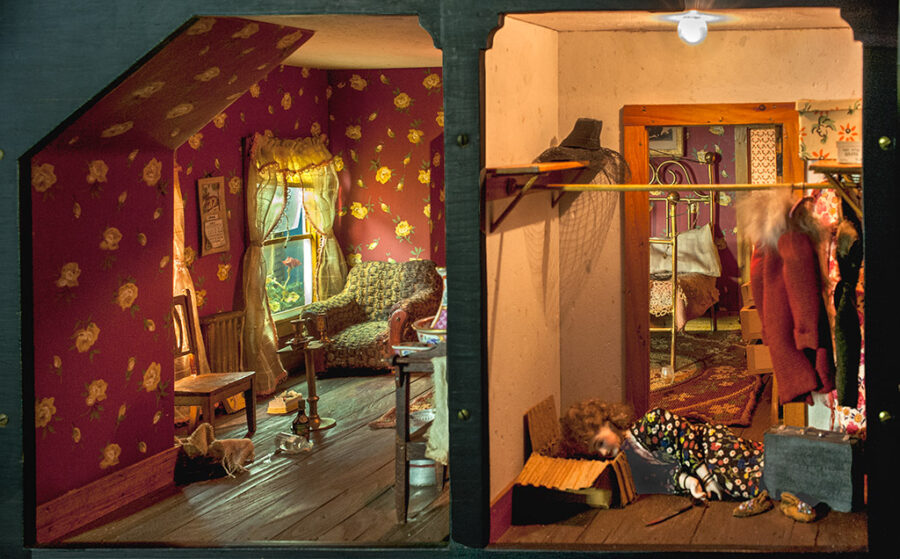
Her intent was to provide investigators with virgin crime scenes to meticulously examine, culling indirect evidence from the painstakingly detailed props she was a stickler for getting right.
Students were provided with a flashlight, a magnifying glass, and witness statements. Her attention to detail ensured that they would use the full ninety minutes they had been allotted analyzing the scene. Their goal was not to crack the case but to carefully document observations on which a case could be built.
The flawlessness of her 1:12 scale renderings also speaks to her determination to be taken seriously in what was then an exclusively male world. (Women now dominate the field of forensic science.)
Nothing was overlooked.
As she wrote to Dr. Alan Moritz, the Department of Legal Medicine’s second chair, in a letter reviewing proposed changes to some early scenes:
I found myself constantly tempted to add more clues and details and am afraid I may get them “gadgety” in the process. I hope you will watch over this and stop me when I go too far. Since you and I have perpetrated these crimes ourselves we are in the unique position of being able to give complete descriptions of them even if there were no witnesses—very much in the manner of the novelist who is able to tell the inmost thoughts of his characters.
It’s no accident that many of the Nutshell Studies’ little corpses are female.
Lee did not want officers to treat victims dismissively because of gender-related assumptions, whether the scenario involved a prostitute whose throat has been cut, or a housewife dead on the floor of her kitchen, the burners of her stove all switched to the on position.
Would you like to test your powers of observation?
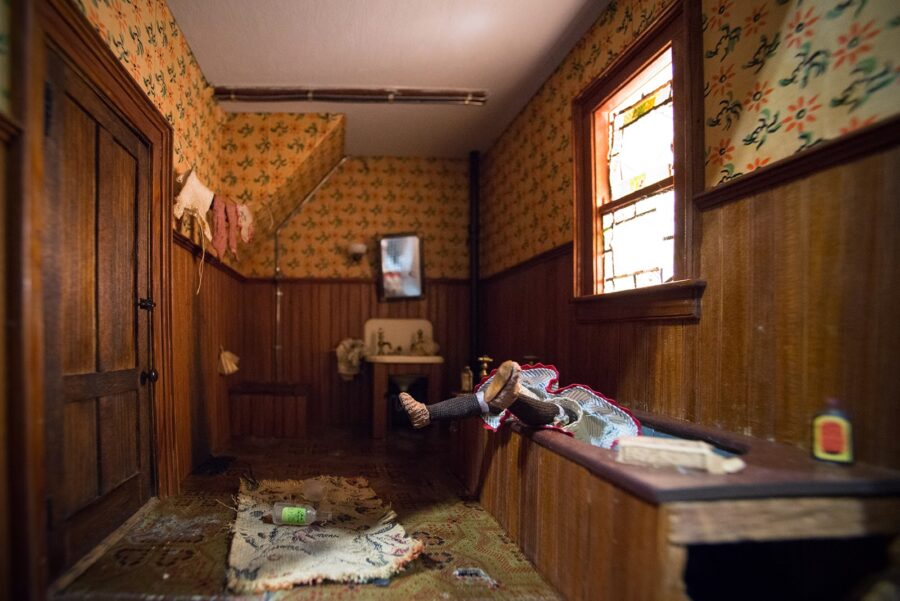
Above are the remains of Maggie Wilson, discovered in the Dark Bathroom’s tub by a fellow boarder, Lizzie Miller, who gave the following statement:
I roomed in the same house as Maggie Wilson, but knew her only from we met in the hall. I think she had ‘fits’ [seizures]. A couple of male friends came to see her fairly regularly. On Sunday night, the men were there and there was a lot of drinking going on. Some time after the men left, I heard the water running in the bathroom. I opened the door and found her as you see her.
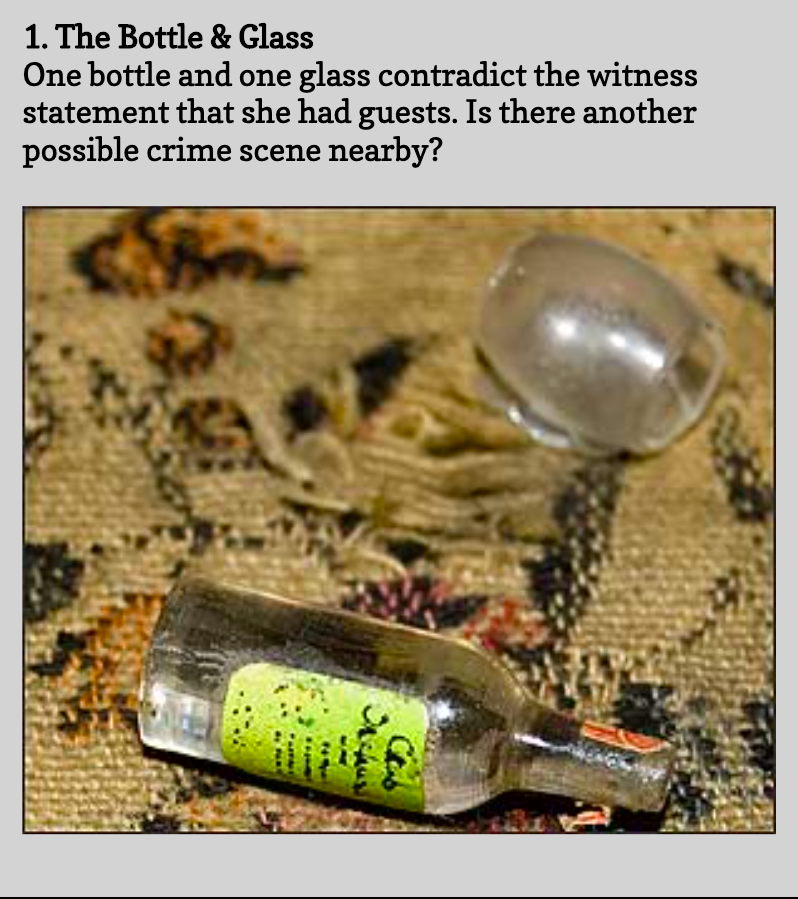

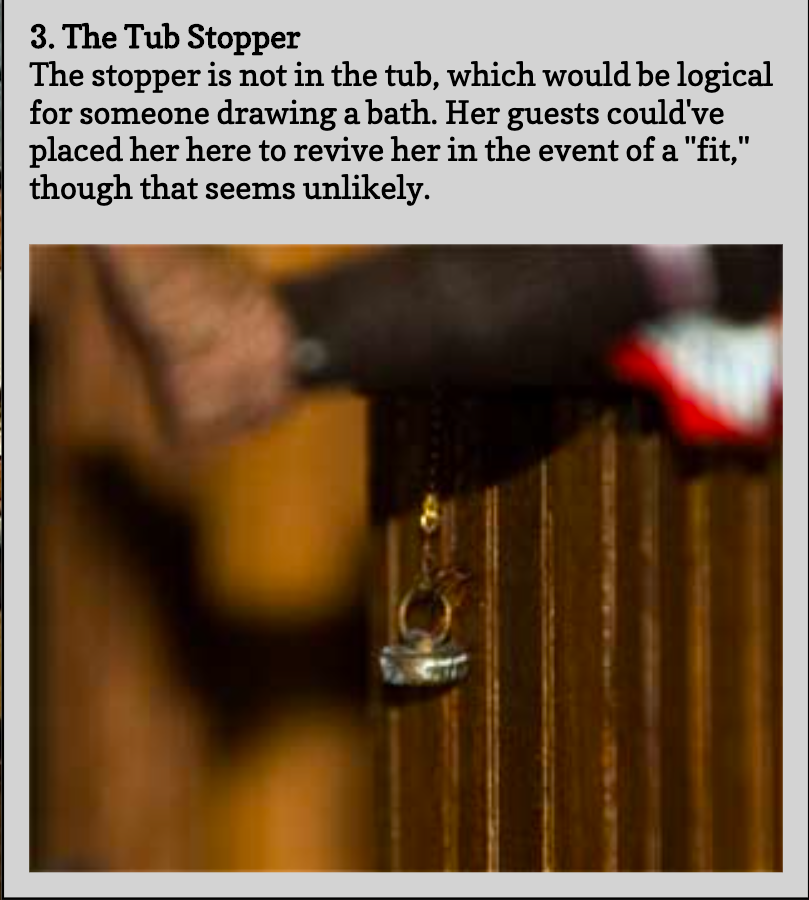
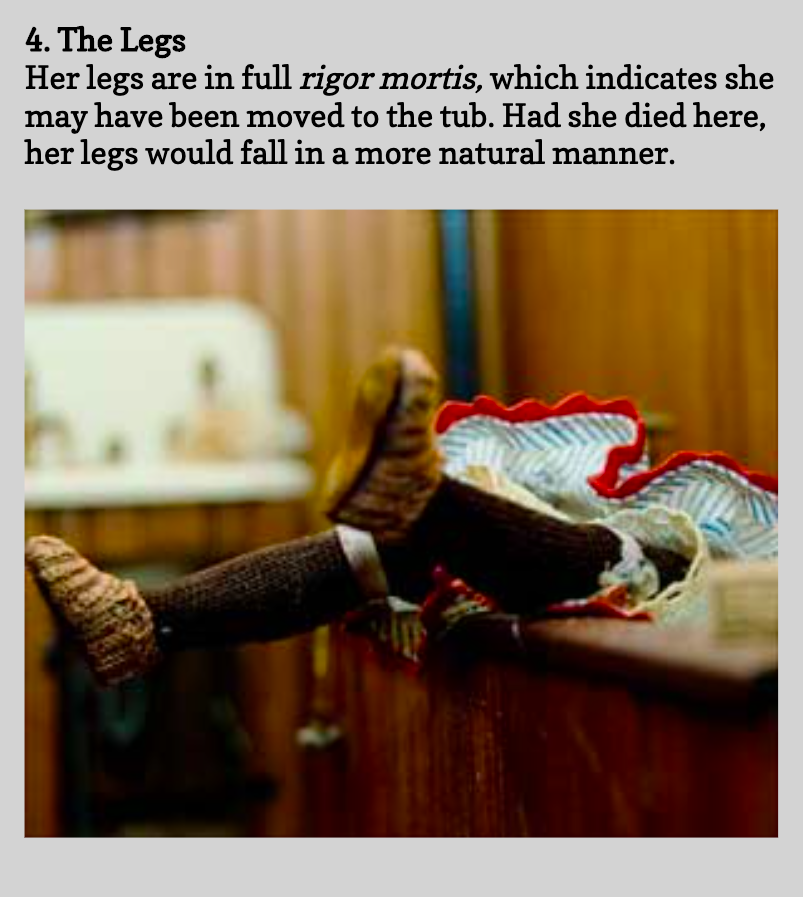
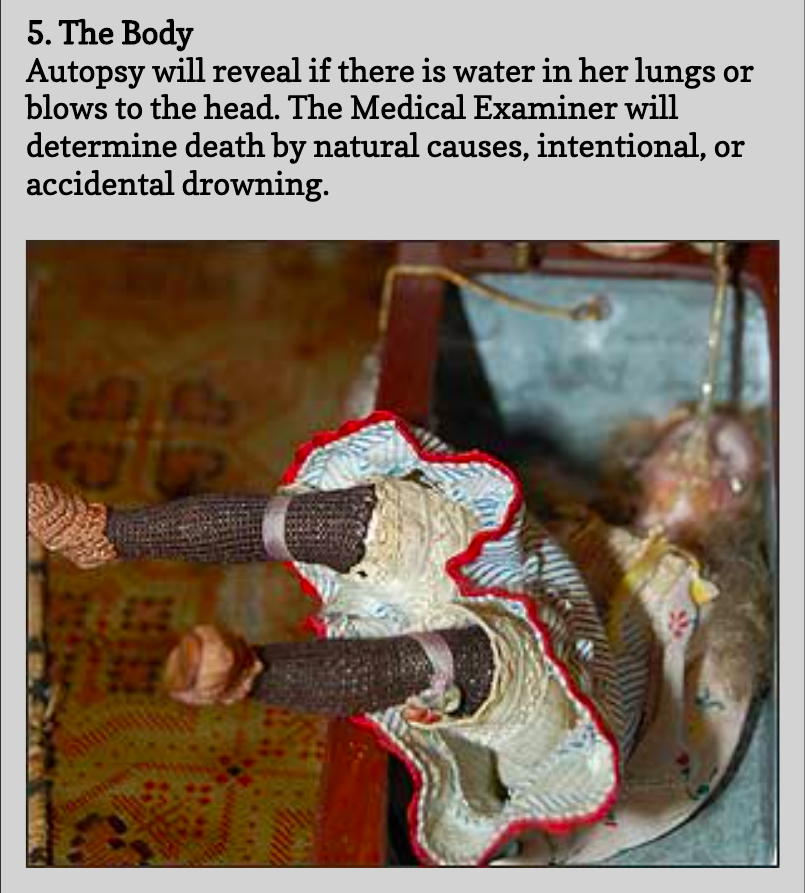
Grim, eh?
Not nearly as grim as what you’ll find in the Parsonage or the Three-Room Dwelling belonging to shoe factory foreman Robert Judson, his wife, Kate, and their baby, Linda Mae.
The period-accurate mini furnishings and fashions may create a false impression that the Mother of Forensic Science’s Nutshell Studies should be relegated to a museum.
In truth, their abundance of detail remains so effective that the Office of the Chief Medical Examiner in Baltimore continues to use 18 of them in training seminars to help homicide investigators “convict the guilty, clear the innocent, and find the truth in a nutshell.”
Explore 5 Nutshell Studies—Woodman’s Shack, Attic, Living Room, Garage, and Parsonage Parlor—in 360º compliments of The Smithsonian American Art Museum Renwick Gallery’s exhibit Murder Is Her Hobby: Frances Glessner Lee and The Nutshell Studies of Unexplained Death.
Related Content:
Lucy Lawless Joins Pretty Much Pop: A Culture Podcast #5 on True Crime
Ayun Halliday is an author, illustrator, theater maker and Chief Primatologist of the East Village Inky zine. Follow her @AyunHalliday.
Read More...Karen O & Willie Nelson Release a New Cover Bowie & Queen’s “Under Pressure”
Today, Karen O and Willie Nelson unveiled their cover of the iconic David Bowie and Queen classic “Under Pressure.” Thematically, it’s a song for our pressure-filled times. But this version will keep you centered and calm. Put it on endless loop through next Tuesday.
If you would like to support the mission of Open Culture, consider making a donation to our site. It’s hard to rely 100% on ads, and your contributions will help us continue providing the best free cultural and educational materials to learners everywhere. You can contribute through PayPal, Patreon, and Venmo (@openculture). Thanks!
Related Content:
Watch David Bowie & Annie Lennox in Rehearsal, Singing “Under Pressure,” with Queen (1992)
Read More...John Coltrane’s “Giant Steps” & Bach’s “Prelude in C Major” Get Turned into Dazzling Musical Animations by an Artist with Synesthesia
Colour is the keyboard, the eyes are the harmonies, the soul is the piano with many strings. The artist is the hand that plays, touching one key or another, to cause vibrations in the soul.
—Wassily Kandinsky
We may owe the history of modern art to the condition of synesthesia, which causes those who have it to hear colors, see sounds, taste smells, etc. Wassily Kandinsky, who pioneered abstract expressionism in the early 20th century, did so “after having an unusually visual response to a performance of Wagner’s composition Lohengrin at the Bolshoi Theatre,” the Denver Museum of Art notes. He was so moved by the moment that he “abandoned his law career to study painting at the prestigious Munich Academy of Fine Arts. He later described the life-changing experience: ‘I saw all my colors in spirit, before my eyes. Wild, almost crazy lines were sketched in front of me.’”
Kandinsky never heard Coltrane, but if he had, and had access to 3D rendering software, he might have made something very much like the short animation above from Israeli artist Michal Levy. “Roughly 3 per cent of people experience synaesthesia,” writes Aeon, “a neurological condition in which people have a recurring sensory overlap, such as … envisioning letters and numbers each with their own inherent colour.”
Levy’s condition is one of the most common forms, like Kandinsky’s: “chromaesthesia, in which sounds and music provoke visuals.” Where the Russian painter saw Wagner in “wild, almost crazy lines,” Levy sees the “rollicking notes” of Coltrane’s Giant Steps as a “kinetic, cascading cityscape built from colourful blocks of sound.”
After visualizing her experience of Coltrane, Levy created the animation above, Dance of Harmony, to illustrate what happens when she hears Bach. During a maternity leave, working with her friend, animator Hagai Azaz, she set herself the challenge of showing, as she describes it, “the cascading flow of emotion, to make the feeling contagious, by using only color, the basic shape of circles, and minimalist motion, assigning to each musical chord the visual elements that correspond to it synaesthetically.”
It is fascinating to compare Levy’s descriptions of her condition with those of other famous synesthetes like Vladimir Nabokov and, especially Kandinsky, who in essence first showed the world what music looks like, thereby giving art a new visual language. Levy calls her synesthesia art, an “emotional voyage of harmony,” and includes in her visualization of Bach’s famous prelude an “unexpected elegiac sidebar of love and loss,” Maria Popova writes. Read Levy’s full description of Dance of Harmony here and learn more about the “extraordinary sensory condition called synesthesia” here.
via Aeon
Related Content:
An Artist with Synesthesia Turns Jazz & Rock Classics Into Colorful Abstract Paintings
Jazz Deconstructed: What Makes John Coltrane’s “Giant Steps” So Groundbreaking and Radical?
Deconstructing Bach’s Famous Cello Prelude–the One You’ve Heard in Hundreds of TV Shows & Films
Josh Jones is a writer and musician based in Durham, NC. Follow him at @jdmagnes
Read More...Janis Joplin & Tom Jones Bring the House Down in an Unlikely Duet of “Raise Your Hand” (1969)
If you’re a fan of Tom Jones and you don’t care who knows it, then no one needs to justify the jovial Welsh superstar’s lounge-soul covers of pop, R&B, and rock songs to you. Certain purists have been a tougher sell on Jones’ act, including, in 1969, Neil Young, who joined Jones onstage once, and only once, on the This is Tom Jones show and immediately regretted it. But who cares about Neil Young’s cranky dislike of commercial television? Who is Neil Young to say we can’t enjoy Jones’ bravado vocals on Crosby, Stills, Nash & sometimes Young’s “Long Time Gone”? The audience sure got a kick out of it, as apparently did the rest of the band.
Janis Joplin didn’t have any such hangups when she went on Jones’ show that same year. Well, she had a hangup, but it wasn’t Jones. “God bless her,” Jones remembered, “she said to me when she came on, ‘Look, I don’t do variety shows; I’m only doing it because it’s you.’ So she saw through it. Then when Janis and I did the rehearsal for Raise Your Hand she looked at me and said, ‘Jesus, you can really sing! (laughs) I thought, thank God people like Janis Joplin had taken note.” If she outshines Jones in the televised performance of the song, above, and I think we can agree she does, he doesn’t seem to mind it much.
Jones may not have had much rock cred; he would never have been invited to share the Woodstock stage with CSNY and Joplin, but as a singer, he’s always earned tremendous respect from everyone, and rightly so.
“Tom held his own,” writes Society of Rock, “and kept up beautifully as he was swept up in the storm that was Janis Joplin’s stage presence, trading verbal licks and sending her into fits of joy when he let go and surrendered to her overwhelming energy. This wasn’t just your regular, run of the mill variety show but then again, nothing was ordinary after Janis was through with it.”
This includes any stage that had her on it, which she immediately dominated as soon as she opened her mouth. Hear her live version of “Raise Your Hand” at Woodstock from earlier that year, further up, and see her tear it up in Frankfurt on her European tour with the Kozmic Blues Band. “I make it a policy not to tell anyone to sit down,” she says by way of introduction. “That’s to encourage everybody to stand up.” Joplin’s death the following year deprived the world of one of its all-time greatest blues singers, but thanks to the internet, and Tom Jones, we’ll always have performances like these to remember her by.
Related Content:
Watch Janis Joplin’s Final Interview Get Reborn as an Animated Cartoon
Janis Joplin’s Last TV Performance & Interview: The Dick Cavett Show (1970)
Josh Jones is a writer and musician based in Durham, NC. Follow him at @jdmagness
Read More...When Billy Idol Went Cyberpunk: See His Tribute to Neuromancer, His Recording Session with Timothy Leary, and His Limited-Edition Floppy Disk (1993)
Billy Idol has long evaded straightforward musical classification, being a full-on star but one fully belonging to neither rock nor pop. He may have come up in the 1970s as the frontman of Generation X, the first punk band to play Top of the Pops, but the hits he went on to make as an MTV-optimized solo artist in the 80s and 90s — “Eyes Without a Face,” “Cradle of Love” — sit less than easily with those origins. But as the end of the millennium approached and the zeitgeist grew increasingly high-technological, it seems to have occurred to the former William Michael Albert Broad that, if he couldn’t be a punk, he could perhaps be a cyber-punk instead.
As bad luck would have it, the biomechanical had already intruded onto Idol’s life in the form of a steel rod implanted in his leg after a motorcycle accident. This lost him the role of T‑1000, the killer cyborg in Terminator 2, but it inspired him in part to record the ambitious concept album Cyberpunk in 1993. Like Pete Townshend’s Psychoderelict or Donald Fagen’s Kamakiriad from that same year (or David Bowie’s Outside from 1995), Cyberpunk is built on a dystopian narrative in which “the future has imploded into the present” and “mega-corporations are the new governments. Computer-generated info-domains are the new frontiers.” Thus speaks Idol in the album’s opening manifesto.
“Though there is better living through science and chemistry, we’re all becoming cyborgs. The computer is the new cool tool. Though we say all information should be free, it is not. Information is power and currency of the virtual world we inhabit.” Here, “cyberpunks are the true rebels.” This would have sounded familiar to readers of William Gibson, whose Neuromancer popularized the aesthetic and ethos of “high tech meets low life” — and shares a title with one of Cyberpunk’s songs. In fact, as Gibson later recalled, Idol “made it a condition of getting an interview with him, that every journalist had to have read Neuromancer.” They did, “but when they met with Billy, the first thing that became really apparent was that Billy hadn’t read it.”
Whatever his intellectual investment in cyberpunk, Idol threw himself into what he saw as the culture surrounding it. This effort involved frequenting Usenet’s alt.cyberpunk newsgroup; reading Mondo 2000; and connecting with figures like Gareth Branwyn, author of cyberpunk manifestos, and Mark Frauenfelder, co-founder of Boing Boing. “We are merging with machines to become smarter, faster, and more powerful,” writes Frauenfelder in an essay included among the “multimedia” contents of the 3.5″ floppy disk originally bundled with Cyberpunk. “Are you going to ignore technology, turn your back on it, and let authority enslave you with it, or are you going to learn everything you can about surviving in the digital age?”
Cyberpunk constitutes Idol’s affirmative answer to that question. Much of his excitement about personal technology surely owes to the liberating possibilities of the professional-grade home recording studio. “I’d always really sort of worked through a team of a producer and an engineer,” he said in one interview, “and in the end I think really you felt like you weren’t getting as close to your ideas as you could be.” From his own home studio he witnessed the 1992 Los Angeles riots, which prompted him then and there to rewrite the song “Shock to the System” to reflect the turmoil roiling outside his door. (Filmmaker Kathryn Bigelow would explore at greater length that explosion of urban discontent’s intersection with cyberpunk culture in 1995’s Strange Days.)
Seeing cyberpunk as the latest manifestation of a broader counterculture, Idol cast a wide net for collaborators and inspirations. He invited Timothy Leary, the “cyberdelic” cultural icon who dreamed of making a Neuromancer computer game, not just to interview him about the project but participate in its recording. The album’s centerpiece is a cover of the Velvet Underground’s “Heroin,” and a dance cover at that. Though remembered as neither an artistic nor a commercial success (the reasons for which Youtube music critic Todd in the Shadows examines in the video at the top of the post), Cyberpunk set something of a precedent for mainstream musicians keen to use cutting-edge recording and production technology to go fully D.I.Y. — to go, as it were, cyber-punk.
Related Content:
William Gibson’s Seminal Cyberpunk Novel, Neuromancer, Dramatized for Radio (2002)
When David Bowie Launched His Own Internet Service Provider: The Rise and Fall of BowieNet (1998)
Based in Seoul, Colin Marshall writes and broadcasts on cities, language, and culture. His projects include the Substack newsletter Books on Cities, the book The Stateless City: a Walk through 21st-Century Los Angeles and the video series The City in Cinema. Follow him on Twitter at @colinmarshall, on Facebook, or on Instagram.
Read More...Support Us
We're hoping to rely on loyal readers, rather than erratic ads. Please click the Donate button and support Open Culture. You can use Paypal, Venmo, Patreon, even Crypto! We thank you!

About Us

Open Culture scours the web for the best educational media. We find the free courses and audio books you need, the language lessons & educational videos you want, and plenty of enlightenment in between.
Advertise With Us
FREE UPDATES!
GET OUR DAILY EMAIL
Get the best cultural and educational resources on the web curated for you in a daily email. We never spam. Unsubscribe at any time.
FOLLOW ON SOCIAL MEDIA
Open Culture editor Dan Colman scours the web for the best educational media. He finds the free courses and audio books you need, the language lessons & movies you want, and plenty of enlightenment in between.
Advertise With Us

