Electronic Music Pioneer Wendy Carlos Demonstrates the Moog Synthesizer on the BBC (1970)
We can break popular music into two periods: before the Moog and after the Moog. Upon its debut in 1964, that synthesizer made a big splash in the small but long-established electronic-music world by, among other innovative qualities, being smaller than an entire room. Over the next few years, inventor Bob Moog (whose previous line was in theremins) refined his eponymous brainchild to the point that it became accessible to composers not already on the cutting edge of music technology. But for Wendy Carlos, the cutting edge of music technology was where she’d spent most of her life; hence her ability to create the first bestselling all-Moog album, 1968’s Switched-On Bach.
By the beginning of the 1970s, great public curiosity had built up about these new music-making machines, thanks to Carlos’ work as well as that of composers like the BBC Radiophonic Workshop’s Daphne Oram. It was the BBC that produced the clip above, in which Carlos explains the fundamentals of not just the Moog but sound synthesis itself.
She even plays a bit of the second movement of Bach’s Brandenburg Concerto #4, Carlos’ rendition of which on Switch-On Bach’s follow-up The Well-Tempered Synthesizer moved no less an authority than Glenn Gould to call it “the finest performance of any of the Brandenburgs — live, canned, or intuited — I’ve ever heard.”
In this footage, more than half a century old as it is, only an evident skill at operating the Moog and understanding of the principles of synthesizers suggest Carlos’ identity. At that time in her career she was still known as Walter Carlos, and she has since spoken of having maintained that image by applying a pair of fake sideburns for public appearances. (She would return to the BBC to do another Moog demonstration as Wendy nineteen years later.) Today one dares say those mutton chops look a bit obvious, but it isn’t as a master of disguise that Carlos has gone down in history. Rather, her work has showed the way for generations of musicians, well outside of campus laboratories, to make use of electronically generated sounds in a manner that resonates, as it were, with the wider listening public.
Related Content:
Watch Composer Wendy Carlos Demo an Original Moog Synthesizer (1989)
Bob Moog Demonstrates His Revolutionary Moog Model D Synthesizer
How the Moog Synthesizer Changed the Sound of Music
Based in Seoul, Colin Marshall writes and broadcasts on cities, language, and culture. His projects include the Substack newsletter Books on Cities, the book The Stateless City: a Walk through 21st-Century Los Angeles and the video series The City in Cinema. Follow him on Twitter at @colinmarshall or on Facebook.
Read More...Watch a New Director’s Cut of Prince’s Blistering “While My Guitar Gently Weeps” Guitar Solo (2004)
Recently, I was walking with a young relative who, upon passing a mural of the late Prince Rogers Nelson, looked up at me and asked, “who is that?,” whereupon my eyes grew wide as saucers and I began the tale of a musical hero who conquered every instrument, every musical style, every chord and scale, etc. It was a story fit for young ears, mind you, but mythic enough, I guess, that it inspired my relative to stop me mid-sentence and ask in awe, “was he a god?” To which I stammered, caught off guard, “well, kind of…..”
Humanly flawed though he was, Prince comes as close as any recent figure to musical divinity in the flesh. He seemed to conjure and create effortlessly, ex nihilo, never seeming to tire and always looking as though he just stepped off of a cloud. Now we know a little more about the source of some of that serenity, but it diminishes his legend not one bit. If not a god, he was at least some sort of wizard.
Prince’s famously epic live solo at the 2004 Rock and Roll Hall of Fame Induction Ceremony in the star-packed jamboree cover of George Harrison’s “While My Guitar Gently Weeps” holds up as a wondrously succinct case in point to show the children. Now, the performance has been re-edited in a “director’s cut” by the broadcast’s original director Joel Gallen. Thom Dunn at Boing Boing quotes his explanation: “there were several shots that were bothering me. I got rid of the dissolves and made them all cuts, and added lots more close ups of Prince during his solo.” (See the original below.)
“Fortunately,” notes Dunn, “Gallen preserved the disappearing guitar at the end.” No one knows to this day where the guitar went, not even Tom Petty and the Heartbreakers drummer Steve Ferrone, who was on stage behind Prince at the time. The stunt was unrehearsed, and so was everything about the solo — no one had any idea what was going to happen, a frightening prospect on live television but a risk one must take, I suppose, when working with the Purple One.
In 2016, Gallen told The New York Times the story, worth quoting in full, of the performance’s rehearsal, a moment of private humility from Prince behind his live bravura show onstage.
The Petty rehearsal was later that night. And at the time I’d asked him to come back, there was Prince; he’d shown up on the side of the stage with his guitar. He says hello to Tom and Jeff and the band. When we get to the middle solo, where Prince is supposed to do it, Jeff Lynne’s guitar player just starts playing the solo. Note for note, like Clapton. And Prince just stops and lets him do it and plays the rhythm, strums along. And we get to the big end solo, and Prince again steps forward to go into the solo, and this guy starts playing that solo too! Prince doesn’t say anything, just starts strumming, plays a few leads here and there, but for the most part, nothing memorable.
They finish, and I go up to Jeff and Tom, and I sort of huddle up with these guys, and I’m like: “This cannot be happening. I don’t even know if we’re going to get another rehearsal with him. [Prince]. But this guy cannot be playing the solos throughout the song.” So I talk to Prince about it, I sort of pull him aside and had a private conversation with him, and he was like: “Look, let this guy do what he does, and I’ll just step in at the end. For the end solo, forget the middle solo.” And he goes, “Don’t worry about it.” And then he leaves. They never rehearsed it, really. Never really showed us what he was going to do, and he left, basically telling me, the producer of the show, not to worry. And the rest is history. It became one of the most satisfying musical moments in my history of watching and producing live music.
No, kid, he wasn’t a god, just a guy who could do things no one else could. He was a genius.
via Boing Boing / Laughing Squid
Related Content:
Prince Plays a Mind-Blowing Guitar Solo On “While My Guitar Gently Weeps”
Prince’s First Television Interview (1985)
Josh Jones is a writer and musician based in Durham, NC. Follow him at @jdmagness
Read More...How the Internet Archive Has Digitized More than 250,000 78 R.P.M. Records: See the Painstaking Process Up-Close
At the Internet Archive, this is how we digitize #78 rpm records.
Our partner @georgeblood_lp has perfected this technique, digitizing with 4 different styli at once.We put as much effort into capturing the #metadata as we do digitizing the music. pic.twitter.com/dn4EjXTS9z
— Internet Archive (@internetarchive) April 25, 2021
In the history of recorded music, no medium has demonstrated quite the staying power of the phonograph record. Hearing those words, most of us envision a twelve-inch disc designed to play at 33 1⁄3 revolutions per minute, the kind still manufactured today. But like every other form of technology, that familiar vinyl LP didn’t appear ex nihilo: on its introduction in 1948, it was the latest in a series of phonograph records of different sizes and speeds. The first dominant record format spun at 78 r.p.m., a speed standardized in the mid-1920s, though the discs themselves (made of rubber, shellac, or other pre-vinyl materials) had been in production since the end of the 19th century and remained in production until the 1950s.
The half-century of the “78” adds up to quite a lot of music, most of which has long been inaccessible to non-antiquarians. Enter the historically minded technologists of the Internet Archive, who since 2016 have been working with media preservation company George Blood LP to digitize, preserve, and make available, as of this writing, more than 250,000 such records.
The process involves much more than playing them all into a computer, due not least to the toll the past century or so has taken on the discs’ surfaces. “Each record is cleaned on a machine that sprays distilled water onto its surface,” writes The Verge’s Kait Sanchez. “A little vacuum arm then sucks up the water, along with whatever dirt and nastiness has built up in the record’s grooves.”
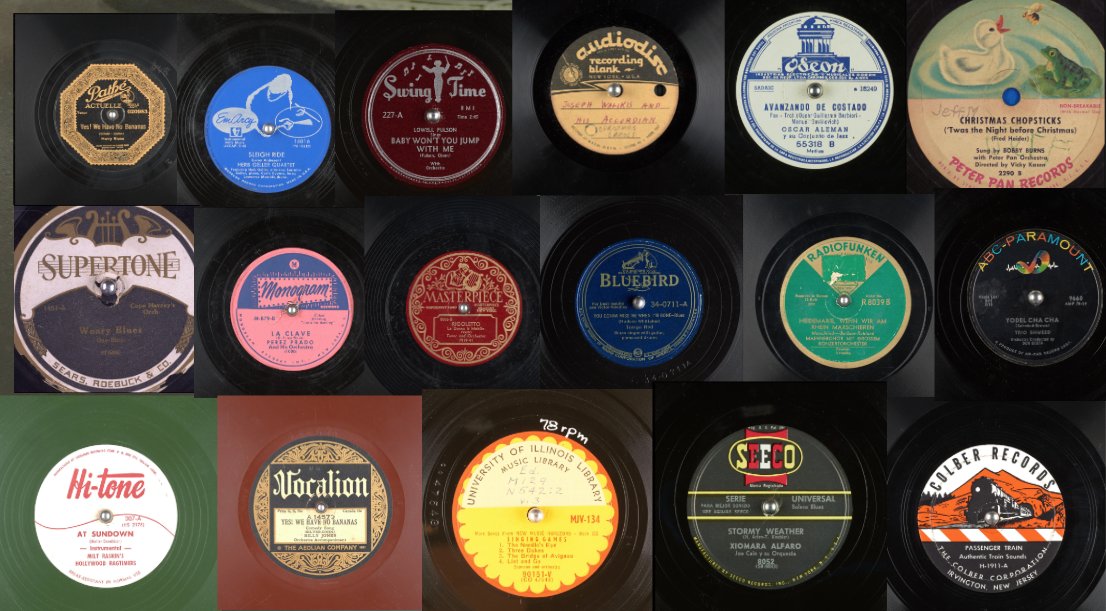
“The discs are then photographed, and the photos are referenced to pull info from the discs’ labels and add it to the archive’s database by hand.” There follows the actual digitization, which records each disc with four styli at once: since 78s never had standardized groove sizes, “recordings taken with various stylus tips will each sound slightly different,” but for any record in the George Blood Collection the listener can choose which of the four they’d prefer to listen through. You can see each step of the process in the video at the top of the post, part of a Twitter thread recently posted by the Internet Archive. There the Archive notes that, “after scanning 250,000 sides, we’ve found 80% of these 78s were produced by the ‘Big Five’ labels” — Columbia, RCA Victor, Decca, Capitol and Mercury — “but along the way, we’ve uncovered 1700 other music labels and some pretty beautiful picture discs.”
You can look at — and more to the point, listen to — everything in the the George Blood Collection here, which is a subset of the Internet Archive’s larger collection of digitized 78 records as well as the cylinders that 78s wholly displaced as a consumer format. As the Internet Archive’s Twitter thread reminds us, “from 1898–1950, this was THE way music was recorded & shared.” In other words, if your parents were listening to music in that period — or maybe your grandparents, great-grandparents, or great-great grandparents — 78s were their MP3s, their Spotify, their Youtube. We descend as listeners from enthusiastic buyers of 78s, and now, thanks to the Internet Archive and its collaborators, we can enjoy a large and ever-increasing proportion of their entire world of recorded music for free.
Related Content:
The Boston Public Library Will Digitize & Put Online 200,000+ Vintage Records
The Groundbreaking Art of Alex Steinweiss, Father of Record Cover Design
How the Internet Archive Digitizes 3,500 Books a Day–the Hard Way, One Page at a Time
Based in Seoul, Colin Marshall writes and broadcasts on cities, language, and culture. His projects include the Substack newsletter Books on Cities, the book The Stateless City: a Walk through 21st-Century Los Angeles and the video series The City in Cinema. Follow him on Twitter at @colinmarshall or on Facebook.
Read More...The Story of the Rolling Stones: A Selection of Documentaries on the Quintessential Rock-and-Roll Band
The Rolling Stones define the rock-and-roll band, as they have for nearly six decades now. Exactly how they’ve done so is thoroughly documented, not least by the band’s own expansive and still-growing catalog of songs and albums (all of which I happen to have spent the last few months listening through). But the story of the Stones continues to compel, told and re-told as it is in every form of media produced by each era through which the band has passed: books, articles, podcasts, and also the sort of documentaries we’ve collected here today. Some were originally produced for television; others, like WatchMojo’s “The Rolling Stones: The Story & the Songs” above, for the internet. Each of them addresses the same question: how did a couple of blues-obsessed lads from Kent come to run the biggest rock group in the world?
Even when straightforwardly presented, as in the Biography broadcast above, the history of the Rolling Stones constitutes a pop-cultural thrill ride. It begins, by most accounts, with former classmates Mick Jagger and Keith Richards bumping into each other at a train station in 1961. Their shared interest in music, and especially American blues, inspired them to put a band together.
Before long, Jagger and Richards’ Blues Boys made the acquaintance of another band, Blues Incorporated, whose members included Brian Jones, Ian Stewart and Charlie Watts. Though Watts wouldn’t join up until later, the other four constituted most of the first lineup of the Rolling Stones, who made their debut at London’s Marquee Club in July 1962.
You can see a great deal of archive footage depicting the Stones in their early years in the documentary above, Rolling Stones: Rock of Ages. The title implies an obvious and much-repeated joke about the once-rebellious youngsters’ insistence on rocking into relatively advanced age. But onstage — and the live performance has always been essential to their appeal, more so even than their albums — they remain very much the same band once promoted with the question “Would you let your sister go with a Rolling Stone?” That line was only one of the strategies used by its author, the Stones’ first manager Andrew Loog Oldham, to launch his boys into worldwide popularity by framing them as the brash opposite of the Beatles — to whom, despite their considerable musical differences, one can hardly avoid making reference in the story of the Stones.
Though the bands became fast friends in real life, the press of the 1960s couldn’t resist crafting a rivalry, as recounted in The Beatles vs. The Rolling Stones, the Canal+ documentary above. Whatever competition existed between them (or with American bands like the Beach Boys) only encouraged them to make their music more powerful and distinctive. This they did in the face of countless personal and professional setbacks, which for the Stones included the loss of founding member Brian Jones and the violent Altamont Free Concert, widely interpreted as the end of the utopian 1960s. As products and survivors of that era, the Stones also remain embodiments of its insouciant ambition. “For my generation, what was happening and the feeling in the air was: it’s time to push limits, says no less a survivor than the subject of Keith Richards: The Origin Of The Species. “The world is ours now, and you can rise or fall on it.”
Related Content:
The Rolling Stones at 50: Mick, Keith, Charlie & Ronnie Revisit Their Favorite Songs
Based in Seoul, Colin Marshall writes and broadcasts on cities, language, and culture. His projects include the Substack newsletter Books on Cities, the book The Stateless City: a Walk through 21st-Century Los Angeles and the video series The City in Cinema. Follow him on Twitter at @colinmarshall or on Facebook.
Read More...Great Art Explained: Watch 15 Minute Introductions to Great Works by Warhol, Rothko, Kahlo, Picasso & More
Can great art be explained? Isn’t it a little like explaining a joke? Yet this can be worthwhile when the joke is in a foreign language or an unfamiliar idiom, a long-forgotten dialect or an alien idiolect. Consider, for example, the most common response to Mark Rothko’s monochromatic rectangles: “I don’t get it.”
Will perplexed viewers better understand Rothko’s Seagram murals when they learn that “he was found in a pool of blood six by eight feet wide, roughly the size of one of his paintings,” as James Payne writes, hours after he sent the nine canvasses to the Tate Modern gallery in London in 1970? “His suicide would change everything and shape the way we respond to his work,” adding a darker edge to comments of his like “I’m interested only in expressing basic human emotions, tragedy, ecstasy, doom and so on.”
Last summer, Payne launched his series Great Art Explained in Fifteen Minutes, “a brilliant new addition to YouTube art history channels,” Forbes enthused — “entertaining and informative short films [that] present a fresh look at familiar artworks.” There’s much more to Rothko than his tragic death at 66. We learn of his love for Mozart, a composer who was “always smiling through his tears,” the painter said.
An artist who seems to embody the opposite of Rothko’s troubled passion, Andy Warhol gets an explainer, above, in which Payne takes on the artist’s Marilyn Diptych. He opens with 30 seconds of audio from an interview with Warhol, who gives characteristically disinterested yes or no responses: “Andy, do you think that Pop Art has reached the point where it’s becoming repetitious now?” “Uh, yes.”
Pop Art’s repetitions were the point. Warhol elevated the unremarkable mass product to the level of high art, becoming the biggest-selling artist in the world. Payne draws a parallel between Marilyn Monroe’s transformation from “abused foster child from the rural midwest” to Hollywood royalty, and Warhol’s move from a shy, sickly child of immigrants to an international art star.
Even if Payne is explaining things you already knew about famous artworks like Monet’s Water Lilies, you’ll still enjoy his presentation, with its clever editing and compelling narration. “I want to present art in a jargon free, entertaining, clear and concise way,” he writes. Each video covers one famous artwork, not all of them modern. (We recently featured Payne’s take on Hieronymus Bosch’s Garden of Earthly Delights.)
Payne’s work as an art consultant, guide, “and art and film writer,” Forbes writes, “make him the ideal presenter of this excellent new art history series.” Craving some context on your lunch break? Head over the Great Art Explained in Fifteen Minutes and catch a few excellent mini-art history lectures, each one 15 minutes or less, for free.
Related Content:
An Introduction to 100 Important Paintings with Videos Created by Smarthistory
Free Course: An Introduction to the Art of the Italian Renaissance
Josh Jones is a writer and musician based in Durham, NC. Follow him at @jdmagness
Read More...Affinities, a Book of Images to Celebrate 10 Years of The Public Domain Review
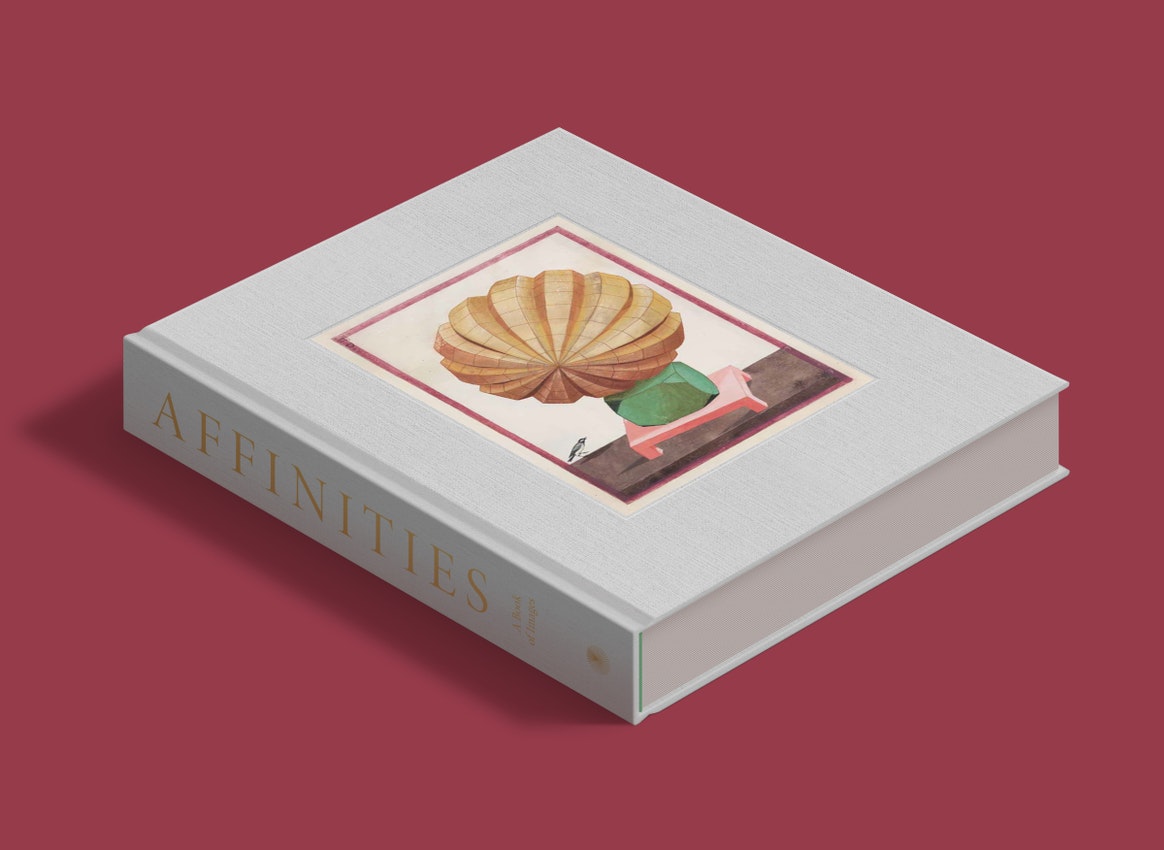
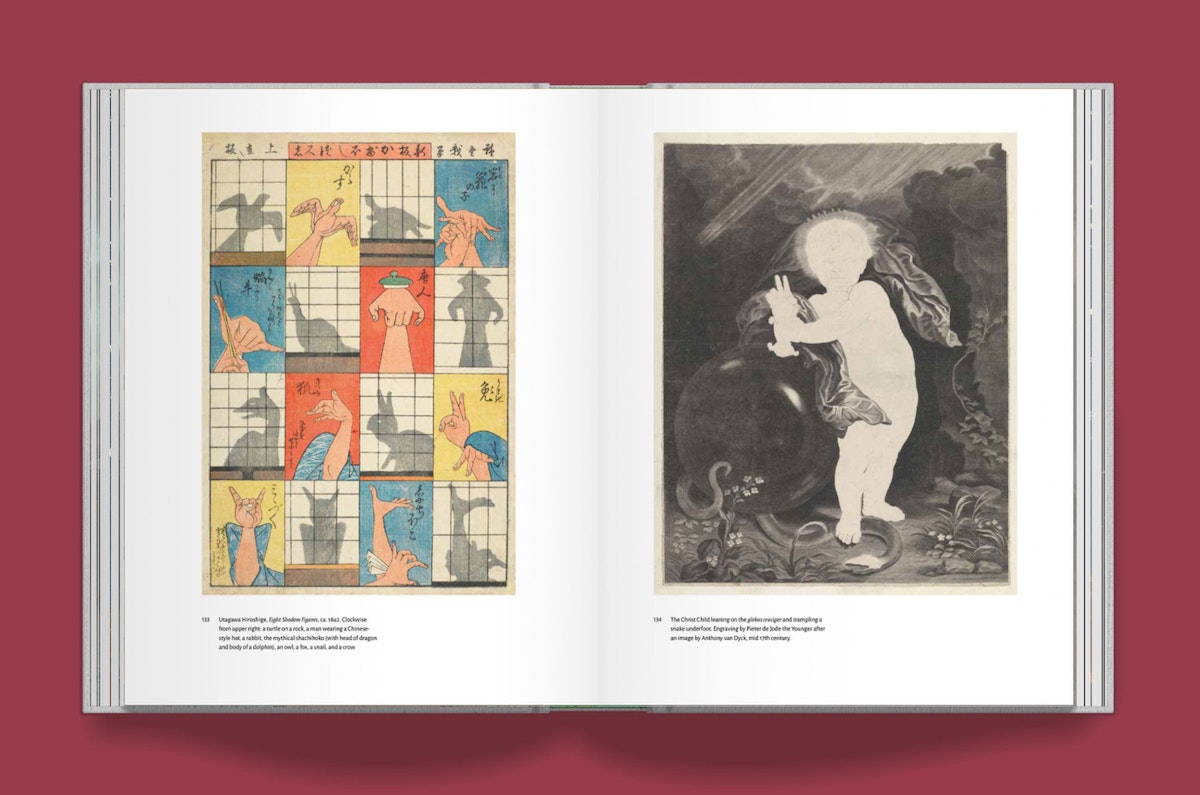
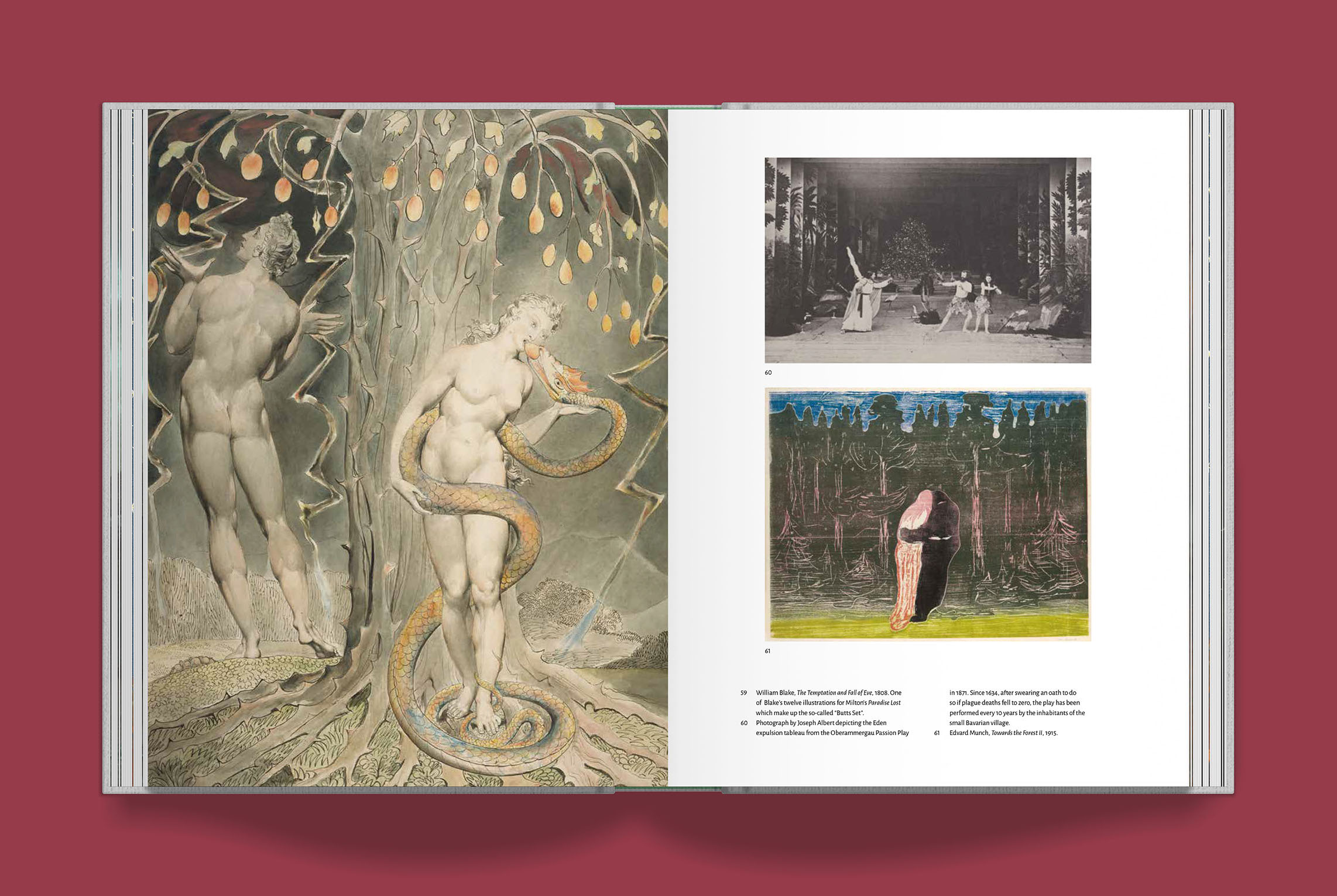
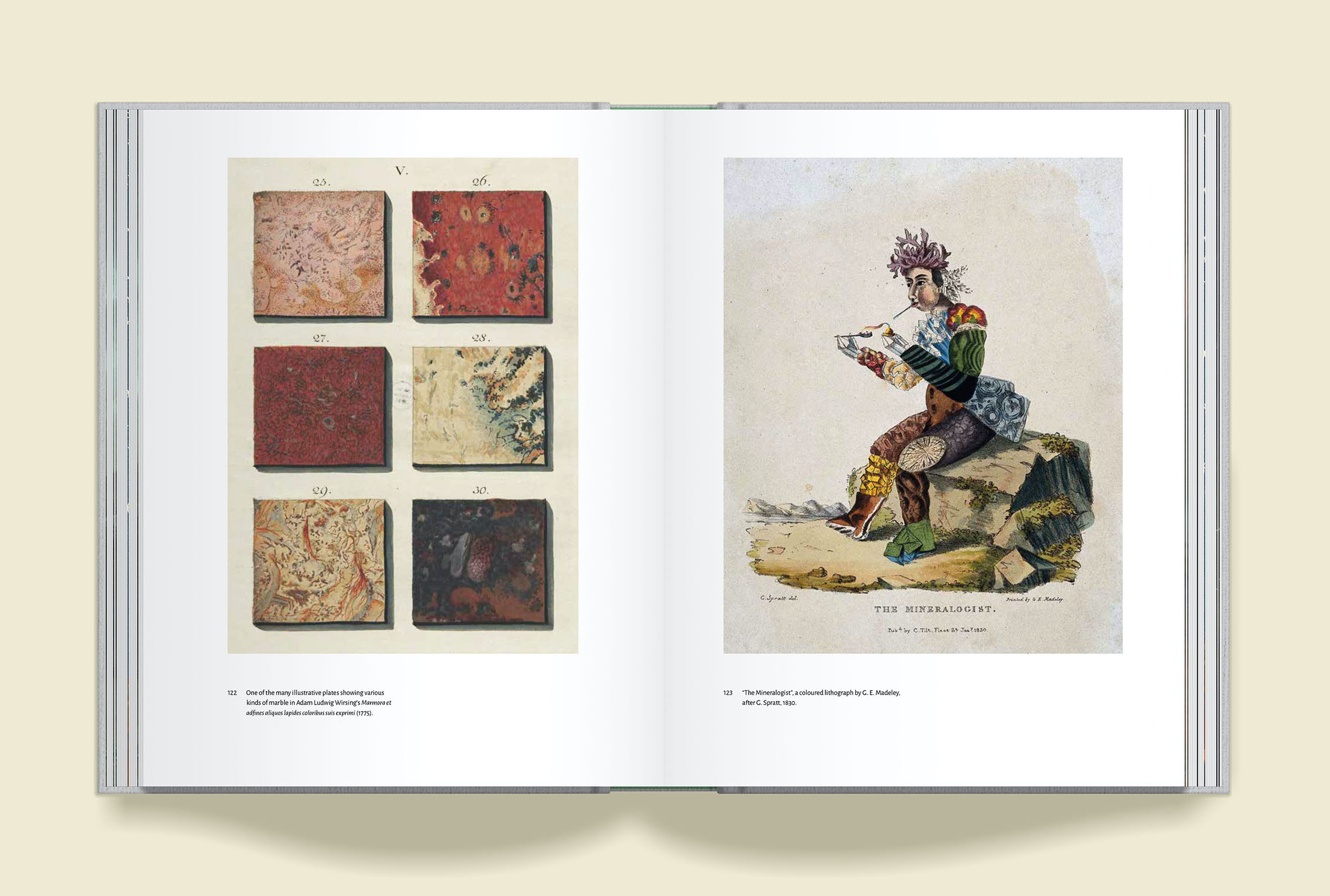
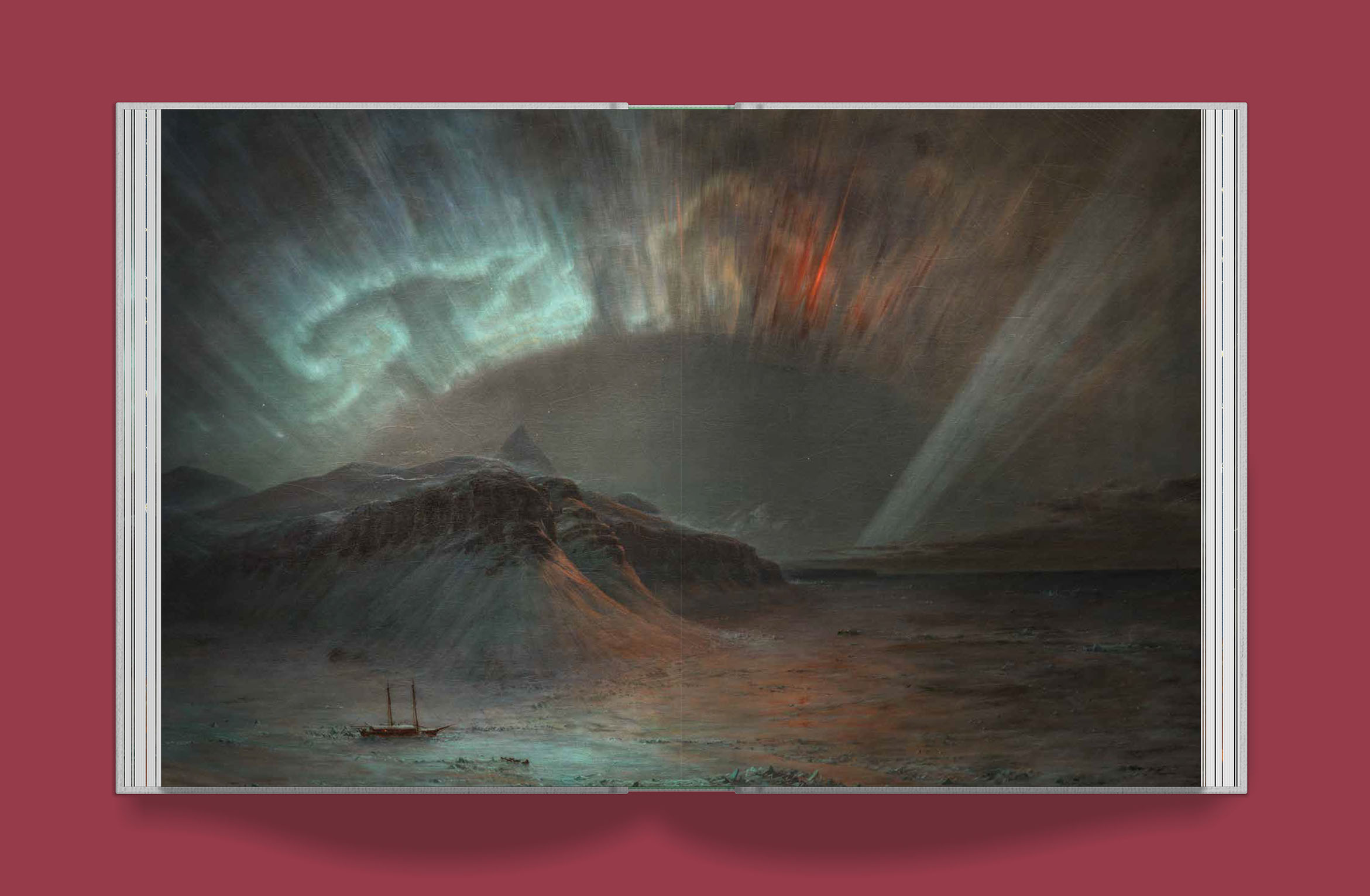
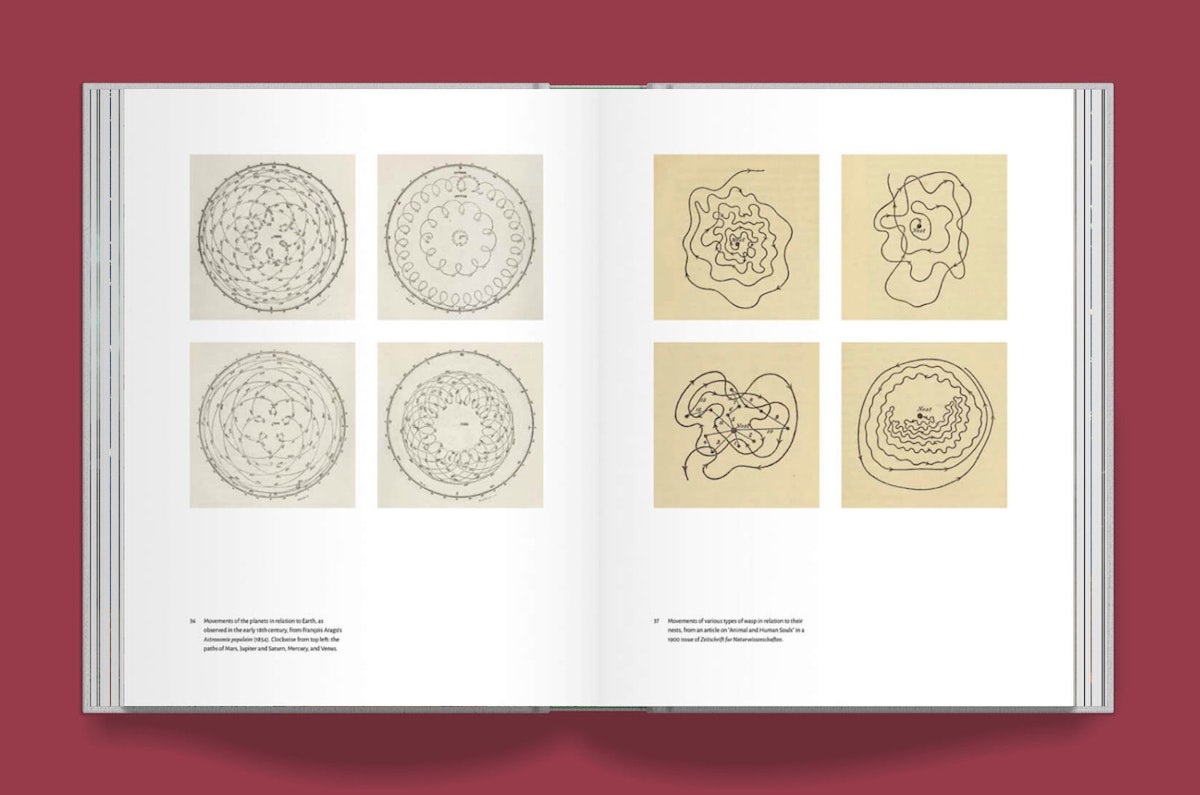
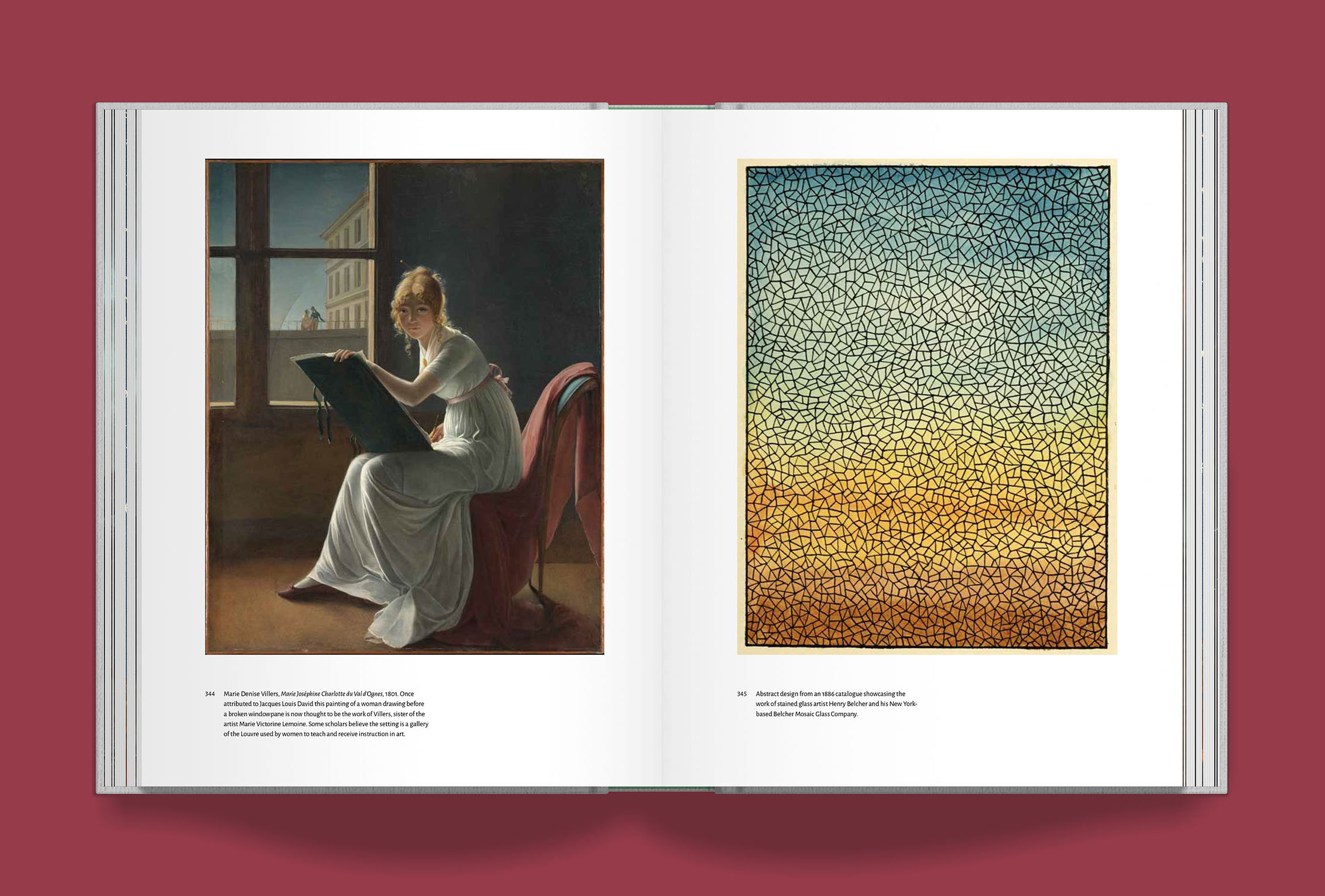
In a similar way to how Open Culture aims to distill in one place the web’s high-quality free cultural and educational media, so The Public Domain Review aims to help readers explore the vast (and sometimes overwhelming!) sea of public domain works available online — like a small exhibition gallery at the entrance to an immense network of archives and storage rooms that lie beyond. Celebrating curious and beautiful public domain images is at the very heart of what we do, and so it seemed fitting to mark our 10th anniversary with a big and beautiful book of images. Ever since the project began back in 2011, readers have implored us to do one, and so finally here it is… we are extremely excited to bring out into the world AFFINITIES.
Gathering over 500 prints, paintings, illustrations, sketches, photographs, doodles, and everything in between, the book is a carefully curated journey exploring echoes and connections across more than two millennia of visual culture. Assembled according to a dreamlike logic, the images unfurl in a single unbroken sequence, through a play of visual echoes and evolving thematic threads.
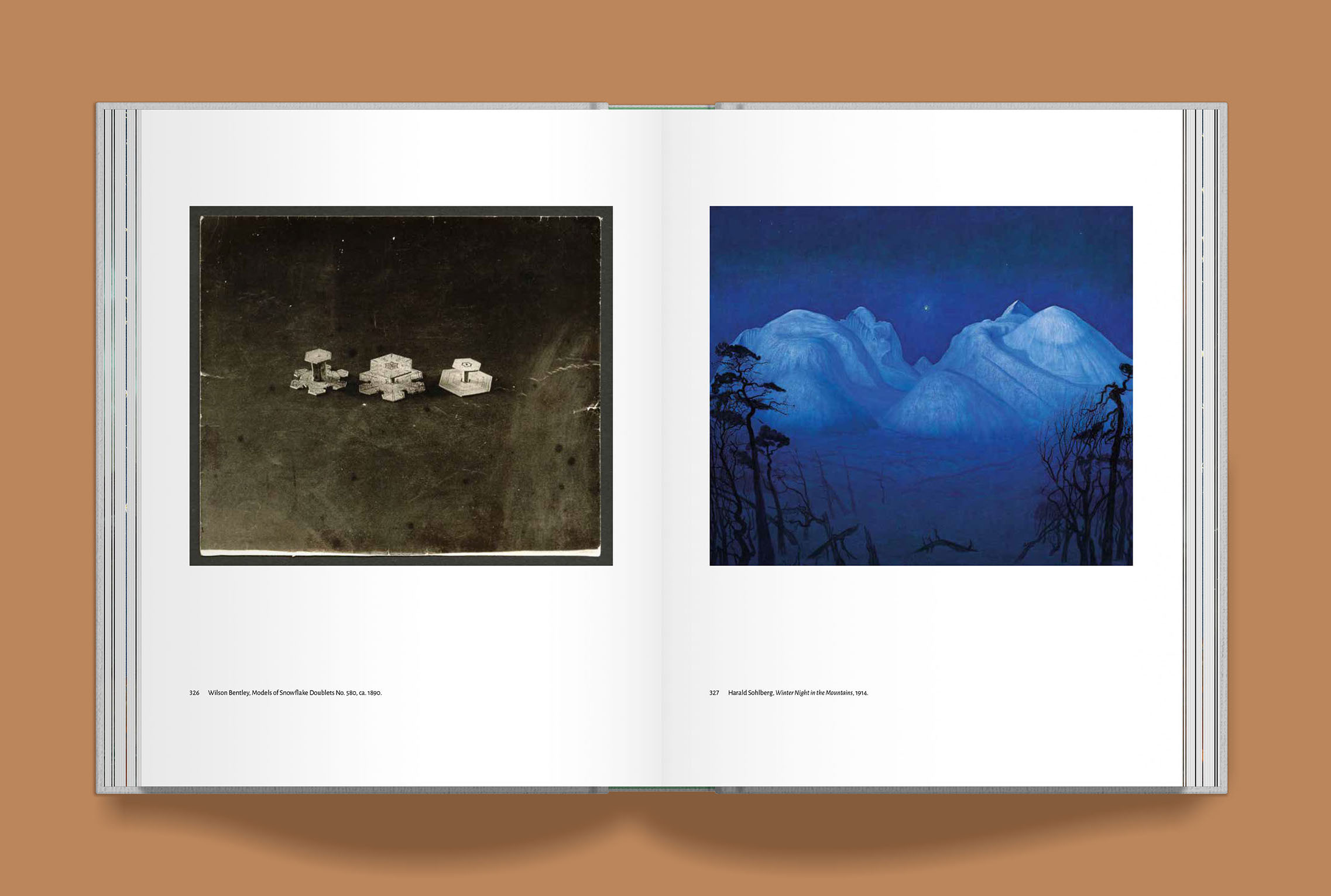
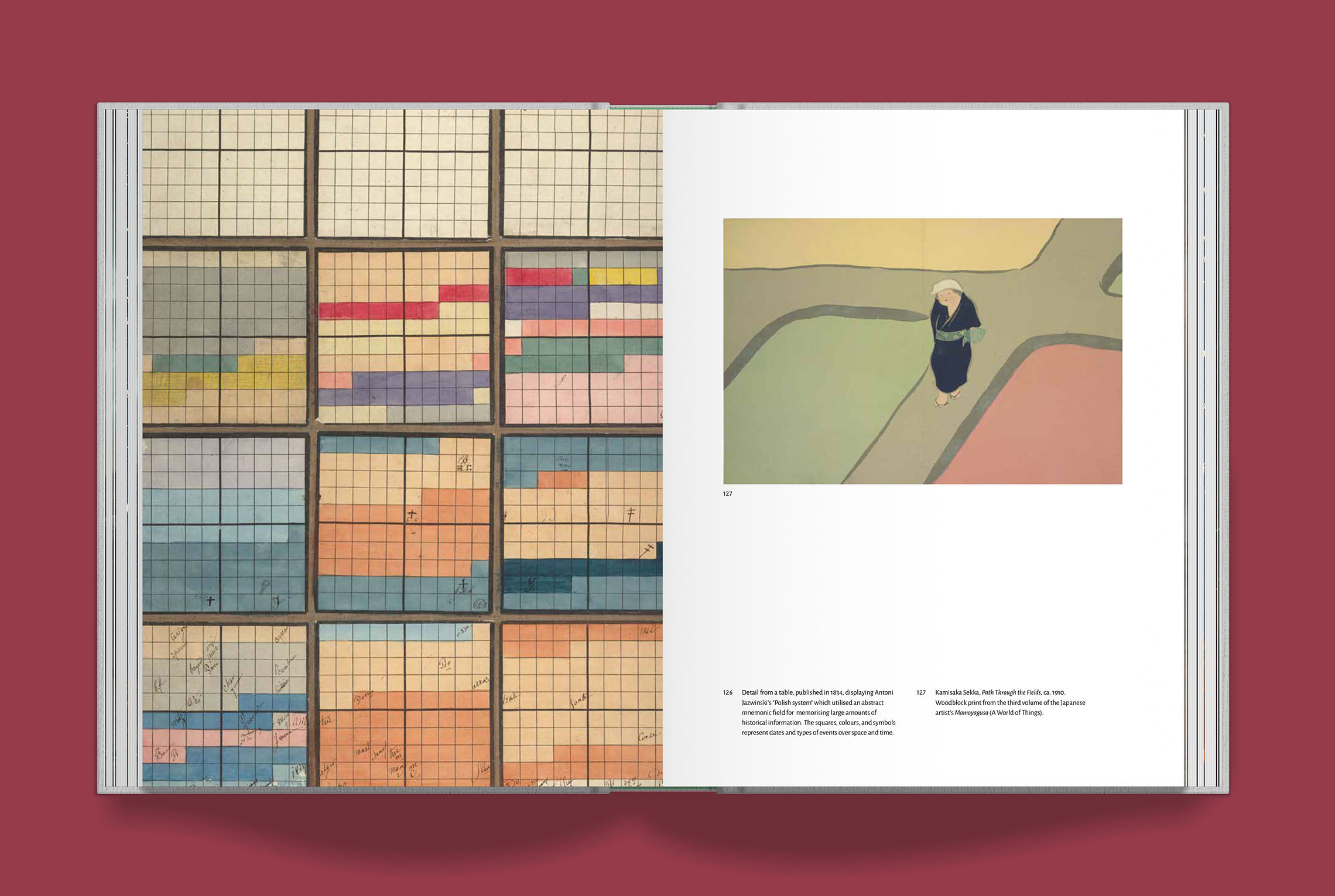
While it’s taken the best part of a year to create (a true lockdown baby), this has really been 10 years in the making — a book born from a decade of deep immersion in public domain archives.
A compelling object and experience in its own right, Affinities also acts as a launchpad for further discoveries and inventive engagements with the commons. It’s meticulous sourcing points to works, creators, and collections around the world, serving as a gateway for future forays into the digital public domain.
As for the physical book itself, we wanted to create an object as stunning as the images within. It is large format (28 x 21.5cm / 11 x 8.5”), boasts a cloth-bound hardcover, with a foil stamped title and embossed inset image, and extends across a whopping 368 pages. To help get this beauty made and assure the highest quality production, we are very happy to have teamed up with specialist art book publisher Volume, an imprint of Thames & Hudson.
It’s being sold via a crowdfunder and delivery will be early next year. In addition to the standard edition of the book, we’ve worked with Volume to create a special Collector’s Edition (in a slipcase with limited edition poster) and also a set of limited edition prints. All of the offerings are only available during the campaign.
Learn more, and order your copy, over on the crowdfunder page.
Adam Green is co-founder, creator, and main editor of The Public Domain Review and PDR Press.
Read More...How the Clash Embraced New York’s Hip Hop Scene and Released the Dance Track, “The Magnificent Dance” (1981)
“Before playing guitar for Captain Beefheart and Jeff Buckley,” John Kruth writes at the Observer, “Gary Lucas worked as a copywriter for CBS/Epic Records,” where he fell in love with a punk band called the Clash, just signed to the label in 1977. “They weren’t easy to work with,” he remembered. “Like Frank Zappa, they spoke about politics, government and corporate interference with radio. They were, as I said, when I came up with the slogan to promote the album: ‘The only group that matters.’”
The slogan stuck and has become something more than marketing hype. Of the slew of British punk bands who made their way to the US in the late 1970s/early 1980s, the Clash had more impact than most others in some unexpected ways. Their classic double album London Calling made Tom Morello of Rage Against the Machine (the only 90s rap-rock band that matters) take notice and change direction. “It was music I could relate to lyrically,” he says, “much more than the dungeons-and-dragons type lyrics of my metal forebears.”
Moreover, godfathers of political rap Public Enemy found their catalyst in the Clash, and went on to create a raucous, militant sound that was the punk equivalent in hip hop, full of snarling guitars, strident declarations and sirens. The song that most had an impact on PE founder and chief lyricist Chuck D came from the band’s even more sprawling triple album Sandinista!. When Chuck heard “The Magnificent Seven,” the Clash’s attempt to incorporate Grandmaster Flash and the Sugar Hill Gang — six months before Blondie released “Rapture” — “that’s when I started to pay attention,” he says.
“Magnificent Seven” came out of the band’s increasing musical adventurousness in the recording of 1980’s Sandinista!, in which they soaked up influences from every place they toured. “When we visited places,” Mick Jones remembered, “we were affected by that… And for me, New York City was really happening at that moment.” Jones took to carrying a boom box around blasting the latest hip hop. “Joe looked at the graffiti artists,” he says, “and I was taking in things like breakdancing and rap.” The band, bassist Paul Simenon recalls, was “open for information” when they met “people like Futura and Grandmaster Flash and Kurtis Blow.”
The Clash didn’t only take from hip hop, but they tried to give back as well. Their 1981 run at “an aging Times Square Disco,” Jeff Chang writes, proved to be a major opportunity for graffiti artists like Futura, who painted a huge banner that was unfurled onstage every night and got to deliver his own rap while the band backed him. When the Clash announced an additional 11 shows after the NYPD limited capacity, they showed what Chang calls a “naive act of solidarity,” booking Grandmaster Flash and the Furious Five as an opening act. White American punks sneered at the group; the Clash “responded by excoriating their own fans in interviews, and future Bronx-bred openers, The Treacherous Three and ESG, received marginally better treatment.”
Even more exciting was the fact that the B‑side to “The Magnificent Seven,” a dub remix called “The Magnificent Dance,” had made it to New York hip hop radio and made the band unlikely stars among black American listeners. “The Clash were ecstatic to tune into WBLS and find that the DJs were not only playing ‘The Magnificent Dance’ up to five times a day, but also doing their own remixes of it,” writes Marcus Gray, “dubbing on samples from the soundtrack of Dirty Harry.” While the track, with its loping bass line played by Ian Drury and the Blockheads bassist Norman Watt-Roy, primed dance floors for the success of the following year’s funk/disco “Rock the Casbah,” it was the lyrics that most grabbed listeners like Morello and Chuck D.
“They talked about important subjects,” says Chuck, “so therefore journalists printed what they said.… We took that from the Clash, because we were very similar in that regard. Public Enemy just did it 10 years later.” It may have taken that long for the barriers between punk and hip hop fans to come down, but to the extent that they did, it was in large part thanks to the musical adventurousness of the Clash and the early icons and fans who saw their revolutionary potential.
Related Content:
“Stay Free: The Story of the Clash” Narrated by Public Enemy’s Chuck D: A New 8‑Episode Podcast
The Story Behind the Iconic Bass-Smashing Photo on the Clash’s London Calling
Watch Audio Ammunition: A Documentary Series on The Clash and Their Five Classic Albums
Josh Jones is a writer and musician based in Durham, NC. Follow him at @jdmagness
Read More...Has TV Rotted Our Minds? On Neil Postman’s Amusing Ourselves to Death (A Pretty Much Pop Culture Podcast/Partially Examined Life Philosophy Podcast Crossover)
Marshall McLuhan famously said “The medium is the message,” by which he meant that when we receive information, its effect on us is determined as much by the form of that information as by the actual content.
Neil Postman, in his 1985 book Amusing Ourselves to Death: Public Discourse in the Age of Show Business, ran with this idea, arguing that TV has conditioned us to expect that everything must be entertaining, and that this has had a disastrous effect on news, politics, education, and thinking in general.
In this discussion, your Pretty Much Pop hosts Mark Linsenmayer and Brian Hirt join with the rest of the Partially Examined Life crew: Seth Paskin, Dylan Casey and Wes Alwan.
The result is much more philosophical context than you’d get in a typical Pretty Much Pop discussion. Plato, for example, argued (through the character of Socrates) in the Phaedrus against writing, which he said amounts to off-loading thought to this inert thing, when it should be lively in our minds and our direct conversations. Postman’s book describes the Age of Print as highly congenial toward lengthy, abstract reasoning. High literacy rates, particularly in America, conditioned people to expect that this is how information is to be received, and as such they were, for instance, prepared to listen raptly to the Lincoln-Douglas debates in which the speakers provided lawyerly speeches that might span multiple hours.
Postman, an educational theorist, described television as not just providing a no-context experience whose high level of visual and auditory stimulation beats its spectators into thoughtless passivity, but that its popularity positively infects all the other communication channels available. Of course there is still in-person teaching, but television shortens attention spans such that teachers now feel the need to constantly entertain instead of forcing students to make the effort required to attend carefully to what they have to teach. Of course there are still books, but they are less read, and the competition of television for our time has changed the presentation within books so that they must be as immediately and consistently appealing as television.
McLuhan described television as a “hot” medium due to its high level of stimulation, where a “cool” one like a textbook requires more active participation of the recipient. We discuss how Postman’s critique fares in the Age of the Internet, which interestingly mixes things up, with more interactivity (in that sense cooler) yet even more possibility for sensory distraction (in that perhaps more important sense hotter). To supplement Postman, we also consulted a widely read article from The Atlantic written by Nicholas Carr in 2008 called “Is Google Making Us Stupid.”
For more philosophical touchpoints, see the post for this discussion at partiallyexaminedlife.com.
Hear more Pretty Much Pop at prettymuchpop.com. This episode includes an equally long second part that you can access by supporting Pretty Much Pop at patreon.com/prettymuchpop or by supporting The Partially Examined Life at partiallyexaminedlife.com/support. Listen to a preview of part two.
Pretty Much Pop: A Culture Podcast is the first podcast curated by Open Culture. Browse all Pretty Much Pop posts.
Read More...Watch 400+ Documentaries from German Broadcaster Deutsche Welle: Art Forgery, Fashion Photography, the Mona Lisa, and More
You’re certainly familiar with Nouvelle Vague, the “French new wave” that shook up world cinema in the mid-2oth century. You’ve probably also heard of Hallyu, the “Korean wave” of pop music and television dramas (and, increasingly, films) now crashing across not just Asia but the West. As for Deutsche Welle, literally the “German wave,” you may know the term better in its abbreviated form: DW, the brand of Germany’s public international broadcaster. Here on Open Culture we’ve previously featured DW’s series Bauhaus World, a celebration of that influential German school of art, architecture, and design, but it’s just one of 415 documentaries free to watch on the DW Documentary Youtube channel.
DW’s documentarians have a thoroughly international mandate, as evidenced by their popular examinations of the dictatorial regime of North Korea, Bulgaria’s Roma marriage market, extravagant wealth in central Africa, and dire poverty in the United States. You can also browse the archive through themed playlists ranging from politics and economics to human nature and society to culture and arts.
That last section, no doubt of particular interest to Open Culture readers, demonstrates DW’s advantage as a long-standing broadcaster situated in the heart of Europe. Where better to start learning about Gothic and Romanesque cathedrals, top electronic dance music DJs, Martin Luther and the Reformation, or the truth behind the Last Supper and the Mona Lisa?
Even more interest lies in DW’s explorations of lesser-known topics like the treasures of Turkmenistan, fakery in the art world, and Berlin’s Little Hanoi. There are also profiles of such German figures as Peter Lindbergh, the late fashion and advertising photographer counted as an inspiration by the likes of Wim Wenders, and Klaus-Dieter Lehmann, outgoing president of the Goethe-Institut, a natural subject for DW to cover. Founded within a couple of years of one another, both DW and the Goethe-Institut take the promotion of German culture abroad as a large part of their mission — and both do so in the knowledge that, to get other societies interested in your culture, you’ve got to show genuine interest in all of theirs as well. Explore the complete list of DW documentaries here. And find more documentaries online in our collection, 4,000+ Free Movies Online: Great Classics, Indies, Noir, Westerns, Documentaries & More.
Related Content:
Watch 3,000+ Films Free Online from the National Film Board of Canada
285 Free Documentaries Online
Based in Seoul, Colin Marshall writes and broadcasts on cities, language, and culture. His projects include the Substack newsletter Books on Cities, the book The Stateless City: a Walk through 21st-Century Los Angeles and the video series The City in Cinema. Follow him on Twitter at @colinmarshall or on Facebook.
Read More...Watch Colorized 1940s Footage of London after the Blitz: Scenes from Trafalgar Square, Piccadilly Circus, Buckingham Palace & More
“Regular features of the time: neatly swept-up piles of glass, litter of stone and splinters of flint, smell of escaping gas, knots of sightseers waiting at the cordons.”
– George Orwell
What was it like to live in London during and after the Blitz? George Orwell’s notebooks from the time contain a “fascinating account of everyday life in London during the Second World War,” full of journalistic detail, the British Library writes. In Orwell’s estimation, the city was riven with class divides. “Despite his criticism of Stalinism, Orwell remained a convinced socialist all his life.” He believed the war could only be won if it turned into a revolution. “When you see how the wealthy are still behaving, in what is manifestly developing into a revolutionary war,” he wrote in a diary entry that would become the 1941 essay The Lion and the Unicorn, “you think of St. Petersburg in 1916.”
Orwell may have been wrong about the revolution, but he reported honestly on much of what was happening in London. Meanwhile, the Ministry of Information produced a short propaganda film in 1940 for the American public called “London Can Take It.” The tone was in keeping with the “Keep Calm and Carry On” ethos we associate with Britain in the period. A companion film, “Britain Can Take It,” similarly sold the “illusion of social unity,” Craig Stewart Hunter writes, “created by the use of films and other media to portray positive morale.” (View many more British WWII propaganda films here.) These did not account for “growing disenchantment in urban areas, which found themselves ‘unable to take it,’ so to speak.”
Peter Watts writes in The Guardian about once-vibrant city blocks that were demolished by the firebombing, then later turned into parking garages. Many of these neighborhoods were then, in the 1960s, folded into massive estate housing projects with “high-rise towers nobody wanted to live in,” says Peter Larkham, professor of planning at Birmingham School of the Built Environment. Could London take it? It depended on which London one meant, in the long run. But during the war itself, there was perhaps more social cohesion than Orwell was willing to grant, given that something like one in every six Londoners suffered homelessness during the bombing campaign and over 40,000 civilians lost their lives.
The degree of Britain’s national unity during the war remains “a continuing historiographical debate,” writes Hunter, ever since” the generation of historians born after the war… have been able to write with more critical detachment.” And since most everyone alive then is no longer, ideas about what it felt like to be in London during WWII will change as historians view the source material differently over time.
But thanks to photography and film from the period, we’ll always have a fairly good idea of what London looked like during the war, though we’ll have to make do, until the AI “becomes more mature,” as the poster of the video compilation above notes, with inferior colorization techniques. (Yes, they know, the buses should be red.)
The various scenes have been motion-stabilized, slightly speed-corrected, enhanced and colorized by means of sophisticated Artificial Intelligence software.
The film shows remarkable scenes of bomb damage, close up filming of the release of barrage balloons, anti-aircraft gun positions, traffic at Trafalgar Square, Piccadilly Circus, military parades in front of Buckingham Palace, beautiful scenes of the Thames during daytime and at dusk, Waterloo Station, and much more.
Most of the film dates from late 1943, but some of the footage of Waterloo station and Piccadilly Circus comes from the late 1930s and it ends with a minute of VE day on 8 May 1945. All of the footage comes from the Prelinger Archives. Can we see national unity in the crowds of people going about their business amidst a city full of armaments and rubble? Is it visible to the naked eye? See timestamped descriptions of the location and action in each clip at the video’s YouTube page here.
Related Content:
WWII Britain Revisited in 120 Short Films, Now Free on the Web
Dramatic Color Footage Shows a Bombed-Out Berlin a Month After Germany’s WWII Defeat (1945)
The Oldest Known Footage of London (1890–1920) Features the City’s Great Landmarks
Josh Jones is a writer and musician based in Durham, NC. Follow him at @jdmagness
Read More...Support Us
We're hoping to rely on loyal readers, rather than erratic ads. Please click the Donate button and support Open Culture. You can use Paypal, Venmo, Patreon, even Crypto! We thank you!

About Us

Open Culture scours the web for the best educational media. We find the free courses and audio books you need, the language lessons & educational videos you want, and plenty of enlightenment in between.
Advertise With Us
FREE UPDATES!
GET OUR DAILY EMAIL
Get the best cultural and educational resources on the web curated for you in a daily email. We never spam. Unsubscribe at any time.
FOLLOW ON SOCIAL MEDIA
Open Culture editor Dan Colman scours the web for the best educational media. He finds the free courses and audio books you need, the language lessons & movies you want, and plenty of enlightenment in between.
Advertise With Us

