Jazz on a Summer’s Day
In 1958, jazz’s place in American culture was changing. It was climbing out of the smokey nightclubs and into the sunny embrace of the bourgeoisie. A younger force, rock and roll, was starting to push it aside. That sense of transition is preserved in Jazz on a Summer’s Day, photographer Bert Stern’s film of the 1958 Newport Jazz Festival.
Keith Richards has called Stern’s movie “a parable on film of the changeover of power between jazz and rock and roll.” In his autobiography, Life, Richards describes his youthful pilgrimage with Mick Jagger to see Chuck Berry’s performance in Jazz on a Summer’s Day:
The film had Jimmy Giuffre, Louis Armstrong, Thelonious Monk, but Mick and I went to see the man. That black coat. He was brought on stage–a very bold move by someone–with Jo Jones on drums, a jazz great. Jo Jones was, among others, Count Basie’s drummer. I think it was Chuck’s proudest moment, when he got up there. It’s not a particularly good version of “Sweet Little Sixteen,” but it was the attitude of the cats behind him, solid against the way he looked and the way he was moving. They were laughing at him. They were trying to fuck him up. Jo Jones was raising his drumstick after every few beats and grinning as if he were in play school. Chuck knew he was working against the odds. And he wasn’t really doing very well, when you listen to it, but he carried it. He had a band behind him that wanted to toss him, but he still carried the day. Jo Jones blew it, right there. Instead of a knife in the back, he could have given him the shit. But Chuck forced his way through.
Later generations of jazz lovers have been perplexed by the film, not because of Chuck Berry, but because of the filmmaker’s focus on everything but the jazz. At one point Thelonious Monk is soulfully playing “Blue Monk” when the film suddenly cuts to the America’s Cup sailboat race and the jarring voice of a radio announcer describing the scene. Ouch.
Just as painful, in retrospect, are the omissions. The filmmaker took a pass on performances at the festival that year by Duke Ellington, Dave Brubeck, Lester Young, Sonny Rollins and the Miles Davis Sextet. “Yes,” writes Alan Kurtz at Jazz.com about the Davis sextet, “the last unit featuring Cannonball Adderley, John Coltrane and Bill Evans was the same supergroup as would eight months later record Kind of Blue and of which no motion picture or video footage now exists.” Ouch again.
But Jazz on a Summer’s Day is still a wonderful film. Stern was one of the greatest advertising and fashion photographers of his generation. He was a 28-year-old still photographer when he went to Newport and basically invented the music performance film genre. While Stern’s commercial work tends to be carefully controlled, Jazz on a Summer’s Day exhibits the photographer’s considerable gift for observing people in their natural setting. There are many documents of the way people looked in the late 1950s, but few are this vivid. Or this visually eloquent.
Read More...Create iPhone/iPad Apps in iOS 5 with Free Stanford Course
Back in 2009, Stanford University started recording lectures given in its iPhone Application Development course and then placing them on iTunes, making them free for anyone to view. The course hit a million downloads in a matter of weeks, and now, two years later, here’s where we stand. The course remains the most popular item on Stanford’s iTunesU site, having clocked in 10 million downloads. And the school has released a new version of the course that focuses on iOS 5, the latest version of the iPhone/iPad operating system. You can download the course on iTunes (in HD video or standard-definition video) and start creating apps on your own.
The iPhone Application Development course is now listed in the Computer Science section of our big collection of Free Online Courses. There you will find 40+ free courses that will teach you to code.…
via Stanford News
Read More...How Many U.S. Marines Could Bring Down the Roman Empire?
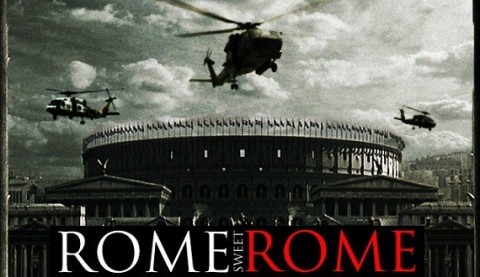
It all started as a thought experiment on Reddit.com when a user posed the question: “Could I destroy the entire Roman Empire during the reign of Augustus if I traveled back in time with a modern U.S. Marine infantry battalion or MEU?”
Then the Reddit user offered a more precise scenario:
Let’s say we go back in time with a Marine Expeditionary Unit (MEU) … could we destroy all 30 of Augustus’ legions?
We’d be up against nearly 330,000 men since each legion was comprised of 11,000 men. These men are typically equipped with limb and torso armor made of metal, and for weaponry they carry swords, spears, bows and other stabbing implements. We’d also encounter siege weapons like catapults and crude incendiary weapons.
We’d be made up of about 2000 members, of which about half would be participating in ground attack operations. We can use our mechanized vehicles (60 Humvees, 16 armored vehicles, etc), but we cannot use our attack air support, only our transport aircraft.
We also have medics with us, modern medical equipment and drugs, and engineers, but we no longer have a magical time-traveling supply line (we did have but the timelords frowned upon it, sadly!) that provides us with all the ammunition, equipment and sustenance we need to survive. We’ll have to succeed with the stuff we brought with us.
So, will we be victorious?
The question touched off a frenzy of discussion. One user, James Erwin, wrote a short story, Rome Sweet Rome, imagining how the battles might play out, and Warner Bros. came along and bought the movie rights to the story.
And now professional historians are weighing in. Interviewed in Popular Mechanics, historian Adrian Goldsworthy, an expert on the Roman army, offered these thoughts:
Obviously, there is a massive difference in firepower. Not only would Roman armor be useless against a rifle round—let alone a grenade launcher or a .50 caliber machine gun—it would probably distort the bullet’s shape and make the wound worse.
But here comes the difficulty:
In the short term and in the open, modern infantry could massacre any ancient soldiers at little risk to themselves. But you could not support modern infantry. So all of these weapons and vehicles could make a brief, dramatic, and even devastating appearance, but would very quickly become useless. Probably in a matter of days.… Marines are the best warriors ever trained. But they can’t fight an endless wave of soldiers. No one can.
You can find the rest of Goldsworthy’s thoughts here, and several good Roman history courses in our big collection of Free Online Courses.
Follow Open Culture on Facebook and Twitter and share intelligent media with your friends. Or better yet, sign up for our daily email and get a daily dose of Open Culture in your inbox. And if you want to make sure that our posts definitely appear in your Facebook newsfeed, just follow these simple steps.
Read More...The Story of Broke: An Animated Look at US Federal Spending and Values
Back in 2008, Annie Leonard produced The Story of Stuff (see below), a 20-minute animated film that explores the way our consumerist habits take a toll on the environment and sustainability. The video racked up millions of views on YouTube, and now Leonard returns with the second video in a longer series. It’s called the The Story of Broke (see above) and it takes a shorter, animated look at U.S. government spending — at how we prioritize our spending, and what it says about our core national values.
We have a lot of money floating around. The federal government collected $2.16 trillion in tax revenue in FY 2010 (and we borrowed yet another $1.3 trillion more). Meanwhile, roughly $705 billion went to defense spending, which is seven times (or $589 billion) more than the next biggest defense spender, China. It turns out that operating a bloated empire with troops deployed across 150 countries is a costly national priority. Then, as Leonard points out, we also unthinkingly funnel a lot of money, in the form of subsidies and giveaways, to dinosaur industries. And then we’re told that nothing is left over for Social Security ($707 billion), Medicare/Medicaid ($732 billion), and education. But we shouldn’t take those claims at face value. Where we spend money is a choice. It’s ideally our choice, but all too often it’s really a matter of what’s valued by our leaders and their financial backers.…
Read More...A Brief, Wondrous Tour of Earth (From Outer Space)
We have seen several time-lapse views of Earth from the International Space Station, but this may well be the best. Recorded from August to October, 2011, this HD footage has been smoothed, retimed, denoised, deflickered, cut, etc, and then coupled with music by Jan Jelinek. It gives you a pretty splendid view of the aurora borealis from orbit (how often have you seen that?), and if you’re wondering just what produces those northern lights, you can watch a nice explanation here (scroll down to the second video). This video is housed in our collection of Great Science Videos.
Follow us on Facebook, Twitter and now Google Plus.
Read More...A Stunning, Chance Encounter With Nature
Sophie Windsor Clive and Liberty Smith were canoeing somewhere in Ireland when they had a chance encounter with one of nature’s greatest and most fleeting phenomena — a murmuration of starlings. The spectacle is a magical case of mathematical chaos in action. And, it’s all driven by the quest for survival. The Telegraph has more.…
via Dot Earth
If you would like to support the mission of Open Culture, consider making a donation to our site. It’s hard to rely 100% on ads, and your contributions will help us continue providing the best free cultural and educational materials to learners everywhere. You can contribute through PayPal, Patreon, and Venmo (@openculture). Thanks!
Read More...Peter Gabriel and His Big Orchestra Play Live at the Ed Sullivan Theater
On Wednesday night, Peter Gabriel brought his 46-piece orchestra to the Ed Sullivan Theater in New York City and treated the audience to a 65-minute concert featuring orchestral versions of some classic Gabriel songs: Red Rain, Solsbury Hill, Biko, Intruder, Mercy Street, Wallflower, San Jacinto, Rhythm of The Heat, Signal to Noise — they were all on the setlist, though not in that particular order. The concert, presented as part of the Live on Letterman webcast series, features songs and musicians appearing on Gabriel’s latest LP, New Blood.…
via Stereogum
Read More...Christopher Hitchens: No Deathbed Conversion for Me, Thanks, But it was Good of You to Ask
Atheist Christopher Hitchens was asked earlier this year how his struggle with cancer has affected his views on the question of an afterlife. “I would say it fractionally increases my contempt for the false consolation element of religion and my dislike for the dictatorial and totalitarian part of it,” he responded. “It’s considered perfectly normal in this society to approach dying people who you don’t know but who are unbelievers and say, ‘Now are you gonna change your mind?’ That is considered almost a polite question.”
Hitchens spoke (see above) during a debate on the question, “Is there an afterlife,” with Sam Harris and Rabbis David Wolpe and Bradley Shavit Artson at the American Jewish University in Los Angeles on February 15. (You can watch the entire event here.) Hitchens’ views on the subject have remained consistent over the years. “It’s a religious falsification that people like myself scream for a priest at the end,” Hitchens said before he was diagnosed with stage four esophageal cancer in the summer of 2010. “Most of us go to our end with dignity.”
Hitchens writes memorably of one such figure in his 2006 book, Thomas Paine’s Rights of Man: A Biography:
Paine’s closing years, pitiful as they were, contained one closing triumph. He might have become a scarecrow-like figure. He might have been forced to subsist on the charity of friends. He might have been denied the right to vote by a bullying official, when presenting himself at the polling station, on the grounds that the author of Common Sense was not a true American. But as the buzzards began to circle, he rallied one more time. It was widely believed by the devout of those days that unbelievers would scream for a priest when their own death-beds loomed. Why this was thought to be valuable propaganda it is impossible to say. Surely the sobbing of a human creature in extremis is testimony not worth having, as well as testimony extracted by the most contemptible means? Boswell had been to visit David Hume under these conditions, because he had been reluctant to believe that the stoicism of the old philosopher would hold up, and as a result we have one excellent account of the refusal of the intelligence to yield to such moral blackmail. Our other account comes from those who attended Paine. Dying in ulcerated agony, he was imposed upon by two Presbyterian ministers who pushed past his housekeeper and urged him to avoid damnation by accepting Jesus Christ. ‘Let me have none of your Popish stuff,’ Paine responded. ‘Get away with you, good morning, good morning.’ The same demand was made of him as his eyes were closing. ‘Do you wish to believe that Jesus Christ is the son of God?’ He answered quite distinctly: ‘I have no wish to believe on that subject.’ Thus he expired with his reason, and his rights, both still staunchly defended until the very last.
via 3 Quarks Daily
Related Content:
Steve Martin Writes Song for Hymn-Deprived Atheists
Christopher Hitchens Revises the Ten Commandments
Read More...The Van Doos in Afghanistan (Free Until Monday)
A quick fyi: To mark Remembrance Day, the National Film Board of Canada (NFB) has made Claude Guilmain’s documentary The Van Doos in Afghanistan available online for a limited time. You can watch it free until Monday. The NFB writes:
In this documentary, we hear directly from francophone soldiers serving in the Royal 22e Régiment (known in English as “Van Doos”) who were filmed in the field in March 2011, during their deployment to Afghanistan. They speak simply and directly about their work, whether on patrol or performing their duties at the base. The film’s images and interviews bring home the complexity of the issues on the ground and shed light on the little-understood experiences of the men and women who served in Afghanistan.
You’ll find other free films by the NFB in our big collection of Free Movies Online. It now has north of 435 films on the list.
Read More...It’s the Tax Code, Stupid: Niall Ferguson Solves Our Economic Mess
Don’t blame the lamestream media for this one. When it comes to our protracted economic stagnation, there is ultimately one place to point the finger: It’s those pesky mainstream economists.
That’s the conclusion of Niall Ferguson, history professor at Harvard and author of The Ascent of Money: A Financial History of the World. Ferguson makes his point in the first installment of a new animated series of “Op-Vids” from The Daily Beast. “What is an Op-Vid,” writes The Daily Beast on Vimeo? “Opinion, without the pundits yelling. Handmade animation, without the caricatures. Essays without the text. Complex topics, without the boring.” Without the boring what? Complexity?
Ferguson makes some curious claims. He admits that stimulus spending has worked up to a point: It helped avoid another Great Depression. But it didn’t create a sustained recovery. Why? Because there wasn’t enough of it? No. Because it leaks. In a global economy, Ferguson argues, you would need chaos theory to understand where the stimulus actually ends up. Even more curiously, Ferguson argues that rising income inequality in America “limits the effectiveness of Keynesian policies, because they need average households to boost their spending.” (So you can forget about hiring teachers, firefighters or construction workers; that wouldn’t help “average” households spend more.)
Having thus defeated Keynesianism, Ferguson moves on to offer a solution: Simplify the tax code. Never mind the shortfall in aggregate demand for goods and services. Never mind that corporations–sitting on $2 trillion in uninvested cash reserves–have maintained near-record profits despite the shortfall by cutting production and laying off workers. Simplify the tax code, says Ferguson, and American companies will hire more American workers. Problem solved.
As a footnote, it’s worth pointing out that in early 2009 Ferguson was involved in a very public debate with Princeton economist Paul Krugman over the effectiveness of fiscal expansion. Ferguson argued that government borrowing would damage the economy by driving up interest rates. Nearly three years later, interest rates have remained very low. Looking back on the debate, Krugman said of Ferguson, “He doesn’t understand Macroeconomics 101.”
Read More...Support Us
We're hoping to rely on loyal readers, rather than erratic ads. Please click the Donate button and support Open Culture. You can use Paypal, Venmo, Patreon, even Crypto! We thank you!

About Us

Open Culture scours the web for the best educational media. We find the free courses and audio books you need, the language lessons & educational videos you want, and plenty of enlightenment in between.
Advertise With Us

FREE UPDATES!
GET OUR DAILY EMAIL
Get the best cultural and educational resources on the web curated for you in a daily email. We never spam. Unsubscribe at any time.
FOLLOW ON SOCIAL MEDIA

Open Culture editor Dan Colman scours the web for the best educational media. He finds the free courses and audio books you need, the language lessons & movies you want, and plenty of enlightenment in between.
Advertise With Us

