Guest on FORA.tv This Week
Here’s a quick fyi: I’m making a small guest appearance on FORA.tv this week.
In case you’re not familiar with it, FORA.tv hosts a large and constantly growing collection of videos that feature important thinkers grappling with contemporary cultural, social and political questions. Or, put simply, it’s YouTube made intelligent. As you’ll see, their mission is rather similar to our own. So I was pleased when they asked me to be “a guest” for the week and highlight some of my favorite videos from their video trove. Here is what I selected:
- The 20th Century on Trial: Norman Mailer
- Einstein: His Life and Universe
- Francis Fukuyama: The End Of History Revisited
- Jimmy Wales on Wikipedia
Segments of FORA’s talks are also available by audio and video podcast. (Get more info here.) Also, on a related note, Princeton University spearheads a somewhat similar video service, except that it is more specifically dedicated to public affairs. It’s called UChannel. (Have a look here.) Finally, if you like what FORA and UChannel have to offer, you may also want to spend some time with our Ideas & Culture Podcast Collection. Our full podcast library is here.
Read More...
A World in Your Ear
Times Online (the large UK-based news website) has posted today a feature that offers an introduction to podcasting. It explains the whos, hows, whats, etc. and provides some helpful links, including one to our collection of Foreign Language Lesson Podcasts.
Podcasting offers an amazing way to access free, high-quality media, across many topics, wherever and whenever you want it. And it’s something that even technophobes can easily figure out. For more information on how to work with podcasts, see our our Podcast Primer. We take you through podcasting step-by-step. Also check out our extensive Podcast Library, which gives you access to audiobooks, cultural programming, science podcasts, university courses and more.
Read More...
No Country for Old Men: The Coen Brothers’ Latest
The filmmakers who brought you Fargo, Barton Fink, and O Brother, Where Art Thou? have released their latest film based on a novel by Cormac McCarthy. No Country for Old Men is, as The New Yorker puts it, “a return to the dark, simmering days of their best work, in Blood Simple and Miller’s Crossing,” which is another way of saying that the film is violent, but also extremely well made. So far, there’s been no shortage of positive reviews (look here for example). But, as always, you’ll find the occasional pan. Below, we have posted some scenes from the film, and we’ll leave you with this printed interview with Joel and Ethan Coen.

U2’s Joshua Tree Remastered and Expanded
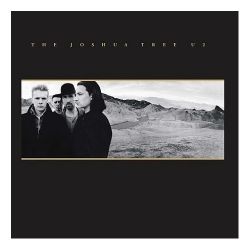 Today, U2 is releasing a remastered version of the album that turned a popular band into a super band. Commemorating its 20th anniversary (how can it be that old already?), the Joshua Tree is being re-issued in four versions — 1) a remastered single CD, 2) a 2‑CD set that features the remastered album and b‑sides/rarities from the Joshua Tree recording sessions, 3) a 2‑CD/1‑DVD collectible box that includes a 56 page book; and 4) a double vinyl package.
The re-release of this album has a certain unwelcomed commercial feel to it. I’ll grant that. But, regardless, I’m buying it. The Joshua Tree loomed in the background during a great moment in my life. And just hearing it brings me back to the sounds and smells of that period. So, if I can hear it remastered and get more songs from the recording sessions, I guess I’ll take it.
In the meantime, I’ll leave you with these bits of free U2 media. First, spend some time with “Bono: The Rolling Stone Interview” (iTunes - Feed — Web Site). Here Jann Wenner, the founder of Rolling Stone, leads a long and wide-ranging interview with Bono Vox. The second item is a video (below) featuring Bono singing and telling the story behind “Wave of Sorry,” one of the b‑sides from the new Joshua Tree release.
For more music podcasts, click here.

Amazon’s New eBook Reader is Out
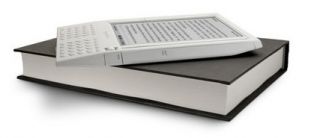 The Kindle, Amazon’s new eBook reader, is just now hitting the streets. The promo video below overviews its basic features, including the Kindle’s “paper-like” screen, ergonomic design, and free wireless access to content. As you’ll see, the $399 reader, which holds 200 books, promises to succeed where other digital readers have failed — to offer a satisfying reading experience and unlock the potentially large digital books market.
Not surprisingly, Amazon is backing the Kindle’s launch with a fair amount of marketing. Videos on the Amazon site feature Toni Morrison, a Nobel Prize Winner, talking up the Kindle. Then, there are these comments by Michael Lewis, a bestselling author, “It’s so simple you could be a moron and it works.” “It takes no intelligence at all. Anybody who can read a book can function with this thing.” “It’s easier on the eye than the printed word.” “[A]fter about — I’m telling you! — 5 minutes, you cease to think, ‘I’m looking at a screen.’ It’s not like looking at a computer screen.”
A notable downside to the Kindle (one that’s pointed out by ZDNet) is the cost to access content. Books usually go for $9.99 or less, which is perfectly reasonable. But you’ll pay $9.99 to $14.99 per month for newspaper subscriptions, $1.99 to $2.99 for monthly magazine subscriptions, and 99 cents per month to subscribe to individual blogs. This is all pretty illogical, given that most of this content is otherwise free on the web.
If you get your hands on the Kindle, definitely let us know what you think.
Museums Crossing the Line?: An Interview with Jori Finkel
The New York Times featured yesterday a piece that raises serious questions about the art world. According to the article, some major museums are now allowing art galleries to financially underwrite their exhibitions. And, of course, the galleries often have a direct financial stake in the work on display. This trend, which seems to be growing, naturally prompts questions of influence: are some of the most well-regarded museums letting financing — something that’s always in short supply — determine what exhibitions they will put on display? Are the lines between church and state getting crossed? (The museums insist that the answer is no.) Then, there are questions of commerce: are non-profit museums helping for-profit galleries, whether intentionally or not, bump up the prestige and financial value of their artists — something which almost always redounds to the financial benefit of the galleries?
I had a chance to catch up with Jori Finkel, the author of the article. She’s an arts journalist based in LA where she covers contemporary art for The Times, among other places. I asked her a few questions and here’s what she had to say:
DC: What’s essentially driving the museums to work so closely, perhaps too closely, with galleries? In short, how did we get here?
JF: One thing I discovered in reporting this story is just how common it is for galleries to help out museums behind the scenes—with research, with loans, and with things galleries do in the normal course of business like framing works of art. But it’s much more unusual to find galleries writing checks for museum shows. People I interviewed see this as a sign of the art world spinning out of control or out of balance because of all the money chasing contemporary art lately. The imbalance being that galleries are richer than ever before, while museums, which are not supposed to be part of the market, can find themselves struggling or even begging for funding. A museum director once told me he felt his job was a lot like being a beggar—a glamorous, well-connected beggar, but a beggar.
DC: As I recall, some museums have gotten into trouble when seeking out sponsors for exhibitions in the past — for example, from some corporations. Is what’s happening now any different, and does it raise particularly new ethical concerns?
JF: We saw a number of controversies in the late 1990s over corporate sponsorship—like Armani reportedly gifting the Guggenheim $15 million and getting a show in return, and BMW underwriting a motorcyle show, also at the Guggenheim. Then there was the scandal over the “Sensation” show at the Brooklyn Museum of Art, which featured works from Charles Saatchi’s personal collection and was funded in part by Saatchi. Several of my sources mentioned these cases because they think gallery sponsorship raises roughly the same set of ethical questions. The only difference they pointed out is that gallery conflicts might have the potential to be more pervasive. (more…)
Read More...Free eBook on iTunes: The Millionaires
iTunes is serving up a freebie for audiobook fans. Written by Brad Meltzer, The Millionaires runs close to 15 hours. Publishers Weekly calls it “a fast-paced, fresh-scrubbed tale of financial adventure.” Download it here, and check out our larger collection of free audiobook podcasts. (Source: Boing Boing)
Related Content:
Newsweek’s piece on Jeff Bezos’ plans to reinvent the future of reading.
Read More...
Bach, Beethoven, Mozart, Wagner, Some Yo-Yo Ma and More: Free Classical Music Podcasts

With last year being the 250th anniversary of Mozart’s birth, there was no shortage of podcasts dedicated to Mozart’s masterpieces. First, Radio Sweden (iTunes — Feed — Web Site) reissued a digital archive of Mozart recordings by the Royal Swedish Opera from the 1940s and 1950s. And, along very similar lines, Danmarks Radio (Feed — Web Site) issued podcasts of nine Mozart symphonies recorded by the Danish Radio Symphony
Orchestra. (You’ll find here symphonies numbers 15, 17, 23, 34, 35, 36, 39, 40, and 41. Since the web site is in Danish, we’d recommend accessing these high quality MP3’s through the rss feed listed above.) Lastly, we should mention here that, as part of last year’s festivities, The International Mozart Foundation published online for the first time the entirety of of Mozart’s musical scores.
Along with Mozart, you can find plenty of Beethoven. We have highlighted here before, but it’s worth noting again, Deutsche Welle’s podcast collection called Beethovenfest (iTunes — Feed — Web Site). You’ll want to give it a look, and also see the podcast collection put together by the Boston Symphony Orchestra Conservatory (iTunes — Feed — Web Site). This educational series offers an extensive overview and recordings of Beethoven’s work, as well as that of Arnold Schoenberg. You can also catch more Beethoven (as well as a little Mozart and Bach) with the podcast series called The Concert (iTunes — Feed — Web Site), which features recordings from the Isabella Stewart Gardner Museum in Boston.
Speaking of Bach, you may want to give some time to these two podcasts: Bach Podcast from Magnatune.com (iTunes — Feed — Web Site) and Bach Festival of Philadelphia (Feed — Web Site).
Let’s now leave you with a few other good finds: Wagner Operas Podcast (iTunes — Feed — Web Site) lets you listen in on recordings from the annual Bayreuth Festival, plus more. An Intimate Tour Through the Music of Yo-Yo Ma (iTunes — Feed — Web Site) offers essentially what the title says. Finally, we’d recommend Classical Performance (iTunes Feed Web Site), which consists of classical music performances from WGBH’s Studio One in Boston; The New York Philaharmonic Podcast (iTunes — Feed — Web Site) which introduces you to the music and performers featured in the concerts of the New York Philharmonic; and From the Top. Live from Carnegie Hall Video Podcast (iTunes — Feed — Web Site), a podcast that showcases the top-notch skills and compelling stories of America’s best young classical musicians.
Other Podcast Surveys:
Read More...
20+ Public Domain E‑Book Sources
Mashable has posted a list of over 20 sites from where you can download lots of e‑books, and it’s all apparently legal. Here’s the list.

Want free audiobooks? Check out this collection.
Read More...Not Your Father’s Scientific American
The popular science magazine, Scientific American, has been around a long time, since 1845 in fact. That makes it the oldest periodical in continuous publication in the United States. Now, the magazine that your great-great-great grandfather read has launched a new website called 60 Second Science. Based on Scientific American’s daily podcast that’s also called 60 Second Science (iTunes — Feed — Web Site), the new site gets updated 12 times a day, and it features its own audio/video podcasts, links to key SciAm articles and other good stuff. Have a look, and don’t forget to check out our broader collection of Science Podcasts.
Read More...Support Us
We're hoping to rely on loyal readers, rather than erratic ads. Please click the Donate button and support Open Culture. You can use Paypal, Venmo, Patreon, even Crypto! We thank you!

About Us

Open Culture scours the web for the best educational media. We find the free courses and audio books you need, the language lessons & educational videos you want, and plenty of enlightenment in between.
Advertise With Us

FREE UPDATES!
GET OUR DAILY EMAIL
Get the best cultural and educational resources on the web curated for you in a daily email. We never spam. Unsubscribe at any time.
FOLLOW ON SOCIAL MEDIA

Open Culture editor Dan Colman scours the web for the best educational media. He finds the free courses and audio books you need, the language lessons & movies you want, and plenty of enlightenment in between.
Advertise With Us

