The Oldest Restaurant in the World: How Madrid’s Sobrino de Botín Has Kept the Oven Hot Since 1725
“We lunched up-stairs at Botin’s,” writes Ernest Hemingway near the end of The Sun Also Rises (1926). “It is one of the best restaurants in the world. We had roast suckling pig and drank rioja alta.” You can do the very same thing today, a century after the period of that novel — and indeed, you also could’ve done it two centuries before the period of that novel, for Botin’s was established in 1725, and now stands as the oldest restaurant in continuous operation. Founded as Casa Botín by a Frenchman named Jean Botin, it passed in 1753 into the hands of one of his nephews, who re-christened it Sobrino de Botín. Whatever the place has been called over this whole time, its oven has never once gone cold.
?si=-fSM9okYlxvKCpTd
“It is our jewel, our crown jewel,” Botín’s deputy manager Javier Sanchéz Álvarez says of that oven in the Great Big Story video above. “It needs to keep hot at night and be ready to roast in the morning.” What it has to roast is, of course, the restaurant’s signature cochinillo, or suckling pig, about which you can learn more from the Food Insider video just above.
“It’s exactly the same recipe and tradition,” says Sanchéz Álvarez. “Absolutely everything is done in the exact same way as in the old days,” down to the application of the spices, butter, wine, and salt to the raw pork before it enters the historic oven belly-up. “It’s very important that the skin of the cochinillo is very crunchy,” he adds. “If the skin isn’t crunchy, it’s not good.”
Needless to say, Botín is poorly placed to win the favor of the world’s vegetarians. But it does robust business nevertheless, having pulled through the COVID-19 pandemic (with, at the very least, its oven still lit), and more recently received a visit from superstar food vlogger Mark Wiens. Its enduring success surely owes to its more-than-proven ability to deliver on a simple promise: “We will serve you a hearty suckling pick with some good potatoes and a serving of good Spanish ham,” as Sanchéz Álvarez puts it. Working at the restaurant for more than 40 of its 298 years has made it “like home to me,” he says, employing the common Spanish expression of feeling como un pez en el agua — though, given the nature of Botín’s menu, a more terrestrial metaphor is surely in order.
via Mental Floss
Related content:
The Spanish Earth: Ernest Hemingway’s 1937 Film on The Spanish Civil War
Historic Spain in Time Lapse Film
A Visit to the World’s Oldest Hotel, Japan’s Nishiyama Onsen Keiunkan, Established in 705 AD
Based in Seoul, Colin Marshall writes and broadcasts on cities, language, and culture. His projects include the Substack newsletter Books on Cities, the book The Stateless City: a Walk through 21st-Century Los Angeles and the video series The City in Cinema. Follow him on Twitter at @colinmarshall or on Facebook.
Read More...Jimmy Buffett (RIP) Performs His New Song “Margaritaville,” Live in 1978: The Birth of a Song That Later Became a Business Empire
Jimmy Buffett wrote “Margaritaville” in 1977. It ended up being his only song to reach the pop Top 10. But the song carried him for the next 45 years. When you think Margaritaville, you think of an easy-breezy way of life. And that simple idea infused the brand of Buffett’s Margaritaville business empire. Between the song’s birth and the singer’s death this weekend, Buffett created a Margaritaville business empire that included bars, restaurants, casinos, beach resorts, retirement communities, cruises, packaged foods, apparel, footwear, and beyond. This spring, Buffett improbably made Forbes’ list of billionaires. Above, you can watch a young Jimmy Buffet perform “Margaritaville” in 1978, right at the beginning of the song’s long journey from hit, to brand, to commercial empire.
If you would like to support the mission of Open Culture, consider making a donation to our site. It’s hard to rely 100% on ads, and your contributions will help us continue providing the best free cultural and educational materials to learners everywhere. You can contribute through PayPal, Patreon, and Venmo (@openculture). Thanks!
Read More...
Tom Jones & Chuck Berry Perform Together, Singing “Roll Over Beethoven” & “Memphis” (1974)
Another chapter from the Annals of Unlikely Performances…
Last week, we highlighted Chuck Berry performing with the Bee Gees on a 1973 episode of the Midnight Special. It’s a pairing that doesn’t work on paper. But, on stage, it’s magic. The same goes for when Berry sang with Tom Jones on a 1974 episode of the same show. It’s magic once again.
If you’re a veteran OC reader, you know that Jones could sing with anyone. On his variety show, This Is Tom Jones, he shared the stage with Janis Joplin, not to mention Crosby, Stills, Nash & Young, and Stevie Wonder. It worked. Just watch the expression on Janis and Crosby’s face.
Now 83, Tom Jones and his voice are still going strong. Below, you can watch him sing “Samson And Delilah” in 2021.
If you would like to support the mission of Open Culture, consider making a donation to our site. It’s hard to rely 100% on ads, and your contributions will help us continue providing the best free cultural and educational materials to learners everywhere. You can contribute through PayPal, Patreon, and Venmo (@openculture). Thanks!
Related Content
Janis Joplin & Tom Jones Bring the House Down in an Unlikely Duet of “Raise Your Hand” (1969)
Read More...The Stoic Wisdom of Roman Emperor Marcus Aurelius: An Introduction in Six Short Videos
?si=N6JQU7bXNRhsFgOq
Though it enjoys a particular popularity here in the twenty-first century, the rigorously equanimous Stoic worldview comes to us through the work of three figures from antiquity: Epictetus, Seneca, and Marcus Aurelius. Epictetus was born and raised a slave. Seneca, the son of rhetorician Seneca the Elder, became an advisor to Nero (a position that ultimately forced him to take his own life). Marcus Aurelius, the most exalted of the three, actually did the top job himself, ruling the Roman Empire from 161 to 180 AD. He also left behind a text, the Meditations, that stands alongside Epictetus’ Enchiridion and Seneca’s many essays and letters as a pillar of the canon of Stoicism.
It is from the Meditations that this series of six videos from Youtube channel Einzelgänger draws its wisdom. Each of them introduces different aspects of Marcus Aurelius’ interpretation of Stoicism and applies them to our everyday life here in modernity, presenting strategies for staying calm, not feeling harm, accepting what comes our way, and not being troubled by the actions of others.
Though the importance of these aims can be illustrated any number of ways, their achievement depends on accepting the notion central to all Stoic thought: “the dichotomy of control,” which dictates that “some things are in our control and others aren’t.” When life hurts, “it often means that we care about things we have no control over, and by doing so, we let them control us.”
All the Stoics understood this, but for Marcus Aurelius, “being unperturbed by things outside of his control allowed him to cope with the many responsibilities and challenges he faced as an emperor, and to focus on the task he believed he was given by the gods.” He knew that “it’s not the outside world and the events that take place in it, our bodies included, that hurt us, but our thoughts, memories, and fantasies regarding them.” To indulge those fantasies means to live in perpetual conflict with reality, and thus in perpetual, and futile, grievance against it. The stronger our judgments about what happens, “the more vulnerable we become to the whims of Fortuna, the unpredictable goddess of luck, chance, and fate,” forces that eventually get the better of us all — even if we happen to have the world’s mightiest empire at our command.
Related content:
How to Be a Stoic in Your Everyday Life: Philosophy Professor Massimo Pigliucci Explains
Three Huge Volumes of Stoic Writings by Seneca Now Free Online, Thanks to Tim Ferriss
350 Animated Videos That Will Teach You Philosophy, from Ancient to Post-Modern
Based in Seoul, Colin Marshall writes and broadcasts on cities, language, and culture. His projects include the Substack newsletter Books on Cities, the book The Stateless City: a Walk through 21st-Century Los Angeles and the video series The City in Cinema. Follow him on Twitter at @colinmarshall or on Facebook.
Read More...Everything You Wanted to Ask About Psychedelics: A Johns Hopkins Psychedelics Researcher Answers 24 Questions in 2 Hours
?si=Kq5T7I10zGKJa-bE
These days, psychedelic research is experiencing a renaissance of sorts. And Matt Johnson, a professor of psychiatry at Johns Hopkins, is leading the way. One of “the world’s most published scientists on the human effects of psychedelics,” his research focuses on “unraveling the scientific underpinnings of psychedelic substances, moving beyond their historical and cultural context to shed light on their role in modern therapeutic applications.” Like some other researchers before him, he believes that psychedelics ultimately have the “potential to bring about a paradigm shift in psychiatry, neuroscience, and pharmacology.” In the Big Think video above, the professor answers 24 big questions about psychedelics, from “What are the main effects of psychedelics?,” to “How do psychedelics work in the brain?” and “What are the biggest risks of psychedelics?,” to “Will psychedelics answer the hard problem of consciousness?” Johnson covers a lot of ground here. Settle in. The video runs 2+ hours.
Related Content
Michael Pollan, Sam Harris & Others Explain How Psychedelics Can Change Your Mind
Inside MK-Ultra, the CIA’s Secret Program That Used LSD to Achieve Mind Control (1953–1973)
Read More...A Mesmerizing Music Video for Brian Eno’s “Emerald and Stone” Made with Paint, Soap & Water
Brian Eno turned 75 years old this past spring, but if he has any thoughts of retirement, they haven’t slowed his creation of new art and music. Just last year he put out his latest solo album FOREVERANDEVERNOMORE, videos from whose songs we featured here on Open Culture. However compelling the official material released by Eno, the bodies of fan-made work it tends to inspire also merits exploration. Take French visual artist Thomas Blanchard’s short film “Emerald and Stone” above, which visualizes the eponymous track from Eno’s 2010 album Small Craft on a Milk Sea, a collaboration with Jon Hopkins and Leo Abrahams.
“Emerald and Stone,” which you’ll want to watch in full-screen mode, consists entirely of “riveting imagery built from a simple concoction of paint, soap and water.” So says Aeon, in praise of the film’s “ephemeral dreamworld of flowing music and visuals that’s easy to sink into.”
Its drifting, glittering bubbles have a planetary look, contributing to a visual aesthetic that suits the sonic one. Like many of the other compositions on Small Craft on a Milk Sea, “Emerald and Stone” will sound on some level familiar to listeners who only know Eno’s earlier work developing the genre of ambient music in the nineteen-seventies and eighties.
That same era witnessed — or rather, heard — the rise of “new age” music, which played up its associations with outer space, seas of tranquility, the movement of the heavenly bodies, and so on. Eno’s work was, at least in this particular sense, somewhat more down-to-earth: he called his breakout ambient album Music for Airports, after all, having created it with those utilitarian spaces in mind. Appropriately enough, Blanchard’s short for “Emerald and Stone” evokes the cosmos without departing from the fine grain of our own world, and appears abstract while having been made wholly from everyday materials. Eno himself would surely approve, having premised his own on not escaping reality, but placing it in a more interesting context.
via Aeon
Related content:
The Brian Eno Discography: Stream 29 Hours of Recordings by the Master of Ambient Music
Watch Videos for 10 Songs on Brian Eno’s Brand New Album, FOREVERANDEVERNOMORE
“Day of Light”: A Crowdsourced Film by Multimedia Genius Brian Eno
Brian Eno Explains the Origins of Ambient Music
Watch Brian Eno’s Experimental Film “The Ship,” Made with Artificial Intelligence
Brian Eno on the Loss of Humanity in Modern Music
Based in Seoul, Colin Marshall writes and broadcasts on cities, language, and culture. His projects include the Substack newsletter Books on Cities, the book The Stateless City: a Walk through 21st-Century Los Angeles and the video series The City in Cinema. Follow him on Twitter at @colinmarshall or on Facebook.
Read More...700 Years of Persian Manuscripts Now Digitized & Free Online
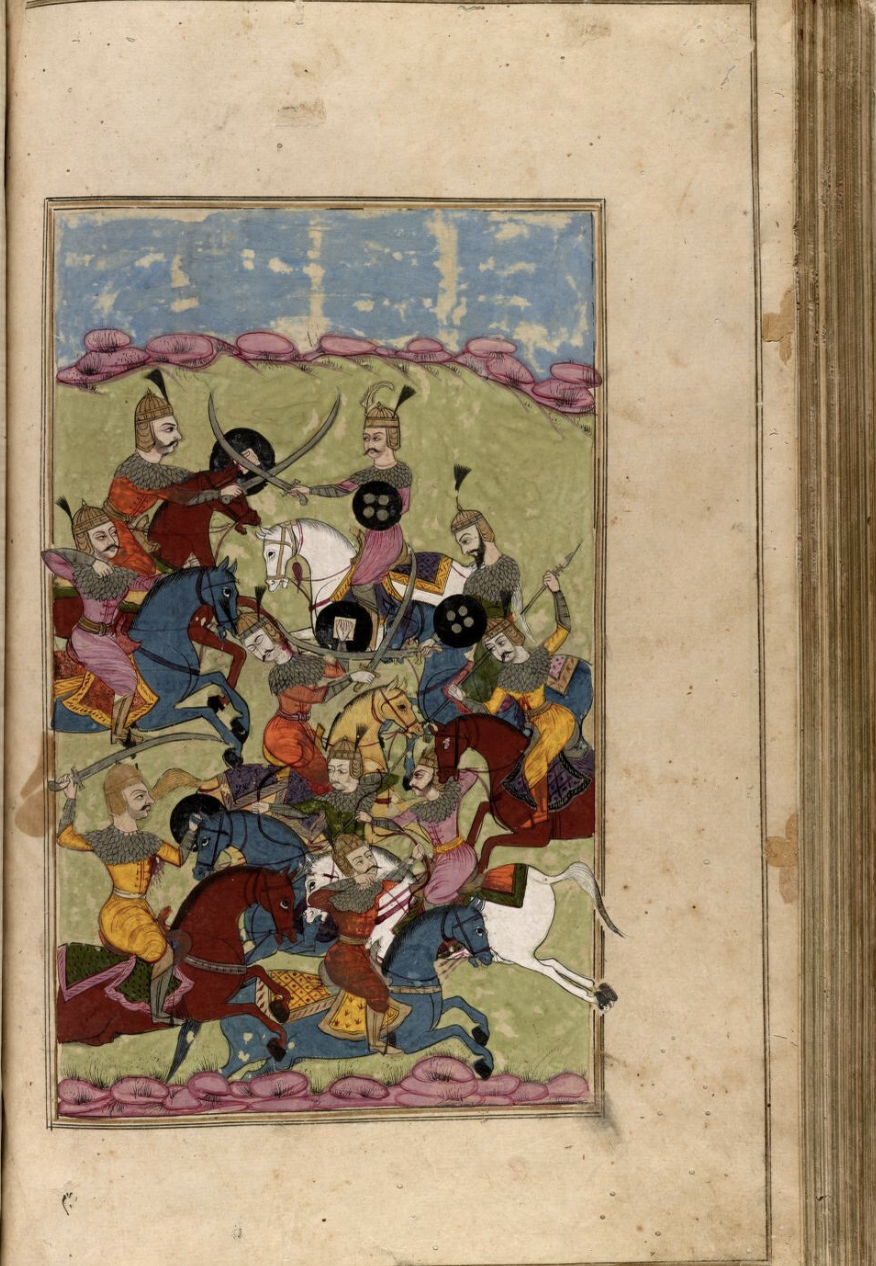
Too often those in power lump thousands of years of Middle Eastern religion and culture into monolithic entities to be feared or persecuted. But at least one government institution is doing exactly the opposite. For Nowruz, the Persian New Year, the Library of Congress has released a digital collection of its rare Persian-language manuscripts, an archive spanning 700 years. This free resource opens windows on diverse religious, national, linguistic, and cultural traditions, most, but not all, Islamic, yet all different from each other in complex and striking ways.
“We nowadays are programmed to think Persia equates with Iran, but when you look at this it is a multiregional collection,” says a Library specialist in its African and Middle Eastern Division, Hirad Dinavari. “Many contributed to it. Some were Indian, some were Turkic, Central Asian.” The “deep, cosmopolitan archive,” as Atlas Obscura’s Jonathan Carey writes, consists of a relatively small number of manuscripts—only 155. That may not seem particularly significant given the enormity of some other online collections.
But its quality and variety mark it as especially valuable, representative of much larger bodies of work in the arts, sciences, religion, and philosophy, dating back to the 13th century and spanning regions from India to Central Asia and the Caucuses, “in addition to the native Persian speaking lands of Iran, Afghanistan and Tajikistan,” the LoC notes.
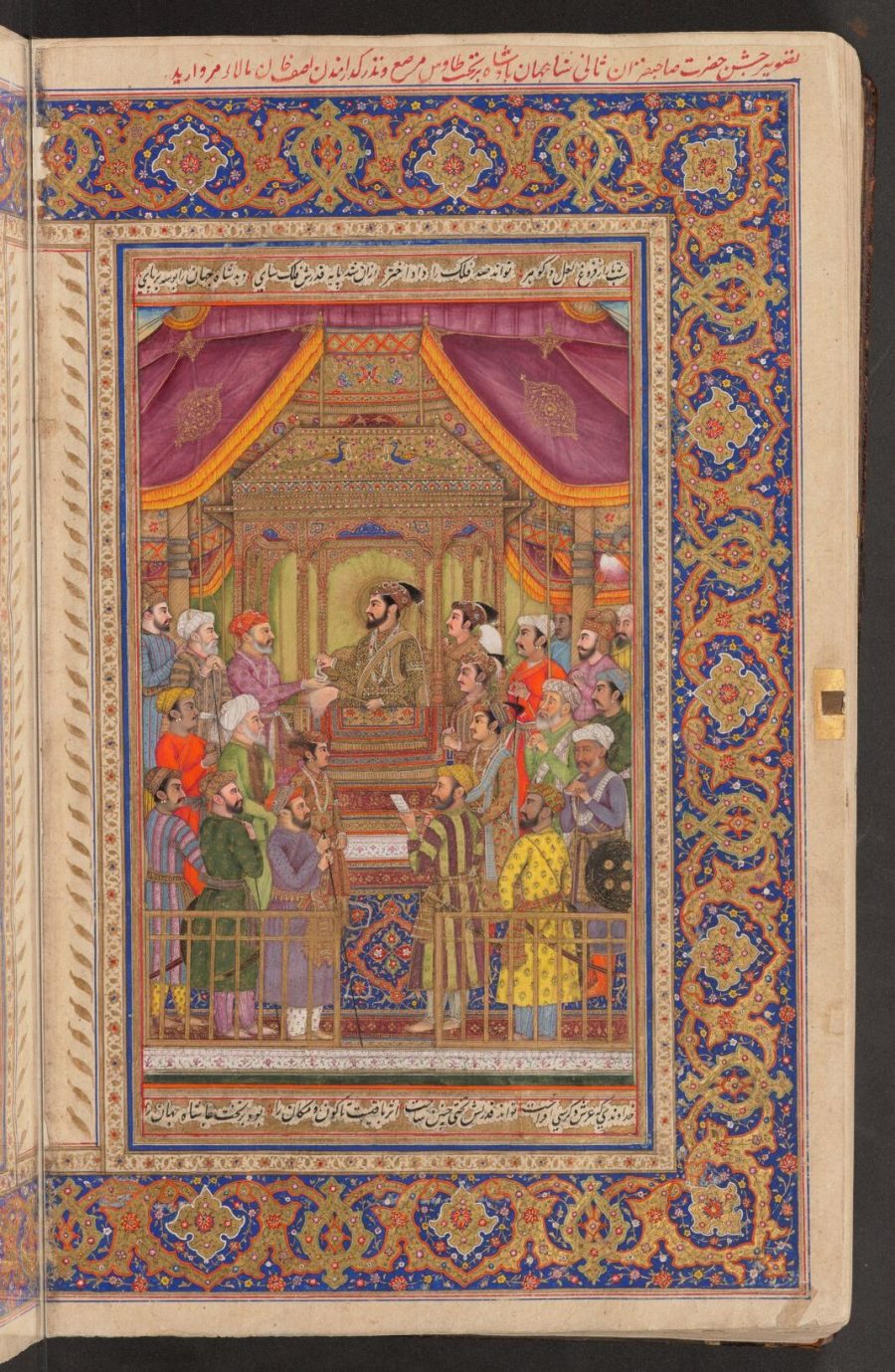
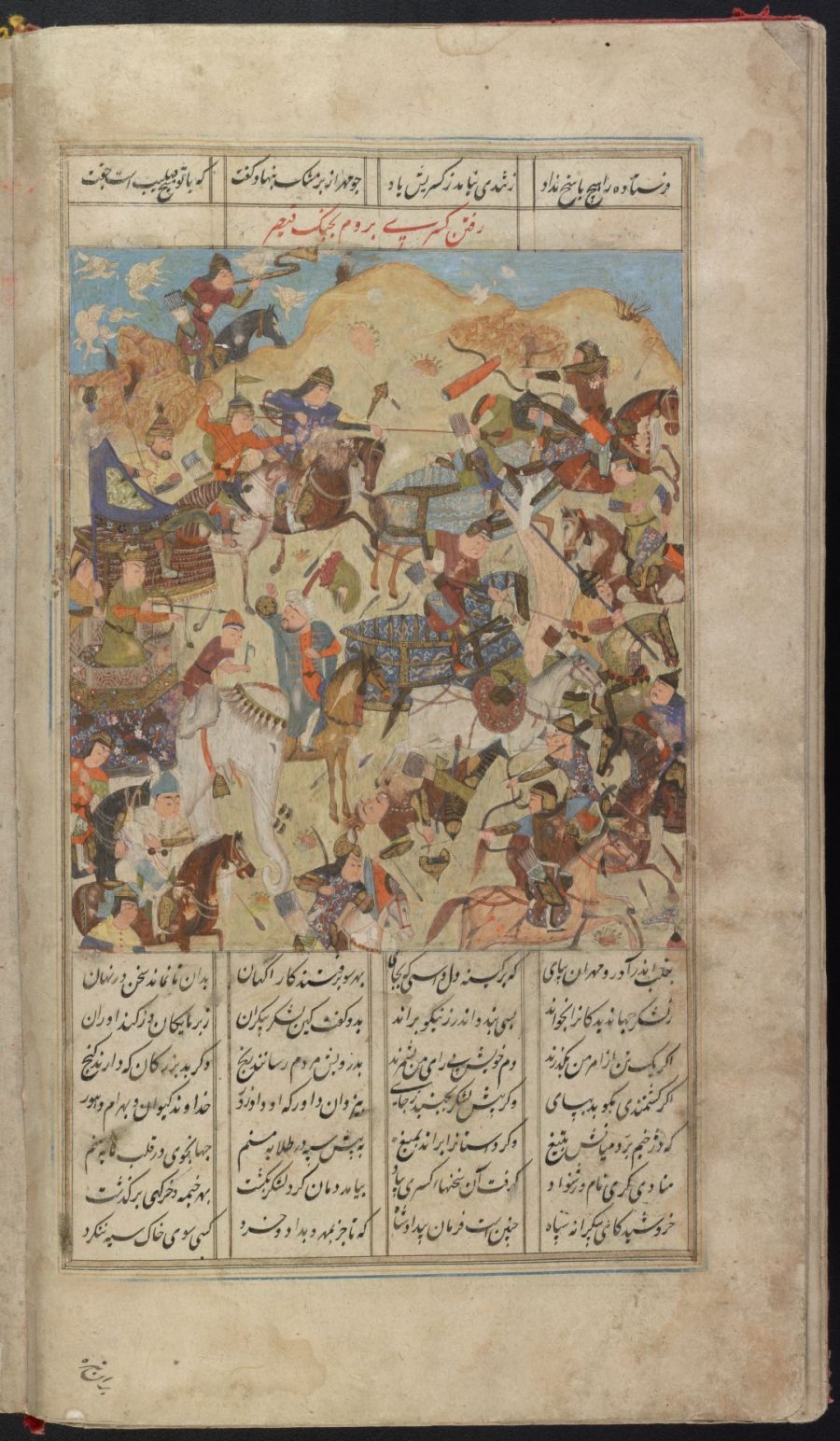
Prominently represented are works like the epic poem of pre-Islamic Persia, the Shahnamah, “likened to the Iliad or the Odyssey,” writes Carey, as well as “written accounts of the life of Shah Jahan, the 17th-century Mughal emperor who oversaw construction of the Taj Mahal.”
The Library points out the archive includes the “most beloved poems of the Persian poets Saadi, Hafez, Rumi and Jami, along with the works of the poet Nizami Ganjavi.” Some readers might be surprised at the pictorial opulence of so many Islamic texts, with their colorful, stylized battle scenes and groupings of human figures.
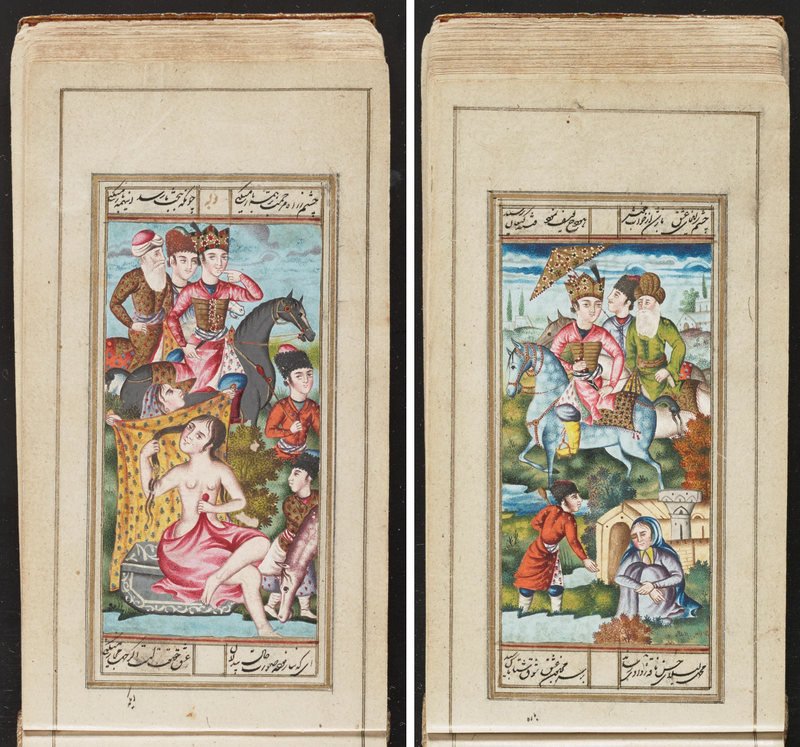
Islamic art is typically thought of as iconoclastic, but as in Christian Europe and North America, certain sects have fought others over this interpretation (including over depictions of the Prophet Mohammad). This is not to say that the iconoclasts deserve less attention. Much medieval and early modern Islamic art uses intricate patterns, designs, and calligraphy while scrupulously avoiding likenesses of humans and animals. It is deeply moving in its own way, rigorously detailed and passionately executed, full of mathematical and aesthetic ideas about shape, proportion, color, and line that have inspired artists around the world for centuries.

The page from a lavishly illuminated Qur’ān, above, circa 1708, offers such an example, written in Arabic with an interlinear Persian translation. There are religious texts from other faiths, like the Psalms in Hebrew with Persian translation, there are scientific texts and maps: the Rare Persian-Language Manuscript Collection covers a lot of historical ground, as has Persian language and culture “from the 10th century to the present,” the Library writes. Such a rich tradition deserves careful study and appreciation. Begin an education in Persian manuscript history here.
Note: An earlier version of this post appeared on our site in 2019.
via Atlas Obscura
Related Content:
15,000 Colorful Images of Persian Manuscripts Now Online, Courtesy of the British Library
The Complex Geometry of Islamic Art & Design: A Short Introduction
Josh Jones is a writer and musician based in Durham, NC. Follow him at @jdmagness
Read More...The Lunar Codex Will Digitize the Work of 30,000 Artists, and Then Archive Them on the Moon
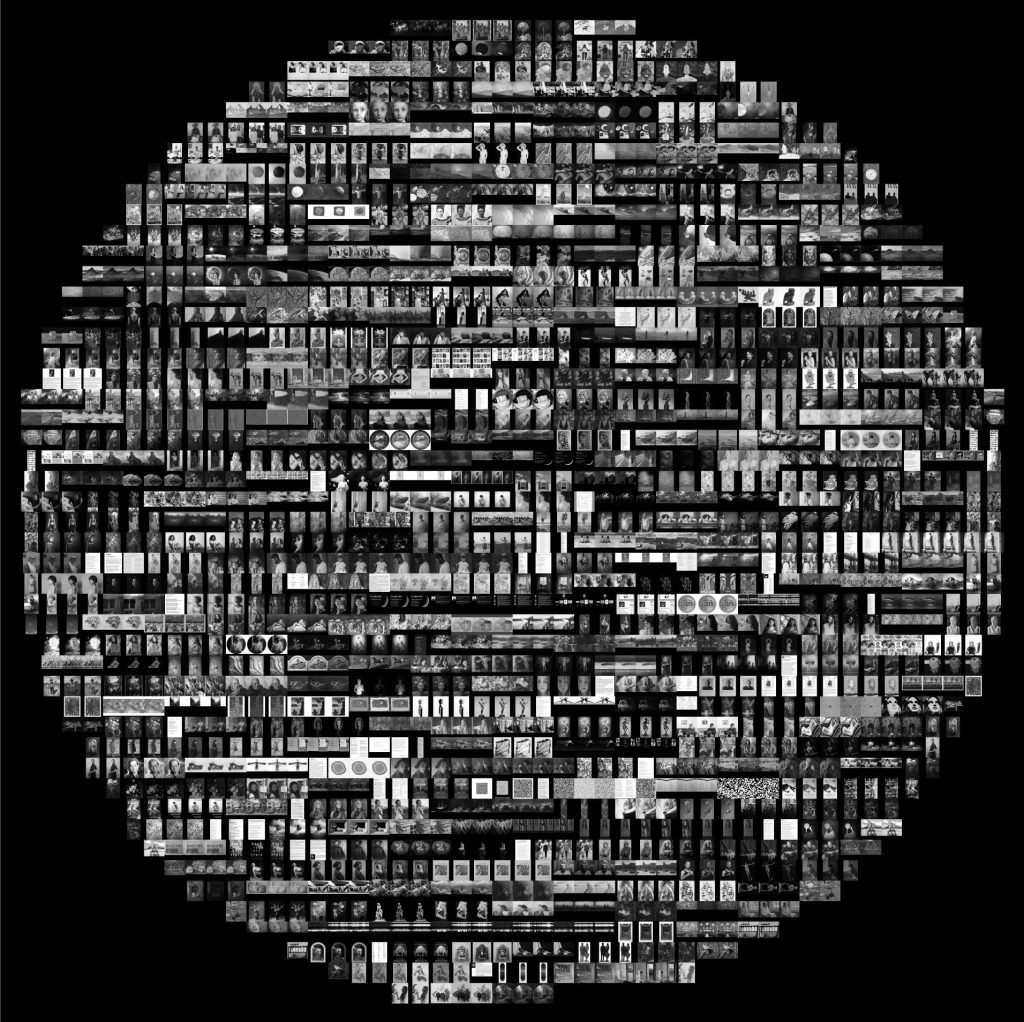
There may not yet be civilization on the moon, but that doesn’t mean there’s no culture up there. We’ve previously featured the tiny ceramic tile, smuggled onto the Apollo 12 lunar lander, that bears art by the likes of Claes Oldenburg, Robert Rauschenberg, and Andy Warhol. “Fallen Astronaut, an aluminum sculpture by the Belgian artist Paul van Hoeydonck, was left on the lunar surface by the Apollo 15 crew in 1971,” writes the New York Times’ J. D. Biersdorfer. “The Arch Mission Foundation has sent Isaac Asimov’s Foundation trilogy and millions of Lunar Library pages into space,” and artists like Jeff Koons and Sacha Jafri are among the artists currently aiming to install their own work on the moon’s surface.
The Lunar Codex has grander ambitions, having assembled works from “over 30,000 artists, writers, musicians, and filmmakers, from 158 countries, in four time capsules launched to the moon.” You can browse their contents at the project’s official web site, which breaks it all down into not just eight “galleries” of visual art, but also sections dedicated to film, television, music, and poetry, among other forms and media. There’s even a section for books and novels (as well as another, oddly, for novels and books), which includes a large number of curious titles to represent the achievements of human civilization: Kamikaze Kangaroos, Goofy Newfies, Don’t Taco ‘Bout Murder, In Bed with Her Millionaire Foe.
Also among all these books, stored on either digital memory cards or a nickel-based medium called NanoFiche, is The Zoo at the End of the World by one Samuel Peralta, who also happens to be the mastermind of the Lunar Codex project. “A semiretired physicist and author in Canada with a love of the arts and sciences,” Peralta has selected for preservation on the moon everything from “prints from war-torn Ukraine” to “more than 130 issues of PoetsArtists magazine” to images like “New American Gothic, by Ayana Ross, the winner of the 2021 Bennett Prize for women artists; Emerald Girl, a portrait in Lego bricks by Pauline Aubey; and the aptly titled New Moon, a 1980 serigraph by Alex Colville.”
All the work to be placed on the moon through the Lunar Codex was created by artists who are now active, or have been active in the past decade or two. As such, it reflects a particular moment in the cultural history of humanity, constituting what Peralta calls “a message in the bottle for the future that during this time of war, pandemic and economic upheaval people still found time to create beauty.” They also found time to create podcasts, as will be evidenced by the inclusion of a quarter-century-long archive of Grace Cavalieri’s interview show The Poet and the Poem, which has reached a new audience in recent years through that relatively new format — one that, to future generations of spacefarers making a stop on the moon, will offer as good a representation as any of life on Earth in the twenty-first century.
Related content:
There’s a Tiny Art Museum on the Moon That Features the Art of Andy Warhol & Robert Rauschenberg
NASA Puts Online a Big Collection of Space Sounds, and They’re Free to Download and Use
Based in Seoul, Colin Marshall writes and broadcasts on cities, language, and culture. His projects include the Substack newsletter Books on Cities, the book The Stateless City: a Walk through 21st-Century Los Angeles and the video series The City in Cinema. Follow him on Twitter at @colinmarshall or on Facebook.
Read More...When the Wind Blows: An Animated Tale of Nuclear Apocalypse With Music by Roger Waters & David Bowie (1986)
Humanity has few fascinations as enduring as that with apocalypse. We’ve been telling ourselves stories of civilization’s destruction as long as we’ve had civilization to destroy. But those stories haven’t all been the same: each era envisions the end of the world in a way that reflects its own immediate preoccupations. In the mid nineteen-eighties, nothing inspired preoccupations quite so immediate as the prospect of sudden nuclear holocaust. The mounting public anxiety brought large audiences to such major aftermath-dramatizing “television events” as The Day After in the United States and the even more harrowing Threads in the United Kingdom.
“As a youngster growing up in the nineteen-eighties in a tiny village in the heart of the Cotswolds, I can attest to the fact that no part of the country, however remote and bucolic, was impervious to the threat of the Cold War escalating into a full-blown nuclear conflict,” writes Neil Mitchell at the British Film Institute.
“Popular culture was awash with nuclear war-themed films, comic strips, songs and novels.” This torrent included the artist-writer Raymond Briggs’ When the Wind Blows, a graphic novel about an elderly rural couple who survive a catastrophic strike on England. Jim and Hilda’s optimism and willingness to follow government instructions prove to be no match for nuclear winter, and however inexorable their fate, they manage not to see it right up until the end comes.
In 1986, When the Wind Blows was adapted into a feature film, directed by American animator Jimmy Murakami. Among its distinctive aesthetic choices is the combination of traditional cel animation for the characters with photographed miniatures for the backgrounds, as well as the commissioning of soundtrack music from the likes of Roger Waters, David Bowie, and Genesis — proper English rockers for a proper English production. If the adaptation of When the Wind Blows is less widely known today than other nuclear-apocalypse movies, that may owe to its sheer cultural specificity. It would be difficult to pick the movie’s most English scene, but a particularly strong contender is the one in which Hilda reminisces about how “it was nice in the war, really: the shelters, the blackout, the cups of tea.”
“The couple are fruitlessly nostalgic for the Blitz spirit of the Second World War, convinced the government-issued Protect and Survive pamphlets are worth the paper they’re printed on, and blindly under the assumption that there can be a winner in a nuclear war,” writes Mitchell. “These sweet, unassuming retirees represent an ailing, rose-tinted worldview and way of life that’s woefully unprepared for the magnitude of devastation wrought by the bomb.” You can see further analysis of the film’s art and worldview in the video at the top of the post from animation-focused Youtube channel Steve Reviews. In the event, humanity survived the long showdown of the Cold War, losing none of our penchant for apocalyptic fantasy as a result. However compulsively we imagine the end of the world today, will any of our visions prove as memorable as When the Wind Blows?
Related content:
Protect and Survive: 1970s British Instructional Films on How to Live Through a Nuclear Attack
How a Clean, Tidy Home Can Help You Survive the Atomic Bomb: A Cold War Film from 1954
Based in Seoul, Colin Marshall writes and broadcasts on cities, language, and culture. His projects include the Substack newsletter Books on Cities, the book The Stateless City: a Walk through 21st-Century Los Angeles and the video series The City in Cinema. Follow him on Twitter at @colinmarshall or on Facebook.
Read More...Johnny Cash Sings “Barbie Girl” in the Style of “Folsom Prison Blues” … with a Little Help from A.I.
The YouTube channel There I Ruined It creates new versions of songs using AI-generated voices. For Dustin Ballard, the channel’s creator, the point is to “lovingly destroy your favorite songs.” Take the example above. Here, an AI version of Johnny Cash’s voice sings the lyrics of Aqua’s “Barbie Girl,” set to the music of Cash’s “Folsom Prison Blues.” Recently, Ballard explained his approach to Business Insider:
My process for these is a little different than most people. I first record the vocals myself so that I can do my best imitation of the cadence of the original singer. Then I use one of their own songs (like ‘Folsom Prison Blues’ rather than the original ‘Barbie Girl’ music) to add to the illusion that this is a ‘real’ song in the artist’s catalog, though clearly all done in jest. Finally, I use an AI voice model trained on snippets of the original artist’s singing to transform my voice into theirs. I have a guy in Argentina I often call upon for this training (although the Johnny Cash one already existed).
If you head over to There I Ruined It, you can hear other AI creations: Hank Williams sings “Straight Outta Compton,” Louis Armstrong sings Flo Rida’s “Low,” Frank Sinatra sings Lil Jon’s “Get Low” and more.
If you would like to support the mission of Open Culture, consider making a donation to our site. It’s hard to rely 100% on ads, and your contributions will help us continue providing the best free cultural and educational materials to learners everywhere. You can contribute through PayPal, Patreon, and Venmo (@openculture). Thanks!
Related Content
Read More...Support Us
We're hoping to rely on loyal readers, rather than erratic ads. Please click the Donate button and support Open Culture. You can use Paypal, Venmo, Patreon, even Crypto! We thank you!

About Us

Open Culture scours the web for the best educational media. We find the free courses and audio books you need, the language lessons & educational videos you want, and plenty of enlightenment in between.
Advertise With Us
FREE UPDATES!
GET OUR DAILY EMAIL
Get the best cultural and educational resources on the web curated for you in a daily email. We never spam. Unsubscribe at any time.
FOLLOW ON SOCIAL MEDIA
Open Culture editor Dan Colman scours the web for the best educational media. He finds the free courses and audio books you need, the language lessons & movies you want, and plenty of enlightenment in between.
Advertise With Us

